• anna j. clutterbuck-cook
  • contact
  • curriculum vitae
  • find me elsewhere
  • marilyn ross memorial book prize

the feminist librarian

the feminist librarian

Tag Archives: politics

Teen Sexuality & Agency

04 Thursday Sep 2008

Posted by Anna Clutterbuck-Cook in book reviews

≈ 2 Comments

Tags

children, election08, feminism, gender and sexuality, politics


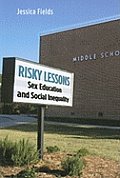
This weekend, while Governor Palin’s nomination as Republican Vice-Presidential Candidate, her hard-line conservative positions on human sexuality, and her daughter’s pregnancy were making headlines, I was reading sociologist Jessica Fields’ insightful new book Risky Lessons: Sex Education and Social Inequality. As Courtney Martin posted over at Feministing (in a review that prompted me to run out and buy the book), Fields “basically lays out a liberation philosophy for sex education.” Reflecting on the fieldwork Fields conducted in sex education classes during the mid-1990s, Courtney writes:

Young women learn to see their bodies as ticking time bombs and young men to see theirs as the uncontrollable fire that could lead to explosion. Instead of promoting self-awareness, responsible exploration, respect for the diversity of sexualities, or compassionate communication, we teach them that their bodies are dangerous. Conservatives want that danger staved off until marriage, where it suddenly becomes holy, and liberals want it staved off along the way — through the use of accessible contraception.

While I obviously advocate safer sex, I also feel like progressives have let ourselves (as per the usual) be only reactive, instead of re-authoring the questions. We must not only ask how we can protect young Americans from unwanted pregnancy and STIs, but how we can encourage them to be self-aware, healthy, and happy. How can we inspire them to author their own questions?

As political commentators discussed teenage pregnancy, marriage, and parenthood, comprehensive vs. abstinence-only sex “education” (I offer a few examples here, here, here and here for those interested), Fields’ book offered a what I thought was a fascinating counterpoint to the conventional wisdom. What struck me most about the political coverage was that the majority of Americans — whether they identify as liberal, conservative or somewhere in between — assume teenage sexuality is something dangerous, unhealthy, morally wrong. To be a sexually aware and engaged teenager in America is to be held suspect by the majority of adults as irresponsible and the result of bad parenting. As previously noted on here at the FFLA, this isn’t the only attitude adults can take about teenage sexual expression, and (in my opinion) far from the ideal. In Risky Lessons, Fields prompts us to re-visit this common-sense assumption and ask ourselves how we might better support young peoples’ exploration of the physical, emotional, and political pleasures and perils of their emerging adult sexuality.

In the early 21st century, “Sex education” has been reduced to risk reduction (if you believe in “comprehensive” sex ed) or eradication (if you believe in the abstinence-only doctrine). Young people deserve sexuality education that provides them with intellectual and emotional resources for making sense of their adult bodies, relationships, and agency in the world as sexual beings. And I hope that (if anything good can possibly be said to come from a Republican ticket so deeply opposed to providing those resources to all of America’s teenagers) the Palin nomination and the resulting debates over teenage sexual expression can provide us a critical moment of reflection on these issues and a chance to consider the liberatory potential sexuality education.

The View from Childhood?

23 Saturday Aug 2008

Posted by Anna Clutterbuck-Cook in think pieces

≈ Leave a comment

Tags

children, education, politics

Yesterday, I ran across an atrocious opinion piece in the New York City Journal, written by physician Theodore Dalrymple about a UNICEF report published last year on the well-being of children in industrialised nations. Britain came in twenty-first in the rankings (just behind the United States at twenty. (The Netherlands topped the list as the best country to be a child, followed by Sweden, Denmark, Finland, and Spain). With my own strong criticisms of attitudes toward children in the United States, and my more limited exposure to the educational system in the U.K., I am definitely willing to entertain the idea that British and American societies are toxic for children and their families. I haven’t read the UNICEF report in full, but the researchers looked at a broad spectrum of indicators, including

  • Material well-being
  • Family and peer relationships
  • Health and safety
  • Behaviour and risks
  • Own sense of well-being

The BBC report (linked above) and their related page of comments from British children about their lives contains a lot worth considering when it comes to assessing how children experience life in the modern world, even in countries that are materially rich and politically stable.

However, Mr Dalrymple does the UNICEF report a profound disservice by using it to support his socially conservative views about the British social welfare state and what he sees as “a culture of undiscriminating materialism, where the main freedom is freedom from legal, financial, ethical, or social consequences.” He relates a series of tabloid-style anecdotes about neglectful parenting and although he explicitly denies he is doing so, implies that women who have children with multiple partners and outside of marriage are unfit parents.

In my opinion, the most appalling argument appears about two-thirds of the way through the article, when he really starts to editorialize on report’s implications. He highlights the fact that many children do not experience regular family or group meal-times, and then writes:

Let me speculate briefly on the implications of these startling facts. They mean that children never learn, from a sense of social obligation, to eat when not hungry, or not to eat when they are. Appetite is all they need consult in deciding whether to eat—a purely egotistical outlook. Hence anything that interferes with the satisfaction of appetite will seem oppressive.

I invite you to consider for a minute, apart from whether you believe in the value of shared meals, the view of young people — and of people in general — that Dalrymple betrays here. “Children never learn . . . to eat when not hungry, or not to eat when they are.” What: we should be teaching children to ignore the messages their bodies give them about hunger? There are profound consequences in championing this concept of healthy socialization, when it comes to our experience of embodiment, for example. We should be instructing children to put conforming to social convention above attending to their own intuition? I was struck by how many children put the problem of bullying at the top of their list of worries when asked by the BBC what would make their lives better. Being taught to discount their own hungers (more broadly speaking, their own needs and desires) in the interest of social obligation would only exacerbate this problem.

Children deserve protected, nurturing space to be children — and I agree with Dalrymple that even in the most privileged of nations they don’t often have it, or have it for long enough. The solution, however, is not to cut them off from their own intuitive selves, but rather to give them the tools to care for themselves and for others around them in responsible ways. The fatal misperception in Mr Dalrymple’s essay is the belief that social obligation and self-care are mutually exclusive activities, when in fact I would argue they are mutually dependent — we thrive as individuals best when in a web of supportive relationships, and our relationships with fellow human beings are at their strongest when we know and attend to who we are as individuals — as well as attending to those around us. Unlike many material resources, emotional and social resources are not in limited supply, but endlessly renewable.

Getting My Legal Fix

15 Thursday May 2008

Posted by Anna Clutterbuck-Cook in think pieces

≈ Leave a comment

Tags

feminism, politics

Last week, when the Michigan Supreme Court upheld the ban on same-sex partner benefits, I was so tired from the end of term I didn’t have the energy to care much (and really, it wasn’t that unexpected). However, this Thursday brings happier news: the California Supreme Court has ruled their own state’s ban on same-sex marriage unconstitutional. The legal junkie in my is having fun perusing some of the coverage. I love it when people (most especially those I agree with!) get snarky in legalese:

Furthermore, the circumstance that the current California statutes assign a different name for the official family relationship of same-sex couples as contrasted with the name for the official family relationship of opposite-sex couples raises constitutional concerns not only under the state constitutional right to marry, but also under the state constitutional equal protection clause. . . the purpose underlying differential treatment of opposite-sex and same-sex couples embodied in California’s current marriage statutes–the interest in retaining the traditional and well-established definition of marriage–cannot properly be viewed as a compelling state interest.

Couldn’t have said it better myself.


Oh, and my favorite legal news story of the week* might be this one:
NPR’s On the Media reported that Scott Bloch, the head of the Office of Special Counsel, whose office was raided this week by the FBI amid allegations of corruption, accused the Bush Administration of “being part of a gay rights conspiracy to persecute him.” Who knew?

(*via the blog Pandagon)

Gene Robinson on Fresh Air

17 Thursday Apr 2008

Posted by Anna Clutterbuck-Cook in media

≈ 1 Comment

Tags

feminism, gender and sexuality, politics

Mom pointed me toward yesterday’s interview on NPR’s Fresh Air with Bishop Robinson, who was ordained four years ago this spring. Listening to him talk about Christianity and the contention over sexual orientation and identity always makes me want to cry because he’s just so articulate.

The whole interview was interesting, but I was particularly struck by his story about a recent media kerfluffle over a joking remark he made about the civil union he and his long-time partner are planning for this summer in New Hampshire. He told someone he had “always wanted to be a June bride.” Apparently, this got out on the internet and people were quite wound up about it. Anyway, Terry Gross asked him about it, and his response was really striking in its feminist perspective:

I think part of why that [comment] raced around the world in no time flat due to the magic of the internet has to do with misogyny and its connection to homophobia. I think the thing that really irritates the world about refering to myself as a “bride” is that I’m supposed to be privileged because I’m male, not female, and to refer to myself with a feminine word like bride offends the patriarchal system that I think is beginning to come apart–and gay and lesbian people, I believe, are helping to begin the deconstruction of patriarchy [begins at 26:10].

He also had some trenchant thoughts on the way he negotiates living in Christian community with people who are not accepting of homosexuality and other sexual orientations and identities without either walking away from them or compromising himself or the lives of other marginalized people.

A few reflections on my first WAM! conference

31 Monday Mar 2008

Posted by Anna Clutterbuck-Cook in media

≈ 1 Comment

Tags

feminism, politics

I’m taking a (probably undeserved) break from writing my paper on White Women’s Rights: The Racial Origins of Feminism in the United States to describe a few impressions and reactions from my very first WAM! conference. I don’t have very coherent thoughts at the moment, since my brain power is being sucked away by catching up on academic responsibilities, but a few highlights and a couple of links for those folks who are interested:

  • It was awesome to spend a weekend surrounded by feminist activists from a wide variety of backgrounds, from bloggers to organizers, undergraduates to radical grannies. I had the opportunity to do a lot of feminist star-spotting, since there was a healthy representation of bloggers and writers present at the conference whose blogs I read and books I own.
  • In addition to volunteering at registration, I attended two panels and a screening of the Silent Choices film about African-American women and abortion. Incidentally, the two panels I attended were live-blogged about at feministing.com, one on reproductive justice and one on battling anti-feminist backlash, if you’re interested in a quick synopsis of the discussions.
  • Amanda Marcotte, over at the blog Pandagon, who was one of the speakers at the panel I attended on reproductive justice, wrote about her perspective on the session, and includes a great picture of the Stata Center (designed by Frank Gehry) where the conference was held.
  • In addition to being a blogger, Amanda has just written her first book, It’s a Jungle Out There, which is a hilarious, light-hearted blend of “feminism 101” and humor for those of us who can feel burnt-out by anti-feminist crap. “Why are people so mean to feminists?” she asks in the introduction, “Because so much of feminism is the fine art of calling bullshit, and calling bullshit makes people uncomfortable. The first rule about understanding bullshit is that people really love their bullshit . . . Many people love their bullshit more than they love their spouses, or at least they’ll defend their bullshit more fiercely.” I picked up a copy at the conference bookstore before they were sold out, and read it all the way home on the T, giggling to myself.

All in all, the conference was an energizing break from my regular routine, and gave me an opportunity to reflect, once again, on how I envision bringing together the sort of research, writing, and practical skills I am developing as a librarian-in-training and student of history with the politically relevant, people-oriented activist work that I find incredibly nourishing to be involved in, even though I have never been comfortable out on the front lines. I realized, sitting in the conference rooms listening to all these articulate, politically engaged women (and yes, a handful of men), that even though I get burnt out sometimes by the amount of work that needs to be done, I virtually never get tired of engaging with feminist ideas and the people who care about discussing them. Now if only I can figure out a way to get paid for doing it!

UPDATE: You can also check out conference coverage at Feministe, where Jill talks about both of the panels I attended, and other stuff as well, and Racialicious, whose regular blogger Carmen was at the (seemingly universally attended) backlash panel.

Home Education in CA

27 Thursday Mar 2008

Posted by Anna Clutterbuck-Cook in think pieces

≈ Leave a comment

Tags

education, politics

In the midst of the midterm crunch, I don’t have a chance to reflect on this at great length, but I saw via the NPR website this week that a California appellate court recently ruled that home education in the state may be vulnerable to legal challenges:

The court ruling that declared some home schooling unconstitutional, Huerta says, seemed to indicate that California regulators’ occasional monitoring of the family’s home efforts was deemed insufficient to qualify children as being enrolled in a school.

Huerta says the ruling is an unprecedented decision, and one that has prompted an uprising not just among home schoolers but also among privacy advocates. “This is an issue that’s going to be taken all the way to the Supreme Court,” he says. “It’s going to open a Pandora’s box of issues the court may not want to address.”

Diane Rehm also did an hour on the subject this week, a show that I plan to listen to and report back on when I have a chance.

I’ll be interested to see both how this actual legal case develops and how the media covers it.

Weekly Update: Brain dead edition

21 Friday Mar 2008

Posted by Anna Clutterbuck-Cook in linkspam

≈ Leave a comment

Tags

education, humor, politics

It’s that point in the semester (I’m sure all students and former-students will identify) at which the end of term seems both impossibly far away and alarmingly at hand. Projects develop glitches. The panic-o-meters on everyone around you start to rise and your own barometer cranks it up in response. “Many college students stressed out, study finds”, the Boston Globe reported this week, in a classic “No duh! Don’t we know this already?” headline. What is always amazing to me is how normalized and individualized the state of being stressed out–physically and emotionally–is. We expect to spend our educational careers overworked and frazzled, and inability to get things done is always seen as a personal failure, not as a systemic problem of a social system that requires students to work part- and full-time as well as attending school in order to make ends meet.

Meanwhile, we haven’t entirely lost our sense of humor. Here’s a little something that’s been circulating on the internet for all my political-junkie friends out there. My friend and colleague Laura Cutter forwarded it to a bunch of us after our history class last night:

The George W Bush Presidential Library is now in the planning stages.

The Library will include:

  • The Hurricane Katrina Room , which is still under construction.
  • The Alberto Gonzales Room, where you can’t remember anything.
  • The Texas Air National Guard Room, where you don’t have to even show up.
  • The Walter Reed Hospital Room, where they don’t let you in.
  • The Guantanamo Bay Room, where they don’t let you out.
  • The Weapons of Mass Destruction Room (Which no one has been able to find).
  • The Iraq War Room. After you complete your first tour, they make you to go back for second, third, fourth, and sometimes fifth tours.
  • The Dick Cheney Room, in the famous undisclosed location, complete with shooting gallery.
  • Plans also include: The K-Street Project Gift Shop – Where you can buy (or just steal) an election.
  • The Airport Men’s Room, where you can meet some of your favorite Republican Senators.
  • Last, but not least, there will be an entire floor devoted to a 7/8-scale model of the President’s ego.

To highlight the President’s accomplishments, the museum will have an electron microscope to help you locate them. When asked, President Bush said that he didn’t care so much about the individual exhibits as long as his museum was better than his father’s

Happy Spring Equinox to you all and hope this finds you all well. I always enjoy your emails and calls and correspondence (I actually still receive letters by post from a number of you!) and will be in touch when I can.

"Name all the stars . . ."

06 Thursday Mar 2008

Posted by Anna Clutterbuck-Cook in linkspam

≈ Leave a comment

Tags

books, politics

Through a complex series of mental associations having to do with Buffy the Vampire Slayer, library student jokes about cross-referencing and the Super Tuesday election hoopla, I suddenly felt the urge to share my favorite political quotation of all time from Sara Vowell’s essay “The Nerd Voice,” written in the wake of the 2000 election (Gore v. Bush, in case anyone has forgotten):

I wish it were different. I wish we privileged knowledge in politicians, that the ones who know things didn’t have to hide it behind brown pants, and that the know-not-enoughs were laughed all the way to the Maine border on their first New Hampshire meet and greet. I wish that in order to secure his [or her!] party’s nomination, a presidential candidate would be required to point at the sky and name all the stars; have the periodic table of the elements memorized; rattle off the kings and queens of Spain; define the significance of the Gatling gun; joke around in Latin; interpret the symbolism in seventeenth-century Dutch painting; explain photosynthesis to a six-year-old; recite Emily Dickinson; bake a perfect popover; build a short wave radio out of a coconut; and know all the words to Hoagy Carmichael’s ‘Two Sleepy People,’ Johnny Cash’s ‘Five Feet High and Rising,’ and ‘You Got the Silver’ by the Rolling Stones. After all, the United States is the greatest country on the earth dealing with the most complicated problems in the history of the world—poverty, pollution, justice, Jerusalem. What we need is a president who is at least twelve kinds of nerd, a nerd messiah to come along every four years, acquire the secret service code name Poindexter, install a Revenge of the Nerds screen saver on the Oval Office computer and one by one decrypt our woes.

[The Partly Cloudy Patriot, 116-117]

That is all.

Blog for Choice: The Radical Idea that I am a Person

22 Tuesday Jan 2008

Posted by Anna Clutterbuck-Cook in think pieces

≈ 9 Comments

Tags

blog for choice, feminism, politics

Today is the 35th anniversary of the Roe v. Wade decision and NARAL Pro-Choice America has asked all of us in the blogosphere to write posts about why it’s important to vote pro-choice. Welcome to Blog for Choice Day 2008. Here are my thoughts.

“Childbirth is, by definition, a loss of control over the body . . . but in the hospital, the surrender is usually of the body to the provider. Women often lose control over what’s done to the body, rather than over what the body does.”

–Jennifer Block, Pushed: The Painful Truth About Childbirth and Modern Maternity Care (165) [1].
Today, I am terrified of being pregnant or giving birth in the United States. I am not frightened of the physical experience of being pregnant. Nor am I intimidated by the difficult moral decisions I may face if that pregnancy is unplanned or if something goes tragically wrong. I am not afraid, as Jennifer Block so eloquently puts it, to “lose control over [what my] body does” when pregnant. No.

What wakes me from nightmares, sweating, in the early hours of the morning is the knowledge that, as a pregnant woman, I will lose my right to determine what is done to my body. What knots my stomach is the knowledge that, under current legal precedent, when I become pregnant I could be stripped of my rights to bodily integrity—including the ability to consent to or refuse medical procedures. What terrifies me is the knowledge that as a pregnant woman I could, at the discretion of a doctor or a judge, be treated as an individual whose medical decisions and right to self-determination have no merit, whose personhood is less worthy of consideration than the personhood of the developing child I carry within my body.

I didn’t always feel this way. When I hit puberty and began to menstruate I was awed (as I still am) by my body’s new capacity to sustain pregnancy and give birth to a child. The women whom I knew and read (thanks Mom!) described women’s reproductive lives in feminist terms: they placed women, their laboring bodies, and their self-determination at the center of pregnancy and birth narratives.

Over the last twelve years, however, I have been forced to recognize how fragile my right to bodily integrity and self-determination is. I have gotten the message loud and clear from politicians, judges and activists: My personhood is conditional. My body is not my own. I am one broken condom, one impulsive sexual encounter, one sexual assault, one anti-abortion, conscience-ridden pharmacist away from becoming less than a person in the eyes of the law.

The modern political and legal struggle over abortion rights, and reproductive rights more broadly, has developed a hyper-focus on the question of fetal rights [2] and the definition of when life begins [3]. We have forgotten to consider an equally important question: regardless of how we determine when human life and constitutional rights begin, when do women’s basic human rights end? I ask this question of anyone who supports anti-abortion, fetal rights policies: do I somehow become less of a person in the eyes of the law the moment I become pregnant?

The right to bodily integrity is fundamental to our social contract here in the United States. The belief that we are all separate beings, existing within our own skin, and that no one has the right to violate our separateness without our consent, has been built into our legal framework. This respect for the human right to bodily integrity is so profoundly important to our legal and social framework that it actually supersedes our right to live. No one can be compelled against their full and free consent to give of their body for another human being–even if that other human being will die as a result of consent being withheld.

As Jennifer Block writes, “there is never a situation where the court can compel an adult to undergo a medical procedure for the perceived benefit of another human being” (255). We may make the case that it is the ethical thing to do, to donate blood or to put our own lives at risk to rescue someone from drowning. But despite making a moral argument that it is the right thing to do, we don’t compel individuals to perform these tasks: they must make the final decision themselves. At no point does their body cease to be their own.

Yet pregnant–and even potentially pregnant–women find that this basic right to bodily integrity is routine breached by medical professionals, politicians, and judges who determine what they may or may not do—or choose not to do–with their bodies. Marsden Wagner, former Director of Women’s and Children’s Health of the World Health Organization, documents in Born in the USA [4] the way in which pregnant women’s decisions regarding their own medical care are routinely ignored. Women who have expressly stated their desire for non-interventionist births are subjected to drugs without their knowledge, mutilated by unnecessarily episiotomies, or denied the right to attempt vaginal births after cesarean section. These practices are contrary to basic legal rights nationally and many human rights standards worldwide.

As Melody Rose details, in her book Safe, Legal, Unavailable? [5], in the thirty-five years Roe v. Wade has technically protected women’s right to terminate a pregnancy, opponents of abortion and women’s rights have chipped away at women’s legal standing by creating a systematic network of regulatory policies and legal restrictions [6]. While the developing child–and even the potentially fertilized egg [7]–slowly gains legal rights to constitutional protection, women are jailed to protect a fetus, punished for what they put into, or do with, their bodies [8], forced to continue pregnancies against their express wishes or made to seek the permission to end those pregnancies from lovers [9], estranged parents, or hostile judges [10]. They are denied birth control [11] and punished for its failure. They are denied the right to choose where, with whom, and how they give birth or denied the right to birth at all [12].

An entire class of people are being stripped of their right to bodily integrity simply because of the bodies with which they were born. Increasingly, women are told not only that their rights are less important than the rights of the fetus they carry, but that they are too ignorant or vulnerable to make their own medical decisions. Last year’s Supreme Court ruling, Gonzales v. Carhart [13], is only the latest example of the misogynistic paternalism [14] that has come to characterize the legal and political landscape of reproductive justice. As Sarah Blustain wrote last year in The American Prospect:

The finding of activist conservative judges or radically anti-abortion legislatures, no matter how local, help accrue new definitions of the unborn that make it incrementally easier to successfully ban abortions. Perhaps even more troubling is the idea that these cases could slowly build a new judicial and legislative definition of women, as a childish and barely competent moral decision-maker for whom legal abortion becomes a menacing option from which she needs protection [15].

Access to safe and legal abortion may only be one small part of the landscape of reproductive justice [16], but it is a crucially important one. As Linda Paltrow has pointed out, anti-abortion activists have succeeded–through their focus on fetal rights and paternalistic protectionism–in establishing a precedent of abusive intervention into the lives of women and their families:

At least one federal court has said that sending police to a woman’s home, taking her into custody while in active labor and near delivery, strapping her legs and her body down, to transport her against her will to a hospital, and then forcing her without access to counsel or court review to undergo major surgery [cesarean section] constituted no violation of her civil rights at all. The rationale? If the state can limit women’s access to abortions after viability, it can subject her to the lesser intrusion of insisting on one method of delivery over another [17]

This is why I lie awake at night wondering if I’m brave enough to become a mother. I know that to become pregnant in the current legal climate will mean that I wake up every morning with the knowledge that my right to bodily integrity may be violated by doctors and politicians who disagree with my medical decisions, and that many judges will uphold those violations in a court of law.

I vote pro-choice because I believe that to legislate away women’s meaningful access to a full range of reproductive options–from birth control to abortion to the right to give birth where, with whom, and however she chooses–is to effectively curtail our ability to participate in the political and social life of the nation [18].

I vote pro-choice because I believe that the freedom of consenting adults to form sexually intimate relationships, whether or not they can–or desire–to have children, is a basic human right, not a privilege.

I vote pro-choice because I believe pregnancy, childbirth, and the decision to start a family should be a responsibility fully and freely chosen, not a punishment for sexual expression.

I vote pro-choice because I believe in women’s ability, as women and as human beings, to make practical and moral decisions regarding our health care and family lives.

I vote pro-choice because I believe pregnant women have the same rights to bodily integrity and full and free consent as any other human being.

I vote pro-choice because I don’t want to be forced to choose between motherhood and my own human rights.

Most of all, I vote pro-choice because of my belief in the radical notion that women are people.

Why Didn’t I Move to Washington?

17 Thursday Jan 2008

Posted by Anna Clutterbuck-Cook in think pieces

≈ Leave a comment

Tags

feminism, michigan, politics

Just in time for the 35th anniversary of Roe v. Wade, NARAL Pro-Choice America has released their report Who Decides? that details the state of reproductive rights nationwide. They assign each state a letter grade based on the legal, political, and social factors (such as health coverage for birth control, access to women’s health services, and abortion laws). Not that I find it particularly surprising, but here’s the performance of a few states I take a personal interest in:

  • Michigan . . . . . . . F
  • Massachusetts . . B-
  • Oregon . . . . . . . . A
  • Washington . . . . A+
Yep. There’s a reason why I felt like I was living in hostile territory when I was in West Michigan (and my heart goes out to all of you who are still fighting the good fight). Not that I’ll rule out moving back there someday, but sometimes it’s nice to imagine what it would be like to live in one of those states that got an A. Like when I’m starting a family, or, I don’t know, maybe just being a woman.

And while we’re on the subject of maps and rankings, Mapping Our Rights: Nagivating Discrimination against Women, Men, and Families is another interactive report on human rights in the United States. It was put together by Ipas, the National Gay and Lesbian Task Force, and SisterSong and includes a greater diversity of important factors, such as the right to gay marriage and the legal status of midwifery. The results are thus more complicated, but tell a roughly comparable story. Ranked from 1 (most favorable) to 50 (most hostile) we have:

  • Michigan . . . . . . . 43
  • Massachusetts . . 11
  • Oregon . . . . . . . . 10
  • Washington . . . . . 2
I don’t know what they’re drinking up there in Washington state, but whatever it is, I wish they’d share it with the rest of the nation. I’d say they were just living too close to Canada, but then again so are the Michiganders and that doesn’t seem to have helped.

I think these three happy uteri live in Washington . . .

. . . and thanks to Radical Doula for the head’s up on the NARAL report.

← Older posts
Newer posts →
"the past is a wild party; check your preconceptions at the door." ~ Emma Donoghue

Recent Posts

  • medical update 11.11.22
  • medical update 6.4.22
  • medical update 1.16.2022
  • medical update 10.13.2021
  • medical update 8.17.2021

Archives

Categories

Creative Commons License

This work by Anna J. Clutterbuck-Cook is licensed under a Creative Commons Attribution 3.0 Unported License

Meta

  • Create account
  • Log in
  • Entries feed
  • Comments feed
  • WordPress.com

Create a free website or blog at WordPress.com.

  • Subscribe Subscribed
    • the feminist librarian
    • Join 37 other subscribers
    • Already have a WordPress.com account? Log in now.
    • the feminist librarian
    • Subscribe Subscribed
    • Sign up
    • Log in
    • Report this content
    • View site in Reader
    • Manage subscriptions
    • Collapse this bar