• anna j. clutterbuck-cook
  • contact
  • curriculum vitae
  • find me elsewhere
  • marilyn ross memorial book prize

the feminist librarian

the feminist librarian

Tag Archives: politics

booknotes: feel-bad education

02 Thursday Jun 2011

Posted by Anna Clutterbuck-Cook in book reviews

≈ 1 Comment

Tags

children, education, politics

Alfie Kohn’s latest collection of essays, Feel-Bad Education; and Other Contrarian Essays on Children and Schooling (Boston: Beacon, 2011) was one of the books I read while on vacation in Michigan last week. Kohn as been writing “contrarian” books on schooling and childcare for going on two decades now, and anyone who has read his previous work will find little of surprise in this latest volume, which contains mostly previously-published pieces from between 2004-2010. However, for those of us who don’t subscribe to the wide variety of education periodicals he wrote them for, this book is a great opportunity to sit down and read them in one sitting (and not on the internets!).

I’m not sure how Kohn reads to a skeptic. Ever since devouring his No Contest (1989) and Punished By Rewards (1993) as a teenager, I’ve been following Kohn’s work, which dovetails more or less with my own understanding of human motivation, effective learning, and what it means to live the good life. In other words, when it comes to me he’s preaching to the converted. However, I suspect that Kohn might be one of those authors who — while fitting in very well with the philosophy of self-directed education I prefer — is able to speak about radical childcare and pedagogy without reflexively alienating those who choose more mainstream (institutional) forms of education and childcare. In large part because unlike many other activists in this area, he hasn’t given up on schools as institutions, and continues to believe that teachers within the system of formal education can implement more holistic modes of facilitating learning.

The essays are organized thematically, but all more or less stand on their own. A few specific essays stood out in my own estimation, and I thought I’d use the remainder of this post to highlight those. I encourage you to read the book yourself and find the ones that speak to you! (When I’ve been able, I’ve linked to the online versions of these articles found at Kohn’s website)

In the first section, Progessivism and Beyond, is the essay “Getting-Hit-On-the-Head Lessons,” which argues that the “better get used to it” argument for saddling young children with unappealing tasks (as preparation for, it seems, an adulthood of drudgery) is based in some pretty faulty assumptions about how human beings cope with what my friends and I sometimes refer to as the “fuck my life” experiences of living:

This leads us to the most important, though rarely articulated, assumption on which BGUTI [better-get-used-to-it] rests – that, psychologically speaking, the best way to prepare kids for the bad things they’re going to encounter later is to do bad things to them now. I’m reminded of the Monty Python sketch that features Getting Hit on the Head lessons. When the student recoils and cries out, the instructor says, “No, no, no. Hold your head like this, then go, ‘Waaah!’ Try it again” – and gives him another smack. Presumably this is extremely useful training . . . for getting hit on the head again.

But people don’t really get better at coping with unhappiness because they were deliberately made unhappy when they were young. In fact, it is experience with success and unconditional acceptance that helps one to deal constructively with later deprivation. Imposing competition or standardized tests or homework on children just because other people will do the same to them when they’re older is about as sensible as saying that, because there are lots of carcinogens in the environment, we should feed kids as many cancer-causing agents as possible while they’re small to get them ready.

To me, the BGUTI principle extends beyond homework to such experiences as fraternity pledging, street harassment, and the grueling experience of medical school residency rotations. BGUTI is basically just hazing … for life. It reminds me of a recent post my friend Molly @ first the egg wrote about the willingness of adults to minimize the suffering they experienced at the hands of bullies when they were children, because they feel like somehow the bullying experience made them stronger.

In section three, Climate & Connections: How Does School Feel to the Students? there is a delightfully insightful essay titled “The Value of Negative Learning,” in which Kohn ponders what it takes to make a radical educational activist — given that the majority of contrarian educators themselves grew up within the mainstream mode of education. He writes:

So how is it that some folks emerge with an understanding that traditional education is unhealthy for children and other living things, and with some insight about why that’s true (and what might make more sense instead), and with a commitment to show the rest of us a better way? How did they get here from there?

I suspect the key is a phenomenon that might be called “negative learning,” in which people regard an unfortunate situation as a chance to figure out what not to do. They sit in awful classrooms and pay careful attention because they know they’re being exposed to an enormously useful anti-model. They say to themselves, “Here is someone who has a lot to teach me about how not to treat children.” Some people perfect this art of negative learning while they’re still in those environments; others do it retrospectively, questioning what was done to them earlier even if they never thought – or were unable – to do so before. Some people do it on their own; others need someone to lend them the lens that will allow them to look at things that way.

Of course, a mind-numbing, spirit-killing school experience doesn’t reliably launch people into self-actualization, intellectual curiosity, or a career in alternative education. If it did, we’d want everyone to live through that. Nontraditional educators had to beat the odds, and they’ve set themselves the task of improving those odds for other children, creating places where the learning doesn’t have to be by negative example.

As someone who survived college in large part by intellectualizing the experience (there was good classroom learning and not-so-good classroom learning, but regardless I was taking mental notes on the culture of institutional learning) I was drawn to his image of the survivor as one who learns from the negative … but refuses to interpret that learning as necessary (the BGUTI argument). Rather, the “negative learner” never loses their sense of perspective: their belief that there can, and will be, other ways of growing. And the negative learner who turns into a social justice activist is the person who steps beyond questions of their own personal well-being and asks, “how can I make the world a better place for others too?”

In the final section, Beyond the Schools: Psychological Issues & Parenting, Kohn expands on the idea of unconditional acceptance as a path toward learning and social responsibility. The book-length version of this argument may be found in his book Unconditional Parenting (2005). My favorite article in this section was one called “Why Self-Discipline is Overrated.” The idea of self-discipline or self-regulation is one that often finds adherents in both conservative and liberal circles. Kohn argues that behind the rhetoric can often lie internalized feeling of inadequacy and anxiety that undermine true learning:

More generally, self-discipline can be less a sign of health than of vulnerability.  It may reflect a fear of being overwhelmed by external forces, or by one’s own desires, that must be suppressed through continual effort.  In effect, such individuals suffer from a fear of being out of control. 

He suggests that the reflexive fall-back of encouraging self-discipline as a moral value, even within otherwise liberal-progressive-radical (whatever-the-shit-label-we’re-using-today) circles undermines the very view of human nature that many WTSLWUT individuals would consciously espouse:

What’s interesting about all this is how many secular institutions and liberal individuals, who would strenuously object to the notion that children are self-centered little beasts that need to be tamed, nevertheless embrace a concept that springs from just such a premise. Some even make a point of rejecting old-fashioned coercion and punishment in favor of gentler methods. But if they’re nevertheless engaged in ensuring that children internalize our values – in effect, by installing a policeman inside each child – then they ought to admit that this isn’t the same thing as helping them to develop their own values, and it’s diametrically opposed to the goal of helping them to become independent thinkers. Control from within isn’t inherently more humane than control from without, particularly if the psychological effects aren’t all that different, as it appears they aren’t.

Even beyond the vision of human nature, a commitment to self-discipline may reflect a tacit allegiance to philosophical conservatism with its predictable complaint that our society — or its youth — has forgotten the value of hard work, the importance of duty, the need to accept personal responsibility, and so on. (Never mind that older people have been denouncing youthful slackers and “modern times” for centuries.) And this condemnation is typically accompanied by a prescriptive vision that endorses self-denial and sarcastically dismisses talk about self-exploration or self-esteem.

I hope that with these snippets of pieces I’ve whet your appetite for more, even if it’s only so that you go and read the whole piece in order to argue with it!

Stop back in this time next week for something a little fluffier reviewed: Napoleon … with dragons!


thoughts on the death of a man

02 Monday May 2011

Posted by Anna Clutterbuck-Cook in think pieces

≈ 1 Comment

Tags

human rights, politics

Hanna and I woke up this morning to near-ceaseless NPR coverage of Osama Bin Laden’s death during an American military raid on his compund in Pakistan. I have a lot of ill-formed thoughts here, and reading through the blog posts that have gone up over night on the topic is making me rather sick to my stomach so this is not destined to be the most cogent of blog posts. But with all of the media speculation about what this means for the “war on terror” and with the coverage of celebrations of death that seem to be taking place across the United States, I feel compelled to point out

a human being died last night.

Yes, he was a sick and twisted person who was responsible (directly and indirectly) for the suffering of thousands upon thousands of other people.

Kind of like we, as a nation, are responsible for the suffering of thousands upon thousands of people due to the two wars we started ten years ago in retribution for the suffering we held this man responsible for.

And now here we are celebrating death in the streets.

I’m just not comfortable with that.

The first thing my mind presented to me this morning when I heard the news was a memory of hearing, ten years ago this coming October, that the United States had begun bombing Afghanistan in retaliation for 9/11. I was huddled around a campfire on a beach in Oregon among a group of folks with whom, for the past month, I’d been reading about the horrific things human beings do to one another in wartime.

It’s hard to imagine bombing or invasion is the way to solve the pain of loss or to drive away the fear of vulnerability when the first thing that comes to mind is the seige of Sarajevo or the violence of South African apartheid or the war of attrition that is (to this day) taking place between Israel and Palestine.

It’s equally hard for me to imagine that assassinating Osama Bin Laden will bring any sort of political or personal resolution to the violence of the past decade (and beyond).

A human being died last night.

The world that he (and we) created remains. There is still suffering, there is still inequality, there is still anger … there will still be violence.

Adding to that violence will not make us safe.

And the purposeful killing any human being should never lead to dancing in the streets.

UPDATE: My friend eskenosen @ kai ho logos sarx egeneto has put it much more eloquently than I ever could:

I mourn with those who still mourn, after 10 years, the absence of their friends, coworkers, and family members. I understand those who celebrate the death of bin Laden as long-awaited justice.

But I also grieve for our nation, that instead of crying out to God in our shock and horror, we cried for bombs, for guns, for shock and awe. That a human has died, and people sing in the streets.

booknotes: serving LGBTIQ library and archives users

07 Thursday Apr 2011

Posted by Anna Clutterbuck-Cook in book reviews

≈ Leave a comment

Tags

gender and sexuality, librarians, politics

The most recent batch of Early Reviewer titles offered at LibraryThing included this collection of essays for library and archives professionals: Serving LGBTIQ Library and Archives Users, edited by Ellen Greenblatt (Jefferson, N. C.: McFarland & Co., 2011). Being a librarian, I naturally put my name in for a copy and, lo!, I recieved it in the mail earlier this week.

Serving LGBTIQ… is a follow-up volume to Greenblatt’s Gay and Lesbian Library Services (1990), now twenty years out of date. As Greenblatt observes in her introduction to Serving LGBTIQ, a lot has shifted in the queer community and in the world of library and information science during the past two decades.

Most obviously, the scope of the book has broadened to include more letters in the alphabet soup of sexual identity and orientation. Linguistically speaking, I really, really wish they’d just gone with “queer.” The repeated use of “LGBTIQ” throughout the text was so clunky it made me want to scream … plus it just makes me think of the identities they’ve left out (neither asexuality or poly make it in) rather than reassuring me they’ve been all-inclusive.  At the same time, there does seem to have been honest effort put into the contents of the volume to provide a diverse range of topics — not simply essays about gay and lesbian folks under the guise of writing about non-straight communities in all their glorious iterations.

Another way in which the world of queer library services (indeed all library services) has irrevocably shifted since 1990 is the advent of the internet and the way in which online access to information and social networking has so rapidly saturated our culture. In 1990, few of us had heard of or made us of the World Wide Web; today most of my professional life is spent interacting in some fashion with the tools available to me via the internet (including the acquisition of this book and the blog post I’m currently writing about it). A significant number of essays in Serving LGBTIQ discuss the particular importance of internet access to queer folks as a source of information and as a space in which to connect with other queer people and explore their sexual desires. Given the popular concern about not only non-straight sexuality but also access to sexually explicit material online in general, a number of the essays stress the importance of ensuring that queer adults and teens (particularly) are not blocked from accessing needed information and social networking resources because of internet filters or other use policies.

I feel like I repeat this mantra a lot when it comes to anthologies, but it really is a truism: anthologies are almost by default uneven in nature. If you think this book might have something of use to you, I’d suggest at least browsing the table of contents before ordering … unless you happen to have a book budget and this particular text fits the bill of a professional purchase. This is a book geared distinctly toward practicing librarians (and, to a lesser extent, archivists), with an emphasis on praxis over analysis or theorizing. There are a lot of essays that trend toward case studies or profiles light on analysis, and pieces which read more like policy recommendations rather than in-depth examinations of the topic at hand. I actually found the profiles of various institutions (such as community-based archives), initiatives (oral history projects, web-based history projects) and political case studies (attempts to ban YA literature with queer themes) to be the most interesting part and potentially useful part of the volume. The recommendations for collection development, outreach initiatives, and other ways to be “queer friendly” felt fairly boiler plate to me. Maybe for folks who feel intimidated by the idea of reaching out to, or supporting, non-straight patrons, the practical advice in this volume could cut through a lot of the anxiety or fear. As it was, I’m not sure I learned a whole lot I don’t already know about the basics of being open and welcoming to all folks, regardless of orientation and self-presentation.

And ultimately, I suppose, the hope might be that guides like this will eventually become redundant or superfluous, as community spaces like libraries and archives move away from exclusionary practices (whether through intentional discrimination or simple thoughtlessness) and toward more democratic, inclusionary ones. It will be interesting to see what a volume of essays addressing these same (or similar) concerns will look like in 2031 – twenty years down the road.

booknotes: making it legal

24 Thursday Feb 2011

Posted by Anna Clutterbuck-Cook in book reviews

≈ Leave a comment

Tags

books, gender and sexuality, human rights, politics

Through LibraryThing‘s Early Reviewer program I was sent an advance review copy of the second edition of NOLO’s Making It Legal: A Guide to Same-Sex Marriage, Domestic Partnerships & Civil Unions, by attorneys Frederick Hertz and Emily Doskow (Berkeley, CA: NOLO, 2009; 2011). The book aims to be a practical nuts-and-bolts guide for same-sex couples considering marriage. It offers a whirlwind tour of the history of same-sex marriage, the current international and domestic context for such marriages, and the nitty-gritty of marriage and divorce laws as they apply to all couples — as well as specific advice for same-sex couples who are considering forming legal relationships.

The authors go beyond describing legal rights and obligations and also discuss political activism and the emotional and sociocultural meaning — and potential downsides — of marriage commitments. Hertz, who appears to be the primary author of the text, describes himself as a cautious in his advice to couples seeking to enter marriage. “I’m often branded an antimarriage lawyer,” he ruefully admits, “because I tend to focus on the risks and downsides of this powerfully attractive institution.” He points out that “the legal structures of conventional marriage and the patchwork of nonrecognition by other jurisdictions create fairly serious legal problems for many couples, and it is just plain unwise for anyone to get married without understanding the potential risks and benefits” (3).

As someone in a lesbian relationship, and as someone who has actually discussed marriage with my partner, I found a lot of the practical legal information in this text helpful. Particularly useful are the state-by-state charts detailing what options, rights, and responsibilities same-sex couples have when entering into formal partnership agreements in different states. Hanna and I are fortunate enough to live in Massachusetts, one of the states that currently allows us to marry and enjoy all of the same state benefits as heterosexual married couples. However, these benefits do not extend to the federal level, nor would that marriage be considered valid in a number of other states (including my home state of Michigan) — that’s where the “nonrecognition” issue comes in. This means, practically, that same-sex marriage can be a bureaucratic headache. For example — since it’s that time of year — married same-sex couples in the state of Massachusetts file a joint tax return at the state level … but are single for the purposes of their federal tax returns. Which means creating a mock joint federal tax return and using those numbers for the state level returns. Even more tax paperwork — the joy!

And if we ever moved across state lines for work or family need (or hell, for the pleasure of it) then the state we moved to would get to determine whether we were married or not, based on their own local laws. Not to mention if we decided to move internationally.

I found Making It Legal at its most annoying when it shifted away from describing the practial ramifications of same-sex partnership options (both forming and dissolving those partnerships) and attempted to tackle the other aspects of marriage, such as “applying logic to picking a partner.” Wtf? Dude! You’re not a trained marriage counselor so back the fuck off!

On the whole, though, it was a highly readable guide to the legal landscape, and one which I definitely plan on consulting as Hanna and I move forward with the business of making our relationship into a long-term reality … however we decide to formally recognize it.

booknotes: the self-organized revolution

10 Thursday Feb 2011

Posted by Anna Clutterbuck-Cook in book reviews

≈ 2 Comments

Tags

children, education, human rights, politics

The other day, while I was tracking down an errant citation for my thesis I happened to stumble upon the fact that an historian of education (and education alternatives activist) whom I greatly admire had put out a collection of essays on education activism in 2008 that I had somehow missed. So needless to say I ordered a copy. In The Self-Organizing Revolution: Common Principles of the Education Alternatives Movement (Brandon, VT: Holistic Education Press, 2008), author Ron Miller considers a variety of “education alternatives” (home-based education, Waldorf and Montessori schools, free schools, etc.) and suggests that although they have historically been resistent to collectively identifying as a movement in fact practitioners and advocates do have a common set of core principles.

The principles Miller identifies are:

  • Respect for every person, including children (human rights)
  • Balance (openness rather than fixed ideology)
  • Decentralization of authority (human scale democracy)
  • Non-interference between political, cultural, and economic spheres of society
  • A holistic or integrative perspective

To me, it is interesting to think about how these five principles or perspectives on humanity, social organization, and human growth, articulate a particular subculture that stretches across different educational counter-cultures (i.e. the home education movement) but doesn’t wholly define any one of them. There are home educators out there who in no way subscribe to this vision of how education could or should be. There are public school teachers who struggle within the confines of institutional education to live out a form of education that fits this paradigm. I appreciate how Miller is trying to build bridges between segments of a very heterogeneous bunch of folks (what was that about herding cats again?)

I’m particularly pleased to see the way he foregrounds the issue of human rights and children’s rights. “Rather than treating individuals as a means to some culturally determined end (such as national pride or global economic dominance),” he writes, “this perspective insists that every human being is an end in oneself” (48). Decentralization of authority and the principle of noninterference follow from this first principle: in order to ensure that the needs of individuals are not subsumed by the interests of the state or the interests of corporations, education must be dis-entangled from government and for-profit enterprise.

This is not to say Miller believes that the government should not play any role in ensuring that all individuals have access to educational opportunities. Only that he does not believe the government should dictate what should be in the curriculum and how it should be taught. I am not particularly persuaded by his vision of voluntary community-run charities to fund educational programs. But I see in it the seeds of a new way of thinking about funding education: A future system that operated more like the National Endowment for the Humanities, perhaps, than like No Child Left Behind.

This is definitely a book written for movement “insiders” — folks who already have at least some working knowledge of pedagogical theories and practices, the major thinkers in counter-cultural education, and the recent history of educational alternatives. If you weren’t familiar with the work of people like John Holt or know at least a thumbnail version of the history of Montessori education the book might feel pretty shallow and cursory to you. Even I would have appreciated a bit more fleshing out of Miller’s vision of what a human-right-centered education would look like. Other historian-activists such as Joel Spring (Wheels in the Head) and Clive Harber (Schooling as Violence) have written a much greater length about possible models for an alterntiave to the national-military-industrial model we’re currently stuck with and flailing to sustain.

You can read selections of Miller’s work — including some of the essays that make up this book — online at Paths of Learning.

from the archives: the 1920s culture war

08 Tuesday Feb 2011

Posted by Anna Clutterbuck-Cook in my historian hat

≈ Leave a comment

Tags

feminism, MHS, politics, religion

Over at the Massachusetts Historical Society website, the object of the month for February 2011 is an item I selected and wrote up. The object is a letter from a conservative Nebraska clergyman to an anticommunist, antifeminist political activist who lived in Massachusetts. Reverand Birmingham wrote Margaret Robinson in hopes that the two might work together to combat the evils of women’s higher education:

In May of 1923, conservative evangelical minister, author, and lecturer Thomas M. C. Birmingham saw a brief announcement in an Omaha newspaper, describing a lecture given by Margaret C. Robinson, president of the Massachusetts Public Interests League, on the “radical propaganda” Robinson and her fellow activists believed was being disseminated in women’s colleges.

Professors at women’s colleges such as Bryn Mawr, Smith, and Wellesley, Robinson argued, were turning “wholesome American girl[s]” away from patriotism and the Constitution, preaching “Communist sex standards,” calling the literal truth of the Bible into question, and exposing young women to the theories of Freud and Marx.  As a result, unsuspecting parents sent their daughters off to college and watched in horror as their child was transformed into “an undesirable type of citizen.”

This message resonated with Birmingham, who wrote to Robinson, suggesting that the two activists might find “mutual helpfulness” in an alliance to “stamp out radicalism.”

You can read the rest of my write-up and a full transcript of the two-page letter over at the MHS object of the month page.

The MHS is known for its 18th and 19th Century American holdings, and it has long had a reputation for holding documents related to the New England elite. Part of what I’m trying to bring to my work as a reference librarian is greater knowledge of the ways in which the MHS collections can inform research in less-obvious areas (i.e. my own areas of interest!) such as the history of sexuality, the history of gender, history of activism (left, right, and center) and 20th-century subjects. 

I picked this letter a few months ago to research and write up because I think it’s valuable to remember that folks like those in the Tea Party movement are not the first populist conservative activists to wrestle with their more progressive adversaries over what it means to be an American and what exactly constitutes American values. I’m also fascinated by antifeminist women and how they understand themselves in relation to gender and women’s rights movements. Female activists who campaigned against feminism while deploying tactics and rhetoric similar to their feminist contemporaries can further our understanding of how individuals understand their own gender identity and how gender roles relate to the state and social order.

Anyway. Hop on over to the MHS website and check out the whole thing.

blog for choice: on the privilege of having real choices

21 Friday Jan 2011

Posted by Anna Clutterbuck-Cook in think pieces

≈ Leave a comment

Tags

blog for choice, feminism, human rights, politics, religion

Today is Blog for Choice Day 2011 in which folks around the blogosphere take a moment to write about abortion access and reproductive justice. You can read my previous contributions for 2008 (the radical idea that I am a person) and 2010 (the radical act of trusting others) by clicking through. This year’s prompt was: “Given the anti-choice gains in the states and Congress, are you concerned about choice in 2011?”

It’s a tricky word: “choice.”

I believe that human beings always have choices, and thus we must always make choices. Most of the time, we make those choices, decisions, based on complex internal and external equations of risk vs. benefit, right vs. wrong — equations we often aren’t fully aware of laying out and solving before we say: “this. this is my choice.”

Yet we move through the world making choices. Some small (what to wear to work today; what to have for breakfast) and some large (whether to speak up when a colleague bullies you; whether or not to carry an unplanned pregnancy to term).

Philosophically and ethically speaking, I’m a big supporter of the concept of “choice” and the recognition that people are moral agents constantly making moral choices. Even in situations where there seem to be few or no options — or no good options — left. As I wrote last year, one of the most radical acts we can choose to perform on this earth is the act of trusting other human beings (even those we do not know and have no control or influence over) to make decisions about what is right (and moral) for them.

Yet the language of “choice” can also be used as a weapon, as a judgment. “Whatever; that’s their choice”; “They’ve made their bed, let them lie in it.” With increasing frequency, I hear the language and concept of “choice” being used in ways that punish those with the least agency, the fewest options, and those who are facing the highest cost for exercising their decision-making abilities. I see people being punished for brazenly acting as though they had moral agency, as if they expected the people around them to trust them to make moral choices for themselves and their families.

You see, while everyone has the ability to exercise their freedom of choice, only some people are considered worthy enough to actually exercise that ability without being judged. Rich, white, straight folks to be exact. People with enough material autonomy to act independently (and thus privately), without needing to rely on extensive formal and informal support networks to actually access the resources they need to follow through on the moral decisions they have made.

You need help and support to follow through on your choices? You need some public assistance to raise the child you decided to give birth to? You need your health insurance to cover that abortion you decided was best for your family? You need affordable daycare? A job with flexibility in order to balance the demands of care-giving and career?

Fuck you: Having kids was just a “lifestyle choice” … why should we as a society help you out?

Fuck you: You “chose” to have sex when you know the only completely reliable method of birth control is abstinence. If you can’t afford to pay out of pocket for an abortion? Tough.

As I said, it’s a tricky word: “choice.”

The pro-choice movement has been advocating for decades now that we recognize women as moral decision-makers when it comes to their reproductive health and choices. This is all well and good, but I think it’s important to realize that those who are anti-choice, anti-abortion, anti-reproductive justice are perfectly willing to recognize that women can make choices.  Anti-choice politicians and activists just want to make sure that we lack the ability to follow through on those choices in a meaningful way.

So you bet I’m “concerned about choice” this year, as I am every year. I’m concerned at the way our culture and our political system seem unable (or more likely, I suspect, unwilling) to take a long, hard look at the way in which we collectively constrain access to meaningful choices for the majority of the population. Particularly the way we target already-vulnerable populations and strip away their ability to be moral decision-makers who can actually act on their decisions in ways that promote well-being. Children and adolescents, people of color, people living below the poverty line or on severely limited incomes, immigrants, people without health insurance, folks without job security, folks in non-hetero-normative families. As a nation, we should be making it possible for all of these folks to make — and follow through on — moral choices for themselves and their families.

Instead, we seem hell-bent on stripping those abilities away even further. And I see the rhetoric of “choice” in some ways aiding and abetting that evisceration. Because, after all, if someone is “free” to “choose” … then what do they need from us?

It’s the responsibility of those of us who are pro-choice on abortion and reproductive health to articulate what people do need to follow through on their choices. Because if we don’t, we might have a “choice” … but not much of a chance to act on it.

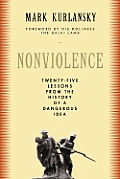
booknotes: nonviolence

13 Monday Dec 2010

Posted by Anna Clutterbuck-Cook in book reviews

≈ Leave a comment

Tags

bigotry, history, politics, religion

Mark Kurlansky’s book, Nonviolence: Twenty-Five Lessons from the History of a Dangerous Idea (New York: Modern Library, 2006) does not pretend to be a comprehensive history of the idea and/or practice of nonviolence.  Instead, it should be approached as an invitation to consider the myriad ways nonviolence, in theory and praxis, has manifested itself in different times and places around the globe.  Kurlanksy’s emphasis here, in terms of examples, is on U.S. history, though he includes a healthy smattering of other continents represented (for example nonviolent resistence to European colonialism in Oceania, medieval European monastics, and Ghandi’s well-known campaign in India). For those interested in a more in-depth analysis of any one of the particular cases he cites, a fairly healthy eight-page bibliography of sources is included that can be a departure point for further reading.

What Nonviolence really is, more than an scholarly historical analysis, is a well-written, historically-supported argument for the effectiveness of nonviolence as a political strategy — one that has a better track record than violence as a way of improving the human condition. And taken as such, I think it is worthy of note.

I should acknowledge up-front here that Kurlanksy is preaching to the converted here: while I am not a wholehearted pacifist in practice (“pacifism” being distinct from the strategy of nonviolence, as discussed below), I am already convinced of the necessity of pursuing nonviolent pathways to social and political change. In my mind, there are no “just” wars. And I believe violence always begats more violence. So I’m an easy sell, as it were.

That being said, I think Kurlansky brings up a number of interesting points about nonviolence that should provoke us to thoughtfulness, regardless of personal stance concerning the practicality of nonviolent action in a world saturated with violence.

Kurlanksy’s first point is that there is no word for the concept of nonviolence — we can only speak of it by referrring to what it is not: it is not violence. He suggests that the explanation for this absence might be found in the fact that established political, cultural and intellectual communities “have viewed nonviolence as a marginal point of view, a fanciful rejection of one of society’s key componants, a repudiation of something important but not a serious force in itself” (5).  This linguistic marginalization, he argues, signifies a cognitive marginalization, a resistence to accepting the concept and practice of nonviolence because it requires a profound reorientation toward the world. It is a “truly revolutionary” idea, a “threat to the established order,” and thus treated as “profoundly dangerous.”

Why is it a threat to the established order? Because nonviolence is effective as a political strategy and offers an alternative to violence. In contrast to pacifism, which is a personal orientation toward life — an individual “state of mind” that does not necessarily translate into political or social action, nonviolence is an explicitly political orientation.

The central belief [of nonviolence] is that forms of persusasion that do not use physical force, do not cause suffering, are more effective, and while there is often a moral argument for nonviolence, the core of the belief is political: that nonviolence is more effective than violence, that violence does not work (7).

The rest of the book offers examples — from the American Revolution to the Jewish Holocaust — in which nonviolent action was more successful than violent action in resolving the situation that as a culture we assert war was necessary to resolve.  For example,

The Nazis are often cited as an example of an enemy against whom nonviolence would be futile. This is said despite the success of several nonviolent campaigns. Amid some of the greatest violence the world has ever seen, it was little noted that more Jews were saved by nonviolence than violence (133).

He gives the example of Denmark, a government and citizenry which — through comprehensive, cooperative nonviolent action — that succeeded in saving all but fifty-one of its Jewish citizens (who died of sickness while being held by the Germans while Denmark negotiated for their release). In contrast, France lost 26% of their Jews, the Netherlands three-quarters and in Poland 90% — despite the fact that all three nations had a very active (and armed) resistence movement.

This example can obviously be interrogated, as can all of the others Kurlansky uses. But the point remains that nonviolent tactics have, historically, proved to be effectual — and we could perhaps learn from past success as well as failure.

Why, then, do we so often ignore, dismiss, scoff at, and otherwise marginalize the potential of nonviolence? Kurlanksy argues that much of the blame lies with the state (and those who represent the state), and with the fact that war — once begun — develops a momentum of its own that, popular or not, is extremely difficult to reverse.  We have also learned to accept the (perhaps false) assertion that there are times when violence is our only recourse, when violence is the only path to lasting peace, and the seldom-challenged notion that without violence we would be less safe, less free, less alive, somehow indefinably less than we are when violence is present. (For another sustained psycho-cultural exploration of violence and war as a way human beings make meaning for themselves, see Chris Hedges’ War is a Force That Gives Us Meaning )

Kurlanksy asserts that it is war and violence, not an unwillingness to resort to war and violence, which make us less free, less safe, less alive than we would otherwise be.  It is lack of imagination, lack of a willingness to imagine a world without violence — an unwillingness to imagine the wars we have endured were unnecessary and may even have made the situation worse than it otherwise would have been that are roadblocks to seeking alternative, nonviolent solutions.

For anyone who’s familiar with theories of personal trauma and recovery, this cycle of violence is going to sound familiar: you suffer the trauma of X and it is very, very difficult not to rationalize X as an experience that made you stronger, made you a better person. It can be horrifying, crippling, to even imagine that if not for experience X you would be more whole as a human being.  Kurlansky’s theory of the marginalization of nonviolence is, more or less, this personal rationalization of trauma writ large: we experience war (trauma) and seek to rationalize it because to acknowledge war serves no constructive purpose is so horrifying to concieve of that it is literally beyond language, beyond our collective imagining. Instead, we justify it as fundamental to human existence, and therefore inevitable and necessary, and therefore a part of the human condition in which we must find value.

Which, I think, is part of the reason I’m so fascinated by it. By the practice of nonviolence. Precisely because so many of us, so often, imagine it is beyond the realm of possibility. I spend much of my time studying (historically, culturally) the lives of people who live and work and think in ways that — to the majority — are literally outside of the possible. That are understood to be incompatible with a meaningful (or in some cases literal!) existence.  And yet, somehow, these folks persist in existing.

Reading a book like this is like having someone throw down a gauntlet: You think war is the only solution? Prove to me you’ve exhausted every other possibility. No, more than that: prove to me that violence will facilitate better outcomes than taking any other action or no action at all. Unless you can prove that to me, I’m not interested in hearing how nonviolence is fanciful, impractical, idealistic. Because war kills people. Violence harms people. And perhaps the most compelling (and revolutionary) idea of them all: violence doesn’t work. 

You disagree? Prove it. Until then? I’m not interested.

multimedia monday: "doesn’t this mean we join the league of ordinary nations?"

13 Monday Dec 2010

Posted by Anna Clutterbuck-Cook in media

≈ Leave a comment

Tags

human rights, politics, web video

Yesterday, as post-semester reading, I picked up Mark Kurlansky’s brief little monograph Nonviolence: Twenty-Five Lessons from the History of a Dangerous Idea (yes, I know, I’m a political nerd … what can I say?). I’ve had the book lying around since 2008 but what with one thing and another never got around to reading much passed the introduction, which was written by the His Holiness the Dalai Lama.

A booknote is forthcoming tomorrow on Nonviolence itself, but for now — as a sort of audio-visual introduction to the topic — I wanted to share two clips from my Favorite Television Show of All Time, The West Wing, episode 3.23, “Posse Comitatus.” Because as I was reading Nonviolence — particularly the portions describing the way in which violence consolidates and corrupts nation-states — this episode was what I kept thinking of as a pitch-perfect illustration of that corruption in action.

For those of you who don’t know the series, “Posse Comitatus” is the final episode in Season 3, and one in which the President Jed Bartlet (played by Martin Sheen) makes a decision to use his power as the U.S. President to do something illegal on an international scale: assassinate (and cover up the assassination) a defense minister/war criminal from a fictional Middle Eastern nation called Qumar. In the scene below, Bartlet has waited until the final possible moment to make the decision. His hawkish Chief of Staff, Leo McGarry (played by John Spencer), wants him to authorize the assassination, arguing that the defense minister will never come to trial and if he is not killed now, he will only cause more suffering. Bartlet is reluctant, arguing that if they resort to covert violence, “doesn’t this mean we join the league of ordinary nations?”

Note: This clip is actually much longer than that conversation, which begins about 4:15 in. If you want to relive the trauma of watching Mark Harmon be gunned down and C. J. get pulled out of the theater in order to be given the news, then by all means watch from the beginning. It’s a beautiful piece of television.

So let that set the stage for tomorrow’s review of Nonviolence: Twenty-Five Lessons from the History of a Dangerous Idea.

movienotes: life with father (1947)

07 Tuesday Dec 2010

Posted by Anna Clutterbuck-Cook in media

≈ 2 Comments

Tags

feminism, masculinity, movies, politics, web video

Last night, Hanna and I took a couple of hours out of our evening to screen the 1947 William Powell / Irene Dunn film Life With Father. Why did we do this? We were looking for something holiday-centric (Holiday Inn, Miracle on 34th Street) but came up dry … and decided to give this a try instead. While I can’t say it was an unqualified “win,” I definitely found myself fascinated by the entire package for a variety of reasons.

First, the original trailer.

This film is wrong on so many levels I’m only going to hit the highlights in hopes of encouraging you to check it out. Why? Because I think films from previous eras, much like our own, are fascinating windows into the normative pressures of certain periods in time.

In this case, the way in which American cinema in the postwar era was enlisted to construct a certain narrative of gender, of family, of class, and of the American past. This film is further complicated by the fact that it is a costume drama: it employees the collective memory of/nostalgia for a bygone era — in this case, a particular understanding of upper-middle-class New York City in the 1880s.

So, a few observations.

1) According to this film, men make and understand money while women spend money without any ability to understand finance. The titular father of the film (played by William Powell) is a banker and supports his wife and four sons in a luxurious townhouse complete with servants. Nevertheless, he and his wife (Irene Dunn) constantly bicker about the household budget which “mother” is incapable of managing in the manner which her husband believes is appropriate. Some of the best comic exchanges in the movie, in fact, revolve around Father attempting to get Mother to explain how she has spent the money he has given her, and Mother attempting earnestly to account for her purchases. This trope of gender differentiation is employed for comic value without ever being challenged. Neverthess, it’s fascinating to watch how blatently the paternalism is.

2) The whole movie is worth watching for the scene where Father explains to Jr. all he needs to know about women. When the eldest son falls in love with a young Elizabeth Taylor (only three years after her breakout role in National Velvet) Father takes him aside to explain a thing or two about women. What follows is instruction in how to avoid women’s advances, what to do when they cry, and a stern dismissal of Jr.’s (veiled) questions concerning heterosexual relations. I wish I had been taking notes at the time, because it really was self-parodying.

3) Making and breaking your promises is totally manly as long as you think your wife is dying. The central conflict in the film is, for reasons that defy my understanding, that Father has never been baptized and Mother is convinced this means their marriage is invalid and that he will go to hell.  So she extracts promises from him to be baptized, all of which he breaks until (spoiler) the very end, of course, when he finally capitulates and the whole family goes off together in a horse-drawn cab into the happily-ever-after. The thing that struck me was the fact that every time Father promises to be baptized, he is inevitably extending the promise as a way to get Mother to do something (or stop doing something) he wants (or doesn’t want) … including die. Then, when the situation ceases to irritate him, or distress him, he immediately retracts the promise.  It made me think of Toad of Toad Hall in the Wind in the Willows protesting, “Oh, in there! I would have said anything in there!”

4) Women (and to some extent children) care only about men as providers. This is an extention of the first point about women and math: the narrative of the entire film, to some extent, could be read in terms of consumption. The children want new clothes and toys. The mother wants jewelry. The household must be provided for. Friends come to the city to go shopping. And Father, above all, spends the entire film fretting about how much his family is spending of “his” money. The entire household, he feels (and often says — though perhaps not in so many words) should be arranged around his needs and desires as the wage-earner. And instead, his life is “controlled” by his wife and children who spend all his money and disrupt his peace, giving him very little gratitude in return. This resentment was at the forefront of postwar gender politics, and I don’t think it’s a mistake that this narrative is so blatant. I’d argue it says more about the era in which it was made than the era it was made about.

5) Religion is the sphere of women and children. Similar to the narrative of money and gender, the narrative of religion and gender is at once drawing upon 19th-century notions of women’s particular piety and purity and twentieth-century, postwar perceptions of religion as a particularly feminine practice.  The central tension in the film revolves around the discovery that Father has never been baptized (into the Episcopal Church … the main rift in the film appears to be between Methodists and Episcopalians; any holy rollers or other non-mainstream, and/or non-protestant religious groups, including Catholics, are entirely absent).  Mother is appalled and distressed by this revelation, fearing for her husband’s immortal soul as well as for the sanctity of their marriage.  Father insists that baptism is a formality, a waste of time, and resists the pressure of his wife for most of the two hours before finally surrendering to her desires and thus restoring unity back to the household.

The centrality of religious practice — if not the more personalized faith we’ve become used to in recent years — is startling to see on the big screen, incorporated into the narrative of what it means to be a White, middle-class, urban family.

That’s about all I’ve got at the moment. You can check the film out on Netflix streaming or free through the Internet Archive’s Moving Image Archive: Feature Films collection.

← Older posts
Newer posts →
"the past is a wild party; check your preconceptions at the door." ~ Emma Donoghue

Recent Posts

  • medical update 11.11.22
  • medical update 6.4.22
  • medical update 1.16.2022
  • medical update 10.13.2021
  • medical update 8.17.2021

Archives

Categories

Creative Commons License

This work by Anna J. Clutterbuck-Cook is licensed under a Creative Commons Attribution 3.0 Unported License

Meta

  • Create account
  • Log in
  • Entries feed
  • Comments feed
  • WordPress.com

Create a free website or blog at WordPress.com.

  • Subscribe Subscribed
    • the feminist librarian
    • Join 37 other subscribers
    • Already have a WordPress.com account? Log in now.
    • the feminist librarian
    • Subscribe Subscribed
    • Sign up
    • Log in
    • Report this content
    • View site in Reader
    • Manage subscriptions
    • Collapse this bar