• anna j. clutterbuck-cook
  • contact
  • curriculum vitae
  • find me elsewhere
  • marilyn ross memorial book prize

the feminist librarian

the feminist librarian

Tag Archives: writing

booknotes: women in lust

13 Sunday Nov 2011

Posted by Anna Clutterbuck-Cook in book reviews

≈ 1 Comment

Tags

feminism, gender and sexuality, smut, virtual book tours, writing

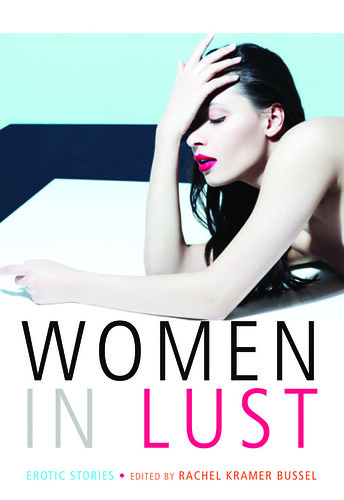
Today, I am participating in the virtual book tour for Women in Lust, a new erotica anthology edited by Rachel Kramer Bussel and published by Cleis Press. I’ve written straightforward reviews of erotica anthologies before, as well as using them as starting-points to muse about erotic writing more generally. This time I wanted to mix it up a little and followed up on Rachel’s offer to connect the virtual tour bloggers with anthology contributors for an e-interview.


Writer Donna George Storey was gracious enough to take the time to respond to my emailed questions with her thoughts about writing erotica professionally and what power erotica has to inform our lives. I hope you find her responses as thought-provoking as I did.


Without further ado, here’s Donna.


“My desire made me more interesting to myself.”
an interview with Donna George Storey  

Anna: You describe yourself as an academic turned erotic fiction writer. Can you say a little bit about how you made that shift? What prompted you to begin writing erotica, and then to make it a part of your professional life?

Donna: As far back as I can remember, I’ve loved to lose myself in a good story and dreamed of writing my own fiction.  However, I also internalized society’s messages that few writers make a living from their passion and most become staggering alcoholics, so it was safer to channel my love of words into an academic appreciation of the works of accepted “great authors.” The exoticism of Japanese literature, and the challenge of simply reading those intricate Chinese characters, kept me enthralled for a while, but deep down I felt I was ignoring my true calling.  I finally found the courage to write seriously when my first son was born, and I took a temporary break from teaching—which ended up being permanent.  Motherhood is supposed to drain you of all erotic and intellectual energy, but for me the opposite was true.

Donna’s collection of erotic literature and reference books related to Japan.
Photo by Donna George Storey, used with permission.

From the start my stories flirted with sex, but it took about a couple of years of practice before my stories were so steamy, I could no longer submit to proper literary magazines.  Yet I found being a “bad girl” immensely liberating to my creative spirit.  In spite of the erotica revolution in the 1990s when many talented authors and editors like Susie Bright and Maxim Jakubowski proved that stories with erotic themes could be smart, thought provoking and artistic, many people still assume sexually honest writing has to be poorly written, the kind of thing you hide under the bed.  My goal is to write stories that challenge that stereotype, stories that respect the complexity of the pleasures of body and mind.  Few mainstream authors are comfortable writing about sex in a way that celebrates its positive aspects (notice how often sex is coupled with punishment, betrayal, violence or other negative consequences in mainstream culture).  There are many erotica writers who do it bravely and beautifully—but we need more.  It changed my life and opened my senses in ways I’d never imagined, and I highly recommend it to everyone!

Anna: The story included in Women in Lust, “Comfort Food,” uses recipes and cooking as part of the seduction — and the end goal of the seduction, even. Can you talk a little bit about why you chose to write a piece centered around preparing and eating food? What was the immediate inspiration for this particular story?

Donna: When I’m not writing erotic stories, I love to cook, although I spend even more time salivating over beautiful cookbooks, a sort of culinary porn.  As I considered your question, I realized that my stories are also like recipes in that I’ll take an image that intrigues me and mix it together with a childhood memory, a touch of a lifelong hobby, and a few juicy tidbits from friends, then add a cup of my own libido to finish it all up.   “Comfort Food” is somewhat different from the common sex-and-food story involving lovers smearing whipped cream all over each other–which is fun, but messy!  In keeping with the female empowerment theme of Women in Lust, the story deals with a middle-aged woman’s fascination with a young chef and his secret pudding recipes.  He poses a challenge for her, but of course she gets everything she wants in the end.

There’s one line in this story that’s a particular favorite:  “My desire made me more interesting to myself.”  One of my many discoveries as an erotic writer is that sensual pleasure doesn’t have to be confined to the genitals.  Appreciating the sweetness of a ripe berry can be equally bewitching.  Yet enjoying food without guilt is as frowned upon in our society as enjoying sex without guilt, so that parallel also drove the story.  Last but not least, anyone who has a passion is very sexy to me, and good cooks by definition care about what they do.  Cooking is a form of communication, and I swear I can taste the love and dedication or lack thereof.  I once had an absolutely amazing dish of butterscotch pudding at a fancy restaurant in San Francisco called Fifth Floor.  I didn’t ask for the recipe, but I wish I had.

Anna: When I write about erotica and pornography as a blogger, I often get comments asking me for reading/viewing recommendations that are “women friendly” or “feminist.” Where do you go for good-quality erotic literature? Any suggestions for my readers about places to seek out reading matter?

Donna: Yes, I definitely have some recommendations.  Cleis Press and Seal Press publish smart, well-written and very hot anthologies that celebrate female pleasure—anything edited by Rachel Kramer Bussel, Violet Blue and Alison Tyler are sure bets.  Online magazines are a great place to sample different authors without commitment.  Clean Sheets (www.cleansheets.com) tends toward the literary, you can always count on good, sexy writing.  Oysters and Chocolate (www.oystersandchocolate.com) is edited by two wonderful women, Jordan LaRousse and Samantha Sade who embrace all varieties of stories.  Since I began writing, I’ve come to appreciate the sensibility an editor brings to an anthology.  It’s more than just fixing typos.

Anna: One of the things I’m fascinated by as a reader/amateur writer of erotic fan fiction and original erotic stories is the relationship between peoples’ sexual identities/experiences and the type of erotica they write or choose not to write. For example, there are straight and bisexual, even lesbian, women who write/read almost exclusively m/m erotica. I’m curious whether you write exclusively female/male erotica or whether you write other pairings (or groupings), and why you choose to write the pairings (or groupings) you do.

Donna: I’m fascinated by the same relationship myself.  Interestingly enough, the second most common question I hear after “are you published?” is “are your stories based on real life?” I actually do make use of material from my experience for many of my stories, but I take a lot of liberties with the facts, and none are strictly memoir.  No matter how realistic, erotic stories are fundamentally erotic fantasies.  Even if you aren’t peeping into the author’s actual bedroom, you are definitely getting a peek into her imagination and what really turns her on.  In a way, my readers are more intimate with me than many of my lovers have been.

When I write, I’m aiming to get at the hidden truths of sexuality, which is why I write mostly what I know, heterosexual sex, and why the wilder couplings are often explicitly presented as fantasy rather than reality.  On the other hand, it’s a big turn on to write and read about something you would never, ever do in real life.  That’s the power of fiction, to try on different lives.  So I have also written stories way outside of my experience.  I’ve noticed a trend of scenarios where a woman sleeps with two men, her maidenly reluctance completely overcome by her lover’s insistence that she enjoy sex with a hot stranger.  How can she say no to the man she loves, especially if he’s ordering her to be a slut?  It’s the perfect way to have your pudding and eat it, too.

Yet, I value authenticity and honesty in erotica.  I’d rather read a story written by a lesbian that gives me insight into her sensibility and experiences than something churned out by a guy who’s getting paid a penny a word for some hot girl-on-girl action.  Perhaps it’s my grounding in 70’s feminism, but part of me feels it’s a violation for a straight person to impersonate someone with a different orientation unless they approach it with great respect and sensitivity.  GLBT voices have been silenced for so long, it’s time to celebrate the chance for those who’ve been marginalized to tell it like it is.

That said, I have written a couple of lesbian stories that seemed to pass as believable.  My favorite is entitled “Ukiyo,” about a Japanese literature professor who takes a jaunt through Kyoto’s pleasure quarters with a colleague as an honorary man and finds herself becoming intimate with a female dancer.  I drew upon my own genuine curiosity and attraction to women, as well as a few actual drunken nights in Japan where my usual inhibitions were especially soft.  There was enough truth and genuine desire, I suppose, that Susie Bright chose the story for Best American Erotica 2006.

Anna: Are there any particular tropes in modern erotica that you wish would just go away?

Donna: I do have a particular pet peeve, which also happens to be a very common scenario in erotic fiction.  You lock eyes with a stranger at the bus stop or in a club, immediately retreat to an alley or public restroom, and have the most mind-blowing sex of your life without a word spoken.  I understand why this sort of zipless fuck is a popular fantasy—seduction is hard, knowing someone intimately is harder–but this particular type of story leaves me cold, bored, and unable to suspend disbelief.  I like to be warmed up first, even in fiction.

Anna: What are some of the things you wish we would see more of in erotic writing?

Donna: What I’d really love to see more of doesn’t have to do with a particular theme or kink, it’s about who writes erotica and why.  Until I started writing erotica myself, I thought of sexually arousing material as “out there,” images created by Hollywood or the porn industry, or naughty letters in Penthouse.  But writing erotica encouraged me to pay attention to my sexual response and my lover’s in a whole new way.  It was a tremendous awakening and took us to a new level of intimacy and enjoyment.  I realized how much sexual power and creativity was within me, not out there.

Donna George Storey
Photo by Laura Boyd, used with permission

The stories that blossomed from my imagination were an education as well.  Because of my writing, I’ve come to realize that sexual fantasy is not just a straight reflection of what you desire, it’s like a foreign language you have to decode.  Getting turned on by being dominated, as in the example above where the husband commands the wife to sleep with another man, does not mean you literally like or want to be dominated in all aspects of your life.   I now read this fantasy of mine as a way for my libido to borrow power relations in real life, where a good woman is only allowed to be sexual in relation to a husband.  But then something cool happens in my heated brain—the authority figure is transformed into someone who now allows  and insists on pleasure.   The same is true with exhibitionist fantasies, which are really about showing a hidden sexual self, not breaking genital exposure laws.  Sexual fantasy might seem taboo and outrageous, but at the heart is permission and acceptance of one’s eroticism.  That discovery has been very reassuring for me.   Even if you aren’t into this kind of analysis, just paying attention to what turns you on is fascinating.  How do you set up a gateway into your erotic world?  What point in the story is the climax?  How are figures in the real world transformed? (You’d never recognize my high school principal!)

As for the why you write, there’s lots of emphasis on publication as the test of a “real” writer, but the most meaningful erotica can be a private gift to yourself or your lover.  So, yes, I’d love to see more people exploring their erotic imaginations and writing lots of hot stories.  The world would be a much better place for it.


WOMEN IN LUST: You can read more about the Women in Lust anthology, and find excerpts of several stories contained therein, at the anthology website as well as purchasing copies from a variety of online booksellers including Amazon, Powells, or Cleis Press.

AUTHOR’S BIO:  Donna George Storey has taught English in Japan and Japanese in the United States.  She is the author of Amorous Woman, a very steamy novel about a woman’s love affair with Japan (check out the provocative book trailer).  She’s also published over a hundred literary and erotic stories and essays in such places as The Gettysburg Review, Fourth Genre, Women in Lust, Best American Erotica, The Mammoth Book of Best New Erotica, and Penthouse.

Cross-posted at The Pursuit of Harpyness. 

nano update: week one

09 Wednesday Nov 2011

Posted by Anna Clutterbuck-Cook in fandom

≈ 2 Comments

Tags

fanfic, fun, smut, writing

The NaNo site doesn’t have word count widgets this year, so I resorted to a screenshot this morning. I’m actually further along than I thought I’d be at this point — so yay?

I’ve been working on two new installments of my How She Loved You series (posted at AO3), which is Sybil Crawley/Gwen fan fiction series building loosely on the events from season one of Downton Abbey and, you know, inventing liberally thereafter. I’m currently about 5K and three sections into a 5+1 fic (“Five times Sybil and Gwen parted before dawn and the first time they didn’t have to”), a piece about Sybil painting Gwen’s portrait, and a longish plottish piece filling in Gwen’s back story (complete with Tragic First Love).

Hanna, as usual, has demanded there be orgasms at regular intervals for both main characters, so for those of you yearning after femslash rest assured that this is Porn With Plot and/or Plot With Porn on an installment-by-installment basis.

Any of you participating in National Novel Writing Month? How’d the first week go for y’all this year?

nanowrimo 2011 commencing in 3…2…1…

01 Tuesday Nov 2011

Posted by Anna Clutterbuck-Cook in fandom

≈ 4 Comments

Tags

blogging, books, fanfic, writing

Today is November 1st and thus the beginning of National Novel Writing Month 2011. As I wrote at The Pursuit of Harpyness last Thursday, I’ll be participating this year for the second time (my first year being 2009).

For those of you unfamiliar with National Novel Writing Month, basically it’s an opportunity to join thousands of other amateur fiction writers in solidarity as you try to write 50,000 words of fiction between midnight on November 1st and 11:59pm November 30th. A lot of people attempt a full-length novel, but me I’ve got some fan fiction planned and maybe some non-fanfic erotic short stories I’ve had kicking around for a while in the back of my brain. We’ll see. I’m not particularly gunning for the full 50k, but I’d like to contribute as many words as possible to the overall pool of creativity the event sparks. So … the upshot is that y’all may not be seeing so much of me between now and the end of the month. My goal is to keep writing at least one post a week here at the feminist librarian — either a book review or a “thirty at thirty” post. I’ve already got a virtual book tour event later in the month that I’m committed to (Rachel Kramer Bussel’s new anthology Women in Lust!) as well as a couple of advance review items I want y’all to know about (Gayle S. Rubin’s collection of essays, Deviations, and Jeanne Cordova’s memoir When We Were Outlaws). So look for those reviews in upcoming weeks. I’ll also continue posting links at the feminist librarian reads and writing at least one post a week over at The Pursuit of Harpyness. Hanna and I also continue to post three fan fiction recommendations per week at everything is gay and nothing hurts. Plus, obviously, harassment by email is always an option for those of you who miss me!
In the meantime, I hope all of you have a cozy and creative November — and we’ll be back to our regularly scheduled programming sometime around December 1st.

"The second vital smirch"

20 Tuesday Sep 2011

Posted by Anna Clutterbuck-Cook in book reviews

≈ 2 Comments

Tags

blogging, books, fun, harpyness, humor, writing

So last night I got a pingback on a book review I wrote earlier in the year at Harpyness of Stephanie Coontz’ A Strange Stirring. Out of curiosity (who would be linking to a six-month-old post?) I clicked through. At first glance it appeared to be a book review of Judith Warner’s Perfect Madness. At second glance it turned out to be a plagiarized version of my review of Judith Warner’s Perfect Madness.

Well, sort of.

“mommy and baby are people of highly importance”
(click image to imbiggen)

As I started skimming the post, I realized that they hadn’t quite plagiarized it … they’d thrown it through a translation filter (or maybe several?) so that the result was complete gobbledygook. The whole site reads like it was put together by a robot with only a thin grasp of English.

It’s just not worth going after them for stealing my post, because in actual fact their garbled version is much more colorful and entertaining than my own incisive analysis! I’m not going to link to the post because I’m philosophically opposed to sending traffic their way (though, *cough*cough*, you can find the ping-back on the Coontz review comment thread above … they were foolish enough to leave the internal links intact from the original post … bwahahahah!). However, I’m totally not above providing y’all with some Tuesday afternoon laughs.

My review reads:

Suddenly, living in the Washington D.C. metropolitan area, Warner found herself with no critical distance on a culture that rewarded mothers for being entirely absorbed in, perfectionists at, a very particular type of mothering.

The plagiarized review reads:

Suddenly, vital in a Washington D.C. civil area, Warner found herself with no vicious stretch on a enlightenment that rewarded mothers for being wholly engrossed in, perfectionists at, a unequivocally sold form of mothering.

My review reads:

The second major flaw in Perfect Madness was the way Warner allows herself to make pretty harsh judgments about specific parenting choices.

The plagiarized review reads:

The second vital smirch in Perfect Madness was a proceed Warner allows herself to make flattering oppressive judgments about specific parenting choices.

My review reads:

Warner lays the blame for her sorrows at the feet of ‘the culture wars’ between social conservatives and feminists, whom she believes waste their energies on issues that are not of concern to the majority of Americans.

The plagiarized review reads:

Warner lays a censure for her sorrows at a feet of ‘the enlightenment wars’ between social conservatives and feminists, whom she believes waste their energies on issues that are not of regard to a infancy of Americans.

My review reads:

As a thirty-year-old woman in a lesbian relationship with no immediate plans to parent, I am not the demographic that Warner is writing about or writing for.  Even if I were to find myself a parent, the legacies of my own childhood in a fairly radical household and my own values system would preclude parenting the way the women in this book are parenting. Their values are, in many ways, decidedly not my values. And because of that, the experience of reading Perfect Madness felt voyeuristic at times. The study of lives and concerns at far remove from my own.

The plagiarized review reads (this might be my very favorite paragraph):

As a thirty-year-old lady in a lesbian attribute with no evident skeleton to parent, we am not a demographic that Warner is essay about or essay for.  Even if we were to find myself a parent, the legacies of my possess childhood in a sincerely radical domicile and my possess values complement would preclude parenting a proceed a women in this book are parenting. Their values are, in many ways, decidedly not my values. And given of that, a knowledge of reading Perfect Madness felt voyeuristic during times. The investigate of lives and concerns during distant mislay from my own.

My friend Lola has suggested that now she should qualify every introduction of me with “a lesbian attribute” as in, “this is Anna, a lesbian attribute.” When we find out what I’m an attribute of you’ll certainly be the first to know!

30 @ 30: d’être et d’écrire* [#5]

20 Saturday Aug 2011

Posted by Anna Clutterbuck-Cook in life writing

≈ 1 Comment

Tags

blogging, thirty at thirty, writing

why did I find this appealing?

*to be and to write

There was a time when getting me to write — at all — was like pulling teeth. Seriously. In the dusty recesses of my memory are recollections of a period when my mother resorted to talking to me with a Raggedy Ann puppet in order to make short writing projects palatable (for obvious reasons I remained dubious).

I don’t remember very clearly why writing seemed like a stupid waste of time. I think it felt laborious, communication was uncertain (I was not a fan of standardized spelling), and why write something down if I knew it already and could talk so much more quickly? This was seriously something my mother and I used to fight about when I was small. I could be stubborn, and was disinclined to acquiesce to her requests, even when she (or Raggedy Ann) asked so very patiently. I had better things to do with my time than put pen to paper and form words. 
I can’t really say when this changed, in all honesty. I remember that my first acts of fan fiction creation were verbal, not written — when the latest issue of the Pleasant Company Catalog (the precursor to the American Girl franchise) arrived in the mail I would curl up with the glossy pages and narrate stories about the the lives and relationships of the dolls therein. Yes: I would literally tell myself stories, out loud. 

When I was six, I received my first diary. I still have it stored away in a box in Michigan. The first entry begins: “To dae I stayed in bed to late…” and then describes how I walked to the library and what I did there. A few entries later my little sister is born. “We have a new baby,” I report. “She poops in the bathtub.” There are illustrations. This less than auspicious beginning led to what would eventually become a nearly twenty-five year habit, thought entries remained erratic and highly uninformative until I hit adolescence, at which point journaling became a multi-layered activity: one part journalism, one part self-reflection, one part fiction, always with a high level of adolescent drama.


Journaling (October 2007)
 I kept a journal obsessively for over twenty years, which amounted to over 100 volumes and approximately 19,200 pages worth of jotting. Journaling kept me grounded and it was what helped siphon off some of the constant verbiage that rattles around in my brain (these were the days before blogging). In addition to keeping a diary and writing novels — which my adolescent years also saw their fair share of those — I also had several pen-friends (yes, actual pen-friends, to which I wrote actual hand-written letters). I deluged them with correspondence: letters made up of as many as twenty-five or thirty leaves of lined notepaper, filled on both sides. 

There are probably several posts worth of story I could tell about my evolving relationship with the written word during the seven years I was in college and the four years I spent in graduate school. College was what turned me on to the power of nonfiction writing, specifically creative nonfiction and research papers. Given my habits as a diarist and my fondness for epistolary writing, it’s not a big surprise to me, looking back, that I took to personal essays with boundless enthusiasm. I also grew to love — though not without tears! — the way in which research and analysis helped me to organize my often chaotic thought process in a way that people outside my own head not only seemed to (wonder of wonders!) understand but also to appreciate.


My brain while writing a research paper
Email and blogging have replaced correspondence and journaling these days, something that I’m not entirely at peace with. Actually, my abandonment of daily journaling coincides almost exactly with the beginning of my relationship with Hanna — a fact that causes Hanna some amount of anxiety. I’ve been thinking about the evidence, though, more or less since I realized a pattern was emerging and here is what I’ve come to think: that writing, all along, has been a means of conversation for me. That was, after all, the reason my haggard mother pushed my first journal into my six-year-old hands: with a new baby on the way she realized there was no way she would be able to keep up with the conversations her eldest daughter wanted to have. Constantly. Ceaselessly.

Journaling, correspondence, fanfiction, memoir, blogging, email, academic research and writing — all of these are ways through which I connect to ideas and the trans-historical, geographically disparate set of people who think and discuss them. Journaling was what I did when I was living a largely solitary life; now I have someone to share life with, discuss ideas and events with (except when she cries “enough!” which she occasionally does). Between blogging (and comment threads), email, and a primary relationship it’s simply difficult to find the time or the motivation to replicate my thoughts in a private space where no one else will read them.*

Perhaps the title of this post should be, more accurately, de s’entretenir et d’être (to converse and to be).

*Story: A few years ago a researcher at the MHS practically had a heart attack from joy when she saw me writing in my journal at the front desk. She pleaded with me to ensure that my diaries would someday reside in an archive where they might be accessible to future generations of researchers like herself. I didn’t mention to her how many volumes there were, but I do actually intend to donate my extant diaries and correspondence to an archive somewhere, someday. As a researcher who depends on those types of “everyday” sources for my own work I figure I owe it to my successors!

Newer posts →
"the past is a wild party; check your preconceptions at the door." ~ Emma Donoghue

Recent Posts

  • medical update 11.11.22
  • medical update 6.4.22
  • medical update 1.16.2022
  • medical update 10.13.2021
  • medical update 8.17.2021

Archives

Categories

Creative Commons License

This work by Anna J. Clutterbuck-Cook is licensed under a Creative Commons Attribution 3.0 Unported License

Meta

  • Create account
  • Log in
  • Entries feed
  • Comments feed
  • WordPress.com

Create a free website or blog at WordPress.com.

  • Subscribe Subscribed
    • the feminist librarian
    • Join 37 other subscribers
    • Already have a WordPress.com account? Log in now.
    • the feminist librarian
    • Subscribe Subscribed
    • Sign up
    • Log in
    • Report this content
    • View site in Reader
    • Manage subscriptions
    • Collapse this bar