• anna j. clutterbuck-cook
  • contact
  • curriculum vitae
  • find me elsewhere
  • marilyn ross memorial book prize

the feminist librarian

the feminist librarian

Monthly Archives: February 2010

sunday smut: links on sex and gender (no. 13)

28 Sunday Feb 2010

Posted by Anna Clutterbuck-Cook in linkspam

≈ 2 Comments

Tags

gender and sexuality, sunday smut

Just links this week folks . . . ran out of oomph to provide commentary.

Can You Get Sexuality Info at the Library? | Charlie Glickman @ the Good Vibrations Blog.

Sexually Confused | Zoe Margolis @ The Guardian.

But Women Don’t Rape (about female-on-male sexual assault) | Rachel Hills @ Feministe.

When Rapists Graduate and Victims Drop Out | Amanda Hess @ The Sexist.

“A Culture of Indifference”: Report on Campus Sexual Assault Reveals Inaction Taken by Schools, Education Department | Vanessa @ Feministing.

Our Addiction to Tiger Woods’ “Sex Addiction” | Marty Klein @ Sexual Intelligence.

How *not* to write about sex addiction | Amanda Marcotte @ Pandagon.

Surrogacy: The Next Frontier for Reproductive Justice | Miriam Perez @ RhRealityCheck.

Worried About Women of Color? Thanks, But No Thanks, Anti-Choicers. We’ve Got It Covered | Miriam Perez @ RhRealityCheck (’cause why not link the Radical Doula twice when you can?)

How childbirth caused my PTSD | Taffy Brodesser-Akner @ Salon

“What does a feminist mother look like?”: 2 of 2 | Molly @ first the egg.

Our Labia Look Just Fine, Thanks: Part III | BeckySharper @ The Pursuit of Harpyness.

Is Saying “I’m Gay” Offensive? | Toni Infanti @ Feminist Law Professors.

Gay Relationships & the US Census | Charlie Glickman @ the Good Vibrations Blog.

Gay Mafiosi and Group Marriage Monotheists: Sex, “Caprica,” and a Changing World | Greta Christina @ The Blowfish Blog.

Lady Gaga sports a strap-on | Jessica @ Feministing.

Cyndi Lauper & Lady Gaga Go Off Script, Discuss Safe Sex On GMA | Margaret Hartmann @ Jezebel.

which leads for obvious reasons to…

Homophobia and the Olympics & Johnny Weir, you’re awesome | Amanda @ Feminist Musings by a Christian Woman.

*image credit: Figure Skating Johnny Weir 2009 NHK Trophy made available by ando.miki @ Flickr.com

"don’t ever link those two things again…" (4 of 4)

27 Saturday Feb 2010

Posted by Anna Clutterbuck-Cook in Uncategorized

≈ Leave a comment

Tags

guest post, hanna, movies

And….finally, after a couple of weeks’ hiatus, I bring you the fourth and final installment of a guest post by Hanna, cross-posted at …fly over me, evil angel… (if you missed the first episodes, you can read installment one, installment two, and installment three before proceeding further).

a quick review from…well, the last time this was on a saturday: in the spirit of “don’t complain about something if you’re not prepared to do it better,” i noticed over the past couple of weeks two lists — one from wired and one from a blog i know not of called ink-stained amazon which i have to say is beautiful to look at it — that both purport to be ‘essential lists’ of ‘geek culture’ quotes.

ahem.

okay, so the wired list starts off with monty python and the holy grail and the amazon list includes the sarah jane adventures — but i’m still not wildly impressed with either one.

i figured i could do better.

then i thought about it and realised that, on my own, i didn’t have the time to do better so i roped in my ever-patient girlfriend to help me do better. 🙂

first off, a couple of notes:

1. this is for fun. if you’re not amused, go read something else. i won’t be offended, promise. that being said, suggestions and additions (politely phrased!) are welcome in the comments. but keep in mind this is installation 1 of 4! not everything will fit in here.

2. these are probably mostly going to be dredged out of my memory, anna’s memory, imdb, or official show/movie sites. inaccuracy is, therefore, almost inevitable. not to mention repetition of shows or characters. if this annoys you– well, make your own list. 🙂

3. i’m not aiming for some kind of “worst to best” or “best to worst” list. they’re here because the two people making the list think they’re fun or because one of us was able to strong-arm the other into including them. brief context is provided where anna or i thought it was necessary.

5. i am aiming for 4 posts of 25 quotes each over the next 4 weeks. tune in each friday/saturday for your new installment! and here’s the link to the first post, and the second, and the third.

okay, and that being said…

1. The Doctor: “Allons-y!” Pretty much any episode of the new series with David Tennant (we’ll miss you, Mr. Tennant, sir.)

2. Gareth Blackstock: “I am Gareth Blackstock; I am seriously unpleasant!” Chef!, can’t remember which episode. Something in Season 1, I feel.

3. The Player [to Rosencrantz and Guildenstern]: “Until next time.” Rosencrantz and Guildenstern are Dead.

4. Leela [to someone attempting, foolishly, to grab her]: “Touch me again and I’ll fillet you.” Doctor Who, “The Sunmakers.”

5. Lola: “Burgundy. Dear God, tell me I’ve not inspired something burgundy.” Kinky Boots.

6. Cat: “I’m lookin’ nice. My shadow’s lookin’ nice. We’re a great team!” Red Dwarf, again, something in the first season.

7. Spongebob: “I came over to see if you wanted to go jellyfishing, but I can see you’re busy having an episode.” Spongebob Squarepants, something in the first season…er. I can’t admit to remembering the name of this episode but nothing from Chef! or Red Dwarf — I just can’t!

8. Han Solo: “Hey — it’s me.” Star Wars: Return of the Jedi.

9. Jared Grace: “I was reading in a footlocker!” The Spiderwick Chronicles.

10. Sarah Connor: “Do I look like the mother of the future? I can’t even balance my checkbook!” Terminator.

11. Danny Archuleta: “It has not been a nice day!” Predator 2.

12. Ianto Jones: “Because I know everything. Also, it’s written on the bottom of the screen there.” Torchwood and I am ashamed to say, but I have no idea which episode it’s from. … Second season? Maybe? Oh, help.

13. Son of Mine: “He never raised his voice. That was the worst thing – the fury of the Time Lord – and then we discovered why. Why this Doctor, who had fought with gods and demons, why he had run away from us and hidden. He was being kind.” Doctor Who, “Family of Blood.”

14. Sarah Jane Smith: “There are two types of people in the world. There’s people who panic — and then there’s us. Got it?” The Sarah Jane Adventures, “Invasion of the Bane.”

15. Eddie Izzard: “I have penis nonchalance, really.” Live at Wembley.

16. Sam Winchester: “You’re…afraid of flying?” Dean Winchester: “Why do you think I drive everywhere!” Supernatural, “Phantom Traveler.”


17. Willy Wonka: “Everything in this room is edible. Even I’m edible. But that, children, is called cannibalism and is frowned upon in most societies.” Charlie and the Chocolate Factory.

18. Dr. Frank N. Furter: “But isn’t it nice!” The Rocky Horror Picture Show.

19. Willow Rosenberg: “The library. Y’know — where the books live?” Buffy the Vampire Slayer, “Welcome to the Hellmouth.”

20. Reverend H.W. Smith: “This is God’s purpose, but not knowing the purpose is my portion of suffering.” Doc Cochran: “If this is His will, He is a son of a bitch.” Deadwood. Sometime around the end of the first season.

21. Carmen Ghia: “May I take your hats? And your swastikas?” The Producers.

22. Protagonist: “My name? Well, if you knew that, you’d be as smart as—” Layer Cake.

23. Nina Conti: “That’s a sweet voice on a monkey but with breasts it’s bloody sinister.”

24. Arthur Burns: “You shot me, Charlie. What’re you gonna do now?” The Proposition.

25. Norman: “What about me?!” The Dresser.

And I know I strayed a bit from my original self-issued mandate with 22, 24, and 25.

But…sue me, really. 🙂

They’re all amazing movies. If you haven’t seen them — why the hell are you still sitting here reading this? You have watching to do!

tech note: blog redesign

26 Friday Feb 2010

Posted by Anna Clutterbuck-Cook in admin

≈ Leave a comment

Tags

blogging

Hanna has offered to help me revise my blogger template this weekend; there are some things about the current one which continue to frustrate me, and I feel like the Future Feminist Librarian-Activist could do with a fresh look. So bear with us as we play around with various features. We’ll hopefully have it all up and running in no time, but tech glitches do happen!

friday fun(dies): CPAC & Teaparty Conventions

26 Friday Feb 2010

Posted by Anna Clutterbuck-Cook in media

≈ 1 Comment

Tags

npr, politics, web audio

On Tuesday night I had this dream in which I was debating politics with a conservative journalist who kept referring to President Obama as “the black president.” I got really irritated with this, and kept trying to patiently explain to him that while it was acceptable to describe Obama as “the first black president” (although he actually identifies as biracial) it was not acceptable to refer to him as The Black President, as if that was his title. Because this implied that Obama is not the American president, but some shadow leader who doesn’t serve the entire country.

In the dream I was totally articulate (you know how you are in dreams?), and yet this reporter would just not listen to me. So I picked up a fork from the table at which we were sitting and threw it so hard that I impaled it in the reporter’s thigh.

Then, when he still refused to accept my argument, I did it again.

I’m not particularly proud of the fact that my most satisfying dreams are about making flawless rhetorical arguments and stabbing right-wingers with dinnerware. Hanna says if these are the kind of dreams I’m having, I might have to go sleep on the couch. But in my defense, walking home from class on Tuesday night, just before bed, I was listening to this Fresh Air story on the CPAC conference and the new face of American conservatism.

Transcript available at NPR.

Now there’s a lot that I find upsetting in this report, not least of which the fact that the center of gravity in right-wing politics seems to have shifted to the libertarian right of George W. Bush. And they’re talking crazy-talk.

But the dream fantasy about the dinner fork was, I think, inspired by this bit about Sarah Palin.

GROSS: So I should mention Sarah Palin. Where is she now on the conservative movement? Where does she fit? How much influence does she have? Or maybe influence isn’t even the right word. How much faith do people have in her, like?

Mr. WEIGEL: Well, tea party activists and conservatives have a lot of faith in her for different reasons. Tea party activists respect her because they think she’s one of them, and conservatives like the way she’s attacked by the media.

They – Palin spent a lot of time, recently, attacking media figures who use what she calls the R-word to describe the developmentally disabled. You know, that’s not a political quest that makes sense, but activists who are very oppositional and think that there’s a big infrastructure out to get them, really respect her for that. So she’s not as much a leader as somebody they identify with.

So let me be clear here. Using the word “retarded” to talk about developmentally disabled folks, or as a slang word for “stupid” (“that’s retarded”) is an issue. One that activists whose blogs I read have been raising for quite some time, and one I also believe Palin is within her rights to talk about.

The thing is, I would take her much more seriously if she (and the conservatives who identify with her) too me and my people seriously when we raise issues about how language has real-world consequences. Like when we talk about God language, or the use of casual use of words like “rape” and “gay,” calling grown women “girls,” or parents “breeders.” Feminists and other activists on the left have been talking for decades about how language matters. And we’ve been consistently derided as being too fucking serious for our own good. We’ve been accused of being “the language police” and laughed out of town for being “politically correct” (which has mysteriously turned from an inclusive goal to strive toward into something legalistic to be avoided at all costs).

So it’s really, really hard for me to take Palin & co. seriously when they suddenly decide they’re all about defending certain folks against marginalization through language. Not because I don’t agree with them (on this particular point, if nothing else), but because it never mattered to them until now, and I have yet to see them take that personal revelation about the importance of language and realize how others might have the same experience over different words. A little bit of empathy will get you a long way, people. Go away and exercise those muscles, and then come back and talk to me.

booknotes: right (part one)

25 Thursday Feb 2010

Posted by Anna Clutterbuck-Cook in book reviews

≈ Leave a comment

Tags

education, photos, politics, religion

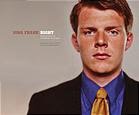
Jona Frank’s recent work of photojournalism, Right: Portraits from the Evangelical Ivy League, uses images to explore the world of Patrick Henry College. Patrick Henry is a four-year college founded in 2000 by Michael Ferris specifically to be “the Christian equivelant of the Ivy League,” as journalist Hanna Rosin writes in her introduction.

I discovered Right through this photo essay at Mother Jones (if you’re interested in seeing some of the images from the book) and since I’ve read Hanna Rosin’s earlier book on the subject — and am fascinated with home education and the Christian right generally — I knew I had to check out the book. Despite the fact Hanna looked askance when I brought it home.

This is actually going to be a two-part review. The second part focuses on a lengthy quotation from one of the student interviews; watch for that coming in a couple of days. Here, I’d like to make a couple observations about the way in which the photographer and two essayists (Hanna Rosin and Colin Westerbeck) approach their subject.

I am not practiced in visual analysis, and therefore feel slightly out of my depth in reviewing a book composed largely of images. The photographs are largely composed, rather than action shots, and highlight individual students, some of whom are photographed multiple times and several of whom were interviewed, with their responses providing text for the book.

I was left with the distinct feeling that the photographer and contributors (Rosin and Westerbeck) had missed an opportunity to really unpack some of the complexity of their subject. This is a frequent frustration I have with treatments of both the modern home education movement and recent American religious history: that both get characterized in broad strokes with little attention to nuance, and taken at once too seriously as a potential threat to mainstream society and treated gingerly as mysterious outliers rather than human beings with real effect on our world.

Rosin, as I have pointed out before, consistently collapses all home educators under the umbrella of Christian evangelical right-wing homeschooling — a lack of distinction that does a disservice both to the practice of home education and to the specific experience of those who home educate for explicitly Christian reasons. “The homeschooling movement,” she writes, for example, “is full of nostalgia for a prelapsarian age, before the Pull or even sewing machines. The result is that sometimes families seem frozen in an indeterminate earlier time” (9). While skepticism about the effects of modernity and industrialization on human life is certainly present in some homeschooling families, on the political left as well as the political right, I would argue that it is reductionist to speak of The Homeschooling Movement as a singular entity with one philosophical orientation toward technological and social change.

Likewise, I was struck by the wariness that Frank brought to her project, as voiced in her own narrative essay toward the end of the book.  She describes the difficulty of creating portraits of young people groomed for public service and intensely conscious of the image they are projecting in the outside world. She then turns to the uneasiness that the self-assurance of these young people engenders in her.

Elisa, in her trench coat, is self-assured and ready . . . One month after this photo was taken, she will be married, her name changed, school will be over, and she will be in her life, on her path. She’s done everything right. Yet when I look at that picture, I feel concern for her. It all seems so fast and she seems so young. But herein lies my fascination with the sense of assuredness these kids possess. Maybe she is not so young. Maybe she is tired of waiting.

The assuredness confuses me. I had vague notions that I would marry and have a family when I was twenty-two, but both were far off. What I wanted was exploration, travel, stories, youth hostels and road trips, part-time jobs and film school. Before commitment I yearned for freedom. This is part of being young in America, or so I believed, until I went to Patrick Henry (143).

I appreciate Frank’s candidness about her own complex response to the different path to adulthood that Patrick Henry students have taken: home educated young people, particularly those who come from families that take a critical stance to mainstream American culture (regardless of political orientation) often do reject notions of adolescence that are so ingrained in the American psyche that they seem commonsensical. For example, the idea that adolescence and young adulthood are “naturally” a period of rebellion and freedom from “commitment” — and that somehow that lack of commitment to experiences that are coded “adult” experiences (marriage, parenthood, careers) is crucial to identity formation.

I would argue, instead, that it is an experience perhaps crucial to a certain kind of identity formation. One with think of as natural, perhaps inevitable.  The normal state of being. Home-educated young people often make the world aware, simply by their presence, how much of what we take to be “normal” is, in fact, a product of particular decisions about childcare, education, and the expected path to full participation in society. As a feminist, I really do believe in the personal and political are interconnected.Certainly there are connections to be made between the chosen life path of Patrick Henry students and their (by and large, although not monolitic) right-wing politics. Yet the correlation is far from uniform. We can, after all, be just as self-assured about following life trajectory wholly at odds with the ideals that Patrick Henry students espouse.

Who knows. Maybe there’s a book to be written there somewhere. Maybe someday I’ll end up writing it myself.

quick hit: questions from a three-year-old

24 Wednesday Feb 2010

Posted by Anna Clutterbuck-Cook in linkspam

≈ 1 Comment

Tags

children, fun

Let me be upfront about this: I am not — I repeat NOT — a fan of the genre of writing/commentary that highlights the “cute” things children say as an underhanded way of making fun of their understanding of the world. I don’t know about you, but I was always terribly insulted as a child when I said something I thought was astute and grown-ups laughed at me (I’d argue that affectionate laughter was worse than mean laughter — it meant they weren’t taking you seriously. Which, as a kid, sucks.)

So I’m sharing this in the spirit in which the original poster, Molly @ first the egg seems to have written it: damn respect for a child who can ask us to re-evaluate our understanding of the world so profoundly by asking a few simple and completely logical questions.

During the last week of 2009 and the first of 2010, our son Noah asked the following questions:

* What are some people real and some people not real?
* Why do characters do real things? (Contests are real—why is Harry Potter in a contest and he’s not real?)
* What is dying?
* Why do some people kill people?
* Where do people die?
* Where are we going to die?
* When am I going to die?
* Why are some people bad?
* Why are some people mean?
* Why do people mess up?
* Why do some people eat meat? (Why do some people eat animals? Why did someone give us a meat cookbook [i.e., a cookbook that’s not totally vegetarian]? Why do some animals eat other animals? Why are some animals mean? Etc.)
* Why are water bottles all different?
* Why are dirigibles bigger than people?

Go read the whole thing over at first the egg.

the black hole of $1 book carts

23 Tuesday Feb 2010

Posted by Anna Clutterbuck-Cook in a sense of place

≈ 2 Comments

Tags

books, boston

Living in Boston, Hanna and I have ample opportunity to peruse used bookstores, which could put a serious strain on our already-stretched budgets . . . except for the wonderful phenomenon known as $1 carts, which can provide brilliant finds for $1/each.

Last weekend, we stopped at the Brattle Bookshop near Downtown Crossing and I found five books that could be justified as having some scholastic thesis-related or otherwise worthy worth:

Appleby, Joyce Oldham, Lynn Avery Hunt, and Margaret C. Jacob. Telling the Truth About History. New York: Norton, 1994.

Cremin, Lawrence A. The Transformation of the School; Progressivism in American Education, 1876-1957. New York: Knopf, 1961.

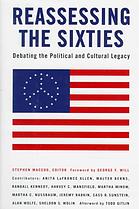
Macedo, Stephen. Reassessing the Sixties: Debating the Political and Cultural Legacy. New York: W.W. Norton, 1997.

Roszak, Theodore. The Dissenting Academy. New York: Pantheon Books, 1968.

Wartzman, Rick. Obscene in the Extreme: The Burning and Banning of John Steinbeck’s The Grapes of Wrath. New York, NY: PublicAffairs, 2008.

So far I’ve read parts of The Dissenting Academy and Reassessing the Sixties. The Sixties book mostly sucks (written largely by people who identify the evils of modern civilization as — and I kid you not — feminism, environmentalism, and rock music), but I’m pleased I paid the $1 because its one redeeming chapter is an essay on the children’s rights movement of the early Seventies, written by law professor Martha Minow. Since the children’s rights movement is chronically understudied from an historical perspective, I was pleased to see it represented therein — and not in an unsympathetic though also not wholly uncritical light.

Happy book hunting, one and all.

multimedia monday: 2-for-1 on mental health

22 Monday Feb 2010

Posted by Anna Clutterbuck-Cook in media

≈ Leave a comment

Tags

multimedia monday, politics, web audio

This week, I bring you two segments from NPR’s Talk of the Nation and On the Media that I listened to last week while entering metadata at Northeastern. First up, we have author Ethan Watters discussing his book Crazy Like Us: The Globalization of the American Psyche.

Transcript available at NPR.

I really like hearing medical professionals place illness and healing in cultural context: while physical and mental suffering is undeniably real, so often the way distress manifests itself is shaped by the time and place in which those suffering are located (much like, kofkof, sexual orientation and gender identity/expression).

Likewise, Johnathan Metzl, author of the new book The Protest Psychosis: How Schizophrenia Became a Black Disease charts the evolution of schizophrenia through the latter half of the twentieth century from being a disease of white female passivity to being associated with male aggression (and diagnosed disproportionately in African American men).

Transcript available at On the Media.

Check ’em out. Learn something new today.

sunday smut: links list on sex and gender (no. 12)

21 Sunday Feb 2010

Posted by Anna Clutterbuck-Cook in linkspam

≈ Leave a comment

Tags

gender and sexuality, sunday smut

The award for best critical book review this week goes to Ashley Sayeau @ The Guardian writing on Laurie Gottleib’s Marry Him: The Case for Settling for Mr Good Enough. She gets points for historical analysis (“The book’s jacket claims this is all new – the author, it states, has said “the unthinkable” – but of course nothing could be farther from the truth”) as well as attempts at finding a kernel of worth in an otherwise painfully anti-feminist screed (“This is frustrating for many reasons, but especially because Gottlieb’s subject – the question of compromise in modern relationships – actually deserves attention, just not of the sort she gives it”).

Bianca M. Velez @ RhRealityCheck wonders about the wisdom of consent laws which dictate to young women whom they can and cannot consent to sexual relationships with in Consenting to Sex: Yes, No, Maybe?

PhDork @ The Pursuit of Harpyness blogs about how olympic “human interest” reporting has subjected female athletes to shaming comments about their body weight and health in Female Olympians are Fat!(TW).

Ann Bartow @ Feminist Law Professors highlights the official opening of the Feminist Theory Papers at Brown University’s Pembroke Center. I seriously considered applying for a year-long processing position with the FTP a couple of years ago, and they are definitely on my watchlist as an Archive I would love to work with/at someday.

My “new blog” discovery of the week (well, one of them: the list of feeds on Google Reader is getting scary long!) was Sex and the Ivy, authored by Lena Chen. On said blog, I found this delicious analysis of a talk given last November by faux feminist Christina Hoff Sommers on why modern feminism has supposedly failed. I have a sick fascination with people who look at the world and see the things I believe are amazingly awesome as a sign of deep pathology.

Kinda like this guy (and his audience), posted by Melissa McEwan @ Shakesville who seem to believe that courses in feminist theory that incorporate issues of race and class are . . . antidiversity?

(Speaking of Melissa McEwan @ Shakesville, this week she also posted a thoughtful critique of the assumption that it takes having kids to become a family.)

Thanks to Sex and the Ivy I also discovered a couple of older (2005) blog posts on the subject of sex-positivity and pornography which I enjoyed reading. One is by Susie Bright @ Susie Bright’s Journal in which she responds to a Slate.com book club discussion of Pornified and Female Chauvinist Pigs which took place in 2005 involving Wendy Shalit (another faux feminist whom I find it easy to fixate upon), Meghan O’Rourke, and Laura Kipnis. The other is one of Laura Kipnis’ contributions to said bookclub discussion in which she points out that “people may like making their own preferences into norms, but that’s a bit monstrous in itself.” Well said, Ms. Kipnis. Read the whole thing over at Slate.

MandyG @ Feministing Community cross-posted an op-ed by Nancy Willard, Sexting: A Rational Approach, which discusses the adult hysteria over adolescents engaged in the exchange of self-created sexual images online.

A Georgia bill revives tired stereotypes about connections between family planning and eugenics. Planned Parenthood’s Kelley Robinson @ RhRealityCheck points out that, far from “targeting” minority women for abortions, clinics like Planned Parenthood are often the only sites where minority women are offered affordable reproductive healthcare.

Cara Kulwiki (of The Curvature) comments @ The Guardian on the results of a recent study showing that women are more likely then men to blame victims of rape for their assault. “When we say that women are less “forgiving” of rape victims, we ignore that being raped is not something for which one needs to be forgiven. And while being blamed for your own rape is an incredibly traumatising experience, we forget in this discussion that there would be no victim to blame if there wasn’t a rapist committing assault first.”

And just so we’re not ending on that important yet not exactly uplifting note, I will end this thread by introducing you to the mind-bending concept of cupcakes for men. You didn’t know cupcakes were a girly thing? Click through and gwen @ Sociological Images will enlighten you.

*image credit: Life Drawing by henrybloomfield @ Flickr.com. Thanks to Hanna this week for selecting the featured picture.

once again, we beg your indulgence

20 Saturday Feb 2010

Posted by Anna Clutterbuck-Cook in linkspam

≈ Leave a comment

Tags

movies, web audio, web video

Okay, okay, so it’s not like we think there are legions of fans out there waiting with baited breath for the forth installment of our 100 movie quotes endeavor (see parts one, two, and three for a refresher), but still: we apologize for the fact that we are delaying the post for another week. Hanna has been working industriously all week transcribing the terrible handwriting of ninteenth-century medical photographers and her wrist has become (as they would have said back then) overstrained. It needs bedrest and a cold compress. And a day or two away from typing — even fun typing.

So instead I bring you a few movie-related links that will hopefully brighten your weekend, and Hanna has volunteered to augment my ramblings with some deftly-chosen youtube clips (minimal typing required). So here we go.

If you’re looking for list-type things to read, wander on over to debontherocks @ Blogher, who put up a post this week of her nominations for “the Opposite Oscars,” where “we could call out the performances and films that aspired for greatness, but turned out to not even be worth the popcorn required to survive them.” While I am not particularly partisan in terms of the films she nominates (most of which I have not seen), I enjoyed this description of the ceremony:

Nominees could attend in their jeans or yoga pants, grab a boxed lunch from the folding table by the door, and wait expectantly to see who was dubbed worst. The loser could then tell off the people who led them to that bad performance, they could nurse their wounds, or just apologize. “I needed the money to pay a bad IRS debt/lift-tuck the twins after breastfeeding the real twins/buy back a digital video camera I inadvertently left in a South Beach hotel room,” they would say. And we might understand, or we might cluck and boo, but at least we’d have resolution.

debontherocks would probably appreciate (if she has not already read) what might just be the best movie review of the year, to date. Actually, I’m quite sure it’s the best movie review I’ve read several years running. Although I feel a bit diminished, as a human being, for writing that since it’s a total pan of a film that I haven’t even seen, the romantic comedy Valentine’s Day. Sady Doyle @ The Guardian writes:

The cumulative effect of Valentine’s Day is to make you feel that all human emotions are shameful. Have you ever been sad about a break-up? Had a crush on someone? Wanted your ex-lover back? Been happy to meet somebody promising? Wanted to have sex? You are terrible. You are feeling the same emotions portrayed in the movie Valentine’s Day. And these emotions, Valentine’s Day confirms, are cheap, and disgusting. For they make you like the characters in this movie.

I mean, wow. That’s quality panning.

If this is really the effect of Valentine’s Day then it deserves to be panned. Because, you know what? Human emotions aren’t shameful. And any movie that makes us feel they are is a disservice to the craft. In fact, I’m a firm believer in movies doing quite the opposite: giving us space in which to witness and experience human emotions (light, dark, and all the shades between) without embarrassment. For example, here’s some quality romance, brought to you by the team who were also responsible for that near-perfection of a film, Love Actually.

(Hanna says I am required to warn you that tissues will be needed to watch this scene.)

I will love John Hannah forever for this scene (well, and for his character in The Mummy, but this primarily since it was the first role I ever saw him in, and he made me cry).

Speaking of things that have made me cry recently (I didn’t realize this post was going to be so teary, but there we are — I promise to end with something more ebullient!), Terry Gross recently interviewed Colin Firth about his Oscar-nominated role in A Single Man.

This, like Valentine’s Day, is a film which I have neither seen nor heard very much about, but which after listening to said interview I fear I might never be able to watch. Not, however, because I fear it sucks, but because I fear it does not. In fact, I fear it is brilliant. It is the story of a professor who, in the opening scenes of the film, loses his lover in a car accident, and who struggles to go on living in the aftermath of that loss. Terry Gross plays, toward the beginning of the Fresh Air interview, the scene in which Firth’s character recieves word that his lover is dead. The audio alone was enough to make me tear up, sitting there at my desk at work.

Firth, in the interview, likens the story to Joan Didion’s memoir describing the loss of her husband, The Year of Magical Thinking, which I likewise know I would love and also know I may never have the strength to read. (For those of you who are tempted to think there’s some enobling purpose to suffering, go read Jonathan Romain’s recent commentary at the Guardian: “Let’s be very clear: there is no divine purpose in suffering whatsoever.”)

And because I can’t possibly leave you all on a note of such existential despair, here’s Colin the Sex God from the aforementioned Love Actually exploring the wilds of Milwaukee with a blackpack full of condoms and an openness to cross-cultural experiences.

Hanna reports there is an urban legend that Kris Marshall refused his paycheck for filming this scene on the grounds that it was just too much fun to count as actual work. I leave it to y’all to decide whether that’s true or not.

Have a good weekend. We’ll be back next Saturday with more movie fun (and possibly even some movie quotes!)

← Older posts
"the past is a wild party; check your preconceptions at the door." ~ Emma Donoghue

Recent Posts

  • medical update 11.11.22
  • medical update 6.4.22
  • medical update 1.16.2022
  • medical update 10.13.2021
  • medical update 8.17.2021

Archives

Categories

Creative Commons License

This work by Anna J. Clutterbuck-Cook is licensed under a Creative Commons Attribution 3.0 Unported License

Meta

  • Create account
  • Log in
  • Entries feed
  • Comments feed
  • WordPress.com

Blog at WordPress.com.

  • Subscribe Subscribed
    • the feminist librarian
    • Join 37 other subscribers
    • Already have a WordPress.com account? Log in now.
    • the feminist librarian
    • Subscribe Subscribed
    • Sign up
    • Log in
    • Report this content
    • View site in Reader
    • Manage subscriptions
    • Collapse this bar