• anna j. clutterbuck-cook
  • contact
  • curriculum vitae
  • find me elsewhere
  • marilyn ross memorial book prize

the feminist librarian

the feminist librarian

Monthly Archives: February 2013

so, that happened [a new guest blogging gig]

26 Tuesday Feb 2013

Posted by Anna Clutterbuck-Cook in admin

≈ 2 Comments

Tags

blogging, family scholars blog, feminism, gender and sexuality, religion

Ah, the strange and wondrous things that happen when you go traipsing around The Internet.

As you know, I’ve been hanging around the comment threads at Family Scholars Blog for awhile now. In part because I’m interested in how the other half lives thinks.  In part because I like to argue.

And in part because, in the very selfish, immature corner of my brain-heart-body it irks me that there are people out there who really think that I’m “depraved on account I’m deprived” (or some variation thereof). I’m fascinated and appalled that people feel so threatened by my existence as a (gay) married, sexually-active bisexual that they try to pass laws to erase my (gay) married existence, and — when that fails — simply say that my marriage isn’t real.

It’s fascinating, as I say, and appalling.

And not a little frightening. To know that my life excites such fear, angst, anger, and loathing.

I like to keep all that in sight, watchfully.

Well, then a couple of weeks ago they invited me to blog with them, as a regular guest blogger. 

And my first reaction was absolutely not, no. But I said I’d think about the offer. Talk to some people. Sleep on it.

What could I possibly bring to that site, as a guest blogger, that I wasn’t already bringing in comments? And, more importantly, why did they want me? I admitted to myself fears that I might simply be being recruited as a Poster Lesbian: “See? She plays well with others!” they might say, and when accused of anti-gay bias the group could point to my guest blogger bio: “See?! We even have a Queer Feminist Gay-Married Bisexual writing for us!”

Wouldn’t I be risking, on some level, being their Queer Cover? The sexual-identity equivalent of the Black Friend?

But then I started to think about what I might be able to offer in such a space, to those who were truly open to listening (and, yes, though I complain about those who revile and erase me more, the more contemplative conservatives exist).

And this is what I thought. That much of the conversation about queerness, feminism, and other lefty-liberal modes of being at the Family Scholars Blog (FSB) takes place without reference to — let alone centering of — actual queer / feminist / lefty-liberal voices or experiences. Even when those voices are referenced, it’s generally in the form of a sound bite we’re all supposed to know is ridiculous or wrong-headed (“pfft, look at those hysterical feminists with their foolish notions about gender equality — what do they know”).

Well, I’d like to talk about what it is we do know, and what life looks like from where we stand.

So I’ve accepted the FSB offer, and I’m going to start a monthly series there (cross-posted here), “The Feminist Librarian’s Bookshelf,” with 3-to-5 titles per post as suggested reading on a theme (“gender and neuroscience,” “teenagers and sexuality,” “queer families”). My hope is that I can offer a glimpse into the literature that informs those of us who take a quite different view than many, if not most, at the FSB, with regards to family life. I’m not particularly aiming to convert, although obviously it would be nice if some of my favorite authors resonated with readers here and there. My goal is to encourage people to “walk a mile in someone else’s shoes,” and think about what it might be like if you were to look at the world through the eyes of a lefty lesbian teenage, a liberal Latina mama, a feminist trans* woman, an asexual anarchist, a socialist living in poverty, or hippie home-educators.

There’s talk over at the FSB about civility of discourse, about meeting people halfway and compromising, about being willing to doubt (one’s own truths) and being open to having one’s mind changed.

I’m not sure how I feel about these values. I sometimes feel there is a type of privilege at work here, in which  unexamined certitude is disproportionately a problem of those whose worldviews and values are reflected back at them from mainstream culture. Those on the margins not only have the value of self-doubt shoved in their faces 24/7, they must learn to see the world through the eyes of the privileged and powerful in order to survive. Indeed: part of my fascination with the religious right comes from growing up a liberal-progressive (dare I say radical!) minority within a conservative Christian culture. I had to learn how Christian conservatives understood the world in order to survive. They didn’t have to learn anything about me, if they didn’t care to.

So I’ll be walking a mindful line over there, at FSB, between recognizing the true values of civil conversation, of lovingkindness and compassion, of being open to new experiences and viewpoints, of being open to the change those experiences and viewpoints will wreak within me — and at the same time holding my own, in part by example demonstrating that it is possible for a diversity of individuals with very different lives to co-exist in a democracy without the world imploding. We don’t all have to be alike, and that’s okay. We don’t all have to fear others who are different from us and/or those who choose a different way of life. Their different choices don’t, for the most part, constrain our own freedom of choice unduly.

You can read my self-introduction over a FSB and I’ll be cross-posting Thursday’s bookshelf post (five novels that influenced my adolescent perspective on love and romance) here.

"the immediate problem … of how to represent women’s desire visually" [more questions about porn]

21 Thursday Feb 2013

Posted by Anna Clutterbuck-Cook in think pieces

≈ 2 Comments

Tags

gender and sexuality, smut

So I’m working my way through some of the classics of scholarly treatments of film pornography, most recently Linda Williams’ Hard Core: Power, Pleasure, and the ‘Frenzy of the Visible’ (University of California Press, 1989). It’s a book that in many respects has aged well, despite its heavy reliance on both Marxist and Freudian frameworks for discussing “fetishism,” commodification, sexual pleasure, and power dynamics. Williams pushes back fairly forcefully against anti-porn feminism, and — while at times too quick to concede that such-and-such plot or scene is misogynist — insists on complicating the assumption that mainstream, heterosexual “hard core” porn is de facto male-centric and anti-female pleasure.

However. 

(You knew there was one.)

However, she keeps circling around this notion that one of the traps of cinematic pornography is that they have to depict pleasure on the screen (no argument there), and that male pleasure is easy to depict — via penetration (“the meat shot”) and/or ejaculation (“the money shot”) — while female pleasure is difficult (impossible even?) to successfully show on film. At one point toward the end of the book she writes that feminist pornographers, however much they may desire to revise the genre, are still confronted with “the immediate problem … of how to represent women’s desire visually.”

I guess I just don’t get the problem here.

Like … turn on the camera. Train said camera on a masturbating woman who, let’s imagine, gets off on the idea of the camera’s “gaze” as she’s climbing toward orgasm. Maybe, if you wanna get fancy you could use multiple cameras so as to ensure you get some close-ups of her face, or the curve of her spine as she arches, or the cant of her hips as she pushes her fingers into herself…

It’s just … not. That. Difficult.

I read my wife’s desire and pleasure visually on a fairly regular basis and — while, granted, we augment the visual with verbal cues and shared history — my visual processing in this regard has a pretty damn high success rate in that my visual perceptions of her enjoyment has a high degree of correlation with her own reports of what gets her off, when.

You read a body in ecstasy just like you read a body in anger or pain: through minute facial expressions, gestures, the set of the shoulders, the angle of limbs. You read a person’s willingness for partnered sex through all of the ways they physically express connectedness (or lack thereof) to the other person(s) en scene.

We don’t panic (film people, correct me if I’m wrong here!) over OMG how are we ever going to represent anger visually in this film!?

Why oh why is sex supposedly so freakin’ different — women’s sexuality specifically in this instance — that it’s a “problem” to capture on film?

(via, very nsfw)

(I’d argue male sexuality, also, is far from “simple” to represent through the visual tropes of erection, penetration, and ejaculation, but that’s maybe a post in its own right.)

What I suspect is that this assumption that women’s desire and sexual pleasure is a problem, cinematically speaking, comes from the pervasive belief in contemporary culture that women’s sexuality is mysterious and difficult to understand (while men’s is basically self-evident; again, an assumption that deserves unpacking). If women’s sexuality is this crazy mysterious thing that we don’t understand and that men find epically confusing, how are we ever supposed to imagine it visually on screen? A mystery is, by definition, something which can never be fully revealed unless it is solved.

Which is why, as Williams suggests, women’s sexuality in modern hard core porn, is often “solved” through gimmicks that render it somehow more visible, or displace it by letting male pleasure cues stand in for everyone’s sexual satisfaction in the scene.

I’m not as convinced as Williams is that all mainstream pornography is stymied by visualizing women’s pleasure. I think, at times, that Williams is too quick to assume — at least in this early work — that proof of desire requires, for example, genitals which can demonstrate arousal and climax on-screen.

And I’m pretty sure there are a lot of pornographers, feminist, female, and otherwise, who’d be surprised to learn that women were such difficult creatures to capture on screen. I wonder: would that make us some sort of weird supernatural being of sex? Try to capture visual evidence of our pleasure and we’d vanish from the silver nitrate on the film (or the binary of the pixels on the image card)?

call for participants: collecting sex materials for libraries: an opinion survey

19 Tuesday Feb 2013

Posted by Anna Clutterbuck-Cook in linkspam

≈ Leave a comment

Tags

call to participate, gender and sexuality, librarians

I’ve shared this on Twitter and Tumblr, but figured I might catch some folks here as well, so what the hell. This call for participants came across my dash via the H-Net: HistSex listserv. I took the survey last week and it does take a good 45 minutes if you want to be thoughtful about it an include commentary. I was frustrated with some of the multiple-choice options and the framing of some of the questions, but I also hope that the researchers will be able to get some useful information out of the data they collect — so if you’re a library and/or archives professional and interested in the question of sexuality in the archives, I encourage you to help ’em out!

Here is their call for participants in full:

In an attempt to understand librarian and library staff attitudes towards collecting sexual materials for libraries, librarians Scott Vieira and Michelle Martinez, assistant professors at Sam Houston State University, are asking for survey participants and offering the chance to win one of four available $25 gift certificates to Amazon.com.
 All librarians and library staff from any type of library are encouraged to participate.
 The survey, “Collecting Sex Materials for Libraries: An Opinion Survey,”
takes anywhere from between 25-40 minutes depending on reading speed, and consists of 49 questions. We’re looking for opinions on how librarians and library staff members feel about things such as 50 Shades of Gray, Hustler, gay erotica, and other items that are often considered contentious.
 Participants’ privacy will be kept and personal information is not required unless the participant wants to register for the drawing. Any personal information will be deleted once the drawing has been held within one week at the closing of the survey. Participants will be emailed the gift certificate.
 Participation in the survey is strictly voluntary. Participants can exit the survey at any time without penalty.
 By consenting to participate through accessing and submitting the survey, you authorize the use of your data to be compiled for possible articles, without any personally identifying information as may have been submitted for the prize drawing.
 http://www.surveymonkey.com/s/NZT9P79 If you have any questions or concerns, please contact Scott Vieira at
936-294-3743 or svieira@shsu.edu<mailto:svieira@shsu.edu> or Michelle Martinez at 936-294-1629 or mmartinez@shsu.edu<mailto:mmartinez@shsu.edu>.
 Or by mail: Attn: Scott Vieira or Michelle Martinez, SHSU Box 2179, Huntsville, TX 77341
 Scott Vieira
Assistant Professor &
Electronic Resources Librarian

Have fun!

from the neighborhood: gratuitous friday kitten photograph

16 Saturday Feb 2013

Posted by Anna Clutterbuck-Cook in our family

≈ 1 Comment

Tags

cat blogging, domesticity, photos

What it says on the tin.

Here at Chez Clutterbuck-Cook we’re looking forward to a long weekend hunkered down with the cats. Hope wherever you are, you’ve got plans that are similarly pleasing to you!

from the neighborhood: plants, handwork, kittens

14 Thursday Feb 2013

Posted by Anna Clutterbuck-Cook in our family

≈ Leave a comment

Tags

cat blogging, domesticity, friends, photos

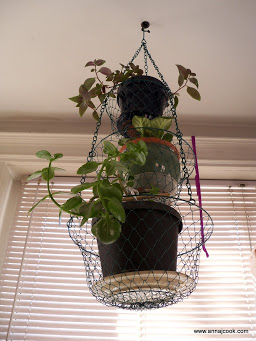
A couple of weeks ago, we finally decided the only way to get the (apparently tasty!) plants out of Teazle’s acrobatic reach was to buy a basket for them. So now the three most vulnerable plants are hanging from the ceiling. We fully expect to come home from work one day to find Teazle swinging from the wire mesh by her claws!

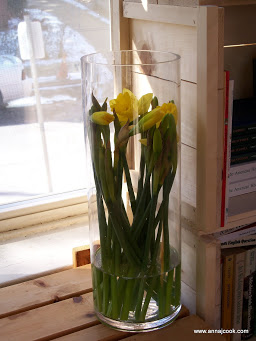
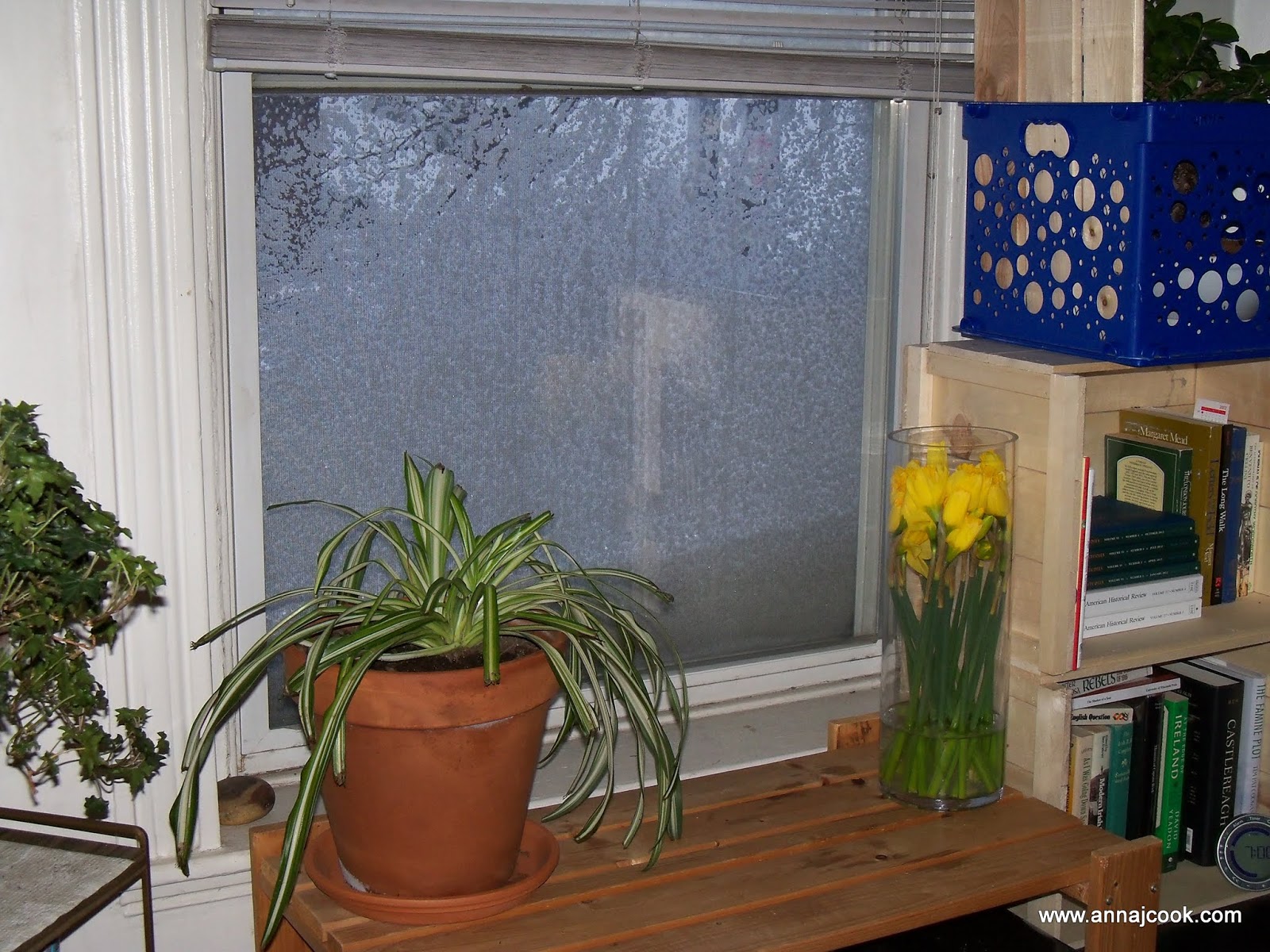
She’s similarly fascinated by the daffodils we picked up from Trader Joe’s (note the paw stage left), so we’ve had to drop them in the tall glass vase that at Christmas we used for candles.

Necessity led to quite a lovely display, I think.

For some reason, the ivy loves the winter and often sports more new leaves this time of year than in the summer!

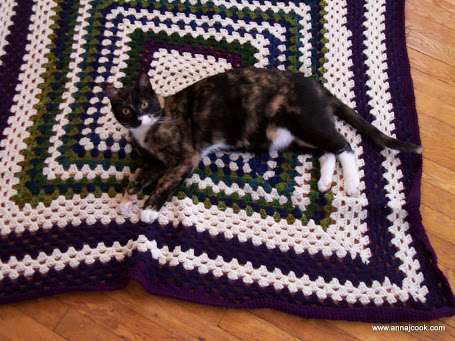
I actually had the camera out to take photographs of the afghan Hanna just finished, so she could post them to her blog as part of a giveaway. Teazle wanted to help!

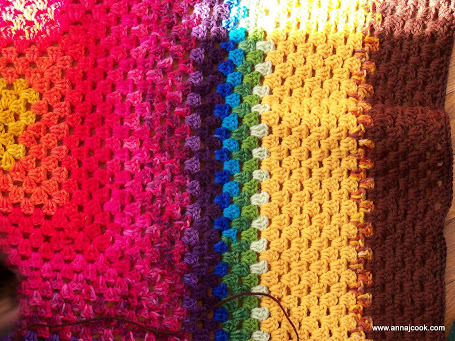
While I was taking pictures of Hanna’s project, I decided to capture a few of the (nearly-finished) afghan I made for my friend Anne and her daughter Lilly. Both Teazle and Geraldine wanted in on the action for this one!

Thanks to Mama Linda for the hand-dyed yarn that makes up the majority of this rainbow!

to want them, to be them, or both? [perspectives in porn]

12 Tuesday Feb 2013

Posted by Anna Clutterbuck-Cook in think pieces

≈ Leave a comment

Tags

gender and sexuality, random ranting, smut

So last week I reviewed an anthology of essays on pornography, and kind of in passing I asked why we generally assume that people watch porn because they want to fantasize about having sex with the people the camera’s gaze is trained on. That is, in porn marketed to men who like having sex with women, female actors take center stage and male performers are assumed to be exchangeable stand-ins for the Everyman Viewer. Women are cast with an eye toward what body types producers imagine their Everymen want to fantasize about exchanging bodily fluids with.

I don’t understand where this narrative assumption comes from.

Is that actually how the majority of people watch porn?

Because that’s certainly one perspective to take when consuming erotic material: the “would I wantonly ravish this person?” perspective. However the viewer/reader assesses the sexual attractiveness of a given performer/character (visual presentation, sexual style, aspects of character, voice, etc.), that question certainly informs how you enter into the fantasy of the pornographic scenario. If the answer to the above question is yes! it becomes easier to understand the motivations of the ravishers as depicted in said piece of smut. It’s easier to get drawn into the story, just as it’s easier to get drawn into any work of fiction when you care about the character’s well-being, or want to know what happens next.

I get that. There’s a reason I’m drawn to some relationships in fan fiction and not others; some character dynamics just don’t do it for me. Others do.

But I find this an unsatisfying and incomplete assessment of how people (read: “men” in most discussions about pornographic film) interact with porn. Why? Because it’s not the only way I — as a consumer/creator — interact with sexually-explicit material. And it’s not the only way people interact with fiction generally. We know this. And yet, somehow, when the question of sexually-explicit material is on the table all of our wisdom about the viewer/reader and their complex interactions with what they watch and read flies right out the window.

To whit, when it comes to porn, despite the fact I’m a voyeur by definition (reading/watching the characters/performers interact in sexual ways without literally being involved with them) my pleasure is often less contingent on the question “would I wantonly ravish this person?” than it is on the question “if someone ravished me in this fashion, how might it feel?” Or, “is this dynamic between them an arousing one? how is it making the actors/characters feel? why is it making them feel that way? The sexual activity depicted doesn’t have to be something I’d definitely find pleasurable in real life, but a successful pornographic or erotic narrative will encourage an imaginative connection, prompting me to explore how such an activity could be pleasurable to the performers/characters in question.

Like any good work of fiction, pornography and erotica asks us to put ourselves in someone else’s shoes (or, you know, lacey knickers). And learn something meaningful or moving while we’re there.

So all of this leads me back to the question: Rather than assuming people sexually objectify the performers in porn, why don’t we wonder to what extent they’re identifying with them? After all, we’re human beings watching (or reading about) human bodies experiencing sexual pleasure. Doesn’t it make sense that we’d — at least to some extent — imagine ourselves into their situation as much as we might imagine being the person sexually stimulating them?

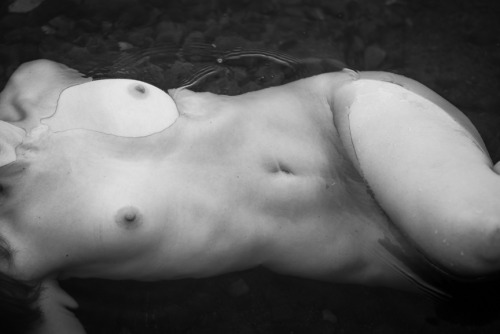
I look at this image and I feel the water washing across my skin (via)

I haven’t watched much moving-image porn, so perhaps the descriptions I’ve read of pornographic films are giving me the wrong impression here? But when I read synopses of films, I’m definitely aroused most often by imagining myself in the role of the performers whose pleasure is visible on screen. Like, if the film is going to show me a woman giving a man (or woman) a blow job, and it’s the giver’s body and facial expressions and responses we’re seeing, isn’t that the person we’d be likely to identify with — not the disembodied dick (or clit) that appears as a prop on the screen?

And no, I don’t think the answer can be as simple as “but dudes can’t/won’t imagine themselves into the position of a female performer because their bodies are different!” because I read plenty of erotic material in which the only bodies involved are male bodies and I definitely successfully identify with those characters. So I think we’re too quick to assume that anatomical body difference is a barrier to imaginative involvement.

Maybe it’s partly a (socialized or innate) gender thing? Recent studies have suggested that men and women generally interact with porn in different ways, with men being less flexible in what types of erotic imagery arouse them (women appear to be catholic in their tastes: it doesn’t generally matter whose bodies are depicted, or even that they be human bodies — if sexytimes be happening, our pleasure centers light up). But I’m tired of the simplistic assumption, without research to back it up, that men only interact with porn in a way that interprets the (female) actors depicted on screen as objects rather than subjects. At the very least, I’d imagine it’s likely viewers of pornography — just like readers of fiction or viewers of any other genre of film — switch imaginative perspectives, so that response to a question about who is being observed and who is being identified with would change over the course of the viewing/reading experience in complicated, unstable ways.

I’m continuing to think about this question while reading Laura Kipnis’ Bound and Gagged (1997) and Linda Williams Hard Core (1989) this month. They’re both fascinating studies which have much to recommended them, though some of the debates they engage with are certainly dated. Still, on the watch for questions of perspective both authors seem only to nod in passing to the idea that male viewers might be watching the bodies in screen in less-than-straightforward ways. Williams, for example, seems to assume that heterosexual male arousal in reaction to viewing an aroused male body would be an experience of homosexual desire, rather than, you know, a response to the arousal of a body the viewer could imagine being. So it’s clear that even the leading thinkers in this field have taken this question somewhat as read.

What are your experiences with sexually-explicit material? To what extent do you find yourself wanting to be and/or wanting to have the individuals depicted or described? How does the voyeurism of engaging with other peoples’ (fictional or performed) sexual intimacy pull you in as an observer-participant? Do you tend to identify with all of the characters in a scene, or specific characters? To what extent does body type and physical sex contribute to your choice of character with whom to identify?

I’d love to hear your thoughts; if you want to share anonymously the form should allow for that — and I’ll try to monitor the thread carefully so that anon comments don’t end up in the trash if they are actually legitimate contributions (95% of my “anon” comments are just straightforward spam).

from the neighborhood: sledding & sunshine [blizzard of 2013]

10 Sunday Feb 2013

Posted by Anna Clutterbuck-Cook in a sense of place

≈ Leave a comment

Tags

boston, domesticity, family, outdoors, photos

It’s sunny this morning in Boston, a brief respite before tomorrow’s predicted rain. Teazle is excitedly (and vocally) watching birds fluffed along the branches of the trees outside, and Hanna and I are sitting on the couch reading and writing and listening to the BBC classical music stream while watching cars get stuck in the snowdrifts on our corner.

Yesterday, the hill outside our living room window was turned into a sledding hill until the travel ban was lifted at 4pm.

And a couple of still photos by Hanna … 
This morning, the sun was out but the snow remains.
Some streets are clear, but the sidewalks are piled high with snow that has nowhere else to go.

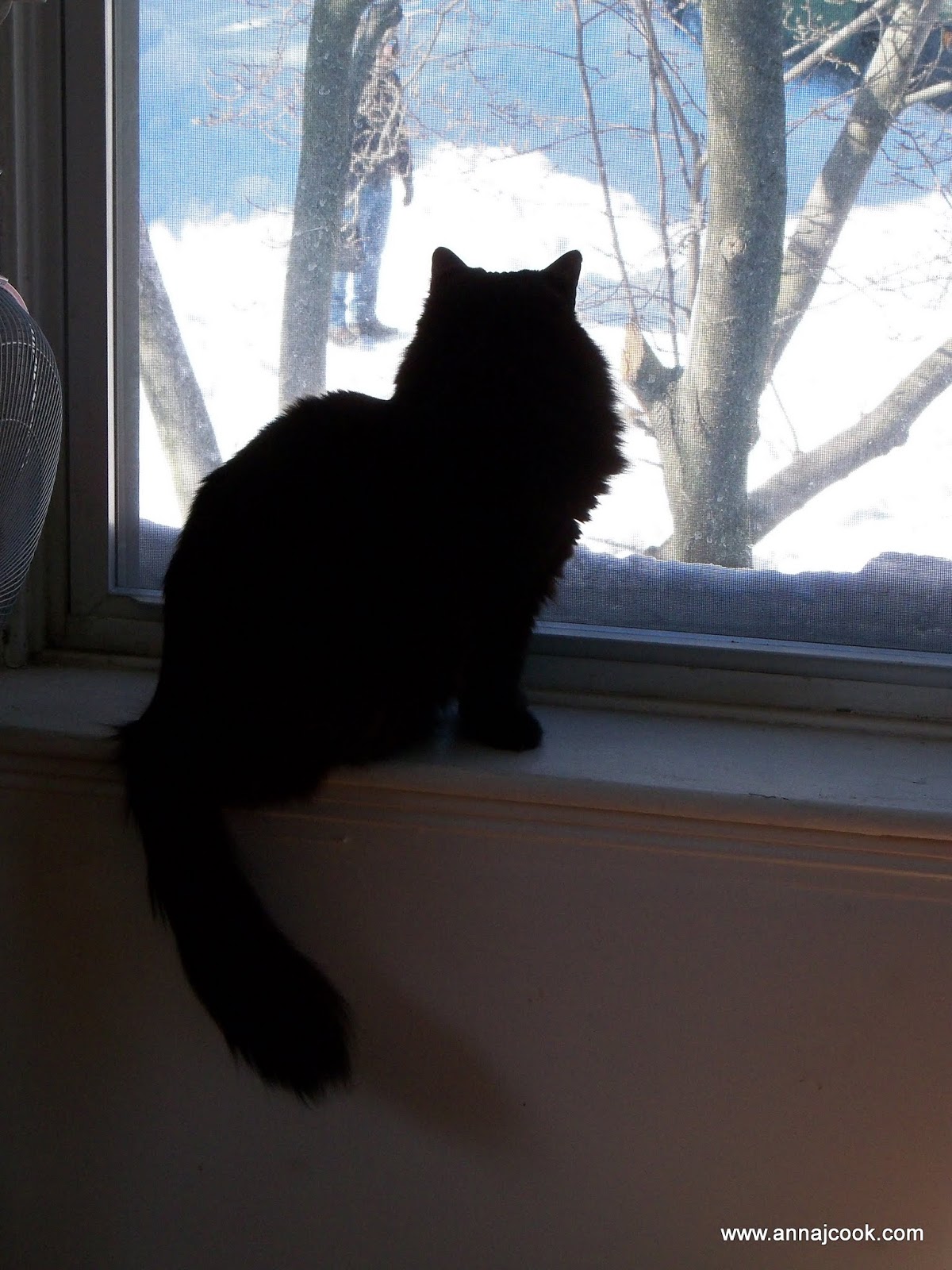
Gerry and Teazle are finding all of the excitement outside quite entertaining as “kitty TV.”

Stay warm, everyone, and wish us luck as we slog to work in the rain tomorrow!

from the neighborhood: blizzard of 2013

09 Saturday Feb 2013

Posted by Anna Clutterbuck-Cook in a sense of place

≈ 1 Comment

Tags

boston, domesticity, family, outdoors, photos

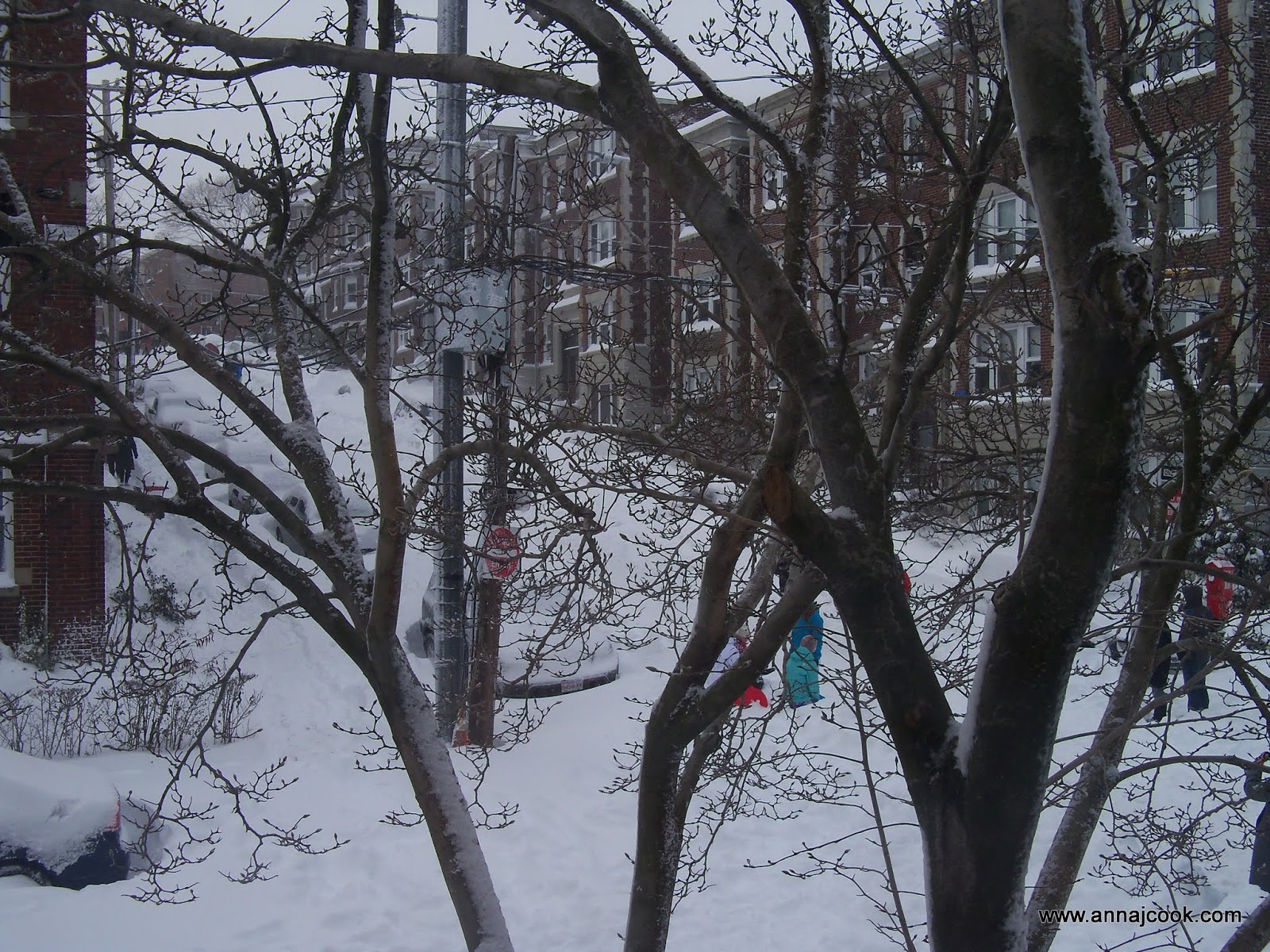
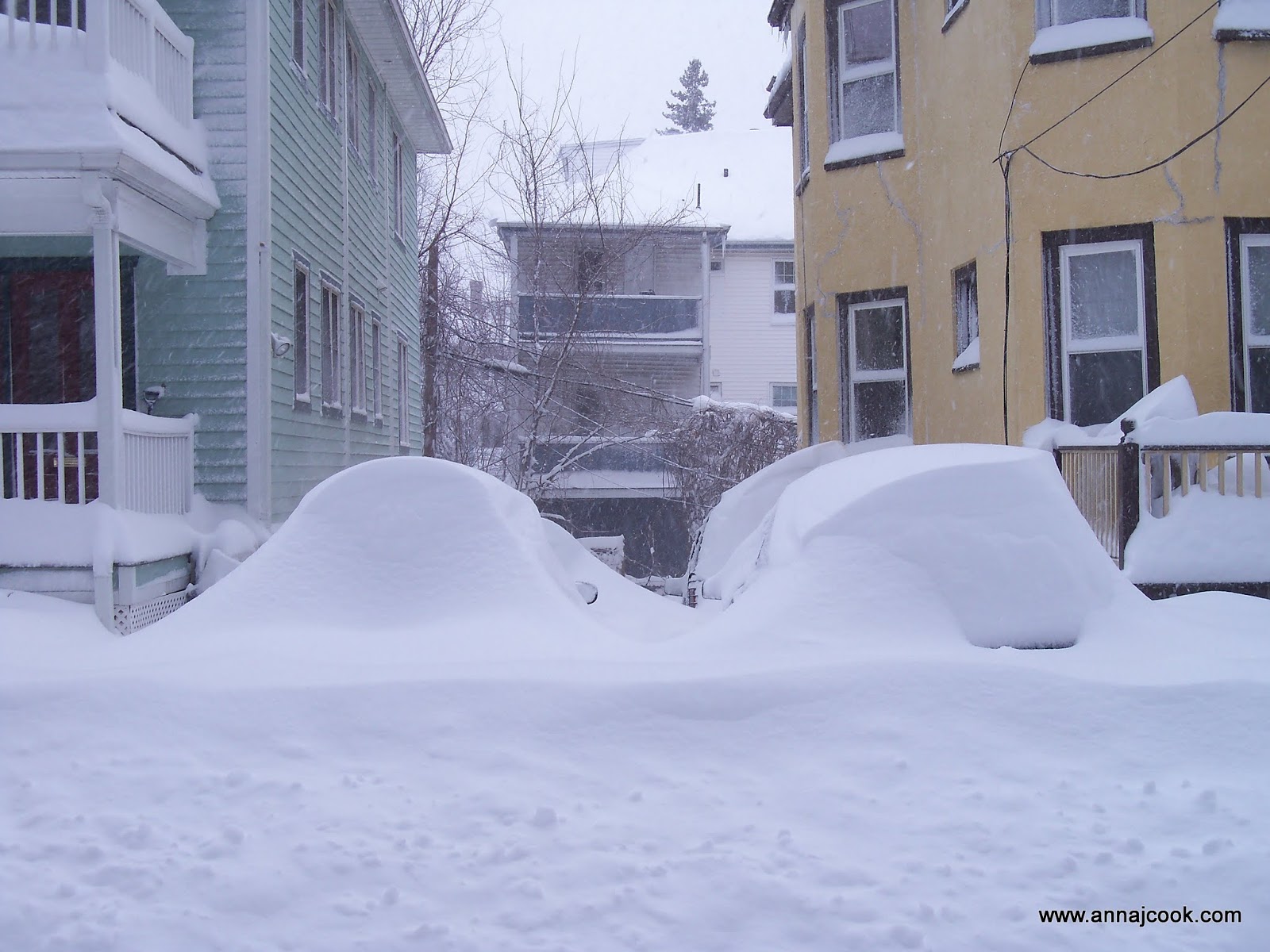
I promised photos to several people yesterday from the “snow emergency” here in Boston, so this morning while Hanna did yoga in the living room I tumbled into my boots and winter gear and re-learned how to hike through knee-high drifts in order to bring you some pictures from our snowy neighborhood.

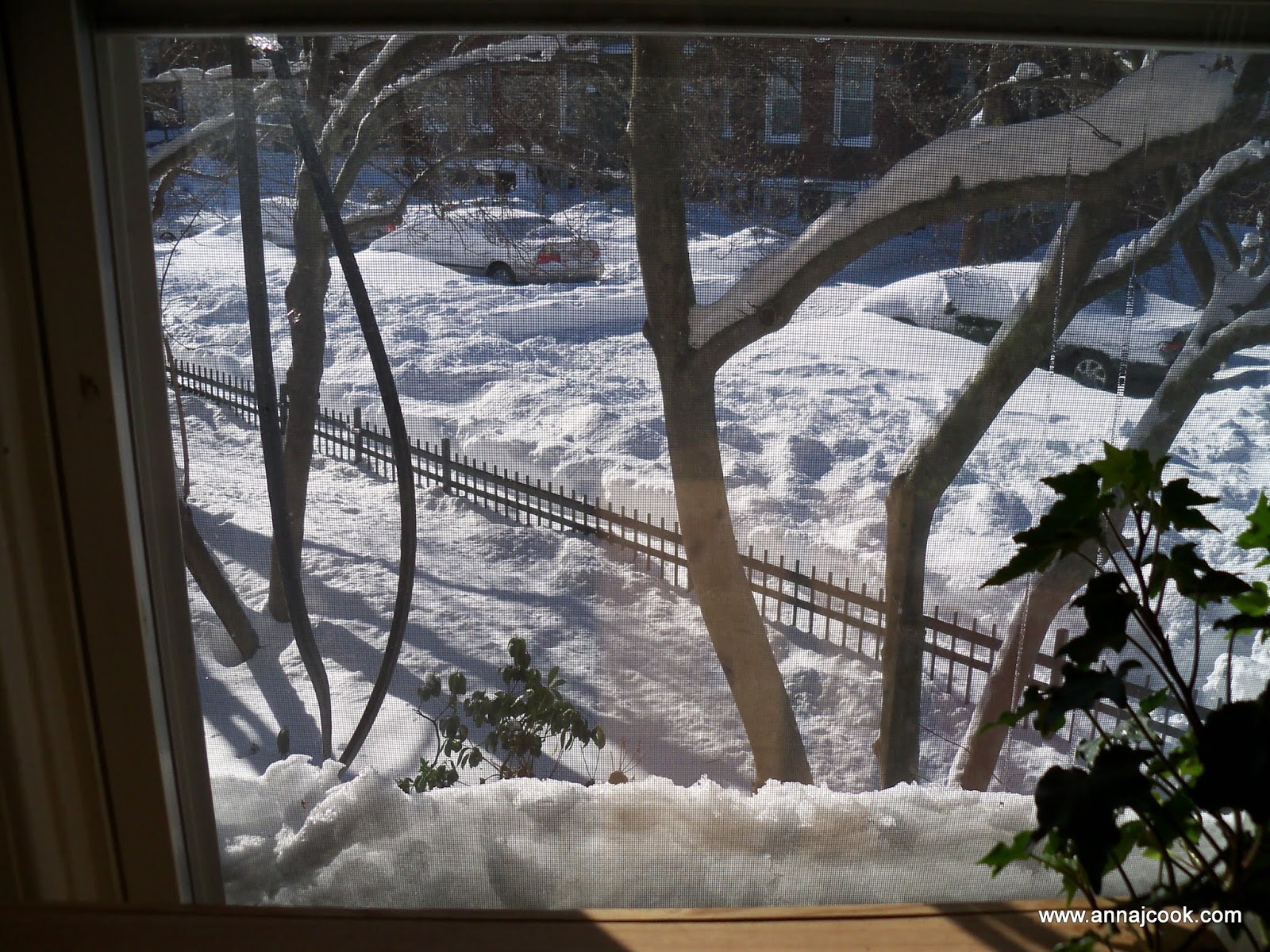
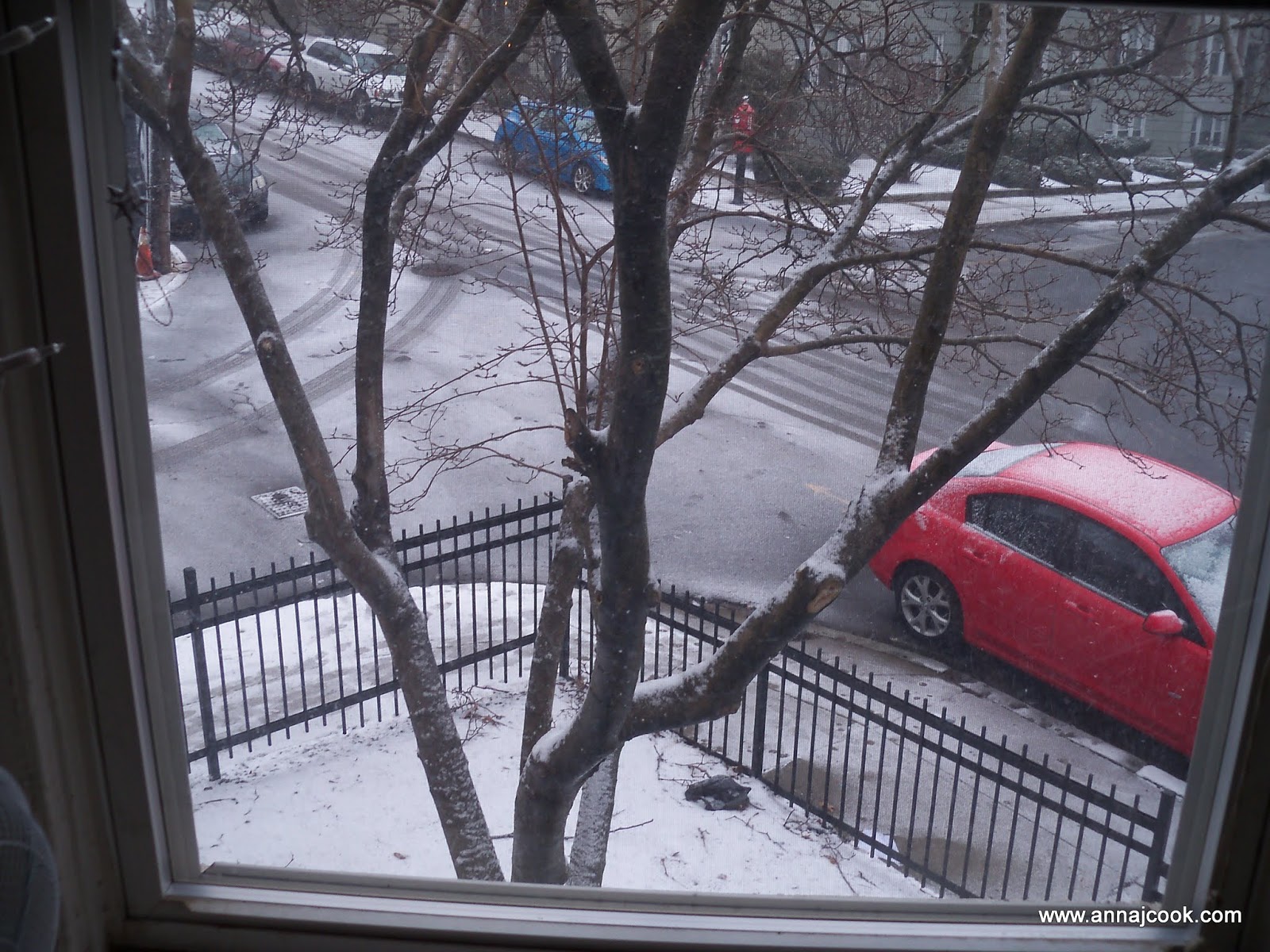
As a baseline, here’s what the view from our window was like around two o’clock yesterday afternoon:

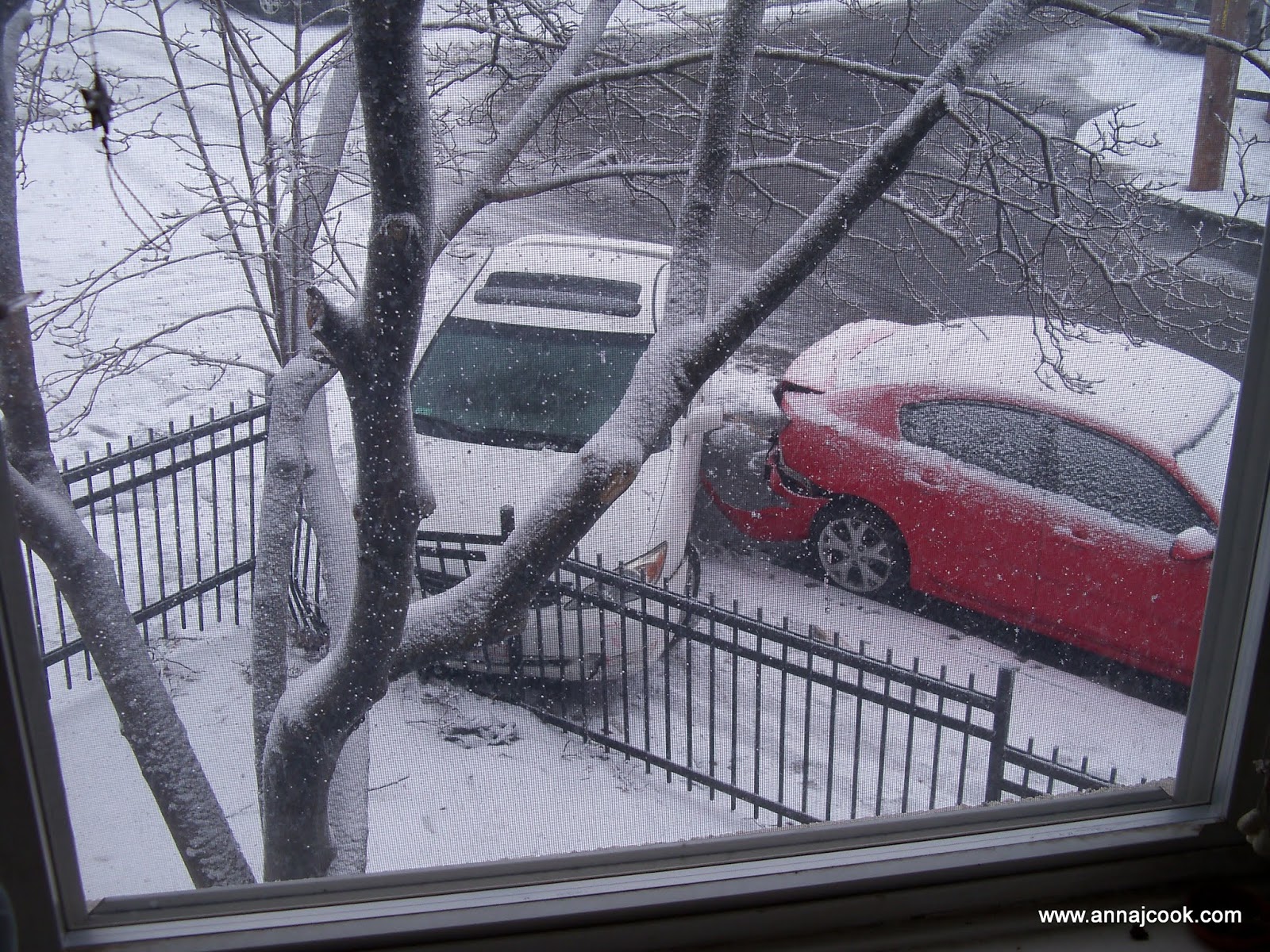
Shortly after I took this picture, the poor red car had it’s rear bumper sheared off by a neighbor’s car that skidded through the intersection.

Thankfully, no one was hurt!

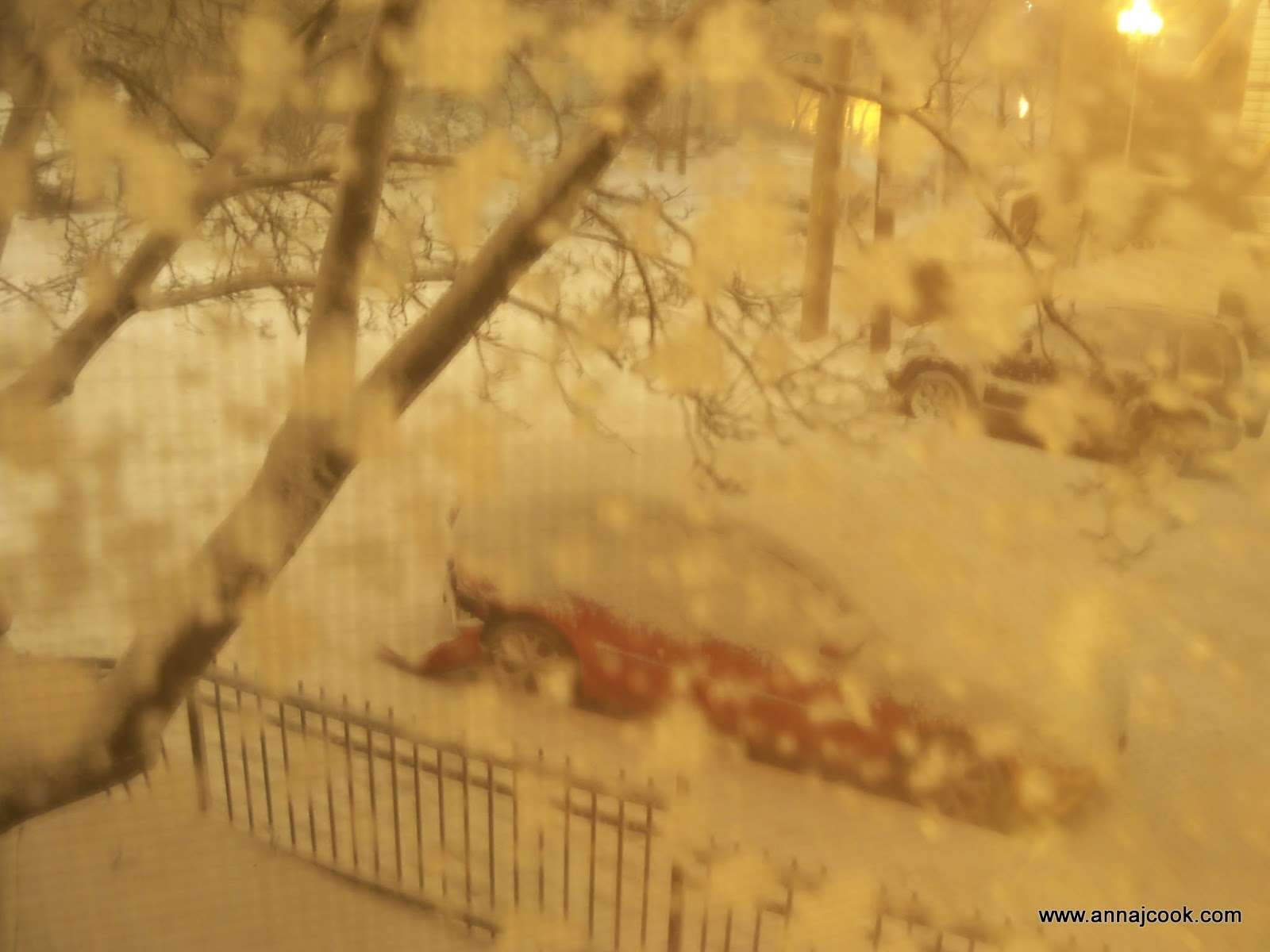
By the time we went to bed around 9pm, this was the view out that same window (note the red car, sans bumper, now half buried in snow).

Waking up this morning, it was difficult to see outside, so I decided to venture out.

You can see I was perhaps the second person to leave the building on foot this morning; with the snow still falling and blowing, and a travel ban in effect state-wide, few people are bothering to dig out.

We have no sidewalk currently!

And these cars aren’t going anywhere soon…

Above, wind whips snow across a nearly-deserted Commonwealth Avenue (this was taken about 7:30 this morning).

Snowplows were out in full force on the main roads, trying to stay on top of clearing the fallen snow.

But most apartment buildings showed little signs of activity.

I saw a few people out on foot who weren’t municipal workers, but the lack of traffic was eerie, particularly at usually-busy intersections (below is Harvard Avenue looking south from Commonwealth).

Side streets had higher drifts, and as I made my way back home through Brookline’s residential neighborhoods, I saw a few people out trying to clear snow from their sidewalks and cars.

These cars aren’t going anywhere soon!

The playground was deserted.

I was the first pair of feet to walk up our cul-de-sac on my return journey.

… and then I had to climb over this to get to the back door!

Now we’re enjoying breakfast and planning to nap the day away inside. Stay warm and safe everyone!

comment post: unfinished thoughts on non-consensual sexualization

07 Thursday Feb 2013

Posted by Anna Clutterbuck-Cook in think pieces

≈ 4 Comments

Tags

being the change, bigotry, comment post, feminism, gender and sexuality, moral panic

Regular readers of this blog may remember that over the past year or so I’ve been haunting the conservative Family Scholars Blog hosted by the Institute for American Values (IAV) think tank founded by David Blankenhorn, sometime high-profile opponent of same-sex marriage. In part, I follow the blog because my smart and funny friend Fannie is one of their guest bloggers. I am also deeply interested in the worldview of people whose understanding of how the world works, and what values will increase the well-being of humanity, are so different from my own.

Last week, I found myself sucked into a comment thread at the FSB wrestling with the subject of what I’ll call “non-consensual sexualization.” My working definition of non-consensual sexualization is public expressions which frame another person’s appearance, presence, or actions in a sexual light without their participation or consent. You might also call this plain old “sexual objectification.” I’m using my phrase here because I think it’s important to highlight the non-consensual part of what’s going on here. Continue reading →

booknotes: histories and cultures of sexuality

05 Tuesday Feb 2013

Posted by Anna Clutterbuck-Cook in book reviews

≈ Leave a comment

Tags

children, feminism, gender and sexuality, history, smut

As promised, here is my round-up of recently-read titles having to do with various aspects of human sexuality, politics and culture.

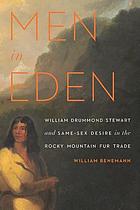
Men in Eden: William Drummond Stewart and Same-Sex Desire in the Rocky Mountain Fur Trade by William Benemann (University of Nebraska Press, 2012). Let’s begin with the book Hanna referred to as the book about “mountain men humping!” Benemann takes as his subject a 19th century Scottish aristocrat, William Drummond Stuart, and through Stuart’s colorful life explores the contours of same-sex desire on the borderlands of “civilized” society. Stewart, a younger son who later in life inherited the family title from his older brother, came of age during the Napoleonic wars and served in the 15th King’s Hussars where he rose to the rank of Captain. After retiring from the army, Stewart traveled widely in the Middle East and North America — and in North America found the homosociality of the American West particularly amenable. Throughout his life, Stewart’s most enduring relationships were with men, including one French-Cree trader who he traveled extensively with and even took with him back to Scotland after assuming responsibility for the family’s estate; the couple lived for a time in one of the secluded lodges on the land, where Stewart kept all the material evidence of his travels abroad. According to Benemann, previous treatments of Stewart have gone out of their way to ignore the evidence of same-sex relationships in the Scotsman’s life. Benemann’s work is a thoughtful and nuanced challenge to this previous “closeting” of Stewart’s sexual self, taking those same-sex relationships for granted as a meaningful part of Stewart’s experience. Anyone with an interest in nineteenth-century Anglo-American sexuality and gender should definitely add this one to their reading list.

Documenting Intimate Matters: Primary Sources for a History of Sexuality in America edited by Thomas A. Foster (University of Chicago Press, 2013). Published as a companion volume to John D’Emilio and Estelle Freedman’s seminal Intimate Matters (1988), this new primary source reader offers a thoughtful compilation of lightly annotated documents related to various aspects of sexuality in American culture from the colonial era to the present. A brief 225 pages, featuring selections from about seventy sources, this reader is best seen as a jumping-off point for further discussion and exploration rather than a source for full-text transcriptions. Each of the five chronologically-arranged sections are introduced with a brief preface on the sexual issues of the period in question, and each document likewise features a thoughtful introduction. While necessarily incomplete, given its length, Documenting Intimate Matters is admirably diverse in its socio-cultural and geographic scope as well as the genres of (textual) documents found therein. Some of my favorite include newspaper announcements from the 1780s-90s placed by men whose wives had deserted them to inform creditors the husbands would no longer take responsibility for their (ex?) wives debts; the angry diary entries of Frederick Ryman (1884)*, whose sentiments about women would not be out of place on anti-feminist blogs of today; and Susan Fitzmaurice’s 2002 reflections on the struggles of raising a child with Downs Syndrome in away that prepares them for a sexually active, sexually pleasurable, and sexually responsible adulthood. An excellent anthology for use in introductory classes.

*Full disclosure: Ryman’s diaries reside at the Massachusetts Historical Society.

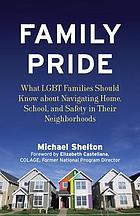
Family Pride: What LGBT Families Should Know about Navigating Home, School, and Safety in Their Neighborhood by Michael Shelton (Beacon Press, 2013). The latest addition to Beacon Press’s “queer ideas/queer actions” series, Shelton’s Family Pride is an accessible and nuanced snapshot of life in America for queer parents with children as we enter the 2010s. Centering the lived experiences of both LGBT parents and their children — through in-depth interviews Shelton conducted, as well as the growing body of relevant research literature — Shelton’s book should be on the bookshelf of every “family values” advocate (members of the Institute for American Values I’m looking at you!) as well as in the library of every queer activist and/or LGBT organization. While the title makes it sound like Family Pride is a handbook for queer families, in reality the volume is more of a status-quo assessment with some recommendations (from Shelton’s perspective as a therapist who has worked with queer families) for what queer families need in order to thrive. He does an excellent job of incorporating (I’d even argue prioritizing) the experiences of families who don’t often make “gay family” headlines: queer parents in straight marriages, parents who are in the closet, non-white families, families living with financial insecurity, families with uncertain immigration status, parents in prison or with a history of interaction with the law that makes calling the police for help an unthinkable solution to anti-gay speech or acts. My only quibble with Shelton’s framing is that he never explicitly defines an “LGBT family” as a unit made up of parents-plus-children in which at least one parent is queer — yet that is clearly his operational definition. I would have appreciated either a more explicit acknowledgement that this book focuses on parenting-while-gay OR an effort to include the voices of queer families that do not include children. We are, most assuredly, families too.

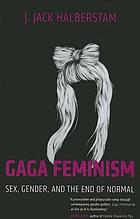
Gaga Feminism: Sex, Gender, and the End of Normal by J. Jack Halberstam (Beacon Press, 2012). While in Austin, I snagged a copy of yet another volume in the “queer actions/queer ideas” series — Halberstam’s meditation on the playful, anarchic queer feminism burbling up through the actions and expressions within youth culture. Taking pop culture references from Sponge Bob to Lady Gaga, Halberstam argues for the liberatory playfulness of more fluid sex and gender identities that — rather than requiring taxonomical fixity — provide a sandbox full of tools and opportunities for self-expression. I’m an easy sell on this score: while I am at times skeptical about the power of pop culture expression to effect political change, neither am I threatened by sex and gender anarchy. I am comfortable in my own gender (fairly conventional, by 21st century standards — though I’d likely have been a shockingly difficult daughter in many an earlier time and/or place) and sexuality (fluidly bisexual, married, monogamous). And I see no reason not to afford others the opportunity

Hard to Swallow: Hard Core Pornography on Screen edited by Claire Hines and Darren Kerr (Columbia University/Wallflower Press, 2012). This excellent anthology explores the pornographic genre of “hard core” films from a variety of perspectives: through the lens of history, film studies, sexual politics, and more. The majority of contributions focus on the United States and Britain (the editors are lecturers at Southampton Solent University, UK), and despite the negative connotations of “hard to swallow” virtually all of the authors take for granted that pornographic film as a genre deserves serious consideration. Pornography, it is assumed throughout, is simply explicit representation of human sexual activities; the messages of that representation can be positive or negative, depending upon execution and interpretation. My favorite pieces include: Linda Williams’  ‘”White Slavery,’ Or the Ethnography of ‘Sexworkers’: Women in Stag Films in the Kinsey Archive”; “The Progressive Potential of Behind the Green Door” by Darren Kerr; “Reel Intercourse: Doing Sex on Camera” by Clarissa Smith,” and “Interrogating Lesbian Pornography: Gender, Sexual Iconography, and Spectatoring,” by Rebecca Beirne. At their best, these essays go beyond commonplace assumptions about pornography as inherently degrading, as without cultural merit, as a male-only pursuit. Williams’ piece examines the subjectivity of women in early twentieth century stag films, wondering what light surviving films might shed on performers’ agency. Kerr, in “The Progressive Potential…” revisits a film that has been understood as misogynist and asks us to think, again, about the centrality of female sexual pleasure in the narrative. Clarissa Smith pushes back against the notion that performers in porn “just have sex on camera,” suggesting that engaging an audience in erotic fantasy is, in fact, a difficult role for which real skills are required (can we all say “duh?”). And finally, Beirne’s contribution explores the nuances of voyeurism, performance, and sexual subjectivity in the work of lesbian pornographers.

The entire anthology was absolutely worth reading, though I had quibbles with various assumptions along the way: one author, for example, claimed in passing that “the consumption of pornography … is an essentially private past time, indulged in as an accompaniment or prelude to masturbation.” Yes … but also, no. Reading/viewing erotica can happen in many contexts, only some of which are solitary, and doesn’t necessarily lead to masturbation for all consumers, every time. Likewise, the uncomplicated statement that pornography “began as a male-only pursuit,” even if the author acknowledges that “that male-ness has been diluted in recent years,” is to ignore the long history of female pornographers and women who have enjoyed erotic material. Women + sexual agency is not, contrary to popular opinion, a twenty-first century phenomenon.

I continue to be fascinated, too, by the assumption (apparently played out in the majority of pornographic film) that straight men don’t like to see male bodies centered in porn: from the descriptions of works and from the analysis of the authors it certainly sounds like in mainstream “hard core” (explicit) pornography, it’s women’s bodies on display for a presumed male audience. Granted I’m queer, so. But in general, what I find visually arousing is the depiction of people having sex. People having sex in ways I can then fantasize about enjoying like they’re enjoying it. Watching a woman orgasm on screen is hot (to me) because ohgodohgod I know what that feels like, and if I were in her situation I’d be coming too. So I’m curious what’s happening for men who watch porn in which the role of the male actor is basically a two-step process. Step one: Get it up. Step two: Ejaculate on screen. Like, isn’t that kinda disappointingly … thin on material that encourages imaginative projection of yourself into the scene? It’s just this thing I keep thinking about, as I’m reading these pieces that assume because women’s bodies are the bodies depicted, therefore the audience is supposed to imagine having sex with them (therefore be someone who likes having sex with women) rather than imagine being them (a person, male or female, experiencing sexual pleasure). How would we analyze pornography differently if we assumed the viewer’s involvement with those on-screen was a process of empathetic identification rather than (positive or negative) objectification?

Lots to think about … and I’m footnote mining Hard to Swallow for oft-cited authors and works so I’ve already got several other books on pornography on order at the library and look forward to reviewing them here!


← Older posts
"the past is a wild party; check your preconceptions at the door." ~ Emma Donoghue

Recent Posts

  • medical update 11.11.22
  • medical update 6.4.22
  • medical update 1.16.2022
  • medical update 10.13.2021
  • medical update 8.17.2021

Archives

Categories

Creative Commons License

This work by Anna J. Clutterbuck-Cook is licensed under a Creative Commons Attribution 3.0 Unported License

Meta

  • Create account
  • Log in
  • Entries feed
  • Comments feed
  • WordPress.com

Create a free website or blog at WordPress.com.

  • Subscribe Subscribed
    • the feminist librarian
    • Join 37 other subscribers
    • Already have a WordPress.com account? Log in now.
    • the feminist librarian
    • Subscribe Subscribed
    • Sign up
    • Log in
    • Report this content
    • View site in Reader
    • Manage subscriptions
    • Collapse this bar