• anna j. clutterbuck-cook
  • contact
  • curriculum vitae
  • find me elsewhere
  • marilyn ross memorial book prize

the feminist librarian

the feminist librarian

Author Archives: Anna Clutterbuck-Cook

Looking Back/Looking Forward: Library Science

15 Thursday Jan 2009

Posted by Anna Clutterbuck-Cook in library life

≈ Leave a comment

Tags

children, gender and sexuality, librarians, simmons

As we enter 2009 — and before I get lost once again in the maze of a busy academic schedule — I thought I’d post a few items on the projects I completed this fall and the projects that are up for the spring semester.
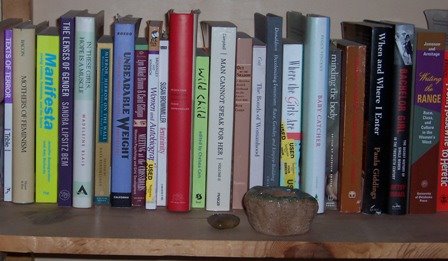

Enrolled as a part-time student, I’m attempting to balance three different sets of course requirements: those for my history degree, those for my general library science degree, and those for my archives management focus within the library science program. This fall, I took a haitus from the archives management courses and took LIS 407 (Reference Services). I had the usual frustration with Reference that I have with all introductory-level survey courses: they try to do too much in too little time, and as a result skim the surface of a great deal of information that could potentially take a lifetime (or at least a career) to explore. That pedagogical frustration aside, it was a good class taught by a knowledgeable, enthusiastic professor (thanks Rex!). I particularly enjoyed putting my annotated bibliography together on the topic of providing children and young adults with reference services in the area of human sexuality. For the bibliography, I surveyed the library science literature for articles and books on the topic (slim pickings) as well as poking around the internet for useful resources. Below are the internet sources I ended up listing in the finished project.

Internet Resources

A number of organizations provide a wealth of resources on their websites for sexuality education that would be of use in a reference setting. Below I provide a sampling of organizational websites and selected page descriptions that highlight some of the resources available that may be of particular interest in a library reference setting:

1. Internet Public Library’s TeenSpace. The Internet Public Library (based out of the University of Michigan and Drexler University schools of information) has a portion of their website dedicated specifically to resources for adolescents, which includes resources related to sexuality. Two pages of particular note:

Frequently Asked (Embarrassing) Questions. On this page, a list of links are provided for issues such as dropping out of school, medical questions, mental health, and social issues (“what do I do if my friend says something racist?”) as well as sexuality information. Also linked to this page is:

Health & Sexuality Links. This is an annotated list of websites that cover a range of issues on the topics of health and sexuality. These links are further divided into sub-heading categories such as “LGBT” and “Abuse and Exploitation.”

2. Scarleteen: Sex Education for the Real World. The web-based iteration of Heather Corinna’s S.E.X., Scarleteen.com provides message boards, sexuality Q&A, writing by young people, and a variety of other interactive resources and informational content. One of the values of Scarleteen, I believe, is its holistic approach to sexual health and orientation, not assuming its readership is in any one place in the orientation spectrum and emphasizing mutuality and health rather than condemning particular sexual desires or practices.

For Parents. The “for parents” section that explains the philosophy of the site and suggests some further reading for adults who are seeking to support the young people in their lives.

Start Your Sexuality Canon. This bibliography is Scarleteen’s own bibliography of essential books on human sexuality, starting out with the famous Hite Report and making suggestions on topics of gender identity, media depictions of sexuality, as well as providing a list of basic sexual health handbooks.

3. SIECUS (Sexuality Information and Education Council of the United States). SIECUS was founded in 1964 by Dr. Mary Calderone, a former medical director for Planned Parenthood. Believing in the lifelong right of all human beings to comprehensive sexuality information, SIECUS provides a plethora of free web-based resources and publications. They are also an advocacy organization for greater access and outreach on issues of sexuality, and press releases on their website can be a useful way to stay informed about current controversies over providing sexuality information to the public. A few specific items of interest:

Bibliography – Books for Young People. This bibliography provides a short list of age-appropriate books for young people, sub-divided into age categories from pre-school to high school.

On the Right Track (PDF). This 78-page booklet makes suggestions specifically for adults who work in youth development organizations on how to integrate sexuality education into their work.

SexEdLibrary. SexEd Library is a database of lesson plans from various sources pulled together and vetted by SIECUS and made available online. Categories include things like “Relationships,” “Personal skills,” “Sexual Health,” and “Society & Culture.”

4. Young Adult Library Services Association (YALSA), hosted by ALA. For obvious reasons, YALSA’s website can be a useful place to research the intersection of sexuality information access and youth library services. They offer numerous booklists that often feature fiction and nonfiction books on themes of romance and sexuality, support a blog that reports on current issues and a host of other electronic resources for librarians. One example of the sort of resources available would be their “Healthy Relationships for Teens” booklist, which provides web-based and traditional resources on sexuality for young adults and the librarians who serve them.

5. Teenwire.com/Planned Parenthood. Teenwire is Planned Parenthood’s site geared specifically to a young adult audience. Much like Scarleteeen, Teenwire provides multiple avenues for accessing information on sexual health and relationships. There are topical sections, question & answer features, and information about sexual health services. Much of this information is also made available in Spanish.

Parents & Professionals. This portion of the site explains Planned Parenthood’s approach to adolescent sexual health and offers links to Planned Parenthood’s publications specifically for youth advocates.

Next semester, it’s back to the archives with LIS440: Archival Access and Use.

Booknotes: Locke & Key

14 Wednesday Jan 2009

Posted by Anna Clutterbuck-Cook in book reviews

≈ Leave a comment

Tags

genre fiction

One of Hanna’s Christmas presents this years was a recently-published graphic novel, Locke & Key: Welcome to Lovecraft, written by Joe Hill and illustrated by Gabriel Rodriguez. She read it over vacation and handed it off to me with instructions not to read it just before bed. The injunction was well-advised. Welcome to Lovecraft is creepy. It’s one of those graphic novels most decidedly not for written for young children, despite the fact that its main characters are three siblings: Bode (the canny elementary-school-age youngest brother), Kinsey (dreadlock-sporting middle sister with an enviable record in track), and Tyler, the moody eldest son. The story opens with a homicide and only gets bloodier from there — at the same time as our characters are becoming acquainted with the more supernatural elements of the family’s Gothic mansion in Lovecraft, Massachusetts. Yet the characters and the family secrets that lie at the core of the mystery make the story compelling beyond a simple “who’s going to bite the dust next?” I’m definitely looking forward to volume two.

Obama the (Im)perfect Feminist . . .

14 Wednesday Jan 2009

Posted by Anna Clutterbuck-Cook in think pieces

≈ Leave a comment

Tags

election08, feminism, politics

. . . Just like the rest of us!

I like this post by Jill over at Feministe discussing the Ms. magazine cover featuring Barack Obama in one of their “This is what a feminist looks like” t-shirts, a graphic that has caused some controversy in the feminist blogsophere (then again, what doesn’t cause controversy in the feminist blogosphere?) As Jill points out,

Obama has reportedly self-identified as a feminist, and has the legislative record to back it up. Is he a perfect feminist, or a perfect progressive? Not by any stretch of the imagination. Is he going to disappoint us over and over? Yeah, he’s already started. But he’s still pretty damned good, especially for a mainstream, center-left politician elected to the highest office, and I don’t really see the point in kicking him out of the club just yet.

Yup. I’m definitely looking forward to inauguration day!

UPDATE: There’s also a nice post on this over at Bitch Magazine.

Looking Back/Looking Forward: History

13 Tuesday Jan 2009

Posted by Anna Clutterbuck-Cook in my historian hat

≈ Leave a comment

Tags

children, history, simmons

As we enter 2009 — and before I get lost once again in the maze of a busy academic schedule — I thought I’d post a few items on the projects I completed this fall and the projects that are up for the spring semester.

As I wrote at the beginning of last semester, this past fall I took a history seminar in the “American Renaissance,” the era of great political and social upheaval took place during the decades leading up to the Civil War. The paper that came out of that course was “Inspiring ‘Right Feelings’: Children and Childhood in Lydia Maria Child’s The Mother’s Book.” Child was an author and activist whose parenting manual, The Mother’s Book, published in 1831, incorporated many of the latest ideas about human nature, development, and education emerging from the Romantic movement and also the social justice movements she was involved in. I was principally interested in the way Child did, and did not, make connections between her political activism children’s rights. As I wrote in my introduction:

I am interested in the central role of education as a means of both self-improvement and social control plays in the parenting model Child puts forward. Belief in education as a means of self-improvement and liberation from dependence was a common thread in many antebellum reform movements. Access to education, and the role of education in ending the intellectual and material dependence of blacks and women, was, for example, a central tenet of both the women’s rights and abolitionist movements—both of which Lydia Maria Child ardently supported. Yet within The Mother’s Book Child shies away from any radical challenge to parental authority, proscribing children’s moral and intellectual independence by casting adults—particularly mothers—in the role of vigilant guardians of their children’s innate good nature.

While I hesitate to say, at this point, whether the specific topic of this paper will be relevant to my thesis, the themes of political activism, education, and the position of children and youth in American culture are definitely recurring themes in my research and writing.

Up for next semester: I’m not sure what it says about me that my heart thrilled when I got the book list for my spring course in intellectual history and saw that we would be reading complete works by Darwin, Nietzsche, Freud, and Foucault — as well as (I am sure) selections of many other influential thinkers from the 19th and 20th centuries. I’ve encountered all of these crazy guys before and always walked away with something fascinating to ponder . . . even if Nietzsche makes me want to slap him and Freud did cause me to throw a book across . Hanna thinks I’m touched in the head for enjoying Foucault, but I’ve had a fondness for the man ever since using Discipline and Punish for my very first history/philosophy paper on children’s rights.* And then there’s the way he throws around words like panopticon with wild abandon . . . Stay tuned for what project emerges in May!

*Fall 2001, at the Oregon Extension program: “The Radical Belief that Children Are People.” Did I mention something about a through-line in my research . . .?

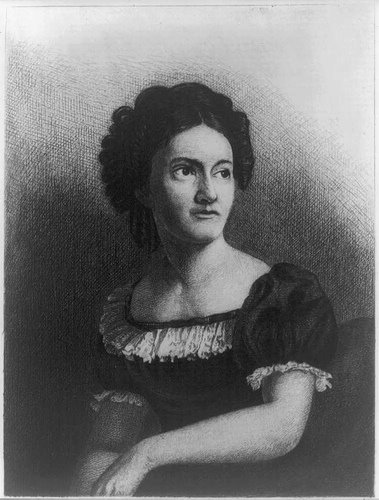
Image of Lydia Maria Child borrowed from Flickr.

Monday Morning Melange

12 Monday Jan 2009

Posted by Anna Clutterbuck-Cook in media

≈ 2 Comments

Tags

boston, feminism, movies

It’s a snowy Monday morning in Boston and I’m sitting at the MHS enjoying my London Fog latte and checking out my iGoogle blog feeds. Here are some links of note.

Thanks Michigan for once again making me proud of my home state. Sigh.

Hanna has a new blog which I’ve added to my blogroll, and she’s already put up a few fun links! If nothing else, you should go check out her beautiful design. The photograph is one of my favorites that she took last summer on a foggy day down in the North End.

I still remember vividly the first time I ever saw Christina Hoff Sommers interviewed on a documentary about contemporary feminism. I had no idea who she was, and my seventeen-year-old, newly-political feminist self was utterly taken aback by her anti-feminism-in-the-name-of-feminism outrage. Ten years later, she’s still at it.

I see that over the weekend Kate Winslet won Golden Globes for Revolutionary Road (which I have neither seen nor read) and The Reader (which I have read but not seen). While checking out the news coverage over at The Guardian online, I stumbled into Ann Billson’s joint review Films for people who don’t really like films. I can’t speak to the validity of her reviews, but I thought the overall point was an interesting one.

Finally, for those of you who wonder what this Dr. Who thing is I occasionally witter about on this blog, Wired magazine has put together a gallery of images following the many actors who have played the character over the years. I’m still working my way through the back catalog, so have only seen four of the eleven incarnations.* I told Hanna she needs to make me flash cards!

*For those of you who are/were fans of the BBC Chronicles of Narnia, Tom Baker (Dr. Who from 1974-1981) is also known for his turn as the Marshwiggle Puddleglum in Silver Chair.

Looking Back/Looking Forward: Teaching

11 Sunday Jan 2009

Posted by Anna Clutterbuck-Cook in my historian hat

≈ Leave a comment

Tags

education, history, simmons

As we enter 2009 — and before I get lost once again in the maze of a busy academic schedule — I thought I’d post a few items on the projects I completed this fall and the projects that are up for the spring semester.

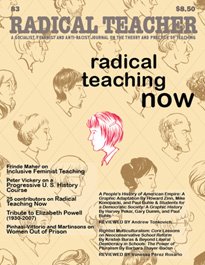
Teaching [will] need to be more boldly political than now, not less. And more seriously historical: things used to be different. They will be different again. — “Introduction Radical Teaching Now”, Radical Teacher #83

As with my internship at Northeastern (see below), I will be continuing my work as a teaching assistant for Professor Stephen Ortega in the Simmons history department this spring. Steve teaches Middle Eastern, Islamic and World history; I will be helping with the second half of the World Civilizations course we began in the fall. The autumn class ran from hunter-gatherer societies to the age of exploration (15th century), and this second semester we will pick up in the 1400s and continue on to the present day.

It was timely, therefore, to receive my most recent issue of Radical Teacher in the mail this past week, and find Peter Vickery’s essay “Progressive Pedagogy in the U.S. History Survey” inside. Vickery describes teaching a U.S. History survey course at a state college, to students for whom the class is a requirement, and many of whom are skeptical about the relevance of history — not to mention their own ability to actively participate in its creation. He writes:

In addition to skepticism, my students encounter an ongoing tension, namely the apparent contradiction between a key goal (finding out what actually happened and why) and a key lesson (history is constructed by historians). Far from being a source of despair or frustration, in my own mind the tension is integral to the joy of history. Learning and re-learning on the one hand the boundaries of possibility that inhere in the study and production of history and, on the other, the power of narrative, keeps history a stimulating field of endeavor.

Yet it can be difficult to convey the joy of that contradiction to students who are distracted and suspicious of the worth of such an open-ended quest. We’ll see what happens this spring!

My grandmother’s library in the news!

10 Saturday Jan 2009

Posted by Anna Clutterbuck-Cook in our family

≈ Leave a comment

Tags

family, librarians

via Hanna.

When my maternal grandparents retired to Bend, Oregon in the early 1980s, my grandmother, Marilyn, became a volunteer at the Deschutes Public Library. The library has a program to circulate books through the mail to house-bound and far-flung rural patrons, and for years Grandma was responsible for corresponding with, and selecting books for her own particular group of patrons.

Well, the library’s just made news with rising circulation and patronage numbers, according to the Bend Bulletin:

People are flocking to Deschutes County libraries, and officials say the slumping economy may be bringing them business. From July through November, patrons checked out about 10 percent more books and other items compared with the same period last year.

. . . State Librarian Jim Scheppke said circulation increased by 2.5 percent between the budget cycle that ended in June and the previous budget cycle, and the state set a circulation record of 51.7 million items. Scheppke was impressed by the circulation growth described in Deschutes County.

“The Deschutes numbers sound pretty amazing,” Scheppke said. “It is something we’re hearing in all the public libraries right now. We’ve known ever since the Great Depression in the 1930s that library use pretty much tracks the economy. In bad times, library use has always gone up.”

Of course, there are a lot of obviously negative implications of a recession, but I can’t think of any scenario where increase use of libraries is a bad thing!

Looking Back/Looking Forward: Internship

09 Friday Jan 2009

Posted by Anna Clutterbuck-Cook in library life

≈ Leave a comment

Tags

archivists, history, northeastern, simmons

As we enter 2009 — and before I get lost once again in the maze of a busy academic schedule — I thought I’d post a few items on the projects I completed this fall and the projects that are up for the spring semester.

My tenure as an intern at Northeastern University’s Archives will continue through the spring, this time as an official internship requirement for my second archives class at Simmons. Just today, I published the last finding aid for the small collections I processed this fall to make them available for research. In addition to my first, miniscule collection the Albert Hale Waite papers, I also processed the collection of Milburn Devenney, a social worker and AIDS/HIV activist from the Boston area, documents related to the history of Northeastern’s Disability Resource Center and course notes from the history department’s Western Civilization class.

Next week I will begin work on a much larger collection, the Carmen A. Pola papers. Ms. Pola is a Boston-area community activist who worked for a number of different social justice organizations such as Roxbury Unites for Families and Children and the Puerto Rican Festival. She served in the administration of Boston mayor Ray Flynn during the 1980s. We have over thirty boxes of unprocessed documents and photographs that I will be responsible for organizing so that researchers will have meaningful access to the contents of the collection. Wish me luck and watch for the results sometime this summer!

(Belated) Happy New Year

08 Thursday Jan 2009

Posted by Anna Clutterbuck-Cook in our family

≈ 1 Comment

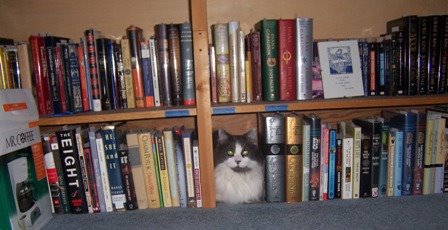
Happy New Year everyone! I’m back in Boston and catching up on everything that needs doing before the term starts up in a few weeks. This includes napping . . .

. . . and polishing off some of those winter break book reads . . .

As well as, of course, working our way through the local selection of xocolata calenta.*

*Catalan for hot chocolate (because why not?)

"No shit" headline of the week

29 Monday Dec 2008

Posted by Anna Clutterbuck-Cook in think pieces

≈ Leave a comment

Tags

children, feminism

The “no shit” headline of the week award goes to National Public Radio for this story:

Study: Tolerance Can Lower Gay Kids’ Suicide Risk

Gay, lesbian and bisexual teens and young adults have one of the highest rates of suicide attempts — and some other health and mental health problems, including substance abuse. A new study suggests that parental acceptance, and even neutrality, with regard to a child’s sexual orientation could have a big impact in reducing this rate.

The study, published in the journal Pediatrics, found that the gay, lesbian and bisexual young adults and teens at the highest risk of attempting suicide and having some other health problems are ones who reported a high level of rejection by their families as a result of their sexual orientation.

“A little bit of change in rejecting behavior, being a little bit more accepting,” says lead researcher Caitlin Ryan, “can make a significant difference in the child’s health and mental health.”

You think? I guess I’m glad that this study was done, and that it’s getting airtime on All Things Considered — but it’s amazing to me that this is noteworthy: that loving your kid unconditonally and accepting them regardless of their sexual identity could, you know, improve their health and well being.

← Older posts
Newer posts →
"the past is a wild party; check your preconceptions at the door." ~ Emma Donoghue

Recent Posts

  • medical update 11.11.22
  • medical update 6.4.22
  • medical update 1.16.2022
  • medical update 10.13.2021
  • medical update 8.17.2021

Archives

Categories

Creative Commons License

This work by Anna J. Clutterbuck-Cook is licensed under a Creative Commons Attribution 3.0 Unported License

Meta

  • Register
  • Log in
  • Entries feed
  • Comments feed
  • WordPress.com

Create a free website or blog at WordPress.com.

  • Follow Following
    • the feminist librarian
    • Join 36 other followers
    • Already have a WordPress.com account? Log in now.
    • the feminist librarian
    • Customize
    • Follow Following
    • Sign up
    • Log in
    • Report this content
    • View site in Reader
    • Manage subscriptions
    • Collapse this bar