• anna j. clutterbuck-cook
  • contact
  • curriculum vitae
  • find me elsewhere
  • marilyn ross memorial book prize

the feminist librarian

the feminist librarian

Author Archives: Anna Clutterbuck-Cook

Fruitlands Museum Visit

06 Monday Oct 2008

Posted by Anna Clutterbuck-Cook in a sense of place

≈ 1 Comment

Tags

fun, history, outdoors, photos

For my history class, we had to choose a public history site connected to the transcendentalist movement to visit and report on; my friend Laura and I chose Fruitlands, the site of the short-lived (eight-month) utopian experiment undertaken by Bronson Alcott, his long-suffering wife and children, and a British friend Charles Lane. Below are the pictures I took on the museum grounds and at the apple orchard we stopped at on the way home. (The third individual evident in the pictures is Laura’s roommate Ashley).

To see a larger slide show with captions, click here.

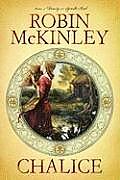
Booknotes: Chalice

05 Sunday Oct 2008

Posted by Anna Clutterbuck-Cook in book reviews

≈ Leave a comment

Tags

genre fiction

In keeping with my promise-to-self to have a non-school-related book going at all times during this semester, this week I read Robin McKinley’s latest work of fantasy fiction, Chalice. I am still waiting patiently for a sequel to Sunshine — when Robin when?! — which Chalice is not. It is also not as inventive an alternate world as the one found in Dragonhaven(which I discussed here). However, Chalice harkens back to many of her gentle fairy tale stories collected in Door in the Hedge or Knot in the Grain. It is the story of a young beekeeper, Mirasol, who is unexpectedly called from her home to become “Chalice,” one of the Circle of mages who protect her homeland; and the story of the unexpected friendship she forms with the new Master mage, a fire priest who is no longer quite human. It was just the thing for a relentlessly rainy weekend at the end of September.

Best News of the Week

03 Friday Oct 2008

Posted by Anna Clutterbuck-Cook in think pieces

≈ 2 Comments

Tags

election08, michigan, politics


I talked to my parents last night back in Michigan — which has been a tight swing state in recent election cycles — and they reported that the McCain campaign is so far behind that they’re pulling out and leaving the state to Obama & co.! Aside from hearing that Brian and Renee have adopted a puppy, I think this might be the best news to come by way this week. Go Michiganders!

*image borrowed from handmade detroit via the sweetie pie press.

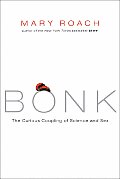
Booknotes: Bonk

30 Tuesday Sep 2008

Posted by Anna Clutterbuck-Cook in book reviews

≈ 2 Comments

Tags

gender and sexuality, science

A few weeks ago, the Boston Public Library finally notified me that a reserve copy of Mary Roach’s latest book, Bonk: The Curious Coupling of Science and Sex, was on hold for my reading pleasure. “Hooray!” I thought, “another fun book about sex!” . . . so I checked it out and read it.

I’ve heard wonderful things about Mary Roach’s science writing over the years, from a variety of bibliophile friends, but have not read either of her previous books (Stiff and Spook). They were about death. But, I mean, who wouldn’t be entertained by the shenanigans of researchers who dress rats in polyester knickers to test the effect of artificial fabrics on libido? Or pause to consider why in a study “of male and female genital slang carried out at five British universities, respondents came up with 351 ways to say penis . . . and only three for clitoris”? And really, who could resist the knowledge that in the Middle Ages witches were thought to be the cause of impotence: “witches with no formal training in andrology could employ a [simple] approach. They made the man’s penis disappear.”

Her descriptions of some of the bumbling medical interventions in humans sex lives are often not for the faint of heart, but I found them fascinating in a train-wreck sort of way: so many of our attempts to make sense of human sexuality through the lens of science have been simultanouesly terribly earnest and woefully misguided. In the end, even the most enthusiastic scientists, it seems, have come to the conclusion that what turns people on (or off) is unpredictable, varied, and irreducibly complex.

Roach ends her book with a description of one of Masters and Johnson’s later works, published in 1979, which describes the experiences of a group of lesbian, gay, and straight couples, committed and not, whom they invited to their labs and put under the microscope:

Ultimately, [Masters and Johnson] set aside their stopwatches and data charts and turned a qualitative eye upon their volunteers. What emerged were two portraits. There was efficient sex — skillful, efficient, goal-directed, uninhibited, and with a very low “failure incidence” . . . gay, straight, committed or not . . . [they] tended to have, as they say, 100 percent orgasmic return.

But efficient sex was not amazing sex. The best sex going on in Masters and Johnson’s lab was sex being had by the committed gay and lesbian couples. Not because they were practicing special secret homosexual techniques but because they “took their time” (301).

What strikes me is that Masters and Johnson found this simple observation worth noting (and italicizing) in their book . . . isn’t time and attention an obvious cornerstone of relational sex? Apparently, for many of the hetero couples Masters and Johnson observed in the late seventies, whatever goal they had in mind (orgasm? procreation?) eclipsed the far richer process of togetherness that the lesbian and gay couples foregrounded in their interactions. The impish side of my soul wonders what the religious right would make of that . . .

Reference 101: Source Evaluations

29 Monday Sep 2008

Posted by Anna Clutterbuck-Cook in library life

≈ Leave a comment

Tags

books, simmons

For my reference class, we’re required to review and evaluate many different types of sources throughout the semester. This week, we had a trial run: an assignment to choose a single work in the Simmons library reference collection and review it. This process is something that reference librarians do constantly, either systematically (in recommending acquisitions for reference collections) or more improvisationally (when assisting patrons in answering reference questions). At the MHS, all of us on the Reader Services Staff take our turn highlighting a reference work in our collection as part of an ongoing “reference book of the week” project. For those of you who are interested in what goes into such an evaluation, below is the assignment I did this week for class.
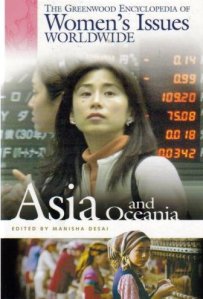
Walter, Lynn. The Greenwood Encyclopedia of Women’s Issues Worldwide. Westport, Conn.: Greenwood Press, 2003.

The Greenwood Encyclopedia of Women’s Issues Worldwide provides researchers with an easily-navigable overview of contemporary women’s issues across the globe. The work is organized in six volumes by geographical region (Asia and Oceania, Central and South America, Europe, The Middle East and North Africa, North America and the Caribbean, and Sub-Saharan Africa). Within each volume, the contents are arranged alphabetically by country, or group of countries, profiled. Each volume was edited by a scholar who is an authority on the region, and contributors are drawn from predominantly American universities, with a healthy representation of individuals at institutions of higher education across the globe.

Each contributor was asked to profile her or his assigned country, or group of countries, with an eye toward “locating women’s agendas,” “differences among women” within the region, and the activities of self-identified women’s movements and non-governmental organizations. Each author follows the same outline, covering uniform topics that fall under the broad categories of “education,” “employment and the economy,” “family and sexuality,” “health,” “politics and law,” “religion and spirituality,” “violence,” and “outlook for the twenty-first century.” The summary narrative is augmented by a selected bibliography and resource guide within each chapter that points the researcher to further information in suggested readings, audio-visual and Internet material, and organizations of note.

With each chapter laid out in the same basic pattern, it is fairly simple for the researcher to cross-reference subjects such as “contraception and abortion” to find out how access to birth control varies depending on whether one lives in Denmark, the United States, or South Africa. Each volume contains a subject and person index for that volume, with a comprehensive index found at the end of volume six. Maps and images are included, though not in color, and are not indicated in a separate index. Appendices in each volume provide statistical information on the education, health, economic status, and political participation of women in the region.

Reviewing the encyclopedia for Choice Reviews Online in May 2004, P. Palmer describes the work as “current, well written, and informative, providing scholarly content, useful detail, and sound documentation.” Sally Moffitt, reviewing for Reference & User Services Quarterly, highlights the ease of cross-country comparisons and points out that “it will be a matter of regret if its editors fail to bring out regularly updated editions.” Indeed, since it was published in 2003 the Encyclopedia of Women’s Issues is now five years out of date as a truly contemporary source of information on global women’s issues. However, it remains the most recently-published resource attempting this level of breadth and depth, and is a valuable tool for both entry-level students of women’s studies as well as higher-level researchers seeking comparative data the status and experience of women worldwide. The target audience is students and faculty in higher education, although high school students with a particular research need will also find it accessible and informative.

[1] P. Palmer, review of The Greenwood Encyclopedia of Women’s Issues Worldwide, by Lynn Walter, Choice Reviews Online (May 2004). Available online at http://0-www.cro2.org.library.simmons.edu/default.aspx?page=reviewdisplay&pid=2658010. Accessed 27 September 2008.

[2] Sally Moffitt, review of The Greenwood Encyclopedia of Women’s Issues Worldwide, by Lynn Walter, Reference & User Services Quarterly vol. 43, no. 4 (Summer 2004): 348-349.

What Aaron Sorkin Said

26 Friday Sep 2008

Posted by Anna Clutterbuck-Cook in think pieces

≈ 1 Comment

Tags

election08, politics

As much as Maureen Dowd’s views on politics and feminism piss me off, I might consider forgiving her a teensy little bit because she called up Aaron Sorkin and had him write a Bartlet and Obama meeting for her column in the New York Times.

OBAMA They pivoted off the argument that I was inexperienced to the criticism that I’m — wait for it — the Messiah, who, by the way, was a community organizer. When I speak I try to lead with inspiration and aptitude. How is that a liability?

BARTLET
Because the idea of American exceptionalism doesn’t extend to Americans being exceptional. If you excelled academically and are able to casually use 690 SAT words then you might as well have the press shoot video of you giving the finger to the Statue of Liberty while the Dixie Chicks sing the University of the Taliban fight song. The people who want English to be the official language of the United States are uncomfortable with their leaders being fluent in it.

OBAMA You’re saying race doesn’t have anything to do with it?

BARTLET I wouldn’t go that far. Brains made me look arrogant but they make you look uppity. Plus, if you had a black daughter —

OBAMA I have two.

BARTLET — who was 17 and pregnant and unmarried and the father was a teenager hoping to launch a rap career with “Thug Life” inked across his chest, you’d come in fifth behind Bob Barr, Ralph Nader and a ficus.

OBAMA
You’re not cheering me up.

BARTLET Is that what you came here for?

OBAMA No, but it wouldn’t kill you.

I miss the West Wing every day . . .

via Jill at Feministe.

*image borrowed from tvsquad.com.

Booknotes: Harmful to Minors

23 Tuesday Sep 2008

Posted by Anna Clutterbuck-Cook in book reviews

≈ Leave a comment

Tags

children, feminism, gender and sexuality

It isn’t exactly hot off the presses, but I was following citations in Jessica Fields’ book on sex education and discovered Judith Levine’s 2002 work Harmful to Minors: The Perils of Protecting Children from Sex. Levine is a feminist activist and journalist, and her analysis of the political, adult framework for both understanding and dealing with childhood sexuality is heavily weighted toward the legal-political framework. However, she does the deeper understanding of childhood and sexuality (separately and entwined together) that permeates our cultural narratives about situations such as sexual consent and sex education.

A common thread running through many books I read on human sexuality and American culture, from Ariel Levy’s Female Chauvinist Pigs (2005) to Heather Corinna’s s.e.x. (2007) and Fields’ Risky Lessons is the discomfort Americans have with sexual pleasure and joy, despite the proliferation of hyper-sexual imagery. We are told through educational and entertainment mediums that sex is both highly dangerous and highly compelling — but we’re not so good at (or are frightening of) articulating sexual joy. Levine considers what this cultural skittishness means for children and young adults, who are bombarded with message of self-defense against sexual activity, but provided with few resources or protected, private, spaces in which to develop their own bodily knowledge, and consider the way in which sexuality can be an expression of positive human connection and physical embodiment.

In her epilogue, she pulls back to place the specific concern about children’s sexual agency within a larger framework of children’s rights as human rights:

When we are ready to invite children into the community of fully participating citizens, I believe we will respect them as people not so different from ourselves. That will be the moment at which we respect their sexual autonomy and agency and realize that one way to help them cultivate the capacity to enjoy life is to educate their capacity for sexual joy.(224)

These connections between embodiment, pleasure, childhood, education, and human rights are some of the threads I’m hoping to tease out in my history research this term, as I explore the counter-cultural (and establishment) educational endeavors of early-19th century thinkers and activists such as Bronson Alcott and Horace Mann. Levine’s research is largely contemporary, but the themes she teases out are recurring tensions in attitudes toward children and the educational project.

Boats Along the Charles

21 Sunday Sep 2008

Posted by Anna Clutterbuck-Cook in a sense of place

≈ Leave a comment

Tags

boston, outdoors, photos

I haven’t posted any photos of Boston for a while, so yesterday when Hanna met me after work to walk home along the Charles River, I took my camera and snapped a few pictures.

You can see the album over at Picasa if you prefer the larger images.

Quote(s) of the Week: What Ann & Rebecca Said

19 Friday Sep 2008

Posted by Anna Clutterbuck-Cook in linkspam

≈ Leave a comment

Tags

election08, feminism, politics

In response to charges of sexism against feminist activists from the right-wing media (what alternate universe have we wandered into?), Ann over at feministing writes:

The real sexism against Palin . . . has been the flip-side of the sexism against Hillary Clinton. A sadly perfect illustration of the Catch-22 women face. You’re either a scary, ugly, old, mannish harpy. Or a ditzy, perky, fuckable bimbo. . . The sexist remarks about Clinton and Palin are like our hate mail (“you ugly man-hater!” followed by “gimme a blow job!”) writ large.

Rebecca Hyman, writing at AlterNet, expands on these same themes:

It’s obvious that the caricature of Palin to which we’re being exposed is the inverse of the caricature of Hillary Clinton. Even if you’d missed the first half of the campaign, all you’d have to do is flip the script. If Palin is “better suited to be a calendar model for a local auto body shop than a holder of the second-highest office in the land,” then Clinton is a dumpy, frigid, post-menopausal, castrating bluestocking who only got women’s votes because she was a victim of her husband’s indiscriminate — but hell, with that kind of wife? — sexual transgressions. At least the Right gets the “sexy librarian”; those of us on the other side are stuck with the saccharine Sisterhood of the Traveling Pantsuits.

There are many reasons to be against McCain/Palin as the presidential ticket — not the least of which is their own sexist politics — but I’m proud that feminist writers are insisting on a more nuanced understanding of how sexism is playing out in this race, and how all women — Sarah Palin included! — are judged according to narrow, gender-based stereotypes.

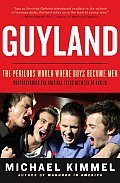
Booknotes: Guyland

16 Tuesday Sep 2008

Posted by Anna Clutterbuck-Cook in book reviews

≈ Leave a comment

Tags

feminism, masculinity, sociology

Over the weekend, I read Michael Kimmel’s recently-released book on the sociology of young adult masculinity: Guyland: The Perilous World Where Boys Become Men. As an undergraduate, I had the privilege of meeting Kimmel when he was in the process of his research for this book, and I really enjoyed listening to him talk about men, masculinity, and feminism. So I’ve been looking forward to reading the finish product.

My response, however, is mixed. Partly, I suspect, I am in a poor position to judge the accuracy of his narrative about normative masculinity in 16-26-year-old young adult culture. The men I am closest to eschew and/or are disqualified from the hetero, privileged, masculine identity he describes; I was never a resident on an American college campus, so always had a certain amount of distance from undergraduate norms; and I never negotiated the dating-relationship scene as a student. So while I recognize some of the features of the landscape Kimmel describes, I suspect there are nuances to, and gaps in, his argument that I am missing. However, I’ll share a couple of observations.

What Kimmel is describing — though perhaps he doesn’t underline this enough — is the normative culture of elite (male, white) power and privilege that all of us, regardless of gender, race, economic class, sexual orientation, contend with. Whether we are marginalized by it, choose to reject it, or are forced to interact with it, it is one part of the American landscape that does shape adolescent and young adult experience for many young people in powerful ways.

One of the most important things feminism has done for women in the last half century is to open up the possibilities for what it means to be female and feminine. There is still work to be done, to be sure. But as Kimmel points out, when he asks college-age women today what it means to be “feminine” their answers are as varied as their lives. No comparable political and cultural sea-change has taken place for men, maleness, and masculinity. Young men still come of age in a world where what it means to “be a man” is rigidly defined, the boundaries of acceptable behavior carefully policed: whether they are in or outside those boundaries, they are still judged by them.

I am familiar with the power of normative cultural expectations, and largely agree with Kimmel about their harmful effects. If his portrait of American guyhood is accurate, then there is cause for concern. What disappointed me in Guyland was the lack of creative thinking about what a new and more varied understanding of male adulthood might look like. While he pays lip-service to the value of queer sexualities and relationships, and counter-cultural resistance to the “guyland” paradigm, alternative masculinities exist on the edge of Kimmel’s narrative. He often falls back on vague notions of “responsibility”, on the need for young people — young men particularly — to “grow up, settle down, get a life” (p. 15). What it means to take responsibility or “settle down” is left to the reader to interpret — although in his examples it often seems to mean the job-marriage-house-kids markers which characterize the very notions of masculinity he sets out to criticize.

American parents are faulted for both hovering “overinvolvement” with and of neglectful “absentee parenting” of their children. Both of these notions bear further examination, since I would argue parent-child relationships aren’t best characterized by how much but what kind of involvement they represent. Similarly, the chapter on pornography suffers from a failure to adequately articulate what type of erotic materials he’s writing about, although he does have some interesting observations about possible generational differences when it comes to making meaning of sexual imagery.

Overall, while I appreciate Kimmel’s perspective as a sociologist, and his ability to describe the powerful social norms of masculinity, I hope that Guyland is only the beginning of a much-needed conversation about how young men can (and are!) re-inventing masculinity for themselves in the 21st century in ways that make life better for us all.

← Older posts
Newer posts →
"the past is a wild party; check your preconceptions at the door." ~ Emma Donoghue

Recent Posts

  • medical update 11.11.22
  • medical update 6.4.22
  • medical update 1.16.2022
  • medical update 10.13.2021
  • medical update 8.17.2021

Archives

Categories

Creative Commons License

This work by Anna J. Clutterbuck-Cook is licensed under a Creative Commons Attribution 3.0 Unported License

Meta

  • Register
  • Log in
  • Entries feed
  • Comments feed
  • WordPress.com

Blog at WordPress.com.

  • Follow Following
    • the feminist librarian
    • Join 36 other followers
    • Already have a WordPress.com account? Log in now.
    • the feminist librarian
    • Customize
    • Follow Following
    • Sign up
    • Log in
    • Report this content
    • View site in Reader
    • Manage subscriptions
    • Collapse this bar