• anna j. clutterbuck-cook
  • contact
  • curriculum vitae
  • find me elsewhere
  • marilyn ross memorial book prize

the feminist librarian

the feminist librarian

Author Archives: Anna Clutterbuck-Cook

Quote of the Week(end): "Zombie Feminists"

13 Saturday Sep 2008

Posted by Anna Clutterbuck-Cook in linkspam

≈ Leave a comment

Tags

election08, feminism, politics

From Rebecca Traister over at Salon.com:

The pro-woman rhetoric surrounding Sarah Palin’s nomination is a grotesque bastardization of everything feminism has stood for, and in my mind, more than any of the intergenerational pro- or anti-Hillary crap that people wrung their hands over during the primaries, Palin’s candidacy and the faux-feminism in which it has been wrapped are the first development that I fear will actually imperil feminism. Because if adopted as a narrative by this nation and its women, it could not only subvert but erase the meaning of what real progress for women means, what real gender bias consists of, what real discrimination looks like.

I’m torn between terror that she’s got it right and thankfulness that so many feminist writers and activists are speaking out on behalf of a feminist ethic that encompasses all women’s human rights. Go read the whole thing.

Quote of the Week: Politics & Privacy

12 Friday Sep 2008

Posted by Anna Clutterbuck-Cook in linkspam

≈ 1 Comment

Tags

election08, feminism, politics

From this week’s RhReality Podcast, hosted by Amanda Marcotte:

I can’t reiterate enough—every single person declaring that the Palin family deserves privacy on this needs to answer for the privacy of all other women in this country. Do I have privacy? Do I get a right to make my own decisions about my body away from the prying eyes and grabby hands of right wingers? Anyone who supports restrictions on women’s access to birth control and abortion has forsaken the right to hide behind privacy on this. I’m sorry, but that’s how it is. Anything short of that is saying that people in power have privacy and rights, but the rest of us don’t, which is un-American.

I really have nothing more to add, except go listen to the podcast, which is excellent as always.

The Politics of Maps

10 Wednesday Sep 2008

Posted by Anna Clutterbuck-Cook in my historian hat

≈ Leave a comment

Tags

education, history, politics, simmons, web video

God, I miss the West Wing.

I’m doing an exercise with the undergraduates in History 100 this Thursday to help them think about using maps as historical sources. As an introduction to my little preliminary talk, I plan to show them one of my favorite clips from The West Wing (Season 2; Episode 16). Thanks YouTube for having just what my geeky little heart desired!

Dahlia Lithwick on Republicans & Choice

08 Monday Sep 2008

Posted by Anna Clutterbuck-Cook in linkspam

≈ Leave a comment

Tags

election08, feminism, politics

There’s so much great stuff out on the ‘net being written about Sarah Palin and her stance on issues important to feminist activists that I can’t hope to link them all here. But I can’t resist posting a note on this column from the ever-insightful Dahlia Lithwick of Slate on republicans and the illusion of reproductive choice. I think it’s important to respect Bristol Palin’s personal privacy when it comes to her pregnancy, but as many feminist writers have been pointing out, it’s a personal privacy that the Republicans don’t want any other woman to have. That’s what makes the Palin’s family decisions worthy of political attention.

First online finding aid!

05 Friday Sep 2008

Posted by Anna Clutterbuck-Cook in library life

≈ Leave a comment

Tags

archivists, history, northeastern, simmons


This morning I finished and published my first online archival finding aid as part of my internship at Northeastern Archives. It involved a lot of fancy footwork with Microsoft Word macros and Dreamweaver . . . but the important thing in the end was that it worked and the papers of one Albert Hale Waite (graduate of Northeastern’s School of Law, class of 1933) are now fully processed and accessible for research. You can view the finding aid for Mr. Waite here.

Teen Sexuality & Agency

04 Thursday Sep 2008

Posted by Anna Clutterbuck-Cook in book reviews

≈ 2 Comments

Tags

children, election08, feminism, gender and sexuality, politics


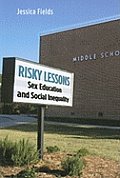
This weekend, while Governor Palin’s nomination as Republican Vice-Presidential Candidate, her hard-line conservative positions on human sexuality, and her daughter’s pregnancy were making headlines, I was reading sociologist Jessica Fields’ insightful new book Risky Lessons: Sex Education and Social Inequality. As Courtney Martin posted over at Feministing (in a review that prompted me to run out and buy the book), Fields “basically lays out a liberation philosophy for sex education.” Reflecting on the fieldwork Fields conducted in sex education classes during the mid-1990s, Courtney writes:

Young women learn to see their bodies as ticking time bombs and young men to see theirs as the uncontrollable fire that could lead to explosion. Instead of promoting self-awareness, responsible exploration, respect for the diversity of sexualities, or compassionate communication, we teach them that their bodies are dangerous. Conservatives want that danger staved off until marriage, where it suddenly becomes holy, and liberals want it staved off along the way — through the use of accessible contraception.

While I obviously advocate safer sex, I also feel like progressives have let ourselves (as per the usual) be only reactive, instead of re-authoring the questions. We must not only ask how we can protect young Americans from unwanted pregnancy and STIs, but how we can encourage them to be self-aware, healthy, and happy. How can we inspire them to author their own questions?

As political commentators discussed teenage pregnancy, marriage, and parenthood, comprehensive vs. abstinence-only sex “education” (I offer a few examples here, here, here and here for those interested), Fields’ book offered a what I thought was a fascinating counterpoint to the conventional wisdom. What struck me most about the political coverage was that the majority of Americans — whether they identify as liberal, conservative or somewhere in between — assume teenage sexuality is something dangerous, unhealthy, morally wrong. To be a sexually aware and engaged teenager in America is to be held suspect by the majority of adults as irresponsible and the result of bad parenting. As previously noted on here at the FFLA, this isn’t the only attitude adults can take about teenage sexual expression, and (in my opinion) far from the ideal. In Risky Lessons, Fields prompts us to re-visit this common-sense assumption and ask ourselves how we might better support young peoples’ exploration of the physical, emotional, and political pleasures and perils of their emerging adult sexuality.

In the early 21st century, “Sex education” has been reduced to risk reduction (if you believe in “comprehensive” sex ed) or eradication (if you believe in the abstinence-only doctrine). Young people deserve sexuality education that provides them with intellectual and emotional resources for making sense of their adult bodies, relationships, and agency in the world as sexual beings. And I hope that (if anything good can possibly be said to come from a Republican ticket so deeply opposed to providing those resources to all of America’s teenagers) the Palin nomination and the resulting debates over teenage sexual expression can provide us a critical moment of reflection on these issues and a chance to consider the liberatory potential sexuality education.

Grad School: Year Two Begins

02 Tuesday Sep 2008

Posted by Anna Clutterbuck-Cook in life writing

≈ Leave a comment

Tags

domesticity, simmons

Here we are again, the first week of September; this time last year I was in the midst of GSLIS orientation, still unpacking in the dorm, and figuring out where to buy groceries. Today, I’m sitting here in my flat in Allston, having just come back from a grocery run at the Harvest Co-op, planning dinner for my roommate’s return from vacation tomorrow and enjoying the creep of the afternoon sun across the hard-wood floors. Yep, a lot has happened in the past year. And now with a new semester beginning, I’m looking ahead to year two . . . the same, with changes.

Work and school will definitely keep me busy this fall. I have on the docket:

  • Classes. I am taking two classes this term, Reference Services (a library science requirement) and American Renaissance (a history seminar). I’m particularly looking forward to the history class, which focuses on the Boston-area transcendentalist set: Emerson, Alcott, Hawthorne, Mann . . . I plan to do my research paper on the trans-Atlantic exchange of ideas on pedagogy during the early 19th century.
  • Teaching Assistantship. I have been awarded a teaching assistantship with Steve Ortega, who teaches world history, and will be working with him on the World Civilizations I course for undergraduates. Simmons is a small enough school that I won’t have a class of my own to lead, but have plans in the works to run some lessons over the course of the semester, including a workshop next week on using maps as historical sources.
  • Internship. After returning to Boston from Michigan a couple of weeks ago, I started an internship at Northeastern University’s archives processing collections that have not yet been opened for research. This is something I don’t get a chance to do at my regular job at the MHS, and I’m finding I enjoy the intellectual occupation it demands.
  • I’ll also continue to work at the Mass. Historical Society part-time through the school year and look forward to occasionally taking advantage of its seminar series offerings and other events — not to mention the kick-ass Christmas party the hold every year.

On the leisure side of things, I’m a firm believer in continuing to have a life while in graduate school. Since I now have an apartment with a fully functional kitchen and a roommate, this “life” thing means cooking meals, enjoying Tuesday night British Comedies with Hanna, Sunday strolls along the Charles (as long as the weather holds), and of course Thursday night episodes of a new season of The Office! Not to mention watching the political circus in the lead-up to November’s election and posting regularly on my blog.

Happy fall, one and all . . .


Votes for Women!

27 Wednesday Aug 2008

Posted by Anna Clutterbuck-Cook in my historian hat

≈ 1 Comment

Tags

feminism, history

Yesterday was the 88th anniversary of the passage of the 19th amendment (giving women in the United States the right to elective franchise). Aside from making my usual recommendation that everyone watch (and tear up over) Iron Jawed Angels, I offer a couple of blog posts that came across my RSS feed.

Jessica, at Feministing, opened a comment thread yesterday for readers to share the stories of the first time they voted. Lots of fun — and occasionally painful — reminiscences there!

Amanda Marcotte, over at Pandagon, covers the appearance of anti-choice protesters who turned up at a rally to celebrate women’s suffrage. “I mean,” she writes, “if you can buy that not getting pregnant in the first place is actually an abortion, then why not expand the definition even further to start chipping away at other feminist gains and ideas?”:

  • Votes for women are totally abortion. Look, the only reason that abortion is legal is because women became a voting bloc whose opinions mattered politically. There’s exactly no way we’d have Roe v Wade if we didn’t have the 19th amendment.
  • Equal pay for equal work? Abortion. If women have more money, they’re just going to buy abortions. It’s like giving a kid a bigger allowance—they’ll just buy more candy with it. Except for abortions.
  • Title IX? Of course it’s abortion. All that running and jumping around that female athletes do makes the womb inhospitable, which is abortion. Also, Title IX ensures equal funding for academics. Girls who think hard have less uterine lining. I read that somewhere, probably an 19th century “medical” textbook. Anyway, we know that teenage girls who participate in sports have a lower pregnancy rate. If a teenage womb goes empty, that’s abortion.

Check out the rest of the post, and then go curl up and watch Alice Paul & company stick it to the man. Or, if you’re in a literary frame of mind, read journalist Doris Stevens’ Jailed for Freedom, which is the first-person account of the latter years of the suffrage campaign on which the film drew heavily.

*and the photograph above is of my friend Edith, dressed as Alice Paul, at the 85th anniversary celebrations in Crawfordsville, Indiana (2005).

Twilight (Take Two)

25 Monday Aug 2008

Posted by Anna Clutterbuck-Cook in think pieces

≈ Leave a comment

Tags

books, feminism, gender and sexuality


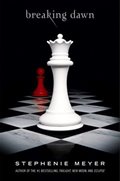
As an addendum to my earlier post about the Twilight saga, in the wake of the publication of Breaking Dawn — the fourth novel in the series –here are two more feminist perspectives on the series’ messages about sexuality, both brought to you by the RhRealityCheck site.

Sarah Seltzer provides a nice summary of some of the troubling aspects of the series, particularly as they surface in the final novel (spoiler warning for those who care!), and links to a lot of other commentary — only a few of which I’ve had a chance to peruse.

Meyers has tapped into a serious artery of the teen female psyche. Adding to the dynamic is the fact that Bella is a cipher whose only strong impulses are self-sacrifice and vampire lust. She has a glancing appreciation of classic novels and her family, but is easily projected upon by readers, who can imagine themselves in her place and be vicariously wooed by sexy succubi.

In Vampires And Anti-Choice Ghouls, her latest podcast, Amanda Marcotte gives her own take on the phenomenon (audio; partial transcript also provided).

God, you don’t even get close dancing or closed mouth kisses? Well, of course not. The point of this exercise is to set the standards so high that pretty much every girl is bound to fail and then hate herself for being a dirty girl. . . The important thing is that women learn that their bodies don’t belong to them, but should always be subjugated to the needs of the patriarchy.

Happy reading!

The View from Childhood?

23 Saturday Aug 2008

Posted by Anna Clutterbuck-Cook in think pieces

≈ Leave a comment

Tags

children, education, politics

Yesterday, I ran across an atrocious opinion piece in the New York City Journal, written by physician Theodore Dalrymple about a UNICEF report published last year on the well-being of children in industrialised nations. Britain came in twenty-first in the rankings (just behind the United States at twenty. (The Netherlands topped the list as the best country to be a child, followed by Sweden, Denmark, Finland, and Spain). With my own strong criticisms of attitudes toward children in the United States, and my more limited exposure to the educational system in the U.K., I am definitely willing to entertain the idea that British and American societies are toxic for children and their families. I haven’t read the UNICEF report in full, but the researchers looked at a broad spectrum of indicators, including

  • Material well-being
  • Family and peer relationships
  • Health and safety
  • Behaviour and risks
  • Own sense of well-being

The BBC report (linked above) and their related page of comments from British children about their lives contains a lot worth considering when it comes to assessing how children experience life in the modern world, even in countries that are materially rich and politically stable.

However, Mr Dalrymple does the UNICEF report a profound disservice by using it to support his socially conservative views about the British social welfare state and what he sees as “a culture of undiscriminating materialism, where the main freedom is freedom from legal, financial, ethical, or social consequences.” He relates a series of tabloid-style anecdotes about neglectful parenting and although he explicitly denies he is doing so, implies that women who have children with multiple partners and outside of marriage are unfit parents.

In my opinion, the most appalling argument appears about two-thirds of the way through the article, when he really starts to editorialize on report’s implications. He highlights the fact that many children do not experience regular family or group meal-times, and then writes:

Let me speculate briefly on the implications of these startling facts. They mean that children never learn, from a sense of social obligation, to eat when not hungry, or not to eat when they are. Appetite is all they need consult in deciding whether to eat—a purely egotistical outlook. Hence anything that interferes with the satisfaction of appetite will seem oppressive.

I invite you to consider for a minute, apart from whether you believe in the value of shared meals, the view of young people — and of people in general — that Dalrymple betrays here. “Children never learn . . . to eat when not hungry, or not to eat when they are.” What: we should be teaching children to ignore the messages their bodies give them about hunger? There are profound consequences in championing this concept of healthy socialization, when it comes to our experience of embodiment, for example. We should be instructing children to put conforming to social convention above attending to their own intuition? I was struck by how many children put the problem of bullying at the top of their list of worries when asked by the BBC what would make their lives better. Being taught to discount their own hungers (more broadly speaking, their own needs and desires) in the interest of social obligation would only exacerbate this problem.

Children deserve protected, nurturing space to be children — and I agree with Dalrymple that even in the most privileged of nations they don’t often have it, or have it for long enough. The solution, however, is not to cut them off from their own intuitive selves, but rather to give them the tools to care for themselves and for others around them in responsible ways. The fatal misperception in Mr Dalrymple’s essay is the belief that social obligation and self-care are mutually exclusive activities, when in fact I would argue they are mutually dependent — we thrive as individuals best when in a web of supportive relationships, and our relationships with fellow human beings are at their strongest when we know and attend to who we are as individuals — as well as attending to those around us. Unlike many material resources, emotional and social resources are not in limited supply, but endlessly renewable.

← Older posts
Newer posts →
"the past is a wild party; check your preconceptions at the door." ~ Emma Donoghue

Recent Posts

  • medical update 11.11.22
  • medical update 6.4.22
  • medical update 1.16.2022
  • medical update 10.13.2021
  • medical update 8.17.2021

Archives

Categories

Creative Commons License

This work by Anna J. Clutterbuck-Cook is licensed under a Creative Commons Attribution 3.0 Unported License

Meta

  • Register
  • Log in
  • Entries feed
  • Comments feed
  • WordPress.com

Blog at WordPress.com.

  • Follow Following
    • the feminist librarian
    • Join 36 other followers
    • Already have a WordPress.com account? Log in now.
    • the feminist librarian
    • Customize
    • Follow Following
    • Sign up
    • Log in
    • Report this content
    • View site in Reader
    • Manage subscriptions
    • Collapse this bar