• anna j. clutterbuck-cook
  • contact
  • curriculum vitae
  • find me elsewhere
  • marilyn ross memorial book prize

the feminist librarian

the feminist librarian

Author Archives: Anna Clutterbuck-Cook

quick hit: american sociological association on same-sex parenting and child outcomes

01 Friday Mar 2013

Posted by Anna Clutterbuck-Cook in linkspam

≈ Leave a comment

Tags

children, family scholars blog, gender and sexuality, politics, scotus junkie, sociology

cross-posted at the family scholars blog.

via Religion Dispatches.

The American Sociological Association has filed an amicus brief in the Proposition 8 case pending before the U.S. Supreme Court strongly supporting marriage equality as a positive step for child well-being. They also offer an extensive critique of the Regnerus study used in other amicus briefs as support for upholding the ban on same-sex marriage.

You can read the entire 32-page brief here (PDF) and Peter Montgomery at Religion Dispatches, above, discusses the critique of the Regnerus study specifically, with lengthy excerpts.

Here, I thought I would share the succinct conclusion from the brief itself:

The social science consensus is both conclusive and clear: children fare just as well when they are raised by same-sex parents as when they are raised by opposite sex parents. This consensus holds true across a wide range of child outcome indicators and is supported by numerous nationally representative studies. Accordingly, assuming that either DOMA or Proposition 8 has any effect on whether children are raised by opposite-sex or same-sex parents, there is no basis to prefer opposite-sex parents over same-sex parents and neither DOMA nor Proposition 8 is justified. The research supports the conclusion that extension of marriage rights to same-sex couples has the potential to improve child wellbeing insofar as the institution of marriage may provide social and legal support to families and enhances family stability, key drivers of positive child outcomes. The Regnerus study and other studies relied on by BLAG, the Proposition 8 Proponents, and their amici provide no basis for their arguments, because they do not directly examine the wellbeing of children raised by same-sex parents These studies therefore do not undermine the consensus from the social science research and do not establish a “common sense” basis for DOMA or Proposition 8.

While I would be the first to agree that just because something is said by a professional organization that doesn’t make it true (exhibit A: the classification of homosexuality as a pathological disorder), it is true that professional consensus backed up by a body of literature that consistently demonstrates a set of outcomes requires an equally strong body of evidence to refute. And the anti-equality spokespeople are not offering up that body of evidence.

I encourage those interested to at least skim through the ASA brief.

the feminist librarian’s bookshelf: five adolescent love stories

01 Friday Mar 2013

Posted by Anna Clutterbuck-Cook in book reviews

≈ Leave a comment

Tags

family scholars blog, gender and sexuality

cross-posted at the family scholars blog.

As I promised in Tuesday’s introductory post, this month’s Bookshelf contains five novels about young adult love that shaped my understanding of romantic possibilities as a teenager. I’m sharing them here in the order in which I encountered them.

[warning: basic plot points will be discussed herein, for those who care about spoilers.]

Magorian, Michelle. Not a Swan (1991). Author Michelle Magorian is perhaps best known for Goodnight, Mr. Tom, a story about a boy abused by his mother who finds safety and love as a wartime evacuee placed with a widowed curmudgeon in rural England. I discovered Magorian’s other work thanks to my childhood public library, and my far-and-away favorite was Not a Swan (also known by its English title A Little Love Song). Swan tells the story of Rose, a WWII evacuee on the cusp of adulthood who dreams of becoming an author, and the mysterious woman who once lived in the house Rose and her sisters are sent to for safety on the English coast.

The novel packs in out-of-wedlock sex, class tensions, the prejudice against — and even incarceration of — unwed mothers, pregnancy, and childbirth. It also tackles the issues of sexual coercion and sexual awakening: our heroine is first pressured into sex by a young man about to go off to war — and then later enthusiastically chooses to become sexually active with another young veteran who supports her literary aspirations and social rebellion.

I read this novel for the first time at age twelve, and was electrified by the (relatively) explicit sex scenes, and Rose’s struggle to determine what kind of sexual intimacy she wanted, on her own terms, regardless of social approbation. My own takeaway from this novel was that sexual experiences are deeply shaped by the quality of relationship in which they happen, and that positive, joyful sexual intimacy is best forged by people who recognize one anothers’ full humanity and independent aspirations.
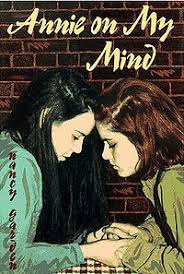
Garden, Nancy. Annie on My Mind (1982)In the early 1990s, when I was entering teenagerdom, this was the only novel in my public library’s Young Adult section featuring a lesbian love story. To this day I’m grateful to the librarian who purchased the tattered paperback copy for their collection, because — while dated in many ways — Annie was an incredibly positive introduction to queer fiction. It was, famously, one of the first gay YA novels to feature a hopeful, romantic ending. Liza and Annie, the star-crossed lovers, meet at the Metropolitan Museum of Art and develop a passionate friendship that deepens into a sexually-intimate romance when Liza agrees to house-sit for a beloved teacher. The teacher and her partner are themselves a (closeted) lesbian couple. When an anti-gay school administrator at Liza’s private school discovers the girls nearly in flagrante delicto at the teacher’s home (unbeknownst to the older lesbian couple, who are still away traveling) drama ensues.

While Liza and Annie face moral dilemmas around truth-telling and deception, their feelings for one another are never figured by the novel as perverse or wrong; instead, it is clearly the prejudice of others that precipitates the negative effects rippling outward from their involuntary uncloseting. Though the anti-gay prejudice depicted in Annie is, at times, easy to dismiss as outdated, the moral panic surrounding the girls’ relationship is still a live possibility for many queer teenagers (and adults!) today: teenage girls! sexual feelings! homosexuality! For that reason, Annie was a bittersweet read for me, serving as both a positive example of lesbian desire and a reminder of the discrimination that often constrains the lives of same-sex couples, even today.

Forester, E.M. A Room With a View (1908 ). I have often wondered if it was because of his life as a gay man — at a time when male homosexuality was still illegal in Britain — that E. M. Forester was able to write with such compassion and understanding about the circumscribed lives of women in middle- and upper-middle class Edwardian England. Room With a View is one of the earliest “adult” romance  novels I read, and remains in my top ten of the genre. Hardly sexually explicit, it still insists on a vision of marriage which involves the whole of both people: emotionally, intellectually, and physically. One reason for Lucy’s ultimate rejection of Cecil, the suitor to whom she is initially engaged, is that he sees her as a work of art (an object) — not a living, breathing, human being (a subject). George, the young man Lucy ends up choosing, gives every indication of appreciating her as a subject, a person in her own right — alive to the world, ready to encounter it alongside him, rather than decorate a drawing room. Particularly paired with Forester’s later work, A Passage to India, Room With a View has some very insightful things to say about both the possibilities of women’s agency, and the violence done to all concerned when women’s right to tell their own stories and make their own decisions are wrested from them by the machinery of Society.


Jordon, Sherryl. The Raging Quiet (1999). A quasi-historical fantasy novel set in Medieval Britain, The Raging Quiet revolves around questions of familial responsibility, marital fidelity, women’s self-determination, physical disability, and the potentially fatal cost of intolerance. Marnie is our headstrong heroine, coerced into marriage in order to save her family from eviction. Shortly after her marriage (and traumatic sexual initiation), her husband falls to his death and Marnie finds herself under a cloud of suspicion. Her friendship with the village “madman” does nothing to protect her reputation, and when that friendship deepens into love (and eventual sexual intimacy), Marnie finds herself on “trial” for witchcraft. I particularly loved (and still love) the village priest who — rather than being cast as a judgmental, doctrine-bound villain — finds himself befriending both Marnie and Raven (the “madman”), and ultimately blessing their union. Like Not a Swan, The Raging Quiet explores the journey of a young woman through coerced sexual activity through to self-understanding and subjective, chosen desire.

Waters, Sarah. Tipping the Velvet (1998) & Fingersmith (2002). While technically, I believe I read Sarah Waters’ novels the year I turned twenty-two, I was only midway through my undergraduate career and still floundering around trying to understand my sexual desires and possible identities. Tipping and Fingersmith are Victorian-esque thrillers with lesbian love stories at their core. They’re melodrama at its best, full to the brim with intrigue, double-crossing, mystery, cross-dressing, kink, revolutionary politics, pornography, wrongful incarceration, last-minute reveals — I could go on. Not necessarily my favorite lesbian romances today, I share Waters’ novels here because they were the first adult novels featuring same-sex romance that I dared to check out of the library and read — because they were mainstream enough that I didn’t feel that by reading them, I was declaring my own sexual identity one way or another. They were, paradoxically, safe novels to read. They helped me become aware of my own openness to same-sex desires by depicting explicit relational sex between women.

Fiction often encourages us to expand the realm of possibility, and for queer folks it is particularly powerful to have same-sex desires centered and normalized within fiction, when for so many years we’ve been pushed to the periphery as the “gay best friend,” or pathologized as doomed lovers, forced to pay for our “sins.” Tipping the Velvet encouraged me to ask myself where my desires yearned — a question that, in all honesty, it took nearly a decade of self-examination for me to meaningfully answer.

All five of these novels offered me the chance to reflect on the relationship between love and romance, love and sex, friendship and sex, sexuality and society, gender and sexual experience. While all of them could be derided as adolescent “love songs,” simplistic and idealistic marriage plots, I nevertheless believe all these authors have important things to say about the interaction of self and society within sexually-intimate relationships. As a teenager, I took away from all of these novels strong messages about the importance of paying attention to one’s internal moral compass, being attentive to one’s embodied desires, insisting on honesty and love over and above social custom — and even in the face of social persecution. I took away from these novels an openness to human sexual variety, and a belief in the right (and ability) of all people to form loving, consensual, and enthusiastically sexual relationships, and to stand by those relationships even when society said, “that’s wrong.”

I’d love to hear in comments if a) you’ve encountered any of these novels before, and if so what your experience with them was, and b) what novels helped shape your own youthful perceptions of sexually-intimate relationships. How do you feel you were served by the depiction of romance, love and sexuality in the literature of your youth?


so, that happened [a new guest blogging gig]

26 Tuesday Feb 2013

Posted by Anna Clutterbuck-Cook in admin

≈ 2 Comments

Tags

blogging, family scholars blog, feminism, gender and sexuality, religion

Ah, the strange and wondrous things that happen when you go traipsing around The Internet.

As you know, I’ve been hanging around the comment threads at Family Scholars Blog for awhile now. In part because I’m interested in how the other half lives thinks.  In part because I like to argue.

And in part because, in the very selfish, immature corner of my brain-heart-body it irks me that there are people out there who really think that I’m “depraved on account I’m deprived” (or some variation thereof). I’m fascinated and appalled that people feel so threatened by my existence as a (gay) married, sexually-active bisexual that they try to pass laws to erase my (gay) married existence, and — when that fails — simply say that my marriage isn’t real.

It’s fascinating, as I say, and appalling.

And not a little frightening. To know that my life excites such fear, angst, anger, and loathing.

I like to keep all that in sight, watchfully.

Well, then a couple of weeks ago they invited me to blog with them, as a regular guest blogger. 

And my first reaction was absolutely not, no. But I said I’d think about the offer. Talk to some people. Sleep on it.

What could I possibly bring to that site, as a guest blogger, that I wasn’t already bringing in comments? And, more importantly, why did they want me? I admitted to myself fears that I might simply be being recruited as a Poster Lesbian: “See? She plays well with others!” they might say, and when accused of anti-gay bias the group could point to my guest blogger bio: “See?! We even have a Queer Feminist Gay-Married Bisexual writing for us!”

Wouldn’t I be risking, on some level, being their Queer Cover? The sexual-identity equivalent of the Black Friend?

But then I started to think about what I might be able to offer in such a space, to those who were truly open to listening (and, yes, though I complain about those who revile and erase me more, the more contemplative conservatives exist).

And this is what I thought. That much of the conversation about queerness, feminism, and other lefty-liberal modes of being at the Family Scholars Blog (FSB) takes place without reference to — let alone centering of — actual queer / feminist / lefty-liberal voices or experiences. Even when those voices are referenced, it’s generally in the form of a sound bite we’re all supposed to know is ridiculous or wrong-headed (“pfft, look at those hysterical feminists with their foolish notions about gender equality — what do they know”).

Well, I’d like to talk about what it is we do know, and what life looks like from where we stand.

So I’ve accepted the FSB offer, and I’m going to start a monthly series there (cross-posted here), “The Feminist Librarian’s Bookshelf,” with 3-to-5 titles per post as suggested reading on a theme (“gender and neuroscience,” “teenagers and sexuality,” “queer families”). My hope is that I can offer a glimpse into the literature that informs those of us who take a quite different view than many, if not most, at the FSB, with regards to family life. I’m not particularly aiming to convert, although obviously it would be nice if some of my favorite authors resonated with readers here and there. My goal is to encourage people to “walk a mile in someone else’s shoes,” and think about what it might be like if you were to look at the world through the eyes of a lefty lesbian teenage, a liberal Latina mama, a feminist trans* woman, an asexual anarchist, a socialist living in poverty, or hippie home-educators.

There’s talk over at the FSB about civility of discourse, about meeting people halfway and compromising, about being willing to doubt (one’s own truths) and being open to having one’s mind changed.

I’m not sure how I feel about these values. I sometimes feel there is a type of privilege at work here, in which  unexamined certitude is disproportionately a problem of those whose worldviews and values are reflected back at them from mainstream culture. Those on the margins not only have the value of self-doubt shoved in their faces 24/7, they must learn to see the world through the eyes of the privileged and powerful in order to survive. Indeed: part of my fascination with the religious right comes from growing up a liberal-progressive (dare I say radical!) minority within a conservative Christian culture. I had to learn how Christian conservatives understood the world in order to survive. They didn’t have to learn anything about me, if they didn’t care to.

So I’ll be walking a mindful line over there, at FSB, between recognizing the true values of civil conversation, of lovingkindness and compassion, of being open to new experiences and viewpoints, of being open to the change those experiences and viewpoints will wreak within me — and at the same time holding my own, in part by example demonstrating that it is possible for a diversity of individuals with very different lives to co-exist in a democracy without the world imploding. We don’t all have to be alike, and that’s okay. We don’t all have to fear others who are different from us and/or those who choose a different way of life. Their different choices don’t, for the most part, constrain our own freedom of choice unduly.

You can read my self-introduction over a FSB and I’ll be cross-posting Thursday’s bookshelf post (five novels that influenced my adolescent perspective on love and romance) here.

"the immediate problem … of how to represent women’s desire visually" [more questions about porn]

21 Thursday Feb 2013

Posted by Anna Clutterbuck-Cook in think pieces

≈ 2 Comments

Tags

gender and sexuality, smut

So I’m working my way through some of the classics of scholarly treatments of film pornography, most recently Linda Williams’ Hard Core: Power, Pleasure, and the ‘Frenzy of the Visible’ (University of California Press, 1989). It’s a book that in many respects has aged well, despite its heavy reliance on both Marxist and Freudian frameworks for discussing “fetishism,” commodification, sexual pleasure, and power dynamics. Williams pushes back fairly forcefully against anti-porn feminism, and — while at times too quick to concede that such-and-such plot or scene is misogynist — insists on complicating the assumption that mainstream, heterosexual “hard core” porn is de facto male-centric and anti-female pleasure.

However. 

(You knew there was one.)

However, she keeps circling around this notion that one of the traps of cinematic pornography is that they have to depict pleasure on the screen (no argument there), and that male pleasure is easy to depict — via penetration (“the meat shot”) and/or ejaculation (“the money shot”) — while female pleasure is difficult (impossible even?) to successfully show on film. At one point toward the end of the book she writes that feminist pornographers, however much they may desire to revise the genre, are still confronted with “the immediate problem … of how to represent women’s desire visually.”

I guess I just don’t get the problem here.

Like … turn on the camera. Train said camera on a masturbating woman who, let’s imagine, gets off on the idea of the camera’s “gaze” as she’s climbing toward orgasm. Maybe, if you wanna get fancy you could use multiple cameras so as to ensure you get some close-ups of her face, or the curve of her spine as she arches, or the cant of her hips as she pushes her fingers into herself…

It’s just … not. That. Difficult.

I read my wife’s desire and pleasure visually on a fairly regular basis and — while, granted, we augment the visual with verbal cues and shared history — my visual processing in this regard has a pretty damn high success rate in that my visual perceptions of her enjoyment has a high degree of correlation with her own reports of what gets her off, when.

You read a body in ecstasy just like you read a body in anger or pain: through minute facial expressions, gestures, the set of the shoulders, the angle of limbs. You read a person’s willingness for partnered sex through all of the ways they physically express connectedness (or lack thereof) to the other person(s) en scene.

We don’t panic (film people, correct me if I’m wrong here!) over OMG how are we ever going to represent anger visually in this film!?

Why oh why is sex supposedly so freakin’ different — women’s sexuality specifically in this instance — that it’s a “problem” to capture on film?

(via, very nsfw)

(I’d argue male sexuality, also, is far from “simple” to represent through the visual tropes of erection, penetration, and ejaculation, but that’s maybe a post in its own right.)

What I suspect is that this assumption that women’s desire and sexual pleasure is a problem, cinematically speaking, comes from the pervasive belief in contemporary culture that women’s sexuality is mysterious and difficult to understand (while men’s is basically self-evident; again, an assumption that deserves unpacking). If women’s sexuality is this crazy mysterious thing that we don’t understand and that men find epically confusing, how are we ever supposed to imagine it visually on screen? A mystery is, by definition, something which can never be fully revealed unless it is solved.

Which is why, as Williams suggests, women’s sexuality in modern hard core porn, is often “solved” through gimmicks that render it somehow more visible, or displace it by letting male pleasure cues stand in for everyone’s sexual satisfaction in the scene.

I’m not as convinced as Williams is that all mainstream pornography is stymied by visualizing women’s pleasure. I think, at times, that Williams is too quick to assume — at least in this early work — that proof of desire requires, for example, genitals which can demonstrate arousal and climax on-screen.

And I’m pretty sure there are a lot of pornographers, feminist, female, and otherwise, who’d be surprised to learn that women were such difficult creatures to capture on screen. I wonder: would that make us some sort of weird supernatural being of sex? Try to capture visual evidence of our pleasure and we’d vanish from the silver nitrate on the film (or the binary of the pixels on the image card)?

call for participants: collecting sex materials for libraries: an opinion survey

19 Tuesday Feb 2013

Posted by Anna Clutterbuck-Cook in linkspam

≈ Leave a comment

Tags

call to participate, gender and sexuality, librarians

I’ve shared this on Twitter and Tumblr, but figured I might catch some folks here as well, so what the hell. This call for participants came across my dash via the H-Net: HistSex listserv. I took the survey last week and it does take a good 45 minutes if you want to be thoughtful about it an include commentary. I was frustrated with some of the multiple-choice options and the framing of some of the questions, but I also hope that the researchers will be able to get some useful information out of the data they collect — so if you’re a library and/or archives professional and interested in the question of sexuality in the archives, I encourage you to help ’em out!

Here is their call for participants in full:

In an attempt to understand librarian and library staff attitudes towards collecting sexual materials for libraries, librarians Scott Vieira and Michelle Martinez, assistant professors at Sam Houston State University, are asking for survey participants and offering the chance to win one of four available $25 gift certificates to Amazon.com.
 All librarians and library staff from any type of library are encouraged to participate.
 The survey, “Collecting Sex Materials for Libraries: An Opinion Survey,”
takes anywhere from between 25-40 minutes depending on reading speed, and consists of 49 questions. We’re looking for opinions on how librarians and library staff members feel about things such as 50 Shades of Gray, Hustler, gay erotica, and other items that are often considered contentious.
 Participants’ privacy will be kept and personal information is not required unless the participant wants to register for the drawing. Any personal information will be deleted once the drawing has been held within one week at the closing of the survey. Participants will be emailed the gift certificate.
 Participation in the survey is strictly voluntary. Participants can exit the survey at any time without penalty.
 By consenting to participate through accessing and submitting the survey, you authorize the use of your data to be compiled for possible articles, without any personally identifying information as may have been submitted for the prize drawing.
 http://www.surveymonkey.com/s/NZT9P79 If you have any questions or concerns, please contact Scott Vieira at
936-294-3743 or svieira@shsu.edu<mailto:svieira@shsu.edu> or Michelle Martinez at 936-294-1629 or mmartinez@shsu.edu<mailto:mmartinez@shsu.edu>.
 Or by mail: Attn: Scott Vieira or Michelle Martinez, SHSU Box 2179, Huntsville, TX 77341
 Scott Vieira
Assistant Professor &
Electronic Resources Librarian

Have fun!

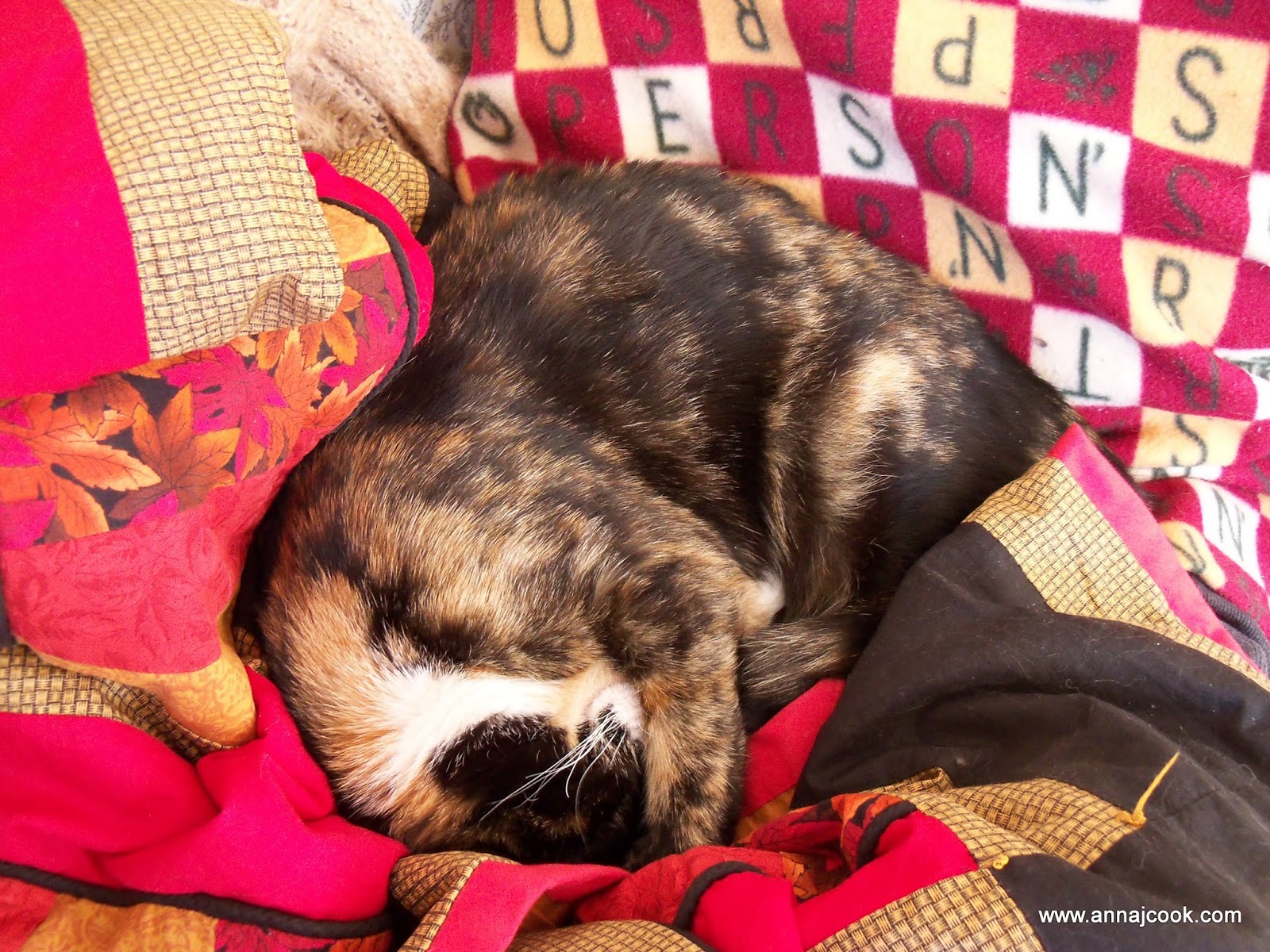
from the neighborhood: gratuitous friday kitten photograph

16 Saturday Feb 2013

Posted by Anna Clutterbuck-Cook in our family

≈ 1 Comment

Tags

cat blogging, domesticity, photos

What it says on the tin.

Here at Chez Clutterbuck-Cook we’re looking forward to a long weekend hunkered down with the cats. Hope wherever you are, you’ve got plans that are similarly pleasing to you!

from the neighborhood: plants, handwork, kittens

14 Thursday Feb 2013

Posted by Anna Clutterbuck-Cook in our family

≈ Leave a comment

Tags

cat blogging, domesticity, friends, photos

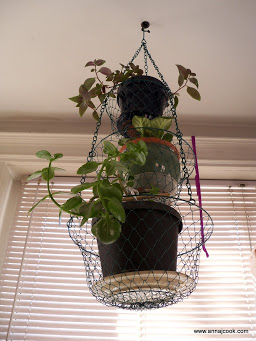
A couple of weeks ago, we finally decided the only way to get the (apparently tasty!) plants out of Teazle’s acrobatic reach was to buy a basket for them. So now the three most vulnerable plants are hanging from the ceiling. We fully expect to come home from work one day to find Teazle swinging from the wire mesh by her claws!

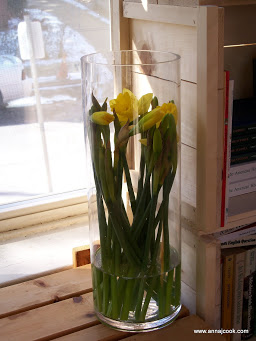
She’s similarly fascinated by the daffodils we picked up from Trader Joe’s (note the paw stage left), so we’ve had to drop them in the tall glass vase that at Christmas we used for candles.

Necessity led to quite a lovely display, I think.

For some reason, the ivy loves the winter and often sports more new leaves this time of year than in the summer!

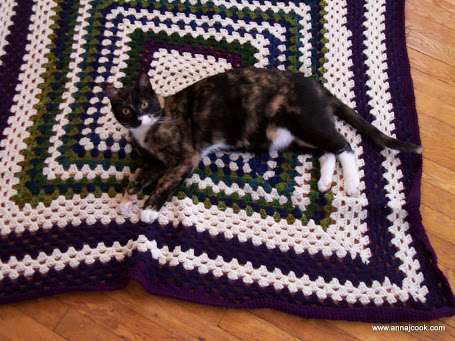
I actually had the camera out to take photographs of the afghan Hanna just finished, so she could post them to her blog as part of a giveaway. Teazle wanted to help!

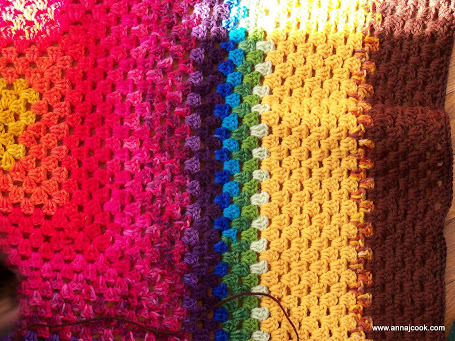
While I was taking pictures of Hanna’s project, I decided to capture a few of the (nearly-finished) afghan I made for my friend Anne and her daughter Lilly. Both Teazle and Geraldine wanted in on the action for this one!

Thanks to Mama Linda for the hand-dyed yarn that makes up the majority of this rainbow!

to want them, to be them, or both? [perspectives in porn]

12 Tuesday Feb 2013

Posted by Anna Clutterbuck-Cook in think pieces

≈ Leave a comment

Tags

gender and sexuality, random ranting, smut

So last week I reviewed an anthology of essays on pornography, and kind of in passing I asked why we generally assume that people watch porn because they want to fantasize about having sex with the people the camera’s gaze is trained on. That is, in porn marketed to men who like having sex with women, female actors take center stage and male performers are assumed to be exchangeable stand-ins for the Everyman Viewer. Women are cast with an eye toward what body types producers imagine their Everymen want to fantasize about exchanging bodily fluids with.

I don’t understand where this narrative assumption comes from.

Is that actually how the majority of people watch porn?

Because that’s certainly one perspective to take when consuming erotic material: the “would I wantonly ravish this person?” perspective. However the viewer/reader assesses the sexual attractiveness of a given performer/character (visual presentation, sexual style, aspects of character, voice, etc.), that question certainly informs how you enter into the fantasy of the pornographic scenario. If the answer to the above question is yes! it becomes easier to understand the motivations of the ravishers as depicted in said piece of smut. It’s easier to get drawn into the story, just as it’s easier to get drawn into any work of fiction when you care about the character’s well-being, or want to know what happens next.

I get that. There’s a reason I’m drawn to some relationships in fan fiction and not others; some character dynamics just don’t do it for me. Others do.

But I find this an unsatisfying and incomplete assessment of how people (read: “men” in most discussions about pornographic film) interact with porn. Why? Because it’s not the only way I — as a consumer/creator — interact with sexually-explicit material. And it’s not the only way people interact with fiction generally. We know this. And yet, somehow, when the question of sexually-explicit material is on the table all of our wisdom about the viewer/reader and their complex interactions with what they watch and read flies right out the window.

To whit, when it comes to porn, despite the fact I’m a voyeur by definition (reading/watching the characters/performers interact in sexual ways without literally being involved with them) my pleasure is often less contingent on the question “would I wantonly ravish this person?” than it is on the question “if someone ravished me in this fashion, how might it feel?” Or, “is this dynamic between them an arousing one? how is it making the actors/characters feel? why is it making them feel that way? The sexual activity depicted doesn’t have to be something I’d definitely find pleasurable in real life, but a successful pornographic or erotic narrative will encourage an imaginative connection, prompting me to explore how such an activity could be pleasurable to the performers/characters in question.

Like any good work of fiction, pornography and erotica asks us to put ourselves in someone else’s shoes (or, you know, lacey knickers). And learn something meaningful or moving while we’re there.

So all of this leads me back to the question: Rather than assuming people sexually objectify the performers in porn, why don’t we wonder to what extent they’re identifying with them? After all, we’re human beings watching (or reading about) human bodies experiencing sexual pleasure. Doesn’t it make sense that we’d — at least to some extent — imagine ourselves into their situation as much as we might imagine being the person sexually stimulating them?

I look at this image and I feel the water washing across my skin (via)

I haven’t watched much moving-image porn, so perhaps the descriptions I’ve read of pornographic films are giving me the wrong impression here? But when I read synopses of films, I’m definitely aroused most often by imagining myself in the role of the performers whose pleasure is visible on screen. Like, if the film is going to show me a woman giving a man (or woman) a blow job, and it’s the giver’s body and facial expressions and responses we’re seeing, isn’t that the person we’d be likely to identify with — not the disembodied dick (or clit) that appears as a prop on the screen?

And no, I don’t think the answer can be as simple as “but dudes can’t/won’t imagine themselves into the position of a female performer because their bodies are different!” because I read plenty of erotic material in which the only bodies involved are male bodies and I definitely successfully identify with those characters. So I think we’re too quick to assume that anatomical body difference is a barrier to imaginative involvement.

Maybe it’s partly a (socialized or innate) gender thing? Recent studies have suggested that men and women generally interact with porn in different ways, with men being less flexible in what types of erotic imagery arouse them (women appear to be catholic in their tastes: it doesn’t generally matter whose bodies are depicted, or even that they be human bodies — if sexytimes be happening, our pleasure centers light up). But I’m tired of the simplistic assumption, without research to back it up, that men only interact with porn in a way that interprets the (female) actors depicted on screen as objects rather than subjects. At the very least, I’d imagine it’s likely viewers of pornography — just like readers of fiction or viewers of any other genre of film — switch imaginative perspectives, so that response to a question about who is being observed and who is being identified with would change over the course of the viewing/reading experience in complicated, unstable ways.

I’m continuing to think about this question while reading Laura Kipnis’ Bound and Gagged (1997) and Linda Williams Hard Core (1989) this month. They’re both fascinating studies which have much to recommended them, though some of the debates they engage with are certainly dated. Still, on the watch for questions of perspective both authors seem only to nod in passing to the idea that male viewers might be watching the bodies in screen in less-than-straightforward ways. Williams, for example, seems to assume that heterosexual male arousal in reaction to viewing an aroused male body would be an experience of homosexual desire, rather than, you know, a response to the arousal of a body the viewer could imagine being. So it’s clear that even the leading thinkers in this field have taken this question somewhat as read.

What are your experiences with sexually-explicit material? To what extent do you find yourself wanting to be and/or wanting to have the individuals depicted or described? How does the voyeurism of engaging with other peoples’ (fictional or performed) sexual intimacy pull you in as an observer-participant? Do you tend to identify with all of the characters in a scene, or specific characters? To what extent does body type and physical sex contribute to your choice of character with whom to identify?

I’d love to hear your thoughts; if you want to share anonymously the form should allow for that — and I’ll try to monitor the thread carefully so that anon comments don’t end up in the trash if they are actually legitimate contributions (95% of my “anon” comments are just straightforward spam).

from the neighborhood: sledding & sunshine [blizzard of 2013]

10 Sunday Feb 2013

Posted by Anna Clutterbuck-Cook in a sense of place

≈ Leave a comment

Tags

boston, domesticity, family, outdoors, photos

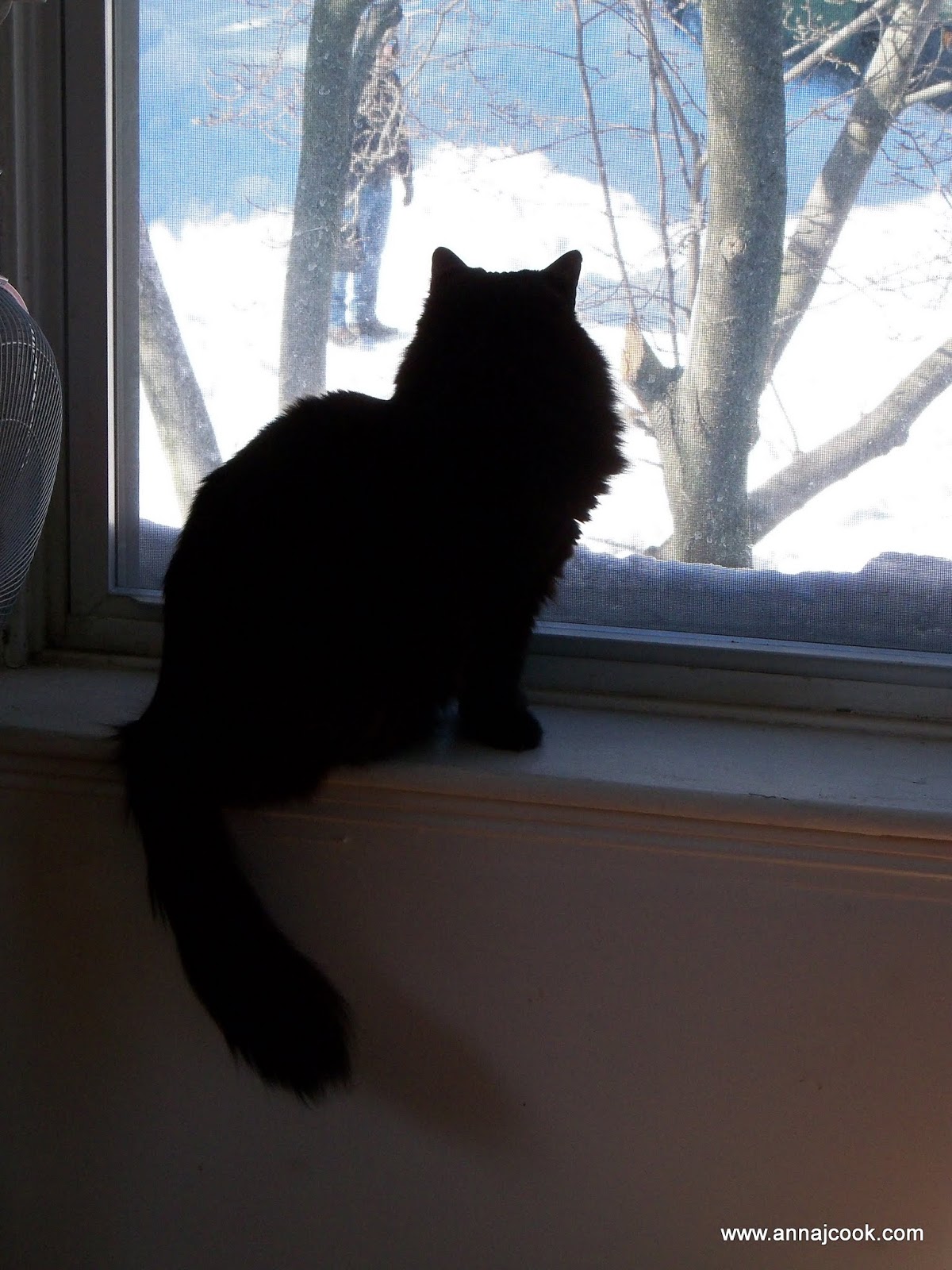
It’s sunny this morning in Boston, a brief respite before tomorrow’s predicted rain. Teazle is excitedly (and vocally) watching birds fluffed along the branches of the trees outside, and Hanna and I are sitting on the couch reading and writing and listening to the BBC classical music stream while watching cars get stuck in the snowdrifts on our corner.

Yesterday, the hill outside our living room window was turned into a sledding hill until the travel ban was lifted at 4pm.

And a couple of still photos by Hanna … 
This morning, the sun was out but the snow remains.
Some streets are clear, but the sidewalks are piled high with snow that has nowhere else to go.

Gerry and Teazle are finding all of the excitement outside quite entertaining as “kitty TV.”

Stay warm, everyone, and wish us luck as we slog to work in the rain tomorrow!

from the neighborhood: blizzard of 2013

09 Saturday Feb 2013

Posted by Anna Clutterbuck-Cook in a sense of place

≈ 1 Comment

Tags

boston, domesticity, family, outdoors, photos

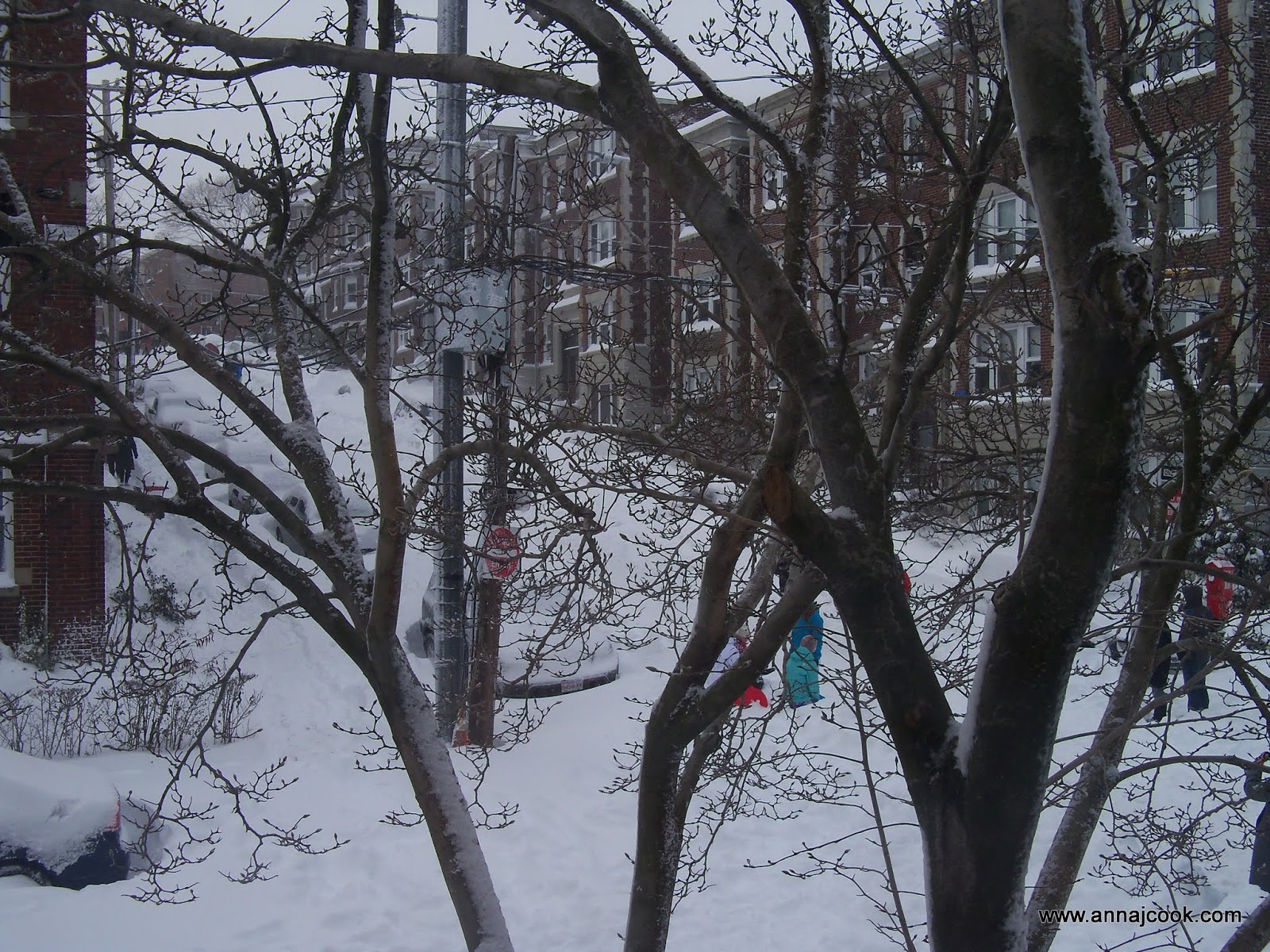
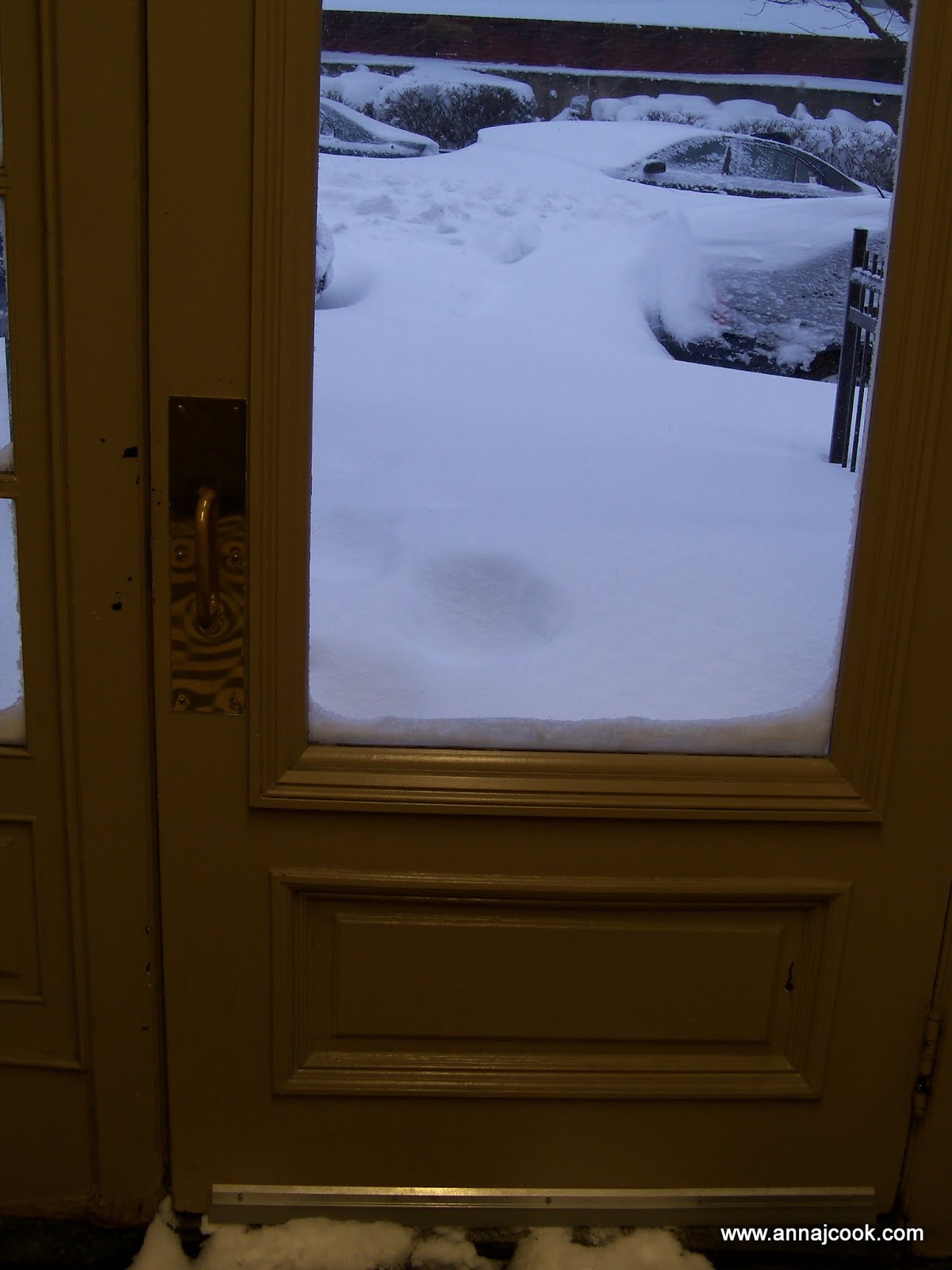
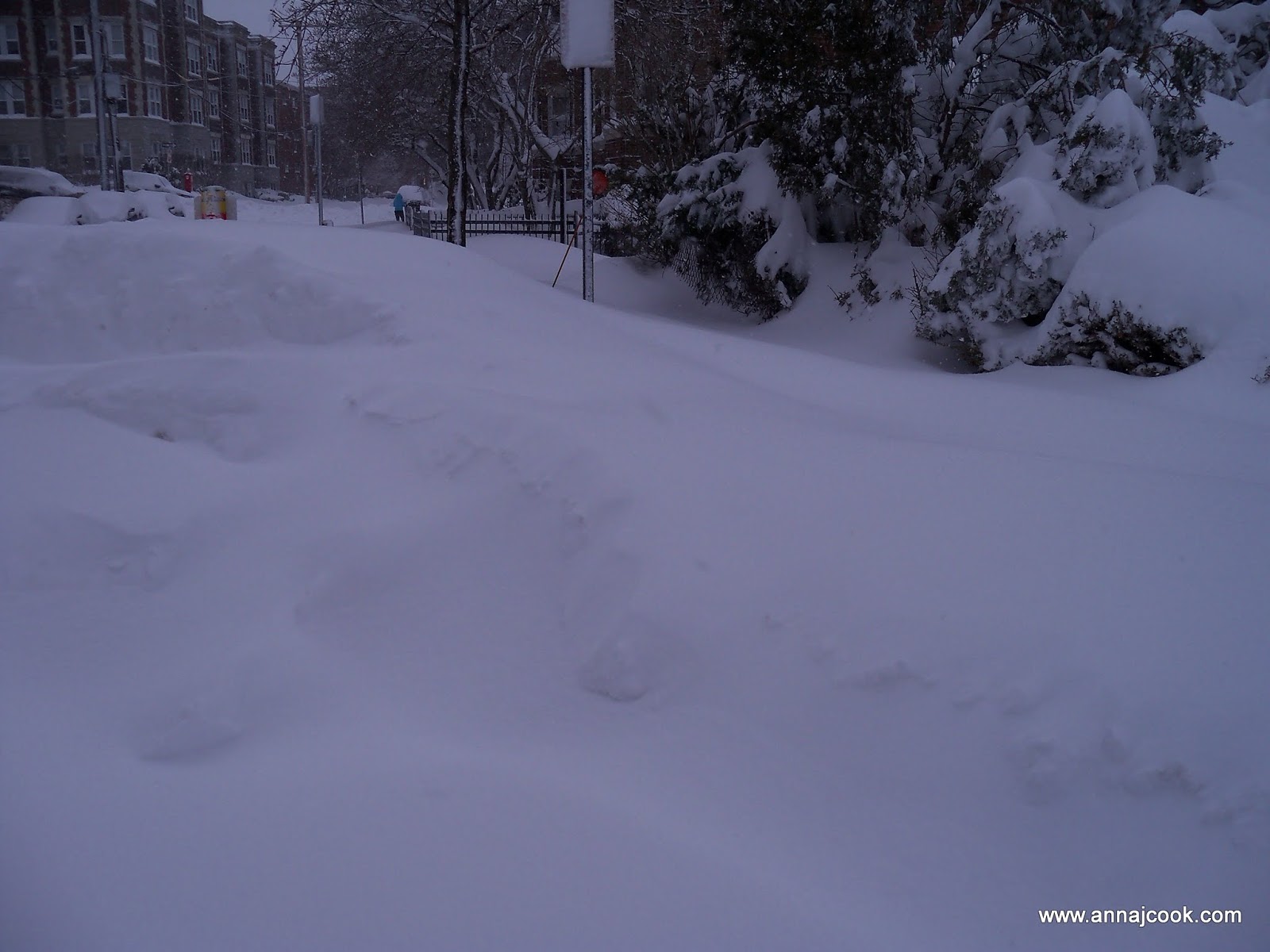
I promised photos to several people yesterday from the “snow emergency” here in Boston, so this morning while Hanna did yoga in the living room I tumbled into my boots and winter gear and re-learned how to hike through knee-high drifts in order to bring you some pictures from our snowy neighborhood.

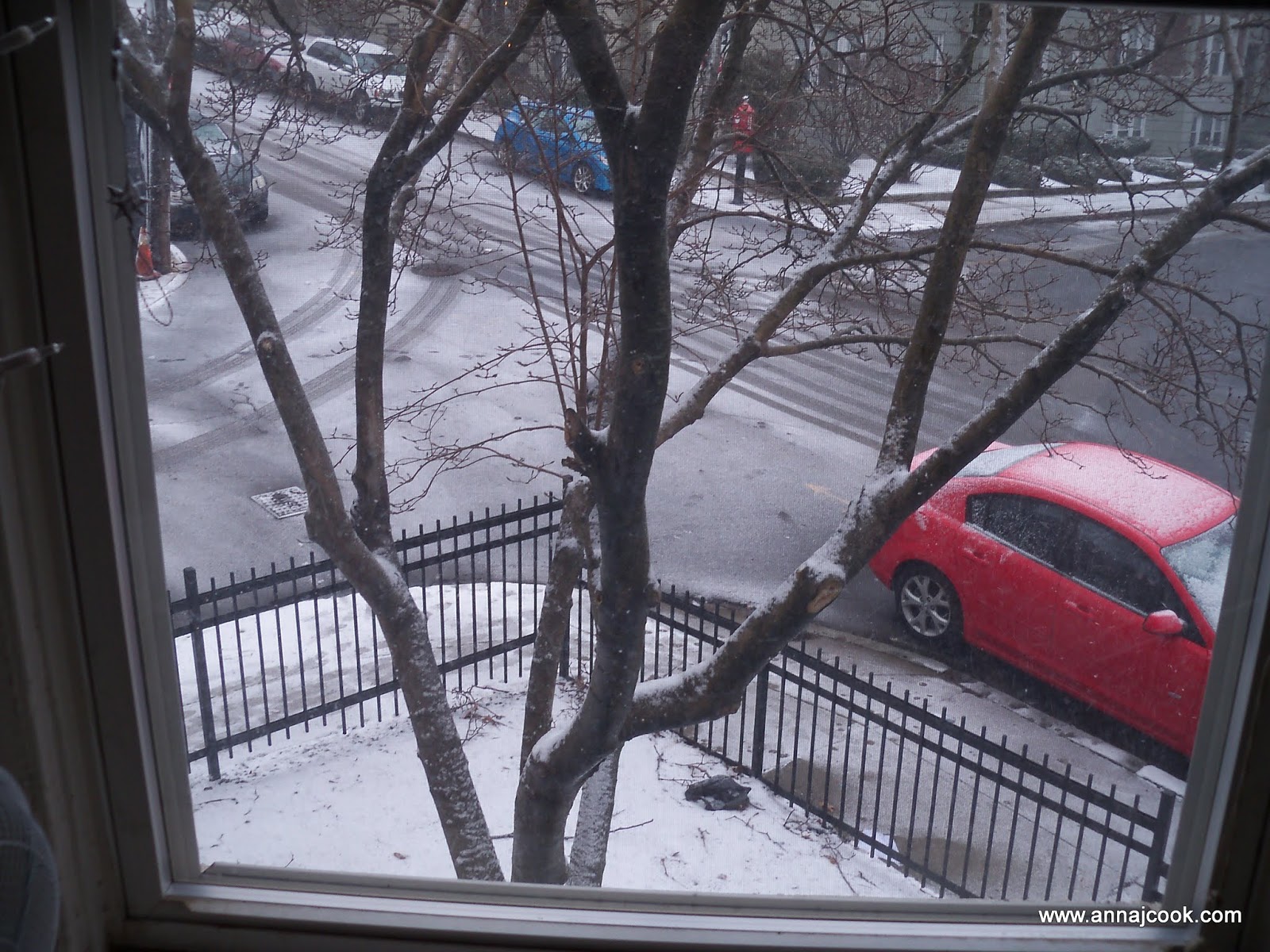
As a baseline, here’s what the view from our window was like around two o’clock yesterday afternoon:

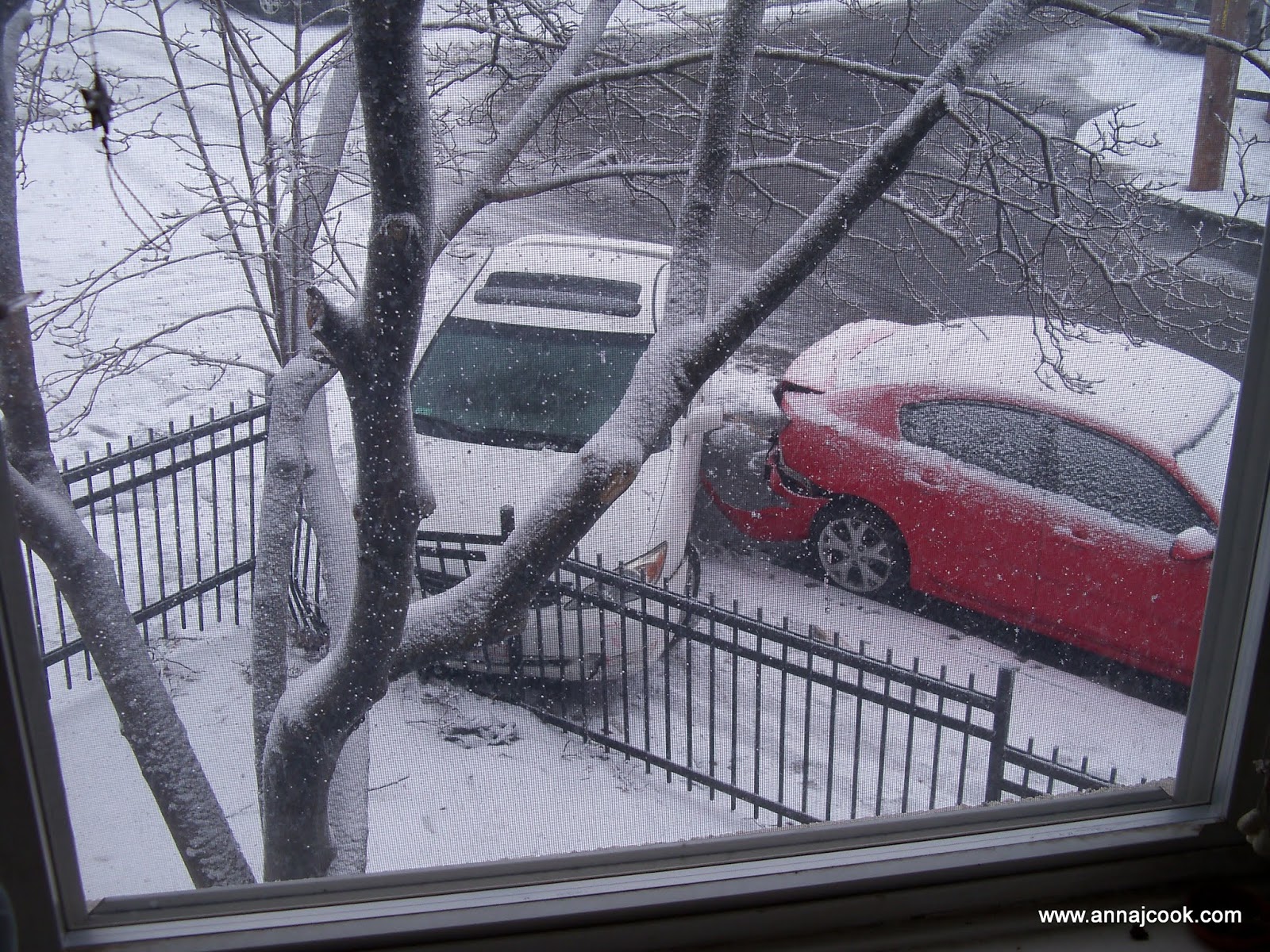
Shortly after I took this picture, the poor red car had it’s rear bumper sheared off by a neighbor’s car that skidded through the intersection.

Thankfully, no one was hurt!

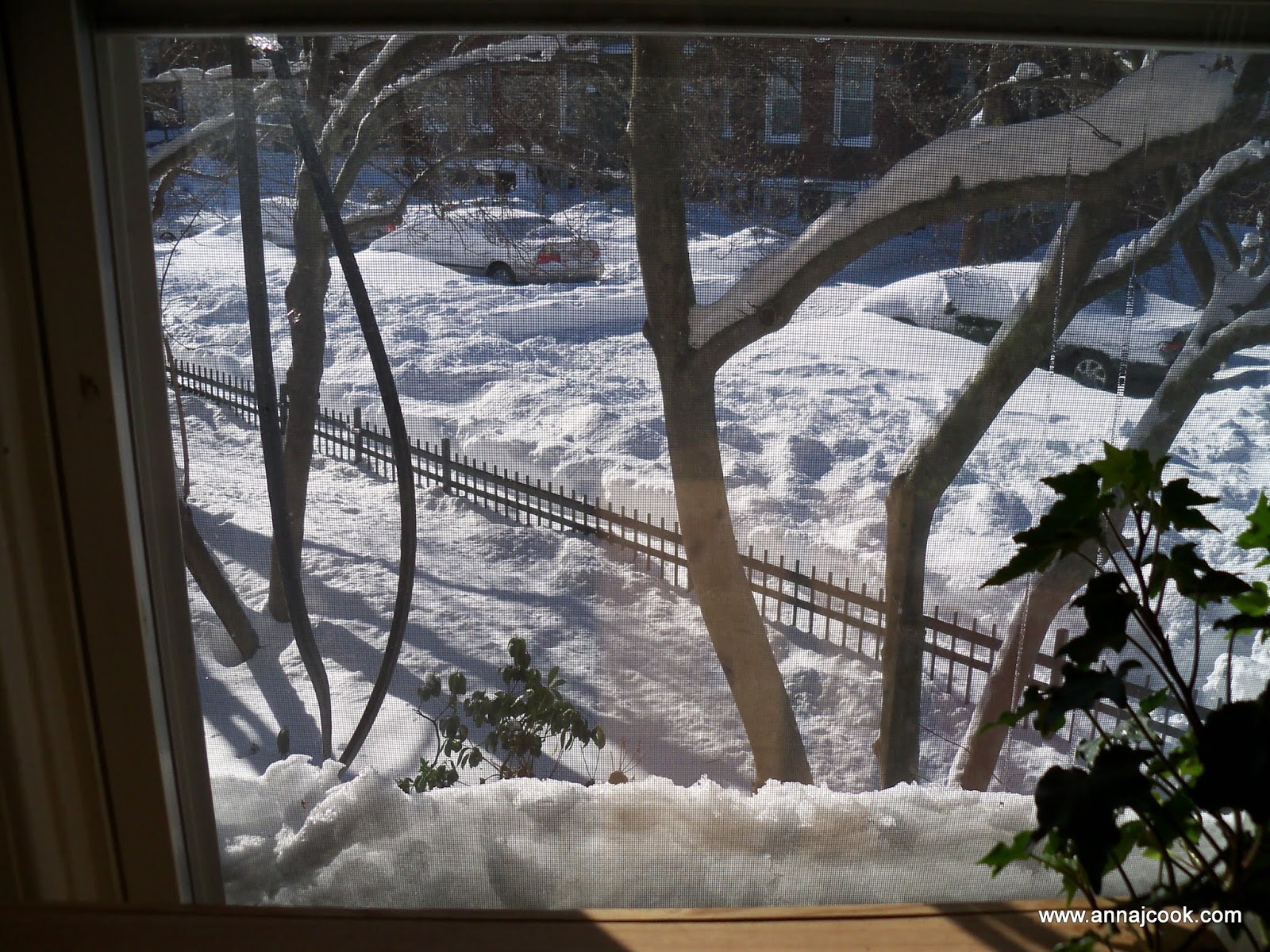
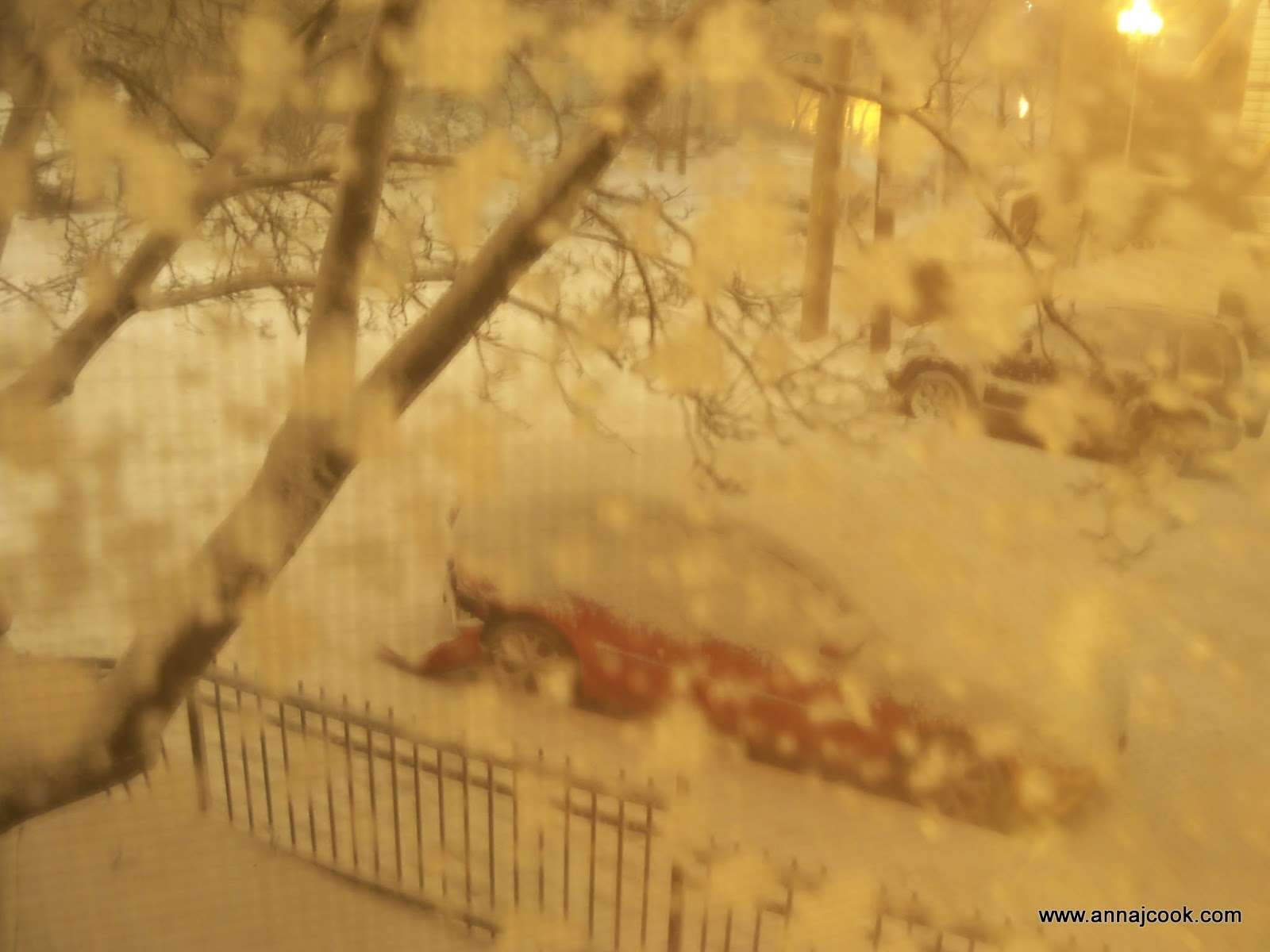
By the time we went to bed around 9pm, this was the view out that same window (note the red car, sans bumper, now half buried in snow).

Waking up this morning, it was difficult to see outside, so I decided to venture out.

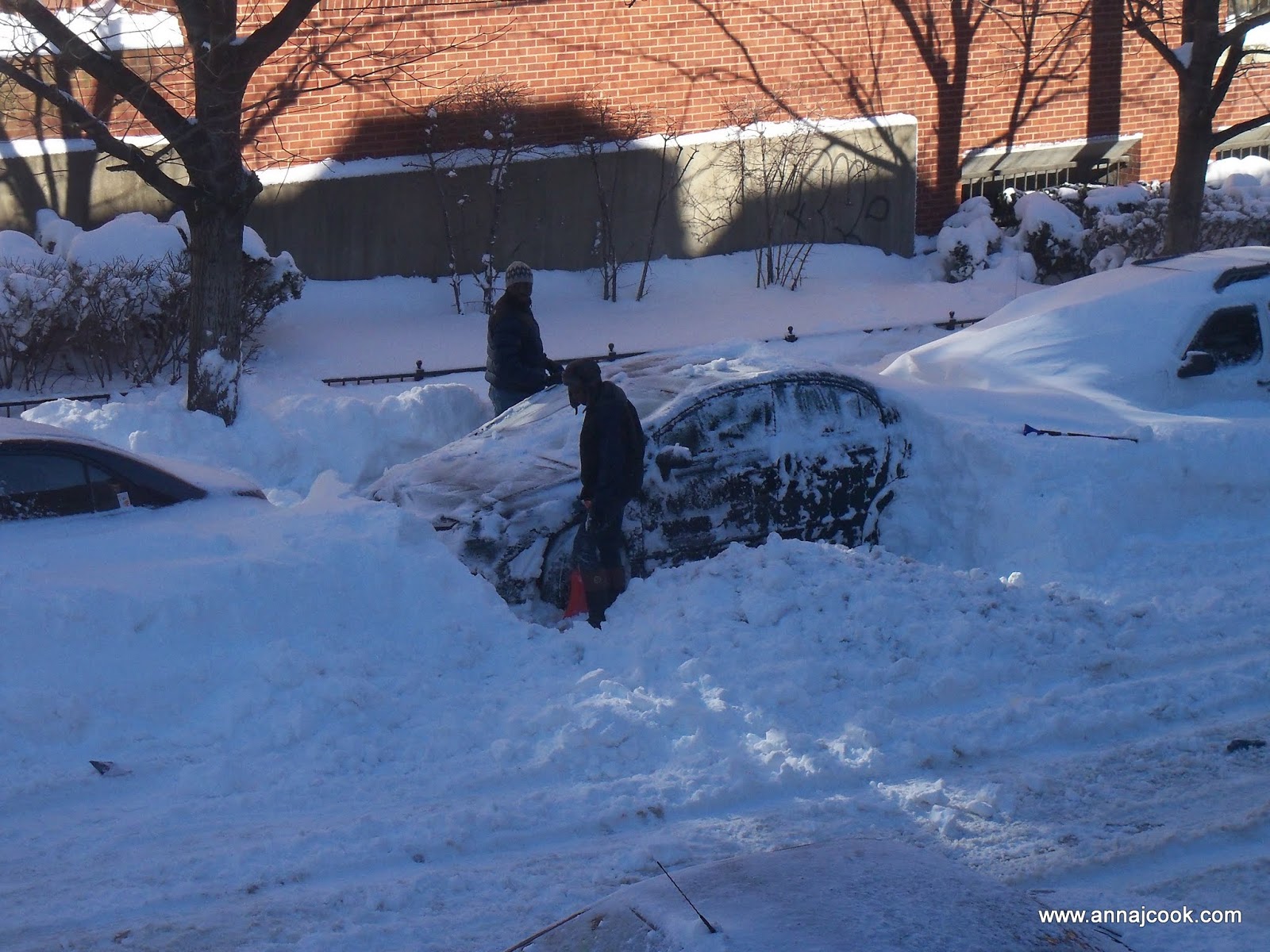
You can see I was perhaps the second person to leave the building on foot this morning; with the snow still falling and blowing, and a travel ban in effect state-wide, few people are bothering to dig out.

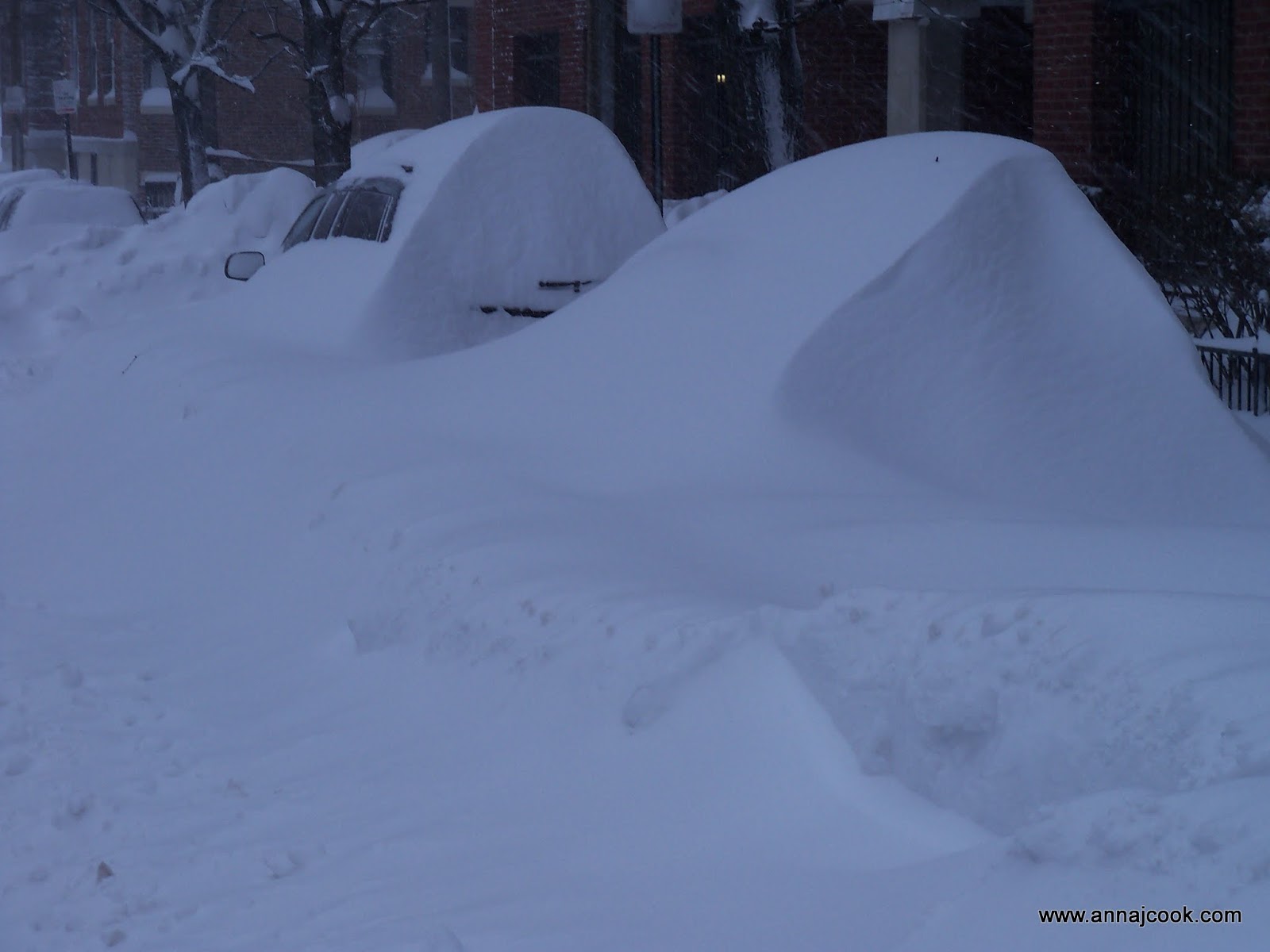
We have no sidewalk currently!

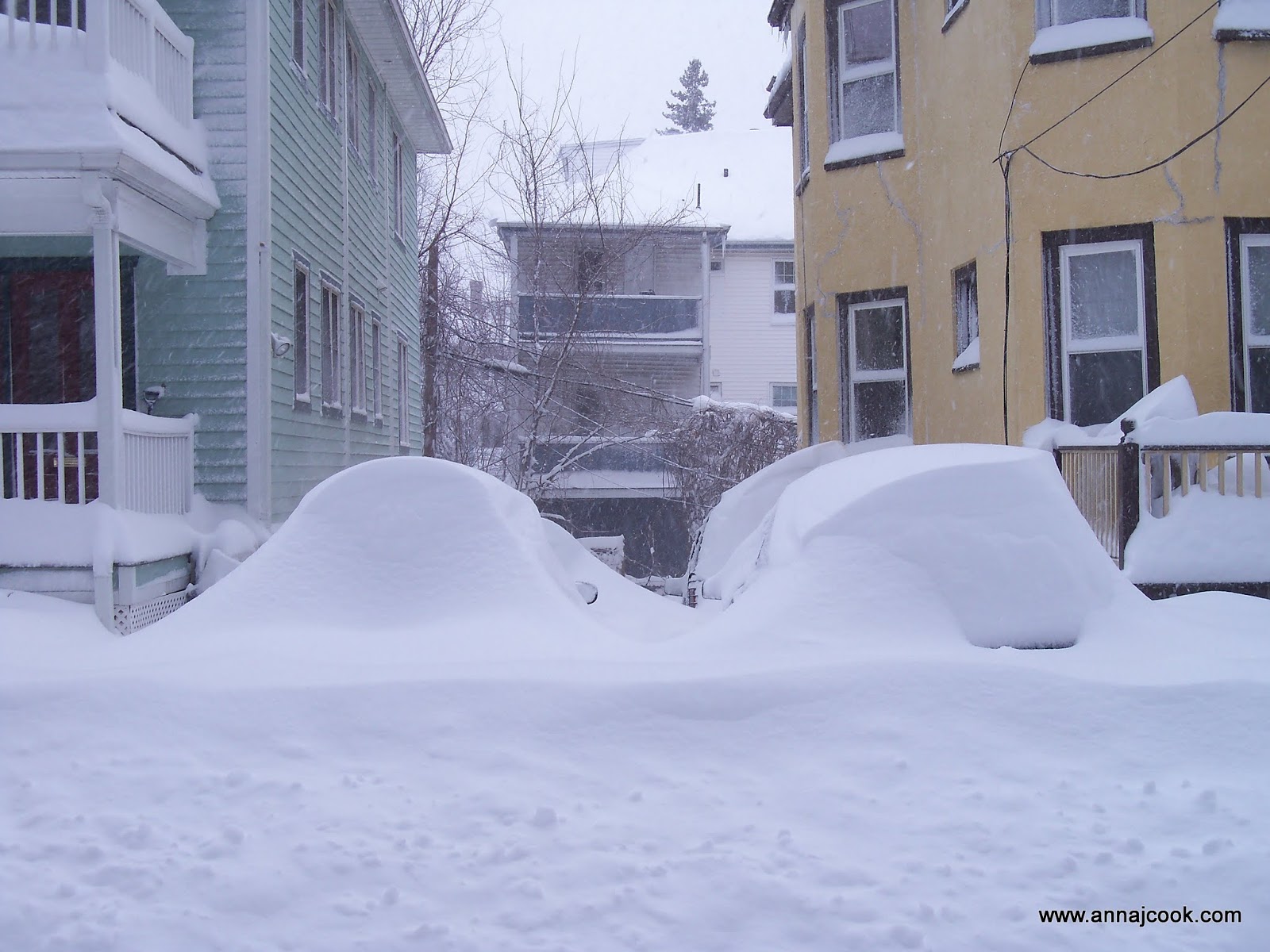
And these cars aren’t going anywhere soon…

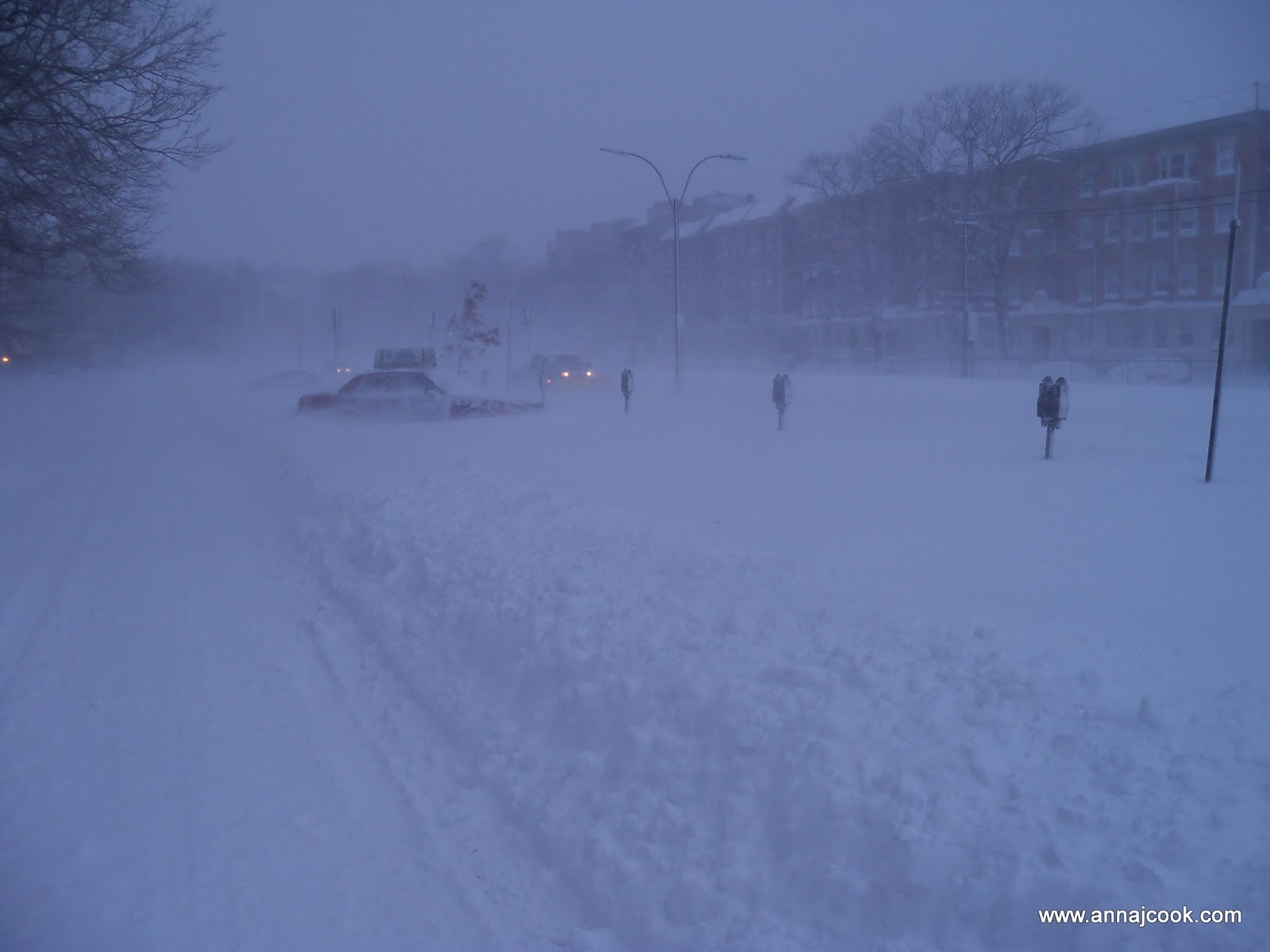
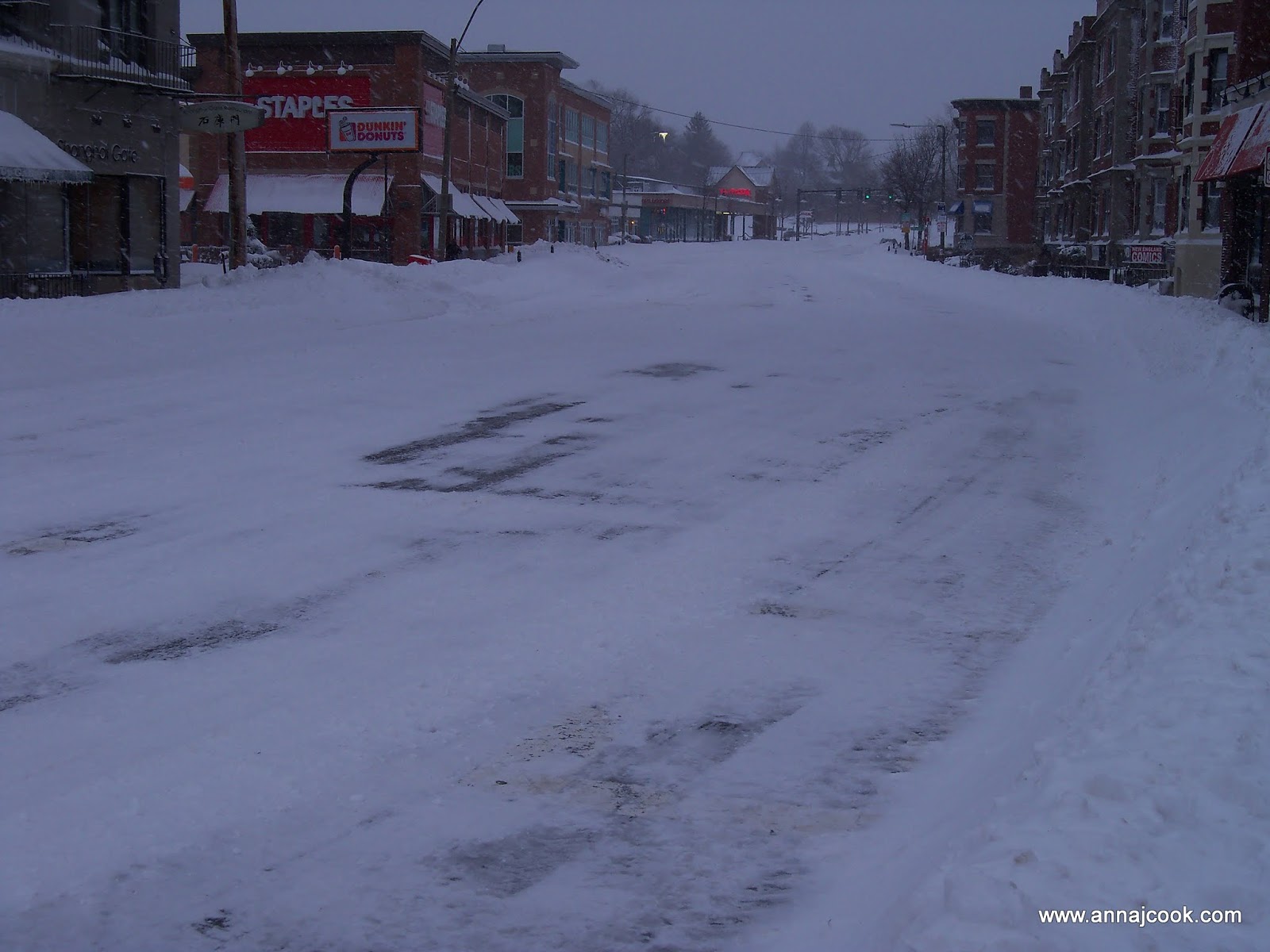
Above, wind whips snow across a nearly-deserted Commonwealth Avenue (this was taken about 7:30 this morning).

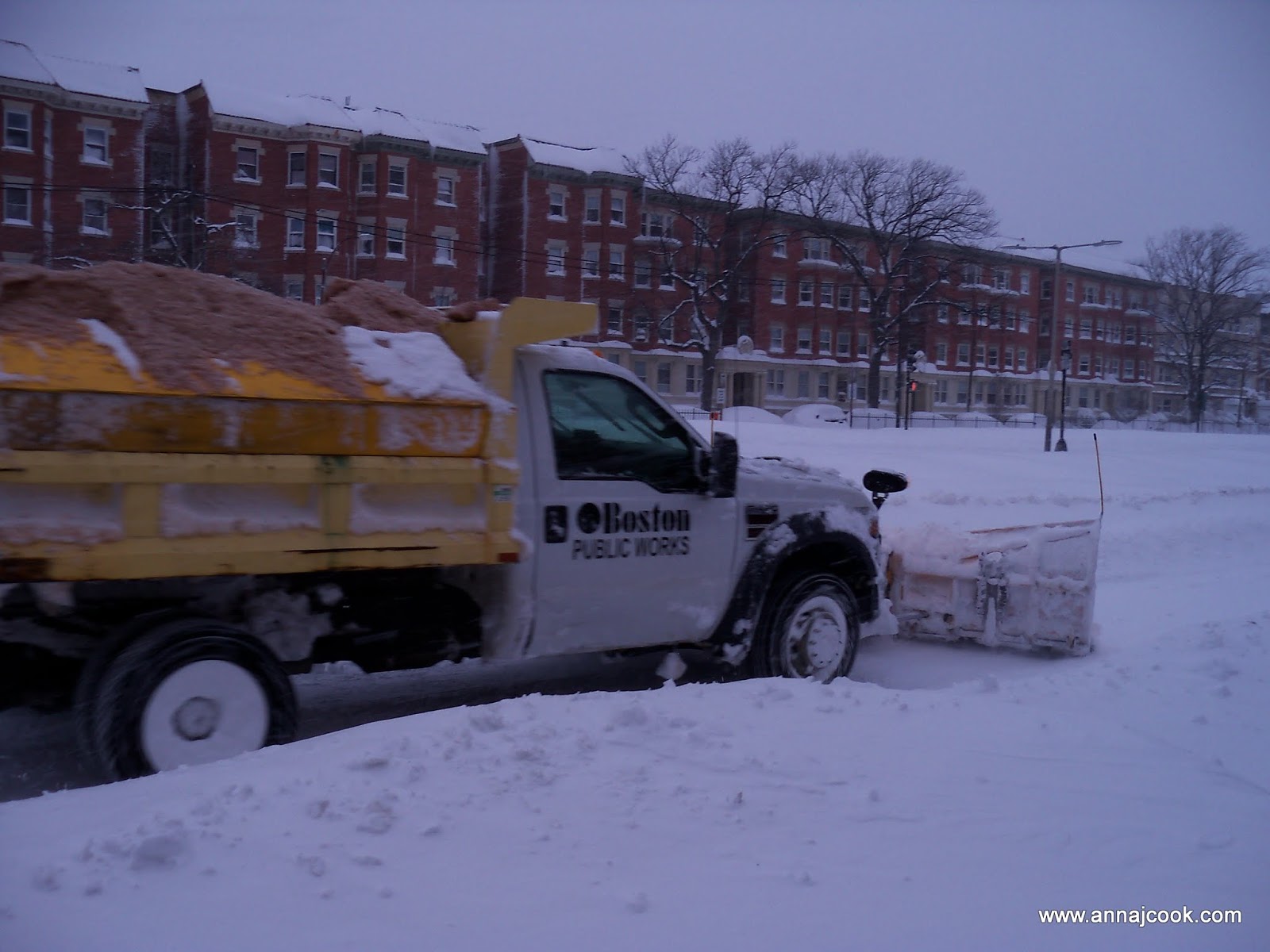
Snowplows were out in full force on the main roads, trying to stay on top of clearing the fallen snow.

But most apartment buildings showed little signs of activity.

I saw a few people out on foot who weren’t municipal workers, but the lack of traffic was eerie, particularly at usually-busy intersections (below is Harvard Avenue looking south from Commonwealth).

Side streets had higher drifts, and as I made my way back home through Brookline’s residential neighborhoods, I saw a few people out trying to clear snow from their sidewalks and cars.

These cars aren’t going anywhere soon!

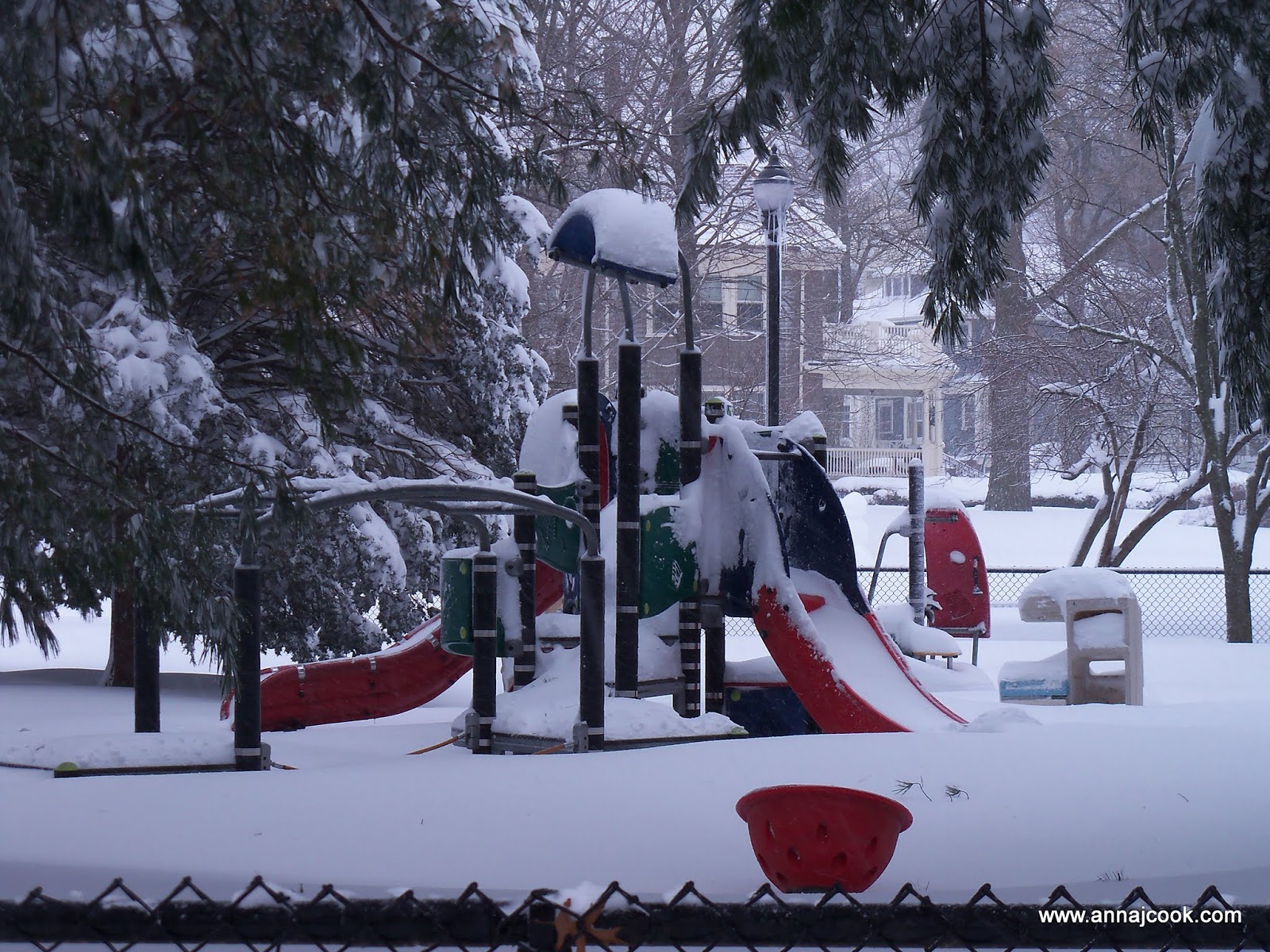
The playground was deserted.

I was the first pair of feet to walk up our cul-de-sac on my return journey.

… and then I had to climb over this to get to the back door!

Now we’re enjoying breakfast and planning to nap the day away inside. Stay warm and safe everyone!

← Older posts
Newer posts →
"the past is a wild party; check your preconceptions at the door." ~ Emma Donoghue

Recent Posts

  • medical update 11.11.22
  • medical update 6.4.22
  • medical update 1.16.2022
  • medical update 10.13.2021
  • medical update 8.17.2021

Archives

Categories

Creative Commons License

This work by Anna J. Clutterbuck-Cook is licensed under a Creative Commons Attribution 3.0 Unported License

Meta

  • Register
  • Log in
  • Entries feed
  • Comments feed
  • WordPress.com

Blog at WordPress.com.

  • Follow Following
    • the feminist librarian
    • Join 36 other followers
    • Already have a WordPress.com account? Log in now.
    • the feminist librarian
    • Customize
    • Follow Following
    • Sign up
    • Log in
    • Report this content
    • View site in Reader
    • Manage subscriptions
    • Collapse this bar