• anna j. clutterbuck-cook
  • contact
  • curriculum vitae
  • find me elsewhere
  • marilyn ross memorial book prize

the feminist librarian

the feminist librarian

Author Archives: Anna Clutterbuck-Cook

why do I write (and read) fan fiction? [part one]

10 Thursday Jan 2013

Posted by Anna Clutterbuck-Cook in fandom

≈ 1 Comment

Tags

blogging, fanfic, gender and sexuality, smut, writing

(via)

This topic has been kicking around in the back of my mind for awhile, in nebulous form, and then in the past couple of weeks I’ve (coincidentally?) found myself engaged in discussing theories of fan fiction and erotica writing with several friends via email, as well as the wonderful women of my #firstthedraft writing group. With encouragement from #ftd, here are my thoughts in blog post form.

I actually think the question why I write erotic fan fiction has several layers, and I’m going to unpack them successively: why fan fiction, why erotic fan fiction, and why the specific fandoms and pairings that I’ve chosen write. I also want to emphasize, because this is the sort of thing — both in terms of fandom and in terms of porn/erotica — about which people have Big and Important Feelings, that I am speaking very much for myself here. This is a post (or, rather, a series of posts) about why I write the erotic fan fiction I write. I am not attempting to synthesize the phenomenon writ large or pass judgement about what are the Correct and Right ways to approach the activity. I’m only trying to respond to the question people have asked me in various ways: Why do you do this thing you do? What do you find enjoyable about it? Is there anything you find troubling about the practice?

For all of you who have asked those questions, I’d love to continue the conversation in comments — so please do participate if you feel so moved!

Note: It will be unsurprising to most of you that my thoughts are lengthy. So I’m breaking this post into three sections, the first of which is below. Parts two and three will be forthcoming and will be linked from this post as they go live.

Why write fan fiction?

So I’ve only been consciously participating in online fan spaces and reading/writing fan fiction identified as such for about five years. However, retroactively I would argue that my present practice of fan fictionalizing is only the most recent manifestation of the way I have always, since early childhood, interacted with fictional narratives. Some of my earliest memories are from around the age of five or six spinning out stories about my favorite fictional characters — at that time stories like Little House in the Big Woods and The Lion, the Witch, and the Wardrobe. My childhood psycho-temporal spaces felt … porous. My parents never judged us in our childhood practices blurring that line in our imaginative play. (This seems important, because I did know families where the children were schooled early and often on what was and was not “real” and judged harshly for flights of fancy.)

So I had an active imaginative (and often, with friends and siblings, collaboratively imaginative) inner life growing up. I put myself to sleep telling stories about “what happened after…” the end of my favorite books or series; my favorite characters became imaginary playmates; and in adolescence the nearest and dearest of those characters were part of my coming-of-age in intimate ways. They became active participants (as much as fictional characters can be) in my exploration of sexuality and relationships. I not only rehearsed the good and the bad (and the smutty) that actually appeared in the books that I read … but I spun out elaborate stories incorporating my nearest and dearest (fictional) friends, and myself, building relational networks, families, and developing (hypothetical) sexual intimacies in various ways. In retrospect, I think this alternate universe I inhabited in my head helped me process a lot of the new information I was taking in — physical changes, emotional upheavals, learnings about what it meant to be an adult in a variety of ways — without feeling overwhelmed.

Without boring you to tears giving the world-building details, the space I created was one where I could literally move back and forth from childhood and adulthood, exploring the confines and capabilities of each mode of being. Imaginatively living an adult life elsewhere helped me approach my teenage years as if I had the confidence and experience of an adult.

In addition to being useful psychically and emotionally for me, I think the spinning out of private fan-fiction-like scenarios fed my insatiable desire to know more: to know about character motivation, to know what happened next, to know what the characters were thinking and feeling about events that took place, to know what might happen if event X or conversation Y took place. There’s a great passage in one of E. Nesbit’s Treasure Seekers books where the narrator informs the reader that lots of everyday things have happened (like eating and sleeping and going to the toilet) that he hasn’t bothered to write down because those are all the boring bits that everyone does but no one wants to read about. Fiction necessarily revises for a tighter narrative, and things get left out. As a reader, I wanted them back in — so I put them there, and molded them to my own particular specifications.

In those years, I encountered both professional and amateur fan works (from my mother’s little stories about the Pevensie children that she penned for us at Christmastime to fan art to the Star Wars sequel novels to Neil Gaiman’s “The Problem of Susan”) but I wasn’t actively participating in fan communities. I had friends who did (for example, a friend who was active in an online forum for writing stories inspired by Anne McCaffrey’s Pern novels) but didn’t hear a lot that drew me into active involvement. There was lots of interpersonal drama and litigation fears and, hey, I was already writing/imagining on my own so why bother with the added complication of other fans with their own vision and agenda?

But I got my fan community “reboot” (so to speak) when I met Hanna and she re-introduced me to the activities and pleasures of being a fan — and this time, being a fan as part of a wider network of fans enjoying the same work(s) of whatever medium. Obviously the Internet had come along in the meantime, and as I was already involved in the feminist blogosphere I had some sense of how online communities work and what their pleasures and pitfalls are. Over time, the language of fandom bled into the language of feminism and became part of my social experience, as feminism had, both on- and offline.

These days, I really enjoy the positive energy of the fan circles in which I run. I enjoy that fans feel license to take joyful pleasure in things and create works inspired by those things. I enjoy the way those creations are shared freely and embraced by the fellow creator-consumer audience. I enjoy the practices of “gifting” works and creating “inspired by” pieces which complement one another or build off another fan’s work. I like how the currency of fandom is mutual appreciation and celebration of amateur creation. (And simultaneously I’m much better able than I was as a teenager to ignore or minimize the drama and intensity which can overtake online communities of any kind. I’ve learned, in other words, when to close the internet browser and walk away!)

So I write fan fiction because I always have, and now know that this practice has a name! I write fan fiction because I’m always hungry to know more, and to make the fictional characters I love known to me in ways that go beyond the bounds of a single novel or series or television show or film. And I enjoy participating in such a positive, creative space that is outside of the economies of wage-work. I purposefully decided not to pursue a career as a writer in part because I wanted writing to be something that I could always come to voluntarily, without worrying whether or not I could pay rent. (I don’t think this is a better or purer way to approach writing than writing as a job — more power to those who do! It just wasn’t for me, and I appreciate that I can continue to write and find readers in this playful alternative space.)
Click here for part two: “Why write erotic fan fiction?“

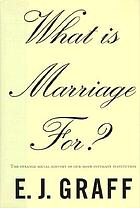
booknotes: what is marriage for?

08 Tuesday Jan 2013

Posted by Anna Clutterbuck-Cook in book reviews

≈ Leave a comment

Tags

gender and sexuality, history, politics, sociology

Last week, I reviewed Public Vows which explored the history of American custom and law surrounding marriage. This week, I have some reflections on journalist E. J. Graff’s book on roughly the same subject: What is Marriage For?: The Strange Social History of Our Most Intimate Institution (Beacon Press, 1999).

While Cott is an academic historian, Graff is a journalist — and the differences in these two books reflects that to a great extent. This is not to say one is better than the other: Nancy Cott’s work is a carefully-delineated study of American marriage from the Revolution to the late twentieth century while Graff’s is a more wide-ranging exploration of what marriage has been and meant in the West over the past two millennia. Both work in their own ways to point out that the present-day arguments about the demise of “marriage culture” and/or the end of civilization as we know it because of [insert marriage change of your choice] is actually nothing new. Reactionaries have been raising a hue and cry in every era about the passing of one concept of marriage in favor of another, and our current notion of what “traditional” marriage looks like (what Cott referred to as Christian monogamy grounded in affection and entered by mutual consent) is actually a fairly new — Graff would even say radical — departure from the marriage norms of our forebears.

While for Cott the question of same-sex marriage is almost a coda to the main body of her argument — which centers around non-white peoples’ and women’s citizenship rights and how they interact with marriage law — same-sex relationships are the raison d’etre of Graff’s work. After marrying her partner, Madeline, in 1992, Graff began to explore the slippery history of “marriage” and its meaning, with the goal of answering the question of whether same-sex couples can or do reasonably occupy the same space as other-sex couples in the present-day landscape of marriage beliefs, law, and practice. It will perhaps come as no surprise that Graff’s answer is, again and again, that yes same-sex couples fit quite abley into our current notion of what a marriage is and does:

There remains an uneasy tension between, on the one hand, marriage as a way to resist consumer capitalism’s pressure on the individual soul — and, on the other, to fulfill consumer capitalism’s ideology of individual love and commitment. But [today’s reactionaries] wrongly choose those who love among the same sex as their scapegoats. The move toward same-sex marriage is the consequence, not the cause, of many other changes in Western life — changes like legalized contraception, already inscribed in Western laws. A pluralistic democracy cannot fairly bar as pariahs people who fully fit its ideology of the meaning of sex within marriage (87). 

There were a few details in analysis upon which Graff and I disagree, such as her argument that the logic that allows for same-sex relationships (modern notions of love and personal choice) does not allow for polygyny, since the reasons for polygyny have traditionally been about political alliances and patriarchal kinship consolidation. While true insofar as it goes, her conclusion that therefore same-sex relationship recognition is in NO WAY related to recognition of more-than-two marriage models seems to ignore the way in which modern polyamory also draws on notions of love and personal choice. But that’s overall a small quibble with what is an entertaining and well-researched exploration into the slippery meaning of something we think we all “know” when we see (or enter into) it.

booknotes: public vows

05 Saturday Jan 2013

Posted by Anna Clutterbuck-Cook in book reviews

≈ Leave a comment

Tags

feminism, gender and sexuality, history, politics

I thought I’d kick off my 2013 book reviews with a few thoughts about the last book I read in 2012. That would be Nancy F. Cott’s Public Vows: A History of Marriage and the Nation (Harvard U.P., 2000), which I picked up at the Montague Book Mill last week. A slim volume, Public Vows explores the ways in which local, state, and national culture and regulation have shaped the meaning and utility of marriage in the U.S. from the Revolution to the dawn of the 21st century.

Cott’s overall point is that while marriage in the United States has been considered a private zone — affectually and contractually — it is also constrained by public custom and legal regulation. As she writes in the introduction:

In the marriage ceremony the public recognizes and supports the couple’s reciprocal bond, and guarantees that this commitment (made in accord with the public’s requirements) will be honored as something valuable not only to the pair but to the community at large. Their bond will be honored even by public force … the public sets the terms of marriage (2).

Those terms have been paradoxically remarkably tenacious and constantly in flux. As Cott demonstrates, Americans have generally privileged the monogamous Christian marriage as the “common sense” of marriage relationships, despite the fact that at the time of the United States’ founding “the predominance of monogamy was by no means a foregone conclusion” (9).

In the years of the Early Republic, this relationship was one of coverture, in which the wife’s political identity was subsumed by that of her husband upon marriage; the husband was charged with representing his wife in the public realm much as a member of Congress (the founding generation of American political theorists drew this analogy) represented his constituents. As women and free blacks struggled for citizenship status throughout the 19th century, the terms of marriage (who could marry and the rights and duties marriage entailed) shifted to meet — or at times to combat — these new demands. Waves of immigration and anti-immigrant sentiment shaped laws around marriage as politicians determined what foreign marriage practices would be recognized as valid, and the changing economic landscape shaped and re-shaped understandings of how work and marriage inter-related.

Much of what Cott has to say will come as no surprise to historians of women’s and gender history, or even social and labor history: notions of citizenship and personhood are uniquely tied up, in United States law and social custom, with one’s status not only as an individual but also as the member of an acceptable family unit. Conformity to marriage norms can have real impact on one’s status as a citizen (as any first-generation immigrant can tell you), and while women’s political lives are no longer subsumed under their husband’s at the altar, the assumption that women will be (hetero)wives continues to endure in tax codes and other legacies of coverture in the legal-political realm.

Cott touches only lightly on same-sex marriage in the final chapter of Public Vows, underscoring how little “gay marriage” actually has to do with the revolution(s) in modern family organization that the last two centuries of American history have seen. Feminist agitation has, indeed, played a much bigger role in shifting marriage onto new ground. As Cott observes, “So far as it is a public institution, [marriage] is a vehicle through which the apparatus of the state can shape the gender order…. Turning men and women into husbands and wives, marriage has designated the ways both sexes act in the world and the reciprocal relationship between them” (3). These designations often reach beyond the actually married, constraining the lives of the non-married as well. As women gained more equal footing as citizens, the shape of marriage as an economic, political, and personal relationship was fundamentally changed. In the context of this long sweep of change, the extension of civil marriage rights to same-sex couples is but a small step in the direction of equal citizenship status for all, regardless of gender or affectional ties.

Conversely, the fact that same-sex marriage evokes such strong reactionary feelings points toward the centrality of the Christian monogamous marriage plot to the organization of American civic life: as a key aspect of our project to differentiate ourselves from European and other world governments. By governing who is let in (and who kept out) of marriage we — as a nation-state — are often simultaneously identifying who — both symbolically and literally — is allowed to be a citizen.

I’m following my reading of Public Vows with E.J. Graff’s contemporaneous What Is Marriage For? (Beacon Press, 1999). Like Cott, Graff explores the historical shape of marriage and discovers heterogeneity rather than some ur- form of “traditional” marriage … I’m looking forward to limning the similarities and differences between their arguments, so look for a review here soon!

looking back on the (previous) year in books

01 Tuesday Jan 2013

Posted by Anna Clutterbuck-Cook in book reviews

≈ 2 Comments

Tags

books

My reading goal in 2012, courtesy of Goodreads’ reading challenge, was to finish 104 books (an average of two books per week). It was a goal I fell short of by six books, wrapping up the year in reading with #97 yesterday afternoon: Public Vows: A History of Marriage and the Nation by Nancy F. Cott (Harvard U.P., 2000).

(If only they allowed us to count fan fiction — Hanna and I would have shot passed our goals and then some this year!)

But never mind — I’m trying not to feel a failure for having fallen short: it was an ambitious goal, outstripping my previous record of the past five years (89 books in 2009) by fifteen titles. And there were some really great and interesting reads to be had in those ninety-seven titles. Below I’ve picked out my top fifteen titles. You can definitely see the way I trend: keywords include “sexuality,” “politics,” “history,” “gender,” and “feminism.”

(Within the list order is strictly alpha by author; links are all to my blog reviews of said titles)

Memorable Reads of 2012:

Pray the Gay Away by Bernadette Barton

The Book of Mormon Girl by Joanna Brooks

The Straight State by Margot Canaday

Love the Sin by Janet Jacobsen and Anne Pellegrini

Bodies of Knowledge by Wendy Kline

The Mansion of Happiness by Jill Lepore

Discount Armageddon by Seanan McGuire

Why Have Children? The Ethical Debate by Christine Overall (MIT Press, 2012).

Well Met by Rachel Lee Rubin

After Pornified by Anne Sabo

Passing Strange by Martha Sandweiss

Not Under My Roof by Amy Schalet

Tiny Beautiful Things by Cheryl Strayed

Mrs. Robinson’s Disgrace by Kate Summerscale

So, what were your memorable reads in 2012? Got anything you’re excitedly looking forward to checking out in 2013? Share in comments! Inquiring minds want to know 🙂

home for the holidays III [photo post]

31 Monday Dec 2012

Posted by Anna Clutterbuck-Cook in our family

≈ Leave a comment

Tags

cat blogging, domesticity, holidays, photos

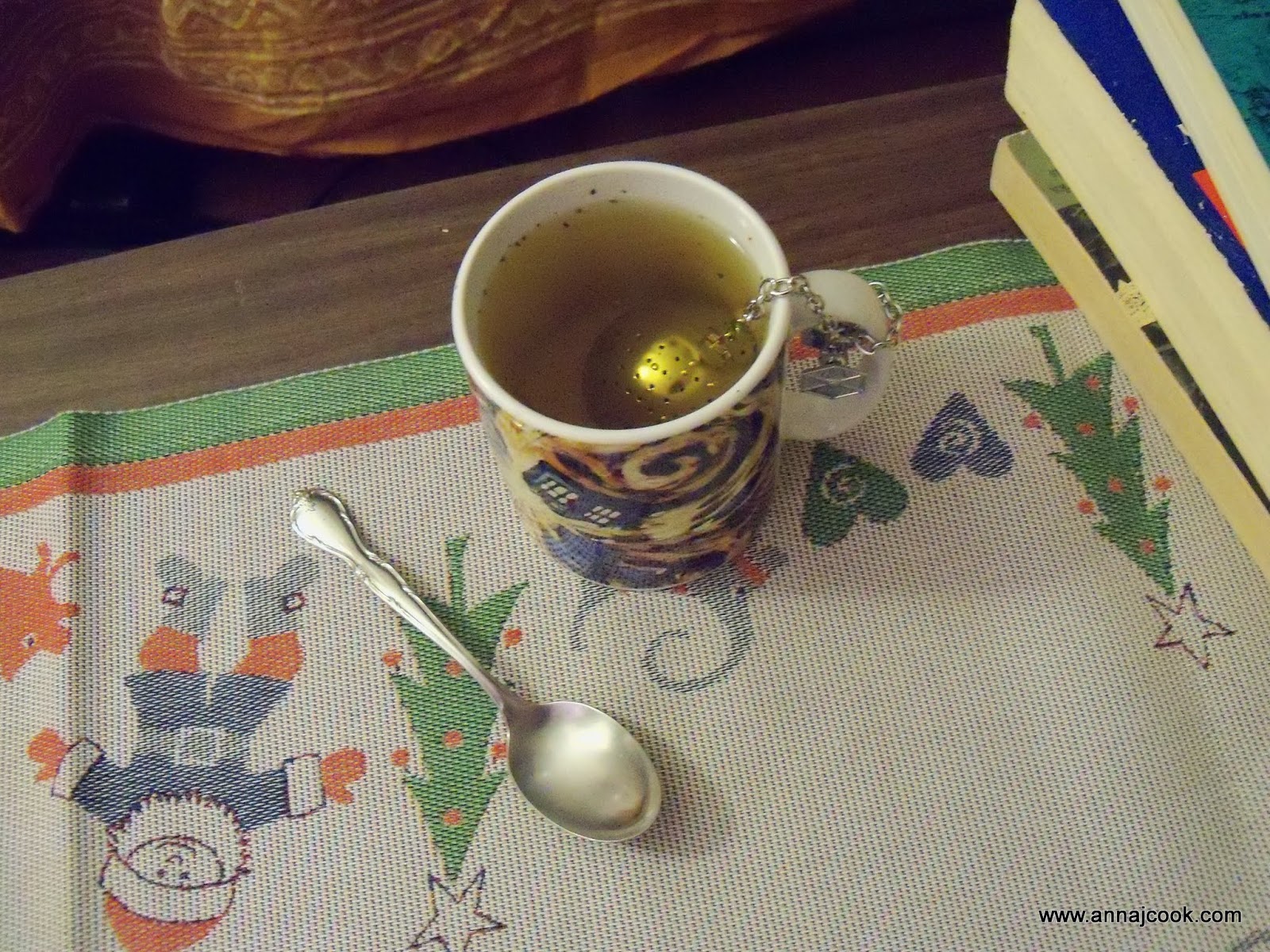
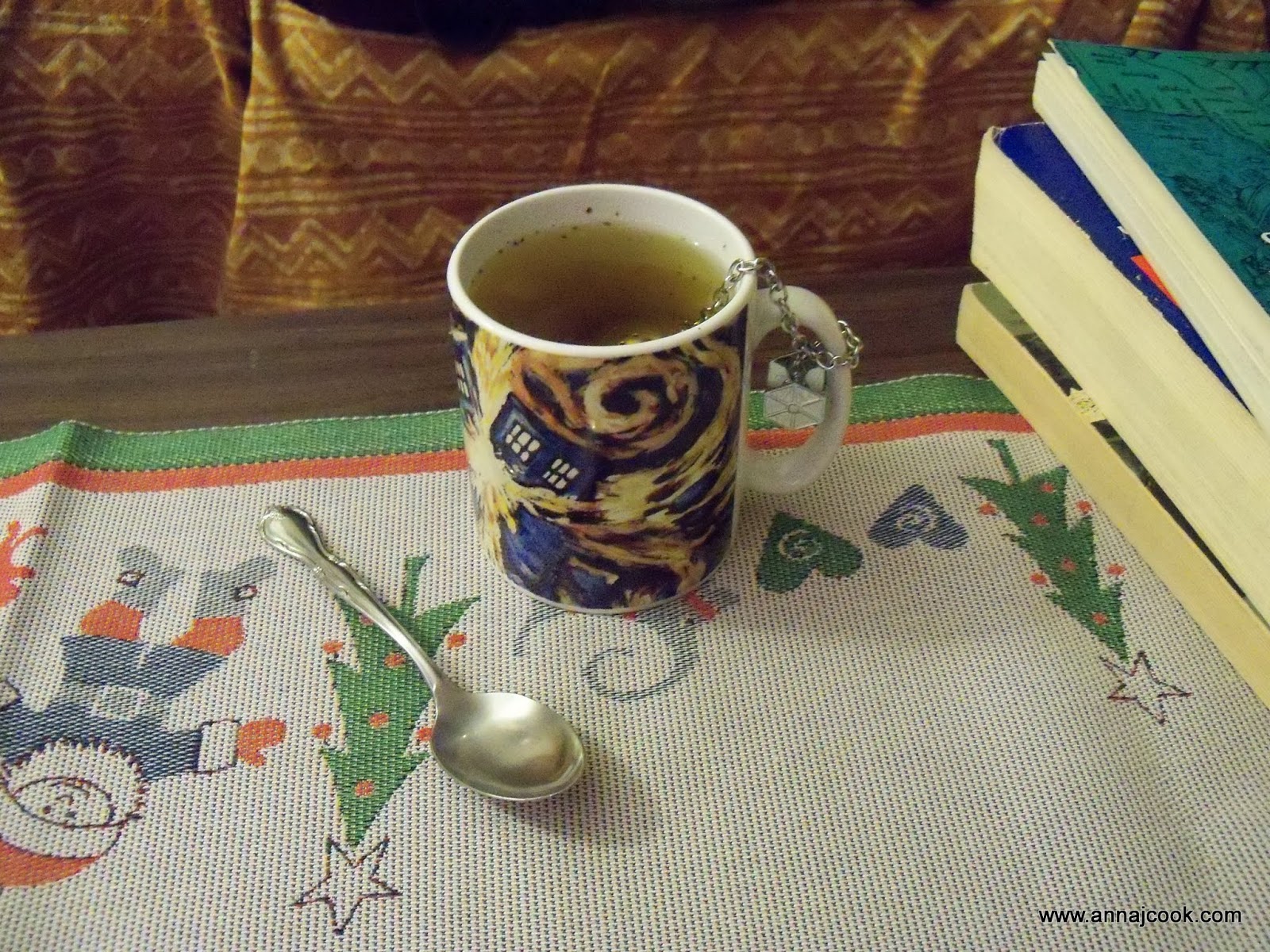
One of Hanna’s presents this year — a gift from friend Diana — was a Death Star tea ball (complete with attached tie fighter at the end of the chain!) … 

… which goes delightfully in this Doctor Who tea mug — though Hanna was concerned that the mixing of two such potent fandoms might cause the universe to end!

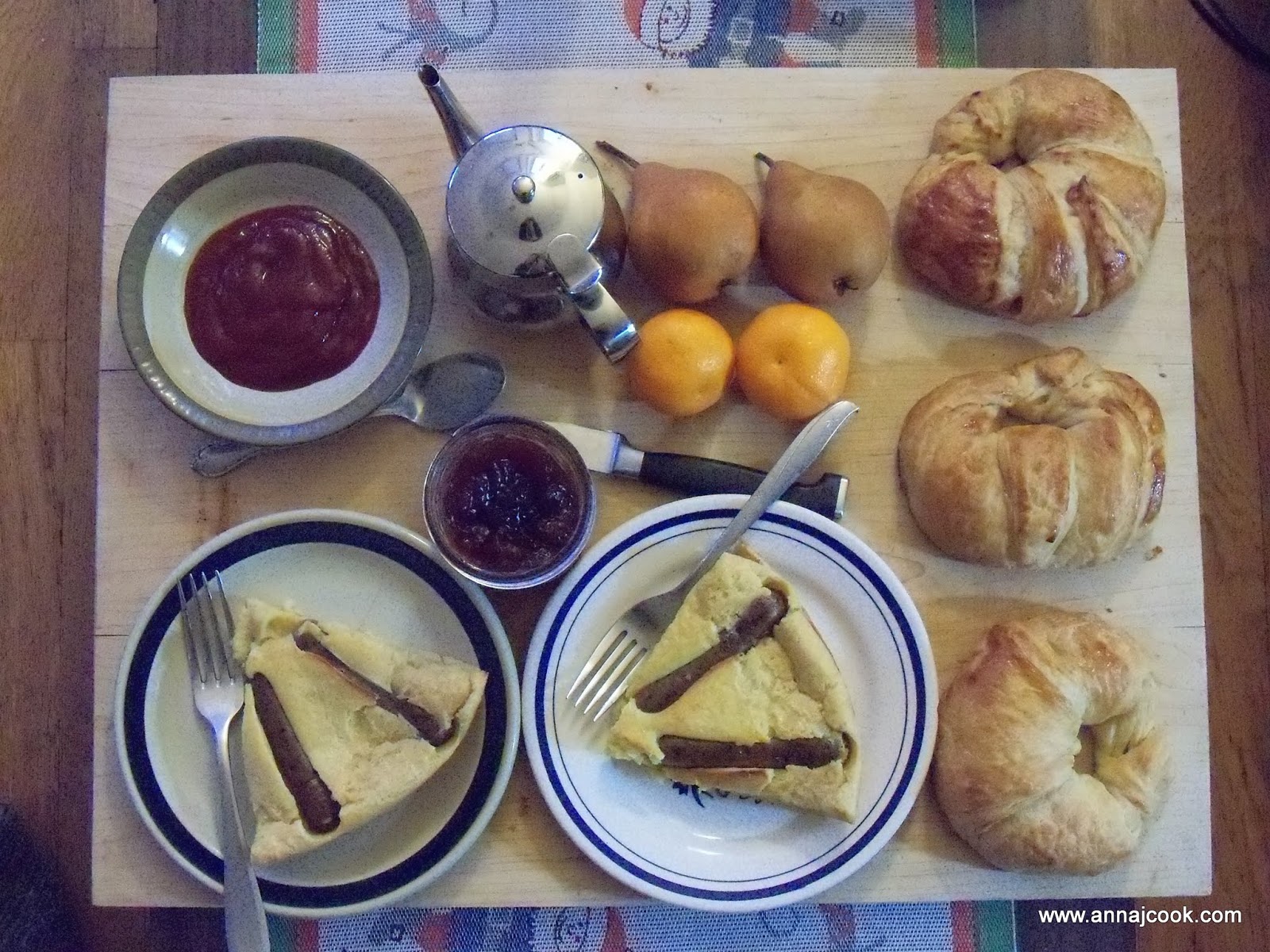
We’ve had a lot of breakfasts that look like this in the past week; there was something pleasing about the way everything was laid out in sets on this particular board, so I snapped a photo.

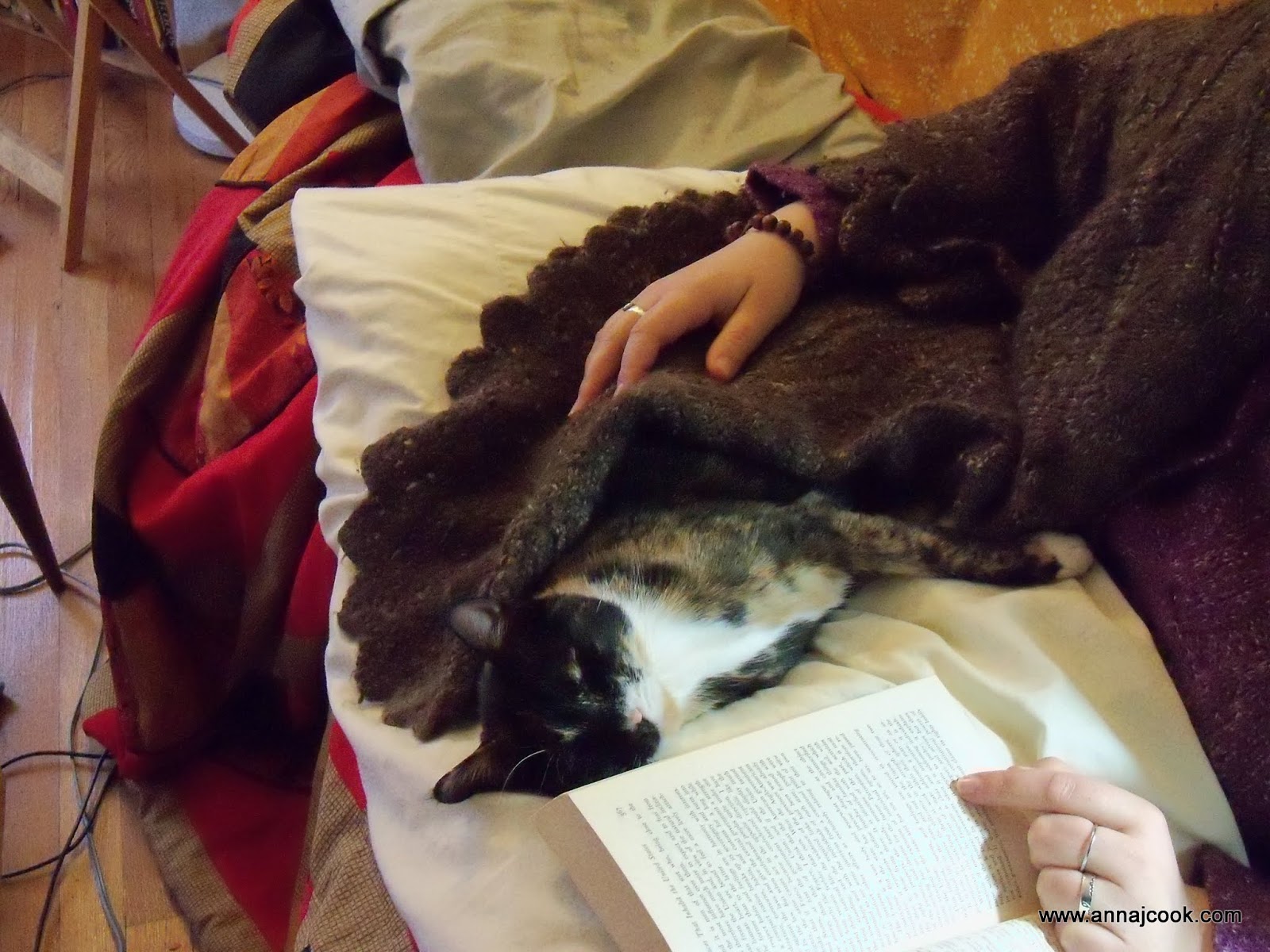
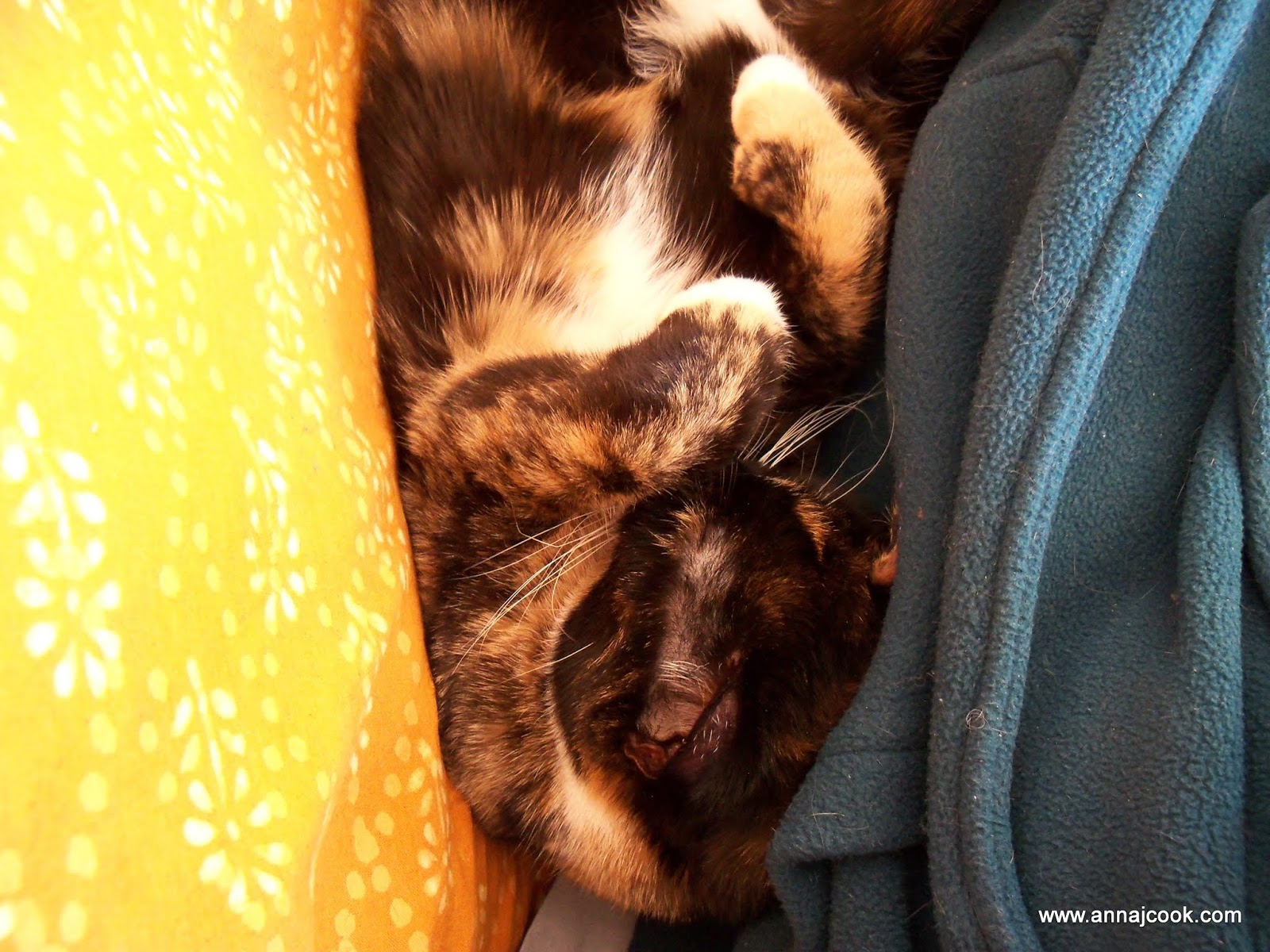
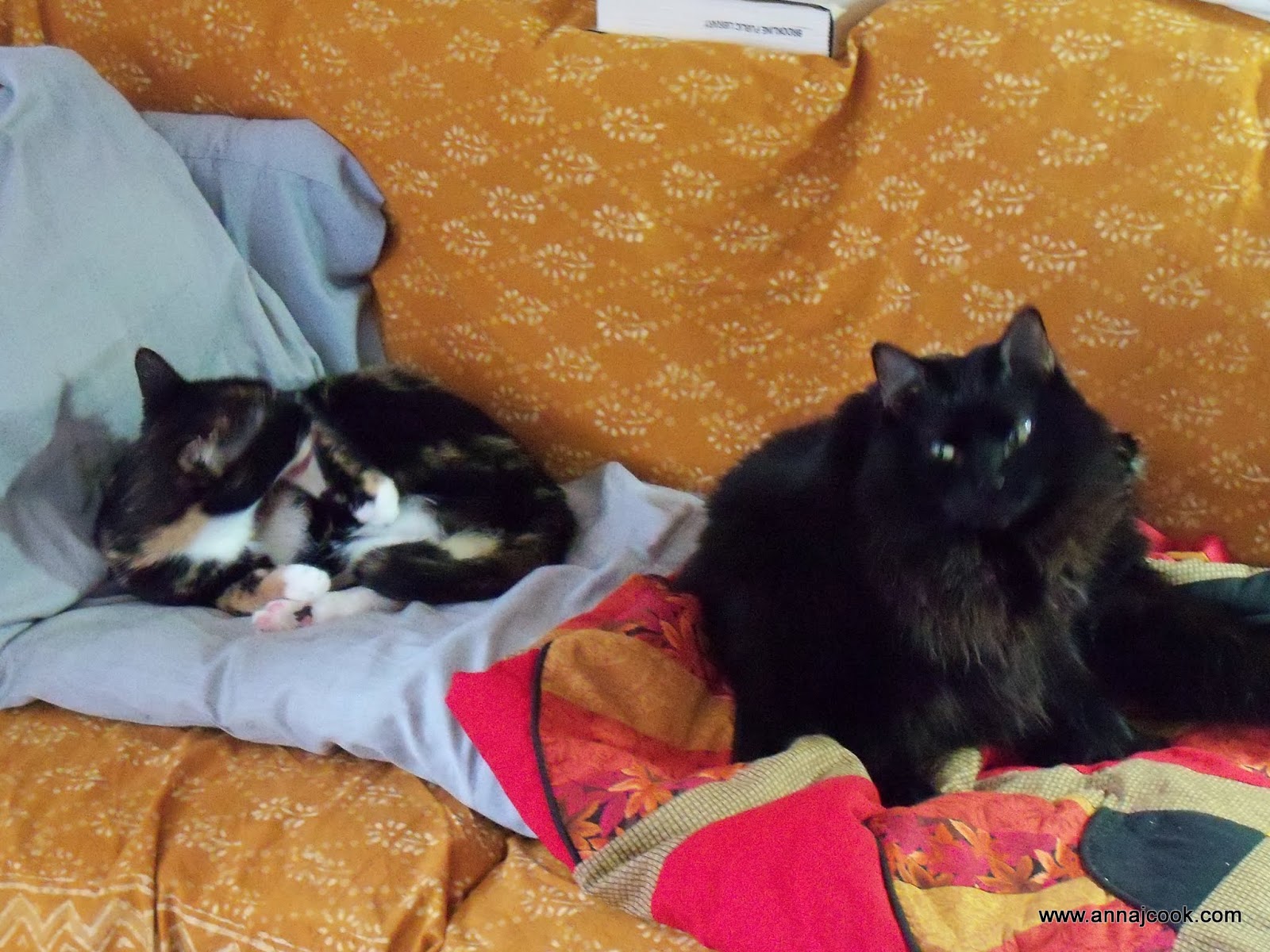
The cats have definitely been pleased to have us around as Big Soft Warm Things upon which to sleep; sometimes it can be difficult to get a book in edgewise so that we may make headway on the year’s reading!

Or blogging …

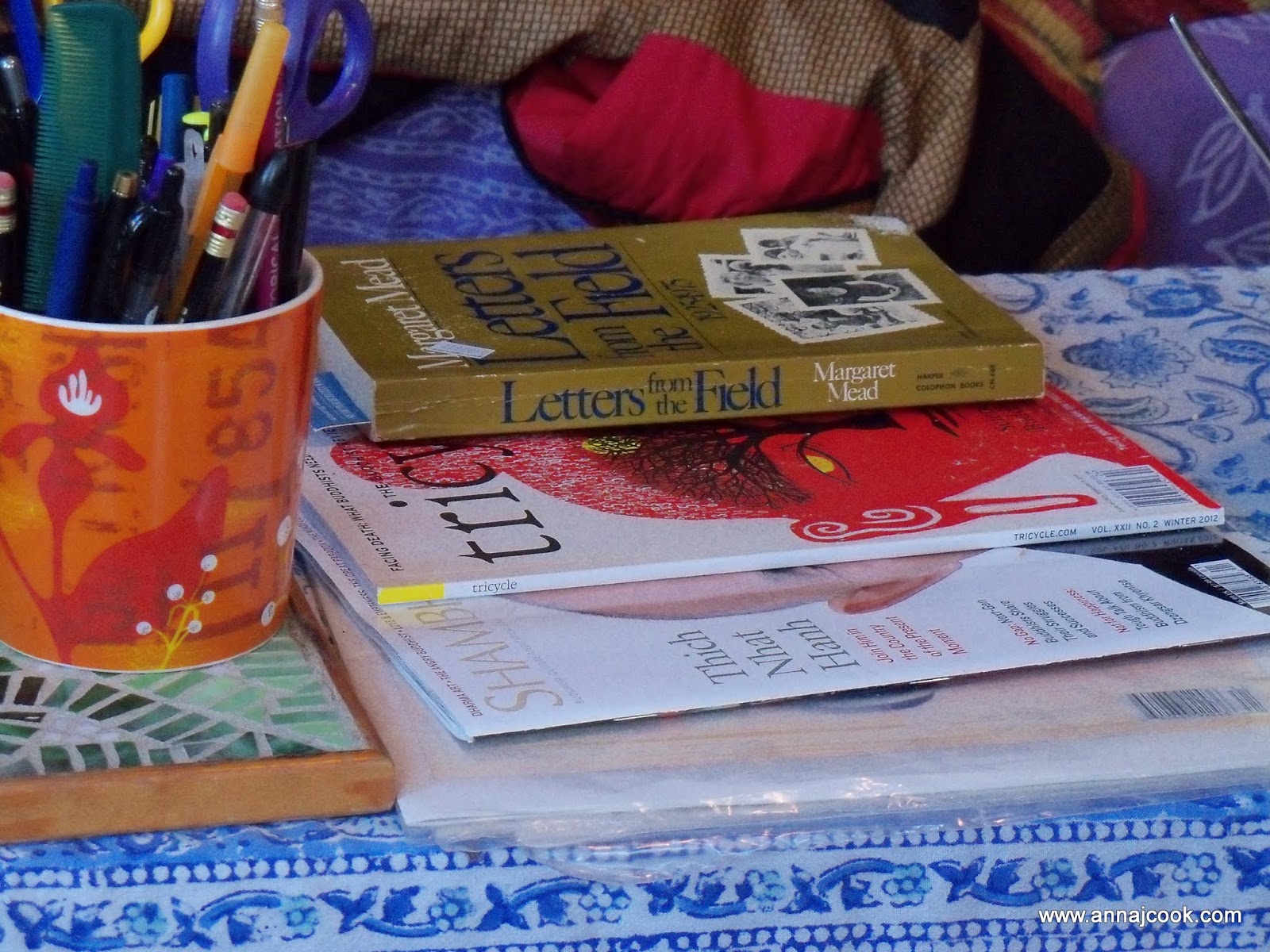
And of course, no matter how much reading and writing and tidying we do, there are always piles of books and periodicals left to consult when time and inclination allows.

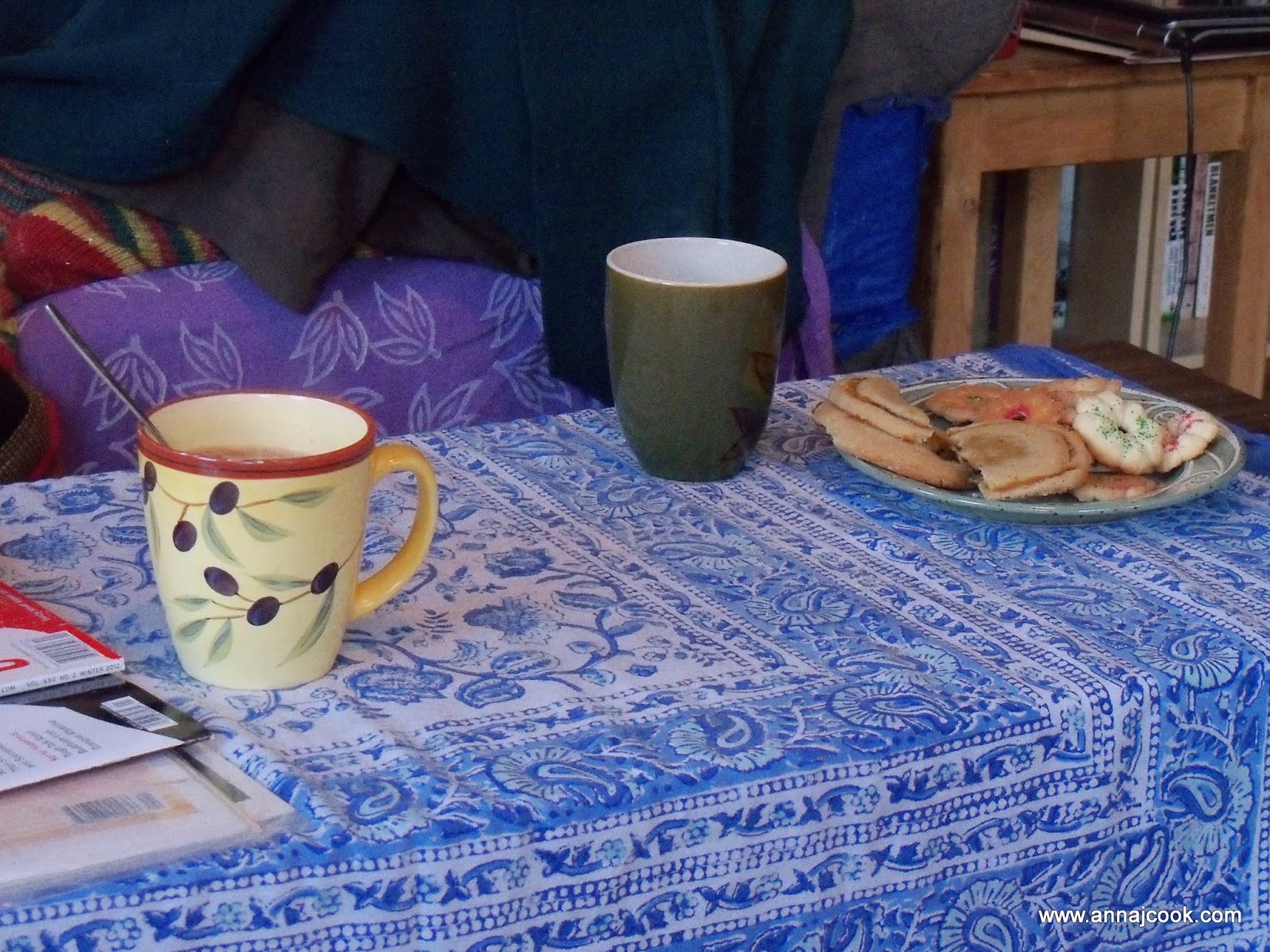
It’s a good thing we have lots of tea, coffee, and sweets to consume while we’re being all intellectually (or at least texually!) inclined.

Welcome to the final day of 2012. It was rather a momentous year for us; I know for some of you as well, in varying mixes of positive-to-stressful (and at times positively stressful!). Let us hope for a creative and renewing 2013!

corey hill, after the snow [photo post]

30 Sunday Dec 2012

Posted by Anna Clutterbuck-Cook in a sense of place

≈ Leave a comment

Tags

boston, domesticity, family, outdoors, photos

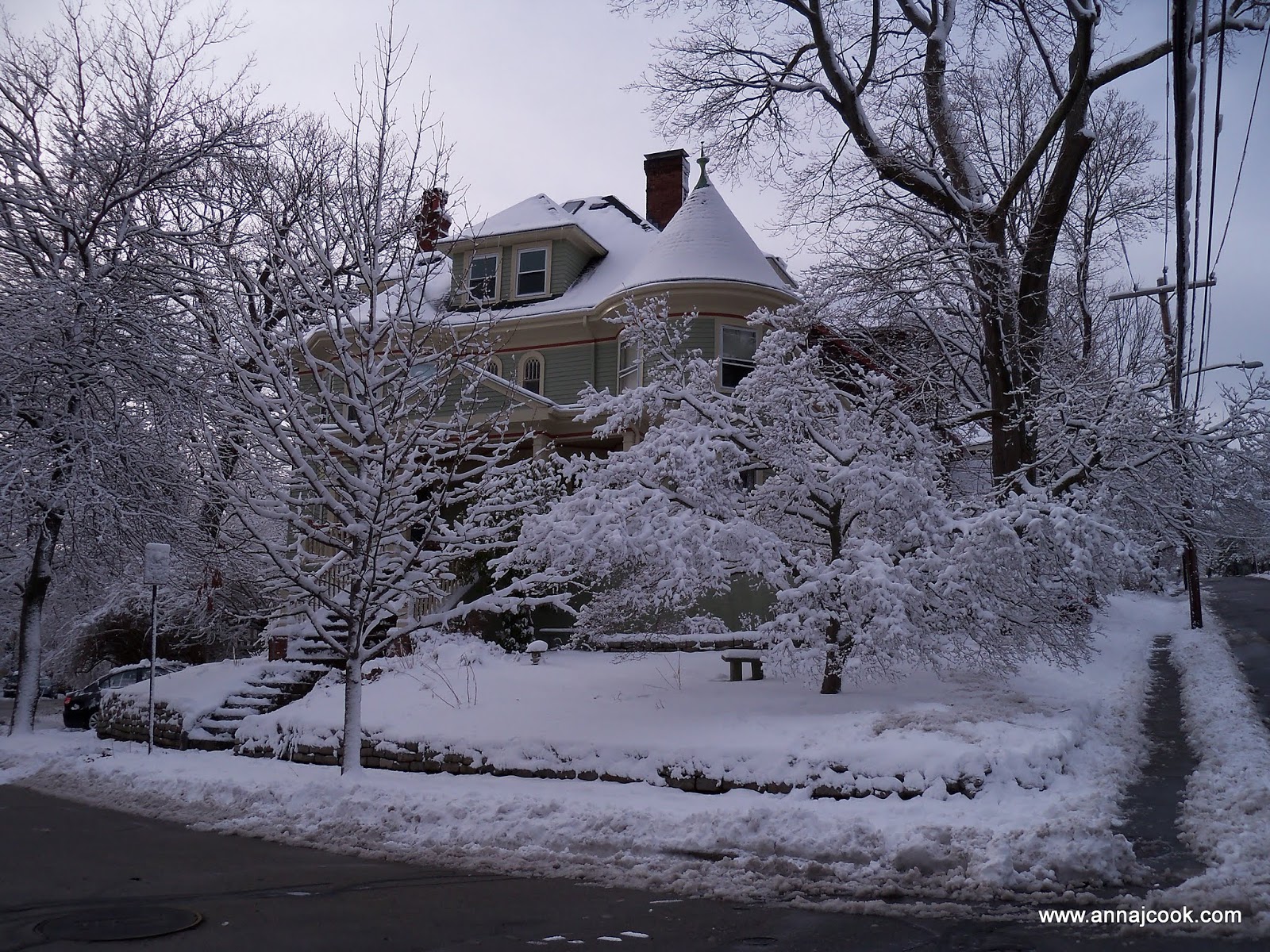
We had a proper snowfall in Boston last night for the first time in a couple of years (!), and with temperatures predicted to remain in the twenties this coming week hopefully winter is here to stay … at least into the New Year.

While Hanna was doing yoga this afternoon, I walked out (and up) Corey Hill. Corey Hill in Brookline is one of the neighborhoods the abuts our section of Allston, and one about which I have serious real estate envy.

I mean, the downside about Corey Hill is that, well, it’s a hill. So living on it would be akin to living anywhere  in San Francisco: you’d get your cardio walking to and from work every day, no problem — whether you wanted to or not. But the upside is that they have lots of brilliant little turn-of-the-twentieth-century houses, most of which are still in pretty decent repair, and many of which have been converted into multi-unit dwellings.

I’ve always had a thing for photographing flights of stairs, and the Corey Hill neighborhood definitely provides ample opportunity.

Even before I moved to Boston, I liked wandering around neighborhoods that weren’t my own to engage in “what if…” imaginings about the life one would have living there, or the home-making possibilities of the houses therein.

(For example, what’s with the pink door below the stair?)

At the summit of Corey Hill is a public park which lends itself to sledding (the man in the black coat was a supervising adult waiting for his sprongs to return from the latest run). In July, this is a favored spot for watching Boston’s city fireworks.

In addition to adorable brick cottages, there’s this imposing art deco structure near the summit park, and also a few truly outstanding Victorians (I assume vestiges of the original settlements).

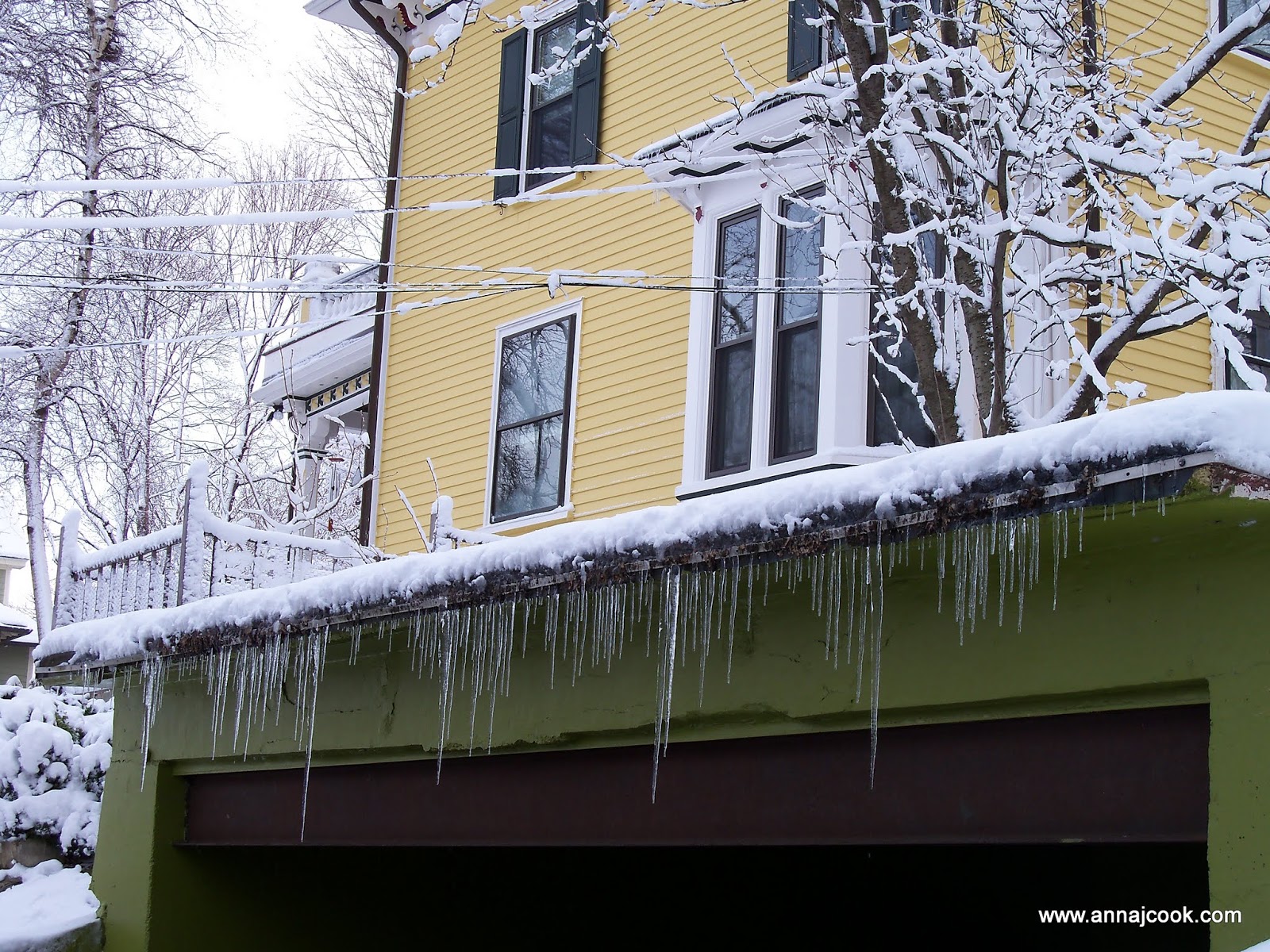
One of the cool things about snow is the way it makes you see color in a whole new way. Like the greens and yellows behind the row of icicles on this recessed garage…

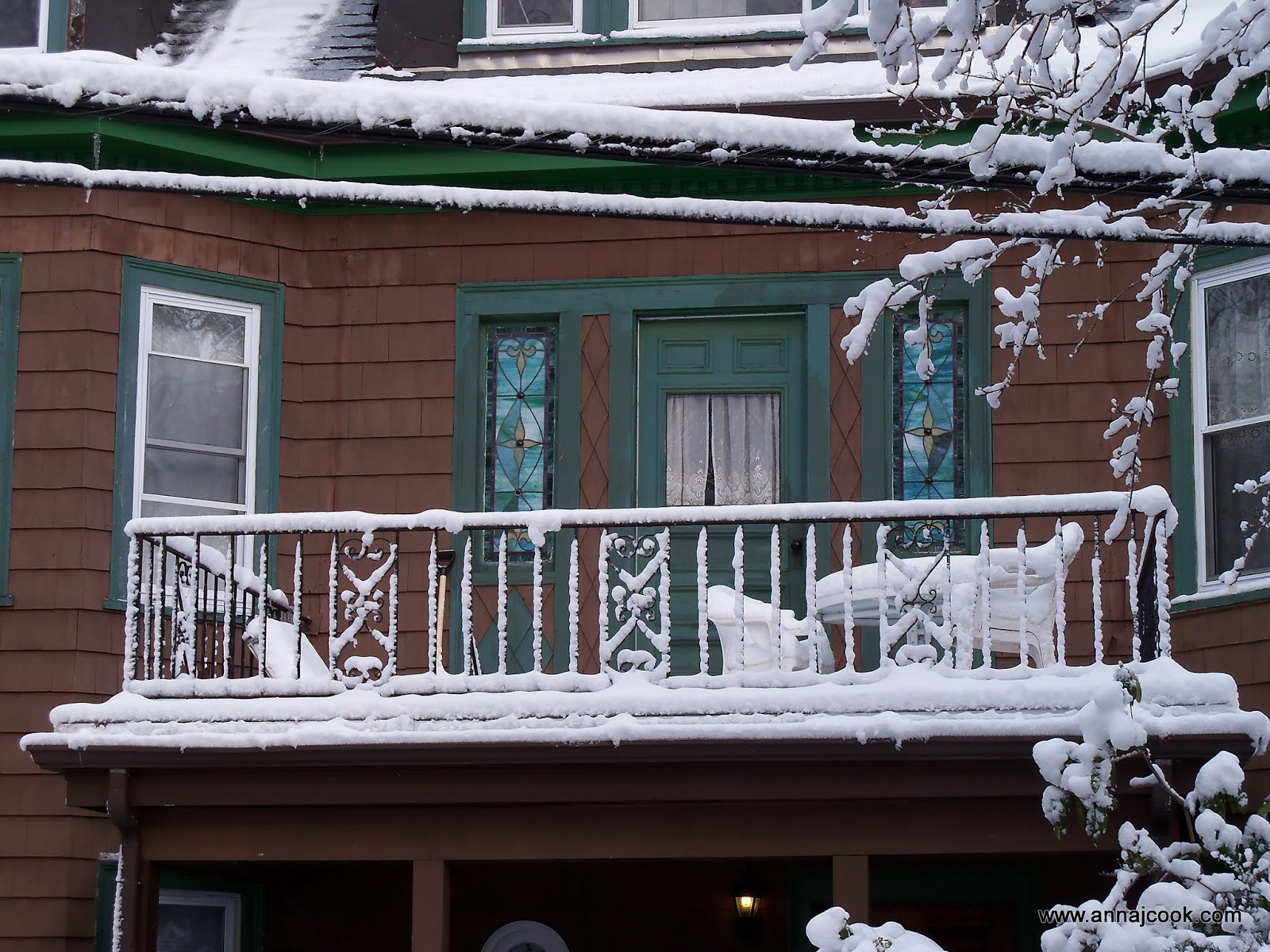
…and the turquoise on this second-floor balcony.

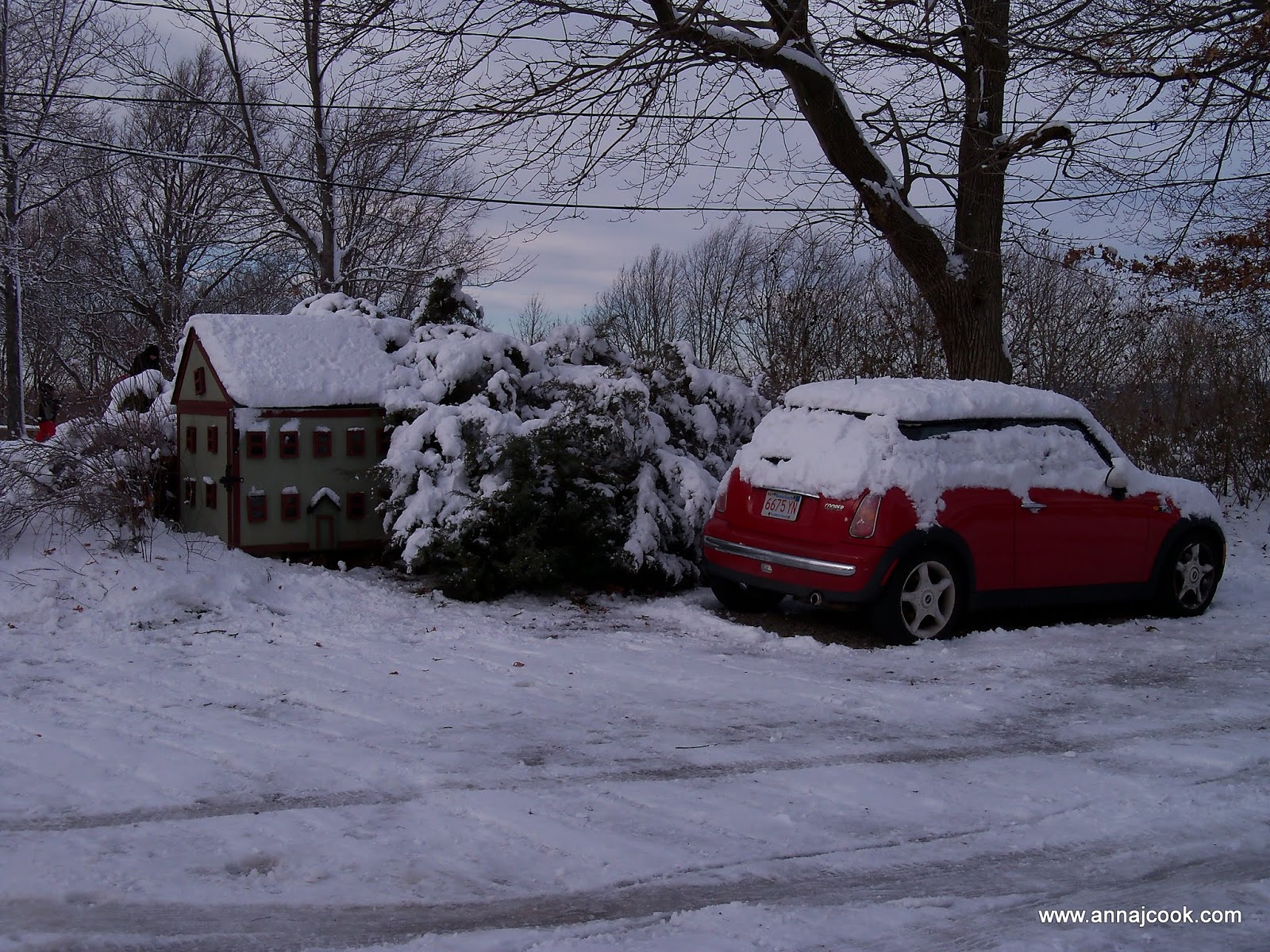
While I suppose the “house” below might be a little too tiny for us, I’d like to imagine that some day — if we stay in Boston — our little household of two humans and two cats might be able to afford a home of our own in a neighborhood not entirely unlike this one.

mutual christmas gift: a trip to the montague book mill [photos]

29 Saturday Dec 2012

Posted by Anna Clutterbuck-Cook in a sense of place

≈ 5 Comments

Tags

books, boston, family, holidays, travel

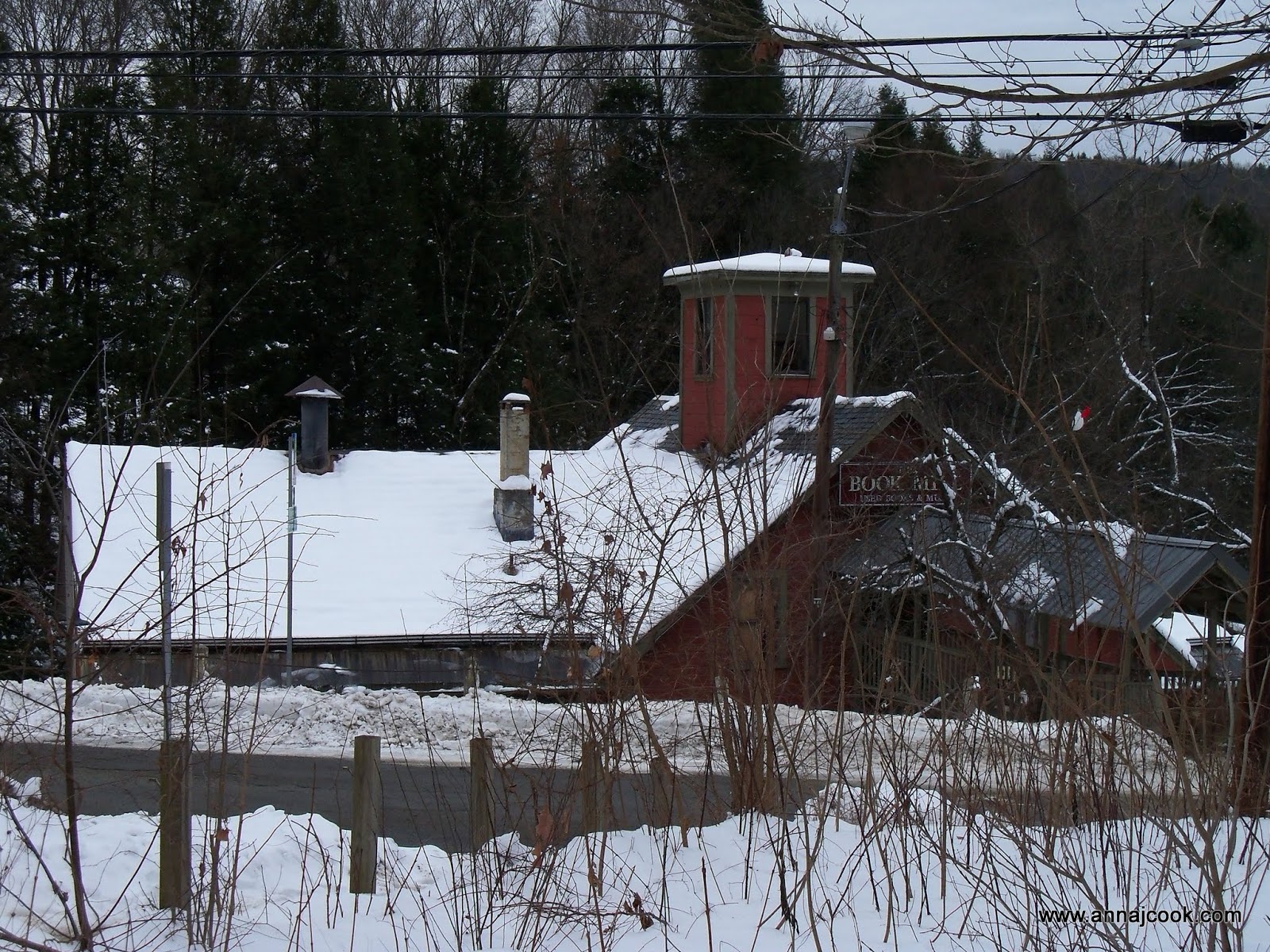
This year, Hanna and I decided that our joint gift for one another was going to be a trip to the Montague Book Mill in Montague, Massachusetts (“books you don’t need in a place you can’t find”).

We set out this morning along MA-2, under snow-grey skies, and about two hours of NPR later arrived at the Mill. It was so lovely to have snow! As Hanna says: “A proper winter!”

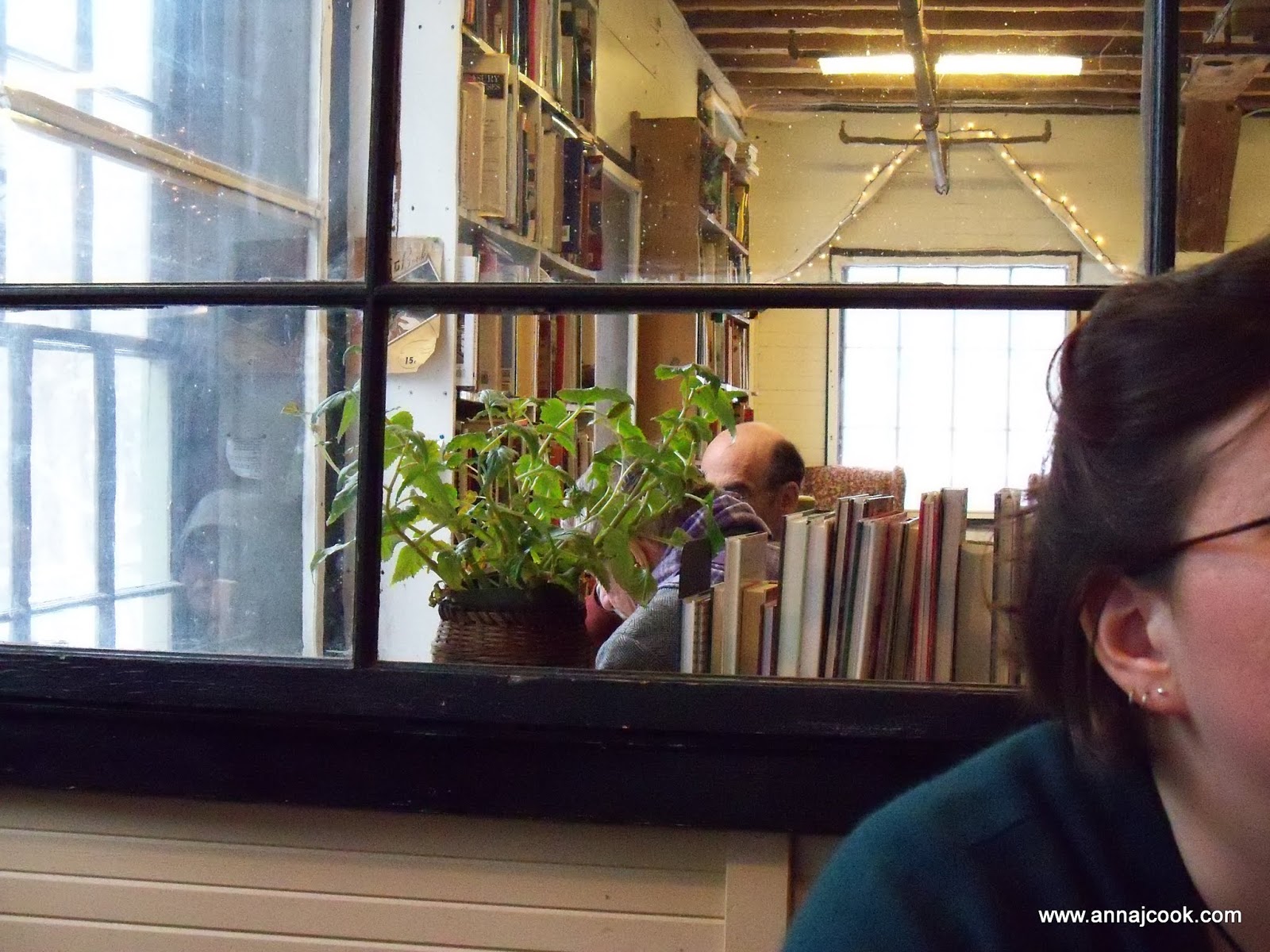
We decided right away that this was definitely a bookstore we could fall in love with! All they needed was a woodstove and a bookstore cat or two (too bad they don’t allow people to take up permanent residence…)

(I’m a sucker for exposed beams and wood flooring, what can I say?)

From the second floor, you could hear and see the rushing waters of Millers River outside.

The re-purposed riverside mill building is actually a complex of businesses, including not only the bookshop, but also a cafe, the Lady Killgrew, used record and CD store, and artists’ showroom.

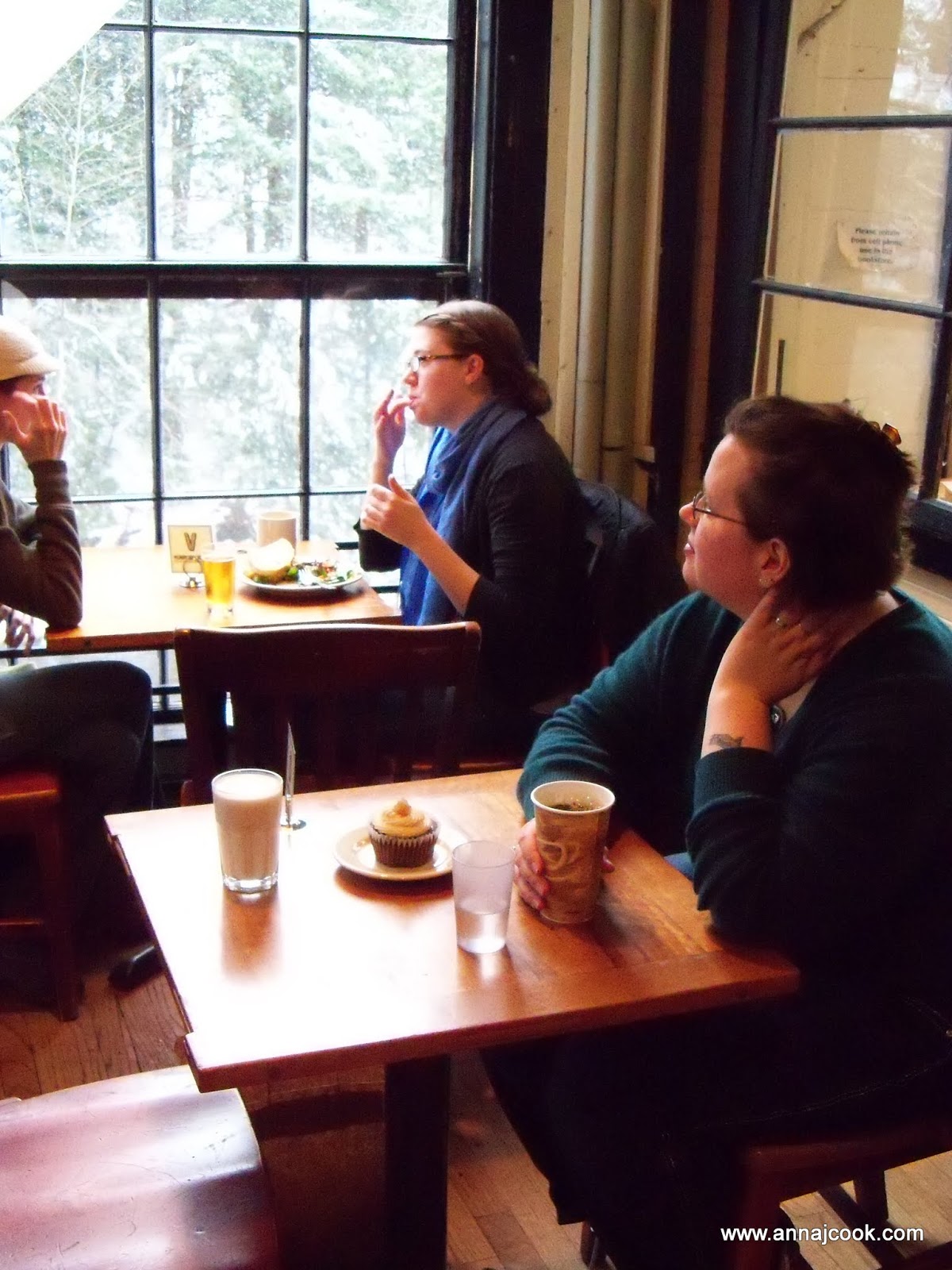
After browsing and selecting our book purchases* we got a delicious lunch at the Killgrew, consisting of peanut-ginger udon salad, a brie and marinated apple panini, maple milk (an “intrinsically delicious” food) and ginger cupcake.

(I seem to like taking photographs over Hanna’s shoulder)

While we were eating, the snow began to fall in beautiful fluffy flakes over the river.

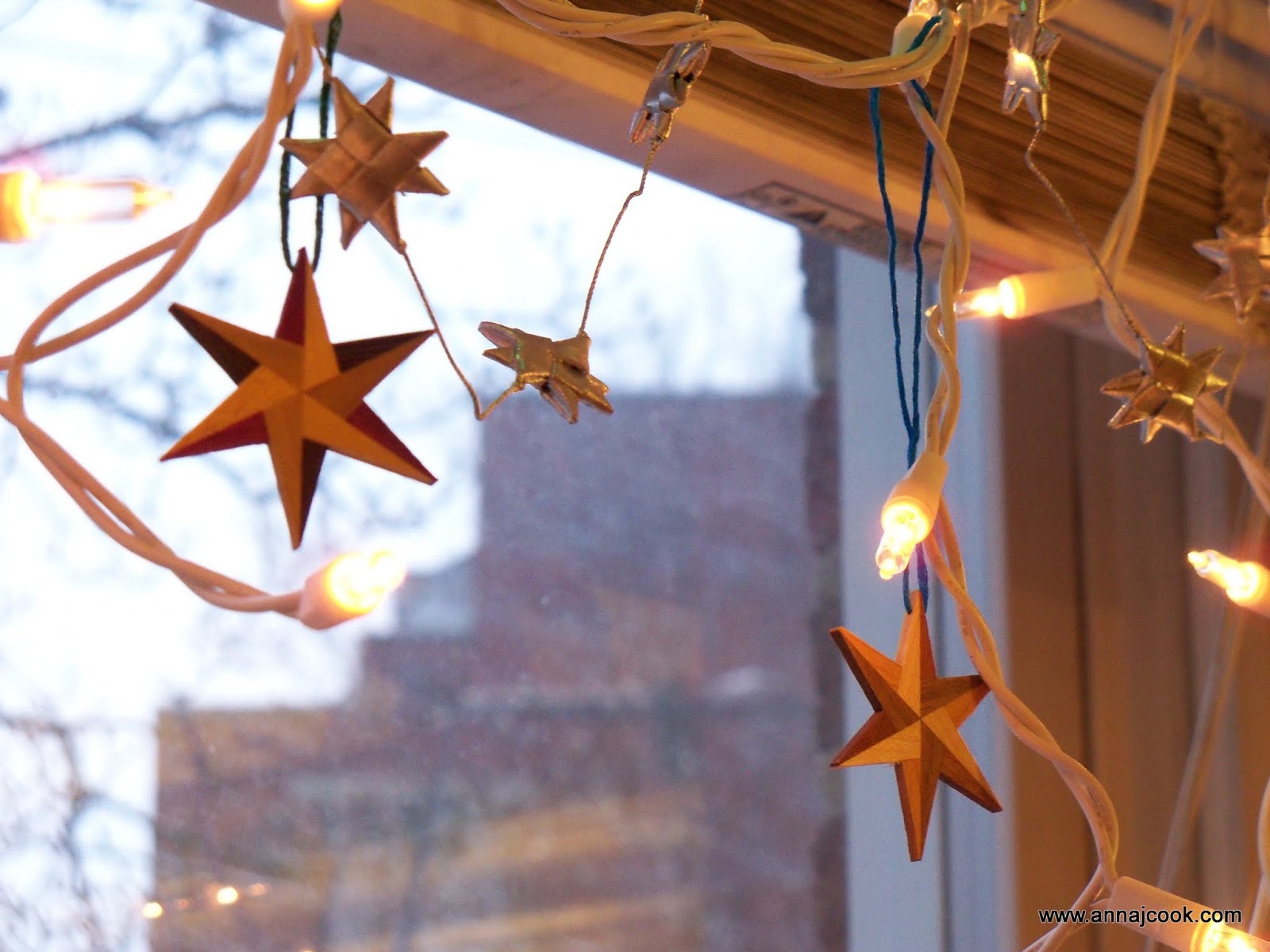
… and on our way back out to the parking area, we stopped at the artists’ shop and bought these beautiful recycled wood inlaid star ornaments for our future Christmas tree. They’re supposed to be “friendship” stars, but we figure they can be for a pair of wives just as well.


*Thanks to my grandparents Ross for the gift money that funded our book buying spree! For those interested, we bought:

Middletown: A Study in Modern American Culture by Robert S. Lynd and Helen Merrell Lynd (Harcourt, 1929).

Public Vows: A History of Marriage and the Nation by Nancy F. Cott (Harvard U.P., 2000)

The Tassajara Recipe Book: Favorites of the Guest Season by Edward Espe Brown (Shambhala Press, 1985)

Albion’s Fatal Tree: Crime and Society in Eighteenth-Century England by Douglas Hay et. al. (Pantheon, 1975)

The Unknown Mayhew by Eileen Yeo and E.P. Thompson (Schocken, 1971)

A Social History of Madness: The World Through the Eyes of the Insane by Roy Porter (Weidenfeld & Nicholson, 1987)

Perfecting the World: The Life and Times of Dr. Thomas Hodgkin, 1798-1866 by Amalie M. Kass and Edward H. Kass (Harcourt, 1988).

christmas in allston [thank you all!]

26 Wednesday Dec 2012

Posted by Anna Clutterbuck-Cook in our family

≈ Leave a comment

Tags

domesticity, family, holidays, photos

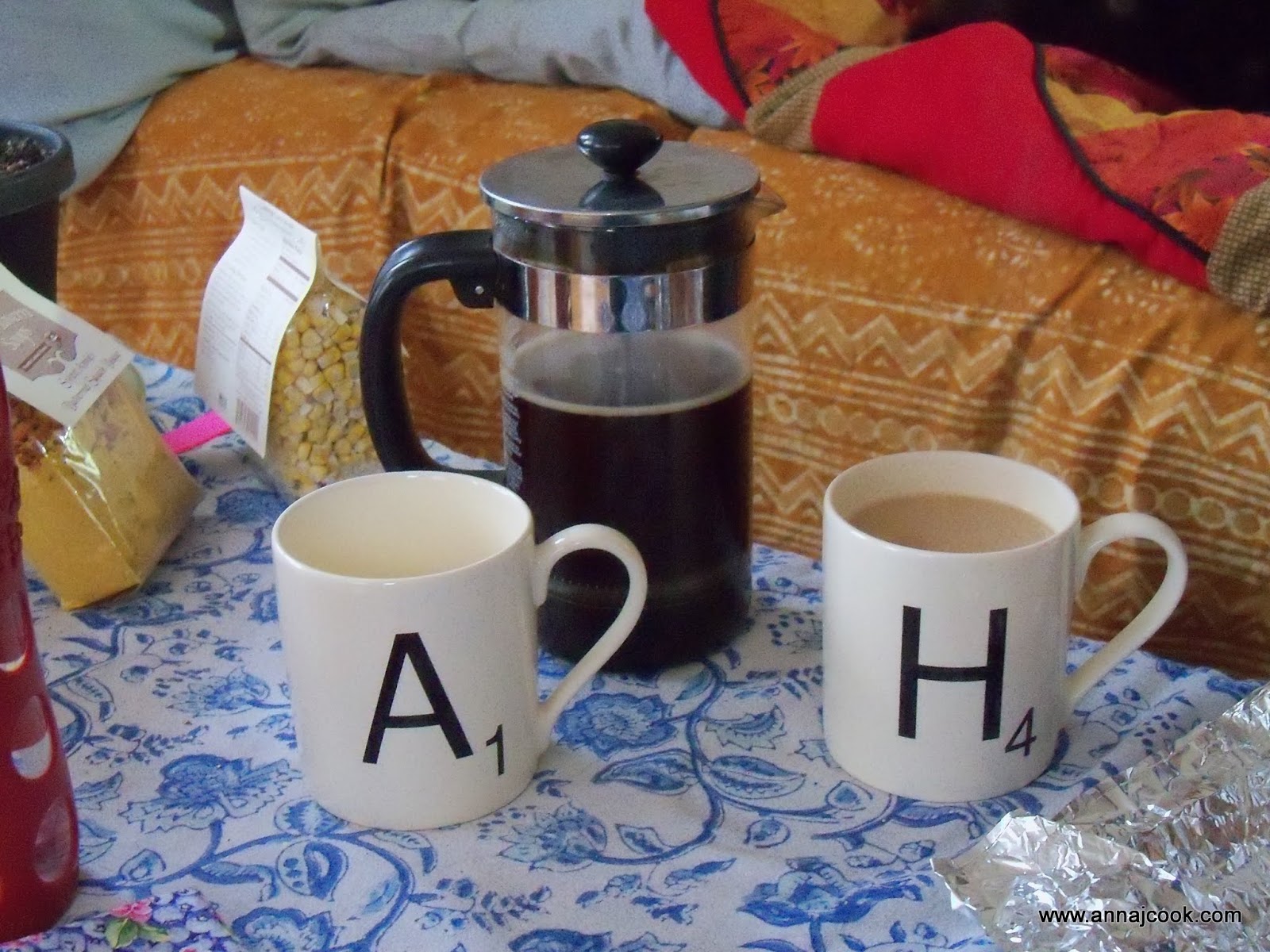
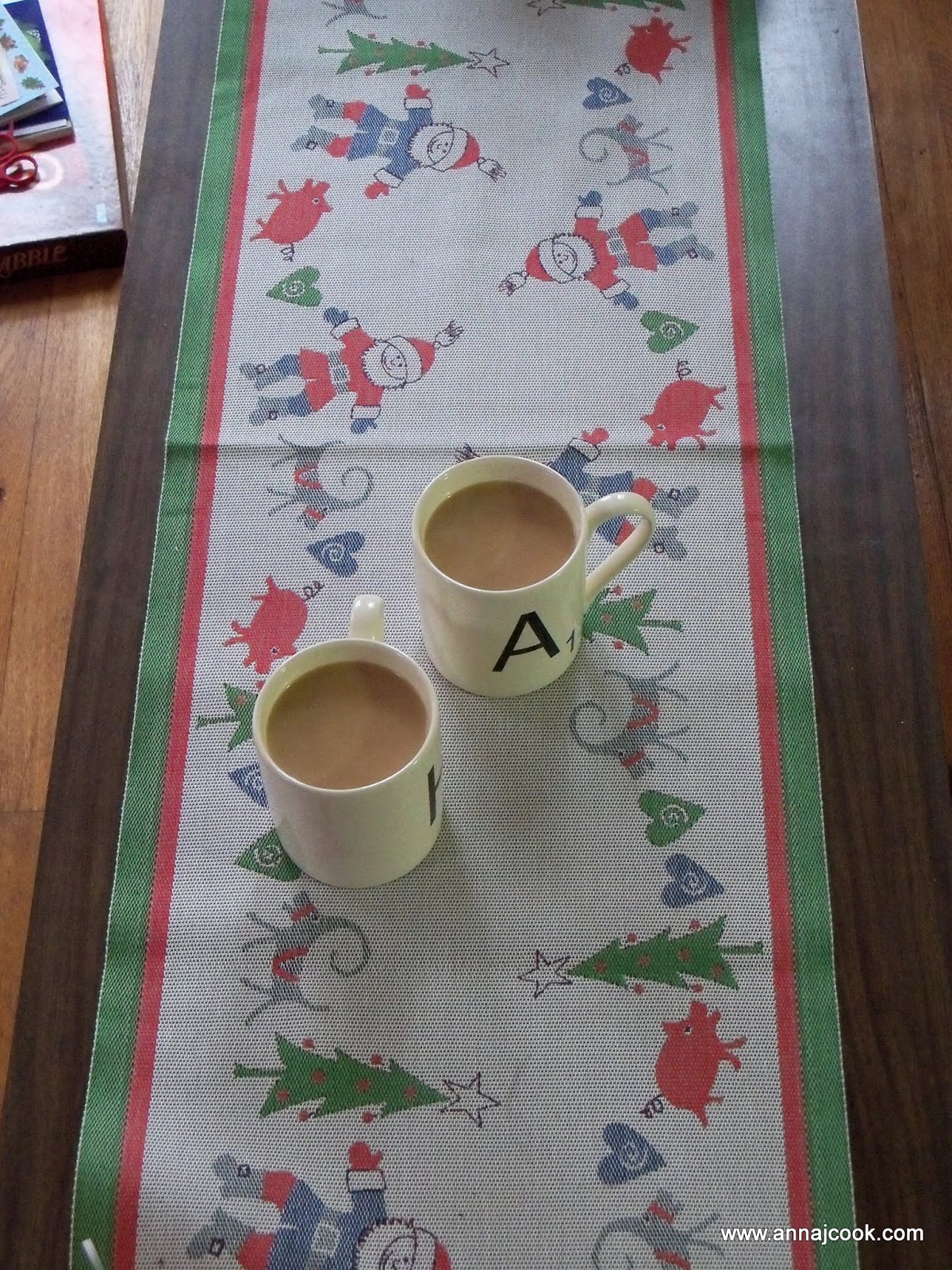
We started Christmas Day morning with the two packages we suspected from their shape were coffee mugs — and we were right! Thank you, Brian and Renee. We were playing Scrabble just last night; now we have appropriately nerdy mugs for hot cocoa when we hold a rematch 🙂
The cats were initially disinterested in present-unwrapping (Teazle is even cleaning her toes!). But soon, both were in on the action. Gerry was particularly interested in helping Hanna upwrap presents from Janet and Mark:
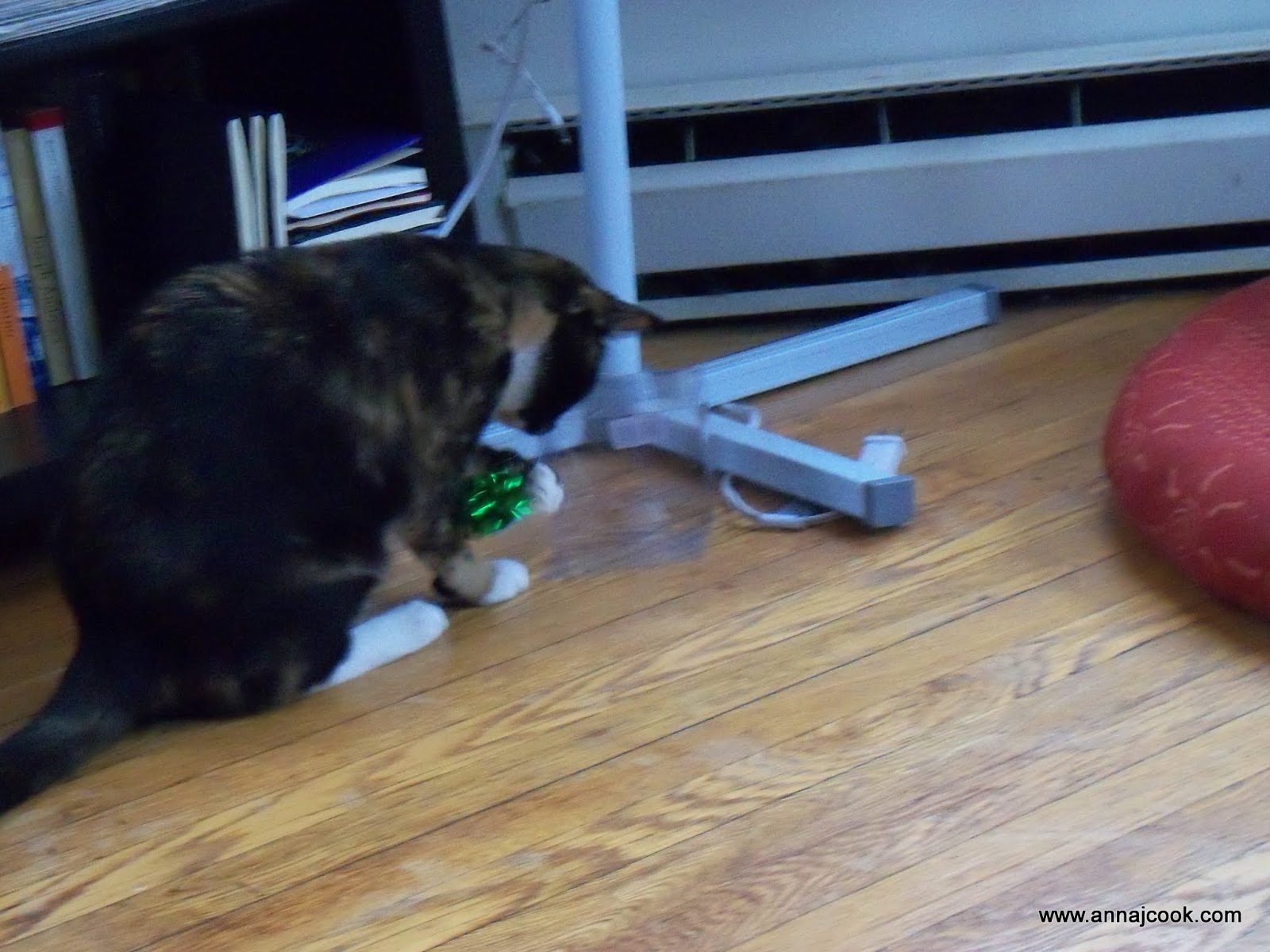
And Teazle’s new favorite toy (of this half hour) was a bow from Diana and Collin:

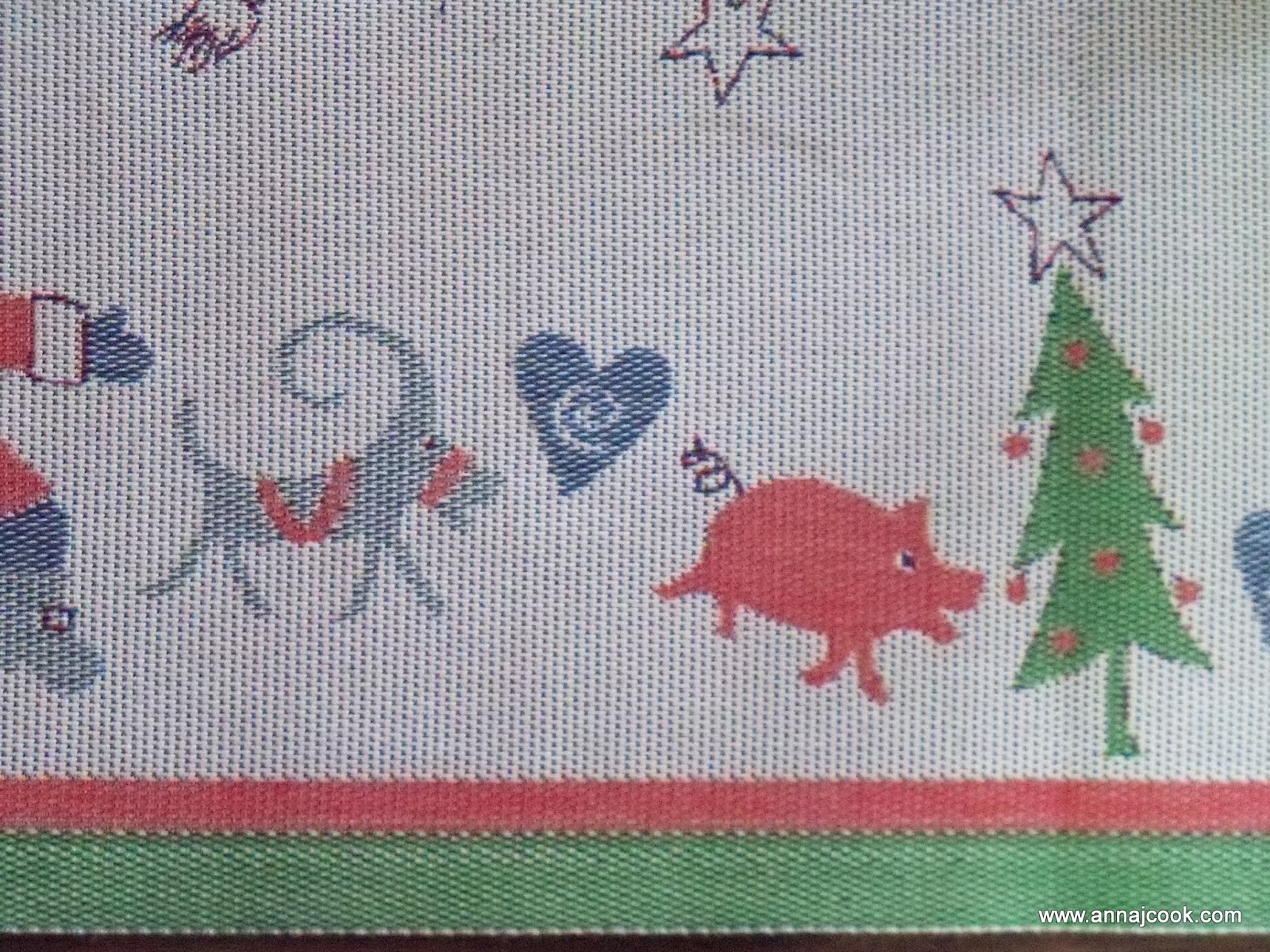
We put out the runner from Grandma Cook, made by master weavers in Sweden who serve the Swedish royal family!

I particularly enjoy the leaping pig!

We had to keep these little guys up high away from Teazle’s explorations…

And I’ll leave it there as we head out on this cloudy Boxing Day to the thinking cup for a few hours of reading and lattes. I hope everyone had a lovely Christmas Day and is looking forward to a relaxing as we head into the final days of 2012 and the dawn of 2013.

holiday cheer [random acts of kindness]

25 Tuesday Dec 2012

Posted by Anna Clutterbuck-Cook in our family

≈ Leave a comment

Tags

boston, cat blogging, domesticity, random kindness

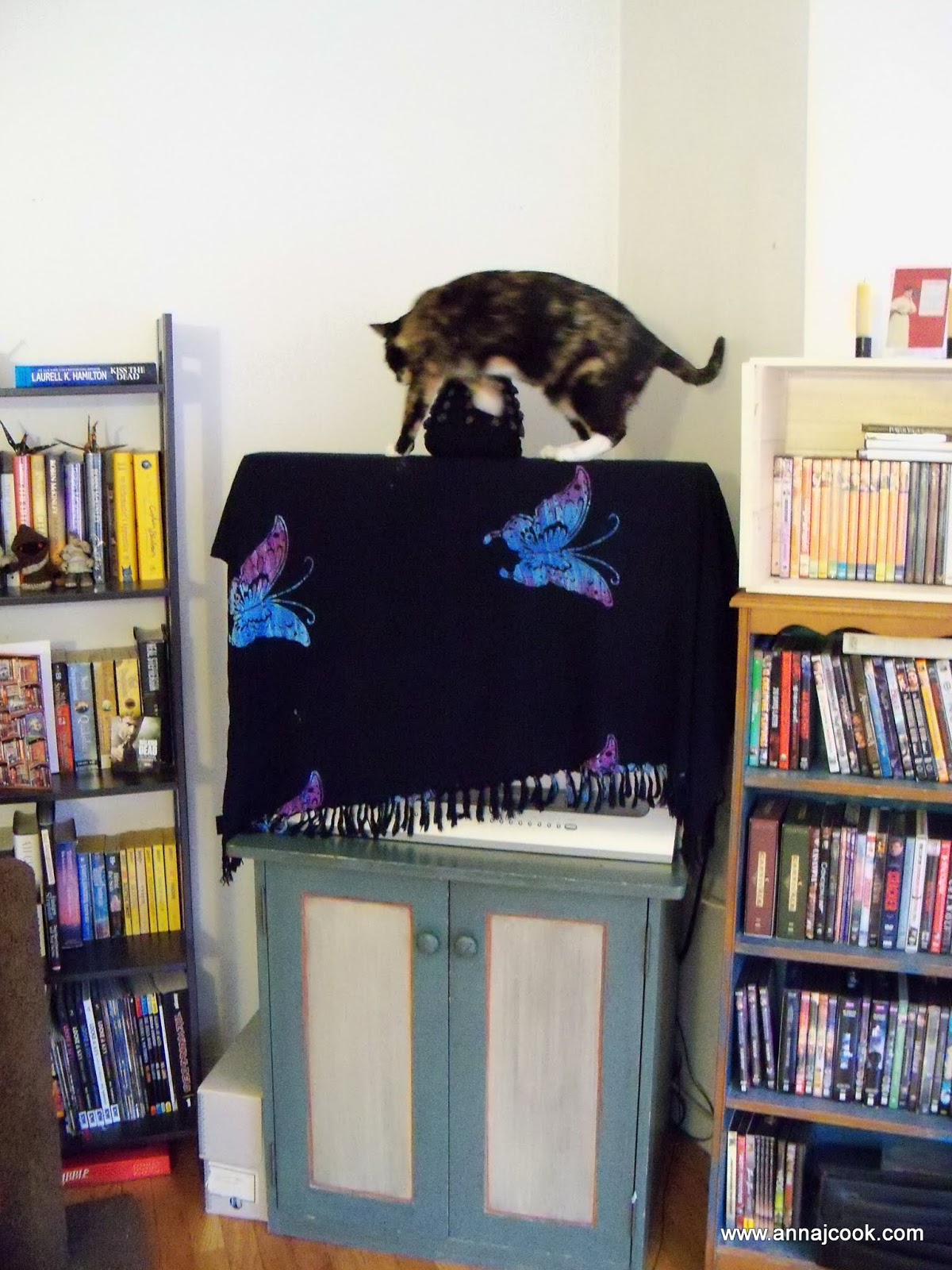
This morning, as we finished unwrapping our presents from far and wide (photos tomorrow!), little miss Teazle decided to expand on her exploration of our potted plants to use them as a platform from which to spring to the top of our television set.

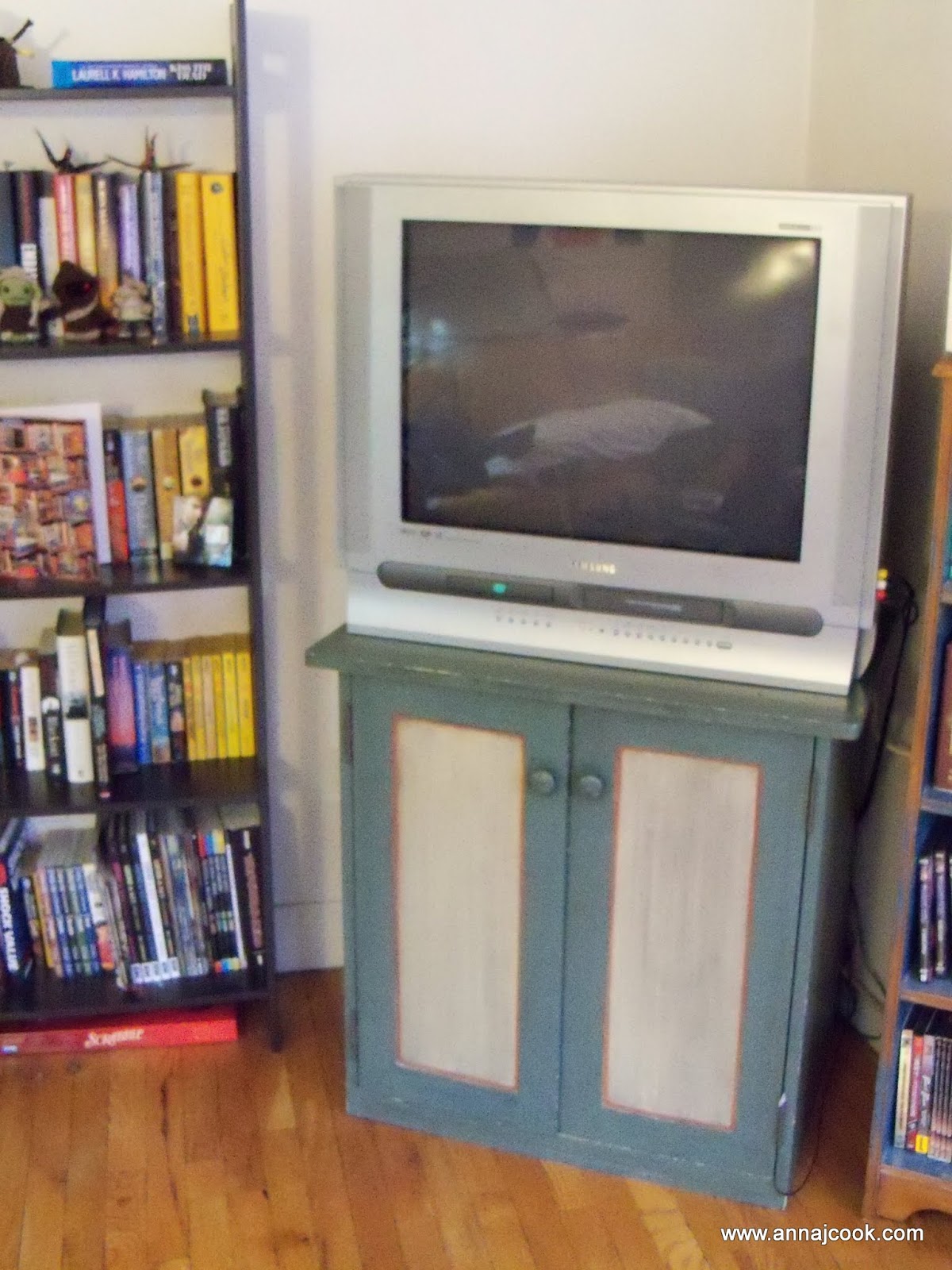
the TV is to the left of these shelves

Our television set was inherited from friends and weighs a ton; for three years it’s been sitting precariously on a pine shelf scavenged from the junk heap. Left to its own devices, it’s safe enough but with a kitten scrambling about on top it was starting to sway noticeably. And after three successive scruffings and time-outs in the bathroom, after which Teazle simply returned to pick up where she’d left off, it was clear a solution was needed that would not result in our coming home after work one day to find a squashed cat, a shattered television screen, and a giant hole in the floor.

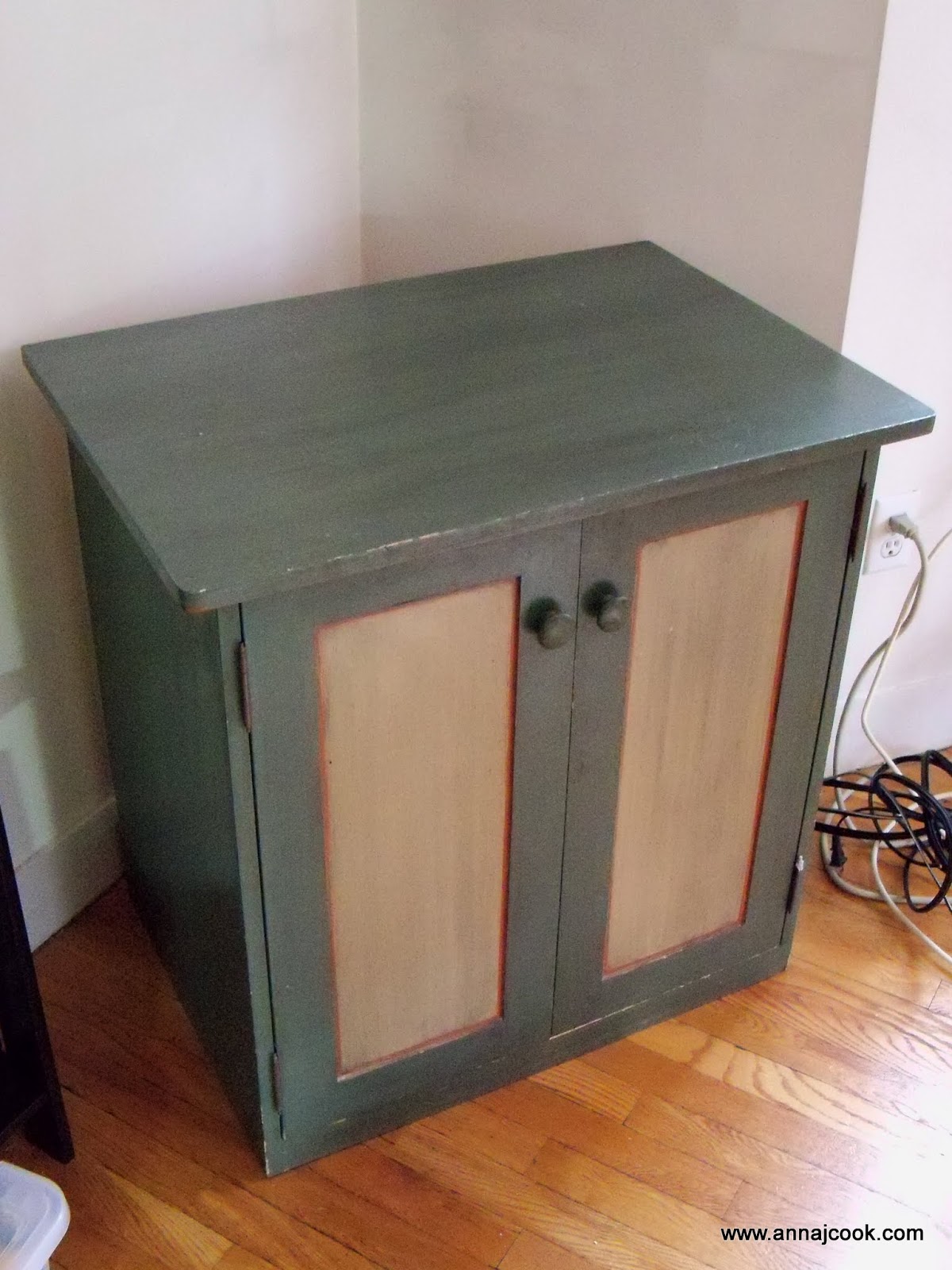
Yesterday, on our afternoon walk, we’d happened upon a lovely little cupboard out on side of the street for pick-up. We poked and prodded it and stood around discussing what to do with it — but could think of nothing. So we decided to leave it for someone else to take away and walked on.

Suddenly, around 10:00 this morning, we really wished we’d snagged it.

So I said, “I’ll go out for my walk and see if it’s still there.”

“You won’t be able to carry it home alone!” Hanna said.

“Oh, I’ll figure something out — if it’s still there,” I said. I assumed it would be gone — stuff usually doesn’t last fifteen minutes in this neighborhood.

But lo, it was there! So I started hauling it the mile or so back, about half a block at a time, carrying it awkwardly braced against alternating hips.

It was going to take awhile.

Maybe, I thought, someone driving by will stop and offer me a lift, or someone walking in the same direction will offer to help.

I likely wouldn’t have accepted an offer from an unknown driver — but an extra pair of hands would have been nice.

About halfway home, I was starting to feel ominous twinges in my back and arms. But I didn’t want to abandon the cupboard to go back and get Hanna for fear it would disappear before we could return. So I kept going, one leg at a time.

I passed by a woman taking a smoking break outside her house.

“What a great find!” She said, by way of greeting.

“Yes!” I agreed. “Now it’s just a matter of getting it home!”

“Do you live far from here?” She asked, “Would a dolley help?”

“Actually … yes,” I said, “a dolley would be super helpful!” Usually I demur offers of assistance, but it seemed really stupid to do so in this instance. Particularly since she’d offered it without knowing me from Eve.

So with the help of the dolley, I got the rest of the way in under ten minutes. Hanna and I put together a bag of cookies for the kind stranger and I hauled the cart back again before we set up the television on its new, more stable, cabinet.

Not that this appears to have deterred Teazle from her kitty parkour one bit!

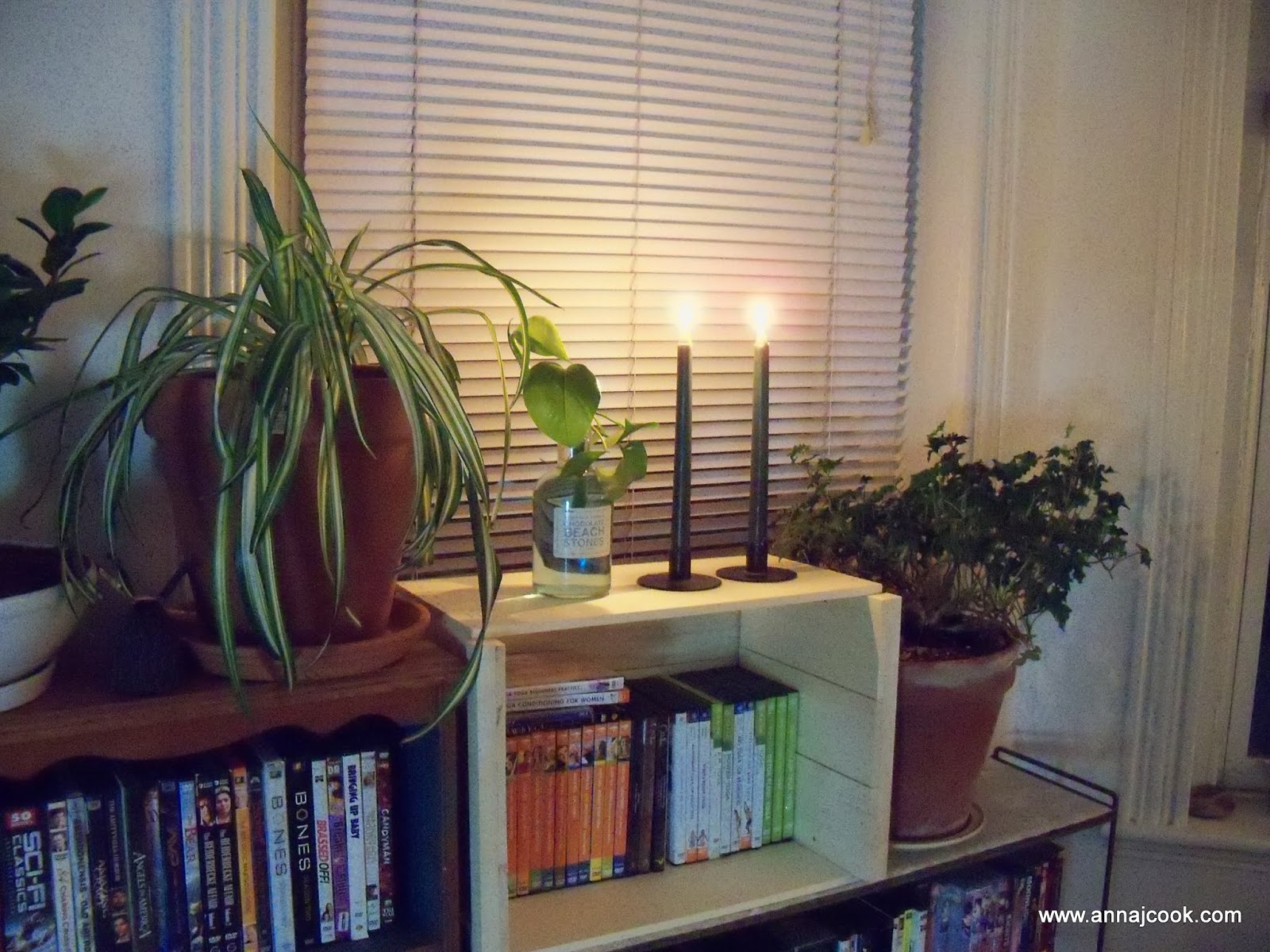
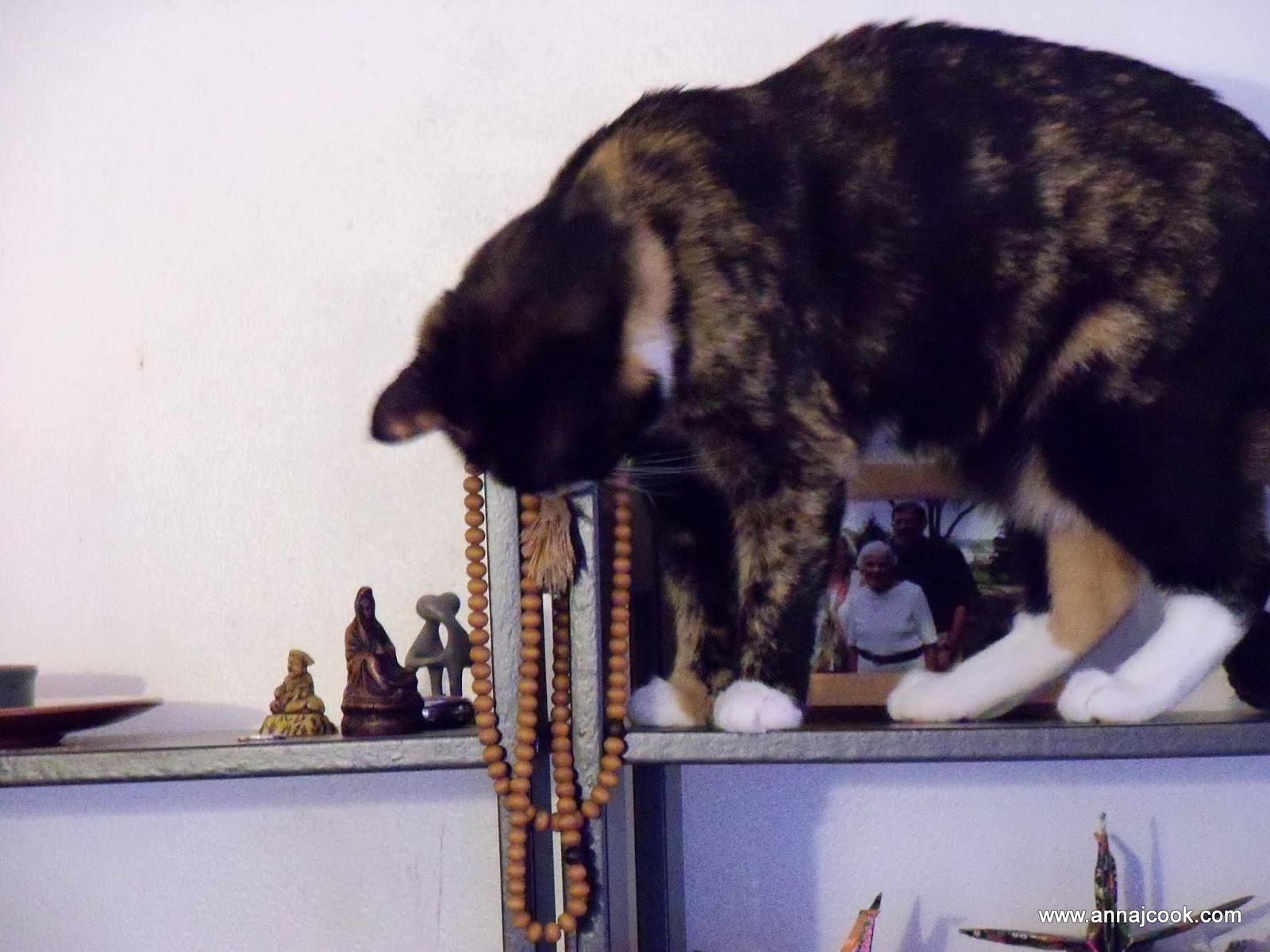
She’s determined to get across to Hanna’s home altar on the far left bookshelf …

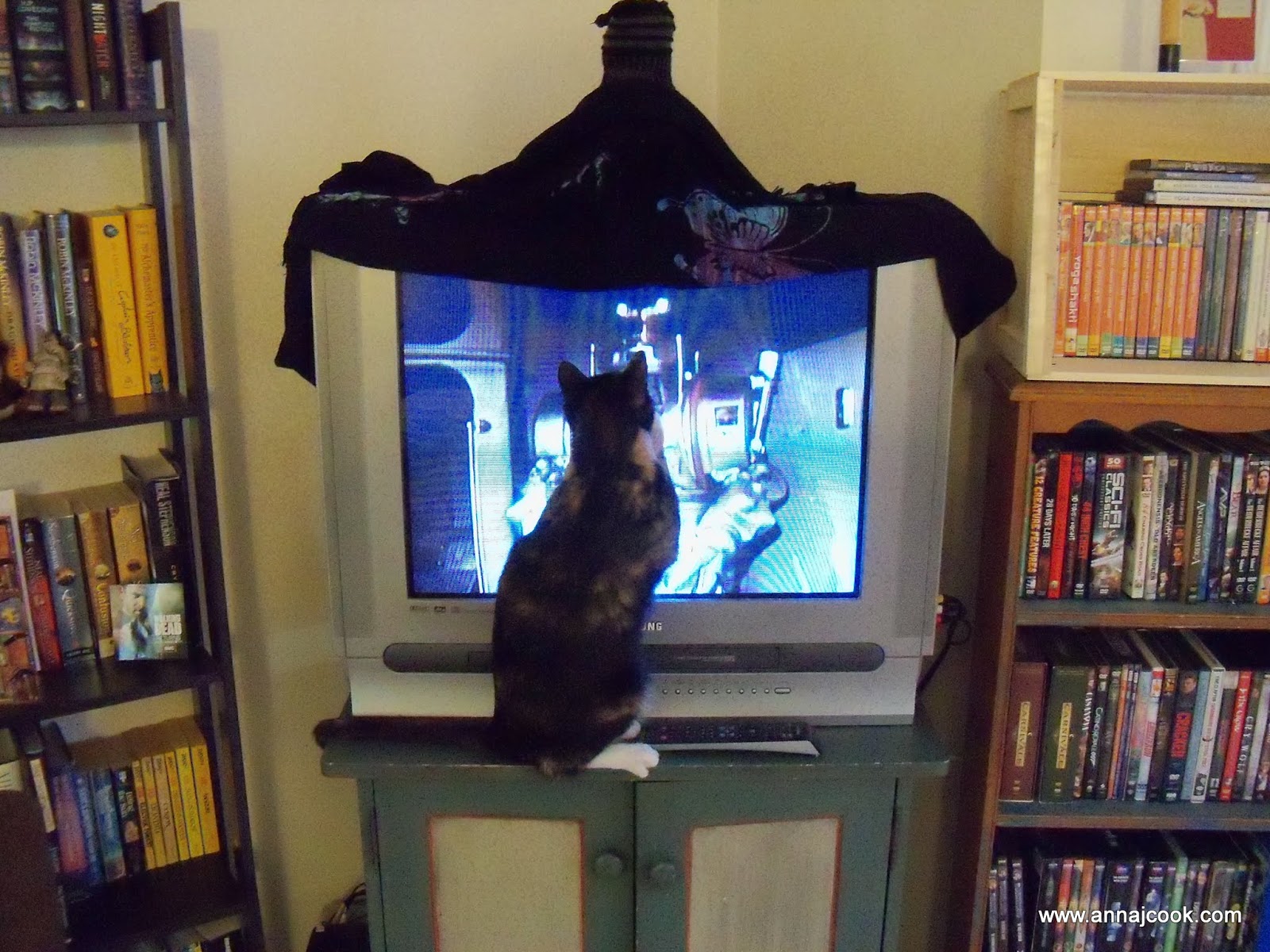
… and she has now figured out how to watch movies from a front-row perspective!

eating our way through the holidays [recipes]

24 Monday Dec 2012

Posted by Anna Clutterbuck-Cook in our family

≈ Leave a comment

Tags

domesticity, food, holidays, photos

One of the really nice things about an extended at-home vacation is that Hanna and I can eat on our own schedule, which for both of us is more along the brunch-at-ten-late-lunch-at-four-cocoa-before-bed than breakfast at seven, lunch at noon, and dinner at six.

Hanna’s parents gave us Rose Elliot’s New Complete Vegetarian for Christmas and we’ve made some lovely and simple recipes from it, like the oatcakes and most recently vegetarian toad-in-a-hole. Toad-in-a-Hole is basically a baked pancake with sausage in, and very simple to make! Elliot’s version is as follows:

1. Heat oven to 450 Fahrenheit.

2. Brown vegetarian sausages (we used the Field Roast apple & sage, but any kind would work!) in 1/4 cup of oil (we used olive, but any nut or vegetable oil would work) in a cast iron skillet, remove from the pan and set aside. Leave the remaining oil in the pan for later use.

3. In a mixing bowl or blender, combine:

1 cup white flour
1/2 teaspoon salt
2 eggs
150ml milk
150ml water

Beat until smooth and put in a pitcher (I used a Pyrex measure) or leave in blender for easy pouring.

4. Put skillet with oil into heated oven and let warm until the oil is very hot and just starting to smoke.

5. Pull out the oven rack and pour the batter directly into the pre-heated skillet. Drop the sausages into the pan, distributed as evenly as possible, and close the oven door as quick as you can.

6. Bake for approximately 25 minutes (don’t open the door to peek!). Check after 25 minutes and once the top of the pancake is golden brown remove from the oven and serve immediately.

It was just the sort of meal we needed prior to going out on a brisk walk yesterday afternoon to the Chestnut Hill Reservoir and back.

This morning, Christmas Eve, we’re having coffee and cinnamon buns while listening to the MPBN broadcast of the Festival of Nine Lessons and Carols from King’s College, Cambridge. The buns are inspired by our favorite recipe of Joy the Baker’s, her sugar and spice yeast rolls. But this time I did make a few changes that Hanna and I agreed were

  • I substituted half whole wheat flour for the 2 1/2 cups white flour in the recipe
  • I swapped the amounts of cinnamon and cardamom in the dough, since Hanna and I love cardamom
  • Instead of the citrus zest I put in a tablespoon of cocoa powder
  • I also added two teaspoons of cocoa powder to the filling
  • And instead of butter I used coconut oil in both the dough and filling
In other news, we’re forecast to have a couple of inches of snow overnight and into the morning hours of Christmas Day, so hopefully Hanna will have the white Christmas she’s yearning for!
Merry Christmas, one and all!

Cross-posted at Lyn’s Friends Feast.

← Older posts
Newer posts →
"the past is a wild party; check your preconceptions at the door." ~ Emma Donoghue

Recent Posts

  • medical update 11.11.22
  • medical update 6.4.22
  • medical update 1.16.2022
  • medical update 10.13.2021
  • medical update 8.17.2021

Archives

Categories

Creative Commons License

This work by Anna J. Clutterbuck-Cook is licensed under a Creative Commons Attribution 3.0 Unported License

Meta

  • Create account
  • Log in
  • Entries feed
  • Comments feed
  • WordPress.com

Create a free website or blog at WordPress.com.

  • Subscribe Subscribed
    • the feminist librarian
    • Join 37 other subscribers
    • Already have a WordPress.com account? Log in now.
    • the feminist librarian
    • Subscribe Subscribed
    • Sign up
    • Log in
    • Report this content
    • View site in Reader
    • Manage subscriptions
    • Collapse this bar