• anna j. clutterbuck-cook
  • contact
  • curriculum vitae
  • find me elsewhere
  • marilyn ross memorial book prize

the feminist librarian

the feminist librarian

Author Archives: Anna Clutterbuck-Cook

home for the holidays II [photo post]

23 Sunday Dec 2012

Posted by Anna Clutterbuck-Cook in our family

≈ Leave a comment

Tags

cat blogging, domesticity, family, holidays, photos

My family often complains I don’t share enough pictures on this blog, the better for them to get a sense of how we live here in Boston. So I thought over the holidays I’d try to make up for lost time (with a little help from the cats).

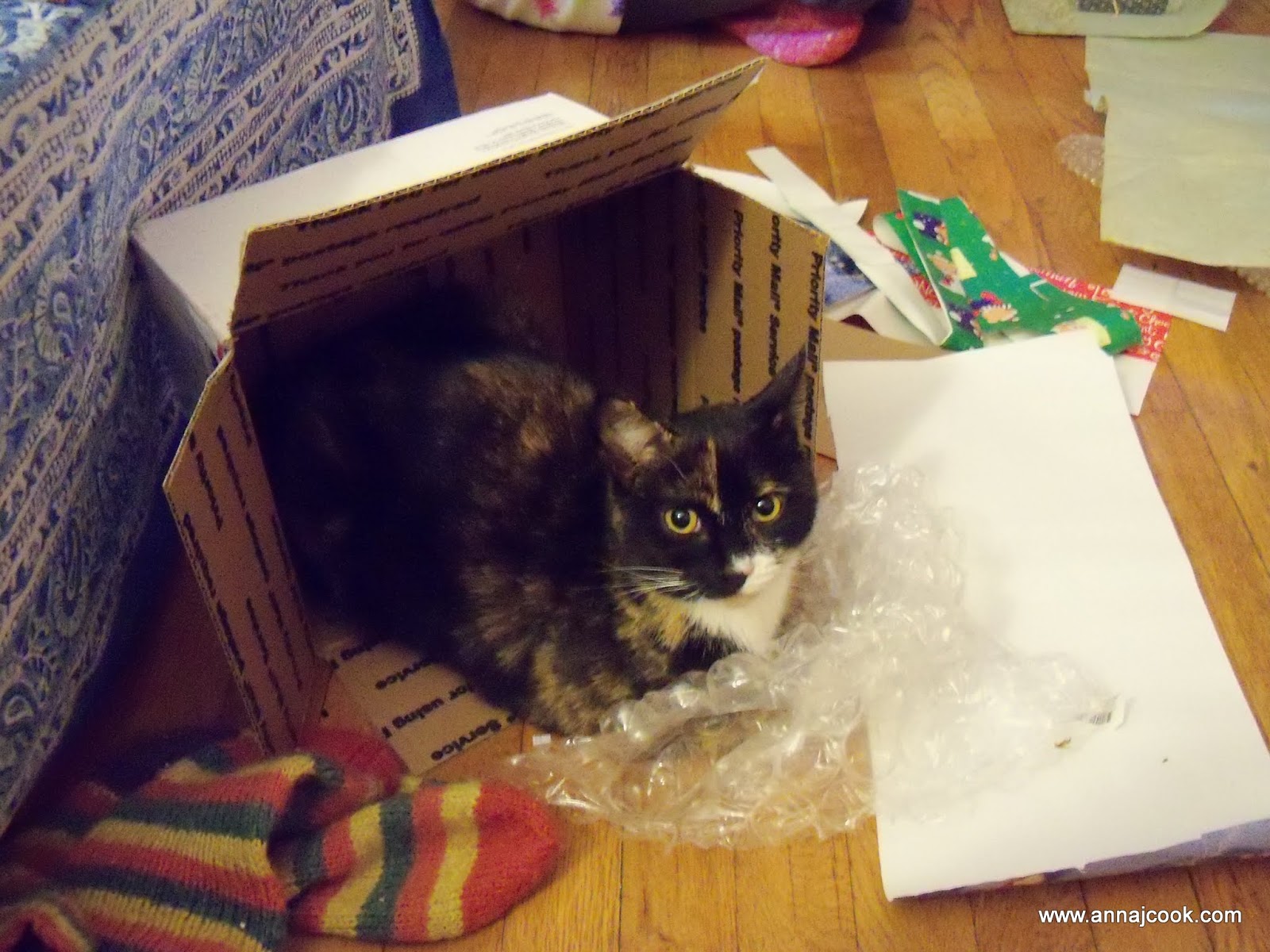
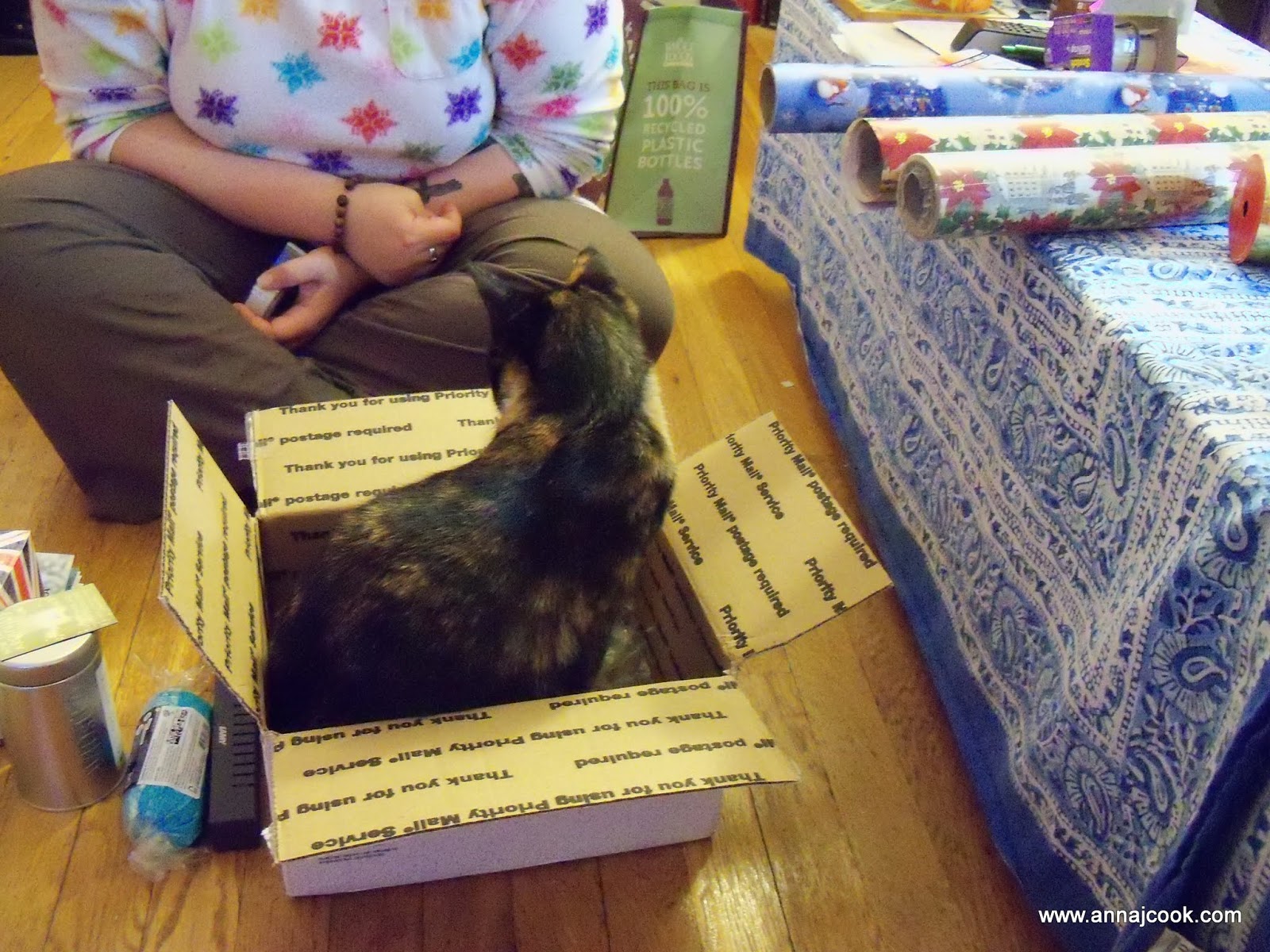
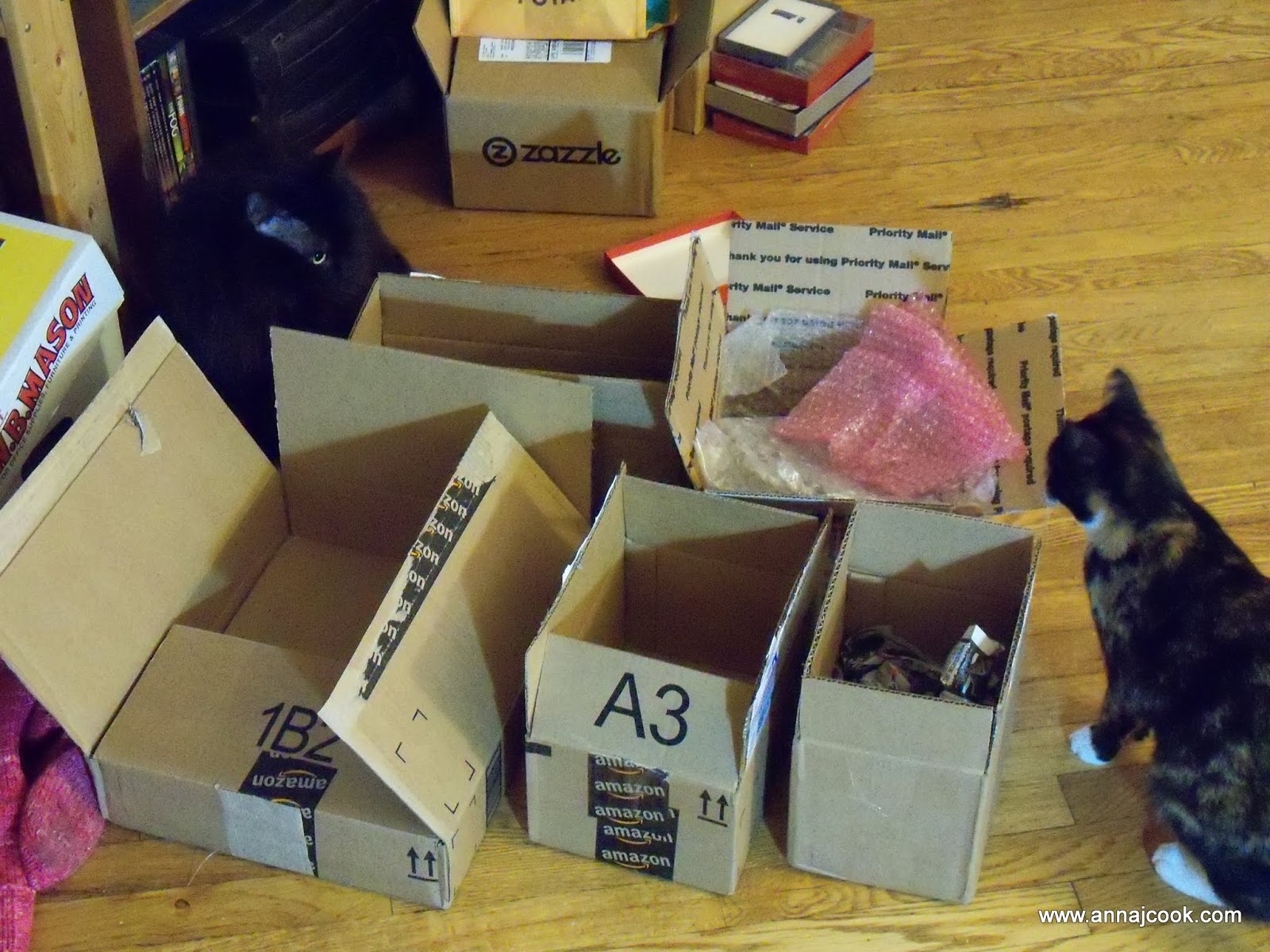
This week, Christmas parcels arrived from Michigan, Kentucky, Texas, Oregon, and California with presents for the humans; Teazle and Gerry enjoyed the boxes.

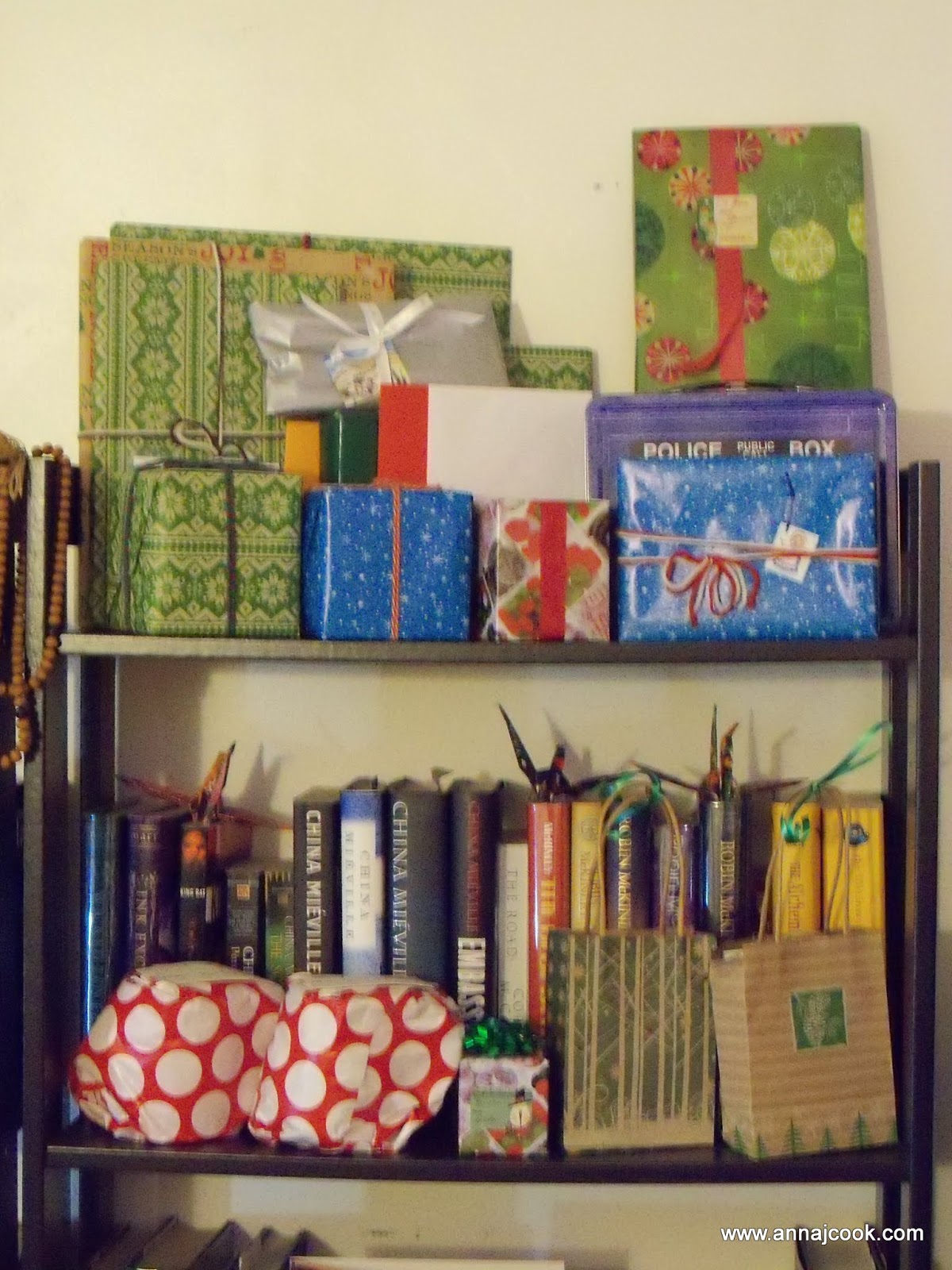
We had to clear a top shelf of the bookcase off for presents, out of reach of curious kittens. We had so many gifts that some have spilled onto the lower shelves (and a few more have arrived since!).

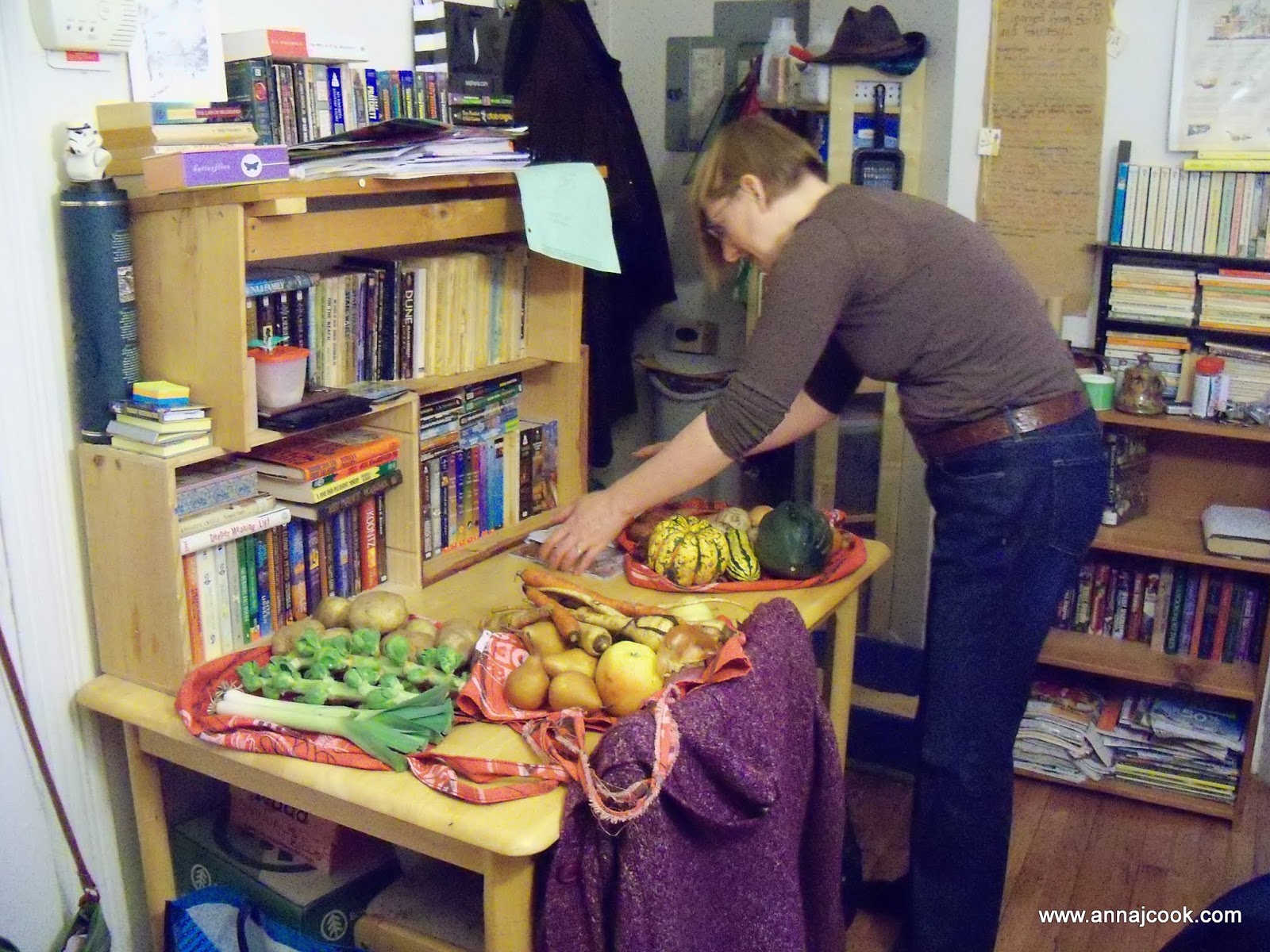
On Friday, I left work early to pick up our December CSA farm share in the pouring rain. When I got home, we had to lay all the veggies out to dry before storage.

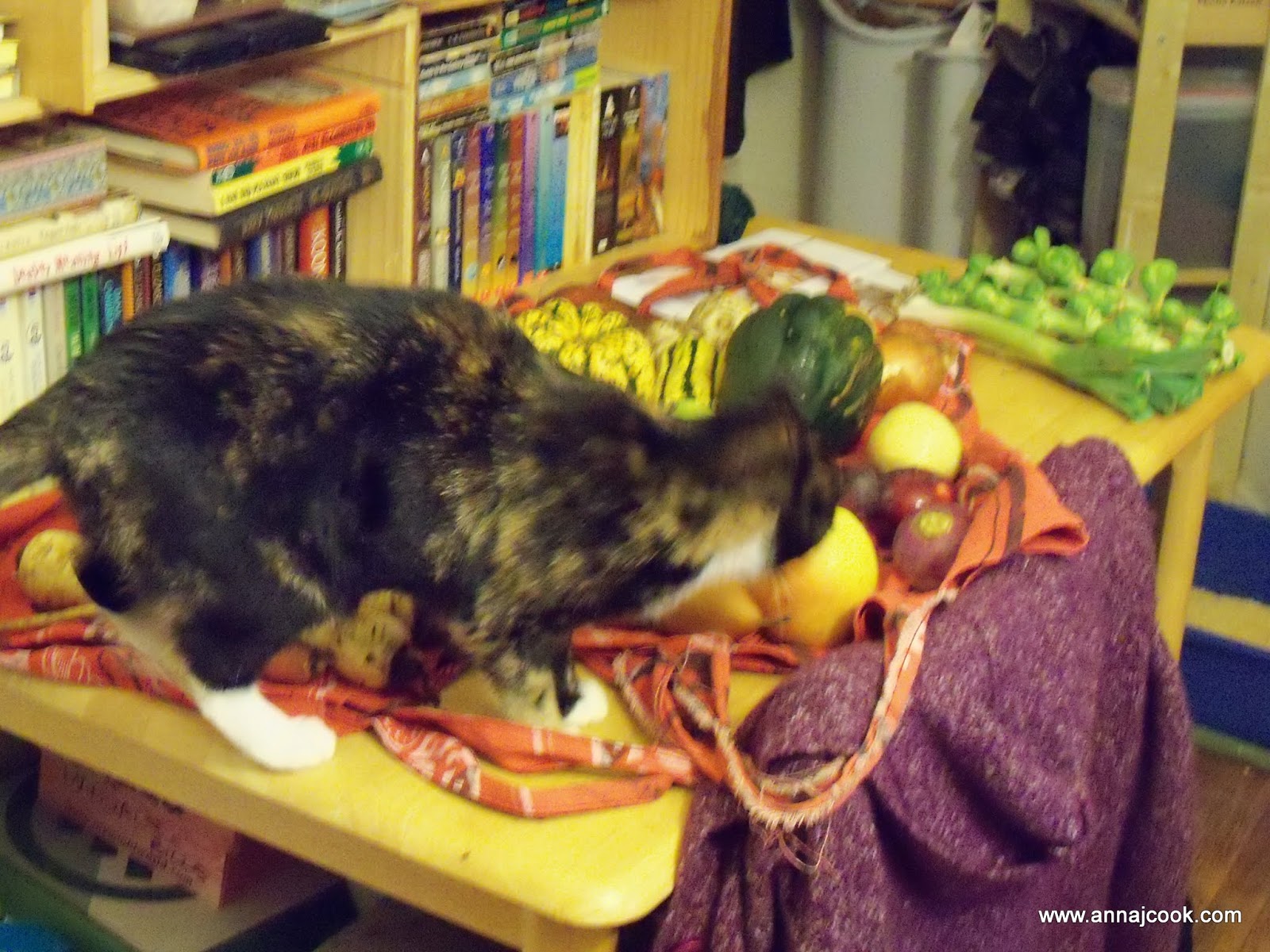
Teazle was, as usual, super helpful in the task of vegetable organization. She kept insisting turnips should be kept on the floor.

I seem to have taken a lot of pictures of Teazle in the last couple of days. Possibly because she is ever-present investigating our activities. Here she is watching Hanna prepare lunch from the vantage point of an empty box in our kitchen.

I thought the light coming in the kitchen window made this a rather lovely still life. We just re-potted the plant after Teazle had dug it up multiple times on the windowsill in the living room. It’s been relocated to the kitcen for safe-keeping.

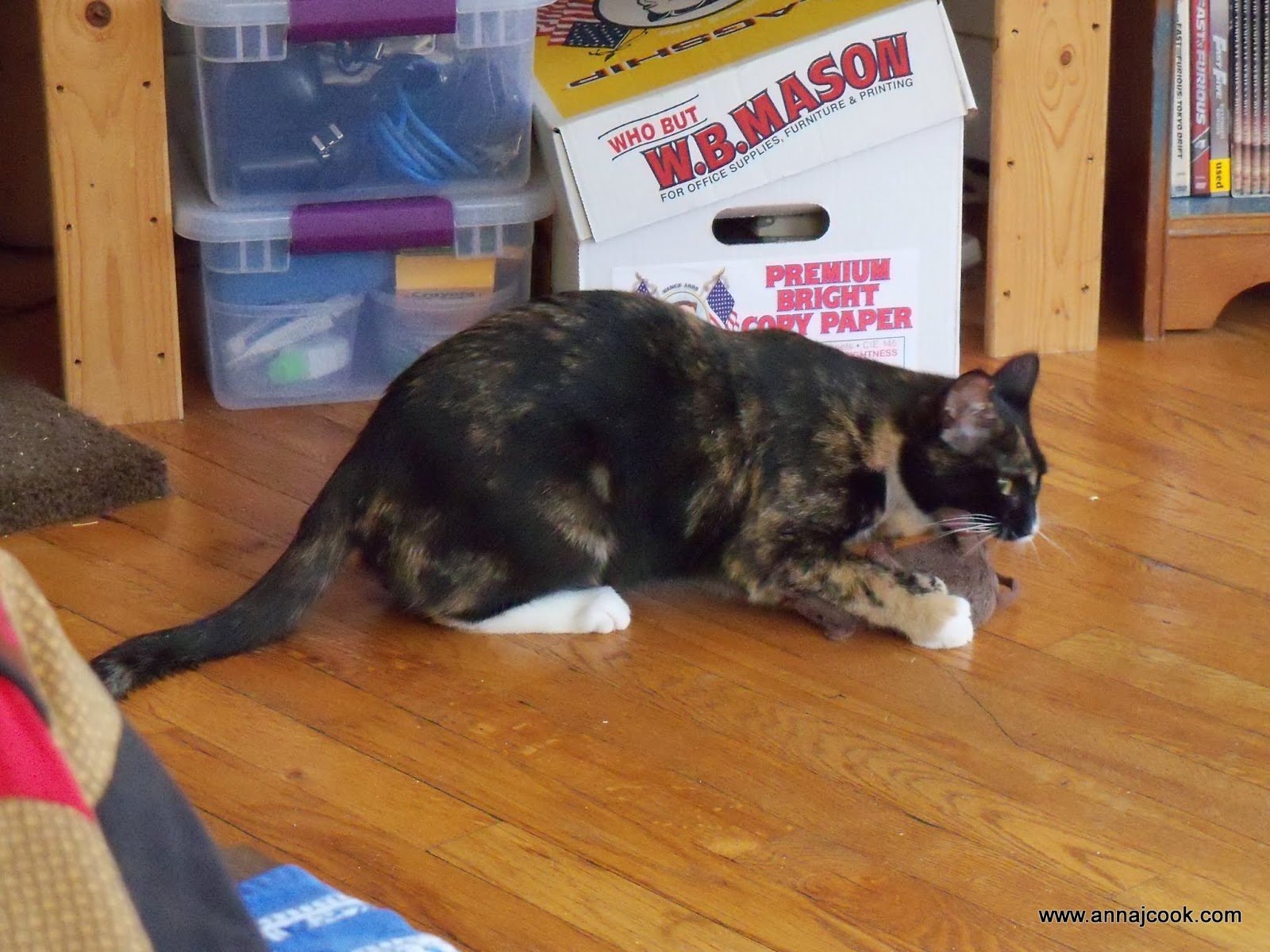
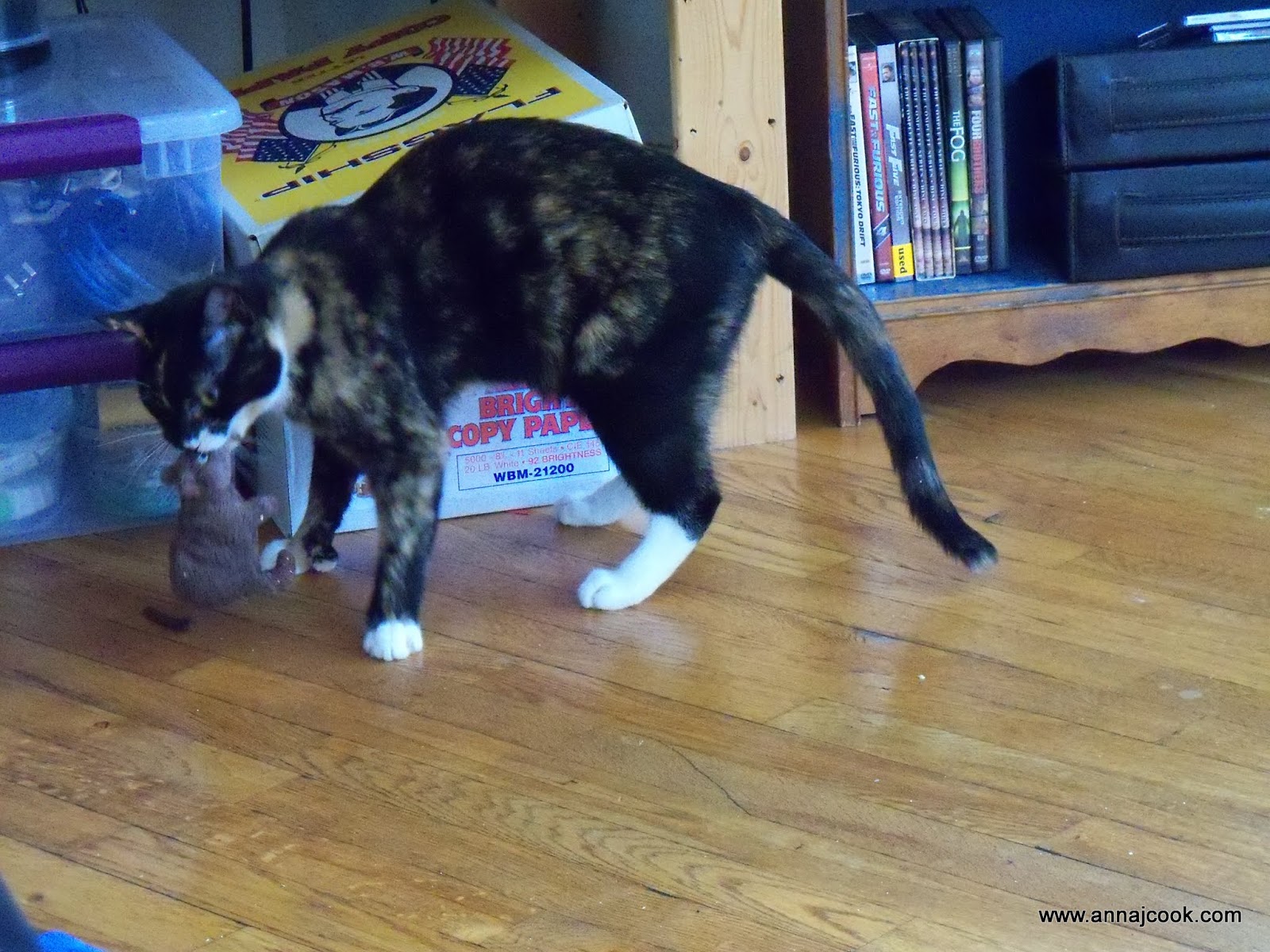
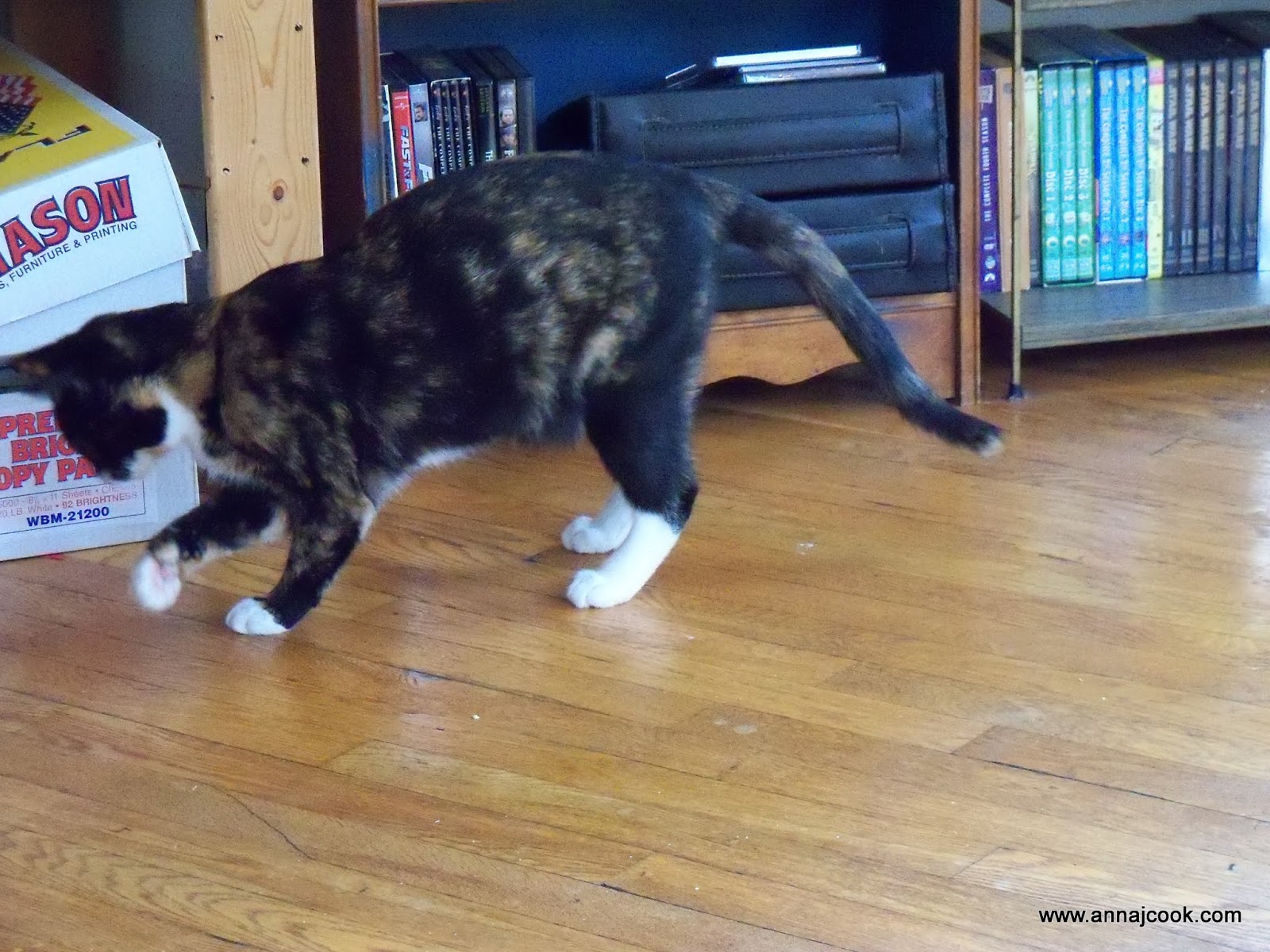
While we were crocheting this afternoon, we decided to let Teazle play with our stuffed mouse from IKEA, which she is convinced is a real threat to life and limb. She kills the zombie mouse repeatedly, and carries it around in her mouth growling, particularly when you try to pry it from her jaws.

Above, she’s guarding it between her front paws …

… here she is wrestling with it across the living room floor … 

… carrying it off by it’s (broken) neck …

… killing it again …

… and finally getting bored by the whole endeavor (although only momentarily; the mouse came back to life and had to be killed again moments after I snapped this one).

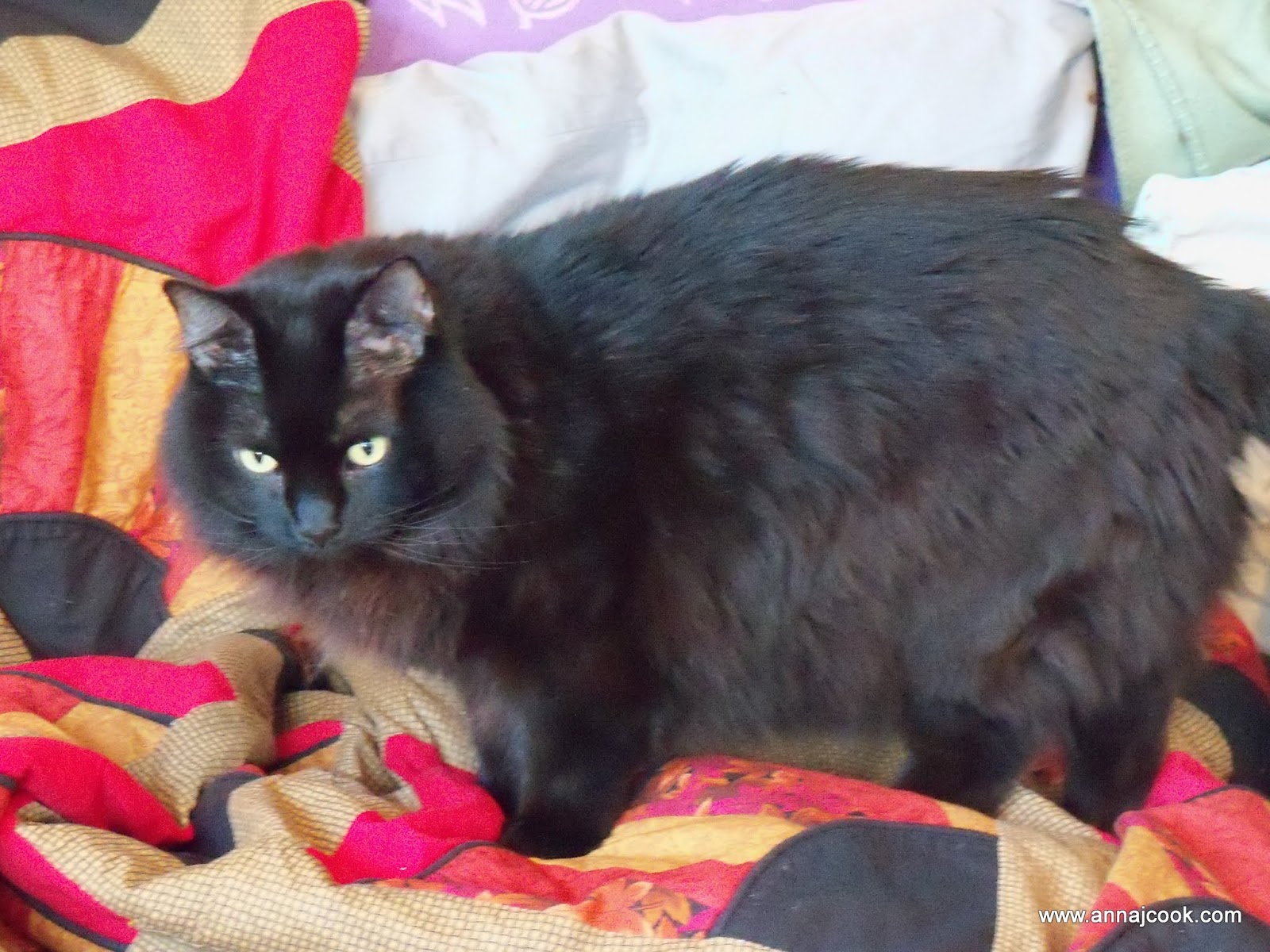
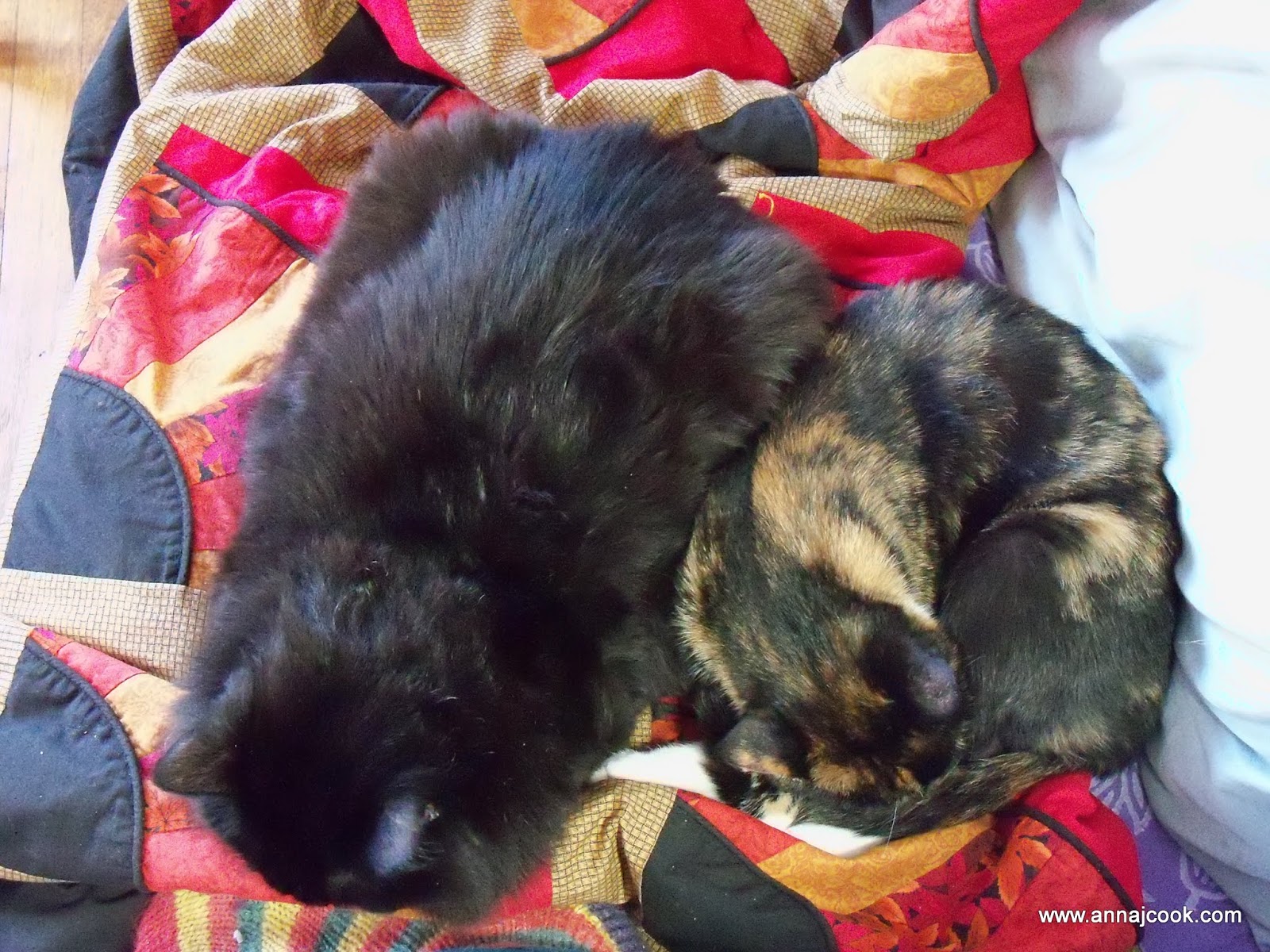
All this ruckus sometimes exhausts Gerry, even if all she’s doing is watch!

in praise of pen-friends [a year-end post]

22 Saturday Dec 2012

Posted by Anna Clutterbuck-Cook in think pieces

≈ 2 Comments

Tags

blogging, friends, thankfulness, writing

As the year 2012 draws to a close, I’ve found myself thinking about the value of my long-distance friendships.

Such relationships have been a fixture of my life, beginning when I initiated my first “pen pal” correspondence at the age of three.* This was in 1984 and while computers were a thing in the world, Internet access for the commonfolk was not. (Actual paper and writing implements were used, and my personal papers will hopefully make some future historians weep with joy in that several major life relationships are documented almost entirely in analog.)

(via)

This year has seen the deepening of some long-distance relationships I’ve developed through blogging, and the initiation of a few more, and thus I’m prompted to once again give thanks for these friends with whom I experience mutual support and intellectual stimulation — despite the fact that we rarely (in some cases have never yet) meet face to face.

I’m a person with limited in-person social energy — at the end of the workday I generally want to come home to my wife and my two cats and curl up on the couch with a book, a cup of hot cocoa, my laptop, my handwork, whatever, and just be.

We get home around six and retire to bed around nine. Weekends are for chores, recuperation and for being together as a family. There’s not a lot of time for social activity in our lives right now — it was a major achievement this fall that we managed to see two of our friends on Thanksgiving, and finally have breakfast with a friend and mentor with which we’d been trying to schedule a date for three months.

But conversation doesn’t take it out of me the way getting together in person does. So email conversations are a brilliant way for me to bridge the gap between my limited energy for social interactions and my boundless energy for relational connection, for intellectual and emotional engagement and sustenance.

Sometimes, these relationships have been long-distance by necessity: I was politically and culturally isolated in my conservative hometown and finding kindred spirits genuinely took a lot of patience and a search without geographical boundaries. Yes, I had (still have) a handful of friends who happened to live in geographical proximity — but that was the exception rather than the rule.

And while we generally privilege those next-door-neighbor relationships in our culture over long-distance/virtual ones, I’ve often found those long-distance connections just as (and at times more) meaningful than the “people in my neighborhood” ones.

So thank you, Elise and Joseph and Molly and Anne and Stephanie and Fannie for your willingness to put energy into creating and sustaining a friendship with me across the miles and time zones. It takes mindfulness to be present with a person when they are not there before you in your day-to-day life of hectic, well, living, and I’m grateful that all of you have, over the years, been willing to commit to connecting with me.

I look forward to years of friendship to come.

*to be fair, at three years old my fellow correspondent and I mostly exchanged drawings and dictated random text to our parents to forward on. But that relationship developed into a sustaining friendship that lasted well into my teens, and we remain in occasional contact today.

the librarian is in [from the archives]

20 Thursday Dec 2012

Posted by Anna Clutterbuck-Cook in library life

≈ Leave a comment

Tags

MHS, photos

A payment for reference scans arrived in the mail at work earlier this week in this envelope. I couldn’t not share.

(And yes, I’ve saved the envelope to frame and hang on my office door!)

baby steps by my alma mater

17 Monday Dec 2012

Posted by Anna Clutterbuck-Cook in think pieces

≈ Leave a comment

Tags

being the change, gender and sexuality, hope college, michigan, wedding

I’ve been critical of my alma mater, Hope College, here on this blog in the past — particularly when it comes to the institutional refusal to affirm the queer faculty and students on its campus. I stand firm on my pledge not to support the college financially until such time as its anti-gay policy changes.

However, I do also believe in giving shout-outs to those at the college who aren’t letting the official policy stand in the way of affirming the humanity and equality of those of us in the Hope College diaspora who happen to be queer.

In that spirit …

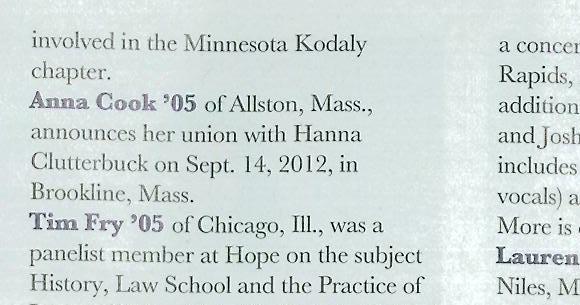
When Hanna and I sent out our wedding announcements in late September, I sent one to the Hope College alumni office; friends and family members were betting on whether or not the announcement would run in the alumni magazine’s list of news from graduates (births, deaths, marriages, advanced degrees, and so forth) that fill the back of each issue.

They had about even odds for and against running the notice at all.

But I got the latest issue of News From Hope College this weekend and there we were on page 27.

Of course, as there is a “Marriages” section of the News, the announcement would have more appropriately gone there since, you know, we got married.

But I imagine someone had to fight to put our “union” in the magazine at all, and I’m all for recognizing baby steps when they’re taken in the right direction.

So thank you, Hope College alumni office — you exceeded my fairly jaded expectations. You’re not going to single-handedly woo me back into the fold, but I do appreciate the acknowledgement that Hope alumni are here (and queer) right in the pages of the News from Hope.

home for the holidays [photo post]

16 Sunday Dec 2012

Posted by Anna Clutterbuck-Cook in our family

≈ Leave a comment

Tags

domesticity, from the neighborhood, photos

Hanna and I are staying here in Boston for the second year in a row this holiday season. It’s really nice not to have the stress of travel or the press of social obligations pile up on the end of the year. Instead, both our places of work close up shop for the week between Christmas and New Years and we have eleven days (December 22-January 1) to putter around the house.

This weekend, we’re doing our wrapping and card-writing for all the presents that need to be posted on Monday. The cats have been very helpful.

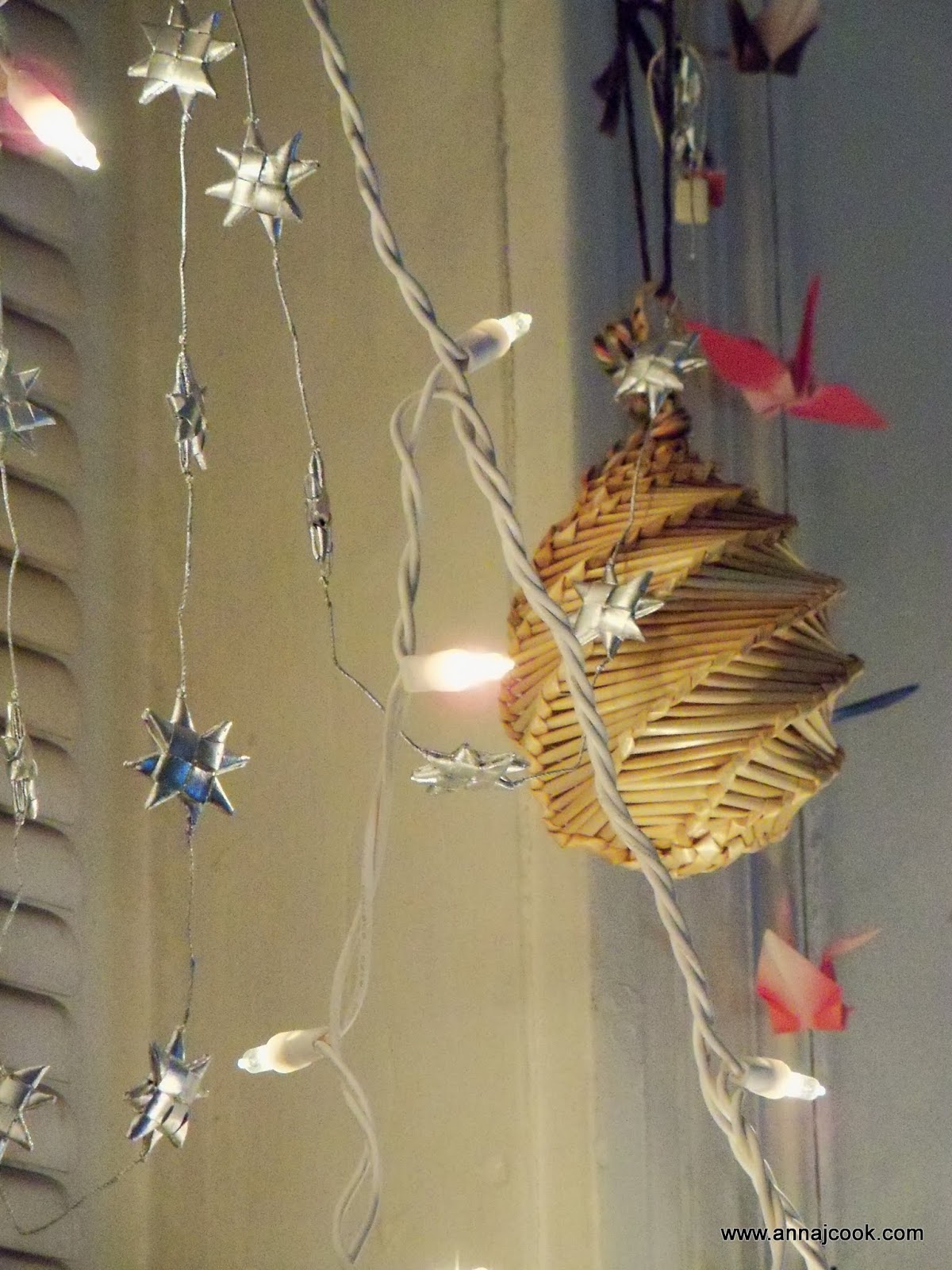
(We’ve had to put our Christmas lights and decorations up high this year because of Teazle the Ever Inquisitive Kitten.)

Today, we dug out our store of candles while we were doing a little tidying, and they looked so pleasing lined up on the bookshelf that I pulled out the camera and took a few photographs.

Thanks to my in-laws, we have some lovely new apple crates for additional book storage. They helped us get the candles high enough that Teazle wouldn’t burn her whiskers trying to figure out what flame is all about.

We found this little guy at our local Ten Thousand Villages store when we were out shopping for Christmas presents in November. He doesn’t have a name yet, but we like his air of insouciance.

 Geraldine watched the proceedings with a skeptical eye…

… while Teazle was eager to assist with wrapping and packing of presents.

Perhaps she is interested in traveling the world?

Thanks to Mom for the tapers, which she sent last year and we’ve finally getting around to burning. They cast a lovely light!

The best thing about this time of year is the candlelight that long evenings allow to come to the fore.

And the fairy lights a night never get old. 
Although I, for one, am a glutton for daylight and will be thankful for the earth to turn and tilt and begin it’s journey back to summer as we cross deep of winter and the days start to stretch before us.

mid-week cat in a box [video]

12 Wednesday Dec 2012

Posted by Anna Clutterbuck-Cook in media

≈ Leave a comment

Tags

humor, web video

… not one of ours, sadly. Though I imagine Teazle would be totally into boxing herself. And then immediately climbing out again. And then back in. And then out. And then in. And then … well, you get the idea.

But I thought for a Wednesday in mid-December, this video was just about right.

Hope everyone’s week is going well, and I’m looking forward to having some time to post toward the end of the month. The holiday season is upon us — can you believe it’s almost 2013?

We live in the future, people!

provincetown [honeymoon, installment five]

06 Thursday Dec 2012

Posted by Anna Clutterbuck-Cook in our family

≈ Leave a comment

Tags

cape cod, photos, travel, wedding

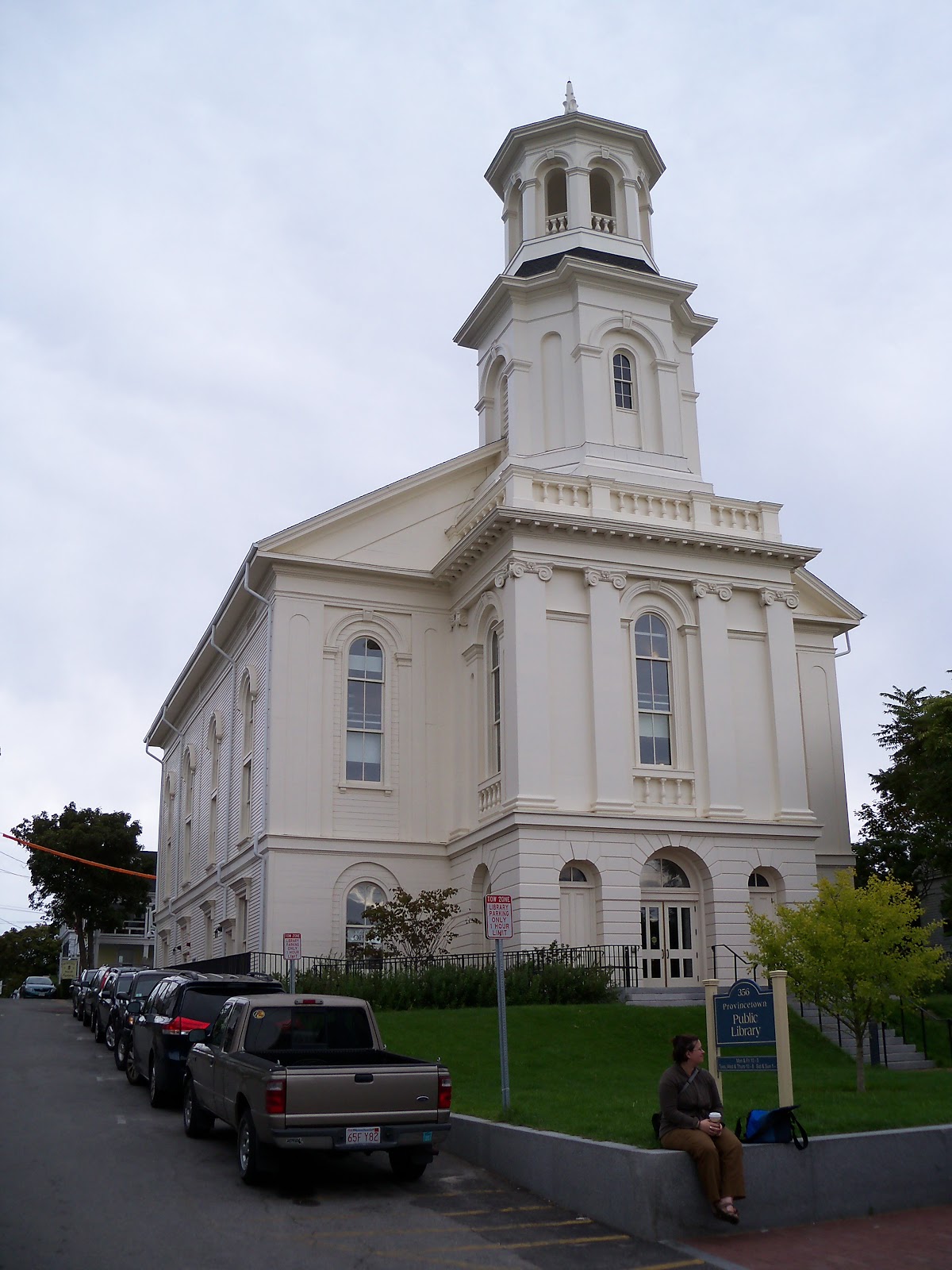
On our one-week anniversary — and our last full day on Cape Cod — we decided to drive out to the very tip of the Cape and pay a visit to Provincetown.

One of our first stops, naturally, was the Provincetown Public Library. It was too early in the morning to go inside, but we ran into one of their regular volunteers in a boutique across the way with whom we talked Boston library gossip and heard mouth-watering tales of the Provincetown library’s special collections room.
Outside the library was this abandoned still-life project; the artist was nowhere to be found – but the sketch certainly hold promise!
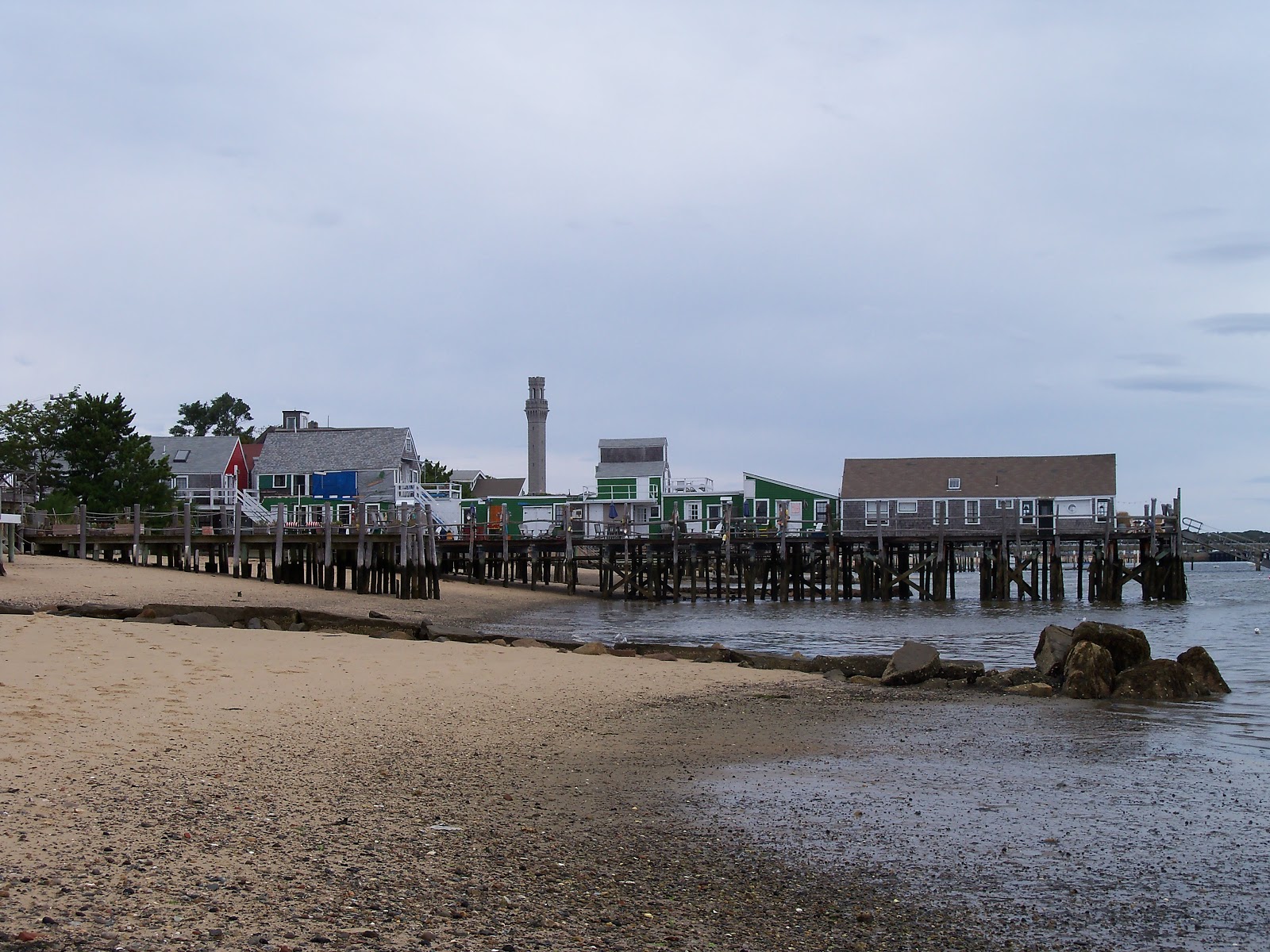
There was so much cottage lust in Provincetown. EPIC amounts. I wanted to live in just about every cottage we passed by. So overcome by cottage lust was I , in fact, that I failed to take any close-up photographs of said cottages. But here are a couple of views of the waterfront.
I enjoyed the fact that one of these two kayakers has a pirate flag affixed to the front of their craft!
It goes without saying that we couldn’t walk by this bookshop without going in. Tim’s Used Books was a rickety old house in the best used book store fashion, and we were allowed to browse without interruption through the musty stacks. My conversation with the store clerk as I paid for our selections was one of the first in which I was able to employ the phrase “my wife,” as in “my wife works at a medical history library …” and I’ve discovered since then the language really never gets old.

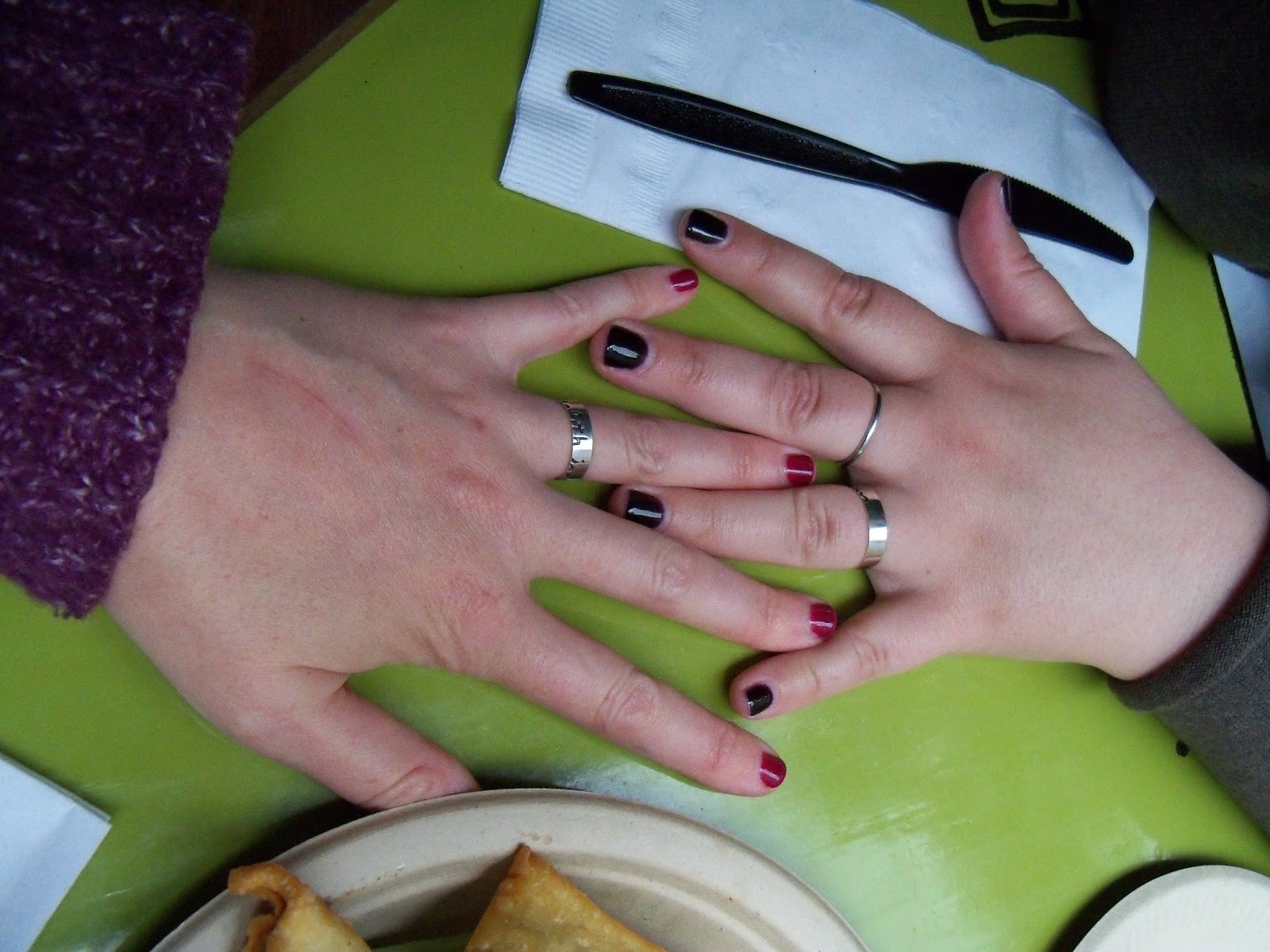
We had our one-week anniversary lunch at Karoo Cafe, a South African restaurant with the most delicious appetizer plate and peanut-curry stew. We bought supplies to go, and mourned this passed weekend when we ate up the last of the apricot chutney. Time to plan a day-trip out to P-town on the ferry!

All in all, it was a good first week of married life. Although we’ll be spending our one-year anniversary on the West Coast in 2013 (helping our friends Diana and Collin celebrate their own nuptials!) we definitely plan to make a return visit to Cranberry Cottages, and perhaps eventually have enough resources to more permanently satisfy that cottage lust of mine … after all, that daily ferry service from Boston to Provincetown can’t be too onerous of a commute, can it?

booknotes: histories of food, women’s colleges, queers in Canadian & US law, and Victorian porn

04 Tuesday Dec 2012

Posted by Anna Clutterbuck-Cook in book reviews

≈ Leave a comment

Tags

education, food, gender and sexuality, history, politics

With four weeks to go in the year, I’ve got fourteen books to read in order to make my 2012 goal of one hundred and four titles (two books per week). I don’t think I’ll make it. If there were a way to count reading of a non-book sort (journals, blogs, fan fiction) I’d be golden, but while I’ll about match my 2011 level of book consumption, I probably won’t read fourteen volumes by midnight on December 31st. Particularly since I’d like to put in some quality time on my epic, currently 30k and climbing, Carter/Stark fic, have a book review due for the NEHA News, and Hanna and I hope to get out for some good long walks.

BUT. The fear of “failure” has not deterred me from reading, as always (I’m really not sure what could actually. It’s sort of what I do, the way some people can’t think without music on in the background). So here are some brief reviews of books I read during the month of November.

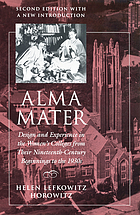
Horowitz, Helen Lefkowitz. Alma Mater: Design and Experience in the Women’s Colleges from Their Nineteenth-Century Beginnings to the 1930s (University of Massachusetts Press, 1984; 1993).  For a book originally researched in the 70s and published nearly thirty years ago, Alma Mater feels refreshingly current — not that I doubted Helen Horowitz’s skill in research and writing (I’ve long been a fan), but historiography just as much as any other field has its tells for certain eras. Perhaps Horowitz lucked out by coming of academic age after the reign of Freud (see my review of The Other Victorians below) and before the ascendancy of Foucault in the 1980s. This history of the Seven Sisters is an exploration of the culture of education through the lens of architecture: how the spatial organization of seminaries like Mount Holyoke and Vassar, colleges like Smith and Wellesley, Bryn Mawr, and the university affiliates Radcliffe and Barnard, reflect the assumptions, expectations, and fears about women and higher education across roughly a century of change. I was particularly fascinated by the way in which each institution’s administrators sought to both foster and manage female intimacy: the single-sex environment was both encouraged (for its protective and training purposes) and feared (for its potential for same-sex romantic and sexual intimacy, and  the way it led to “unfeminine” roles). In other words, the tension between the value of an all-female environment and its perceived downsides — whether because it turns young women into lesbians (!) or because it perpetuates a separate-yet-equal passivity concerning gender equality — have changed only in variation and not in substance since the 1830s. It will be interesting to see what the state of single-sex education is by the time we begin to reach the two-hundredth anniversary of women’s higher education in this country. I really can’t recommend Horowitz enough; as an historian of higher education in America I know of few more thoughtful or articulate.

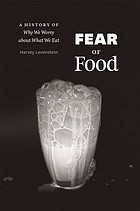
Levenstein, Harvey A. Fear of Food: A History of Why We Worry About What We Eat (University of Chicago Press, 2012). This slim, engaging volume is less a history of “why” twentieth-century Americans fear food than how we choose to do so: each chapter presents a case of food fear, beginning with Progressive Era fears about food contamination spread by flies and infected milk for infants and ending with the present-day lipid-phobia (fear of dietary fat). An historian of food culture, Levenstein is on solid footing here in terms of research and a lively storyteller. My one complaint is that at times it is difficult to distinguish between food claims made in the context of a particular food scare and the more recent, evidence-based knowledge that Levenstein sometimes draws upon to refute or revise the basis of historical food scares. For example, in the chapter on “vitamania,” it can be difficult to parse out what benefits of vitamains are still supported by the evidence, and what claims by vitamin manufactures have no solid backing in research and outcomes. In the end, though, I really appreciated that this narrative was not triumphalist the way so many health and science histories are: Levenstein’s argument is not that American science has triumphed over superstision — quite the contrary, he argues that we persist in demonizing (and celebrating) certain foods beyond all evidential backing. He also makes the key point that time and again throughout the twentieth century, the food industry and medical industry (including the public health sector) have powerful lobbies with their own profit-driven agendas, successfully exploiting food fears to their own gain (and American citizens’ loss). I’d be making this essential reading in all public health programs around the country, and required reading by anyone who uncritically parrots the phrase “obesity epidemic.”

MacDougall, Bruce. Queer Judgements: Homosexuality, Expression, and the Courts in Canada (University of Toronto Press, 1999). I picked this volume up while we were honeymooning on the Cape, but it took a while to wade through — while thoroughly interesting, the textual analysis was dense and the Canadian legal framework just different enough that I needed to do some on-the-fly cultural translation to make sense of the arguments. MacDougall’s central argument is that judicial opinions concerning homosexuality matter as much as, if not more than, the material effects of their rulings. Combing through written decisions involving homosexual identity or expression from the 1960s to 1997, MacDougall finds that the Canadian courts have consistently framed homosexuality as disordered and marginal, a sexuality that is of potential threat to children, something that (because of its shameful nature) needs particular policing. For example, he points to the ways in which divorce court judges often express concern about a gay or lesbian parent’s sexuality being evident to the children of the family in a way that they would not likely fret about straight parents bringing an opposite-sex partner home. Likewise, a whole chapter is devoted to the erasure of speech about homosexuality from institutions of education (primary, secondary, and higher education alike). While works such as The Right to Be Out and Queer (In)Justice have — at least for a U.S. context — superseded this volume, I did find it a worthwhile addition to my queer studies/queer history collection.

Marcus, Stephen. The Other Victorians: A Study of Sexuality and Pornography in Mid-Nineteenth-Century England (xxx, 1966; 2009). In the early 1960s, scholar of Victorian literature Stephen Marcus was approached by the Kinsey Institute to write a study of Victorian erotic literature. The Other Victorians is what emerged: an oddly episodic work that has aged well in some aspects more than others. He begins with a study of  doctor William Acton’s works on sexual function and advice on sexual well-being, moves into an examination of Henry Spencer Ashbee’s extensive bibliography of known pornographic literature, published in the 1870s-1880s, and then spends two lengthy chapters on a delightful, anonymous eleven-volume erotic autobiography My Secret Life, published in the 1880s-1890s. These chapters are for the most part grounded in specific texts and hold up fairly well. Marcus’s own sexual tastes and knowledge gaps seep through every now and then — such as when he is baffled by the autobiographer’s interest in BDSM, and when he insists that the autobiographer is exaggerating because women don’t ejaculate — but overall he was more aware of gender and class and the nuances of authorial voice than I might have expected. It’s the chapter on the literature of flagellation and his concluding remarks that really let him down. I’m not exactly sure why he chose to take up flagellation narratives other than that they were apparently prevalent in the pornography of the period. His descriptions of the literature’s conventions is quite fascinating, but then he gets all sorts of judgy and Freudian about how flogging fantasies are sad and infantile and coded homosexuality. He also claims, in passing, that the Victorians produced no homosexual pornography — an assertion that runs directly counter to the many passages depicting same-sex sexual encounters he has detailed in previous chapters, so I was baffled by the sudden reversal. And his final conclusions about pornography are, it seemed to me anyway, clearly written by a person who ultimately has no innate passion for or interest in the genre which he is studying. He argues that pornography lags behind fiction in its development, that it lacks in emotion and relational development, that the point of pornography is to depict acts outside of time and space, rather than human sexuality in the context of a deeper lived experience. Again, these assertions seem to run counter to the examples he himself has selected for review in the preceding chapters.*

Vaid, Urvashi. Irresistible Revolution: Confronting Race, Class and the Assumptions of Lesbian, Gay, Bisexual, and Transgender Politics (Magnus Books, 2012). This collection of essays by movement organizer Urvashi Vaid is a quick read — I finished it in an afternoon — and a bracing one. A national figure in LGBT politics, Vaid calls the mainstream queer movement to task on its unwillingness to engage in social justice activism that is not explicitly “gay.” That is, activism around issues of racism, class disparity and poverty, misogyny, gender policing (particularly trans* issues), the prison-industrial complex, labor organizing, immigration, and freedom of family formation and sexual expression not necessarily grounded in heternormative marriage rights. My own feelings reading Irresistible Revolution were complicated. On the one hand, I am basically on the same page with Vaid in terms of wanting a broad-based social justice movement that centers the most vulnerable among us and doesn’t rest until all are treated with respect and have the basic provisions necessary for well-being (healthcare, housing, food security, access to education, workplace safety, a healthy environment, etc.). And I feel comfortable with her lesbian-feminist roots and her critique of mainstream organizations (the Human Rights Campaign, National Gay and Lesbian Task Force, etc.) which may pay lip service to caring for all — but in reality speak only to middle- and upper-middle-class priorities and aspirations. However, as a radical voice working from within these organizations, she fails to draw upon and engage with the scrappy, marginalized groups and individuals who are doing the work she longs to see done. At least as much as she could have. The result is a book that feels like a lot of finger-wagging at the self-satisfaction of the elder generations of activists (and those with the most material resources) and the complacency of the younger generations — without enough acknowledgement of the people who do not fit into either of those categories, and who are doing transformative and back-breaking labor being the change they wish to see.** Vaid is a high-profile voice whose commitments are key to a more just future, so I hope she is listened to by the “insider” audience she wishes to reach.

And that’s all for now, folks! Off to see what else I can read before to clock for 2012 runs out.


*I couldn’t help wondering if such judgmental attitudes came out of an extreme desire to be “objective” about the subject matter — to the extent that he was unable to examine the material with an eye toward what an eager reader might get out of the experience. For example, he excerpts a lengthy and charming passage from My Secret Life in which the autobiographer and a friend arrange a visit to a flogging parlor to watch a gentleman be spanked by the “abbess” in charge. Also present is a prostitute. All five people are participants in the action on some level, and although the autobiographer evinces no interest in being beaten himself, he is clearly curiously engaged and pleased (and aroused on some level) to be participating in someone else’s erotic scene. Marcus, however, dismisses the scene as one “we” modern-day folk would obviously find sad and grim. Whoops!

**And to be clear, I don’t include myself in this category. People who have the stamina and vision for professional movement work are brave and better souls than I; I’m glad they do what they do and I will support them as I am able … but I have never been, and likely will never be, a queer organizer.

real-life adventures in class, gender, race, and sexuality

01 Saturday Dec 2012

Posted by Anna Clutterbuck-Cook in think pieces

≈ 2 Comments

Tags

being the change, boston, gender and sexuality, MHS, politics, racialization, the personal is political

Last night I was working an event at the MHS that involved spending one portion of my evening standing out on the sidewalk, a few blocks away from the building, holding an electric lantern to light the way for guests moving from one location to another. I was one of about seven lantern-bearers spread out across a quarter-mile path from Point A to Point B.

Standing in one spot for 45 minutes, not soliciting nor waiting for public transit, and holding a lantern, certainly attracts attention in the city. Maybe a dozen individuals and/or groups of people stopped to ask me politely what I was doing, particularly if their path had taken them past one or more of the other lantern-bearers in the chain.

I happened to be standing at a station on a fairly busy stretch of sidewalk near a bus shelter, but on a bridge crossing over the Massachusetts Pike. It was long after dark, about eight o’clock, and my back was against the high fence that stops people from committing suicide off the bridge. I could see my fellow lantern-bearers down the way in both direction, each across an intersection though in plain sight.

(via)

A (likely homeless) man with a shopping cart containing his belongings came up the sidewalk. I nodded to him and he took this as an invitation to stop and talk with me. Continue reading →

cartoon of the week: co-sleeping with cats [harder than you’d think!]

29 Thursday Nov 2012

Posted by Anna Clutterbuck-Cook in linkspam

≈ 1 Comment

Tags

blogging, cat blogging, domesticity, family

It’s been one of those weeks, and you probably won’t see an actual post from me until next Tuesday (hopefully some book reviews!). In part because our cats have decided to be extra specially nocturnal these past few nights. Like this!  

(via cheezburger.com)

← Older posts
Newer posts →
"the past is a wild party; check your preconceptions at the door." ~ Emma Donoghue

Recent Posts

  • medical update 11.11.22
  • medical update 6.4.22
  • medical update 1.16.2022
  • medical update 10.13.2021
  • medical update 8.17.2021

Archives

Categories

Creative Commons License

This work by Anna J. Clutterbuck-Cook is licensed under a Creative Commons Attribution 3.0 Unported License

Meta

  • Register
  • Log in
  • Entries feed
  • Comments feed
  • WordPress.com

Blog at WordPress.com.

  • Follow Following
    • the feminist librarian
    • Join 36 other followers
    • Already have a WordPress.com account? Log in now.
    • the feminist librarian
    • Customize
    • Follow Following
    • Sign up
    • Log in
    • Report this content
    • View site in Reader
    • Manage subscriptions
    • Collapse this bar