• anna j. clutterbuck-cook
  • contact
  • curriculum vitae
  • find me elsewhere
  • marilyn ross memorial book prize

the feminist librarian

the feminist librarian

Category Archives: book reviews

$1 reviews: inheritance

06 Thursday Jan 2011

Posted by Anna Clutterbuck-Cook in book reviews

≈ Leave a comment

Tags

british isles, history

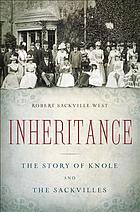
I picked up an advance review copy of Robert Sackville-West’s family history Inheritance: The Story of Knole and the Sackvilles (New York: Walker & Co., 2010) at Brattle last week. While I’m not particularly up on the history of the British aristocracy, I do have some background on Knole (the family home) and the Sackville-Wests having read Portrait of a Marriage and two fictional odes to Knole in the form of Vita Sackville-West’s The Edwardians and Virginia Woolf’s Orlando (a trippy love letter to both Vita and her ancestral home).

Inheritance is a quick read, each chapter chronicling the tenants of Knole from Thomas Sackville, 1st Earl of Dorset (who lived in Knole from 1604 to his death in 1608) to the National Trust, who bought the home from the family in 1946. Robert Sackville-West, the current custodian of the family’s interest in the home — and resident, along with his family, in the private quarters on the estate — draws on substantial family papers and documents of record as well as family memory to provide a light-hearted romp through history. Some of the best bits of the story are told in the words of the author’s ancestors who were thoughtful enough to leave behind diaries, daybooks, ledgers, and correspondence for future generations. Robert does not seem particularly anxious about protecting the family propriety in sharing anecdotes — if anything, he seems to enjoy highlighting the angst and drama of Knole’s inhabitants.  In the chapter on Richard Sackville, 5th Earl of Dorset, he writes

There is … a strange agreement countersigned by the countess on 30 July 1674 — although, beside her signature, she has crossed out the words “by my husband’s Command.” The document is titled an “Engagement from my Wife to me upon the dismissing of a servant of mine named Thomas Jones at her desire,” and relates how a certain Lady Charnoche had (or so Frances [the countess] had been “credibly informed”) wagered that Frances would die within the year. When a new servant previously employed by Lady Charnoche arrived at Knole, Frances was terrified that he would ‘in all lyklyhood have some Instructions” to poison or shoot her “upon this surmise.” In return for her husband dismissing this servant, Frances promised that she would never trouble him with such a request in the future. But his conditions went further: she would ‘never molestt disquiet or disturbe him again in this or in any other thing namely in medling with any business of his”; she would not hinder him from going or being where and “in whatt Company he pleases, without my running clamouring or hunting after him”; and she would not stir from Knole without his consent. (74)

Particularly charming are the documents which chronicle the family’s sexual history in surprisingly frank terms. In 1754, for example, Lionel Sackville (1st Lord of Dorset) received a letter from his good friend Robert Cunningham congratulating him on the event of his marriage. “Before you receive this Letter I do suppose your Nuptials are consummated … We [Cunningham and his wife] can both easily imagine how you will be employed next Tuesday night, and shall certainly do what we can to imitate your example. I shall persuade Betty that what you have in size I have in vigour, that our wives, when they meet, may not dispute who are best served” (121).  We can only hope a good time was had by all!

As with Victoria Sackville-West’s diaries, written during her early marriage, in which she provides “a sexual tour of the house, of where and how often the young couple made love” (181). Including, Robert conveys, such sites as the lawn, under a big tree, on a sofa in Victoria’s sitting room, in the library, in bed, in the bath, and so forth — up to four times a day such as on the 18th of September when Victoria notes “Stallion” approvingly.

I don’t really have more to say about this title, although it does provide (reading somewhat between the lines, although Robert does note the inequalities of gender when it comes to inheritance) a peep into a number of unhappy domestic scenes, suggesting far beyond the scope of the book the tensions of social expectations on private lives and sexual inclinations.

$1 reviews: tassajara bread book (in pictures)

04 Tuesday Jan 2011

Posted by Anna Clutterbuck-Cook in book reviews

≈ 2 Comments

Tags

domesticity, family, fun, photos

Last week, while on our winter vacation, Hanna and I went down to the Brattle and picked up a whole stack of books from the $1 cart. One of them was a much-used paperback copy of the 1970s classic Tassajara Bread Book, published by the San Francisco Zen Center.  This is a cookbook along the lines of the Moosewood cookbooks or Diet for a Small Planet: the hand-drawn illustrations are whimsical and the descriptions all sound vaguely as if they were written while the authors were slightly high. A recipe for alfalfa ice cream: “Take it like you find it, or leave it like it is.” For “Oriental” spice muffins: “Inscrutable.” For unkneaded unyeasted bread: “Never made this, but it must be all right.”

And all of the quantities would feed an army. The recipe we ended up making (bagels) we halved and still ended up with two dozen fist-sized bagels.

None of this detracts from the tastyness of the recipes therein, at least to judge by the two we have made thus far: Egg Bagels (#55) and Cheesecake Bar Cookies (#83).  The bagels don’t have a very springy bagel texture on the inside, but are a lovely bread regardless — and fairly easy to boil and bake. They also taste nice reheated in oven or toaster for breakfast or teatime.

TASSAJARA EGG BAGELS

Halved from original; makes 24 small bagels

Sponge:
1 1/2 cups warm water
1/2 Tbl yeast
1/4 cup sugar or honey
3 whole eggs, well beaten
3 cups flour (I used 1 cup white, 2 cups multigrain)

Stage two ingredients:
2-3 cups flour
1/2 cup oil
1/2 Tbl salt

1. Whisk together warm water, yeast and sugar until dissolved. Add in eggs and flour to make a thick muddy “sponge.”

2. Cover the sponge with another 1-2 cups flour (from “stage two” ingredients) and cover the bowl with a towl. Place in a warm, sheltered location (i.e. inside an unheated oven) for about 50 minutes so yeast can ferment.

3. After rising, fold in oil, salt, and work in remaining flour, kneading well until dough comes together away from the sides of the bowl.

4. Cover and let rise for 50 minutes. Punch down and knead lightly.

5. Let rise 20 minutes.

6. Punch down, knead lightly and cut in half. Set half the dough aside and divide the remaining half into half again, then each half into six equal pieces for a total of twelve lumps of dough. Roll each lump into a worm and then pinch the ends together to form rings. (The wider the rings, the more likely you’ll end up with bagel shapes rather than buns!)

7. Boil the rings of dough in water for 10 seconds each (the bagels will float to the top of the water, making it easier to scoop them out) and place on a pan either greased or dusted with cornmeal to reduce sticking.

8. Rest bagels for 20 minutes under a towl while oven heats to 425 degrees (Fahrenheit).

9. Bake bagels for 20 minutes or until the tops are golden brown.

call to participate: a year of feminist classics

28 Tuesday Dec 2010

Posted by Anna Clutterbuck-Cook in book reviews

≈ 1 Comment

Tags

call to participate, feminism, history

two young women (unfinished)
by kobanashikaoru @ Flickr.com

As I posted earlier in December on tumblr, a group of women have established a blog / reading group called A Year of Feminist Classics, where they plan to read and blog for twelve months (beginning January 2011) about a series of feminist texts.

You can sign up as part of the reading group here, but drop-ins are welcome. Check out their final reading list here if you think you might be interested in dropping by for one or two specific months out of the twelve.

They’ll be kicking things off in January with Mary Wollstonecraft’s Vindication of the Rights of Woman (1792).  If you’re like me, you may well want an actual physical copy of the text in which to take notes in the margins and dog-ear (much to my girlfriend’s horror).  But for any of you who don’t have the money to purchase a copy, who can’t locate one through your local library, etc., here are a few places you can access the full text online:

Internet Archive (various formats to read online and download)

LibraVox (MP3 audio download)

Project Gutenberg (various formats to read online and download)

I’ve signed up and plan to participate in at least a handful of months — depending on my other obligations and the book scheduled. I look forward to chatting with at least some of you there!

booknotes: beyond (straight and gay) marriage

15 Wednesday Dec 2010

Posted by Anna Clutterbuck-Cook in book reviews

≈ Leave a comment

Tags

children, feminism, gender and sexuality, human rights, work-life balance

This booknote is part two of Saturday’s booknote, which discussed a book called Red Families v. Blue Families. Click through to the first one if you want a bit of context for what I write below.

Red Families, by Naomi Cahn and June Carbone discussed the changing demographic landscape in America through the context of changes in family formation and related those changes to the legal and political landscape. They then laid out what they believed to be a way forward: a path which combines (or attempts to strike a balance between) the values of “red families” and “blue families.” See my review of that book to learn what I found unsatisfactory about their solutions.

Nancy Polikoff’s Beyond (Straight and Gay) Marriage: Valuing All Families Under the Law (Boston: Beacon Press, 2008) similarly tackles the question of the changing socioeconomic and cultural landscape of family formation in the United States and details the way in which our network of legal and social policy has failed to re-form in response, leaving us with laws and policies that fail to address the needs of all of the nation’s families.

The keyword here is “all.” The key phrase is “valuing all families.” Polikoff argues that by continuing to privilege married couples and their blood (and adopted) dependents/kin, the law discriminates against all family forms (straight as well as queer) which do not revolve around marriage. While she acknowledges the importances of marriage equality as a civil rights issue (all consenting adults should, by right, have access to marriage as a social institution), she points out that even if marriage were equally available to straight and same-sex couples, many types of families would continue to be excluded from accessing the economic and legal benefits currently provided to citizens exclusively or primarily through the apparatus of marriage. Polikoff argues for replacing the marriage-as-gateway model with a system that would

  1. Separate marriage from the myriad economic and legal benefits and rights to which it now controls access. Marriage would continue to be an option, one which — if chosen — would trigger a cascade of economic and legal benefits for the family members which the marriage recognizes (much like it does today). However it would cease to be the sole method for obtaining those economic and legal benefits. “Marriage is not a choice,” she writes, “if it’s the only way to achieve economic well-being and peace of mind” (133).
  2. Provide robust legal alternatives to marriage for all family forms, not just those organized around sexually-intimate couples. These alternatives would allow families to establish legally-recognized interdependent relationships that would give them access to the important resources and rights which our society currently only provides to married couples and their dependents.

Polikoff describes in detail the types of rights and benefits now associated exclusively with marriage. By my reading, these rights and benefits fall roughly into two categories.

  • Recognition of economic interdependency through tax benefits, social security benefits and access to health insurance and other work-related compensation benefits currently extended (with few exceptions) only to married couples and their dependents
  • Recognition of the unpaid care that families provide one another through nurturing dependents and intimate partners, providing material support when family members are ill or otherwise temporarily (or permanently) disabled, and the need to protect family members’ ability to provide that care when necessary — for example through family leave at a place of employment, or the ability to make healthcare decisions for an incapacitated family member.

When taken together, these two clusters of legal rights and benefits work to support family structures in the valuable work they do to counterbalance the vulnerability of individuals as they move through their lives: families act materially and emotively to protect members from potential suffering due to job loss, physical or mental ill-health, emotional loss, and ease the stress of major and minor life transitions.

To the extent that families provide these forms of care, it is in the interest of the state to support their activities because if families were not there to care for individuals, the economic and social burden would fall to the community as a whole (taxpayers) as represented by the state and social service agencies. Thus, it is not only a matter of social values, but also in the state’s economic and political interest to support (value) all family forms that fulfill these functions for their members, regardless of what shape these familie units take.

Which brings me back to the way in which Polikoff’s “valuing all families” approach ultimately serves us so much better than the policy solutions put forward by Cahn and Carbone in Red Families v. Blue Families.  Polikoff steps outside of the constraints imposed by assuming that families will form around a sexually-intimate dyad, including those pairings in her vision but not excluding all of those who do not fit within its bounds. She doesn’t enumerate the specific kinds of families that would count within this vision — leaving it up to us to imagine the myriad possibilities.

Which is precisely the point: when we stop playing gatekeeper — when we stop judging certain types of family formation over others — we can begin to truly value the work that family members do. We can begin to value (through law) the roles and actions rather than the naming who can and cannot fulfill those roles. Rather than seeking families with a “mother,” a “father” and “children,” for example, we can start thinking in terms of “adult interdependent relationships,” (with two or more individuals involved) in terms of “caregivers” (those caring for dependents) and “dependents” (children, those made temporarily dependent through illness or disability). And we can begin to formulate family policies that support the work that these relationships do in promoting health and wellness for all beings.

I’ll end this (somewhat rambling) review with a quotation from early in Beyond (Straight and Gay) Marriage. It is a definition of “family” written in 1973 by the American Home Economics Association.

1973.

By the American Home Economics Association.

I want you to think about these two things while you read the definition.

[A family is] two or more people who share resources, share responsibility for decisions, share values and goals, and have commitments to one another over time. The family is that climate that one “comes home to” and it is this network of sharing and commitments that most accurately describes the family unit, regardless of blood, legal ties, adoption or marriage (33).

I hope that this is the understanding of family that as a society we will eventually realize serves all of us best.

booknotes: nonviolence

13 Monday Dec 2010

Posted by Anna Clutterbuck-Cook in book reviews

≈ Leave a comment

Tags

bigotry, history, politics, religion

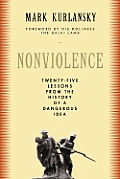
Mark Kurlansky’s book, Nonviolence: Twenty-Five Lessons from the History of a Dangerous Idea (New York: Modern Library, 2006) does not pretend to be a comprehensive history of the idea and/or practice of nonviolence.  Instead, it should be approached as an invitation to consider the myriad ways nonviolence, in theory and praxis, has manifested itself in different times and places around the globe.  Kurlanksy’s emphasis here, in terms of examples, is on U.S. history, though he includes a healthy smattering of other continents represented (for example nonviolent resistence to European colonialism in Oceania, medieval European monastics, and Ghandi’s well-known campaign in India). For those interested in a more in-depth analysis of any one of the particular cases he cites, a fairly healthy eight-page bibliography of sources is included that can be a departure point for further reading.

What Nonviolence really is, more than an scholarly historical analysis, is a well-written, historically-supported argument for the effectiveness of nonviolence as a political strategy — one that has a better track record than violence as a way of improving the human condition. And taken as such, I think it is worthy of note.

I should acknowledge up-front here that Kurlanksy is preaching to the converted here: while I am not a wholehearted pacifist in practice (“pacifism” being distinct from the strategy of nonviolence, as discussed below), I am already convinced of the necessity of pursuing nonviolent pathways to social and political change. In my mind, there are no “just” wars. And I believe violence always begats more violence. So I’m an easy sell, as it were.

That being said, I think Kurlansky brings up a number of interesting points about nonviolence that should provoke us to thoughtfulness, regardless of personal stance concerning the practicality of nonviolent action in a world saturated with violence.

Kurlanksy’s first point is that there is no word for the concept of nonviolence — we can only speak of it by referrring to what it is not: it is not violence. He suggests that the explanation for this absence might be found in the fact that established political, cultural and intellectual communities “have viewed nonviolence as a marginal point of view, a fanciful rejection of one of society’s key componants, a repudiation of something important but not a serious force in itself” (5).  This linguistic marginalization, he argues, signifies a cognitive marginalization, a resistence to accepting the concept and practice of nonviolence because it requires a profound reorientation toward the world. It is a “truly revolutionary” idea, a “threat to the established order,” and thus treated as “profoundly dangerous.”

Why is it a threat to the established order? Because nonviolence is effective as a political strategy and offers an alternative to violence. In contrast to pacifism, which is a personal orientation toward life — an individual “state of mind” that does not necessarily translate into political or social action, nonviolence is an explicitly political orientation.

The central belief [of nonviolence] is that forms of persusasion that do not use physical force, do not cause suffering, are more effective, and while there is often a moral argument for nonviolence, the core of the belief is political: that nonviolence is more effective than violence, that violence does not work (7).

The rest of the book offers examples — from the American Revolution to the Jewish Holocaust — in which nonviolent action was more successful than violent action in resolving the situation that as a culture we assert war was necessary to resolve.  For example,

The Nazis are often cited as an example of an enemy against whom nonviolence would be futile. This is said despite the success of several nonviolent campaigns. Amid some of the greatest violence the world has ever seen, it was little noted that more Jews were saved by nonviolence than violence (133).

He gives the example of Denmark, a government and citizenry which — through comprehensive, cooperative nonviolent action — that succeeded in saving all but fifty-one of its Jewish citizens (who died of sickness while being held by the Germans while Denmark negotiated for their release). In contrast, France lost 26% of their Jews, the Netherlands three-quarters and in Poland 90% — despite the fact that all three nations had a very active (and armed) resistence movement.

This example can obviously be interrogated, as can all of the others Kurlansky uses. But the point remains that nonviolent tactics have, historically, proved to be effectual — and we could perhaps learn from past success as well as failure.

Why, then, do we so often ignore, dismiss, scoff at, and otherwise marginalize the potential of nonviolence? Kurlanksy argues that much of the blame lies with the state (and those who represent the state), and with the fact that war — once begun — develops a momentum of its own that, popular or not, is extremely difficult to reverse.  We have also learned to accept the (perhaps false) assertion that there are times when violence is our only recourse, when violence is the only path to lasting peace, and the seldom-challenged notion that without violence we would be less safe, less free, less alive, somehow indefinably less than we are when violence is present. (For another sustained psycho-cultural exploration of violence and war as a way human beings make meaning for themselves, see Chris Hedges’ War is a Force That Gives Us Meaning )

Kurlanksy asserts that it is war and violence, not an unwillingness to resort to war and violence, which make us less free, less safe, less alive than we would otherwise be.  It is lack of imagination, lack of a willingness to imagine a world without violence — an unwillingness to imagine the wars we have endured were unnecessary and may even have made the situation worse than it otherwise would have been that are roadblocks to seeking alternative, nonviolent solutions.

For anyone who’s familiar with theories of personal trauma and recovery, this cycle of violence is going to sound familiar: you suffer the trauma of X and it is very, very difficult not to rationalize X as an experience that made you stronger, made you a better person. It can be horrifying, crippling, to even imagine that if not for experience X you would be more whole as a human being.  Kurlansky’s theory of the marginalization of nonviolence is, more or less, this personal rationalization of trauma writ large: we experience war (trauma) and seek to rationalize it because to acknowledge war serves no constructive purpose is so horrifying to concieve of that it is literally beyond language, beyond our collective imagining. Instead, we justify it as fundamental to human existence, and therefore inevitable and necessary, and therefore a part of the human condition in which we must find value.

Which, I think, is part of the reason I’m so fascinated by it. By the practice of nonviolence. Precisely because so many of us, so often, imagine it is beyond the realm of possibility. I spend much of my time studying (historically, culturally) the lives of people who live and work and think in ways that — to the majority — are literally outside of the possible. That are understood to be incompatible with a meaningful (or in some cases literal!) existence.  And yet, somehow, these folks persist in existing.

Reading a book like this is like having someone throw down a gauntlet: You think war is the only solution? Prove to me you’ve exhausted every other possibility. No, more than that: prove to me that violence will facilitate better outcomes than taking any other action or no action at all. Unless you can prove that to me, I’m not interested in hearing how nonviolence is fanciful, impractical, idealistic. Because war kills people. Violence harms people. And perhaps the most compelling (and revolutionary) idea of them all: violence doesn’t work. 

You disagree? Prove it. Until then? I’m not interested.

booknotes: red families v. blue families

11 Saturday Dec 2010

Posted by Anna Clutterbuck-Cook in book reviews

≈ Leave a comment

Tags

children, feminism, human rights, work-life balance

I read two books this past week on the intersection of family law, the conservative/liberal political divide, and quality of life in this country. One was the recently-released Red Families v. Blue Families: Legal Polarization and the Creation of Culture, co-authored by Naomi Cahn and June Carbone (New York: Oxford University Press, 2010).  The other was a slightly older, but no less relevent, book by Nancy D. Polikoff, Beyond (Straight and Gay) Marriage: Valuing All Families Under the Law (Boston: Beacon Press, 2008). Reading them in quick succession, I naturally saw connections between the two arguments as well as the relative strengths and weaknesses of each. I initially thought I’d do a joint review, but found I had too much to say (cough cough) … so here is part one, with a follow-up scheduled for next Wednesday.

For part two (Politkoff) click here.

Politkoff, Cahn and Carbone all begin with the same basic premise. That is the demographic fact that, over the past fifty years or so, the way Americans interdependent relationships has changed dramatically. The reasons for this can be attributed to a variety of socioeconomic and cultural factors, but no matter the reasons why it is happening, the end result is that the system of laws and public policies that in the past served to support those relationships are no longer effectively doing the job they were meant to do. 

Both books also come to an essentially liberal-moderate conclusion, with Polikoff trending in a slightly more liberal-radical direction and Cahn/Carbone attempting some sort of “middle” ground. Possibly because I am at heart a radical in my thinking (read: I’m most satisfied with solutions that get at the root of inequality, rather than attempt cosmetic changes to a broken system; I’m skeptical of compromise with folks who refuse to recognize a common humanity), I found Polikoff’s proposals much more compelling than those made by Cahn/Carbone, although I do think both books are worth reading — or at least skimming! — if you are involved on any level with activism or scholarship around the place of family and human relationships under the law.

I’ll begin with Red Families v. Blue Families. Authors Cahn and Carbone, both legal scholars, attempt to describe the reoganization of families structures in terms of the “red state” and “blue state” divide. That is, they connect conservative (red) political values with one set of beliefs and practices related to family formation and liberal (blue) political values with another set of beliefs and practices.  Using demographic statistics (such as number of births to teenage and unwed mothers, divorce rates, contraceptive use and abortion rates), they attempt to make connections between the types of family practices in conservative areas vs. liberal areas and the beliefs held in those areas concerning public policy and family law (i.e. divorce and custody law, access to birth control and abortion, marriage incentives and marriage equality).

The strength of this book is in the way Cahn and Carbone describe the socioeconomic pressures that have effected the rapid change in family-formation patterns. To oversimplify dramatically, the shift from an industrial economy to a social services and knowledge economy has increased the need for human capital (higher education, training, etc.) which the “blue” families have adapted to by delaying marriage and, in particular, child-bearing and rearing until after advanced education and establishing their careers. They “combine public tolerance with private discipline” when it comes to sexual activities, pushing (for example) to destigmatize sexually-active teenagers while ensuring access to contraception and counseling their own children to delay sexual activity. Meanwhile,  “red” families are materially challenged by the changing economy just as their blue counterparts. However, they have responded in moral rather than practical terms, redoubling their efforts to tie sexuality to marriage. This, the authors argue, often leaves them at an educational economic disadvantage (unless the wage-worker husband is in a high enough income bracket to support his family, a situation which is possible for fewer and fewer families nation-wide).

Red Families is at its strongest when showing the disconnect between conservative policy positions concerning issues like marriage, contraception and abortion and the damaging real-life effect of such policies when put into practice. In the chapters on abortion and contraception, for example, the authors show how conservative family policies usually work to disadvantage the economically marginal (teenagers, the poor, non-white families) by making the tools to manage their sexual health and childbearing unaffordable or otherwise inaccessible.  This is nothing new to those of us who follow the work of reproductive justice activists and feminist activists, but nevertheless I’m heartened to see it articulated in the context of a book on public policy. Likewise, the final chapter on “retooling the foundation” of our post-industrial economy to recognize the fact that workers are also family members is a useful starting point for thinking about how we might implement new (public and private) policies to support both types of families as they seek to integrate work and relationship obligations.

Yet ultimately, I found Cahn and Carbone’s argument about the geographic breakdown of family patterns overly simplistic and their solutions problematic.  Here are a few reasons:

1) As someone who grew up in a “red” area of the country (Michigan as a state swings Democrat in national elections, but the West Michigan county where I lived, and many of those around it, swing consistently Republican) I am troubled by the assertion that Americans are organizing themselves geographically along political lines, and that because of this a federated, localized approach to family policy is acceptable. Family law issues often intersect with human and civil rights issues, for example women’s access to reproductive health care and the right of queer couples to the same marriage rights as straight couples. These are basic citizenship rights not rights that should be determined by local norms. Beyond that basic philosophical issue, there are three practical issues with a localized approach:

  • When the approach is local, the most vulnerable will continue to suffer. Why? Because the economically and socially marginal are the least mobile citizens: the poor, the young, those without supportive family and friendship networks. In short, the folks who are already unable to access the resources available under the current system to establish economically secure families. They are the ones who won’t be able to relocate to a more queer-friendly region, won’t be able to cross state lines to secure an abortion or contraception, and will be the least likely to challenge discriminatory practices through the courts or political system.
  • Cahn and Cohen overemphasize regional homogeneity. If basic rights around family formation and support are determined locally, what happens to those who are in the political and social minority in any given region? To be sure, there are “blue” families in even the most crimson areas in this country. Not all of them can, want (or should have to) relocate to more colbolt areas in order to live the family lives of their choosing. This is the de facto situation for many of us now and it is not satisfactory.
  • This is an increasingly mobile population. Our economy increasingly depends on mobility, not to mention that our culture encourages travel and relocation over the course of our lives. If the rules governing family life become more regionalized over time, then the issues already faced by same-sex couples will extend to more and more families: what happens when certain relationships are recognized in one region and then a family moves (say due to a professional or educational opportunity) to a region where their family is no longer recognized or supported?

2) Cahn and Carbone fail to question the assumption that marriage between two adults as the basis for family formation is an ideal that should be encouraged. They see this as a point of common ground between “red” and “blue” families, an premise that I believe to be unhelpful in terms of constructing useful solutions that better the lives of all people, regardless of their desire to enter into marriage relationships as a gateway to family formation. (For more on this idea, see part two of this review.)

3) Following from this preference for marriage, Cahn and Carbone decidedly do not believe that all avenues toward family formation, or types of families formed, are equal. While willing to extend the practice of marriage to adult pairs, regardless of sex or gender, they ignore the needs of many families that do not fit this slightly-tweaked version of the old two-parents-plus-children family ideal. For example

  • Young parents. Following from their preference for “blue family” strategies, Cahn and Carbone are critical of those who choose to marry and have children at young ages. They see nothing wrong with discouraging teenagers and young adults from marrying and forming families. In support of this argument, they cite the statistical likelihood that such “young” marriages will fail and that children born within those families (or to young mothers) are more likely to be economically and educationally disadvantaged.  Alternatively, they could argue for greater social and cultural support for young people who choose to form families and bear children. The fact that they disparage those who do so is ageism and really set my teeth on edge.
  • Non-dyadic family units. Um, where are the poly relationships? The family groups not formed around sexual relationships and/or childrearing? I was really frustrated by the way Cahn and Carbone failed to address the needs of families that don’t fit into this model. I realize that these families are a political hot potato when it comes to seeking compromise across the political divide — poly relationships are routinely marginalized in arguments for gay marriage (how often have you heard “two consenting adults” as a catchphrase?) because, I assume, the left wants to dissassociate from discussions of polygamy. But this is not a valid excuse when we’re talking about the need to recognize the social value of all committed, consensual, mutually-sustaining relationships.
  • Following on from this last point, family formation =/= childrearing.  Belonging, as I do, to a family that will likely not include children, I was particularly aware of the way in which Cahn and Carbone repeatedly used phrases like “family formation” and “starting a family” to mean “having a baby” (either through adoption or birth).  This is an erasure of any family of two or more people that does not include, either by accident or design, providing for children. It’s terminology that’s simple to fix and the fact that the authors chose not to, or didn’t realize the implications of their wording, bothered me.

So what’s the work-around for these problems? Stay tuned for the next installment, where I’ll discuss the far more satisfactory Beyond (Straight and Gay) Marriage, in which author Nancy Polikoff descibes how our legal system could retool family law to accommodate the full range of interdependent relationships we form, decoupling marriage (which would remain a religious and cultural marker of commitment) from legal and economic rights.

booknotes: delusions of gender

22 Monday Nov 2010

Posted by Anna Clutterbuck-Cook in book reviews

≈ 1 Comment

Tags

children, feminism

Continuing my meander through recent literature on gender and neuroscience (see booknotes on Sexing the Body, Brain Storm, and Fixing Sex), this week I finally got around to reading Delusions of Gender: How Our Minds, Society, and Neurosexism Create Difference (2010) by Cordelia Fine.

Written for a more popular audience than Brain Storm or Fizing Sex, Fine’s Delusions of Gender has been popping up in the mainstream media more than either of these titles, despite the fact that they all revolve around similar issues: at the most basic level, how sociocultural contexts (“nurture”) influence “nature,” or those things that we consider to be somehow innate and fixed (and somehow knowable) within the body. Specifically those things which we identify as relating to gender and sexuality.

In Delusions, Fine reviews both popular and academic literature that purports to describe the way in which human brains a wired differently based on the sex of the person in question: the ever-popular idea that there is somehow a “hard-wired” or “innate” gender difference and that, despite our best intentions at gender-neutrality or equality, men and women will forever and always constitute two distinct (usually opposite) groups of humans. Sometimes, these differences are seen as so extreme that men and women find it impossible to communicate, to learn in the same classrooms (men are good at math while women are good at language?), to share the same tasks (doing laundry might lower men’s testosterone levels to dangerous extremes, while the same task gives women an oxytocin high?), or inhabit the same planet (perhaps, as Futurama‘s “When Aliens Attack” episode suggests, men are really from Omicron Persei 8 and women are from Omicron Persei 9?).

Fine’s purpose in reviewing this literature is, by and large, to point out the ways in which the claims of these writers draw on faulty data: poorly-designed studies, studies that do not provide evidence for the authors’ claims, studies that, in fact, suggest the opposite of what the authors claim, and studies with very limited generalizability.  Further, she explores what the evidence is actually telling us about gender difference (more below) and challenges us to consider how we, as human beings, lose out when neurosexism (the claim of immutable gender difference) continues to enjoy great popular support and to inform policy decisions, such as the push for single-sex education.

None of Fine’s conclusions will be a great revelation to those with a background in any social science discipline, particularly those interested in the sociocultural forces that shape gender and sexuality.  However, I found her psychological and neurobiological perspective extremely helpful in illuminating the way in which powerful cultural stereotypes inform our subconscious and unconscious behaviors and identities even when our concious minds resist those messages. When faced with evidence of behaviors that don’t match up with our conscious intentions, human beings often resort to the “biology as fallback” position. That is, if I tell my son it’s okay for boys to play with dolls and he still eschews them for trucks or the tool set, then there must be an “evolutionary or divine” reason for that behavior. If career women are “opting out” of successful careers to be a primary parent, or coming home from work to do the emotional heavy lifting in the family, it must be because they’re “wired” to be nurturers, while men are not.

The problem is, the data don’t support these conclusions — there is no reliable evidence that women’s brains are inevitably better at caretaking, while men’s brains like trucks and solving construction problems. So: if evolution isn’t our fallback option, what might better explain these behavioral differences?

The answer, according to Fine, lies in the way our organic beings (including our brains) interact with the environment around us — not just the natural physical environment (i.e. what hormones we’re exposed to in utero) but or sociocultural environment as well.

Take a look around. The gender inequality that you see is in your mind. So are the cultural beliefs about gender that are so familiar to us all. They are in that messy tangle if mental associations that interact with social context. Out of this interaction emerges your self-perception, your interests, your values, your behavior, even your abilities. Gender can become salient in the environment in many ways: an imbalance of the sexes in a group, a commercial, a comment by a colleague, a query about sex on a form, perhaps also a pronoun, the sign on a restroom door, the feel of a skirt, the awareness of one’s own body. When the context activates gendered associations, that tangle serves as a barrier to nonstereotypical self-perceptions, concerns, emotions, sense of belonging, and behavior — and more readily allows what is traditionally expected of the sexes (235-236).

So despite our individual best intentions, Fine argues, we are at least in part held hostage by our environment — we are adaptable creatures, constantly negotiating that balance between our conscious ideals and those actions and self-presentations that will protect us from negative feedback, from marginalization, and threaten (on a very basic level) our survival.

So far, so good: the personal is political, as any well-schooled feminist activist can tell you.

Yet it doesn’t stop there, because Fine’s most crucial argument is still just around the corner.

The fluidity of the self and the mind is impressive and is in continual cahoots with the environment … Nor is gender inequality just part of our minds — it is also an inextricable part of our biology. We tend to think of the chain of command passing from genes, to hormones, to brain, to environment. … Yet most developmental scientists will tell you that one-way arrows of causality are so last century. The circuits of the brain are quite literally a product of your physical, social, and cultural environment, as well as your behavior and thoughts. What we experience and do create neural activity that can alter the brain (236).

We are, in other words, permeable organisms, highly attuned to our environment (in all senses of the word), constantly calibrating ourselves to thrive and survive within that particular context. And if the context we are attempting to thrive in is on that expects oppositional, gender-essentialist behavior, then not only our conscious minds, but our very corporeal bodies, respond to that expectation and alter ourselves accordingly. It’s not nurture building on nature, but rather nature and nurture twined together in a constant feedback loop, informing and reforming one another in a neverending cycle of change.

“When researchers look for sex differences in the brain or in the mind,” Fine concludes, “they are hunting an ever-moving target. Both are in continuous interaction with the social context” (236).

One final observation before I close this post, and that is to highlight the way Delusions reminds us not to underestimate our children. Fine spends quite a bit of time dissecting the evidence of gender difference observed (both in formal studies and anecdotally) in infants and very young children. This is because, for obvious reasons, researchers often seek data concerning brain differences in very young humans — humans, it is supposed, who have had very limited exposure to sociocultural influences that would shape their beliefs or behavior. Thus, gender-progressive parents who seek to encourage a full range of emotional expression and activities in their children (regardless of assigned sex), often express despair when confronted with daughters who are obsessed with dressing in pink (and only pink): if the parents have encouraged the child to try a full range of clothing colors and the three-year-old settles on princess pink, the argument goes, the child must then be expressing her “true” (natural) self.

Not so fast.

This conclusion, I would argue (drawing on Fine’s text), both over- and underestimates children. It overestimates the power of children to resist the power of cultural stereotypes and peer pressure at the same time that it underestimates the intelligence-gathering abilities of children, who are primed in the early years of their lives to figure out, above all, how to survive. And when you are part of a social species, as human beings are, then your survival — on a fundamental level — depends on the speed and accuracy of your ability to gather and analyze social data, and to understand how to adapt yourself to social situation X in order to maximize your changes of survival.

And remember: despite the fact that, as an infant, your primary caregivers are (if you’re incredibly, incredibly lucky) loving, supportive parents, you can’t depend upon your parents: you have to negotiate survival in a chaotic, appallingly complex social environment beyond the doors of your parental home. How do you do this? You gather information constantly and attempt to make sense of it. You have to figure out how the world works because if you fail to understand the rules of the game, then you will die.

Nonconformity? Self-expression? Living on the margins? Those all take a back burner.  I’m not talking ideal scenario here — ideally, survival and self-expression, survival and nonconformity, these would not be mutually exclusive. But we’ve created a world, dear readers, in which they often are.

And kids: they are smart enough to figure this out.

And being disinclined to die, they conform.

This isn’t “hard-wired” gender difference. This isn’t stupidity. This is romper-room street smarts.

So what do we do about this?

Quite simply: we have to create a better culture: one in which kids don’t have to choose between conformity or death. And we need to remember that this has to happen on a huge big cosmic scale. Not that our little single-family, daily interventions don’t help (as I was typing this, for example, Hanna sent me over to EPBOT to voice my support, as a female Star Wars fan, for a nine-year-old girl who’s being bullied for taking a Star Wars water bottle for school … ’cause apparently SW ain’t for girls). Those small-scale interventions give kids (not to mention the rest of us) the space to consciously resist those subconscious and unconcious pressures. But unless we effect larger sociocultural change, we will continue to operate — to use Fine’s phrase — with “half-changed minds.”  And our bodies will continue to bear the scars of gender stereotyping.

booknotes: reality bites back

29 Friday Oct 2010

Posted by Anna Clutterbuck-Cook in book reviews

≈ 1 Comment

Tags

arts and culture, feminism

I have to begin this review with a disclaimer: I have virtually no first-hand experience with the type of reality television discussed in Jennifer Pozner’s Reality Bites Back: The Troubling Truth about Guilty Pleasure TV.  This has been through both accident and purposeful avoidance. On the accident side, I didn’t grow up with a lot of television around, and (The West Wing aside) TV has never been a very social experience for me.  Therefore my exposure to it has been primarily through advertisements, grocery-store checkout magazine headlines, second-hand reports and cultural analysis.

Why have I avoided reality television? My parents can tell you that public humiliation and social deception has always made me acutely uncomfortable: when we used to watch romantic comedies when I was younger, plot elements that revolved around social lies (Roxanne, The Truth About Cats and Dogs) — no matter how benign and ultimately happy-ending they turned out to be — sent me running to the other room in discomfort. I didn’t like the idea of even a fictional character’s emotional manipulation. So the prospect of watching any show that was actually constructed around such false social interactions involving real people had zero appeal. Add to that formula the heteronormative gender roles that are portrayed and reinforced in these shows, and my personal anti-manipulation bias was bolstered by political critique.

This is all to say that when Seal press sent me an advance review copy of Reality Bites Back last week I had a lot of pre-formed cultural skepticism and personal discomfort concerning the premise of reality television.  And I imagine this book struck me differently than it would a devotee of American Idol or The Amazing Race or come across to those of you who remember watching (for example) the first season of Survivor or The Bachelor with your buddies in high school or roommates in college. 

Jennifer Pozner is a media critic and educator specializing in media literacy.  She is the founder and executive director of Women in Media & News, which promotes the increased participation of women in media creation and analysis.  Thus, Reality Bites Back is the work of someone who is deeply immersed in media as a creator of content, a passionate consumer, and an astute critic of the ways in which media inform our political and personal lives — on both a conscious and subconscious level. In her introduction, Pozner describes the decline in media literacy and critical analysis around reality television shows that she has over the past decade, as she tours college campuses and speaks about the messages that reality television sends to viewers.  While students in the early 2000s were critically aware of the constructed nature of reality programming — a phenomenon that had only recently been widely adopted by the big networks and was getting a lot of press — young people today have grown up with much more of the genre in their media diet and (Pozner argues) their “critical responses to gendered, raced messages within media ‘texts’ … seems to have suffered as a result” (30). “The Millennial Generation,” she writes, “seems to be getting more cynical (‘Of course it’s all bullshit, but it’s funny. Whatever.’) but less skeptical. This kind of mind-set makes advertisers salivate” (31).

The goal of Reality Bites Back is, in part, to re-energize the critical faculties of reality television viewers, so that they become less susceptible to the poisonous narratives of gender, sexuality, race, and class that reality television producers are peddling.  Pozner reminds us that reality television producers — far from neutrally capturing how people interact with one another — aggressively shape the stories that are told on-screen about how human beings behave. And these stories reinforce what we already “know” about women, men, heterosexuals, queer folks, people of color, poor people, rich people, and so forth.  They are brain candy in part because they tell us familiar stories about the world, rather than challenging our pre-conceptions about how folks behave. Stories like:

  • Romance and love is exclusively the province of white heterosexuals.
  • Romance and love are signified by providing (if you’re a man) and consuming (if you’re a woman) brand-name products.
  • Single women, no matter their social and financial circumstances, are desperate for male validation and will quit their jobs, submit to public humiliation, and accept the attentions of any man they are presented with.
  • Single, married, with or without children, women are seen as selfish, controlling, untrustworthy, desperate, pathetic individuals whose only worth is derived from their ability to meet draconian expectations of physical perfection and sexual availability.
  • Men must be rich in order to be eligible for (hetero) relationships, and their wealth is the only thing that matters: criminal records, histories of domestic abuse, on-screen abuse of female cast members are rewarded.
  • Men who treat women contestants as independent persons worthy of actual human-to-human interaction are rebuked by on-screen experts.
  • Poverty is an individual, not a structural problem, best alleviated through on-screen charity and gifts of various brand-name products.

And each of these stories has numerous side-plots and context-specific iterations.

Above all, Pozner argues, reality television programs are hour-long product placement advertisements, their primary raison d’etre being the income generated by advertiser revenue. These shows are indeed market-generated, as producers would have us believe — but the “market” is not the audience who tune in to the programs, but the advertisers who pay to have their products relentlessly shilled in situations that viewers do not read as advertisements. These programs — like most advertisements — contain the not-so-sub subtext that the best way to achieve the good life in America today (understood in the context of reality television a life of wealthy, socially conservative conformity) is by maxing out your credit card and purchasing it.

As an historian, I feel compelled to point out that this permicious blend of consumerism, competition, and capitalizing on economic and social desperation is hardly new.  It’s not really within the scope of the book Pozner set out to write to provide historical analysis, so I don’t think the book is remiss in not providing it. Nontheless, I found myself thinking of potential historical comparisons and desiring some sort of historically-situated analysis that looked beyond anti-feminist backlash, media mergers, and the current recession.

One comparison that comes to mind, for example, are the Depression-era dance marathons, in which desperate couples vied for prize-money while contest sponsors walked away with the cash. As the entry at HistoryLink explains

Dance marathons opened with as great a fanfare as the promoter’s press agents could muster. Each major promoter had a stable of dancers (known as horses, since they could last the distance) he could count on to carry his event. These professionals (often out-of-work vaudevillians who could sing and banter and thus provide the evening entertainment that was a feature of most marathons) traveled at the promoter’s expense and were “in” on the performative nature of the contests (including the fact that the outcomes were usually manipulated or at least loosely fixed).

Known euphemistically as “experienced couples” (The Billboard, April 14, 1934, p. 43), professionals did their best to blend in with the hopeful (often desperate) amateurs. For all contestants, participation in a dance marathon meant a roof over their heads and plentiful food, both scarce during the 1930s. President Herbert Hoover’s promised prosperity “just around the corner” eluded most Americans, but dance marathon contestants hung their hopes on the prize money lurking at the end of the contest’s final grind.

…Medical services were available to contestants, usually within full view of the audience. Physicians tended blisters, deloused dancers, disqualified and treated any collapsed dancer, tended sprains, and so on. “Cot Nights,” in which the beds from the rest areas were pulled out into public view so the audience could watch the contestants even during their brief private moments, were also popular. The more a marathon special event allowed the audience to penetrate the contestants’ emotional experience, the larger crowd it attracted.

You can read the whole article over at HistoryLink.org.

The heady mix of consumerism, voyeurism and exploitation, in other words, is not unique to our era, nor is it an invention of reality television creators. However, the fact that exploitation and backlash is unoriginal  hardly exempts it from critical analysis — just like the fact that a show is being sold as fluffy, lighthearted “fun” escapism doesn’t mean with should turn off our critical filters.

The tie-in website for the book, RealityBitesBackBook.com, contains links to a whole series of essays and excerpts if you’re interested in checking Pozner’s work out in more detail before trotting over to your library and/or bookstore of choice and obtaining a copy to read in full.

booknotes: brain storm

06 Wednesday Oct 2010

Posted by Anna Clutterbuck-Cook in book reviews

≈ 1 Comment

Tags

feminism, human rights, science

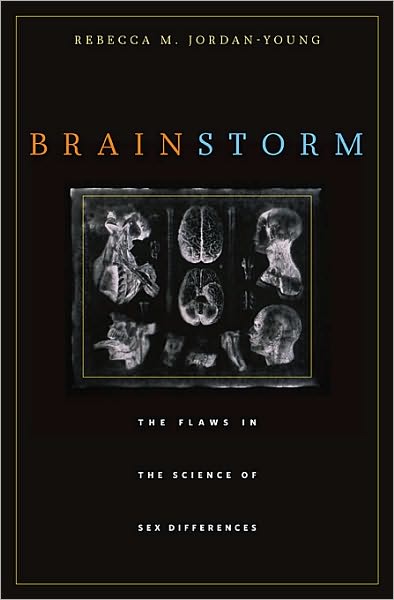
This past week I devoured a book Hanna found for me on the new books wall at the library: Brain Storm: The Flaws in the Science of Sex Differences, by Rebecca Jordan-Young, a sociomedical scientist currently teaching at Barnard College. The book is a systematic survey and assessment of the quality of the scientific research that has been used over the past fifty years in support of the theory that male and female brains are innately different because of different patterns of hormone exposure during gestation.

While the research in this area is inconsistent at best, and methodologically flawed at worse, the idea of sex-typed “brain organization” which pre-disposes men and women to gendered “masculine” and “feminine” behaviors has become widely popularized common sense knowledge, justifying everything from the intrusive medical treatment and scrutiny of gender- and sex-variant people to the dismissal of concerns about social structures that may support gender inequality (if men are “naturally” more interested in careers, and women are “naturally” more interested in caring for children, then no amount of social policy — the argument goes — will alter this predisposition).

Jordan-Young’s goal in Brain Storm is not to argue against the scientific exploration of sex and gender development, but rather to suggest that the science we currently rely upon to support the assertions of sex difference are problematic.  She argues that an “epistemology of ignorance” characterizes the work of scientists who do research on brain organization. That is, these scientists purposefully ignore (because they assume it is irrelevant) any potential sociocultural explanations for the gendered behavior of their subjects, attributing the differences they do discover on atypical, early hormone exposure rather than on the complicated interaction between “nature” and culture. They assume this sociocultural evidence is irrelevant because they expect to find sex-typed differences, and expect those differences to be explained by early physiological sex-differentiation. They have closed the door on alternate (and ultimately, at least according to the strength of available evidence, more compelling) explanations.

This book is far too dense to adequately condense its major ideas into one short booknote; I encourage all of you interested in this area of research to read the whole book, since Jordan-Young’s explanations of how these scientific studies have been generated are really useful as a window into understanding how to better interpret research findings. Regardless of your philosophical position on the physiological origins of sex and gender variety, Brain Storm will help you become a better consumer of the evidence out there that is currently used to support that network of ideas.

To give you a flavor for the type of material covered in Brain Storm, here are a few excerpts.

From “Chapter Six: Masculine and Feminine Sexuality”, which explores how researchers have defined “masculine” and “feminine” sexuality in their research and findings.  Jordan-Young points out that during the 1950s-1970s, when brain organization theory was taking hold in the scientific community, immense changes took place in the cultural perception of what “masculine” and “feminine” sexuality looked like, and how it “naturally” expressed itself.  The scientific literature, however, largely ignores these historical shifts, treating these categories as uncomplicated notions that do not need to be explicitly defined.

Surprisingly, against this backdrop of change [the sexual revolution], most brain organization researchers have used the common term feminine sexuality through more than four decades as though it is absolutely self-evident and unproblematic. But the ground has been shifting under their feet. While ideas and practices associated with “normal” sexuality changed in the broader world during those decades, the transformation of masculine and feminine sexuality was just as dramatic [yet unacknowledged] in the studies that are intended to determine how male and female sexual natures develop.

In brief, from the late 1960s until around 1980, brain organization researchers relied on a model of human sexuality that sharply divided masculine and feminine sexual natures … Things began to change in the early 1980s. In the most general way, scientists continued to assert that early exposure to “masculinizing” hormones make sexual development either more masculine or less feminine, and their preoccupation with sexual orientation intensified. But a closer look at the specific behaviors coded as masculine or feminine in the later studies shows some surprising and very important differences from the first period. In particular, masturbation, genital arousal, and sex with multiple partners came to be understood as “commonsense” features of feminine sexuality, even though these had earlier been read as clear signs of masculinization (pp. 113-114).

In “Chapter Seven: Sexual Orienteering,” Jordan-Young tackles the jaw-droppingly simplistic approach brain organization researchers continue to take toward sexual orientation, despite increasing acknowledgment across a wide range of scholarly fields that sexual identity and orientation highly subjective, often subject to change over time, and are inextricably wrapped up in both “nature” and culture.

To Dr. A and Dr. N, who are among the mos influential scientists in the world studying biological influence on human sexuality, subjects who gave equivocal or contradictory answers to questions about sexual orientation are either being obstructive or confused. Ironically, Dr. A’s admonition to “listen to the subject” ends up being qualified by “if they’re consistent.” Dr. A doesn’t consider the possibility that subjects’ hedging and ambiguity reflect meaningful complexity — that the phenomenon of sexual orientation is complex and sometimes ambiguous. Instead, he thinks of sexual orientation as a simple categorical trait — the objections of modern intellectuals and old cranks like Alfred Kinsey not withstanding, you can sort people into discrete types. In this view, subjects who don’t fit the profile are simply lying, or perhaps more charitably, self-deluded.

While other scientists vigorously debate what sexual orientation is and how best to measure it, brain organization researchers almost never address the fundamental questions involved. The majority of studies linking early hormone exposures with human sexuality have focused primarily or exclusively on sexual orientation — yet most brain organization studies that are “about” sexual orientation have not defined sexual orientation at all, or have used vague and contradictory definitions that often do not agree with the measures scientists have used (p. 145-146).

It was particularly revelatory for me to realize the (obvious once you’re looking for it) point that the most basic ways of sorting groups of people according to orientation can matter, both when it comes to grouping people for the purposes of research and for the purposes of understanding populations in more cultural/social frameworks.

For example, does your definition group people according to the gender of the people whom they are attracted to (men or women)? Or does your definition arrange people according to whether their attractions are same-sex or opposite sex? Both of these definitions, obviously, beg the question of what to do with people who do not fit a binary schema — but for the moment let’s pause here.

If you arrange people on a heterosexual/homosexual schema, you’re grouping them by same-sex vs. other-sex attractions. That is, gay and lesbian people will be in one group, straight women and men in the other. And research designed to explain these categories would look for sameness within the groups and difference between them. You would presume that straight men and women had certain markers of sameness, while queer folks had similar profiles.

Most brain organization research uses the heterosexual/homosexual schema when it comes to structuring their research populations (i.e. they have a “straight” population and a “gay/lesbian” population, and yet their research questions and theories actually follow the people-attracted-to-men vs. people-attracted-to-women model. They assume that individuals who are attracted to men (gay men, straight women) will have markers of sameness, and individuals who are attracted to women (straight men, lesbians) will have markers of sameness — and that these two groups, when compared, will show patterns of difference.

The distinctions seem slight at first, but actually matter a great deal when it comes to structuring a research study or understanding how we make sense of the world, about what we expect of certain groups of people, and what assumptions those expectations rest upon.

The most painful sections of the book to read, at least for me, were the sections that dealt directly with research around intersex conditions, most prominently girls and women with CAH (congenital adrenal hyperplasia). Since brain organization researchers are interested in the effect of hormones on brain development, they have obviously sought out populations known to have had atypical hormone exposure. They then study these individuals for “signs” of sex/gender/sexuality atypicality — “atypical” usually meaning, as the above excerpts show, “contrary to researchers’ culturally-shaped assumptions about gendered behavior.” In “Chapter Nine: Taking Context Seriously,” Jordan-Young uses the example of CAH studies to show how the tunnel vision approach of brain organization researchers has led them to ignore powerful evidence that sociocultural context matters when it comes to sex and gender identity. Not necessarily to the exclusion of hormonal or other “natural” influences, but in ways that simply should not be ignored by scientists who are attempting to test their hypothesis.

No brain organization research, for example, takes into account the fact that the sexual feelings and activities, the self-identity of their CAH subjects is inevitably influenced by the fact that these girls and women are subject to intense scrutiny and intervention — both social and medical — from birth into adulthood. They are expected to behave atypically, and monitored rigorously and anxiously by parents and medical professionals in hopes they will be “normal.” Their bodies are often treated to invasive “normalizing” surgeries and examined regularly. They are asked to perform certain sexual acts, such as masturbation, under supervision, and until very recently little or no thought was given to the actual quality of their sexual experiences and feelings about their own bodies and sexuality — all that mattered was intervening in their lives in the hope that they could be shepherded toward “normal” sex/gender/sexual identities (read: straight person presenting and identifying as female).

To me, this sort of anxiety surrounding gender identity and sexual orientation, as well as the simplistic notion that male/female heterosexual = best possible outcome for all people is just incredibly sad. It’s a very sad testament to the lack of imagination among medical professionals and the general populace that human variation is not only okay, but might actually be the best possible outcome.

I don’t really have any concluding thoughts about this book other than that it’s definitely a keeper, and I urge you all to at least be aware of its existence in the world, should you find yourself in need of a comprehensive survey of brain organization research. It also has an extensive bibliography that can point you in all sorts of branching directions … next up on my list, for example, is Katrina Karkazis’ 2008 book Fixing Sex: Intersex, Medical Authority, and Lived Experience.

Happy reading!

reading the (lesbian) classics: hello, groin

04 Monday Oct 2010

Posted by Anna Clutterbuck-Cook in book reviews

≈ Leave a comment

Tags

blogging, guest post, reading lesbian classics

As explained in the first installment of this series, “reading the (lesbian) classics” is a monthly(ish) series of posts in which Danika Ellis of The Lesbrary and I read our way in a very haphazard manner through queer literature.  Our method is basically picking out the books that sound like a fun time and taking it from there!) and chat about it, and then post our conversations on the interwebs. For this second installment, we read another young adult novel by Canadian author Beth Goobie, Hello, Groin (2006).

This month, because of busy schedules, Danika and I exchanged our thoughts via email, rather than chat (as we did last time), so the nature of the exchange is a little more long-format rather than conversational. I color-coded our contributions in hope that it makes the reading a little easier for y’all.

Also, I don’t hide the plot spoilers on my post, so consider yourself warned if you care about that sort of thing. Danika posts our conversation with the plot spoilers obscured (unless you highlight them), so head on over to The Lesbrary if you want the “safe” version.

Danika: I guess to start off with, we could talk about the handling of teen sexuality in AOMM [Annie on My Mind] vs HG [Hello Groin]. HG doesn’t actually have any lesbian sex scenes (spoiler!), but it does have a lot of sexuality in it. I found it really interesting that Dylan is not a virgin. Neither is Joc, of course. And sex is a frequent topic of conversation and speculation. It seemed really true to the reality of teenagers at this point in time. What did you think?

Anna: Wow, so there’s a lot to unpack in your opening comment, and I’d love to tackle it all eventually! I was very struck by the fact that, despite the frank acknowledgment of sexuality in HG there was no lesbian sex (I was so disappointed!). The (mostly implied) sex is hetero sex, and masturbation, neither of which are demonized but both of which are not a substitute for same-sex love scenes, and I thought it was an interesting choice for Goobie to back away from being sexually explicit in that instance when she had not with other aspects of sex and the fact that teenagers can be sexual beings, and that this isn’t divorced from other aspects of who they are in the world.

In fact, I felt in a lot of ways that Dylan (our narrator) is a lot more uncomfortable about her same-sex desires than Liza was in AOMM. She acknowledges her discomfort directly in the book, quite early on, in chapter five when she addresses the reader and says, “The main question here, I suppose, would be, What was the big deal? Most people didn’t go into a major funk over sexual orientation anymore–a lot of lesbians and gays were out these days.”  And yet, for Dylan, it’s not so much a question of sexual desire but social identity: “I just didn’t click with them,” she says, “They were all really different than me–besides our hormones we had nothing in common.” 
To me, that’s a pretty major shift away from understanding your sexuality in terms of specific, personal desires and specific relationships in AOMM towards understanding sexual orientation as a form of group belonging in HG. And, ironically, the greater visibility of the LGBT community in Dylan’s life means that she has a much stronger sense of what it “means” to be queer. Therefore, because she can’t see herself as part of that community, this becomes a roadblock to her acknowledging, and feeling comfortable with, her desire for Joc. In AOMM, nearly the opposite is true: it is the lives of the lesbian teachers (embodied in their home and relationship) that help Annie and Liza see that being together is possible. It’s a dawning awareness that takes place almost in isolation from their peers.
What do you make of the lack of relational lesbian sex scenes in the book, and the fact that Dylan’s dawning awareness of her desire for Joc is depicted primarily in terms of solitary sex and her internal physical reactions, rather than exploration as a couple?  And (major spoiler!) I was particularly struck by Dylan’s desire to slow things down with Joc when they finally got together, rather than dive in and get to know her very willing partner on that level.  What are your thoughts?

Danika: Interesting. You know, I’ve never really considered how there is no explicit lesbian sex in HG. It seemed to fit with the models of lesbian teen books I’ve read before, like Empress of the World and Bermudez Triangle (correct me if I’m wrong; it’s been a while since I’ve read them). But you’re right: why shouldn’t these teen lesbian books include lesbian sex? After all, AOMM did (even if it was a little “off screen”), so you would think by this time we’d be more frank. When I think about it, though, I don’t know if I’ve read any teen lesbian books with actual lesbian sex scenes, even any that are comparable to AOMM.
I think the scenes of masturbation and talk about hetero sex was pretty explicit in HG. You’d be hard-pressed to find a reader who didn’t catch on that Dylan was masturbating. It’s kind of an ongoing theme at some point.
Hmm, that’s a good point. HG offers a sort of double-edged sword of queer visibility. Dylan knows what being a lesbian is, and she even personally knows lesbians. She doesn’t think they have miserable lives. But that idea of a queer community, which can be life-saving when coming out, can also seem too exclusive. If you don’t fit in in the queer community, can you really be queer? Can you be queer in a straight community? And that’s been an ongoing issue with queer activism: the “extremist” queer people want to create our own community, our own world, or at least radically reconstruct dominant society; the “moderate” queer people want to tweak dominant culture to allow us to assimilate. Even within lesbians I’ve met I’ve heard both “Why can’t I just sleep with girls without having it define me?” and “I love the lesbian community”. I think it’s really important to have both, to have a place for queers who feel displaced in straight/cis society to be around people they can relate to, as well as accommodating queer people who just want to fit into dominant society. Unfortunately, in Dylan’s case, the community was too small to really be inclusive, and the straight/cis world wasn’t going out of its way to be queer-positive.
I think we see this positive aspect of queer community/role models in AOMM and the downside in HG. I mean, if the teachers in AOMM had been people that Liza didn’t like, or didn’t relate to, would that have made it even harder for her and Annie? It’s hard that queerness has these two elements: the queer culture, with a rich history and literature and activism and entertainment and social scene, but it’s also something that is so very personal and individual, and has to do with the most private parts of ourselves.
My first instinct to respond to the lack of lesbian sex in HG is that it doesn’t fit the storyline. HG is about Dylan coming to grips with her sexuality and sexual orientation, with her desire and what that means for her identity. Getting together with Joc was really almost secondary to that. It was the final step in that journey, in that arc. The story of Joc and Dylan as a couple isn’t really included in HG. I don’t feel like you could really have them have sex after years of repressed desire and then fade to black, because it would leave too many questions. And answering those questions would require a whole other book!
That’s my first instinct, but I know that it’s really easy to dismiss these sorts of questions by saying “That’s what the story demanded”, so I’d like to look more closely at it. I really quite liked Dylan’s insistence that they move slowly. I thought the “I’m in love with this finger” line was absolutely adorable. I feel like them having sex right then would be too fast, because they had only just acknowledged their feeling for each other, their sexual orientation, and Joc hadn’t even come out to her mom yet! It would have been too many emotional experiences at once for them.
I think it’s exactly what you touch on: the “dawning” of her sexuality. The title alone implies that Dylan is only beginning to know herself. I think that the book was working up to this point, to this careful introduction to sexuality. I guess it also is in contrast to Dylan’s previous sexual encounters. She’s forced herself to have sex before, because she felt like that’s what she’s supposed to do. She’d been pressured to have sex with her boyfriend the whole book. I think maybe Dylan negotiating with Joc about sex shows her new understanding of her sexuality, her ability to not repress her desire, but also not repress her better judgment. I’m not totally satisfied by that answer, though. What do you think? Was she afraid of backlash about have lesbian sex in it? She already addressed drinking, drugs (briefly), partying, homosexuality, queer desire, teen sex, and female masturbation. It doesn’t seem likely that she thought lesbian sex was going too far. Do you have any theories?

Anna: I like you analysis of the two-edged sword of queer “communities.” In my own life,I can think of examples where the HG model has been in operation as well as examples where the AOMM experience has been really helpful.  Particularly in smaller populations (I’m thinking particularly of the insular spaces of teenage peer culture, so often segregated in schools), the “queer” community, in my experience, tends to be dominated by — as you put it — “extremist” personalities. And if you don’t see yourself mirrored in those personalities, it’s hard to see how your life is going to improve by identifying with them. Coming out, in those cases, seems ripe for being rejected by both the dominant culture (for being queer) and the queer community for not being the “right” kind of queer. As someone with more fluid sexual attractions, for example, I was timid about voicing my same-sex desires for many years because I perceived the potential for rejection by the lesbian girls I knew for not being lesbian enough, and I really didn’t see myself reflected in the lives of the few bi women I met at college. So I sympathize with Dylan’s struggles to name her desires openly, even though she knows inside herself where her attractions lie.
As someone in my late twenties, too, when reading YA literature I wonder what role my adult expectations play in the sense that there’s not “enough” sex in HG? And whether, as you say, having Dylan approach her relationship with Joc as something special, more intimate, and therefore something to approach slowly and cautiously, might be a legitimate reflection of age rather than prudishness on the part of the author? When I was Dylan’s age, would I have wanted to go from zero to sixty in a sexual relationship? I suspect with the right person, yes, given my personality :).  But I also think it’s legitimate for an author to write characters who are slower to feel sure about how they want to express their sexuality in relationships, even when they know it’s a relationship they want to be in, and be sexually active in, eventually.  An example of a similar “taking it slow” approach that is nonetheless sex-positive (and more sexually explicit) is the novel This Is All by Aiden Chambers, although I think that novel had other issues. However, the (hetero) couple at the center of the story were both very purposeful about choosing the time and place to be sexually intimate for the first time, yet also joyful in the moment as well. I rather wish HG had gotten to that point. In part because, from a political and cultural perspective, there’s such a persistent stereotype that lesbian relationships are more romantic than physical. Clearly, Dylan and Joc are both highly physical, highly sexual beings. But the fact that this grinds to a halt when the girls come together in bed was frustrating to me.
Have you read other books by Goobie and if so, how does the treatment of sexuality compare? Going back to our last conversation and the example of David Levithan, he writes romantic stories with explicit sex and without explicit sex, and I enjoy them both, so perhaps it is unfair to place the burden of expectation that this ONE novel do everything at once! I know that, as you pointed out, YA authors often have to tread a very careful line between exploring issues that they feel are relevant to teenage lives and also not being too heavy-handed with the Real Life Issues stuff. Likewise, the balance between including stuff about sex without being so controversial that young people can’t get their hands on the books!
Of course, resourceful kids (with access to a good library!) can get around this by going straight for adult lesbian literature, if they know where to look. It’s interesting to me that, with the emphasis on the library book display, that Dylan did not reference more lesbian-themed literature, or at least didn’t seem to see books as a resource the same way that Liza did in AOMM.  I know, as a teenager, that novels like Fingersmith (to give one example) were a wonderfully safe and private way to explore same-sex desire and sexual arousal. Do you have any thoughts about the role of books in HG, particularly since we discussed this as such an important element of AOMM?
Danika: Yes, again, that idea of having a shared culture is amazing when you identify with that culture, and alienating when you don’t. The queer community, like the feminist community, still has a while to go to actually be as inclusive as they claim to be. Luckily, I think that a lot of girls (not so much guys) in high school now are feeling more comfortable coming out as queer, especially as an unlabelled queer. I think, in some situations, at least, we’re seeing more acceptance of people being true to themselves without necessarily claiming a title. A lot of teens are now saying that they don’t feel the need to label their desire. Speaking of, I found it a little disconcerting that Joc uses the word “bi-curious” to describe herself, and then has her mother label her “lesbian”, and Dylan thinks that label will take a while to get used to… but that’s not Joc’s label. I mean, I think that since Joc has been attracted to Dylan for years now, she’s probably more towards bisexual than “bi-curious”, but there’s no reason to think she’s gay.
When I first read this book, I was in my late teens, and I don’t remember thinking that it lacked sex. I really liked how it handled their sexuality. But now that you mention it, I hadn’t considered how their sexuality ends when they’re in bed together. That is problematic. I keep coming back to not knowing how it could be fit into the story, though. Dylan wants to wait until they’re both more comfortable with each other, with the idea. I know that when I first realized I was attracted to girls, I didn’t immediately want to have sex with them. It was a slow process of wanting to kiss them but not anything else, and then maybe a little bit further, but not “all the way”, etc. I know when my girlfriend first started realizing she liked girls, she was first just puzzled about why she wanted to write girls poetry. And then actually doing anything with girls was a whole other process. I think I thought I was going to pass out the first time I held a girl’s hand. It’s overwhelming to begin with. (Or maybe that’s just me…) I think that Dylan and Joc would have waiting at least a month or two before having sex, which is a perfectly valid thing to do in any relationship, and I don’t know if you could really fast forward a month to the sex scene and then fade out. At the point we end the book on, Dylan and Joc are still adjusting to switching from “best friend” mode to “girlfriends” mode.
I’ve only read one other book by Beth Goobie, and that was Something Girl, which was about parental violence, so it didn’t include any sex. I’m fairly sure that this is Goobie’s only queer book, but I could be wrong.
On of the reasons I really like HG was the literature subplot (there’s even Harry Potter references!), just like I liked AOMM for that. I really like how the idea of censorship got woven into how Dylan feels like her sexual orientation is censored, but also just teen sexuality. The display really seemed to let her work through her own feeling about sexuality and censorship. There was also the reoccurring Egyptian Book of the Dead theme, which I liked, and it also let her work through her feelings. The scene with “I have not eaten my heart? […] No heaven for you then, eh Dyllie?” was haunting. I thought that was very effective.
Again, it’s funny how I never noticed that before. Dylan sort of sees Foxfire as a representation of lesbians, but it’s not explicit, and she never seeks out other books. Are there no others at the library? The librarian doesn’t seem like the type that wouldn’t stock queer books. Was Dylan not aware of them? She volunteers at the library; she should be pretty familiar with the material. How odd. I guess that Dylan really doesn’t see the books as a resource, which, now that you mention it, seems odd. She likes the library, she seems to enjoy books (she talks reverently about a shelf of books near the beginning of HG), but we don’t see her reading anything that isn’t assigned, and she never seeks out lesbian books. I think that might have been an oversight on the part of the author, because it seems like something Dylan would do, or would at least consider doing.
On another note, though, I kind of wonder about it being a sort of curse of plenty. In AOMM, it was fairly easy to know which lesbian books to read, because there weren’t very many! You could conceivably set out to read all of them in your lifetime. Now, though, there are enough lesbian books that it can be overwhelming to know where to start. I don’t think that would’ve stopped Dylan, though, so I really think that was an oversight.
Have you read Beth Goobie’s explanation of writing HG? It’s really interesting and encouraging.

Anna: Thanks for the link to Goobie’s comments. I was particularly struck by the comment that some have criticized her book for being “surrealistically positive,” since I read it as much more of a mixed bag.  Perhaps what people were reacting to is the fact that, while teenage sexuality — and coming to grips with one’s sexual desires — is central to the story, same-sex attractions aren’t presented as a problem, something to be overcome and/or something that is going to damage the character.  Until very recently, I think, literature with gay or lesbian characters presented those characters as somehow inherently tragic and wounded, whether those wounds were the result of being internally disordered somehow OR whether those wounds came as a result of living in a hostile culture.  AOMM tries not to do this, but Liza’s public acknowledgment of her relationship with Annie, and the discovery of the teachers’ lesbian relationship, is still dramatic and painful for people. 
In HG, the issue isn’t so much homosexuality but teenage sexuality. Homosexuality, as you say, isn’t being censored — teenage sexuality is being censored.  And I think that’s an interesting angle. In some ways, I agree with Goobie that this is the direction we’ve moved in — people are more willing to think about the diversity of sexual orientation, but they’re still very, very uncomfortable with teenage sexuality.
On the other hand, the recent flurry of suicides by queer students who have experienced bullying here in the US (in part because of their perceived or actual sexual orientation and/or gender expression) belie somewhat the rosy picture that Goobie’s adolescent informants painted.  I’m skeptical that the (mostly straight) students she interviewed or otherwise talked with really understand what it means to be a non-conforming teenager and all of the internal and external pressures non-straight teenagers might face to just conform already! Another example of this disconnect would be the wide-spread perception that college campuses are generally lgbt-friendly, whereas the 2010 CampusPride survey of queer faculty and students indicated an enduring pattern of harassment and hostile climate that has pushed over a third of the individuals surveyed to seriously consider leaving their place of employment/studies.
Returning to the book-and-library theme, as a librarian I was so pleased that the school librarian in HG was seen as such a supportive character! She comes across as a real advocate for the students, even if she couldn’t overrule the school administrators about Dylan’s book display.  But, as you say, the book theme doesn’t develop as much as it could, and it does seem strange the Dylan doesn’t seek out information in the library or in books that might help her make sense of her desires. Certainly, in the face of a local queer community I didn’t feel I could connect with, literature and online networks were where I was able to piece together a broader context for my own sexuality (though not until college and post-college, so perhaps I’m placing too much expectation on a high school student to have herself sorted out!).
The commentary from Goobie that you linked was interesting in that it was similar to some of the commentary in the back of my copy of AOMM, which contained an 25th anniversary interview with Nancy Garden.  It is interesting to me that Garden wrote the book very much out of her own personal experience — writing, perhaps, for the teenager she herself was.  Whereas Goobie seems to have taken a more distanced approach, interviewing teenagers and writing a story that is not so clearly connected to her own personal feelings (from the brief commentary you linked to, one gets no sense of her own orientation.  It’s not like I don’t think only queer people can write books with queer characters and/or protagonists, but I wonder how that effects the stories they tell and their narrative priorities. Do you have any thoughts about this?

Danika: It is odd that people thought it was fairytale-ish, considering how hard Dylan fought against her sexuality to begin with. I think what they were criticizing, though, was the way the parents and other students dealt with Dylan and Joc coming out. In AOMM, even if we don’t see any disowning by the parents, Liza and Annie still face huge consequences as a direct consequence of being outed, and so do their mentors. Joc and Dylan don’t see this, other than with Joc’s brother.

It is a very interesting direction to take, because in some ways, while HG is a “teen lesbian book”, it’s not about being a lesbian. It’s about being a sexual being, and it’s just that differing sexual orientations tend to be the times when we really critically look at sexuality. So the lesbian theme, though it can be seen as the major theme of the book, can also be seen as secondary to the theme of teen sexuality, and that lesbianism was just the easiest way to confront sexuality.

Aah, but you have to be very careful about that. It’s clear that definitely, a whole of teens face incredible pressure and harassment for their perceived sexual orientation. Many queer kids are disowned by their parents, a disproportionate amount commit suicide: you can’t deny that it is still nowhere near being an accepting or even safe environment for queer teens in North America as a whole. But, the cases that you are talking about are from the United States. The thing I noticed about Goobie’s commentary about HG which I really appreciated was that she was careful to set it in a very specific location and was telling a very specific story. Dylan’s story isn’t supposed to universal, it’s supposed to represent the reality for teens from Saskatoon, Saskatchewan. She didn’t interview students from all over NA, or Canada, or even Saskatchewan, but just that specific city. And that’s how students responded. So she shaped her story around what these teens represented their lives as, the stories they told, the experiences they had. She wasn’t trying to impose her own idea of what growing up queer looks like, partly, I suspect, because she didn’t. I fully agree that queer youth face a huge amount of difficulties coming out or even just appearing queer (regardless of whether it’s true), and those stories need to be told, but we don’t need that to be the only story told. I don’t think we have a lack of stories about how hard it is to be queer. I don’t think it’s a hugely underrepresented narrative, to be told that coming out means losing your friends and family. It is true in some cases, and it’s a story that deserves to be told, but it’s not every queer youth’s story, and even if it is, it’s not necessarily something you want to hear reinforced over and over. It can be heartening to read a positive portrayal of coming out, even if it’s not something to relate to.

I can attest that these students were not necessarily making it up; there’s definitely a chance that that’s just what being lesbian/gay looked like in their school. When I came out as bi, there were at least half a dozen other girls in my (small) high school who I knew also were out as bi, and those were just the ones I knew of. When I came out as gay (standard disclaimer: coming out as bi was a transitional thing for me, but it’s definitely not transitional for all or even most people), I knew of at least one other lesbian in my high school, and she was fairly popular. I was very out, and no one gave me a hard time. I never faced any harassment at all, my parents were okay with it, my friends were okay with it… I had an even easier time of it than Dylan did. (I lived on Vancouver Island in British Columbia; it’s a pretty hippie place.) I think we have to be careful not to generalize people’s experiences with being queer. Just because it’s a positive story doesn’t mean it’s unrealistic.

Yes, I definitely think that Dylan and Joc not exploring more in the library or even online is a bit of a plot problem. It seems unrealistic. Joc mentions in passing that she got the term “bi-curious” from “the net” (do teens actually say “the net”? Don’t we all say intertubes now?), but that’s as far as it goes.

I would suspect that Goobie doesn’t identify as queer, yes. I think that’s why she did the interviews; to get more of a context to what real teens’ experiences with queerness look like. I’m always happy to see more queer books, no matter what the sexual orientation or gender identification of the author is, but I do think that it’s important that queer people are able to tell their own stories. It’s fine if straight, cisgendered people are also telling queer stories, just as long as they aren’t creating the dominant narrative, because you do definitely get a more nuanced view of queerness when you live it.

Anna: I was thinking about Goobie’s non-queer identity yesterday, after I wrote you, and also about the fact that she is an established author of young adult literature, which in some ways has its own very specific conventions. If I remember, Nancy Garden wrote AOMM very early in her career — and wasn’t it her first novel for young people? Whereas Goobie set out to write a YA novel. And I think this does something to change the tenor of the book. Especially since it’s in a contemporary real-life setting, then it’s really hard not to read everything she writes into the novel as some sort of object-lesson. In part because that’s how real-life teen literature is often reviewed — on the adult perception of whether or not it’s “appropriate” and something young people can relate to. And there’s this expectation that it will have some sort of moral value. It’s very difficult to write teen fiction that is accepted as a story without some sort of message.

The issue of depicting sex falls into this category. If you’re writing science fiction, fantasy, even historical fiction or magical realism — your teenagers can be sexually active and there isn’t the expectation that you will write in stuff about safe sex, for example. Or about waiting until marriage, etc. The teenagers are just characters within these other universes. Whereas, in YA fiction in the contemporary world, there’s the expectation that it will somehow interact with all of the expectations surrounding management of teen sexuality, risk, etc., that goes on in the world around us. It’s no longer acceptable for it to be just a work of fiction.

I know from talking to my queer friends, for example, science fiction and fantasy authors like Tanith Lee and Ursula LeGuin were often where they found stories about characters and relationship models they could somehow relate to. I still remember vividly my first exposure to the modern, queer concept of polyamory being through the ElfQuest graphic novels series that my brother and I used to read (checked out from, bless them, our local library!) … the elves in that series were straight, bi, gay, and existed in a network of group marriages. It offered me a different model for intimate relationships that I could think about, but not be threatened by, because it was so clearly fantasy. It makes me wonder how large a role genre fiction plays in the queer community in positing alternative ways of being, and whether — in the end — genre fiction (not to mention the proliferation of fan fiction and slash narratives that queer mainstream television and fiction storylines) ends up being more powerful in some ways in connecting teens with their sexual selves than even the best real-world YA fiction.

And I think I’ll leave it there — feel free to add any last thoughts and I’m looking forward to doing this again at the end of November.

Danika: I think that’s probably a good place to end. I don’t think I have anything more to add. Thanks for doing this with me! 

← Older posts
Newer posts →
"the past is a wild party; check your preconceptions at the door." ~ Emma Donoghue

Recent Posts

  • medical update 11.11.22
  • medical update 6.4.22
  • medical update 1.16.2022
  • medical update 10.13.2021
  • medical update 8.17.2021

Archives

Categories

Creative Commons License

This work by Anna J. Clutterbuck-Cook is licensed under a Creative Commons Attribution 3.0 Unported License

Meta

  • Create account
  • Log in
  • Entries feed
  • Comments feed
  • WordPress.com

Create a free website or blog at WordPress.com.

  • Subscribe Subscribed
    • the feminist librarian
    • Join 37 other subscribers
    • Already have a WordPress.com account? Log in now.
    • the feminist librarian
    • Subscribe Subscribed
    • Sign up
    • Log in
    • Report this content
    • View site in Reader
    • Manage subscriptions
    • Collapse this bar