• anna j. clutterbuck-cook
  • contact
  • curriculum vitae
  • find me elsewhere
  • marilyn ross memorial book prize

the feminist librarian

the feminist librarian

Category Archives: book reviews

vacation reading

19 Thursday May 2011

Posted by Anna Clutterbuck-Cook in book reviews

≈ Leave a comment

Tags

family, michigan

Today, Hanna and I are setting out on a road trip to visit my parents in Michigan. We’re driving because Hanna’s ears have painful trouble with flying. Which means we’ll be on the road for two days there and two days back, and we’re staying about  a week in between.*

I’m gonna give myself the option of Not Blogging While On Vacation, so things might be lighter than normal around here until after Memorial Day. I already have a ficnote in mind for the Tuesday after the long weekend, so you can have that to look forward to.

I’ve been planning this vacation for a few months now which, by my way of planning, involves stockpiling books in a major way. Here are the titles I’m packing in the suitcase and hope to make time to read while we’re gone.

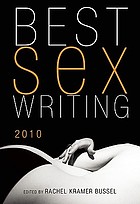
Best Sex Writing 2010 edited by Rachel Kramer Bussel. None of the libraries around here had a copy and I finally had to resort to buying my own … not that I’m sorry. The 2009 anthology rocked. I used a gift certificate from my friend Minerva to Trident Booksellers to buy this one and I’m really looking forward to checking out the roster of essays by Diana Joseph (“The Girl Who Only Sometimes Said No”), Brian Alexander (“Sex Surrogates Put Personal Touch On Therapy”) and Betty Dodson (“Sexual Outlaws”), Violet Blue (“The Future of Sex Ed”) and many more.

Feel Bad Education: And Other Contrarian Essays On Schooling by Alfie Kohn. Education and parenting activist Alfie Kohn is definitely one of my “auto read” authors, ever since I devoured his Punished By Rewards as a teenager (yes, I was that nerdy). This latest I ordered with a Christmas gift card from my uncle and aunt and I’ve been keeping it as a treat for after my thesis was finished.

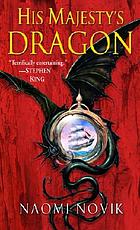
A friend of ours recently lent Hanna and I the first six volumes in Naomi Novik’s Temeraire series described to us as “Napoleon … with dragons.” Although we’ve been told Napoleon doesn’t actually ever ride a dragon. I will report back and let you know whether this is true, or whether one gets to actually glimpse the military leader aloft. Stay tuned!

LibraryThing’s April Early Reviewer batch yielded a memoir by Patricia Harman, Arms Wide Open: A Midwife’s Journey. As I was saying to friends this past weekend, I’m at a point in my life where I honestly don’t see myself becoming a parent, and I’m not only okay with that but more than a little relieved. I think I’d be a damn good parent — just like I think I’d be a damn good educator — but neither of those life paths are something I’m passionate about choosing. (The dissonance between what one is “good” at and what one is passionate about is a whole separate blog post). But being a non-parent has not lessened my interest in the lives of children and families, or in how we as a society can better accommodate children and their families at the very beginning of their lives. Hence my pleasure at being offered an advance review copy of Harman’s book. If I’m lucky, it’ll arrive before I hit the road and I’ll be able to take it with me. Regardless, look for a review of this one in the future.

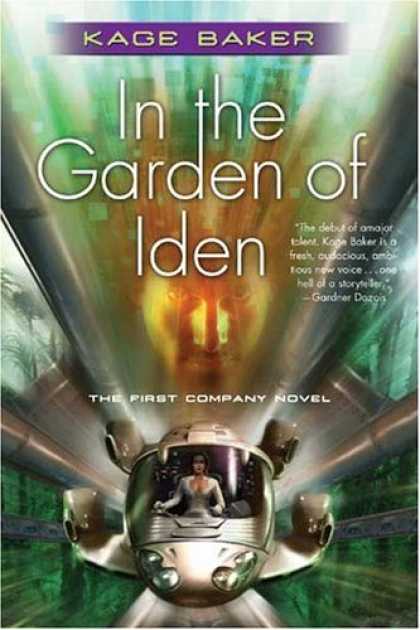
Garden of Iden by Kage Baker. Yes, I’m still working my way through this one, the first in Baker’s “Company” novels. Hanna assures me 1) that the first one is a slog and 2) that it’s absolutely necessary to reading the rest of the novels, novellas, and short stories set in the ‘verse. So … yes. This one will be in my bag. And it’s time travel, so I’m committed on principle.

Also Perdido Street Station by China Mieville. Who writes books that are amazing and difficult and trascendent and messily corporeal all at once. Made it halfway through this one last summer before I had to put it down. Maybe I’ll have more luck this time around. I’d really like to, ’cause god it was good.

To End All Wars: A Story of Loyalty and Rebellion, 1914-1918 by Adam Hochschild. Ever since reading Hochschild’s King Leopold’s Ghost for a class on modern imperialism in undergrad I’ve been a fan. (He’s also on my auto-read list). I particularly admire the way this activist journalist blends detailed primary source historical research with a passion for human rights and nonviolence. This latest work looks at peace activism during the war to end all wars. I have it on old at the library and, again, it might not come in ’til after we’re gone but a girl can hope, yeah?

And finally, I have been sent a PDF advance review copy of Jessica Yee’s much-discussed anthology Feminism For Real: Deconstructing the Academic Industrial Complex of Feminism which has the honor of being the latest work in a long tradition of dissident feminist voices speaking from the margin of what is (still today) a far from mainstream movement. I’ve been avoiding full reviews of the work since I plan to review it myself, but am excited to discover new voices and new perspectives on the activism I hold near and dear to my heart.

*If you’re reading this and you’re in Michigan and I haven’t been in touch with you, please don’t feel hurt. A week, I’ve learned, is a really really short time to spend in one’s hometown and there just isn’t enough time to do everything and see everyone and stay sane. At least if you’re me and you’re also bringing your girlfriend to visit your childhood home for the First Time Ever. (She’s met the parental units, but not been to Michigan). So we’re trying to take it slow and not over-schedule and burn out spectacularly.  If you’re reading this and you want to see me, email and maybe we can work out coffee or something.

booknotes: stuff I’ve been reading

21 Thursday Apr 2011

Posted by Anna Clutterbuck-Cook in book reviews

≈ Leave a comment

Tags

family

With one week (!) left until I hand in my completed Master’s thesis, my brain for writing blog posts has wandered away somewhere … hopefully to return. In the meantime, I thought I’d take the opportunity to clear out the backlog of unfinished “booknotes” in the queue via one omnibus booknote highlighting some of the titles I have actually been reading, in and around thesis revising and fanfiction perusing.

1) Sara Vowell, Unfamiliar Fishes (2011). My father sent me a signed  (have I mentioned my dad is awesome?) uncorrected proof of this latest book by NPR essayist Sarah Vowell for my 30th birthday. I considered saving it until after thesis revision, as a treat, but it didn’t last that long. Vowell’s last book, The Wordy Shipmates explored the founding of the Massachusetts Bay Colony. Unfamiliar Fishes takes up as its subject the U.S. relations with Hawaii, beginning with the arrival of the first American missionaries (from Boston, unsurprisingly) and ending with the forced annexation in 1898. If you enjoy Sara Vowell’s style, then I’m pretty sure you’ll like this book. As an historian, I appreciate the way she takes history seriously and doesn’t shie away from the contradictions and paradoxes inherent in human interactions.

2) Patricia Briggs, River Marked (2011). This is the sixth installment in Briggs’ series starring shape-shifting car mechanic Mercedes Thompson. In the interest of avoiding major plot spoilers, I will just say that while this isn’t my favorite of the bunch, I continue to like the way that Briggs balances Mercy’s relationship with her lover (now husband) Adam Hauptmann with Mercy’s own independent explorations of her shape-shifting identity, her family history, and her development as a new member of Adam’s werewolf pack. The nature of the story took Mercy away from the usual cast of characters, which was a little sad since I’ve grown fond of following the lives of her supernatural friends. At the same time, we delved a bit further into Mercy’s shadowy genealogy, which was an interesting new element. I’m hopeful that in the next installment, Briggs will take this new knowledge of Mercy’s and return her to the extended family and friendship network I’ve grown to love. Meanwhile, I’m looking forward to the latest installment of her Alpha & Omega series (tentatively due out in January 2012).

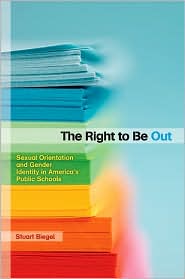
3) Stuart Biegel, The Right To Be Out: Sexual Orientation and Gender Identity in America’s Public Schools (2010). Biegel is on the faculty of the UCLA School of Law and an expert in the field of education and the law. In this highly readable volume, Biegel tackles the rights of students, teachers, and administrators to be open about their sex, sexual orientation, and gender identity in the context of America’s public schools. Through an examination of case law, Biegel argues that there is a growing precedent for youth and adults alike to claim the “right to be out,” that is the right to be open about fundamental aspects of their identity, in the public sphere — including public schools. Furthermore, they have the right to be out and to expect protection from persecution (bullying, workplace discrimination, harassment) for their beliefs. Biegel explores the legal ramifications for schools that will be held accountable for protecting their students and employees from discrimination and violence. It was a quick read, and I am glad to have it in my list of sources on the intersection of education, sexuality, and the law.

4) Michael Cart (editor), How Beautiful the Ordinary: Twelve Stories of Identity (2009). Our friend Diana picked up this anthology of short stories at a recent book swap and forwarded it on to Hanna and I. As is the nature of short story anthologies with multiple authors, I enjoyed some of the stories intensely and felt unmoved by others. I particularly liked David Levithan’s “A Word from the Nearly Distant Past,” Ariel Schrag’s comic strip about attending a dyke march, and “First Time” by Julie Ann Peters, the story of two lesbians who are very much in love and in lust (positive depictions of teenage sexuality for the win!). It’s a mark of how far queer YA fiction has come in the past two decades that the stories in this anthology are so diverse and multivocal. As Levithan observes (in the phrase from which the title is drawn), “how beautiful the ordinary becomes once it disappears.”

5) Kage Baker, In the Garden of Iden (1997). And finally, now that thesising is winding down, I picked up book one of Kage Baker’s science fiction / historical fiction series about the mysterious Company. The Company is a corporation of immortal operatives who travel through time and space supposedly rescuing the planet from human destruction while profiting enormously from their skillful maniplations of human history. I’m not far enough into the book (which Hanna assures me is both essential to understanding the series as a whole and also one of the clunkier installments) to offer much by way of informed review. I’ll just say that as someone who has had a more or less life-long affair with novels involving time travel, the basic concept is definitely something I can get behind. And the handful of short stories I’ve read in the same universe definitely tell me I have something to look forward to.

That’s all for now folks! Look for a “harpy week” post this Sunday, a ficnote on Tuesday, and perhaps in the next month or so a return to more regular narrative blogging. And actual full-length booknotes to boot!

booknotes: serving LGBTIQ library and archives users

07 Thursday Apr 2011

Posted by Anna Clutterbuck-Cook in book reviews

≈ Leave a comment

Tags

gender and sexuality, librarians, politics

The most recent batch of Early Reviewer titles offered at LibraryThing included this collection of essays for library and archives professionals: Serving LGBTIQ Library and Archives Users, edited by Ellen Greenblatt (Jefferson, N. C.: McFarland & Co., 2011). Being a librarian, I naturally put my name in for a copy and, lo!, I recieved it in the mail earlier this week.

Serving LGBTIQ… is a follow-up volume to Greenblatt’s Gay and Lesbian Library Services (1990), now twenty years out of date. As Greenblatt observes in her introduction to Serving LGBTIQ, a lot has shifted in the queer community and in the world of library and information science during the past two decades.

Most obviously, the scope of the book has broadened to include more letters in the alphabet soup of sexual identity and orientation. Linguistically speaking, I really, really wish they’d just gone with “queer.” The repeated use of “LGBTIQ” throughout the text was so clunky it made me want to scream … plus it just makes me think of the identities they’ve left out (neither asexuality or poly make it in) rather than reassuring me they’ve been all-inclusive.  At the same time, there does seem to have been honest effort put into the contents of the volume to provide a diverse range of topics — not simply essays about gay and lesbian folks under the guise of writing about non-straight communities in all their glorious iterations.

Another way in which the world of queer library services (indeed all library services) has irrevocably shifted since 1990 is the advent of the internet and the way in which online access to information and social networking has so rapidly saturated our culture. In 1990, few of us had heard of or made us of the World Wide Web; today most of my professional life is spent interacting in some fashion with the tools available to me via the internet (including the acquisition of this book and the blog post I’m currently writing about it). A significant number of essays in Serving LGBTIQ discuss the particular importance of internet access to queer folks as a source of information and as a space in which to connect with other queer people and explore their sexual desires. Given the popular concern about not only non-straight sexuality but also access to sexually explicit material online in general, a number of the essays stress the importance of ensuring that queer adults and teens (particularly) are not blocked from accessing needed information and social networking resources because of internet filters or other use policies.

I feel like I repeat this mantra a lot when it comes to anthologies, but it really is a truism: anthologies are almost by default uneven in nature. If you think this book might have something of use to you, I’d suggest at least browsing the table of contents before ordering … unless you happen to have a book budget and this particular text fits the bill of a professional purchase. This is a book geared distinctly toward practicing librarians (and, to a lesser extent, archivists), with an emphasis on praxis over analysis or theorizing. There are a lot of essays that trend toward case studies or profiles light on analysis, and pieces which read more like policy recommendations rather than in-depth examinations of the topic at hand. I actually found the profiles of various institutions (such as community-based archives), initiatives (oral history projects, web-based history projects) and political case studies (attempts to ban YA literature with queer themes) to be the most interesting part and potentially useful part of the volume. The recommendations for collection development, outreach initiatives, and other ways to be “queer friendly” felt fairly boiler plate to me. Maybe for folks who feel intimidated by the idea of reaching out to, or supporting, non-straight patrons, the practical advice in this volume could cut through a lot of the anxiety or fear. As it was, I’m not sure I learned a whole lot I don’t already know about the basics of being open and welcoming to all folks, regardless of orientation and self-presentation.

And ultimately, I suppose, the hope might be that guides like this will eventually become redundant or superfluous, as community spaces like libraries and archives move away from exclusionary practices (whether through intentional discrimination or simple thoughtlessness) and toward more democratic, inclusionary ones. It will be interesting to see what a volume of essays addressing these same (or similar) concerns will look like in 2031 – twenty years down the road.

booknotes: dare … to try bisexuality

10 Thursday Mar 2011

Posted by Anna Clutterbuck-Cook in book reviews

≈ 1 Comment

Tags

gender and sexuality

Once again, LibraryThing‘s Early Reviewer program has provided me with an advance review copy of something related to queer sexuality — although this time around the results were (intentionally or not) much more hilarious than Making it Legal. Dare … to try Bisexuality by Pierre Des Esseintes is a slim 100-page volume, originally published in French and one installment in a series of instructional books that include such titles as Dare … to Have Anal Sex and Dare … to Try Bondage. “Saucy sex advice from France!” announces the cover cheerfully.

You might ask why I requested a review copy of this book (and it would be a fair question). I had misgivings about it from the title alone: “try” a sexual orientation? Um … come again?  I mean, I’m definitely a believer in sexual fluidity, but that doesn’t imply that “bisexuality” is something one can take on and take off at whim, like a new sweater or experimental color of lipstick. Rather, it suggests that our sexual desires and affectional attractions are unpredictable, and that we should cultivate an openness to the possibility of change over time.  The title of this book suggested, on its face, a much more … gung ho! approach? And I was wary.

What I realized, once I’d cracked the spine, was that the title is, in part, suffering from cross-cultural meanings becoming lost in translation.  Whereas an American audience would read “bisexual” as an orientation, this French manual is clearly situating it as a lifestyle. What, in American terms, is probably more aptly described as being “polyamorous,” seeking out open or swinging relationships, or perhaps just slutting it up with partners of multiple sexes. Well, with both male and female partners. Maybe trans folks as well, but the text is unclear about that.

Actually, Des Esseintes is all over the frigging map when it comes to what, exactly, he means by “bisexuality.” Sometimes he seems to approach it as an orientation, sometimes he actually seems to be talking more about transsexuality (chapter one is titled “Bi: Between Two Sexualities or Both at Once?” and discusses the myth of Hermaphrodite). Most of the book treats bisexual behavior (i.e. individuals who seek out both same- and other-sex sexual partners) as something fun and optional. Something any person might try out as a possible approach to sexual relationships that could work for them. This is both highly amusing and highly irritating — throughout my reading I was distracted by trying to decide whether the man was being delibrately over-inclusive in his terms and examples, or whether this was just a case of sloppy thinking and/or sloppy translation. I still haven’t decided.

Overall, the book invokes pretty much every stereotype about bisexuality as well as relying heavily on false notions of gender difference. Take, for example, this passage in the chapter on women’s bisexual behavior:

At some point in their lives, some girls, whether or not they live with a man, need a kind of loving they can’t get from guys. All the women who opined to us about the differences between men and women in bed highlighted the tenderness and gentleness that women alone can deliver (53).

Note how this passage implies that people who feel bisexual desires “need” to act on those desires, because they won’t be totally satisfied with the sex that they’re going to get from a single partner (representing only one of the sexes they are attracted to).  Plus, “women alone,” apparently, are capable of delivering tenderness and gentleness in bed … an assertion that I’m pretty sure would astound a great number of women in relationships with men.  Des Esseintes goes on to suggest that lesbian lovers are all, by virtue of gender, noncompetitive cuddlefests … an assertion I think would come as a surprise to many lesbians who enjoy a little topping/bottoming action in the bedroom in addition to candles, massage oil, and snuggling.

The most positive thing I can say about this book, really, is that it is written in the spirit of informational neutrality. For all its stereotypical depictions of sexuality and sexual relationships, the book conveys basically responsible advice about sexual health (see “A note on taking precautions before blowing a stranger,” p. 33) and is blithely encouraging to its readers about giving “bisexuality” a go, on the chance it floats your boat. Chapter six (“Bi in Bed: Choreography”) offers step-by-step instructions — with illustrations! — for various three- and four-person positions for getting off. “You too!” the book seems to shout, “can recruit your friends and lovers to enjoy the pleasures of The Magic Square!”

Go forth and be amused.

booknotes: making it legal

24 Thursday Feb 2011

Posted by Anna Clutterbuck-Cook in book reviews

≈ Leave a comment

Tags

books, gender and sexuality, human rights, politics

Through LibraryThing‘s Early Reviewer program I was sent an advance review copy of the second edition of NOLO’s Making It Legal: A Guide to Same-Sex Marriage, Domestic Partnerships & Civil Unions, by attorneys Frederick Hertz and Emily Doskow (Berkeley, CA: NOLO, 2009; 2011). The book aims to be a practical nuts-and-bolts guide for same-sex couples considering marriage. It offers a whirlwind tour of the history of same-sex marriage, the current international and domestic context for such marriages, and the nitty-gritty of marriage and divorce laws as they apply to all couples — as well as specific advice for same-sex couples who are considering forming legal relationships.

The authors go beyond describing legal rights and obligations and also discuss political activism and the emotional and sociocultural meaning — and potential downsides — of marriage commitments. Hertz, who appears to be the primary author of the text, describes himself as a cautious in his advice to couples seeking to enter marriage. “I’m often branded an antimarriage lawyer,” he ruefully admits, “because I tend to focus on the risks and downsides of this powerfully attractive institution.” He points out that “the legal structures of conventional marriage and the patchwork of nonrecognition by other jurisdictions create fairly serious legal problems for many couples, and it is just plain unwise for anyone to get married without understanding the potential risks and benefits” (3).

As someone in a lesbian relationship, and as someone who has actually discussed marriage with my partner, I found a lot of the practical legal information in this text helpful. Particularly useful are the state-by-state charts detailing what options, rights, and responsibilities same-sex couples have when entering into formal partnership agreements in different states. Hanna and I are fortunate enough to live in Massachusetts, one of the states that currently allows us to marry and enjoy all of the same state benefits as heterosexual married couples. However, these benefits do not extend to the federal level, nor would that marriage be considered valid in a number of other states (including my home state of Michigan) — that’s where the “nonrecognition” issue comes in. This means, practically, that same-sex marriage can be a bureaucratic headache. For example — since it’s that time of year — married same-sex couples in the state of Massachusetts file a joint tax return at the state level … but are single for the purposes of their federal tax returns. Which means creating a mock joint federal tax return and using those numbers for the state level returns. Even more tax paperwork — the joy!

And if we ever moved across state lines for work or family need (or hell, for the pleasure of it) then the state we moved to would get to determine whether we were married or not, based on their own local laws. Not to mention if we decided to move internationally.

I found Making It Legal at its most annoying when it shifted away from describing the practial ramifications of same-sex partnership options (both forming and dissolving those partnerships) and attempted to tackle the other aspects of marriage, such as “applying logic to picking a partner.” Wtf? Dude! You’re not a trained marriage counselor so back the fuck off!

On the whole, though, it was a highly readable guide to the legal landscape, and one which I definitely plan on consulting as Hanna and I move forward with the business of making our relationship into a long-term reality … however we decide to formally recognize it.

booknotes: the self-organized revolution

10 Thursday Feb 2011

Posted by Anna Clutterbuck-Cook in book reviews

≈ 2 Comments

Tags

children, education, human rights, politics

The other day, while I was tracking down an errant citation for my thesis I happened to stumble upon the fact that an historian of education (and education alternatives activist) whom I greatly admire had put out a collection of essays on education activism in 2008 that I had somehow missed. So needless to say I ordered a copy. In The Self-Organizing Revolution: Common Principles of the Education Alternatives Movement (Brandon, VT: Holistic Education Press, 2008), author Ron Miller considers a variety of “education alternatives” (home-based education, Waldorf and Montessori schools, free schools, etc.) and suggests that although they have historically been resistent to collectively identifying as a movement in fact practitioners and advocates do have a common set of core principles.

The principles Miller identifies are:

  • Respect for every person, including children (human rights)
  • Balance (openness rather than fixed ideology)
  • Decentralization of authority (human scale democracy)
  • Non-interference between political, cultural, and economic spheres of society
  • A holistic or integrative perspective

To me, it is interesting to think about how these five principles or perspectives on humanity, social organization, and human growth, articulate a particular subculture that stretches across different educational counter-cultures (i.e. the home education movement) but doesn’t wholly define any one of them. There are home educators out there who in no way subscribe to this vision of how education could or should be. There are public school teachers who struggle within the confines of institutional education to live out a form of education that fits this paradigm. I appreciate how Miller is trying to build bridges between segments of a very heterogeneous bunch of folks (what was that about herding cats again?)

I’m particularly pleased to see the way he foregrounds the issue of human rights and children’s rights. “Rather than treating individuals as a means to some culturally determined end (such as national pride or global economic dominance),” he writes, “this perspective insists that every human being is an end in oneself” (48). Decentralization of authority and the principle of noninterference follow from this first principle: in order to ensure that the needs of individuals are not subsumed by the interests of the state or the interests of corporations, education must be dis-entangled from government and for-profit enterprise.

This is not to say Miller believes that the government should not play any role in ensuring that all individuals have access to educational opportunities. Only that he does not believe the government should dictate what should be in the curriculum and how it should be taught. I am not particularly persuaded by his vision of voluntary community-run charities to fund educational programs. But I see in it the seeds of a new way of thinking about funding education: A future system that operated more like the National Endowment for the Humanities, perhaps, than like No Child Left Behind.

This is definitely a book written for movement “insiders” — folks who already have at least some working knowledge of pedagogical theories and practices, the major thinkers in counter-cultural education, and the recent history of educational alternatives. If you weren’t familiar with the work of people like John Holt or know at least a thumbnail version of the history of Montessori education the book might feel pretty shallow and cursory to you. Even I would have appreciated a bit more fleshing out of Miller’s vision of what a human-right-centered education would look like. Other historian-activists such as Joel Spring (Wheels in the Head) and Clive Harber (Schooling as Violence) have written a much greater length about possible models for an alterntiave to the national-military-industrial model we’re currently stuck with and flailing to sustain.

You can read selections of Miller’s work — including some of the essays that make up this book — online at Paths of Learning.

a year of feminist classics, month two: the subjection of women

01 Tuesday Feb 2011

Posted by Anna Clutterbuck-Cook in book reviews

≈ Leave a comment

Tags

blogging, feminism

unknown woman reading
from the National Media Museum

The Year of Feminist Classics challenge was off to a good start last month with Mary Wollstonecraft’s A Vindication of the Rights of Woman (1792). Check out the project blog for good conversation, contextual information, and links to participants’ own blog posts on the text and the experience of reading.
This month, the group is moving on to read another classic English-language text, this the 19th century essay on “The Subjection of Woman” (1869) published by philosopher John Stuart Mill and likely written in cooperation with his wife, Harriet Taylor Mill. As with Vindication, this work is out of copyright and can be found in multiple formats online.

Internet Archive (various formats to read online and download)

Project Gutenberg (various formats to read online and download)

LibriVox (MP3 audio download)

Please join in with the conversation if you are interested and have time to read even an excerpt of the work. And looking ahead to March, the readers will be moving into new territory with Henrik Ibsen’s A Doll’s House.

booknotes: the sixties

27 Thursday Jan 2011

Posted by Anna Clutterbuck-Cook in book reviews

≈ 1 Comment

Tags

british isles, education, feminism, history

Jenny Diski’s slim contribution to the series BIG IDEAS // small books (Macmillan Press) is a historically-minded memoir of The Sixties, that period of social foment between, as she dates it, the mid-1960s and mid-1970s. Between “the rise of popular culture” and “all the open-ended possibilities … began to narrow” (3). Diski is English, so her Sixties were the British Sixties, kicking off with the Beatles and the fashions of Swinging Sixties London (picture Emma Peel in the Avengers) and ending with the rise of Tory, Thatcher-ite politics. In six brief chapters, she surveys consumer culture, drug culture, sexual liberation, and movements for social change: principally the feminist movement and the free school movement.

I’m not particularly sure what Diski was going for in this book. Granted I read it very quickly in a single sitting one night when I couldn’t fall asleep. But still. On the one hand, it attempts to survey cultural trends in an overview sort of fashion, to speak for more than just herself — she uses “we” throughout to speak of her cohort of youthful enthusiasts. Yet at the same time, Diski’s experience is a very personal one. An unhappy adolescent, she was kicked out of school for using ether in her early teens and soon thereafter left her parents’ care for good. She was heavily involved in the drug scene in London, checked herself in and out of mental health institutions throughout the 60s and 70s, had a lot of very unhappy sex, was involved in starting an alternative school, went back to rehab … despite the way her words cue nostalgia and a continued commitement to the values of her youth, the book manages to convey very little sense constructive joy.

Diski seems to have settled on wistful nostalgia lost opportunity — though opportunity for what exactly remains fairly nebulous — woven together a rather pessimistic interpretation of these countercultures as ultimately paving the way for the conservative revolution. Rather than interpreting the rise of neoliberal conservatism (Reagan on this side of the pond, Thatcher on that) as a backlash against the chaos of the Sixties, Diski sees it as a natural outgrowth: hard-right concepts of privitization and individualism dovetailing neatly with left-wing desires for decentralization and exploration of the self. “I’d resist the claim that the Sixties generation were responsible for the Tatcher years, as I would resist the notion that the Jewish community in Germany were responsible for the advent of the Nazis,” she writes (should her argument automatically lose according to Godwin’s law?). “But sometimes I can’t help but see how unwittingly we might have been sweeping the path in readiness for the radical Right, preparing, with the best of good intentions, the road to hell for paving” (110).

While as an historian of this period I am inclined to agree that the argument has merit — the radical Right employed and benefited from the theoretical frameworks developed on the radical Left much more than either side likely wants to admit — I am unsure what Diski wants us to do with this observation. She implies, though never develops the argument fully, that the desire for democratization, decentralization, diversity, and exploration of the self-in-relation-to-others somehow fits in with the far Right agenda. And that therefore the very foundations of the Sixties counterculture are suspect, tainted.

I’d argue this is a confusion of external appearances with deeper values. It is akin, in my book, to arguing that because the Religious Right has utilized Christian scriptures for power-hungry, poisonous ends, that the Bible is worthless as a spiritual text, and all Christians are somehow in (perhaps unwitting, yet still substantive) collusion with those forces inimical to life. I realize there are a lot of folks — particularly on the secular left these days — who do indeed argue the very perspective. Perhaps Diski is one of them, although I know nothing about her personal religious values. I find such wholesale dismissal of complex philosophies and traditions to be disheartening; imaginative “third way” options are often sacrificed as a result.

Which is kind of what I felt when I read Diski’s chapter on free schools. She focuses specifically — aside from recounting her own experience helping to found and run an experimental community school — on the pedagogical writings of Ivan Illich. Illich is known best for his influential critique of institutional schools, Deschooling Society (1971), which argued that institutional schools — designed to support the modern corporate and state interests — are antithetical to authentic learning. Illich argued that a much more human-centered, constructive approach to teaching and learning would be to establish community-based learning centers that would serve as a general clearing house for those with skills willing to teach and those with the desire to learn. As the title of his book indicates, Illich was interested in a whole-sale revisioning of society, as a re-tooling of learning would entail a re-tooling of the rest of the economic and socio-political culture in order to accommodate peoples’ freedom as individuals to learn according to their own design. Diski classifies him as a libertarian, which is perhaps fair, but also suggests that he would have found a home in Margaret Thatcher’s government, as one of her “theoretical advisors” (110).  While I don’t know enough about Illich’s overall political views to argue what he would or would not have done if given the chance.  However, as a radical Catholic priest who — as far as I’ve been given to understand — was deeply suspicious of institutions across the board — it is difficult to see him participating at such a high level in government. Let alone a government that was so heavily invested in maintaining the power of big business, the military, and so forth.

As Diski herself writes, the point was “to dispense completely with structure, to undercut the authority of hierarchy and the hierarchy of authority” (110). This, for some reason, appears to have surprised Diski when she revisited Illich in preparation for writing this book. She is appalled at the idea that no centralized system would be in place to advocate for certain bodies of knowledge, and sees in such a centralized, non-authoritarian vision the spectre of violent anarchy and increasing inequality. Of privatized interests and a voracious economic dominance. In short, Diski is conflating a vision of human liberation from cultural conformity, institutional tyranny, and systems of oppression, with a right-wing political liberatarianism that ignores (of, often, actively supports) the way in which power is used and abused by human beings to marginalize and control the vulnerable. She does not acknowledge the sister-discourse within the educational alternatives movement concerning common responsibility, reciprocity, social justice, and peace.

Which is, in the end, where I feel her analysis of “the Sixties” as a period of cultural and political foment falters. To say that the upheaval of the postwar era lay the foundations for the rise of conservatism in the late 1970s is a valid argument, but her failure to explore fully the way in which left-leaning calls for personal liberation were twinned (in both philosophy and practice) with collective responsibility for the well-being of humanity and the planet as an ecological whole. It is also to ignore the individuals and groups that have continued to advocate this vision, even as the conservative agenda has come do dominate mainstream discourse. Perhaps in a lengthier work Diski could have convinced me, but given that she offered her thesis with such brevity, I found myself still unconvinced.

booknotes: the perfect summer

20 Thursday Jan 2011

Posted by Anna Clutterbuck-Cook in book reviews

≈ Leave a comment

Tags

british isles, history

The Perfect Summer: England 1911, Just Before the Storm, by Juliet Nicolson (New York: Grove, 2006) reads like a cross between a gossip column and a cache of family letters — with a dash of historical analysis thrown in here and there. Nicolson has chosen as her subject the Season (May to September) of 1911, the summer before the Titanic would sink and three years before the conflagration that came to be known as The Great War (“the storm” of the title) would engulf Europe. Drawing on memoirs from multiple social strata (a butler’s tell-all narratives; a débutante’s diaries) Nicolson manages to piece together a remarkably non-hagiographic portrait of a summer, despite the fact that Perfect Summer reads like one long anecdote pieced together out of a series of little gem-like stories.

For example, we learn that Lady Diana Manners, who “came out” into society in the summer of 1911, was not as alarmed as her peers about the prospect of mixed-sex socializing, since she had an older brother and also because “her elder sister Marjorie had held hair-brushing sessions during her first season to which Diana and the young men who admired Marjorie were invited.”

Hair-brushing sessions? Does anyone else’s mind go to places you have the feeling it should not go with that phrase?

Okay. Just checking.

But we also get stories about the heat-wave and drought that enveloped England during much of the late summer, causing so many heat-related deaths that the newspapers stopped reporting them (they ceased being “news”) and crops failed. Industrial workers and schoolchildren went on strike (for better wages and better meals, respectively) and nation-wide people hotly debated the merits of a proposed National Insurance Act. In other words, the “perfect summer” may not have been so perfect after all.

On the one hand, there are certainly more comprehensive scholarly analyses of the era available, as well as texts that focus more specifically on particular aspects (the suffrage movement barely gets a look-in!). Still, the book is a quick read and a nice companion history to Masterpiece Theater’s current costume drama “Downton Abbey” — which opens with the sinking of the Titanic and will (I anticipate) close with the outbreak of the war. And Nicolson has followed the book up with a history of Britain between the wars, The Great Silence (2009) that I’m looking forward to picking up.

reading the (lesbian) classics: beebo brinker

11 Tuesday Jan 2011

Posted by Anna Clutterbuck-Cook in book reviews

≈ 1 Comment

Tags

gender and sexuality, reading lesbian classics

As explained in the first installment of this series, “reading the (lesbian) classics” is a series of posts in which Danika Ellis of The Lesbrary and I read our way in a very haphazard manner through queer literature. Our method is basically picking out the books that sound like a fun time and taking it from there!) and chat about it, and then post our conversations on the interwebs. For this third installment, we read the lesbian pulp classic Beebo Brinker by Anne Bannon.

Danika and I exchanged our thoughts via email and I’ve color-coded our contributions in hope that it makes the reading a little easier for y’all.

Also, I don’t hide the plot spoilers on my post, so consider yourself warned if you care about that sort of thing. Danika posts our conversation with the plot spoilers obscured (unless you highlight them), so head on over to The Lesbrary if you want the “safe” version.

Anna: As a starter question, I’d be interested to know what you thought about the way Bannon portrays her character’s discovery of her same-sex desires (especially the way it is mediated to some extent by her mentor/roommate). It was an interesting contrast to the way the girls in our YA novels came to terms with their sexual orientation — primarily through their interaction with other girls and their own internal self-reflections.

Danika: You’re right, Beebo Brinker does explore a different way of coming to terms with her sexuality. It reminds me of the Well of Loneliness-style inversion theory of lesbianism, because she seems to really see her own (masculine) body as almost dictating her sexuality, and femme lesbians in this book, too, seem to be at least a little bit doubted, or seen as less queer. Beebo seems to discover her sexuality because of her appearance, not so much in relation to other people, which is interesting from a modern perspective, because we’ve really been trying to separate sexuality from gender identity. These earlier novels don’t do that, and it’s hard to separate a character’s gender identity from their sexuality, especially since they don’t even have the vocabulary for it.

The roommate is interesting, too, because it offers another instance of queer community, which has had different portrayals in the joint reviews I’ve done. Beebo Brinker has a primarily positive portrayal of community, with Beebo’s roommate as a mentor and guide, but it may also be because her roommate was a gay man, and therefore wasn’t directly competition…?

Anna: I think you’re right about Beebo (the character) being written in a way that signals her sexual orientation through her gender identity. That is, she’s a tomboy therefore she’s going to be gay and like girls sexually. There’s a fancy term for that concept of gender and sexual identity that I’m completely blanking on right now, but basically it’s a way of mapping sexual orientation onto the binary system of gender so that lesbian women = masculine (male-identified) and gay men = feminine (female-identified). This even turns up in science — like actual scientific theories — about brain chemistry. The assumption is that the brains of lesbian women will be organized more like the brains of straight men than they will straight women. That was an assumption that was pretty popular in the mid-twentieth century (and still is today). I imagine Anne Bannon didn’t even notice she was making those assumptions when she wrote the character. Whereas to us they’re glaringly obviously and seem clunky and stereotypical.

The other thing that’s stirred into the mix, although Bannon doesn’t come out and use these terms (at least not that I remember) is the butch/femme subculture of the pre-Stonewall era. We still have butch/femme as a subculture today, but it’s only part of the much larger queer community. From what I understand, the lesbian subculture of mid-century America was pretty saturated with butch/femme identities and role-playing. Even if you didn’t necessarily feel comfortable with either of those roles, you sort of had to pick one in order to situate yourself within the lesbian subculture. I’m probably overgeneralizing … but as I was reading Beebo I did think of that, and about the way in which Beebo is set up from the beginning as a masculine-identified lesbian, whereas her lovers are all female-identified.

And at least two of them (as you point out) are bi- or fluid (in today’s terminology) … the femme fatale whose name I’m temporarily forgetting and Venus, the film actress. Paula, from what I remember, is pretty confirmed in her interest exclusively in women, and seems interested in both femme women and butch women. So there aren’t necessarily any hard and fast rules in Bannon’s literary world about butch women only dating femme women, or vice versa. But there does seem to be a fairly firm … shall we call it a “typology” of lesbians being outlined in the novel? It sort of reads as an identification guide in places. For young lesbians in New York: here are your options!

Placing so much emphasis on Beebo’s appearance and on other people reading her as a dyke even before she herself is consciously aware of her same-sex desires is in some ways distinctly at odds with our present-day understanding of sexual orientation — that it is something which we know from within ourselves, and that we each have the right to self-identify our orientation and gender. On the other hand, the willingness of outsiders to identify Beebo as queer is certainly a phenomenon that’s alive and well in our culture — both among the queer subculture and within the mainstream population. We still very much read gender as a mark of sexual orientation even if we distance ourselves from that sort of conflation of sex and gender. As much as we like to say we’re beyond assuming that queer people fit certain stereotypes, we still enjoy (as a culture) crowing “we knew it all along!” when someone who’s gender-nonconforming turns out to be queer, and, conversely, expressing our disbelief when someone who is very gender-conforming comes out as a person with same-sex inclinations.

While gay men didn’t figure so heavily in the novel, what did you think of the way Jack and his boyfriends were portrayed? Do you see similarities and/or differences between the portrayal of lesbian identity and gay male identity in the novel?

Danika: Yes, it’s funny how that theory seems to carry through that seriously flawed theory from the ’20s to the ’60s. And you’re right, we’re still seeing traces of that. Gender identity and sexuality continue to be tangled together, and that’s with our attempts to separate the two. Beebo Brinker was also still in the early days of lesbian literature/pulp, when you couldn’t really have cliches, because there wasn’t enough to compare to. In those days, that assumption didn’t need to be explained: it seemed like common sense. It definitely doesn’t look that way from 2011, though.

I definitely saw some underlying butch/femme dynamics in Beebo Brinker. Again, it just seemed like common sense at that point, I think. Beebo was really aligned more with straight men, so of course she’d want a feminine woman. That was the standard for lesbian pulp, from what I remember. They tended to put two very feminine women on the covers, but the stories inside would be strictly butch/femme. It sort of suggests that they found it difficult to really wrap their heads around same-gender relationships, and would therefore try to slot it into heterosexual frameworks. Of course, butch/femme relationships in reality are rarely mere imitation of heterosexual relationships (they have great potential to challenge and subvert heterosexual norms), but the fact that they didn’t seem to be able to imagine a same-sex relationship that wasn’t butch/femme seems to suggest that lesbian pulp tried to imitate.

Hmmm, you’re right that there were some bi/fluid/pansexual/who-can-really-assign-a-sexuality-to-a-fictional-character characters, but weren’t those characters portrayed fairly badly? The femme fatale (I’m blanking, too) is clearly a villain and Venus seems to be trying to get the best of both worlds: to hold onto a husband for security but still go out looking for women. It doesn’t seem to be a very positive portrayal of bisexuality.

I think femme/femme relationships are touched on, but I don’t think we saw any butch/butch ones. I think in that era butches were more common, but femmes were more desirable in the bar world? So a femme dating a femme would be fine, but according to that ranking system, a butch wouldn’t want to be with a butch? Maybe I’m reading in terrible messages that aren’t really there at this point.

There’s definitely a “The Lesbian Guide to Lesbians in NY” aspect to it. In fact, apparently lesbian pulp pushed that a lot: Greenwich Village was painted as this almost mythical, utopian place for queer people, where you could find your community and a partner and be accepted. It supposedly encouraged a lot of women (like Beebo) to leave their hometown and go on this pilgrimage to Greenwich.

I think it’s the that order is reversed in our current conception of gender/sexual identity versus appearance. For Beebo, her appearance determined and shaped her gender and sexual identity, whereas now we think of people are expressing their gender/sexual identity through their appearance. I say gender and sexual identity because there are many ways to be read as lesbian (or gay or queer) through appearance: shaving one side of your head, or having short hair, or wearing rainbow accessories, etc. Gender expression through appearance is pretty obvious.

“As much as we like to say we’re beyond assuming that queer people fit certain stereotypes, we still enjoy (as a culture) crowing “we knew it all along!” when someone who’s gender-nonconforming turns out to be queer, and, conversely, expressing our disbelief when someone who is very gender-conforming comes out as a person with same-sex inclinations.”

I agree completely. I’m not particularly femme (more a T-shirt/hoodie and jeans sort of person), but I’m far from butch, so I get a lot of disbelief when I come out, even to fellow queers. It gets old fast.

Jack as a character is positive: he’s sympathetic and seems real. As a representation of gay men, though, I’m not sure. He likes younger men, he takes in vulnerable people (which is kind, but also puts that person in a difficult spot, if he’s attracted to them), and he doesn’t seem to be able to have a long-term relationship. It’s odd, because he’s neither the stereotype of the white picket fence gay guy who’s been in a relationship for decades and had a kid, etc, or the stereotype of the complete sleeping around gay guy. He falls in love and he takes his relationships seriously, but they’re short. And they’re usually with younger, vulnerable men. I’m really not sure how I feel about it. What did you think?

Anna: Whew! Lots of good thoughts. I’ll try to take them in order.

On the subject of the prevelence of butch/femme dynamics in lesbian pulp specfically, I was thinking as I read about the tension between writing sexually-explicit lesbian stories for a lesbian audience, and writing novels that would get passed the censors … and which might possibly have a cross-over audience? I have no idea if lesbian-themed novels had any non-lesbian readers (i.e. straight men), the way girl-on-girl porn has today. But that might be one reason why constructing lesbian sex in a basically hetero fashion might be a selling point. And the same thing for the covers which show feminine women, regardless of the narratives inside them.

Reading Beebo has definitely made me interested in learning more about the history of lesbian pulps and the role they had in both queer and straight culture during the mid-twentieth century.

I agree with you that the bisexual (or similar; the labels were different back then) characters were depicted pretty shabbily in the narrative. This seems to me like an ongoing tension within lesbian subculture … that is, who “counts” as lesbian or whose sexual desires for women are legitimate (and why). We saw this to a lesser extent in the two previous books we’ve reviewed — both of which were coming out / coming-of-age narratives dealing with adolescents. Although Beebo is (I think?) a teenager, age eighteen or nineteen, she’s on her own with a job and everything — not a highschoolers, the way the girls in Annie on My Mind and Hello, Groin! are.

I felt like the character of Jack was even more of a charicature than the women in the story — he’s there as Beebo’s guide/mentor but his personality sort of melds with Greenwich Village. He’s a stereotype: “Gay Man of the 1950s” rather than a fleshed out character, I thought. Almost a metaphor for gay life in New York as it’s portrayed in popular culture? Less of a person than a literary trope.

I’m curious what you thought of the sex scenes in Beebo? I was particularly charmed by the first scene between Beebo and Paula, which actually read like it was written by someone who has had and enjoys lesbian sex! It was one of the scenes in which the butch/femme dynamic seems the least present, actually. Thoughts?

Danika: Yes, lesbian pulp was definitely aimed at a straight male audience in much the same way as girl-on-girl porn is now. Most lesbian pulp was written by straight men. And as for censors, lesbian pulp fiction (and gay pulp fiction and other queer pulp fiction) had to, by the end of the book, be read as condemning this behaviour in order to slip past the censors. Hence the usual story of one or both of the lesbian dying or going crazy or straight. I guess Beebo Brinker was a later pulp, and that’s how it got away with a fairly happy ending? The Price of Salt was the first pulp with a happy ending (though I didn’t find it particularly happy, since I wasn’t a big fan of the relationship), and it was written in 1952, so I guess by the time Beebo Brinker was written it was more acceptable. I do find pulp fascinating, not to mention entertaining in a totally over-the-top ridiculous way. I guess I can laugh at it now because I personally never had to deal with it being the main portrayal of lesbians, which would make it less funny.

That’s true, there does seem to be a sort of policing of the boundary around the label “lesbian” and who counts as a real lesbian. It reminds me of the inversion theory view of lesbians in Well of Loneliness and others, which looked down on feminine lesbians as not being as legitimate as butch lesbians in a similar way that bisexual/fluid characters don’t seem to be seen as legitimate in Beebo Brinker. I wonder if this has shifted in a different way in modern times, with the greater acknowledgement of trans* identities. I wonder if this policing takes place in the opposite way now, in which masculine lesbians may be seen as trans*, and therefore not “real” “legitimate” lesbians? I really am just wondering, because I have no idea if that is true, or if the same standards of femmes = not lesbian enough hold today. Or if maybe the label has gotten even narrower. I’m not sure. I think it probably depends on the community. Well, that was a bit of a tangent.

Beebo is supposed to be a teenager/young adult, yes, but I think we see a very different view of youth in Beebo Brinker than in Annie On My Mind or Hello, Groin. These more recent teen lesbian books seem to view being a young adult as a continuation of childhood. AOMM, especially, seemed to conceptualize the characters as being quite young and childish. In Beebo Brinker, and I think it’s probably a reflection of the time period, Beebo is really a young adult. She is an independent adult, though she is new to the situation. Of course, that might also be because she has struck out on her own and is not living with her parent. I’m not sure which direction causation is there.

That does make sense. I can definitely see how Jack is a personification of Greenwich Village.

I would hypothesize that the sex scenes in pulp are probably the easiest way to see whether the book was written by a Real Live Lesbian who has actually had sex with another women rather than a straight man who’s just imagining it. The sex scenes did seem quite sweet and without any troublesome power dynamics, from what I can remember. They just seemed to explore each other, which is refreshing. I also found it interesting that they contrasted each other’s bodies (I can’t remember which part of the book this was, though). Often in scenes of lesbian sex, there are descriptions of how similar the partners are, but in Beebo Brinker, Beebo’s body is seen as… not exactly male, but definitely masculine. So their bodies are seen as complementary, not identical. I’m still not sure how I feel about that (inversion theory peeking through again?), but it was sort of refreshing in that scene.

I think I’ll leave it to you to wrap it up, if that’s okay? I think we’ve given it a pretty good look. I really like doing these joint reviews with you; they always make me see new things in the books. Thanks again for the great discussion!

Anna: “I would hypothesize that the sex scenes in pulp are probably the easiest way to see whether the book was written by a Real Live Lesbian who has actually had sex with another women rather than a straight man who’s just imagining it.” 

I like the way you put this, and couldn’t agree more! Even in non-pulp fiction, I’ve read “lesbian” sex scenes in fiction written by people who clearly have no idea how women make love. It’s embarrassing to read! And indicative of how little folks in general seen to understand about women’s sexuality and women’s bodies. I often wonder if gay men have the same frustration when reading about sex between men written by non-queer authors?

Yes, I think we have plenty for a post! Thanks to you, as well, for taking the time during your midwinter break to have this conversation, even though we were both a bit rusty on the details of the book.

← Older posts
Newer posts →
"the past is a wild party; check your preconceptions at the door." ~ Emma Donoghue

Recent Posts

  • medical update 11.11.22
  • medical update 6.4.22
  • medical update 1.16.2022
  • medical update 10.13.2021
  • medical update 8.17.2021

Archives

Categories

Creative Commons License

This work by Anna J. Clutterbuck-Cook is licensed under a Creative Commons Attribution 3.0 Unported License

Meta

  • Register
  • Log in
  • Entries feed
  • Comments feed
  • WordPress.com

Blog at WordPress.com.

  • Follow Following
    • the feminist librarian
    • Join 36 other followers
    • Already have a WordPress.com account? Log in now.
    • the feminist librarian
    • Customize
    • Follow Following
    • Sign up
    • Log in
    • Report this content
    • View site in Reader
    • Manage subscriptions
    • Collapse this bar