• anna j. clutterbuck-cook
  • contact
  • curriculum vitae
  • find me elsewhere
  • marilyn ross memorial book prize

the feminist librarian

the feminist librarian

Category Archives: book reviews

$1 review: virtual equality

26 Wednesday May 2010

Posted by Anna Clutterbuck-Cook in book reviews

≈ 3 Comments

Tags

gender and sexuality, politics

$1 reviews are posts about books I find (or Hanna finds for me) on the $1 used book carts at the bookstores we visit around Boston.
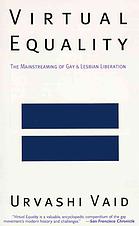
This past Saturday, Hanna found me a copy of Urvashi Vaid’s Virtual Equality: The Mainstreaming of Gay & Lesbian Liberation on one of the $1 carts at Brattle Book Shop. ‘Cause it had all the right keywords in the title, she picked it up for me (my girlfriend is awesome!). Published in 1995, it’s fairly dated — most notably in its repeated references to lesbian, gay and sometimes bi with trans issues completely ignored, even in the section on intersectional politics (more below).

Vaid is a community organizer and lawyer (she attended Northeastern University Law School here in Boston in the early 1980s) and during the 80s and early 1990s worked for the National Gay and Lesbian Task Force. This book is clearly influenced by that, since she focuses on law and politics at the national level, rather than the more cutural history, personal politics stuff I tend to find the most interesting to read and think about. As an activist Vaid is also very focused on the contemporary moment (mid-90s), a perspective that means her analysis ages more rapidly (in my opinion) than it would if she was taking a longer, cultural-historical view. But then, that’s clearly my own scholarly bias!

Having said that, I’m going to turn around and more or less contradict myself by sharing a couple of passages from Virtual Equality that I thought resonated nicely with my post a couple of weeks ago about the heavy reliance of lgbt advocacy on the biology-is-destiny argument, at the expense of arguing that choosing non heteronormative relationships can be a positive and ethical personal and social choice.

From the first chapter, “Virtual Equality” (p. 30)

Homosexuality always involves choice — indeed, it involves a series of four major choices: admitting, acting, telling, and living. Even if scientists prove that sexual orientation is biologically or genetically determined, every person who feels homosexual desire encounters these four choices

Just as, I would point out, every person who feels heterosexual desire encounters them.

The first involves whether we will admit the existence of our desire: Will we acknowledge to ourselves that we feel same-sex attraction? The second choice is whether to act on this desire: Will we risk engaging in this love? The third is whether we acknowledge to other people that we are gay, lesbian, or bisexual … [this] question never end[s], because the process of coming out to other people never ends. The final choices each gay person makes is how to live a queer life.

Again, I’m struck by how easily we could understand these questions in the context of human sexuality, full stop. Regardless of the nature of our attractions, every person makes a complex series of choices about how to articulate, act on, and share with the world their own sexualness. I don’t think these questions are unique to non-straight people, but I do think they are thrown into relief for anyone whose sexuality does not approximate the normative vision of what it means to be sexual.

From “Divided We Stand: The Racial and Gender Status Quo” (p. 289)

My problem with conservative views of gay and lesbian identity is twofold: I disagree with the reliance on biology as the reason gayness should be fully tolerated, and I disagree with the idea that single-identity politics is effective. Same-sex behavior may well be related to physical differences between homosexuals and heterosexuals, but if our purpose in this movement is to remove the stigma surrounding same-sex love, then both biologically gay people and those who simply fall in love ought to be embraced by our movement.

I’m not particularly comfortable with how she phrases this, as “biologically gay people” on one hand and “those who simply fall in love” on the other (wait: don’t people who are “biologically gay” fall in love too??), but she’s spent the few pages before this talking about the Kinsey data on people who identify as straight but nevertheless report same-sex sexual encounters at some point during their lives, so I think that’s what she’s trying to get at, as clumsy as it sounds.

Organizing around the notion that there is a fixed, definable gay and lesbian identity is far more convenient than organizing around the notion that homosexual desire is a potential in every person. It is also far less threatening to straight America. We are certainly more comprehensible when we speak and act as if there is such a thing as a gay gene than when we attempt to argue that we seek to liberate homosexual potential in all people! … But even biology does not limit its expression to one form of being. The fact that homosexual people are as multifaceted as humankind itself means that our effort to organize around one gay or lesbian identity will inevitably fail.

What she ends up arguing is for the end to identity-based politics (which is where we see how she is arguing against the late-80s and early 1990s narratives of identity and political advocacy). In its place, she urges the necessity of a broad coalition of people organizing not around accidents of personal experience or identity but rather (dare I say) values.

In the chapter on the political right (what Vaid identifies as “the Supremacist Right” to differentiate those who are interested in preserving the democratic process from those who use it as a means to a supremacist end) she writes specifically about the importance of discussing sexual values and ethics on the left, rather than leaving such discourse to the political and religious right (p. 324).

The most provocative and, in my view, important of [Suzanne] Pharr’s suggestions is the call that the gay and lesbian movement vigorously debate sexual ethics. We must talk about our values, what we do, what we won’t do, what we think is right, and what we believe is wrong.

And, I would add, share the outcome of those conversations with the wider world. I think that since 1995 there has been more discussion about progressive and/or leftist, feminist and queer sexual values — educators and bloggers have definitely been asserting more frequently the importance of not leaving the ethics debate to conversative interests. Vaid approaches the issue gingerly, with the bitter divisions of the feminist “pornography wars” in the recent past. It was heartening for me to realize, as I read this passage, just how far we’ve come since then in articulating and embracing the wide variety of human sexual expression, and arguing for the “safe, sane, consensual” ethic as a starting point for discussing the finer points of what it means to make moral choices as a sexually active, sexually joyful human being.

Obviously, the task is far from over (will it ever be?), but reading Virtual Equality was a small taste of a single political moment captured in time through prose, and I was impressed by how much the discourse has changed since then, even if the issues remain virtually the same. Hopefully, as we begin to speak differently, we’re live differently as well. As feminism has taught me over and over again: langauge matters like hell: speaking about what we value is, hopefully, a step in the direction of seeing what we value valued all the more in the dominant culture.

booknotes: silver borne

14 Friday May 2010

Posted by Anna Clutterbuck-Cook in book reviews

≈ Leave a comment

Tags

genre fiction

I’ve been all angsty the last couple of days, so I thought I’d slide into the weekend with something a little more lighthearted: a few thoughts on Patricia Briggs’ latest (#5) installment in the Mercy Thompson series, Silver Borne.

I’ve written posts about Briggs’ other books Bone Crossed (the forth installment) and Hunting Ground (in a related series) if you want a little background on what I like about these books. You know, other than their general shapeshifter urban fantasy goodness.

Mild spoilers below for anyone who cares.

Silver Borne picks up where any self-respecting novel should start: the return of a borrowed book. Mercy — the shapeshifter mechanic protagonist of the series — has borrowed, in Bone Crossed, a book of fae folklore from a fae antiquarian bookdealer friend of hers. What with one thing and another she still hasn’t had a chance to return it, and at the beginning of Silver she gets a cryptic message from him indicating he hopes that she is taking good care of it.

When she goes to return the book, Phin (the fae) is nowhere to be found.

Meanwhile, her old friend Sam — a former lover and ancient werewolf — who has been struggling with the ennui that threatens to overtake older werewolves in this particular universe — attempts to commit suicide. He fails because his wolf takes over and refuses to let him, but this leaves Mercy with a werewolf on her hands who may or may not be capable of self-control.

And then there’s the slight problem of Mercy’s current lover, the local Alpha werewolf, whom she’s finally chosen to be in a relationship with, but whose pack is not exactly thrilled to have a shapeshifter (rather than werewolf or full human) as their Alpha’s mate.

So Mercy has a lot on her plate: rescue a missing fae, return book that is more than it first appears, find Sam a reason to live before he mauls half the state of Washington, and on the way by assert her dominance as the highest-ranking female in the wolf pack, despite the fact she’s a shapeshifting coyote not a were.

In short, one big supernatural soap opera.

But I’m continually impressed by the way that Briggs writes her supernatural soap operas in a way that keeps her characters interesting and refuses to reduce them to stock characters. Or rather, encourages her stock characters to develop twists, three-dimensional personalities that stop them from being cookie-cutter chess pieces moving around the board for the sake of the story.

Of the three storylines she has going in Silver Borne, I found the most satisfying, actually, to be the one that remained largely in the background of the two most immediate plots (the magical book plot and the Sam in jeopardy plot): the ongoing issue of Mercy’s position in relation to the werewolf pack. Briggs turned what started out as a fairly contrived feeling “female werewolf jealous of interloper” story into an opportunity to flesh out a few of the female characters other than Mercy (something I’ve definitely missed in previous books) and also raise questions about the patriarchal structure of the werewolf pack itself which has potential for interesting developments in the future.

The Sam story, too, has potential for further development, and possibly a spin-off along the lines of the Alpha and Omega series, of which Hunting Ground is the second chapter. Sam is (rather conventionally, I’ll admit) saved from suicidal despair by the re-surfacing of a female fae he loved and lost, but despite her comparatively short “screen time” in the novel she emerges as a complex character with an interesting history. And the fact that she is fae (a supernatural population that coexists uneasily with both humans and wolves) offers the possibility for some interesting storylines that deal more directly with fae-human and fae-wolf politics and inter-species (as it were) relationships.

So anyway, if you’re looking for a quick and enjoyable summer read, and shapeshifter mechanics are your thing, definitely check out Mercy Thompson (or if you’ve already discovered her, enjoy the latest installment and keep your fingers crossed for more!)

booknotes: end of semester omnibus edition

07 Friday May 2010

Posted by Anna Clutterbuck-Cook in book reviews

≈ 1 Comment

This is the last week of the semester, and although I only had one class that met regularly (and will continue working on my thesis throughout the summer), I still feel that end-of-the-semester accumulation of Things Undone that always hits me this time of year.

A few of those Things Undone are some booknotes blog posts that have been sitting in my drafts file for weeks, waiting for inspiration to hit. Since inspiration is apparently being sucked dry by other things at the minute, here are some thumbnail reviews of a few books I read, enjoyed, and hope you’ll read and enjoy as well.

S. Bear Bergman | The Nearest Exit May Be Behind You. It’s been a while since I read a book from the library and loved it so much that I turned around and bought it a week later. The Nearest Exit May Be Behind You is just such a book. A collection of essays by self-described “gender-jammer,” author and speaker Bear Bergman, The Nearest Exit is like if Anne Lamott’s Traveling Mercies had been written on the subject of gender, rather than faith. Although it has some faith in it. And family. And stuff about trying your best to be a good person in the not-so-perfect world we live in. Just go read it, everyone!

S. Bear Bergman | Butch is a Noun. Since I loved Exit so much, I hunted down Bear’s other book, published in 2006, Butch is a Noun. While I’m still browsing my way through it a few essays a night, I’d say Noun feels less comfortable in its skin than the later book. It’s possible I’m just responding on an emotional level to the butch/femme culture so many of the essays are about, which is something I’ve never quite gotten on a personal level. Still, it definitely still has that gentle, forgiving, thoughtful Lamott quality I enjoyed so much in the later book. So enjoy this one too :).

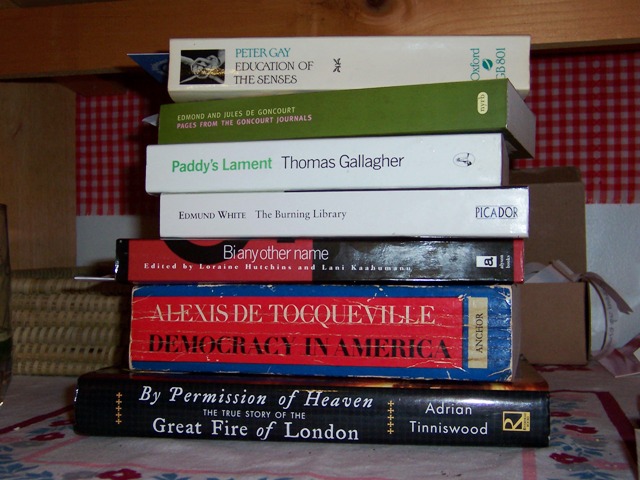
Loraine Hutchens & Lani Kaahumanu (editors) | Bi Any Other Name: Bisexual People Speak Out. Continuing on the theme of human sexuality (which I am wont to do, as you know), Hanna found this 1991 anthology for me on a dollar cart recently and I’ve been browsing my way through it. Twenty years is centuries when it comes to the politics and culture of sexual identity, and a lot of the contributions feel super dated . . . but it’s a valuable snapshot of bisexuality in an era where people with more fluid sexual identities felt intense pressure from the gay and lesbian community to identify as exclusively homosexual, and from the straight community to identify as hetero. Bi invisibility is still an issue today, but I think fewer queer folks, at least, question the very existence of folks who aren’t exclusively interested in one sex or gender.

Susan J. Douglas | Enlightened Sexism: The Seductive Message that Feminisms Work is Done. When I had this book in the reading room of the MHS one day, a researcher saw it and remarked “now there’s a contradiction in terms!” Which of course is Douglas’s point. She argues — drawing on her background in media studies and cultural criticism — that women of all ages are being sold neo-traditional notions of gender packaged as “feminist” or “post-feminist” by the media, marketers, and politicians who want to believe that inequality based on gender and sex is a thing of the past (or at least want us to believe it.

Rick Perlstein | Nixonland: The Rise of a President and the Fracturing of America. Perlstein is an independent scholar whose passion is clearly American politics: the 748 densely researched pages of Nixonland chart the political career of Richard Nixon in the context of the postwar/Cold War politics of 1960s and 70s America. While I am only part of the way through the book, I suspect he may be slightly over-stepping his evidence when it comes to arguing that Nixon’s style of presidential politics (and the opinions of those for and against him) are emblematic of our era. He spends more time on the ins and outs of politicking in Washington and less of the public’s response to said politics than I would like. But then, I’m primarily a cultural historian and an historian of ideas, not politics.

Connie Willis | Blackout. I had some vague hope of holding Connie Willis’ latest novel out as a carrot for the end of my semester — but then Hanna found a copy on the library’s express read shelf and I was a lost cause. (Blackout, readers should be warned, is volume one of at least a two-part narrative arc, the second volume of which is coming out in September. So if you won’t want to be left hanging, hold off.) The plot takes a while to gather steam, mostly because of the vast cast of characters and locations, all of which have to be introduced. But readers familiar with Willis’ time travel fiction, such as To Say Nothing of the Dog will likely find they can ride along until the critical problem becomes clear — while enjoying the period details on the way by.

Next on the reading list? Laurie R. King’s latest installment in the Mary Russell/Sherlock Holmes series, of course (The God of the Hive) and Patricia Briggs’ latest Mercy Thompson novel (Silver Borne). Not to mention (ahem) the more serious, scholarly reading that will likely come up in the process of drafting my thesis. Wahey! More books: here we come!

booknotes: best sex writing 2009

08 Thursday Apr 2010

Posted by Anna Clutterbuck-Cook in book reviews

≈ Leave a comment

Tags

gender and sexuality

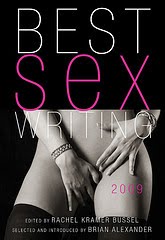
So apparently, Best Sex Writing 2010 just came out and I’m a year behind. But I picked up Best Sex Writing 2009 at Powell’s in Portland when I was there shopping with the birthday money my brother and his girlfriend had given me (thanks Brian and Renee!). I didn’t realize until after I’d gotten the book home that the woman whose torso is pictured on the cover has no navel which is freaky and probably means she is actually an alien from outer space, or possibly a genetically engineered human like Luke Smith. Which is a little not okay (and now I can’t stop noticing it), but does not detract from the essays within, which gather together awesome writing on sex from the past few years and bring it together for all of us to enjoy in one single place.

This anthology works well as a pick-and-choose anthology: you can read it from cover to cover or you can dip in and read whatever piece intrigues you at the time. The pieces included are sometimes erotic by not erotica — this is not a collection of fiction designed to arouse the reader. Rather, it’s nonfiction reporting, personal narrative, science writing, and opinion pieces that take as their central topic something related to the messy subject of human sexuality. In “An Open Letter to the Bush Administration,” dominatrix Mistress Morgana Maye writes the (then) commander in chief to complain that his gratuitous use of force is driving away business: her clients lose their taste for domination when real-life humiliation of prisoners in Iraq is plastered all over the nightly news. In “Silver Balling,” Stacey D’Erasmo recounts her humorous and inconclusive quest to discover the definitive meaning of sex-related slang term a friend tosses off during a phone conversation. On a more serious note, Don Vaughn reports on the sexual problems as a common (yet under-acknowledged) effect of PTSD, while Amanda Robb explores the Purity Ball phenomenon and Keegan Hamilton reports on how the “oldest profession” has gone 2.0.

One of the funniest (and also saddest) pieces in the book, Hanna and I agreed, was Dan Vebber’s “Sex Is the Most Stressful Thing in the Universe,” in which Vebber describes losing his virginity in college with his soon-to-be-ex-girlfriend Molly (names have been changed).

Beginning with her phone call, and throughout our quest to purchase birth control, Molly’s constant mantra was “We’ve got to get this over with.” Is there any sentence in the English language that conveys less passion or romance? Thanks to the last moments leading up to our attempt at sex, Molly provided me with at least one: “Just so you know, this is going to be really painful for me, and I’m probably going to be bleeding all over the place.” This final sweet nothing imparted, and the fortress of contraception having been built (including Molly’s mood-killing-last-minute dash behind a closed bathroom door so she could put the sponge in), it was finally time for me to get a boner and fuck my way into adulthood. Three, two, one…go!

Needless to say, the encounter went down hill from there. It’s a great piece of writing, though also painful in that it so clearly illuminates the need so many of us have for a less competitive, performance-based conception of sexual intimacy (and here I mean “performance” as in “quick! ace this pop quiz!!” rather than improvisational jam session). Molly’s reaction to her boyfriend’s failure to “perform” in the expected manly fashion illustrates once again how Patriarchy Hurts Men Too: if women are supposed to dislike sex, find it “really painful” and “bleed all over the place” the first time, dudes are supposed to be perpetually oversexed and ready to penetrate said women at any moment, in any circumstance, or they’re somehow less-than men.

Anyway, this was a great anthology for airplane and airport reading (yes, really) because it had short pieces that I could pick up and put down as I boarded planes, listened for boarding calls at the gate, took naps on the long transcontinental flights, and so on. They’d also make great selections to read before bed if you know you’re only going to be able to stay awake for 5-10 pages before your eyes start to droop . . . I don’t know about you, but sometimes I’m more in the mood for something short and nonfictional than I am for something that requires me to invest in — and keep track of — the lives of multiple fictional characters. I’m definitely keeping my eye out for 2010 and look forward to what personal and political revelations the contributors have had this year.

quote of the day: not in front of the grown-ups

07 Wednesday Apr 2010

Posted by Anna Clutterbuck-Cook in book reviews

≈ 4 Comments

Tags

children, politics

Hanna found me a copy of Alison Lurie’s 1990 book Not in Front of the Grown-Ups: Subversive Children’s Literature on the $1 cart at brookline booksmith, and yesterday I started reading it and came across this quote.

I think we should…take children’s literature seriously because it is sometimes subversive: because its values are not always those of the conventional adult world. Of course, in a sense much great literature is subversive, since its very existence implies that what matters is art, imagination, and truth. In what we call the real world, on the other hand, what usually counts is money, power, and public success.

The great subversive works in children’s literature suggest that there are other views of human life besides those of the shopping mall and the corporation. They mock current assumptions and express the imaginative, expressive, noncommercial world in its simplest, purest form. They appeal to the imaginative, questioning, rebellious child within all of us, renew our instinctive energy, and act as a force for change. That is why such literature is worthy of our attention and will endure long after more conventional tales have been forgotten.1

1 Alison Lurie, Not in Front of the Grown-Ups: Subversive Children’s Literature (London: Sphere Books, 1990), xi.

UPDATE: Reader fairbetty has alerted me in comments to the fact that the American edition of this book was published under the slightly different title of Don’t Tell the Grown-Ups: The Subversive Power of Children’s Literature.

booknotes: so late, so soon

06 Tuesday Apr 2010

Posted by Anna Clutterbuck-Cook in book reviews

≈ Leave a comment

Tags

history, memoir, religion, thesis

Immersed as I have been in thesis research, I haven’t been doing so much actual book reading lately, at least of the kind that can be encapsulated in “booknotes” posts. But while I was on my travels out west in March, I read a couple of books I thought it would be worth mentioning here. And here’s the first.

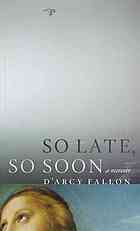
I found D’Arcy Fallon’s memoir, So Late, So Soon when I did an internet search (yes, using Google) for information related to Lighthouse Ranch, a Christian commune in northern California that one of my oral history narrators mentioned visiting as part of an Oregon Extension field trip in the mid-1970s. Fallon joined the commune after arriving there as a hitch-hiking teenager in the early Seventies, drawn in by the commune’s sense of order and purpose, eventually marrying a fellow communard and remaining with the community for three years, despite the increasing dissonance she felt between her own inclinations and the expectations of the commune’s leaders about her role as a Christian, as a woman, and as a member of the community.

Now a professor of composition and creative nonfiction a the University of Colorado, Fallon tells her story with lyrical compassion; although the depression and oppression she felt in her latter days as part of Lighthouse Ranch is palpable, she also manages to convey a clear understanding of why her younger self might have sought out this type of community, at this point in her life, and the difficult of extricating herself once she had become immersed. The book has brevity (I read it on one leg of my flight from Boston to Portland, Oregon) and offers rich details that give us insight into a particular subculture within the counterculture: that of the Jesus Freaks who adopted much of the outward, material culture of the hippies and melded it with a sometimes dogmatic adherence to Christian doctrine, theology, and religious practice. Anyone with an interest in either the counterculture of the era or in the dynamics of religious communities (communal or otherwise) will likely find it an interesting read.

booknotes: right (part two)

03 Wednesday Mar 2010

Posted by Anna Clutterbuck-Cook in book reviews

≈ Leave a comment

Tags

education, history, politics, thesis

Part one of this review was posted last Wednesday.

Strictly speaking, this isn’t so much a review as an extended quotation from one of the student interviews excerpted in Right and commentary on that particular quotation. Senior Jeremiah Loring, interviewed in March of 2007, was asked Do you think what you are doing is analogous to the counterculture, to what hippies were doing in the ’60s, that it’s a new revolution? Since I’ve been thinking a lot about the concept of “counterculture” (and how various scholars and lay folks define it) for my thesis, I was particularly intrigued by Loring’s response.

I have always liked the idea of a counterculture. That’s how Christianity should be. Not a subculture, because a subculture is something that, when a culture moves to the right or to the left, the subculture moves with it. However, a counterculture is everything that is outside of it, and we are solid. Regardless of where the culture goes, we are staying put. I think our society lacks that consistency. We have been blown by the wind of fashion. In this last election the nation had a left-leaning sweep, which was expressed in the polls. We tend to have a wishy-washy society. I think that’s expressed in politics by the growing number of moderates who do not have a consistent voting pattern, and I think it shows that they have lost a sense of principle trying to base their votes and actions on something solid and concrete. Christianity provides us with an anchor: if the culture moves, we are going to be pro-life. We are not going to change. The whole culture can leave us, and we are still going to stand there and say that abortion is wrong. If the time comes when everyone is saying abortion is wrong, and it’s outlawed, then we are fine. But, if it leaves us again, then we have to stand where we were before, because the Bible is eternal, and the word of God never fades.

Leaving aside the specific example of abortion, I was struck by two aspects of Loring’s definition of “culture” and “counterculture.” One was the way in which he describes counterculture as “everything that is outside” of culture. While I get the gist of his argument, I would argue this is a fundamental misunderstanding of the impetus for countercultural activity: that is, it is inherently oppositional. It is counter; it derives its purpose, at least in part, from offering a values system or worldview that is at odds from the dominant culture. The relationship between dominant culture and counterculture, then, is a dynamic one: as the dominant culture shifts, so too does the counterculture. This understanding of a counterculture is quite different from Loring’s concept of a counterculture that exists eternally, unmoving, outside of “culture.”

And that, indeed, is the second point of note in Loring’s response: he fails to identify is own Christian worldview as a culture — instead, it is outside of culture entirely. “The culture” and “the whole culture” are set up in opposition to his particular Christian evangelical, politically conservative understanding of the universe. I would argue that it is much more fruitful to understand cultures (sub, counter and otherwise identified) as cultures, your own or not. This is because cultures do actually change over time, and can be studied from an historical perspective — and even if Loring’s Christian counterculture holds eternal values (as he argues they do), from my perspective as an historian I would suggest that the way those values are expressed changes over time — and that those changes are worth situating in a cultural context.

Finally, I do think that the interviewer’s question is a valid one, and that there are legitimate, fruitful comparisons to be made between the type of resistance to modernity mounted by the 1960s counterculturalists and that articulated by the current fundegelicals (as my friend Amy used to call them). Indeed, I think it’s a shame that folks within both countercultures (if you will) don’t more often explore the values they have in common, as well as eying each other suspiciously from opposite ends of the “culture wars” spectrum. I’m not quite sure what would come of such a mutual assessment of shared values, but possibly it could help to clear up some of the confusion Rosin and others have over the nuances of home education, Christian fundamentalist-evangelicalism, and the struggle for political power.

booknotes: right (part one)

25 Thursday Feb 2010

Posted by Anna Clutterbuck-Cook in book reviews

≈ Leave a comment

Tags

education, photos, politics, religion

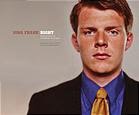
Jona Frank’s recent work of photojournalism, Right: Portraits from the Evangelical Ivy League, uses images to explore the world of Patrick Henry College. Patrick Henry is a four-year college founded in 2000 by Michael Ferris specifically to be “the Christian equivelant of the Ivy League,” as journalist Hanna Rosin writes in her introduction.

I discovered Right through this photo essay at Mother Jones (if you’re interested in seeing some of the images from the book) and since I’ve read Hanna Rosin’s earlier book on the subject — and am fascinated with home education and the Christian right generally — I knew I had to check out the book. Despite the fact Hanna looked askance when I brought it home.

This is actually going to be a two-part review. The second part focuses on a lengthy quotation from one of the student interviews; watch for that coming in a couple of days. Here, I’d like to make a couple observations about the way in which the photographer and two essayists (Hanna Rosin and Colin Westerbeck) approach their subject.

I am not practiced in visual analysis, and therefore feel slightly out of my depth in reviewing a book composed largely of images. The photographs are largely composed, rather than action shots, and highlight individual students, some of whom are photographed multiple times and several of whom were interviewed, with their responses providing text for the book.

I was left with the distinct feeling that the photographer and contributors (Rosin and Westerbeck) had missed an opportunity to really unpack some of the complexity of their subject. This is a frequent frustration I have with treatments of both the modern home education movement and recent American religious history: that both get characterized in broad strokes with little attention to nuance, and taken at once too seriously as a potential threat to mainstream society and treated gingerly as mysterious outliers rather than human beings with real effect on our world.

Rosin, as I have pointed out before, consistently collapses all home educators under the umbrella of Christian evangelical right-wing homeschooling — a lack of distinction that does a disservice both to the practice of home education and to the specific experience of those who home educate for explicitly Christian reasons. “The homeschooling movement,” she writes, for example, “is full of nostalgia for a prelapsarian age, before the Pull or even sewing machines. The result is that sometimes families seem frozen in an indeterminate earlier time” (9). While skepticism about the effects of modernity and industrialization on human life is certainly present in some homeschooling families, on the political left as well as the political right, I would argue that it is reductionist to speak of The Homeschooling Movement as a singular entity with one philosophical orientation toward technological and social change.

Likewise, I was struck by the wariness that Frank brought to her project, as voiced in her own narrative essay toward the end of the book.  She describes the difficulty of creating portraits of young people groomed for public service and intensely conscious of the image they are projecting in the outside world. She then turns to the uneasiness that the self-assurance of these young people engenders in her.

Elisa, in her trench coat, is self-assured and ready . . . One month after this photo was taken, she will be married, her name changed, school will be over, and she will be in her life, on her path. She’s done everything right. Yet when I look at that picture, I feel concern for her. It all seems so fast and she seems so young. But herein lies my fascination with the sense of assuredness these kids possess. Maybe she is not so young. Maybe she is tired of waiting.

The assuredness confuses me. I had vague notions that I would marry and have a family when I was twenty-two, but both were far off. What I wanted was exploration, travel, stories, youth hostels and road trips, part-time jobs and film school. Before commitment I yearned for freedom. This is part of being young in America, or so I believed, until I went to Patrick Henry (143).

I appreciate Frank’s candidness about her own complex response to the different path to adulthood that Patrick Henry students have taken: home educated young people, particularly those who come from families that take a critical stance to mainstream American culture (regardless of political orientation) often do reject notions of adolescence that are so ingrained in the American psyche that they seem commonsensical. For example, the idea that adolescence and young adulthood are “naturally” a period of rebellion and freedom from “commitment” — and that somehow that lack of commitment to experiences that are coded “adult” experiences (marriage, parenthood, careers) is crucial to identity formation.

I would argue, instead, that it is an experience perhaps crucial to a certain kind of identity formation. One with think of as natural, perhaps inevitable.  The normal state of being. Home-educated young people often make the world aware, simply by their presence, how much of what we take to be “normal” is, in fact, a product of particular decisions about childcare, education, and the expected path to full participation in society. As a feminist, I really do believe in the personal and political are interconnected.Certainly there are connections to be made between the chosen life path of Patrick Henry students and their (by and large, although not monolitic) right-wing politics. Yet the correlation is far from uniform. We can, after all, be just as self-assured about following life trajectory wholly at odds with the ideals that Patrick Henry students espouse.

Who knows. Maybe there’s a book to be written there somewhere. Maybe someday I’ll end up writing it myself.

booknotes: "we’ll want the breasts exposed, and yet covered."

12 Friday Feb 2010

Posted by Anna Clutterbuck-Cook in book reviews

≈ Leave a comment

Tags

feminism, gender and sexuality, history, masculinity, thesis

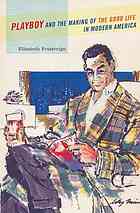
I love the things I can pick up and read in the name of thesis research. Take, for example, Elizabeth Fraterrigo’s Playboy and the Making of the Good Life in Modern America (New York: Oxford U.P., 2009). I saw the book by chance on the shelf at Borders a few weeks ago and while I would have read it eventually anyway (what’s not to like? sex! gender! money! drama!), I realized after pondering for a day or two that I could consider it background research on American postwar culture. So off to the library I trundled. (Or rather, off to the online catalog I clicked, forthwith to inter-library loan a copy through the Brookline Public Library).

And Ms. Fraterrigo did not disappoint. This dissertation-turned-book is a richly researched yet highly readable account of Hugh Hefner’s self-re-invention as the playboy of his dreams, a life he carved out for himself with relentless hard work and not a little luck after the dissolution of his youthful marriage and a series of unsatisfying desk jobs. Hefner, Fraterrigo convincingly argues, took various cultural elements in already in play (dissatisfaction with suburbia, anxiety about masculinity and women’s increased visibility in previously male spaces, a rise in consumer spending, postwar debates about what constituted the “good life,” and the scientific examination of human sexuality) and packaged them in a highly-successful formula that catapulted him to the top of a cultural and financial empire.

She draws two fascinating (if superficially unlikely) comparisons between Hefner and women writers of his day. First, she suggests a commonality in thought between Hefner and early feminist rhetorician Betty Friedan (author of The Feminine Mystique). Both Friedan and Hefner drew on their own personal experience to build a critique of the hegemonic postwar culture and its emphasis on the middle class, suburban nuclear family. In response to an unsatisfying homelife, both championed participation in the capitalist economy (as both worker and consumer) as a potential route to self-realization (see pp. 26-36).

Second, Fraterrigo points out the striking parallels between the ideal woman as articulated by Hefner in the page of Playboy (and in real life by the women who worked as Bunnies in the Playboy clubs) and Helen Gurley Brown’s “Single Girl,” found in the pages of Sex and the Single Girl first published in 1962. Both Hefner and Brown managed to carve out a place for singledom and pre-marital sex in culture dominated by the value of marriage and family. Yet they did so in ways that in no way challenged the status quo of inequitable gender relations or the notion of gender complimentarity (the idea that men and women “naturally” perform different, though complimentary, roles in society).

Brown’s Single Girl fit easily into the harmonious system of gender roles supported by Hefner. She made few demands on the male pocketbook [unlike a wife], aside from accepting the occasional gift or evening on the town, and instead made her own way as a working girl. Like the playboy, she strove to work hard and play hard too; yet she had no pretensions about achieving much power or earning vast sums of money through her role in the workplace. Instead, she accepted her marginal economic position and limited job prospects with a smile on her well-made-up face. Though she may not have enjoyed the same degree of autonomy and plentitude as the playboy, the Single Girl shared his sensibilities . . . [she] was both a handmaiden in the liberalization of sexual attitudes in the 1960s and the ascent of a consumer-oriented singles culture (132-33).

As the Swinging Sixties gave way to the cultural and counter-cultural revolutions of the early 1970s, Hefner found his idealized Playboy — once a symbol of avant garde youthful revolt against the status quo — derided by both men and women of the Movement cultures who critiqued his unabashed materialism and stubborn support of strictly segregated gender roles. He was taken aback by the “aggressive chicks” of the women’s liberation movement who pointed out that structural inequalities and oppositional gender typing (the strict separation of “masculine” and “feminine”) left women in a systematic disadvantage. Despite Hefner’s (and Playboy‘s) support of such feminist causes as women’s right to sexual expression, sex outside of marriage, access to abortion, and women’s participation in the workforce, he seems — according to Fraterrigo at least — to have balked at re-imagining a world in which the division of gender roles was less strictly dictated than it had been in the decades of his youth.

In this, Hefner is far from alone to judge by the continued popularity of “complementarian” arguments for “traditional” feminine and masculine roles among various conservative groups and even in some feminist circles — yet I am perennially puzzled by the amount of fear and resistance appeals to loosen gender-based expectations routinely encounter. While beyond the scope of Fraterrigo’s deftly-woven narrative about Playboy and the postwar culture of freewheeling consumerism it helped to legitimate, it is certainly a question which Playboy encourages us to ask: What, exactly, is at stake for individuals who defend complementary gender roles? The women’s liberationists of the 1970s thought they had the answer: unfettered male access to women’s bodies and the uncomplaining domestic support of housewives and secretaries. Fraterrigo’s tale, however, suggests that the answer is — while still containing those elements — far more complex (and more interesting!) than it appears at first glance.

the books kids read: should we grown-ups care?

04 Thursday Feb 2010

Posted by Anna Clutterbuck-Cook in book reviews, think pieces

≈ Leave a comment

Tags

books, children

So I was poking around on the backlog of feeds today looking for something to write a quick post about and realized that in the last week, there have been two stories related to the idea of what children are/should be reading and who should (or should not) be writing for them in The Guardian this week. And since I rarely lack things to say about either books or “small units” (as Hanna calls them), I figured I’d put in my two cents.


Amelia Hill’s story, “Kids learn to love living on the edge,” charts the trans-Atlantic publishing success of a book called Fifty Dangerous Things (You Should Let Your Children Do). One of the book’s co-authors, Gever Tulley, defends the work this way:

Of course, we must protect children from danger – that’s the promise we make to them as a society. But when that protection becomes over-protection, we fail as a society, because children don’t learn how to judge risk for themselves. So we must help them understand the difference between that which is unknown – or unfamiliar – and that which is truly dangerous.

Meanwhile, Imogen Williams maintains that “adult” authors should refrain from writing books for children. “There really is a Great Divide between writing for adults and for children, and it’s a rare writer who can skim effortlessly back and forth between the two,” she passionately argues, pleading with authors to pick an age bracket and stay with it.

What I find noteworthy about both of these stories is the assumption on the part of the authors (and, presumably, the majority of the audience they are writing for) that a) adults have some measure of responsibility in policing the reading choices of the young, and b) that the books that will appeal one age group will not appeal to another.

While I am not opposed to the idea that parents attend to their children’s reading interest because, well, they’re interested in their children (I pay attention to what Hanna reads ’cause I’m interested in what she’s thinking about and more often than not something she picks up will end up on my own “to read” list) I’m opposed to any sort of censorship of children’s reading choices whether explicit or implicit: kids should have the right to pick up (and, it should be noted, put down again any book they take a fancy to (or lose interest in).

And as to the question of whether authors who are good at writing books that supposedly appeal to one age group over another, I’d like to be the first to raise my hand and suggest that some of the best genre literature I’ve read in recent years was marketed at a young adult audience. I remember, too, as a child, my aunt plumbing my brain on her semi-annual visits for book recommendations, as she liked to keep a stack of “children’s” books by the bathtub for leisure reading. The idea that there is some age-based dividing line between books for young people and books for older people is a cultural construction rather than an immutable fact. Some plots may appeal to us more or less depending on our own immediate circumstances, and what speaks to us may change over time. But any one book will speak to those for whom the story appeals, regardless of the age of the protagonist, the complexity of the language, or the number of illustrations.

The immortal Arthur Ransome, journalist, bohemian, novelist, fisherman, resisted the idea that he was a children’s author, despite the fact that his phenomenally popular Swallows and Amazons series has delighted young fans worldwide since they first appeared in the 1920s. He always maintained that although he wrote about children, he wrote — first and foremost — for himself: he wrote about the things that interested him, and gave him pleasure. “I was enjoying the writing of this book more than I have ever enjoyed writing any other book in my life” he once remembered about the experience of writing the first Swallows and Amazons novel. “And I think I can put my finger on the thing in it which gave me so much pleasure. It was just this, the way in which the children in it have no firm dividing line between make-believe and reality, but slip in and out of one and the other again and again.” Still, he maintained, this was not a quality limited to children as, “I rather fancy, we rather all of us do in grown-up life.”*

So go forth and read (or write) what you enjoy reading (and writing). I’d suggest the world might be that much better if we quit worrying so much about what other people choose to read and write.

That’s my thought for the day.

*Citation: Peter Hunt, Arthur Ransome (Boston: G.K. Hall, 1991): 149-50.

← Older posts
Newer posts →
"the past is a wild party; check your preconceptions at the door." ~ Emma Donoghue

Recent Posts

  • medical update 11.11.22
  • medical update 6.4.22
  • medical update 1.16.2022
  • medical update 10.13.2021
  • medical update 8.17.2021

Archives

Categories

Creative Commons License

This work by Anna J. Clutterbuck-Cook is licensed under a Creative Commons Attribution 3.0 Unported License

Meta

  • Create account
  • Log in
  • Entries feed
  • Comments feed
  • WordPress.com

Blog at WordPress.com.

  • Subscribe Subscribed
    • the feminist librarian
    • Join 37 other subscribers
    • Already have a WordPress.com account? Log in now.
    • the feminist librarian
    • Subscribe Subscribed
    • Sign up
    • Log in
    • Report this content
    • View site in Reader
    • Manage subscriptions
    • Collapse this bar