• anna j. clutterbuck-cook
  • contact
  • curriculum vitae
  • find me elsewhere
  • marilyn ross memorial book prize

the feminist librarian

the feminist librarian

Category Archives: book reviews

booknotes: babette

15 Wednesday Oct 2014

Posted by Anna Clutterbuck-Cook in book reviews

≈ Leave a comment

Tags

gender and sexuality, memoir, oregon

Ross Eliot with copies of 'Babette'

Ross Eliot with copies of ‘Babette’ (via GoodReads)

Back in the spring, I received a review copy of Babette: The Many Lives, Two Deaths, and Double Kidnapping of Dr. Ellsworth (2013) a memoir/biographical study by Ross Eliot. After six months of hectic life, I’m finally getting around to reviewing the book; my apologies to the author for my deleterious behavior.

In 1999, Ross Eliot was working odd jobs and taking community college classes in Portland, Oregon, when a member of the history faculty — Dr. Ellsworth — took an interest in him. In her seventies and living alone, Ellsworth was looking for someone to take up residence in a basement apartment and help out around the house, drive the car, and be a companion at meals as well as on frequent weekend excursions in exchange for room and board. Eliot accepted the challenge, and lived with Dr. Ellsworth, despite her many eccentricities, until a heart attack took her life in 2002.

Part memoir, part character study, Babette echoes such works as Alan Bennett’s essay “The Lady in the Van” (1989) or Stuart: A Life Backwards by Alexander Masters (2005). Like its predecessors, Babette centers around the complicated, marginal life of an individual with whom the author had personal acquaintance — but whose personal life details elude complete or coherent understanding. All three of these narratives also involve troubling questions of ethical responsibility toward the stories of others, and challenging questions of power imbalances within such author-subject relations.

[mild spoilers after the jump]

Continue reading →

quote, endquote: laurie penny’s ‘unspeakable things’

26 Friday Sep 2014

Posted by Anna Clutterbuck-Cook in book reviews

≈ Leave a comment

Tags

feminism, moral panic, technology

I promised myself no reviews of books I read during vacation, so instead of a booknote for the most invigorating Unspeakable Things: Sex, Lies, and Revolution (Bloomsbury 2014) by Laurie Penny (aka @PennyRed), I’m going to offer up a couple of passages that spoke to me particularly in light of recent events.

If you want a more in-depth treatment, check out Rachel Hill’s piece at The Dish.

Or you could just read Unspeakable Things. And then pass it along to your FBF (feminist best friend) so s/he can read it. And then go kick some neoliberal ass.

[LiveJournal is] how I learned to write in public, in a way far more immediate, far more enticing and personal, than the blank, limited audience of the college newspaper could ever be.

I wrote to survive, but I learned how to be a writer online, and so did millions of other women all over the world. Ad not just how to write, but how to speak and listen, how to understand my own experience and raise my voice. I educated myself online. Grew up online. And on blogs and journals and, later, in the pages of digital magazines, I discovered that I wasn’t the only pissed-off girl out there. The Internet made misogyny routine and sexual bullying easy, but first it did something else. It gave women, girls and queer people space to speak to each other without limits, across borders, sharing stories and changing our reality. (157)

And on the dark side…

Although the technology is new, the language of shame and sin around women’s use of the Internet is very, very old. The answer seems to be the same as it always has been whenever there’s a moral panic about women in public space: just stay away. Don’t go out in those new, exciting worlds: wait for the men to get there first and make it safe for you, and if that doesn’t happen, stay home and read a book.

People learn to code by playing in coded space. We learn the Internet by being there, by growing there, by trial and error and risk-taking. If the future is digital, if tech skills and an easy facility with the Internet are to be as essential as they appear for building any kind of career in the twenty-first century, then what we are really saying when we tell girls and their parents that cyberspace is a dangerous place for them to be? We’re saying precisely what we’ve been saying to young women for centuries: we’d love to have you here in the adult world of power and adventure, but you might get raped or harassed, so you’d better just sit back down and shut up and fix your face up pretty. (165)

At the same time as girls everywhere are warned to stay offline if we want to preserve a paleo-Victorian notion of our ‘reputation’, we are told that sex and violence on the Internet isn’t ‘real.’ A robot can reach through the screen and grab your pink bits has not yet become a standard add-on with every laptop, so sex online can’t be real. Can never be coercive. (168)

Don’t let the “just stay away” brigade win. Speak. Write. Live in our networked publics. We are citizens of the world and are entitled — all of us — to inhabit our territory.

booknotes: people’s history of the new boston

22 Monday Sep 2014

Posted by Anna Clutterbuck-Cook in book reviews

≈ Leave a comment

Tags

boston, history

I was excited to pick up A People’s History of the New Boston by Jim Vrabel (UMass Press, 2014) at our local branch of the Boston Public Library a few weeks ago; I’d heard about it through the Boston history grapevine and really wanted it to be good. It promised, in its opening pages, “to tell the other half of the story”:

It gives credit to many more people — women as well as men; black, brown, and yellow as well as white; the poor and working class as well as the well off. This story focused on how those people made Boston a more humane and morally better city (1-2).

Vrabel, a journalist and community activist, was involved in the very remaking of Boston that this narrative covers — the postwar struggles of a vacated central business district and “blighted” neighborhoods up through the community organizing of the 1970s and the unsuccessful attempts to desegregate Boston’s public schools. An inside observer, he is in many ways well positioned to write an accounting of grassroots change at the neighborhood level.

However, two major flaws make it difficult for me to recommend this work. The first is his near complete erasure of queer and feminist activism from his narrative (more below). The second, Vrabel’s nostalgia-ridden concluding chapters, a glossing of the present that ignores continued local agitation and sweat equity around affordability, equality, local control, and the role of city and state government in supporting or destroying communities. Continue reading →

booknotes: it’s complicated

05 Friday Sep 2014

Posted by Anna Clutterbuck-Cook in book reviews

≈ 1 Comment

Tags

children, moral panic, sociology, technology

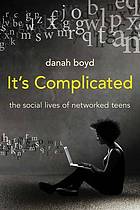
its_complicated_coverAny human being who uses the internet — that is, by definition, anyone reading this blog post — should make time to read It’s Complicated: The Social Lives of Networked Teens by Danah Boyd (Yale University Press, 2014). I say this not only because we should all care enough to read nuanced, respectful examinations of the world in which our young people live and work — rare is the study of teenagers that so gracefully resists moral panic — but because It’s Complicated describes the social lives of networked grown-ups as well.

My sister Maggie, who works in Facebook’s e-crimes division (specializing in combating crimes against children), recommended Boyd’s work to me earlier this year in light of previous unsatisfactory reading on bullying, cyber-bullying and harassment. She’s been following Boyd’s work for several years now, and brought her in to talk with her team about teens, vulnerability, and human sexuality. Like Maggie, what I particularly appreciate about Boyd’s work is that she insists on the subjectivity of her interviewees, and doesn’t pull her punches about how the mainstream media only cares about the vulnerability of some (white, middle-class) teens. As the shooting of Michael Brown in Ferguson, Missouri, recently reminded us all, that selectivity costs lives — lives that matter. Highlighting another example of such inequality of moral and humanitarian concern, Boyd recently published a piece on trans victim of sex trafficking, Jane Doe, who was imprisoned as a result of her abuse. For both Brown and Doe, narratives of teen vulnerability to adult violence failed to protect them in the way they (supposedly) protect more privileged counterparts.

It’s Complicated challenges us to reconsider our social narratives about teenagers, technology, and the relationship between the two. Based on interviews with real-life teens (!) from a wide variety of socioeconomic contexts, Boyd’s work is organized around a series of identity and social questions, such as “Privacy: Why Do Youth Share so Publicly?” and “Inequality: Can Social Media Resolve Social Divisions?”. Each chapter pushes us to think beyond what we assume we know about how technology operates in society and in our own lives. Ultimately, we are encouraged to remember that the questions about our (virtual) social lives are not that different from questions about our social lives generally. The challenges and rewards of being part of the “networked public” of the Internet are many of the same we reap “in real life” as well. And teens — like adults — should be supported in their quest to become part of their communities.


booknotes: out in the country

28 Monday Jul 2014

Posted by Anna Clutterbuck-Cook in book reviews

≈ Leave a comment

Tags

children, sociology

Last week I reviewed Sarah Schulman’s Ties That Bind which explored from a very personal perspective the ravages of familial homobigotry. This week I picked up and read Mary L. Gray’s Out in the Country: Youth, Media, and Queer Visibility in Rural America (New York University Press, 2009). Gray’s ethnographic study of queer teen lives in rural Kentucky took place in the early 2000s and she published her book in the same year as Schulman. Both authors write thoughtfully about the importance of family in the lives of their queer subjects — though from very different perspectives. Ironically — given our usual narrative of urban tolerance vs. rural bigotry — Gray’s consideration of the place of family within queer lives is much more nuanced than Schulman’s.

As a researcher, Gray came from a rural California childhood followed by an urban California adulthood working with queer youth organizations. Her exploration of teen lives in rural Kentucky was prompted by national attention on the ways in which the Internet and other media connectivity and queer visibility might work differently in the lives of rural young people rather than urban young people. As she (and others before her) have pointed out, much of our understanding of queer coming-of-age posits a rural-to-urban migration in which our queer selves are incapable of being fully discovered and/or nourished until we “escape” our hometown settings and find the LGBT community in physical locales — gay bars, lesbian bookstores, gay ghettos, queer action groups. Pushing back against this assumption, Gray sought out youth who were either unable or uninterested in making such a migratory journey of self-discovery. How would young queer people without the resources or desire to leave rural life for the city construct a queer identity? Continue reading →

booknotes: ties that bind

21 Monday Jul 2014

Posted by Anna Clutterbuck-Cook in book reviews

≈ Leave a comment

Tags

gender and sexuality, memoir, the personal is political

Me, footnote hopping. The story of my life.

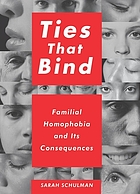
I found Sarah Schulman’s Ties That Bind: Familial Homophobia and Its Consequences (New Press/Perseus, 2009) reading The Tolerance Trap and requested it inter-library loan thinking it was going to be a study of the ravages of anti-gay animus within families. Instead, it is more of a philosophical-political reflection on the practices within families (and by extension within the wider culture) that create we queer people as a lesser group. Schulman draws powerfully on work done by feminist activists around domestic violence and the workings of other types of prejudice such as antisemitism to describe how queer family members are isolated and scapegoated within families — and how the social systems these families are a part of support that violence through passive bystander behaviors. She illustrates a lot of her observations with stories about her own family’s unwillingness to maintain positive connections with her because of her lesbian identity: parents who say in front of her that she was born “bad’; siblings who refuse to allow her contact with her their children.

Reading Ties That Bind was personally disorienting as an experience; I kept checking the publication date — really? 2009? — because so much of what she was describing felt like the climate of the 1970s and 80s rather than the early 2000s. Which is definitely a good reminder that our experience, as queer individuals, of homobigotry is far from uniform, and that our treatment at the hands of friends and family shapes how we interpret and react to the structural and more distant social inequalities that continue to color all of our lives. Because of my family’s support, and because of the social norms of my immediate community (expecting nondiscrimination), when I do encounter erasure or hostility I experience it as a departure from, rather than a reinforcement of, the morality of my people. That is, not only do I believe that there’s no reason to fear my sexuality would harm children, but all of my friends and family members would look at someone like they were right bastards for suggesting such a thing.

That kind of support, in turn, leads to resilience for those of us who have it: with our many-layered communities behind is, we aren’t isolated in the face of structural discrimination or individual acts of bigotry. For those whose families do disown them, as Schulman points out, the recourse is the much more difficult and contingent road of creating your own support system from scratch, always with the voices in the back of your head — the parental authorities of your childhood — telling you how worthless, how lesser-than, you are. Continue reading →

booknotes: jenkins, hellekson and busse on fandom

14 Monday Jul 2014

Posted by Anna Clutterbuck-Cook in book reviews

≈ Leave a comment

Tags

arts and culture, fanfic

I’ve been on a kick lately reading about fanfiction and fandom — it’s what with that addictive habit of footnote mining we’re taught to do in academia? — which has been both inspiring and a little bit wistful in that the muse seems to have deserted me this year. Apparently I find time to write porn really easily when I’m procrastinating on graduate thesis revisions, but less so when I’m coping with family loss, moving house, and some major work responsibilities.

Not that I haven’t been thinking about a Miss Fisher’s Murder Mysteries Jack/Phryne three-parter, and a couple of Doctor Who Vastra/Jenny one-offs. Not to mention the outstanding sections of my Eureka series “25 Ways to Kiss a Naked Man.” I considered returning to that one back in the spring, but all I wanted to write was end-of-life fic involving hospice care … which I know would have been good but for which people would hate me eternally, and for which my wife would probably have divorced me. So. There’s that.

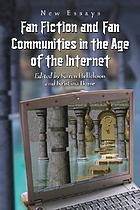
But in the meantime, I’ve been reading in the fan studies literature (it’s a thing! a wonderful, glorious thing!). The two latest books I’ve read were both anthologies: Fan Fiction and Fan Communities in the Age of the Internet, edited by Karen Hellekson and Kristina Busse (McFarland, 2006) and Henry Jenkins’ Fans, Bloggers, and Gamers: Exploring Participatory Culture (New York University Press, 2006). While both assembled by acafen — fans who are also academics; academics who embrace their identity as fans — and both well-worth the read, these are two quite different volumes.

Jenkins, whose seminal fan studies work Textual Poachers (1992) I have yet to read, is a skilled writer whose ability to own his expertise without appearing self-important is too rare and to be prized. Despite his renown in the field of popular culture studies, his work is approachable, readable even to those unfamiliar with every theorist or creator whom he cites, not to mention every popular cultural artifact. Fans, Bloggers, Gamers is a collection of essays written after Textual Poachers and before Convergence Culture (2006) and explore topics as diverse as women writing m/m slash (“Normal Female Interest in Men Bonking,” with Shoshanna Green and Cynthia Jenkins) the anti-gaming sentiments that flowered after Columbine (“Professor Jenkins Goes to Washington”), and the experience of parenting a teenager who met and courted his first girlfriend online (“Love Online”). Each essay is prefaced by a short introduction/reflection on the context in which Jenkins produced the piece — and how his thinking has changed (or not) since. Continue reading →

booknotes: fic

30 Monday Jun 2014

Posted by Anna Clutterbuck-Cook in book reviews

≈ 1 Comment

Tags

arts and culture, fanfic, writing

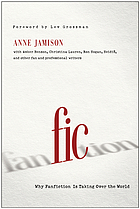
Because the Brookline Public Library is awesome (they even have an awesome box … shaped like a TARDIS!) someone on the staff ordered a copy of acafan Anne Jamison’s Fic: Why Fanfiction is Taking Over the World (Smart Pop, 2013). And there I found it, sitting innocently upon the new books shelves (have I mentioned how much I adore public libraries’ new books shelves? it’s like browsing in a bookstore except you can take everything home for free!). I’ve found so much eclectic good stuff on the new books wall at Brookline over the past few years, and Fic is no exception. Jamison is a literature professor with a background in English literature and culture, 18th century to the present. As an academic whose scholarly interest is in participatory literary culture, it is no surprise that fanworks captured her interest. This volume is one part narrative history of fanfiction from its “prehistory” in the 1800s to the present, and one part riotous celebration of various fan cultures through both Jamison’s own analysis as well as the contributions of fanfic and “profic” writers (at times one and the same!) and other acafen as well. Not quite an anthology, as Jamison’s narrative is the “spine” of the text, the contributions by others dodge and weave within the volume providing alternative perspectives, counternarratives, “missing scenes,” and many a reading recommendation for the fic-hungry fan. Continue reading →

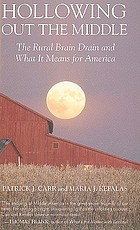
booknotes: hollowing out the middle

25 Wednesday Jun 2014

Posted by Anna Clutterbuck-Cook in book reviews

≈ Leave a comment

Tags

economics, education, sociology

Footnote mining from Paying for the Party, I ordered Patrick Carr and Maria Kefelas’ Hollowing Out the Middle: The Rural Brain Drain and What it Means for America (Beacon Press, 2009) through ILL and read it last week. This slim volume is based on an ethnographic study Carr and Kefelas of three hundred high school graduates from a small, rural town in Iowa they call “Ellis.” With a population of about two thousand, Ellis’ economy is primarily agriculture and industrial; high school graduates who go on to college rarely return. Those who remain struggle with social isolation and financial solvency. Carr and Kefelas surveyed over three hundred Ellis high school graduates from the 1990s (who at the time of their study were about ten years out from the end of twelfth grade) and conducted approximately one hundred interviews of young adults who had either stayed in, left, or returned to their hometown. Hollowing Out attempts to describe the motivations and experiences of each group of individuals, and ends with some reflections on the role that social policy can (and cannot) play in supporting and reinvesting in rural life nationwide.

What Carr and Kefelas found was that high school graduates were tracked / self-sorted into a handful of broad categories: the Achievers and Seekers, the Stayers and Returners. Achievers were tracked from a very young age by their parents, school system, and socioeconomic status, to leave Ellis and attend a four-year college and possibly graduate school. Most will never return to live in their hometown, having built lives elsewhere with career opportunities and social connections. Seekers don’t have the resources to attend a four-year college, even a good state school, and so often join the military; they will leave to explore the world, but have limited socioeconomic mobility and often struggle to find a place in the world beyond the armed forces. Stayers have dropped out of high school or obtained limited qualifications, usually struggle with un- or underemployment, wed and/or become parents much earlier than those who leave. They, and the Returners, often have negative perceptions of the world beyond their small town community — either because they tried and failed to find a foothold there, or because they have no desire to leave the familiar. Returners are usually “Boomerang” individuals (often women) who may have relocated for an associates degree or attempted a four-year college education but never established connections that made them feel comfortable beyond Ellis. They can also sometimes be Achievers who, for a variety of individual reasons, return home (familial responsibilities, political ambitions, occasionally the right job at the right time). However, these “High Flyers” — the ones so desperately sought by states with struggling economies — are few and far between.

In the end, Carr and Kefelas encourage policy-makers to focus less on trying to lure these “High Flyers” back to their states, since individual motivations usually have little to do with initiatives to woo the Achievers into returning, and instead focus their resources on the Stayers and Returners who are already the backbones of their communities and remain an un- and undertapped social and economic resource.

The authors do, eventually, touch upon some of the non-economic reasons that Achievers and others who leave Ellis may resist returning — reasons such as prioritizing racial diversity or acceptance of queer identity and relationships — that I think should have been foregrounded a bit more. Granted, interesting work is currently being done to highlight the lives of queer folk in rural America. Rural Americans are not inherently more or less prejudiced toward Othered groups than urban or suburban Americans. However, smaller communities are often self-selecting and more homogeneous; they’re also often extremely isolating for those who are somehow different, even if they (we) don’t experience overt prejudice or violence. Simply put, it was harder for me, as a bi woman, to find potential female partners (and even potential male partners!) in a medium-sized Midwestern town than it is.

And now, as a married lesbian, I have structural as well as cultural reasons not to return to Michigan: our marriage would not be honored by the state government. So whenever I read about state campaigns for professional Michiganders to return and invest in the state where I grew up — and which I continue to love in many respects — I admit I’m not exactly feeling the love. Many of us Leavers have left precisely because our communities scarred us, deeply, and returning to live there would open old wounds.

But in the end, I was uneasy with the way in which the authors’ solution seems to encourage a “circling the wagons” approach to social policy, where the parochial reasons that people leave certain communities are glossed over rather than challenged. I wanted them to dig more into the ways, for example, racial prejudice, the gendered division of labor in working class communities, or anti-gay sentiment not only drives Achievers away but harms those who stay behind. Not every person who embodies a marginalized identity (queer, physically disabled, non-white, Muslim, etc.) has the resources to “get out of Dodge” even though we may have strong push-pull factors to do so. While I’m comfortable with studies of rural America that ask us to reconsider our prejudices toward “hicks” living in “flyover” states, the fact that homogeneity was a fact of small town life the authors’ touched on but never developed is something I found troubling.

Still, I’d recommend this book to anyone with an interest in how education and social policy reproduce class and cultural divides here in America. The personal narratives woven throughout the sociological analysis will resonate with many readers who grew up in rural or quasi-rural Midwestern communities (raises hand), and provoke reflection beyond personal experience toward broader social trends.

booknotes: paying for the party

23 Monday Jun 2014

Posted by Anna Clutterbuck-Cook in book reviews

≈ Leave a comment

Tags

education, gender and sexuality, sociology

Amanda Hess at Slate recently reminded me that I had meant to read Elizabeth A. Armstrong and Laura T. Hamilton’s longitudinal, ethnographic study of a cohort of undergraduate women, Paying for the Party: How College Maintains Inequality (Harvard Univ. Press, 2013). Armstrong and Hamilton’s research team spent a year in residence at “Midwest University” living with a group of first-year women assigned to one of the school’s party dorms; they continued to follow the cohort on their floor for five years — the typical four years to degree and one year after. What began as a study of young women’s sexual agency at a large public university quickly turned into a study of class, and how strongly pre-existing socioeconomic conditions in the lives of each student determined her trajectory through college and into her immediate post-college circumstances. Hess’ article at Slate highlights some of what the research team did discover about the sexualization of college women during their work; Paying for the Party delves into the class issues that define many young women’s path through university.

The central thesis of Party is that undergraduates at large state universities (the researchers hesitate to generalize from a single case study) are constrained by the available cultures of their schools — and often the specific dorms to which they are assigned — in ways that limit the ability of less privileged students to utilize college as a tool for class mobility.

What the researchers found was that the majority of students entered MU on course to take one of three readily-available “pathways” through the college years: the party pathway, the professional pathway, and the mobility pathway. The researchers acknowledge that other pathways exist, both at MU and elsewhere, but for the cohort they studied, these were the three dominant ways of approaching college. The dominant pathway was the “party” pathway; the elite and upper-middle-class women of the cohort arrived on campus with plans to strengthen their already-privileged social networks through the Greek system, tracked to areas of study that facilitated this way of life, and left college with low GPAs and degrees that would have been useless without their high-powered family connections and financial resources. Less privileged women who attempted to access the party pathway typically suffered a high loss of resources and low return. The party pathway also ruthlessly policed the performance of femininity according to a very specific set of elite standards which required money and time to cultivate and maintain.

In addition to the struggles of women on the party pathway who were unable to compete with the elite partiers in terms of time, resources, social connections, and conventional beauty, Paying for the Party also chronicles the way the party pathway culture encroaches on those beyond its borders. Even women who tried to follow the professional or mobility pathway found their efforts stymied by the dominant party cohort. The researchers argue that non-elite students need more robust support for non-party alternatives in order for college to be both cost effective and life enhancing.

There are limitations to the study. For example, I couldn’t help but feel that even taking broad social categories into account, the party/professional/mobility pathways schema left out crucial segments of the undergrad population. Perhaps because the research team chose a “party” dorm, or perhaps because they were at a land grant research university instead of a liberal arts college, they failed to identify the pathway that I and many of my closest friends were on: What I might call the “how to live” pathway. This is the pathway that treats learning as a goal in and of itself, and self-knowledge — as well as wider horizons — as a valuable part of the college experience on par with skill acquisition/job training. And it’s not a pathway exclusively available to the rich; I know students across the economic spectrum who used college as a step-stone to a meaningful life (not necessarily a well-heeled one). Armstrong and Hamilton hint at such rewards toward the end of the book when they profile a student who had limited economic resources, struggled in school, and yet one year after graduating is building a meaningful life for herself working as a ski instructor and living with her partner in the wilderness setting that drew them together.

They also suggest throughout the book that MU has other subcultures of students whose subcultures provide a robust alternative to the party pathway and help students succeed: the arts students, the African-American learning community, the LGBT group. But it seems that none of their cohort originally assigned to the party dorm found their way to these rich subcultures, a telling finding in and of itself that shows how segregated a campus can be, and how the crap shoot of first-year campus housing may make or break students. Particularly the most vulnerable ones whose families have little or no experience navigating higher education.

Despite the study’s necessarily narrow focus on its original cohort, I highly recommend Paying for the Party to anyone interested in higher education, economic inequality, and the ways in which gender plays out in specific ways in both social class and college contexts.

← Older posts
Newer posts →
"the past is a wild party; check your preconceptions at the door." ~ Emma Donoghue

Recent Posts

  • medical update 11.11.22
  • medical update 6.4.22
  • medical update 1.16.2022
  • medical update 10.13.2021
  • medical update 8.17.2021

Archives

Categories

Creative Commons License

This work by Anna J. Clutterbuck-Cook is licensed under a Creative Commons Attribution 3.0 Unported License

Meta

  • Create account
  • Log in
  • Entries feed
  • Comments feed
  • WordPress.com

Create a free website or blog at WordPress.com.

  • Subscribe Subscribed
    • the feminist librarian
    • Join 37 other subscribers
    • Already have a WordPress.com account? Log in now.
    • the feminist librarian
    • Subscribe Subscribed
    • Sign up
    • Log in
    • Report this content
    • View site in Reader
    • Manage subscriptions
    • Collapse this bar
 

Loading Comments...