• anna j. clutterbuck-cook
  • contact
  • curriculum vitae
  • find me elsewhere
  • marilyn ross memorial book prize

the feminist librarian

the feminist librarian

Tag Archives: books

quick hit: jo walton reviews ‘gaudy night’

27 Saturday Mar 2010

Posted by Anna Clutterbuck-Cook in linkspam

≈ Leave a comment

Tags

books, feminism

Thanks to Hanna who pointed me toward this lovely review of Dorothy Sayer’s Gaudy Night, posted by Jo Walton @ Tor.com. If you haven’t ready Gaudy Night and don’t wish to know certain key plot points, don’t click through. However, I encourage all those who have read and loved the Lord Peter/Harriet Vane novels to check out Walton’s astute analysis. I offer these two paragraphs up as a sampling.

This is a book about women — culprit, victims and the primary detective are women. Annie’s closest mirror is Mrs Goodwin, also a widow with a child away at school, who has trained as a secretary. We also see two old students, one whose marriage has ruined her mind, and one who has made a team with her husband and works with him. Then there’s the young don Miss Chilperic, who is engaged to be married, and will therefore leave the college. It was actually illegal for married women to teach in Britain before WWII. Sayers doesn’t say this because she assumes her readers will be utterly aware of it and can’t imagine things being any different, but if ever there was anything that should be footnoted for a modern audience, this is it.

The other academics might as well be nuns, they are devoted not just to scholarship but to virginity. This is said explicitly—and really in 1936 those were the choices. Marriage meant giving up the work, and not marrying, for women, meant maintaining virginity. This leads me to Harriet. Harriet lived with a man in Bloomsbury without marrying him, somebody else murdered him, and she was tried for the murder and acquitted because of Lord Peter (Strong Poison). Because of the notoriety of the trial, Harriet’s sexual status is known to everyone—and some people consider her utterly immoral because she had sex without marriage. This attitude—that people would care—is completely dated, gone like the dodo, and I have to work at understanding it. Harriet, in her thirties and unmarried would be presumed to be a virgin were it not that her cohabitation had been gossip in the newspapers after her lover’s death. Now the fact that she has had sexual experience is public knowledge, and affects people’s behaviour towards her.

As I said, you can check out the entire review on Tor.com.

the black hole of $1 book carts

23 Tuesday Feb 2010

Posted by Anna Clutterbuck-Cook in a sense of place

≈ 2 Comments

Tags

books, boston

Living in Boston, Hanna and I have ample opportunity to peruse used bookstores, which could put a serious strain on our already-stretched budgets . . . except for the wonderful phenomenon known as $1 carts, which can provide brilliant finds for $1/each.

Last weekend, we stopped at the Brattle Bookshop near Downtown Crossing and I found five books that could be justified as having some scholastic thesis-related or otherwise worthy worth:

Appleby, Joyce Oldham, Lynn Avery Hunt, and Margaret C. Jacob. Telling the Truth About History. New York: Norton, 1994.

Cremin, Lawrence A. The Transformation of the School; Progressivism in American Education, 1876-1957. New York: Knopf, 1961.

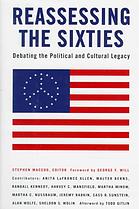
Macedo, Stephen. Reassessing the Sixties: Debating the Political and Cultural Legacy. New York: W.W. Norton, 1997.

Roszak, Theodore. The Dissenting Academy. New York: Pantheon Books, 1968.

Wartzman, Rick. Obscene in the Extreme: The Burning and Banning of John Steinbeck’s The Grapes of Wrath. New York, NY: PublicAffairs, 2008.

So far I’ve read parts of The Dissenting Academy and Reassessing the Sixties. The Sixties book mostly sucks (written largely by people who identify the evils of modern civilization as — and I kid you not — feminism, environmentalism, and rock music), but I’m pleased I paid the $1 because its one redeeming chapter is an essay on the children’s rights movement of the early Seventies, written by law professor Martha Minow. Since the children’s rights movement is chronically understudied from an historical perspective, I was pleased to see it represented therein — and not in an unsympathetic though also not wholly uncritical light.

Happy book hunting, one and all.

the books kids read: should we grown-ups care?

04 Thursday Feb 2010

Posted by Anna Clutterbuck-Cook in book reviews, think pieces

≈ Leave a comment

Tags

books, children

So I was poking around on the backlog of feeds today looking for something to write a quick post about and realized that in the last week, there have been two stories related to the idea of what children are/should be reading and who should (or should not) be writing for them in The Guardian this week. And since I rarely lack things to say about either books or “small units” (as Hanna calls them), I figured I’d put in my two cents.

Amelia Hill’s story, “Kids learn to love living on the edge,” charts the trans-Atlantic publishing success of a book called Fifty Dangerous Things (You Should Let Your Children Do). One of the book’s co-authors, Gever Tulley, defends the work this way:

Of course, we must protect children from danger – that’s the promise we make to them as a society. But when that protection becomes over-protection, we fail as a society, because children don’t learn how to judge risk for themselves. So we must help them understand the difference between that which is unknown – or unfamiliar – and that which is truly dangerous.

Meanwhile, Imogen Williams maintains that “adult” authors should refrain from writing books for children. “There really is a Great Divide between writing for adults and for children, and it’s a rare writer who can skim effortlessly back and forth between the two,” she passionately argues, pleading with authors to pick an age bracket and stay with it.

What I find noteworthy about both of these stories is the assumption on the part of the authors (and, presumably, the majority of the audience they are writing for) that a) adults have some measure of responsibility in policing the reading choices of the young, and b) that the books that will appeal one age group will not appeal to another.

While I am not opposed to the idea that parents attend to their children’s reading interest because, well, they’re interested in their children (I pay attention to what Hanna reads ’cause I’m interested in what she’s thinking about and more often than not something she picks up will end up on my own “to read” list) I’m opposed to any sort of censorship of children’s reading choices whether explicit or implicit: kids should have the right to pick up (and, it should be noted, put down again any book they take a fancy to (or lose interest in).

And as to the question of whether authors who are good at writing books that supposedly appeal to one age group over another, I’d like to be the first to raise my hand and suggest that some of the best genre literature I’ve read in recent years was marketed at a young adult audience. I remember, too, as a child, my aunt plumbing my brain on her semi-annual visits for book recommendations, as she liked to keep a stack of “children’s” books by the bathtub for leisure reading. The idea that there is some age-based dividing line between books for young people and books for older people is a cultural construction rather than an immutable fact. Some plots may appeal to us more or less depending on our own immediate circumstances, and what speaks to us may change over time. But any one book will speak to those for whom the story appeals, regardless of the age of the protagonist, the complexity of the language, or the number of illustrations.

The immortal Arthur Ransome, journalist, bohemian, novelist, fisherman, resisted the idea that he was a children’s author, despite the fact that his phenomenally popular Swallows and Amazons series has delighted young fans worldwide since they first appeared in the 1920s. He always maintained that although he wrote about children, he wrote — first and foremost — for himself: he wrote about the things that interested him, and gave him pleasure. “I was enjoying the writing of this book more than I have ever enjoyed writing any other book in my life” he once remembered about the experience of writing the first Swallows and Amazons novel. “And I think I can put my finger on the thing in it which gave me so much pleasure. It was just this, the way in which the children in it have no firm dividing line between make-believe and reality, but slip in and out of one and the other again and again.” Still, he maintained, this was not a quality limited to children as, “I rather fancy, we rather all of us do in grown-up life.”*

So go forth and read (or write) what you enjoy reading (and writing). I’d suggest the world might be that much better if we quit worrying so much about what other people choose to read and write.

That’s my thought for the day.

*Citation: Peter Hunt, Arthur Ransome (Boston: G.K. Hall, 1991): 149-50.

"i have scars on my hands from touching certain people."

02 Tuesday Feb 2010

Posted by Anna Clutterbuck-Cook in think pieces

≈ Leave a comment

Tags

books

Author J.D. Salinger died last week at the age of 91. An iconic American author best-known for his mid-century coming-of-age novel Catcher in the Rye, he seems from numerous reports to have been a troubled, unhappy soul. I have never systematically read his work, although I read the novella Franny and Zooey once for a college course, dipped into Catcher and also encountered a short story or two.

However, I once had a professor give a talk about . . . well, I forget exactly what it was about other than that during the lecture she spoke with tears in her eyes about her mother, who had recently died of cancer, and toward the end quoted the following passage from “Seymour, An Introduction,” from the collection Raise High the Roof Beam, Carpenter. The narrative voice in the passage is Seymour Glass, a recurring character in a number of Salinger short stories who ends up committing suicide.

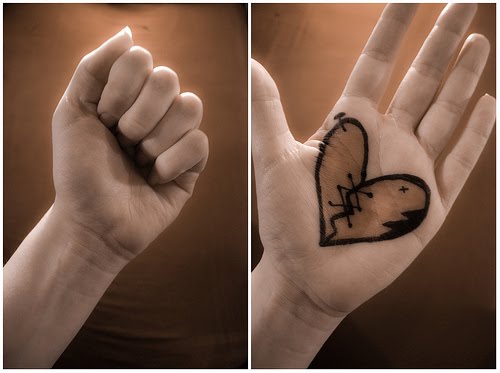
If or when I do start going to an analyst, I hope to God he has the foresight to let a dermatologist sit in on the consultation. A hand specialist. I have scars on my hands from touching certain people. Once, in the park, when Franny was still in the carriage, I put my hand on the downy pate of her head and left it there too long. Another time, at Loew’s Seventy-Second Street, with Zooey during a spooky movie. He was about six or seven, and he went under the seat to avoid watching a scary scene. I put my hand on his head. Certain heads, certain colors and textures of human hair leave permanent marks on me. Other things, too. Charlotte once ran away from me, outside the studio, and I grabbed her dress to stop her, to keep her near me. A yellow cotton dress which I loved because it was too long for her. I still have a lemon-yellow mark on the palm of my right hand. Oh, God, if I’m anything by a clinical name, I’m kind of paranoiac in reverse. I suspect people of plotting to make me happy (88).

It is a passage that is so powerful to me in its use of physical senses and the material world to convey the deep intangible “scars” (good and bad) that connections to other human beings inevitably leave on our souls, and I have never been able to forget it.

I really don’t have anything further to say, other than that I struggle with the complicated reality that someone who was deeply damaged (and damaged many people) could also write something so heart-stoppingly painful, life-affirming, and true. I hope in death Salinger finds whatever peace he hoped for after life.

*image credit: Holding your scarred heart in my hand by Angela Mary Butler @ Flickr.com.

booknotes: echo in the bone

05 Tuesday Jan 2010

Posted by Anna Clutterbuck-Cook in book reviews

≈ 1 Comment

Tags

books, feminism, gender and sexuality, masculinity

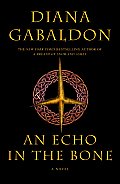
It’s been a while since I wrote a proper “booknotes” post, but this weekend while Hanna was away in Maine I finally hunkered down and read Diana Gabaldon’s latest installment in the epic Outlander cycle (now clocking in at seven volumes each seven hundred to one thousand pages in hardcover), Echo in the Bone. (Warning: mild series spoilers ahead).

I was first introduced to Outlander under its British title, Cross Stitch in Aberdeen by my Glaswegian roommate, Vicki, who is (or at least was) an adoring fan. For those of you who aren’t familiar with the series, it centers on the relationship between Claire Beauchamp, a Second World War nurse, who accidentally time-travels back to eighteenth-century Jacobite Scotland and — also somewhat accidentally — marries a young Scottish fugitive named Jamie Fraser. The first book revolves around Claire’s attempts to return to her own time (1950s England) and the husband she left behind, while at the same time she finds herself falling passionately in love with Jamie. Without giving all the ins and outs of the romance and drama away, the saga weaves its way across Europe and America, the eighteenth and the twentieth century, and has expanded to encompass multiple generations of the Beauchamp-Fraser family and a sprawling cast of secondary characters. The science fiction / time-travel aspect of the narrative — while integral to the plot in many respects — also takes firm second-place to the political and personal dramas in which the characters get caught up as they move from one space/time context to the other.

An Echo in the Bone is a solid installment in the ongoing series, though Gabaladon’s expansive cast of characters has become increasingly difficult for her to manage — or at times hard for readers to follow, particularly if you don’t have the time to sit down and read the book in a marathon session (I tried the chapter-before-bed method during term-time and eventually gave up, setting it aside for vacation). There was speculation around the publication of A Breath of Snow and Ashes the sixth book would be the final volume, or be followed by a prequel or spin-off story, but she’s apparently decided to continue spinning the main narrative out, as Bone not only comprises of 800-plus pages of story but also ends with several cliff-hangers that I doubt will just be allowed to die. I have a slightly mixed feeling about this, since there was something bittersweet about reading Ashes as a final installment . . . but since Cross Stitch/Outlander was originally meant to be a one-off fantasy novel, Gabaldon fans have (I imagine, anyway) long since grown used to the idea that her sagas will inevitably be longer than originally predicted.

I’ve talked to a few friends who’ve had trouble with the sex and gender roles in the series — trouble enough that they’ve quit reading the books altogether. And as this is a blog with “feminist” in the title I figured I’d take a minute to reflect on how sex and gender (as well as sexual orientation) seems to play out in the series overall. Speaking for myself, I really had to make my peace with the series in this regard: I was really upset with the power dynamics between Claire and Jamie in the first book and by some of the sexual violence that went largely uncriticized within the stories. Gabaldon’s characters also have a really annoying habit of talking in gender essentialisms (i.e. “men are all X” and/or “women are all Y”). Most of the hetero relationships in the story (which is virtually all of them) are very male-as-protector and woman-as-nurturer. It’s explained away, in part, as historical accuracy (that is, Jamie as an eighteenth-century man has learned to think in certain ways about marriage, about sex, and so forth), and to be fair over the course of the series characters’ opinions are challenged and do change. However, certain behaviors continue to be explained away as grounded in innate characteristics based in sex, an explanation I find just as unsatisfactory in fiction as I do in real life. It seems to me a mark of lazy thinking on the part of the character and (by implication) their creator.

The violent sex and sexual violence are a bit more difficult to gloss over and/or explain away by historical context. I haven’t spoken to anyone who’s a survivor of sexual abuse or violence who’s tried the series, but I imagine that the graphic descriptions of rape and sexual violence could be unpleasant and/or impossible to read. One of the best parts of the series, at least in my mind, is Gabaldon’s penchant for writing erotic and and often light-hearted sex scenes (I was, in fact, disappointed that the most recent installment featured relatively few); the downside is that if you’re not into the kind of sex her characters are into, it can be difficult to make it through the graphic descriptions without feeling a bit icky about the relationship dynamics. Personally, though a few of the early scenes had me cursing and tossing the paperback edition of Cross Stitch across my dorm room, in the end I made the decision to let the characters have what is clearly a pleasurable and consensual sexual relationship without judgment from me.

Be warned, also, that the arch-villain in the first few books is a sadist with a taste for sexual violence, both hetero- and homosexual (he seems to fixate on individuals regardless of gender; both Jamie and Claire are assaulted by him in various contexts, with Jamie suffering the worst of the abuse). While Gabaldon (possibly in recompense?) has since written at least one gay male character who is one of the good guys — and actually features in his own series of stand-alone short stories — I was wary at first to have same-sex sex so closely associated with rape.

And as a final note, I’ve never been particularly irritated with historical fiction that plays lightly with the actual historical record, but those who care deeply about either eighteenth-century European or American history may be frustrated with the melange of historical detail and fiction that Gabaldon brings together for her time-traveling romps through the era.

My ultimate advice? Don’t take them too seriously, let the characters win you over, and have a great time.

Quick Hit: Launching ‘Paper Not Included’ Blog

23 Monday Nov 2009

Posted by Anna Clutterbuck-Cook in linkspam

≈ Leave a comment

Tags

blogging, books, hanna, in love with new blogs

Today is the official launch date for Paper Not Included a new group blog that Hanna, along with four other bloggers, will be contributing to. They plan to blog about books and reading with a particular emphasis on new ebook technologies and their effect on books and reading culture. Add them to your blog reader of choice and see what they have to say!

nanowrimo: week one update

08 Sunday Nov 2009

Posted by Anna Clutterbuck-Cook in fandom

≈ 1 Comment

Tags

books, domesticity, fun

I’ve reached the end of week one of National Novel Writing Month with the first four parts of my “short” story completed. I thought it was going to be a little short story and it’s turning into a novella — a process which is taking me back to my teenage years when novels tended to span hundreds of typed, single-spaced pages with no end in sight. I was aided and abetted by an inadvertent seven-hour wait in the Grand Rapids airport on my return to Boston . . . I doubt I’ll have the luxury of dashing off quite so much silliness in the weeks to come!

I’m still not sharing this story with anyone but Hanna (maybe I should put: “For British Eyes Only” on the top of every page?) but I’ll give you a feel random details to make of what you will.

1) I’m setting the story in Chicago, and a crucial scene takes place at the Field Museum; I chalk this up to early childhood readings of From the Mixed-Up Files of Mrs. Basil E. Frankweiler.

2) I’ve appropriated a plot element from “The Stackhouse Filibuster” from Season 2 of The West Wing; those of you who are devotees can have fun guessing which one. (And can I say one more time that I miss that show so damn much?!)

3) So far, I’ve figured out how to get in references to Jay and Silent Bob Strike Back and Dr. Who . . . I’m undecided as to whether having opened the door I’ll need to work in specific episodes of DW, Torchwood and The Sarah Jane Adventures just to be clear I’m not playing favorites.

Until next week — wish me continued verbosity. And for those of you who are also participating, hope you’re having loads of fun!

Welcome to NaNoWriMo

01 Sunday Nov 2009

Posted by Anna Clutterbuck-Cook in fandom

≈ Leave a comment

Tags

books, fun

With a story from The Onion.

SAN FRANCISCO—After gently unfastening the elastic strap keeping his dearest musings safe from prying eyes, little literary artiste Evan Stansky penned a few more darling thoughts into his clothbound Moleskine notebook Wednesday. “These are much higher quality than the notebooks you find at CVS,” lilted the auteur, who couldn’t be bothered to use—dare it be said—a journal of lesser craftsmanship or pedigree, or one not famously used by such legendary artists as van Gogh and Hemingway. “They’re a little more expensive, but I try to write on both sides so I don’t go through them as quickly.” At press time, the princely scribe was seen finishing his apricot jasmine tea, asking a mere mortal sitting nearby to watch his literary accoutrements, and then prancing off to the Starbucks powder room, light as a feather.

You will most likely not get to read a single word I produce for National Novel Writing Month this year, since now I have woken up to the fact that my possession of dozens of moleskin notebooks means I am vulnerable to satiric lampooning at the slightest whim. But wish me and all the other thousands of participants luck as we forge ahead! I shall report back when it’s all over.

from the neighborhood: graffiti wall

22 Thursday Oct 2009

Posted by Anna Clutterbuck-Cook in a sense of place

≈ Leave a comment

Tags

books, from the neighborhood, outdoors, photos


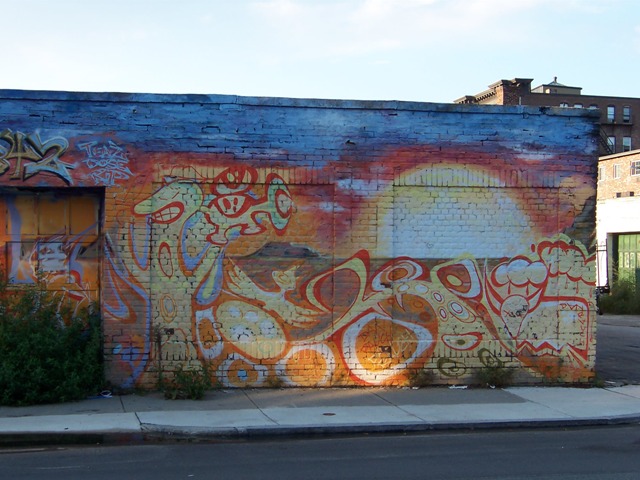
After this, I promise pictures of things other than graffiti for a while. But I just had to share this awesome wall of graffiti art outside the auto garage down the street from our apartment. It’s an ever-changing work of art, but the colors of this incarnation make me especially happy.

links list: selected shorts

26 Friday Jun 2009

Posted by Anna Clutterbuck-Cook in linkspam

≈ 2 Comments

Tags

books, children

My friend Rachel’s coming to town for the weekend, so there will be no extended blogging for the next few days. Instead, I leave you with selected links from Google Reader and elsewhere in my online world.

Via MK, a story about why teenagers are still reading books — and might even be better readers than us grown up folks.

Nina Totenberg offers a review of the three rulings handed down yesterday from the U.S. Supreme Court (audio).

On a related note, Scott @ Lawyers, Guns and Money asks why some people are upset that the Redding ruling will make it harder for schools to violate the rights of young people.

And Alas, a Blog, offers a video clip of an interview with Savana Redding herself (now a college student), the young woman at the heart of the case.

Monica @ TransGriot offers some reflections on how the push to legalize gay marriage can have negative effects on already-legal trans marriages.

Rachel @ The Feminist Agenda, posts enthusiastically about a Swedish couple who have refused to identify the gender of their toddler. I’m conflicted about this story, because I firmly believe in the responsibility of parents to do what they can to shelter their children from the pressure to socially conform — while helping them discover their own ability to resist that pressure even while out in the real world. But the way the story has been politicized means the kid will likely feel tremendous pressure to be gender nonconforming to please the parents — or pressure to conform to a gender identity that is acceptable to the outside world. It seems sad that parenting inevitably becomes freighted with so much political baggage — and that it’s the kids who so often pay the price by having their lives dissected in public spaces. No person, regardless of how young, should have their own life co-opted by others as a political statement.

Finally, pspirro writes in praise of doing less @ her blog, over the wall, suggesting that “productivity” as a moral value — or even a survival skill — is over-rated. “Clever as you are, you’ll figure out how to do what needs to be done to obtain what needs to be obtained. All the rest of it be damned.”

hope you find some time this weekend to do less and enjoy the last few days of June.

← Older posts
Newer posts →
"the past is a wild party; check your preconceptions at the door." ~ Emma Donoghue

Recent Posts

  • medical update 11.11.22
  • medical update 6.4.22
  • medical update 1.16.2022
  • medical update 10.13.2021
  • medical update 8.17.2021

Archives

Categories

Creative Commons License

This work by Anna J. Clutterbuck-Cook is licensed under a Creative Commons Attribution 3.0 Unported License

Meta

  • Create account
  • Log in
  • Entries feed
  • Comments feed
  • WordPress.com

Blog at WordPress.com.

  • Subscribe Subscribed
    • the feminist librarian
    • Join 37 other subscribers
    • Already have a WordPress.com account? Log in now.
    • the feminist librarian
    • Subscribe Subscribed
    • Sign up
    • Log in
    • Report this content
    • View site in Reader
    • Manage subscriptions
    • Collapse this bar