• anna j. clutterbuck-cook
  • contact
  • curriculum vitae
  • find me elsewhere
  • marilyn ross memorial book prize

the feminist librarian

the feminist librarian

Tag Archives: boston

booknotes: urban histories

29 Tuesday Jan 2013

Posted by Anna Clutterbuck-Cook in book reviews

≈ Leave a comment

Tags

boston, history

Looking at my reading selections for the past couple of months, I can sort them into two basic piles: books having to do with gender/sexuality/feminism (what else is new?) and books on urban history. The urban history kick is a relatively new thing for me, prompted by a) an ongoing side research project that requires background knowledge about Boston circa the 1910s, b) the aggressive gentrification of our neighborhood — fingers crossed we’re not priced out! — and c) happening upon a cultural history of “main street” on the new books wall at our local public library (see below). I’m going to do a collective review of the gender/sexuality/feminism books next week — once I finish my advance review copy of this promising anthology on hard core porn — but first, here are my thoughts on a few urban history titles.
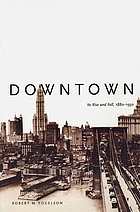
Fogelson, Robert. Downtown: Its Rise and Fall, 1880-1950 (Yale U. P., 2001) and Bourgeois Nightmares: Suburbia, 1870-1930 (Yale U.P., 2005). More or less by accident — Downtown was what our local library had on the shelf! — I stumbled upon preeminent historian of urban America Robert Fogelson’s work when I went in search of Boston and Brookline histories back in December. In Downtown Fogelson explores the development of the central business district in American cities — thanks to the layout of New York City colloquially known as “downtown” regardless of geographic orientation — and traces its fate through the first half of the twentieth century as it moved from the business district to the central business district to simply one of many business districts. He touches on a number of key cities, although New York, Boston, Chicago, and Los Angeles are recurring examples. I particularly enjoyed the attention to the perennial question of public transit and the changes wrought by the rise of the automobile. Fogelson pays particular attention to the interplay between city planners and businessmen (the urban elite) and the populace at large — the way in which those with power seek to create and control a certain type of urban environment on the one hand, while unanticipated and often anarchic-feeling forces bring changes economic and cultural to the urban landscape.
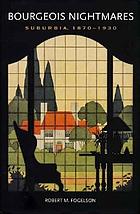
It’s the desire for stasis that is, in fact, at the heart of the second Fogelson book I read: Bourgeois Nightmares. The title, a play on Robert Fishman’s Bourgeois Utopias (1987), explores the dark side of America’s suburban sprawl between 1870-1930. Fogelson begins his narrative by suggesting that the central desire which drove the American upper-, upper-middle- and middle-classes to suburban subdivisions around the turn of the twentieth century was the desire for stability. In order to sell land in these new neighborhoods, subdividers had to sell the promise of that stability — the promise that one’s land would never fall in value, that one’s neighborhood would remain pleasant, that one’s neighbors would always be desirable. The mechanism by which they enforced stability was through the creation of restrictive covenants: contractual limitations on how landowners could use and dispose of the land which they purchased. Most notoriously, restrictions were used to exclude non-white (and sometimes non-Christian and even non-Protestant) residents from the suburban development. They were also used to police the aesthetics of place: fences, landscaping, architectural design, the domestic animals one could own, the signs one could put up, and the business one could do from one’s property. Fogelson convincingly argues that restrictive covenants were a successful marketing tool despite the limitations they placed on property rights because they reassured the “bourgeois” classes that they were protected not only from outsider undesirables but also from the potentially-appalling behavior of their peer neighbors.
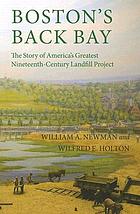
Holton, Wilfred and William A. Newman. Boston’s Back Bay: The Story of America’s Greatest Nineteenth-Century Landfill Project (Northeastern U.P., 2006). The Massachusetts Historical Society moved into the back bay in the 1890s, as the back bay landfill project was nearing its close. The land on which the MHS stands, at the corner of Boylston Street and The Fenway, teeters on the edge of landfill and what used to be known as Gravelly Point. Originally, the Back Bay served as both a source of hydro power and also Boston’s sewer — where the citizens of Boston sent their waste in hopes that the tide would wash it out to sea (a hit-or-miss proposition, particularly after the bay was sectioned by dams and railway bridges in the early 1800s. Between the 1820s and the 1890s the Commonwealth of Massachsuetts undertook the massive land-creation project of filling in the bay and what seems like the daunting task of selling the recently-noxious area as a posh neighborhood of expensive townhouses and cultural institutions. Holton and Newman are primarily interested in the engineering innovations that made filling in the Back Bay tidal flat possible and the construction of buildings feasible. Honestly, there’s only so much detail about railway lines, gravel pits, and building foundations I can sustain interest for, although descriptions of the changing landscape and the generous inclusion of maps to chart the progress of land-creation were both welcome. I would have appreciated more cultural and social history. Given the Back Bay’s numerous drawbacks as land for residential construction — including a high water table that caused sewers to back up twice daily and fill basements with toxic and foul-smelling substances! — the successful selling of the neighborhood as a desirable location for the Boston elites is a story that begs to be told in more depth. Still, I do feel I now have a better grasp on the whys and hows of the Back Bay landfill project. Now on to Nancy Seashole’s Gaining Ground: A History of Landmaking in Boston (MIT Press, 2003).
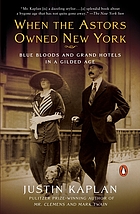
Kaplan, Justin. When the Astors Owned New York: Blue Bloods and Grand Hotels in the Gilded Age (Viking, 2006). One feature of American downtown life in the Gilded Age was the luxury hotel. Using the real estate giants William Waldorf Astor and his cousin John Jacob Astor as his biographical through-line, Justin Kaplan offers a lively tour of the rise of the modern-day hotel during the late nineteenth-century. What I found most fascinating about the book — apart from the salacious details of intra-familial rivalry — was the cultural history of a type of institution (the luxury hotel) that today we take more or less for granted as an essential feature in any city. Yet the first establishment that approximated what we think of as a hotel, The Tremont here in Boston, opened in 1829. It was the first lodging-house to become a destination per se rather than just a place for businessmen and travelers to find a bed and a meal in transit from one location to the next. Its indoor bathrooms, particularly, became so popular that upperclass families in the nearby Beacon Hill neighborhood sometimes made there way to the hotel for their weekly bath. The Astor family built on these innovations with alacrity and by the end of the 1800s their hotels in New York City were the subject of songs, the hub of high society, where people went to see and be seen. While Kaplan’s narrative is short on footnotes, it is grounded in the historical record and is not overly ambitious in its claims. An entertaining and informative read.
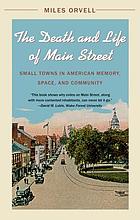
Orvell, Miles. The Death and Life of Main Street: Small Towns in American Memory, Space and Community (University of North Carolina Press, 2012). Orvell’s work is a cultural history of “main street” in America — both how it actually functioned in the social and economic landscape and also what it signified in the American mind. Examining literary and cinematic portrayals as well as the politics of creating, destroying, and rehabilitating “main street” as a social space throughout the 19th and 20th centuries, Orvell points to the ongoing tension in the American cultural landscape between “main street” as a site for wholesome enjoyment and small-town safety and main street as a site for small-mindedness and community policing. The idyllic nature of small-town / “main street” America, in other words, very often depends on the erasure of people whose presence is disruptive to “niceness”: educated women with uppity notions about gender equality, labor organizers, and — over and over again — those whose skin color, ethnicity, and religion fail to conform with a WASP-y vision of true American-ness. From 19th-century paeons to the “vanishing” New England village square to late-20th century Disney-sponsored planned communities, The Death and Life of Main Street offers a highly readable, well-researched window into one particular facet of the (real and mythical) American landscape.

Next on the urban history reading list is Stephen Puleo’s A City So Grand: The Rise of an American Metropolis, Boston 1850-1900 (Beacon Press, 2010). I’ll be sure to let you know how it goes! But next week we’ll be taking a turn to a mix of books both historical and cultural that touch on human sexuality and the politics thereof.

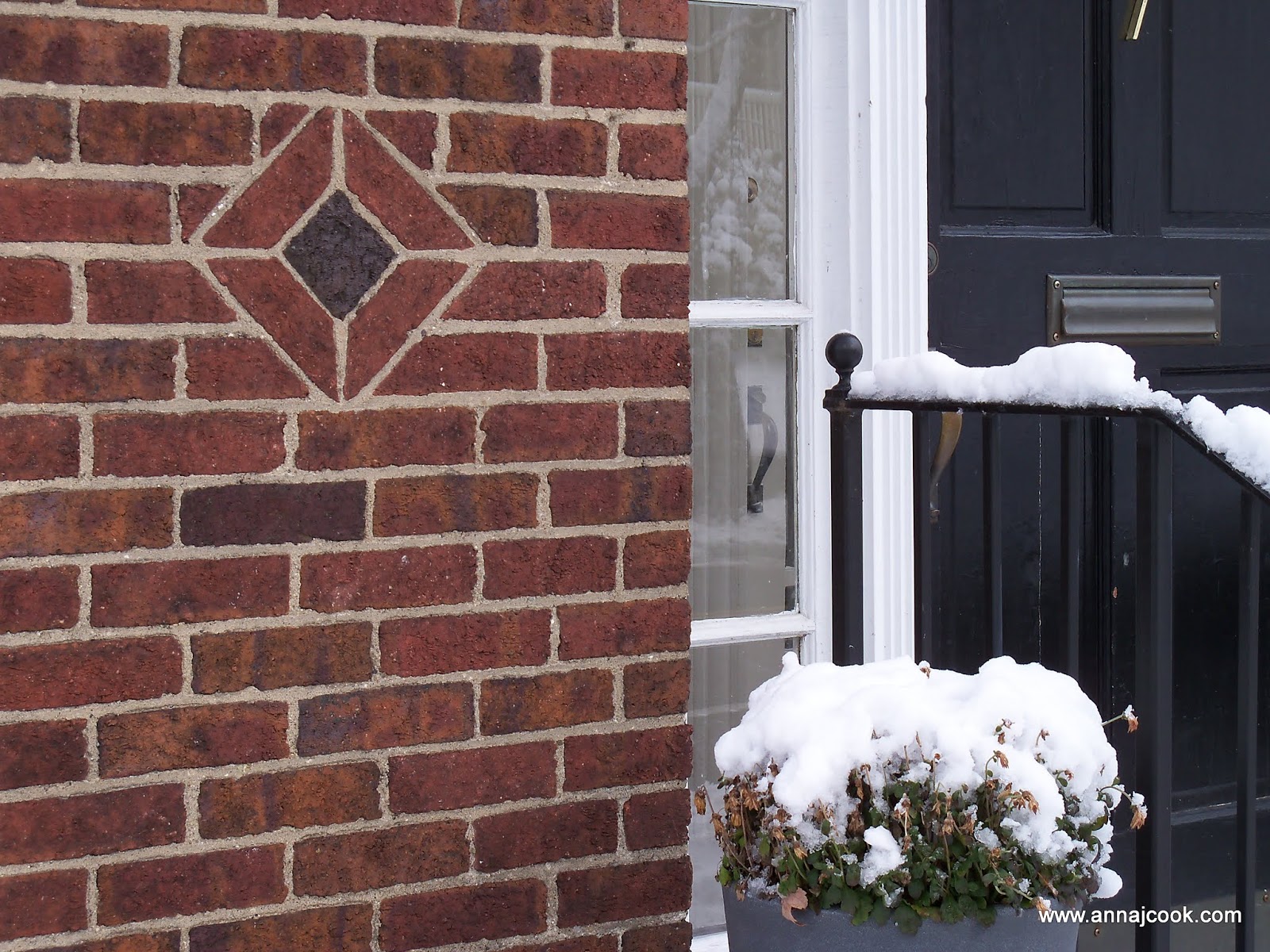
corey hill, after the snow [photo post]

30 Sunday Dec 2012

Posted by Anna Clutterbuck-Cook in a sense of place

≈ Leave a comment

Tags

boston, domesticity, family, outdoors, photos

We had a proper snowfall in Boston last night for the first time in a couple of years (!), and with temperatures predicted to remain in the twenties this coming week hopefully winter is here to stay … at least into the New Year.

While Hanna was doing yoga this afternoon, I walked out (and up) Corey Hill. Corey Hill in Brookline is one of the neighborhoods the abuts our section of Allston, and one about which I have serious real estate envy.

I mean, the downside about Corey Hill is that, well, it’s a hill. So living on it would be akin to living anywhere  in San Francisco: you’d get your cardio walking to and from work every day, no problem — whether you wanted to or not. But the upside is that they have lots of brilliant little turn-of-the-twentieth-century houses, most of which are still in pretty decent repair, and many of which have been converted into multi-unit dwellings.

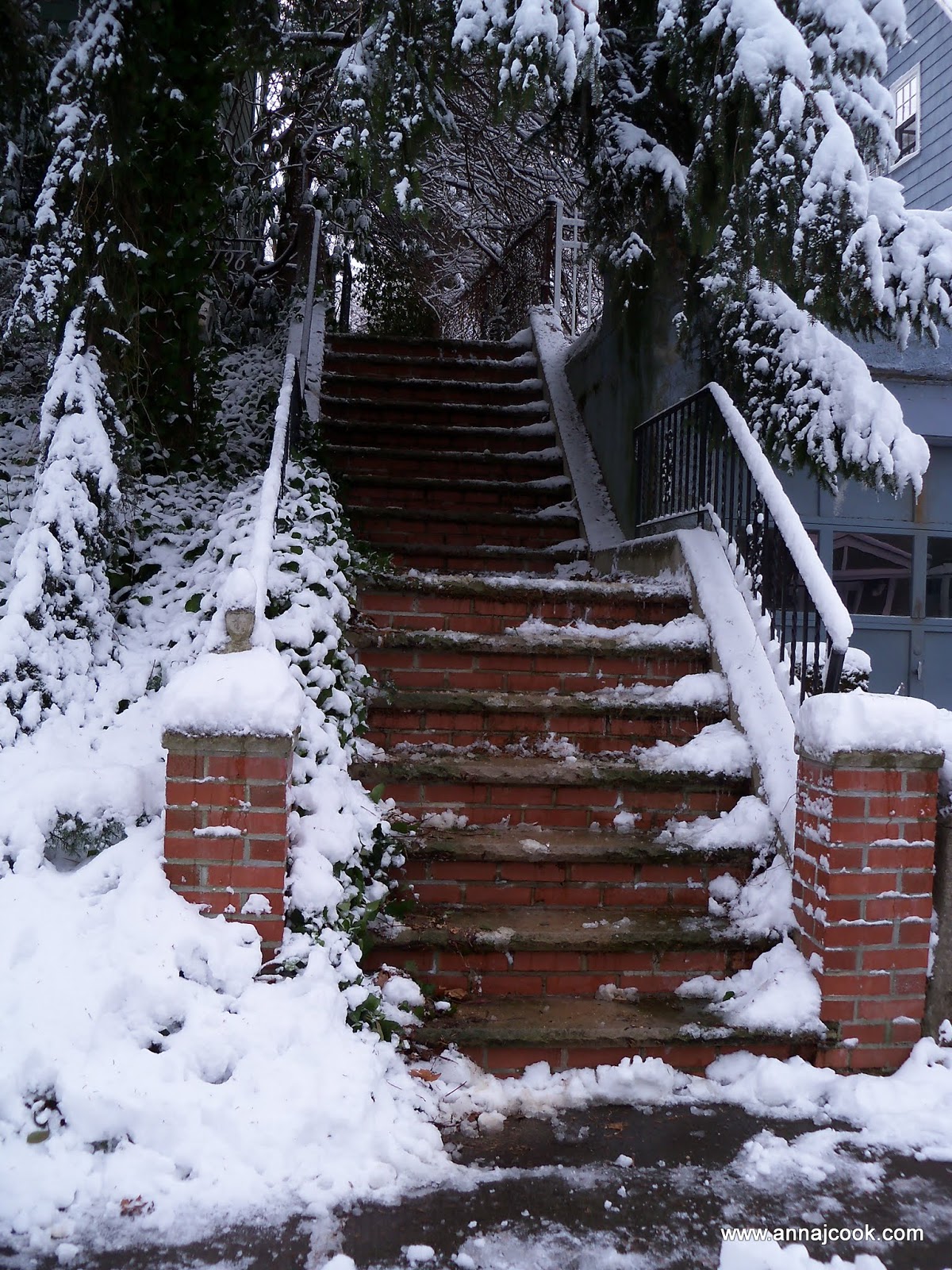
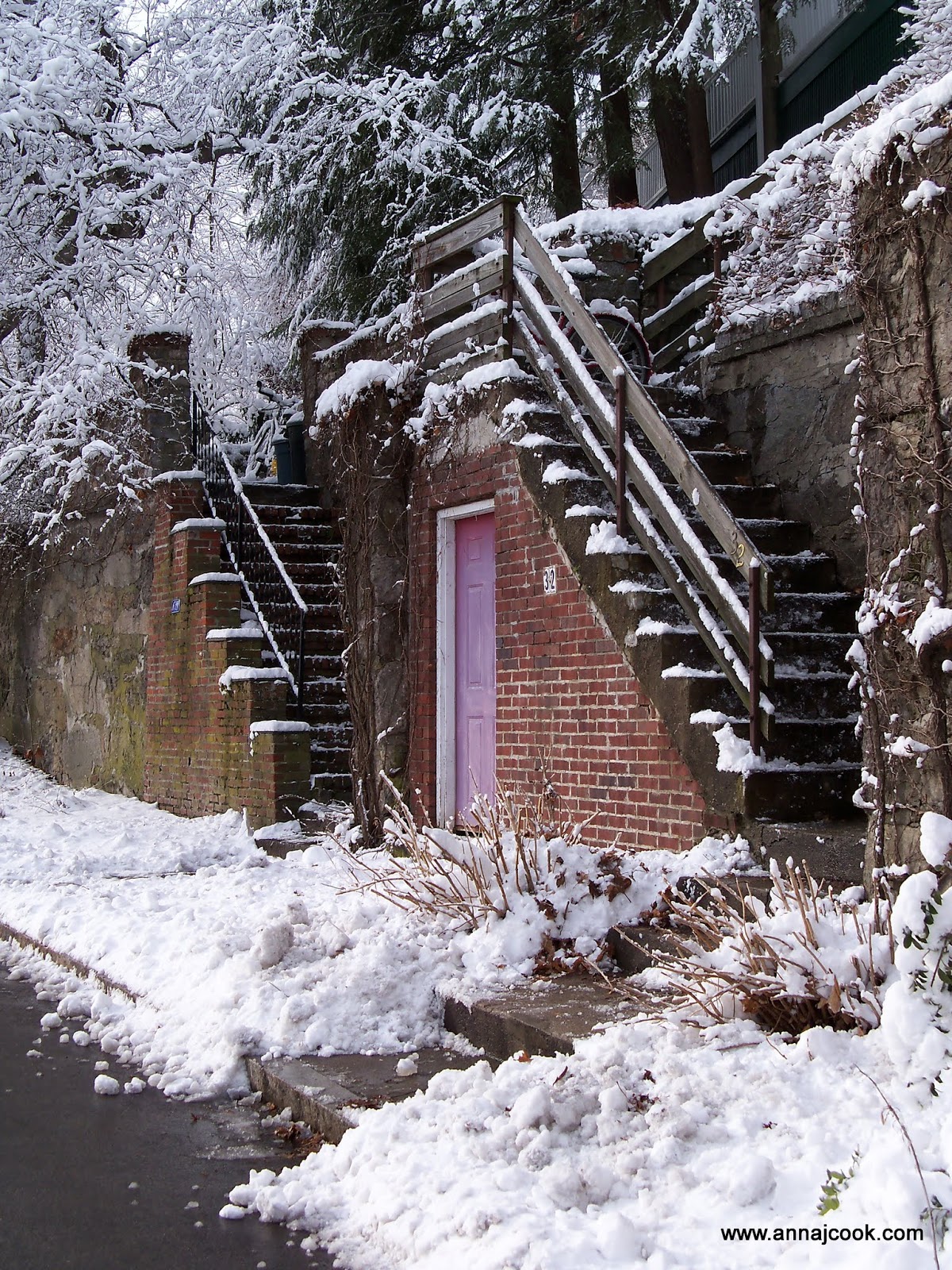
I’ve always had a thing for photographing flights of stairs, and the Corey Hill neighborhood definitely provides ample opportunity.

Even before I moved to Boston, I liked wandering around neighborhoods that weren’t my own to engage in “what if…” imaginings about the life one would have living there, or the home-making possibilities of the houses therein.

(For example, what’s with the pink door below the stair?)

At the summit of Corey Hill is a public park which lends itself to sledding (the man in the black coat was a supervising adult waiting for his sprongs to return from the latest run). In July, this is a favored spot for watching Boston’s city fireworks.

In addition to adorable brick cottages, there’s this imposing art deco structure near the summit park, and also a few truly outstanding Victorians (I assume vestiges of the original settlements).

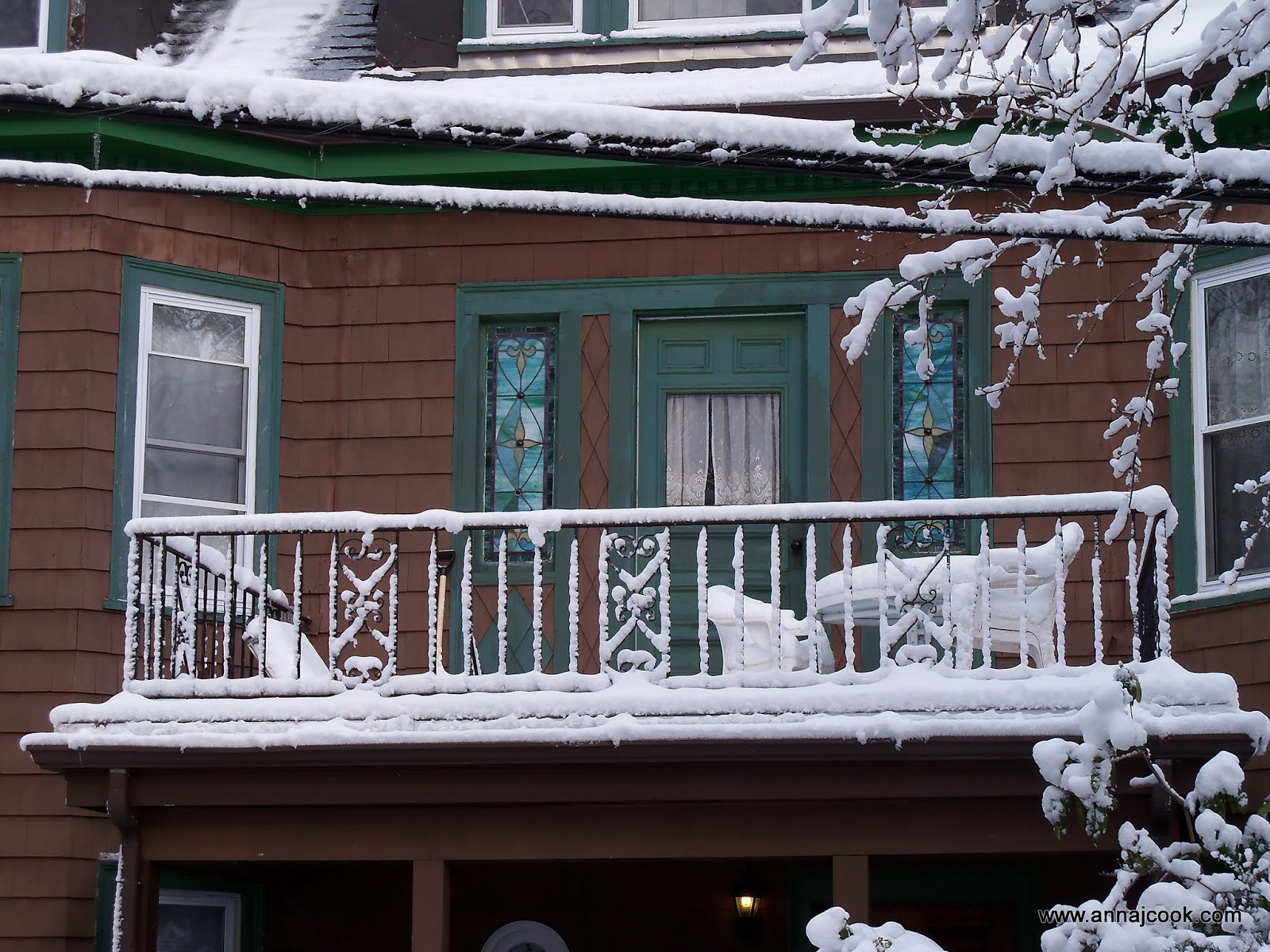
One of the cool things about snow is the way it makes you see color in a whole new way. Like the greens and yellows behind the row of icicles on this recessed garage…

…and the turquoise on this second-floor balcony.

While I suppose the “house” below might be a little too tiny for us, I’d like to imagine that some day — if we stay in Boston — our little household of two humans and two cats might be able to afford a home of our own in a neighborhood not entirely unlike this one.

mutual christmas gift: a trip to the montague book mill [photos]

29 Saturday Dec 2012

Posted by Anna Clutterbuck-Cook in a sense of place

≈ 5 Comments

Tags

books, boston, family, holidays, travel

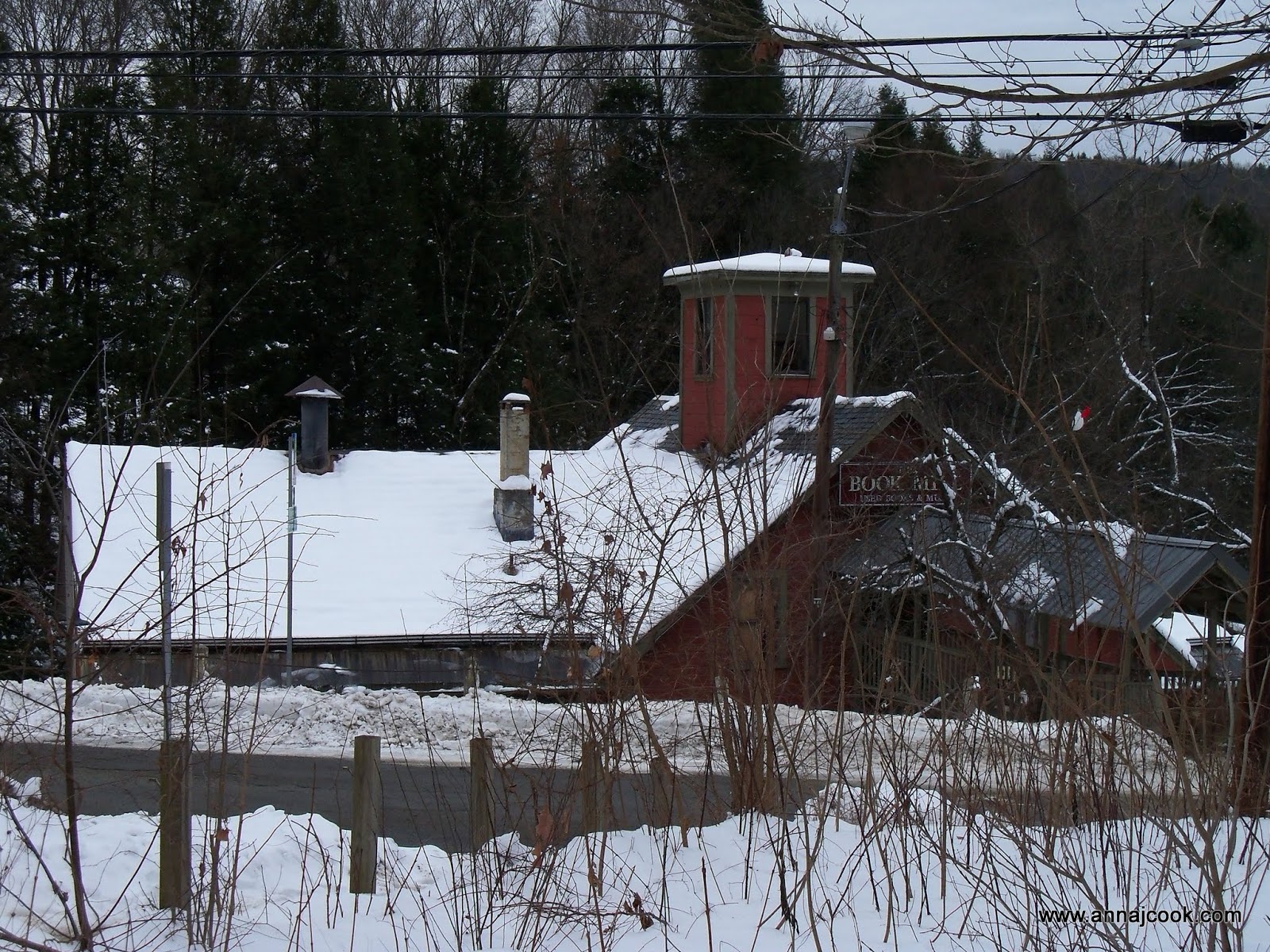
This year, Hanna and I decided that our joint gift for one another was going to be a trip to the Montague Book Mill in Montague, Massachusetts (“books you don’t need in a place you can’t find”).

We set out this morning along MA-2, under snow-grey skies, and about two hours of NPR later arrived at the Mill. It was so lovely to have snow! As Hanna says: “A proper winter!”

We decided right away that this was definitely a bookstore we could fall in love with! All they needed was a woodstove and a bookstore cat or two (too bad they don’t allow people to take up permanent residence…)

(I’m a sucker for exposed beams and wood flooring, what can I say?)

From the second floor, you could hear and see the rushing waters of Millers River outside.

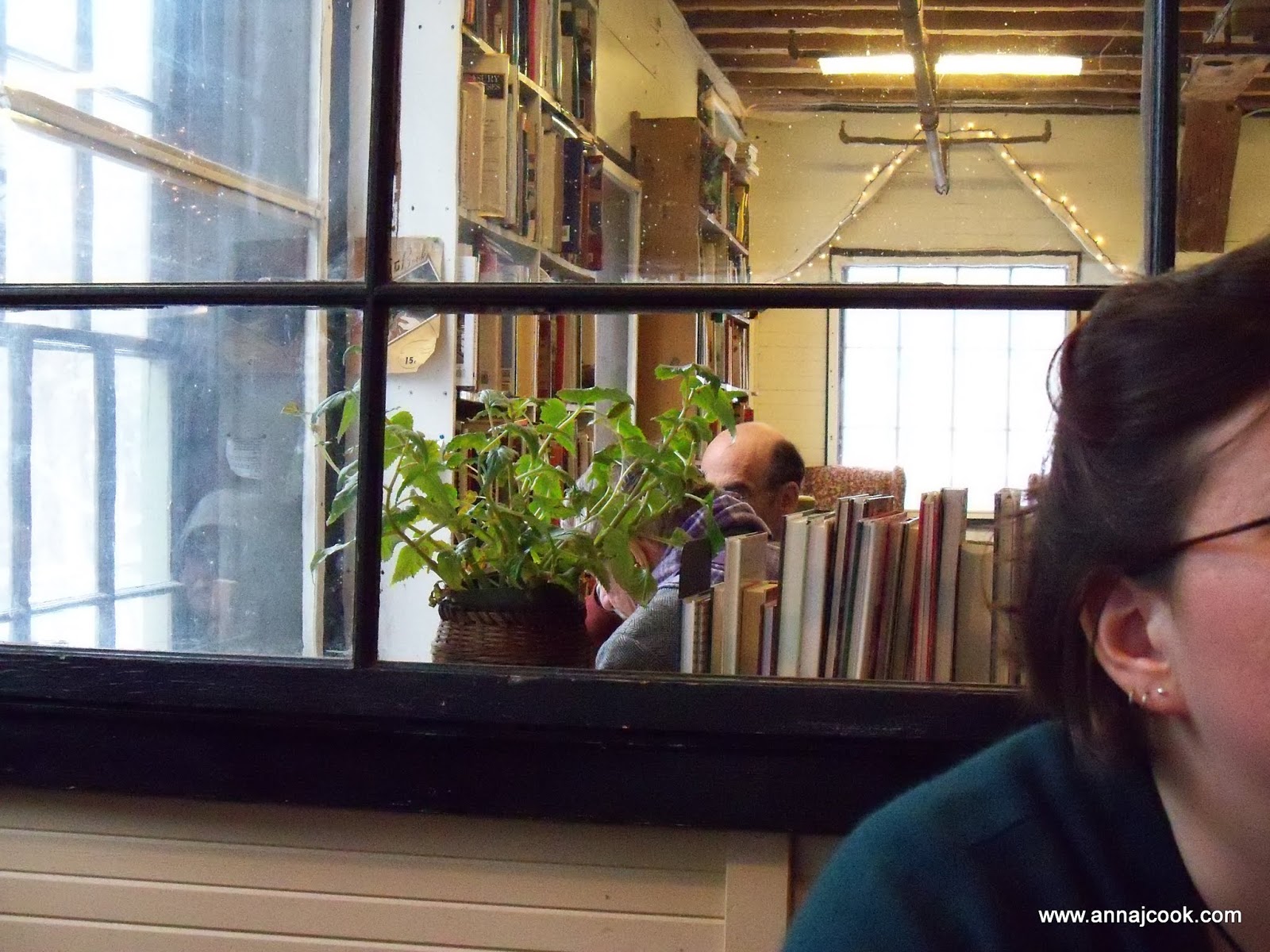
The re-purposed riverside mill building is actually a complex of businesses, including not only the bookshop, but also a cafe, the Lady Killgrew, used record and CD store, and artists’ showroom.

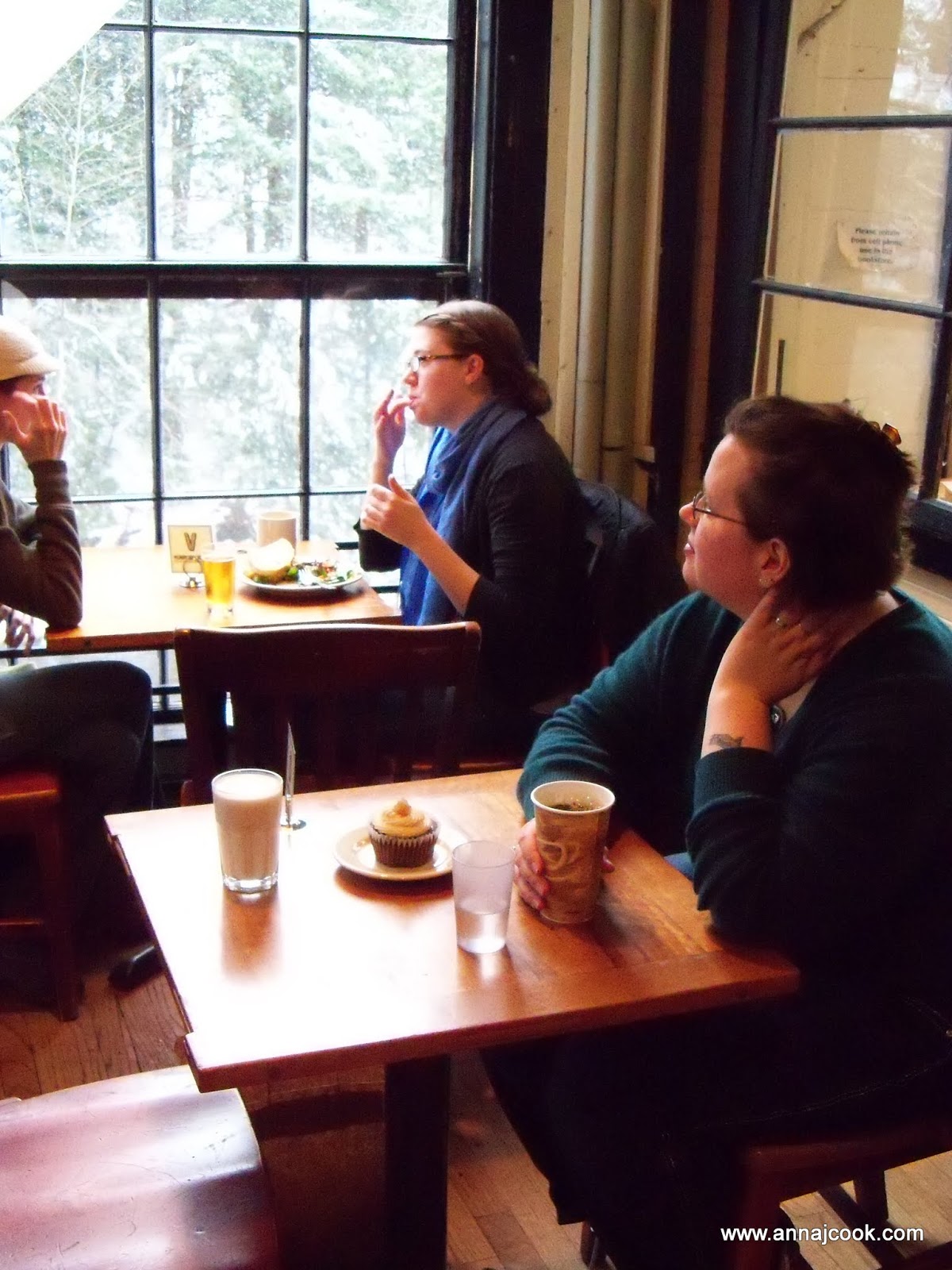
After browsing and selecting our book purchases* we got a delicious lunch at the Killgrew, consisting of peanut-ginger udon salad, a brie and marinated apple panini, maple milk (an “intrinsically delicious” food) and ginger cupcake.

(I seem to like taking photographs over Hanna’s shoulder)

While we were eating, the snow began to fall in beautiful fluffy flakes over the river.

… and on our way back out to the parking area, we stopped at the artists’ shop and bought these beautiful recycled wood inlaid star ornaments for our future Christmas tree. They’re supposed to be “friendship” stars, but we figure they can be for a pair of wives just as well.


*Thanks to my grandparents Ross for the gift money that funded our book buying spree! For those interested, we bought:

Middletown: A Study in Modern American Culture by Robert S. Lynd and Helen Merrell Lynd (Harcourt, 1929).

Public Vows: A History of Marriage and the Nation by Nancy F. Cott (Harvard U.P., 2000)

The Tassajara Recipe Book: Favorites of the Guest Season by Edward Espe Brown (Shambhala Press, 1985)

Albion’s Fatal Tree: Crime and Society in Eighteenth-Century England by Douglas Hay et. al. (Pantheon, 1975)

The Unknown Mayhew by Eileen Yeo and E.P. Thompson (Schocken, 1971)

A Social History of Madness: The World Through the Eyes of the Insane by Roy Porter (Weidenfeld & Nicholson, 1987)

Perfecting the World: The Life and Times of Dr. Thomas Hodgkin, 1798-1866 by Amalie M. Kass and Edward H. Kass (Harcourt, 1988).

holiday cheer [random acts of kindness]

25 Tuesday Dec 2012

Posted by Anna Clutterbuck-Cook in our family

≈ Leave a comment

Tags

boston, cat blogging, domesticity, random kindness

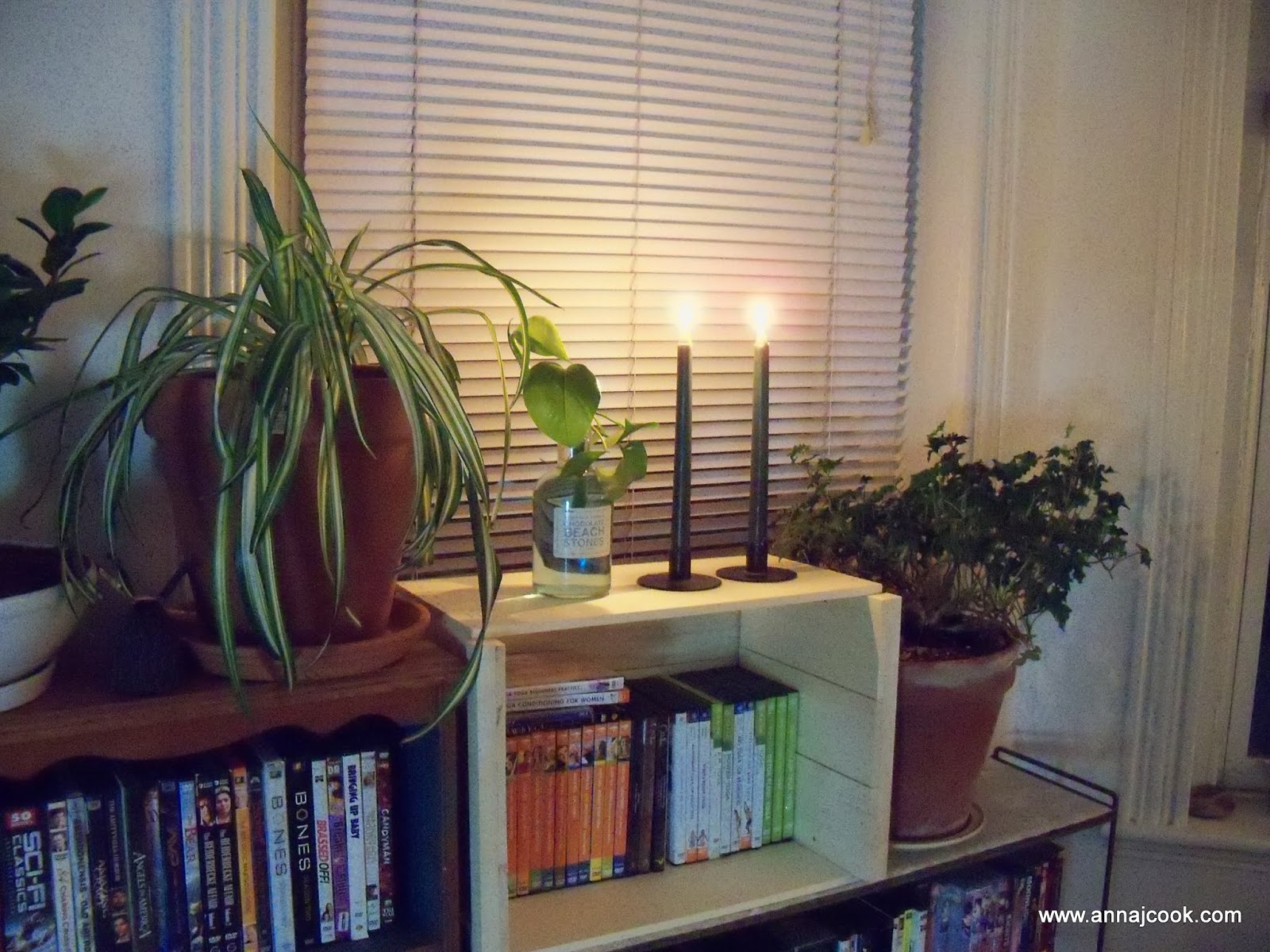
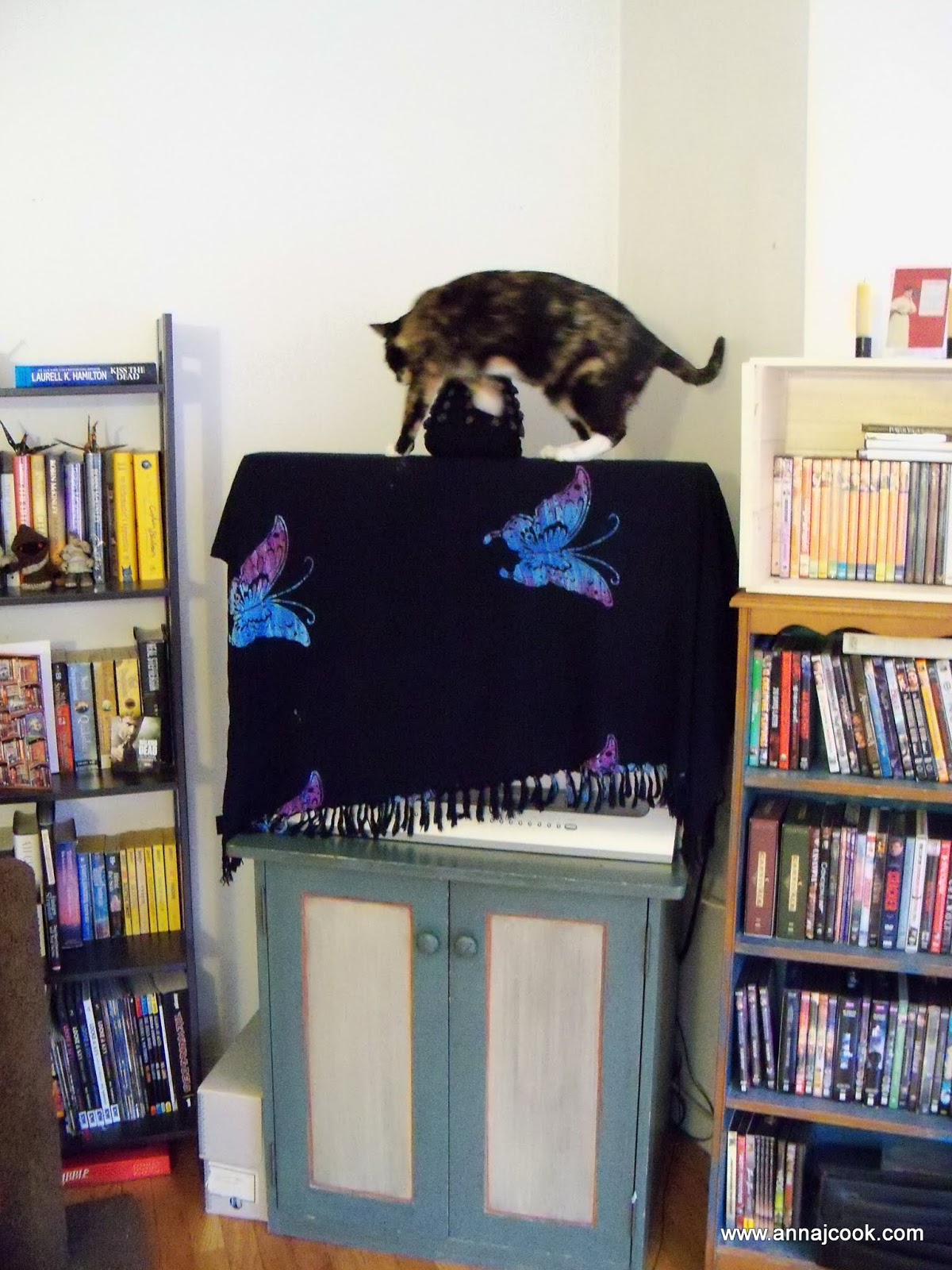
This morning, as we finished unwrapping our presents from far and wide (photos tomorrow!), little miss Teazle decided to expand on her exploration of our potted plants to use them as a platform from which to spring to the top of our television set.

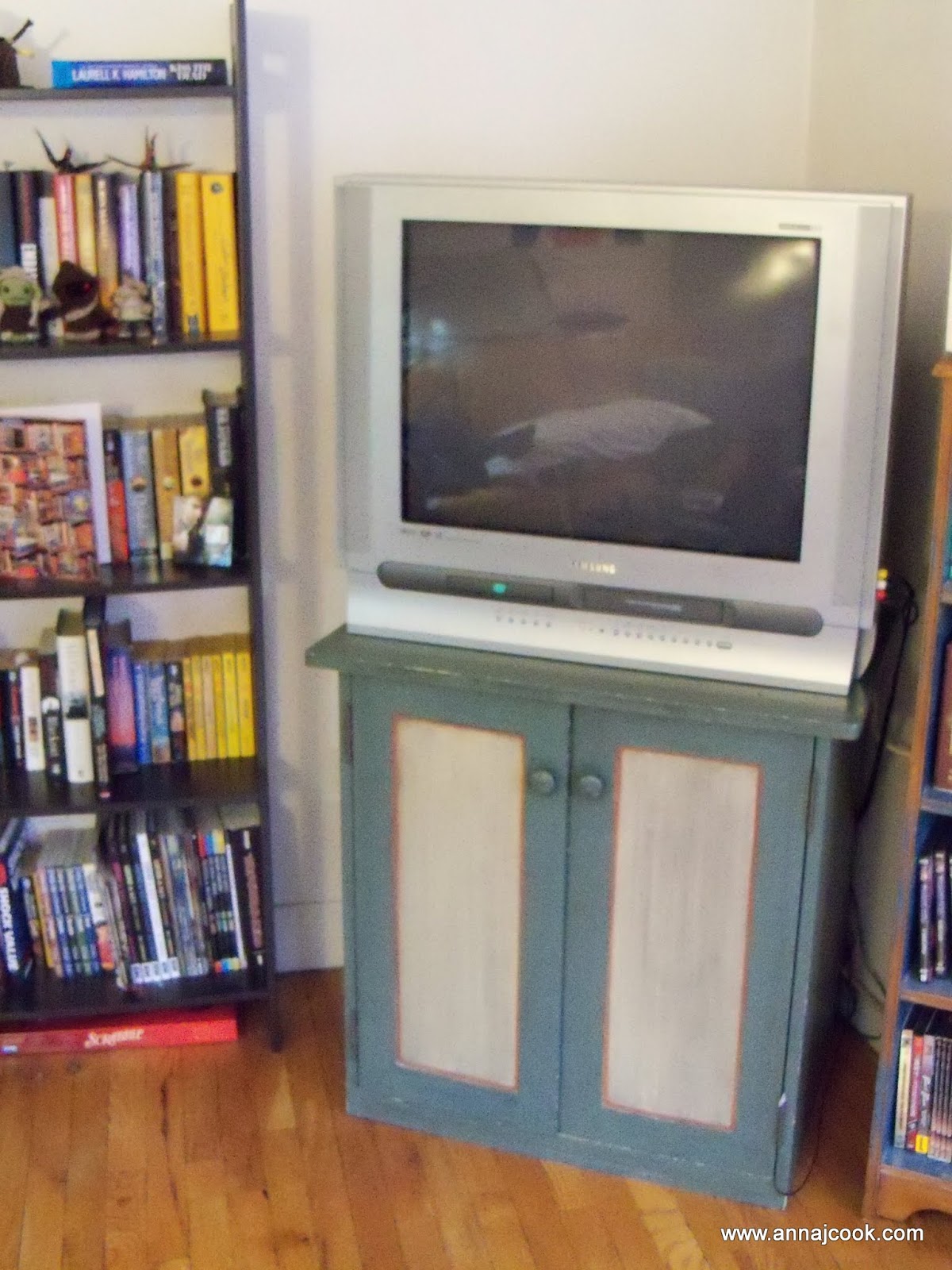
the TV is to the left of these shelves

Our television set was inherited from friends and weighs a ton; for three years it’s been sitting precariously on a pine shelf scavenged from the junk heap. Left to its own devices, it’s safe enough but with a kitten scrambling about on top it was starting to sway noticeably. And after three successive scruffings and time-outs in the bathroom, after which Teazle simply returned to pick up where she’d left off, it was clear a solution was needed that would not result in our coming home after work one day to find a squashed cat, a shattered television screen, and a giant hole in the floor.

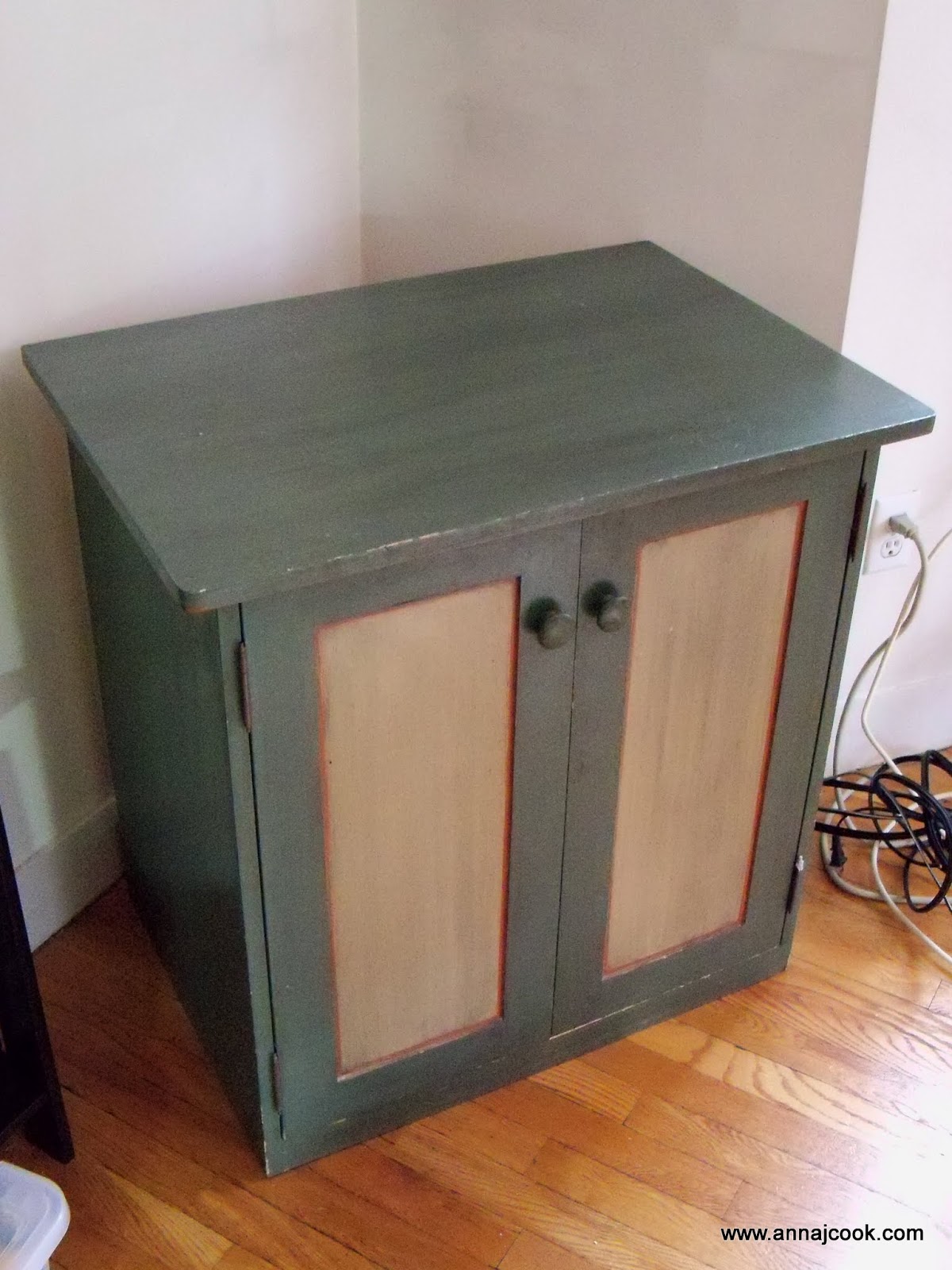
Yesterday, on our afternoon walk, we’d happened upon a lovely little cupboard out on side of the street for pick-up. We poked and prodded it and stood around discussing what to do with it — but could think of nothing. So we decided to leave it for someone else to take away and walked on.

Suddenly, around 10:00 this morning, we really wished we’d snagged it.

So I said, “I’ll go out for my walk and see if it’s still there.”

“You won’t be able to carry it home alone!” Hanna said.

“Oh, I’ll figure something out — if it’s still there,” I said. I assumed it would be gone — stuff usually doesn’t last fifteen minutes in this neighborhood.

But lo, it was there! So I started hauling it the mile or so back, about half a block at a time, carrying it awkwardly braced against alternating hips.

It was going to take awhile.

Maybe, I thought, someone driving by will stop and offer me a lift, or someone walking in the same direction will offer to help.

I likely wouldn’t have accepted an offer from an unknown driver — but an extra pair of hands would have been nice.

About halfway home, I was starting to feel ominous twinges in my back and arms. But I didn’t want to abandon the cupboard to go back and get Hanna for fear it would disappear before we could return. So I kept going, one leg at a time.

I passed by a woman taking a smoking break outside her house.

“What a great find!” She said, by way of greeting.

“Yes!” I agreed. “Now it’s just a matter of getting it home!”

“Do you live far from here?” She asked, “Would a dolley help?”

“Actually … yes,” I said, “a dolley would be super helpful!” Usually I demur offers of assistance, but it seemed really stupid to do so in this instance. Particularly since she’d offered it without knowing me from Eve.

So with the help of the dolley, I got the rest of the way in under ten minutes. Hanna and I put together a bag of cookies for the kind stranger and I hauled the cart back again before we set up the television on its new, more stable, cabinet.

Not that this appears to have deterred Teazle from her kitty parkour one bit!

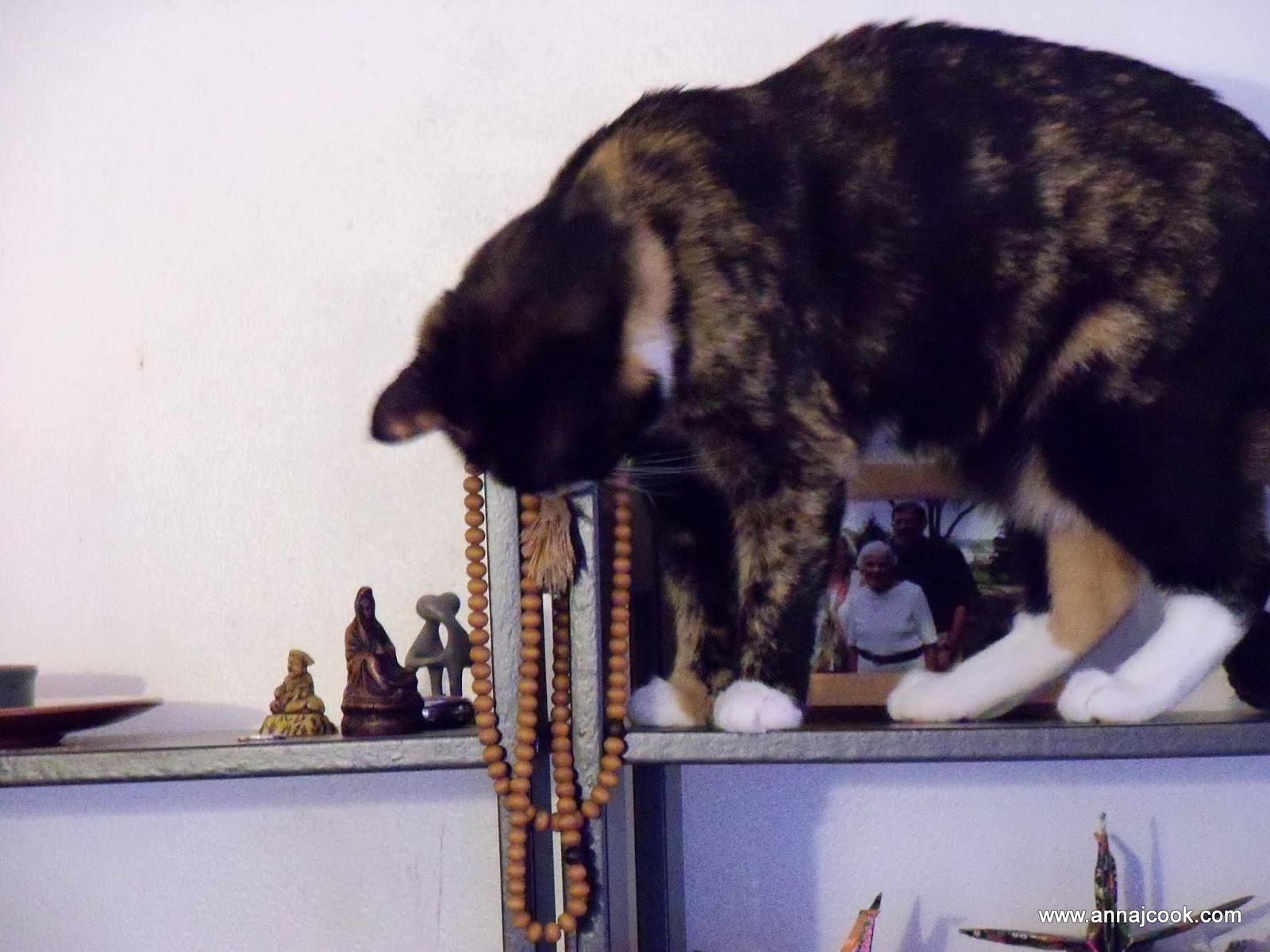
She’s determined to get across to Hanna’s home altar on the far left bookshelf …

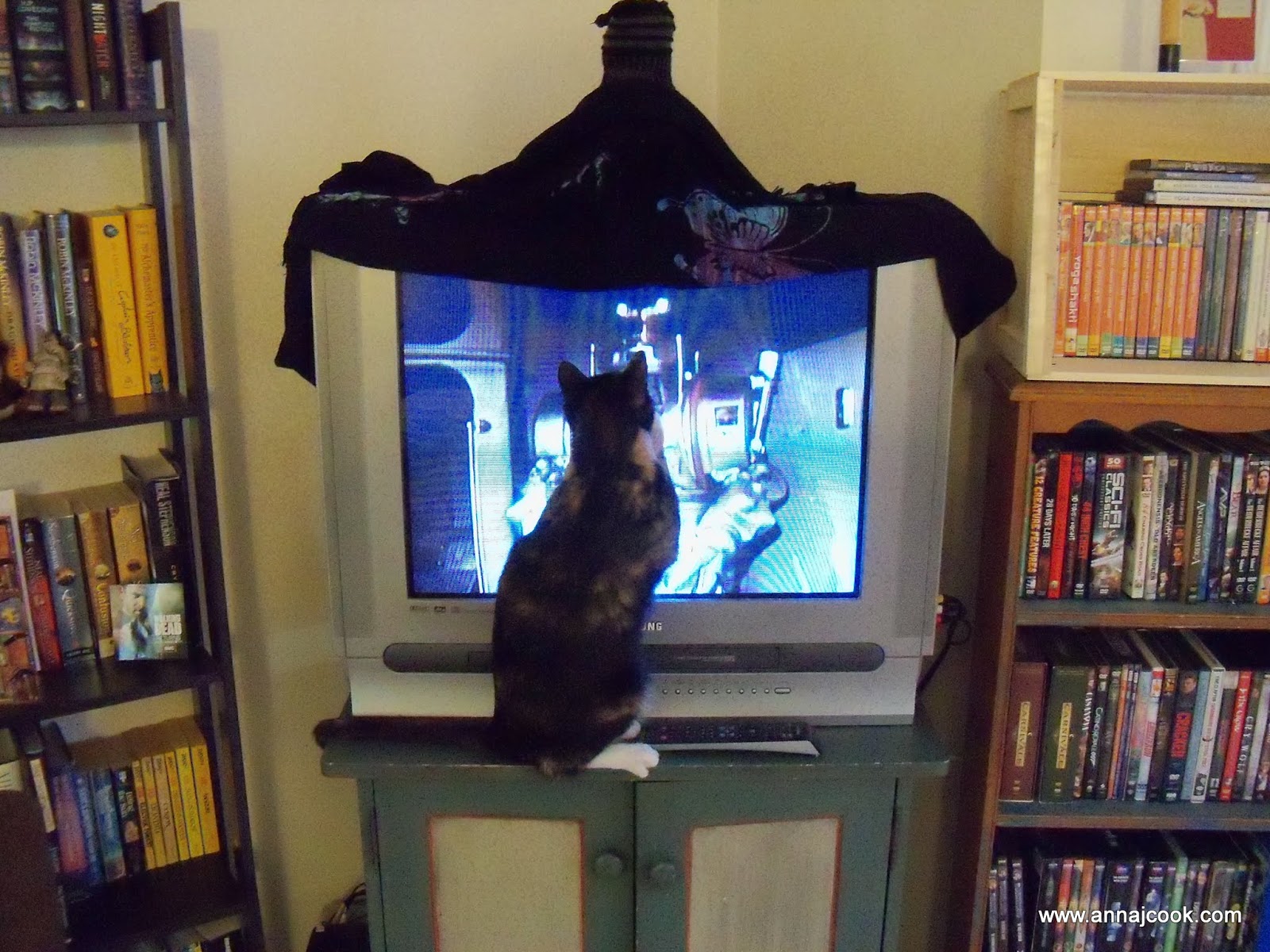
… and she has now figured out how to watch movies from a front-row perspective!

real-life adventures in class, gender, race, and sexuality

01 Saturday Dec 2012

Posted by Anna Clutterbuck-Cook in think pieces

≈ 2 Comments

Tags

being the change, boston, gender and sexuality, MHS, politics, racialization, the personal is political

Last night I was working an event at the MHS that involved spending one portion of my evening standing out on the sidewalk, a few blocks away from the building, holding an electric lantern to light the way for guests moving from one location to another. I was one of about seven lantern-bearers spread out across a quarter-mile path from Point A to Point B.

Standing in one spot for 45 minutes, not soliciting nor waiting for public transit, and holding a lantern, certainly attracts attention in the city. Maybe a dozen individuals and/or groups of people stopped to ask me politely what I was doing, particularly if their path had taken them past one or more of the other lantern-bearers in the chain.

I happened to be standing at a station on a fairly busy stretch of sidewalk near a bus shelter, but on a bridge crossing over the Massachusetts Pike. It was long after dark, about eight o’clock, and my back was against the high fence that stops people from committing suicide off the bridge. I could see my fellow lantern-bearers down the way in both direction, each across an intersection though in plain sight.

(via)

A (likely homeless) man with a shopping cart containing his belongings came up the sidewalk. I nodded to him and he took this as an invitation to stop and talk with me. Continue reading →

please exercise your right to vote

06 Tuesday Nov 2012

Posted by Anna Clutterbuck-Cook in think pieces

≈ 1 Comment

Tags

being the change, boston, feminism, politics

Ohio, 1912 (via)

Hanna and I went up to our local polling station around 7:15am this morning to cast our ballots. The lines were long, but moving quickly and we were in and out of the school cafeteria in about 30 minutes. Everyone was polite and efficient, and for some reason the signs offering translation services (Vietnamese, Russian, Spanish, and more) made me tear up. As brokenly human as our election process is, I’m grateful to have been born in a generation where my right to participate is taken for granted, rather than something I need to fight for. Queer folks who are same-sex marriage supporters have to experience their civil rights up for a vote, and often see those rights rejected by their fellow citizens … but at least we get to cast a vote for our own equal rights. Women during the suffrage campaigns could only batter on the door in righteous anger (or speak words of forceful persuasion) in a long, slow struggle to be let in. I am grateful that so many of them did.

Please vote today. Even if you’re voting for the other guy I sincerely want you to make your preference known. I know there are flaws in the system, and I have friends who are cynical about the process and abstain on principal – and I understand their reasons and respect that it’s their right to do so. But I’m going to encourage you to make your voice heard in a different way today: by making an affirmative decision about which direction you would like our nation — and each state within it — to move. If you don’t cast a ballot in the first place, if there are disputes over voter fraud or recounts there won’t be a ballot from you to re-count.

(via)

Regular readers of this blog will be unsurprised to know I voted a Democratic ticket. At four this morning, when the cats woke me up to demand breakfast, I lay in the dark and enumerated the reasons why — given the two-party system — Democratic candidates are really the only option for leftist me:

1. The social safety net. Welfare and “entitlements” may have become dirty words in contemporary American politics, but my vision for what government is good for actually starts (and largely ends) with provision of basic care for its citizenry, particularly the most vulnerable. I have friends currently surviving in part thanks to government support — food stamps, WIC, unemployment insurance, government-subsidized student loans, social security benefits. Both Hanna and I have benefited from state-subsidized health care and federal student loan programs (say what you will about the cost of higher education, federal loans made our advanced degrees and subsequent financial stability possible at a relatively sustainable price). In our elder years, we will hopefully benefit from whatever iteration of social security is available. As global climate change becomes a reality, disaster relief will be the difference between utter devastation and recovery and resilience for more and more of us. My ethics demand that I support a government that will continue to provide these to the best of its ability, and actively work to bring material security to us when we need it most.

2. Reproductive justice and bodily autonomy. I’m a person with female anatomy; my body these days is the subject of intense debate and scrutiny in the political realm, particularly due to its capacity to sustain a pregnancy. Despite the fact that I do not plan to procreate, I am still deeply affected by a world which sees persons with uteri as individuals whose bodily autonomy is not secure and subject to the political agendas of others. Self-interest demands, therefore, that I vote for politicians who — at least at the party level — recognize my humanity as a complex reality, not just something that exists in the absence of others’ trumping interests.

3. Civil rights and social justice for queer folk. Democratic politicians are not consistently supportive of equal civil rights for queer folks — and not all Republicans are anti-gay. But taken in aggregate, the Democratic party is the only viable political party that is actually making moves toward supporting my rights as a citizen with same-sex desires to not be discriminated against in law because of those desires.

Here in Massachusetts we also had the opportunity to vote on legalization of medical marijuana and physician-assisted suicide. I voted in favor of both. I have known enough people facing difficult end-of-life decisions, including my late grandfather who died in 2007 of aggressive lung cancer, to know that we should all have the right to choose when and how to die, when the opportunity to choose is available to us. Although my grandfather’s condition deteriorated too rapidly for him to reach the point where assisted suicide was actively on the table, he had that conversation with my family and the hospice care folks who helped our family through the process of his death. And when it comes to marijuana, I don’t actually think it should be criminalized at all but will take what I can get in terms of de-criminalization. Hopefully, as medical use becomes more widespread and aboveground the stigma against responsible use will lessen and regulation will move out of the criminal justice system and perhaps into the public health realm.

This is what same-sex marriage looks like

Same-sex marriage is on the ballot in four states today: Maine, Maryland, Minnesota and Washington. E.J. Graff has been writing about the history and prospect of each measure over at The American Prospect, and I encourage you to check out her thoughtful state-by-state analysis. I know two families in Minnesota whose wee ones (ages four and six) are passionately supportive of the same-sex marriage campaigns and I’ll be thinking of them today. I want them both to know – Noah and Lilly I’m talking to you! — that regardless of the political outcome, they’re growing into fine people who are being the change we want in the world. Even if our guys don’t win this time around, that you care about fairness and kindness matters and will still make a difference, now and every day we move forward together.

mobility in the city [a few thoughts]

28 Sunday Oct 2012

Posted by Anna Clutterbuck-Cook in think pieces

≈ Leave a comment

Tags

being the change, bigotry, boston, children, the body, the personal is political, why be judgy?

Warning: This is a rambling post full of thoughts in progress.

My friend Molly is in the process of writing a book about parenting-while-feminist and in our little writing group, #firstthedraft, we’ve been talking about the politics of “babywearing” (carrying your infant and/or small child in a backpack or sling, etc.) versus strollers. My parents generally used packs — front and back — in the mid-80s when I was small, as well as wagons, tricycles, car seats, and various bike attachments, to tote us around. I don’t remember that we ever had a stroller per-se, but then we also lived in a small enough town that for daily getting around a car was essential and strollers were thus less so. But I do remember using strollers as a childcare provider in my teens, as a way to move toddlers I physically couldn’t carry over distances of more than a city block or two (about the distance they had the stamina to walk on their own). I never thought of child transport options as very political in nature.

Here in the city, though, I’ve learned, strollers are a Big Deal. Everyone has Feelings about them: how big they should (or shouldn’t) be, where they should (and shouldn’t) be allowed to travel, when (if ever) they are reasonable to be on public transportation. Parents and non-parents alike take all sides and sometimes blood is shed (or at the very least ill-will is fostered).

Last week, I suggested on Twitter that the whole problem might be solved if only we could create little steampunk baby carriers that were balloon or propeller-powered and could hover at about 7-8 feet from the ground. The caregiver could then walk along tugging the carrier along on a tether and strollers would take up the sidewalks and/or precious room on the T no more!

still from The Red Balloon (via)

(Though I suppose then we’d be arguing about low-hanging trees and awnings on storefronts. Sigh.)

I actually think identifying this social rough-and-tumble as one about strollers and parenting choices  says something about how we, as a society, compartmentalize parents and their (especially wee) children into the category of Other, a group of people who enter the public realm on sufferance from the rest of us — those of us who, we like to believe, only take up an “appropriate” amount of space on the T, on the sidewalk, who move at the right speed from point A to point B, and are able to time our inconvenient errands for those times when, even if we do take up more space then usual, we will somehow magically not slow down, crowd out, or inadvertently invade the personal space of our fellow city dwellers.

Those of us, in other words, who assume we have a right to be in public space when and how we need to … as opposed to those Other folks whose right to the public square only extend as far as their ability to imitate the space-taking habits of the default citizen (Us).

So what I want to talk a little bit about in this post is how, in an urban environment, especially if you do not own a car and/or are trying to get by using it a little as possible, you’re just going to get in peoples’ way. Even if you don’t have dependents to transport. Even if you don’t have serious mobility issues that require extra gear (walker, cane, chairAnd errands are going to take a lot of effort to complete. And chances are you’re going to need some sort of wheeled conveyance to get them done — unless you’re lucky enough that you don’t have a bad back or a bum wrist or weak ankle and can afford a gym membership and the time to bench press on a regular basis.

Errands in the city take much more time and planning, in my experience, than they did in the car-dependent town where I grew up (or perhaps, I should clarify, much more than they did for me and my car-owning family; for the folks in my hometown too poor to own a car, life was further complicated by a crappy-to-nonexistent public transit system). It’s something I’ve had to get used to, as a former smaller-town dweller turned urbanite. And I think perhaps this helps me see more clearly the similarities across types of transport-aides that some other people don’t — because we’re so used to tuning our brainwaves to “judge” when parents-and-children come into view.

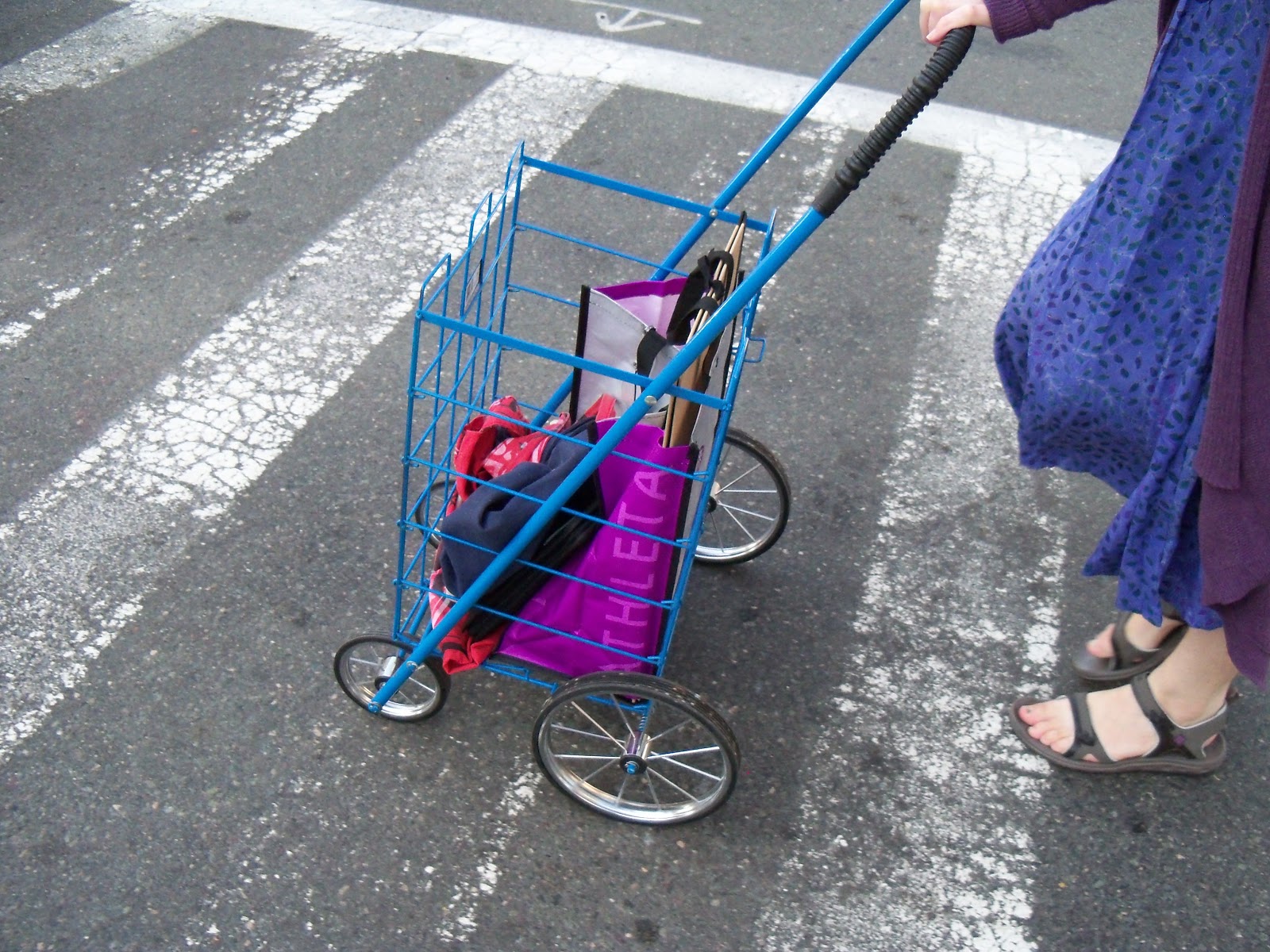
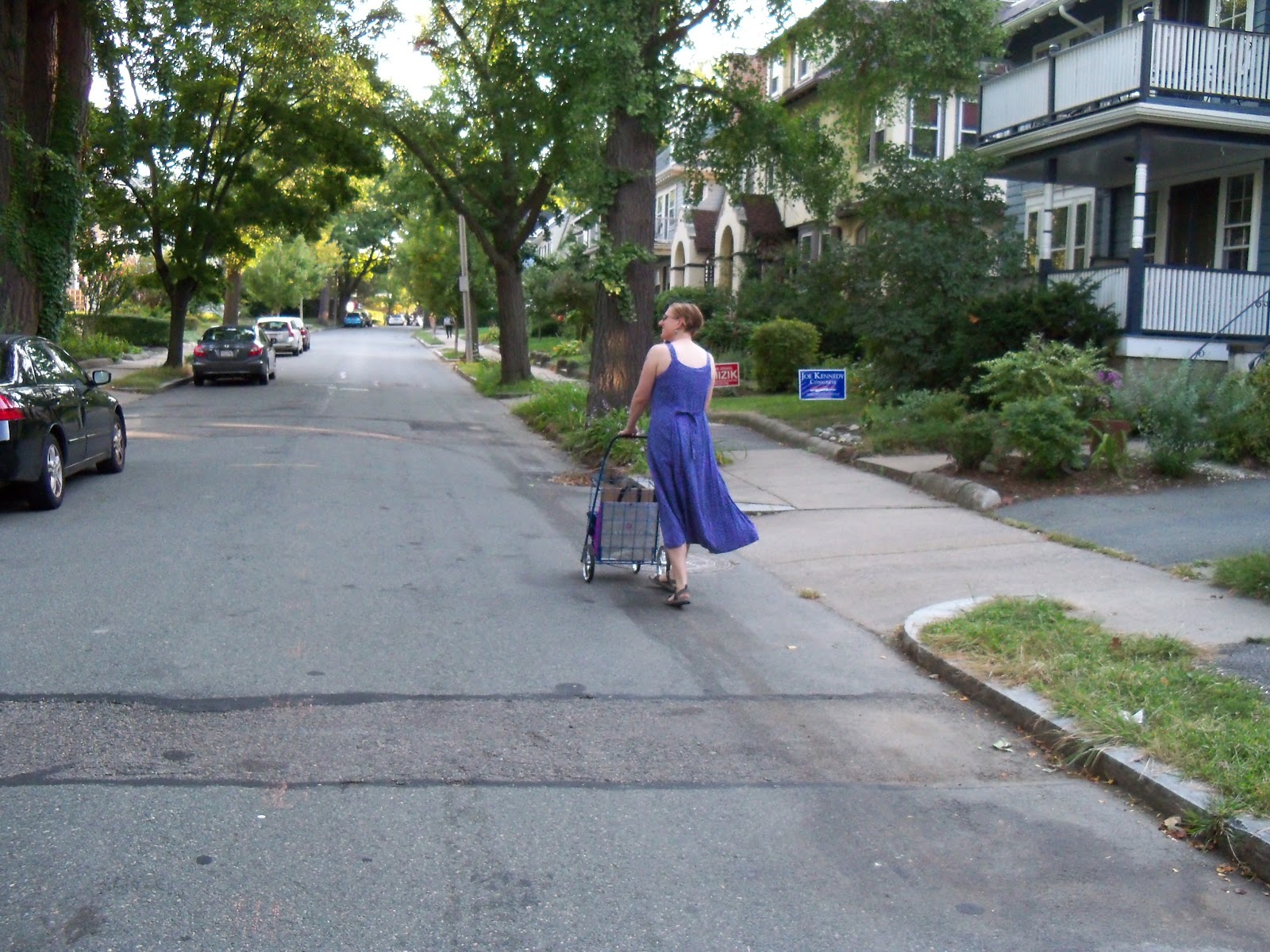
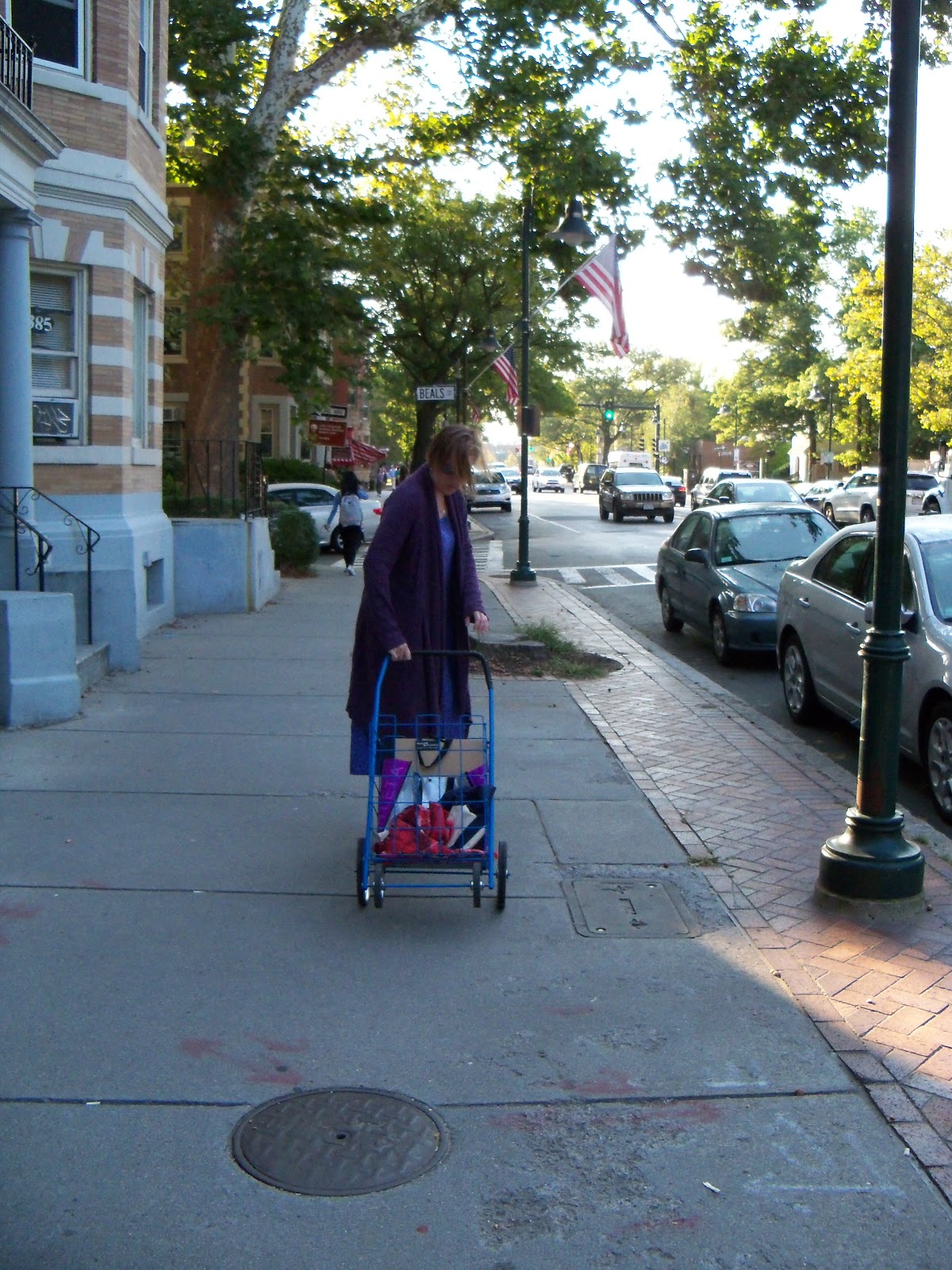
Hanna and I finally bought this shopping cart this year

I’m going to use, as an example, the errand I ran earlier this week to pick up our first monthly allotment of winter veggies from Stillman’s farm where we are CSA subscribers. Stillman’s is out near Fitchburg, Massachusetts, and drives the produce into the city to various pre-scheduled pick-up locations. The closest pick-up point for us was in downtown Boston about two miles from where I work at the MHS. The pick-up time was 2-4pm.

Setting aside, for a moment, the privilege of having a job with a) an hour-long lunch break, and b) the ability to leave on an errand and not worry about getting in trouble if the subway is delayed and I get back a bit late, this sounds like a relatively easy transaction. Take a late lunch, go down, pick up veggies, return to work, take veggies home at the end of the day. If I were living in my home town, this errand would have taken about twenty minutes, maybe, leaving 40 minutes at either end to actually eat lunch.

In Boston, this errand means the following:

1. Remember to take the wheelie-cart with me to work (which means dragging it along on our morning walk of approximately three miles) so that I will be able to transport the heavy winter vegetables on my own.

2. At 2pm, walk to the closest T stop and wait for a train that will take me the right number of stops from Hynes Convention Center to Haymarket (approx. 10 minutes)

3. Maneuver the empty cart into the T, off the T, and up the escalator at Haymarket, and two blocks to the drop point (approx. 15 minutes).

4. Transfer the vegetables from the back of the delivery truck into the cart (approx. 5 minutes).

5. Stop at a nearby sandwich shop for a sandwich and iced tea — admittedly an “optional” step, though to go without would have meant foregoing a midday meal; as it was, I didn’t have time to actually eat the sandwich until I was walking home that evening (approx 10-15 minutes).

6. Carry the cart, maybe 45 pounds fully loaded, down the stairs to Haymarket station; they have an elevator but I didn’t have time to locate it; the elevators to below-ground stops are often poorly marked. The escalators go up, but not down.

7. The first T to pull into the station was headed in the right direction, but not to the appropriate stop. I got on anyway, since I was now starting to feel anxious about getting back to work roughly on time. In order to board the train, I had to lift the cart up the stairs and maneuver it around the other passengers to a quasi-secure “parking” spot midway down the car.

8. At Copley Square I had to transfer trains, meaning I needed to maneuver around standing passengers carrying the laden cart down to the platform, and then repeat the process boarding the train again. All of these situations were made comparatively easy by a) the fact I’m physically able to lift the loaded cart for short bursts of time, b) I was traveling mid-afternoon instead of rush hour, c) I wasn’t getting hate-stares from people who automatically resent the presence of strollers in the subway. (steps 6-8 took maybe 20 minutes).

9. At Hynes, I had to disembark and haul the cart up three flights of stairs (only one of which is equipped with an up escalator) to street level, and then wheel the cart from the station to the MHS. (5 minutes)

10. At the end of the work day, I knew that rush hour on the T precluded trying to get my shopping cart on the T unless I wanted to wait for 45 minutes to an hour for any train empty enough to accommodate me. Since I am able to walk, and didn’t have to rush home for any reason, I walked home — a distance of about 3 miles — pushing the cart ahead of me.

This is the labor it takes to do one errand in the city when you’re relying on public transportation and your own two feet. I’m not writing this post in a bid for folks to pity me — we made the decision to subscribe to the CSA this winter, after all, knowing the time and effort it would take to get our fresh veggies. But I do hope that focusing in on the logistics of one errand this way points out how most of us, at one time or another, even if we are able-bodied adults sans children moving around our environment, are awkward to accommodate. And also point out how the environment is as much “at fault” as the awkward human being in question.

Rather than bitching about those of us who crowd the sidewalk with shopping carts, strollers, or walkers, we might think about the assumptions that led to sidewalks being a certain width (i.e. that all those who use the sidewalk are people who can walk unaided and unburdened with goods). While some of us might be able to carry our children (or our groceries) in wraps or packs or tote bags, others may not be strong enough to carry 45 pounds of produce (or exhausted toddler) for three miles — or time our outings before/after rush hour in order to actually fit on the T without the other passengers complaining or resenting you.

More and more, I find myself thinking about how the ideal citizen-worker in our world these days is the perfectly-able young adult without any dependents, who never gets ill, and is somehow (magically) perfectly self-sufficient. Not only do they never behave awkwardly in public, take up more space than we think they should, turn up their music louder than we’d like, lose their train of thought in the grocery aisle, or fumble with their wallet at the cash register … they manage their bodies (and those of their children) and personal belongings so that the rest of us can imagine they are not there.

Oh, I’ve been there. I’ve been annoyed and judgy and exhausted and angry and in the headspace where I just want to get home and not deal with one more stranger ever anywhere. But that’s just not the way the world works. We’re all awkward, noisy, thoughtless, slow. We all take up more space, sometimes, than others think we should.

And it seems like an important exercise or practice for each of us to — regardless of how we feel and what we think of others’ choices and presence —  realize that they’re probably just trying to get around the city like we are, and that sometimes getting from point A to B is an awkward, clumsy process. One that does, in fact, take up space in the world.

And that we all, in fact, equally entitled to be mobile, and to move around the city when and how we need to in order to live our lives.

coffee and sunshine [wedding day, installment three]

23 Tuesday Oct 2012

Posted by Anna Clutterbuck-Cook in our family

≈ Leave a comment

Tags

boston, food, photos, wedding

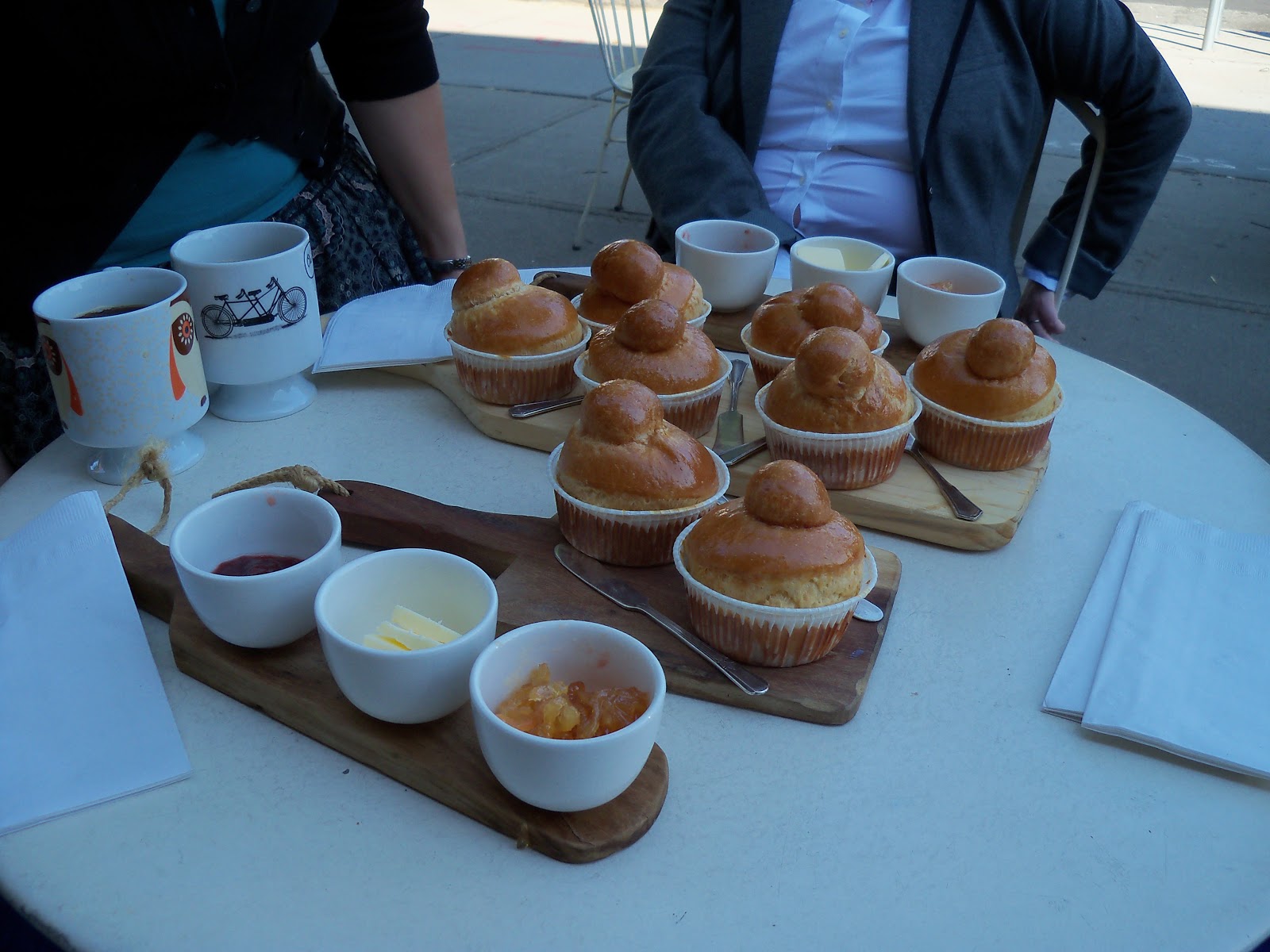
Our wedding morning dawned cool and clear, and we began as we do most Friday mornings, by walking out through Coolidge Corner and down Beacon street to Tatte cafe.

We are so thankful to Tzurit and everyone on the staff at Tatte for welcoming us for our wedding morning!

We had decided that we really wanted our marriage vows to be woven into the fabric of our daily life here in Boston, and at least once a week Hanna and I are able to have breakfast at Tatte before work.

What we like to order is the Brioche Breakfast (we’re particularly fond of the pear marmalade!) and espresso – so that’s what Tzurit and her staff prepared as a wedding feast.

I guess we really wanted all that!

Halfway through breakfast I remembered we had promised to call my folks once it was all official – and I’d forgotten my cell phone at home! Thankfully, our friend M. came to the rescue with her iPhone (which I could use while drinking my latte).

After sending everyone off well-fed to their various destinations of the day, Hanna and I made our way back home via Trader Joe’s where we did our grocery shopping in preparation for the following morning’s departure for Cape Cod.

And then we went home and essentially napped for the rest of the day (getting married turns out to be hard work, even if you keep it small!).

one thousand eight hundred and twenty days [2007-2012]

01 Saturday Sep 2012

Posted by Anna Clutterbuck-Cook in a sense of place

≈ Leave a comment

Tags

boston, domesticity, family, professional gigs, simmons

This weekend marks the end of my fifth year in Boston, and it’s become something of a tradition since I began this blog to post some thoughts about where I’m at in my relationship with the city and the grown-up life I’m building for myself here (see previous installments one, two, three, and four).

Five years. Half a decade. While I’m under no illusions that such a period of time makes me a New Englander, it does mean that I’ve lived in Boston for enough years that the geography of the city is populated with personal memory and meaning. Hanna and I are making certain pathways and places our own. And at some point during this year, I realized that I’d stopped asking myself where we might move next in the national sense (San Francisco? Portland, Oregon? Chicago? Vermont?) and instead begun thinking about where our next household might be in terms of Boston neighborhoods. I walk through the city now and think to myself, “Could we live …?” “How far from the grocery store is …?” “Does the bus run …?”

More about that in the months to come, I imagine, since after six years (for Hanna, at least; four for me) in our current apartment we’ve pretty much decided to start looking for a new place in the new year. We’d like a place better set up for an old married couple (rather than two roommates) and kitties, and we’re finally in a stable enough situation financially that we have some flexibility when it comes to paying a little more for extra space or a garden in which our cats can cavort in safety.

But that’s all in the future. (And the 70+ moving vans I’ve counted in our neighborhood this morning are enough to make you want to stay put permanently!) This is a moment for reflecting back on how much change has passed through my life in the previous five years (aka two hundred and sixty weeks, aka one thousand eight hundred and twenty days).

My, it’s been a busy half-decade!

  • House and home. 
    • [2007] I started out my Boston adventure living in a tiny dorm room at Simmons College. While not inadequate (and I appreciated pre-assigned housing as someone moving from out of state), it was only the second experience I’d had living in a dormitory — the other being when I studied abroad in 2003-2004 at the University of Aberdeen. I had not anticipated how moving into a dorm and starting graduate school was going to make me feel immature and trapped, rather than ripe with possibility. It was not the best psychological twofer ever.
    • [2012] Since moving in with Hanna in May of 2008, I’ve been living on the border of Allston and Brookline here in the Boston metro area, roughly three miles from the MHS. We walk to work most mornings and often home again as well, through several of our favorite city neighborhoods. Over the past four years, we’ve shaped and re-shaped our apartment from being a space for two roommates into being a family home — not to mention eeking out space for about 800 books! As I wrote above, we’re slowly making the Boston area our habitat for at least the next five-to-ten years. Which is a much happier, healthier state of mind and place of being than I was right after the move.
  • Relationships and romance.
    • [2007] As I’ve written about extensively in other posts, I came to Boston with a (romantic) relationship history of nil and no friends in the area, other than the few contacts I’d had with Simmons students in preparation for my move (Hanna being one of them!). It was the first major move away from my hometown, away from my established support network of family and friends. And during the first twelve months of my time in Boston I was majorly stressed — as in panic attacks, nausea, and extreme sadness over the geographic distance from loved ones. I wanted and needed, to leave West Michigan — but the transition was not an easy one. 
    • [2012] Since then, obviously, Hanna has happened! In ways that have been fairly extensively documented here (are you all tired of wedding-planning posts yet?). So in five short years I went from being single to nearly-married, and from being non-directionally sexual to being in a lesbian relationship. Both of which have had fairly major effects on how I organize my self-understanding and relational life. In addition, Hanna and I are slowly-yet-steadily building a network of friends near and far: People we go to the movies with, have over for dinner, who kindly watch our cats and pick up the mail when we’re out of town for the weekend. People we blog with, email with, host while on visits from afar. This is a major part of what makes Boston start to feel like home.
  • Learning and schooling.
    • [2007] As most of you know, I moved to Boston for graduate school — like so many other people who relocate here! For most of my five years here, I was enrolled at least part time in the Simmons library science and history program. It had its highlight and lowlights, as chronicled on this blog. I’m super-proud to have completed my Master of Arts in History through documenting the founding and early history of the Oregon Extension program, and my Master’s degree in Library and Information Science opened the door to my current work as a reference librarian, which really was my career objective when I started the program (inasmuch as I had one). So while I found the process psychologically and emotionally exhausting, and perhaps not as intellectually stimulating as I’d hoped, it did position me to move forward outside of the academy as a scholar.
    • [2012] Five years later, I’m no longer in school — and so pleased about that state of affairs. I’ve come to the conclusion over roughly eleven years in formal schooling (1998-2005, 2007-2011) that institutional education is not healthy for me, despite the fact I perform well therein and many of its resources are useful for my intellectual explorations. So I completed my Masters degrees back in January and May of 2011 and have no plans to return. Meanwhile, I am committed to being a working historian as well as a reference librarian: learning, for me, has never been bound by the schooling. So we’ll see where the next five, ten, fifteen years takes me!
  • Work, work, work.
    • [2007] I moved out to Boston with the promise of financial aid and a part-time position at the Barnes & Noble store in Boston’s Prudential Center (an internal transfer from the store where I had been working in Michigan). It became clear almost immediately that the $9/hour they were paying me — while a raise from my hourly wage in Michigan — could not cover Boston expenses. So I began looking for other work, particularly pre-professional library work. I interviewed at a few places with no success before landing a position as a library assistant at this place called the Massachusetts Historical Society, which caught my eye in the job postings because I’d heard my friend Natalie talking about her research there. This October 12th will mark my fifth anniversary as a member of the MHS staff.
    • [2012] I had other jobs as a graduate student, of course (we all juggle multiple things to make ends meet): teaching assistant at Simmons, archives assistant at Northeastern, internships. It was good experience, but the MHS has always been my professional home. As I’ll be writing about more extensively soon, I’ve recently accepted a promotion from Assistant Reference Librarian to Reference Librarian, a position left open when a colleague departed for the wilds of Rhode Island. The folks I work with have been unfailingly supportive in my professional endeavors and I’m looking forward to a part of the team for years to come.
  • Writing of many kinds.
    • [2007] I started this blog in the spring of 2007 to chronicle my graduate school and relocation experiences. As I remarked in an email to a friend recently, I’m a compulsive self-chronicler (an observation that will come as a surprise to no one reading this post). When I’m not blogging I’m journaling or emailing or jotting down notes for future projects. I think better with a pen or pencil in hand; this has been true pretty much since I learned how to write (though I was a bit of a late bloomer in that regard). 
    • [2012] Nine hundred and ninety blog posts later, I’m still writing, writing, writing: blost posts, fan fiction, academic papers, post-academic papers, emails, journal entries — even documentary film scripts! Looking ahead to my sixth year as a Bostonian, I’ll be completing a free-lance documentary film project with my friend Heather, which involves charting a family’s genealogy in video form; I’ll be forging ahead with my research on Nellie Keefe; I’m musing about a collaborative project on sexual fluidity with a couple of friends; I have half a dozen fan fics (Supernatural, Downton Abbey, Upstairs, Downstairs) waiting for completion, and I’ve been enjoying my gig as an occasional blogger at In Our Words. 
Shorter me: I’m becoming (have become?) the Crazy Lesbian Librarian Cat Lady of my dreams! Also, Elizabeth Brown.

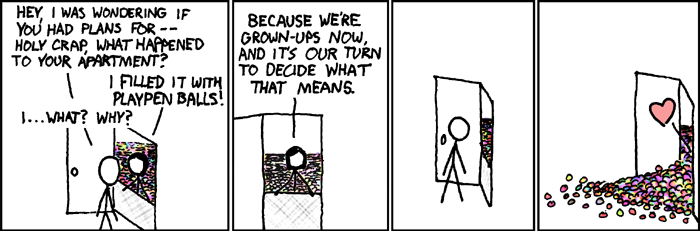
grownups by xkcd

I’m looking forward to sharing the next five years — at least! — with all of you right here at the feminist librarian. My internet home.

from the neighborhood: anna & hanna go shopping at ikea…

19 Sunday Aug 2012

Posted by Anna Clutterbuck-Cook in a sense of place

≈ 4 Comments

Tags

boston, domesticity, family, from the neighborhood, photos

… and accidentally come home with a GIANT BED.

Also a stuffed fox.

We … didn’t mean to purchase a bed that was going to need library stools to ascend into at bedtime. But upon assembling the pieces, we discovered that’s what we’d done!

We started out this morning by picking up a Zip truck and dropping our old full/double bed frame (also from IKEA)  and second-hand foam mattress at Goodwill. Then we drove south of Boston to the local IKEA store. Which, we can report, is always an experience and a half. The relationship drama being played out between parents and children, husbands and wives, wives and wives, husbands and husbands, roommates, etc., is just something else. But! They did have our beloved bed frame in the next size up as well as a variety of mattresses to choose from.

We just somehow failed to realize that between box spring and mattress we were purchasing Mount Moriah.

The cats are slightly confused.

But we have a new bed. That will hopefully help us sleep a bit better and serve us for years to come. By some miracle of physics, Hanna figured out how to get the damn thing — box and mattress — up the narrow stairs to our second floor apartment. It was touch-and-go there for a few minutes at the u-turn of our landing. After we got it up, we agreed fully that next year when we move such heavy lifting will be left to the brawny lads and lasses of the moving company while we sit back and drink tea. If they have difficulty we’ll point out that we did it once, so we know it’s possible to do again!

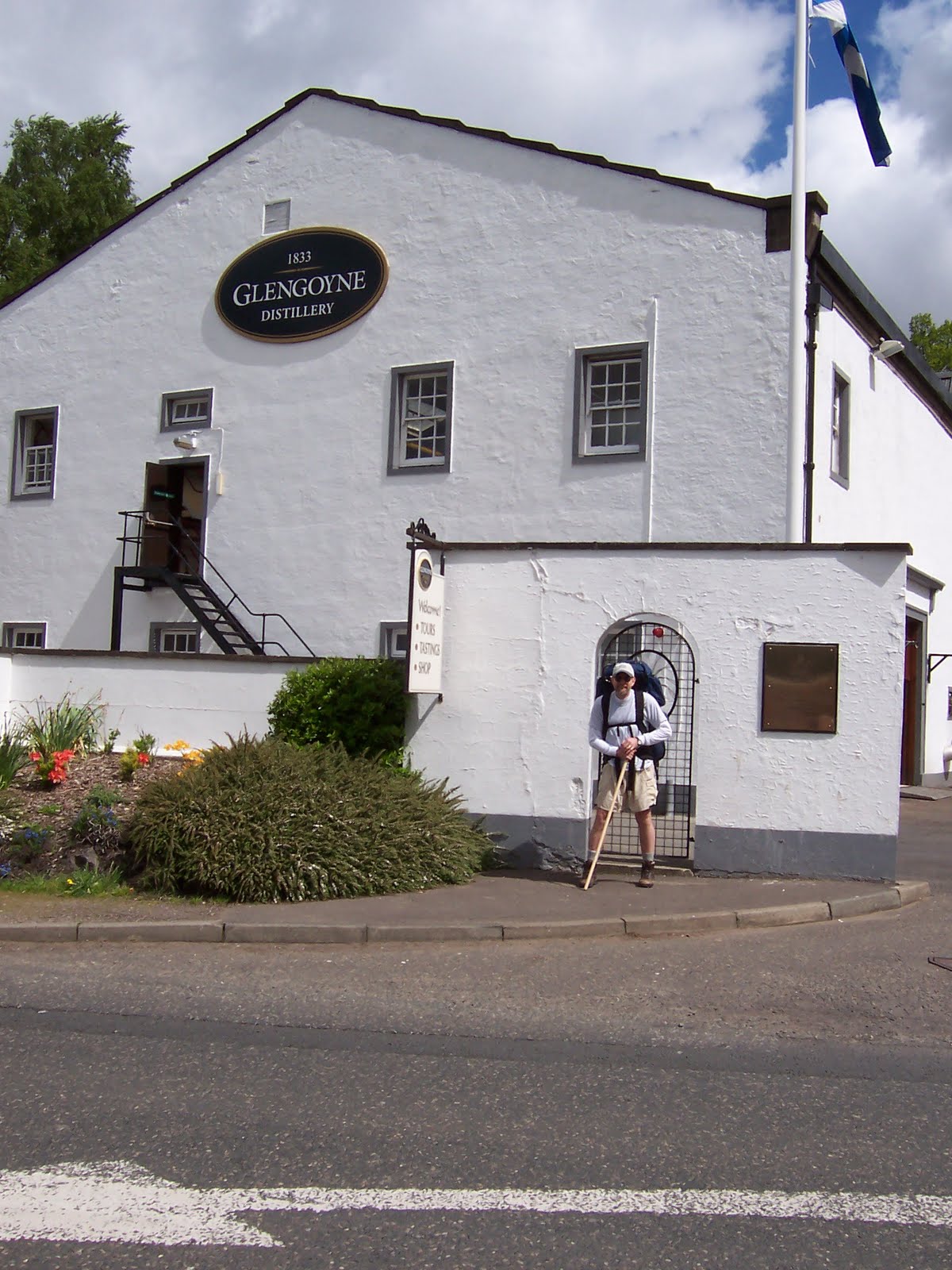
To celebrate I went down to our neighborhood liquor store and purchased a lovely bottle of ten-year Glengoyne whiskey:

I picked Glengoyne because my father and I have actually been to the distillary, on our walking tour of Scotland in May 2004. Here’s my Dad standing out in front of the main building in his hiking gear:

Anyway … I’m signing off to knock back a glass and watch some Eddie Izzard while we wait for our Indian food to be delivered. Wish us luck as we climb to lofty heights for forty winks tonight!

← Older posts
Newer posts →
"the past is a wild party; check your preconceptions at the door." ~ Emma Donoghue

Recent Posts

  • medical update 11.11.22
  • medical update 6.4.22
  • medical update 1.16.2022
  • medical update 10.13.2021
  • medical update 8.17.2021

Archives

Categories

Creative Commons License

This work by Anna J. Clutterbuck-Cook is licensed under a Creative Commons Attribution 3.0 Unported License

Meta

  • Create account
  • Log in
  • Entries feed
  • Comments feed
  • WordPress.com

Create a free website or blog at WordPress.com.

  • Subscribe Subscribed
    • the feminist librarian
    • Join 37 other subscribers
    • Already have a WordPress.com account? Log in now.
    • the feminist librarian
    • Subscribe Subscribed
    • Sign up
    • Log in
    • Report this content
    • View site in Reader
    • Manage subscriptions
    • Collapse this bar