• anna j. clutterbuck-cook
  • contact
  • curriculum vitae
  • find me elsewhere
  • marilyn ross memorial book prize

the feminist librarian

the feminist librarian

Tag Archives: boston

the dog days of summer [august-september siesta]

01 Wednesday Aug 2012

Posted by Anna Clutterbuck-Cook in admin

≈ Leave a comment

Tags

blogging, boston, domesticity, work-life balance

It’s August 1st (can you believe it?)

And I’ve decided it’s time to give myself a quasi-vacation from the ‘net.

Teazle napping with Hanna

Given that I’m online for eight hours daily at work, total blackout isn’t really a possibility — or something I feel is necessary. But I’ve been feeling pulled in a lot of different directions blogging lately, and I’d like to take some time to reflect on where I want to put my writing energy.

(Rest assured the feminist librarian is my home on the interwebs, and will not be going anywhere anytime soon!)

So this is all to say that — while I’m not going to quit blogging entirely — from now until after our honeymoon in mid-September I’ll be giving myself permission to post more sporadically than usual (when and how, exactly, did I get to the point of generating 5-10 posts per week, across half a dozen blogs?!).

I’m planning to use the offline time to read, write, nap, and enjoy non-work downtime with the future wife and kitten-kids.

Hope y’all are staying cool(ish) and we’ll see ya ’round these parts when time and inclination indicate this is where I’d like to be.

a few thoughts on my historically-specific perspective on getting married

08 Sunday Jul 2012

Posted by Anna Clutterbuck-Cook in life writing

≈ Leave a comment

Tags

boston, family, history, hope college, michigan, sexuality, wedding

Yesterday, I finished reading an advance review copy of Michael J. Klarman’s From the Closet to the Altar: Courts, Backlash, and the Struggle for Same-Sex Marriage (forthcoming from Oxford University Press, Oct. 2012; review to come). A legal historian, Klarman explores the history of litigation and legislation around gay and lesbian marriage from the 1970s to the present. Reading his historical account prompted me to think about the historical context in which I came of age and into my sexuality and sexual relationship, and how this colors how I think about same-sex marriage particularly, and even more specifically how my historical context shape the decisions Hanna and I have made. Here are my thoughts, in roughly reverse chronological order.

1) I’ll start with the fact that we can get legally married in the specific time (2012) and place (the Commonwealth of Massachusetts) in which we have come together. Massachusetts recognized in same-sex marriage as legal under the state constitution in 2004 (Goodridge v. Dept. of Public Health) and our ability to become, legally, wife and wife, on the state level is normal here. While DOMA still prevents us from being recognized as married nationwide, we will be treated as spouses at the state level. If I hadn’t moved to Massachusetts from Michigan, I would be unable to legally wed without traveling. And given that neither of us are involved in a religious community, we likely would not be planning a private (non-legally-binding) commitment ceremony.

2) I’ve experienced nothing but welcoming acceptance of my relationship with Hanna since we got together in the summer of 2009. The only direct bigotry I’ve encountered has been online; I’ve been comfortable being open about my relationship at work, in public, on both sides of the family, in my home town, blogging, etc. I actually dealt with more directly-homophobic statements and actions before I was visibly queer (see below) than I have in the past three years. This is in part a matter of geography, in part a matter of the circles in which I’ve been moving, and in part a macro-level cultural sea-change in which anti-gay animus is becoming less acceptable by leaps and bounds, at least in the public square.

3) Marriage equality was part of what brought me to Massachusetts. One of my first memories of driving into Boston in the summer of 2006 — when I interviewed at Simmons — was getting turned around and ending up in Harvard Square across from Zero Church Street, where they had a huge banner across the front of the First Parish Church proclaiming support for marriage equality. Even though I understood my sexuality to be primarily hetero at the time, I immediately felt a sense of expansiveness — the ability to be more at ease in the political climate here than I had felt back in Western Michigan where I was reminded daily that my views about human sexuality were at odds with the dominant culture.

lesbian recruitment party, summer 2005

4) I had long-term, same-sex relationships modeled for me. I had friends whose relatives were in same-sex relationships (some of whom had had commitment ceremonies, some who hadn’t). Through my undergrad women’s studies program (oh the irony) I was introduced to lesbians in committed partnerships and had a chance to think about what it would be like to build a life for myself with another woman. I am a person who experiences my sexuality in very contextual ways, and while I don’t discount the notion that having been born in a different time or place I might have fallen in love with a woman without such models, the fact that I knew that lasting, committed same-sex relationships were a possibility by example helped open me to an awareness, a receptivity, that it could be possible for me as well.

5) In my early twenties, I wrote letters to the local newspaper speaking out on topics like abortion and gay rights. I always got incredibly bigoted responses in print (though my friends and relations were supportive). I remember particularly writing in as “a young straight woman” in defense of the summer gathering for gay and lesbian families that happens annually in the little town of Saugatuck twelve miles south of where I grew up (in the “reddest” county in the state of Michigan). In my letter I thanked the newspaper for doing a favorable piece on the camp and preemptively addressed the haters by pointing out that same-sex parents gave me hope for the future. Again, I think it’s note-worthy that even in an incredibly conservative corner of the Midwest, I was participating as a presumptively straight person in normalizing queer families.

That is, I didn’t think “gay” and imagine that being a lesbian would mean custody battles and depression and suicidal impulses. I thought it meant family camp and lesbian communes and sprawling poly households, not unlike the life I was already starting to envision wanting for myself, even if I thought my primary partner would likely be a man.

5) My best friend came out in 2001. I’d say this moment was the start of my serious self-education on issues of human sexuality and the history of homosexuality and the modern gay rights movement. I was twenty and while he wasn’t the first queer person I knew personally, he was the first person I knew intimately and felt more for than a general political commitment in favor of equality. My sense of radical acceptance (borne out of innate stubbornness and feminist theology) and my life-long commitment to fairness had always drawn me toward LGBT rights — but suddenly it was personal. And I discovered my ability to be fiercely political.

7) Because of the college where I went to undergrad, issues of sexuality and gender were deeply intertwined, and both were morally-fraught religious concerns. This deserves its own post (or several), but suffice to say that my introduction to feminist politics as a college student came in the form of a raging controversy my first year at Hope over what and how the chapel program was teaching students about human sexuality generally and homosexuality specifically. My women’s studies faculty were committed Christians and vocal queer allies, and so my trial-by-fire education in organized protest was around these issues. I was able to think deeply about sexual morality, gender and sexual identity and expression, sexism, and homophobia in the midst of a group of LGBT-friendly Christian folk who helped me articulate passionate responses to the homophobia and hate we were experiencing in daily ways on campus.

In effect, I had a queer community around me long before I understood myself to be queer.

8) In the mid-90s, the AIDS quilt came to town. Its stop on national tour was organized, in part, by the gay deacon at my church. In appointing him to an ordained office, the church had broken with the denominational position (which remains in place today) that homosexuality is sinful. Twice during my adolescence, the church went through a contentious period of “dialogue” on the issue and members left the church in protest over the deacon’s ordination. While I don’t remember much about the AIDS epidemic, I do remember the viewing the quilt with my family and others from the church and city when the sections were on display at one of the area high schools. Rather than AIDS being interpreted to me as “the gay disease,” it was simply a deadly illness, like cancer, that killed people and left behind grieving partners, parents, siblings, children.

9) Our Bodies, Ourselves (and feminism!) contextualized being in lesbian relationships as one life path for women to pursue, both sexually and in relationship with one another. In my adolescent reading about the 70s feminist movement, I encountered primary source documents about lesbian activism, lesbianism as a political decision, and same-sex relationships. While I wasn’t politically active on these issues until college, these texts prepared the ground-work for understanding human sexuality more expansively, and lesbian relationships as a viable option, long before I was aware of resistance to homosexual identity and relationships in my community.

10) The earliest memory of I have concerning same-sex sexuality is at age eleven when two friends of mine, over for a sleepover, were giggling together over the word “gay” and I asked my mother what it meant when they refused to tell me. It was obvious from their behavior they thought the word was a naughty one (one girl was from a conservative Wesleyan household, the other a Mennonite). My mother’s factual explanation (along the lines of “someone who falls in love with a person of the same sex”) put gayness on the radar but confirmed that I need not be alarmed about it. Since there were lots of ways in which my family’s values differed from those of our friends and neighbors, I assumed this was just one more thing to add to the list!

I’m sure there are other ways in which my life has shaped how I think about lesbian relationships, lesbian identity, and the viability of marriage as an option for Hanna and I. For starters, the fact that we’ve both remained unmarried until we were over thirty, and don’t plan on having children are also deeply historically-contextual options/decisions. In the 1910s we might both have been college-educated library professionals in a “Boston marriage,” but it would not have been legible to the world at large as a marriage.

We often think of ourselves as historical actors, with the ability to defy social norms and break new ground. And we are. But they manner in which we defy society, and the norms which we are countering, are historically dependent. And self-aware historians, such as myself and my beloved, are no more exempt than anyone else.

(As usual this “few thoughts” post became much longer than I envisioned it!)

welcome teazle!

20 Wednesday Jun 2012

Posted by Anna Clutterbuck-Cook in our family

≈ 3 Comments

Tags

boston, cat blogging, domesticity, family, web video

…because who doesn’t need adorable kitten videos on a Wednesday?

Hanna and I have been talking, pretty much since we adopted Geraldine two years ago, about bringing a second cat-child into the household as a companion for Gerry — particularly since we’re both gone for significant periods of time during the work week. This past weekend, we decided to visit the adoption center at the MSPCA Angell Hospital in Jamaica Plain, and while we weren’t actively seeking to adopt right now we went prepared to do so if the right match was made.

Well, it was. In the form of a two-month-old foundling whom we’ve named Teazle. It was clear within moments of Hanna picking Teazle up (and having the wee one fall asleep against her bosom) that this was love and we’d do everything possible to take her home.

“Everything possible” turned out to include a last-minute vet appointment for Geraldine on a Sunday morning (she needed her shots up-to-date) and coordination with a buddy who lives near the shelter to make sure we got to the adoption center the moment it opened that day and snatched the paperwork so that no-one else could claim the kitten we were already thinking of as “our” wee one.

She was spayed yesterday morning and I went to pick her up yesterday afternoon. You would not know from this video that she’d been under anesthesia and/or had abdominal surgery a few hours before!

Geraldine is not impressed with us right now, but to be fair she’s suffered the indignity of a visit to the vet, ear drops for an infection, and now a small-n-squeaky addition to the household — all in the short span of forty-eight hours! So we’re trying to give her lots of love and normalcy and introduce them slowly.

And, like with Black Cat Rescue (the folks we worked with to adopt Geraldine), we were super impressed with the MSPCA as both a hospital and a shelter, and will gladly give a shout-out for their services and facility for anyone in the Boston area looking to adopt and/or seek care for their non-human family members and/or need a place to surrender foundlings, etc. They had tons of volunteers, everything was clean and animal-friendly, and all the animals were alert and getting lots of positive attention.

from the neighborhood: fun with friends, part 2

07 Thursday Jun 2012

Posted by Anna Clutterbuck-Cook in a sense of place

≈ Leave a comment

Tags

art, boston, family, friends, from the neighborhood, photos

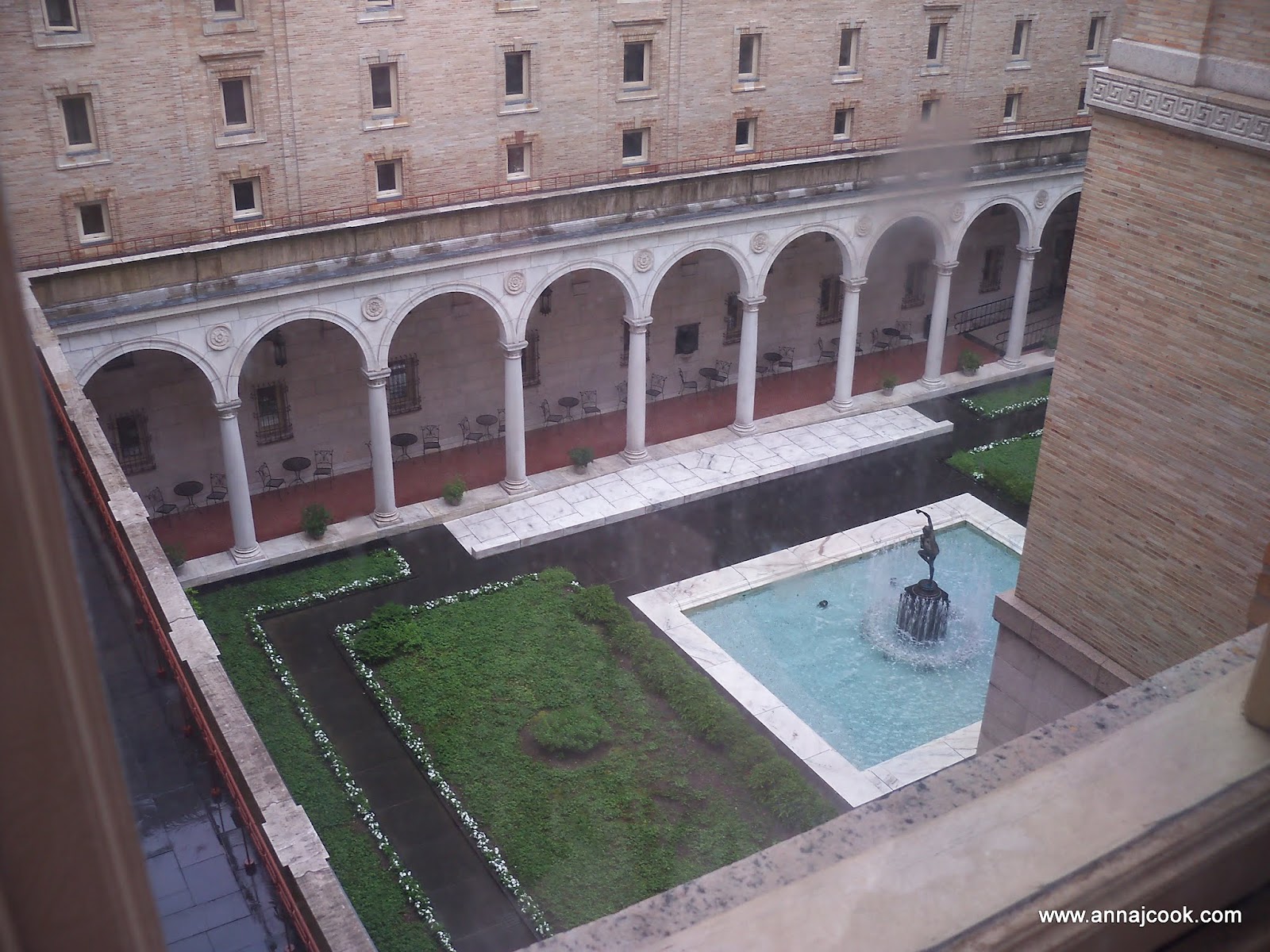
After Friday, it rained almost continuously the whole weekend Diana and Collin were here. On Monday, before they left for the airport, we took refuge at the Boston Public Library (between Pavement Coffeehouse and Berkeley Perk Cafe).

center courtyard in the rain, from the 3rd floor gallery
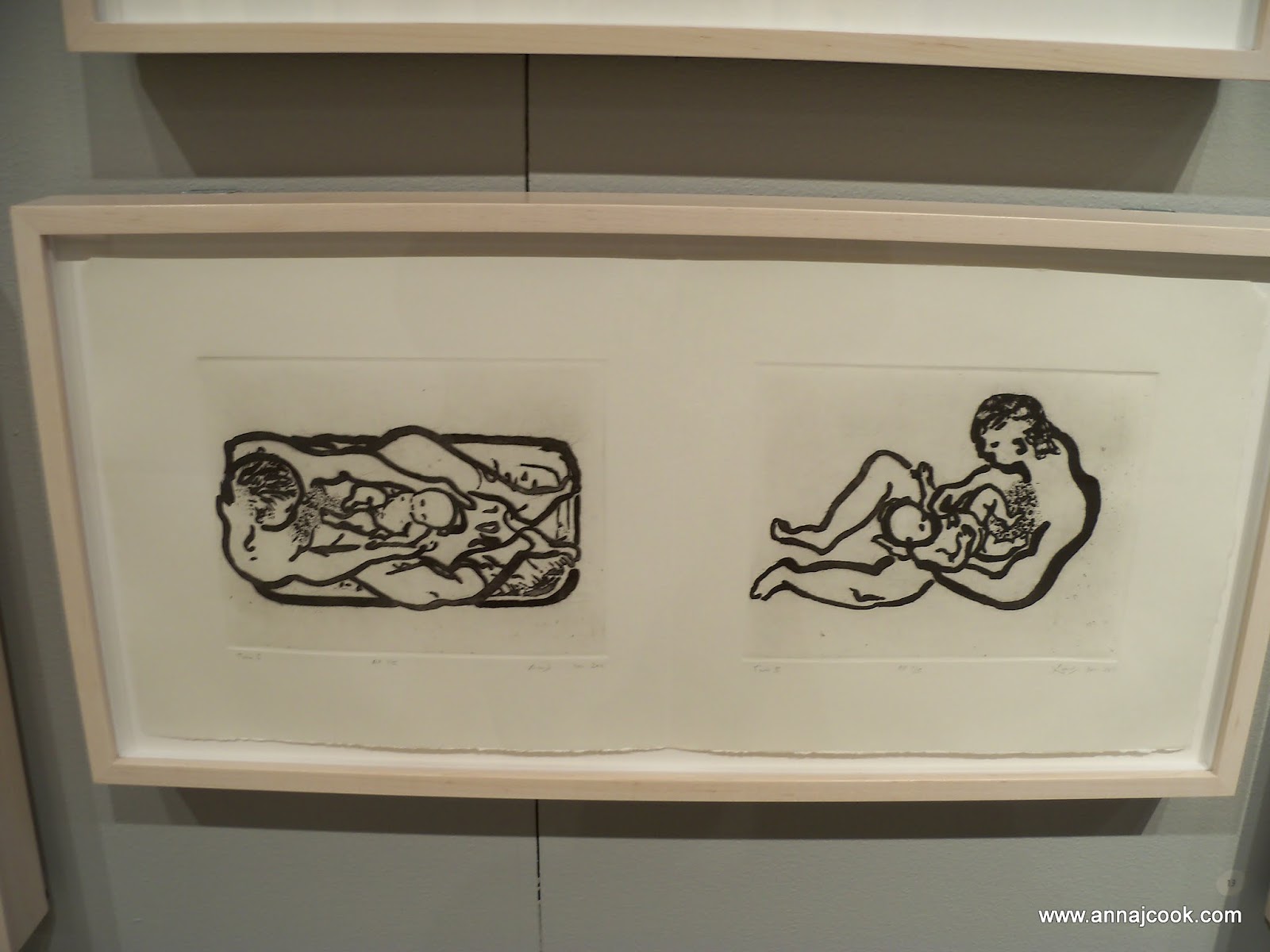
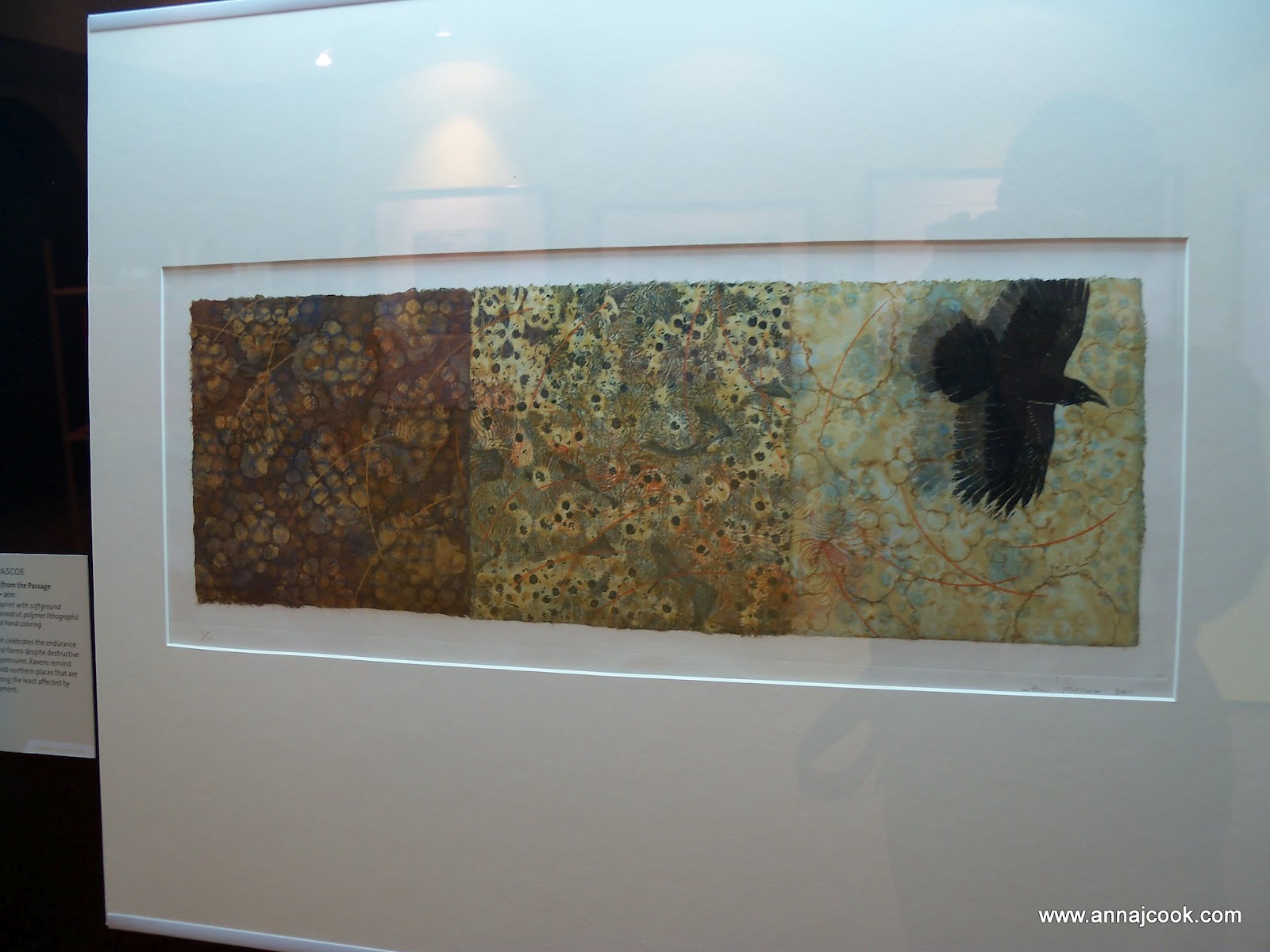
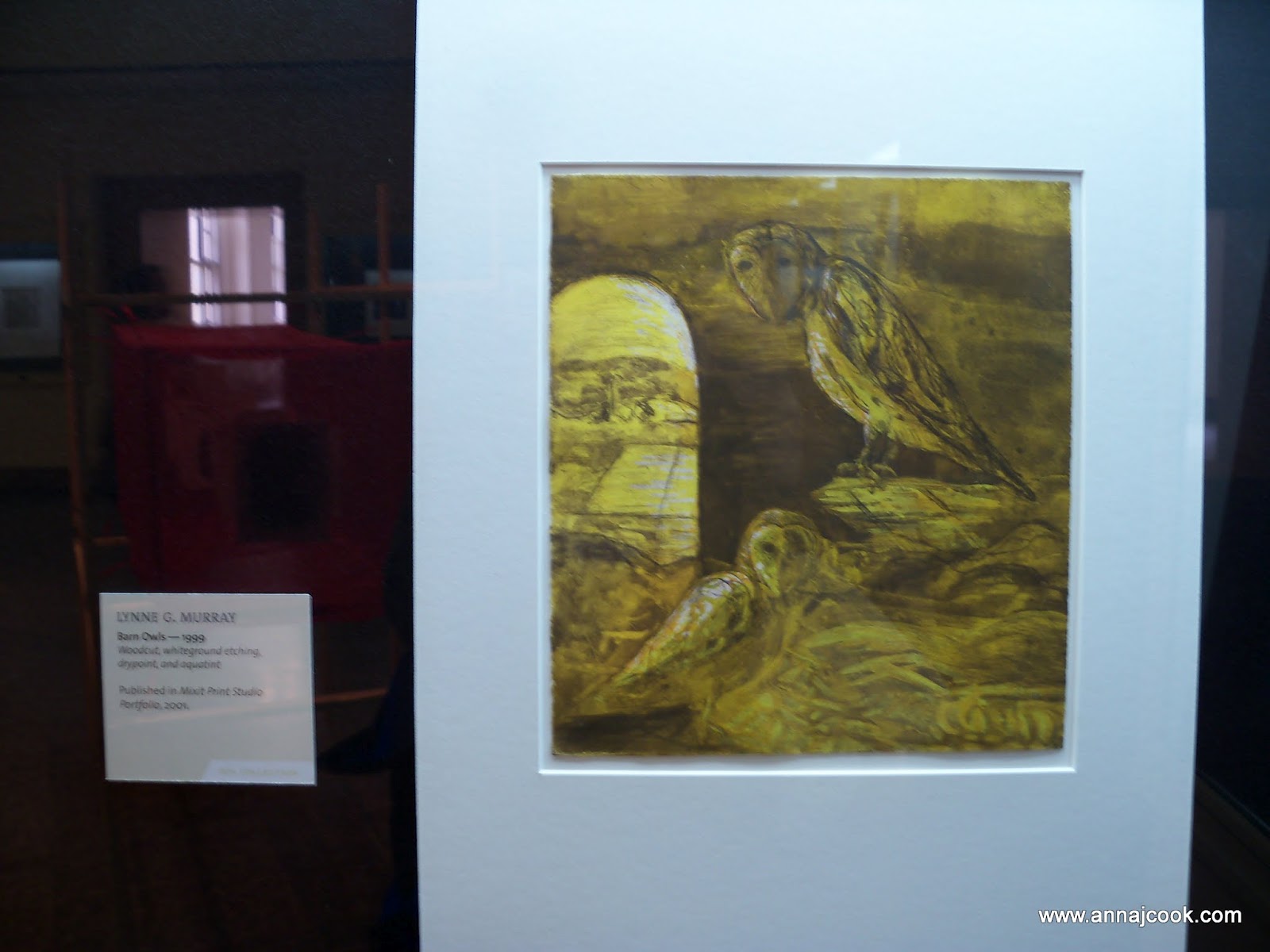
The main branch of the BPL regularly hosts exhibitions, and when we were there they had — among other offerings — a wonderful print exhibition called reThink INK: 25 Years at Mixit Print Studio. Here are some of the photographs I took while we wandered around:
an installation featuring bees
one for the ghoulish sensibilities
I love the gender ambiguity of these figures
and these panels featuring labyrinths

 There were a lot of prints incorporating maps, architectural elements, and text. We also noticed a theme of arctic exploration. The photograph below is of an interactive piece featuring the upturned hull of a boat to which visitors are invited to tie slips of paper articulating wishes and dreams (our favorite: “I dream of Cthulhu” and also “I want a pig.” There were also a wonderfully wide variety of languages represented.

ship of wishes and dreams
in the third floor gallery, there were lots of birds
including these haunting owls
If you’re in the Boston area and are interested in print-making, I encourage you to check it out! The exhibition runs through 31 July 2012 at the Copley Square (main) branch of the Boston Public Library.

from the neighborhood: fun with friends, part 1

05 Tuesday Jun 2012

Posted by Anna Clutterbuck-Cook in a sense of place

≈ Leave a comment

Tags

boston, family, friends, from the neighborhood, photos

We had a lovely weekend with friends Diana and Collin, and were very sorry to see them go yesterday afternoon (if only someone would invent reliable teleportation!). It was, in fact, a lovely weekend despite nearly continuous rain and a trip to the emergency room on Saturday (to verify a strained muscle was, in fact, strained and not something worse — it isn’t, whew). We had lots of coffee and tea and good food, good conversation, and vacation-type movies (Fast Five, and the Doctor Who Christmas special!). I’m letting myself take the rest of the week off from blogging-blogging, but here are a few photographs from our Boston perambulations.

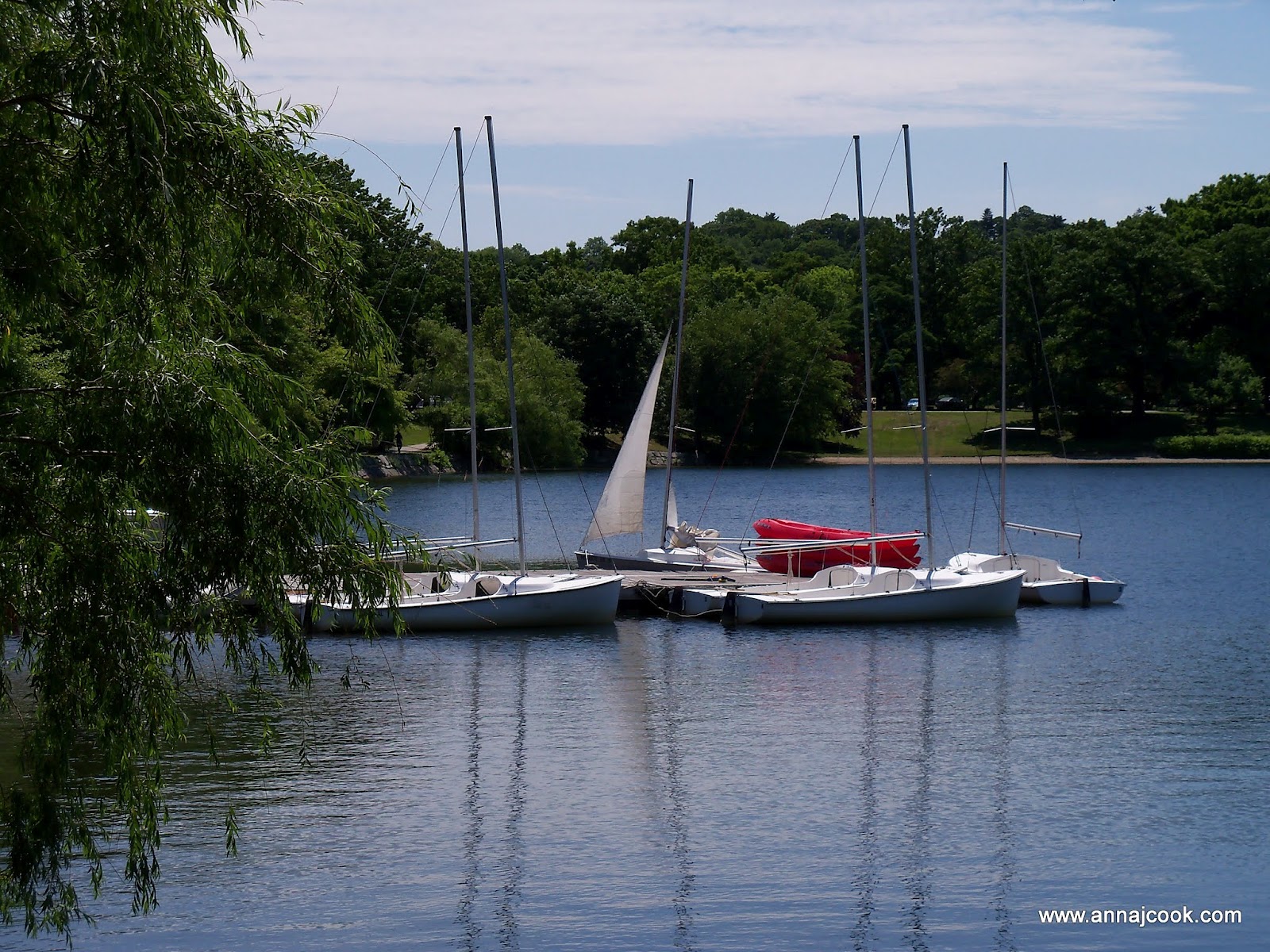
sailboats on Jamaica Pond

Our one nice day (weather-wise) was Friday, and Diana, Collin, and I took a long walk up to Jamaica Plain and had lunch at Centre Street Cafe while Hanna was in Newport, RI, for a meeting.

judgy cat is judgy

All things considered, Geraldine was accepting of the two interlopers — it helped that Auntie Diana brought her favorite dried fish flakes all the way from California! She was very distressed keeping track of four people instead of just two for four whole days and crashed last night (she didn’t even get me up to feed her at 3am!)

I spy with my little eye … 

On Sunday, we took the bus over to Harvard Square to meet up with friends Minerva and Nancy for lunch, and between coffee at Crema Cafe and meeting up with the rest of the gang, we hung out in the Harvard Co-op (where else to spend a rainy morning but in a book shop?!). I was so excited to see Swallows and Amazons on the Staff Recommends shelf — someone raised their kid right!

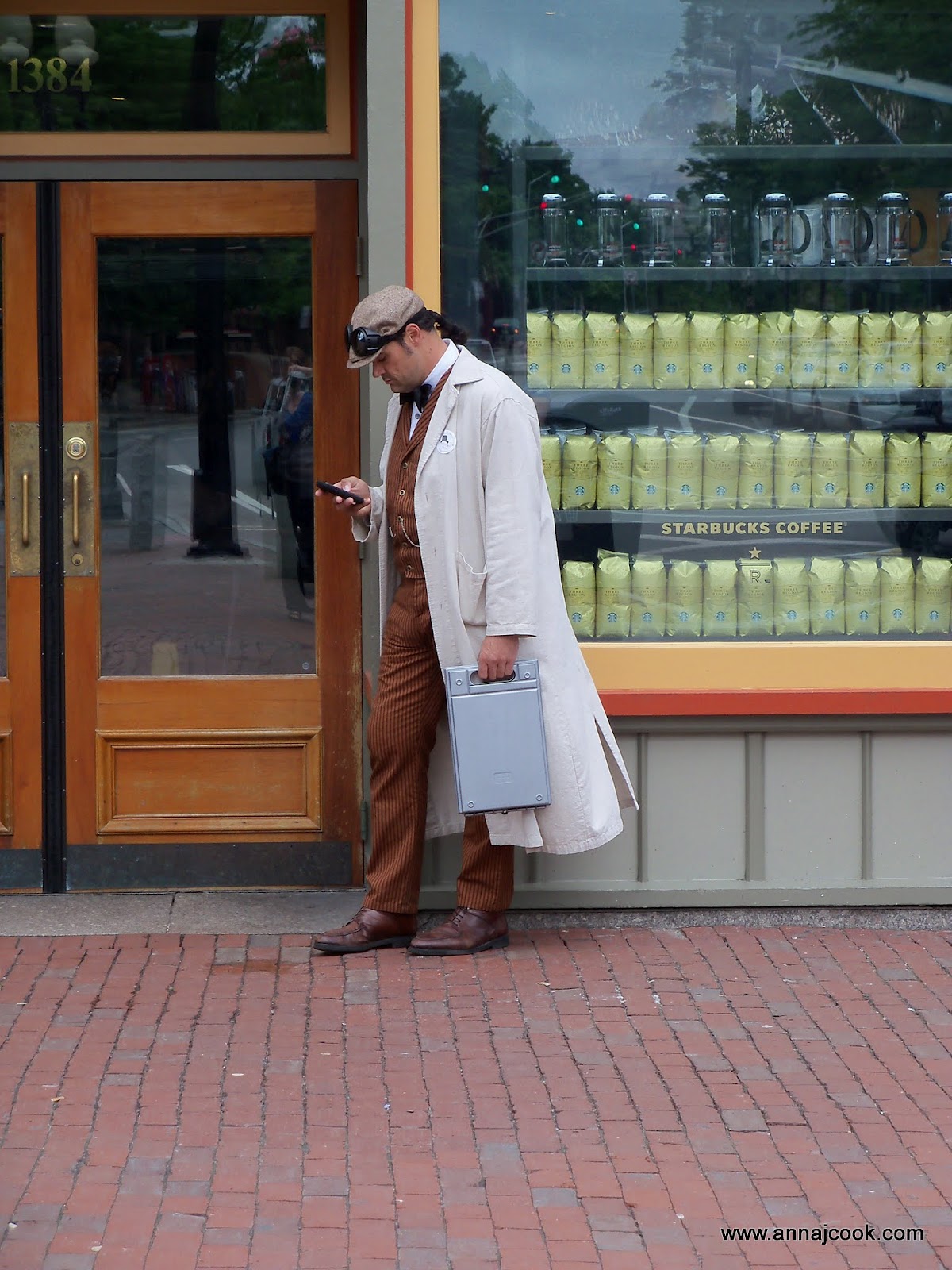
Steampunk sighting FTW!

… And my favorite sighting of the day goes to this man from Cambridge Historical Tours, who was waiting for a tour group at the Harvard Square T stop and checking his smartphone. He was totally rocking the coat, hat, and goggles.

On Thursday, I’ll post some pictures from our visit to the Boston Public Library’s current exhibition on print-making! Hope y’all are having a good week thus far.

friends in town – on vacation until 6/11

01 Friday Jun 2012

Posted by Anna Clutterbuck-Cook in a sense of place

≈ Leave a comment

Tags

boston, friends, from the neighborhood, outdoors, photos

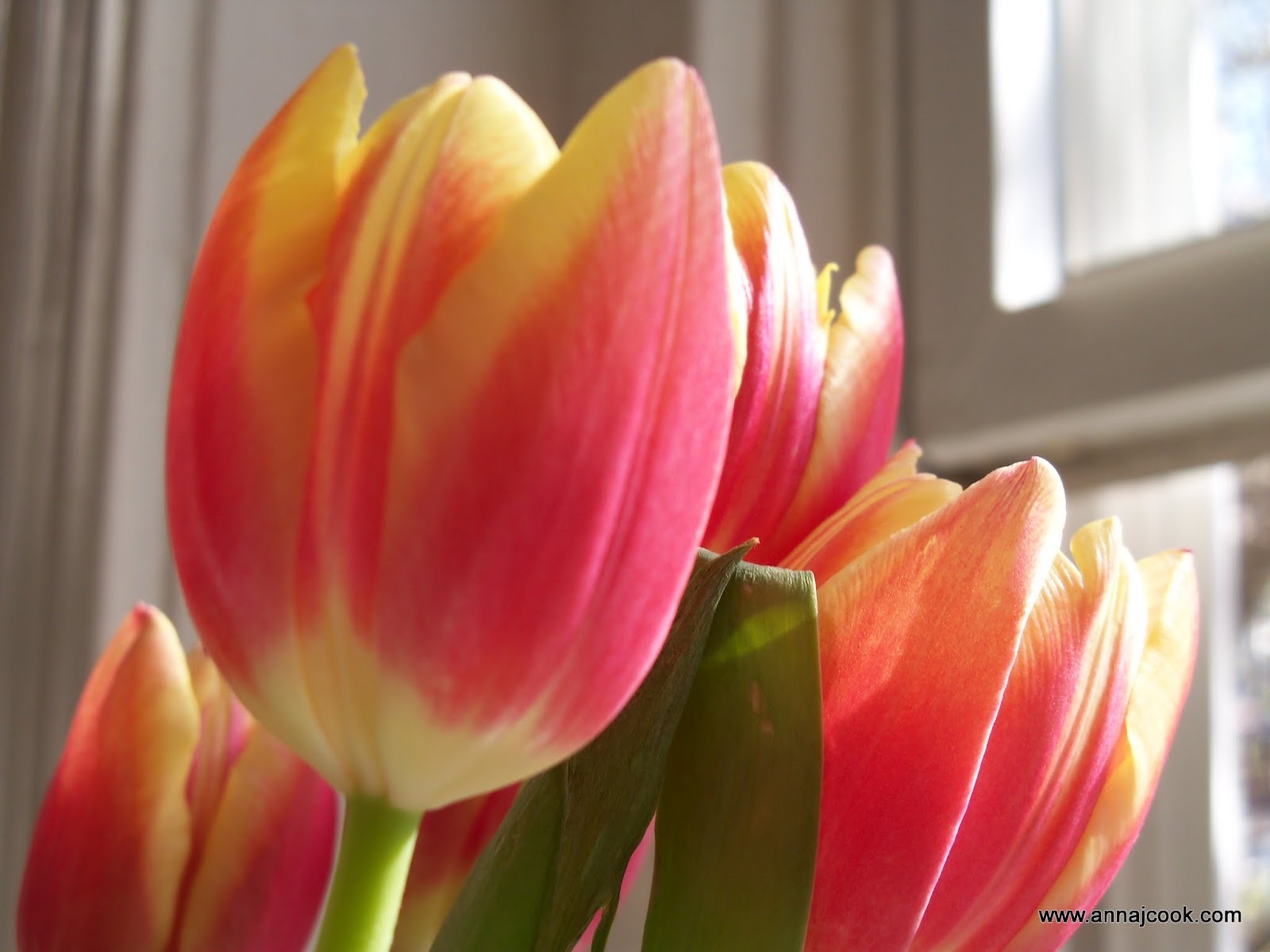
Our good friend Diana is coming into town today with her paramour, so I’m giving myself permission not to keep up with blog posts and whatnot over the weekend and into next week. Look for a resumption of activities the week of June 11 (can you believe we’re already heading toward mid June??). In the meantime, I give you pictures of flowers!

flowering tree on the Charles River esplanade
a gift from Minerva (photograph by Hanna)

Have a lovely first week of June, and see you back here in ten days.

"have a moment for gay rights?"

12 Thursday Apr 2012

Posted by Anna Clutterbuck-Cook in think pieces

≈ Leave a comment

Tags

being the change, boston, gender and sexuality, human rights, politics

via ACLU

Last week outside Trader Joe’s I was accosted by charity muggers from the ACLU. 

This happens regularly in Coolidge Corner and I generally ignore them across the board. I make it a rule not to support any organization via street harassment, even if they’re a group with a mission I support. (And yes, I have, in fact, been a card-carrying member of the ACLU when personal finances allow).

But anyway. Last Wednesday was the day the federal appeals court in Boston heard oral arguments against the Defense of Marriage Act (DOMA). And the chipper young woman in the ACLU vest was asking passers-by if they had “a moment for gay rights?” so I thought perhaps they had some sort of petition to sign vis a vis the whole DOMA-is-stupid-not-to-mention-unconstitutional thing. So after the internal debate while grocery shopping (“you should just suck it up, self, and be a good citizen and a social person for once”) I actually stopped on my way out of the store and volunteered to hear what she was about.

“So do you have a petition you want me to sign or something?” I asked.

She seemed surprised I was even stopping, but gathered herself together and launched into what the ACLU was about, as an organization, and specifically some of the things they were doing to support queer folks who’d been discriminated against because of their sexuality. It turned out she didn’t have any sort of petition to sign, but was just trawling for donations.

“I’m asking people to make a donation of $29 dollars today for each of the twenty-nine states where it’s legal to discriminate against someone due to their sexual orientation!” she wrapped up with a note of breathless relief in her voice that I’d actually let her finish a thought.

“Well, I don’t give out my financial information on the street,” I tried to break it to her gently, “But I’ll definitely keep you guys in mind.”

“But you’re behind what we stand for, right?” She asked, anxiously.

“Um –sure!” I said, shook her hand politely, and headed off down the street.

It took me most of the walk home to realize what was the most frustrating and surreal part of the interaction. It was that the young woman in question was pitching her persuasive skills at someone she presumed to be straight. Did I stand for “gay rights”? Well, yeah, actually, I’m pretty into having equal civil rights. The whole reason I’d stopped to speak with her in the first place was that I’d been thinking about DOMA that day. Because the fate of the Defense of Marriage Act has a direct effect on my life. Because Hanna and I are talking about getting married and even though we can do that perfectly legally here in the state of Massachusetts, as far as the federal government is concerned (taxes, social security benefits, etc.) we won’t be a family unit.

So I’m not behind the idea of “gay rights” as this abstract great-good-thing that all card-carrying members of the ACLU should, you know, be in support of because it’s the right thing to do. (Though I’m behind it for that reason too). I’m actually in support of it because it’s about my equality of personhood before the law.


I’m not pissed at the young woman I spoke with (well, not much). She’s getting paid probably minimum wage (if she’s getting paid at all) to stand on the pavement and harass people at rush hour for what is probably an incredibly, incredibly low rate of return. And I’m sure whatever job training she received was cursory at best.

But I do find it note-worthy that the ACLU spiel is constructed in such a way that assumes the person to whom the spiel is pitched is outside the group of interest. I think I would have been less irritated by the encounter if I’d been told, “Here’s what we’re doing to support your right to equal protection under the law, regardless of sexual orientation or gender identity.” If you’re standing on a street corner flagging people down, you can’t actually tell whether they’re gay or lesbian, bi or poly, trans, genderqueer, or otherwise. Whether their sexual practices put them at risk of arrest, whether they’re afraid to us public restrooms, or whether they’ve got two partners waiting at home, only one of whom they could legally marry — even in the state of Massachusetts.

So a tip to all you charity muggers out there? Keep in mind when you ask the question, “Are you for gay rights?” The chances are at least one in ten (more of you count family members of queer folks who identify as straight) that the person you’re talking to isn’t a supporter of gay rights ’cause it’s a trendy liberal cause, but because it actually has an effect on their quality of life.

I’d say, just assume everyone’s queer until proven otherwise. It might actually up your success rate.

Cross-posted at The Pursuit of Harpyness.

booknotes: clover adams

31 Tuesday Jan 2012

Posted by Anna Clutterbuck-Cook in book reviews

≈ Leave a comment

Tags

boston, feminism, friends, history, hope college, MHS


It was nearly a decade ago that I first started hearing from a former professor (turned good friend) of mine about her latest research project: the study of a set of photograph albums at an archives in Boston, albums created by a 19th century female photographer named Marian “Clover” Hooper Adams. At the time, the friend — Natalie Dykstra — was in the process of applying for an NEH fellowship to spend her sabbatical at the archives — the Massachusetts Historical Society — to work with the albums and develop a book-length project that would consider the photography of Clover Adams as autobiographical texts. Texts that might, in some way, help us to understand how Clover understood her own life, her work, her marriage to historian Henry Adams, and the factors that led to her decision to end her own life at age forty-two by drinking chemicals used in the development of her photographs.

Since then, I’ve had the privilege of drifting on the periphery of Natalie’s research and writing of the manuscript which became Clover Adams: A Gilded and Heartbreaking Life (Houghton Mifflin, 2012). It is, in part, because of her connection with the Massachusetts Historical Society that I considered relocating to Boston, that I applied to work at the MHS, and her friendship has been a sweet thread of connection between my previous life at Hope College/in Holland and my world here in Boston. Over the past four years I’ve worked with Natalie in my reference librarian hat to track down details related to Clover’s childhood and coordinated the provision of photographs by and of Clover will appear, in all their visual splendor, in the pages of her biography.

This is all by way of saying that I approach this review with a far-from objective sense of propriety when it comes to the work of a friend, and the opportunity to see the life of an overlooked female photographer — whose work is preserved at “my” library — brought into the open and shared with the world in such an eloquent way.

So, you know, take my praise for what it’s worth and form your own opinions of Natalie’s work at your leisure. But having read the advance review copy over the Christmas holidays, I do want to share a few notes on what about Natalie’s work — and Clover’s life story — particularly moved and impressed me. Because I do, in my professional historian hat, think Natalie’s done something remarkable here.

Clover Adams’ story presents a number of dilemmas for the modern biographer. In the socioeconomic sense, she was a daughter of privilege, born to a Boston family with economic resources and social and political connections. Her mother was a poet who moved in Transcendentalist circles with the likes of Margaret Fuller and the Peabody sisters. Her father’s family, the Hoopers, had made their money in business  during the previous century, and Robert Hooper (Clover’s father), with whom Clover remained close, received his medical training at Harvard and in Paris. In marrying Henry Adams, Clover became part of one of the most high-profile American families of the period; she and her husband maintained multiple residences, traveled abroad, and moved through the upper echelons of American and European society.

Yet at the same time, there were limits to what privilege could bring to Clover’s life in terms of health and well-being. Her mother died of tuberculosis when Clover was a young child, and the aunt who cared most directly for Clover thereafter eventually committed suicide. Mental health struggles seem to have haunted the Hooper family, and if read in a certain light Clover Adams appears to be one long narrative of health struggles for which contemporary late-nineteenth-century medical, religious, and philosophical frameworks had no useful remedy.

In addition, Clover contended with the fact that she was a girlchild, and later a woman, in a world that offered a limited number of options for women to craft satisfying lives for themselves. The majority of women were, of course, caught up in surviving class and race inequality. However, even those who, like Clover, didn’t face immediate material dilemmas, were nonetheless constrained by social expectation to pursue a limited number of professional and relational pathways. While Clover seems to have settled into her marriage with Henry Adams quite happily and voluntarily, her married life was colored by the couples’ inability to communicate some of their deepest needs to one another. That the two never had children also appears to have haunted Clover on some level, though I appreciated that Natalie takes note of this factor without dwelling on it extensively.

Clover’s photography, taken up in the final years of her life, remained an amateur endeavor in part because of the status of photography in the art world and in part because of the fact that Clover was a woman. Both she and Henry expressed ambivalence over her creative work and its place in their lives, and eschewed opportunities which might have brought her more attention for her work.

All of these aspects of Clover’s life — her mental health, her marriage, her work, and her place in society — are interesting to a modern audience in part because Clover’s struggles feel like very relevant in our current society, roughly a century and a quarter after Clover’s death. How we understand — and cope with — mental illness is still a live question.The benefits and limits of marriage as an institution — and as a primary relationship — are under intense discussion. The role of work and creative expression — particularly in the lives of married and mothering women — is still a subject of public debate. It would be all too easy to map our current understanding of all three of these subjects backward onto Clover’s life (what is known in the historical profession as “presentism”). We’re shown the pain of Clover’s depression without any sort of narrative pressure to diagnose cause or condition: her mental landscape is described most often in Clover’s own words. Natalie doesn’t back away from the loneliness and disconnection that, in the end, resided at the heart of the Adams marriage. Yet she manages to show Henry Adams at his most vicious (I felt real flares of anger at him while reading) without laying the blame of Clover’s suicide at the feet of her husband.

At the same time, while skillfully avoiding the trap of presentism, Natalie also refuses to absent herself — as a biographical narrator — from the storytelling endeavor. Having spent literally a decade with Clover’s story she has much to offer us in terms of synthesis and analysis. I didn’t finish the book wishing that Natalie had shown less partiality for (and more critical analysis of) her subject. She really manages to do the balancing act of letting us see Clover’s life as it was lived and understood in broader historical context, not just through Clover’s own meaning-making mechanisms.

Speaking as someone who is intensely interested in the history of feminism, gender and sexuality, I find Clover’s story compelling on a number of levels. Natalie explicitly avoids the language of gender theory in her storytelling. Which is not to say she ignores the way in which Clover’s lived experience was shaped by her womanhood — far from it. But Natalie has the grace to let Clover’s life be — as much as possible — her own. And Clover herself doesn’t seem to have understood her life through the lens of gender. Other women of her era did (though they would have used the word “sex” rather than “gender”). The years between Clover’s birth and death were active ones for women’s rights agitation, and Boston saw its fair share of feminist activism. While feminist analysis would likely not have saved Clover from the depths of despair, I found myself wondering if Clover’s ability to anchor herself — in her marriage, in her art, in her social connections — could have been aided at all by the friendship of women (or men) who outspokenly advocated for her right to be (and be seen) as an artistic individual, out beyond the confines of the domestic sphere. I found myself wondering how Clover and Henry’s expectations of the roles played by husband and wife contributed to the silences in their marriage, and whether more radical friends might have encouraged them to re-consider their assumptions and move past what seem to have been baffling obstacles to marital connection and contentment. This is something that Natalie hints at, but for the most part leaves for the reader to piece together as they will.

courtesy of the MHS

Last week, when I arrived at work, I found that the sign advertising upcoming events had been switched out to showcase the opening of our next exhibition — guest curated by Natalie — which features Clover’s own photographs. The image chosen (see right) is a striking photograph taken at Smith Point (Mass.) is a group portrait of Miriam Pratt, Alice Howe, and Alice Pratt, discussed in chapter fourteen of Clover Adams (“At Sea”). It is not, Natalie writes, “a straightforward portrait intended simply to capture the likeness of three specific women. Instead, Clover carefully stage-managed the composition, creating a mood not of friendship and connection but of lost possibility … the women are connected neither to one another nor to the sea, which might otherwise open up their visual world” (150). Despite Clover’s own ambivalence about the public exhibition of her work during her lifetime, I am proud of Natalie for bringing her photography out of the archive and into the public eye. For helping us to understand Clover’s creative work not only as the art it surely is, but also as a visual voice communicating a particular woman’s understanding of her world in a form that will long outlive its creator.

Clover Adams will go on sale on February 8th. You can pre-order it now through a variety of venues, or put it on hold at your local library.

Natalie, I’m so, so proud of you!

from the neighborhood: athan’s bakery

05 Monday Dec 2011

Posted by Anna Clutterbuck-Cook in a sense of place

≈ Leave a comment

Tags

boston, from the neighborhood, photos

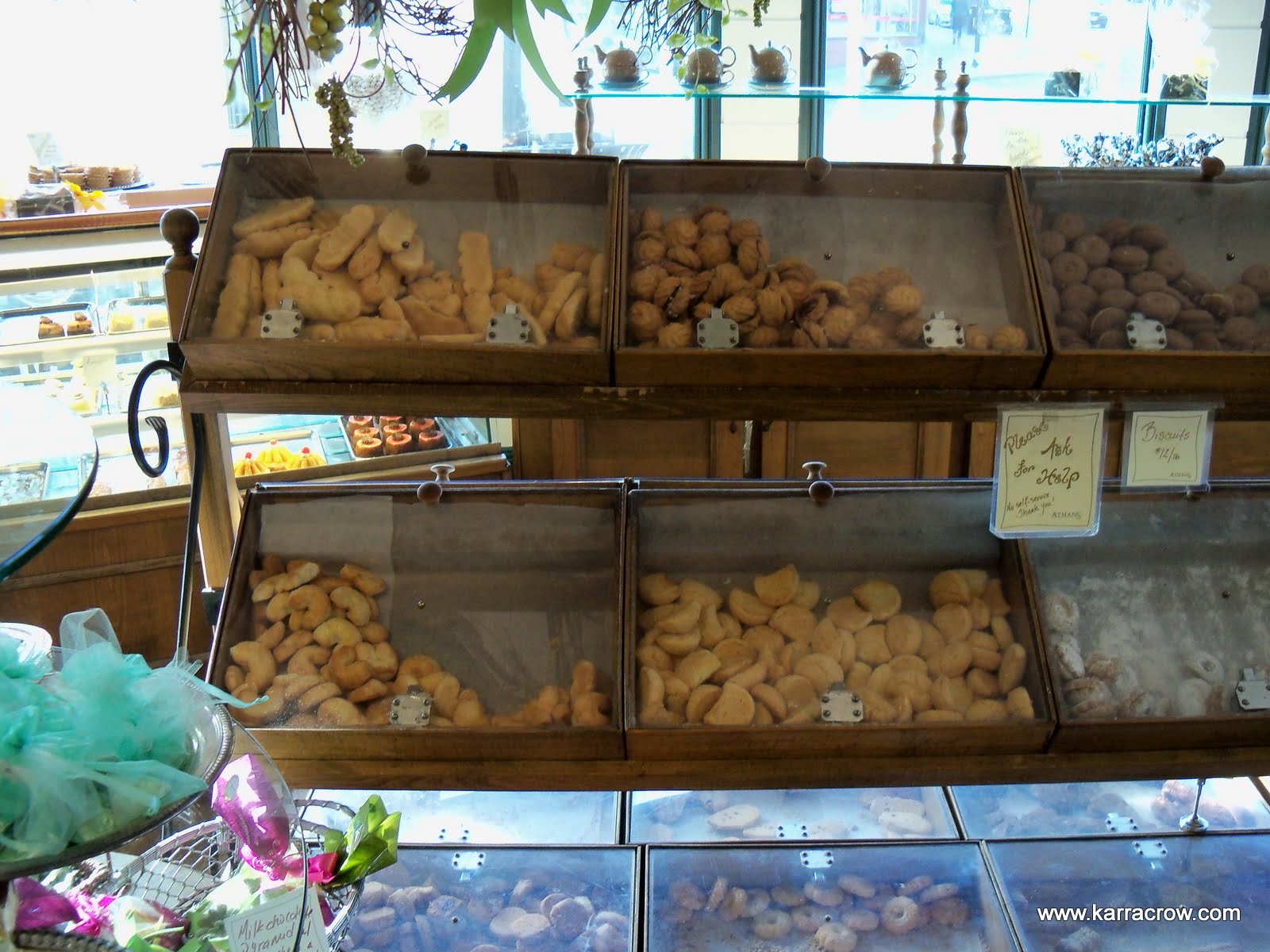
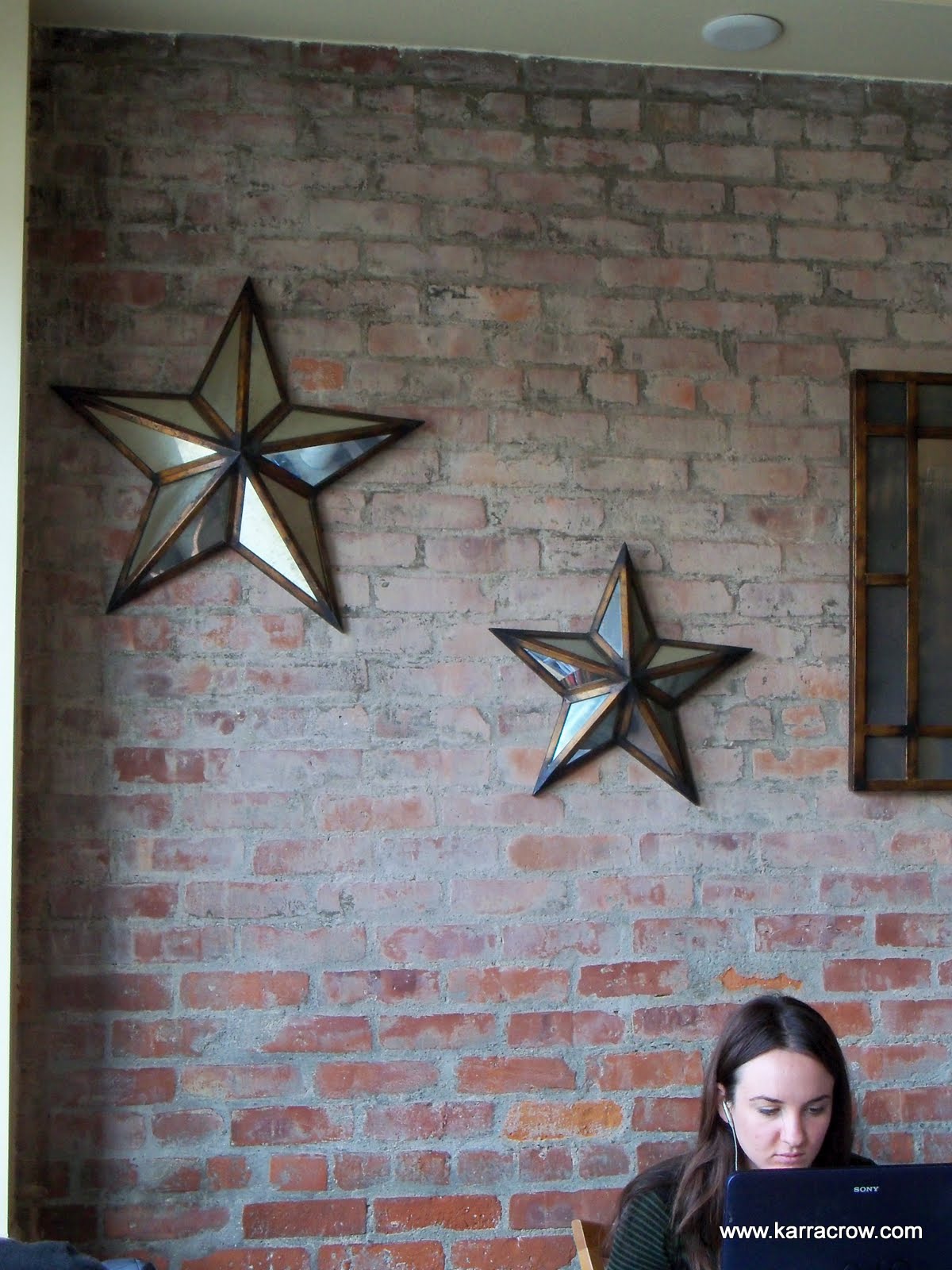
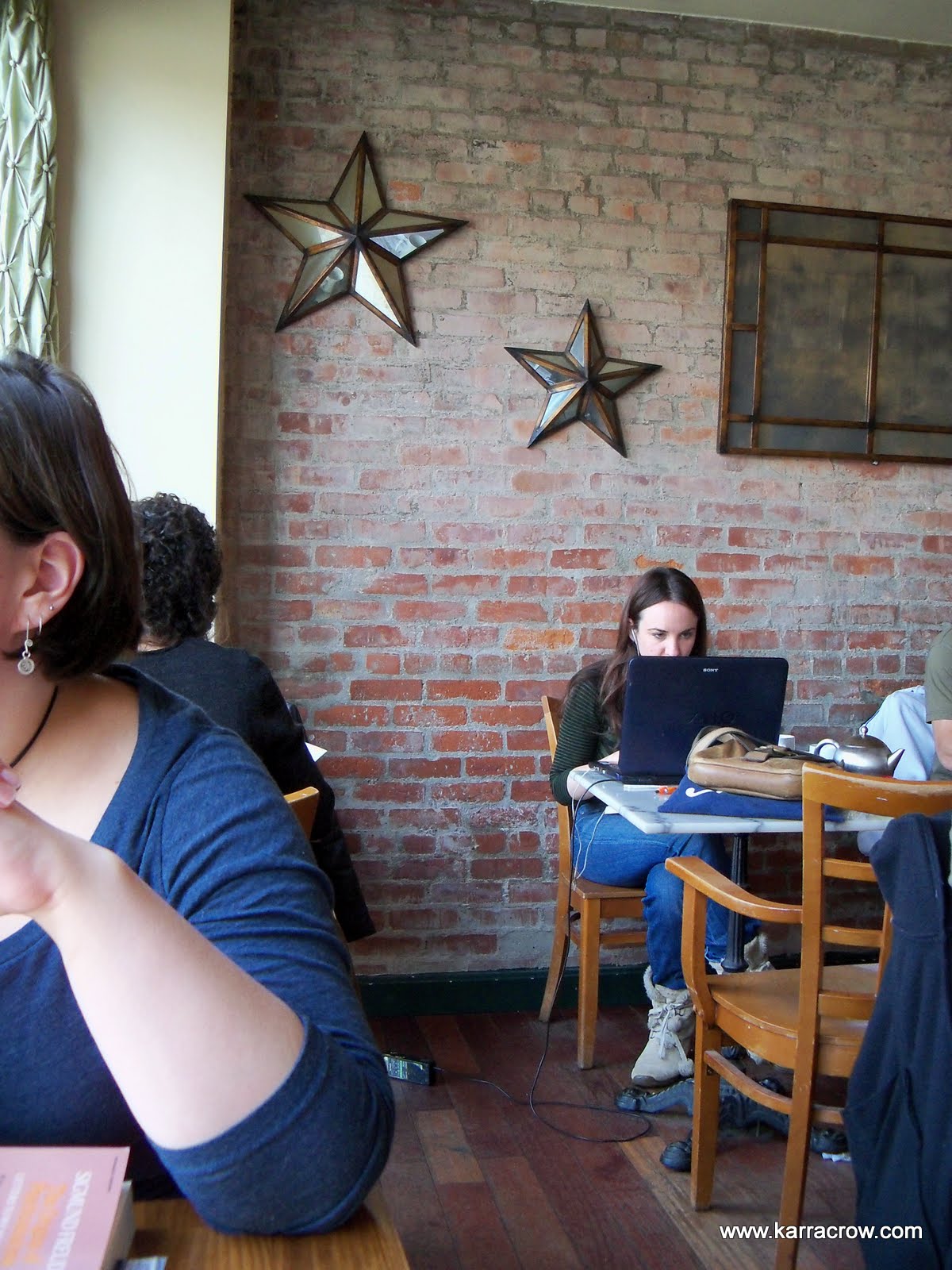
Yesterday, Hanna and I branched out from out usual weekend haunts to try out a new spot for weekend brunch: Athan’s Bakery in Washington Square, Brookline. It turned out to be a great place for people watching, reading (Hanna: Freud’s collected letters to Wilhelm Fliess, Anna: The Reactionary Mind by Corey Robin), and nursing our morning espresso. Here are some photos I snapped while we were there.

The front room, full of sunshine and sugary things.
Cookies sold by the pound
Not exactly breakfast food, but …
There were lots of students with laptops working away
Hanna’s left arm, lovely earrings, and
new-hairstyle-in-progress
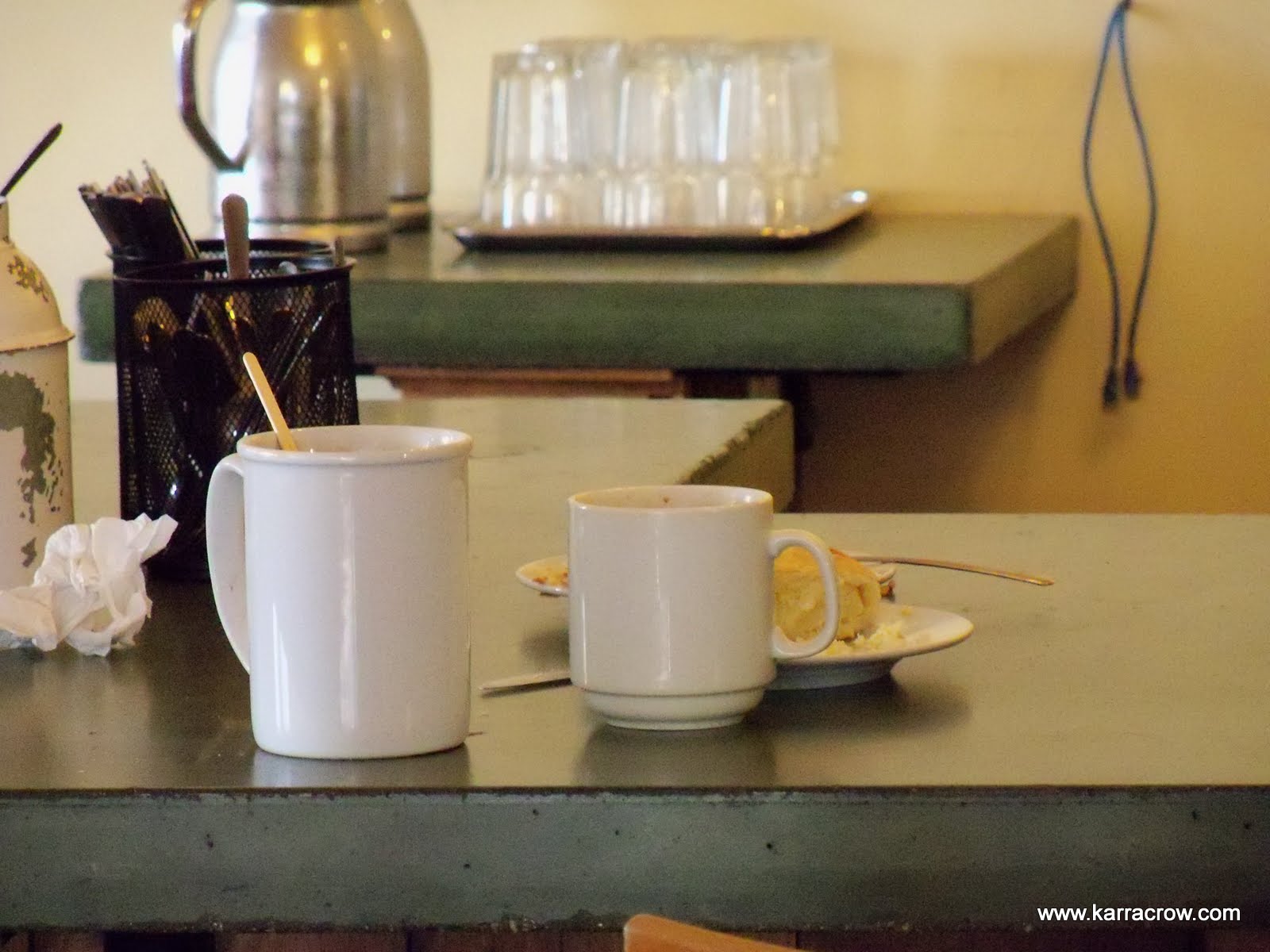
Abandoned coffee cups at the espresso bar.

multimedia monday: "automobile row"

31 Monday Oct 2011

Posted by Anna Clutterbuck-Cook in media

≈ Leave a comment

Tags

boston, history, multimedia monday

Hanna and I live in the Allston neighborhood of Boston, just west of Boston University’s main campus. Commonwealth Avenue stretches from Kenmore Square (near Fenway Park) to Boston College out in Newton. We live in an apartment building sandwiched between Comm Ave to the north and the town line of Brookline to the south, and the neighborhood in this little documentary is one through which we walk and ride the “T” on a regular basis:

The Kenmore Square building that now houses Barnes & Noble at BU was home to a dealer of Peerless automobiles. The Star Market by Packard’s Corner was once a Chevrolet dealership. And in between lay more than a mile of storefronts selling cars, parts, and accessories or repairing cars. In the 1920s there were more than 100 such businesses on and near that strip of Comm Ave. Downtown Boston had its “Piano Row” and its “Newspaper Row.” This was Boston’s “Automobile Row.”

 
The article which accompanies this video is quite interesting in its own right. I’m really impressed by the research that went into making the video — obviously a few people spent some time in the BU college archives! — and the way in which the historical images were edited into the present-day footage.
← Older posts
Newer posts →
"the past is a wild party; check your preconceptions at the door." ~ Emma Donoghue

Recent Posts

  • medical update 11.11.22
  • medical update 6.4.22
  • medical update 1.16.2022
  • medical update 10.13.2021
  • medical update 8.17.2021

Archives

Categories

Creative Commons License

This work by Anna J. Clutterbuck-Cook is licensed under a Creative Commons Attribution 3.0 Unported License

Meta

  • Create account
  • Log in
  • Entries feed
  • Comments feed
  • WordPress.com

Create a free website or blog at WordPress.com.

  • Subscribe Subscribed
    • the feminist librarian
    • Join 37 other subscribers
    • Already have a WordPress.com account? Log in now.
    • the feminist librarian
    • Subscribe Subscribed
    • Sign up
    • Log in
    • Report this content
    • View site in Reader
    • Manage subscriptions
    • Collapse this bar