• anna j. clutterbuck-cook
  • contact
  • curriculum vitae
  • find me elsewhere
  • marilyn ross memorial book prize

the feminist librarian

the feminist librarian

Tag Archives: education

The Politics of Maps

10 Wednesday Sep 2008

Posted by Anna Clutterbuck-Cook in my historian hat

≈ Leave a comment

Tags

education, history, politics, simmons, web video

God, I miss the West Wing.

I’m doing an exercise with the undergraduates in History 100 this Thursday to help them think about using maps as historical sources. As an introduction to my little preliminary talk, I plan to show them one of my favorite clips from The West Wing (Season 2; Episode 16). Thanks YouTube for having just what my geeky little heart desired!

The View from Childhood?

23 Saturday Aug 2008

Posted by Anna Clutterbuck-Cook in think pieces

≈ Leave a comment

Tags

children, education, politics

Yesterday, I ran across an atrocious opinion piece in the New York City Journal, written by physician Theodore Dalrymple about a UNICEF report published last year on the well-being of children in industrialised nations. Britain came in twenty-first in the rankings (just behind the United States at twenty. (The Netherlands topped the list as the best country to be a child, followed by Sweden, Denmark, Finland, and Spain). With my own strong criticisms of attitudes toward children in the United States, and my more limited exposure to the educational system in the U.K., I am definitely willing to entertain the idea that British and American societies are toxic for children and their families. I haven’t read the UNICEF report in full, but the researchers looked at a broad spectrum of indicators, including

  • Material well-being
  • Family and peer relationships
  • Health and safety
  • Behaviour and risks
  • Own sense of well-being

The BBC report (linked above) and their related page of comments from British children about their lives contains a lot worth considering when it comes to assessing how children experience life in the modern world, even in countries that are materially rich and politically stable.

However, Mr Dalrymple does the UNICEF report a profound disservice by using it to support his socially conservative views about the British social welfare state and what he sees as “a culture of undiscriminating materialism, where the main freedom is freedom from legal, financial, ethical, or social consequences.” He relates a series of tabloid-style anecdotes about neglectful parenting and although he explicitly denies he is doing so, implies that women who have children with multiple partners and outside of marriage are unfit parents.

In my opinion, the most appalling argument appears about two-thirds of the way through the article, when he really starts to editorialize on report’s implications. He highlights the fact that many children do not experience regular family or group meal-times, and then writes:

Let me speculate briefly on the implications of these startling facts. They mean that children never learn, from a sense of social obligation, to eat when not hungry, or not to eat when they are. Appetite is all they need consult in deciding whether to eat—a purely egotistical outlook. Hence anything that interferes with the satisfaction of appetite will seem oppressive.

I invite you to consider for a minute, apart from whether you believe in the value of shared meals, the view of young people — and of people in general — that Dalrymple betrays here. “Children never learn . . . to eat when not hungry, or not to eat when they are.” What: we should be teaching children to ignore the messages their bodies give them about hunger? There are profound consequences in championing this concept of healthy socialization, when it comes to our experience of embodiment, for example. We should be instructing children to put conforming to social convention above attending to their own intuition? I was struck by how many children put the problem of bullying at the top of their list of worries when asked by the BBC what would make their lives better. Being taught to discount their own hungers (more broadly speaking, their own needs and desires) in the interest of social obligation would only exacerbate this problem.

Children deserve protected, nurturing space to be children — and I agree with Dalrymple that even in the most privileged of nations they don’t often have it, or have it for long enough. The solution, however, is not to cut them off from their own intuitive selves, but rather to give them the tools to care for themselves and for others around them in responsible ways. The fatal misperception in Mr Dalrymple’s essay is the belief that social obligation and self-care are mutually exclusive activities, when in fact I would argue they are mutually dependent — we thrive as individuals best when in a web of supportive relationships, and our relationships with fellow human beings are at their strongest when we know and attend to who we are as individuals — as well as attending to those around us. Unlike many material resources, emotional and social resources are not in limited supply, but endlessly renewable.

More stories like this . . .

18 Wednesday Jun 2008

Posted by Anna Clutterbuck-Cook in think pieces

≈ 3 Comments

Tags

education

. . . and I might just be driven into teaching out of sheer outrage.

Jon Carroll of the San Francisco Chronicle reports in his June 18 column Trauma Techniques:

One day last month, representative of the California Highway Patrol visited classrooms [in Oceanside, CA] to deliver some bad news: Some classmates of theirs had been killed in traffic accidents. Alcohol apparently was involved. The students, as might be expected, were stunned. Many wept. Some screamed. School stopped as people comforted each other.

Then, a few hours later, the administrators announced that it was all a joke. Well, not a joke – it was an educational experience. The administrators had set up the stunt to make the students understand how very sad death is, and how drinking booze and driving is a bad thing. It was something the students will never forget, the administrators said, and oh how true that is.

[. . .] These are professional educators, and they are comfortable with the following pedagogic theory: Trauma is good for kids. It’s an effective teaching tool. Why not teach American literature the same way? Harpoon a real whale and watch it die – “Moby-Dick” brought to life! They’ll remember that.

[. . .]Have we really forgotten our own teenage years? Grief and death and desperate unhappiness were not strangers to us then. Those dark feelings were fueled in part by a sense of powerlessness. So maybe the children of Oceanside thought they were getting a handle on things – bam, the teachers play a joke. Although, as school Superintendent Larry Perondi said, “We did this in earnest. This was not done to be a prankster.”

Oh, like that makes a difference.

There are so many things wrong with this incident (to paraphrase Dianne Wiest from “Parenthood”) that the more I think about it, the angrier I get. Exactly how many adults did this idea get run passed and approved by in order for this school-wide charade to play out? Even in a smallish school, it would take a fair number. That means there are a lot of grown-ups charged with caring for young people who hold a number of insulting assumptions about them beginning with the belief that unless they are put through false suffering children and young people, categorically, don’t understand the reality of suffering and death.

I guarantee you that there were many, many kids in that school who had already lost parents, lost friends, faced life-threatening illness and injury, the violence of war, or other traumas. Teenagers don’t need adults to playact “real life” for them–they’re already living it just like the Big Kids (who in this instance exercised the sort of poor judgment our society often casually attributes to the young).

Instead of achieving their goal of teaching teens about the dangerous consequences of drinking and driving, I’m betting the adults in that high school taught their students never to trust another word that comes out of their teachers’ mouths from now until graduation day.

Home Education in CA

27 Thursday Mar 2008

Posted by Anna Clutterbuck-Cook in think pieces

≈ Leave a comment

Tags

education, politics

In the midst of the midterm crunch, I don’t have a chance to reflect on this at great length, but I saw via the NPR website this week that a California appellate court recently ruled that home education in the state may be vulnerable to legal challenges:

The court ruling that declared some home schooling unconstitutional, Huerta says, seemed to indicate that California regulators’ occasional monitoring of the family’s home efforts was deemed insufficient to qualify children as being enrolled in a school.

Huerta says the ruling is an unprecedented decision, and one that has prompted an uprising not just among home schoolers but also among privacy advocates. “This is an issue that’s going to be taken all the way to the Supreme Court,” he says. “It’s going to open a Pandora’s box of issues the court may not want to address.”

Diane Rehm also did an hour on the subject this week, a show that I plan to listen to and report back on when I have a chance.

I’ll be interested to see both how this actual legal case develops and how the media covers it.

Weekly Update: Brain dead edition

21 Friday Mar 2008

Posted by Anna Clutterbuck-Cook in linkspam

≈ Leave a comment

Tags

education, humor, politics

It’s that point in the semester (I’m sure all students and former-students will identify) at which the end of term seems both impossibly far away and alarmingly at hand. Projects develop glitches. The panic-o-meters on everyone around you start to rise and your own barometer cranks it up in response. “Many college students stressed out, study finds”, the Boston Globe reported this week, in a classic “No duh! Don’t we know this already?” headline. What is always amazing to me is how normalized and individualized the state of being stressed out–physically and emotionally–is. We expect to spend our educational careers overworked and frazzled, and inability to get things done is always seen as a personal failure, not as a systemic problem of a social system that requires students to work part- and full-time as well as attending school in order to make ends meet.

Meanwhile, we haven’t entirely lost our sense of humor. Here’s a little something that’s been circulating on the internet for all my political-junkie friends out there. My friend and colleague Laura Cutter forwarded it to a bunch of us after our history class last night:

The George W Bush Presidential Library is now in the planning stages.

The Library will include:

  • The Hurricane Katrina Room , which is still under construction.
  • The Alberto Gonzales Room, where you can’t remember anything.
  • The Texas Air National Guard Room, where you don’t have to even show up.
  • The Walter Reed Hospital Room, where they don’t let you in.
  • The Guantanamo Bay Room, where they don’t let you out.
  • The Weapons of Mass Destruction Room (Which no one has been able to find).
  • The Iraq War Room. After you complete your first tour, they make you to go back for second, third, fourth, and sometimes fifth tours.
  • The Dick Cheney Room, in the famous undisclosed location, complete with shooting gallery.
  • Plans also include: The K-Street Project Gift Shop – Where you can buy (or just steal) an election.
  • The Airport Men’s Room, where you can meet some of your favorite Republican Senators.
  • Last, but not least, there will be an entire floor devoted to a 7/8-scale model of the President’s ego.

To highlight the President’s accomplishments, the museum will have an electron microscope to help you locate them. When asked, President Bush said that he didn’t care so much about the individual exhibits as long as his museum was better than his father’s

Happy Spring Equinox to you all and hope this finds you all well. I always enjoy your emails and calls and correspondence (I actually still receive letters by post from a number of you!) and will be in touch when I can.

Separate But Equal?

07 Friday Mar 2008

Posted by Anna Clutterbuck-Cook in think pieces

≈ 3 Comments

Tags

education, feminism

A few days ago, my friend Joseph sent me a link to this New York Times article on sex-segregated public schooling. Aside from the fact that I thought we’d sorted out a long time ago that segregation in schools does not lead to greater social equality, there seem to me to be an overall assumption here about children that I find highly suspicious–namely, that they can be sorted into two groups of like individuals based on gender behavior. As Joseph pointed out in his email to me:

I think it is reasonable to accept that, on average, males and females tend to react differently to different teaching styles, but treating those rather small differences as the basis for segregating class rooms seems dangerous, because one ends up implying that ALL males want to draw pictures of cars going fast and girls want to draw pictures of people interacting. The goal of improving teaching by making a classroom more homogeneous seems to be a hopeless one — rather, it seems one should be focusing on teaching each student as an individual and meeting their needs rather than trying to break children up into supposedly homogeneous groups.

By separating children into gender-based groups, we are encouraging children to accept stereotypical generalizations about the opposite sex–the boys in the article are quoted as saying, for example, that they like being in an all-boys classroom because girls don’t like snakes. Well, I happen to know several girls who love reptiles. But because these boys aren’t seeing girls get friendly with snakes in class, they can more easily continue to believe that no girls share their interest.

Not only does this model of “girls” vs. “boys” reinforce gender stereotypes, it also assumes that all children naturally fall into these two categories, and that they thrive better when socializing primarily with members of their assigned sex/gender. It neatly elides the existence of queer and trans children, who may not be sure where they fall in the female/male spectrum–and shouldn’t be forced to decide (or have their parents decide for them). Joseph also pointed out that some situations that we generally think are more comfortable for children as a single-sex environment can be more awkward for gay and lesbian kids than mixed company:

The one point where it seemed to make a little sense was when a female teacher was saying that she felt much more able to discuss sexuality in the literature they read in class in an all-female setting, which I can certainly imagine. Though that, of course, leaves the homosexuals in a more awkward position . . . I also have this really negative — bordering on fearful — reaction to all-male settings . . . settings where there is the implicit understanding that females are excluded because that type of space [locker rooms, etc.] only works where no one is sexually attracted to anyone else in the space.*

While it may solve some shorter-term problems (such as girls’ reluctance to speak up in science class, or boys’ reluctance to join the choir because it’s too “girly”) establishing a same-sex education program does so at the expense of already vulnerable children, whose sense of exclusion may only get stronger with increasing emphasis on the homogeneity of the environment in which they are placed.

Ann, over at feministing, has written a post on this article and linked to several other sources discussion the supposedly “scientific” basis for same-sex education. Check it out if you’re interested!

*Thanks Joseph for the permission to use your email in this post :).

Image lifted from the NYT article

Down the Rabbit Hole

02 Saturday Feb 2008

Posted by Anna Clutterbuck-Cook in life writing

≈ Leave a comment

Tags

education, simmons

As I type this, it’s sleeting outside on the streets of Boston: a strange beginning to February. But Hanna assures me it’s supposed to be 50 degrees and sunny tomorrow, so if the groundhog comes out in the Boston Common (where does s/he come out, anyway? I can never recall) then we’ll be all right for a mild winter (or is it a long winter?). Clearly I need to brush up on my rodent folklore.

As groundhogs are popping up, I am headed down into the rabbit hole of another semester of graduate school. Classes started in earnest this week, and I’m happy to report that I am “totally stoked!” as my friend Marilee used to say. (Do you still say that Marilee? I don’t recall hearing it lately). This semester is going to be chock-full of intense work, but all of it is exciting work.

I have a great deal of leeway in designing my projects in both my Gender, Race & Imperialism class and in Oral History, and cataloging satisfies the organizational part of my brain. Again, Marilee says, “That’s funny, I didn’t remember that you were organizational.” I explained to her that I am very selective about my organization: My bookshelves are currently arranged by the Library of Congress classification system, but my bed is never made!

My Spring Semester courses are as follows:

  • GCS 410: Gender, Race & Imperialism. This is a class being taught by my history adviser, Laura Prieto, who had me in History Methods last fall. It’s a graduate-student-only course, open to students in the History and Gender Studies programs. As the title suggests, we are going to be interrogating the history of European & American imperialism through the lens of race and gender. I am hoping to do my research project on some aspect of reproductive politics and imperialism, hopefully looking at the way feminist women from the metropole (the imperial center) and the native women from the colony negotiated a particular practice or policy having to do with reproductive health and sexuality. Details to follow in a week or two.
  • LIS 433: Oral History. The first day of this class seriously made me want to weep with joy, I was so excited. If you think I’m exaggerating, you can ask my friend Aiden, who is taking it with me. The professor has a serious Oregon Extension vibe, and is a farrier and folklorist as well as professor in library science. He explained to us he believes it’s important to have a profession and a vocation because it “frees you to speak your mind.” Damn straight. I get to select an oral history project to work on over the course of the semester, and I am currently waffling between Boston area home educators and doulas. I’ll keep you posted.
  • LIS 415: Organization of Information. Otherwise known as “cataloging.” This is one of the core requirements of the GSLIS program, and I will be learning all the different classification systems, such as the Dewey Decimal System and the Library of Congress system, and how to create good “metadata,” which is–as was explained to me in class today when I asked–data about data, which is what it sounds like, right? It’s all the bits of information that help us identify and locate the information or things we need (so catalog records, descriptive terms, computer programming, etc.).

This semester, my plan is to put up a little something every Friday on what I’ve been doing academically during the week . . . we’ll see how that plays out over the next fifteen weeks!

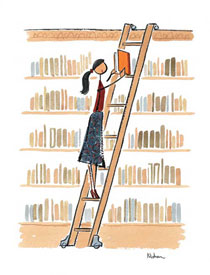
Image lifted from the Bas Bleu catalog website.

Another Reason American Education Sucks

09 Wednesday Jan 2008

Posted by Anna Clutterbuck-Cook in linkspam

≈ Leave a comment

Tags

education, humor

It really pisses me off when people moan and groan about the state of American education vis a vis the rest of the world without questioning what kind of educational system we’re comparing ourselves to. This satirical news story from The Onion takes it to a whole new level.

Report: American Schools Trail Behind World In Aptitude Of Child Soldiers

Jesus Camp Grows Up

26 Monday Nov 2007

Posted by Anna Clutterbuck-Cook in book reviews

≈ Leave a comment

Tags

education, politics, religion

I spent part of this weekend reading God’s Harvard: A Christian College on a Mission to Save America, by Hanna Rosin. The book centers on Patrick Henry College, founded in 2000 by Michael Ferris, the fundi-gelical conservative Christian activist best known for his work leading the Homeschool Legal Defense Association. (Like it or not, he’s one of the reasons people like me got to have the childhood we got to have . . . even if our home education didn’t have quite the results Ferris is looking for!)

God’s Harvard tells a story that is the natural extension of the 2005 documentary Jesus Camp, which explored Christian evangelical culture as experienced by children ages 7-13. We’ve leapt over the mid-teen years, and are now introduced to an academically elite group of Christian homeschoolers ready to enter college. You can check out an early draft of a chapter from God’s Harvard, “God and Country”, which was published by Hanna Rosin in the New Yorker (27 June 2005).

As usual, it is extremely irritating to have “homeschooling” become conflated with conservative Christian homeschooling with barely an acknowledgment. John Holt (whose papers have just been donated to the Boston Public Library!!) and the free school movement are mentioned only in passing, rolled into the early history of “the movement” in such a way that it’s never clear there are other ways families choose to home educate besides plunking kids down in front of intelligent design videos, drilling them in the tenets of Christian nationalism, and preaching the evils of toxic popular culture, all the while enforcing dress codes and “courtship” standards.

At the same time, I always find an outsider’s perspective on homeschooler cultures fascinating; Rosin’s narrative is an ever-shifting mosaic of the familiar and the alien. Whether secular or sectarian, home-educated kids tend to have close relationships with their siblings and parents, be skeptical of mainstream culture and education, and enter their young adulthood with a disconcerting mix of maturity and naivete.

“Homeschooling families,” Rosin writes, “tend to judge each other by their views on structure and authority; the Patrick Henry families tend to fall on the strict end of that scale. Homeschool families have no school communities or obvious support system, so they tend to group around gurus or schools of thought” (90). The problem is, the only examples she gives are of the Patrick Henry variety, not the hippie home-educator “free schools, free people” types. Proof, I suppose, of our dwindling numbers. Rosin reports, with numbers similar to those in Jesus Camp, that of the estimated 1-1.5 million home educators (unclear whether she’s talking families or young people), a whopping 80% identify themselves as “evangelical Christian” (62).

Clearly, we home-educated feminists are outnumbered by the evangelicals; I guess we’ll just have to raise a little more hell!

Further Reading about the Religious Right

Here are a few other fascinating books on the subject of conservative Christian counterculture from the last few years.

1. Kingdom Coming: The Rise of Christian Nationalism, by Michelle Goldberg provides a good introduction to the political dimensions of the current conservative Christian counterculture.
2. American Facists: The Christian Right and the War on America, by Chris Hedges provides less journalism and more philosophy than Goldberg, suggesting parallels between current Christian political thought and twentieth-century European fascism.
3. Monkey Girl: Evolution, Education, Religion, and the Battle for America’s Soul, by Edward Humes and
4. The Kitzmiller v. Dover decision, which is brilliantly and lucidly written by Judge Jones, both document the recent ruling against the teaching of intelligent design in Dover, Pennsylvania schools.
5. God On Trial: Dispatches from America’s Religious Battlefields, by Peter Irons (I haven’t read this one yet, but it looks good!) provides historical-legal context for the current struggle over the relationship between religion and government.
6. Jon Krakauer’s Under the Banner of Heaven: A Story of Violent Faith goes beyond its story of Mormon fundamentalism to explore the thin line between faith and madness.
7. The Battle for God, by historian of religion Karen Armstrong, is a dense personal favorite, charting the rise of religious fundamentalism as a response to the modern era.

*Images from www.powells.com and www.amazon.com

From the (Microfiche) Archives

17 Saturday Nov 2007

Posted by Anna Clutterbuck-Cook in my historian hat

≈ Leave a comment

Tags

education, history, simmons


I am working on a paper right now on the educational philosophy and practice in the utopian Oneida Community, which existed in New York state from 1848-1881 as a religious commune and continues to this day as a company manufacturing housewares. As part of this research, I visited Boston College’s O’Neill library, which has a microfiche collection of the community’s newspaper, the Oneida Circular. Microfiche is a pain to read–I have been known to get both migraine headaches and severely motion sickness–but the content it enables researchers access to is often excessively diverting.

The Circular functioned as both a venue for the community to evangelize to an external audience and as sort of community newsletter. They seem to have freely culled news items from other publications, usually unattributed, and also share miscellany from the life of the community, such as a note that “the wheat that was stored in the can-shop is nearly all saved, and but slightly injured” (1). Here are some oddments that I discovered while in the midst of “serious” research.

A large lithographic “View of the First American Railway Train” is on exhibition in the Library. It shows simply a line of old-fashioned stage-coach bodies connected together, and placed on car-wheels. Each vehicle contains six solid-looking gentlemen with stove-pipe hats; and their sharp noses and chins are all after the same pattern. The brakeman sits comfortably on the driver’s seat with an iron lever in his hands (2).

Seneca Lake is frozen over and people skate from one end to the other. This has never happened before within the memory of white men (3).

Answers to correspondence: “J. Y., Rochester, N.Y.–We should probably have to deny your request for admission as we are full. In any case, very much more acquaintance with you would be necessary. Our Community is not of the nature of a cooperative union, but of a church.” (4).

[The] cuttle-fish of the European coast are dwarfed by comparison with some from the coast of Newfoundland. In the American Journal of Science and Art for Feb., Prof. Verrill gives an account of a specimen which became entangled in herring-nets near St. John’s, Newfoundland, and was secured after a severe battle. The body was nearly seven feet long with eight arms covered with suckers each six feet in length . . . (5).

We feel warrented in advocating romping girls. They seldom fail to make healthy, happy, useful and not un-refined women. Do let us have more of them! (6)

Notes:
(1) 1 March 1875, p. 69
(2) 1 March 1875, p. 70
(3) 1 March 1875, p. 72
(4) Ibid.
(5) Ibid.
(6) 1 March 1875, p. 70

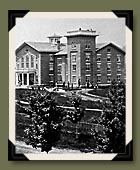
Image found at the Oneida Community Mansion House website.

Newer posts →
"the past is a wild party; check your preconceptions at the door." ~ Emma Donoghue

Recent Posts

  • medical update 11.11.22
  • medical update 6.4.22
  • medical update 1.16.2022
  • medical update 10.13.2021
  • medical update 8.17.2021

Archives

Categories

Creative Commons License

This work by Anna J. Clutterbuck-Cook is licensed under a Creative Commons Attribution 3.0 Unported License

Meta

  • Create account
  • Log in
  • Entries feed
  • Comments feed
  • WordPress.com

Blog at WordPress.com.

  • Subscribe Subscribed
    • the feminist librarian
    • Join 37 other subscribers
    • Already have a WordPress.com account? Log in now.
    • the feminist librarian
    • Subscribe Subscribed
    • Sign up
    • Log in
    • Report this content
    • View site in Reader
    • Manage subscriptions
    • Collapse this bar