• anna j. clutterbuck-cook
  • contact
  • curriculum vitae
  • find me elsewhere
  • marilyn ross memorial book prize

the feminist librarian

the feminist librarian

Tag Archives: gender and sexuality

booknotes: post-holiday round-up

12 Thursday Jan 2012

Posted by Anna Clutterbuck-Cook in book reviews

≈ Leave a comment

Tags

gender and sexuality, history, moral panic, politics, religion

It’s that time again! Time for another round-up of books I’ve been reading that for some reason or another haven’t made it into a post-length book review. Most of these, let me be clear, deserve a full-length review. Many of them are well-researched, well-argued, or otherwise lovely reads. I just don’t have the temporal time/space to write them all up. So here’s everything that’s fallen through the cracks in the past few months.

Corey Robin | Fear: The History of a Political Idea (Oxford U.P., 2004) and The Reactionary Mind: Conservatism from Edmund Burke to Sarah Palin (Oxford U.P., 2011). I first heard of Corey Robin thanks to an episode of Amanda Marcotte’s RhRealityCheck podcast in which she interviewed Robin about The Reactionary Mind. I was impressed with what he had to say about gender and power, so I hunted up his books and got reading. Fear was the volume that came in first at the library. It’s dense political history and theory, examining the theorizing and deployment of fear in the political realm from the Thomas More to Hannah Arendt and into the twenty-first century. Robin’s core argument is that politicians (left and right) have positioned fear as an external threat to civil society and democracy and therefore obscured the way in which fear is deployed within our society to keep power hierarchies in place (e.g. in the workplace, in race and gender relations, through law enforcement, etc.). The Reactionary Mind is a collection of essays — many which began as book reviews in publications like The Nation and The London Review of Books — that explore specific reactionary thinkers. I’d recommend dipping into Robin’s work with Reactionary and then moving on to Fear if you’re really intrigued, since Reactionary is certainly the easier (though no less insightful) read. My favorite essay in Reactionary might just have been the one on Antonin Scalia in which he observes:

Scalia’s mission, by contrast, is to make everything come out wrong. A Scalia opinion, to borrow a phrase from Margaret Talbot, writing in the New Yorker, is ‘the jurisprudential equivalent of smashing a guitar on stage’. Scalia may have once declared the rule of law to be the law of rules – leading some to mistake him for a traditional conservative – but where others look for stabilising checks or reassuring supports, Scalia looks for exhilarating impediments and vertiginous barriers. Rules and laws make life harder, and harder is everything. 
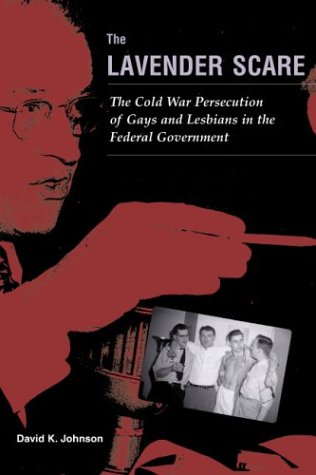
David K. Johnson | The Lavender Scare: Cold War Persecution of Gays and Lesbians in the Federal Government (Univ. of Chicago Press, 2004). Following footnotes from Corey Tobin’s Reactionary Mind, I stumbled across this detailed and well-constructed history of the McCarthy era purge of non-straight civil servants. Johnson’s book documents the way in which fears about national loyalty and psychological fitness blended together in the Cold War era and led to a mass expulsion of queer folks from the government (often destroying careers, precipitating family fissures, and causing psychological and emotional trauma on the way by). What surprised me was the relatively relaxed attitude Johnson describes toward sexual deviance immediately prior to the 1950s, when few feared loss of their job or social ostracism for homosexual identity or behavior.

Paul Russell | The Unreal Life of Sergey Nobokov (Cleis Press, 2011). Cleis Press sent me a review copy of this densely atmospheric historical novel, which attempts to reconstruct the life of Sergey Nobokov, the obscure younger brother of novelist Vladimir Nabokov of Lolita fame. I admit a certain amount of dubiousness when confronted with a historical novel that attempts to piece together the life of an actual historic person — particularly when the person in question was homosexual. The temptation for presentism (reading our own expectations onto the past) is always a danger, and often intensifies when we’re talking about the act of “recovering” queer history. The novel is also forbidding in that one anticipates, from the opening pages, Nabokov’s inevitable death at the hands of the Gestapo. To be honest, I’ve rather bogged in the middle (though I mean to go back!) just because midwinter is not really the time to be reading about the inevitable demise of a forgotten gay man under the Nazi regime.

Patricia Faith Appelbaum | Kingdom to Commune: Protestant Pacifist Culture Between World War I and the Vietnam Era (Univ. of North Carolina Press, 2009). Hanna found this one for me at the Harvard Book Store off Harvard Square. It’s a meticulously researched study of pacifism during the first half of the twentieth century, focusing — as the title suggests — on the influence of mainline protestant culture on the ways in which pacifism was articulated and enacted by women and men across the United States (and to some extent internationally as well). I’m only up to roughly the start of the Second World War thus far, but am finding it very readable history. I’m particularly interested in her focus on material and “folk” culture as a way of practicing and passing along traditions of Protestant pacifism, even in more secular pacifist communities and activism.

Joseph Cummings | Ten Tea Parties: Patriotic Protests That Time Forgot (Quirk Books, 2012). This early reviewer book from LibraryThing that is a lesson in “read more than the title when requesting your advance review copies.” I thought the book was going to be about ten unique protests that time forget; instead, it was about ten pre-revolutionary protests about tea and import taxes. Which, okay, if your thing this might be fun. Cumm ings has an engaging narrative voice and it looks like he’s done a credible amount of background research. His scant two-page bibliography is made up of secondary resources, however, and the lack of even end note citations is frustrating to those of us who like our quotations sourced!

Jeffrey Weeks | Making Sexual History (Blackwell, 2000). Following citations from Gayle Rubin’s Deviations, I tracked down this retrospective anthology of British historian and theorist of sexual politics Jeffrey Weeks’ essays on historical conceptions of human sexuality. This is a lively and articulate — if somewhat theoretically dense — collection which provides a solid picture of the work of historians of sexuality since the 1960s, and also reflects back on the work of sexologists from the 19th and early 20th centuries, and the long legacy of their contributions to research and cultural perceptions of human sexuality and how it is organized. Weeks was one of the pioneering scholars to retrieve the study of sex from the realm of nature/biology (where it was assumed to be ahistorical) and asserted the importance of understanding how human sexuality itself — not just our understanding of it — is shaped by culture.

Christopher Turner | Adventures in the Orgasmatron: How the Sexual Revolution Came to America (Farrar, Straus & Giroux, 2011). I was only able to get through about half of this ambitious history of psychoanalyist Wilhelm Reich’s work on human sexuality before the library demanded it back. However, the half that I did read was a thoroughly researched examination of Reich’s approach to psychoanalysis — one which placed orgasm at the center of both psychological and political health. Since Reich had only just arrived in America when I had to interrupt my reading, I remain dubious concerning the title’s claim (that Reich precipitated the sexual revolution in the U.S.). Nevertheless, Reich’s insistence that sexual pleasure was healthy and to be encouraged — and his placement of pleasure close to the heart of humanity’s essential character — becomes central to a number of post-WWII psychoanalytic and cultural currents that I am interested in (he was connected to, among others, A.S. Neill, Fritz Perls, and Erich Fromm).
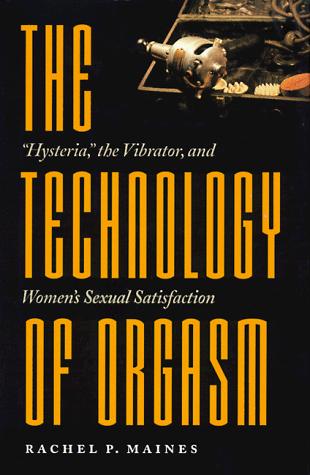
Rachel Maines | The Technology of Orgasm: “Hysteria,” the Vibrator, and Women’s Sexual Satisfaction (Johns Hopkins, 1998). Um … are you sensing a pattern in my recent reading yet? Pursuing research for an MHS “object of the month” essay, I checked out this slim volume on the medical treatment of women’s sexuality through electromechanical technology. It appears to be the only book-length work on this subject to-date, and although I found some of her arguments about male physicians and their power to be slightly simplistic, on the whole she avoids turning this into a narrative of male physicians vs. female patients, or husbands vs. wives, and instead offers a nuanced argument about the displacement of female sexual pleasure from marital intimacy to the doctor’s office due to what she terms the “androcentric model” of sex that insisted intercourse to male orgasm was sex, and women’s needs (clitoral stimulation anyone?) outside of those activities were excessive and therefore a medical issue for which one sought treatment from the professionals.

booknotes: deviations

10 Tuesday Jan 2012

Posted by Anna Clutterbuck-Cook in book reviews

≈ 1 Comment

Tags

children, feminism, gender and sexuality, moral panic, politics, reading lesbian classics, sociology, the body

find table of contents here

For the past couple of months I’ve been making my way through Deviations: A Gayle Rubin Reader (Duke University Press, 2011), an anthology of writings by anthropologist and feminist theorist Gayle S. Rubin whom I’m ashamed to admit I didn’t actually know anything about before I stumbled upon the advance review galleys of this book. Rubin  is a cultural anthropologist whose research delves into the history and culture of urban sexual subcultures, particularly BDSM communities. As a newly-out lesbian in the 1970s in Ann Arbor, Michigan, she designed her own Women’s Studies major at the University of Michigan and became active in the Women’s Movement and also the Gay Liberation Movement. In the late 70s and early 80s — in part because of her academic research into BDSM — she drew the ire of anti-porn feminist activists for her insistence that (wait for it) not all pornographic materials are inherently degrading to women. Yeah, I know. The more I read about it, the more it seems like the early 80s must have been a really weird time to be a self-identified feminist. Not to mention one who was also a lesbian and open about her s/M desires and practices.

Deviations is arranged in chronological order, beginning with Rubin’s first attempt to construct a theory of gender relations rooted in anthropological methodology — “The Traffic in Women: Notes on the ‘Political Economy’ of Sex,” written and revised between the late 60s and early 70s and first published in 1975. It is very much an artifact of its time and to be honest I bogged in this piece for the better part of a month after joyfully burning my way through the eminently readable introduction. Perhaps recognizing the opacity of “Traffic,” Rubin includes a piece reflecting back on the writing and reception of the original piece and includes it in the anthology — something she does several times throughout the book to great effect. After “Traffic” and its contextual essay comes a much more accessible piece on the English author Renee Vivien, originally written as an introduction and afterward to a new edition of Vivien’s A Woman Appeared Before Me, which is a fictionalized account of her tumultuous relationship with fellow author and outspoken lesbian-feminist Natalie Barney.

By the late 70s, Rubin was deep into the ethnographic research for her dissertation on the gay male leather bars of San Francisco, for which she received her PhD in 1994 from the University of Michigan. The majority of pieces in Deviations, therefore, wrestle not with the politics of gender or specifically lesbian-feminist history, but the politics of sexual practices, sexual subcultures, and the relationship between feminist theory and practice and human sexuality. As someone who is, like Rubin, committed to understanding the world through both a feminist and queer lens, I really appreciate her determination to remain engaged in feminist thinking and activism even as she was reviled by certain segments of the feminist movement for her “deviations” in sexual practice, and her openness to thinking about sexual subcultures that — for many in our culture, even many self-identified feminists — elicit feelings of disgust and generate sex panics. While the “porn wars” of the 1980s are largely a thing of the past, feminists continue to find sexuality, sexual desires, sexual practices, and sexual fantasy (whether private or shared via erotica/porn of whatever medium) incredibly difficult to speak about. Rubin calls upon us to think with greater clarity about the politics of sex, and how we police other peoples’ sexual activities, many of them consensual, simply because we find them distasteful.

Particularly controversial, I imagine, are Rubin’s writings on cross-generational sexual activities and children’s sexuality. Coming out of the BDSM framework, Rubin foregrounds the basic ethic of consent and argues that children have just as much right to consent to sexual activities as adults. Furthermore, within the framework of 1980s anti-pornography legislation, she emphasizes the difference between fantasy/desire and reality/action (that is: depiction of non-consensual sex in the context of a fantasy does not equal non-consensual sex and shouldn’t be treated in the same fashion). This leads her to speak up in defense of adults who express sexual desire for young people (but don’t act on that desire), and also to suggest that not all instances of underage/overage sexual intimacy should be treated as sexual abuse or assault. Read in tandem with Rubin’s insistence that we take children seriously as human beings with the right to sexual knowledge, this advocacy is clearly not a call to minimize the trauma of sexual violence (at whatever age) or a glossing over of age-related power dynamics. “The notion that sex per se is harmful to the young has been chiseled into extensive social and legal structures,” she writes, “designed to insulate minors from sexual knowledge and experience” (159). Like Judith Levine in Harmful to Minors (2002), Rubin argues that our cultural insistence on keeping young people separated from sexuality and sensuality — with a vigilance that often spills over into panic and hysteria — does little to protect them from sexual violence and exploitation while cutting them off from the means to conduct their own (safe, consensual) sexual explorations or name and resist the violence and exploitation that may come their way. Sexting panics anyone? The Purity Myth?

Overall, I highly recommend Deviations to anyone interested in the development of feminist and sexual political theory and practice over the last forty years — if nothing else, Rubin’s bibliography has already given me a handful of other thinkers whose books and articles I wish to pursue.

Cross-posted at the corner of your eye and The Pursuit of Harpyness.

movienotes: calamity jane

06 Friday Jan 2012

Posted by Anna Clutterbuck-Cook in media

≈ Leave a comment

Tags

gender and sexuality, movies, reading lesbian classics

Calamity Jane (Day) and Wild Bill Hickok (Keel)
via

Cross-posted at the corner of your eye.

When Hanna and I were visiting her folks back in December, we decided to watch the old VHS copy of Calamity Jane (1953) starring Doris Day and Howard Keel that we found in their video collection. In our defense, may I point out that a) we love making fun of crap movies, and b) Seven Brides for Seven Brothers was a childhood favorite of Hanna’s, and c) when I was about eight the original Broadway cast recording of Annie Get Your Gun starring Ethel Merman was where it was at as far as I was concerned. I was the proud owner of a vinyl record (my very first!) and would make my best girl friend at the time play Frank Butler to my Annie Oakley as we sang, “The Girl That I Marry” and “Anything You Can Do I Can Do Better.” To this day, I feel our relationship fell apart at least partially because she wanted a girl who was “soft and pink as a nursery” while I was more of a “Doin’ What Comes Natur’lly” kinda gal.

Anyway, so we decided to watch Calamity because of these things. And obviously we were anticipatory of the cringe-inducing depiction of Native Americans, the weak plot (this was no Deadwood), and to some extent the weak music and lyrics (Sammy Fain and Paul Webster are no Irving Berlin). What we didn’t anticipate was the lesbian (sub)text and the total confusion in the heteroromance department.

See, here’s the deal. As the film opens, Calamity Jane and Bill Hickok are pals living and working in Deadwood. They clearly see one another as besties, a situation which lasts through to the end of the film where their platonic friendship is required to morph into a romantic one in order to satisfy the demands of the marriage plot. Until the last-minute deus ex machina, however, Jane overtly professes desire for Lt. Danny Gilmarten (Philip Carey), stationed in Deadwood, and simultaneously acts out a courtship and marriage scenario with the other leading lady, Katie Brown (Allyn McLerie). Katie is a dance hall singer/stripper who Calamity Jane brings to Deadwood from Chicago to help the local saloon owner satisfy his customers. While Katie’s role in the movie is very obviously scripted to teach Jane how to be feminine, their relationship plays out as a romance from the very start. When Jane goes to meet Katie backstage in Chicago, Katie first reads Jane’s body language and dress as male, and reacts as if Jane is a male intruder. Even after Jane clears up the misconception, the two continue to act out a butch/femme dynamic as Jane shepherds Katie to Deadwood (protecting her from hostile Indians), defends her honor at the saloon, and invites Katie to move in with her. The two set up housekeeping and Katie invites Jane to learn how to behave like a “proper” woman. Interestingly enough, despite Jane’s transformation from “one of the boys” into a feminine girl, she persists in wearing her buckskin outfit in all of the scenes not focused on her transformation — her femininity doesn’t require skirts.

The romantic cross-currents in the film are terribly confused — in no small part because the Jane/Katie pairing follows the classic girl-civilizes-boy courtship arc, except that the two characters are both women. The two are initially at odds, but find aspects of the other to appreciate, and settle into a domestic arrangement. Obviously, however, the film-makers needed the marriage plot they’d initiated to end in heterosexual marriage. So: re-enter Hickock and Gilmarten, who come to the women’s idyllic cabin in the woods to woo (you guessed it) Katie Brown. Katie, knowing Jane desires Danny, resists initial advances but accepts an invitation to a local ball on the condition that Jane be invited as Bill’s date. At this point I count three romantic triangles: (1) Katie and Jane in rivalry for Danny, (2) Danny and Bill in rivalry for Katie, and (3) Bill and Jane in rivalry over Katie.

Obviously, the solution would be for them all to move to Planet O. But barring that, the scriptwriters obviously felt they needed to resolve the plot in a timely and heterosexual manner. So Katie, despite earlier protestations, takes up with Danny at the ball — causing Jane to storm off in jealousy. Jane later confronts Katie in the midst of Katie’s stage show, demanding that she leave town. Bill helps Katie make Jane look foolish (in order to teach her a lesson) and then at the eleventh hour professes his love for Jane. Jane, having resolved her jealousy by transferring her affection for Bill, rides off to collect Katie from the departing stagecoach and the two straight couples have a joint wedding just before the credits roll.

The essential confusion of the show’s narrative, I feel, can be summed up in an an exchange between Bill and Jane in which Bill suggests to Jane that her rage at Katie is caused by “female thinking,” which clouds her rational mind and stops her from thinking clearly. Since the ostensible thrust of the narrative to that point was to move Jane from an essentially masculine position to a feminine one (from which she can be paired with Bill), the last-minute accusation of too much femininity highlights the nonsensical nature of the plot. Only by reclaiming her active, masculine position in the narrative (riding off in her buckskin to retrieve Katie from the retreating coach), can Jane reclaim her honor and win her place by Bill’s side … even as all of the cues of the narrative put her and Katie together as a butch/femme couple.

In short, don’t watch Calamity Jane for the music, the Wild West themes, or the heteroromance. Instead, watch it for the lesbian relationship hiding in plain sight. As Hanna put it, “This isn’t subtext, this is just plain old text.”

booknotes: the lesbian fantastic

22 Thursday Dec 2011

Posted by Anna Clutterbuck-Cook in book reviews

≈ Leave a comment

Tags

books, gender and sexuality, genre fiction, reading lesbian classics

Back in October’s batch of LibraryThing Early Reviewer books, I won Phyllis M. Betz’ The Lesbian Fantastic: A Critical Study of Science Fiction, Fantasy, Paranormal, and Gothic Writings (McFarland, 2011). The Lesbian Fantastic is the third volume Betz, a professor of English literature, has written for McFarland examining genre fiction written by lesbian authors (a slippery category that I’ll talk more about below). The previous installments in the series look at lesbian detective fiction and lesbian romance novels.

At a slim two hundred pages, including chapter notes, bibliography, and index, The Lesbian Fantastic — as the subtitle claims — takes on the ambitious task of exploring the history  and themes of fantastical literature written by and about lesbians. The brevity of the volume is, indeed, one of its problems, since each aspect of fantastical literature Betz covers (science fiction, fantasy, paranormal, and gothic) could take up a book of its own. I was certainly thankful that Betz refused up-front to play genre border patrol and police the boundaries between, say, “gothic” vs. “paranormal,” but that decision left her with a vast landscape of literature to summarize, analyze, and place in some measure of socio-historical context. The inevitable result is that corners are cut and I was left wanting a meatier discussion on many fronts.

Likewise, Betz fails to strike a comfortable balance between examination of lesbian authorship, readership, and the lesbian as character in fantastical literature — whether or not that character is written by a self-identified “lesbian” or otherwise non-straight woman author. All of these aspects of genre fiction by and/or about lesbians would have been fascinating subjects to explore in-depth, but given the length of their treatment in this study, I felt all three topics came away muddled and short-shrifted. Was this book a study of lesbian authors? Not entirely — in part because not all authors’ sexual orientations are known and/or fit into modern-day identity categories. Betz also weaves back and forth between writing narrowly about lesbian-authored works (however she defines them) and women generally and authors in the genre generally. Was this book about lesbian readers? That category, too, suffers from a high degree of volatility … are we talking about readers of fiction involving lesbian characters? Readers who identify as lesbian? Who engage (or have engaged) in same-sex relationships? Who experience some measure of same-sex desire? While categorization is always going to be somewhat arbitrary for the sake of a study such as this, I would have appreciated a clearer sense of whom Betz herself is including under the umbrella of lesbians who read genre fiction, and what her sources are for those voices.

Finally, Betz could have used a good editor with knowledge of the genre who might have caught, for example, the fact that China Miéville does not identify, as far as I know, as a lesbian or a woman. Or could have gone over the manuscript and deleted the repetitious author introductions (Charlotte Perkins Gilman’s Herland is re-introduced almost every time it appears). 

Overall, The Lesbian Fantastic is a book on a fascinating and potentially rich (and heretofore under-studied) topic that suffers from over-vague parameters and a frustrating simplification of lesbian identity. I think Betz’ subject might have been better served had she chosen to focus on the treatment of lesbian/queer characters in fantastic fiction. In that context, she could have constructed some interesting compare-and-contrast arguments about lesbian characters in genre fiction generally versus genre fiction written by lesbian writers and/or for a lesbian/queer audience. Or, she could have focused more specifically on queer female readership and fandom, discussing the genre fiction pitched specifically to non-straight readers and the ways in which those readers interact both with “lesbian” genre fiction and its mainstream counterparts. Reader voices are notoriously difficult to locate and analyze, but online forums and fan-created transformative works (fan fiction, videos, art, etc.) have made the possibility of hearing the reader’s voice in much more depth.

The Lesbian Fantastic will be useful to other scholars in the field who will, hopefully, take Betz’s arguments in more complex directions.

multimedia monday: purity myth trailer

12 Monday Dec 2011

Posted by Anna Clutterbuck-Cook in media

≈ Leave a comment

Tags

books, feminism, gender and sexuality, multimedia monday, web video

Via @courtwrites (and lots of others by now, but that’s where I first saw the link!):


The Purity Myth Trailer from Media Education Foundation on Vimeo.

I read and reviewed Jessica Valenti’s Purity Myth when it first came out back in 2009 and in my opinion it’s the best of her published works to-date. I’m definitely going to check out the documentary version.

See also: my review of Hanne Blank’s Virgin: The Untouched History.

booknotes: when we were outlaws

08 Thursday Dec 2011

Posted by Anna Clutterbuck-Cook in book reviews

≈ Leave a comment

Tags

being the change, feminism, gender and sexuality, history, memoir, politics

In many ways, Jeanne Córdova’s memoir, When We Were Outlaws: A Memoir of Love and Revolution (Midway, Fla.: Spinster’s Ink, 2011), couldn’t be more different than the last memoir of the 70s I reviewed here at the feminist librarian: Patricia Harmon’s Arms Wide Open. Harmon’s memoir told the tale of a self-trained hippie midwife who moved with sons and male lovers through several different rural communes before entering medical school for formal nurse-midwifery training. Jeanne Córdova, by contrast, spent the 1970s in the Los Angeles area free-lancing as a journalist and activist in what were then referred to as the women’s and gay liberation movements. A self-identified butch, she came of age as part of the lesbian bar culture of the 50s and 60s, then discovered gay liberation and feminism in 70s. Córdova was the founding editor of The Lesbian Tide newsmagazine and the human rights editor of the L.A. Free Press, interviewing radicals on both the left and the right on the run from the law. As she observes in her introduction, “this memoir visits many outlaws, some freedom fighters, and a few who would be called terrorists … I needed to know and sort out these outlaws in my mind in order to discover the perimeters of my own moral compass … Outlaws takes place at the intersection of shadow and shade that differentiate between persona and principle” (vii).

Yet I found myself, while reading Outlaws, thinking often of Harmon’s memoir and the parallels between both works in scope and tone. And in the relationship (in text, at least) between the authors and their own personal and political pasts. Like Arms Wide Open, When We Were Outlaws seeks to tell a specific slice of the authors life, rather than starting with childhood and moving through the years in an orderly progression. Both authors chose, as their time-frame, the turbulent years of the 1970s when the heady, optimistic social change movements of the late 1960s led to more complicated lived realities for those who championed leftist causes and a counterculture way of life. Córdova focuses on her life and work between 1974-1975, with some flashbacks and flash forwards to help us make sense of the dense web of associations — political and personal — that characterized that time, both for Córdova specifically and her fellow activists in what was then called “the Movement” more broadly. Like Arms, Outlaws gives us an in-the-moment perspective on the life of someone struggling to live out her political convictions in her personal life. For Jeanne Córdova this means an up-close, and in many ways unshrinking, view of her involvement with lesbian separatist politics in relation to the gay liberation movement more broadly. It also means intimate portraits of her trial-and-error practice of open relationships, as she paints a portrait of her involvement with two women — the long-term relationship in which she and her partner have negotiated non-monogamy, and the quickening of an intense love affair with a fellow activist that threatens the stability of her more permanent ties.

It has become a commonplace, since almost before they began, to identify the leftist social movements of the 60s and 70s as enthusiasms of youth, as romantic idealism (or destructive self-absorption, depending on your political persuasion) that necessarily gave way to realistic politicking and material concerns. In some ways this is true. Many of the individuals who populate When We Were Outlaws are young adults in or just out of undergraduate or graduate school programs, young professionals or struggling under-employed twentysomethings. They don’t (yet) have dependents to care for, and are geographically mobile, often living on the economic edge. They’re at the point in their lives where they’re developing a sense of what kind of life they want for themselves and those they care about — what kind of work they find meaningful, what values they hold dear, what kind of relationships they want to build and maintain. Often, their answers (however tentative) to these questions are at odds with the answers their parents or the activists of the previous generations gave.

Yet despite the youth (and youthful perspective) of its protagonist, I would argue that Outlaws pushes us to re-examine our assumptions that the moral dilemmas and vision for a better future that Córdova and her cohort were immersed in are solely the province of the young — impetuosity that will necessarily give way as one grows into more seasoned adulthood. One of the most interesting narrative threads in Outlaws traces the relationship between Córdova and her political mentor/substitute parental figure Morris Kight. Kight was a mover and shaker in L.A. gay political activism, someone with whom Córdova worked closely and fell out publicly over the place of women in the gay liberation movement. Their differences aren’t so much conservative elders vs. radical youth but something more complicated — a difference in experience, of power, of privilege. In the very personal (yet also political) struggle between Kight and Córdova we can see all the complications inherent in working for social justice, complications that don’t get, well, less complicated — or less relevant — as we grow older.

Córdova reflects back on her younger self with a sometimes-critical, yet always compassionate eye. While the narrative style is “novelized memoir” (to use the author’s own choice of phrase), one nevertheless gets the sense that the author both knows well her protagonist’s faults and cares very deeply for her younger self, no matter how flawed her present self may find that person of the past. “I was not born knowing how to love,” is how she open’s her introduction. “It came to me late in life” (vii). In the pages of Outlaws we see her be cruel to lovers, ideologically ruthless, politically short-sighted, and cripplingly addicted to booze and prescription drugs. At the same time, we see a heart-breakingly young woman who’s been physically evicted from her childhood home (for bringing home a lover), is living with serious and intermittently-treated depression, experiences chronic under-employment, and who nonetheless is working hard to build a meaningful life for herself and a better future for us all. Whether you agree with the young Córdova’s means and visionary ends doesn’t necessarily detract from the import of such a closely-rendered self-portrait.

I suspect we’re only in the early years of a richly textured new wave of 70s-era autobiography which will shed new light on the particularity of growing into adulthood during a period when even the most fundamental of questions concerning how we organize our personal and political lives seemed to be in real, material flux. I am also happy (quite selfishly, I admit!) about the way these personal perspectives will provide unique, and accessible, primary source material for historians of the period, even while many historical sources remain in private hands (and therefore often invisible-to-researchers). Córdova’s memoir would provide a rich jumping-off point in a course that sought to explore this era in all its rich historical realities — and I hope it prompts many readers to re-examine what they think they know about the political contours of the decade.


This review was made possible by the generousity of Lynn Ballen at Spinster’s Ink who provided me with an advance review copy of the book. The book is available now for purchase online or at your brick-and-mortar bookstore of choice. You can read more about the memoir and its author at www.jeannecordova.com.

second thoughts: my "sexuality and society" journal

01 Thursday Dec 2011

Posted by Anna Clutterbuck-Cook in life writing

≈ Leave a comment

Tags

call to participate, gender and sexuality, sociology

This is the second post on my participation in a Boston University study of urban and rural queer folks and their social interactions with non-queer folks. You can read about my initial interview with researcher Holly Donovan in the first thoughts post I wrote back in October.

This past Monday I sent Holly the journal I’d been keeping since our initial meeting. I’m not going to make the journal publicly available because I wrote it for Holly’s research specifically and also because it contains details about my interactions with third parties that can be kept anonymous in the context of a PhD dissertation where I’m not identified — but not in this blog space, where I’m pretty transparently me.

Journaling. I used to do a lot of it, but the demands of the past few years and my own shifting priorities have caused me to stop keeping such a detailed and in situ account of my daily life. So it was kind of a familiar novelty (to coin a term) to find myself keeping a daily journal again. Journal writing is liberating in that the pressure to have finished and connected thoughts is erased — at least for me. In this case, I was writing on a particular theme: my social interactions and the way those interactions did or did not actively engage my gender identity and sexual orientation. Yet I still felt that I could keep notes that were in bullet-point format, with sentence fragments and open-ended observations.

via

What were some of those observations?

I spend more time thinking and talking about sexuality than I do sexual orientation. A significant portion of the notations that I made in my journal had to do with conversations I had with friends, family, my therapist, my colleagues, people online, with authors (via reading their work), about human sexuality. I spend a significant portion of my waking time thinking about human sexuality because it’s one of those things that makes me happy to ponder. I did this before I found language to articulate my own sexual identity as such, and before I was in a sexually intimate relationship with anyone. I love that I move in circles where sexuality is part of casual conversation, and that our conversations are often intellectually stimulating, enthusiastic, and joyful rather than full of shame and angst. Yes, we all have emotional and physical struggles that sometimes need conversation to work through — but I’m grateful that that is only part of the discourse surrounding sexuality that I am a part of.

I don’t feel in physical or emotional jeopardy in the spaces I live, work, and move through around Boston. This is a complicated one with lots of layers of class, race, gender presentation, and the rest tangled up in it (as I observed in my first thoughts post). But keeping my journal these past three weeks reinforced the fact that there are no spaces in my daily life where I feel the need to self-censor the fact I’m in a lesbian relationship. My colleagues know, my family knows, our friends know, our bank knows, our doctors know. We hold hands on the walk to work, we doze on each others’ shoulders on the T, kiss goodbye when parting at our favorite coffee shops. We’ve never experienced anything stronger than a glare from a random passer-by (and even then, perhaps they were just having a bad day?). I don’t know if it would be different if we lived in West Michigan. I know when we visited Holland last spring I felt comfortable behaving in public the same way we do in Boston — but Hanna points out that I have a talent for ignoring negative vibes. So perhaps if we lived there full-time, we’d have more run-ins with homophobic weirdos. Like I said, I don’t know all the factors at work here — but I’m glad that our social experience has been so positive.

A significant part of my social interactions, particularly around sexuality themes, take place through reading and blogging. There were a number of entries in my journal that began with phrases like, “Received and advance review copy of … on trans* sexuality today” or “Wrote a blog post about forthcoming collection of erotica …” or “Finished writing 3K words of lesbian erotica …”. Outside of my professional writing and reading, a significant portion of my intellectual exploration right now has to do with sexuality — and a lot of that takes place in conversation (see observation one, above) and through reading articles, books, and blog posts, listening to podcasts, and engaging in discussion in comment threads. A lot of this is mutually reinforcing, since the more I read and review work in this area the more likely I am to get offers of advance review copies, virtual book tour requests, and other quasi-professional offers in a similar vein. I welcome these engagements with open arms because it’s stuff I love to talk and think about. I do think it’s note-worthy that I feel comfortable making this a quasi-professional part of my life, and that I feel comfortable pursuing it online in ways that are tied directly and openly to my actual identity.

And, as something that came to me toward the end of my journaling (though I’ve thought about it before), I get something out of existing on the margins of heteronormative society. That is, there are material ways, obviously, that Hanna and I (and our other non-straight friends) experience discrimination based on our sexuality, or relationships, and our gender expression. And I didn’t, obviously, choose to be attracted to Hanna because being in a lesbian relationship would be transgressive. I just desired her. But I made choices about following through on that desire, about building a life with another woman, and part of the reason is that I like living on the cultural* margins. I feel comfortable and energized here. I feel less claustrophobic. I feel like choosing to live my life in some basic, categorical ways that disqualify me from the norm give me freedom from other peoples’ expectations that I will conform to mainstream expectations of femininity, or American middle-class ambition, or heterosexuality. I think (and this is a very tentative hypothesis) that perhaps growing up home-educated, in an era when that was far from mainstream, primed me for feeling most at home in spaces that folks around me considered “weird.” And so I think I gravitate toward people who are willing to think and live outside the boxes. It feels familiar and it feels good to exist in that space.

I think that’s counter-intuitive for a lot of folks, who assume that non-normative relationships and/or a “weird” sexual identity would be cause for anxiety and stress. I remember the transition being somewhat stressful — going from thinking of myself as “mostly straight” to thinking of myself as bi/fluid/lesbian/queer. But it was actually an incredible relief in a lot of ways to feel I had legitimate feelings of attraction that would support moving into queer spaces and identifying that way socially. Because those spaces called out to me as welcoming psycho-social spaces for years before I felt I had enough evidence of my own sexual desire to claim them as my own. I know this sounds kinda backward to many folks for whom sexual orientation/identity works differently or more decisively. But for me, that seems to be path I needed to take.

I meet with Holly this evening to do a follow-up interview, based on my observations in the journal. If any new insights crop up during our conversation I’ll be back with “third thoughts” on this process.


*And I choose the word “cultural” deliberately here because I realize that the aspects of my self and my values which are marginal to the mainstream are largely self-chosen rather than imposed upon me. In terms of my race, my able-bodiedness, my socioeconomic status, etc., I’m far from existing on the material margins of American society.

booknotes: see me naked

30 Wednesday Nov 2011

Posted by Anna Clutterbuck-Cook in book reviews

≈ Leave a comment

Tags

gender and sexuality, religion, the body, thesis

One of the books I consulted for my thesis was Amy Frykholm’s Rapture Culture: Left Behind in Evangelical America (Oxford U.P., 2004). In Rapture, Frykholm traveled around the nation interviewing readers of Tim LaHaye’s Left Behind series, exploring the effect of rapture narratives in Evangelical culture. Frykholm — who grew up Evangelical and now attends an Episcopal church — studies her former subculture with a keen and empathetic eye. In her latest book, See Me Naked: Stories of Sexual Exile in American Christianity (Beacon Press, 2011), Frykholm turns to personal narratives of sexuality, embodiment, and Christian spirituality. The slim volume contains nine profiles of Protestant Christians struggling in various ways to integrate their physical, sexual selves with their concepts of Christian “purity” or righteousness.

As much as possible, Frykholm backs away from any larger-scale analysis in the interest of allowing her subjects to make meaning of their own lives. However, it seems clear that all of her interviewees have struggled to integrate their sexual selves with their theological beliefs. Some because they experience same-sex desires, some because they’re struggling to live up to demanding Christian ideologies of chastity or modesty, some because anything associated with bodily desires became the enemy.

One of my favorite essays was less about sexual activity or relationships, per se, than it was about our sense of embodiment and the sensual experience of being and expressing oneself in flesh. “Monica” recounts her experience of attending a life-drawing class while studying abroad — an experience that challenged her understanding of propriety and ultimately helped her re-evaluate her expectations of what beautiful bodies should look like and how women’s bodies should behave. At first repulsed by the normal-looking nude model (to the point where she almost dropped the class), Monica perseveres and eventually exhibits her drawings in the college library upon returning to her home campus:

Monica heard two things in the comments [about her art show]. She heard the same fear and revulsion that she had experienced in herself when first encountering the model. It was a disgust that human beings exist in this form … she also heard in the comments that Christianity and nakedness were incompatible — that somehow being clothed and being Christian were necessary to each other (84).

At that point in her own journey, Monica has grown enough to be critical of these assumptions, and by the end of the piece has challenged herself to volunteer as a nude model for community life drawing classes — an act of bravery that seems to be very intertwined with her developing sense of spiritual practice.

What I think may surprise non-Christian readers of these narratives is their familiarity: in many ways, the discomfort with embodiment is a malaise that is more American than Christian, though obviously practicing Christians will express their struggles in theological language. The individuals here struggle with unrealistic beauty standards, with the commercialization of sexuality, with questions of attraction and desire and what their bodies want versus what they’re being taught they should want by their parents, youth leaders, peers. The process of coming into one’s own bodily self and finding a voice for our desires is rarely an easy one, regardless of the faith tradition we’re raised in.

On the other hand, See Me Naked does put those struggles in a particularly Christian theological and social context, and illuminate some of the ways Christian language — particularly theology which seeks to construct rigid definitions of “right” and “wrong” sexual expression — fails believers. Reading stories about young women starving themselves to the brink of death in the name of “modesty” and young men told their interest in pornography was sinful, brought to mind the recent post, How Modesty Made Me Fat, by Sierra of No Longer Quivering in which she writes:

Modesty made me “fat” because it defined my relationship with my body in terms of appearance. Not action. Not gratitude. Not the joy of movement. Just appearance. It also defined my relationship with men as one of predator and prey. It was my job to hide from men so that their sex drive would lie dormant, like a sleeping wolf. But if that wolf ever awakened, it was not because it had been sleeping for a long time and its circadian rhythm kicked in, or it was just naturally hungry. It was my fault because I had done something to “bait” the wolf. Just by being visibly female, or by moving in “unladylike” ways. You cannot consider women full human beings unless you recognize that their lives do not revolve around the male sex drive. Modesty is a philosophy that dehumanizes. It incites constant fear and vigilance in one sex while excusing the other of all responsibility. It’s immoral.”

See Me Naked offers similar examples of the way in which our religious language falls perilously short in its ostensible effort to increase well-being for all. Naked tells stories of women starving themselves close to death for the sake of being pure, stories of women and men who feel lost when faced with the task of integrating queer attractions with their Christian faith, and stories of men who are taught to hate and fear their feelings of sexual desires as something inherently impure or incompatible with living a righteous life.

At the very end of See Me Naked, Frykholm does offer some reflections on an alternative ethic of sexuality, one that I think is worth contemplating whether or not you’re interested in the explicitly Christian language in which she couches her suggestions. “True, deep, real pleasure is an avenue to the Holy,” Frykholm writes. “Through discernment, wonder, and aliveness we will know what real pleasure is … and when we sense true pleasure, we will trust it and be able to act bodily in it and with it.” She recounts the counsel of a parent to her soon-to-be adolescent daughter, “Your body will know more pleasure than you can even now imagine. You are going through a period when your body is going to learn to feel pleasure, and you will be amazed” (176)  While I’d argue that children, too, have the bodily capacity to feel pleasure — though of a different kind than adults — I like this invitation to an emerging teenager to embrace that part of her growing-up. Too often, we’re quick to associate teenage embodiment with danger, not pleasure. As Frykholm says, “We all know that puberty, adolescence, adulthood are not solely about pleasure … But pain we know well. Pleasure we sometimes need help attending to” (177). Such an invitation crosses the boundaries of faith traditions and is a reminder to us all how much better we could be, as a culture, at living embodied and joyful lives.

Cross-posted at the oregon extension oral history project blog.

booknotes: women in lust

13 Sunday Nov 2011

Posted by Anna Clutterbuck-Cook in book reviews

≈ 1 Comment

Tags

feminism, gender and sexuality, smut, virtual book tours, writing

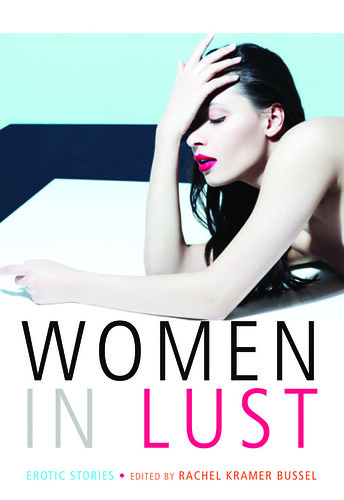
Today, I am participating in the virtual book tour for Women in Lust, a new erotica anthology edited by Rachel Kramer Bussel and published by Cleis Press. I’ve written straightforward reviews of erotica anthologies before, as well as using them as starting-points to muse about erotic writing more generally. This time I wanted to mix it up a little and followed up on Rachel’s offer to connect the virtual tour bloggers with anthology contributors for an e-interview.


Writer Donna George Storey was gracious enough to take the time to respond to my emailed questions with her thoughts about writing erotica professionally and what power erotica has to inform our lives. I hope you find her responses as thought-provoking as I did.


Without further ado, here’s Donna.


“My desire made me more interesting to myself.”
an interview with Donna George Storey  

Anna: You describe yourself as an academic turned erotic fiction writer. Can you say a little bit about how you made that shift? What prompted you to begin writing erotica, and then to make it a part of your professional life?

Donna: As far back as I can remember, I’ve loved to lose myself in a good story and dreamed of writing my own fiction.  However, I also internalized society’s messages that few writers make a living from their passion and most become staggering alcoholics, so it was safer to channel my love of words into an academic appreciation of the works of accepted “great authors.” The exoticism of Japanese literature, and the challenge of simply reading those intricate Chinese characters, kept me enthralled for a while, but deep down I felt I was ignoring my true calling.  I finally found the courage to write seriously when my first son was born, and I took a temporary break from teaching—which ended up being permanent.  Motherhood is supposed to drain you of all erotic and intellectual energy, but for me the opposite was true.

Donna’s collection of erotic literature and reference books related to Japan.
Photo by Donna George Storey, used with permission.

From the start my stories flirted with sex, but it took about a couple of years of practice before my stories were so steamy, I could no longer submit to proper literary magazines.  Yet I found being a “bad girl” immensely liberating to my creative spirit.  In spite of the erotica revolution in the 1990s when many talented authors and editors like Susie Bright and Maxim Jakubowski proved that stories with erotic themes could be smart, thought provoking and artistic, many people still assume sexually honest writing has to be poorly written, the kind of thing you hide under the bed.  My goal is to write stories that challenge that stereotype, stories that respect the complexity of the pleasures of body and mind.  Few mainstream authors are comfortable writing about sex in a way that celebrates its positive aspects (notice how often sex is coupled with punishment, betrayal, violence or other negative consequences in mainstream culture).  There are many erotica writers who do it bravely and beautifully—but we need more.  It changed my life and opened my senses in ways I’d never imagined, and I highly recommend it to everyone!

Anna: The story included in Women in Lust, “Comfort Food,” uses recipes and cooking as part of the seduction — and the end goal of the seduction, even. Can you talk a little bit about why you chose to write a piece centered around preparing and eating food? What was the immediate inspiration for this particular story?

Donna: When I’m not writing erotic stories, I love to cook, although I spend even more time salivating over beautiful cookbooks, a sort of culinary porn.  As I considered your question, I realized that my stories are also like recipes in that I’ll take an image that intrigues me and mix it together with a childhood memory, a touch of a lifelong hobby, and a few juicy tidbits from friends, then add a cup of my own libido to finish it all up.   “Comfort Food” is somewhat different from the common sex-and-food story involving lovers smearing whipped cream all over each other–which is fun, but messy!  In keeping with the female empowerment theme of Women in Lust, the story deals with a middle-aged woman’s fascination with a young chef and his secret pudding recipes.  He poses a challenge for her, but of course she gets everything she wants in the end.

There’s one line in this story that’s a particular favorite:  “My desire made me more interesting to myself.”  One of my many discoveries as an erotic writer is that sensual pleasure doesn’t have to be confined to the genitals.  Appreciating the sweetness of a ripe berry can be equally bewitching.  Yet enjoying food without guilt is as frowned upon in our society as enjoying sex without guilt, so that parallel also drove the story.  Last but not least, anyone who has a passion is very sexy to me, and good cooks by definition care about what they do.  Cooking is a form of communication, and I swear I can taste the love and dedication or lack thereof.  I once had an absolutely amazing dish of butterscotch pudding at a fancy restaurant in San Francisco called Fifth Floor.  I didn’t ask for the recipe, but I wish I had.

Anna: When I write about erotica and pornography as a blogger, I often get comments asking me for reading/viewing recommendations that are “women friendly” or “feminist.” Where do you go for good-quality erotic literature? Any suggestions for my readers about places to seek out reading matter?

Donna: Yes, I definitely have some recommendations.  Cleis Press and Seal Press publish smart, well-written and very hot anthologies that celebrate female pleasure—anything edited by Rachel Kramer Bussel, Violet Blue and Alison Tyler are sure bets.  Online magazines are a great place to sample different authors without commitment.  Clean Sheets (www.cleansheets.com) tends toward the literary, you can always count on good, sexy writing.  Oysters and Chocolate (www.oystersandchocolate.com) is edited by two wonderful women, Jordan LaRousse and Samantha Sade who embrace all varieties of stories.  Since I began writing, I’ve come to appreciate the sensibility an editor brings to an anthology.  It’s more than just fixing typos.

Anna: One of the things I’m fascinated by as a reader/amateur writer of erotic fan fiction and original erotic stories is the relationship between peoples’ sexual identities/experiences and the type of erotica they write or choose not to write. For example, there are straight and bisexual, even lesbian, women who write/read almost exclusively m/m erotica. I’m curious whether you write exclusively female/male erotica or whether you write other pairings (or groupings), and why you choose to write the pairings (or groupings) you do.

Donna: I’m fascinated by the same relationship myself.  Interestingly enough, the second most common question I hear after “are you published?” is “are your stories based on real life?” I actually do make use of material from my experience for many of my stories, but I take a lot of liberties with the facts, and none are strictly memoir.  No matter how realistic, erotic stories are fundamentally erotic fantasies.  Even if you aren’t peeping into the author’s actual bedroom, you are definitely getting a peek into her imagination and what really turns her on.  In a way, my readers are more intimate with me than many of my lovers have been.

When I write, I’m aiming to get at the hidden truths of sexuality, which is why I write mostly what I know, heterosexual sex, and why the wilder couplings are often explicitly presented as fantasy rather than reality.  On the other hand, it’s a big turn on to write and read about something you would never, ever do in real life.  That’s the power of fiction, to try on different lives.  So I have also written stories way outside of my experience.  I’ve noticed a trend of scenarios where a woman sleeps with two men, her maidenly reluctance completely overcome by her lover’s insistence that she enjoy sex with a hot stranger.  How can she say no to the man she loves, especially if he’s ordering her to be a slut?  It’s the perfect way to have your pudding and eat it, too.

Yet, I value authenticity and honesty in erotica.  I’d rather read a story written by a lesbian that gives me insight into her sensibility and experiences than something churned out by a guy who’s getting paid a penny a word for some hot girl-on-girl action.  Perhaps it’s my grounding in 70’s feminism, but part of me feels it’s a violation for a straight person to impersonate someone with a different orientation unless they approach it with great respect and sensitivity.  GLBT voices have been silenced for so long, it’s time to celebrate the chance for those who’ve been marginalized to tell it like it is.

That said, I have written a couple of lesbian stories that seemed to pass as believable.  My favorite is entitled “Ukiyo,” about a Japanese literature professor who takes a jaunt through Kyoto’s pleasure quarters with a colleague as an honorary man and finds herself becoming intimate with a female dancer.  I drew upon my own genuine curiosity and attraction to women, as well as a few actual drunken nights in Japan where my usual inhibitions were especially soft.  There was enough truth and genuine desire, I suppose, that Susie Bright chose the story for Best American Erotica 2006.

Anna: Are there any particular tropes in modern erotica that you wish would just go away?

Donna: I do have a particular pet peeve, which also happens to be a very common scenario in erotic fiction.  You lock eyes with a stranger at the bus stop or in a club, immediately retreat to an alley or public restroom, and have the most mind-blowing sex of your life without a word spoken.  I understand why this sort of zipless fuck is a popular fantasy—seduction is hard, knowing someone intimately is harder–but this particular type of story leaves me cold, bored, and unable to suspend disbelief.  I like to be warmed up first, even in fiction.

Anna: What are some of the things you wish we would see more of in erotic writing?

Donna: What I’d really love to see more of doesn’t have to do with a particular theme or kink, it’s about who writes erotica and why.  Until I started writing erotica myself, I thought of sexually arousing material as “out there,” images created by Hollywood or the porn industry, or naughty letters in Penthouse.  But writing erotica encouraged me to pay attention to my sexual response and my lover’s in a whole new way.  It was a tremendous awakening and took us to a new level of intimacy and enjoyment.  I realized how much sexual power and creativity was within me, not out there.

Donna George Storey
Photo by Laura Boyd, used with permission

The stories that blossomed from my imagination were an education as well.  Because of my writing, I’ve come to realize that sexual fantasy is not just a straight reflection of what you desire, it’s like a foreign language you have to decode.  Getting turned on by being dominated, as in the example above where the husband commands the wife to sleep with another man, does not mean you literally like or want to be dominated in all aspects of your life.   I now read this fantasy of mine as a way for my libido to borrow power relations in real life, where a good woman is only allowed to be sexual in relation to a husband.  But then something cool happens in my heated brain—the authority figure is transformed into someone who now allows  and insists on pleasure.   The same is true with exhibitionist fantasies, which are really about showing a hidden sexual self, not breaking genital exposure laws.  Sexual fantasy might seem taboo and outrageous, but at the heart is permission and acceptance of one’s eroticism.  That discovery has been very reassuring for me.   Even if you aren’t into this kind of analysis, just paying attention to what turns you on is fascinating.  How do you set up a gateway into your erotic world?  What point in the story is the climax?  How are figures in the real world transformed? (You’d never recognize my high school principal!)

As for the why you write, there’s lots of emphasis on publication as the test of a “real” writer, but the most meaningful erotica can be a private gift to yourself or your lover.  So, yes, I’d love to see more people exploring their erotic imaginations and writing lots of hot stories.  The world would be a much better place for it.


WOMEN IN LUST: You can read more about the Women in Lust anthology, and find excerpts of several stories contained therein, at the anthology website as well as purchasing copies from a variety of online booksellers including Amazon, Powells, or Cleis Press.

AUTHOR’S BIO:  Donna George Storey has taught English in Japan and Japanese in the United States.  She is the author of Amorous Woman, a very steamy novel about a woman’s love affair with Japan (check out the provocative book trailer).  She’s also published over a hundred literary and erotic stories and essays in such places as The Gettysburg Review, Fourth Genre, Women in Lust, Best American Erotica, The Mammoth Book of Best New Erotica, and Penthouse.

Cross-posted at The Pursuit of Harpyness. 

first thoughts: being interviewed about sexuality + society

28 Friday Oct 2011

Posted by Anna Clutterbuck-Cook in life writing

≈ 2 Comments

Tags

boston, gender and sexuality, religion

On Wednesday evening I sat down for two hours to speak with Holly Donovan, a PhD candidate in Sociology at Boston University. Holly is conducting interviews with LGBTQ-identified folks in the Boston area as part of her research on sexuality, religion, and community. If you identify as queer and live in the Boston area, check out her call for participants, which she asked me to pass along. For me, it was a unique opportunity to be on the opposite side of the microphone: usually I’m the one asking the life history questions!

tea is essential for good conversations

For the next three weeks, I’ll be completing phase two of the project — keeping a journal of observations and thoughts about my experience of being queer in Boston — but for now, I thought I’d share some initial reflections about our conversation.

Life narratives are inherently chaotic on the first go-around. Unless you’re focused on a very specific aspect of your life (and even then, as my OE oral history project shows, things can get out of hand very quickly) it’s fairly impossible to tell a linear story that encompasses all of the salient details of what goes into making a person. Even with the keywords “sexual orientation,” “religion,” and “social interactions” that’s a hell of a lot of territory to cover! I found myself skipping around a lot in time and missing stuff that was probably important. I woke up around 3am on Thursday morning and was mentally adding things to the “remember to tell her next time …” list.

My sexual orientation isn’t a primary identity category for me; being in a sexual relationship was much more of a turning point. This might seem weird, given the amount of time I spend thinking and writing about human sexuality — but I think that’s kinda the point. In my own personal life, there’s feminist politics (of which rights for non-straight folks were long a part of my political interests), there’s queer and sexual history (which I’m engaged in as a scholar), and then there’s the whole my-life-as-a-sexual-being thing. Which is awesome. But doesn’t really have so much to do with orientation as it does with physical experience, with relationships, with how I understand my sexuality as it relates to my ethics, my body, my interactions. In that space, I don’t think of myself as someone with a sexual orientation or identity — I just think of myself as (enthusiastically!!) sexual.

I don’t socialize in primarily queer spaces. Since one of Holly’s questions is about the interactions of queer-identified folks with straight-identified folks, I thought a bit before we sat down about my circles of friendship and the primary spaces where I socialize — both in person and online. Online more than in-person spaces are, I would say, “queer” (inasmuch as “queer” overlaps with “feminist,” which it sometimes does and sometimes doesn’t). But my circle of friends is pretty sexually and gender diverse, and they often overlap. That is, when Hanna and I get together with friends we don’t have our “gay” friends and then our “straight” friends. We have friends. We don’t socialize in spaces that are organized around sexual identity (i.e. gay bars or lesbian book clubs). Possibly because neither Hanna nor I were ever in search of an active dating scene? And I don’t think either of us has ever particularly yearned for the type of social solidarity of “safe” space that gay neighborhoods or social clubs might provide. The one exception to this is our health center, which we picked in part because of its history in LGBT health activism.

This isn’t exactly news, but opposition makes me feel defiant and irritable, rather than judged and cowed. When people are cranky about lesbian PDA, I have the urge to be more publicaly affectionate, not less. I’d argue that both my family background and my long-time singleness both contribute to this. By the time I entered into a relationship, I was much more confident about my presence in the world than I would have been in my teens. You don’t like what you see? Suck it up and deal.

I also don’t have reflexive fear about my physical safety, which is probably a whole tangle of social privileges I’ve experienced throughout my life: class, race, gender presentation, and so forth. Which ties into the idea of straight privilege that I’ve been turning over in my mind for a while now:

“Straight” privilege. I’ve put “straight” in quotation marks ’cause I don’t think it’s a function of being straight so much as being read as straight. Regardless of my own actual sexual desires, about which I didn’t speak about much growing up (except to very close family and friends) I was read as straight, as a single straight woman. I grew up assuming I had just as much right to be in public spaces, to be open about my relationships (sexual or otherwise), to speak up for my politics, as the next person. I think this is a function of race and class too. I’ve heard bi and fluid women talk about this in terms of their relative comfort level at being visibly queer in public relative to a partner who’s been in lesbian relationships longer — that a woman who’s moved through the world in straight relationships for a number of years has come to expect the right to openly acknowledge her partner, the right to kiss him or hold hands or cuddle in public and not only receive little negative feedback but actually get positive social responses. And therefore there’s less reflexive reserve, because they haven’t had to build up that mechanism for self-protection.

My family is awesome. Holly kept asking about negative social aspects of being out, and I couldn’t think of any. Yes, the obvious political/legal discrimination. But in terms of my family accepting my chosen partner on equal terms with my siblings’ partners — that was never a question. The fact she wondered if we were treated differently in my family actually took my by surprise. I mean, I got why she asked (I probably would have, being in her shoes), but that sort of behavior is so out of the realm of the way my family operates that I felt at a loss to explain why that just was never an issue.

My co-workers are awesome. I knew that already, but hadn’t really articulated it before talking with Holly. I’ve never felt unsafe about being openly in a lesbian relationship at work, either with my immediate colleagues or with the higher-ups in the organization. Hanna is my emergency contact, the secondary beneficiary in all my benefits paperwork, if we were married she’d be able to sign on under my health insurance plan, and so forth. People ask after Hanna and there’s no indication that they think of our relationship as any more or less significant in terms of workplace socialization than any of the straight partnerships that come up in daily conversation.

Choosing Hanna changed my relationship to West Michigan. Before Hanna and I got together, I could picture moving back to Michigan if the right job came open … I know how to survive as a political and social minority there (that was the story of my daily life as a child and young adult) but I wouldn’t ask someone else to live with that sort of hostility on a daily basis.  Well, that’s everything from my notes thus far. Now I have three weeks of journaling and a follow-up interview. I’ll be back mid-November with “second thoughts” and possibly “third thoughts” as well!

← Older posts
Newer posts →
"the past is a wild party; check your preconceptions at the door." ~ Emma Donoghue

Recent Posts

  • medical update 11.11.22
  • medical update 6.4.22
  • medical update 1.16.2022
  • medical update 10.13.2021
  • medical update 8.17.2021

Archives

Categories

Creative Commons License

This work by Anna J. Clutterbuck-Cook is licensed under a Creative Commons Attribution 3.0 Unported License

Meta

  • Create account
  • Log in
  • Entries feed
  • Comments feed
  • WordPress.com

Blog at WordPress.com.

  • Subscribe Subscribed
    • the feminist librarian
    • Join 37 other subscribers
    • Already have a WordPress.com account? Log in now.
    • the feminist librarian
    • Subscribe Subscribed
    • Sign up
    • Log in
    • Report this content
    • View site in Reader
    • Manage subscriptions
    • Collapse this bar