• anna j. clutterbuck-cook
  • contact
  • curriculum vitae
  • find me elsewhere
  • marilyn ross memorial book prize

the feminist librarian

the feminist librarian

Tag Archives: gender and sexuality

how to evaluate our elders: some preliminary thoughts as an historian

25 Tuesday Jan 2011

Posted by Anna Clutterbuck-Cook in my historian hat

≈ 1 Comment

Tags

bigotry, feminism, gender and sexuality, history

Gloria Steinem and two other editors of Ms. Magazine
ca. 1970s

As an historian, I spend a not-inconsiderable amount of time thinking about how we (in the present) evaulate the actions and words of our elders. Whether the person in question is still alive, or whether they have been dead for generations, individual words and actions are inescapably bound by the historic time and place in which they happened. We are creatures of history, not outside of it. Which is not to say that human beings of the past should not be held accountable for the damage they have often — so very often — wrought. Acknowledging, for example, that the majority of citizens in the Colonies did not believe women should have the vote, or that slaves were entitled to be counted as citizens (or even, radical idea, freed from bondage) does not preclude us from judging disenfranchisement and slavery as morally wrong. Understanding that a certain belief was simply “common sense” at the time does not exculpate those who accepted that “common sense” understanding from the responsibility of answering for the pain said belief caused others.

But given that, how, exactly, are we to judge the beliefs and actions of the past? By what criteria do we evaluate historically-situated words and deeds?

These questions often come up in my fields of historical interest, since I focus on the history of feminist activism, the history of countercultures, and the history of sexual identities and sexual practice. All of these areas of human activity regularly challenge us to define “right” and “wrong,” think about issues of human rights and social justice, and to understand the personal consequences of bigotry and prejudice.

I was thinking about these questions last week because Cara of The Curvature wrote a post over at her Tumblr blog about Gloria Steinem and transphobia. Cara recently picked up a copy Steinem’s anthology of writings, Outrageous Acts and Everyday Rebellions (1995) and in her post is specifically responding to an essay on “transsexualism” (originally written in 1977) in which Steinem writes in extremely negative terms about transsexual identity in general and gender confirmation surgery in particular. She portrays trans women as men masquarading falsely as women, and supports policies — popular at the time — excluding trans women from “women only” spaces. In her post, Cara called the Steinem out for her bigotry.

When I left a comment querying about the historical context of the original piece and saying that I hoped Steinem had since changed her views on the subject (feminist and even mainstream understanding of trans* issues has altered significantly since 1977 and even 1995), Cara wrote in response:

Of course, 15-16 years have passed since [the anthology], so it is possible that her views have changed since then, and one would hope that they have. But at the same time, I really don’t think that her views changing really count for much? I mean, admittedly as a cis person my thoughts on the matter don’t really count for all that much, either, but. I’d say she not only owes an apology, but a lot of work to address the harm that those views have done to the trans community over the decades, including the harm that the feminist movement has specifically done to trans people, especially trans women. Like, you know, this. Which has resulted in deaths. Or cis feminists keeping trans women out of domestic violence shelters and rape crisis centers, which has caused deaths. Etc. Clearly, she was not only complicit in that, but an active promoter of it.

I should admit up-front that I haven’t read this particular essay of Steinem’s in years — if, indeed, I’ve read it at all.  As a teenager, I know I owned a copy of Outrageous Acts and read much of its contents. If I did read “Transsexualism” as a sixteen-year-old, I likely would have passively accepted Steinem’s characterization of gender confirmation surgery as “mutiliation.” It took me into my mid-twenties (helped by lots of reading and some trans-identified friends) for me to revisit my adolescent judgement that surgical body alterations were inherently physically and psychologically damaging. And I’m sure the fact that the 1970s-era feminist writings I read as a teenager (and throughout much of college) did little to challenge my prejudice and encourage me to critically examine my judgmental views. The transphobia within the feminist movement then and now is not okay and absolutely should be called out at every opportunity.

Yet while I agree with the fact that Steinem’s past views did, indeed, contribute to a hostile climate for trans* folks that continues to this day, I’m troubled by the idea that someone’s ability to change over time into a less bigoted person doesn’t “really count for much.”  Since I don’t know the specifics in this particular case, I won’t venture to comment on Steinem’s current beliefs concerning trans identities. Perhaps she continues to believe what she wrote in 1977 and it is for precisely this reason that she included the piece in her 1995 anthology. The thing is, this post isn’t really about Steinem’s transphobia, past or present, anyway. Instead, I am using it as a single example of the kind of dilemma that confronts those of us in social justice activism daily: How to make sense of, and judge, the quality and importance of change over time.

At the time Steinem wrote her 1977 essay, many (likely most) women who identified as feminists were not welcoming of trans women. Trans identity was misunderstood, feared, vilified; trans women were judged and found wanting as women.  Many feminists as well as non-feminists in the mid-twentieth century viewed sex and gender identity as innate, as fixed, and binary (you were either female or male, with no middle ground). Folks who transitioned from their assigned sex/gender identity to the sex/gender identity which they felt comfortable with were understood to be changing their sex, rather than confirmed outwardly the identity that they had had all along. There are still people who think this way, although during the past fifty years many people have challenged the correctness and helpfulness of those ideas — particularly for the trans* folks whose lives are most directly affected by such rigid and binary modes of thought. We now have new ways of understanding trans identities, and yet Steinem’s words from 1977 remain in stasis, on the printed page. So the question becomes: what do we do with them now? In the present?

As an historian and a feminist, here are some of the questions this particular case study (if you will) raises in my mind, in no particular order:

  • What is the responsibility of an author like Steinem to annotate her earlier writings (say, in an anthology such as Outrageous Acts) to distance her present self from her past views?
  • If Steinem did choose to annotate her earlier writings, what sort of annotation would be effective? Should she refuse to republish the piece? Write a critical introduction? Place it in historical context?
  • What would it mean to place the piece in historical context … do we need to understand it in the context of feminist writing? medical theories? queer activism? mainstream understandings of sex and gender identity? Steinem’s other work? What, in other words, are the relevent bodies of literature that contextualize this piece?
  • Does context matter from an ethical standpoint and if so, how?
  • Who is responsible for making that judgment call — feminists? trans folks? human rights activists? historians?
  • If Steinem’s views were not atypical for the time, at the time, what sort of responsibility does she bear today as an individual for holding them? (Clearly she does — we all have choices — but what sort of responsibility?) How do we understand a single voice in relation to a larger, collective, discourse?
  • Is it responsible for us, as critics, to take her work and judge it in isolation from her contemporaries?
  • If Steinem does bear individual responsibility, what would it look like for her to own up to that responsibility? (Cara suggests some avenues in her response above; there are likely many other approaches)
  • Does her position as a high-profile feminist activist alter the level of her responsibility for holding even typical views concerning gender identity?

This is just the list I put together on my commute home last week; I’m sure there are other questions to be asked.

This is the sort of challenge that ensures historians (as well as activists) will never be without work to do!

reading the (lesbian) classics: beebo brinker

11 Tuesday Jan 2011

Posted by Anna Clutterbuck-Cook in book reviews

≈ 1 Comment

Tags

gender and sexuality, reading lesbian classics

As explained in the first installment of this series, “reading the (lesbian) classics” is a series of posts in which Danika Ellis of The Lesbrary and I read our way in a very haphazard manner through queer literature. Our method is basically picking out the books that sound like a fun time and taking it from there!) and chat about it, and then post our conversations on the interwebs. For this third installment, we read the lesbian pulp classic Beebo Brinker by Anne Bannon.

Danika and I exchanged our thoughts via email and I’ve color-coded our contributions in hope that it makes the reading a little easier for y’all.

Also, I don’t hide the plot spoilers on my post, so consider yourself warned if you care about that sort of thing. Danika posts our conversation with the plot spoilers obscured (unless you highlight them), so head on over to The Lesbrary if you want the “safe” version.

Anna: As a starter question, I’d be interested to know what you thought about the way Bannon portrays her character’s discovery of her same-sex desires (especially the way it is mediated to some extent by her mentor/roommate). It was an interesting contrast to the way the girls in our YA novels came to terms with their sexual orientation — primarily through their interaction with other girls and their own internal self-reflections.

Danika: You’re right, Beebo Brinker does explore a different way of coming to terms with her sexuality. It reminds me of the Well of Loneliness-style inversion theory of lesbianism, because she seems to really see her own (masculine) body as almost dictating her sexuality, and femme lesbians in this book, too, seem to be at least a little bit doubted, or seen as less queer. Beebo seems to discover her sexuality because of her appearance, not so much in relation to other people, which is interesting from a modern perspective, because we’ve really been trying to separate sexuality from gender identity. These earlier novels don’t do that, and it’s hard to separate a character’s gender identity from their sexuality, especially since they don’t even have the vocabulary for it.

The roommate is interesting, too, because it offers another instance of queer community, which has had different portrayals in the joint reviews I’ve done. Beebo Brinker has a primarily positive portrayal of community, with Beebo’s roommate as a mentor and guide, but it may also be because her roommate was a gay man, and therefore wasn’t directly competition…?

Anna: I think you’re right about Beebo (the character) being written in a way that signals her sexual orientation through her gender identity. That is, she’s a tomboy therefore she’s going to be gay and like girls sexually. There’s a fancy term for that concept of gender and sexual identity that I’m completely blanking on right now, but basically it’s a way of mapping sexual orientation onto the binary system of gender so that lesbian women = masculine (male-identified) and gay men = feminine (female-identified). This even turns up in science — like actual scientific theories — about brain chemistry. The assumption is that the brains of lesbian women will be organized more like the brains of straight men than they will straight women. That was an assumption that was pretty popular in the mid-twentieth century (and still is today). I imagine Anne Bannon didn’t even notice she was making those assumptions when she wrote the character. Whereas to us they’re glaringly obviously and seem clunky and stereotypical.

The other thing that’s stirred into the mix, although Bannon doesn’t come out and use these terms (at least not that I remember) is the butch/femme subculture of the pre-Stonewall era. We still have butch/femme as a subculture today, but it’s only part of the much larger queer community. From what I understand, the lesbian subculture of mid-century America was pretty saturated with butch/femme identities and role-playing. Even if you didn’t necessarily feel comfortable with either of those roles, you sort of had to pick one in order to situate yourself within the lesbian subculture. I’m probably overgeneralizing … but as I was reading Beebo I did think of that, and about the way in which Beebo is set up from the beginning as a masculine-identified lesbian, whereas her lovers are all female-identified.

And at least two of them (as you point out) are bi- or fluid (in today’s terminology) … the femme fatale whose name I’m temporarily forgetting and Venus, the film actress. Paula, from what I remember, is pretty confirmed in her interest exclusively in women, and seems interested in both femme women and butch women. So there aren’t necessarily any hard and fast rules in Bannon’s literary world about butch women only dating femme women, or vice versa. But there does seem to be a fairly firm … shall we call it a “typology” of lesbians being outlined in the novel? It sort of reads as an identification guide in places. For young lesbians in New York: here are your options!

Placing so much emphasis on Beebo’s appearance and on other people reading her as a dyke even before she herself is consciously aware of her same-sex desires is in some ways distinctly at odds with our present-day understanding of sexual orientation — that it is something which we know from within ourselves, and that we each have the right to self-identify our orientation and gender. On the other hand, the willingness of outsiders to identify Beebo as queer is certainly a phenomenon that’s alive and well in our culture — both among the queer subculture and within the mainstream population. We still very much read gender as a mark of sexual orientation even if we distance ourselves from that sort of conflation of sex and gender. As much as we like to say we’re beyond assuming that queer people fit certain stereotypes, we still enjoy (as a culture) crowing “we knew it all along!” when someone who’s gender-nonconforming turns out to be queer, and, conversely, expressing our disbelief when someone who is very gender-conforming comes out as a person with same-sex inclinations.

While gay men didn’t figure so heavily in the novel, what did you think of the way Jack and his boyfriends were portrayed? Do you see similarities and/or differences between the portrayal of lesbian identity and gay male identity in the novel?

Danika: Yes, it’s funny how that theory seems to carry through that seriously flawed theory from the ’20s to the ’60s. And you’re right, we’re still seeing traces of that. Gender identity and sexuality continue to be tangled together, and that’s with our attempts to separate the two. Beebo Brinker was also still in the early days of lesbian literature/pulp, when you couldn’t really have cliches, because there wasn’t enough to compare to. In those days, that assumption didn’t need to be explained: it seemed like common sense. It definitely doesn’t look that way from 2011, though.

I definitely saw some underlying butch/femme dynamics in Beebo Brinker. Again, it just seemed like common sense at that point, I think. Beebo was really aligned more with straight men, so of course she’d want a feminine woman. That was the standard for lesbian pulp, from what I remember. They tended to put two very feminine women on the covers, but the stories inside would be strictly butch/femme. It sort of suggests that they found it difficult to really wrap their heads around same-gender relationships, and would therefore try to slot it into heterosexual frameworks. Of course, butch/femme relationships in reality are rarely mere imitation of heterosexual relationships (they have great potential to challenge and subvert heterosexual norms), but the fact that they didn’t seem to be able to imagine a same-sex relationship that wasn’t butch/femme seems to suggest that lesbian pulp tried to imitate.

Hmmm, you’re right that there were some bi/fluid/pansexual/who-can-really-assign-a-sexuality-to-a-fictional-character characters, but weren’t those characters portrayed fairly badly? The femme fatale (I’m blanking, too) is clearly a villain and Venus seems to be trying to get the best of both worlds: to hold onto a husband for security but still go out looking for women. It doesn’t seem to be a very positive portrayal of bisexuality.

I think femme/femme relationships are touched on, but I don’t think we saw any butch/butch ones. I think in that era butches were more common, but femmes were more desirable in the bar world? So a femme dating a femme would be fine, but according to that ranking system, a butch wouldn’t want to be with a butch? Maybe I’m reading in terrible messages that aren’t really there at this point.

There’s definitely a “The Lesbian Guide to Lesbians in NY” aspect to it. In fact, apparently lesbian pulp pushed that a lot: Greenwich Village was painted as this almost mythical, utopian place for queer people, where you could find your community and a partner and be accepted. It supposedly encouraged a lot of women (like Beebo) to leave their hometown and go on this pilgrimage to Greenwich.

I think it’s the that order is reversed in our current conception of gender/sexual identity versus appearance. For Beebo, her appearance determined and shaped her gender and sexual identity, whereas now we think of people are expressing their gender/sexual identity through their appearance. I say gender and sexual identity because there are many ways to be read as lesbian (or gay or queer) through appearance: shaving one side of your head, or having short hair, or wearing rainbow accessories, etc. Gender expression through appearance is pretty obvious.

“As much as we like to say we’re beyond assuming that queer people fit certain stereotypes, we still enjoy (as a culture) crowing “we knew it all along!” when someone who’s gender-nonconforming turns out to be queer, and, conversely, expressing our disbelief when someone who is very gender-conforming comes out as a person with same-sex inclinations.”

I agree completely. I’m not particularly femme (more a T-shirt/hoodie and jeans sort of person), but I’m far from butch, so I get a lot of disbelief when I come out, even to fellow queers. It gets old fast.

Jack as a character is positive: he’s sympathetic and seems real. As a representation of gay men, though, I’m not sure. He likes younger men, he takes in vulnerable people (which is kind, but also puts that person in a difficult spot, if he’s attracted to them), and he doesn’t seem to be able to have a long-term relationship. It’s odd, because he’s neither the stereotype of the white picket fence gay guy who’s been in a relationship for decades and had a kid, etc, or the stereotype of the complete sleeping around gay guy. He falls in love and he takes his relationships seriously, but they’re short. And they’re usually with younger, vulnerable men. I’m really not sure how I feel about it. What did you think?

Anna: Whew! Lots of good thoughts. I’ll try to take them in order.

On the subject of the prevelence of butch/femme dynamics in lesbian pulp specfically, I was thinking as I read about the tension between writing sexually-explicit lesbian stories for a lesbian audience, and writing novels that would get passed the censors … and which might possibly have a cross-over audience? I have no idea if lesbian-themed novels had any non-lesbian readers (i.e. straight men), the way girl-on-girl porn has today. But that might be one reason why constructing lesbian sex in a basically hetero fashion might be a selling point. And the same thing for the covers which show feminine women, regardless of the narratives inside them.

Reading Beebo has definitely made me interested in learning more about the history of lesbian pulps and the role they had in both queer and straight culture during the mid-twentieth century.

I agree with you that the bisexual (or similar; the labels were different back then) characters were depicted pretty shabbily in the narrative. This seems to me like an ongoing tension within lesbian subculture … that is, who “counts” as lesbian or whose sexual desires for women are legitimate (and why). We saw this to a lesser extent in the two previous books we’ve reviewed — both of which were coming out / coming-of-age narratives dealing with adolescents. Although Beebo is (I think?) a teenager, age eighteen or nineteen, she’s on her own with a job and everything — not a highschoolers, the way the girls in Annie on My Mind and Hello, Groin! are.

I felt like the character of Jack was even more of a charicature than the women in the story — he’s there as Beebo’s guide/mentor but his personality sort of melds with Greenwich Village. He’s a stereotype: “Gay Man of the 1950s” rather than a fleshed out character, I thought. Almost a metaphor for gay life in New York as it’s portrayed in popular culture? Less of a person than a literary trope.

I’m curious what you thought of the sex scenes in Beebo? I was particularly charmed by the first scene between Beebo and Paula, which actually read like it was written by someone who has had and enjoys lesbian sex! It was one of the scenes in which the butch/femme dynamic seems the least present, actually. Thoughts?

Danika: Yes, lesbian pulp was definitely aimed at a straight male audience in much the same way as girl-on-girl porn is now. Most lesbian pulp was written by straight men. And as for censors, lesbian pulp fiction (and gay pulp fiction and other queer pulp fiction) had to, by the end of the book, be read as condemning this behaviour in order to slip past the censors. Hence the usual story of one or both of the lesbian dying or going crazy or straight. I guess Beebo Brinker was a later pulp, and that’s how it got away with a fairly happy ending? The Price of Salt was the first pulp with a happy ending (though I didn’t find it particularly happy, since I wasn’t a big fan of the relationship), and it was written in 1952, so I guess by the time Beebo Brinker was written it was more acceptable. I do find pulp fascinating, not to mention entertaining in a totally over-the-top ridiculous way. I guess I can laugh at it now because I personally never had to deal with it being the main portrayal of lesbians, which would make it less funny.

That’s true, there does seem to be a sort of policing of the boundary around the label “lesbian” and who counts as a real lesbian. It reminds me of the inversion theory view of lesbians in Well of Loneliness and others, which looked down on feminine lesbians as not being as legitimate as butch lesbians in a similar way that bisexual/fluid characters don’t seem to be seen as legitimate in Beebo Brinker. I wonder if this has shifted in a different way in modern times, with the greater acknowledgement of trans* identities. I wonder if this policing takes place in the opposite way now, in which masculine lesbians may be seen as trans*, and therefore not “real” “legitimate” lesbians? I really am just wondering, because I have no idea if that is true, or if the same standards of femmes = not lesbian enough hold today. Or if maybe the label has gotten even narrower. I’m not sure. I think it probably depends on the community. Well, that was a bit of a tangent.

Beebo is supposed to be a teenager/young adult, yes, but I think we see a very different view of youth in Beebo Brinker than in Annie On My Mind or Hello, Groin. These more recent teen lesbian books seem to view being a young adult as a continuation of childhood. AOMM, especially, seemed to conceptualize the characters as being quite young and childish. In Beebo Brinker, and I think it’s probably a reflection of the time period, Beebo is really a young adult. She is an independent adult, though she is new to the situation. Of course, that might also be because she has struck out on her own and is not living with her parent. I’m not sure which direction causation is there.

That does make sense. I can definitely see how Jack is a personification of Greenwich Village.

I would hypothesize that the sex scenes in pulp are probably the easiest way to see whether the book was written by a Real Live Lesbian who has actually had sex with another women rather than a straight man who’s just imagining it. The sex scenes did seem quite sweet and without any troublesome power dynamics, from what I can remember. They just seemed to explore each other, which is refreshing. I also found it interesting that they contrasted each other’s bodies (I can’t remember which part of the book this was, though). Often in scenes of lesbian sex, there are descriptions of how similar the partners are, but in Beebo Brinker, Beebo’s body is seen as… not exactly male, but definitely masculine. So their bodies are seen as complementary, not identical. I’m still not sure how I feel about that (inversion theory peeking through again?), but it was sort of refreshing in that scene.

I think I’ll leave it to you to wrap it up, if that’s okay? I think we’ve given it a pretty good look. I really like doing these joint reviews with you; they always make me see new things in the books. Thanks again for the great discussion!

Anna: “I would hypothesize that the sex scenes in pulp are probably the easiest way to see whether the book was written by a Real Live Lesbian who has actually had sex with another women rather than a straight man who’s just imagining it.” 

I like the way you put this, and couldn’t agree more! Even in non-pulp fiction, I’ve read “lesbian” sex scenes in fiction written by people who clearly have no idea how women make love. It’s embarrassing to read! And indicative of how little folks in general seen to understand about women’s sexuality and women’s bodies. I often wonder if gay men have the same frustration when reading about sex between men written by non-queer authors?

Yes, I think we have plenty for a post! Thanks to you, as well, for taking the time during your midwinter break to have this conversation, even though we were both a bit rusty on the details of the book.

booknotes: beyond (straight and gay) marriage

15 Wednesday Dec 2010

Posted by Anna Clutterbuck-Cook in book reviews

≈ Leave a comment

Tags

children, feminism, gender and sexuality, human rights, work-life balance

This booknote is part two of Saturday’s booknote, which discussed a book called Red Families v. Blue Families. Click through to the first one if you want a bit of context for what I write below.

Red Families, by Naomi Cahn and June Carbone discussed the changing demographic landscape in America through the context of changes in family formation and related those changes to the legal and political landscape. They then laid out what they believed to be a way forward: a path which combines (or attempts to strike a balance between) the values of “red families” and “blue families.” See my review of that book to learn what I found unsatisfactory about their solutions.

Nancy Polikoff’s Beyond (Straight and Gay) Marriage: Valuing All Families Under the Law (Boston: Beacon Press, 2008) similarly tackles the question of the changing socioeconomic and cultural landscape of family formation in the United States and details the way in which our network of legal and social policy has failed to re-form in response, leaving us with laws and policies that fail to address the needs of all of the nation’s families.

The keyword here is “all.” The key phrase is “valuing all families.” Polikoff argues that by continuing to privilege married couples and their blood (and adopted) dependents/kin, the law discriminates against all family forms (straight as well as queer) which do not revolve around marriage. While she acknowledges the importances of marriage equality as a civil rights issue (all consenting adults should, by right, have access to marriage as a social institution), she points out that even if marriage were equally available to straight and same-sex couples, many types of families would continue to be excluded from accessing the economic and legal benefits currently provided to citizens exclusively or primarily through the apparatus of marriage. Polikoff argues for replacing the marriage-as-gateway model with a system that would

  1. Separate marriage from the myriad economic and legal benefits and rights to which it now controls access. Marriage would continue to be an option, one which — if chosen — would trigger a cascade of economic and legal benefits for the family members which the marriage recognizes (much like it does today). However it would cease to be the sole method for obtaining those economic and legal benefits. “Marriage is not a choice,” she writes, “if it’s the only way to achieve economic well-being and peace of mind” (133).
  2. Provide robust legal alternatives to marriage for all family forms, not just those organized around sexually-intimate couples. These alternatives would allow families to establish legally-recognized interdependent relationships that would give them access to the important resources and rights which our society currently only provides to married couples and their dependents.

Polikoff describes in detail the types of rights and benefits now associated exclusively with marriage. By my reading, these rights and benefits fall roughly into two categories.

  • Recognition of economic interdependency through tax benefits, social security benefits and access to health insurance and other work-related compensation benefits currently extended (with few exceptions) only to married couples and their dependents
  • Recognition of the unpaid care that families provide one another through nurturing dependents and intimate partners, providing material support when family members are ill or otherwise temporarily (or permanently) disabled, and the need to protect family members’ ability to provide that care when necessary — for example through family leave at a place of employment, or the ability to make healthcare decisions for an incapacitated family member.

When taken together, these two clusters of legal rights and benefits work to support family structures in the valuable work they do to counterbalance the vulnerability of individuals as they move through their lives: families act materially and emotively to protect members from potential suffering due to job loss, physical or mental ill-health, emotional loss, and ease the stress of major and minor life transitions.

To the extent that families provide these forms of care, it is in the interest of the state to support their activities because if families were not there to care for individuals, the economic and social burden would fall to the community as a whole (taxpayers) as represented by the state and social service agencies. Thus, it is not only a matter of social values, but also in the state’s economic and political interest to support (value) all family forms that fulfill these functions for their members, regardless of what shape these familie units take.

Which brings me back to the way in which Polikoff’s “valuing all families” approach ultimately serves us so much better than the policy solutions put forward by Cahn and Carbone in Red Families v. Blue Families.  Polikoff steps outside of the constraints imposed by assuming that families will form around a sexually-intimate dyad, including those pairings in her vision but not excluding all of those who do not fit within its bounds. She doesn’t enumerate the specific kinds of families that would count within this vision — leaving it up to us to imagine the myriad possibilities.

Which is precisely the point: when we stop playing gatekeeper — when we stop judging certain types of family formation over others — we can begin to truly value the work that family members do. We can begin to value (through law) the roles and actions rather than the naming who can and cannot fulfill those roles. Rather than seeking families with a “mother,” a “father” and “children,” for example, we can start thinking in terms of “adult interdependent relationships,” (with two or more individuals involved) in terms of “caregivers” (those caring for dependents) and “dependents” (children, those made temporarily dependent through illness or disability). And we can begin to formulate family policies that support the work that these relationships do in promoting health and wellness for all beings.

I’ll end this (somewhat rambling) review with a quotation from early in Beyond (Straight and Gay) Marriage. It is a definition of “family” written in 1973 by the American Home Economics Association.

1973.

By the American Home Economics Association.

I want you to think about these two things while you read the definition.

[A family is] two or more people who share resources, share responsibility for decisions, share values and goals, and have commitments to one another over time. The family is that climate that one “comes home to” and it is this network of sharing and commitments that most accurately describes the family unit, regardless of blood, legal ties, adoption or marriage (33).

I hope that this is the understanding of family that as a society we will eventually realize serves all of us best.

trans day of remembrance

20 Saturday Nov 2010

Posted by Anna Clutterbuck-Cook in think pieces

≈ Leave a comment

Tags

bigotry, gender and sexuality, human rights

Today is the 12th Annual International Transgender Day of Remembrance, on which folks around the world take time to remember those who have died as a result of anti-transgender hatred or prejudice.

For most of this week, I didn’t think I had anything to offer for today — at least here on this blog. Being involved in feminist politics, and caring about intersectionality, I’ve become increasingly more aware of trans issues over the past decade or so.  Particularly in the last few years, I’ve come to know as personal friends a couple of people who self-identify as trans in one way or another.  And — in the way of such things — as the issue became more concrete (in the shape of people whom I crossed paths with in daily life) in my life, the once-abstract theoretical and political issues began to matter in a way they had not before. But I don’t have anything very profound or original to offer when it comes to memorializing the dead.

But I’ve been thinking a lot lately about gender, sex, and body policing, and I realized this week that that sort of community policing has a lot to do with anti-transgender hatred and prejudice, and the violence that hatred and prejudice can beget. So today, for Transgender Remembrance Day, I want to write about the importance of understanding about how personal opinions about other peoples’ bodies, when expressed in the world (and enforced through a variety of sociocultural mechanisms) aren’t just assholery, insecurity, or stupidity. Well, yeah, they are. They’re the opinions of stupid, insecure assholes. But in the past, much more than now, I think I believed it was in the power of people to just blow off stupid, ill-informed opinions. Sure, they hurt. Sure, they should not have been said. But you can’t control what other people think or say (still true) so … in the past I’ve focused on how to make those asshole opinions matter less to the individuals who were being bullied, harassed, ridiculed.

And all of that is as good as far as it goes.

But recently, I’ve been thinking way more about the collective power of body policing, and how combating it on an individual level just isn’t enough.  We need to connect the dots as much as possible between everyday, individual acts of body policing (passing judgment on whether someone picked out the right shirt, whether they should lose a few pounds, whether they “pass” as their chosen gender, whether X act is appropriate for their gender identity) and a culture that normalizes that pressure to conform to such an extent that folks who are prone to violence feel justified in exerting physical and emotional force in order to exact “correct” behavior from their victims.

We all make snap judgments about our fellow human beings. We’re socialized to do so: it’s part of the process of making sense of an otherwise untenably chaotic world. And I’m sure a certain amount of that categorization activity is necessary for us to function successfully as organisms in our environment.

But today, I’d like to point out that not all interpersonal judgments are necessary for our (physical and social) survival. Assessing whether someone’s likely to be an abuser? Probably a good skill to have. Passing judgment on whether or not someone made “good” or “bad” decisions about how to dress this morning? Whether their food or exercise choices are healthy? Questioning their self-identified gender or sexual orientation? Making them feel somehow dirty or wrong for being who they are in the world … when who they are is hurting exactly no one?

It’s just not cool. And it helps to perpetuate a culture in which we make it our business to police the gender and sexual identity of those around us, according to our own personal understanding of what boundaries should and shouldn’t be crossed. And that includes the personal understanding of those of us who think queerness is cool and the gender binary is passe AND those who think that any deviation from gender essentialist, heteronormative world is a fucking nightmare. And will resort to violence in order to protect themselves, and those around them, from it.

So next time you find yourself judging someone else’s identity or self-expression? Take a deep breath and think twice. I’d like to believe each time we do that, we make the world a little less violent than it otherwise would have been.

And maybe, collectively, we can stop so many people from dying just because someone stupid found their existence offensive.

sunday smut: tumblr highlights (no. 6) | late-blooming lesbian edition

31 Sunday Oct 2010

Posted by Anna Clutterbuck-Cook in linkspam

≈ Leave a comment

Tags

feminism, gender and sexuality, sunday smut, tumblr

Last Friday, on tumblr, I shared a story about late-blooming lesbians by lisala @ That Gay Blog. Among other things, she wrote about the work of researcher Lisa Diamond, whose book Sexual Fluidity was instrumental in my own process of finding language to communicate the nature of my of sexual attractions. Although I don’t tend to think about myself as a “late-blooming” lesbian so much as I do a late bloomer in the relational sexuality department (I entered my first sexual relationship at age twenty-eight), I do think my sexual desires needed the catalyst of a specific person in order to really catch fire. And sans that particular person, I felt like my evidence for same-sex desire was weak. (My evidence for opposite-sex desire was similarly weak, but our culture doesn’t demand proof of heterosexuality in the same way that it demands proof of queer sexuality.) This catalyst concept was what the quote I shared on tumblr was all about:

Diamond notes often “women who may have always thought that other women were beautiful and attractive would, at some point later in life, actually fall in love with a woman, and that experience vaulted those attractions from something minor to something hugely significant.” Professor Diamond adds that “it wasn’t that they’d been repressing their true selves before; it was that without the context of an actual relationship, the little glimmers of occasional fantasies or feelings just weren’t that significant.”

Emphasis mine. Again, you can read the whole post over at That Gay Blog.

One of the lovely things about tumblr blogging, I’m finding, is that people are more likely to share (reblog) and comment upon the quotes I post there than they are (generally speaking) to come and comment on this blog. It’s fun to see, via the “like” and “reblog” options, where the stories and ideas that are meaningful to me travel through social network of tumblr followers + their followers + their followers and so on down the line.

On this post, some of the bloggers who re-blogged the Diamond quote added their own two cents:

this is kind of how i feel right now.

I find this somewhat relevant to my own sexuality. The idea that having never been in a relationship with a girl doesn’t make me “less bi” was a long time coming.

I think I might be a late-blooming lesbian. I wish I had realised this before entering a serious relationship with a man.

I can see it happening.

Omg That’s So True =O 

This quote just informed me I will become a lesbian later in life. 

oh hey, i might become a lesbian at some point. since i aesthetically find women’s bodies more attractive than men’s…that doesn’t surprise me at all actually.

 It’s a fascinating medium, to see all of the ever-so-slightly-different reactions passed along, amended, and added to.

Everyone have a great Sunday and best wishes for the week ahead.

some monday links

18 Monday Oct 2010

Posted by Anna Clutterbuck-Cook in linkspam

≈ Leave a comment

Tags

domesticity, feminism, gender and sexuality, photos

‘Cause it’s apparently one of those periods when blog posts aren’t so easy in the writing.

Hanna has some photos up from the past couple of weekends over at …fly over me, evil angel …, for those of you who follow this blog at least in part because you know us in not-net-life and would like to see what we’re up to when not blogging.


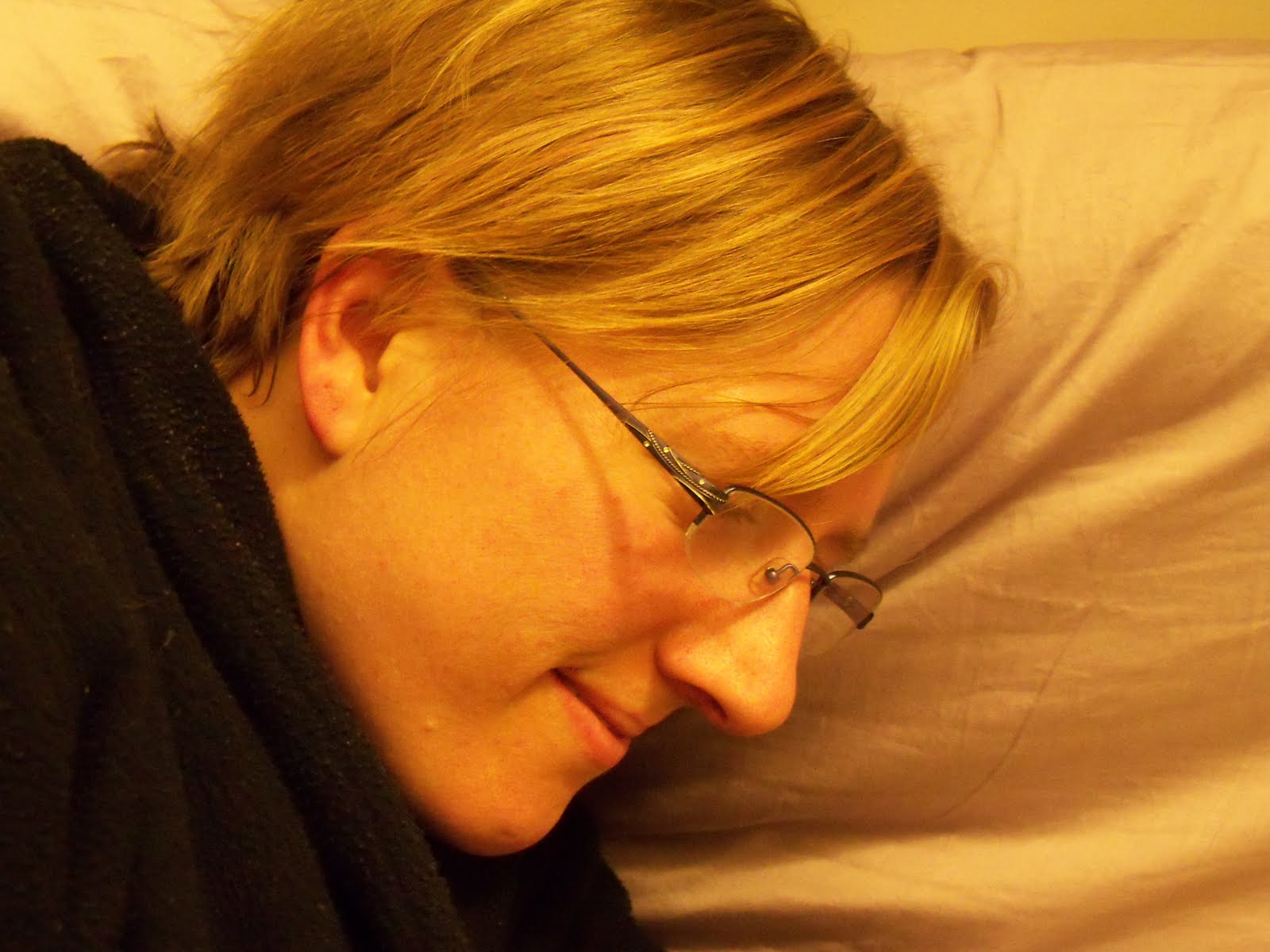
Me reading, by Hanna E. Clutterbuck, 2010-10

She also wrote a wonderful two-part post (part one, part two) on Dr. Who for a friend of mine who recently requested some good introductory episodes from the earlier incarnations of the Doctor.

If you’re on tumblr (or even if you’re not), there are some awesome blogs to follow. Namely beautiful portals if you (like me) are in to liminal spaces; fuck yeah tattoos if (like me) you are in the process of considering how to design the tattoo of your dreams — or you just like beautiful ink; and lesbian outlaw because her tagline is “separate from the government, beyond the police.” And also ’cause she posts lots of great stuff.

Via our friend Rebecca came this great illustrated explanation of the four levels of social entrapment (“This person is seemingly immune to awkwardness and once they latch onto you, you are not allowed to leave until they are done with you.”) at the blog Hyperbole and a Half.

For those of you who are at all familiar with the site Feministing and know that Jessica Valenti and her husband Andrew recently became parents through a pretty traumatic pregnancy and birth experience, I hope you’ve seen that their daughter Layla finally came home from the neonatal intensive care unit (warning: pictures of incredibly tiny baby human after the jump). I really hope they’re getting some quiet time to be together as a family.

There’s been a flurry of posts up this past week or so in the feminist blogosphere on “fucking while feminist”: what that means, exactly, and how people live out their own particular iterations. I may or may not have an actual post in my about this (I actually think being feminist in my political identity and using feminism as an analytical tool has a pretty profound effect on my sexuality and sexual related-ness … but I’m not sure how to talk about it yet). In the meantime, one of my favorite responses has been by Garland Gray guest-blogging over at Tiger Beatdown on how his feminism informs his experience of fucking other men:

Over time, I realized that if I was committed to working toward a world where gender variance was celebrated, where getting fucked wasn’t viewed as something shameful or disempowering, I was going to have to start voting with my dick.

This isn’t simply high-minded “the personal is political” sexual activism. If a dude thinks that he is powerful because he doesn’t get fucked, and you are weak and shameful for getting fucked, you really and truly don’t want to let him fuck you. Sex is about respect, and letting someone inside you without respect is a bad idea. No matter what position I am in, I follow this cardinal rule: If someone needs to be in control, it should be the person getting fucked. I fuck while feminist by insisting that there is nothing submissive about getting fucked. Accepting the standard bullshit narrative of “penetration as dominance” or “penetration as corruption” is ridiculous and arbitrary. It is just as easy to see penetration as submission. A part of your body is inside of me. If you don’t play by my rules, I MIGHT NOT GIVE IT BACK.

 And finally, Tenured Radical and Historiann had a series of thoughtful posts + comment threads up recently at their respective blogs about single-sex (women’s) colleges. I haven’t had the time nor been in the mental space recently to really sit down and digest them, but here are the links.

  • Tenured Radical: Not Equal Opportunity, But Every Opportunity: An Argument for Single-Sex Education
  • Historiann: From the Department of WTF?
  • Tenured Radical: Feminism’s Unfinished Agenda: If Women Have Equal Opportunity, Why Are the Outcomes So Very Unequal?
  • Historiann: Women’s Education, Part II
  • Tenured Radical: What Is Our Work? Towards a Feminist Future in Education
  • Historiann: Women’s Education, Part III
  • Historiann: Why Must Women’s Colleges Exist? A Personal Reflection

Thirty-second commentary: As someone who 1) worked at a men’s college for a semester, 2) attends a graduate school attached to a women-only undergraduate college, and 3) is a feminist and historian of feminist activism and education, I find the question of single-sex education incredibly complicated. There are compelling (mostly, to my mind, historical and individual) arguments for the worth of women-only space, but I can’t get away from the question of sex and gender varience, and the problem that once you start policing the boundaries of space by saying “women only” or “men only” you’re reinforcing a world in which the gender binary is a fundamental organizing principle … a principle that I believe is antithetical to the values of feminist theory and practice.

And because it’s out there and thus needs to be shared: Episcopal bishop Gene Robinson has contributed to the It Gets Better project. I’ve linked before to a lot of really good commentary on the problems with the project, but none of those problems erase the fact that people are telling their own personal stories of Growing Up While Queer, and that each individual story is a powerful testament to the infinite possibilities that exist for each of us as we grow and change.

Enjoy the week ahead!

no single story is everyone’s story: thoughts on the "it gets better" project

05 Tuesday Oct 2010

Posted by Anna Clutterbuck-Cook in think pieces

≈ 1 Comment

Tags

blogging, gender and sexuality, politics

There’s been buzz around the feminist/queer interwebs about the It Gets Better crowd-sourced YouTube project, in which non-straight, gender-non-conforming folks are asked to film and post their stories about coming of age and leaving shitty adolescent experiences behind for better places.  This project was started by Dan Savage and his husband Terry in response to the recent high-profile suicides by teenagers who were bullied for being, or being seen as, queer.

There have been a number of, I think, valid critiques of the project: its limitations (is “it gets better” all we can offer kids in pain??), the implicit assumptions it makes (that things will get better, that adolescence universally sucks and adulthood is inherently superior).  One of the best breakdowns I’ve seen comes from TempsContreTemps @ (femmephane). Quoting at length, from the ten reasons the project (and specifically Dan and Terry’s contribution) makes her feel uncomfortable

1. The video promotes metro-centric and anti-religious sentiment. By aligning their bullying with the religiosity and “small-town mentality,” Dan and Terry tacitly reinforce the belief (especially rampant in queer communities) that the religious and the rural are more bigoted.

2. The message is wrong. Sometimes it gets better– but a lot of times it doesn’t get any better. Emphasizing that things will improve upon graduation is misleading both to young folks struggling and also to people with privilege who are looking on (or looking away).

3. Telling people that they have to wait for their life to get amazing–to tough it out so that they can be around when life gets amazing– is a violent reassignment of guilt. Dan Savage telling kids that if they don’t survive their teenage years they’re depriving themselves? What kind of ageist garbage is that? This quietly but forcefully suggests that if you don’t survive, if you don’t make it, it’s your own fault. It blames the queer for not being strong enough to get to the rosy, privileged, fantasy.

4. Stories of how your mom finally came around, over-write the present realities of youth. Arguing that in the future, the parts that hurt will be fixed, not only suggests that folks shouldn’t actually inhabit their own suffering but it also suggests that the future is more important. For a lot of folks, it doesn’t matter if your mother might come to love you and your spouse. It matters that right now she does not love you at all.

5. The rhetoric about being accepted by family, encourages folks to come out– even when coming out isn’t a safe idea. There is no infrastructure to catch you when your family reacts poorly. There is no truly benevolent queer family, waiting to catch you, ready to sacrifice so you can thrive. For a lot of folks, coming out doesn’t only mean that your parents will promise to hate your lovers– it means violence, homelessness, abuse.

6. Bar story: vomit. It’s no coincidence that this is the first place where Dan and Terry mention queer space. Codified queer-space, restricted to 21+, w alcohol? Try again.

7. We shouldn’t be talking, we should be listening. Telling our own stories from our incredibly privileged positions, overwrites youth experience.

8. Stories of over-coming adversity: no thank you. Narratives of how life was hard and but now is good, belittle lived pain, imply that a good ending is inevitable, and also undermine the joy and happiness in even bullied kids’ lives.

9. There is actually no path to change in this vision. Promoting the illusion that things just “get better,” enables privileged folks to do nothing and just rely on the imaginary mechanics of the American Dream to fix the world. Fuck that. How can you tell kids it gets better without having the guts to say how.

10. Then we get a baby and go to Paris? WTF? This is a video for rich kids for whom the only violent part of their life is high school. It’s a video for classist, privileged gay folks who think that telling their stories is the best way to help others. Telling folks that their suffering is normal doesn’t reassure them– it homogenizes their experience. It doesn’t make them feel like part of a bigger community, it makes them feel irrelevant.

Plus three (with a little help from my friends)

1. When we treat campaigns like this like they’re revolutionary, they undermine all the really amazing work that the youth already does for itself. Too often in the LGBT world, we are asked to thank our brave queer activist ancestors who made the world safe for us. That does have its place. But queer youth take care of themselves. They nurture and organize and love in order to save themselves and each other. Making famous messages legible as THE messages makes youth-work look minor, haphazard, or unofficial.

2. Campaigns like this lump everyone together. It doesn’t honor or respect the individuals. It turns them into icons. It sends confusing messages that we only attend to folks when their dead– when giving care doesn’t actually take anything out of us.

3. Broadcasting your story into the world, or congratulating others for broadcasting theirs is an anesthetized, misguided approach to connecting. We should help folks feel seen— by trying our hardest to see them.

It has been my experience that people are ashamed to help the folks they see as destitute. They are willing to let someone crash on their sofa for a night if they know that they have a back-up bed, somewhere else. They are happy to provide dinner, so long as they know you would be eating even without their generosity. It seems that if you’ve never been homeless or lost or hungry, if you don’t know what that feels like,  is too embarrassing to give things to people who might die without them– it is humiliating to hand someone the only food they’ve had all week.

You can read the whole thing over at (femmephane).

You can also read the follow-up post there.

And thanks to taniada @ Cynical Idealism for sharing the link on Tumblr and thus bringing it to my attention.

I haven’t been at a computer where I have multimedia access long enough in recent weeks (I can’t watch videos at work; I try to limit my recreational internet time at home) so I haven’t actually watched Dan and Terry’s video.  So this post isn’t really about the project or the specific video. Instead, it’s about the responses to the video; in particular, the frustration expressed by many that this project — particularly since it has Dan Savage’s name on it — has been getting so much attention, and the implications of that attention for folks whose stories don’t fit the narrative of “it gets better.”  As TempsContreTemps writes in her follow-up post:

I wrote my piece as a response to the way that Dan and Terry’s video went viral so quickly. I was thinking about 1) why it was that THAT video was so popular and liked and 2) why the video made me and many of my friends uncomfortable. Also, I wanted to know whether those questions were related. Did it seem so painful because it was so popular? I am not capable of, nor would I want to, destroy Dan and Terry’s message. There are a multitude of ways to be queer. Dan’s isn’t the only voice… and neither is mine.

Instead, I want to complicate the dialogue.

This post illustrates for me the point that so easily gets lost in discussions about whether X or Y representation of movement Z or community Q is accurate or not, privileged or not, silencing or not, worthwhile or not, illuminating, incisive, judgmental, blind, feminist, misogynist, transphobic, racist, ageist, ableist … or not. The point that any one piece of activism can be multiple things at once.  Just as any feminist critic of popular culture knows that a song or a movie or a phenomenon can embody contradictory messages about women, so too can a single piece of activism embody contradictory messages, and cause contradictory effects.

We can (and I think should) get angry at these bits and pieces of activism for not living up to our expectations that people working for social justice be aware of, and attempt to mitigate, their personal biases and blind spots.  In scholarly research, we are (ideally!) trained to situate ourselves self-consciously in relation to our research, and be as honest as possible about the context out of which we analyze our sources, the context out of which we construct our narratives, the context out of which we formulate plans of action. There is no universal context (except for the context of being an oxygen-breathing human being, and even there you might be able to convince me otherwise …) and context matters.  People who don’t exhibit some sort of awareness of their own context in relation to others’ are bumbling at best and willfully ignorant at worst.  And they do deserve to be called on that behavior.

However, too often the echochamber of the internets, or of your given subculture of choice, seems to amplify these critiques to the point at which any meaningful, life-enhancing contribution of the originating act (in this case, the It Gets Better campaign) is denied. The act becomes shameful and the people involved are shamed, all nuance is erased and in the end — in my opinion — the potential for rich, collaborative, transformational work is often lost. All parties involved are often partially responsible for this dynamic — in my experience, it is rarely wholly caused by the critic(s) or the original actor(s) but some combination of failing to listen and failing to respect that human beings are complicated, and often contradictory, and that all of those contradictions deserve a place at the table, in all their messy glory. ‘Cause that’s what life is all about.

So I’m really thankful that TempsContraTemps raised questions about the project in this particular way, and I’m hoping the project (or counter-projects, or spin-off projects, or parallels or out-growths or alternates or reappropriations) benefits from that critique.

Maybe, when I finally have a chance to go watch some of the videos, the representative voices will be as gloriously myriad as I know the queer community to be. And hopefully, each one of those stories will speak to someone else’s heart and let them know they are not quite so alone.

perhaps we overthought this?: preliminary reflections on higher ed, queer folks, my alma mater

02 Saturday Oct 2010

Posted by Anna Clutterbuck-Cook in think pieces

≈ Leave a comment

Tags

education, gender and sexuality, hope college

So I just finished reading the executive summary (PDF) of Campus Pride’s 2010 report on the status of higher education for lesbian, gay, bisexual and transgender people. I’m hoping to get my hands on the full report, but I can’t afford to purchase it for the $25.00 cover price at the moment, and it’s proving a little tricky to inter-library loan. So for the moment, the executive summary’s all I have to work with. Along with this really interesting interview on NPR with lead author Sue Rankin, which is what tuned me into the report in the first place (audio + transcript available at NPR).

This report has been getting a lot of media attention following the suicide of Rutger’s student, Tyler Clementi, who was apparently the subject of bullying and harassment by fellow students in part because of his same-sex relationships. It is surprising to many people — across the political spectrum I gather — that college campuses in general might be hostile places for non-straight and gender-non-conforming. On NPR Sue Rankin herself put it this way when interviewed by Morning Edition’s Ari Shapiro (emphasis mine):

Prof. RANKIN: One of the major findings that was surprising to me, actually -after 33 years of doing this – that one-third of the students, faculty and staff that participated indicated they had seriously considered leaving the institution.

SHAPIRO: Is that a result of bullying or just a place where they don’t necessarily feel comfortable being themselves? How does that play out?

Prof. RANKIN: We identify it as being climate. And climate includes things like discrimination and harassment. We asked not only what they experienced but how they experienced it. An interesting piece that complements, I guess, this particular unfortunate event at Rutgers, is that a lot of this is now happening in cyberspace, which may lead to the possibility of them being outed and then harassed in some way.

SHAPIRO: What are the other consequences of this kind of bullying?

Prof. RANKIN: We find that there are higher depression rates among LGBT students who don’t have support on their college campuses.

SHAPIRO: You say LGBT – Lesbian, gay, bisexual, transgender.

Prof. RANKIN: Yes. We find that students who are out in high school are actually returning to a more closeted space when they come to college. They have to…

SHAPIRO: Really?

Prof. RANKIN: …yeah – reopen those doors for themselves, because they’re afraid of what may happen if they have a roommate who is not supportive. So the importance of having visible resources on a college campus to assist students, I think, is tantamount. And right now only 7 percent of our institutions offer that.

SHAPIRO: Only seven percent of colleges have resources for lesbian and gay students?
Prof. RANKIN: That’s correct.

You can read the rest of Rankin’s interview at NPR.

Since I haven’t yet read the full report, I will simply offer a couple of tentative observations based on the executive summary.

The first is that, as regular readers of my blog will know, I have first-hand experience with campus climates that are hostile to queer students. Many of the folks who are active in trying to change the climate on Hope’s campus, as well as more distant observers of the anti-queer bigotry there have operated under the assumption that much of the hostility stems from the religious beliefs of influential members of the community and the Reformed Church of America (RCA), the denomination out of which the college originated and still maintains close ties. While the expression of and explicit justification for anti-gay sentiment on campus at Hope is unquestionably religious in its nature, this report is a caution not to treat Hope College as some sort of ultra-conservative outlier, completely out of touch with the mainstream world of higher education.  On the contrary, it appears from the personal stories and statistics in the report that Hope College’s struggles with harassment, bullying and other subtle forms of hostility and non-support for non-straight, gender-nonconforming folks is (sadly) much more mainstream that it would be nice to believe.

The second is the emphasis the report places on both the intersectionality of marginalization (non-straight, gender-nonconforming students who were not white, for example, experienced greater degrees of harassment and reported overall higher levels of negative experience than their white counterparts) and the importance of not becoming wedded to rigid identity categories when researching, reporting, and attempting to mitigate the negative campus climate for queer folks.  As the authors write in their executive summary when suggesting future “best practices”:

In the demographic section of the monograph we discuss the power of language in the LGBTQQ community and, therefore, encourage the use of language that extends beyond the binaries in all of the recommended potential best practices. As reflected in the results [of the survey], many participants did not fit the socially-constructed definitions of gender identity, sexual identity, and gender expression. Their comments suggested they are either pathologized or forced to develop a “different” sense of identity. In shaping our outlook, language instills and reinforces cultural values, thereby helping to maintain social hierarchies. While definitions facilitate discussion and the sharing of information, terminology remains subject to both cultural contexts and individual interpretation. As a result, the terminology that people use to describe themselves and their communities is often not universally accepted by everyone within these communities. Therefore, our overall recommendation is that we value the voices of those within our campus communities and use language that reflects their unique experience (p. 15 of the summary).

As a feminist activist and scholar of feminist and sexuality activism, I deal with the thorny question of identity language all the time. It is easy enough to respect the identity language people choose for themselves (just ask and honor their preferences!); it is much more complicated when one is trying to understand how collective identities emerge and transform over time.  One of the questions I ask myself often is whether collective identities always, by definition, end up excluding and/or marginalizing people. That is, can they only exist by virtue of defining themselves against other collective identities?  Hanna often argues this position, and I am hard-pressed — when looking at identity communities in practice — to disagree with her.  Human groups too often base their collective self-understanding on exclusion. 

I don’t, however, believe this is necessary for forming a meaningful sense of self-in-relation-to-others, and I see the way forward (towards creating a less hostile climate for non-conforming folks) as being a path towards community identity that is based on inclusion and the honoring of individual experience and voices, rather than exclusion and the silencing of individual self-understanding.  I’ll be interested to see, when/if I get my hands on the full report, where CampusPride’s researchers go with this issue of language, identity, and community.

quick hit: asexuality awareness week (a retrospective)

27 Monday Sep 2010

Posted by Anna Clutterbuck-Cook in linkspam

≈ Leave a comment

Tags

blogging, feminism, gender and sexuality

Last week, my friend Minerva over at Hypomnemata wrote a series of five delicious posts on the topic of asexuality, in honor of Asexuality Awareness Week. I wanted to give you all a taste in hope that you hop on over to check out the subject in full (along with lots of fun and informative graphics and videos!)

Asexual Awareness Week: Day 1 – What is Asexuality?

In honor of this, my first experience of this week as a completely out asexual, I’ll be posting every day on a topic relevant to asexuals and the asexual community. For this post, I’ll be focusing on the many definitions of asexuality as well as the subtle side and subgroups present within the community. Tomorrow I’ll be tackling the subject of attraction and asexuality, and you’ll just have to stay tuned to find out the rest.

Asexual Awareness Week: Day 2 – Asexual Attraction

The last sense of attraction that I’ll talk about here is a bit more personal and a bit more murky, which is why I left it for last. I’m definitely not sure how much of what I’m about to say is generalizable to the asexual community as a whole, so don’t assume so. There is a sense of attraction that I generally feel in addition to aesthetic and intellectual and emotional (personality) which I would have to admit is decidedly physical.

Asexual Awareness Week: Day 3 – Relationship vs. Friendship

Since I already established on Day 1 that asexuals experience love and can have a romantic or affectual orientation, I don’t think it’s unforeseen that some of us are going to want relationships. Personally, I’d be more than willing to give it the old college try. However, there’s an obvious question looming in the periphery of the discussion when talking about asexual relationships. How is it a relationship and not just a really close friendship?

Asexual Awareness Week: Day 4 – Asexuals and the LGBTQ Community

The question of the day: should asexuals be considered part of the LBGTQ community? Honestly, I never really thought this was an actual question to be asked in the past. It was only when I attended my first meeting of the Smith College LGBTQ group that I became aware of how narrow the definition of community can actually be. A brief synopsis of the experience follows: (N.B. I’m pretty sure the group has changed since my time. They’re probably all lovely ladies now, not that they weren’t then, just a little judgy.)

Asexual Awareness Week: Day 5 – Asexuality and Feminism

So what does all of this have to do with asexuality? If you would have asked me a year ago, I would have said nothing. I perceived no contradiction or problematic interaction between my feminism and my asexuality. I technically still don’t, by I’m not the only feminist or asexual on the block. The way I (inexpertly) see it, the problems between asexuality and feminism revolve around three main topics:

1.) Helping women to have positive images of their bodies and sexuality

2.) Helping women to take control over the expression of their sexuality

3.) Combating negative perceptions of feminism

Before I really start all of this talk about the quarrels between feminism and asexuality, I’d like to point out that there are some issues on which we agree well, like breaking down gender roles in relationships, or challenging gendered notions of intimacy. We’re not all judgy all the time.

Go forth and learn awesome new things! Happy Monday.

further thoughts: "birth rape" and feminist policing (the curvature)

21 Tuesday Sep 2010

Posted by Anna Clutterbuck-Cook in think pieces

≈ Leave a comment

Tags

children, feminism, gender and sexuality

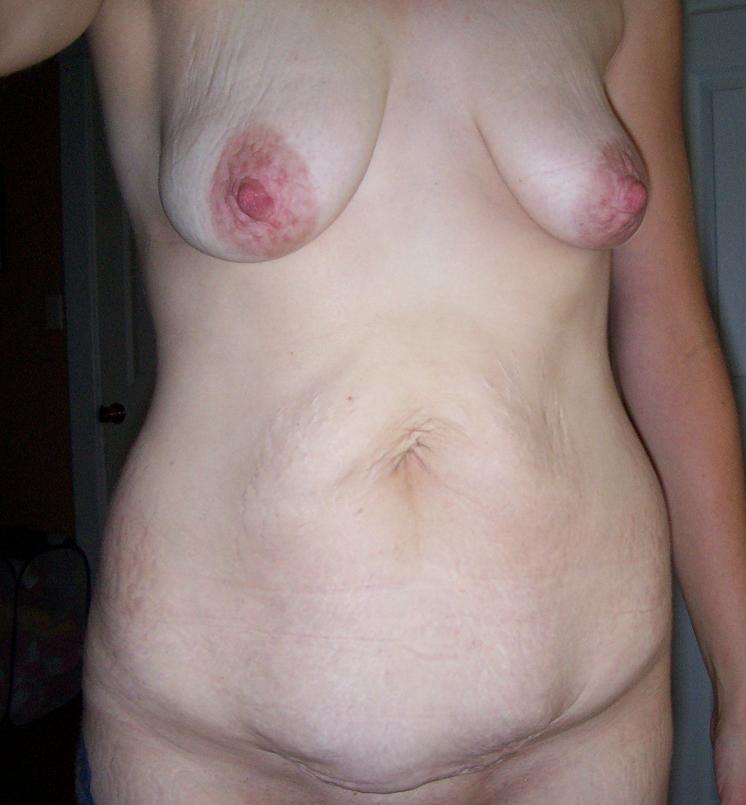
An anyonymous woman's postpartum body, posing nude. Image from The Shape of a Mother.Note/disclaimer: This post was written last Saturday, following which I had several really good conversations with friends about feminism, exclusion, inclusion, and language. To those of you who were involved: this post doesn’t reflect those conversations and how they have helped me think about some of these issues in new ways! Maybe I’ll write a “part two” one of these days, but for now I’m leaving this one as-is …

There’s a good conversation going on in comments over at The Curvature about the concept of “birth rape” and why some feminist activists are resistant to acknowledging the way violations of bodily integrity during pregnancy and birth are often experienced by women as a form of sexual violence.

Cara’s original post is a brilliant, articulate response to several previous posts from within the feminist blogosphere that expressed discomfort with the term “birth rape.” To which Cara responds,

Birth rape describes the experience of women and pregnant people of other genders having their bodies violated and penetrated without their consent in the process of giving birth, usually though not always through the forcible insertion of hands or medical tools into the vagina or anus without consent, and frequently with explicit non-consent. Victims are often physically held down, told to shut up, ignored when they scream or cry or plead, threatened, and/or called names as their bodies are violated. Just as survivors of other forms of rape, birth rape survivors experience physical and emotional trauma, often rising to the level of PTSD — only compounded by the general lack of recognition that birth rape is real, and the frequent guilt at having such trauma associated with their new child coming into the world.

In other words, birth rape is a term used to describe a specific form of rape that is committed in a birthing context, without the use of a penis.

. . . When women come forward and start saying “I was raped,” when they find the power to use that word to describe their own experiences and open up to share their trauma with the world, responding with “no you weren’t” — with whole blog posts about the subject, in fact — is about the worst possible way that a person can do feminism.

. . . Telling other survivors that their experiences of violation aren’t real enough, and just weren’t sexual enough of all things, to use our special fancy word is wrong. And if this is how the word “rape” is going to be used against other survivors of abuses of power and abuses of bodily autonomy and violations of self — as a weapon, like it is right now — then I don’t want it. If the word rape doesn’t include all of those victims of violence that it needs to include, we need a better word. If the word rape is so fragile that we must minimize the horrific experiences of some survivors, the violence they lived through, and the violations they felt in order to protect it, we need a better word. And when the major response to a somewhat mainstream conversation about birth rape is quibbles about words rather than compassion and organizing, we need a much, much better feminism to become the dominant one.

You can read the whole thing over at The Curvature. And I highly recommend that you do, since it’s passionate and just the sort of inclusive feminist thinking that brought me into activist feminism in the first place.

I asked in comments, “What on earth do we gain from telling them their experience doesn’t count?? I really don’t get the prickly reaction to this language.” To which commenter lauredhel responded

I think that to really understand the reaction, one needs to look at the broader picture of mother-exclusion in this particular brand of Feminism. Once you’ve had a kid, you’re ripe for the exclusions – it’s ok to keep you out of feminist organising because kids are all complicated and loud and annoying, it’s cool to dismiss you as ‘merely’ a ‘m(u)(o)mmy blogger’ and not politically relevant, it’s fine for you to be excluded from public spaces (with a hefty dose of Feminist shaming for your temerity in having a child-accompanied life outside the domestic and playgroup sphere), and you need to lie back and think of England when doctors are doing their thing, because it’s for your own good, dear, you made your motherbed, now lie in it and don’t get too uppity while the real feminists are talking. As soon as you make it clear that that fetus is staying put and coming out of you, you’re out of the club.

It’s not that I’ve never thought before about the way our culture devalues the bodily autonomy of pregnant women and denies the personhood of birthing mothers — but I think this conversation around the recognition of birth-related sexual violence is a striking example of the way in which certain contingents within feminist activism resist including women who are pregnant, birthing, and mothers within the movement — resist incorporating their particular concerns. Instead, they parrot back the misogyny of mainstream culture which simultaneously idealizes motherhood and hates on actual mothers and children. There are complicated reasons for this (as my friend Laura Cutter so eloquently pointed out in a guest post recently).

But the fact that it’s complicated is not license to just give up. Rather, I think the complexity of the issue invites us to examine the way in which feminists (no more or less than anyone else!) can sometimes use the language and concepts that have given them voice as tools to turn around and silence other people.

Which is, to put it simply, not cool.

When the strength of our self-identities and political activism lies in denying other folks a place at the table, it’s time to re-examine the way our actions reflect our core values. I became a vocal, self-identified feminist in order to advocate for a world where there is less policing of gender and sexuality, not more. I work every day to practice radical acceptance of the rich diversity of being-in-the-world practiced by those around me, and to protect the ability of all people to feel safe, at home, and loved in the bodies and lives that give them well-being. That, to me, is what feminism is about.

*Image credit: Bittersweet (Anonymous) from The Shape of a Mother.

← Older posts
Newer posts →
"the past is a wild party; check your preconceptions at the door." ~ Emma Donoghue

Recent Posts

  • medical update 11.11.22
  • medical update 6.4.22
  • medical update 1.16.2022
  • medical update 10.13.2021
  • medical update 8.17.2021

Archives

Categories

Creative Commons License

This work by Anna J. Clutterbuck-Cook is licensed under a Creative Commons Attribution 3.0 Unported License

Meta

  • Create account
  • Log in
  • Entries feed
  • Comments feed
  • WordPress.com

Blog at WordPress.com.

  • Subscribe Subscribed
    • the feminist librarian
    • Join 37 other subscribers
    • Already have a WordPress.com account? Log in now.
    • the feminist librarian
    • Subscribe Subscribed
    • Sign up
    • Log in
    • Report this content
    • View site in Reader
    • Manage subscriptions
    • Collapse this bar