• anna j. clutterbuck-cook
  • contact
  • curriculum vitae
  • find me elsewhere
  • marilyn ross memorial book prize

the feminist librarian

the feminist librarian

Tag Archives: gender and sexuality

sunday smut: tumblr highlights (no. 2)

19 Sunday Sep 2010

Posted by Anna Clutterbuck-Cook in linkspam

≈ Leave a comment

Tags

gender and sexuality, sunday smut, tumblr

Katy Manning (who played Dr. Who companion Jo Grant, 1971-1973) poses nude with a Dalek.
Image from Whoniverse.

This week on the feminist librarian reads.

The Boiling Frog Principle of Boundary Violation | Thomas @ Yes Means Yes

“The issue of boundaries is not an individual issue of what one rape survivor did or didn’t do. People are targets more for structural than personal reasons. There are lots of reasons that people don’t have the tools to set boundaries and have them respected. A lot, but not all, of these things have to do with the categories of ‘man’ and ‘woman,’ and the social constructs around them, but there are others. People are raped because they’re vulnerable due to incarceration or other institutional confinement; because they have a disability and the culture around disability means people feel free to violate them and others don’t listen to them about violation; because their social position is such that they will be blamed and rebuked instead of defended if they report a violation — how many trans women think that going to the cops after being raped will go well for them? How many trans men, how many non-binary identified folks, think they could go to the cops?”

Conversations About Body Image: A Place at the Table for Me? | s.e. smith @ FWD/Forward

“For people who may dislike their bodies, for any number of reasons, these conversations end up being exclusionary, as they are often treated as ‘unenlightened’ for not loving their bodies and they are lectured in an attempt to get them to submit.”

Talking About Sex Without Talking About Myself | Amanda @ Love Letters From Hell

“I do want to talk about my own [sexual] experiences, very much, but I feel that morally, I can’t. Not with my name attached, and not in a public forum where anyone I personally know can easily read my writing. It’s also egotistic, in a way— why on earth would my sex life be important?”

For more, visit my feminist librarian reads tumblr blog.

alma mater musings: individuals + institutions

18 Saturday Sep 2010

Posted by Anna Clutterbuck-Cook in life writing

≈ 3 Comments

Tags

education, gender and sexuality, hope college, religion

This past week, I had an exchange with one of my faculty mentors from undergrad who is currently collecting stories from queer students and allies about their experiences at Hope College (for previous posts on this topic go here). A group of faculty are hoping to collate these narratives and take them to the Board of Trustees on October 10th as part of a presentation on the hostile climate for non-straight folks at Hope College, in hopes that personal stories will help reshape the discussion around homosexuality on campus.

At first, I didn’t really think I had much to say beyond what I already put into my letter to the Board of Trustees. But since writing that letter in April I’ve been doing a lot of thinking about Christian higher education and about the intersection of organized religion, personal faith and values, and formal learning. This is going to be a rambling sort of post, but I wanted to share some of my in-process musings. I welcome responses and further thoughts in comments!

One of the things I think we often overlook when we view institutions like Hope College or Calvin College or even Patrick Henry College from the outside is that even the most close-minded institutions can be sites where individuals learn, grow, and can even become subversive. Sometimes, that subversive impulse is born of resistence to the oppressive nature of the institution and the subculture within which that institution is situated. But I don’t believe that’s the whole story. Often, some parts of the institution or the subculture themselves enable that growth and change within individuals who care to take advantage of it.

To take an obvious example, young people who grow up within the Christian subculture learn at a very early age what it means to move between cultures: their own and the dominant American culture. They learn the positive aspects of being bicultural, of having a critical perspective on mainstream values and beliefs, of being an outsider who belongs to an identity community. They know how to speak what my mother used to call “God talk” and they know how to edit those references out of their vocabulary when they know such language won’t help their cause. All of these skills and experiences are transferable to other sub- and counter-cultural experiences — including the experience of belonging to feminist or queer identity groups. To many of us, feminism and a more open concept of sexuality are, in fact, extensions of the values we saw modeled within some Christian communities. I know that, when I first discovered feminist theology as a first-year college student the possibility that Christianity could be reconciled with the values I held as a feminist brought me closer to religious faith than anything before or since. I came closer that year to joining a church than I had in all my years of teenage involvement with organized religion.

The fact that the values of feminist theology were viewed with skepticism by some and outrage by others within the college community was incredibly alienating to me (as a seventeen-year-old) … and yet at the same time, it was Hope College that had, however imperfectly, exposed me to those ideas in the first place. I was instinctively feminist before going to college — in my auto-didactic way I knew my feminist history — but it was at this religiously and politically conservative institution that I actually found the thinkers and activists of who helped me clarify those instincts and turn them into both meaningful scholarship and daily action. I was being marginalized by some people within the school for ideas and values I had been invited to explore by others at the same institution. Complicated? Complicated.

As I wrote in response to my friend’s email,

It was through Hope College that I was able to explore political feminism, feminist theology, non-straight sexuality, and connect with folks like Linda and Denslow [members of Aradia]; to ground myself in a network of intergenerational feminists who experience sexuality in myriad ways. It was an integral part of my growing into myself and arriving in a place where — when I decided to explore my own sexual desires and seek out sexual relationships — I was open to being with those human beings who turned me on, regardless of gender. Hope as an academic institution (and more precisely the faculty I worked with there) gave me a place to develop the intellectual and political framework to articulate myself and from that position of strength enter into a relationship that (ironically!) Hope College officially does not condone. It is sad, to me, that I can’t really celebrate that learning experience with Hope as an institution because it is a type of learning that isn’t valued — it doesn’t fit within the narratives of alumni achievement. The most valuable gifts that my Hope College education gave me are the things the college likes to keep at arms length. And I feel like that’s their loss.

And then in a follow-up email,

My experience at Hope has given me a uniquely personal perspective on the way individuals negotiate their personal life stories within religious and educational institutions … The fact that students and faculty at a socially and religiously conservative institution like Hope can manipulate the learning experiences in liberatory ways contradicts (in my opinion) the mainstream narrative that tends to downplay individual agency within religious/educational institutions and focus on the official message or the stories told by people with structural/social power and authority (usually not where the most interesting stuff is happening!). The complexity of the real lived experience is a difficult one to get across to people who haven’t grown up in that environment or been required to develop those skills for subversion.

[Since graduating from Hope, I have become more] aware of the complex sociocultural and structural reasons students choose to attend the institutions they attend (church connections, family relationships, friendships, finances, geography, etc.) and how so often those initial choices they make cannot begin to reflect the people they become during their tenure as students. It seems to me (idealist that I am!) that it is the responsibility of a college like Hope to acknowledge that even students who may come to the college as religiously conservative straight folks could discover their sexual fluidity or finally come to terms with their orientation during their time at Hope. And I think Hope College would benefit (as both an institution and as a community of individuals) from being the sort of environment where that personal journey was embraced as a mark of individual strength, openness to change, opportunity for developing personal ethics around sexuality and political identity. Right now, the institutional position seems primarily to be one of fear, which in turn communicates to students that exploration, questioning, and change are threatening to both personal and social well-being. Hardly an attitude conducive to meaningful learning!

I am reminded of a post by Sharkfu at Feministing on the complicated balancing act of being involved in religious institutions with which you do not wholly agree. Such relationships can often be a constant re-negotiation, an assessment of whether the benefit of being involved with the institution outweighs the cost of membership (both to the self and to society). From the outside, it is all too easy to condemn people who stay affiliated with such institutions, since it is difficult to see the complexity of the relationship that person has had with that community, with that space, with those ideas, over time. And I would like to emphasize once again: I don’t mean this in a purely negative way. Yes, sometimes being part of a subculture can cloud your perspective, isolate you from ideas and people that might otherwise give you a more meaningful life. But sometimes, those same subcultures can be the doorway (however inadvertently) into those very same ideas, into those very same communities, that “officially” the subculture/institution/community is attempting to police, control, or even eradicate.

In other words: while the social structure and official position of Hope College as an institution is homophobic, judgmental, and I would even say violent and anti-Christian … for an individual person? The space created by that structure existing, and the opportunities (intellectual and otherwise) that reside in that space, could well be the doorway they needed in order to discover a much more exhilarating, loving, hopeful, potential-filled sort of world.

Such liberating potential doesn’t in any way erase or mitigate the violence wrought by the official position of the college on human sexuality any more than the existence of pro-queer Catholic groups, liberation theology, and Catholic reproductive justice advocates erases or mitigates the homophobia and sexism of the institutional Catholic church. It doesn’t absolve the individuals supportive of the official position from their participation in that act of violence. It does, however, suggest that such violence is also tangled up with much more nuanced interpersonal relationships. That an official institutional stance — once you zoom it at a higher resolution — is riddled with tiny fissures. Fissures that represent opportunities for people to grow and change, and become themselves far beyond the wildest imaginings of the college administration.

Right now, it seems like the college officials fear that wildness — I do hope they come to embrace it for the hope and joy it can represent. Best wishes to all the folks at Hope College who are trying to help them see that possibility.

*Image credit: Nykerk Hall, Hope College, Holland, Michigan. Image from Hope College Public Relations (they keep this up and eventually I’m going to run out of scenic campus shots and have to start in on the student facebook photos ;)!).

"people are DESPERATE to be told what they’re like": discuss

16 Thursday Sep 2010

Posted by Anna Clutterbuck-Cook in think pieces

≈ 3 Comments

Tags

blogging, education, feminism, gender and sexuality

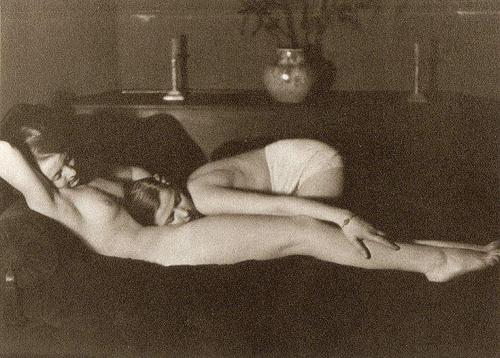
Vintage Erotic from Queerest of Them All @ Tumblr.com

Over the past couple of weeks, I’ve been having a slow conversation-in-comments with Emily Nagoski over at ::sex nerd:: about human sexuality, sex research, and the classification of human sexual experience in the two general categories of female-bodied and male-bodied individuals.

The original post Emily wrote is about the problem of asserting sameness across sex/gender identity when it comes to human sexuality. From her position as a sexuality educator, specifically working with undergraduate women at Smith College, Nagoski highlights the ways in which a narrative of sameness works culturally to erase the experience of people who have don’t have the “sexual hardware” of the default human (a man)

Treating women’s sexuality as though it’s “the same” as men’s, in the social world and in science, results in women feeling broken and ashamed.

As in: We should want sex as much as and in the same way that men do. We should be able to have orgasms the way men do – as quickly, in diverse situations, and through intercourse. Our sexual orientation should be the same. Our responsiveness should be the same. Our fantasies. Our porn. Our feelings about our bodies. I mean, where does it end? You might as well be saying women should have penises.

You can read the whole post over at Emily’s blog.

There are a lot of really awesome aspects to this argument, chief among them that asserting that different bodies respond differently to sexual stimulus is a great step away from the monoculture of “sexy” that our culture is currently saturated with. I also like the way it grounds physical sexual experience in the body, and encourages folks to learn about how their bodies work as a way of gaining a better understanding of their own sexuality.

It also pulls us away from the default understanding of sexual arousal as something that is primarily experienced by people with male bodies and hormonal profiles. It helps clear the ground for women to assert their sexuality without shame and without requiring them to mimic a type of sexuality they do not feel in order to be taken seriously as sexual subject.

From a personal perspective, I will say that one of the most valuable learning experiences in my early career as a sexual being was finding a second-hand copy of Shere Hite’s 1976 report of women’s sexuality in which she quotes long excerpts from questionnaires in which women describe in detail the diversity of their sexual desires, fantasies, physical arousal and relational experiences. Pages and pages and pages of women describing, in minute detail, how they masturbated, what sexual positions worked and didn’t work for them, what kind of touch they liked, whom they enjoyed making love with and how. Since the publication of Hite’s research, questions have been raised about the scientific rigor of her methodology — but to me the power of the book is not in its statistical validity, but in the individual voices that disseminate a type of information that is incredibly difficult, even in this era of the internet, to obtain: how actual people in the actual real world get off? what makes them horny? what fantasies do they carry in their innermost souls? what sensations push them over the edge? It seems so simple, banal almost, and yet there can be radical power in seeking the answer to those questions.

So what’s my problem with the emphasis on “difference”? It’s the fact that that human sexual difference is framed using a binary sex/gender system that simply doesn’t work for a lot of people. What about people with a “female” hormone profile who have penises? What about folks whose sexual arousal cycles seem to be spontaneous despite having a clit? And what about us cis-gendered women who, despite being accepted by the medical and social world as “female” and “feminine” just don’t see ourselves very well represented in the narratives of female sexuality that are out there? It feels to me like we’re rejecting one set of restrictive categories for another set of restrictive categories that just aren’t going to be very helpful to any of us in the long run.

We’re still going to end up feeling shamed, just for different reasons: maybe it’ll be okay not to be sexual in the same way as boys, but now we’ll feel the pressure to be sexy the same way as girls.

What gets lost is the question of how to be sexy like ourselves.

When I raised this issue in comments, Emily pointed out that scientifically-speaking, studying a species that reproduces sexually (as we do) means that it does make a certain amount of sense to examine the human population as one that is made up of two basic iterations (male and female). I get that talking scientific data is different from talking about cultural perceptions, but I also believe that the two interact in ways we often cannot even see. I also think that the language and results of scientific studies get misinterpreted by the media and the general public, and often translated into sound bites that end up supporting pre-existing notions of sex and gender difference: employed in making truth claims far beyond the scope of the original researchers’ work.

Emily also suggested that using the female/male categories as a launching-point to discuss sexual diversity is a useful educational tool.

You don’t want women to be told they’re like men, but you also don’t want them to be told they’re like women.

That’s fair enough, actually, since people just vary (though men vary around one standard and women vary, more widely, around a different one). But my experience has been that people WANT – no, they’re fuckin’ DESPERATE – to be told what they are like. They want a category. They can’t cope without one. And since we’re a sexually reproducing species with males and females, the man/woman split is a natural-seeming division. It’s a comfortable couch for radical information.

So here’s my question to y’all. Do you want a category?

I’m curious. Because, see, I really, really don’t want to be told what I’m like. I have what’s probably an unhealthy aversion to being categorized. Do I like to run into stories that mirror my experience? Yeah, sure! It was an incredible experience to read Lisa Diamond’s book on sexual fluidity and finally hear the women she interviewed putting into words thoughts and feelings and physical experiences I had known intimately but did not have the language to articulate. But for me, it is enough to know that there are other like-minded or like-experienced people out there in the world. As soon as those beings start being grouped and generalizations are made about them, I develop a twitch.

I’m curious what responses other people have to this discussion of difference and categories, the comfort of categories and the danger that categorization will lead to marginalization or erasure. What have your experiences around descriptions of “female” and “male” sexuality been? Are there particular categories that resonate particularly strongly with you, that have been of use to you in better knowing and expressing your sexuality? Have other people tried to categorize you in ways you feel are just plain wrong? What cultural and/or scientific narratives were at work creating and enforcing those categorizations?

sunday smut: tumblr highlights (no. 1)

12 Sunday Sep 2010

Posted by Anna Clutterbuck-Cook in linkspam

≈ Leave a comment

Tags

gender and sexuality, sunday smut, tumblr

Gouache Nude Painting by Armando Martires
made available at Flickr.com

As I dive into the semester, here’s a sampling of stories I shared on my tumblr blog, the feminist librarian reads, this past week. Here are a few samplings from the past week … head on over to tumblr for more!

What Comes After the Gender Binary by Marissa @ This Is Hysteria!

“This is not the first time that I’ve seen somebody think that when I talk about eliminating the gender binary that I envision a world of uniform androgyny.

What the elimination of the gender binary means to me is that people can be as masculine or feminine as they like. But the performance of masculinity or femininity is not compulsory depending on sex. Being masculine in some respects would not put femininity out of bounds for you, and vice-versa. Gender could be played with, freely, without social sanction.

That is, there would be more variety in gender expression, not less. Instead of black and white, we would have a rainbow, not a homogenous mass of grey.”

kinky by Emily Nagoski @ ::sex nerd::

“Sex positivity is part of it. Kinky folks have often had to take a long, hard look at sexuality – their own and the world’s – and come to the conclusion that their own desires are actually completely FINE, in the context of consenting adults, and that people who don’t agree with them (a) can go fuck themselves and (b) are probably suffering from that self-imposed moralizing and narrowly conscribed ideas about sexual expression, and are therefore to be pitied.

That combination of I-pity-you and you-can-go fuck-yourself rings very true to me. I appreciate both the empathy and the lack of tolerance for bullshit.”

Gender divide a myth, says expert by Amelia Hill @ The Guardian

“[Cordelia] Fine is unabashed. ‘There are sex differences in the brain. There are also large sex differences in who does what and who achieves what,’ she says. ‘It would make sense if these facts were connected in some way, and perhaps they are. But when we follow the trail of contemporary science we discover a surprising number of gaps, assumptions, inconsistencies, poor methodologies and leaps of faith.’

Combing through the latest research in psychology and neuroscience, Fine concludes that ‘the sheer complexity of the brain lends itself beautifully to overinterpretation and precipitous conclusions. It’s a compelling story that offers a neat, satisfying explanation, and justification, of the status quo.’ Fine warns that ‘brain facts’ about the sexes – in fact, stereotypes with a veneer of credibility – are worming their way into apparently scientific books.”

Read the rest over at my tumblr blog.

$1 review: wise parenthood

31 Tuesday Aug 2010

Posted by Anna Clutterbuck-Cook in book reviews

≈ Leave a comment

Tags

children, feminism, gender and sexuality

$1 reviews are posts about books I find (or Hanna finds for me) on the $1 used book carts at the bookstores we visit around Boston.

Marie Stopes in her laboratory, 1904
Image made available through Wikimedia Commons

Last weekend, when my mother was here on a visit, Hanna and I took her to Brattle Book Store near the Boston Common to shop the glorious $1 and $3 book carts which they keep in the empty lot next door. There, much to my feminist sex geek delight, I found a copy of Marie Stopes’ 1918 classic Wise Parenthood (“The Treatise on Birth Control for Married People. A Practical Sequel to ‘Married Love'”) for a mere $1.00! By the time the twenty-first edition (my edition) appeared, the book had gone through sixty-eight printings and 626 thousand copies were in circulation.

Much to my everlasting sadness, I neglected to buy a copy of Married Love when I saw it at an antique mall last fall in Michigan — only going so far as to follow my mother around the shop reading hilarious passages aloud to her and giggling obnoxiously. So I have not read the the companion volume to Wise Parenthood. I thought I’d share this passage, however, since to at least it presages the current conversation about modern parenthood/reproduction as a conscious decision that a couple makes, as opposed to something that just “naturally” happens to opposite-sex couples when they enjoy an active sex life.

Nature herself provided that men and women should delight in meeting. Given a loving married pair in normal health, and unsophisticated in any way, there is seldom any lack of children around them after they have been wedded for some years. This is what is still described as the ‘natural’ condition of affairs, and in these days of sophistication in so-called ‘civilization,’ some reformers urge a return to Nature and an unregulated birth-rate.

If, however, the course of ‘nature’ is allowed to run unguided, babies come in general too quickly for the resources of most, and particularly of city-dwelling, families, and the parents as well as the children consequently suffer. Wide parents therefore guide nature, and control the conception of the desired children so as to space them in the way best adjusted to what health, wealth, and happiness they have to give. The object of this book is to tell prospective parents how best to do this, and to hand on to them in a concise form what help science can give on this vital subject.

Barrier methods, such as the sponge, rubber cervical caps, and condoms are covered, as are methods such as “coitus interruptus,” nursing after birth, and the “safe period” (the rhythm method). I like this objection Stopes raises to coitus interruptus:

The great majority of women whose husbands practise this method suffer very fundamentally as a result of the reiterated stirring-up of local nervous excitement which is deprived of its natural physiological resolution. Of the far-reaching effects on the woman’s entire organism of the lack of a proper [vaginal?] orgasm, which is generally the result of this method, this is not the place to speak … [however] the local support and nerve-soothing contact which are supplied mutually to both when the act is completed normally are destroyed.

She was also not a fan of “metal instruments” (a veiled reference to surgical abortion techniques?) and was firm in the advice that one should “NEVER PUT INTO THE VAGINA CHEMICALS YOU WOULD NOT PUT IN THE MOUTH.” which seems like fairly solid advice on the whole, particularly considered in the light of the era’s encouragement that women use such substances as lysol, carbolic acid as douching fluids.

Here’s hoping I can find a volume of Married Love on the $1 carts soon!

sunday smut on hiatus (sort of)

29 Sunday Aug 2010

Posted by Anna Clutterbuck-Cook in linkspam

≈ Leave a comment

Tags

gender and sexuality, sunday smut, tumblr

Vintage smut from the tumblr blog queerest of them all.

There have been Developments since I last posted a Sunday Smut list, namely that I’ve started a tumblr blog, the feminist librarian reads, at which I am posting, throughout the week, the links and excerpts that used to pile up in Google Reader and overwhelm me by Thursday or Friday as I began to compile the Sunday Smut list. As I explained on Monday, the tumblr posts feed into a static page here at the FFLA.

In the meantime, I’ve discerned that the next few weeks are going to be stressful and hectic around the FFLA headquarters, between the end of the summer (wrapping up my thesis draft!), a trip to Maine, and the start of the fall semester. Once things settle down, I plan to revisit the whole question of the Sunday Smut list, but in the meantime enjoy this charming photograph, check out my tumblr links, and savor the waning days of summer.

reading the (lesbian) classics: annie on my mind

28 Saturday Aug 2010

Posted by Anna Clutterbuck-Cook in book reviews

≈ 1 Comment

Tags

blogging, gender and sexuality, guest post, reading lesbian classics

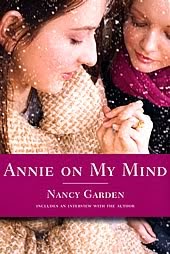
Welcome to the first installment of a new series, “reading the (lesbian) classics,” in which Danika Ellis of The Lesbrary and I read our way in a very haphazard manner through queer literature (our method is basically picking out the books that sound like a fun time and taking it from there!) and chat about it, and then post our conversations on the interwebs. So here’s the first installment. This time around, we read Annie On My Mind, by Nancy Garden, first published in 1982.

Warning! Mild plot spoilers ahead for those of you who care!

Anna: So [rubs hands together] … how shall we begin our conversation?

Danika: I’m not sure, I feel like I must have forgotten half the book… might as well start with first impressions and just see where it leads us.

Anna: [laughs] Had you ever read it before?

Danika: I have, once before. I remember when I first read AOMM I thought there was something a little bit off about their relationship. And now I think I know what bothered me. I don’t know if it’s because it’s set in the 80s, or if it’s Nancy Garden’s writing, but they both seem a lot younger than what they’re supposed to be.

Anna: Yes! They’re supposed to be, like, headed for college and they act like they’re in middle school.

Danika: I know it’s in a sort of self-conscious “girls our age aren’t supposed to do this” way, but I still liked it a lot better once I started thinking of them as 13-year-olds instead of 17-year-olds. And it’s not just them: even her little brother seems at least 4 years younger than his given age! And her classmates!

Anna: Yeah. I don’t think I noticed it so much when I was younger, because I read it when I was about thirteen myself? It was about the only lesbian YA novel my library had (early to mid-90s). To be fair, that was before the real boom in queer YA fiction. AOMM was probably one of the few available. And not a bad one to have if you’re only going to have one (no one dies!) … but yeah, I agree with you that, especially this time around I was left thinking, “wow, and these are supposed to be seniors?”

It’s not even Annie’s imaginary world … it’s more the school politics and so on. Like, no one has a real sense of a world beyond the microcosm of the prep school.

Danika: Yeah, the ear-piercing! Again, I was thinking “Well, maybe it’s just because this was 30 years ago…?” But it definitely seemed a bit off

Anna: Part of it probably is the era … and the fact that Nancy Garden was probably, on some level, harkening back to her own teen years which would have been in, what, the 1950s? 60s? When maybe ear piercing was more risque?

Danika: Aaah, yeah, that might have been part of it.
Anna: I also wondered if maybe part of it was an attempt to make the drama center around something other than the fact that Liza was discovering her sexuality? So she invented another drama about the prep school that seemed kind of forced?

Danika: Maybe, but it turns into it being about her sexuality anyway.

Anna: True.

Danika: I remember when I first read AOMM I thought the girls’ meeting seemed really forced. And I definitely agree with that the second time around. The singing, the sudden friendship… again, it’s the sort of way children interact, not teenagers.

Anna: Yeah — teenagers are more self-aware, and self … restrained? I made instant best friends with kids in art class when I was, maybe, six! Not when I was seventeen. At seventeen I was like, well, maybe going for coffee after class and see how that goes. But since NG wanted the girls not to be at the same school, she had to find a way for them to run into each other.

Danika: Still, I think she could have done better than “Don’t stop [singing]. Please.” “Oh, you startled me!” That just sounds really forced.

Anna: I’d forgotten how much class is an implicit part of the story. The way Annie comes from a “bad” part of town and everything.

Danika: I forgot that, too!

Anna: I was thinking, vis a vis reactions to queer teens, that it was interesting that Liza’s sexuality was more controversial in her upper-class world than it seems to be in Annie’s world.

Danika: Yes, because everything was controversial in Liza’s little world. The ear-piercing I guess was supposed to highlight that, but it seemed odd anyway. The only question with Annie was whether she was going to tell her family or not, so I don’t think we ever see how her school would have handled it, but presumably they have more important things to worry about.

Anna: It would have been irrelevent in Annie’s school (I’m assuming); no one cared about her there. I got the sense she was nervous about telling her parents, but her family was portrayed as fairly accepting and encouraging. I got the sense that they would have been baffled and maybe a little worried or hurt, but there wouldn’t have been all the drama that Liza had in her family and at the school.

It was interesting to me how it was almost reversed … or maybe that’s not quite what I’m thinking of. But today, we think of urban upper-middle-class folks as fairly cool about queer sexualities, etc. Whereas we think of lower-class people as reactionaries. Culturally. And in this story, the opposite was the case. I doubt those stereotypes would hold up [in real life], but it’s interesting that she chose to write it like that.

Danika: That is the framework we generally use. But Liza’s privilege paralyzed her. Her school was so caught up in itself that no one could step out of line. It was a weird relation between them.

Anna: Yeah. Maybe I’m just too midwestern to understand the world of elite prep schools!

Danika: Yes, it was really weird seeing into that strange boxed-off world.

On a slightly different note, I was writing down some thoughts as I went, and on page 49 of my version, I thought Garden was foreshadowing the reaction to her coming out. It was when the parents found out about the ear-piercing, and the mom is pretty accepting, but the dad freaks out. So it surprised me later when he was actually really great about it.

Anna: Good point. I was really intrigued by a number of the adults in the story, actually … and the way in which adults were portrayed in relation to the young people.

Danika: How so?

Anna: Well, I was impressed that the adults at the hearing were not portrayed as monoliths, as monsters, and that a couple were standing up to the schoolmistress, even if for their own reasons. And I thought it was an interesting (and positive) choice to give the girls such human mentors, themselves lesbians of an elder generation.

Danika: Yeah, that’s very true. The thing that stuck with me most about AOMM has always been the teacher couple (oops, spoilers).

Anna: (warning! warning!)

Danika: Actually, the thing that stuck with me the most was their book collection. Lesbian books inside my lesbian book! Wow! Their presence really made the story. (The teachers, not the books.)

Anna: I agree about the teachers. In contrast to the caricatured headmistress and the reactive parents, the two teachers came across really human, but also kind and supportive, generous, and sheltering without being controlling. I wondered in my notes whether this was a conscious attempt to counteract the specter of the gay/lesbian predator?

And yeah, it was fascinating to have the books play such a role in a couple of key scenes … from what I’ve heard from queer people of earlier generations, that was often the case! that they first discovered language for who they were from books … all the more reason to be a librarian-advocate for lgbtq teens!

Danika: Aaah, I hadn’t considered that! Of course! Because the lesbian teachers were fantastic teachers. If I may quote my favourite line from the dad’s reaction (though he goes on to say he doesn’t think gay people can be truly happy), “Oh, look. What difference does it make if a couple of teachers are lesbians? Those two are damn good teachers and good people, too, as far as I know.” I mean, wow! Surprise acceptance!

Anna: Hehe. Yeah, exactly. Because there’s that interesting conversation between the girls and the teachers. after the teachers have been fired. where the women acknowledge that if they don’t press charges, they should be able to get good references … because the school won’t want to admit that they fired the women for being lesbian … but they also fear for their ability to be hired if they were really out. So a real catch-22.

Since we’ve talked a lot about where the story felt kind of forced … one of the ways in which I was really impressed with it was the fact that it a) had a couple of really sweet scenes in which the girls clearly make love, even if off-screen (so to speak), and b) that this is really seen as 100% a good thing, despite what happened with their teachers. Their sexual exploration doesn’t spell doom for them as individuals or for their relationship. I don’t think many YA romances with straight couples were that whole-heartedly enthusiastic about young love back in the late 1970s … Even Judy Blume’s Forever, despite the positive sexual experience, ends with the relationship ending.

Danika: That’s true. It’s a bit of a bittersweet book, because Liza gets suspended, nearly expelled for being gay, the teachers get fired, and we know the whole time that they end up drifting apart after they leave for university. But it’s also a lot more positive than most of the queer books (YA or not) available at the time. They do end up together at the end, and there’s a lot of support of same-sex love. I also liked reading it for all the tropes and patterns that young queer love, young closeted love takes. Like how you could totally tell they were in love with each other before they knew. Like the classic game of “how much physical contact can we have before it means something?” (shoulders touching, hand holding, etc.)

Anna: Yes! Which I feel like is something that is still confusing to kids (or perhaps I only speak for myself) … since you’re trained, culturally, to expect that opposite-sex intereactions are laden, but not same-sex ones, so you aren’t so self-conscious and things kind of sneak up on you way more than with opposite-sex relationships.

Oh, and it was also nice that neither of them really “went straight”. Annie was pretty sure she was gay, and Liza wasn’t sure, but was definitely leaning towards accepting it.

Anna: I agree! That actually seemed a little dated (in a nice way?) to me, since I feel like if this book had been written today, you’d get this whole “am I bi? am I gay? am I just questioning?” thing going on. Which is absent entirely: Liza comes to the realization she’s “gay” full-stop.

Danika: That’s true, it definitely has that all-or-nothing mentality that we’ve (thankfully) shaken off a little more by now

(Oh, wait, I take it back: Annie did try to be straight! Back when she was younger. In her words: “It was ridiculous.” That made me laugh.)

They are super cute when they are together and happy.

Anna: Yeah, and as you say there was that added element of the reader being “in the know” in part because Liza’s spoilered it for us at the very beginning with the framing narrative.

What do you think of the function of the framing narrative as a literary device? Do you think it adds anything to the narrative that we kind of know it ends badly (at least in the short-term) before the story begins?

Danika: I was pondering that the whole book. I kind of get why she did it, because she needed the drama to keep the story moving through the happy couple parts, but it did add this element of doom that, frankly, no queer book really needs any more of. I guess it works overall, because we get the (spoilerspoiler) happily ever after following the long(ish) separation and we process it with Liza as she processes (and processing is a classic lesbian thing to do), but I’m a little divided on it. What did you think?

Anna: Hmm. Tough question. Retrospective narratives can sometimes work pretty well, but I agree with you that the last thing any queer teen book needs is more angst! That’s why I adore David Levithan’s work so much — his love stories are so ebullient. As a kid, I always felt like the way Liza blamed herself for the punishment exacted on the teachers (or, more accurately, for having made love in their home while she was house-sitting … what the hell was so shameful about that?) was really exaggerated. Like, shouldn’t she have been pissed at the secretary who had the vendetta? And the schoolmistress, etc.? But maybe that’s a personality thing — I always had an over-developed sense of self-righteousness as a child 🙂

Danika: Ah, I loved Boy Meets Boy for that! It’s like a combination of cotton candy and sinking into a hot tub. It’s just so refreshing to read a happy queer love story. I still want my lesbian version of that.

Anna: Totally! I feel like YA lesbian fiction is still waiting for its Daniel Levithan (if you have any recommendations, I’d love to hear them!)

Danika: I don’t know of anything quite so positive, though I have read some good ones. Hello, Groin by Beth Goobie is my favourite.

Well, I can see why they were a little ashamed. In the teachers’ bed…? That’s bad taste. What I couldn’t see, though, was why they opened the door! They didn’t have to answer! -sigh- The secretary was definitely over-the-top. The absolute poision she was spitting out was painful to read.

Anna: … I guess. I did a lot of house-sitting in high school and college and I always slept in the homeowner’s bed (clean sheets, granted) so it didn’t feel so weird to me. but that wasn’t in the deal Liza made with the teachers, so I guess that is a little different. Oh, totally with the door! [headdesk] Why oh why did she have to answer????

Danika: Especially before getting dressed!

Anna: Despite the secretary’s religiously-motivated poison, I was actually surprised by how little religious conservatives and the religious right as a force opposed to sexual expression appeared in the novel (contrasting, again, with the way it figures in some Levithan stories) … I think that’s another way this dates the story, since it was set just as that force was gathering.

Danika: True, I mean, when she faces the commitee/council/whatever that was, they basically say “Hey, this is none of our business”, which is pretty good for the circumstances.

Anna: Yeah, I think it’s interesting how the battle-lines are drawn ever-so-slightly differently than we’re used to in our generation. The religious element not quite so strong, the class element more so. Being queer still being a threat to one’s overall reputation/status even in secular society. (Not saying that’s totally gone away, but you wouldn’t think in Liza’s New York or at MIT it would be an issue!)

Danika: Hmmm, yeah, I can see that…

Honestly, I’m kind of surprised Liza wanted the school to survive. I know she has sentimental attachment to it, but even before they knew she was queer, Poindexter (go to love that name) was absolutely heinous, from the patronizing way of talking to running the meetings when Liza was supposed to be running them.

Anna: Yes. Again, another way in which they seemed young for their age. By 17, you’d think she’d have more perspective. I can see a younger child being invested in the school that had been a second home, but most seventeen-year-olds I’ve known (including myself!) are a bit more jaded!

Danika: Very true. By 17 I had distrust for all authority, definitely including my school.

I don’t know if you read my review and conversation about Well of Loneliness, but I saw a couple of comparisons between it and AOMM that surprised me.

Anna: Do tell!

Danika: Well, for one, both the protagonists were horrified at people hating them being gay, because they both felt that their love was the “best part” of themselves, or some variation on that. Also, both have a scene with the couple being happy that is described as an “illusion”. It’s just funny because WoL is mentioned in AOMM as part of the teachers’ book collection.

Anna: Yes, it was fun to see the lesbian classics appear on their shelves 🙂

Danika: Especially Patience & Sarah, because Liza and Annie read it, and this time I have, too!

Anna: I read once an essay that was talking about how generations of queer folks locate themselves in history through alternate means than family ties, since so many of them don’t come from families where the parents are themselves queer — and literature was one way.

Danika: That’s exactly why I feel that queer lit is so important. It is a foundation to the queer community.

Any last thoughts?

Anna: Not that I can think of — other than that I really enjoyed the chance to re-read this with someone else, and I’d totally be up for doing it again!

Cross-posted at: Danika @ The Lesbrary | Annie On My Mind Conversation.

Watch for the next installment in reading the (lesbian) classics sometime in late September of early October! At Danika’s suggestion, we’re reading Hello, Groin, by Beth Goobie (2006). We thought we could use the book as a chance to consider where lesbian YA fiction has come since the “early days.”

sex work vs. trafficking: npr points out the difference

26 Thursday Aug 2010

Posted by Anna Clutterbuck-Cook in media

≈ 1 Comment

Tags

gender and sexuality, human rights, politics

On my commute home yesterday, I happened to catch this story on NPR’s All Things Considered about a letter signed by 17 Sate Attorneys General asking Craigslist to remove its “adult services” section because they believe it helps foster illegal sex work and child trafficking.

A full transcript is provided on the NPR website. What caught my attention was this exchange between Melissa Block, the reporter, and Chris Koster, State Attorney General of Missouri (one of the AGs who signed the letter). Block is trying to nail Koster down on exactly what he find objectionable about adult women voluntarily offering “adult services” online.

BLOCK: I did try to look through some of them today, locally here, and I would assume that some of those ads, at least, would be placed by adult women who are not victims, who, this is their line of work, and they want to promote their services. Am I wrong about that?

Mr. KOSTER: Well, in Missouri, if you and I are on the same page on what you just said, in Missouri, that’s called prostitution. And that’s exactly what we are complaining and have been complaining to Craigslist for quite some time over, that some of these ads are very specific. They are clearly for sex, and Craig Newmark is providing a bulletin board for conduct that frequently violates the laws of the 50 states.

BLOCK: I take your point about these ads promoting prostitution, which is illegal. Wouldn’t that be a little bit different, though, from saying that women are being victimized? One does not necessarily imply the other, I think.

I want to say kudos to NPR and to Melissa Block in particular for pointing out that objecting to something because it is illegal is different from objecting to something because it is “victimizing” the women (or children) involved, and that there is no simple way to tell if the (adult) individuals who post on Craigslist are being exploited or not. The AG blusters on, saying

That’s right. I mean, every single ad that we see on this site, on this link, is not creating a victim. But there are far too many that do, and if you go through any town in America, certainly any town of any size, you’re going to see a large number of ads that would certainly appear as advertisements for prostitution.

Again implying that prostitution = victimization. Unfortunately, a four-and-a-half minute story is not enough to disabuse any listener who agrees with Kloster of this notion, but hopefully Block’s assertion that not all sex work is, de facto exploitation will in some small way help to shift the national conversation away from the sex work = exploitation model and allow us to ask more nuanced questions about how to incorporate, within a decriminalized sex work industry, checks and balances that would help stop human trafficking and exploitation without depriving sex workers of their livelihood.

booknotes: fast girls

20 Friday Aug 2010

Posted by Anna Clutterbuck-Cook in book reviews

≈ 2 Comments

Tags

gender and sexuality, smut

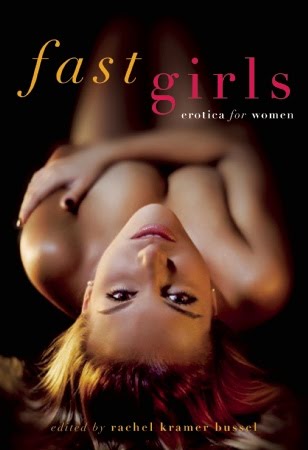
So I volunteered to review a copy of Rachel Kramer Bussel’s latest anthology, Fast Girls: Erotica for Women. Because let’s fact it: who doesn’t want a free book of erotic short stories sent to them? I mean, I’m a bibliophile, a feminist, and a sex nerd. It really it wasn’t an option to say no!

The thing is, as soon as I’d said “Oh, yes, please! Send me a copy!” and the book was on its way, I remembered this thing that librarian Nancy Pearl once wrote about erotica: that one of the places to go when you’re in the mood for something steamy is the stories that someone else has identified as the worst erotica of all time (I’m paraphrasing here, because my copy of Book Lust is on a shelf in my parents’ house back in Michigan). Because for every person who thinks that story is the libido-killer of the century, there’s going to be another who thinks that it’s the hottest sex scene they’ve ever read, and they’ll drop it halfway through to go find their significant other(s) in order to get their temperature back down to normal.

I’m a relativist when it comes to arts and culture (not so much when it comes to ethics and human rights): “good” art? “good” writing? who says there’s one right way of doing it! And human sexuality, particularly, seems like an area ripe for radical democracy: the best way to create “good” erotica in my book is simply to create it. Which is why I’m a big fan of erotic fan fiction and other amateur outlets for lustful creativity.

Which is a long-winded way of saying: dilemma. How the fuck are you supposed to review a book of erotica in any sort of meaningful fashion when my favorite story is likely to be someone else’s worst nightmare — or I might overlook the one scene that, for someone out there, is likely to make the whole book worthwhile?

I realize this is a dilemma faced for the reviewer of any book. But it seems uniquely acute when it comes to reviewing porn. Maybe because porn is so particular. And maybe also because, well, to it’s hard to talk about without giving slightly more … intimate details as to your own particular tastes. “I really liked the scene in Tristan Taormino’s ‘Winter, Summer’ where the narrator gets felt up at a bar by a butch she’s just picked up at the pool table”? “I went fever-hot all over sitting in the subway reading the penultimate bondage scene in D.L. King’s ‘Let’s Dance'”? “I must have some serious power issues, ’cause Ms. Bussel’s ‘Whore Complex’ resulted in the need for a new pair of knickers”?

See? It’s all slightly embarrassing, a little too clit-on-your-sleeve for my taste. So rather than attempt to pass judgment on the book qua book I’ll simply offer this: I’m am happy to live in a world in which erotica for women, Fast Girls included, exists. It makes my feminist heart proud that right here, right now, we are part of a culture that — despite its many, many shortcomings — includes a space for women writers who want to write smut to write it. And to get published. It warms my heart (and other bits of my anatomy) that not only are we women writing and published erotic texts — that is, texts written explicitly for the purpose of arousal — we’re writing and publishing erotic texts in which women have sexual agency. In which women identify and court (or just plain come on to) the objects of their lust. In which women take charge of the sexual encounter. In which women feel free to choose partners of any sex and pursue them expressly for the purpose of sexual pleasure. In which, sometimes, women explicitly consent to relinquish control because chosen powerlessness. So I don’t really have a stake in what porn you read (or whether, really, you have any personal interest in porn at all). But I encourage you all to revel in the fact that we have such literature available to us, in all its myriad flavors.

Fast Girls is now available to purchase and can be found online at Amazon, Powell’s and other online vendors. Rachel’s website provides a whole array of links to the online bookshop of your choice.

monday morning madness: fluid sexuality and marriage equality

16 Monday Aug 2010

Posted by Anna Clutterbuck-Cook in think pieces

≈ 3 Comments

Tags

bigotry, gender and sexuality, human rights, politics

So after a weekend away from my RSS feeds, I finally got around, this morning, to reading conservative columnist Ross Douthat’s second column on why same-sex couples should be excluded from the institution of marriage. Adam Serwer @ The American Prospect offers his take which covers a lot of the bases. And Douthat’s justifications are so convoluted that I’m not going to try and untangle them here.

But as a queer woman in a lesbian relationship, there were a couple of … let’s call them interesting assumptions Douthat makes about fertility, gender, and marriage relationships that I’d like to briefly respond to.

Douthat realizes that he can’t credibly make the claim that marriage should be limited to couples capable of biological reproduction. As Judge Walker observed in the Prop 8 ruling (and as many other advocates of marriage equality have pointed out), being straight doesn’t equal being capable of, or interested in, bearing and raising children. We don’t ask straight couples to undergo fertility testing in advance of issuing marriage licenses. And we don’t enforce any sort of mandate that married couples produce genetically-related offspring.

So there’s that argument off the table.

But Douthat wants to make that argument anyway. So what he does is suggest that it’s not the physical act of bearing and raising biological children that makes hetero marriage particularly worthy of state sanction: instead, it’s the cultural experience of being heterosexual.

The interplay of fertility, reproductive impulses and gender differences in heterosexual relationships is, for want of a better word, “thick.” All straight relationships are intimately affected by this interplay in ways that gay relationships are not. (And I do mean all straight relationships. Because they’ve grown up and fallen in love as heterosexuals, the infertile straight couple will experience their inability to have children very differently than a same-sex couple does. Similarly, even two eighty-nine-year-old straights, falling in love in the nursing home, will be following relational patterns — and carrying baggage, no doubt, after eighty-nine years of heterosexual life! — laid down by the male-female reproductive difference.) This interplay’s existence is what makes it possible to generalize about the particular challenges of heterosexual relationships, and their particular promise as well. And the fact that this interplay determines how and when and whether the vast majority of new human beings come into the world is what makes it possible to argue — not necessarily convincingly, but at least plausibly! — that both state and society have a stronger interest in the mating rituals of heterosexuals than in those of gays and lesbians.

So it’s not about the capacity to reproduce, it’s about “fall[ing] in love as heterosexuals,” and “carrying baggage … after eighty-nine years of heterosexual life” based on “male-female reproductive difference.”

Obviously, there’s levels of wrong going on here, but the points I want to make are these.

1) As a queer woman, I am affected by the sex and gender norms of our (predominantly) heterosexual society. I was born into a world that expects certain things of girls and certain things of boys. In childhood, we aren’t categorized according to sexual orientation (since children are assumed to be nonsexual, or only latently sexual, beings — a topic for a whole different post) but by gender. Girls who aren’t exclusively straight in their sexual attractions nevertheless find themselves on the recieving end of powerful normalizing pressures concerning what girls/women should do, be, want, etc. This includes the pressure to parent. I think, perhaps, Douthat as a straight man might be underestimating the way in which this pressure affects women, particularly, regardless of their sexual orientations. It’s a gender thing, not a sexual orientation thing.

2) Douthat’s understanding of heterosexual vs. homosexual pairings ignores the experience of everyone else. What about equality for folks who experience sexual fluidity, whose attractions change over the course of their lifetimes? What about trans folks whose experience of society’s gender expectations shifts over the course of their lifetimes? For many of us, the idea that one would experience eighty-nine years of either “heterosexual life” or “lesbian life” (check the box that applies to you) is meaningless. We approach our relationships (no matter the gender of the person we’re relating to) as ourselves, as persons whose sum total of experience doesn’t fit neatly into one category or the other. Douthat’s assumptions concerning the differences between straight folks and queer folks is based on the belief that one’s sexual attractions are either always same-sex or always other-sex, and that these attractions are stable throughout life. This is simply not the case for many people (again, particularly women, which once more leads me to wonder how much Douthat is speaking out of his own personal biases rather than any actual research and reflection).

Thus, Douthat’s distinction between the nature of “thick” heterosexual relationships and (“thin”?) queer ones completely falls apart based upon the lived experience of real human beings.

Finally, I want to tackle Douthat’s parting shot: that omg gay marriage will lead to polygamy:

The claim that gay wedlock will lead inexorably to polygamous marriages or incestuous marriages has never been all that credible, because there just isn’t a plausible constituency in the United States (Europe might be another matter) that’s going to start claiming those rights in the way gays are on the verge of claiming the right to marry one another. But it’s still striking how easily the logic of gay marriage can be extended to encompass all kinds of relationships that we definitely don’t want to call marriages.

I am clearly not the constituency Douthat is writing for in his column, because the question I have for him is: “relationships that we definitely don’t want to call marriage”? Who is this “we” you refer to? Please don’t include me in this claim! ‘Cause I refuse, as a queer woman in favor of marriage equality, to scapegoat polyamorous relationships. I don’t need to make poly relationships the Other (or incestuous relationships for that matter) in order to prove that same-sex monogamous couplings should be sanctioned by civil marriage. I’m for consensual, adult relationship commitments being recognized as marriages. Full stop. If that marriage includes more than two adults, then those adults should all be able to enter into the contract of marriage and have that marriage be recognized by our legal system and honored by society. And if that’s what the case for marriage equality portends, I think we should be proud of that inclusivity.

Fear mongering is just not cool, man.

This time around, even more than in his first post-Prop 8 column, Douthat seems to be transparently arguing that heterosexuals are just better, or deserve to be treated with greater respect, than non-heterosexuals. The whole column is a barely-concealed bid to privilege heterosexual marriages simply on the basis of their being heterosexual.

Bigotry: not so cool either.

← Older posts
Newer posts →
"the past is a wild party; check your preconceptions at the door." ~ Emma Donoghue

Recent Posts

  • medical update 11.11.22
  • medical update 6.4.22
  • medical update 1.16.2022
  • medical update 10.13.2021
  • medical update 8.17.2021

Archives

Categories

Creative Commons License

This work by Anna J. Clutterbuck-Cook is licensed under a Creative Commons Attribution 3.0 Unported License

Meta

  • Create account
  • Log in
  • Entries feed
  • Comments feed
  • WordPress.com

Blog at WordPress.com.

  • Subscribe Subscribed
    • the feminist librarian
    • Join 37 other subscribers
    • Already have a WordPress.com account? Log in now.
    • the feminist librarian
    • Subscribe Subscribed
    • Sign up
    • Log in
    • Report this content
    • View site in Reader
    • Manage subscriptions
    • Collapse this bar