• anna j. clutterbuck-cook
  • contact
  • curriculum vitae
  • find me elsewhere
  • marilyn ross memorial book prize

the feminist librarian

the feminist librarian

Tag Archives: gender and sexuality

A few more links on bodies

22 Wednesday Apr 2009

Posted by Anna Clutterbuck-Cook in linkspam

≈ 3 Comments

Tags

feminism, gender and sexuality

A couple of weeks ago, I rounded up a few links on policing “imperfect” bodies (women’s bodies in particular). Here are a few more.

Watching the blogosphere coverage of Susan Boyle’s performance on the Britain’s Got Talent television show has been an a thought-provoking and often intensely discomforting experience (as was watching the video itself, though she does indeed have a gorgeous voice and sings with her whole body). Here are blog posts and threads I found particularly spot-on with regards to what’s off about the hype.

1) The Pursuit of Harpyness asks whether Susan Boyle’s performance at Britain’s Got Talent and the freak-show aspect of media coverage surrounding it is “Heartwarming or Heartbreaking?”

2) via radishette: What he said. Nailed it.

3) Courtney Martin writes: “I don’t think the majority of us are really willing to look at the ugly scripts in our heads, the fat discrimination, the self-hate (oh so relate to our merciless judgment of others),” that the popularity of the Susan Boyle video draws out.

And then: I’ve written a lot about how ageism hurts young people, and specifically about the American obsession with teen sexuality. Now here’s a story about Massachusetts attempting to legislate against elder expressions of sexuality. The legislation is ostensibly to protect elders and disabled individuals from exploitation (a laudable goal), but has been carelessly and broadly worded. Not cool adopted state.

*Image (c) ria hills @ flickr.

Conversation in the Blogosphere

20 Monday Apr 2009

Posted by Anna Clutterbuck-Cook in think pieces

≈ Leave a comment

Tags

blogging, feminism, gender and sexuality

Many of you who read my blog don’t necessarily spend a lot of time in the “feminist blogosphere,” I know . . . so the heated, often polarized, conversations that have been happening in that virtual space over the last couple of weeks are possibly completely off your radar. But to me they have been important. They have encouraged me to be mindful about how I interact with others in virtual spaces — on this blog and in comment threads on other blogs. They have challenged me to think about how to be open to learning in a spirit of humility while also refusing to let others set the terms of my own participation in the world of feminist activism.

I’m still thinking about what all of these conversations mean to me in terms of this blog and in terms of my participation in online communities generally. And I don’t feel ready, quite yet, to offer my own composed thoughts on the subject. I thought, therefore, that I would round up a few posts that have spoken to me on the issue of interpersonal conversation and debate and share them with you:

Miriam Perez, at Radical Doula, writes about why she blogs and why she refuses to be bullied into silence in relation to this conversation about comment threads and transphobia at Feministing.

(For further background, you can see this earlier Feministing post for links).

Rachel, at the Feminist Agenda, muses about a dynamic I try to keep in mind when participating in the blogosphere, both as a way to check my own defensiveness and as a way of understanding others’.

On a related note, MK asks when is comment-thread engagement worth the fight?

Mandolin, over at Alas, a Blog, writes about disliking “competitive conversation.” As someone who likewise finds oppositional debate both exhausting and unproductive, I really appreciate the distinction she draws between collaborative discussion of divisive issues and debate that is polarized.

More to come (hopefully) as the semester winds down and I have more time to think about the nature of this particular virtual space in relation to activism, online communities, and my daily life.

stuff i’ve been reading (on the ‘net)

09 Thursday Apr 2009

Posted by Anna Clutterbuck-Cook in linkspam

≈ 1 Comment

Tags

boston, feminism, gender and sexuality, history, humor

Here’s a haphazard collection of stuff I’ve been reading the last couple of weeks.

via MK: two hilarious comics about the experience of reading Twilight.

via Cynthia: a “funny futuredance” from the 1960s German science fiction film “Raumpatrouille Orion.”

via Jeremy: two posts about the ducknapping and recovery of Pack, one of the bronze ducklings in the Boston Public Garden.

Kittywampus blogs about feminism and the sexual revolution (via figleaf).

Figleaf also offers some reflections on how one simple question can make us stop and think about how “heterosexual” is the default assumption we make, as a culture, about peoples’ sexual orientation.

Cool sexuality education resource a conference-goer tipped me off about at WAM!

Miriam at Radical Doula on the creative potential of “crisis” and change.

Surgeon and journalist Atul Gawande on why solitary confinement should be considered torture — and one evidence-based practice proven to reduce prison violence: giving prisoners greater control over their lives.

A new way to think about the concept of “political correctness.”

Given my previously acknowledged love of dictionaries, I couldn’t let this one go by unlinked. (You can view this as my salute to IA, VT, and DC).

Jesse at Pandagon on one reason why we should think twice before judging the purchasing decisions of people in poverty.

Because I linked (in my WAM! post below) to a thread on feministing about gender-neutral restrooms and trans rights, I’m including three responses from MK, queenemily, and catspaw pointing out the problems with how that conversation went down.

And finally, the now-traditional Hanna-link! This has been a feminist-heavy link list (damn; guess the secret’s out), so here are two articles on Marx: a marxist analysis of Grand Theft Auto and a commentary pointing out that Marx was in many ways a product of the very economic structure he set out to critique.

Wednesday Reflections on WAM!2009

08 Wednesday Apr 2009

Posted by Anna Clutterbuck-Cook in think pieces

≈ 1 Comment

Tags

feminism, gender and sexuality, politics

A week (plus) after WAM!2009, I’m finally getting around to blogging a few reflections. This was my second year attending WAM! Last year I went as a volunteer; this time I paid my way and wandered around the Stata center free of responsibility. It’s an awesome conference for feminist people-spotting and in general spending time talking about all that stuff I spend my time thinking about virtually 24/7 (in some form or another) with people who are as obsessed as I am. Either we aren’t as crazy as we likely all feel most of the time, or there are a lot of us crazies wandering free on the streets — frankly, I’m not sure which is the more appealing option!

I’ve learned over the years that my stamina for conference sessions is limited: I reach “critical mass” when it comes to new and stimulating ideas fairly rapidly. So I limited my participation to two panel discussions and an informal lunch caucus — and came away with lots to think about!  

The panels I attended on Saturday were “In/Out of Focus, Broadening a Feminist Lens: Gender, Non-Conformity and the Media” and “Feminist Blogging: From Journalism to Activism in Election Years and Beyond.” Between the two panels, I joined an informal group of conference-goers at a lunch caucus to discuss “feminist sex ed.” This lunchtime event, which I only found out about on the day of the conference, was both inspiring and dispiriting. On the one hand, it’s awesome to hear from those in the diverse world of sexuality education (from schoolteachers to community organizers to college professors and sisters looking for resources to pass on to their younger siblings) about the work they are doing. On the other, it’s frustrating to hear how much misinformation, legal restriction, community fear, and lack of resources and time limit possibilities.

One of the things that really struck me in the lunch caucus was folks’ resistance to “co-ed” (non-gender-exclusive) sexuality education. As I have argued previously, the problem with sex-segregation in educational spaces is that young people who do not identify as male or female, or do not feel comfortable in environments in which everyone is presumed to be the “same” in some way based on sex/gender, are marginalized. I think it is particularly problematic in sexuality education, since the ostensible reason for separation is so that (hetero) girls and (hetero) boys won’t be subject to scrutiny and embarrassment in front of other-sex folks. But this presumption of increased safety and comfort in single-sex environments breaks down for anyone who is not straight or gender-conforming.

As Jessica Fields has documented in her book Risky Lessons, women and girls do face a disproportionate amount of misogynist harassment in sexuality education settings that often goes unchallenged. Yet I’m hesitant to accept that sex-segregation is the way to go in addressing this problem. If nothing else, because it reinforces the sexist idea that men and boys are naturally disrespectful, misogynist pigs for whom containment is the best strategy. A far healthier (and feminist!) approach, it seems to me, would be to tackle the problem of sexism and respect head-on. It should be our collective responsibility to make sex education spaces safe and affirming for every person — regardless of sex, gender, or sexual orientation.

This question of gender-segregated space and who is included was also a major topic of discussion in the first panel I attended “In/Out of Focus,” since the topic was gender-nonconformity. This was the panel I was most excited about attending at the outset, since the line-up included one of my favorite feminist authors and one of my favorite feminist bloggers. And it did not disappoint! 

What the reality of gender-nonconformity means for “women-only” spaces is far from settled, even in feminist spheres (as a recent thread on gender-neutral restrooms at Feministing amply illustrated).  I thought both the panel and the audience members who participated in conversation gave a lot of nuanced and valuable perspectives on how conversations about sex and gender in feminism can take place without fear or bigotry.  Miriam Perez (see “favorite feminist blogger” above) talked about the need to be mindful of whom we are including when we use words like “women” or “female,” and who we are excluding with that same language.  While no one is asking feminism to expunge the word “woman” from its reasons for being, it is also important to remember (as one of the panelists — Julia Serano? — pointed out) that “feminism and women are strongly related but not analogous.”  Even among a group of folks who identify in the feminine spectrum, it’s important to remember that not all of us have identical experiences of womanhood.  
The Q&A portion of this session was particularly strong, some of which Jill live-blogged over at Feministe.   You can also see live tweets from the session at Twitter #wam09gnc (oh, the crazy things one can do on the ‘net!). 
My final panel of the day, “Feminist Blogging,” introduced me to more new bloggers to add to my feminist-themed iGoogle pages (yes pages), and was a lively, reflective session on the lessons learned from the 2008 election about the interaction between the blogosphere and corporate media, between blogging and activism.  The conversaion also highlighted, for me, the way so many bloggers are able, through their blogs, to integrate their various life-works (parenting, employment, personal projects and passions, hobbies) in a web presence that somehow encompasses — or at least touches upon — all aspects of their personhood.  
The “Feminist Blogging” session helped me think, in a new way, about why keeping this blog has been so important to me over the last two years: As I make my way through graduate school, I often feel overwhelmed trying to find a path that will bring together the things that I care about into some sort of meaningful life and life’s work.  This blog is one of the few public spaces where I can mix and match freely, shuffling and re-shuffling the various bits until the balance feels right and the relationships between thoughts and experiences are clarified.  It’s an awesome privilege, and one which I am hopeful is mirroring the (albeit) messier “real world” version.

  
See the WAM!2009 conference site for a links list to further conference coverage.

Classy, home state

06 Monday Apr 2009

Posted by Anna Clutterbuck-Cook in think pieces

≈ Leave a comment

Tags

gender and sexuality, michigan, politics

My old health insurance, Blue Cross Blue Shield of Michigan, has stopped providing coverage for sexual reassignment surgery for trans folks. This move was (sadly) part of larger cutbacks in coverage, due to a $133 million dollar loss in the past year. However, according to the Gale Encyclopedia of Surgery only 100 to 500 sexual reassignment surgeries are performed annually in the United States. Even with costs ranging from seven to fifty thousand dollars (depending on what medical procedures are done), I doubt this was a huge line-item in the BCBSM budget. Considering that the vast majority of health insurance companies already deny coverage to trans folks, it’s disappointing to see one more bite the dust. Not cool Michigan.

Booknotes: Purity Myth

05 Sunday Apr 2009

Posted by Anna Clutterbuck-Cook in book reviews

≈ 3 Comments

Tags

books, feminism, gender and sexuality

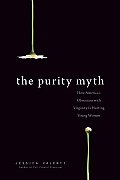
Just finished Jessica Valenti’s latest book, The Purity Myth: How America’s Obsession with Virginity is Hurting Young Women. It’s a quick read (really! I wasn’t shirking those reading assignments for class in favor of feminist political analysis . . . again!), and give a nice overview of some of the current conservative and mainstream trends for policing women’s sexuality: specifically, the use of the elusive notion of girlhood “purity” and “virginity.” She ranges widely over a constellation of cultural narratives about sexuality that all have at their heart a fear of mature adult women’s sexual pleasure and sexual agency. Whether it’s conservative purity balls and father-daughter dates or the mainstreaming of misogynist pornography and ubiquitous slut-shaming and sexual violence that punish women, the agenda, Valenti argues, is the same: propping up an oppositional view of gender (“men” and “women” are mirror opposites of each other, and blurring of the categories ‘male’ and ‘female’ is dangerous to society), often at the expense of women and girls.

I particularly appreciate the way Valenti foregrounds the importance of valuing the ability of women and girls as moral actors, capable of making decisions about their own sexual lives — particularly when given access to a full range of resources (as opposed to a one-size-fits-all “just say no until marriage” toolkit, which spreads misinformation and ignores anyone who does not fall into a narrow heteronormative model of human sexuality). In the chapter on sexual education she writes:

I’m not going to reinforce the “they’re [teens] are going to do it anyway” argument. I believe it’s time to take a stance on sex education that isn’t so passive–young people deserve accurate and comprehensive sex education not just because they’re going to have sex, but because there’s nothing wrong with having sex. [emphasis hers] Allowing educators to equate sexuality with shame and disease is not the way to go; we are doing our children a great disservice. Not only are we lying to them, we’re also robbing them of the joy that a healthy sex life (as a teenager or in adulthood) can provide (120).

She goes on to describe the profound distrust of women that has been written into state and federal laws that regulate specifically women’s sexual descision-making, effectively giving us the legal status of “moral children” (189).

Valenti provides, in the final chapters, practical suggestions for shifting this discourse of fear and proscription to one of sexual agency. Perhaps because I have been thinking a lot, lately, about what it means to approach fellow human beings with intrinsic respect for their personhood, even when we profoundly disagree with their values and choices, I was particularly struck by the way she frames her vision with the concept of trust:

Trusting women means . . . trusting them to find their way. This isn’t to say, of course, that I think women’s sexual choices are intrinsically “empowered” or “feminist.” I just believe that in a world that values women so little, and so specifically for their sexuality, we should be giving them the benefit of the doubt. Because in this kind of hostile culture, trusting women is a radical act (198; emphasis mine).

While obviously fighting for a healthier sexual climate for women and girls does not end with trust, I don’t know if there could be a much better beginning.

Booknotes: Five Lectures in Psycho-Analysis

31 Tuesday Mar 2009

Posted by Anna Clutterbuck-Cook in book reviews

≈ 2 Comments

Tags

books, gender and sexuality, history, simmons

In the few weeks since discussing Darwin, my Intellectual History class has moved through Nietzsche and Fin-de-siecle Vienna and arrived at Sigmund Freud.

I imagine there are few Women’s/Gender Studies students in the country who have not encountered Freud in their intro-level classes: I remember the director of my women’s studies program back at Hope College — whose training was in the field of psychology — suggesting that maybe, possibly, my response to Freud’s theory of sexual development and penis envy was a little too categorically dismissive (if I remember right, my scathing response paper admitted to having thrown our textbook across the room). So I will admit upfront I came to Five Lectures in Psycho-analysis prepared for weary frustration at Freud’s legacy, even as I was interested to see what a fresh reading ten years (yes, ten years!) since that first encounter might bring.

Five Lectures is a slim volume in which Freud recreated from memory five lectures he delivered at Clark University, Worchester, Massachusetts, in 1909 while visiting at the request of the university president, G. Stanley Hall. This fact alone gives me the creeps, since G. Stanley Hall had some heavily social darwinist theories of child- and adolescent development. Five Lectures is an extemporaneous-feeling overview of Freud’s development as a psycho-analyst, his theories of dream interpretation and sexuality, and his beliefs about the role of psychoanalysis human development. Only one of the five lectures focuses specifically on sexuality, although his beliefs about human sexual development are integral to his view of human nature and growth.

While none of his basic views were startlingly new to me, I was struck as I read this chapter by two things: 1) how closely Freud’s description of childhood sexuality corresponds with current, twenty-first century progressive, feminist views of human sexuality, and 2) how strongly Freud seems to feel the need to contain, organize, and channel that sexuality within the circumscribed space of heterosexual intercourse for the purposes of reproduction.

Of childhood sexuality he writes:

A child’s sexual instinct turns out to be put together of a number of factors; it is capable of being divided into numerous components . . . independent of the reproductive function . . . it serves for the acquisition of pleasurable feeling, which, basing ourselves on analogies and connections, we bring together under the idea of sexual pleasure.

He describes masturbation, dominance/submission activities, the “desire for looking,” fantasy, sexual play and emotional bonds all under this broad umbrella. He also points out that “at this early period of childhood difference in sex plays no decisive part.” In sum, “widespread and copious” is the sexual life of children, loosely organized around the principle of pleasure (p. 46-48).

It is only after this rich description of sexuality, replete with possibility for variation, fluidity, and individuality which (crucially, in my opinion) places the recognition of pleasure at the heart of sexual feeling, that Freud retrenches. In the paragraph immediately following the descriptions above, he suggests that all of this abundant energy must, in order for “mature” adult sexuality to emerge, be “brought together and organized” into genitally-centered, reproductive activity (p. 48).

. . . Why? What is so terrifying to Freud (and any others who resist it) the first, “childhood,” model of sexual-sensual experience? This week in class, I’m looking forward to sitting down with this fear and trying to understand what, exactly, is so freaky about “widespread and copious” pleasure.


Are you ready for marriage?

17 Tuesday Mar 2009

Posted by Anna Clutterbuck-Cook in media

≈ 1 Comment

Tags

gender and sexuality, history, humor, web video

Mystery Science Theater short, mocking a Cold War era “marriage preparedness” video.

No further comment necessary, really.

Except that the marriage counselor looks terrifyingly like Brother Justin in “Carnivale.”

Hat tip to Hanna, as is so often the case :).

A few things

01 Sunday Mar 2009

Posted by Anna Clutterbuck-Cook in linkspam

≈ 2 Comments

Tags

feminism, fun, gender and sexuality

Books + feminism = irresistible .

mk has a thoughtful, succinct post on how to be an ally up at Little Lambs Eat Ivy.

I haven’t become a twitter-er (twitterite?) yet, but see the writing on the wall, so enjoyed reading this beginners guide to twitter via feministing.

Feministing launches a new weekly sex advice column. First installment here.

Found this slightly chaotic, but thoughtful post on the use of the word “privilege” as a personal slur today and thought it was worth a read. (It references some recent feminist blog drama that I have purposefuly not been following — not enough time or emotional energy — but I think makes sense without the background.) Via, which provides links to said background, which in turn was found via.

New favorite web comic.

After I complained that my rss feeds all favored the informative over the entertaining, Hanna provided me with “true internet fluff” in the form of a dr. who locations guide.

She also directed me to this follow up on the story about teenagers arrested for creating “porn” by sharing naked pictures with their significant others.

And in honor of my birthday month (happy March everyone!) here’s a lolcat that I think bears a striking resemblance to a few of my earliest baby pictures (sorry, they aren’t digitized, so I can’t provide visual verification).

Quick Link: Feminist Dudes on Abortion

24 Tuesday Feb 2009

Posted by Anna Clutterbuck-Cook in linkspam

≈ Leave a comment

Tags

children, feminism, gender and sexuality

Amanda Marcotte, over at Pandagon, asked feminist dudes to talk about their feelings regarding abortion, and how they interact with their girlfriends and women friends about it. The conversation that ensued is fascinating.

← Older posts
Newer posts →
"the past is a wild party; check your preconceptions at the door." ~ Emma Donoghue

Recent Posts

  • medical update 11.11.22
  • medical update 6.4.22
  • medical update 1.16.2022
  • medical update 10.13.2021
  • medical update 8.17.2021

Archives

Categories

Creative Commons License

This work by Anna J. Clutterbuck-Cook is licensed under a Creative Commons Attribution 3.0 Unported License

Meta

  • Create account
  • Log in
  • Entries feed
  • Comments feed
  • WordPress.com

Create a free website or blog at WordPress.com.

  • Subscribe Subscribed
    • the feminist librarian
    • Join 37 other subscribers
    • Already have a WordPress.com account? Log in now.
    • the feminist librarian
    • Subscribe Subscribed
    • Sign up
    • Log in
    • Report this content
    • View site in Reader
    • Manage subscriptions
    • Collapse this bar