• anna j. clutterbuck-cook
  • contact
  • curriculum vitae
  • find me elsewhere
  • marilyn ross memorial book prize

the feminist librarian

the feminist librarian

Tag Archives: gender and sexuality

real-life adventures in class, gender, race, and sexuality

01 Saturday Dec 2012

Posted by Anna Clutterbuck-Cook in think pieces

≈ 2 Comments

Tags

being the change, boston, gender and sexuality, MHS, politics, racialization, the personal is political

Last night I was working an event at the MHS that involved spending one portion of my evening standing out on the sidewalk, a few blocks away from the building, holding an electric lantern to light the way for guests moving from one location to another. I was one of about seven lantern-bearers spread out across a quarter-mile path from Point A to Point B.

Standing in one spot for 45 minutes, not soliciting nor waiting for public transit, and holding a lantern, certainly attracts attention in the city. Maybe a dozen individuals and/or groups of people stopped to ask me politely what I was doing, particularly if their path had taken them past one or more of the other lantern-bearers in the chain.

I happened to be standing at a station on a fairly busy stretch of sidewalk near a bus shelter, but on a bridge crossing over the Massachusetts Pike. It was long after dark, about eight o’clock, and my back was against the high fence that stops people from committing suicide off the bridge. I could see my fellow lantern-bearers down the way in both direction, each across an intersection though in plain sight.

(via)

A (likely homeless) man with a shopping cart containing his belongings came up the sidewalk. I nodded to him and he took this as an invitation to stop and talk with me. Continue reading →

booknotes: book of mormon girl

17 Saturday Nov 2012

Posted by Anna Clutterbuck-Cook in book reviews

≈ Leave a comment

Tags

feminism, gender and sexuality, memoir, politics, religion

I rarely have the time these days to invest in comment threads on blogs, though I skim hundreds of RSS-scraped posts every day via Google Reader. Yet over the past few months, I’ve spent quite a bit of time over at the Family Scholars blog, engaging with socially conservative bloggers and commenters about issues such marriage equality and queer family formation.

I actually find the practice almost … soothing.

Hanna, meanwhile, is mystified about my motivations, since just having me describe some of the interactions I have there ramps up her anxiety and stress levels to uncomfortable proportions. And I find I don’t have very articulate reasons for why I find arguing with the opposition — bearing witness, speaking up for my point of view — to be an almost meditative practice.

Except that, growing up and going to college where I did, it’s what I’ve had to do by default most of my life. So it’s what feels comfortable, feels familiar: standing on the edges knocking politely on the door to remind those on the inside (of the mainstream culture, church, school, whatever) that I’m still here.

I don’t necessarily want to be let in? It’s a nice world, in many ways, where I am out here. I’ve always been a fan of fresh air and expansive horizons.

But I don’t want them to forget that I’m out here.

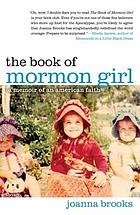
Another aspect of my insistence on being a complicating presence came home to me while I was reading Joanna Brooks’ Book of Mormon Girl (Free Press, 2012) this past week. It had been on my radar for awhile, but what prompted me to read it was an email from a friend of mine, a former member of the LDS church, who has walked away from the faith in his adulthood for a variety of reasons not the least of which is the fact that he’s gay and the Mormon church is not all that cool — at least at an institutional level — with queerness. He’d found the book a disorienting read, he reported to me, because while he’s quit the church entirely Brooks continues to struggle mightily with her inherited faith and childhood experience, and the betrayal of the community she once felt safe within when she stepped outside the bounds of orthodoxy (as an outspoken Mormon feminist, queer ally married to a Jewish man). Why did she continue to fight to belong in a church that clearly pushed her away, hard, with both hands?

It’s a stubbornness I recognize, though I wasn’t actually raised in the church (Mormon or otherwise). The faith of my heritage was loosely Protestant, my father the son of a New Testament theologian, my mother the mostly unchurched daughter of a Christian Scientist and disbelieving Scotch Presbyterian. In my adolescence, we attended a liberal Dutch protestant church (a denomination in the Reformed Church in America) for a handful of years where I argued passionately with Conservative youth leaders from my position as a nascent feminist and tried to envision the Church as a pathway to effectively channel my welling passion for social justice.

Then I went to college and discovered feminist theology which offered (though I didn’t have these words at the time) a way of thought and action that was both intersectional and spiritual: a faith of uncompromising social justice, nonviolent action, solidarity, and equality: each and every one of us is a child of God. Full worthy to be loved and capable of loving.

It’s a theology that I, unchurched though I am, continue to strive for in the spiritual practice of daily living.

And it felt like a theology that many religious folk around me were uninterested in pursuing.

I’ve said before, and I’ll repeat it here, that I found my Christianity and left the church in more or less the same breath.

I saw what Christianity could be and is, at its best and brightest, and in my adolescent impatience had no time for those preoccupied with orthodoxy at the expense of lovingkindness. Lacking the deep roots of religious history, community, family, and faith that ties women like Joanna Brooks to the church — and I know many of them, ardent feminist thinkers, queers, social justice workers, all fighting past the burnout to build a Church I would be proud to call mine — I up and quit and walked away.

But in part because of the women (and I know there are men, too, but it’s the women I think of in these moments, the ones who stand up and refuse not to be counted) I keep circling back. I keep tapping on the door, poking my head in, and reminding folks that my life, too, is relevant to the conversation: You’re talking about the welfare state? I might be financially secure right now, but I’ve had state-subsidized healthcare. You’re talking about male headship? Let me talk to you about sex, gender, and humanity. You’re talking about same-sex marriage? Let me introduce you to my wife, our two cats, and quotidian details of our lives.You’re talking about war? Let’s talk about the history of religious nonviolence.

My mother has always said that she won’t join any church that constructs an “us” from which a “them” is excluded, kept at arms length, on the outside. Which is why, to this day, she remains unbaptized (and why none of us children were baptized), and certainly informs my own decision not to seek church membership.

But I keep tapping at the door. I keep having the conversations. I want to bear witness (imperfect, broken, human, though I am) to the fact that we could do better and that I know there are those working mightily within the Church, as well as without, to make it so.

Hmm. The plan was to write a book review, but clearly I had other things to say. Still: Book of Mormon Girl is sweet, funny, heartbreaking, thoughtful, and passionate. As a queer American I found the chapter on Proposition 8 particularly painful to read; as a woman who came of age about 5-10 years after Brooks, I found her chapter on feminism and faith, and the trauma of the LDS purges in the 90s (when the hierarchy excommunicated a number of liberal intellectuals and activists, and declared feminists, gays, and lesbians the “enemy”) to be particularly resonant. As an historian with an interest in the personal journeys of those who grow up in fundamentalist, evangelical circles, Brooks’ narrative was of scholarly interest to me as well. I highly recommend it to anyone who wants to think more deeply about what it means to be a politically and socially progressive person in the context of a reactionary religion.
thoughts on traveling while gay-married

13 Tuesday Nov 2012

Posted by Anna Clutterbuck-Cook in our family

≈ 3 Comments

Tags

gender and sexuality, politics, travel, wedding

Hanna and I were in Montreal this weekend, at the North American Conference on British Studies. Well, Hanna was at the conference and I went along as the spouse. I spent the hours Hanna was in session writing an epic piece of fan fiction I’m working on (yes, this is what I do on vacation) and the hours she was free we spent wandering around the city. I’d never been to Montreal, and do hope to return there at some point when we have more free time (and more hours of daylight!).

Cathedral-Marie-Reine-du-Monde (via)

But what I actually want to write about today is less our visit to Montreal and more the fact that taking this international trip together so soon after the election, with marriage equality and gay rights all over the news, made me acutely aware of the fact that our marriage is still second-class when it comes to legal recognition. We’re married in the state of Massachusetts, and treated as such within its borders (for example, when I picked up the rental car at the Enterprise office they told me kindly I no longer needed to present Hanna’s license in order to add her as an authorized driver; spouses are automatically covered). But it’s actually just good luck that driving through Massachusetts, Vermont, and into Quebec, that we remained, for our entire trip, on soil where our marriage is valid.

Post-election marriage equality map;
click through to Sociological Images for high-res version

While this wasn’t of immediate material concern to us, crossing the U.S. – Canadian border, the U.S. border patrol considers us two individual unrelated citizens, rather than a family unit.

When we drove up to Maine for our post-wedding brunch with Hanna’s parents in October, our marriage ceased to be recognized by the jurisdiction we were in for the duration of our stay; thanks to Maine voters this will not be the case when we go up for our annual Christmas visit. When we fly to Oregon to visit my brother and sister-in-law next year, we’ll be in a state where we’d only have the option of a civil union; the next time we visit my home state of Michigan, where there’s a Defense of Marriage Act in place, I’ll be in a geo-political location where people have actively rejected my status as a married person.
This actually matters to me way more than I thought it would, the way the legal status of my marriage is so permeable. Obviously, the promises that Hanna and I have made to one another do not cease at the state or national border. And as more and more queer folk marry same-sex partners, our relationships will gain cultural legibility even in places where DOMA laws are still on the books, or gay marriage isn’t technically legal. I imagine that when I introduce Hanna as my wife when we’re in California next fall for a friend’s wedding our status as a married couple will be taken as read.
But looking at this map, as a gay-married person, I suddenly realize that until the legal-political landscape for marriage rights change, Hanna and I are basically limited to living in eight states in our fifty-state union (or moving abroad). 
While we have no plans to leave Massachusetts before the decade is out, it’s still a sobering realization, and one that I didn’t feel the full import of back before we’d tied the knot. It’s one thing to live in a state with a gay marriage ban or civil unions when you’re just considering getting married. You weigh your options, maybe decide to travel somewhere like Vermont or Iowa or (now) Washington and make it legal, throw a party, configure yourself and your wife as rebellious upstarts, the advance guard of the gay-married revolution. 
(At least, I could totally see myself getting a kick out of that, had we met and decided to live in, say, Ann Arbor, Michigan.) 
But now, as an already-married lesbian it feels way more hostile to walk into spaces where there are folks actively choosing not to recognize and honor my relationship choices and commitments. Instead of those people saying, “No, you can’t, we won’t let you,” it feels like they’re saying “You have, but we don’t care.“
And I think that feels worse because it feels like even when you do things by the book it doesn’t matter, you’ll get dismissed anyway. I know this isn’t true, rationally. That state-by-state recognition is a powerful symbolic and material gain, as is every single individual instance of person-to-person recognition (from our parents to the woman at Enterprise who rented me the car), as is the sea-change of public opinion which we appear to be witnessing. But in the moment, there’s a part of me that finds it really, really scary to acknowledge that regardless of all intimate personal commitments and acts, we are at the end of the day beholden to the government and to the opinions of our fellow citizens for equal recognition, and if they were to decide we weren’t married, they have the power to (legally) erase our formal entanglements and there’s nothing we could do about it.
Which is why I feel newfound gratitude toward all of the folks who have made this their issue du jour as organizers. It’s only one small corner of the queer rights universe, but just because it’s gone “mainstream” doesn’t mean it’s ceased to matter.

booknotes: life, liberty, and the pursuit of happiness

16 Tuesday Oct 2012

Posted by Anna Clutterbuck-Cook in book reviews

≈ Leave a comment

Tags

children, feminism, gender and sexuality, politics

The books to review are piling up, and the longer they sit in the queue the more I feel obligated to be Insightful about what I’ve read. So in an attempt to resist intellectual overwhelm, here are a few shorter reflections on the books I read in the first half of October.

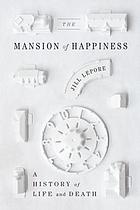
Lepore, Jill. The Mansion of Happiness: A History of Life and Death (Knopf, 2012). Harvard Professor of American history (and sometime MHS researcher) Jill Lepore’s latest work is a collection of essays, most of which began as pieces for The New Yorker, and are published here in expanded form. Despite its formidable title, Mansion is episodic rather than exhaustive, exploring American understandings of humankind — how humans begin, how we do and should live, how we die — in a series of engaging chapters on such topics as baby food (and breastfeeding), children’s literature (and children’s libraries), teaching sexual knowledge, parenting advice, and the medicalization of the end of life. Lepore is a skillful writer and deeply philosophical historian who believes passionately in the importance of translating her scholarly work into terms meaningful outside the academy. As an historian, I appreciate her deft use of primary source research in essays that range across time and space, making eloquent and thought-provoking connections between seemingly disparate historical events, cultural enthusiasms, and the persons and places of America’s past.

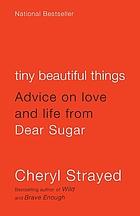
Strayed, Cheryl. Tiny Beautiful Things: Advice on Love and Life from Dear Sugar (Vintage, 2012). After my sister raved about Wild and Bitch magazine offered me a compelling and eloquent author interview with Cheryl Strayed, I realized it was time to read Tiny Beautiful Things. Over the years, I’ve definitely been exposed to the “Dear Sugar” columns Strayed wrote for The Rumpus, and in fact have a favorite quote from one such column right here on the feminist librarian (look to your left). Yet I’d never read “Dear Sugar” systematically, and in some ways I’m glad of that. While each individual column has power, taken together as a book-length collection Strayed’s attitude of kindness and care, the quality of listening and clarity of thought, become all the more beautiful and heartbreaking. The experience of reading Tiny Beautiful Things reminded me most strongly of the first time I cracked open Traveling Mercies. Cheryl Strayed’s voice is as raw and redemptive as Anne Lamott’s, though without the Jesus talk (for some of you that’ll be a plus, for others a minus — I urge you to read Tiny either way).

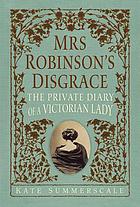
Summerscale, Kate. Mrs. Robinson’s Disgrace: The Private Diary of a Victorian Lady (Bloomsbury, 2012). In the summer of 1858, one Henry Robinson appeared before the newly-created divorce court in London and petitioned for the legal dissolution of his marriage to Isabella Robinson on the grounds of adultery. His lawyer put forward as evidence Isabella’s extensive and detailed diaries, which her husband had discovered while his wife lay ill with fever. The diaries, Mr. Robinson argued, provided evidence not only of Mrs. Robinson’s unhappiness in marriage (she wrote openly about her hatred for her husband and her plans for desertion once her children were grown) but also of her desire for other men, and — most damning of all — her longstanding emotional, and perhaps physical, affair with a friend of the family. Summerscale uses court documents, family papers, and the press coverage of the trial to piece together the story of “Mrs. Robinson’s disgrace.” What emerges is a fascinating tale of Victorian marriage law, sexual morality, conceptions of mental health and madness, and the unstable boundary of fact and fiction.

Valenti, Jessica. Why Have Kids?: A New Mom Explores the Truth About Parenting and Happiness (Houghton Mifflin, 2012).  Valenti’s latest is a quick read that I polished off earlier this week while waiting for Hanna in the waiting room of her physical therapist’s office. Using her own, fairly traumatic, entry into motherhood as a launching pad to explore the modern culture of mothering and parenting, Jessica Valenti (founder and former executive editor of Feministing) follows in the footsteps of Judith Warner (Perfect Madness), Susan Douglas and Meredith Michaels (The Mommy Myth) in critiquing the culture of “intensive mothering” and its unrealistic expectations of modern parents. For anyone who has read these earlier works (or, indeed, follows discussions about parenting in the feminist blogosphere), there will be little new here — though I think that in itself is noteworthy. Jessica comes from a generation or two past that of Warner, Douglas, and Michaels — yet still seems held hostage, to some extent, by the same societal judgyness around motherhood and family life. I found myself wondering, as I read, why the hell we continue to feel trapped by other peoples’ expectations. Obviously, public policy and law as a material effect on parenting options — but in the realm of “styles” and personal decisions it really should come down to what works for you and your family — if a given approach isn’t working, try something else.*

Which is part of the reason why I felt impatient with the way Valenti saves some of her most pointed criticism for proponents of “natural” parenting, whose philosophies and practices she felt betrayed by as a new mother coping with the aftermath of an emergency Cesarean and a daughter who needed months in the NICU to survive. While her own struggles are what they are and deserve to be articulated, this sometimes leads to lopsided critique — for example the pages and pages on the dangers of fanatic breastfeeding with only a single (very short) paragraph on the discrimination and judgyness leveled at parents who choose to (and are able) to nurse their kids. So it didn’t work for her, In a book that otherwise admirably refuses to take “sides” in the banner feminist parenting battles, I felt the treatment of the parenting practices Valenti rejected on a personal could have used more nuanced discussion from a feminist perspective.

*I actually think this holds true for any family, whether young children are involved or not.

booknotes: pray the gay away

28 Tuesday Aug 2012

Posted by Anna Clutterbuck-Cook in book reviews

≈ Leave a comment

Tags

gender and sexuality, in our words, politics, religion, sexual identity, sociology

Between the winter of 1987 and the summer of 1988, Boston-based journalist Neil Miller traveled across the United States “in search of gay America.” Though he spoke to women and men in the “well-trodden … urban gay ghettos” of Washington, D.C., New York City (the “gay metropolis”), and San Francisco, his primary purpose was to document the experience of queer folks living in what coasters refer to as “flyover” states, the “red state” regions of the American South, Great Lakes, Midwest, and Plains states. As Miller writes:

Acceptance and self-acceptance amidst the anonymity of cities like New York and Los Angeles and even Boston meant little, I was convinced. One had to travel beyond the large metropolitan areas on the two coasts to places where diversity was less acceptable, where it was harder to melt into the crowd … that was where the majority of gay people lived anyway, even if you didn’t read about them in the gay press or see them on the evening news (In Search of Gay America, 11).

What Miller found in his travels was that queer people in the heartland were often less visible than their East and West coast counterparts; they kept their heads down and their mouths shut, maybe living in a community where everyone knew they were gay but no one openly acknowledged it. Many of Miller’s interviewees talked about the social isolation, particularly if they were un-partnered; in the pre-internet era single lesbians and gay men often had to travel regularly to urban centers to meet and socialize with others like themselves.

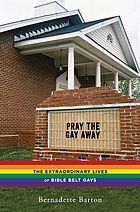
In the two decades since Miller’s travels, much has changed in the world of LGBT visibility, culture, and activism — yet our collective understanding of queer culture remains focused on urban, coastal areas as gay-friendly, while the rest of the country is dismissed (especially by those who don’t live there) as a place where “diversity is less acceptable” and life is harder for queer men and women trying to make their way in the world.  Bernadette Barton’s new study, Pray the Gay Away: The Extraordinary Lives of Bible Belt Gays (New York University Press, October 2012) both confirms and complicates this narrative.

A Massachusetts-born academic who moved with her partner to Kentucky, Barton was taken aback when a neighbor denounced homosexuality as a sin after Barton came out to him. Curious to understand how “Bible Belt gays” experienced this climate of casual anti-gay sentiment, she began interviewing gays and lesbians who grew up in what she terms the “Bible Belt panopticon,” the southern mid section of the nation in which tight-knit communities and strong evangelical, fundamentalist Christian culture come together to create and police conservative norms. When the normative culture is implicitly anti-gay, open bigotry is not needed to encourage self-policing. For example, Barton quotes an interviewee reacting to a church billboard proclaiming, “Get Right or Get Left”:

Get right means to be saved and get left means to be left behind at the Resurrection, but this also conveys the dual message of the church’s political affiliation as well. It’s very polarizing, and when I read it, it sounds like a threat.

Barton observes:

This is an example of how antigay rhetoric, especially to a Bible Belt gay, doesn’t have to say anything at all about homosexuality. It’s the associations. A Bible Belt gay knows homosexuality isn’t included in the right column.

Pray the Gay Away explores different ways in which this Bible Belt panopticon manifests, from family expectations to ex-gay ministries, gay-unfriendly workplaces and legislation to ban same-sex marriage. Throughout, the voices of Barton’s interviewees are powerful evidence in support of her thesis. One graduate student, for example, tells Barton about how his parents tried exorcism when they found out he was in a same-sex relationship. When he remained unrepentant they not only disowned him and cut all financial support, but also removed all of his belongings from his dorm room before they returned home. Through the support of his campus community, the student was able to remain in school — but the resilience of the child does nothing to redeem the horrific behavior of his parents.

I grew up in West Michigan, an area that is — though technically outside the Bible Belt proper — incredibly religiously and politically conservative. Reading Barton’s work, I found much to identify with in its descriptions of life in a community that resists difference and where anti-gay feeling is commonplace. I was particularly struck by her observation that in such communities, “gay” and “straight” are the only two categories a person can belong to. Anyone who is something other than straight is “gay.” You’re either “right,” after all, or “left.” That observation made me wonder whether it took me so long to recognize my own sexual fluidity in part because I literally had no language with which to describe myself.

Though I no longer have to live in a culture that makes it difficult (if not dangerous) to speak of my existence, I am mindful that what Barton terms the “toxic closet” effects everyone whom anti-gay bigotry touches, not just queer folk. My parents, for example, felt profoundly alienated when the city council rejected an anti-discrimination ordinance last year. And my grandmother is uncertain with whom she can safely share the joyful news of my marriage. The “Bible Belt panopticon” constrains us all.

At times, Pray the Gay Away seems to paint the Bible Belt as a monolithic culture of hate. I was pleased to see how careful Barton is to point out that she “deliberately sought out individuals who grew up in homophobic families and churches to best explore their consequences,” and that her narrative describes the normative culture of the Bible Belt, rather than attempting to describe all people therein. (For a broader examination of queer folks’ relationships with their families of origin, see the excellent Not in This Family by Heather Murray.) Barton’s conversations with gay Christians and gay-friendly church leaders, as well as her nuanced exploration of ex-gay ministries help show that even situations which appear toxic at first glance often contain more complex realities.

Yet ultimately, Barton argues that in the Bible Belt region “rampant expressions of institutional and generalized homophobic hate speech in the region bolster individually held homophobic attitudes and encourage those who have dissenting opinions to remain silent.” One lesbian student whom she interviews theorizes that it might even be accurate to identify these anti-gay attitudes and actions as “gay cultural genocide.”

I highly recommend Pray the Gay Away to anyone with an interest in contemporary queer experience, in Bible Belt Christianity, and the intersection of the two. I’d go so far as to say it’s required reading for anyone who cares about what it means to be gay in America today. Whether or not you’ve ever lived in the “toxic closet” yourself, too many of our fellow citizens still wake up there every morning. We owe it to them to listen to the stories they have so generously shared.

Cross-posted at In Our Words.

this is what (bureaucratic) gay marriage looks like [wedding post the sixth]

24 Friday Aug 2012

Posted by Anna Clutterbuck-Cook in our family

≈ 3 Comments

Tags

gender and sexuality, politics, wedding

Happy Friday y’all!

After a slight bureaucratic hiccough involving the misplacement of mothers’ maiden names by the town clerk’s office, Hanna and I finally obtained our marriage license last night, to be completed by our Justice of the Peace on September 14th. For those interested, here’s what the bureaucratic face of same-sex marriage looks like:

click image to embiggen

I will point out that ours is a mixed marriage between Archivist and Librarian (cue gasps of shock!) – likely much more threatening to this generation’s Brave New World than the fact we’re both women.

I dunno — does anyone else find themselves thinking of Hermes’ bureaucrats song from Futurama?

Comedy Central

blogging at In Our Words: we can give them words: clearing space for children to explore gender and sexuality

14 Tuesday Aug 2012

Posted by Anna Clutterbuck-Cook in think pieces

≈ Leave a comment

Tags

blogging, children, gender and sexuality, guest post, in our words

I wrote another post for In Our Words this week on how parents (and allies) can support children in their gender independence and sexual fluidity (I’m not sure why the editors lopped “sexuality” off the title I supplied).

To begin with, don’t conflate gender expression with sexual preference. Our culture does this constantly, whether in the assumption that princess boys will grow up to be gay or that women who are butch sleep exclusively with lipstick lesbians. Some of those boys will no doubt grow up with same-sex desires, and some women who refuse to wear skirts are queer. One does not lead to the other. While grown-up queers often retroactively identify nascent gayness in childhood gender rebellion (“I was never good at sports”; “I hated playing with dolls”) and the gender police often conflate gender non-conformity with queer sexuality, they’re two different aspects of identity and experience. Children negotiate gender roles from the moment of birth, when they’re assigned a gender and adults interact with them accordingly (see Fine and Rivers & Barnett in the reading list below).

Children are also sexual beings, it’s true, but sexuality in the adult sense is something we grow into. It’s a process. And presuming adult sexual preferences for a child — whether it’s teasing them about a playground “boyfriend” or assuming their gender non-conformity will lead to same-sex desire — is unfairly boxing them into predetermined categories. We cannot know what the gender and sexuality landscape will look like as they grow into adulthood, and we cannot know what words they will choose to describe themselves. All we can do is give them a multitude of words from which to choose.

You can check out the whole piece — including my “suggested reading” list (I’m a librarian after all!) over at In Our Words.

booknotes: after pornified

07 Tuesday Aug 2012

Posted by Anna Clutterbuck-Cook in book reviews

≈ 3 Comments

Tags

feminism, gender and sexuality, smut

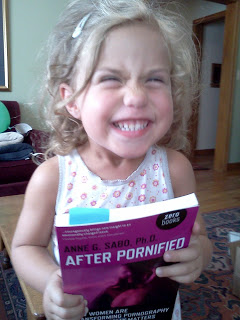
Anne’s daughter Lilly, to whom
the book is dedicated (via)

As readers of this blog know, I spend a not-inconsiderable amount of time reading, writing, and thinking about sexually-explicit materials. Not just histories and health texts, but also works of fiction and nonfiction intended to arouse. In other words: porn.

As as you may also remember, I have little time for categorically anti-porn feminists (e.g. Gail Dines) whose only way of critiquing porn is to attack it wholesale. Pornography — by which I mean, in the broad sense, material of any medium that is sexually-explicit and intended to involve the reader/viewer on a visceral level — is, like any other creative medium, a way for us as humans to make sense of our world. And discounting it wholesale seems nonsensical to me. Should we not, instead, engage in a critical discussion about what we do and don’t like about the current state of porn (there will, naturally, be differences of opinion here) and what we’d like to see more of moving forward (again, there will be no consensus — there creativity lies)?

Therefore, I was super excited when I first heard, last year, about Anne G. Sabo’s forthcoming book After Pornified: How Women are Transforming Pornography & Why It Really Matters (Zero Books, 2012). A follower of her blogs (Quizzical Mama; New Porn by Women; and Love, Sex, and Family), I knew Anne would have thoughtful and thought-provoking things to say about a genre of porn — motion picture porn — that I have had little experience with, and know little about. I was excited enough about the book to press the author for an advance review copy, which she was kind enough to send me (hooray!). Since that exchange earlier in the summer we’ve actually gotten involved in an ongoing conversation about sexuality and identity — along with Molly of first the egg — which has the potential to solidify into a collaborative project down the line.

\o/

Ahem. So, yes. It’s great to connect with other thoughtful people who believe, as I do, that pornographic materials deserve sustained attention through all manner of lenses: as art, as literature, as cultural artifacts, as evidence of human sexuality, as a medium of communication and (hopefully) cultural change. Which is the story that After Pornified tries — in part — to document: How female directors are creating a new kind of pornographic film and how these new films explicitly and implicitly disrupt the conventions of inequality in much of mainstream moving picture porn. In Sabo’s own words,

I have found that porn is not inherently bad; there has just been a lot of badly made porn. … I am interested in the authentic porn made by women who show a sincere commitment to radically change porn, featuring female and male sexuality with respect and realism. Where porn becomes a vehicle for women to explore their own sexuality and define it for themselves (6).

Focusing on specific film-makers, with extensive discussion of the scripts, visual technique, musical choices, and sexual expression and messages of each film, as well as directorial intent, Sabo takes us on a verbal tour of this “new porn by women” and seeks to persuade us that their innovations are worth paying attention to for what they say about both the possibilities of porn and the possibilities of sexual intimacy between human beings. Candida Royalle, Anna Span, Jamye Waxman, Tristan Taormino, Petra Joy, and Erika Lust among others are artists whose work and words are extensively featured in After Pornified‘s pages (a list of films discussed and an appendix of resources for further exploration are really useful aspects of the book).

In assessing the porn she reviewed, Sabo employed a formal set of criteria which she includes in chapter one. The two axes along which she critiques the films are “high cinematic production value” and “progressive sexual-political commitment,” including the values of gender equality and active subversion of received notions of sexual shame and guilt. These two criteria blur together in many cases, as when Sabo considers the way in which camera angle (the gaze of the viewer) reinforces power-over or emphasizes power-with dynamics within the sexual encounter. I really appreciated the way in which film qua film was brought to bear on the sexual messages being sent — particularly in Sabo’s discussion of the sexual gaze. The notion of sexual “objectification” as an inherent and universally-degrading aspect of (visual) pornography is a widely repeated truism within feminist circles, one which Sabo insists on complicating by pointing out instances of the “non-objectifying gaze”:

What I find striking about the way the two [characters in the sex scene she has just described] look at each other is the exchange of a desiring gaze while the camera for its part refuses to objectify either [male or female partner]. Instead, ‘objectification’ here becomes an affirming, adoring act (27).

For the most part, I am not the audience who — hopefully! — may be encouraged by After Pornified to think about pornography in new and less totalizing ways. I am already eager to explore the realm of sexually-explicit materials for new sexual scripts, and to participate in remaking what we think we know about what porn is and the ways it can be used in our society. Still, I was pleased, as a reader, to be introduced to a new type of material I have had little opportunity (time and money being the barriers that they are) to explore. While Sabo hasn’t necessarily sent me running up the street to our local Good Vibrations to purchase a DVD collection of Erica Lust or Candida Royalle productions, it has given me a sense of what’s out there should I decide it’s something I want to delve into more intentionally.

While reading my copy of After Pornified, I jotted down a few questions that the manuscript provoked for me — questions that I didn’t expect Sabo to answer within limits of a single text, but which I hope we will all think about as we carry this important work of re-thinking porn forward:

  • There’s an assumption running through After Pornified that men have, historically, been the makers and consumers of porn and that as women viewers and film-makers enter the porn market the content will shift because what women want in terms of porn is different. This is an assumption that many feminist thinkers (both pro- and anti- porn) share. One of Sabo’s interviewees, for example, relates her attempt to create porn films with “content that would appeal to women” (55). I find myself wondering what the basis is for our assumption that women want different things from men, porn-wise, and whether evidence bears this out? My guess is that women and men actually want more similar things in porn than the mainstream media would have us believe.
  • Building on that, I wonder whether female film-makers (the focus of Sabo’s study) are more likely to make feminist porn (using her criteria) than male film-makers? Can men make feminist porn? Are there examples already out there of men involved in feminist porn? It would have been interesting to hear from men involved in some of the films Sabo reviews, to find out what their intentions and experiences were, and what sort of porn they found satisfying to make.
  • Again, this is beyond the scope of Sabo’s study, but I found myself wondering about two constituencies while reading the book: Men who are ill-satisfied with mainstream porn and women who like porn that wouldn’t make the cut, so to speak — porn that wouldn’t fit the “new porn” criteria Sabo has laid out. In most feminist discourse about pornography, as I observed above, men are treated as satisfied customers. Porn is a genre catering to “men,” the narrative goes, and women are the tag-along partners or feminist trail-blazers. I would be very interested in research that complicated men’s experiences of pornographic material (without the shame/blame framework) and explored what they, too, may want that the current mainstream fails to provide. Similarly, I fear that a focus on “new porn” that is feminist and egalitarian could ignore the fact that there are people, including women, for whom certain aspects of mainstream porn are deeply satisfying. This book wasn’t the place to explore that in-depth, but I do think it’s important not to simply replicate a “good porn” (feminist/egalitarian) “bad porn” (all other stuff) dichotomy — something feminist history tells us is a trap all too easy to fall into.
  • I found myself thinking a lot about issues of access. Many of these films sound great, but they are often independently produced and distributed, subject to censorship laws, behind pay walls online, etc. Making money as a film-maker is obviously not a bad thing, but it’s interesting to think about the economic aspects of distributing “new porn by women,” and to think about where people who don’t have the funds to invest in a feminist porn collection might access pornographic materials. I haven’t looked into amateur porn sites much, but it would be intriguing to see if feminist sensibilities were seeping into home-made video smut the same way queer and feminist sensibilities are blooming within fan-fiction communities. As a general rule, I’ve had much better luck finding well-written, queer-progressive smut in fan-fiction spaces than I have in published erotica anthologies, even from imprints like Cleis Press.
  • Queer porn as a subgenre is not tackled in this book as queer porn, which Sabo elsewhere has acknowledged is a deliberate decision. She’s trying to encourage us away from queer sexuality vs. heterosexuality to just talk about sexuality — a goal I really appreciate. However, sometimes leaning away from speaking explicitly about “queer” or “lesbian” or “gay male” porn has the effect of erasing those perspectives; the majority (though by no means all) of the films Sabo discusses are about male/female encounters, and those which do feature women-on-women action or male-on-male action still seem to center around a heterosexual encounter as the driving force of the plot. So I guess — as someone who’s gotten a lot out of queer smut over the years — I wonder what’s going on in this “new porn by women” that so much of it is centered around male-female encounters? Perhaps it’s part and parcel of trying to figure out how to women and men can have equitable sexual intimacy in a culture that constructs them as inherently unequal?

Finally, I appreciated Sabo’s discussion, in her afterword, of how we bring our embodied selves into our work and scholarship. “There’s somehow something incorrect for a scholar to be turned on at work,” she observes — pointing toward the discomfort many of her colleagues have expressed (including those in gender studies) when she discloses that she studies porn (202). I was reminded of bell hooks’ piece on the the erotics of teaching, “Eros, Eroticism, and the Pedagogical Process” (in Teaching to Transgress, Routledge, 1994). hooks observes:

Entering the classroom determined to erase the body and give ourselves over more fully to the mind, we show by our beings how deeply we have accepted the assumption that passion has no place in the classroom (192).

hooks is writing more generally here about embodiment and emotional investment, about being full persons within an academic setting (the same could be observed about the workplace), rather than narrowly about being a sexual person. However, I see our discomfort with sexual topics and the notion of a person whose work turns you on — or has the potential to do so — as part and parcel of this separation from the self. Full persons, after all, experience arousal. We should not feel required to cut ourselves off from that feeling — we only need to learn how to express it appropriately (for example, it’s probably not a good idea to flirt with a student or share detailed stories of your sexual experience with an employee). As a culture, we seem incapable of recognizing the experience of arousal without picturing immediate sexual acts speaks to our broader cultural impoverishment when it comes to discourse about sexuality as an integrated part of our lives.

After Pornified is determinedly both scholarly and passionate, and thus a valuable contribution to the ongoing conversation about pornography’s place in our culture — both what it is and what it should or could be. I’m looking forward to seeing what sort of discussion it sparks, and where the work of feminist porn-making and porn critique goes from here.

blogging at In Our Words: holding the space: being good allies for our straight co-conspirators

01 Wednesday Aug 2012

Posted by Anna Clutterbuck-Cook in think pieces

≈ Leave a comment

Tags

gender and sexuality, guest post, in our words, politics, the personal is political

these folks desperately need allies (via)

I’m blogging at In Our Words again this week, with a post on how queer folks can be good allies for straight folks. This was a piece pitched by the blog editors that I thought was an interesting concept, and once I started thinking about it I realized I had some notions (I know, right?!) about how we might go about that. I ended up with one concept, five specific tips, and a word of caution. Here’s one of the tips:

While remembering fluidity is possible, it’s equally important to honor a person’s present self-identification. After all, we expect straight people to respect ours. Regardless of a person’s past relationship history or how they may identify in the future, it’s a basic tenet of respect to accept their self-understanding in the here and now. I’m as guilty as the next queer person when it comes to speculating who might be “on our team,” but too often attempts to uncover queer sexuality in straight-identified folks fall back on harmful stereotypes of sexuality and gender that reinforce, rather than subvert, heteronormativity (e.g. “he’s a ballet dancer, how can he expect us to think he’s straight?” or “that haircut is totally dykey”;  wink wink, nudge nudge). We need to trust straight people, as much as we trust queer people, to name their own desires as best they can.

Check out the rest at In Our Words.

If you’re a straight reader, I’d love to hear what you think queer folks can do to support your own resistance to heteronormative bullshit. And if you’re queer, I’d love to hear how you support your straight family and friends.

Share in comments, here or at IOW.

booknotes: here come the brides!

24 Tuesday Jul 2012

Posted by Anna Clutterbuck-Cook in book reviews

≈ Leave a comment

Tags

gender and sexuality, human rights, wedding

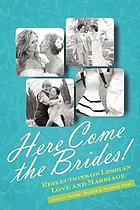
I recently finished reading the heartfelt collection Here Come the Brides: Reflections on Lesbian Love and Marriage, edited by Audrey Bilger and Michele Kort (Seal Press, 2012). After making my way through the super-angsty I Do, I Don’t (2004) earlier in the summer, I was a little burned out on the whole queers and marriage combination. I Do, I Don’t felt — and you know I don’t often say this — too political. Reading the earlier anthology I was left feeling weighed down with the social import of my marriage. Half the authors seemed to feel marrying will contribute to the revolution (I believe it will, but that wasn’t the deciding factor); the other half seemed to feel marrying was tantamount to betraying the revolution (if it is, answer me this: why does it terrify the conservatives so frickin’ much?). Throw in a salting of stories about heart-wrenching breakups and there was a serious deficit of personal joy. 

Here Come the Brides! is far from apolitical. From Heather Purser’s “Suquamish Family Values” (about the role she played encouraging her tribe to recognize same-sex marriage) to “Emily Douglas’ “We Have to Talk About It, Someday” (in which Douglas muses on how her job at GLAD as a recent college grad brought home how important marriage was — queer theories aside — to the actual queer community) Brides! interweaves the political and legal revolution taking place throughout North America as queer couples form legally- and religiously- recognized relationships with one another in the presence of family and friends. Yet overall, the energy of Brides! is much more effervescent and forward-looking than that of I Do — even when the topic was divorce or death. (Yes, I actually wept on the subway while reading Susan Goldberg’s “Four (Same-Sex) Weddings and a Funeral,” in which she describes how her wedding was a race against her mother’s cancer). Artist Patricia Cronin contributes an essay on the creation of her sculpture Memorial to a Marriage, which stands in Woodlawn Cemetery on the plot that will one day serve as Cronin’s grave — as it will the grave of her wife, Deborah Kass. Authors express their doubts and fears about marriage, describe the messiness of gay divorce (how do you get divorced as a lesbian in a state that refuses to recognize your marriage?). They tell hilarious stories of over-involved parents, wedding-cake sagas, and serial weddings — all to the same woman! — made logical or necessary by the patchwork of same-sex marriage laws in our Land of the Free and Home of the Brave.

I think, overall, I was struck by the normality of the essays in Brides! — the way the stories told are (mostly) human marriage-and-relationship stories, perhaps with a queer twist. In the years between 2004 and 2012 we — as a country, as a culture — have moved from a moment in which marriage equality was a dicey political proposition to a moment when it’s become (knock on wood) an historical inevitability. DOMA will eventually be ruled unconstitutional — perhaps as early as next year — and once the federal government is constitutionally required to recognize, once again, all state-sanctioned marriages then states will be able to move forward at their own two-steps-forward-one-step-back pace toward civil marriage for all consenting adult couples (and hopefully poly relationships as well, not long behind). And religious communities can continue their tedious-yet-necessary process of coming to terms with the full spectrum of love that is possible in this world. Brides! rides this wave and treats getting gay-married more or less the same as, well, getting married.

While a part of me enjoys the frisson of rebellion inherent in Hanna and I marrying today (yes, I get a kick out of the notion that by doing what I want in my own private life I’m freaking people out), I’m also grateful to all of the women (and men) who have done the emotional, political, and cultural work necessary to make it possible that our marriage is almost totally unremarkable.

← Older posts
Newer posts →
"the past is a wild party; check your preconceptions at the door." ~ Emma Donoghue

Recent Posts

  • medical update 11.11.22
  • medical update 6.4.22
  • medical update 1.16.2022
  • medical update 10.13.2021
  • medical update 8.17.2021

Archives

Categories

Creative Commons License

This work by Anna J. Clutterbuck-Cook is licensed under a Creative Commons Attribution 3.0 Unported License

Meta

  • Create account
  • Log in
  • Entries feed
  • Comments feed
  • WordPress.com

Blog at WordPress.com.

  • Subscribe Subscribed
    • the feminist librarian
    • Join 37 other subscribers
    • Already have a WordPress.com account? Log in now.
    • the feminist librarian
    • Subscribe Subscribed
    • Sign up
    • Log in
    • Report this content
    • View site in Reader
    • Manage subscriptions
    • Collapse this bar