• anna j. clutterbuck-cook
  • contact
  • curriculum vitae
  • find me elsewhere
  • marilyn ross memorial book prize

the feminist librarian

the feminist librarian

Tag Archives: history

Booknotes: Therese Philosophe

07 Saturday Feb 2009

Posted by Anna Clutterbuck-Cook in book reviews

≈ 5 Comments

Tags

feminism, gender and sexuality, history, simmons

Last Tuesday, in my intellectual history class (“The Modern Imaginary”), we discussed Therese Philosophe, a bawdy, “forbidden best-seller” of pre-revolutionary France. The novella is an erotic novel and philosophic treatise in which the titular character, a young woman named Therese, recounts her sexual and philosophic coming-of-age to her present lover, the unnamed Count. Not having previously read any one complete example of Enlightenment-era pornography, I had few pre-conceptions about the genre when I sat down to read Therese.

This is an anonymously-written work, published in 1740s, tentatively attributed to a marquis named Jean-Baptiste de Boyer and was a runaway best-seller, according to translator Robert Darnton. Yet even though the author is likely male, and his understanding of the pleasures of sexual activity is definitely phallo-centric, the novel presents us with a complex, possibly even (early) feminist, understanding of sexuality. The novel is told from the point of view of a woman who discovers that sexual fantasy and sexual activity (whether alone or with a partner) can be a “healthful” and deeply gratifying part of her life. Sexual activity is assumed to be pleasureable for both women and men, and there is little differentiation between how women and men experience that pleasure, at least physically. Women, as well as men, for example, are encouraged to masturbate. At the same time, the characters acknowledge the material vulnerability of women who engage in heterosexual activity: the fear of pregnancy and death in childbirth; potential loss of social standing which will threaten their ability to contract a financially stable marriage. Therese and her mentors negotiate with their sexual partners over what sexual activities are acceptable given these real-world constraints, and those conversations serve as both philosophical debates and integral to the erotic encounters themselves.

Some of the students in the class were skeptical that this text constituted “intellectual history,” and in addition there was a lot of resistance to reading the sexually-explicit passages as necessary or integral to the intellectual importance of the work. Their impulse was to argue that either the smut was a ploy to sell the philosophy, or the philosophy was an excuse to write the smut. Either way, they considered the sex was gratuitous to the historic or intellectual importance of the piece. I would actually argue the opposite. In Therese Philosophe, it’s not the sex or the philosophy that are the “real” reason for the novel’s existence — it’s the sex and the philosophy. Both are necessary to make the story work. More importantly, I would argue that it’s not just the philosophy that works better because of the sex, but the sex that works better because of the philosophy.

Reading this one example made me curious to sample more 18th-century erotica and see how gender and sexual negotiation are portrayed. Is Therese an exceptional voice? And is is possible to uncover why her story was so compelling to the readers who purchased it is such great numbers that it became a best-seller? I am also fascinated by the similarities, as well as the differences, I see between how human sexuality and sexual relations are portrayed in Therese and how they are written in modern-day erotica. Perhaps that project can be thesis number three or four . . . !

Cross-posted @ feministing community.

Monstrous Regiment(s) of Women!

23 Friday Jan 2009

Posted by Anna Clutterbuck-Cook in book reviews

≈ Leave a comment

Tags

feminism, history

Apparently, there’s a new anti-feminist documentary out, The Monstrous Regiment of Women, that — according to their own website — “goes all out to demolish the feminist worldview . . . from a consistently Christian perspective.”

*giggle*

Maybe it’s the fact that I’m still suffering from a head cold, which seems to leave me prone to the giggles, but I have to say I find this project really amusing.

You see, that particular quotation* has been used before . . . and to much better effect, at least in my humble opinion. In the interest of doing my part to maintain The Feminist Worldview (is that the same as having a Feminist Agenda?) I thought I would take this opportunity to highlight them here.

As it happens, just this past weekend Hanna bought me a copy of Terry Prachett’s discworld novel, Monstrous Regiment, which follows the adventures of the intrepid Polly who, under and assumed masculine identity, has enlisted as a private in a ragtag company of soldiers in order to find her brother Paul who’s gone missing at the front. I am only about seventy-five pages in, but so far I have enjoyed a great deal of satire, bawdy slapstick comedy, at least one vampire of ambiguous gender, and a very satisfying pub brawl.

A slightly more serious — though, I would argue, no less lighthearted — meditation on gender and politics can be found in Laurie R. King’s second installment of the Mary Russell/Sherlock Holmes series, A Monstrous Regiment of Women (to which I owe the source of the quotation — King is always scrupulous in her citations!). This chapter of the Russell-Holmes partnership sees Russell coming into her own in 1920s London as an academic and as a sleuth as she tracks down the person or persons responsible for a series of murders all related to the life of a charismatic feminist theologian.


*The quotation is taken from the title of a polemic by John Knox (1505-1572), The First Blast of the Trumpet Against the Monstrous Regiment of Women, an attack on the regime of Mary Tudor and Mary Stuart in Britain, published in 1558.

Looking Back/Looking Forward: History

13 Tuesday Jan 2009

Posted by Anna Clutterbuck-Cook in my historian hat

≈ Leave a comment

Tags

children, history, simmons

As we enter 2009 — and before I get lost once again in the maze of a busy academic schedule — I thought I’d post a few items on the projects I completed this fall and the projects that are up for the spring semester.

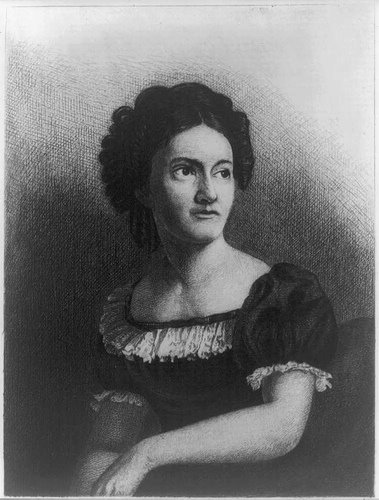
As I wrote at the beginning of last semester, this past fall I took a history seminar in the “American Renaissance,” the era of great political and social upheaval took place during the decades leading up to the Civil War. The paper that came out of that course was “Inspiring ‘Right Feelings’: Children and Childhood in Lydia Maria Child’s The Mother’s Book.” Child was an author and activist whose parenting manual, The Mother’s Book, published in 1831, incorporated many of the latest ideas about human nature, development, and education emerging from the Romantic movement and also the social justice movements she was involved in. I was principally interested in the way Child did, and did not, make connections between her political activism children’s rights. As I wrote in my introduction:

I am interested in the central role of education as a means of both self-improvement and social control plays in the parenting model Child puts forward. Belief in education as a means of self-improvement and liberation from dependence was a common thread in many antebellum reform movements. Access to education, and the role of education in ending the intellectual and material dependence of blacks and women, was, for example, a central tenet of both the women’s rights and abolitionist movements—both of which Lydia Maria Child ardently supported. Yet within The Mother’s Book Child shies away from any radical challenge to parental authority, proscribing children’s moral and intellectual independence by casting adults—particularly mothers—in the role of vigilant guardians of their children’s innate good nature.

While I hesitate to say, at this point, whether the specific topic of this paper will be relevant to my thesis, the themes of political activism, education, and the position of children and youth in American culture are definitely recurring themes in my research and writing.

Up for next semester: I’m not sure what it says about me that my heart thrilled when I got the book list for my spring course in intellectual history and saw that we would be reading complete works by Darwin, Nietzsche, Freud, and Foucault — as well as (I am sure) selections of many other influential thinkers from the 19th and 20th centuries. I’ve encountered all of these crazy guys before and always walked away with something fascinating to ponder . . . even if Nietzsche makes me want to slap him and Freud did cause me to throw a book across . Hanna thinks I’m touched in the head for enjoying Foucault, but I’ve had a fondness for the man ever since using Discipline and Punish for my very first history/philosophy paper on children’s rights.* And then there’s the way he throws around words like panopticon with wild abandon . . . Stay tuned for what project emerges in May!

*Fall 2001, at the Oregon Extension program: “The Radical Belief that Children Are People.” Did I mention something about a through-line in my research . . .?

Image of Lydia Maria Child borrowed from Flickr.

Looking Back/Looking Forward: Teaching

11 Sunday Jan 2009

Posted by Anna Clutterbuck-Cook in my historian hat

≈ Leave a comment

Tags

education, history, simmons

As we enter 2009 — and before I get lost once again in the maze of a busy academic schedule — I thought I’d post a few items on the projects I completed this fall and the projects that are up for the spring semester.

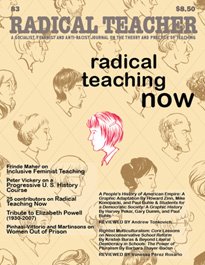
Teaching [will] need to be more boldly political than now, not less. And more seriously historical: things used to be different. They will be different again. — “Introduction Radical Teaching Now”, Radical Teacher #83

As with my internship at Northeastern (see below), I will be continuing my work as a teaching assistant for Professor Stephen Ortega in the Simmons history department this spring. Steve teaches Middle Eastern, Islamic and World history; I will be helping with the second half of the World Civilizations course we began in the fall. The autumn class ran from hunter-gatherer societies to the age of exploration (15th century), and this second semester we will pick up in the 1400s and continue on to the present day.

It was timely, therefore, to receive my most recent issue of Radical Teacher in the mail this past week, and find Peter Vickery’s essay “Progressive Pedagogy in the U.S. History Survey” inside. Vickery describes teaching a U.S. History survey course at a state college, to students for whom the class is a requirement, and many of whom are skeptical about the relevance of history — not to mention their own ability to actively participate in its creation. He writes:

In addition to skepticism, my students encounter an ongoing tension, namely the apparent contradiction between a key goal (finding out what actually happened and why) and a key lesson (history is constructed by historians). Far from being a source of despair or frustration, in my own mind the tension is integral to the joy of history. Learning and re-learning on the one hand the boundaries of possibility that inhere in the study and production of history and, on the other, the power of narrative, keeps history a stimulating field of endeavor.

Yet it can be difficult to convey the joy of that contradiction to students who are distracted and suspicious of the worth of such an open-ended quest. We’ll see what happens this spring!

Looking Back/Looking Forward: Internship

09 Friday Jan 2009

Posted by Anna Clutterbuck-Cook in library life

≈ Leave a comment

Tags

archivists, history, northeastern, simmons

As we enter 2009 — and before I get lost once again in the maze of a busy academic schedule — I thought I’d post a few items on the projects I completed this fall and the projects that are up for the spring semester.

My tenure as an intern at Northeastern University’s Archives will continue through the spring, this time as an official internship requirement for my second archives class at Simmons. Just today, I published the last finding aid for the small collections I processed this fall to make them available for research. In addition to my first, miniscule collection the Albert Hale Waite papers, I also processed the collection of Milburn Devenney, a social worker and AIDS/HIV activist from the Boston area, documents related to the history of Northeastern’s Disability Resource Center and course notes from the history department’s Western Civilization class.

Next week I will begin work on a much larger collection, the Carmen A. Pola papers. Ms. Pola is a Boston-area community activist who worked for a number of different social justice organizations such as Roxbury Unites for Families and Children and the Puerto Rican Festival. She served in the administration of Boston mayor Ray Flynn during the 1980s. We have over thirty boxes of unprocessed documents and photographs that I will be responsible for organizing so that researchers will have meaningful access to the contents of the collection. Wish me luck and watch for the results sometime this summer!

Booknotes: Stalin’s Russia

14 Sunday Dec 2008

Posted by Anna Clutterbuck-Cook in book reviews

≈ Leave a comment

Tags

history, politics


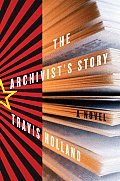
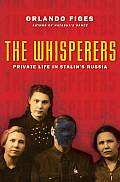
Before the end of the semester, in a burst of rebellious leisure-reading energy (read: procrastination), I began two books on Russian communism: Travis Holland’s 2007 novel The Archivist’s Story and historian Orlando Figes’ doorstop of a book, The Whisperers: Private Life in Stalin’s Russia. This was partly due to seeing, over the Thanksgiving weekend, a local production of Tom Stoppard’s play Rock n’Roll at the Huntington Theater. As is the case with all of the Stoppard plays I have seen or read, Rock n’Roll explores the complicated relationship between ideas and the people whose lives are affected by them: in this case, communism and a cast of characters caught up in the realities of life in Prague during the 1970s and 80s.

The devastating affect of Cold War communism on the lives of human beings is the subject of both of these books, one a work of fiction and the other of nonfiction. I am still reading both of them, but thought I would post a couple of quotations to give you a flavor of the texts and hopefully encourage you to check them out yourself.

Holland’s novel follows the story of Pavel, a widowed schoolteacher turned archivist, living in Moscow in 1939. In the opening pages, he is sent to interview the writer Isaac Babel, who has been arrested and taken to Lubyanka prison as an enemy of the people. During the course of their stiff conversation, Pavel tells Babel that his wife, Elena, has recently died in a train wreck caused by politically-motivated sabotage. “I can’t imagine people intentionally doing that,” Pavel says. “You’ve read my stories,” Babel replies:

“Your colleagues, when they came to arrest me at my dacha, they dragged my wife along. Did you know that? They made her knock on the door. In case I resisted. Can you imagine how she must have felt, to have to do that?” An edge of bitterness has crept into Babel’s voice. “You are not the only one who has lost his wife” (9-10).

In fact, as Figes tells us in The Whisperers virtually everyone in Russia during the Stalinist period lost at least one family member to violence perpetrated by the men whom the fictional Pavel is ordered to work for. For over six hundred and fifty pages he draws on diaries, oral histories, and other surviving primary sources in an attempt to piece together a picture of private life in a repressive regime. This picture is unquestionably grim. “For the mass of the population there were always two realities,” Figes observes writes:

Party Truth and truth based on experience. But in the years of the Great Terror, when the Soviet press was full of the show trials and the nefarious deeds of ‘spies’ and ‘enemies’, few were able to see through the propaganda version of the world. It took extraordinary willpower, usually connected to a different values-system, for a person to discount the press reports and question the basic assumptions of the Terror (273).

The strategies used by individual people to keep themselves from being submerged in Party Truth are both interesting, from a psychological and political perspective, and heartbreaking: “My inner self has not gone away — whatever is inside a personality can never disappear — but it is deeply hidden, and I no longer feel its presence within me” wrote Yevgeniia, a student of Leningrad Institute of Technology, in 1938, after both her parents had vanished into the Gulag (257). However difficult these stories of personal trauma are to read, I am looking forward to finishing both books for the powerful stories they tell about the behavior of human beings living in inhuman situations.

UDHR at Sixty

10 Wednesday Dec 2008

Posted by Anna Clutterbuck-Cook in my historian hat

≈ 1 Comment

Tags

history, politics

Anita Sharma over at RhRealityCheck brought to my attention that the Universal Declaration of Human Rights, turns sixty today. It was constructed in the aftermath of the Second World War by an international team of philosophers and political leaders and draws on the core ethical principles found in the major philosophical and religious traditions on the world. So in honor of the anniversary, I’m going to take a moment to recommend, A World Made New: Eleanor Roosevelt and the Universal Declaration of Human Rights, written by legal scholar Mary Ann Glendon, which I read with great delight and interest when it came out a in 2002. It’s a fascinating story of an ambitious international project undertaken during the rise of the Cold War, and documents an important moment in the history of the recognition of human rights.

Karen Armstrong

24 Friday Oct 2008

Posted by Anna Clutterbuck-Cook in my historian hat

≈ Leave a comment

Tags

history, politics

Today in the world history class for which I am a teaching assistant, we discussed an excerpt from Karen Armstrong’s history of the axial age religions, The Great Transformation. The professor brought in this twenty-minute video clip of Karen Armstrong’s speech accepting one of the three 2008 TED Prizes “to change the world.” I thought it was a nice introduction to some of her recent thinking on religion.

Fruitlands Museum Visit

06 Monday Oct 2008

Posted by Anna Clutterbuck-Cook in a sense of place

≈ 1 Comment

Tags

fun, history, outdoors, photos

For my history class, we had to choose a public history site connected to the transcendentalist movement to visit and report on; my friend Laura and I chose Fruitlands, the site of the short-lived (eight-month) utopian experiment undertaken by Bronson Alcott, his long-suffering wife and children, and a British friend Charles Lane. Below are the pictures I took on the museum grounds and at the apple orchard we stopped at on the way home. (The third individual evident in the pictures is Laura’s roommate Ashley).

To see a larger slide show with captions, click here.

The Politics of Maps

10 Wednesday Sep 2008

Posted by Anna Clutterbuck-Cook in my historian hat

≈ Leave a comment

Tags

education, history, politics, simmons, web video

God, I miss the West Wing.

I’m doing an exercise with the undergraduates in History 100 this Thursday to help them think about using maps as historical sources. As an introduction to my little preliminary talk, I plan to show them one of my favorite clips from The West Wing (Season 2; Episode 16). Thanks YouTube for having just what my geeky little heart desired!

← Older posts
Newer posts →
"the past is a wild party; check your preconceptions at the door." ~ Emma Donoghue

Recent Posts

  • medical update 11.11.22
  • medical update 6.4.22
  • medical update 1.16.2022
  • medical update 10.13.2021
  • medical update 8.17.2021

Archives

Categories

Creative Commons License

This work by Anna J. Clutterbuck-Cook is licensed under a Creative Commons Attribution 3.0 Unported License

Meta

  • Create account
  • Log in
  • Entries feed
  • Comments feed
  • WordPress.com

Blog at WordPress.com.

  • Subscribe Subscribed
    • the feminist librarian
    • Join 37 other subscribers
    • Already have a WordPress.com account? Log in now.
    • the feminist librarian
    • Subscribe Subscribed
    • Sign up
    • Log in
    • Report this content
    • View site in Reader
    • Manage subscriptions
    • Collapse this bar