• anna j. clutterbuck-cook
  • contact
  • curriculum vitae
  • find me elsewhere
  • marilyn ross memorial book prize

the feminist librarian

the feminist librarian

Tag Archives: history

multimedia monday: archival conservation in action

01 Monday Aug 2011

Posted by Anna Clutterbuck-Cook in media

≈ Leave a comment

Tags

history, librarians, MHS, multimedia monday, web video

This is a bit of shameless workplace and colleague promotion!

The Massachusetts Historical Society has just released its second YouTube video, featuring our art curator Anne Bentley discussing the process of conserving Thomas Jefferson’s Notes on the State of Virginia. It was directed and edited by my friend and colleague Heather Merrill.

You can view the digital version of Thomas Jefferson’s manuscript (which Anne talks about in the video) online at the Thomas Jefferson Papers Electronic Archive.

booknotes: the clamorgans

15 Friday Jul 2011

Posted by Anna Clutterbuck-Cook in Uncategorized

≈ Leave a comment

Tags

books, history, racial identity

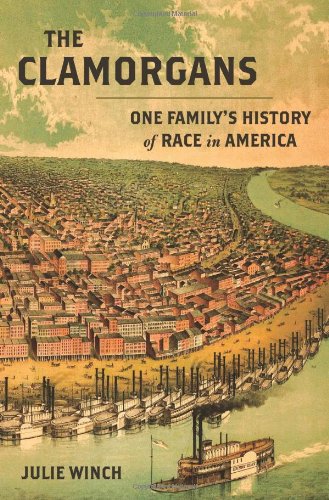
Last week, I picked up an advanced review copy of Julie Winch’s The Clamorgans: One Family’s History of Race in America (New York: Hill and Wang, 2011) from the free book cart at work. It was a relatively quick, though also a bit daunting, read. Winch, an historian based at the University of Massachusetts – Boston, focuses on the “lives and genealogies” of African-Americans in the Revolutionary War era and the period of the Early Republic. Her previous books focus on elite black families and individuals in Philadelphia; in The Clamorgans she turns her attention to a multiracial family based in St. Louis, beginning in the decades before the Louisiana Purchase (1803) and navigating its labyrinthian way to the mid-twentieth century.

The Clamorgan clan, at least as Winch documents it, began with a French entrepeneur (read: shady financial speculator) named Jacques Clamorgan in the 1780s, who settled in St. Louis when it was still (nominally) part of the Spanish empire. He had a number of children by three different women, all of whom were black and during one point during their lives were enslaved (some owned by Jacques himself). From this root, Winch traces in exhaustively-documented detail the fates of the descendents of this family tree. She is aided by the fact that Jacques Clamorgan was a litigious man who turned to the courts whenever he was unhappy with how his affairs (financial and familial) had been settled … and that his children and grandchildren and great-grandchildren followed suit. Jacques died in the early 1800s with extensive land claims, which he had finessed from the Spanish administrators, left unresolved following the Louisiana Purchase and the entrance of St. Louis and its environs into the expanding boundaries of the United States. For subsequent generations, these land claims became the promise of riches they turned to again and again whenever their (rapidly rising and falling) fortunes waivered.

The Clamorgan story is one not only of economic and social class but, inevitably, also a story of race, since all of Jacques Clamorgan’s descendents were in some measure mixed race, and often able to “pass” as white or of Native American ancestory. In a period where black and white society was so sharply divided, the relative ease of each Clamorgan descendent to move with ease in and out of white and black communities directed effected their economic and social fortunes. Some Clamorgans chose (or had no option other than) to rise to the top of the black elite in St. Louis or other locales around North and Central America. Other branches of the family were light-skinned enough that they attempted to cross the racial divide and pass themselves and their children off as “white,” usually for specific social and economic advancement (access to “white” jobs, schools, and neighborhoods).

The strength of this book is the sheer volume of research Winch has undertaken (I imagine with a bevy of student assistants and a very good data management system, though I could be mistaken!). Through the minute details offered up in court documents, newspaper columns, census records, and other archival sources Winch opens a window for readers onto the gritty details of how one specific American family struggled to gain a viable foothold in the volatile economic climate of the nineteenth century. Anyone who claims that our “addiction” to credit or predatory lending is an invention of our current epoch really just exposes themselves as a poor student of economic history: lines of credit, properties bought and sold on speculation, double-dealing lawyers — all of these make more than cameo appearances in The Clamorgans saga.

What I found myself wishing for more of, as both a reader-for-pleasure and an historian, was more analysis  and context. Winch provides us with a rich narrative of one family’s history … what I wanted to know was how their journey up and down the economic ladder and back and forth across the color line fit into broader national patterns. Was their story typical? Atypical? How so? Was their recourse to the law usual for the time and place in which they lived, or did it set them apart? What contribution does the Clamorgan family story make to our understanding of how race and class (and to a lesser extent, though indubitably present, gender) function in American society? How do all of the details Winch has uncovered about the Clamorgan clan inform the work of other historians on these topics? Do they fit into previous hypotheses about how social categories functioned during this period, or do they challenge those interpretations in new ways? It was this historiographical discussion that I found myself missing. I hope that historians who utilize Winch’s work in the future will be able to fill this gap in the scholarship.

Final verdict: Incredibly useful for historians who are studying this period or topics related to the history of race and class in America … engaging for anyone else who is willing to put in the effort to keep the sprawling clan Clamorgan straight for however long it takes to read the book!

30 @ 30: questions of identity [#1]

13 Wednesday Jul 2011

Posted by Anna Clutterbuck-Cook in life writing

≈ 1 Comment

Tags

history, thirty at thirty

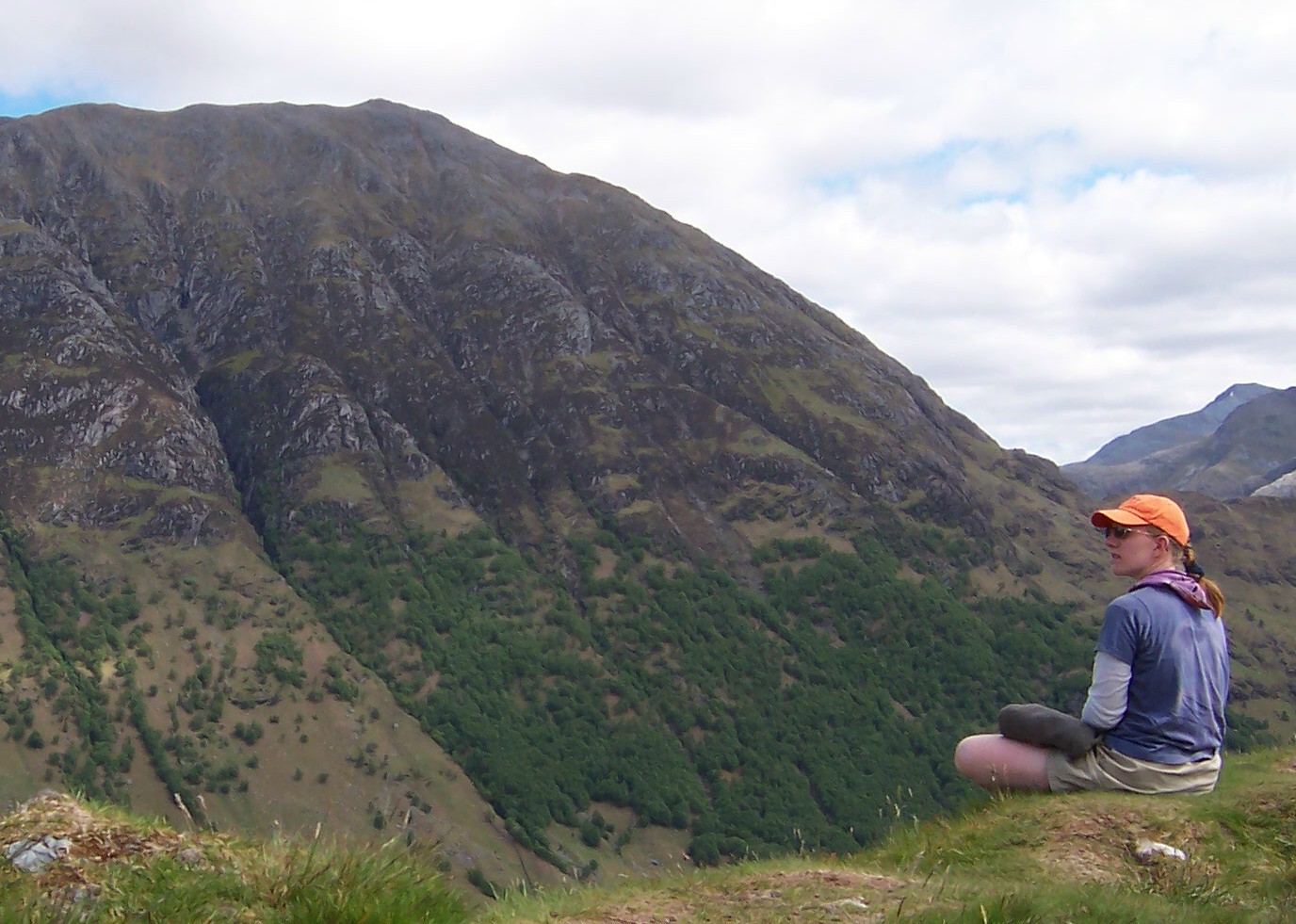
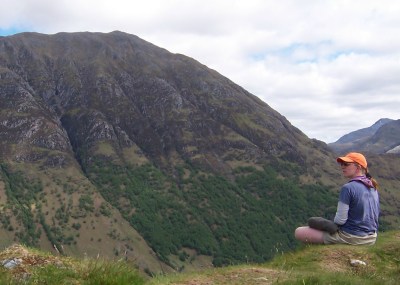
Glen Nevis, Inverness-shire, Scotland (May 2004)

When I was seventeen I enrolled in a college writing course the title of which was Questions of Identity. It was a required course intended to teach incoming first-year students what was expected of in terms of written work during their college years, but each faculty member was allowed a fair amount of autonomy in terms of content. My professor (for whom I harbored a major schoolgirl crush) framed it in terms of memoir. We read Annie Dillard’s An American Childhood and Tobias Wolf’s This Boy’s Life (I still remember the bit about the beaver in the attic). We read creative nonfiction essays about everything from the Holocaust to Italian cookery. We wrote autobiographical essays.

I loved it so much, I turned around and took another class from the same professor the following semester, where I wrote more memoir, and the semester after that as well.

What strikes me, looking back on the content of those essays is what the subjects of those papers reveal about my primary question(s) of identity. They were not questions of sex or gender, of religion or race … though I’m sure one could find markers of these aspects of identity throughout, they were not the categories I was then thinking in. I was simultaneously taking Christian Feminism and Feminist Theology, so sex and gender, sexual orientation and religion were very much on the table … but not what preoccupied me when it came to identity. I already took for granted being a feminist; sexual orientation was puzzling but not a burning concern. By 1998 I’d pretty much given up on the church, though I found theology a powerful language with which to discuss human rights and justice.

I didn’t choose these subjects to write about in English class. What I chose to write about, primarily, was friendship, family, and my experience with home education. Looking back, I would argue that these essays all implicitly explore how the experience of home education helped shape the nature of my closest relationships. As a teenager, I was working hard to establish relationships outside my primary kinship network (which I planned to maintain, but was ready to expand beyond). And I wasn’t particularly sure how — or, more particularly, how to do it well.

Two of my major papers during that academic year hinged on an examination of intense friendships — one a intimate childhood friendship that had ended painfully, another a portrait of a young man I had worked with the summer before and felt both attraction toward and irritation over. The following autumn brought a third paper that was a profile of my then-closest friend, a young man with whom I carried on a passionate correspondence (yes, these were the days when pen-pals actually used pens). I also authored two papers specifically about the history of home education — my own family’s experience and the broader movement — as well as pieces about my childhood family life and one paper for which I shadowed a friend who attended the local Christian high school.

Home education played a central role in all three friendship essays. The childhood friendship (looking back I would argue this was my first romantic female friendship) was with a girl from another family that home educated and our two families were extremely close until I was in my early teens. I made connections with my pen-friend (still a good friend today) through a long-distance homeschool writing group, and the man for whom I harbored complicated love-hate feelings was a grown homeschooler. Part of the attraction I had for him was the seduction of being close to someone seven years older than I who was an adult, but had had a (superficially) similar childhood experience to mine. While I didn’t necessarily conceptualize it this way at the time, looking back I would argue that part of the work these papers were doing was helping me to understand  how central my experience as a homeschooler had been to my childhood, and how central it would continue to be as I moved into adulthood. Would it color the relationships I formed? Would it be easier for me to form bonds with people who, like me, had grown up outside of institutional education? Would the experience of college alter my identity as a homeschooler, and if so what would that mean? What was my relationship as an individual to the larger (and wildly heterogeneous) community of other home-schooled people? To what extent did being a home-educated person make me “weird” or cause communication or cultural translation problems with my fellow students at college and the faculty under whom I studied? How would I be able to move into a culture (college) where I was no longer surrounded by like-minded individuals (fellow homeschoolers) and still retain those aspects of my identity that I felt were important?

When I was a young child my mother once asked me how many children  I thought were homeschooled like us. “Oh, about half,” I told her, after a moments consideration. This was an accurate reflection of the proportion of people we interacted with regularly who were home-educated or in more traditional situations. In other words, as a young child I assumed that my experience was normal. As I grew older and faced the skepticism and suspicion and saw friends approaching learning in radically different ways from my own family, I came to understand that our family’s choices were very different from those of the dominant culture. I realized that home education was something that marked me as an outsider. Those things that we feel mark us as different (from the implicit norm) are a more conscious part of our identity than those things that seem normal.

By the time I was seventeen, home education had become a self-conscious part of my identity, but also one that was precarious as I moved into college coursework. It became a project to understand what, exactly, that part of my identity meant to who I was as a whole person, and what it meant in terms of my relationship to others.

In some ways, this exploration is still ongoing. I don’t think it is a mistake that Hanna is also a grown homeschooler: in some ways our experiences were quite different, but nonetheless it is a part of our growing up that neither of us has to explain to the other, or defend to the other as an insider speaking to an outsider. While I’ve had close friendships over the years with people who never homeschooled, I continue to feel a particular kinship with those who have. And, as the subject of my Master’s thesis shows, my consideration of educational alternatives has continued to be central to my identity as a thinker and academic.

At the same time, the anxiety that attended my written exploration of my education and its connection to my intimate relationship bonds has abated considerably. I still think about how my growing up has shaped the person I’ve become (a lot!), but then I think a lot about most things in my life. It’s just the way I work. I still have a special place in my heart for home-based education, and feel that spark of automatic affiliation with folks who are homeschooled or homeschooling. Yet it isn’t so present in my life as it once was. At seventeen, it would have been one of the primary ways I introduced myself to others; now, new acquaintances often know me for months or years before, depending on the conversations we have, the topic arises. At seventeen, I likely would have felt unable to be known to others if home education remained undiscussed. At thirty, I am more relaxed about letting my personal history weave itself in to present-day narratives in its own time.

Recently, I’ve been thinking about what it would be like to mentor younger folks in the home education community; and I still have that oral history project with grown homeschoolers I’d love to complete! We’ll see in the next thirty, sixty, or ninety years how much it continues to play a role in my life.

You can read more about my reflections about home education in this interview I gave over at I’m Unschooled. Yes, I can Write.

multimedia monday: history of the menstrual cup

11 Monday Jul 2011

Posted by Anna Clutterbuck-Cook in media

≈ Leave a comment

Tags

history, multimedia monday, web video

via Tenured Radical.

Just a quick disclaimer: I personally use and love the menstrual cup, which is our house is referred to as “the horrendous device.” But before that I used and thanked the Goddess every month for tampons. So while I will happily share my positive experience with the menstrual cup I am not judgy about other peoples’ preferences if they happen to differ from my own. Bodies are all different!

booknotes: arms wide open

23 Thursday Jun 2011

Posted by Anna Clutterbuck-Cook in book reviews

≈ 2 Comments

Tags

children, feminism, gender and sexuality, history, memoir

There is a point toward the end of Patricia Harman’s Arms Wide Open: A Midwife’s Journey (Boston: Beacon Press, 2011) when author offers us another of the many particular birth scenes that punctuate the overarching narrative. It is the late 1970s and, after nearly a decade delivering babies as a lay midwife, Harman has entered medical school to become a Certified Nurse-Midwife. She describes the labors of a woman named Carla who will eventually deliver a son whom she names Joe. As the child is about to crown, the following scene takes place:

M.R. [Mary Rose, Harman’s mentor] lets go of my hands and reaches for a pair of scissors. At first I assume she’s getting ready to cut the cord, though the head’s not out yet, but she nudges me with her elbow and forces the scissors into my hand, then injects Xylocaine into our young patient’s perineum. Now I know what she wants me to do … cut an episiotomy.

So here I sit. The head of a dark-haired infant crowning before me. I know how to get this baby out without a laceration or episiotomy in two minutes, if Mary Rose and the enthusiastic nurse would leave me alone, but I am the student, enrolled to learn.

I take the scissors and cut, feel the skin crunch between the blades, see the blood ooze … and deliver the baby. It’s not a good feeling, but it’s done. The very pink body swivels out, Mary Rose cuts the cord, and the RN takes the tiny boy to the infant warmer.

“If the heart rate’s down, you have to cut an episiotomy right away,” Mary Rose whispers, “The OBs watch us, and if you hesitate, they’ll start coming in to every delivery to supervise.” She looks at the door. “We don’t want that” (246).

This scene is, I would argue, the hinge upon which this memoir turns. Arms Wide Open is a memoir in three parts. Part one (“Little Cabin in the North Woods, 1971-1972”) and part two (“Commune on the Ridge, 1977-1978”) are episodic accounts of Patricia Harman’s decade of experiments in communal, backwoods living. From an isolated cabin outside of Duluth, Minnesota to an intentional community in South Carolina, we follow Patricia Harman, her lover, her future husband, her sons, and a motley group of fellow-minded travelers through the ups and downs of community life. “Commune on the Ridge” ends with Patricia and her husband Tom’s joint decision to pursue medical degrees (he in women’s health, her as a midwife) — a decision which took them away from the commune and back into the mainstream frameworks of institutional education, hospital-based medicine, and city life. Part three (“Cedar House on Hope Lake, 2008-2009”) jumps ahead to the present, with reflections back upon some of Harman’s training and the years she and her husband worked together running a women’s health clinic. Each section is, in some ways, in dialogue with the other sections as the reader is invited to compare and contrast each location and living arrangement Patricia and her family create for themselves with their previous and future locations and arrangements.

The strength of Arms Wide Open is the immediacy of its narrative. In recreating her personal history, Harman has drawn heavily on journals she kept during the years she describes, and the resulting text bears the marks of that internal narrative: we experience the events in the book through Patsy’s senses, and what meaning is made of those events is made less through present-day commentary than with the voice of (possibly imagined) Harman’s younger self. Arms Wide Open is executed with loving care, and provides an unvarnished look at the struggles and disillusionment, as well as the joys of communal experimentation. For anyone interested in experiencing communal life vicariously through personal narrative, Arms Wide Open comes highly recommended.

It is this very sense of immediacy, however, that contributes to what I felt was one of the book’s central weaknesses: the lack of any larger framing narrative, any strong present-day voice that would exert autobiographical force upon these episodic scenes and encourage us to understand not only how Patsy-of-the-moment made sense of her life, but how Patricia Harman presently understands her past experience. I finished the book with lots of unanswered questions about how Patsy of the backwoods commune became Patricia the Certified Nurse Midwife working in a women’s clinic. It is possible that some of those questions may be answered in Harman’s first memoir, The Blue Cotton Gown (2008). At some point I may go back and read that volume. However, the point remains that readers coming to Arms Wide Open without the background of Cotton Gown are left wondering at the underlying values and choices that led Harman first in to, and then away from, the backwoods communal life. She hints around the edges about a background in New Left political action, anti-war protests, and even some jail time. The narrative implicitly endorses a very specific vision of responsible living on the earth, of childbirth and childcare, of gender and sexuality — yet the narrator never steps back from the moment to write in more overarching ways about how her politics and values have (or have not) changed over time.

I would have been very interested to know how she sees her present-day work connected (or not) to her earlier experiences, philosophically and practically. The final section, particularly, contains a lot of sadness and sense of displacement — while Harman and her husband seem to have found ways to live out their values in a more mainstream context, there is also a pervading wistfulness and at times outright pain at the way in which their lives have not played out as they hoped or expected. There is a sense that, having given up the communal way of life, Harman is not sure how to live out her most deeply-held values in a less unconventional context. Although she describes interacting with anti-war protestors and midwives who are a generation or two her junior, she seems profoundly isolated from the counter-cultures of the present day (of which, I would argue, there are plenty!). This loss of fellow travellers within the narrative speaks to me particularly, since I have spent many hours interviewing counter-culture-leaning folks from Harman’s generation about their past and present lives … and how they do and do not forge connections across age cohorts. In such an age-stratified society such a project can be difficult — even radical — but I would argue that to tie radicalism to a particular generation or stage in life is a deadly impulse if what we want to create is lasting social change.

On a similar note (although I imagine it is not her story to tell), I would also have been interested in her children’s reflections on the experience of early childhood in a communal household — and how they feel it shaped their own values and expectations as they grew into adulthood. From passing references toward the end, it sounded as though all three of Harman’s sons had chosen outwardly conventional life paths. Outward appearances can be deceptive (I could write my own biography to sound exceedingly conventional), but I would have liked further exploration into the whys and wherefores of Harman’s family as it came of age.

Ultimately, this is recommended reading for anyone who is interested in counterculture living, midwifry and childbirth, the historical period of the 1970s, and the art of memoir. If you’ve read The Blue Cotton Gown I’d be interested to hear your views on how the two books work together, and whether any of the silences I have mentioned above continue throughout.

from the archive: round-up of beehive posts

08 Wednesday Jun 2011

Posted by Anna Clutterbuck-Cook in linkspam

≈ Leave a comment

Tags

history, librarians, MHS

Seth Eastman on Dighton Rock
Courtesy of the Massachusetts Historical Society

Putting up the Picture of Jesus web video on Monday made me realize it’s been a while since I posted links to The Beehive, the official blog of the MHS, where I post occasionally on our shenanigans there as independent research library librarians. So here goes:

  • While on vacation (I know, I know! my boss chided me for it) I wrote a short post about the renewed interest in Harvard University’s first Native American graduates.
  • I highlighted a 1910 police commissioner’s report on Boston’s “houses of ill fame” (i.e. brothels) as part of our “from the reading room” series.
  • I spoke with a dedicated researcher who has been in virtually every day from 9-5 for the past two months reading through John Quincy Adams’ papers on microfilm.
  • And as promised in the last link round-up, a write-up of Brian Gratton’s brown-bag lunch talk on immigration restriction discourse, 1890s-1920s.

While not written by me, I’d like to share a post written by Laura Prieto, my thesis adviser and current research fellow at the MHS on some of the gems she has found during her time in the reading room: Research Fellow Finds More Than She is Looking for in Sarah Louisa Guild’s Diary.

And finally, Digital Projects Coordinator Nancy Heywood offers an historical perspective on tornadoes in Massachusetts, in light of last week’s storm system which brought with it funnel clouds and caused four deaths across the state: Tornado Strikes Worcester County in 1953.

Follow The Beehive directly if you’re interested in more frequent updates on the goings-on of a bustling library and archive. School may be out for the summer, meaning a break for students and teachers alike, but that usually signals the beginning of our busy season as vacationing genealogists, academics, research fellows, and casual visitors, descend to get the type of history fix that just isn’t available via Masterpiece Classics!

multimedia monday: photograph of jesus

06 Monday Jun 2011

Posted by Anna Clutterbuck-Cook in media

≈ Leave a comment

Tags

history, MHS, multimedia monday, web video

It’s been awhile since I posted a multimedia Monday post. This one is courtesy of my friend Heather, who is a former colleague at the MHS and now works in documentary film-making. While at the MHS, she worked on processing image permission requests (a job I now handle), so when she saw this film she figured it had my name all over it. I particularly love the stop-motion animation approach the film-maker used.


Photograph of Jesus by Laurie Hill in association with the Getty Images Short & Sweet Film Challenge from Hulton Archive on Vimeo.

I can’t say I’ve received a request for a photograph of Jesus … yet. But I’ve only been working on image permissions for five months, so I figure it’s only a matter of time.

You can read more about the context in which the film was made on Vimeo.

from the archives: fun with reenactment photography

14 Thursday Apr 2011

Posted by Anna Clutterbuck-Cook in library life

≈ Leave a comment

Tags

family, history, humor, MHS, michigan, photos

Some things never change.

This passed week at the MHS, some colleagues and I posed for mock Victorian daguerreotype photographs to promote our new photography exhibit on the blog. Here I am with my awesome boss, Elaine:

Anna (standing) and Elaine (seated)
at the MHS, April 2011

(The shawls are courtesy of Hanna‘s mom Linda.)

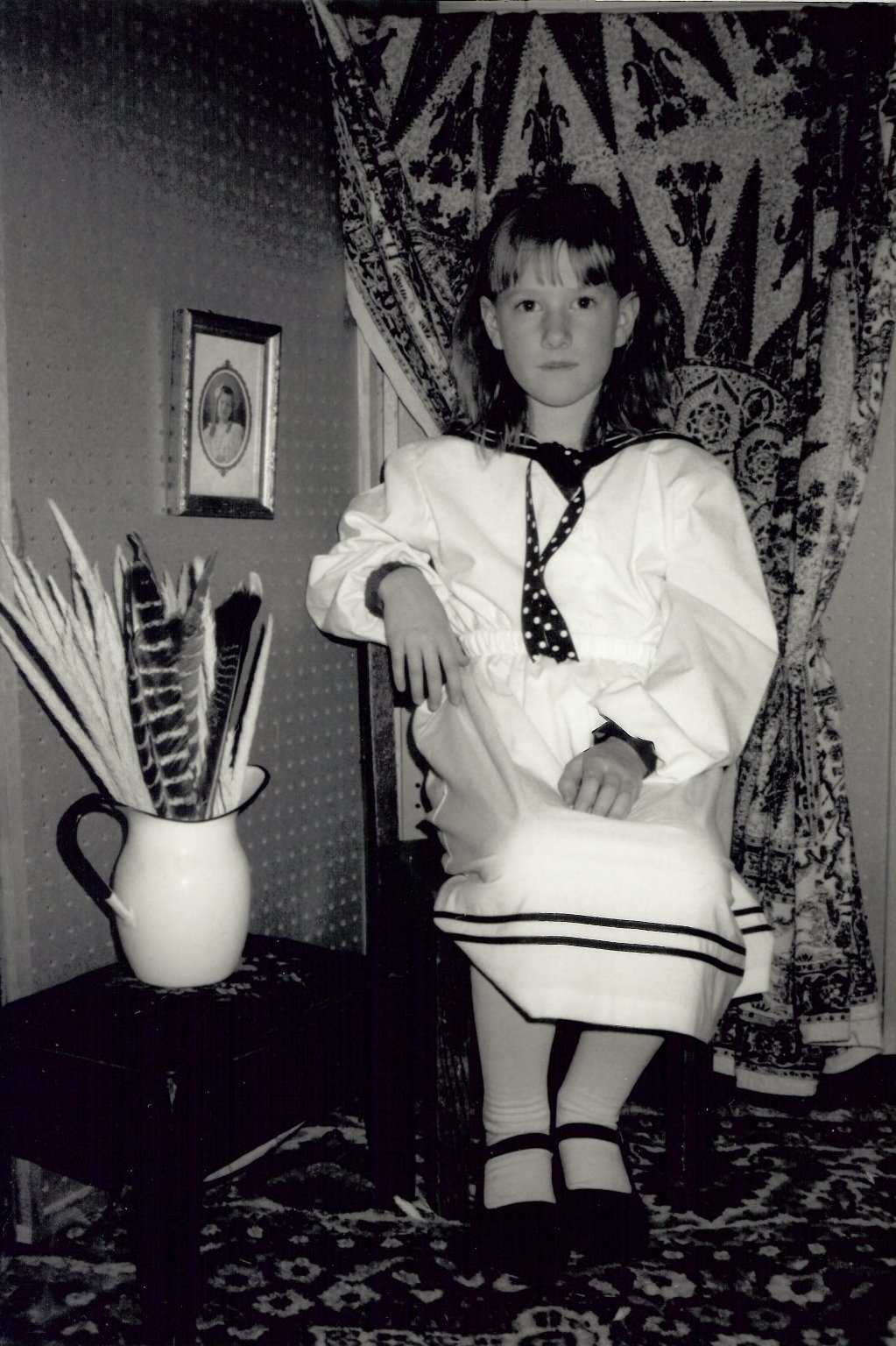
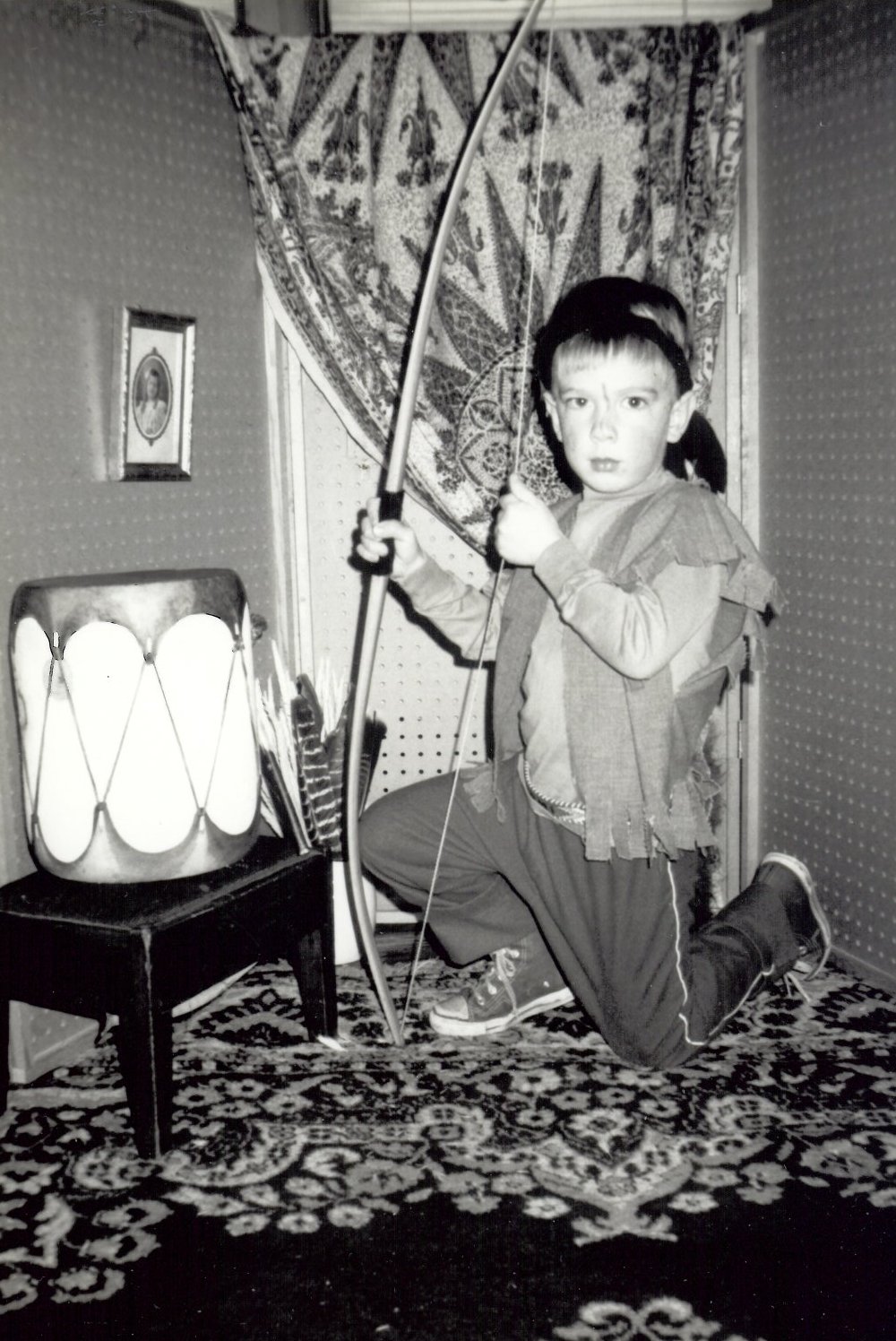
When I sent the blog post to my mother she responded by digging out these photographs, circa. 1988, when we created our own mock portrait studio and spent an afternoon posing for Edwardian-era black and white photographs.

Yes, before you ask, we were indeed that sort of homeschooling family.

Anna (age 7)
Brian (age 4)
Maggie (age 1)

from the archives: links round-up

15 Tuesday Mar 2011

Posted by Anna Clutterbuck-Cook in linkspam

≈ Leave a comment

Tags

history, MHS

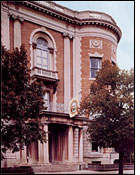
MHS (front view)

I’ve done a handful of posts for the Beehive recently about activities going on at the MHS and I thought I’d share them here for interested readers.

In February, we welcomed our third new library assistant of the year, Dan Hinchen, a former MHS intern. Thanks to the speed with which our new folks are learning, the library staff will be a well-oiled machine by the time our busy summer season rolls around.

I was lucky enough to recieve an advance review copy of Neil Miller’s book Banned in Boston, which tells the story of the New England Watch & Ward Society — a privately-funded organization that, throughout the early 20th century, had tacit permission from local, state, and federal officials to police “obscenity” throughout the Northeast.  Some of Miller’s primary sources are held here at the Society and I wrote a post about one of those collections, the Godfrey Lowell Cabot papers. I’m also planning a future Object of the Month display around one of the items in this collection I didn’t talk about: the deposition of a woman named Nellie Keefe who describes being sexually assaulted by a doctor whom she had sought out to treat her “nerves.”

I attended two brown bag lunch talks during the first week of March. The first was a presentation by staff from the Adams papers about the Adams family’s response to the French Revolution. The second was delivered by short-term fellow Mary Kelley, from the University of Michigan, who discussed her current research into how reading and writing practices operated to mediate kinship and friendship ties in the Early Republic. Post link to come in the next “from the archives” installment (since I was dilatory in writing it up).

As Mary Kelley was leaving us, another short-term fellow, Brian Gratton, arrived from Arizona State University to begin his work on Senator Henry Cabot Lodge and immigration restriction during the early twentieth century. Watch for a write-up of his brown bag discussion in the next round-up.

from the archives: reflections on month-the-first

03 Thursday Feb 2011

Posted by Anna Clutterbuck-Cook in library life

≈ 1 Comment

Tags

history, MHS

I’ve been in my new position at the Massachusetts Historical Society for about a month now, and things are still a mix of old and new. In part because I’m still part of the library staff, and the substantial (and most important!) part of my job hasn’t changed: I spend my days helping patrons find the stuff that will help meet, in the jargon of the library science world, their “information needs.” You can read about some of the folks we’ve had in this month over at The Beehive (the MHS blog):

Local Researcher Uses MHS to Populate Wikipedia Pages | 2011-01-28

Our Youngest Researcher | 2011-01-14

Alexander Kluger Presents at Brown Bag Lunch | 2011-01-13

Welcome Short-term Fellow Mary Kelley | 2011-01-12

In addition to my regular duties, I am now the coordinator of the image permissions requests that (surprisingly often!) come in from researchers who are seeking to reproduce photographs, artifacts, documents, maps, etc., in their soon-to-be-published books, articles, online websites, and exhibitions. Soon, I’ll be taking on the the citation permissions as well (when folks write simply to quote an unpublished document rather than visually reproduce it).

For the month February, we’re looking forward to welcoming two new staff members onto the library team, part-time library assistants who will be taking on the responsibilities I held as a part-timer myself. We’re looking forward to being fully-staffed again after six weeks of being down two staff members. More to come as the adventure continues!

← Older posts
Newer posts →
"the past is a wild party; check your preconceptions at the door." ~ Emma Donoghue

Recent Posts

  • medical update 11.11.22
  • medical update 6.4.22
  • medical update 1.16.2022
  • medical update 10.13.2021
  • medical update 8.17.2021

Archives

Categories

Creative Commons License

This work by Anna J. Clutterbuck-Cook is licensed under a Creative Commons Attribution 3.0 Unported License

Meta

  • Create account
  • Log in
  • Entries feed
  • Comments feed
  • WordPress.com

Create a free website or blog at WordPress.com.

  • Subscribe Subscribed
    • the feminist librarian
    • Join 37 other subscribers
    • Already have a WordPress.com account? Log in now.
    • the feminist librarian
    • Subscribe Subscribed
    • Sign up
    • Log in
    • Report this content
    • View site in Reader
    • Manage subscriptions
    • Collapse this bar