• anna j. clutterbuck-cook
  • contact
  • curriculum vitae
  • find me elsewhere
  • marilyn ross memorial book prize

the feminist librarian

the feminist librarian

Tag Archives: history

booknotes: so late, so soon

06 Tuesday Apr 2010

Posted by Anna Clutterbuck-Cook in book reviews

≈ Leave a comment

Tags

history, memoir, religion, thesis

Immersed as I have been in thesis research, I haven’t been doing so much actual book reading lately, at least of the kind that can be encapsulated in “booknotes” posts. But while I was on my travels out west in March, I read a couple of books I thought it would be worth mentioning here. And here’s the first.

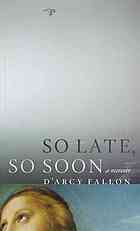
I found D’Arcy Fallon’s memoir, So Late, So Soon when I did an internet search (yes, using Google) for information related to Lighthouse Ranch, a Christian commune in northern California that one of my oral history narrators mentioned visiting as part of an Oregon Extension field trip in the mid-1970s. Fallon joined the commune after arriving there as a hitch-hiking teenager in the early Seventies, drawn in by the commune’s sense of order and purpose, eventually marrying a fellow communard and remaining with the community for three years, despite the increasing dissonance she felt between her own inclinations and the expectations of the commune’s leaders about her role as a Christian, as a woman, and as a member of the community.

Now a professor of composition and creative nonfiction a the University of Colorado, Fallon tells her story with lyrical compassion; although the depression and oppression she felt in her latter days as part of Lighthouse Ranch is palpable, she also manages to convey a clear understanding of why her younger self might have sought out this type of community, at this point in her life, and the difficult of extricating herself once she had become immersed. The book has brevity (I read it on one leg of my flight from Boston to Portland, Oregon) and offers rich details that give us insight into a particular subculture within the counterculture: that of the Jesus Freaks who adopted much of the outward, material culture of the hippies and melded it with a sometimes dogmatic adherence to Christian doctrine, theology, and religious practice. Anyone with an interest in either the counterculture of the era or in the dynamics of religious communities (communal or otherwise) will likely find it an interesting read.

quick hit: america’s earliest sex survey

05 Monday Apr 2010

Posted by Anna Clutterbuck-Cook in linkspam

≈ Leave a comment

Tags

feminism, gender and sexuality, history

The latest issue of the Stanford Magazine (April/May 2010) carries an awesome, thought-provoking article about the earliest-known sex survey that documents the habits and attitudes of American women around the turn of the twentieth century.

In 1973, historian Carl Degler was combing the University archives, gathering research for a book on the history of the family. Sifting through the papers of Dr. Clelia Duel Mosher, who taught in Stanford’s hygiene department around the turn of the 20th century, he came across a mysteriously bound file. Degler nearly put it aside, figuring it was a manuscript for one of Mosher’s published works, mostly statistical treatises on women’s height, strength and menstruation. But instead, he recalls, “I opened it up and there were these questionnaires”— questionnaires upon which dozens of women, most born before 1870, had inscribed their most intimate thoughts.

In other words, it was a sex survey. A Victorian sex survey. It is the earliest known study of its type, long preceding, for example, the 1947 and 1953 Kinsey Reports, whose oldest female respondents were born in the 1890s. The Mosher Survey recorded not only women’s sexual habits and appetites, but also their thinking about spousal relationships, children and contraception. Perhaps, it hinted, Victorian women weren’t so Victorian after all.

Continue reading The Sex Scholar, by Kara Platoni in the Stanford Magazine.

from the archives: "to lady patrons"

31 Wednesday Mar 2010

Posted by Anna Clutterbuck-Cook in my historian hat

≈ 4 Comments

Tags

archivists, boston, history, northeastern

Working on my digitization project yesterday, I came across this announcement printed in a theater program for a production of Shakespeare’s King Henry V performed at the Hollis St. Theatre here in Boston in April of 1901.

TO LADY PATRONS

The established rule at the Hollis St. Theatre, requiring ladies to remove their hats, bonnets, or other head-dress while witnessing the performance, applies to all parts of the auditorium, including the boxes and loges. It is essential to the comfort and convenience of all of our patrons in general that this rule be strictly enforced.

Ladies who are unwilling or unable to conform to the rule are earnestly requested to leave the Theatre without delay, and to recieve the price of their ticket at the box office.

I’m sure someone who knows a great deal more about theater history than I do could talk at more length about the shift in attitudes this represents in the cultural acceptance of women attending the theater and, bless me, being encouraged to sit in a public space with bare heads! I think my favorite bit is the “earnestly requested,” as it has such a polite imploring tone. Contrast that with the “turn off your cell phone” announcements today, which are so often couched in cajoling humor. Not that one method is better or worse, but I do think it says something about the audience that the managers of the theater expected their plea to be taken seriously.

booknotes: right (part two)

03 Wednesday Mar 2010

Posted by Anna Clutterbuck-Cook in book reviews

≈ Leave a comment

Tags

education, history, politics, thesis

Part one of this review was posted last Wednesday.

Strictly speaking, this isn’t so much a review as an extended quotation from one of the student interviews excerpted in Right and commentary on that particular quotation. Senior Jeremiah Loring, interviewed in March of 2007, was asked Do you think what you are doing is analogous to the counterculture, to what hippies were doing in the ’60s, that it’s a new revolution? Since I’ve been thinking a lot about the concept of “counterculture” (and how various scholars and lay folks define it) for my thesis, I was particularly intrigued by Loring’s response.

I have always liked the idea of a counterculture. That’s how Christianity should be. Not a subculture, because a subculture is something that, when a culture moves to the right or to the left, the subculture moves with it. However, a counterculture is everything that is outside of it, and we are solid. Regardless of where the culture goes, we are staying put. I think our society lacks that consistency. We have been blown by the wind of fashion. In this last election the nation had a left-leaning sweep, which was expressed in the polls. We tend to have a wishy-washy society. I think that’s expressed in politics by the growing number of moderates who do not have a consistent voting pattern, and I think it shows that they have lost a sense of principle trying to base their votes and actions on something solid and concrete. Christianity provides us with an anchor: if the culture moves, we are going to be pro-life. We are not going to change. The whole culture can leave us, and we are still going to stand there and say that abortion is wrong. If the time comes when everyone is saying abortion is wrong, and it’s outlawed, then we are fine. But, if it leaves us again, then we have to stand where we were before, because the Bible is eternal, and the word of God never fades.

Leaving aside the specific example of abortion, I was struck by two aspects of Loring’s definition of “culture” and “counterculture.” One was the way in which he describes counterculture as “everything that is outside” of culture. While I get the gist of his argument, I would argue this is a fundamental misunderstanding of the impetus for countercultural activity: that is, it is inherently oppositional. It is counter; it derives its purpose, at least in part, from offering a values system or worldview that is at odds from the dominant culture. The relationship between dominant culture and counterculture, then, is a dynamic one: as the dominant culture shifts, so too does the counterculture. This understanding of a counterculture is quite different from Loring’s concept of a counterculture that exists eternally, unmoving, outside of “culture.”

And that, indeed, is the second point of note in Loring’s response: he fails to identify is own Christian worldview as a culture — instead, it is outside of culture entirely. “The culture” and “the whole culture” are set up in opposition to his particular Christian evangelical, politically conservative understanding of the universe. I would argue that it is much more fruitful to understand cultures (sub, counter and otherwise identified) as cultures, your own or not. This is because cultures do actually change over time, and can be studied from an historical perspective — and even if Loring’s Christian counterculture holds eternal values (as he argues they do), from my perspective as an historian I would suggest that the way those values are expressed changes over time — and that those changes are worth situating in a cultural context.

Finally, I do think that the interviewer’s question is a valid one, and that there are legitimate, fruitful comparisons to be made between the type of resistance to modernity mounted by the 1960s counterculturalists and that articulated by the current fundegelicals (as my friend Amy used to call them). Indeed, I think it’s a shame that folks within both countercultures (if you will) don’t more often explore the values they have in common, as well as eying each other suspiciously from opposite ends of the “culture wars” spectrum. I’m not quite sure what would come of such a mutual assessment of shared values, but possibly it could help to clear up some of the confusion Rosin and others have over the nuances of home education, Christian fundamentalist-evangelicalism, and the struggle for political power.

multimedia monday: religion & politics

01 Monday Mar 2010

Posted by Anna Clutterbuck-Cook in media

≈ Leave a comment

Tags

history, multimedia monday, npr, politics, thesis, web audio

Welcome to the month of March! This month, I will be taking a two-week research trip to Lincoln, Oregon, in order to conduct oral history interviews with, and read through the personal archives of, faculty at the Oregon Extension. This work (fingers crossed) will provide the backbone of primary source material for my thesis on the early years of the program and its context in American countercultural, religious, and educational history.

Meanwhile, one of the alumni of the OE is a scholar of American religious history and author of numerous books on the subject of Evangelicalism in American life. One of his more recent books, God in the White House, charts the history of faith and the office of the Presidency during the latter half of the twentieth century. Here, you can listen to him discuss faith and politics with Terry Gross on NPR’s Fresh Air.

booknotes: "we’ll want the breasts exposed, and yet covered."

12 Friday Feb 2010

Posted by Anna Clutterbuck-Cook in book reviews

≈ Leave a comment

Tags

feminism, gender and sexuality, history, masculinity, thesis

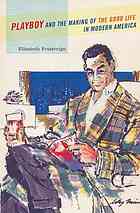
I love the things I can pick up and read in the name of thesis research. Take, for example, Elizabeth Fraterrigo’s Playboy and the Making of the Good Life in Modern America (New York: Oxford U.P., 2009). I saw the book by chance on the shelf at Borders a few weeks ago and while I would have read it eventually anyway (what’s not to like? sex! gender! money! drama!), I realized after pondering for a day or two that I could consider it background research on American postwar culture. So off to the library I trundled. (Or rather, off to the online catalog I clicked, forthwith to inter-library loan a copy through the Brookline Public Library).

And Ms. Fraterrigo did not disappoint. This dissertation-turned-book is a richly researched yet highly readable account of Hugh Hefner’s self-re-invention as the playboy of his dreams, a life he carved out for himself with relentless hard work and not a little luck after the dissolution of his youthful marriage and a series of unsatisfying desk jobs. Hefner, Fraterrigo convincingly argues, took various cultural elements in already in play (dissatisfaction with suburbia, anxiety about masculinity and women’s increased visibility in previously male spaces, a rise in consumer spending, postwar debates about what constituted the “good life,” and the scientific examination of human sexuality) and packaged them in a highly-successful formula that catapulted him to the top of a cultural and financial empire.

She draws two fascinating (if superficially unlikely) comparisons between Hefner and women writers of his day. First, she suggests a commonality in thought between Hefner and early feminist rhetorician Betty Friedan (author of The Feminine Mystique). Both Friedan and Hefner drew on their own personal experience to build a critique of the hegemonic postwar culture and its emphasis on the middle class, suburban nuclear family. In response to an unsatisfying homelife, both championed participation in the capitalist economy (as both worker and consumer) as a potential route to self-realization (see pp. 26-36).

Second, Fraterrigo points out the striking parallels between the ideal woman as articulated by Hefner in the page of Playboy (and in real life by the women who worked as Bunnies in the Playboy clubs) and Helen Gurley Brown’s “Single Girl,” found in the pages of Sex and the Single Girl first published in 1962. Both Hefner and Brown managed to carve out a place for singledom and pre-marital sex in culture dominated by the value of marriage and family. Yet they did so in ways that in no way challenged the status quo of inequitable gender relations or the notion of gender complimentarity (the idea that men and women “naturally” perform different, though complimentary, roles in society).

Brown’s Single Girl fit easily into the harmonious system of gender roles supported by Hefner. She made few demands on the male pocketbook [unlike a wife], aside from accepting the occasional gift or evening on the town, and instead made her own way as a working girl. Like the playboy, she strove to work hard and play hard too; yet she had no pretensions about achieving much power or earning vast sums of money through her role in the workplace. Instead, she accepted her marginal economic position and limited job prospects with a smile on her well-made-up face. Though she may not have enjoyed the same degree of autonomy and plentitude as the playboy, the Single Girl shared his sensibilities . . . [she] was both a handmaiden in the liberalization of sexual attitudes in the 1960s and the ascent of a consumer-oriented singles culture (132-33).

As the Swinging Sixties gave way to the cultural and counter-cultural revolutions of the early 1970s, Hefner found his idealized Playboy — once a symbol of avant garde youthful revolt against the status quo — derided by both men and women of the Movement cultures who critiqued his unabashed materialism and stubborn support of strictly segregated gender roles. He was taken aback by the “aggressive chicks” of the women’s liberation movement who pointed out that structural inequalities and oppositional gender typing (the strict separation of “masculine” and “feminine”) left women in a systematic disadvantage. Despite Hefner’s (and Playboy‘s) support of such feminist causes as women’s right to sexual expression, sex outside of marriage, access to abortion, and women’s participation in the workforce, he seems — according to Fraterrigo at least — to have balked at re-imagining a world in which the division of gender roles was less strictly dictated than it had been in the decades of his youth.

In this, Hefner is far from alone to judge by the continued popularity of “complementarian” arguments for “traditional” feminine and masculine roles among various conservative groups and even in some feminist circles — yet I am perennially puzzled by the amount of fear and resistance appeals to loosen gender-based expectations routinely encounter. While beyond the scope of Fraterrigo’s deftly-woven narrative about Playboy and the postwar culture of freewheeling consumerism it helped to legitimate, it is certainly a question which Playboy encourages us to ask: What, exactly, is at stake for individuals who defend complementary gender roles? The women’s liberationists of the 1970s thought they had the answer: unfettered male access to women’s bodies and the uncomplaining domestic support of housewives and secretaries. Fraterrigo’s tale, however, suggests that the answer is — while still containing those elements — far more complex (and more interesting!) than it appears at first glance.

booknotes: "virginity is not the opposite of sex"

27 Wednesday Jan 2010

Posted by Anna Clutterbuck-Cook in book reviews

≈ 1 Comment

Tags

feminism, gender and sexuality, history

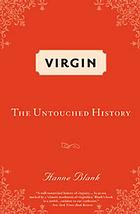
On the last weekend before the official start of the semester (when one is “thesising” there really is not any official start . . . it just keeps on going ’til you turn in that final draft) I picked up what often consistutes my “non-required” leisure reading: nonfiction works on sex and gender. Not that it’s the only thing that catches my fancy; in the past couple of weeks, I’ve also dipped into Hanna’s manga collection (Fushigi Yugi and Revolutionary Girl Utena which I’d been meaning to read for going on four years) as well as Tom Stoppard and Andrea Barrett. But then I was at the bookstore the other day and Hanne Blank’s Virgin: The Untouched History (2007) caught my eye.

My historian’s heart is always warmed by the promise of de-normalizaton: the ability of an author to take an idea or practice so ubiquitous in our culture that it is considered inevitable, “natural,” and common-sensical and persuade us to ask “why?” Why do we believe there is such a state — physical and metaphysical — as virginity? What, exactly, do we believe constitutes virginity or proof of virginity? And what if it became clear that virginity, in fact, does not materially exist . . . but is, in fact, a conceptual way of organizing human sexuality that has varied in detail enormously across time and place? This is the story Hanne Blank sets out to tell (however briefly) in her three-hundred page book: the story of how the non-existent thing called “virginity” has nonetheless come to exert enormous power over human thought and practice concerning sexuality — and specifically female sexuality.

I can’t say this book offered any huge revelations to the reader (me); though I’ve not read any other book-length treatments of this specific subject, I’ve certainly read enough histories of human sexuality and women’s sexuality specifically to understand that much of what we consider to be immutable fact about sex actually resides, under closer examination, in the slippery realm of ideological work: the various systems of thought human beings construct to make sense of the world and their experience within it. As Blank notes in her opening sentence, “by any material reckoning, virginity does not exist.” Yet humans have, across the centuries and around the globe, devised elaborate methods for determining virgin status that made sense to them in the context of their own belief systems. Why they have felt compelled to do this is the recurring (possibly unanswerable) question at the heart of Blank’s narrative.

I think what I found most thought-provoking about Virgin was Blank’s suggestion that “virgin” is actually a sexual identity that is taken up and performed quasi-separately from the individual’s actual embodied sexual experience — and that that identity contains within it multiple and often contradictory meanings. Blank suggests that there is something of a “virginity void” that exists in the world, allowing the concept of virginity to flourish through lack of examination: it is presumed to exist and we all assume we understand how it works, so our beliefs about it remain unchallenged — yet if we start to ask “why” we realize how disparate and often contradictory our understandings of virginity really are. For example, what do we make of the story Blank tells of a young English woman, Rosie Reid, who — despite being open about her identity as a lesbian in a long-term relationship with another woman — auctioned her “virginity” off on eBay to the highest bidder, making $14,500 in exchange for sex with a man who, presumably, believed that despite a sexually-active relationship Reid was still a virgin because she had not experienced penetrative heterosexual intercourse (pp. 9-12).

Most interesting to me, as a feminist scholar, is Blank’s suggestion that what she terms “parthenophilia” — or the eroticization of sexual innocence — is so normalized in our culture that we fail to study it,

Despite the strength and breadth of the erotic interest taken in virginity in our culture . . . the erotic desire for virginity has been continually avoided as a subject of intellectual and clinical inquiry, as if there were no reason to ask and nothing that could possibly be learned by asking.

The virginity void exists on the other side of the fence as well. As little as we know about the erotic desire for virginity, we know even less about the erotic lives of virgins. Specifically, we know very little about how virgins themselves might understand themselves to exist as erotic objects or how they might themselves be erotically affected by the mythology of the erotic virgin that so permeates the culture. Virgins are not exempt from the mythologies of their own sexual status, after all. A virgin may well be every bit as erotically caught up in the implications of her own sexual status as the man who fantasizes about popping her cherry, but she is even less likely than he to be asked about it . . .

Virginity is not the opposite of sex. Rather, it is its own unique and uniquely troublesome sexual entity.

The idea that abstaining from sex is, in itself, a sexual practice has no doubt been argued before yet possibly it has not yet been examined in tandem with the closed-related (though not identical) concept of virginity.

On a related note: those of you interested in a more contemporary analysis of how virginity works in American culture would do well to check out Jessica Valenti’s The Purity Myth (2009) which focuses specifically on the policing of adolescent female sexuality — largely through narratives of virginity and sexual “purity.”

Quick Hit: America’s Mary Wollstonecraft?

26 Tuesday Jan 2010

Posted by Anna Clutterbuck-Cook in Uncategorized

≈ Leave a comment

Tags

blogging, feminism, history, MHS

I have a new “lunch talk recap” up at the Historical Society’s blog that summarizes Eileen Hunt Botting’s recent talk about nineteenth-century author Hannah Mather Crocker and her Reminiscences and Traditions of Boston. Crocker was the granddaughter of Cotton Mather, a proud daughter of the Revolution, mother of ten children, poet, and author of an 1818 tract, “Observations of the real rights of women, with their appropriate duties, agreeable to Scripture, reason and common sense,” that holds the distinction of being the first book-length work on the subject of women’s rights to be published in America. You can read more over at The Beehive.

"by my word this is surprising news"

08 Friday Jan 2010

Posted by Anna Clutterbuck-Cook in my historian hat

≈ Leave a comment

Tags

blogging, history, humor

The city of Westerminster (UK) is serializing the diary of a nineteenth-century wharf clerk, Nathaniel Bryceson, online with the appropriate daily entries for the year 1846. His entries for the 4th and 5th of January, for example, read:

Morning, went to Tillman’s Coffee House, Tottenham Court Road, to read newspaper. From there to the Old Bailey to see preparations for the execution of Martha Browning tomorrow. After dinner took walk with Ann Fox across Westminster Bridge to Horsemonger Lane County Gaol, to see if any preparations were being made for the execution of Samuel Quennell tomorrow, but such was not the case. Returned back over Westminster Bridge, through St James’s Park, and continued walk through the Green and Hyde Parks. There rested ourselves on an old seat opposite one of the gates. Returned home through Oxford Street. Granny Shepard bought me a pair of worsted stockings for 1s 2d. Ann gave me a shilling off what she owes Granny, leaving only 8d unpaid.

followed the next day by Bryceson’s descriptions of the executions,

This morning at 8 o’clock the woman Martha Browning expiated her crime on the scaffold in the Old Bailey, for the murder of Elizabeth Mundell on the 1st of December last. The culprit showed great presence of mind on the occasion and ascended the gallows with a firm and steady step, and without any assistance. The body was cut down at 9 o’clock and Calcraft, the executioner, took his departure from Newgate to Horsemonger Lane County Gaol to offer his services for a similar occasion, namely to put in force the sentence of the law against Samuel Quennell for the murder of a shipmate, by shooting him in Kennington Lane. The execution took place on the top of the Prison over the front gates precisely at 10 o’clock. The culprit behaved himself becomingly on so solemn an occasion and ascended the scaffold without assistance. Remarks: this is the first execution of a female that I ever recollect in my time, also the first at Horsemonger Lane, and likewise the first time that two executions took place in the one day, to my recollection.

The transcribed diary entries are augmented by visual images from the period and places described in the entries, as well as occasional editor’s notes.

Information about Nathaniel’s life, the diary as a physical object, and the digital project, can be found at the City of Westminster Archives Centre website.

via Londonist.

Quick Hit: The Case of the Slave-Child Med

22 Tuesday Dec 2009

Posted by Anna Clutterbuck-Cook in my historian hat

≈ Leave a comment

Tags

blogging, boston, history, MHS

I have another post up at the Beehive recapping the lunch talk given by MHS fellow Karen Woods Weierman on the 1836 court case, Commonwealth vs. Aves, in which abolitionists in Boston sued a Southern slave-holding family in order to free a 7-year-old girl they had brought North with them while visiting relatives.

← Older posts
Newer posts →
"the past is a wild party; check your preconceptions at the door." ~ Emma Donoghue

Recent Posts

  • medical update 11.11.22
  • medical update 6.4.22
  • medical update 1.16.2022
  • medical update 10.13.2021
  • medical update 8.17.2021

Archives

Categories

Creative Commons License

This work by Anna J. Clutterbuck-Cook is licensed under a Creative Commons Attribution 3.0 Unported License

Meta

  • Create account
  • Log in
  • Entries feed
  • Comments feed
  • WordPress.com

Create a free website or blog at WordPress.com.

  • Subscribe Subscribed
    • the feminist librarian
    • Join 37 other subscribers
    • Already have a WordPress.com account? Log in now.
    • the feminist librarian
    • Subscribe Subscribed
    • Sign up
    • Log in
    • Report this content
    • View site in Reader
    • Manage subscriptions
    • Collapse this bar