• anna j. clutterbuck-cook
  • contact
  • curriculum vitae
  • find me elsewhere
  • marilyn ross memorial book prize

the feminist librarian

the feminist librarian

Tag Archives: photos

from the neighborhood: pancake day

05 Wednesday May 2010

Posted by Anna Clutterbuck-Cook in our family

≈ Leave a comment

Tags

domesticity, from the neighborhood, photos

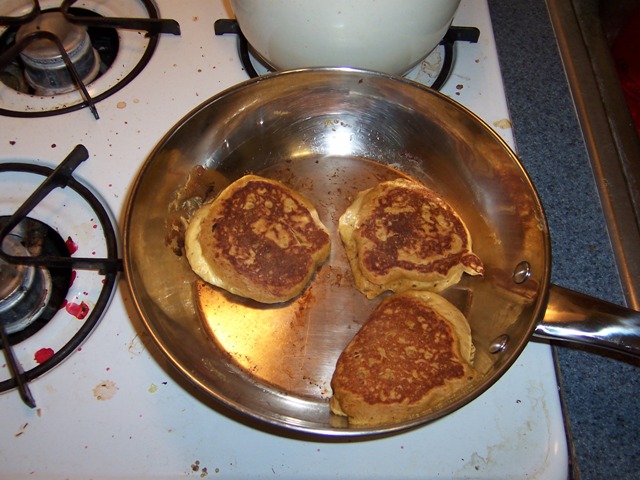
I piled a bunch of angst up in the early part of the week, and I thought y’all might be able to use a little break from my soapboxing. So here’s a picture of delicious corn molasses pancakes I made this morning. (Seriously: what could possibly be more anti-angst than pancakes??)

Wednesday is my thesis-writing day and so before Hanna and I take our morning constitutional and I drop her off at work before returning to craft eloquent sentences and pretentious footnotes, I get up and make pancakes. These particular pancakes are a recent find @ Joy the Baker and are awesome. Frankly, we can’t get enough of them.

from the neighborhood: i get birthday presents!

29 Thursday Apr 2010

Posted by Anna Clutterbuck-Cook in our family

≈ Leave a comment

Tags

domesticity, hanna, holidays, photos

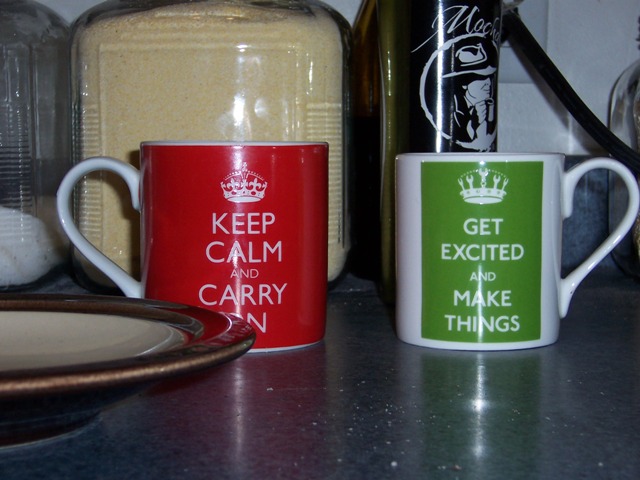
My 29th birthday (as many of you know) was at the end of March, and Hanna found this awesome coffee mug for me, all the way from McLaggan Smith Mugs in Jamestown Alexandra Scotland. It finally arrived yesterday, after a slight delay due to volcanic eruptions in Iceland

Regular readers of this blog may have realized that I am a longtime champion of nonstandard spelling, something which caused a great deal of tension between my mother and I during my early years (believe it or not, she had to work strenuously to convince me that writing was a worthwhile pursuit). “Excited” was one of the words she requested, eventually, that I learn how to spell the conventional way because I used it so often and she was getting tired of the variations on spelling I came up with.

The graphic is a riff on a 1939 British war propaganda poster that encouraged British citizens to “keep calm and carry on” in the face of German aggression. In recent years, lots of variations have cropped up, including Hanna’s favorite: “now panic and freak out” (featuring the royal crown, only turned upside down).

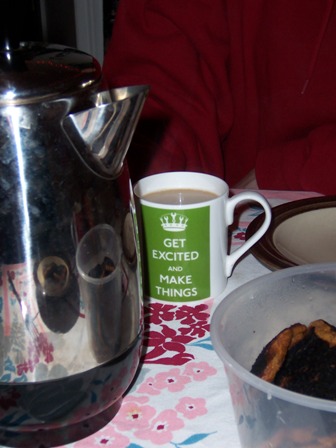
This morning I christened the mug with its first cup of coffee, made in our brand new percolator (Kenya AA from the Boston Common Coffee Co., also known affectionately as the Beanstock).

"our tea party has cookies!"

16 Friday Apr 2010

Posted by Anna Clutterbuck-Cook in a sense of place

≈ Leave a comment

Tags

boston, humor, photos, politics

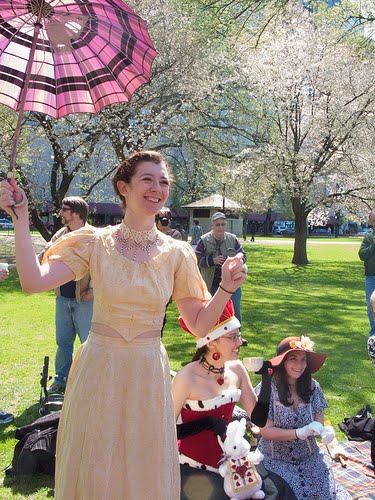
Right-wing celebrity of the moment (a girl can hope, yeah?) Sara Palin appeared in Boston this past Wednesday, April 14th, for a whinge session with the Tea Party movement folks (there are even some here in Boston, who knew?) who are pissed about possibly getting better health care and all. So a group of gentle souls decided to hold a polite counter-protest in the form of an actual tea party. The kind where you dress up and have biscuits.

These tea partiers dressed to the nines (or at least the four-and-a-halves) and carried pretty signs with such slogans as

“Tea Drinkers for Civilized Discourse”

“Impoliteness does not bring peace.”

“Our tea party has cookies!”

and

“There is no trouble so great or grave that it cannot be much diminished by a nice cup of tea” (courtesy of philosopher Bernerd-Paul Heroux).

Hanna and I were unfortunately both working and unable to make the occasion (not to mention our lack of proper attire!) but a couple of folks who did make it have posted pictures on Flickr, the photo-sharing site, which are a joy to behold.

Have a lovely weekend, one and all.

*image credit: Parasol! made available by pensive.wombat @ Flickr.com.

from the neighborhood: bear in shawl

12 Monday Apr 2010

Posted by Anna Clutterbuck-Cook in our family

≈ Leave a comment

Tags

domesticity, from the neighborhood, photos

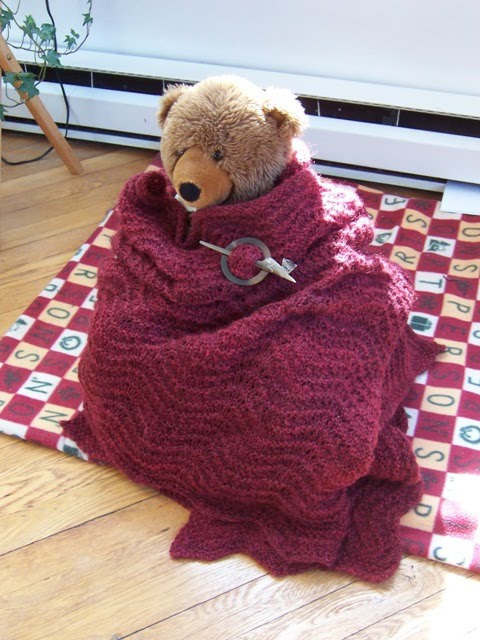
A couple of months ago Hanna’s mom sent her this hand-dyed, hand-spun, hand-knitted meditation shawl, and then my mom sent her a cat-shaped shawl pin to hold it in place. This weekend, we snapped a picture for both moms showing the shawl and the pin. Sebastian the teddy bear was our very patient model.

researcher @ work: pictures from Oregon

13 Saturday Mar 2010

Posted by Anna Clutterbuck-Cook in my historian hat

≈ Leave a comment

Tags

photos, thesis, travel

It’s Friday afternoon at the end of week one and I’ve taken a break from the 1970s to drive three miles up the road to the Green Springs Inn, where the coffee is horrid and the marionberry pie is superb . . . and most importantly, where I can enjoy internet connectivity indoors instead of perched on a park bench in the snow outside the local one-room schoolhouse!

Here is one of the five cabins that house students during the fall, and visitors year round; this is the cabin I stayed in as a student (taken from the porch of the cabin I am renting on this trip); I was in the tiny room next to the woodshed that looks like a mudroom because it was until they modified it to house a fifth student! Everyone here is grateful for the snow because they’ve had such a dry winter thus far that there is talk of fire season starting in April — months ahead of the expected timetable.

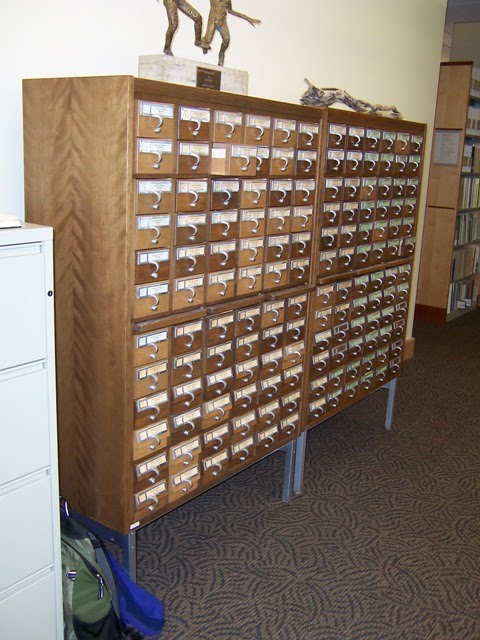
On Wednesday, I drove twenty-one miles down into the valley along Highway 66 (state highway, not the famous Route 66) to the town of Ashland, Oregon. How could you not love a town that proclaims “Libraries: The Heart of Our Community”? I was certainly smitten, which is why I stopped to take this photograph. I was on my way to the Ashland Public Library in any event, to see what they offer in terms of local history resources (not a lot in published form, it turns out). The reference desk was very courteous all the same, and the women staffing it were able to direct me to the Southern Oregon University’s Hannon Library, wherein is housed a a card catalog index of the Ashland Daily Tidings (the local newspaper). Yet another helpful reference librarian (yay reference librarians!) ushered me into a dark corner (metaphorically speaking) wherein was located this wonderful analog card catalog — yup, they really do still exist!

Sadly, the Daily Tidings (or whomever indexed it) did not see fit to print any stories about the Oregon Extension directly, but I did find a few stories from the late Sixties about the influx of hippies (yes, indexed under “hippies”) from the Bay Area. The locals seemed mostly perplexed rather than truly offended; they must have grown inured soon enough since by 1970 all references to hippies per se vanished. I plan to go back armed with the names of particular local communes and investigate some more tomorrow.

The folks here have been warmly welcoming and generous with their time and their records. My historians heart warms with a frisson of excitement at being able to go through “unprocessed” (in archives-speak) materials related to the early years of the OE, but it’s also a little terrifying to be entrusted with file boxes of other folks’ papers like this.

John Linton, one of the professors here (who arrived in 1981 and is thus, for now, outside the scope of my oral history project…in the future that may change!) has wandered by a couple of times and on his way past exhorts me to “do good work!” I’ll do my best, guys! You’re definitely giving me lots of great stuff to work with. Now I just have to live up to it!

On to week #2…

booknotes: right (part one)

25 Thursday Feb 2010

Posted by Anna Clutterbuck-Cook in book reviews

≈ Leave a comment

Tags

education, photos, politics, religion

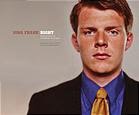
Jona Frank’s recent work of photojournalism, Right: Portraits from the Evangelical Ivy League, uses images to explore the world of Patrick Henry College. Patrick Henry is a four-year college founded in 2000 by Michael Ferris specifically to be “the Christian equivelant of the Ivy League,” as journalist Hanna Rosin writes in her introduction.

I discovered Right through this photo essay at Mother Jones (if you’re interested in seeing some of the images from the book) and since I’ve read Hanna Rosin’s earlier book on the subject — and am fascinated with home education and the Christian right generally — I knew I had to check out the book. Despite the fact Hanna looked askance when I brought it home.

This is actually going to be a two-part review. The second part focuses on a lengthy quotation from one of the student interviews; watch for that coming in a couple of days. Here, I’d like to make a couple observations about the way in which the photographer and two essayists (Hanna Rosin and Colin Westerbeck) approach their subject.

I am not practiced in visual analysis, and therefore feel slightly out of my depth in reviewing a book composed largely of images. The photographs are largely composed, rather than action shots, and highlight individual students, some of whom are photographed multiple times and several of whom were interviewed, with their responses providing text for the book.

I was left with the distinct feeling that the photographer and contributors (Rosin and Westerbeck) had missed an opportunity to really unpack some of the complexity of their subject. This is a frequent frustration I have with treatments of both the modern home education movement and recent American religious history: that both get characterized in broad strokes with little attention to nuance, and taken at once too seriously as a potential threat to mainstream society and treated gingerly as mysterious outliers rather than human beings with real effect on our world.

Rosin, as I have pointed out before, consistently collapses all home educators under the umbrella of Christian evangelical right-wing homeschooling — a lack of distinction that does a disservice both to the practice of home education and to the specific experience of those who home educate for explicitly Christian reasons. “The homeschooling movement,” she writes, for example, “is full of nostalgia for a prelapsarian age, before the Pull or even sewing machines. The result is that sometimes families seem frozen in an indeterminate earlier time” (9). While skepticism about the effects of modernity and industrialization on human life is certainly present in some homeschooling families, on the political left as well as the political right, I would argue that it is reductionist to speak of The Homeschooling Movement as a singular entity with one philosophical orientation toward technological and social change.

Likewise, I was struck by the wariness that Frank brought to her project, as voiced in her own narrative essay toward the end of the book.  She describes the difficulty of creating portraits of young people groomed for public service and intensely conscious of the image they are projecting in the outside world. She then turns to the uneasiness that the self-assurance of these young people engenders in her.

Elisa, in her trench coat, is self-assured and ready . . . One month after this photo was taken, she will be married, her name changed, school will be over, and she will be in her life, on her path. She’s done everything right. Yet when I look at that picture, I feel concern for her. It all seems so fast and she seems so young. But herein lies my fascination with the sense of assuredness these kids possess. Maybe she is not so young. Maybe she is tired of waiting.

The assuredness confuses me. I had vague notions that I would marry and have a family when I was twenty-two, but both were far off. What I wanted was exploration, travel, stories, youth hostels and road trips, part-time jobs and film school. Before commitment I yearned for freedom. This is part of being young in America, or so I believed, until I went to Patrick Henry (143).

I appreciate Frank’s candidness about her own complex response to the different path to adulthood that Patrick Henry students have taken: home educated young people, particularly those who come from families that take a critical stance to mainstream American culture (regardless of political orientation) often do reject notions of adolescence that are so ingrained in the American psyche that they seem commonsensical. For example, the idea that adolescence and young adulthood are “naturally” a period of rebellion and freedom from “commitment” — and that somehow that lack of commitment to experiences that are coded “adult” experiences (marriage, parenthood, careers) is crucial to identity formation.

I would argue, instead, that it is an experience perhaps crucial to a certain kind of identity formation. One with think of as natural, perhaps inevitable.  The normal state of being. Home-educated young people often make the world aware, simply by their presence, how much of what we take to be “normal” is, in fact, a product of particular decisions about childcare, education, and the expected path to full participation in society. As a feminist, I really do believe in the personal and political are interconnected.Certainly there are connections to be made between the chosen life path of Patrick Henry students and their (by and large, although not monolitic) right-wing politics. Yet the correlation is far from uniform. We can, after all, be just as self-assured about following life trajectory wholly at odds with the ideals that Patrick Henry students espouse.

Who knows. Maybe there’s a book to be written there somewhere. Maybe someday I’ll end up writing it myself.
from the neighborhood: doughnut puffs!

18 Thursday Feb 2010

Posted by Anna Clutterbuck-Cook in our family

≈ Leave a comment

Tags

domesticity, from the neighborhood, photos

Hanna and I had lots of not-so-fun stuff to do this passed weekend (bill paying, errand running, paper writing, laundry,) but we did have the pleasure of exploring some of the recipes in a couple of vegetarian cookbooks we checked out of the library, principally the doughnut puffs in How to Cook Everything Vegetarian, by Mark Bittman.


The recipe feels really weird to prepare, but is super easy:

1) Preheat oven to 425 degrees.
2) In saucepan melt 8 tablespoons butter (1 stick), with 1 tablespoon sugar, 1/4 teaspoon salt and 1 cup water until boiling.
3) Turn heat down and add 1 cup flour all at once, stirring continually until dough thickens and pulls away from the sides of the pan to form a ball.
4) Remove pan from heat and add eggs, one at a time, mixing thoroughly after each egg.


5) Drop spoonfuls of batter on a greased pan, dust with cinnamon sugar, and bake for +/- 15 minutes (the book says 10-15; in our stove it took about 20).

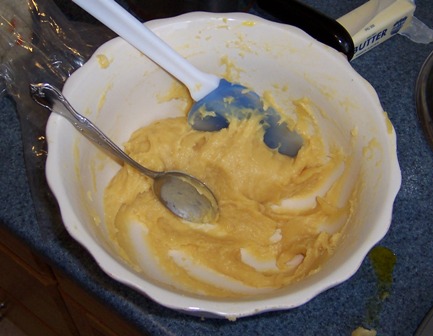
Doughnut puffs, uncooked, on pan and topped with cinnamon sugar. Image by Anna Cook.
They kinda reminded me of a richer, smaller popover (also tasty!). You can also deep-fry them in oil, but given the amount of butter in the recipe itself this seems like overkill, and the baked versions were just as nice!

from the neighborhood: totally chav tv

25 Monday Jan 2010

Posted by Anna Clutterbuck-Cook in our family

≈ Leave a comment

Tags

domesticity, from the neighborhood, photos

So after a week of (mostly) ranty posts (excluding Hanna’s guest-blogging, obviously), here’s a little beginning-of-the-week fluff for this Monday morning.

My friends (and MHS colleagues) Jeremy and Jamie recently gifted Hanna and I — for the price of hauling — a gigantic television that Jamie’s parents had passed on to her and for which she had no further use. Replacing our previous, dying, TV/VCR, this ginormous set now graces the corner of the bedroom and must be kept in line by Derek the Dalek, who sits sternly upon it to keep it in check while we are not home. When it’s not in use we feel compelled to drape it in a colorful cloth in order to prevent the goblins who live inside it from spying on us in our sleep.


While larger than probably either of us would ever have voted for if purchasing a set, it’s in perfect working order and allows us to watch Mr. Izzard in fine style. We’ve decided it’s entirely chav and we kinda like it.

from the neighborhood: january narcissus

19 Tuesday Jan 2010

Posted by Anna Clutterbuck-Cook in our family

≈ Leave a comment

Tags

domesticity, from the neighborhood, photos


It was a grey weekend here in Boston, and Hanna and I were both feeling a bit down, so when I walked up to Whole Foods for a few groceries and saw pots of yellow narcissus on sale, I decided we needed a pot. They always remind me of my grandmother’s yard, which turns into a profusion of blooms in the Michigan spring, even before the snow has melted. I brought this bunch home when they were still green shoots and by Monday morning they were already starting to bloom. (Ianto, our philodendron pothos* is keeping a close watch over it in this picture, as is Hanna’s crow who is currently perched between the alarm clock and Ianto and steadfastly refuses to reveal his true name.)

*corrected by my gardener friend Joseph; Ianto is now going through an identity crisis!

a "fear not!" angel

14 Thursday Jan 2010

Posted by Anna Clutterbuck-Cook in our family

≈ 1 Comment

Tags

holidays, photos


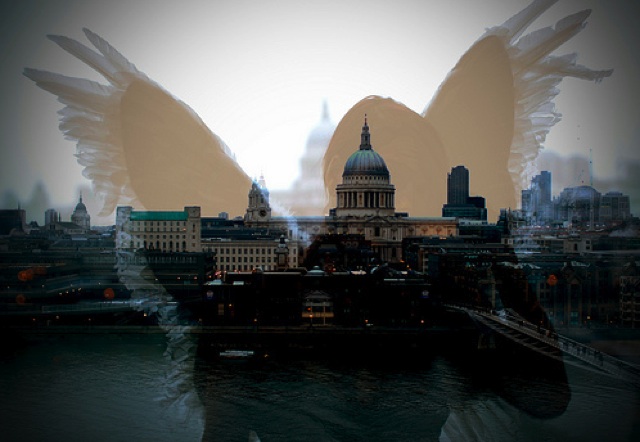
According to my mother, when I was a youngling my favorite character in the nativity play was the “fear not!” angel who comes to the shepherds in the field, in all his or her terrifying glory, to bring them “glad tidings of great joy” and generally scare their socks off. That’s the sort of wonderful-terrible feeling this photograph, via the Londonist blog, inspired in me when it came across my RSS feeds a few days. Ago.

That and it reminded me of Blink.

← Older posts
Newer posts →
"the past is a wild party; check your preconceptions at the door." ~ Emma Donoghue

Recent Posts

  • medical update 11.11.22
  • medical update 6.4.22
  • medical update 1.16.2022
  • medical update 10.13.2021
  • medical update 8.17.2021

Archives

Categories

Creative Commons License

This work by Anna J. Clutterbuck-Cook is licensed under a Creative Commons Attribution 3.0 Unported License

Meta

  • Create account
  • Log in
  • Entries feed
  • Comments feed
  • WordPress.com

Blog at WordPress.com.

  • Subscribe Subscribed
    • the feminist librarian
    • Join 37 other subscribers
    • Already have a WordPress.com account? Log in now.
    • the feminist librarian
    • Subscribe Subscribed
    • Sign up
    • Log in
    • Report this content
    • View site in Reader
    • Manage subscriptions
    • Collapse this bar