• anna j. clutterbuck-cook
  • contact
  • curriculum vitae
  • find me elsewhere
  • marilyn ross memorial book prize

the feminist librarian

the feminist librarian

Tag Archives: politics

And the world gets a little better . . .

29 Thursday Jan 2009

Posted by Anna Clutterbuck-Cook in life writing

≈ Leave a comment

Tags

feminism, politics, random kindness

So I don’t think the Obama administration is the Second Coming of Jesus Christ or anything, but I have to say the tension that has existed for the last eight years somewhere down near my uterus un-knotted a just wee small bit when I saw the juxtaposition of these two pictures.

Also: to the undergraduate standing in front of me in the coffee line who turned around after paying to say to me, “I saw you reading Feministe just now and I was so encouraged!” — it’s so nice to know there are other people out there in the real world who feel encouraged by the same things I do! You totally made my day.

Quick Link: "Politically Incorrect"

29 Thursday Jan 2009

Posted by Anna Clutterbuck-Cook in linkspam

≈ Leave a comment

Tags

feminism, politics

Nettle Syrup, over at Feministing Community, has a post up about the problem with people getting off on proclaiming how “politically incorrect” they are. This is something that really irritates me as well. As a commenter, Sandra, in the thread points out:

Political correctness means taking into consideration that not all of the world falls into the same category as you. It means taking the time to be inclusive. How are these bad things?

I understand that some people, particularly people who enjoy misusing their positions of institutional or political power, can use progressive or liberal — even feminist — ideals just as easily as they can conservative, reactionary ideals in manipulative, coercive ways. Yet the ability of any idea to be misused does not invalidate it wholesale, and doesn’t mean we should dismiss it out of hand.

Pre-emptively calling yourself “politically incorrect” before making a statement you expect will be offensive to someone you are speaking with, is tacky at best and a smoke screen for bigotry at worst. It’s an offensive attempt to neutralize any critique (no matter how legitimate) by framing all disagreement with the statement that follows as humorless legalism.* It was nice to see someone else take the time to call “foul!”

*The connotation, accurate or not, the term “politically correct” has acquired.

Goodbye Global Gag Rule!

24 Saturday Jan 2009

Posted by Anna Clutterbuck-Cook in think pieces

≈ Leave a comment

Tags

blog for choice, feminism, politics

I didn’t participate in the 2009 Blog for Choice event this year, marking the 36th anniversary of Roe v. Wade. However, following quickly on its heels comes a reason to celebrate: President Obama has signed an executive order reversing the Bush policy of denying U.S. funding to international health and family planning organizations that provided any information, counseling, or referrals related to abortion. Lifting the gag order will save women’s lives.

Oh, and have a mentioned recently how much I love Frances Kissling?

To ask . . . women to wait another day for Obama to reverse this policy in order to satisfy the fake “common ground” prolife religious progressives suggest – prevention without contraception – is disrespectful of women’s lives, let alone their moral autonomy.

Obama the (Im)perfect Feminist . . .

14 Wednesday Jan 2009

Posted by Anna Clutterbuck-Cook in think pieces

≈ Leave a comment

Tags

election08, feminism, politics

. . . Just like the rest of us!

I like this post by Jill over at Feministe discussing the Ms. magazine cover featuring Barack Obama in one of their “This is what a feminist looks like” t-shirts, a graphic that has caused some controversy in the feminist blogsophere (then again, what doesn’t cause controversy in the feminist blogosphere?) As Jill points out,

Obama has reportedly self-identified as a feminist, and has the legislative record to back it up. Is he a perfect feminist, or a perfect progressive? Not by any stretch of the imagination. Is he going to disappoint us over and over? Yeah, he’s already started. But he’s still pretty damned good, especially for a mainstream, center-left politician elected to the highest office, and I don’t really see the point in kicking him out of the club just yet.

Yup. I’m definitely looking forward to inauguration day!

UPDATE: There’s also a nice post on this over at Bitch Magazine.

Christmas (Un)cheer

23 Tuesday Dec 2008

Posted by Anna Clutterbuck-Cook in think pieces

≈ Leave a comment

Tags

feminism, politics

Not that I expect anything different from Pope Benedict, but c’mon dude. It would be nice if around the Christmas holidays you could show a little more compassion and demonstrate that you’re not completely out of touch with real-world problems. But no.

Gay groups and activists have reacted angrily after Pope Benedict XVI said that mankind* needed to be saved from a destructive blurring of gender. Speaking on Monday, Pope Benedict said that saving humanity from homosexual or transsexual behaviour was as important as protecting the environment.

And a note to the TimesOnline: why oh why have you decided that now is the time to re-hash this tired old story about inter-generational feminist conflict?

“One of the most unappealing things about the feminist movement right from its inception was its tendency to judge other women,” says Roiphe. And, given the polarising of opinion between old-school feminists and modern young women engaged with popular culture — which, like it or lump it, is obsessed with celebrity, consumption and youth — there is much room for judgment. (See The Guide Association’s new manifesto on the sexualisation of young girls and Germaine Greer’s recent berating of Cheryl Cole as “too thin to be a feminist” as yet more proof.)

“I do feel it’s time for those feminists to step aside,” says Frangoul. “It’s like, we’re grateful for what you did, but it’s time for you to hand over. We’ve got a different world-view, and we might have something different to say.”

It drives me crazy that news stories like this don’t see the irony in painting young feminist women as paragons of openness and multiplicity when they turn around and cherry-pick quotes from young women willing to dismiss their elders as has-beens. This does not have to be an either/or proposition. The existence of young feminist activists does not mean that it’s time for women older than, say 25, to give up, be silenced, or silence themselves. As Deborah Siegel argues in Sisterhood Interrupted, this persistent narrative of feminist in-fighting does more harm than good, obscuring the many valuable contributions women of all ages have — and will continue to make — in the realm of feminist activism.

At least they linked to the F-word, which is one of my favorite places to get UK-based feminist analysis. In fact, speaking of: here’s the F-word on Pope Benedict’s speech.

*I guess we womenkind get to enjoy the blurring of gender as much as we like. Ecological disaster be damned!

Booknotes: Stalin’s Russia

14 Sunday Dec 2008

Posted by Anna Clutterbuck-Cook in book reviews

≈ Leave a comment

Tags

history, politics


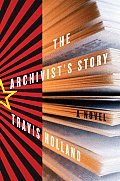
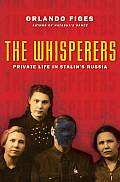
Before the end of the semester, in a burst of rebellious leisure-reading energy (read: procrastination), I began two books on Russian communism: Travis Holland’s 2007 novel The Archivist’s Story and historian Orlando Figes’ doorstop of a book, The Whisperers: Private Life in Stalin’s Russia. This was partly due to seeing, over the Thanksgiving weekend, a local production of Tom Stoppard’s play Rock n’Roll at the Huntington Theater. As is the case with all of the Stoppard plays I have seen or read, Rock n’Roll explores the complicated relationship between ideas and the people whose lives are affected by them: in this case, communism and a cast of characters caught up in the realities of life in Prague during the 1970s and 80s.

The devastating affect of Cold War communism on the lives of human beings is the subject of both of these books, one a work of fiction and the other of nonfiction. I am still reading both of them, but thought I would post a couple of quotations to give you a flavor of the texts and hopefully encourage you to check them out yourself.

Holland’s novel follows the story of Pavel, a widowed schoolteacher turned archivist, living in Moscow in 1939. In the opening pages, he is sent to interview the writer Isaac Babel, who has been arrested and taken to Lubyanka prison as an enemy of the people. During the course of their stiff conversation, Pavel tells Babel that his wife, Elena, has recently died in a train wreck caused by politically-motivated sabotage. “I can’t imagine people intentionally doing that,” Pavel says. “You’ve read my stories,” Babel replies:

“Your colleagues, when they came to arrest me at my dacha, they dragged my wife along. Did you know that? They made her knock on the door. In case I resisted. Can you imagine how she must have felt, to have to do that?” An edge of bitterness has crept into Babel’s voice. “You are not the only one who has lost his wife” (9-10).

In fact, as Figes tells us in The Whisperers virtually everyone in Russia during the Stalinist period lost at least one family member to violence perpetrated by the men whom the fictional Pavel is ordered to work for. For over six hundred and fifty pages he draws on diaries, oral histories, and other surviving primary sources in an attempt to piece together a picture of private life in a repressive regime. This picture is unquestionably grim. “For the mass of the population there were always two realities,” Figes observes writes:

Party Truth and truth based on experience. But in the years of the Great Terror, when the Soviet press was full of the show trials and the nefarious deeds of ‘spies’ and ‘enemies’, few were able to see through the propaganda version of the world. It took extraordinary willpower, usually connected to a different values-system, for a person to discount the press reports and question the basic assumptions of the Terror (273).

The strategies used by individual people to keep themselves from being submerged in Party Truth are both interesting, from a psychological and political perspective, and heartbreaking: “My inner self has not gone away — whatever is inside a personality can never disappear — but it is deeply hidden, and I no longer feel its presence within me” wrote Yevgeniia, a student of Leningrad Institute of Technology, in 1938, after both her parents had vanished into the Gulag (257). However difficult these stories of personal trauma are to read, I am looking forward to finishing both books for the powerful stories they tell about the behavior of human beings living in inhuman situations.

Teaching Moment: Children Are People Too

12 Friday Dec 2008

Posted by Anna Clutterbuck-Cook in think pieces

≈ 61 Comments

Tags

children, feminism, politics

Yesterday, the following comment was submitted on this post from November concerning fear of children in Britain [1]:

Someone obviously needs to re-read Lord of the Flies.

On a more prosaic level, I’d argue that people’s feral, shrieking little carpet apes — oh, excuse me, Precious Darling Children — are a great argument for doing as many errands online as possible.

My first impulse was to delete the comment. Then I realized that it is a perfect example of the sort of casual dehumanization of young people that the original article highlighted. I am therefore going to use this as a teaching moment: an opportunity to explain a few things about why I believe the hatefulness that adults like b.g. feel free to express toward children in our culture is not acceptable.
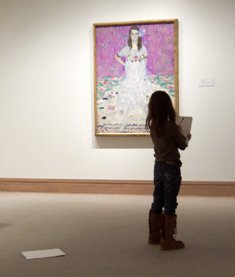
The casual dehumanization of children is one of my research interests as a master’s candidate in history; it is something I am both fascinated with as an historical and political phenomenon, and passionately opposed to in practice. Children are people. As someone who is opposed to hatred and fear of any group of people based on innate characteristics (skin color, ethnic background, sexual orientation, gender) it appalls me how acceptable adults find it to express hatred and fear of children based solely on their age, or for behaviors that can be traced back to their developmental abilities. I see this among a wide range of adult populations, from feminists to Christian fundamentalists — it’s a form of bigotry that is in evidence across the political spectrum.

In part, I believe that this intolerance of young people is one symptom of the way, in modern culture, we have ghettoized many people who make us uncomfortable, or whom we perceive as an inconvenience. Those who slow down our over-burdened lives with their complicated needs or awkward social behavior. People whom, by their very presence, raise uncomfortable questions about our own values and our competence in a complicated, competitive society. People who are mentally ill, physically disabled, people who are struggling with poverty and old age. People who are made vulnerable by circumstance make us uncomfortable. As historian Gerda Lerner writes, in her book of essays Why History Matters [2]: “All of us, ultimately, will join one of the most despised and abused groups in our society–the old and the sick” (17). We would do well to remember, as well, that we all began life as members of a similarly vulnerable and dependent group: children.

This is not to argue that children are innately better than adults. Children are human: ergo, they are capable of human cruelty [3]. That is not the question at issue here. The question here is why people such as b.g. feel perfectly free to refer sneeringly to young human beings as “feral . . . apes” in a public space (this blog) when presumably, they would not feel free to make a similar remark about a black person. Or if they did, they would be held accountable. I have seen on countless feminist blog threads, self-identified feminists who are outraged about hateful speech directed toward women and other groups turn around and use offensive language to speak about the children.* Feminists have long argued that ostensibly “positive” ideals about women and femininity are just as dehumanizing as outright misogyny. Both obscure the complex humanity of the individual person before us. Similarly, characterizations of children as “precious little darlings” or “shrieking little carpet apes” are two sides of the same coin: neither recognize children as persons worthy of our respect. Yet as a culture, we have been reluctant to recognize these parallels.

I have read Lord of the Flies, William Golding’s novel about marooned British schoolboys who resort to terror and violence in the absence of external social structure [4]. Lord of the Flies is a commentary on the nature of humanity more than it is about the innate character of children or the particular environment of childhood. Remember that the boys who have been shipwrecked in Golding’s book are not, in fact, free of socialization: they have already lived upwards of a dozen years in families, and in a British boarding school, in which adults have taught them quite thoroughly what is to be expected from them as human beings. I would argue that the book demonstrates quite well the violence that has been done to these children previous to the shipwreck, in addition to offering a chilling reminder of the sort of evil that all of us, regardless of age, are capable of.

Language matters. Language can affirm the humanity of each individual being on this planet, or language can create a climate in which individual people — or groups of people — become easy to discount or view as unworthy of love, kindness, respect, or understanding. I will not be deleting b.g.’s comment because I think it offers us a valuable example of exactly the kind of hatred children in our lives experience on a daily basis. But let me be absolutely clear: from now on, anyone who leaves a comment on this blog using language like “carpet apes” to describe people whose sole “offense” is their youth will have their comments deleted. You may disagree with me that children constitute a marginalized group in our society. You are welcome to argue your point in comments with pertinent examples and other evidence. You are welcome to use strong language to express your feelings. You may not resort to insults. If the language you use would not be acceptable as a way to describe racial or ethnic groups, women, or queer folks, I will consider it similarly unacceptable as a way to describe young people. Because children are people too.

*It is important to recognize that many feminists do not use this language of dehumanization when speaking of children and youth, and in fact there are countless feminist activists and organizations who have placed the well-being of children and adolescents (regardless of gender) at the heart of their work. My argument here is that alongside this work there still exists a consistent current of hatred and fear directed toward young people, and that feminists are not always willing or able to see the applicability of their critique of inequality in other arenas to a critique of discrimination based on age.


OED: "Crime" against Children’s Humanity?

11 Thursday Dec 2008

Posted by Anna Clutterbuck-Cook in think pieces

≈ Leave a comment

Tags

books, children, politics

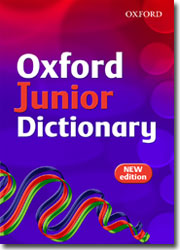
Every abridged dictionary makes choices about what to include or exclude. Andrew Brown, in an op-ed column over at the Guardian online, questions the selections made for the latest edition of the Oxford Junior Dictionary:

Imagine a childhood without gerbils, goldfish, guinea pigs, hamsters, herons, larks, or leopards; where even the idea of these things had been replaced by practical modern concepts like celebrity, vandalism, negotiate, interdependent, and creep. This is the world of the Oxford Junior Dictionary.

. . .

Dictionaries should be many things, but even the smallest should be a gateway into wonder. The child who doesn’t even know of the possibility of larks and leopards has been robbed. To offer them instead the grey bureaucratic porridge of the new words is a crime against their humanity.

I’m not sure that I share Brown’s level of disquiet over these particular words, but I do like the idea that to rob children of language to speak about nature is a “crime against their humanity.”

Thanks to Hanna, my source for all UK-related news :).

UDHR at Sixty

10 Wednesday Dec 2008

Posted by Anna Clutterbuck-Cook in my historian hat

≈ 1 Comment

Tags

history, politics

Anita Sharma over at RhRealityCheck brought to my attention that the Universal Declaration of Human Rights, turns sixty today. It was constructed in the aftermath of the Second World War by an international team of philosophers and political leaders and draws on the core ethical principles found in the major philosophical and religious traditions on the world. So in honor of the anniversary, I’m going to take a moment to recommend, A World Made New: Eleanor Roosevelt and the Universal Declaration of Human Rights, written by legal scholar Mary Ann Glendon, which I read with great delight and interest when it came out a in 2002. It’s a fascinating story of an ambitious international project undertaken during the rise of the Cold War, and documents an important moment in the history of the recognition of human rights.

And Again With Twilight

09 Tuesday Dec 2008

Posted by Anna Clutterbuck-Cook in book reviews

≈ Leave a comment

Tags

feminism, gender and sexuality, movies, politics

Despite the fact that I am deeply suspicious of the book and have yet to see the movie, Hanna has decided to hold me personally responsible for the phenomenon of Twilight, and specifically the chivalrous male lead, Edward Cullen, whom she has taken to referring to as “your stupid vampire.”

Given that my name will thus inevitably–at least in our apartment–be linked to many adolescent girls’ (and adult women’s!) lust for “vegetarian” vampires with stalker tendencies, I figure it’s only fair that I get to post links here to some of the awesome (and hilarious) deconstruction of the series that’s taking place around the blogosphere.*

Thus, two links that came across my desk today:

The first is Amanda Marcotte’s rant on Pandagon,
Vampires, liberals, and blood-sucking pretend liberals, which manages to connect the hate-mongering commentary about Proposal 8 to reactionary adoration of Twilight (apparently, the popularity of the series “means feminism is bound to fail”) through the person of Caitlin Flanagan. I have to say, when I saw that Flanagan had reviewed Twilight over at the Atlantic this week I about popped a blood vessel. Anyone who declares halfway down the first page of a review of teen lit that “I hate Y.A. novels; they bore me” has absolutely no business reviewing (or claiming to understand the popularity of) young adult literature — let alone explaining with condescending smugness the desires of adolescent girls with such generalizations as “the salient fact of an adolescent girl’s existence is her need for a secret emotional life.” Thank you, Amanda, for giving this review the critical attention it deserved — and most importantly connecting it to larger themes of political conservatism.

And in case political analysis is not your bailiwick, commenter annejumps on the Pandagon thread provided a link to The Secrets of the Sparkle, a three-part (plus drinking game!) send-up of the series written by an ex-Mormon. (To explain title of the post: apparently, Edward Cullen sparkles in the sun. Like, literally. It’s a detail I sadly forgot from my reading of the novels last year. Damn.) It’s sort of like a picture book cliff notes version of the first three books . . . through the lens of LDS theology. Trust me.

Okay. That’s my fun for this evening. Back to editing the final draft of my history term paper! The semester’s almost over!

*I want to reiterate here that 1) my reservations about the series does not mean I think we should disparage the pleasure girls are getting out of the romance of the books–though we can encourage them to think critically about messages that Twilight conveys about sexuality and gender, and 2) that my reservations also don’t mean I fail to get pleasure myself out of stories about scary, sexy vampire bad boys. I just happen to like my heroines with a little more bite and my sex with a little less prudery.

← Older posts
Newer posts →
"the past is a wild party; check your preconceptions at the door." ~ Emma Donoghue

Recent Posts

  • medical update 11.11.22
  • medical update 6.4.22
  • medical update 1.16.2022
  • medical update 10.13.2021
  • medical update 8.17.2021

Archives

Categories

Creative Commons License

This work by Anna J. Clutterbuck-Cook is licensed under a Creative Commons Attribution 3.0 Unported License

Meta

  • Create account
  • Log in
  • Entries feed
  • Comments feed
  • WordPress.com

Blog at WordPress.com.

  • Subscribe Subscribed
    • the feminist librarian
    • Join 37 other subscribers
    • Already have a WordPress.com account? Log in now.
    • the feminist librarian
    • Subscribe Subscribed
    • Sign up
    • Log in
    • Report this content
    • View site in Reader
    • Manage subscriptions
    • Collapse this bar