• anna j. clutterbuck-cook
  • contact
  • curriculum vitae
  • find me elsewhere
  • marilyn ross memorial book prize

the feminist librarian

the feminist librarian

Tag Archives: politics

booknotes: what is marriage for?

08 Tuesday Jan 2013

Posted by Anna Clutterbuck-Cook in book reviews

≈ Leave a comment

Tags

gender and sexuality, history, politics, sociology

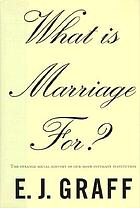
Last week, I reviewed Public Vows which explored the history of American custom and law surrounding marriage. This week, I have some reflections on journalist E. J. Graff’s book on roughly the same subject: What is Marriage For?: The Strange Social History of Our Most Intimate Institution (Beacon Press, 1999).

While Cott is an academic historian, Graff is a journalist — and the differences in these two books reflects that to a great extent. This is not to say one is better than the other: Nancy Cott’s work is a carefully-delineated study of American marriage from the Revolution to the late twentieth century while Graff’s is a more wide-ranging exploration of what marriage has been and meant in the West over the past two millennia. Both work in their own ways to point out that the present-day arguments about the demise of “marriage culture” and/or the end of civilization as we know it because of [insert marriage change of your choice] is actually nothing new. Reactionaries have been raising a hue and cry in every era about the passing of one concept of marriage in favor of another, and our current notion of what “traditional” marriage looks like (what Cott referred to as Christian monogamy grounded in affection and entered by mutual consent) is actually a fairly new — Graff would even say radical — departure from the marriage norms of our forebears.

While for Cott the question of same-sex marriage is almost a coda to the main body of her argument — which centers around non-white peoples’ and women’s citizenship rights and how they interact with marriage law — same-sex relationships are the raison d’etre of Graff’s work. After marrying her partner, Madeline, in 1992, Graff began to explore the slippery history of “marriage” and its meaning, with the goal of answering the question of whether same-sex couples can or do reasonably occupy the same space as other-sex couples in the present-day landscape of marriage beliefs, law, and practice. It will perhaps come as no surprise that Graff’s answer is, again and again, that yes same-sex couples fit quite abley into our current notion of what a marriage is and does:

There remains an uneasy tension between, on the one hand, marriage as a way to resist consumer capitalism’s pressure on the individual soul — and, on the other, to fulfill consumer capitalism’s ideology of individual love and commitment. But [today’s reactionaries] wrongly choose those who love among the same sex as their scapegoats. The move toward same-sex marriage is the consequence, not the cause, of many other changes in Western life — changes like legalized contraception, already inscribed in Western laws. A pluralistic democracy cannot fairly bar as pariahs people who fully fit its ideology of the meaning of sex within marriage (87). 

There were a few details in analysis upon which Graff and I disagree, such as her argument that the logic that allows for same-sex relationships (modern notions of love and personal choice) does not allow for polygyny, since the reasons for polygyny have traditionally been about political alliances and patriarchal kinship consolidation. While true insofar as it goes, her conclusion that therefore same-sex relationship recognition is in NO WAY related to recognition of more-than-two marriage models seems to ignore the way in which modern polyamory also draws on notions of love and personal choice. But that’s overall a small quibble with what is an entertaining and well-researched exploration into the slippery meaning of something we think we all “know” when we see (or enter into) it.

booknotes: public vows

05 Saturday Jan 2013

Posted by Anna Clutterbuck-Cook in book reviews

≈ Leave a comment

Tags

feminism, gender and sexuality, history, politics

I thought I’d kick off my 2013 book reviews with a few thoughts about the last book I read in 2012. That would be Nancy F. Cott’s Public Vows: A History of Marriage and the Nation (Harvard U.P., 2000), which I picked up at the Montague Book Mill last week. A slim volume, Public Vows explores the ways in which local, state, and national culture and regulation have shaped the meaning and utility of marriage in the U.S. from the Revolution to the dawn of the 21st century.

Cott’s overall point is that while marriage in the United States has been considered a private zone — affectually and contractually — it is also constrained by public custom and legal regulation. As she writes in the introduction:

In the marriage ceremony the public recognizes and supports the couple’s reciprocal bond, and guarantees that this commitment (made in accord with the public’s requirements) will be honored as something valuable not only to the pair but to the community at large. Their bond will be honored even by public force … the public sets the terms of marriage (2).

Those terms have been paradoxically remarkably tenacious and constantly in flux. As Cott demonstrates, Americans have generally privileged the monogamous Christian marriage as the “common sense” of marriage relationships, despite the fact that at the time of the United States’ founding “the predominance of monogamy was by no means a foregone conclusion” (9).

In the years of the Early Republic, this relationship was one of coverture, in which the wife’s political identity was subsumed by that of her husband upon marriage; the husband was charged with representing his wife in the public realm much as a member of Congress (the founding generation of American political theorists drew this analogy) represented his constituents. As women and free blacks struggled for citizenship status throughout the 19th century, the terms of marriage (who could marry and the rights and duties marriage entailed) shifted to meet — or at times to combat — these new demands. Waves of immigration and anti-immigrant sentiment shaped laws around marriage as politicians determined what foreign marriage practices would be recognized as valid, and the changing economic landscape shaped and re-shaped understandings of how work and marriage inter-related.

Much of what Cott has to say will come as no surprise to historians of women’s and gender history, or even social and labor history: notions of citizenship and personhood are uniquely tied up, in United States law and social custom, with one’s status not only as an individual but also as the member of an acceptable family unit. Conformity to marriage norms can have real impact on one’s status as a citizen (as any first-generation immigrant can tell you), and while women’s political lives are no longer subsumed under their husband’s at the altar, the assumption that women will be (hetero)wives continues to endure in tax codes and other legacies of coverture in the legal-political realm.

Cott touches only lightly on same-sex marriage in the final chapter of Public Vows, underscoring how little “gay marriage” actually has to do with the revolution(s) in modern family organization that the last two centuries of American history have seen. Feminist agitation has, indeed, played a much bigger role in shifting marriage onto new ground. As Cott observes, “So far as it is a public institution, [marriage] is a vehicle through which the apparatus of the state can shape the gender order…. Turning men and women into husbands and wives, marriage has designated the ways both sexes act in the world and the reciprocal relationship between them” (3). These designations often reach beyond the actually married, constraining the lives of the non-married as well. As women gained more equal footing as citizens, the shape of marriage as an economic, political, and personal relationship was fundamentally changed. In the context of this long sweep of change, the extension of civil marriage rights to same-sex couples is but a small step in the direction of equal citizenship status for all, regardless of gender or affectional ties.

Conversely, the fact that same-sex marriage evokes such strong reactionary feelings points toward the centrality of the Christian monogamous marriage plot to the organization of American civic life: as a key aspect of our project to differentiate ourselves from European and other world governments. By governing who is let in (and who kept out) of marriage we — as a nation-state — are often simultaneously identifying who — both symbolically and literally — is allowed to be a citizen.

I’m following my reading of Public Vows with E.J. Graff’s contemporaneous What Is Marriage For? (Beacon Press, 1999). Like Cott, Graff explores the historical shape of marriage and discovers heterogeneity rather than some ur- form of “traditional” marriage … I’m looking forward to limning the similarities and differences between their arguments, so look for a review here soon!

booknotes: histories of food, women’s colleges, queers in Canadian & US law, and Victorian porn

04 Tuesday Dec 2012

Posted by Anna Clutterbuck-Cook in book reviews

≈ Leave a comment

Tags

education, food, gender and sexuality, history, politics

With four weeks to go in the year, I’ve got fourteen books to read in order to make my 2012 goal of one hundred and four titles (two books per week). I don’t think I’ll make it. If there were a way to count reading of a non-book sort (journals, blogs, fan fiction) I’d be golden, but while I’ll about match my 2011 level of book consumption, I probably won’t read fourteen volumes by midnight on December 31st. Particularly since I’d like to put in some quality time on my epic, currently 30k and climbing, Carter/Stark fic, have a book review due for the NEHA News, and Hanna and I hope to get out for some good long walks.

BUT. The fear of “failure” has not deterred me from reading, as always (I’m really not sure what could actually. It’s sort of what I do, the way some people can’t think without music on in the background). So here are some brief reviews of books I read during the month of November.

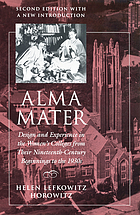
Horowitz, Helen Lefkowitz. Alma Mater: Design and Experience in the Women’s Colleges from Their Nineteenth-Century Beginnings to the 1930s (University of Massachusetts Press, 1984; 1993).  For a book originally researched in the 70s and published nearly thirty years ago, Alma Mater feels refreshingly current — not that I doubted Helen Horowitz’s skill in research and writing (I’ve long been a fan), but historiography just as much as any other field has its tells for certain eras. Perhaps Horowitz lucked out by coming of academic age after the reign of Freud (see my review of The Other Victorians below) and before the ascendancy of Foucault in the 1980s. This history of the Seven Sisters is an exploration of the culture of education through the lens of architecture: how the spatial organization of seminaries like Mount Holyoke and Vassar, colleges like Smith and Wellesley, Bryn Mawr, and the university affiliates Radcliffe and Barnard, reflect the assumptions, expectations, and fears about women and higher education across roughly a century of change. I was particularly fascinated by the way in which each institution’s administrators sought to both foster and manage female intimacy: the single-sex environment was both encouraged (for its protective and training purposes) and feared (for its potential for same-sex romantic and sexual intimacy, and  the way it led to “unfeminine” roles). In other words, the tension between the value of an all-female environment and its perceived downsides — whether because it turns young women into lesbians (!) or because it perpetuates a separate-yet-equal passivity concerning gender equality — have changed only in variation and not in substance since the 1830s. It will be interesting to see what the state of single-sex education is by the time we begin to reach the two-hundredth anniversary of women’s higher education in this country. I really can’t recommend Horowitz enough; as an historian of higher education in America I know of few more thoughtful or articulate.

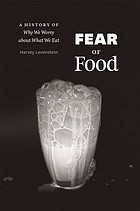
Levenstein, Harvey A. Fear of Food: A History of Why We Worry About What We Eat (University of Chicago Press, 2012). This slim, engaging volume is less a history of “why” twentieth-century Americans fear food than how we choose to do so: each chapter presents a case of food fear, beginning with Progressive Era fears about food contamination spread by flies and infected milk for infants and ending with the present-day lipid-phobia (fear of dietary fat). An historian of food culture, Levenstein is on solid footing here in terms of research and a lively storyteller. My one complaint is that at times it is difficult to distinguish between food claims made in the context of a particular food scare and the more recent, evidence-based knowledge that Levenstein sometimes draws upon to refute or revise the basis of historical food scares. For example, in the chapter on “vitamania,” it can be difficult to parse out what benefits of vitamains are still supported by the evidence, and what claims by vitamin manufactures have no solid backing in research and outcomes. In the end, though, I really appreciated that this narrative was not triumphalist the way so many health and science histories are: Levenstein’s argument is not that American science has triumphed over superstision — quite the contrary, he argues that we persist in demonizing (and celebrating) certain foods beyond all evidential backing. He also makes the key point that time and again throughout the twentieth century, the food industry and medical industry (including the public health sector) have powerful lobbies with their own profit-driven agendas, successfully exploiting food fears to their own gain (and American citizens’ loss). I’d be making this essential reading in all public health programs around the country, and required reading by anyone who uncritically parrots the phrase “obesity epidemic.”

MacDougall, Bruce. Queer Judgements: Homosexuality, Expression, and the Courts in Canada (University of Toronto Press, 1999). I picked this volume up while we were honeymooning on the Cape, but it took a while to wade through — while thoroughly interesting, the textual analysis was dense and the Canadian legal framework just different enough that I needed to do some on-the-fly cultural translation to make sense of the arguments. MacDougall’s central argument is that judicial opinions concerning homosexuality matter as much as, if not more than, the material effects of their rulings. Combing through written decisions involving homosexual identity or expression from the 1960s to 1997, MacDougall finds that the Canadian courts have consistently framed homosexuality as disordered and marginal, a sexuality that is of potential threat to children, something that (because of its shameful nature) needs particular policing. For example, he points to the ways in which divorce court judges often express concern about a gay or lesbian parent’s sexuality being evident to the children of the family in a way that they would not likely fret about straight parents bringing an opposite-sex partner home. Likewise, a whole chapter is devoted to the erasure of speech about homosexuality from institutions of education (primary, secondary, and higher education alike). While works such as The Right to Be Out and Queer (In)Justice have — at least for a U.S. context — superseded this volume, I did find it a worthwhile addition to my queer studies/queer history collection.

Marcus, Stephen. The Other Victorians: A Study of Sexuality and Pornography in Mid-Nineteenth-Century England (xxx, 1966; 2009). In the early 1960s, scholar of Victorian literature Stephen Marcus was approached by the Kinsey Institute to write a study of Victorian erotic literature. The Other Victorians is what emerged: an oddly episodic work that has aged well in some aspects more than others. He begins with a study of  doctor William Acton’s works on sexual function and advice on sexual well-being, moves into an examination of Henry Spencer Ashbee’s extensive bibliography of known pornographic literature, published in the 1870s-1880s, and then spends two lengthy chapters on a delightful, anonymous eleven-volume erotic autobiography My Secret Life, published in the 1880s-1890s. These chapters are for the most part grounded in specific texts and hold up fairly well. Marcus’s own sexual tastes and knowledge gaps seep through every now and then — such as when he is baffled by the autobiographer’s interest in BDSM, and when he insists that the autobiographer is exaggerating because women don’t ejaculate — but overall he was more aware of gender and class and the nuances of authorial voice than I might have expected. It’s the chapter on the literature of flagellation and his concluding remarks that really let him down. I’m not exactly sure why he chose to take up flagellation narratives other than that they were apparently prevalent in the pornography of the period. His descriptions of the literature’s conventions is quite fascinating, but then he gets all sorts of judgy and Freudian about how flogging fantasies are sad and infantile and coded homosexuality. He also claims, in passing, that the Victorians produced no homosexual pornography — an assertion that runs directly counter to the many passages depicting same-sex sexual encounters he has detailed in previous chapters, so I was baffled by the sudden reversal. And his final conclusions about pornography are, it seemed to me anyway, clearly written by a person who ultimately has no innate passion for or interest in the genre which he is studying. He argues that pornography lags behind fiction in its development, that it lacks in emotion and relational development, that the point of pornography is to depict acts outside of time and space, rather than human sexuality in the context of a deeper lived experience. Again, these assertions seem to run counter to the examples he himself has selected for review in the preceding chapters.*

Vaid, Urvashi. Irresistible Revolution: Confronting Race, Class and the Assumptions of Lesbian, Gay, Bisexual, and Transgender Politics (Magnus Books, 2012). This collection of essays by movement organizer Urvashi Vaid is a quick read — I finished it in an afternoon — and a bracing one. A national figure in LGBT politics, Vaid calls the mainstream queer movement to task on its unwillingness to engage in social justice activism that is not explicitly “gay.” That is, activism around issues of racism, class disparity and poverty, misogyny, gender policing (particularly trans* issues), the prison-industrial complex, labor organizing, immigration, and freedom of family formation and sexual expression not necessarily grounded in heternormative marriage rights. My own feelings reading Irresistible Revolution were complicated. On the one hand, I am basically on the same page with Vaid in terms of wanting a broad-based social justice movement that centers the most vulnerable among us and doesn’t rest until all are treated with respect and have the basic provisions necessary for well-being (healthcare, housing, food security, access to education, workplace safety, a healthy environment, etc.). And I feel comfortable with her lesbian-feminist roots and her critique of mainstream organizations (the Human Rights Campaign, National Gay and Lesbian Task Force, etc.) which may pay lip service to caring for all — but in reality speak only to middle- and upper-middle-class priorities and aspirations. However, as a radical voice working from within these organizations, she fails to draw upon and engage with the scrappy, marginalized groups and individuals who are doing the work she longs to see done. At least as much as she could have. The result is a book that feels like a lot of finger-wagging at the self-satisfaction of the elder generations of activists (and those with the most material resources) and the complacency of the younger generations — without enough acknowledgement of the people who do not fit into either of those categories, and who are doing transformative and back-breaking labor being the change they wish to see.** Vaid is a high-profile voice whose commitments are key to a more just future, so I hope she is listened to by the “insider” audience she wishes to reach.

And that’s all for now, folks! Off to see what else I can read before to clock for 2012 runs out.


*I couldn’t help wondering if such judgmental attitudes came out of an extreme desire to be “objective” about the subject matter — to the extent that he was unable to examine the material with an eye toward what an eager reader might get out of the experience. For example, he excerpts a lengthy and charming passage from My Secret Life in which the autobiographer and a friend arrange a visit to a flogging parlor to watch a gentleman be spanked by the “abbess” in charge. Also present is a prostitute. All five people are participants in the action on some level, and although the autobiographer evinces no interest in being beaten himself, he is clearly curiously engaged and pleased (and aroused on some level) to be participating in someone else’s erotic scene. Marcus, however, dismisses the scene as one “we” modern-day folk would obviously find sad and grim. Whoops!

**And to be clear, I don’t include myself in this category. People who have the stamina and vision for professional movement work are brave and better souls than I; I’m glad they do what they do and I will support them as I am able … but I have never been, and likely will never be, a queer organizer.

real-life adventures in class, gender, race, and sexuality

01 Saturday Dec 2012

Posted by Anna Clutterbuck-Cook in think pieces

≈ 2 Comments

Tags

being the change, boston, gender and sexuality, MHS, politics, racialization, the personal is political

Last night I was working an event at the MHS that involved spending one portion of my evening standing out on the sidewalk, a few blocks away from the building, holding an electric lantern to light the way for guests moving from one location to another. I was one of about seven lantern-bearers spread out across a quarter-mile path from Point A to Point B.

Standing in one spot for 45 minutes, not soliciting nor waiting for public transit, and holding a lantern, certainly attracts attention in the city. Maybe a dozen individuals and/or groups of people stopped to ask me politely what I was doing, particularly if their path had taken them past one or more of the other lantern-bearers in the chain.

I happened to be standing at a station on a fairly busy stretch of sidewalk near a bus shelter, but on a bridge crossing over the Massachusetts Pike. It was long after dark, about eight o’clock, and my back was against the high fence that stops people from committing suicide off the bridge. I could see my fellow lantern-bearers down the way in both direction, each across an intersection though in plain sight.

(via)

A (likely homeless) man with a shopping cart containing his belongings came up the sidewalk. I nodded to him and he took this as an invitation to stop and talk with me. Continue reading →

booknotes: book of mormon girl

17 Saturday Nov 2012

Posted by Anna Clutterbuck-Cook in book reviews

≈ Leave a comment

Tags

feminism, gender and sexuality, memoir, politics, religion

I rarely have the time these days to invest in comment threads on blogs, though I skim hundreds of RSS-scraped posts every day via Google Reader. Yet over the past few months, I’ve spent quite a bit of time over at the Family Scholars blog, engaging with socially conservative bloggers and commenters about issues such marriage equality and queer family formation.

I actually find the practice almost … soothing.

Hanna, meanwhile, is mystified about my motivations, since just having me describe some of the interactions I have there ramps up her anxiety and stress levels to uncomfortable proportions. And I find I don’t have very articulate reasons for why I find arguing with the opposition — bearing witness, speaking up for my point of view — to be an almost meditative practice.

Except that, growing up and going to college where I did, it’s what I’ve had to do by default most of my life. So it’s what feels comfortable, feels familiar: standing on the edges knocking politely on the door to remind those on the inside (of the mainstream culture, church, school, whatever) that I’m still here.

I don’t necessarily want to be let in? It’s a nice world, in many ways, where I am out here. I’ve always been a fan of fresh air and expansive horizons.

But I don’t want them to forget that I’m out here.

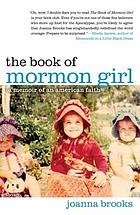
Another aspect of my insistence on being a complicating presence came home to me while I was reading Joanna Brooks’ Book of Mormon Girl (Free Press, 2012) this past week. It had been on my radar for awhile, but what prompted me to read it was an email from a friend of mine, a former member of the LDS church, who has walked away from the faith in his adulthood for a variety of reasons not the least of which is the fact that he’s gay and the Mormon church is not all that cool — at least at an institutional level — with queerness. He’d found the book a disorienting read, he reported to me, because while he’s quit the church entirely Brooks continues to struggle mightily with her inherited faith and childhood experience, and the betrayal of the community she once felt safe within when she stepped outside the bounds of orthodoxy (as an outspoken Mormon feminist, queer ally married to a Jewish man). Why did she continue to fight to belong in a church that clearly pushed her away, hard, with both hands?

It’s a stubbornness I recognize, though I wasn’t actually raised in the church (Mormon or otherwise). The faith of my heritage was loosely Protestant, my father the son of a New Testament theologian, my mother the mostly unchurched daughter of a Christian Scientist and disbelieving Scotch Presbyterian. In my adolescence, we attended a liberal Dutch protestant church (a denomination in the Reformed Church in America) for a handful of years where I argued passionately with Conservative youth leaders from my position as a nascent feminist and tried to envision the Church as a pathway to effectively channel my welling passion for social justice.

Then I went to college and discovered feminist theology which offered (though I didn’t have these words at the time) a way of thought and action that was both intersectional and spiritual: a faith of uncompromising social justice, nonviolent action, solidarity, and equality: each and every one of us is a child of God. Full worthy to be loved and capable of loving.

It’s a theology that I, unchurched though I am, continue to strive for in the spiritual practice of daily living.

And it felt like a theology that many religious folk around me were uninterested in pursuing.

I’ve said before, and I’ll repeat it here, that I found my Christianity and left the church in more or less the same breath.

I saw what Christianity could be and is, at its best and brightest, and in my adolescent impatience had no time for those preoccupied with orthodoxy at the expense of lovingkindness. Lacking the deep roots of religious history, community, family, and faith that ties women like Joanna Brooks to the church — and I know many of them, ardent feminist thinkers, queers, social justice workers, all fighting past the burnout to build a Church I would be proud to call mine — I up and quit and walked away.

But in part because of the women (and I know there are men, too, but it’s the women I think of in these moments, the ones who stand up and refuse not to be counted) I keep circling back. I keep tapping on the door, poking my head in, and reminding folks that my life, too, is relevant to the conversation: You’re talking about the welfare state? I might be financially secure right now, but I’ve had state-subsidized healthcare. You’re talking about male headship? Let me talk to you about sex, gender, and humanity. You’re talking about same-sex marriage? Let me introduce you to my wife, our two cats, and quotidian details of our lives.You’re talking about war? Let’s talk about the history of religious nonviolence.

My mother has always said that she won’t join any church that constructs an “us” from which a “them” is excluded, kept at arms length, on the outside. Which is why, to this day, she remains unbaptized (and why none of us children were baptized), and certainly informs my own decision not to seek church membership.

But I keep tapping at the door. I keep having the conversations. I want to bear witness (imperfect, broken, human, though I am) to the fact that we could do better and that I know there are those working mightily within the Church, as well as without, to make it so.

Hmm. The plan was to write a book review, but clearly I had other things to say. Still: Book of Mormon Girl is sweet, funny, heartbreaking, thoughtful, and passionate. As a queer American I found the chapter on Proposition 8 particularly painful to read; as a woman who came of age about 5-10 years after Brooks, I found her chapter on feminism and faith, and the trauma of the LDS purges in the 90s (when the hierarchy excommunicated a number of liberal intellectuals and activists, and declared feminists, gays, and lesbians the “enemy”) to be particularly resonant. As an historian with an interest in the personal journeys of those who grow up in fundamentalist, evangelical circles, Brooks’ narrative was of scholarly interest to me as well. I highly recommend it to anyone who wants to think more deeply about what it means to be a politically and socially progressive person in the context of a reactionary religion.

thoughts on traveling while gay-married

13 Tuesday Nov 2012

Posted by Anna Clutterbuck-Cook in our family

≈ 3 Comments

Tags

gender and sexuality, politics, travel, wedding

Hanna and I were in Montreal this weekend, at the North American Conference on British Studies. Well, Hanna was at the conference and I went along as the spouse. I spent the hours Hanna was in session writing an epic piece of fan fiction I’m working on (yes, this is what I do on vacation) and the hours she was free we spent wandering around the city. I’d never been to Montreal, and do hope to return there at some point when we have more free time (and more hours of daylight!).

Cathedral-Marie-Reine-du-Monde (via)

But what I actually want to write about today is less our visit to Montreal and more the fact that taking this international trip together so soon after the election, with marriage equality and gay rights all over the news, made me acutely aware of the fact that our marriage is still second-class when it comes to legal recognition. We’re married in the state of Massachusetts, and treated as such within its borders (for example, when I picked up the rental car at the Enterprise office they told me kindly I no longer needed to present Hanna’s license in order to add her as an authorized driver; spouses are automatically covered). But it’s actually just good luck that driving through Massachusetts, Vermont, and into Quebec, that we remained, for our entire trip, on soil where our marriage is valid.

Post-election marriage equality map;
click through to Sociological Images for high-res version

While this wasn’t of immediate material concern to us, crossing the U.S. – Canadian border, the U.S. border patrol considers us two individual unrelated citizens, rather than a family unit.

When we drove up to Maine for our post-wedding brunch with Hanna’s parents in October, our marriage ceased to be recognized by the jurisdiction we were in for the duration of our stay; thanks to Maine voters this will not be the case when we go up for our annual Christmas visit. When we fly to Oregon to visit my brother and sister-in-law next year, we’ll be in a state where we’d only have the option of a civil union; the next time we visit my home state of Michigan, where there’s a Defense of Marriage Act in place, I’ll be in a geo-political location where people have actively rejected my status as a married person.
This actually matters to me way more than I thought it would, the way the legal status of my marriage is so permeable. Obviously, the promises that Hanna and I have made to one another do not cease at the state or national border. And as more and more queer folk marry same-sex partners, our relationships will gain cultural legibility even in places where DOMA laws are still on the books, or gay marriage isn’t technically legal. I imagine that when I introduce Hanna as my wife when we’re in California next fall for a friend’s wedding our status as a married couple will be taken as read.
But looking at this map, as a gay-married person, I suddenly realize that until the legal-political landscape for marriage rights change, Hanna and I are basically limited to living in eight states in our fifty-state union (or moving abroad). 
While we have no plans to leave Massachusetts before the decade is out, it’s still a sobering realization, and one that I didn’t feel the full import of back before we’d tied the knot. It’s one thing to live in a state with a gay marriage ban or civil unions when you’re just considering getting married. You weigh your options, maybe decide to travel somewhere like Vermont or Iowa or (now) Washington and make it legal, throw a party, configure yourself and your wife as rebellious upstarts, the advance guard of the gay-married revolution. 
(At least, I could totally see myself getting a kick out of that, had we met and decided to live in, say, Ann Arbor, Michigan.) 
But now, as an already-married lesbian it feels way more hostile to walk into spaces where there are folks actively choosing not to recognize and honor my relationship choices and commitments. Instead of those people saying, “No, you can’t, we won’t let you,” it feels like they’re saying “You have, but we don’t care.“
And I think that feels worse because it feels like even when you do things by the book it doesn’t matter, you’ll get dismissed anyway. I know this isn’t true, rationally. That state-by-state recognition is a powerful symbolic and material gain, as is every single individual instance of person-to-person recognition (from our parents to the woman at Enterprise who rented me the car), as is the sea-change of public opinion which we appear to be witnessing. But in the moment, there’s a part of me that finds it really, really scary to acknowledge that regardless of all intimate personal commitments and acts, we are at the end of the day beholden to the government and to the opinions of our fellow citizens for equal recognition, and if they were to decide we weren’t married, they have the power to (legally) erase our formal entanglements and there’s nothing we could do about it.
Which is why I feel newfound gratitude toward all of the folks who have made this their issue du jour as organizers. It’s only one small corner of the queer rights universe, but just because it’s gone “mainstream” doesn’t mean it’s ceased to matter.

please exercise your right to vote

06 Tuesday Nov 2012

Posted by Anna Clutterbuck-Cook in think pieces

≈ 1 Comment

Tags

being the change, boston, feminism, politics

Ohio, 1912 (via)

Hanna and I went up to our local polling station around 7:15am this morning to cast our ballots. The lines were long, but moving quickly and we were in and out of the school cafeteria in about 30 minutes. Everyone was polite and efficient, and for some reason the signs offering translation services (Vietnamese, Russian, Spanish, and more) made me tear up. As brokenly human as our election process is, I’m grateful to have been born in a generation where my right to participate is taken for granted, rather than something I need to fight for. Queer folks who are same-sex marriage supporters have to experience their civil rights up for a vote, and often see those rights rejected by their fellow citizens … but at least we get to cast a vote for our own equal rights. Women during the suffrage campaigns could only batter on the door in righteous anger (or speak words of forceful persuasion) in a long, slow struggle to be let in. I am grateful that so many of them did.

Please vote today. Even if you’re voting for the other guy I sincerely want you to make your preference known. I know there are flaws in the system, and I have friends who are cynical about the process and abstain on principal – and I understand their reasons and respect that it’s their right to do so. But I’m going to encourage you to make your voice heard in a different way today: by making an affirmative decision about which direction you would like our nation — and each state within it — to move. If you don’t cast a ballot in the first place, if there are disputes over voter fraud or recounts there won’t be a ballot from you to re-count.

(via)

Regular readers of this blog will be unsurprised to know I voted a Democratic ticket. At four this morning, when the cats woke me up to demand breakfast, I lay in the dark and enumerated the reasons why — given the two-party system — Democratic candidates are really the only option for leftist me:

1. The social safety net. Welfare and “entitlements” may have become dirty words in contemporary American politics, but my vision for what government is good for actually starts (and largely ends) with provision of basic care for its citizenry, particularly the most vulnerable. I have friends currently surviving in part thanks to government support — food stamps, WIC, unemployment insurance, government-subsidized student loans, social security benefits. Both Hanna and I have benefited from state-subsidized health care and federal student loan programs (say what you will about the cost of higher education, federal loans made our advanced degrees and subsequent financial stability possible at a relatively sustainable price). In our elder years, we will hopefully benefit from whatever iteration of social security is available. As global climate change becomes a reality, disaster relief will be the difference between utter devastation and recovery and resilience for more and more of us. My ethics demand that I support a government that will continue to provide these to the best of its ability, and actively work to bring material security to us when we need it most.

2. Reproductive justice and bodily autonomy. I’m a person with female anatomy; my body these days is the subject of intense debate and scrutiny in the political realm, particularly due to its capacity to sustain a pregnancy. Despite the fact that I do not plan to procreate, I am still deeply affected by a world which sees persons with uteri as individuals whose bodily autonomy is not secure and subject to the political agendas of others. Self-interest demands, therefore, that I vote for politicians who — at least at the party level — recognize my humanity as a complex reality, not just something that exists in the absence of others’ trumping interests.

3. Civil rights and social justice for queer folk. Democratic politicians are not consistently supportive of equal civil rights for queer folks — and not all Republicans are anti-gay. But taken in aggregate, the Democratic party is the only viable political party that is actually making moves toward supporting my rights as a citizen with same-sex desires to not be discriminated against in law because of those desires.

Here in Massachusetts we also had the opportunity to vote on legalization of medical marijuana and physician-assisted suicide. I voted in favor of both. I have known enough people facing difficult end-of-life decisions, including my late grandfather who died in 2007 of aggressive lung cancer, to know that we should all have the right to choose when and how to die, when the opportunity to choose is available to us. Although my grandfather’s condition deteriorated too rapidly for him to reach the point where assisted suicide was actively on the table, he had that conversation with my family and the hospice care folks who helped our family through the process of his death. And when it comes to marijuana, I don’t actually think it should be criminalized at all but will take what I can get in terms of de-criminalization. Hopefully, as medical use becomes more widespread and aboveground the stigma against responsible use will lessen and regulation will move out of the criminal justice system and perhaps into the public health realm.

This is what same-sex marriage looks like

Same-sex marriage is on the ballot in four states today: Maine, Maryland, Minnesota and Washington. E.J. Graff has been writing about the history and prospect of each measure over at The American Prospect, and I encourage you to check out her thoughtful state-by-state analysis. I know two families in Minnesota whose wee ones (ages four and six) are passionately supportive of the same-sex marriage campaigns and I’ll be thinking of them today. I want them both to know – Noah and Lilly I’m talking to you! — that regardless of the political outcome, they’re growing into fine people who are being the change we want in the world. Even if our guys don’t win this time around, that you care about fairness and kindness matters and will still make a difference, now and every day we move forward together.

booknotes: life, liberty, and the pursuit of happiness

16 Tuesday Oct 2012

Posted by Anna Clutterbuck-Cook in book reviews

≈ Leave a comment

Tags

children, feminism, gender and sexuality, politics

The books to review are piling up, and the longer they sit in the queue the more I feel obligated to be Insightful about what I’ve read. So in an attempt to resist intellectual overwhelm, here are a few shorter reflections on the books I read in the first half of October.

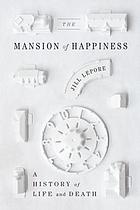
Lepore, Jill. The Mansion of Happiness: A History of Life and Death (Knopf, 2012). Harvard Professor of American history (and sometime MHS researcher) Jill Lepore’s latest work is a collection of essays, most of which began as pieces for The New Yorker, and are published here in expanded form. Despite its formidable title, Mansion is episodic rather than exhaustive, exploring American understandings of humankind — how humans begin, how we do and should live, how we die — in a series of engaging chapters on such topics as baby food (and breastfeeding), children’s literature (and children’s libraries), teaching sexual knowledge, parenting advice, and the medicalization of the end of life. Lepore is a skillful writer and deeply philosophical historian who believes passionately in the importance of translating her scholarly work into terms meaningful outside the academy. As an historian, I appreciate her deft use of primary source research in essays that range across time and space, making eloquent and thought-provoking connections between seemingly disparate historical events, cultural enthusiasms, and the persons and places of America’s past.

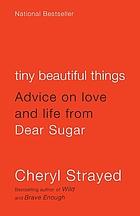
Strayed, Cheryl. Tiny Beautiful Things: Advice on Love and Life from Dear Sugar (Vintage, 2012). After my sister raved about Wild and Bitch magazine offered me a compelling and eloquent author interview with Cheryl Strayed, I realized it was time to read Tiny Beautiful Things. Over the years, I’ve definitely been exposed to the “Dear Sugar” columns Strayed wrote for The Rumpus, and in fact have a favorite quote from one such column right here on the feminist librarian (look to your left). Yet I’d never read “Dear Sugar” systematically, and in some ways I’m glad of that. While each individual column has power, taken together as a book-length collection Strayed’s attitude of kindness and care, the quality of listening and clarity of thought, become all the more beautiful and heartbreaking. The experience of reading Tiny Beautiful Things reminded me most strongly of the first time I cracked open Traveling Mercies. Cheryl Strayed’s voice is as raw and redemptive as Anne Lamott’s, though without the Jesus talk (for some of you that’ll be a plus, for others a minus — I urge you to read Tiny either way).

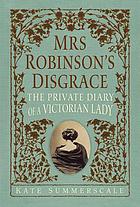
Summerscale, Kate. Mrs. Robinson’s Disgrace: The Private Diary of a Victorian Lady (Bloomsbury, 2012). In the summer of 1858, one Henry Robinson appeared before the newly-created divorce court in London and petitioned for the legal dissolution of his marriage to Isabella Robinson on the grounds of adultery. His lawyer put forward as evidence Isabella’s extensive and detailed diaries, which her husband had discovered while his wife lay ill with fever. The diaries, Mr. Robinson argued, provided evidence not only of Mrs. Robinson’s unhappiness in marriage (she wrote openly about her hatred for her husband and her plans for desertion once her children were grown) but also of her desire for other men, and — most damning of all — her longstanding emotional, and perhaps physical, affair with a friend of the family. Summerscale uses court documents, family papers, and the press coverage of the trial to piece together the story of “Mrs. Robinson’s disgrace.” What emerges is a fascinating tale of Victorian marriage law, sexual morality, conceptions of mental health and madness, and the unstable boundary of fact and fiction.

Valenti, Jessica. Why Have Kids?: A New Mom Explores the Truth About Parenting and Happiness (Houghton Mifflin, 2012).  Valenti’s latest is a quick read that I polished off earlier this week while waiting for Hanna in the waiting room of her physical therapist’s office. Using her own, fairly traumatic, entry into motherhood as a launching pad to explore the modern culture of mothering and parenting, Jessica Valenti (founder and former executive editor of Feministing) follows in the footsteps of Judith Warner (Perfect Madness), Susan Douglas and Meredith Michaels (The Mommy Myth) in critiquing the culture of “intensive mothering” and its unrealistic expectations of modern parents. For anyone who has read these earlier works (or, indeed, follows discussions about parenting in the feminist blogosphere), there will be little new here — though I think that in itself is noteworthy. Jessica comes from a generation or two past that of Warner, Douglas, and Michaels — yet still seems held hostage, to some extent, by the same societal judgyness around motherhood and family life. I found myself wondering, as I read, why the hell we continue to feel trapped by other peoples’ expectations. Obviously, public policy and law as a material effect on parenting options — but in the realm of “styles” and personal decisions it really should come down to what works for you and your family — if a given approach isn’t working, try something else.*

Which is part of the reason why I felt impatient with the way Valenti saves some of her most pointed criticism for proponents of “natural” parenting, whose philosophies and practices she felt betrayed by as a new mother coping with the aftermath of an emergency Cesarean and a daughter who needed months in the NICU to survive. While her own struggles are what they are and deserve to be articulated, this sometimes leads to lopsided critique — for example the pages and pages on the dangers of fanatic breastfeeding with only a single (very short) paragraph on the discrimination and judgyness leveled at parents who choose to (and are able) to nurse their kids. So it didn’t work for her, In a book that otherwise admirably refuses to take “sides” in the banner feminist parenting battles, I felt the treatment of the parenting practices Valenti rejected on a personal could have used more nuanced discussion from a feminist perspective.

*I actually think this holds true for any family, whether young children are involved or not.

booknotes: the end of men

11 Tuesday Sep 2012

Posted by Anna Clutterbuck-Cook in book reviews

≈ 8 Comments

Tags

feminism, politics

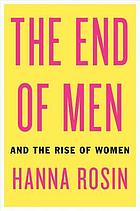
Back in July, I unexpectedly scored an advance review copy of Hanna Rosin’s The End of Men; and the Rise of Women (Riverhead Books, 2012) through LibraryThing’s Early Reviewers program. It arrived last week and I had every intention of saving it for vacation … but instead read it over the course of two afternoons. In part because it’s a pretty breezy read once you’ve got the gist — and mostly because I was so irritated by it, I found it hard to put down.*

In the event you’ve been in a media blackout since July 2010, Rosin originally wrote an article for The Atlantic under the same sensationalist title (a title which she apologizes for as the book dedication; perhaps that’s when you should rethink your marketing strategy?). Said article was one of a rash of journalism-lite pieces proclaiming the 2008 recession a “he-cession” and suggesting that as male unemployment rose it was women who stood to gain in both economic opportunity and political and social power. “The End of Men” painted a bleak picture of a future “matriarchy” in which high-powered, controlling women run the world while their college dropout loser husbands hang out with soiled toddlers ignoring the responsibilities of grown-up life. The End of Men is essentially a book-length elaboration on this apocalyptic vision of an upturned gender binary that — rather than creating space for more egalitarian, gender-independent relationships — merely reverses the stark hierarchy of the most aggressive patriarchal society.

More articulate and knowledgeable bloggers than I have refuted Rosin’s sketchy use of data and anecdote to paint this hysterical vision of what 21st-century hetero relationships may look like, and how the changing global economy might contribute to their reshaping. I’m not going to mimic more comprehensive efforts elsewhere. What I want to talk about instead is how crippling Rosin’s framework of oppositional, binary gender is to her observation and analysis, how profoundly it shapes her interpretation of what she sees in the world. Because this, more than anything, got under my skin and made me feel kinda sleazy for even paying The End of Men the time of day.

But I am giving it the time of day because — as Jill points out in her meditation on Naomi Wolf’s latest venture into the world of publishing — however frustrating and discrediting I find Rosin’s framework, it continues to be a compelling one for many people across the political spectrum. Rosin continues to be a respected left-of-center talking head on issues of children and education, on feminism, on parenting, on sexuality, on gender. And yet she is writing from a perspective drenched in the gender binary, seeing a world in which men stand in one corner, women in the other, locked in a zero-sum competition for power, prestige, and material resources.

And it’s important to ask how truthful this interpretation of the world is, how useful it might be in helping us move forward, and what Rosin’s framework causes her to overlook and leave out (in the event this post is tl;dr for some of you, my answers to these three questions are: not very, not hardly, and some pretty crucial things about humanity — for example, uh, that same-sex couples exist and don’t fit into her tidy framework of hetero couples in perpetual struggle for dominance).

Rosin waffles in the text over whether gender difference is borne of nature, nurture, or a combination of both — but in the end this doesn’t much matter to her thesis. Whether innate or learned, the women and men who populate Rosin’s world are the tired stereotypes of gender complementarity — with, if we’re lucky, a feminist twist. Women are barrelling ahead learning how to combine “feminine” and “masculine” traits and take over the world, while men (unwilling or unable to adapt, it’s unclear throughout the text which theory Rosin favors) are left unmoored and impoverished. In Rosinland (seriously: is she living in the same country I am?), the men are universally intellectually closed, emotionally stunted beings who shuffle through life under the thumb of high-powered wives and girlfriends who organize and circumscribe their lives — and then ditch the dudes when their economic success leads them to greener sexual pastures. Or, if they had the poor judgment to get married before economic disparity set in, the couple falls into a routine of wifely overfunctioning and/or spousal abuse by a resentful husband.**

Here’s the thing. Because Rosin is determined to make this a story about gender — and specifically, how men are losing at life while (because?) women are winning — she utterly fails to approach her research with awareness of how her beliefs about gender color her interpretation. Not only does she fail to deliver an account “unincumbered by assumption or ideology” (as the flap copy would have us believe), she doesn’t even fess up to the assumptions and/or ideologies that shape her narrative. We all bring bias and belief to our project of making meaning, and thus it is irresponsible for anyone to approach such a nexus of cultural-laden ideas (gender, power, marriage, work) and not acknowledge the particular lens through which they approach their research.

Gender is, as many a feminist pointed out, a valid category for analysis. The gender we’re assigned at birth, and how the world around us responds to that gender, is absolutely part of what shapes our lives. The fact that Rosin can write a whole book using the lens of gender is a victory for feminist theorists, activists, and scholars the world over. My frustration with Rosin’s argument isn’t that she chooses to focus on gender — it’s that she seems to understand gender to be the category of analysis. Like feminists who act as if the sisterhood is the ur-category trumping race, class, sexual orientation, nationality, time, space, and possibly black holes, Rosin hop-skip-jumps from anecdote to anecdote attributing every marital friction, educational or economic woe, asshole behavior or informant viewpoint back to … gender.

The strange beings who populate The End of Men appear to have no inner life or motivation beyond fulfilling (or overcoming) the fact of their gender. Religious beliefs or social justice values? A sense of how, as an individual, the person wants to shape a meaningful life? What sort of parent they want to be, where their creative passion lies, none of this matters. The only value any being in Rosinland seems to possess is monetary, and whether their monetary fortunes go up or down seems to be a question of how skillfully they perform gender. The women who populate Rosinland are a breed of Amazonian high-achievers whose interest in people with penes seems wholly dependent on their material utility (and possibly their genetic matter and/or ability to provide fucks on a somewhat regular basis). She actually invokes Charlotte Perkins Gilman’s embarrassingly racist Herland as a literary example of the world she believes we’re charging toward.

And cites it as a victory for the feminist agenda. Once again, I failed to get that memo.

Because Rosin thinks women only want men for their economic assets*** she is obviously puzzled by the couples she encounters where women are (for example) pursuing advanced degrees while their partners are content with a quieter life. In Rosinland, deliberately picking a low-key job in order to have time to go fishing with your buddies, play video games, or (gasp!) be a stay-at-home dad are sneer-worthy life choices.

Excuse me for living, but men are hardly the only ones to value friendships and leisure time, fandoms and family over a high-paying career that might bring in over $100k per year but demand eighty hours per week in return. I kept waiting for The End of Men to take me on a tour of hetero relationships that have found equitable footing (I know a number of them!), where the partners actually, you know, care about one another as people rather than monitoring their significant other for how well they’re fulfilling a prescribed social role. Yet in Rosinland these relationships do not exist.

I’d argue that, in part, they don’t exist because Rosin completely failed to talk about queer people. At all. Not a single lesbian, gay man, bisexual, transgender, genderqueer, poly, or kinky individual appeared in the pages of her book. In Rosinland, the only option is heterosexuality — it has to be or her theory of gender relations would fall apart.

Yet even if she’d been up-front about focusing on heterosexual relationships and how economic factors shape the family decisions and interpersonal dynamics of straight people, I could have pointed her to at least half a dozen straight couples I know where the interpersonal dynamics are hardly over-determined by the size of each individual’s paycheck. Newsflash: there are other reasons people enter and remain in relationships.

Hands-down the creepiest aspect of The End of Men was the way in which Rosin ha so completely accepted the neoliberal assumption that the worth of a human being begins and ends with their worth as worker.

Ultimately, The End of Men is a book that uses a lot of paper and ink to say very little that is original or useful. It regurgitates tired stereotypes about (straight) women and men, invites us to fear women’s rising professional success and greater social autonomy, and is confusingly vague about how we have landed in this dreadful gendered mess. Rosin insists that men aren’t incapable of putting on their grown-up pants and succeeding in this new “feminized” economic landscape — except that her references to evolutionary psychology and discredited “brain difference” studies undercut this assertion. And while she pays lip service to gender policing and social expectations that penalize men and women for gender non-conforming behavior, she is worryingly blithe about structural constraints on individual autonomy. For example, in a chapter on female executives, she argues that these women have succeeded because they “will themselves to ignore [sexism] so they can get their work done” (197).

In Rosinland, the only real obstacle to women’s success is their own self-doubt.

I would argue that The End of Men is actually a book that revolves around Rosin’s fear of women’s equality — or at least her belief that as women make social and economic gains it is their responsibility to ease the terrible shock their hard-won equality is causing the men. The women of Rosinland are judged harshly — the text repeatedly uses words like “overbearing,” “domineering,” “matriarchy” — for taking on assertive, leadership roles in both the workplace and in their personal lives. Yet we are also held responsible for cajoling, bullying, manipulating, requiring, or otherwise hauling reluctant men into the new “matriarchal” world order. In a penultimate chapter on the rising economic power of Korean women^, for example, Rosin relates an anecdote about a woman who spent two decades pushing her husband to help her with household chores and now that he’s finally “taken the hint” she’s set to work on her son.

While I obviously have no problem with women expecting equality in the domestic sphere — regardless of the sex of their partner! — what I think is fascinating-yet-troubling about the way Rosin shapes her anecdotes is that it is always the woman who lays down the law for her man to follow. While simultaneously bending over backwards to make adaptation seem palatable to men who (because of their caveman brains?) are lost in a woman’s world, disconsolate and suffering. At times, Rosin even seems to be suggesting that in order to encourage men to become more gender-independent (less wedded to outmoded notions of masculinity) we have to create special male-specific pathways for them to get there — i.e. gender-segregated educational opportunities. Surely if the future we want is one in which both women and men can thrive as people, the very last thing we would want is to suggest by the very shape of our educational system that women and men were fundamentally different beings?

In my estimation, The End of Men ends up using the supposed explanatory power of gender to account for seismic changes in the global economy that need to be grappled with in a much less reductive way. It is not enough to argue that the prevalence of women in the workplace equals the success of women (much less the success of feminism) if the reason women outnumber men in our economy is that they tend to hold jobs in the service and retail industries — jobs that rarely pay a living way, are thin on benefits, and usually exact harsh penalties for workplace organizing. It’s not the triumph of feminism that labor women, as a class, used to perform for free (childcare, eldercare, housework) is now outsourced to others who, in turn, must outsource their own care-giving responsibilities.

The story Rosin ought to be telling is a story about the erosion of workers rights, about the increasing identification of citizen and self with the wage-work we perform, about the poisonous effect this has on our interpersonal relations, about the way neoliberal capitalism fails to account for the care we provide to one another that can’t be reduced to work-for-hire. Yet her beliefs about gender cause her to look no deeper than a tired old tale of male vs. female.

I can only hope that her work will inspire others to do better.


*Andi Zeisler recently commented that Katie Roiphe’s anti-fans can’t stop obsessively reading everything she publishes; I have had a similar relationship with Rosin since reading God’s Harvard (2007).

**Except in Rosinland women are the greater physical threat — based on a handful of sensationalist accounts of female aggression a la Mean Girls meets Monster. This is such a troubling misuse of anecdata I can’t even.

***She totally buys into the sexual economy theory of hetero relationships, even citing Mark Regnerus’ Premarital Sex in America to support her argument.

^Her handling of race gives me the no feeling on a number of levels, but her chapter on the “gold misses” of Korea is especially troubling in the way it uncritically recapitulates stereotypes about Asian women and the cultures of Asia. Also note that African-Americans appear most explicitly in the chapter on the increase in female violence and in references to “matriarchal” society.

Cross-posted at The Pursuit of Harpyness.

in which I write letters: dear alma mater … again

06 Thursday Sep 2012

Posted by Anna Clutterbuck-Cook in think pieces

≈ 1 Comment

Tags

being the change, bigotry, education, hope college, i write letters, politics, religion

Diane De Young
Associate Director of the Hope Fund
Hope College
PO Box 9000
Holland, MI 49424-9000

4 September 2012 

Dear Ms. De Young,

Thank you for your recent letter alerting me to the upcoming Hope College Phonathon. I am writing to explain why I will not be contributing to the campaign; you are welcome to share my reasons with whomever might benefit from this information. 

As I’m sure your records indicate, I attended Hope College from 1998-2005, graduating with a BA in Women’s Studies and History (double major). During my seven years at Hope, I formed lasting relationships with my faculty mentors and received what I would consider a superior college education. While at Hope, I benefited from merit and need-based scholarships, as well as the tuition benefit awarded to children of Hope College employees (my father is Mark Cook, director of the Hope-Geneva Bookstore). The quality of my Hope College experience was part of what enabled me to make the most of my graduate education at Simmons College, where I completed an MA in History and an MS in Library Science. Today, I serve as the Reference Librarian at the Massachusetts Historical Society, and this past March I had the rewarding experience of returning to Hope College as a guest speaker at the Women’s Studies Celebration. I was recently asked to provide a letter of support for Dr. Jeanne Petit as she is considered for promotion to the rank of Full Professor, a request it was my pleasure to fulfill.

However, as a woman who will shortly be marrying my girlfriend of the past three years here in Massachusetts, I am a Hope College alumni who feels unwelcome and unloved by the institution as a whole. In April 2010, as the Board of Trustees was revisiting their support of the current Institutional Statement on Homosexuality, I wrote to then-Chairperson Joel Bowens and explained that until Hope College alters its position on human sexuality to be affirming of all a full range of human orientations, identities, and desires, I will not support the college financially. I cannot in good conscience send money to an institution that does not recognize the legitimacy of my primary relationship. I will speak up whenever given the opportunity — such as during fundraising campaigns — against the actions and words of the Board, and of Hope as an institution, that continue to create a hostile environment for faculty, staff, students, and alumni who are not straight or do not believe that non-straight sexuality is immoral.

I will continue to speak highly of the faculty who mentored me, and provide what support I can to individuals and programs that are welcoming and affirming to all (such as the Women’s Studies program). Yet I will not be participating in the Phonathon, in the Hope Fund, or any other fundraising campaigns until Hope College as an institution recognizes and affirms the lives of those of us who find joy and meaning in same-sex relationships.

I look forward to watching Hope’s progress toward a more inclusive future, and hope that someday I will be able to respond to your requests without reservation.

Sincerely,

Anna

Anna J. Cook (’05)
# Xxxxxxx Xx. Apt #
Xxxxxxx, MA
02134

← Older posts
Newer posts →
"the past is a wild party; check your preconceptions at the door." ~ Emma Donoghue

Recent Posts

  • medical update 11.11.22
  • medical update 6.4.22
  • medical update 1.16.2022
  • medical update 10.13.2021
  • medical update 8.17.2021

Archives

Categories

Creative Commons License

This work by Anna J. Clutterbuck-Cook is licensed under a Creative Commons Attribution 3.0 Unported License

Meta

  • Create account
  • Log in
  • Entries feed
  • Comments feed
  • WordPress.com

Create a free website or blog at WordPress.com.

  • Subscribe Subscribed
    • the feminist librarian
    • Join 37 other subscribers
    • Already have a WordPress.com account? Log in now.
    • the feminist librarian
    • Subscribe Subscribed
    • Sign up
    • Log in
    • Report this content
    • View site in Reader
    • Manage subscriptions
    • Collapse this bar