• anna j. clutterbuck-cook
  • contact
  • curriculum vitae
  • find me elsewhere
  • marilyn ross memorial book prize

the feminist librarian

the feminist librarian

Tag Archives: religion

booknotes: post-holiday round-up

12 Thursday Jan 2012

Posted by Anna Clutterbuck-Cook in book reviews

≈ Leave a comment

Tags

gender and sexuality, history, moral panic, politics, religion

It’s that time again! Time for another round-up of books I’ve been reading that for some reason or another haven’t made it into a post-length book review. Most of these, let me be clear, deserve a full-length review. Many of them are well-researched, well-argued, or otherwise lovely reads. I just don’t have the temporal time/space to write them all up. So here’s everything that’s fallen through the cracks in the past few months.

Corey Robin | Fear: The History of a Political Idea (Oxford U.P., 2004) and The Reactionary Mind: Conservatism from Edmund Burke to Sarah Palin (Oxford U.P., 2011). I first heard of Corey Robin thanks to an episode of Amanda Marcotte’s RhRealityCheck podcast in which she interviewed Robin about The Reactionary Mind. I was impressed with what he had to say about gender and power, so I hunted up his books and got reading. Fear was the volume that came in first at the library. It’s dense political history and theory, examining the theorizing and deployment of fear in the political realm from the Thomas More to Hannah Arendt and into the twenty-first century. Robin’s core argument is that politicians (left and right) have positioned fear as an external threat to civil society and democracy and therefore obscured the way in which fear is deployed within our society to keep power hierarchies in place (e.g. in the workplace, in race and gender relations, through law enforcement, etc.). The Reactionary Mind is a collection of essays — many which began as book reviews in publications like The Nation and The London Review of Books — that explore specific reactionary thinkers. I’d recommend dipping into Robin’s work with Reactionary and then moving on to Fear if you’re really intrigued, since Reactionary is certainly the easier (though no less insightful) read. My favorite essay in Reactionary might just have been the one on Antonin Scalia in which he observes:

Scalia’s mission, by contrast, is to make everything come out wrong. A Scalia opinion, to borrow a phrase from Margaret Talbot, writing in the New Yorker, is ‘the jurisprudential equivalent of smashing a guitar on stage’. Scalia may have once declared the rule of law to be the law of rules – leading some to mistake him for a traditional conservative – but where others look for stabilising checks or reassuring supports, Scalia looks for exhilarating impediments and vertiginous barriers. Rules and laws make life harder, and harder is everything. 
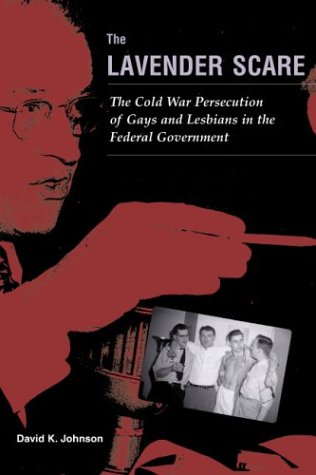
David K. Johnson | The Lavender Scare: Cold War Persecution of Gays and Lesbians in the Federal Government (Univ. of Chicago Press, 2004). Following footnotes from Corey Tobin’s Reactionary Mind, I stumbled across this detailed and well-constructed history of the McCarthy era purge of non-straight civil servants. Johnson’s book documents the way in which fears about national loyalty and psychological fitness blended together in the Cold War era and led to a mass expulsion of queer folks from the government (often destroying careers, precipitating family fissures, and causing psychological and emotional trauma on the way by). What surprised me was the relatively relaxed attitude Johnson describes toward sexual deviance immediately prior to the 1950s, when few feared loss of their job or social ostracism for homosexual identity or behavior.

Paul Russell | The Unreal Life of Sergey Nobokov (Cleis Press, 2011). Cleis Press sent me a review copy of this densely atmospheric historical novel, which attempts to reconstruct the life of Sergey Nobokov, the obscure younger brother of novelist Vladimir Nabokov of Lolita fame. I admit a certain amount of dubiousness when confronted with a historical novel that attempts to piece together the life of an actual historic person — particularly when the person in question was homosexual. The temptation for presentism (reading our own expectations onto the past) is always a danger, and often intensifies when we’re talking about the act of “recovering” queer history. The novel is also forbidding in that one anticipates, from the opening pages, Nabokov’s inevitable death at the hands of the Gestapo. To be honest, I’ve rather bogged in the middle (though I mean to go back!) just because midwinter is not really the time to be reading about the inevitable demise of a forgotten gay man under the Nazi regime.

Patricia Faith Appelbaum | Kingdom to Commune: Protestant Pacifist Culture Between World War I and the Vietnam Era (Univ. of North Carolina Press, 2009). Hanna found this one for me at the Harvard Book Store off Harvard Square. It’s a meticulously researched study of pacifism during the first half of the twentieth century, focusing — as the title suggests — on the influence of mainline protestant culture on the ways in which pacifism was articulated and enacted by women and men across the United States (and to some extent internationally as well). I’m only up to roughly the start of the Second World War thus far, but am finding it very readable history. I’m particularly interested in her focus on material and “folk” culture as a way of practicing and passing along traditions of Protestant pacifism, even in more secular pacifist communities and activism.

Joseph Cummings | Ten Tea Parties: Patriotic Protests That Time Forgot (Quirk Books, 2012). This early reviewer book from LibraryThing that is a lesson in “read more than the title when requesting your advance review copies.” I thought the book was going to be about ten unique protests that time forget; instead, it was about ten pre-revolutionary protests about tea and import taxes. Which, okay, if your thing this might be fun. Cumm ings has an engaging narrative voice and it looks like he’s done a credible amount of background research. His scant two-page bibliography is made up of secondary resources, however, and the lack of even end note citations is frustrating to those of us who like our quotations sourced!

Jeffrey Weeks | Making Sexual History (Blackwell, 2000). Following citations from Gayle Rubin’s Deviations, I tracked down this retrospective anthology of British historian and theorist of sexual politics Jeffrey Weeks’ essays on historical conceptions of human sexuality. This is a lively and articulate — if somewhat theoretically dense — collection which provides a solid picture of the work of historians of sexuality since the 1960s, and also reflects back on the work of sexologists from the 19th and early 20th centuries, and the long legacy of their contributions to research and cultural perceptions of human sexuality and how it is organized. Weeks was one of the pioneering scholars to retrieve the study of sex from the realm of nature/biology (where it was assumed to be ahistorical) and asserted the importance of understanding how human sexuality itself — not just our understanding of it — is shaped by culture.

Christopher Turner | Adventures in the Orgasmatron: How the Sexual Revolution Came to America (Farrar, Straus & Giroux, 2011). I was only able to get through about half of this ambitious history of psychoanalyist Wilhelm Reich’s work on human sexuality before the library demanded it back. However, the half that I did read was a thoroughly researched examination of Reich’s approach to psychoanalysis — one which placed orgasm at the center of both psychological and political health. Since Reich had only just arrived in America when I had to interrupt my reading, I remain dubious concerning the title’s claim (that Reich precipitated the sexual revolution in the U.S.). Nevertheless, Reich’s insistence that sexual pleasure was healthy and to be encouraged — and his placement of pleasure close to the heart of humanity’s essential character — becomes central to a number of post-WWII psychoanalytic and cultural currents that I am interested in (he was connected to, among others, A.S. Neill, Fritz Perls, and Erich Fromm).

Rachel Maines | The Technology of Orgasm: “Hysteria,” the Vibrator, and Women’s Sexual Satisfaction (Johns Hopkins, 1998). Um … are you sensing a pattern in my recent reading yet? Pursuing research for an MHS “object of the month” essay, I checked out this slim volume on the medical treatment of women’s sexuality through electromechanical technology. It appears to be the only book-length work on this subject to-date, and although I found some of her arguments about male physicians and their power to be slightly simplistic, on the whole she avoids turning this into a narrative of male physicians vs. female patients, or husbands vs. wives, and instead offers a nuanced argument about the displacement of female sexual pleasure from marital intimacy to the doctor’s office due to what she terms the “androcentric model” of sex that insisted intercourse to male orgasm was sex, and women’s needs (clitoral stimulation anyone?) outside of those activities were excessive and therefore a medical issue for which one sought treatment from the professionals.

booknotes: see me naked

30 Wednesday Nov 2011

Posted by Anna Clutterbuck-Cook in book reviews

≈ Leave a comment

Tags

gender and sexuality, religion, the body, thesis

One of the books I consulted for my thesis was Amy Frykholm’s Rapture Culture: Left Behind in Evangelical America (Oxford U.P., 2004). In Rapture, Frykholm traveled around the nation interviewing readers of Tim LaHaye’s Left Behind series, exploring the effect of rapture narratives in Evangelical culture. Frykholm — who grew up Evangelical and now attends an Episcopal church — studies her former subculture with a keen and empathetic eye. In her latest book, See Me Naked: Stories of Sexual Exile in American Christianity (Beacon Press, 2011), Frykholm turns to personal narratives of sexuality, embodiment, and Christian spirituality. The slim volume contains nine profiles of Protestant Christians struggling in various ways to integrate their physical, sexual selves with their concepts of Christian “purity” or righteousness.

As much as possible, Frykholm backs away from any larger-scale analysis in the interest of allowing her subjects to make meaning of their own lives. However, it seems clear that all of her interviewees have struggled to integrate their sexual selves with their theological beliefs. Some because they experience same-sex desires, some because they’re struggling to live up to demanding Christian ideologies of chastity or modesty, some because anything associated with bodily desires became the enemy.

One of my favorite essays was less about sexual activity or relationships, per se, than it was about our sense of embodiment and the sensual experience of being and expressing oneself in flesh. “Monica” recounts her experience of attending a life-drawing class while studying abroad — an experience that challenged her understanding of propriety and ultimately helped her re-evaluate her expectations of what beautiful bodies should look like and how women’s bodies should behave. At first repulsed by the normal-looking nude model (to the point where she almost dropped the class), Monica perseveres and eventually exhibits her drawings in the college library upon returning to her home campus:

Monica heard two things in the comments [about her art show]. She heard the same fear and revulsion that she had experienced in herself when first encountering the model. It was a disgust that human beings exist in this form … she also heard in the comments that Christianity and nakedness were incompatible — that somehow being clothed and being Christian were necessary to each other (84).

At that point in her own journey, Monica has grown enough to be critical of these assumptions, and by the end of the piece has challenged herself to volunteer as a nude model for community life drawing classes — an act of bravery that seems to be very intertwined with her developing sense of spiritual practice.

What I think may surprise non-Christian readers of these narratives is their familiarity: in many ways, the discomfort with embodiment is a malaise that is more American than Christian, though obviously practicing Christians will express their struggles in theological language. The individuals here struggle with unrealistic beauty standards, with the commercialization of sexuality, with questions of attraction and desire and what their bodies want versus what they’re being taught they should want by their parents, youth leaders, peers. The process of coming into one’s own bodily self and finding a voice for our desires is rarely an easy one, regardless of the faith tradition we’re raised in.

On the other hand, See Me Naked does put those struggles in a particularly Christian theological and social context, and illuminate some of the ways Christian language — particularly theology which seeks to construct rigid definitions of “right” and “wrong” sexual expression — fails believers. Reading stories about young women starving themselves to the brink of death in the name of “modesty” and young men told their interest in pornography was sinful, brought to mind the recent post, How Modesty Made Me Fat, by Sierra of No Longer Quivering in which she writes:

Modesty made me “fat” because it defined my relationship with my body in terms of appearance. Not action. Not gratitude. Not the joy of movement. Just appearance. It also defined my relationship with men as one of predator and prey. It was my job to hide from men so that their sex drive would lie dormant, like a sleeping wolf. But if that wolf ever awakened, it was not because it had been sleeping for a long time and its circadian rhythm kicked in, or it was just naturally hungry. It was my fault because I had done something to “bait” the wolf. Just by being visibly female, or by moving in “unladylike” ways. You cannot consider women full human beings unless you recognize that their lives do not revolve around the male sex drive. Modesty is a philosophy that dehumanizes. It incites constant fear and vigilance in one sex while excusing the other of all responsibility. It’s immoral.”

See Me Naked offers similar examples of the way in which our religious language falls perilously short in its ostensible effort to increase well-being for all. Naked tells stories of women starving themselves close to death for the sake of being pure, stories of women and men who feel lost when faced with the task of integrating queer attractions with their Christian faith, and stories of men who are taught to hate and fear their feelings of sexual desires as something inherently impure or incompatible with living a righteous life.

At the very end of See Me Naked, Frykholm does offer some reflections on an alternative ethic of sexuality, one that I think is worth contemplating whether or not you’re interested in the explicitly Christian language in which she couches her suggestions. “True, deep, real pleasure is an avenue to the Holy,” Frykholm writes. “Through discernment, wonder, and aliveness we will know what real pleasure is … and when we sense true pleasure, we will trust it and be able to act bodily in it and with it.” She recounts the counsel of a parent to her soon-to-be adolescent daughter, “Your body will know more pleasure than you can even now imagine. You are going through a period when your body is going to learn to feel pleasure, and you will be amazed” (176)  While I’d argue that children, too, have the bodily capacity to feel pleasure — though of a different kind than adults — I like this invitation to an emerging teenager to embrace that part of her growing-up. Too often, we’re quick to associate teenage embodiment with danger, not pleasure. As Frykholm says, “We all know that puberty, adolescence, adulthood are not solely about pleasure … But pain we know well. Pleasure we sometimes need help attending to” (177). Such an invitation crosses the boundaries of faith traditions and is a reminder to us all how much better we could be, as a culture, at living embodied and joyful lives.

Cross-posted at the oregon extension oral history project blog.

first thoughts: being interviewed about sexuality + society

28 Friday Oct 2011

Posted by Anna Clutterbuck-Cook in life writing

≈ 2 Comments

Tags

boston, gender and sexuality, religion

On Wednesday evening I sat down for two hours to speak with Holly Donovan, a PhD candidate in Sociology at Boston University. Holly is conducting interviews with LGBTQ-identified folks in the Boston area as part of her research on sexuality, religion, and community. If you identify as queer and live in the Boston area, check out her call for participants, which she asked me to pass along. For me, it was a unique opportunity to be on the opposite side of the microphone: usually I’m the one asking the life history questions!

tea is essential for good conversations

For the next three weeks, I’ll be completing phase two of the project — keeping a journal of observations and thoughts about my experience of being queer in Boston — but for now, I thought I’d share some initial reflections about our conversation.

Life narratives are inherently chaotic on the first go-around. Unless you’re focused on a very specific aspect of your life (and even then, as my OE oral history project shows, things can get out of hand very quickly) it’s fairly impossible to tell a linear story that encompasses all of the salient details of what goes into making a person. Even with the keywords “sexual orientation,” “religion,” and “social interactions” that’s a hell of a lot of territory to cover! I found myself skipping around a lot in time and missing stuff that was probably important. I woke up around 3am on Thursday morning and was mentally adding things to the “remember to tell her next time …” list.

My sexual orientation isn’t a primary identity category for me; being in a sexual relationship was much more of a turning point. This might seem weird, given the amount of time I spend thinking and writing about human sexuality — but I think that’s kinda the point. In my own personal life, there’s feminist politics (of which rights for non-straight folks were long a part of my political interests), there’s queer and sexual history (which I’m engaged in as a scholar), and then there’s the whole my-life-as-a-sexual-being thing. Which is awesome. But doesn’t really have so much to do with orientation as it does with physical experience, with relationships, with how I understand my sexuality as it relates to my ethics, my body, my interactions. In that space, I don’t think of myself as someone with a sexual orientation or identity — I just think of myself as (enthusiastically!!) sexual.

I don’t socialize in primarily queer spaces. Since one of Holly’s questions is about the interactions of queer-identified folks with straight-identified folks, I thought a bit before we sat down about my circles of friendship and the primary spaces where I socialize — both in person and online. Online more than in-person spaces are, I would say, “queer” (inasmuch as “queer” overlaps with “feminist,” which it sometimes does and sometimes doesn’t). But my circle of friends is pretty sexually and gender diverse, and they often overlap. That is, when Hanna and I get together with friends we don’t have our “gay” friends and then our “straight” friends. We have friends. We don’t socialize in spaces that are organized around sexual identity (i.e. gay bars or lesbian book clubs). Possibly because neither Hanna nor I were ever in search of an active dating scene? And I don’t think either of us has ever particularly yearned for the type of social solidarity of “safe” space that gay neighborhoods or social clubs might provide. The one exception to this is our health center, which we picked in part because of its history in LGBT health activism.

This isn’t exactly news, but opposition makes me feel defiant and irritable, rather than judged and cowed. When people are cranky about lesbian PDA, I have the urge to be more publicaly affectionate, not less. I’d argue that both my family background and my long-time singleness both contribute to this. By the time I entered into a relationship, I was much more confident about my presence in the world than I would have been in my teens. You don’t like what you see? Suck it up and deal.

I also don’t have reflexive fear about my physical safety, which is probably a whole tangle of social privileges I’ve experienced throughout my life: class, race, gender presentation, and so forth. Which ties into the idea of straight privilege that I’ve been turning over in my mind for a while now:

“Straight” privilege. I’ve put “straight” in quotation marks ’cause I don’t think it’s a function of being straight so much as being read as straight. Regardless of my own actual sexual desires, about which I didn’t speak about much growing up (except to very close family and friends) I was read as straight, as a single straight woman. I grew up assuming I had just as much right to be in public spaces, to be open about my relationships (sexual or otherwise), to speak up for my politics, as the next person. I think this is a function of race and class too. I’ve heard bi and fluid women talk about this in terms of their relative comfort level at being visibly queer in public relative to a partner who’s been in lesbian relationships longer — that a woman who’s moved through the world in straight relationships for a number of years has come to expect the right to openly acknowledge her partner, the right to kiss him or hold hands or cuddle in public and not only receive little negative feedback but actually get positive social responses. And therefore there’s less reflexive reserve, because they haven’t had to build up that mechanism for self-protection.

My family is awesome. Holly kept asking about negative social aspects of being out, and I couldn’t think of any. Yes, the obvious political/legal discrimination. But in terms of my family accepting my chosen partner on equal terms with my siblings’ partners — that was never a question. The fact she wondered if we were treated differently in my family actually took my by surprise. I mean, I got why she asked (I probably would have, being in her shoes), but that sort of behavior is so out of the realm of the way my family operates that I felt at a loss to explain why that just was never an issue.

My co-workers are awesome. I knew that already, but hadn’t really articulated it before talking with Holly. I’ve never felt unsafe about being openly in a lesbian relationship at work, either with my immediate colleagues or with the higher-ups in the organization. Hanna is my emergency contact, the secondary beneficiary in all my benefits paperwork, if we were married she’d be able to sign on under my health insurance plan, and so forth. People ask after Hanna and there’s no indication that they think of our relationship as any more or less significant in terms of workplace socialization than any of the straight partnerships that come up in daily conversation.

Choosing Hanna changed my relationship to West Michigan. Before Hanna and I got together, I could picture moving back to Michigan if the right job came open … I know how to survive as a political and social minority there (that was the story of my daily life as a child and young adult) but I wouldn’t ask someone else to live with that sort of hostility on a daily basis.  Well, that’s everything from my notes thus far. Now I have three weeks of journaling and a follow-up interview. I’ll be back mid-November with “second thoughts” and possibly “third thoughts” as well!

booknotes: making sense of sex

16 Friday Sep 2011

Posted by Anna Clutterbuck-Cook in book reviews

≈ Leave a comment

Tags

feminism, gender and sexuality, religion

Without getting too explicit here, I can pinpoint the exact moment in which I made the decision to pursue a sexual relationship with Hanna. I was in the Schlesinger Library’s reading room ostensibly doing research for a seminar paper, but in actual fact writing a long and incredibly angst-ridden letter to a friend about all these unruly thoughts and feelings I was having about this new person who’d just recently walked into my life. And somewhere in the midst of writing the letter, it clicked. I was in a muddle — and then I wasn’t. I can’t explain it more coherently than that. It was an intuitive thing: When I sat with the idea of not being with Hanna, I was anxious and sad; when I sat with the idea of being with her, that knot of unhappiness unwound and the world settled into place.

Of course, that moment of decision was only a hinge, the personal turning point amidst a sea of smaller decision-making steps, choices made and chances taken in the midst of what I still think of as our “courtship” period. All of which added up to the “intuitive” decision that I wanted to be with this person, wanted a specific type of relationship with her. What Michael F. Duffy, author of Making Sense of Sex: Responsible Decision Making for Young Singles (Louisville, KY: Westminster John Knox, 2010), would like us all to do is make that intuitive process a conscious and deliberate one: a process of personal and moral discernment.

I’m going to come clean here and confess that I requested the advance review copy of this book because I expected to be able to write a snarky review highlighting how full of fail it was. The pre-publication blurb made clear that this book was coming at the question of whether or not to have sex from a Christian perspective, and while I’m definitely open to the possibility that Christians can be awesome about human sexuality, most of the Christian-centric literature I’ve read on decision-making about sex has been woeful. So yeah (guilty foot shuffle) I was kinda looking forward to making fun of it.

The thing is: This is one of the best books I’ve read on the subject of ethical sexual decision-making. Granted, I haven’t read everything out there — and not much of it has been from an explicitly religious point of view. But I was pretty damn impressed: it pushed virtually none of the buttons I was expecting it to push, and got a lot right in the process. It has its limitations (about which Mr. Duffy is upfront in the introduction): it supposes a predominantly Christian audience, and a heterosexual, gender-normative one. Anyone who isn’t interested in lengthy examinations of personal motivation and ethics is bound to be bored, and someone who isn’t Christian and is actively turned off by Christian language would likely have a hard time getting passed the more overtly religious chapters. But the overall point of this book is to lay out a framework for sexual decision-making, not to point readers toward any one way of engaging in relational sex. Beyond the principle of basic mutual consent (more on this below), Duffy bends over backward to remind his readers that ethical people are capable of coming to differing conclusions about what constitutes a good reason to engage in sexual activity — and that each person might have made a moral choice.

Things for which Duffy earned points in my book:

  • The chapter on sexual consent. This chapter is solidly grounded in (I would say feminist) theories of mutual consent, not only covering the ground-rules of basic consent but also pushing readers to consider how much responsibility we have ensure our partners are making informed decisions about being sexual with us. His four ground-rules are 1) no sex with someone unwilling, 2) alcohol and drugs make consent problematic, 3) in general no sex with people in categories that make them incapable of consent [i.e. underage, mentally incapacitated], and 4) no sex when one person has “identifiable power” over the other. Beyond that, he writes “We should remember as we go that sexual consent is not a one-time agreement but must be maintained throughout any sexual encounter or relationship” (6). In other words, consent is ongoing and negotiated between the relevant parties.
  • Reasons for being sexually intimate. He pushes his (presumably Christian) audience to consider that premarital and “casual” sex can be a moral choice for some people, in some circumstances. He emphasizes throughout that self-awareness, responsibility, and communication are key. He allows that, depending on your view of God and the Bible, it may be that you personally decide that premarital sex is sinful — while reminding his readers that many Christians have caring, nourishing sexual relationships outside of marriage and that many of the arguments for limiting sex to marriage have more to do with rules than the actual material difference between marital and non-marital relationships.
  • Pregnancy and abortion. Anyone who pushes Planned Parenthood as an organization to which you can turn to for resources and support (p. 147) is someone who deserves kudos in my book. The chapter on pregnancy prevention and family planning is somewhat limited by the fact he’s only talking about heterosexual relationships (my marginalia alongside the chapter title, “If you do not wish to become pregnancy, how will you prevent it?” reads: “have sex only with women :)” (43)!). Given that, though, he encourages partners to be clear about their desires regarding pregnancy and emphasizes mutual responsibility in the event of an unplanned pregnancy — while being very clear that the “deciding vote” over what to do goes to “the woman in whose body this form of human life is growing” (80). Basic? Perhaps — but not when written for college students and twentysomethings who have been steeped in anti-abortion rhetoric and culture their entire lives.
  • Lack of sexism. This, also, is going to sound basic. But Duffy’s overall schematic for sexual decision-making is very light on the question of gender. With the exception (for obvious reasons) of the chapter on pregnancy — and to a lesser extent the section on sexual assault and coercion — one could take his questions about sexual ethics and ask them of any person, regardless of gender identity or sexual orientation. His concept of sexual ethics is not dependent on a belief in innate gender difference — he does not assume, for example, that women will automatically suffer more (or at all) from “hooking up,” or that men are not interested in committed relationships. In this era of increasing buy-in to theories of gender difference, gender-blind sexual ethics are a welcome relief.

Areas in which Making Sense of Sex was lacking:

  • Heteronormative framework. Duffy is up-front in the introduction that he chose to focus on heterosexual partners in his text, in part because that’s where his own personal experience lies. While I’m pleased he made a conscious decision, I also question the narrowness of his interpretation of sexual ethics: are same-sex or genderqueer folks really so different as to need a whole different framework for understanding their sexual lives? And the same could go for folks choosing poly relationships — couldn’t the same basic questions about trust and meaning apply to them as well? I think he short-changes himself in this regard and (perhaps inadvertently) sends the message that non-heteronormative relationships are so utterly different as to be beyond the scope of his project. He makes a passing mention to “group sex” and the fact it can be ethical, but doesn’t get much into it.
  • Sex = “vaginal intercourse” (xv)? Really? Even given Duffy’s focus on heterosexual couples, I feel that choosing to define sex straight-up as “vaginal intercourse” is a missed opportunity to challenge the majority assumption that this is the beginning and ending of human sexual activity.
  • Pornography and sexual ethics. While I understand why he skirted this issue (it could be a book in and of itself), I think the question of pornography and erotica — and its place in human sexual activities — really cannot and should not be avoided when talking about sexual ethics. If I were going to use Duffy’s book in a class, I’d want to augment it with a list of readings on erotica.

So, overall verdict? This would be a solid text to use in a course or workshop on sexual decision-making, but I’d definitely want to add some other titles to the list — Heather Corinna’s invaluable S.E.X.: The All-You-Need-to-Know Progressive Sexuality Guide to Get You Through High School and College (New York: Marlowe, 2007) comes to mind — as a way to bring queer perspectives into the discussion. And I’d make sure to have a full-fledged discussion about how erotic materials might be ethically and mutually enjoyed by all parties in a sexual relationship, as well as the way in which they are often used to cover up or avoid areas of a relationship that have ceased to function. If this is your area of professional or personal interest — and especially if you’re working with young people who come from a Christian background — I’d highly recommend checking this book out as a useful resource.

This book was made available to me in electronic format for advance review through NetGalley.

booknotes: contacts desired and recruiting young love

12 Friday Aug 2011

Posted by Anna Clutterbuck-Cook in book reviews

≈ 2 Comments

Tags

books, gender and sexuality, history, religion

Over the past few weeks, I’ve read two interesting — if somewhat academic — books about (loosely speaking) print culture and its intersection with queer communities and discourses about non-straight sexuality. The first was Contacts Desired: Gay and Lesbian Communications and Community, 1940s-1970s by Martin Meeker (Chicago: University of Chicago Press, 2006) and the second was Recruiting Young Love: How Christians Talk About Homosexuality by Mark D. Jordan (Chicago: University of Chicago Press, 2011). While the first book dealt largely with homophile organizations and the underground publications of the gay liberation and lesbian feminist movements, the second took up the various rhetorics deployed within Christian circles to speak and write about homosexuality (mostly gay male sexuality) from the turn of the twentieth century through the ex-gay activism of the 1990s. Despite the pro/con nature of these texts, what Contacts Desired and Recruiting Young Love share is an interest in how networks of communication spread ideas and inform opinions, actions, and identities.

“Adolescence is the possibility that desire could be different.”

Recruiting Young Love by Mark D. Jordan, focuses on what he calls “rhetoric” and I might term “discourse” concerning homosexuality — mostly (and he is upfront about this) gay male sexuality — in Christian circles over the course of the twentieth century. His interest is primarily in the 1950s forward, though he does begin in the early twentieth century with the emergence of professional discussion of healthy adolescent development (think G. Stanley Hall, the YMCA, Teddy Roosevelt, etc.) by way of providing background for later debates.

As the phrase “recruiting young love” suggests, Jordan is particularly interested in the way that Christian anti-gay voices expressed anxiety about adolescent sexual identity, and the fact that even today ex-gay therapy understands heterosexual and gender-normative identity to be both the most correct expression of sexuality and the most vulnerable. Teenagers, especially, are seen as vulnerable to recruitment and seduction. The examples of Christian rhetoric concerning homosexuality, then, focus on young people and at times seem to assume that all young men are in fact potentially gay — and that this potentiality is threatening to the moral order.

Although he focuses on anti-gay voices, Jordan also touches on some examples of what he calls “camp spirituality,” or appropriated religious imagery (i.e. the Sisters of Perpetual Indulgence), and upon Christian attempts to integrate gay identity and same-sex sexuality into their sexual ethics. He cites, for example, a 1963 Quaker pamphlet, Towards a Quaker View of Sex, that used Alfred Kinsey’s model of fluid sexual practice to argue that homosexual desire and expression, while not predominant, were healthy and normal within the human community. He writes:

For this model of development, most male adolescents are having same-sex relations or thinking about them. Bit by bit, most of them shift over a decade or more to heterosexual relationships. Some do not. The process is not so much an expression of nature as of circumstance or even chance. Indeed, the Quaker pamphlet accepts more fully than any earlier church text not just Kinsey’s terminological suggestion about how to speak of homosexuality as outlet rather than ontology, but his notion that homosexual acts vary with time. To think of yourself as a homosexual should mean no more than observing where you are in the arc of your life and with whom you are now spending it (89).

I was actually quite moved by the idea that one’s sexual “identity” was actually a question of observation and regard, suggesting change over time rather than fixity — though without the sense of enforced change, or charge from “unhealthy” to “healthy” that so many ex-gay narratives imply. Once again, Quakers FTW — and in 1963 no less!

One other aspect of anti-gay Christian rhetoric that Jordan takes note of is the fact that contemporary ex-gay ministries seem to be much more preoccupied with what we would consider gender performance than actual sexual identity, desire, or activity:

Gender matters more than sex [in many ex-gay ministries]. Marriage is the highest accomplishment not because it allows you to copulate naturally, but because it gives you the best stage for performing gender correctly … Indeed, ex-gays may actually be able to use marriage better for gender performance than heterosexuals can, since they are unlikely to enter into it on account of lust … the central category of ‘sexual identity’ means in the end only ‘roles as men and women’ (165).

In this, he relies a great deal on the research and writing of Tanya Erzen, whose recent book Straight to Jesus I reviewed here last August. I’d highly recommend her text if you’re interested in exploring this aspect of the ex-gay movement in more detail.

The weakness of Jordan’s work is one that he admits up-front in the introduction: that it is not meant to be a coherent or comprehensive historical narrative, but rather a series of proffered examples or touch-points meant to give readers a sense of the variety of discourses concerning homosexuality that have existed in Christian circles over the past half century, and some rough idea of where they sprung from, their similarities and their differences. Someone hoping for a more detailed history of anti-gay activism will have to look elsewhere.

“Homosexuals are discarding their furtive ways and openly admitting, even flaunting, their deviation” (Life, 1964).

Meeker’s Contacts Desired explores the ways by which gay- and lesbian-identified people established networks of communication in the decades before, during, and immediately after what we have come to term “the sexual revolution.” As previous scholars have pointed out, identity based on sexual orientation does not bring with it an automatic community affiliation. Unlike with racial, ethnic, religious, or even class, one rarely grows up in a family that shares one’s non-straight orientation. Particularly during the mid-century in America, where queer subcultures were obscured from public view for the safety of their members, a pervasive sense of isolation was often part and parcel to becoming aware of one’s same-sex desires. Contacts, originally written as Meeker’s PhD dissertation, documents the means by which gay and lesbian individuals made contact with the sexual underground and how they situated themselves within it through text: newsletters, interviews, press releases, pamphlets, “contacts desired” ads, guidebooks, and so forth.

Contacts bears the marks of its academic origins, and I’d suggest picking it up more for targeted rather than leisure reading. Those familiar with the history of mid-twentieth-century gay and lesbian activism will find many of the usual suspects here: the Daughters of Bilitis and the Mattachine Society, lesbian pulps and journalistic (outsider) coverage of gay lives — such as the 1964 Life photographic essay on the gay male subculture, from which the quotation above, and the cover art of Contacts, are drawn.

The primary sources I found most fascinating in Meeker’s work were actually these journalistic offerings from the 1960s, since they offered up a glimpse of (and yes, I know it’s cliche) how far we actually have come in the past fifty years in terms of de-pathologizing and de-criminalizing queer sexualities — even though it’s obvious we still have work to do. Meeker discusses popular book-length treatments of queer subcultures as well as newspaper and magazine exposés. What is clear is that “sympathetic” (straight or passing) writers understood that in order to write about homosexuality for the mainstream, it needed to be treated as a psychological disorder or as antisocial behavior. Understanding homosexuality did not mean reading it as normal. The Life article makes that clear from its sensationalistic opening sentences:

These brawny young men in their leather caps, shirts, jackets and pants are practicing homosexuals, men who turn to other men for affection and sexual satisfaction. They are part of what they call the “gay world,” which is actually a sad and often sordid world. On these pages, LIFE reports on homosexuality in America, on its locale and habits and sums up what science knows and seeks to know about it.

Homosexuality shears across the spectrum of American life – the professional, the arts, business and labor. It always has. But today, especially in big cities, homosexuals are discarding their furtive ways and openly admitting, even flaunting, their deviation. Homosexuals have their own drinking places, their special assignation streets, even their own organizations. And for every obvious homosexual, there are probably nine nearly impossible to detect. This social disorder, which society tries to suppress, has forced itself into the public eye because it dos present a problem – and parents especially are concerned. The myth and misconception with which homosexuality has so long been clothed must be cleared away, not to condone it but to cope with it.

As Meeker points out, these widely-disseminated treatments of homosexuality were often read subversively by those whose desires were the topic of discussion: gay and lesbian readers of Life who might otherwise be cut off from the networks of queer communication and community were given a roadmap to (at least some of) the popular gay and lesbian gathering places or geographic locations, thus offering hope that they were not alone. Articles that claimed to “not … condone [homosexuality] but to cope with it” actually did their part to strengthen the underground networks of queer communication that took a radically different view, at least in most cases, when it came to how sad their lives actually were and the extent to which what sadness there was came as a result of their sexual desires (versus the hostile climate in which they were forced to exist).

Reading these books has inspired me to explore some of the primary source material itself, so check back next week for reviews of Patricia Highsmith’s The Price of Salt (an early lesbian novel) and Adrienne Rich’s 1977 essay “Compulsory Heterosexuality and Lesbian Existence.”

$1 reviews: god’s politics

14 Tuesday Jun 2011

Posted by Anna Clutterbuck-Cook in book reviews

≈ Leave a comment

Tags

politics, religion

Now that my reading is no longer dictated by my thesis research I find that … well, I read more or less the same mix of stuff that I read while I was writing. Including the scary books about religion and politics. While Hanna’s parents were here a couple of weekends ago and we went shopping at the Brookline Booksmith, I picked up a copy of Jim Wallis’ God’s Politics: Why the Right Gets it Wrong and the Left Doesn’t Get It  (New York: Harper, 2005). Jim Wallis is one of the founders of Sojourners, an evangelical social justice organization that grew out of anti-war activism during the 1970s. To this day, Sojourners is active in anti-war, anti-racism, and anti-poverty work. They have tried to exist, as the subtitle of Walli’s book suggests, as a third way in the American religio-political landscape: progressive on some social justice matters while also remaining very conservative in some issues I would argue are also social justice questions — but which Wallis sees as divisive “culture war” issues (i.e. gay marriage and abortion). Recently, Sojourners came under fire from some more queer-inclusive religious groups for rejecting an ad submitted to its magazine from an LGBTQ Christian organization. Given the recent buzz, when I saw a copy of God’s Politics at the store I decided it was time for a re-read.

I vaguely remember reading the book when it came out right after the 2004 election. Mostly, I remember feeling fairly certain that Wallis didn’t “get it” when it came to characterizing leftist politics … since most of his criticisms of leftist activists (people he often characterizes as “secular fundamentalists”) bore little resemblance to the people who I understood as left-liberal. I can’t say that my overall impression, upon re-reading God’s Politics six years later, has changed. I still feel the book is condescending towards those whose politics fall to the left of Wallis’ (I’ll return to this below) and I think that he’s trying a little too hard to have his cake and eat it too.

Take, for example, the “culture war” issues he tries to dismiss as meaningful political topics. He wants to claim that evangelical Christians can stand at once for the full human rights of queer folks while continuing to exclude gay people from full participation in church life. He argues that they can be “pro-life” but also feminist, while defining “pro-life” in a way that actually makes him politically pro-choice. While I agree with Wallis that it is possible to be personally against abortion, and to work to reduce the need for abortion, without robbing women of the ability to make necessary decisions for themselves and their families, I find it offensive that he makes what is essentially a reproductive justice argument and yet re-frames it as something that is distinct from (and superior to) the arguments of feminist activists. While I’m not against trying to re-claim “pro-life” as a more comprehensive idea — anti-death penalty, anti-war, reproductive justice — for Wallis to act as if by using the term he can change its political meaning overnight is naive at best and disingenuous at worst.

I also grew very tired of his use of language like “moral” and “values” as if religious folks have a monopoly on morality and ethics. Assuming as he does that religious folks are better at thinking and acting “morally” than their secular peers, I feel that he is blind to non-religious possibilities for some of the problems he diagnoses in American society. His reflexive support for normative family structures, and his assertion that children thrive best in two-parent (by implication heterosexual) families, for example, fails to ask deeper questions about how we might re-form our understanding of family to meet the needs of all people, regardless of their marital status, age, sexual orientation, or other social ties. In his efforts to appease the Christian right, I can’t help feeling that he missed an opportunity to imagine new ways of caring for one another that actually fit quite well into Biblical visions of community as well as dovetailing with very left-radical notions of how non-traditional families might be recognized and honored.

He also loses me when he writes about the degradation of modern culture and the need to re-affirm the value of nuclear family life in language full to bursting with nostalgia for the 1950s that never was. While he never overtly calls for a return to “father knows best,” his recourse to the politics of disgust over hypersexualized television commercials and the comic book violence of Van Helsing (really? that’s the movie you found worthy of condemnation??) amounts to a recoil from modern popular culture that suggests he would be more comfortable if such things would just disappear. I’m always confused by this argument, since surely if you don’t like the violence of Van Helsing or the ideas about human nature found in reality television shows you can turn the television off. Or you can engage in deconstruction and analysis of the show’s messages.  (Perhaps he should read Jennifer Pozner’s Reality Bites Back?) In these moments of recoil and the impulse to make the icky thing just go away I feel Wallis betrays his mid-century evangelical youth, when even films like “The Sound of Music” were Godless indulgences.

Wallis’s strength lies, unsurprisingly, in the sections where he writes about nonviolence and economic justice. I was particularly struck by his insistence on positive alternatives to war as the only effective way of breaking down the notion that violence will somehow bring about a more peaceful world. “If nonviolence is to have any credibility, it must answer the question that violence purports to answer, but in a better way” (160). I was not particularly satisfied with Wallis’ nonviolent solutions (he distinguishes “military” from “police” enforcement without recognizing that in many parts of the world, “police” are justifiably seen as perpetrators of, not protectors from, violence) but I appreciate that he realizes that simple opposition to violence is not an effective political position. I also think he is on much firmer theological ground when arguing that the God of the New Testament (and Jesus) have an inherently anti-war message, and that the Bible calls on us to care for the most vulnerable members of the human community.  In some ways, I wish that he had stuck to these two messages rather than trying to forge a “middle way” between social justice and cultural conservatism — since I think his capitulation to cultural conservative ultimately undermines his claims for the latter.

from the archives: the 1920s culture war

08 Tuesday Feb 2011

Posted by Anna Clutterbuck-Cook in my historian hat

≈ Leave a comment

Tags

feminism, MHS, politics, religion

Over at the Massachusetts Historical Society website, the object of the month for February 2011 is an item I selected and wrote up. The object is a letter from a conservative Nebraska clergyman to an anticommunist, antifeminist political activist who lived in Massachusetts. Reverand Birmingham wrote Margaret Robinson in hopes that the two might work together to combat the evils of women’s higher education:

In May of 1923, conservative evangelical minister, author, and lecturer Thomas M. C. Birmingham saw a brief announcement in an Omaha newspaper, describing a lecture given by Margaret C. Robinson, president of the Massachusetts Public Interests League, on the “radical propaganda” Robinson and her fellow activists believed was being disseminated in women’s colleges.

Professors at women’s colleges such as Bryn Mawr, Smith, and Wellesley, Robinson argued, were turning “wholesome American girl[s]” away from patriotism and the Constitution, preaching “Communist sex standards,” calling the literal truth of the Bible into question, and exposing young women to the theories of Freud and Marx.  As a result, unsuspecting parents sent their daughters off to college and watched in horror as their child was transformed into “an undesirable type of citizen.”

This message resonated with Birmingham, who wrote to Robinson, suggesting that the two activists might find “mutual helpfulness” in an alliance to “stamp out radicalism.”

You can read the rest of my write-up and a full transcript of the two-page letter over at the MHS object of the month page.

The MHS is known for its 18th and 19th Century American holdings, and it has long had a reputation for holding documents related to the New England elite. Part of what I’m trying to bring to my work as a reference librarian is greater knowledge of the ways in which the MHS collections can inform research in less-obvious areas (i.e. my own areas of interest!) such as the history of sexuality, the history of gender, history of activism (left, right, and center) and 20th-century subjects. 

I picked this letter a few months ago to research and write up because I think it’s valuable to remember that folks like those in the Tea Party movement are not the first populist conservative activists to wrestle with their more progressive adversaries over what it means to be an American and what exactly constitutes American values. I’m also fascinated by antifeminist women and how they understand themselves in relation to gender and women’s rights movements. Female activists who campaigned against feminism while deploying tactics and rhetoric similar to their feminist contemporaries can further our understanding of how individuals understand their own gender identity and how gender roles relate to the state and social order.

Anyway. Hop on over to the MHS website and check out the whole thing.

blog for choice: on the privilege of having real choices

21 Friday Jan 2011

Posted by Anna Clutterbuck-Cook in think pieces

≈ Leave a comment

Tags

blog for choice, feminism, human rights, politics, religion

Today is Blog for Choice Day 2011 in which folks around the blogosphere take a moment to write about abortion access and reproductive justice. You can read my previous contributions for 2008 (the radical idea that I am a person) and 2010 (the radical act of trusting others) by clicking through. This year’s prompt was: “Given the anti-choice gains in the states and Congress, are you concerned about choice in 2011?”

It’s a tricky word: “choice.”

I believe that human beings always have choices, and thus we must always make choices. Most of the time, we make those choices, decisions, based on complex internal and external equations of risk vs. benefit, right vs. wrong — equations we often aren’t fully aware of laying out and solving before we say: “this. this is my choice.”

Yet we move through the world making choices. Some small (what to wear to work today; what to have for breakfast) and some large (whether to speak up when a colleague bullies you; whether or not to carry an unplanned pregnancy to term).

Philosophically and ethically speaking, I’m a big supporter of the concept of “choice” and the recognition that people are moral agents constantly making moral choices. Even in situations where there seem to be few or no options — or no good options — left. As I wrote last year, one of the most radical acts we can choose to perform on this earth is the act of trusting other human beings (even those we do not know and have no control or influence over) to make decisions about what is right (and moral) for them.

Yet the language of “choice” can also be used as a weapon, as a judgment. “Whatever; that’s their choice”; “They’ve made their bed, let them lie in it.” With increasing frequency, I hear the language and concept of “choice” being used in ways that punish those with the least agency, the fewest options, and those who are facing the highest cost for exercising their decision-making abilities. I see people being punished for brazenly acting as though they had moral agency, as if they expected the people around them to trust them to make moral choices for themselves and their families.

You see, while everyone has the ability to exercise their freedom of choice, only some people are considered worthy enough to actually exercise that ability without being judged. Rich, white, straight folks to be exact. People with enough material autonomy to act independently (and thus privately), without needing to rely on extensive formal and informal support networks to actually access the resources they need to follow through on the moral decisions they have made.

You need help and support to follow through on your choices? You need some public assistance to raise the child you decided to give birth to? You need your health insurance to cover that abortion you decided was best for your family? You need affordable daycare? A job with flexibility in order to balance the demands of care-giving and career?

Fuck you: Having kids was just a “lifestyle choice” … why should we as a society help you out?

Fuck you: You “chose” to have sex when you know the only completely reliable method of birth control is abstinence. If you can’t afford to pay out of pocket for an abortion? Tough.

As I said, it’s a tricky word: “choice.”

The pro-choice movement has been advocating for decades now that we recognize women as moral decision-makers when it comes to their reproductive health and choices. This is all well and good, but I think it’s important to realize that those who are anti-choice, anti-abortion, anti-reproductive justice are perfectly willing to recognize that women can make choices.  Anti-choice politicians and activists just want to make sure that we lack the ability to follow through on those choices in a meaningful way.

So you bet I’m “concerned about choice” this year, as I am every year. I’m concerned at the way our culture and our political system seem unable (or more likely, I suspect, unwilling) to take a long, hard look at the way in which we collectively constrain access to meaningful choices for the majority of the population. Particularly the way we target already-vulnerable populations and strip away their ability to be moral decision-makers who can actually act on their decisions in ways that promote well-being. Children and adolescents, people of color, people living below the poverty line or on severely limited incomes, immigrants, people without health insurance, folks without job security, folks in non-hetero-normative families. As a nation, we should be making it possible for all of these folks to make — and follow through on — moral choices for themselves and their families.

Instead, we seem hell-bent on stripping those abilities away even further. And I see the rhetoric of “choice” in some ways aiding and abetting that evisceration. Because, after all, if someone is “free” to “choose” … then what do they need from us?

It’s the responsibility of those of us who are pro-choice on abortion and reproductive health to articulate what people do need to follow through on their choices. Because if we don’t, we might have a “choice” … but not much of a chance to act on it.

booknotes: nonviolence

13 Monday Dec 2010

Posted by Anna Clutterbuck-Cook in book reviews

≈ Leave a comment

Tags

bigotry, history, politics, religion

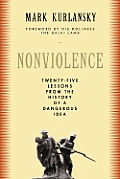
Mark Kurlansky’s book, Nonviolence: Twenty-Five Lessons from the History of a Dangerous Idea (New York: Modern Library, 2006) does not pretend to be a comprehensive history of the idea and/or practice of nonviolence.  Instead, it should be approached as an invitation to consider the myriad ways nonviolence, in theory and praxis, has manifested itself in different times and places around the globe.  Kurlanksy’s emphasis here, in terms of examples, is on U.S. history, though he includes a healthy smattering of other continents represented (for example nonviolent resistence to European colonialism in Oceania, medieval European monastics, and Ghandi’s well-known campaign in India). For those interested in a more in-depth analysis of any one of the particular cases he cites, a fairly healthy eight-page bibliography of sources is included that can be a departure point for further reading.

What Nonviolence really is, more than an scholarly historical analysis, is a well-written, historically-supported argument for the effectiveness of nonviolence as a political strategy — one that has a better track record than violence as a way of improving the human condition. And taken as such, I think it is worthy of note.

I should acknowledge up-front here that Kurlanksy is preaching to the converted here: while I am not a wholehearted pacifist in practice (“pacifism” being distinct from the strategy of nonviolence, as discussed below), I am already convinced of the necessity of pursuing nonviolent pathways to social and political change. In my mind, there are no “just” wars. And I believe violence always begats more violence. So I’m an easy sell, as it were.

That being said, I think Kurlansky brings up a number of interesting points about nonviolence that should provoke us to thoughtfulness, regardless of personal stance concerning the practicality of nonviolent action in a world saturated with violence.

Kurlanksy’s first point is that there is no word for the concept of nonviolence — we can only speak of it by referrring to what it is not: it is not violence. He suggests that the explanation for this absence might be found in the fact that established political, cultural and intellectual communities “have viewed nonviolence as a marginal point of view, a fanciful rejection of one of society’s key componants, a repudiation of something important but not a serious force in itself” (5).  This linguistic marginalization, he argues, signifies a cognitive marginalization, a resistence to accepting the concept and practice of nonviolence because it requires a profound reorientation toward the world. It is a “truly revolutionary” idea, a “threat to the established order,” and thus treated as “profoundly dangerous.”

Why is it a threat to the established order? Because nonviolence is effective as a political strategy and offers an alternative to violence. In contrast to pacifism, which is a personal orientation toward life — an individual “state of mind” that does not necessarily translate into political or social action, nonviolence is an explicitly political orientation.

The central belief [of nonviolence] is that forms of persusasion that do not use physical force, do not cause suffering, are more effective, and while there is often a moral argument for nonviolence, the core of the belief is political: that nonviolence is more effective than violence, that violence does not work (7).

The rest of the book offers examples — from the American Revolution to the Jewish Holocaust — in which nonviolent action was more successful than violent action in resolving the situation that as a culture we assert war was necessary to resolve.  For example,

The Nazis are often cited as an example of an enemy against whom nonviolence would be futile. This is said despite the success of several nonviolent campaigns. Amid some of the greatest violence the world has ever seen, it was little noted that more Jews were saved by nonviolence than violence (133).

He gives the example of Denmark, a government and citizenry which — through comprehensive, cooperative nonviolent action — that succeeded in saving all but fifty-one of its Jewish citizens (who died of sickness while being held by the Germans while Denmark negotiated for their release). In contrast, France lost 26% of their Jews, the Netherlands three-quarters and in Poland 90% — despite the fact that all three nations had a very active (and armed) resistence movement.

This example can obviously be interrogated, as can all of the others Kurlansky uses. But the point remains that nonviolent tactics have, historically, proved to be effectual — and we could perhaps learn from past success as well as failure.

Why, then, do we so often ignore, dismiss, scoff at, and otherwise marginalize the potential of nonviolence? Kurlanksy argues that much of the blame lies with the state (and those who represent the state), and with the fact that war — once begun — develops a momentum of its own that, popular or not, is extremely difficult to reverse.  We have also learned to accept the (perhaps false) assertion that there are times when violence is our only recourse, when violence is the only path to lasting peace, and the seldom-challenged notion that without violence we would be less safe, less free, less alive, somehow indefinably less than we are when violence is present. (For another sustained psycho-cultural exploration of violence and war as a way human beings make meaning for themselves, see Chris Hedges’ War is a Force That Gives Us Meaning )

Kurlanksy asserts that it is war and violence, not an unwillingness to resort to war and violence, which make us less free, less safe, less alive than we would otherwise be.  It is lack of imagination, lack of a willingness to imagine a world without violence — an unwillingness to imagine the wars we have endured were unnecessary and may even have made the situation worse than it otherwise would have been that are roadblocks to seeking alternative, nonviolent solutions.

For anyone who’s familiar with theories of personal trauma and recovery, this cycle of violence is going to sound familiar: you suffer the trauma of X and it is very, very difficult not to rationalize X as an experience that made you stronger, made you a better person. It can be horrifying, crippling, to even imagine that if not for experience X you would be more whole as a human being.  Kurlansky’s theory of the marginalization of nonviolence is, more or less, this personal rationalization of trauma writ large: we experience war (trauma) and seek to rationalize it because to acknowledge war serves no constructive purpose is so horrifying to concieve of that it is literally beyond language, beyond our collective imagining. Instead, we justify it as fundamental to human existence, and therefore inevitable and necessary, and therefore a part of the human condition in which we must find value.

Which, I think, is part of the reason I’m so fascinated by it. By the practice of nonviolence. Precisely because so many of us, so often, imagine it is beyond the realm of possibility. I spend much of my time studying (historically, culturally) the lives of people who live and work and think in ways that — to the majority — are literally outside of the possible. That are understood to be incompatible with a meaningful (or in some cases literal!) existence.  And yet, somehow, these folks persist in existing.

Reading a book like this is like having someone throw down a gauntlet: You think war is the only solution? Prove to me you’ve exhausted every other possibility. No, more than that: prove to me that violence will facilitate better outcomes than taking any other action or no action at all. Unless you can prove that to me, I’m not interested in hearing how nonviolence is fanciful, impractical, idealistic. Because war kills people. Violence harms people. And perhaps the most compelling (and revolutionary) idea of them all: violence doesn’t work. 

You disagree? Prove it. Until then? I’m not interested.

alma mater musings: individuals + institutions

18 Saturday Sep 2010

Posted by Anna Clutterbuck-Cook in life writing

≈ 3 Comments

Tags

education, gender and sexuality, hope college, religion

This past week, I had an exchange with one of my faculty mentors from undergrad who is currently collecting stories from queer students and allies about their experiences at Hope College (for previous posts on this topic go here). A group of faculty are hoping to collate these narratives and take them to the Board of Trustees on October 10th as part of a presentation on the hostile climate for non-straight folks at Hope College, in hopes that personal stories will help reshape the discussion around homosexuality on campus.

At first, I didn’t really think I had much to say beyond what I already put into my letter to the Board of Trustees. But since writing that letter in April I’ve been doing a lot of thinking about Christian higher education and about the intersection of organized religion, personal faith and values, and formal learning. This is going to be a rambling sort of post, but I wanted to share some of my in-process musings. I welcome responses and further thoughts in comments!

One of the things I think we often overlook when we view institutions like Hope College or Calvin College or even Patrick Henry College from the outside is that even the most close-minded institutions can be sites where individuals learn, grow, and can even become subversive. Sometimes, that subversive impulse is born of resistence to the oppressive nature of the institution and the subculture within which that institution is situated. But I don’t believe that’s the whole story. Often, some parts of the institution or the subculture themselves enable that growth and change within individuals who care to take advantage of it.

To take an obvious example, young people who grow up within the Christian subculture learn at a very early age what it means to move between cultures: their own and the dominant American culture. They learn the positive aspects of being bicultural, of having a critical perspective on mainstream values and beliefs, of being an outsider who belongs to an identity community. They know how to speak what my mother used to call “God talk” and they know how to edit those references out of their vocabulary when they know such language won’t help their cause. All of these skills and experiences are transferable to other sub- and counter-cultural experiences — including the experience of belonging to feminist or queer identity groups. To many of us, feminism and a more open concept of sexuality are, in fact, extensions of the values we saw modeled within some Christian communities. I know that, when I first discovered feminist theology as a first-year college student the possibility that Christianity could be reconciled with the values I held as a feminist brought me closer to religious faith than anything before or since. I came closer that year to joining a church than I had in all my years of teenage involvement with organized religion.

The fact that the values of feminist theology were viewed with skepticism by some and outrage by others within the college community was incredibly alienating to me (as a seventeen-year-old) … and yet at the same time, it was Hope College that had, however imperfectly, exposed me to those ideas in the first place. I was instinctively feminist before going to college — in my auto-didactic way I knew my feminist history — but it was at this religiously and politically conservative institution that I actually found the thinkers and activists of who helped me clarify those instincts and turn them into both meaningful scholarship and daily action. I was being marginalized by some people within the school for ideas and values I had been invited to explore by others at the same institution. Complicated? Complicated.

As I wrote in response to my friend’s email,

It was through Hope College that I was able to explore political feminism, feminist theology, non-straight sexuality, and connect with folks like Linda and Denslow [members of Aradia]; to ground myself in a network of intergenerational feminists who experience sexuality in myriad ways. It was an integral part of my growing into myself and arriving in a place where — when I decided to explore my own sexual desires and seek out sexual relationships — I was open to being with those human beings who turned me on, regardless of gender. Hope as an academic institution (and more precisely the faculty I worked with there) gave me a place to develop the intellectual and political framework to articulate myself and from that position of strength enter into a relationship that (ironically!) Hope College officially does not condone. It is sad, to me, that I can’t really celebrate that learning experience with Hope as an institution because it is a type of learning that isn’t valued — it doesn’t fit within the narratives of alumni achievement. The most valuable gifts that my Hope College education gave me are the things the college likes to keep at arms length. And I feel like that’s their loss.

And then in a follow-up email,

My experience at Hope has given me a uniquely personal perspective on the way individuals negotiate their personal life stories within religious and educational institutions … The fact that students and faculty at a socially and religiously conservative institution like Hope can manipulate the learning experiences in liberatory ways contradicts (in my opinion) the mainstream narrative that tends to downplay individual agency within religious/educational institutions and focus on the official message or the stories told by people with structural/social power and authority (usually not where the most interesting stuff is happening!). The complexity of the real lived experience is a difficult one to get across to people who haven’t grown up in that environment or been required to develop those skills for subversion.

[Since graduating from Hope, I have become more] aware of the complex sociocultural and structural reasons students choose to attend the institutions they attend (church connections, family relationships, friendships, finances, geography, etc.) and how so often those initial choices they make cannot begin to reflect the people they become during their tenure as students. It seems to me (idealist that I am!) that it is the responsibility of a college like Hope to acknowledge that even students who may come to the college as religiously conservative straight folks could discover their sexual fluidity or finally come to terms with their orientation during their time at Hope. And I think Hope College would benefit (as both an institution and as a community of individuals) from being the sort of environment where that personal journey was embraced as a mark of individual strength, openness to change, opportunity for developing personal ethics around sexuality and political identity. Right now, the institutional position seems primarily to be one of fear, which in turn communicates to students that exploration, questioning, and change are threatening to both personal and social well-being. Hardly an attitude conducive to meaningful learning!

I am reminded of a post by Sharkfu at Feministing on the complicated balancing act of being involved in religious institutions with which you do not wholly agree. Such relationships can often be a constant re-negotiation, an assessment of whether the benefit of being involved with the institution outweighs the cost of membership (both to the self and to society). From the outside, it is all too easy to condemn people who stay affiliated with such institutions, since it is difficult to see the complexity of the relationship that person has had with that community, with that space, with those ideas, over time. And I would like to emphasize once again: I don’t mean this in a purely negative way. Yes, sometimes being part of a subculture can cloud your perspective, isolate you from ideas and people that might otherwise give you a more meaningful life. But sometimes, those same subcultures can be the doorway (however inadvertently) into those very same ideas, into those very same communities, that “officially” the subculture/institution/community is attempting to police, control, or even eradicate.

In other words: while the social structure and official position of Hope College as an institution is homophobic, judgmental, and I would even say violent and anti-Christian … for an individual person? The space created by that structure existing, and the opportunities (intellectual and otherwise) that reside in that space, could well be the doorway they needed in order to discover a much more exhilarating, loving, hopeful, potential-filled sort of world.

Such liberating potential doesn’t in any way erase or mitigate the violence wrought by the official position of the college on human sexuality any more than the existence of pro-queer Catholic groups, liberation theology, and Catholic reproductive justice advocates erases or mitigates the homophobia and sexism of the institutional Catholic church. It doesn’t absolve the individuals supportive of the official position from their participation in that act of violence. It does, however, suggest that such violence is also tangled up with much more nuanced interpersonal relationships. That an official institutional stance — once you zoom it at a higher resolution — is riddled with tiny fissures. Fissures that represent opportunities for people to grow and change, and become themselves far beyond the wildest imaginings of the college administration.

Right now, it seems like the college officials fear that wildness — I do hope they come to embrace it for the hope and joy it can represent. Best wishes to all the folks at Hope College who are trying to help them see that possibility.

*Image credit: Nykerk Hall, Hope College, Holland, Michigan. Image from Hope College Public Relations (they keep this up and eventually I’m going to run out of scenic campus shots and have to start in on the student facebook photos ;)!).

← Older posts
Newer posts →
"the past is a wild party; check your preconceptions at the door." ~ Emma Donoghue

Recent Posts

  • medical update 11.11.22
  • medical update 6.4.22
  • medical update 1.16.2022
  • medical update 10.13.2021
  • medical update 8.17.2021

Archives

Categories

Creative Commons License

This work by Anna J. Clutterbuck-Cook is licensed under a Creative Commons Attribution 3.0 Unported License

Meta

  • Create account
  • Log in
  • Entries feed
  • Comments feed
  • WordPress.com

Create a free website or blog at WordPress.com.

  • Subscribe Subscribed
    • the feminist librarian
    • Join 37 other subscribers
    • Already have a WordPress.com account? Log in now.
    • the feminist librarian
    • Subscribe Subscribed
    • Sign up
    • Log in
    • Report this content
    • View site in Reader
    • Manage subscriptions
    • Collapse this bar