• anna j. clutterbuck-cook
  • contact
  • curriculum vitae
  • find me elsewhere
  • marilyn ross memorial book prize

the feminist librarian

the feminist librarian

Author Archives: Anna Clutterbuck-Cook

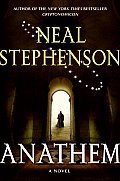
Booknotes: Anathem

06 Saturday Jun 2009

Posted by Anna Clutterbuck-Cook in book reviews

≈ Leave a comment

Tags

genre fiction

Ever since Hanna read Neal Stephenson’s latest tome, Anathem, over the Christmas holidays, she’s been telling me to kick it to the top of my reading list. Which I promised to do — as soon as I had enough brain cells available at the end of the academic year. Turned out “enough brain cells” required a few weeks post-semester to become available, and even then there was no way Anathem would be a quick read for me. I’ve previously encountered Stephenson in his mammoth Baroque Cycle, and know that — for me, anyway — pacing is key for both absorbing the story and being able to stick with it to the very end. Things definitely happen in Stephenson novels — usually brain-shattering, temporal-defying, chaos-inducing things — but in order to discern their true import, you usually have to experience them filtered through the exposition of the highly cerebral main characters.

Anathem is set in a world both familiar and utterly alien to us: is it Earth in the future? An alternate Earth of the past, present, or future? An entirely unconnected universe? Anathem‘s world is socially organized around the Saecular world and the “mathic” world, similar to a system of religious monestaries, in which particularly gifted individuals devote their lives to intellectual endeavors. Fraa Erasmus, a young member of one of the mathic communities, relates his experience of certain world-shaking events that take him out of his secluded community and into the Saecular world — and beyond.

I was sad, in reading Anathem to discover no character who would have matched wits with Jack Shaftoe, King of the Vagabonds, or Eliza of Qwghlm. But I realize they are a difficult duo to compete with. Erasmas, the narrator of Anathem, shares many characteristics of Daniel Waterhouse (of the Baroque Cycle) and Lawrence Pritchard Waterhouse, Daniel’s descendent, in the companion novel Cryptonomicon: He filters everything he experiences through his highly logical, straightforward way of thinking that only distantly registers his own (and others’) emotions or relational interactions. I grew fond of Erasmas, but I was never as heavily invested in his future well-being as I was in the welfare of Jack and Eliza and their cohort. Still: imbibed slowly and surely, like a really strong gin & tonic, it was an ultimately satisfying and thought-provoking summer read.

Quick Hit: "Someone you raise" vs. "something you have"

06 Saturday Jun 2009

Posted by Anna Clutterbuck-Cook in linkspam

≈ Leave a comment

Tags

children, feminism, gender and sexuality, politics

In response to a blog post up at Feministe on radio shock jocks leveling insults at gender-nonconforming children, commenter preying mantis writes,

“I always have a hard time with stories like this one, because I just can’t understand why. What’s the point of terrorizing children?” [–Jill, in the original post]

I think it goes back to the “someone you raise” vs. “something you have” attitudes people have towards children. If you’re raising your kids with the idea that your job is to bring up a happy, healthy person capable of independent functioning and a successful life of their own with as little unnecessary baggage as possible, there’s pretty much zero point to engaging in abusive behavior toward them.

If you’re raising your kids with the idea that they exist for your benefit, they’re your property, and/or their primary function is to act as a status symbol for you, you’re probably going to feel entitled to act against their best interests to a much greater degree. If you see them as a reflection or extension of yourself, and you’re deeply invested in gender roles, you’re more likely to take it personally if your children fail to be sufficiently masculine or feminine, especially if they do it in public.

The question of adult attitudes toward young people — especially the children in their care — is obviously a complicated one, with lots of nuance and complexity dependent on particular situations. But I really like the way she articulates the distinction between these two attitudes and the quality of the interactions that follow from them.

Friday Photos: Pretty pots

05 Friday Jun 2009

Posted by Anna Clutterbuck-Cook in a sense of place

≈ Leave a comment

Tags

boston, photos

Realize my photos have been North End heavy the last month or so, but we’ve been going down there a lot for various reasons. Anyway, I had my camera with me this afternoon finally got some photos of these pots outside the hardware store that I always think are quite lovely all stacked together.

Quick Hit: I <3 Katha Pollitt

04 Thursday Jun 2009

Posted by Anna Clutterbuck-Cook in linkspam

≈ 1 Comment

Tags

feminism

As I believe I’ve said before on this blog, I’ve long been deeply skeptical of the so-called generational schism between “second wave” and “third wave” feminist thinkers and activists. A lot of ink (and maybe even a little blood!) has been spilled over the supposed age-based animosity between younger feminists and their elders. It’s a narrative that neatly fits into American conceptions of coming-of-age rebellion and feeds the media need for drama (preferably drama with the possibility of naked mud wrestling!)

Well, Katha Pollitt, over at The Nation deconstructs this story of parents, grandparents, and children intractably at odds, in her column Subject to Debate.

Can we please stop talking about feminism as if it is mothers and daughters fighting about clothes? Second wave: you’re going out in that? Third wave: just drink your herbal tea and leave me alone! Media commentators love to reduce everything about women to catfights about sex, so it’s not surprising that this belittling and historically inaccurate way of looking at the women’s movement–angry prudes versus drunken sluts–has recently taken on new life, including among feminists. Writing on DoubleX
.com, the new Slate spinoff for women, the redoubtable Linda Hirshman delivered a sweeping attack on younger feminists for irresponsible partying, as chronicled on Jezebel.com, a Gawker-family blog devoted to “Celebrity, Sex, Fashion for Women. Without Airbrushing.” Likewise, a silly “debate” over whether Sex and the Single Girl did more for women than The Feminine Mystique followed the release of Jennifer Scanlon’s Bad Girls Go Everywhere: The Life of Helen Gurley Brown. As Naomi Wolf wrote in the Washington Post, “The stereotype of feminists as asexual, hirsute Amazons in Birkenstocks that has reigned on campus for the past two decades has been replaced by a breezy vision of hip, smart young women who will take a date to the right-on, woman-friendly sex shop Babeland.” Pick your caricature.

What’s wrong with parsing feminism along a mother/daughter divide? Everything.

She obviously can’t tackle in a single column all of the ways this “mother/daughter divide” is inaccurate — but I think she makes a great start. You can read the whole thing here.

via Courtney @ Feministing.

From the Archives: Creating a digital collection

04 Thursday Jun 2009

Posted by Anna Clutterbuck-Cook in library life

≈ 1 Comment

Tags

archivists, history, northeastern, photos

Two weeks ago, I started my new part-time job at Northeastern’s Archives & Special Collections (where I interned this past academic year). The project I’ve been asked to complete is the creation of a digital collection that gives researchers virtual access to a series of scrapbooks put together at the turn of the twentieth century by Marjorie Bouve, a Boston University alumna and founder of Northeastern’s Bouve School of Physical Education. This involves scanning each page of the scrapbooks and then cropping each TIF image file so that we have both a full-page image and individual images of each photograph of item on the page. Thus, I spent seven hours Tuesday doing this:


Once all of the images have been created, we have to enter all of the “metadata” (library-speak for “information about information”) into our database and customize the interface Northeastern uses to show their digital collections, an open source software program called Greenstone. Hanna worked tirelessly on the last Northeastern project, the Freedom House Photographs, which you can view online to get a feel for what the end product may look like.

Since this is a scrapbook collection, and we are hoping to emulate the feeling of looking at individual scrapbook pages to a limited extent (sans fancy software like the British Library uses for their prize collections) we’re looking to do something similar to what Simmons College did with the scrapbooks of one of their own alumni, Ruth Mitchell Wunderly, also a fun collection to flip through.

Next time I do some scanning on Northeastern’s spiffy book scanner, I’ll take my digital camera and get some shots of the contraption in action — it’s pretty awesome, despite the fact it reminds me of the radial x-ray machine they use at my dentist’s office.

Wednesday puppy blogging

03 Wednesday Jun 2009

Posted by Anna Clutterbuck-Cook in our family

≈ 1 Comment

Tags

addie, michigan, photos

New puppy pics!


My father is clearly besotted already. He just needs to give up right now.


And I’m not sure what to make of this picture, but I couldn’t not post it. Patient mother dog!

Addy gets to move in with Grandma at the end of June. Congratulations puppy-grandma-to-be!

Repro rights for geese?

02 Tuesday Jun 2009

Posted by Anna Clutterbuck-Cook in think pieces

≈ 1 Comment

Tags

boston, feminism

Last spring, Hanna and I had lots of fun on gosling spotting on our frequent walks along the Charles esplanade. As April came to a close and we cruised into May, we were looking forward to more baby geeses! Except . . . none were to be found. We were confused. Had we forgotten when the hatchlings appeared? We were worried. Was some virus wiping out the populations of Canadian geese? Except we saw plenty of adult geese and adult ducks all over the city, so some sort of bird pandemic didn’t seem to be the case.

Then, finally, we stumbled onto the answer in a Boston Globe article. Among the tactics city officials are using to keep the goose population down is an effort to keep eggs from hatching by coating them in corn oil, which according to the Canada Goose Hall of Shame website is called “egg addling” and is considered by many animal rights organizations to be a favorable alternative than slaughter or gassing. Which, okay, I can kinda buy. But after a couple of weeks of stewing about the story Hanna and I keep coming back to it and feeling peeved. It seems stingy of us humans to aggressively control the population of birds in our public parks just because we don’t like walking in bird poo; the geese have a right to enjoy our green spaces as much as we do! And while I’m, you know, for family planning I’m not for coercive population control measures — don’t geese have reproductive rights too? And don’t those reproductive rights include not having their eggs destroyed without their consent? I ask this sort of tongue-in-cheek, but not entirely . . . how are we as feminists committed to reproductive rights and justice to think about population control of non-human species?

In which I am completely baffled

01 Monday Jun 2009

Posted by Anna Clutterbuck-Cook in think pieces

≈ 1 Comment

Tags

children, education, gender and sexuality, politics

According to the New York Times, hugging is the new scourge of American teenage social conventions.

Now, okay, in my experience the NYT tends to blow its “life & style” reporting totally out of proportion: whether it’s women’s communities or sexuality, or the supposed life and times of the American Teenager, their discussion of current trends is heavily skewed toward creating a sensational story rather than accurately narrating peoples lives. I realize I should just expect this and blow it off, but sometimes it really gets under my skin, and this is one of those times.

I mean, last I checked, hugging — as long as it’s wanted, affectionate touch — was a relatively harmless way to spend one’s time. It’s usually indicative of positive, rather than negative, social interactions. But clearly, I was being naive.

A measure of how rapidly the ritual is spreading is that some students complain of peer pressure to hug to fit in. And schools from Hillsdale, N.J., to Bend, Ore., wary in a litigious era about sexual harassment or improper touching — or citing hallway clogging and late arrivals to class — have banned hugging or imposed a three-second rule.

Parents, who grew up in a generation more likely to use the handshake, the low-five or the high-five, are often baffled by the close physical contact. “It’s a wordless custom, from what I’ve observed,” wrote Beth J. Harpaz, the mother of two boys, 11 and 16, and a parenting columnist for The Associated Press, in a new book, “13 Is the New 18.”

“And there doesn’t seem to be any other overt way in which they acknowledge knowing each other,” she continued, describing the scene at her older son’s school in Manhattan. “No hi, no smile, no wave, no high-five — just the hug. Witnessing this interaction always makes me feel like I am a tourist in a country where I do not know the customs and cannot speak the language.”

. . .

Comforting as the hug may be, principals across the country have clamped down. “Touching and physical contact is very dangerous territory,” said Noreen Hajinlian, the principal of George G. White School, a junior high school in Hillsdale, N.J., who banned hugging two years ago. “It was needless hugging — they are in the hallways before they go to class. It wasn’t a greeting. It was happening all day.”

And just in case you thought (as I do, actually, despite protestations to the contrary) this was yet another instance of old fogies being unhealthily interested in, and hysterical about, the cultural expressions of youth,

There are, too, some young critics of hugging.

Amy Heaton, a freshman at Bethesda-Chevy Chase High School in Bethesda, Md., said casual social hugging seemed disingenuous to her. “Hugging is more common in my opinion in people who act like friends,” she said. “It’s like air-kissing. It’s really superficial.”

Read the entire article here.

There are many layers of wrong about the way this story is being narrated, one of which is the way it is being reported as a newsworthy phenomenon in the first place. Conventions of touch change over time and from culture to culture; as one letter to the editor pointed out, in Europe teenagers tend to show more casual physical affection with each other than American teenagers have, at least historically. People who work with immigrant and exchange students can tell you that young people who come to America from certain parts of the globe — Europe, Latin America — are surprised by what the perceive as the lack of physical affection between their American peers, while young people from other cultures — for example, Japan — have higher expectations of personal space, and find Americans to be physically intrusive.

While an international, historical perspective can understandably get lost in a fluffy news story, much more upsetting to me, in terms of media perceptions of young people, is the way adolescent physical contact is portrayed as problematic. There are three facets to this, all of which I find fascinating and extremely frustrating.

1. “Touching and physical contact is very dangerous territory.” I’m most floored by the way this article totally fails to meaningfully distinguish between erotic and non-erotic touch, and also by the way it implicitly equates erotic touch with “very dangerous territory.” This isn’t unexpected, given adult hysteria about teenage sexuality, but nevertheless it pisses me off. The students in this article, who have a complex understanding of different kinds of touch and what social and personal meanings they carry, come across as vastly more mature than the school officials who hint at promiscuity. Rather than respond by clamping down, I’d say this is a perfect opportunity to open conversations about how people can communicate about wanted and unwanted touch, and respect each others’ preferences for the same.

2. “If somebody were to not hug someone, to never hug anybody, people might be just a little wary of them and think they are weird or peculiar.” Closely related to the spectre of sexual harassment is the possibility of bullying (which is very real) that gets invoked as a reason to curtail physical contact. This is lazy thinking, lazy educating, and lazy supervising. If you’re worried about bullying, then get serious about reducing the abuse of power exercised by some students over others, and protecting the vulnerable students so that they don’t live their lives in fear. Imposing arbitrary limits on touch will not make the problem go away, it will just shift it elsewhere — possibly somewhere less visible than the school hallway.

3. “To maintain an atmosphere of academic seriousness.” This is the most laughably transparent exercise of adult power in the interest of social control. I realize I’m prone to seeing schools as sites of institutional power and violence but oh, please. Touch and positive relationships are antithetical to both intellectual endeavors and “seriousness”? Some of the adults in this story need to re-think their priorities a little. As one letter-writer suggests, “those principals need to lighten up and give kids a chance to work out for themselves what is “needless” and what is important.”

No one asked me what to make of this ‘trend’ but I’m going to offer my two cents anyway (isn’t that what blogs are for?): I think young folks today are pretty much the same creatures we human beings have always been. That is, creatures capable of inefficiency, frivolity, social ineptness, and cruelty — and also creatures who by and large crave meaningful relationships with one another that include physical affection. I’d argue that casual touch, both inside and outside spaces of education, is not a distraction from learning or a trivial meaningless fad — but rather a valuable pathway toward discovering what kinds of physical intimacy feel good and communicate effectively what we desire to communicate. Instead of cracking down on physical affection, help young people find language to effectively express their desires.

Movienotes: Jaws, In Bruges & Silent Hill

01 Monday Jun 2009

Posted by Anna Clutterbuck-Cook in media

≈ 3 Comments

Tags

domesticity, movies, web video

In my apartment we have what we refer to as The List. It began as something Hanna and I put together to swap book and movie titles one of us hadn’t seen and thought the other would like . . . over the past year it has morphed into a list of films and books which Hanna considers an essential part of my cultural literacy. I am industriously (and, I admit, quite pleasurably) making my way through The List — a little more swiftly and purposefully at the moment, now that I don’t have classes and homework with impending deadlines. This past week, I ticked no less than three films off the list: Jaws, In Bruges, and Silent Hill.

To begin with the least serious first, I realize I’m a good three decades late with a review of Jaws and one of a diminishingly small group of Americans who made it passed their twenty-fifth birthday without seeing the film — but I did, so let me just say it was fun. Since I hate submarines, I’m glad there were no scenes with subs, and I thought Richard Dreyfuss was hilarious. It made me giggle a lot, but this was possibly because I was watching it with a stiff gin & tonic in hand, and also because being bitten in half by a shark has never been a particular fear of mine.

In Bruges was breathtaking: smart, hilarious, incredibly violent, and ferociously acted. When I told Hanna the bit about it being hilarious the next morning, her response was: “Isn’t it just. Until it isn’t. And then it really isn’t.” which I thought summed it up quite nicely.” I actually think the less said about the actual plot of the film the better, since I went into it with only the vague sense it was about a group of hit men on a job gone horribly wrong. Why it’s gone wrong and each individual’s response to the situation is best left to unfold without a lot of advance preparation. If I had to pick a moment in which the entire film suddenly switched from violent comedy to comedic tragedy, I’d have to pick the final conversation between Brendon Gleeson’s character, Ken, and Ralph Fienne’s character, Harry, at the top of the sight-seeing tower, and the events that ensue. You’ll know when you get there. In the meantime, enjoy the way Ken and Colin Farrell’s character, Ray, bounce off each other. It’s priceless.

This afternoon, I watched Silent Hill, a horror film about a stolen child, Sharon, and a haunted coal-mining town with dark secrets, in which her mother, Rose, must struggle against the forces of darkness to recover her. It is based, Hanna tells me, on a video game, and thus bounded by certain parameters — virtually all of the action takes place in a circumscribed place, cut off from the outside world, and Rose in effect must go on a quest in order to solve the mystery of the town and (hopefully) set her daughter free. As I’m typing this, it actually strikes me that visually and narratively, it bears some resemblance to the exquisite Pan’s Labyrinth, also on The List, which I watched with rapt attention shortly after the end of term. Silent Hill doesn’t have the poetry of del Toro’s film, but it is nevertheless operating on the same fantastical principles.

About three-quarters of the way through the film, I was struck by the absence of central male characters — Sharon’s father, sweetly played by Sean Bean, is stuck on the outside of the town with a officious police officer, also male, but other than that all of the men are unnamed extras. In a horror/action movie this seems striking to me, although I admit limited knowledge of both genres. The fact that it goes unremarked upon internally is also notable: the film doesn’t seem to be consciously setting itself up as a film populated by women — they are simply the characters who happen to populate the script.

At the same time, it is definitely a story about women — there are gender dimensions to the narrative of horror and redemption that unfold. After all, the story begins with a mother (Rose) attempting to heal, and then rescue, her daughter (Sharon). As the plot unfolds, further pairings of mothers and daughters appear, and overlap, with the original pairings, and the relationships between these parents and their children are key to the drama that plays out. I’ll definitely still be thinking about this one in the week ahead. (Though hopefully not dreaming about it tonight!)

In the week ahead? We have the original X-men movie coming, since seeing Wolverine prompted both Hanna and I to say, “oh, it would be fun to see that again!” and now that I’ve seen In Bruges Hanna has consented to watch The Station Agent (also starring Peter Dinklage). Beyond that, we’ve also been watching on DVD the television show Bones about a team of forensic anthropologists at the Smithsonian who consult with the FBI on criminal investigations. At one hour a pop, they keep themselves ticking through witty dialog and great interplay between the core of main characters. Oh, and then there’s Carnivale to finish . . .

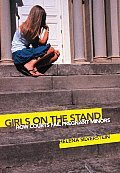
Booknotes: Girls on the Stand

31 Sunday May 2009

Posted by Anna Clutterbuck-Cook in book reviews

≈ Leave a comment

Tags

blog for choice, books, children, feminism, politics

As news was breaking about the murder of Dr. George Tiller, and abortion provider and pro-choice activist, I sat down to read Helena Silverstein’s Girls On the Stand: How Courts Fail Pregnant Minors.

A professor of government and law, Silverstein details the real-world effects of parental notification and consent laws have on the ability of minors to exercise their rights to abortion access as currently granted under U.S. law. Specifically, Sliverstein is interested in the viability of the “judicial bypass” option that the U.S. Supreme Court requires such parental involvement laws to contain: that is, if a pregnant minor does not wish to inform her parents of her pregnancy, she must have the ability to petition, confidentially and with the help of court-appointed counsel, for an exception. Focusing on the practical workings of the judicial bypass procedure in three states, Alabama, Pennsylvania, and Tennessee, Silverstein found that pregnant minors faced ignorance, bureaucracy and outright ideological obstruction in their pursuit of timely and medically-safe abortions.

For example, after systematically phoning courts in her three targeted states for information on how to initiate a judicial bypass, Silverstein and her research assistants faced a wide range of responses, from the adequate to the under-informed to the intentionally misleading. Whether malicious in intent, answers to an initial query that fail to clearly affirm the minor’s right to confidentiality, a timely hearing, and most importantly free assistance in navigating the court system, “portray the bypass as a road the minor must travel alone and risk sacrificing the minor’s right to her own vulnerability” (61). Even more egregiously, some anti-abortion judges, with the discretion granted to them under current law, have employed such intimidation tactics as requiring pro-life, Christian counseling for all minors seeking the bypass, or even appointing a guardian for the fetus who has the responsibility of challenging the petitioner at the hearing and attempting to persuade her against choosing an abortion.

“The argument of this book,” Silverstein writes, “is directed at those who have made a good-faith compromise on the parental involvement issue,” seeking to ensure that minors wishing to terminate pregnancies are given the information and support they need, both pre- and post-abortion, while still protecting their constitutional rights to privacy and bodily autonomy (157).

Those compromisers, a group to which I once belonged, have in mind a picture of what a world with such mandates would look like. Pregnant minors will be encouraged to seek guidance from parents, and courts will protect those who choose otherwise. We have seen, though [in this book], that many courts are not prepared to do their duty, whether due to ignorance, recalcitrance, or incompetence. We have seen judges who are willing to employ hardball tactics to get minors to bend to their will. Whatever the Supreme Court might decide about how much implementation failure is too much or what obstacles too burdensome, it is up to the good-faith compromiser to decide whether the reality of parental involvement mandates sufficiently approximates her picture [of reality] to warrant continued support. This is a personal decision. To my mind the case is clear. I invite the reader to be her own judge (157).

Sadly, Silverstein’s book is not as narratively compelling as I would have hoped, even to someone like myself whose heart usually quickens a the prospect of a book or an article dealing with the intersection of feminism and the law. Her prose feels clunky, and the reporting of her research — while providing the evidence necessary to make her case — nonetheless caused me eyes to begin glazing over, even at a brief 180 pages (excepting endnotes and bibliography). Given its narrow scope, a meaningful reading likely requires a fair amount of background knowledge in recent abortion politics and law.

Still, I’m glad to add it to my repertoire of resources on reproductive health and rights. The struggle over women’s right to bodily autonomy is not going to disappear any time soon, as Tiller’s murder today dramatically and tragically illustrates — and young women are among those particularly vulnerable to having their reproductive choices taken from them, given their relatively lack of experience and financial resources. Silverstein reminds us not to assume that what looks good on paper will likewise be sound in actual practice.

← Older posts
Newer posts →
"the past is a wild party; check your preconceptions at the door." ~ Emma Donoghue

Recent Posts

  • medical update 11.11.22
  • medical update 6.4.22
  • medical update 1.16.2022
  • medical update 10.13.2021
  • medical update 8.17.2021

Archives

Categories

Creative Commons License

This work by Anna J. Clutterbuck-Cook is licensed under a Creative Commons Attribution 3.0 Unported License

Meta

  • Create account
  • Log in
  • Entries feed
  • Comments feed
  • WordPress.com

Blog at WordPress.com.

  • Subscribe Subscribed
    • the feminist librarian
    • Join 37 other subscribers
    • Already have a WordPress.com account? Log in now.
    • the feminist librarian
    • Subscribe Subscribed
    • Sign up
    • Log in
    • Report this content
    • View site in Reader
    • Manage subscriptions
    • Collapse this bar