• anna j. clutterbuck-cook
  • contact
  • curriculum vitae
  • find me elsewhere
  • marilyn ross memorial book prize

the feminist librarian

the feminist librarian

Author Archives: Anna Clutterbuck-Cook

Booknotes: Stuff I’ve Been Reading

15 Friday May 2009

Posted by Anna Clutterbuck-Cook in book reviews

≈ Leave a comment

Tags

feminism

Another Friday rolls around, and in another “queue clean-up” move, I thought I’d consolidate some recent booknotes in a single post, rather than try to come up with coherent posts on each one (although several of them do, genuinely, deserve more thoughtful commentary — perhaps I can revisit them at a later date).

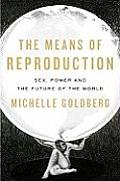
  • I’ll begin with Michelle Goldberg’s excellent The Means of Reproduction: Sex, Power and the Future of the World. Aside from the gorgeous cover art, I am completely in love with Goldberg’s ability to tell a compelling, humanized story about the global politics of feminism, reproductive rights and reproductive justice. She weaves together case studies of local, grassroots feminist activism (and anti-feminist activism) with the politics of national and international law, economics, and society. She argues that in our modern economy, globally, the ability of women to plan their families, and to make independent decisions about their health, education, and work lives radically improves the quality of life not only for the women themselves, but for their families and their societies. She suggests that the future of the world — economically, environmentally, politically — rests with the future of feminism as practiced by millions of on-the-ground individuals worldwide: “There is no force for good on the planet,” she writes, “as powerful as the liberation of women.”
  • This power to change the world is precisely what many interest groups (such as religious conservatives and those who benefit from highly patriarchal power structures) recognize and have rallied to combat, which is the story that Jennifer Butler tells in Born Again: The Christian Right Globalized. Born Again focuses specifically on the way in which the Christian right, traditionally wary of such international forums as the United Nations, has moved in the past couple of decades to influence policy on a global scale. Butler’s perspective is that of a progressive Christian activist who has spent years working in ecumenical organizations. Perhaps the most interesting piece of information I got out of Born Again was the fact that assertions of children’s rights in international forums are often vociferously opposed by a coalition of conservative “pro-family” activists who identify the enumeration of children’s rights, as distinct from family identity, a threat to the social structure and authority of families. Since they identify feminism as part of the same cluster of evils, once again my suspicion is confirmed that there’s a meaningful link between the argument that women are people and the argument that children, too, are human beings.
  • As I dive into the new Mary Russell/Sherlock Holmes mystery, The Language of Bees, as my post-semester pleasure reading, Hanna has encouraged me to try the Conan Doyle Sherlock Holmes again. I picked up “Study in Scarlet” a handful of years ago, thinking I’d start at the beginning, and was just not impressed. Reading about Holmes before he met Mary felt like reading about Peter Wimsey before Harriet Vane — somehow the story felt as though it lacked depth and weight. And I’m just not enough of a puzzle-solver to enjoy the nuts and bolts of the mystery itself. But I’ve been mixing Bees with stories from The Return of Sherlock Holmes, and find them on the whole charming. I particularly enjoyed the one involving a woman described as a “Solitary Cyclist”; it reminded me of a paper one of my undergraduate colleagues wrote on the history of bicycle advertisements targeting women (yes, I know, “history geek” is indeed tattooed in invisible ink on my forehead).
  • Bees I finished last night, and will refrain from commenting upon at length for fear of spoiling the plot for all those who have yet to read it (Hanna and Mom to name at least two). I will say that by chapter twelve Russell was out walking the downs and Holmes had disappeared on his latest hunt; life in Sussex seems comfortingly unchanged. That is: as full of violence, drama, disappearances, and potential murder as ever! And given the time, place, and subject matter, a great deal of real-life Bohemian personalities made cameos, so I recommend reading it with Among the Bohemians close to hand.
  • And finally, following Laurie King, I picked up once again the sumptuous edition of The Neverending Story that Hanna gifted me for my birthday, and in which I had become stuck about halfway through — academic reading always leaves me too distracted and analytical for the true enjoyment of being lost in a good book (both are pleasures, but require very different kinds of thinking, which I find difficult to switch between at a moment’s notice). It has been so long since I last read the novel that I honestly can’t recall if I ever gave it proper attention in the past — or only read bits — or only ever saw the film. It is a lovely paean to the power of fiction (aside from being a rolicking adventure yarn), and particularly the magic that books work in the lives of solitary children. Maureen Corrigan, in her memoir Leave Me Alone, I’m Reading, describes how reading, for her, has been both an escape from the world and her path into the world: it is that same journey that Bastian, the central character of this novel makes, with the help of bit of magic.

Now I’ll soon be heading home for the evening, where we plan to watch one of three movies Hanna has chosen for the weekend: Terminator, From Hell, and The History Boys (a delayed celebration of Alan Bennett’s 75th birthday on the 9th of this month). Happy weekending everyone!
links: queue clean-up (2nd edition)

13 Wednesday May 2009

Posted by Anna Clutterbuck-Cook in linkspam

≈ Leave a comment

It’s the week after the end of term and I’ve been collecting links for the past few weeks that somehow never made it live. Therefore, before they go entirely stale (if they haven’t already), here’s the short-and-sweet version.

Most recent first: Julia Serano guest-blogs at Feministing on why the up-coming revision of the DSM matters.

via the bog Sex in the Public Square, I found two more astute commentaries on the legal proscription of sexual expression by teens and elders: an op-ed by author Judith Levine (Harmful to Minors)about the media and legal hype surrounding “sexting” and a post by Dr. Marty Klein at his blog Sexual Intelligence about the attempt to make sexual consent of folks over sixty legally impossible in Massachusetts.

JoAnn Wypijewski at The Nation also muses about how the “sexting” hysteria says much more about adult interest in quashing teenage expressions of pleasure then it does about legitimate concerns regarding lasting damage to personal reputations.

In other legal news, Dahlia Lithwick returns with a tribute to Justice Souter on the occasion of his retirement: “Justice Souter, a man who may have looked on the surface like he preferred books to people, but in reality, and perhaps unbeknownst even to himself, always put people first.”

Amanda over at Pandagon writes about the politics of selecting a Supreme Court justice: “And ‘activist judge’ is code for ‘thinks women are people’ “

In a truly surreal turn of cultural events, AlterNet reports that among some straight men, parenting has become the exclusive province of gay folks.

And in other personal-is-political news: Feministing’s Jessica Valenti on her upcoming marriage and being called a “ball-cutting cybersuccubus”.

That’s all I’ve got for now. Looking forward to a bit more blog-reading and thoughtful writing in the next few weeks. Once my brain has re-booted itself.

Getting lost in Brookline

11 Monday May 2009

Posted by Anna Clutterbuck-Cook in a sense of place

≈ Leave a comment

Tags

boston, domesticity

Yesterday’s non-Mother’s Day post was really about both my parents, not just my mum (people in comments were very impressed about the sharp knives). But I thought my dad deserved some attention too. So here’s my thought for the day on What I Owe My Dad. My dad loves getting lost (I’m sorry: exploring). He’s the one who showed me that the best way of getting to know a new place is just to start walking.

And in a city like Boston, I doubt you could live here long enough to be done finding new places to explore. Today, another gorgeous spring day, I decided to look for alternate routes home from work, rather than taking the usual major arteries of Commonwealth Avenue or Beacon Street. Commonwealth, particularly, can be a brutal trek in the summer and we always find the last mile or so an absolute drag. So I skipped off the main drag and wandered around the back neighborhoods of Brookline for a while. Here are a few pictures I snapped along the way.

(Click here for the larger version).

Turns out there’s a whole neighborhood of beautiful (if slightly delapidated) old houses, reminiscent of Heritage Hill in Grand Rapids (Mich.) and to a much lesser extent the neighborhood where I grew up (although the property values in Holland, Michigan, are likely much less than the property values around here!) There were lots of shaded sidewalks to wander down and a passing kitty who came over to check out my ankles.

I did actually have a destination in mind: the Clear Flour Bread bakery just off Commonwealth Ave, a five minute walk from our apartment (Larry: you’ll be pleased to know they sell dagger bread!). Now that the dinner Hanna made has settled, it’s off to unpack that Rustic Strawberry and Rhubarb Tart I bought for dessert.

Mother’s Day (Un)observed

11 Monday May 2009

Posted by Anna Clutterbuck-Cook in think pieces

≈ 3 Comments

Tags

domesticity, family, holidays, michigan

My mother, from whom I seem to have inherited an allergic reaction to formal, mainstream holidays/occasions of any sort, has never been very interested in celebrating Mother’s Day. It was such a non-event in my childhood that I suggested a few days ago we take Hanna’s parents out to lunch on Sunday and couldn’t understand why she nearly had a heart attack: I had forgotten that everyone and their mother (not to mention their third cousin twice removed) would probably have the same idea, on account of the holiday.

But of course, the fact that the holiday itself hasn’t meant a lot to me, or my parents, doesn’t mean that we don’t mean a lot to each other. So in a celebratory spirit (hey! it’s the end of the semester!), I thought I’d give my mom a shout out for a few of the things that (in my opinion) make her a great parent.

5. Good art supplies. My mother, who got her start in education working with preschoolers in the Greenville, Michigan, Headstart program during the 1960s, has always appreciated the importance of decent materials for creative endeavors. One of my memories from early childhood is the regular trip to the art store to replace the heavily-used colors in our Prismicolor pencil set. We always had scissors that cut, glue that stuck, pens that weren’t dried out, and enough paper for whatever projects we had a mind to pursue.

4. Sharp knives. In some ways the same principle as above: my mother’s argument was always that rather than remove sharp objects from the reach of children, you helped them learn how to use them safely. Hence the swiss army knives we all got the Christmas we were six years old. And the lessons in using the microwave, stove, kitchen knives, washer and dryer, and the power tools. More broadly, I appreciate that Mom and Dad were focused on helping us acquire the skills we wanted or needed to be independent actors in the world, from the days when we were very, very small.

3. Books. There’s a reason that the sound of someone reading aloud, whether in person, on the radio, or a book on tape, has an instantaneously soothing effect almost regardless of what it is they are reading — as Hanna says, “they could be reading the phone book and I’d still be happy to listen to them.” Thanks, Mom, for reading, reading, reading, and surrounding us with books. My life is so much the richer for it.

2. Never asking what I planned to do with a Women’s Studies or Library Science degree. Majoring in Women’s Studies as an undergrad, I got to hear lots of colleagues tell stories about parents who didn’t understand what possible use the degree would be in the “real world.” I have always been grateful that I never had stories of my own to swap in this regard. Likewise, it’s amazing to me how many folks I’ve met since moving to Boston whose parents were skeptical about the utility of a library science degree — or even more simply, of their child’s desire to go into the field and spend their life with books, manuscripts, etc. My parents (closet librarians at heart, I feel) never blinked at the decision, and at times express more enthusiasm than I can muster at the possibilities for my future career!

1. Trust. Above all, I’m incredibly grateful for the way in which my parents have trusted all of us kids to find our way in the world, and to find (and create) living spaces, new relationships, and learning and work environments in which we will, ultimately, thrive. That confidence is humbling and the older I am, the more I appreciate how rare a gift it has been.

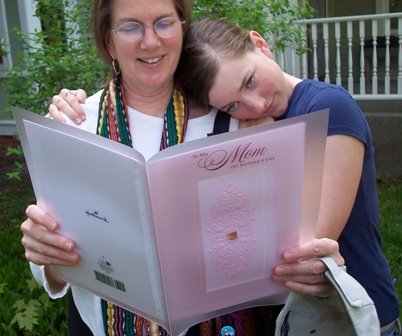
(Apologies to Mom and sister Maggie for re-using this tongue-in-cheek photograph; it was taken on Mother’s Day, 2005, incidentally the same day I graduated from Hope College.  The card was a joke from Maggie to Mom. The scarf my mother is wearing is, in my opinion, one of her more lovely fashion accessories).

Mother’s Day Observed

11 Monday May 2009

Posted by Anna Clutterbuck-Cook in our family

≈ Leave a comment

Tags

boston, domesticity, hanna, photos

I’ve been falling down on the job lately, providing my far-flung friends and family with photos of the places around Boston in which I spend my time. So when Hanna’s parents came down from Maine to visit today, and we spent a glorious spring day wandering around Boston and Cambridge, I made sure my camera was in my backpack. Here are a few photos. Happy viewing!

(As always, for larger images, go directly to picasa).

Quick Hit: Unschooling could save the world?

06 Wednesday May 2009

Posted by Anna Clutterbuck-Cook in linkspam

≈ Leave a comment

Tags

education


As I am in the midst of finishing a seminar paper on Carl Rogers’ 1969 book Freedom to Learn: A Vision of What Education Might Become, my friend Joseph forwarded me this link to Dave Pollard’s review of a new book, 101 Reasons Why I am an Unschooler, written by blogger P.S. Pirro (whose blog feeds are now definitely on my iGoogle page). Pollard begins his review by an account of his own experience with self-directed learning during his adolescence, and then writes of Pirro’s book:

PS presents 50 reasons why schooling is, in every imaginable way, bad for us and our society, and then 50 reasons why unschooling, which she defines as “learning without formal curriculum, timelines, grades or coercion; learning in freedom” is the natural way to learn. She argues that we are indoctrinated from the age of five to cede our time, our freedoms, and what we pay attention to, to the will of the State, so that we are ‘prepared’ for a work world of wage slavery and obedience to authority. We are deliberately not taught anything that would allow us to be self-sufficient in society. And in the factory environment of the school, where teachers need to ‘manage’ thirty students or more, ethics and the politics of power is left up, from our earliest and most vulnerable years, to the bullies and other young damaged psychopaths among our peers, to teach us in their grotesquely warped way. As PS explains, it is in every way a prison system.

Unschooling, by contrast, starts with the realization that you ‘own’ your time, and have the opportunity and responsibility to use it in ways that are meaningful and stimulating for you. When you have this opportunity, you just naturally learn a great deal, about things you care about, things that will inevitably be useful to you in making a life and a living. Your learning environment is the whole world, and you learn what and when you want, undirected by curricula, textbooks, alarm clocks and school bells. You develop deep peer relationships around areas of common interest, once you’re allowed to explore and discover what those areas of interest are. And the Internet and online gaming allow you to make those relationships anywhere in the world, to draw on the brightest experts on the planet, and to communicate powerfully with like-minded, curious people of every age, culture and ideology.

Many people argue that unschooling will only work for the very brightest and most self-disciplined children. On the contrary, I think we are all perfectly suited to unschooling until the school system begins to beat the love of learning, the ability to self-manage, curiosity, imagination and critical thinking out of us. By the time we have reached the third grade it becomes much more difficult, and my success in unschooling in twelfth grade was, I will agree, due to my above-average intelligence and initiative — most of my intellectually-crippled peers just couldn’t manage by that time without the strictures they’d become accustomed to. They had long ago lost the desire to learn, and to think for themselves.

I would quibble with his “my above-average intelligence and initiative” explanation for his unschooling success; the answer to why he thrived and others did not in a more unstructured learning environment was likely way more complicated than “I was smarter.” I don’t think anyone truly loses the desire or ability to learn and think in a self-directed fashion.

Rather, I would argue, it just takes some people longer than others to reclaim that desire — and they have to decide they want to reclaim it in the first place. Folks in the home education community have long recognized that there is a “deschooling” period for kids that often lasts in direct proportion to the amount of time they have been in institutional schools before they bounce back and learn to pay attention to their own desires again. This can take patience and often looks, according to conventional standards of educational achievement, like failure. However, I would urge all of us to consider the possibility that in fact it is not: that in fact, it is the beginning of a radical new definition of success.

The book is now on my summer reading list, a move I can now happily begin to justify as “thesis-related” instead of pure obsession. Then again, as unschoolers remind us, pure obsession is often the best justification.

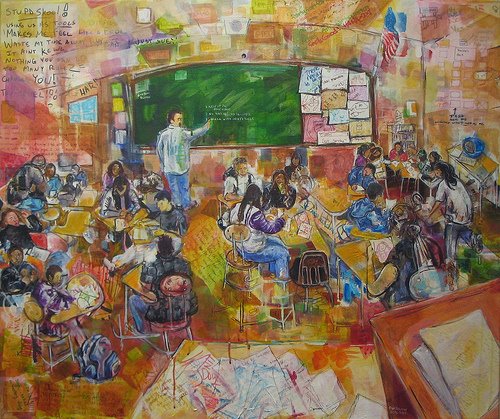
Image (c) Todd Berman @ flickr.

Student at Work: Intellectual History

04 Monday May 2009

Posted by Anna Clutterbuck-Cook in my historian hat

≈ Leave a comment

Tags

history, simmons

Occasionally here at the Future Feminist Librarian-Activist I try to give folks a sense of what kind of work I do in my academic and pre-professional life as opposed to my moonlighting life as a blogger and my leisure time. All semester long in my Intellectual History class, we have been writing reading responses to our weeks’ readings. This was my final response of the semester, which I enjoyed writing and thought I would share with you. I hints at some of the themes I’m currently developing in my final paper on holistic education, humanistic psychology during the 1960s and 1970s (more soon).

“The ‘I’ becomes part of a ‘we’ that, rather than erasing the sense of self, 

calls it fully into existence”: 
New Beings, New Ethics in a Postwar World [1]


Meditating on “the situation of history” in his 1950 essay of the same name, Fernand Braudel begins his analysis by referencing not only the most recent world war, but in broader terms the “events of the past forty years,” during which “experiences have been particularly harsh for all of us; they have thrown us violently back into our deepest selves, and thence into a consideration of the whole destiny of mankind.” [2] This relationship between the individual’s “deepest self” and “the whole destiny of mankind,” seems to be a common thread that preoccupies the authors we read for this week, though they are tackling such diverse problems as the future of historical study, the condition of women as a social class, and the ethics of existential philosophy. Each author – Braudel, Simone de Beauvoir, and Jean-Paul Sartre – begins with the specific and ends with the conclusion that the specific can only be understood in reference to the universal. Braudel’s vision of history in the longue durée is one in which true understanding can only come when one respects “the unity of history which is also the unity of life.” [3] Event-based history, or what he terms the “short time span” view of history, is too narrow a view: instead, “history is the total of all possible histories—an assemblage of professions and points of view, from yesterday, today, and tomorrow,” each individual point coming together as a whole, amorphous, possibly ungraspable vision of all time: past, present, and future.[4]

Similarly, Simone de Beauvoir, in her now-canonical work in feminist theory, The Second Sex (1949), begins with the singular: “A man would never get the notion of writing a book on the peculiar situation of the human male. But if I wish to define myself, I must first of all say: ‘I am a woman.’”[5] She is something specific: a woman. Yet her struggle with this situation comes from the fact that her singularity (her woman-ness) in some sense isolates her from identifying as part of the human species: Man, she writes, as the neutral sex, “thinks of his body as a direct and normal connection with the world, which he believes he apprehends objectively, whereas he regards the body of a woman as a hindrance, a prison, weighed down by everything peculiar to it.”[6] To de Beauvoir, her body – and the social narrative surrounding that body, the social narrative of “Other” as opposed to “human” – created a conflict between what she knows about herself, that she is “a free and autonomous being like all human creatures” and the way she is treated in society as not-human.[7] Opposed-to-human. “How can a human being in a woman’s situation attain fulfillment?” she asks.[8]

Finally, Jean-Paul Sarte, in Existentialism and Human Emotions, responds to the charge that existentialism is a despairing and hedonistic philosophy by arguing that in actuality, the recognition of human beings’ ultimate responsibility for their own (and collective) actions. Rather than an ethics of passive fatalism (as critics charged), existentialism, Sartre argues, is “an ethics of action and involvement” in life.[9] Although he argues against “human nature,” per se, Sartre affirms the essential commonality of the human condition: “the necessity for [man] to exist in the world, to be at work there, to be there in the midst of other people, and to be mortal there.”[10] Therefore, as human beings search for ethical responses to this human condition, they necessarily find that their lives are interconnected to the lives of others. “In wanting freedom,” Sartre writes, “we discover that it depends entirely on the freedom of others, and that the freedom of others depends on ours.”[11]

All of these narratives of the singular – whether it is a singular even in history or a singular being, or a singular class of being – affirm the existence of the individual event or person, but defy us to accurately understand it in the absence of the collective or the universal; in the absence of Braudel’s “total of all possible histories,” or Sartre’s image of an utterly self-responsible human being who nonetheless finds that her existence as an “I” depends entirely on the existence of “we” – on the existence of others. This vision of the individual in relation to society is radically different from the Enlightenment philosophers’ notion of the individual as the foundation of existence. Sartre criticizes the philosophy of Kant’s “I think therefore I am,” notion of human consciousness in isolation from any other “I,” suggesting instead that “we reach our own self in the presence of others, and the others are just as real to us as our own self.”[12] De Beauvoir’s analysis of gender as a social duality, something so fundamental that “the two sexes have never shared the world in equality,” places human relationships at the very root not just of Rousseau’s social contract (something into which fully-formed individuals enter), but at the root of being itself: man (de Beauvoir suggests) cannot understand himself to be without woman: “Otherness,” she writes, “is a fundamental category of human thought . . . no group ever sets itself up without at once setting up the Other over against itself.” Thus, human beings, as individuals, no longer enter into society as a matter of choice, of convenience, out of some sort of ulterior motive for individual gain. Rather, individuals require human relationships not to thrive, but to exist.

I am struck by the way historical period out of which these narratives of “I” and “we” emerged. Not only out of the extreme violence and chaos of two world wars, European imperialism and decolonization, the Great Depression, and bloody revolutions – but also out of the cultural and intellectual ferment of psychoanalysis and modernity, which we have been discussing over the past two weeks: the “Schorske decades”[14] and the years surrounding World War One, during which those who had believed in the liberal progressivism of Enlightenment political thought were beginning to question the efficacy of their method and the realistic nature of their utopian optimism. Last week, we discussed Freud’s essay “The Disillusionment of War,” in which he argues that “Peoples are more or less represented by the states which they form, and those states by the governments which rule them.”[15] I see echoes of this observation in all of the readings for today, particularly in de Beauvoir and Sartre, as they struggle to come to terms with a humanity far more complex and interconnected than Kant’s enlightened man. As we posed in class, it is possible to read Freud’s statement in two ways: first, that human beings are accurately represented by their governments, and second, that, regardless of accuracy, our governments (that is, the social organization in which we are embedded) become, in some measure, a representation of who we are – a “we” that may or may or may not, to borrow Carol Gilligan’s poetic phrase, “call [the I] fully into existence.” Sartre, arguing for human beings’ ultimate self-responsibility perhaps errs toward the first interpretation; de Beauvoir, wrestling with the limitations imposed upon her agency by the fact of her sex and gender identity, errs toward the latter. Braudel, with his ideal historian’s gaze, would likely say that the truth lies somewhere in a narrative which encompasses them both – and every other point between and beyond. “The total of all possible histories.”[16]

* * *Endnotes* * *

[1] Carol Gilligan, The Birth of Pleasure (New York: Knopf, 2002), 173.
[2] Fernand Braudel,
On History (Chicago: University of Chicago Press, 1980), 6.
[3] Braudel,
On History, 16.
[4] Braudel,
On History, 34.
[5] Simone de Beauvoir, in
Women, the Family, and Freedom: The Debate in Documents, edited by Susan Bell and Karen Offen (Stanford, CA: Stanford Univ. Press, 1983), 421.
[6] de Beauvoir,
Women, the Family, and Freedom, 422.
[7] de Beauvoir,
Women, the Family, and Freedom, 427.
[8] de Beauvoir,
Women, the Family, and Freedom, 427.
[9] Jean-Paul Sartre,
Existentialism and Human Emotions (New York: Philosophical Library, 1967), 36.
[10] Sartre,
Existentialism and Human Emotions, 38.
[11] Sartre,
Existentialism and Human Emotions, 46.
[12] Sartre,
Existentialism and Human Emotions, 37.
[13] de Beauvoir,
Women, the Family, and Freedom, 423.
[14] Carl E. Schorske,
Fin-de-Siecle Vienna: Politics and Culture (New York: Vintage, 1980).
[15] Sigmund Freud, “The Disillusionment of War,” 279.
[16] Braudel,
On History, 34.

Allston Mafia Buries Body in Pavement?

03 Sunday May 2009

Posted by Anna Clutterbuck-Cook in a sense of place

≈ 1 Comment

Tags

boston, domesticity, humor, photos

This is the view out our front window at 6:05 this Sunday evening. We are uncertain what would compel the Boston/Allston city construction crews to begin jackhammering at 3pm on a Sunday afternoon as we were attempting to grade student exams/write thesis drafts in a responsible graduate students sort of manner, but strongly suspect foul play.

Quick Hit: MHS Blog Launches

02 Saturday May 2009

Posted by Anna Clutterbuck-Cook in library life

≈ Leave a comment

Tags

blogging, MHS

The Massachusetts Historical Society blog, The Beehive, was officially launched yesterday on our website, under the tender loving care of my friend, colleague, and fellow blogger Jeremy Dibbell. The MHS is using this site as a way to keep folks up-to-date on the activities going on at the Society, including visits by researchers, new collections available for research, lectures and other educational events, and staff and department profiles. History buffs: go check it out.

Also ponder why we have decided to go with a motif that reminds me most strongly of Utah and the Mormon church.

"all of me, why not take all of me?"

01 Friday May 2009

Posted by Anna Clutterbuck-Cook in think pieces

≈ 3 Comments

Tags

feminism, masculinity, sexuality

Two further examples for the annals of “patriarchy hurts men, too.”

I’ll be honest. I became a card-carrying member of the feminist party (hehe) when I realized there were still people around who thought I should do and be certain things and not do or be certain other things on account of my being a girl. There’s nothing — bar threats to the health and wellbeing of my people — that makes me dig my heels in faster than someone telling me I “should” or “shouldn’t” in any way, shape, or form. At that point (late teens) I wasn’t thinking much about the way the guys I knew were also injured by the sexist “shoulds” and “shouldn’ts” that pervade our cultural milieu.

But it doesn’t take a degree in gender studies to realize that if women and girls are being told “be this,” then men and boys are being told “be that,” and that this sort of oppositional, essentialist conception of gender roles [1] sucks ass for everyone concerned. Not only do women and girls suffer from inequality based on sex and gender — guys struggle daily against the straight jacket conception of masculinity that limits their ability to be fully human actors in the world. One of the things I take great pleasure in as a feminist is that I have a usable worldview that not only allows but actually supports my desire to see men and boys as more than brainless sexbots driven by the desire to draw blood and get laid. Which, given the number of men and boys in my life (“hi guys! you’re awesome!”) really makes my life a helluva lot easier.

Not that I don’t believe that folks who don’t explicitly identify as “feminist” are incapable of seeing men as human beings. But I do believe that an ability to think critically about the messages that our various cultures send us about gender — and in this case, specifically what it means to be a guy — is an essential human skill. And one that does not come easily to folks who aren’t at least open to thinking about things from a feminist perspective.

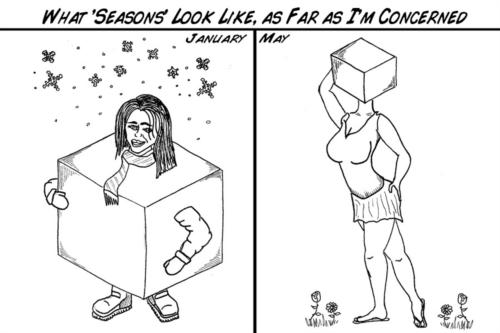
See, when people don’t question the “common sense” notions of masculinity and femininity that dominate popular culture (not to mention being actively defended by conservative voices) then stupid shit like this happens:

This editorial cartoon, drawn by Harvard Crimson cartoonist “Samual L. Clemens” was featured this week on the Crimson’s website (h/t to MK via twitter for the link). It employs, with no sense of critical self-awareness or commentary, the sort of ideas about women and their bodies that feminist activists have objected to since, well, forever. (Fun historical factoid: at the turn of the twentieth century, male patrons at the reading room of the British Museum protested the admittance of women scholars on the grounds that their female bodies were so distracting that male researchers wouldn’t be able to get any work done [2]) But I want to lay aside what this cartoon says about the worth of women in the cartoonist’s eyes (as MK pointed out, “It’s like wearing a big sign that says WOMEN: PLEASE AVOID ME AT ALL COSTS.”) and suggest we consider for a moment what this image says about the worth of men [3].

The take-away message of this cartoon about straight guys is that they are incapable of (and uninterested in) seeing the people to whom they are attracted sexually as whole persons. If a woman is bundled up in winter clothes, their bodies might as well not exist; if a woman is dressed in form-fitting, skin-baring clothes, then their head (read: personhood) disappears from view. This is a trope of male sexuality so prevalent that a lot of women have bought into this narrative of how men’s sexuality works, as evidenced by the calls for a “return to modesty” by a number of prominent women writers and activists [4]. In this view, dudes are incapable of integrating their physical, sexual desire for others into an understanding of other human beings as more than a useful means to the end of sexual gratification. I call bullshit. I call bullshit on the idea that men are incapable of caring about the women they are attracted to as whole persons: as incredibly sexy, active, physical presences and as human beings with thoughts, feelings, and distinct personalities. Regardless of the time of year, and regardless of what said object of desire is wearing at the moment she happens to cross their flightpath.

Mr. Clemens, do yourself a favor. Go out into the balmy spring day, enjoy people-watching, and enjoy every bit of the people you see: all the way from head to toe. And consider how awesome it might be if you could get to know them as actual human beings instead of just passing, headless bodies. See if practicing that sort of mindfulness doesn’t expand your horizons.  And maybe prompt you to question the messages you’ve been getting about your sexuality and gender. 

The other story that caught my eye this week and made me think, “gee, we live in a culture with absolutely respect for men and boys as human beings,” was the word spread around the blogosphere that the New York Times review of the recently-released summer comedy “17 Again” contained the following caution: “17 Again” is rated PG-13 (Parents strongly cautioned). Girls are particularly cautioned.

I have not seen the film, and it’s not the sort of movie I’m generally eager to see anyway, so the point I want to make has nothing to do with the actual content of the film. The point is: why “girls particularly”? Assuming there is something potentially objectionable in the movie, wouldn’t a parent have cause to be equally concerned about their sons as their daughters being exposed to it? If, indeed, the objectionable content has some sort of gender-related ickyness (say, sexual violence against women, or sexual humor, or nudity, or whatever else people think fragile girlminds are incapable to taking in without severe trauma) . . . shouldn’t we be equally concerned about exposing boys to such experiences?

As commenter SarahMC over at Pandagon pointed out, the implicit message of warning girls specifically against seeing the film is: “Girls should not be exposed to cinematic depictions of misogyny. Boys, however, get extra butter on their popcorn w/ every ticket purchased.”

This gender-specific warning, like the Crimson cartoon, not only turns on the paternalistic view of women and girls Jessica Valenti recently described in her latest book The Purity Myth — it, like the cartoon — uncritically accepts a caricature of masculinity that assumes men either enjoy, are oblivious to, or untouched by misogyny.

Not. true. Spread the word.

UPDATE: MK offers her own response to The Crimson.  

* * * Endnotes * * *

[1] oppositional, essentialist conceptions of gender mean, in plain English, that the categories of “male” and “female,” and the people who fall into these two categories are seen as 1) opposite from each other in temperament, social roles, etc., based on their gender and 2) that these states of being are natural due to our biological sex.
[2] Hoberman, Ruth. ‘Women in the British museum reading room during the late-nineteenth and early twentieth centuries: From quasi- to counterpublic.’
Feminist Studies, vol.28 no.3 (Fall 2002), 489-512.
[3] I am assuming, given the pseudonym, that the imagined perspective in the cartoon is supposed to be that of a dude.
[4] See, for starters, Wendy Shalit’s
A Return to Modesty and Girls Gone Mild,, Laura Sessions Stepp’s Unhooked: How Young Women Pursue Sex, Delay Love, and Lose at Both.

← Older posts
Newer posts →
"the past is a wild party; check your preconceptions at the door." ~ Emma Donoghue

Recent Posts

  • medical update 11.11.22
  • medical update 6.4.22
  • medical update 1.16.2022
  • medical update 10.13.2021
  • medical update 8.17.2021

Archives

Categories

Creative Commons License

This work by Anna J. Clutterbuck-Cook is licensed under a Creative Commons Attribution 3.0 Unported License

Meta

  • Register
  • Log in
  • Entries feed
  • Comments feed
  • WordPress.com

Blog at WordPress.com.

  • Follow Following
    • the feminist librarian
    • Join 36 other followers
    • Already have a WordPress.com account? Log in now.
    • the feminist librarian
    • Customize
    • Follow Following
    • Sign up
    • Log in
    • Report this content
    • View site in Reader
    • Manage subscriptions
    • Collapse this bar