• anna j. clutterbuck-cook
  • contact
  • curriculum vitae
  • find me elsewhere
  • marilyn ross memorial book prize

the feminist librarian

the feminist librarian

Author Archives: Anna Clutterbuck-Cook

coffee and sunshine [wedding day, installment three]

23 Tuesday Oct 2012

Posted by Anna Clutterbuck-Cook in our family

≈ Leave a comment

Tags

boston, food, photos, wedding

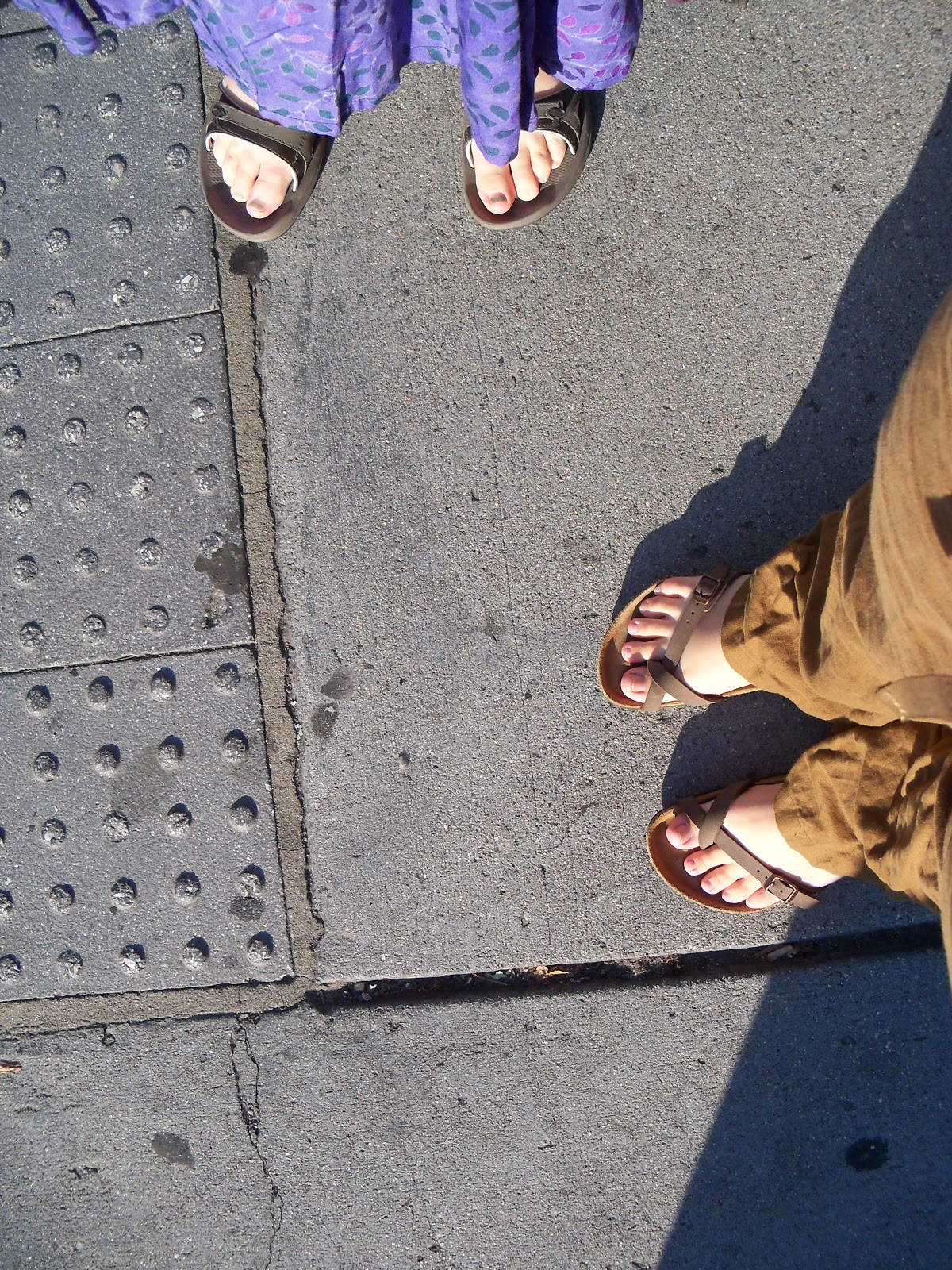
Our wedding morning dawned cool and clear, and we began as we do most Friday mornings, by walking out through Coolidge Corner and down Beacon street to Tatte cafe.

We are so thankful to Tzurit and everyone on the staff at Tatte for welcoming us for our wedding morning!

We had decided that we really wanted our marriage vows to be woven into the fabric of our daily life here in Boston, and at least once a week Hanna and I are able to have breakfast at Tatte before work.

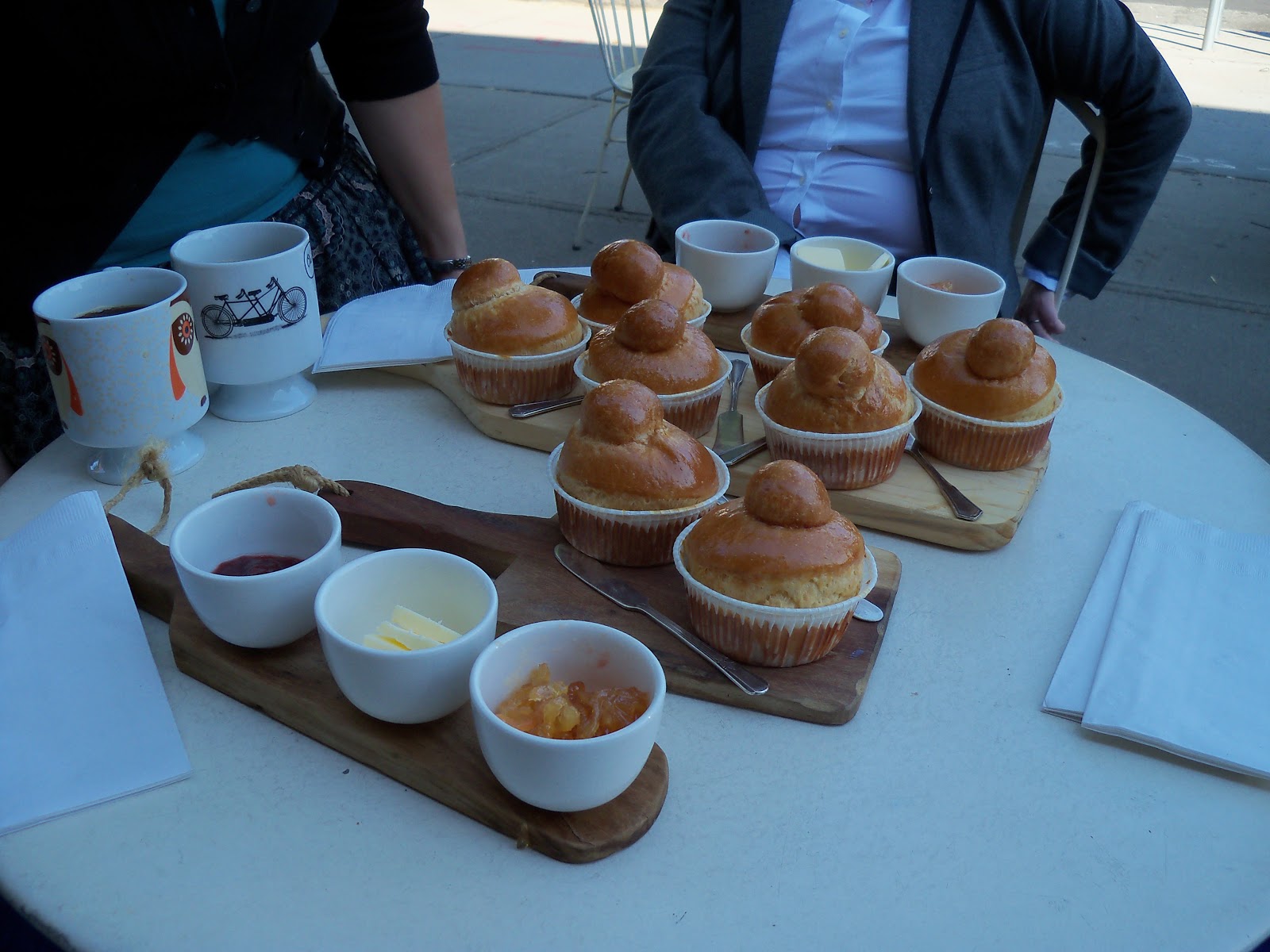
What we like to order is the Brioche Breakfast (we’re particularly fond of the pear marmalade!) and espresso – so that’s what Tzurit and her staff prepared as a wedding feast.

I guess we really wanted all that!

Halfway through breakfast I remembered we had promised to call my folks once it was all official – and I’d forgotten my cell phone at home! Thankfully, our friend M. came to the rescue with her iPhone (which I could use while drinking my latte).

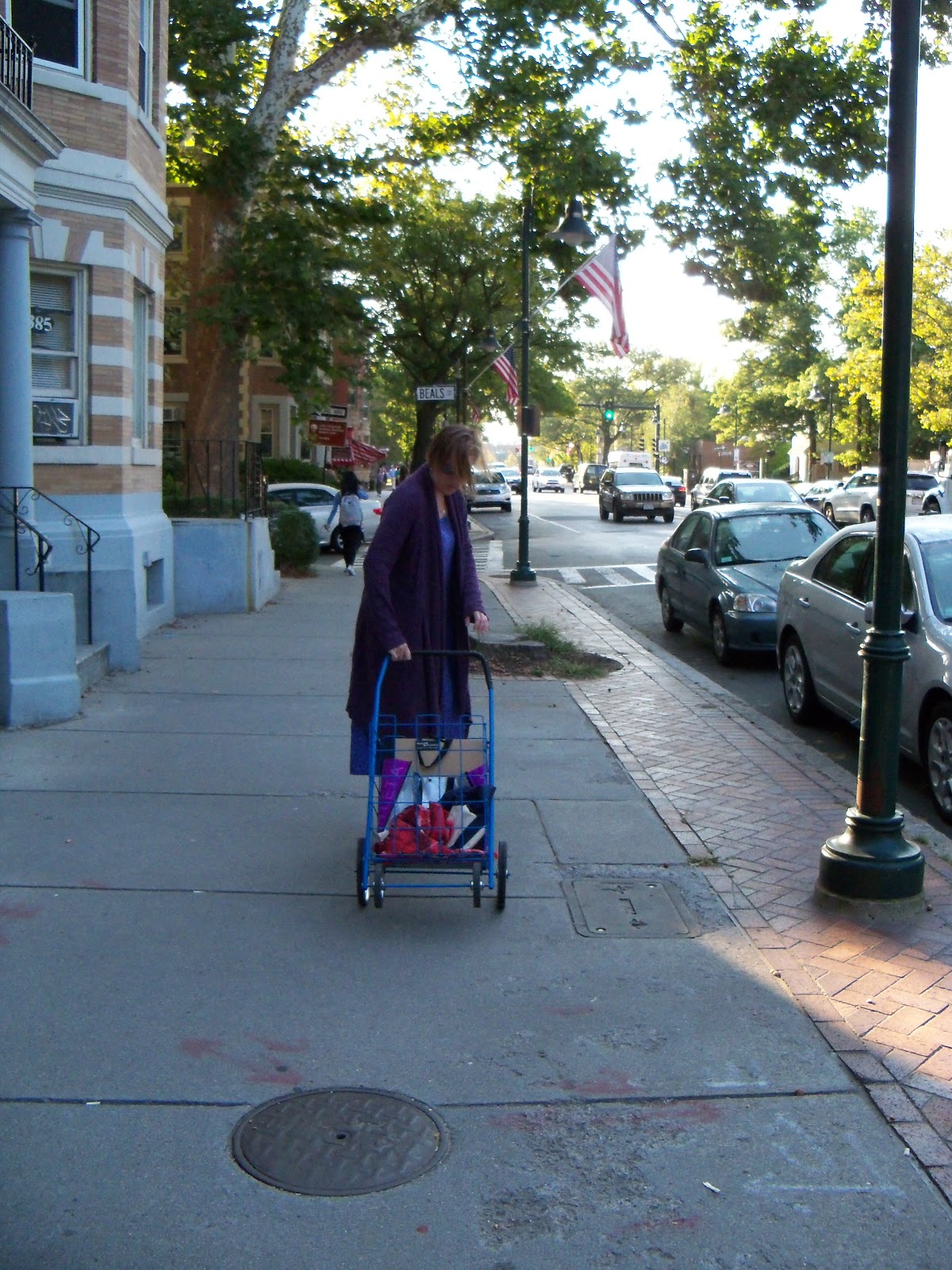
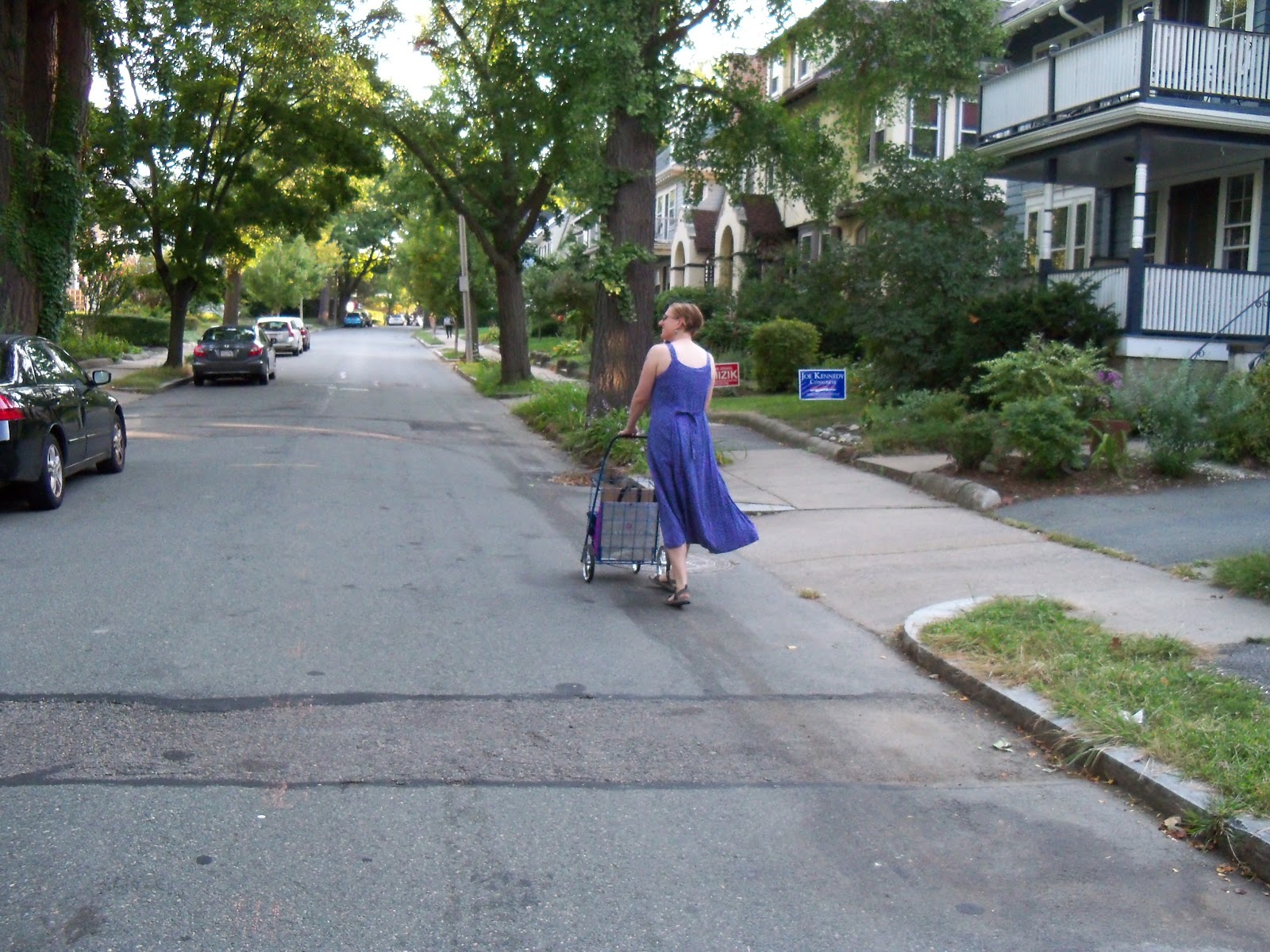
After sending everyone off well-fed to their various destinations of the day, Hanna and I made our way back home via Trader Joe’s where we did our grocery shopping in preparation for the following morning’s departure for Cape Cod.

And then we went home and essentially napped for the rest of the day (getting married turns out to be hard work, even if you keep it small!).

from the neighborhood: hop on pop

20 Saturday Oct 2012

Posted by Anna Clutterbuck-Cook in our family

≈ Leave a comment

Tags

cat blogging, domesticity, photos

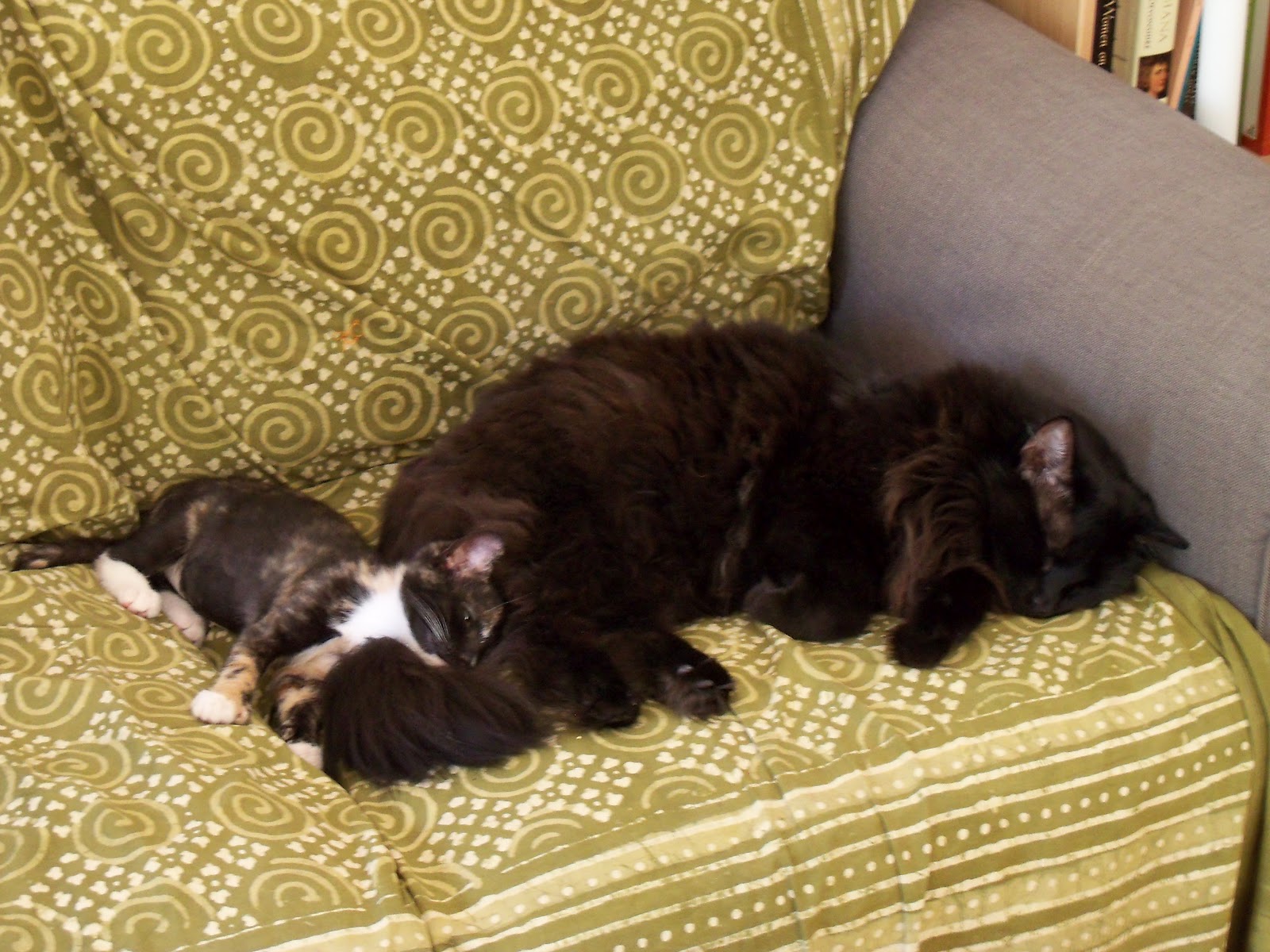
… or rather, sit on kitten?

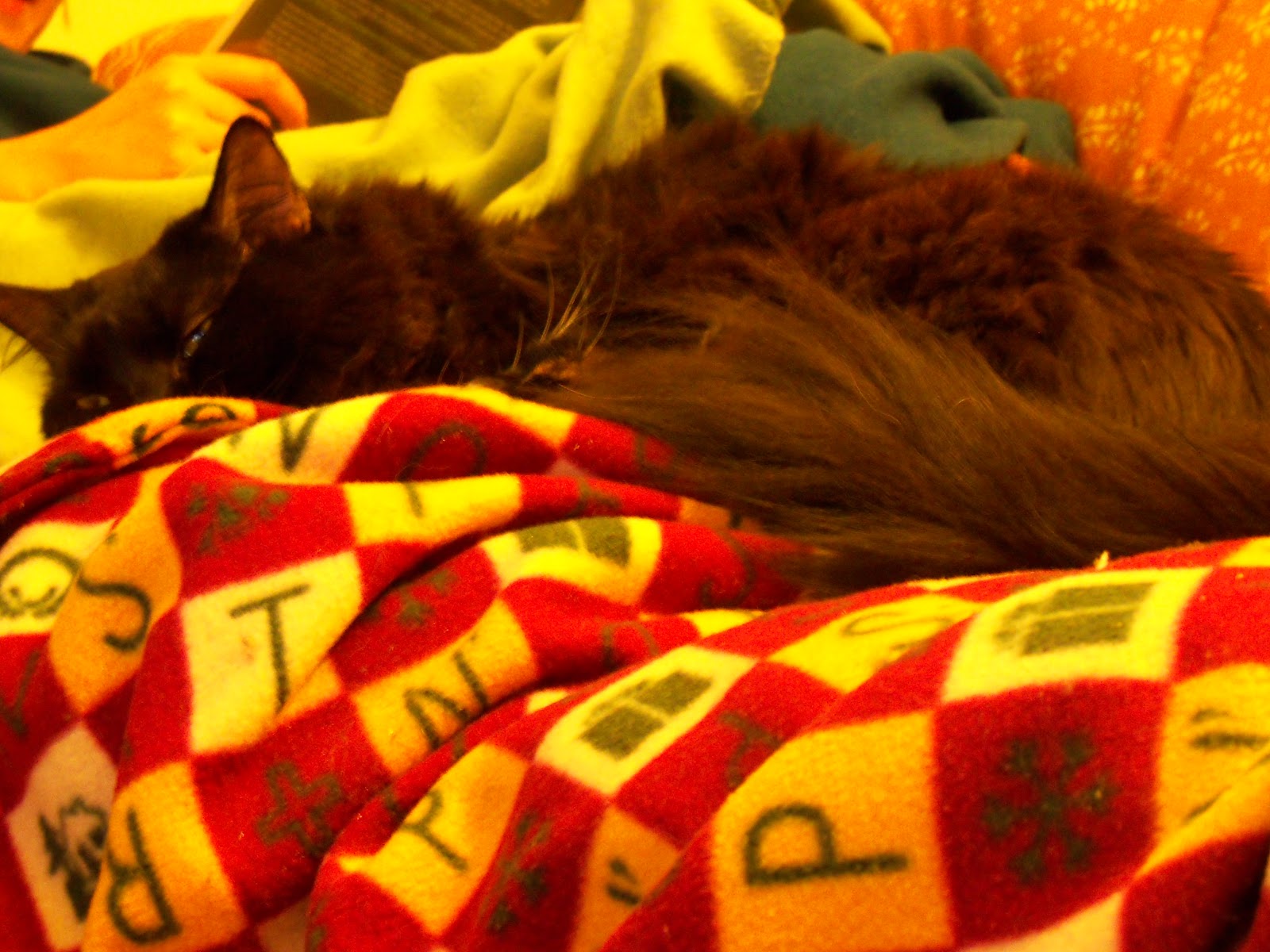
where is Teazle, you ask?
There she is!
Yes, really, she’s under Gerry. Quite happily it seems.
I guess this answers our question about whether they’ll learn to get on.

Enjoy your weekend!

new fic: we both kinda liked it [dean/cas]

18 Thursday Oct 2012

Posted by Anna Clutterbuck-Cook in fandom

≈ Leave a comment

Tags

fanfic, supernatural, writing

So a while back, Hanna and I watched this Supernatural episode from season five called “The End” (5:04) which some of you may remember. The one in which asshole angel Zachariah tries to give Dean a kick in the pants by sending him into an alternate future wherein the shit has hit the fan due to Dean’s unwillingness to follow angelic plans. When present Dean encounters future Dean he has to convince his alternate self he is who he appears to be. And he does it like this:

Future!Dean: Okay. If you’re me, then tell me something only I would know.
Dean: Rhonda Hurley. We were, uh, nineteen. She made us try on her panties. They were pink. And satiny. And you know what? We kind of liked it.
Future!Dean: Touché.

In the days that followed, we had several versions of this conversation:

Anna: I really can’t believe that scene doesn’t turn up in fic more often, I mean it’s all right there really.
Hanna: Yup. Right there.
Anna: Like, how it would be something Dean was super secretive and embarrassed about and Cas would totally not understand why it was a source of embarrassment.
Hanna: Yup.
Anna: Someone totally needs to write that fic.
Hanna: It’s all yours. Write away.

(via)

So I did. And now it’s live over at Archive of Our Own.

Title: We Both Kinda Liked It
Author: ElizaJane
Fandom: Supernatural
Pairings: Dean Winchester/Castiel, Dean Winchester/Rhonda Hurley
Rating: Explicit
Length: 13,514 words (8 chapters)
Tags: Established Relationship, Past Relationship(s), Gender Policing, John Winchester is an asshole, Castiel goes clothes shopping, Dean is all right.
Summary: You’re twenty-nine. He reminds himself. And Dad’s not here to shout or throw things or give you the fucking silent treatment. And the only other people in the hotel room are his boyfriend-the-fallen-angel and his brother the gayest straight boy that ever lived.

“For the people who like this sort of thing, this is the sort of thing they’ll like.” If this is your sort of thing, hop on over and check it out.

booknotes: life, liberty, and the pursuit of happiness

16 Tuesday Oct 2012

Posted by Anna Clutterbuck-Cook in book reviews

≈ Leave a comment

Tags

children, feminism, gender and sexuality, politics

The books to review are piling up, and the longer they sit in the queue the more I feel obligated to be Insightful about what I’ve read. So in an attempt to resist intellectual overwhelm, here are a few shorter reflections on the books I read in the first half of October.

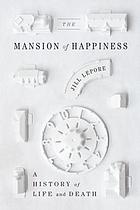
Lepore, Jill. The Mansion of Happiness: A History of Life and Death (Knopf, 2012). Harvard Professor of American history (and sometime MHS researcher) Jill Lepore’s latest work is a collection of essays, most of which began as pieces for The New Yorker, and are published here in expanded form. Despite its formidable title, Mansion is episodic rather than exhaustive, exploring American understandings of humankind — how humans begin, how we do and should live, how we die — in a series of engaging chapters on such topics as baby food (and breastfeeding), children’s literature (and children’s libraries), teaching sexual knowledge, parenting advice, and the medicalization of the end of life. Lepore is a skillful writer and deeply philosophical historian who believes passionately in the importance of translating her scholarly work into terms meaningful outside the academy. As an historian, I appreciate her deft use of primary source research in essays that range across time and space, making eloquent and thought-provoking connections between seemingly disparate historical events, cultural enthusiasms, and the persons and places of America’s past.

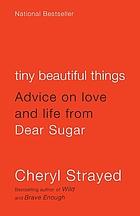
Strayed, Cheryl. Tiny Beautiful Things: Advice on Love and Life from Dear Sugar (Vintage, 2012). After my sister raved about Wild and Bitch magazine offered me a compelling and eloquent author interview with Cheryl Strayed, I realized it was time to read Tiny Beautiful Things. Over the years, I’ve definitely been exposed to the “Dear Sugar” columns Strayed wrote for The Rumpus, and in fact have a favorite quote from one such column right here on the feminist librarian (look to your left). Yet I’d never read “Dear Sugar” systematically, and in some ways I’m glad of that. While each individual column has power, taken together as a book-length collection Strayed’s attitude of kindness and care, the quality of listening and clarity of thought, become all the more beautiful and heartbreaking. The experience of reading Tiny Beautiful Things reminded me most strongly of the first time I cracked open Traveling Mercies. Cheryl Strayed’s voice is as raw and redemptive as Anne Lamott’s, though without the Jesus talk (for some of you that’ll be a plus, for others a minus — I urge you to read Tiny either way).

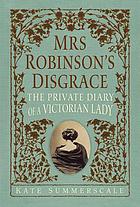
Summerscale, Kate. Mrs. Robinson’s Disgrace: The Private Diary of a Victorian Lady (Bloomsbury, 2012). In the summer of 1858, one Henry Robinson appeared before the newly-created divorce court in London and petitioned for the legal dissolution of his marriage to Isabella Robinson on the grounds of adultery. His lawyer put forward as evidence Isabella’s extensive and detailed diaries, which her husband had discovered while his wife lay ill with fever. The diaries, Mr. Robinson argued, provided evidence not only of Mrs. Robinson’s unhappiness in marriage (she wrote openly about her hatred for her husband and her plans for desertion once her children were grown) but also of her desire for other men, and — most damning of all — her longstanding emotional, and perhaps physical, affair with a friend of the family. Summerscale uses court documents, family papers, and the press coverage of the trial to piece together the story of “Mrs. Robinson’s disgrace.” What emerges is a fascinating tale of Victorian marriage law, sexual morality, conceptions of mental health and madness, and the unstable boundary of fact and fiction.

Valenti, Jessica. Why Have Kids?: A New Mom Explores the Truth About Parenting and Happiness (Houghton Mifflin, 2012).  Valenti’s latest is a quick read that I polished off earlier this week while waiting for Hanna in the waiting room of her physical therapist’s office. Using her own, fairly traumatic, entry into motherhood as a launching pad to explore the modern culture of mothering and parenting, Jessica Valenti (founder and former executive editor of Feministing) follows in the footsteps of Judith Warner (Perfect Madness), Susan Douglas and Meredith Michaels (The Mommy Myth) in critiquing the culture of “intensive mothering” and its unrealistic expectations of modern parents. For anyone who has read these earlier works (or, indeed, follows discussions about parenting in the feminist blogosphere), there will be little new here — though I think that in itself is noteworthy. Jessica comes from a generation or two past that of Warner, Douglas, and Michaels — yet still seems held hostage, to some extent, by the same societal judgyness around motherhood and family life. I found myself wondering, as I read, why the hell we continue to feel trapped by other peoples’ expectations. Obviously, public policy and law as a material effect on parenting options — but in the realm of “styles” and personal decisions it really should come down to what works for you and your family — if a given approach isn’t working, try something else.*

Which is part of the reason why I felt impatient with the way Valenti saves some of her most pointed criticism for proponents of “natural” parenting, whose philosophies and practices she felt betrayed by as a new mother coping with the aftermath of an emergency Cesarean and a daughter who needed months in the NICU to survive. While her own struggles are what they are and deserve to be articulated, this sometimes leads to lopsided critique — for example the pages and pages on the dangers of fanatic breastfeeding with only a single (very short) paragraph on the discrimination and judgyness leveled at parents who choose to (and are able) to nurse their kids. So it didn’t work for her, In a book that otherwise admirably refuses to take “sides” in the banner feminist parenting battles, I felt the treatment of the parenting practices Valenti rejected on a personal could have used more nuanced discussion from a feminist perspective.

*I actually think this holds true for any family, whether young children are involved or not.

from the neighborhood: cats being cute [you have been warned]

14 Sunday Oct 2012

Posted by Anna Clutterbuck-Cook in our family

≈ Leave a comment

Tags

cat blogging, domesticity, photos

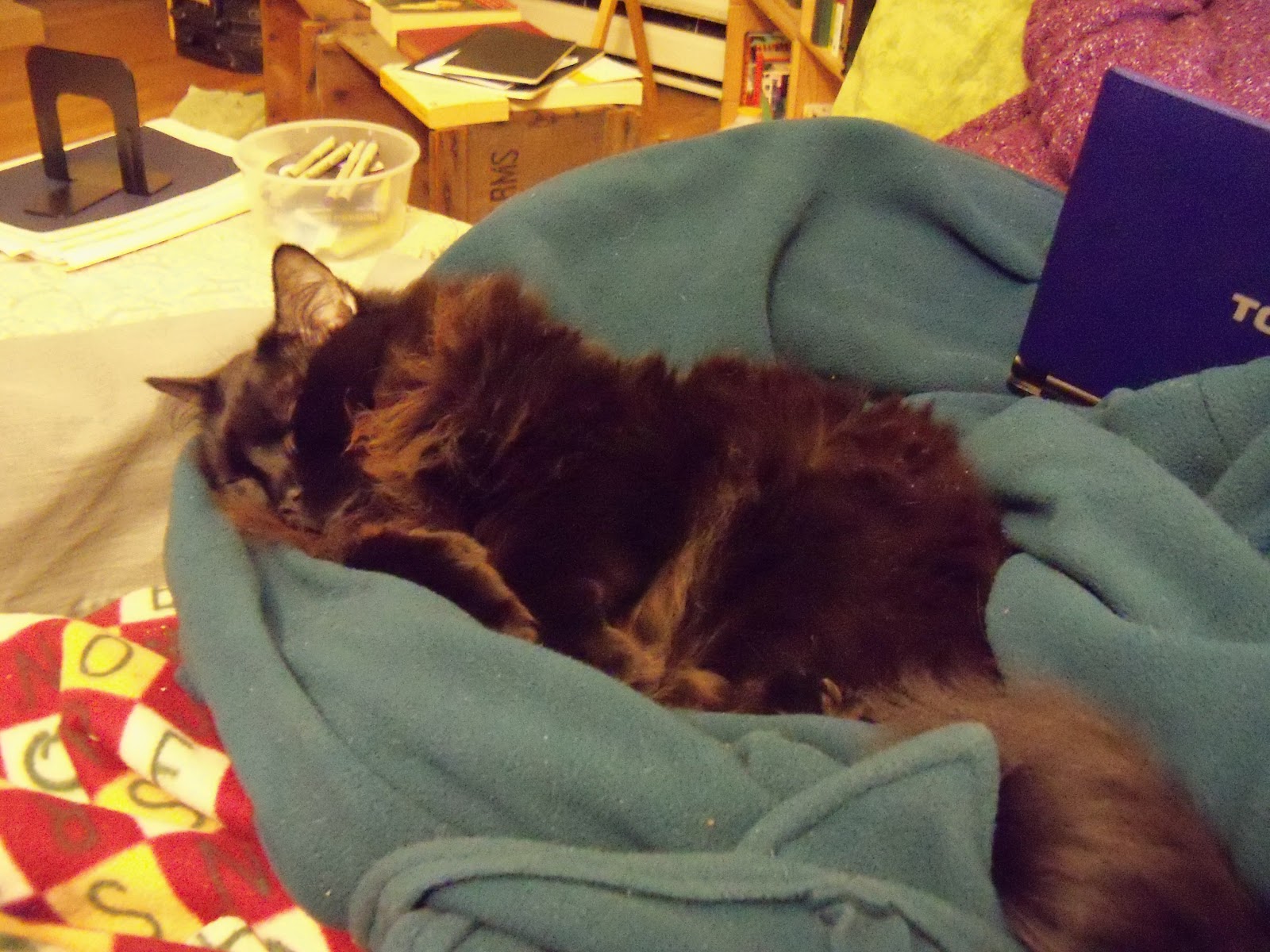
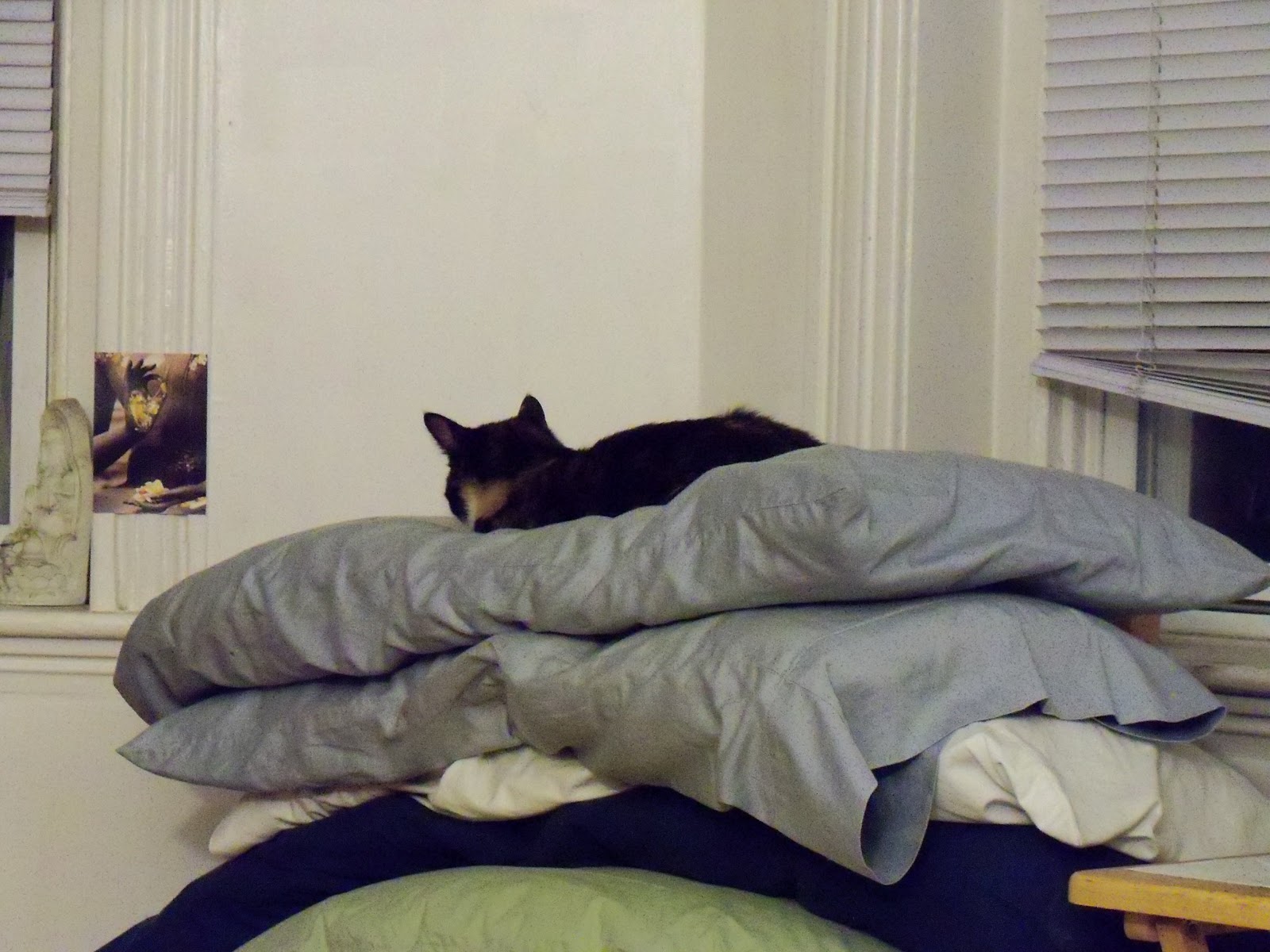
It’s a rainy autumn Sunday here in Boston so in order to combat the rainy-day blues we bring you cats being cute!

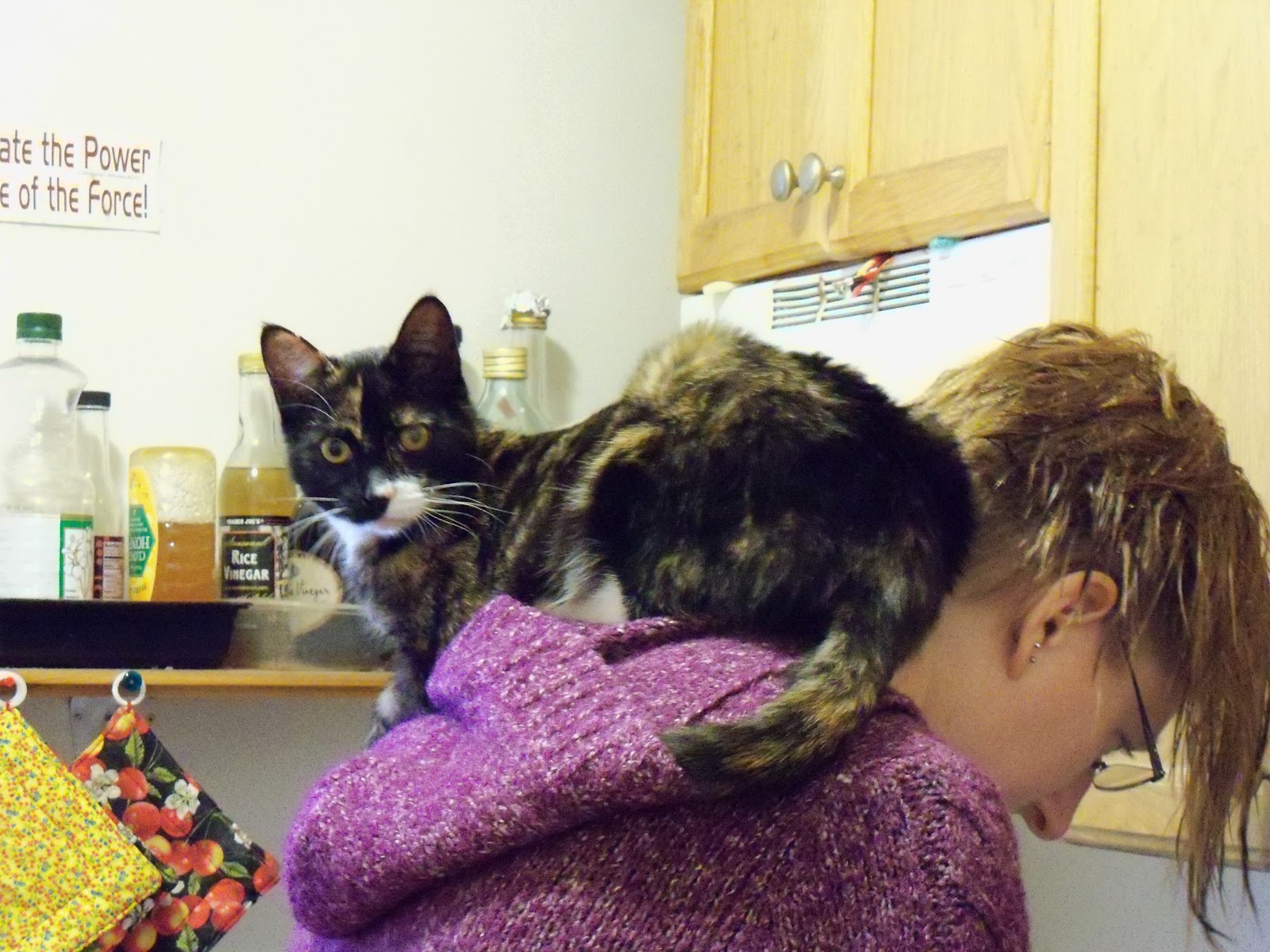
Teazle is undecided about sitting on shoulders
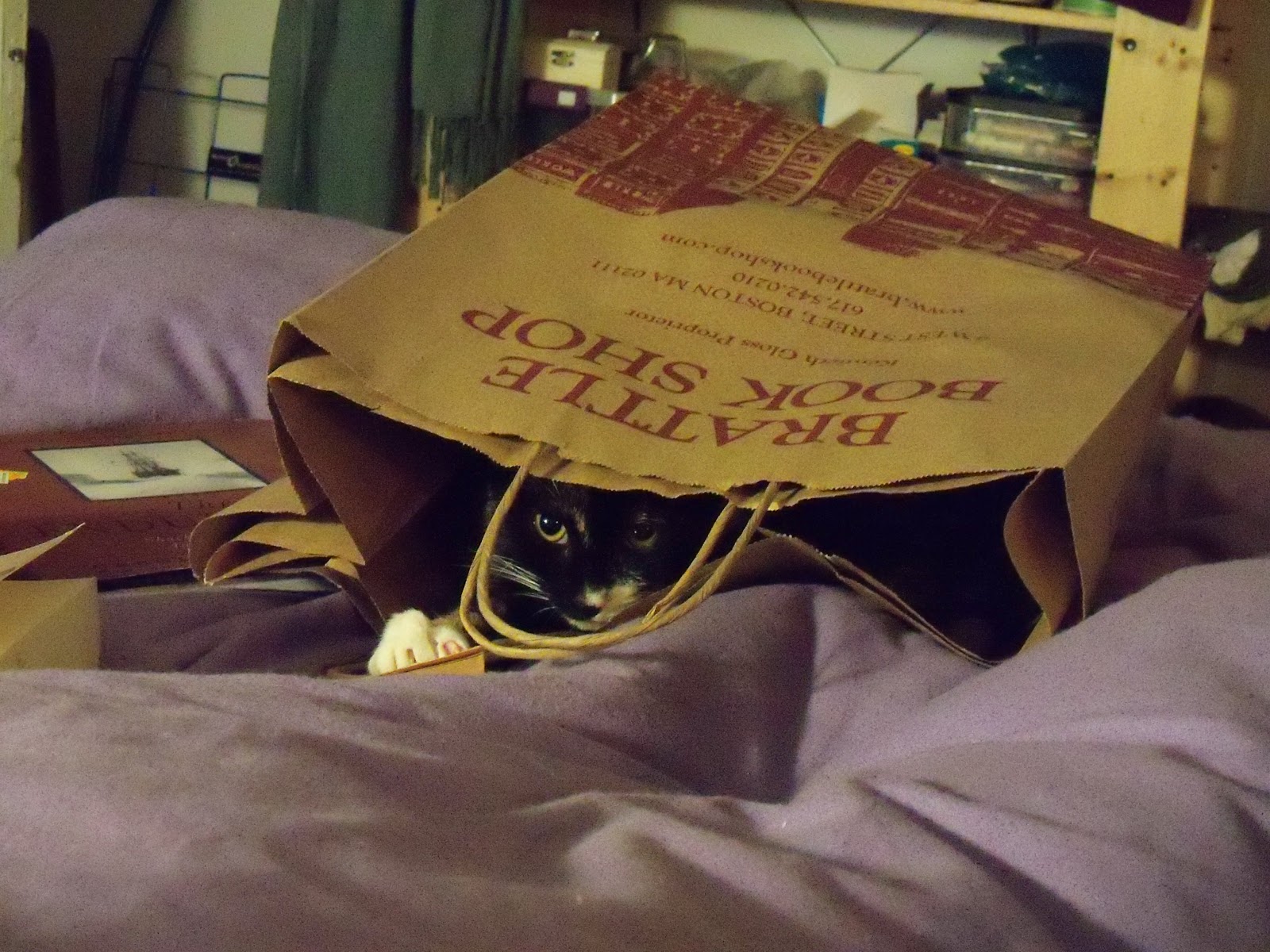
Human book shopping means paper bags for kittens to play in!
Gerry likes the advent of fleece bathrobe season.
Shortly after Hanna snapped this photograph Teazle tipped
right off the pillows onto the floor. So much for her Princess and
the Pea
imitation!
Gerry has become protective of our little one … 
… or perhaps it’s just long-suffering toleration!

I do have books to blog about and reflections on work and photos from our honeymoon to post — but it’s all been a bit hectic around here, plus Hanna and I are both sick with a tiresome autumn cold, so I haven’t had a lot of time/energy for blogging. I promise more eventually!

Meanwhile, I hope everyone is enjoying October – it’s quite my favorite month of the year.

(And happy anniversary to us; we’ve been married for a month today!)

support black cat rescue! [wedding giving]

06 Saturday Oct 2012

Posted by Anna Clutterbuck-Cook in our family

≈ Leave a comment

Tags

being the change, wedding

Geraldine, on her first day at our home (Oct 2009)

I went back and forth about whether to put up a shout-out for this fundraiser on my blog – but what’s a fundraiser for if you don’t, you know, raise funds for the charity in question?

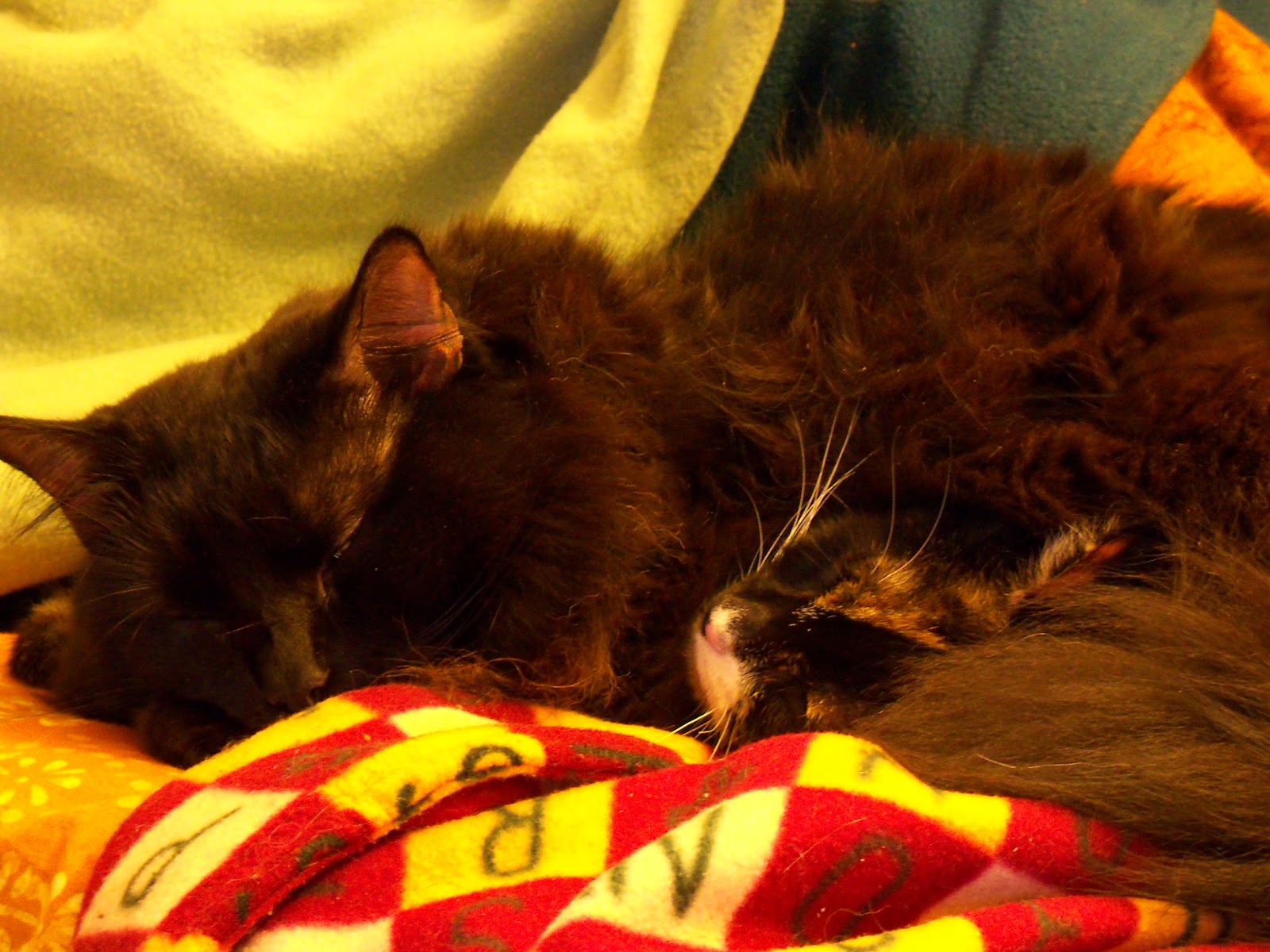
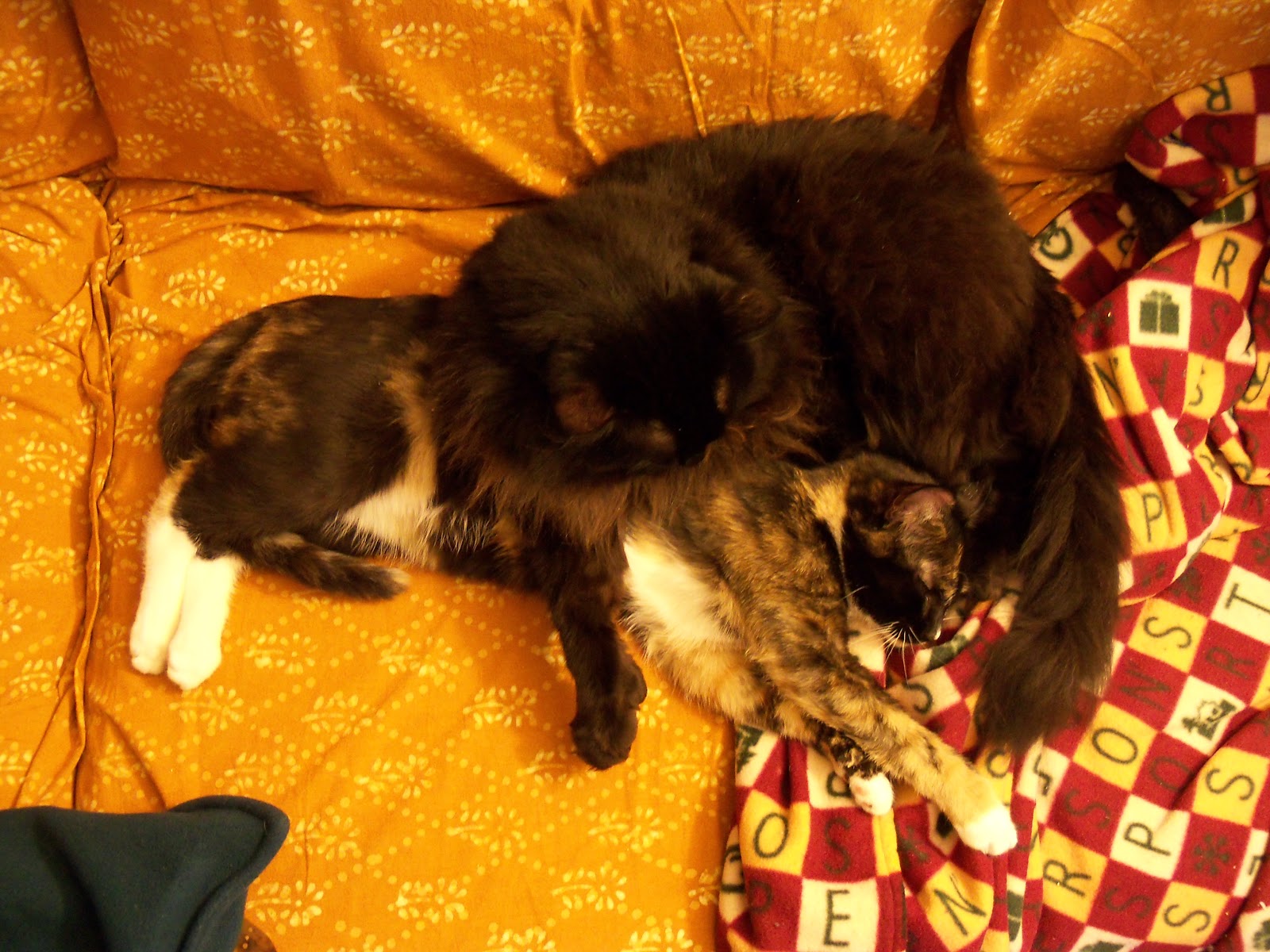
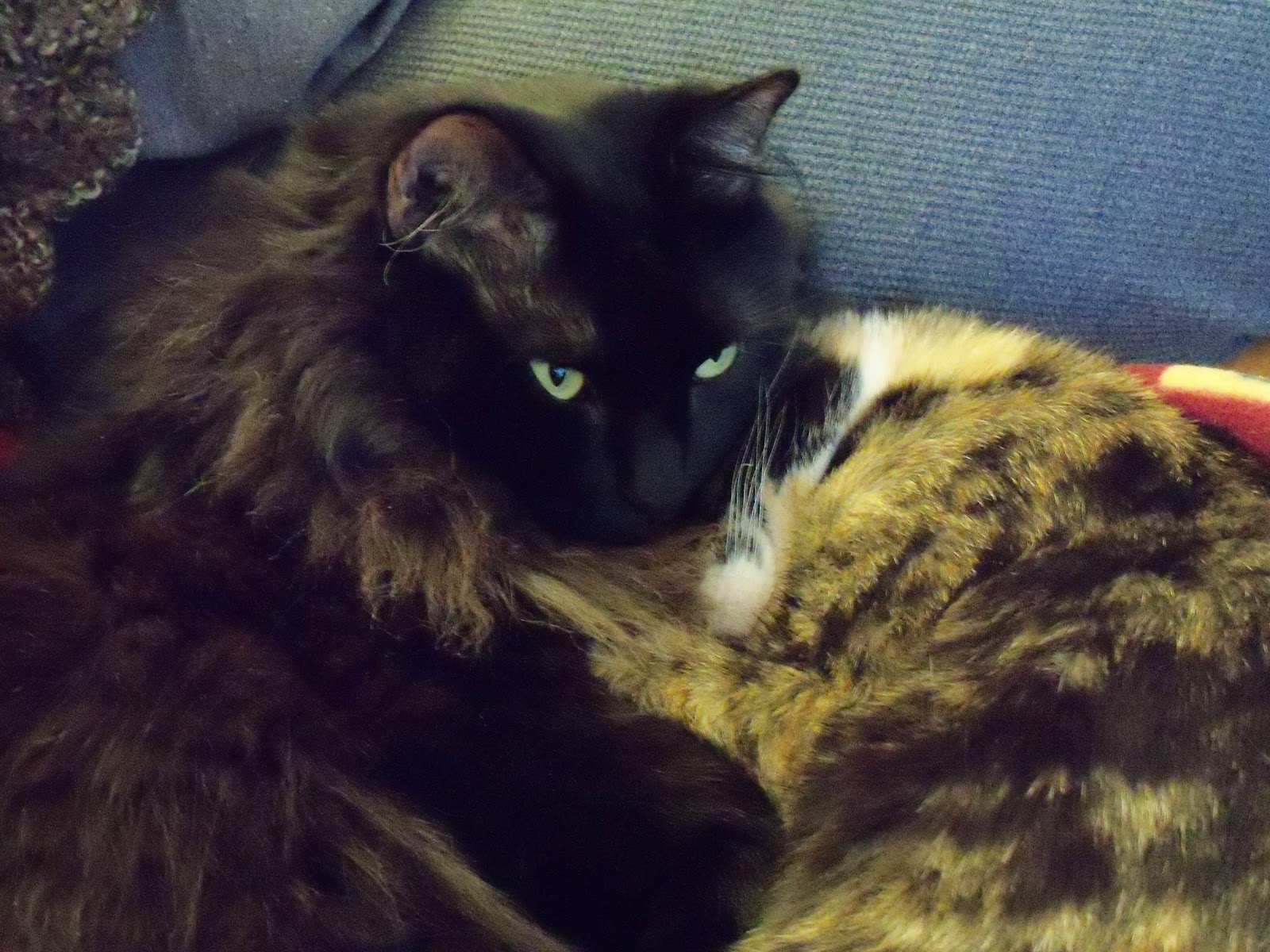
As I shared in my wedding planning posts, in lieu of a gift registry Hanna and I decided to ask people to donate to Black Cat Rescue, the amazing foster organization that took Geraldine and her kittens in off the street and made it possible for us to bring her into our family. She’s been with us three years this weekend, and we hope she’s not too angry at us for adopting her a little kitten-niece in the form of enthusiastic Teazle.

Gerry and Teazle napping
Gerry helps Hanna do yoga

We’ve set up a FirstGiving page to process donations which will go directly to Black Cat Rescue. I hope y’all will at least take a moment to consider giving something small ($1, $5, it’s all good!). They’re good people doing good work on a strictly volunteer basis. The funds we raise will go toward supplies and medical care for the cats they take in.

booknotes: just married round-up

04 Thursday Oct 2012

Posted by Anna Clutterbuck-Cook in book reviews

≈ 1 Comment

Tags

books

I promised y’all book reviews, so by God there will be book reviews! Beginning with a run-down of the books I read during August and September, when I had neither time nor inclination to review them fully in posts of their own.

Bannon, Ann. Odd Girl Out (1957; reissue Cleis Press, 2001). I picked up Odd Girl Out in a used bookshop in Wellfleet and read it in an afternoon. Bannon’s first lesbian pulp novel tells the story of first-year sorority girl Laura who falls head over heels in love with worldly senior Beth. Mix in a boy named Charlie, the fear of being forever branded “queer” and you have the makings of a classic college romantic drama (spoiler: at least nobody dies!).

Bowman, Matthew. The Mormon People: The Making of an American Faith (Random House, 2012). A synthesis of the past forty years’ scholarship, rather than based on original research, Bowman’s The Mormon People is an ambitious work seeking to tell a coherent narrative of the Church of Jesus Christ of Latter-Day Saints from its beginnings in the Second Great Awakening to the present-day. He is particularly interested in the relationship between the LDS church and American political culture, exploring the way early Mormon counterculturalism gave way to mainstream assimilation over the twentieth century. Though perhaps some members of the LDS church would disagree with me, I thought Bowman was respectful of believers without brushing some of the more difficult issues (for example the church’s stance on women in the priesthood) under the rug. As with any overview, the historical issues are somewhat simplified — but I particularly appreciated the way in which Bowman was able to discuss the historicity of the faith without disrespecting the value of belief among those who chose to join this infant American branch of Christianity.

Delblanco, Andrew. College: What it Was, Is, and Should Be (Princeton University Press, 2012). A seasoned literature professor at Columbia, Delblanco offers an articulate, thoughtful, and well-researched tour through the history of the American system of higher education, with a particular focus on undergraduate colleges. He’s interested not only in how colleges came to be what they are today, but what we might want them to be moving forward. What, he is asking, is college for? His answer is a holistic one, which I am largely sympathetic with: college should not only be a place to acquire skills, but also a time and place to ponder questions of ultimate concern (“how shall I live?”), and that everyone — regardless of socioeconomic class — deserves that time and place. I was less impressed with his reflections on how to fix a system gone wrong (after a whole chapter on how tests are worthless as a measure of student learning, he suggests national tests at the college level as one possible way forward; I was nonplussed). Still this brief and passionate little book should be on the reading list of anyone interested in the history of education and/or people involved in higher education in any way.

Doherty, Thomas. Hollywood’s Censor: Joseph I. Breen and the Production Code Administration (Columbia University Press, 2007). After reading The Accidental Feminist this summer, I was interested in learning more about the Production Code Administration. So footnote surfing brought me to Hollywood’s Censor. Doherty, a film historian, provides an exhaustive cultural history of the PCA that — at times — seems to get buried under the weight of chronological detail. Using the life of Joseph I. Breen (a central figure in the development of the Code) as a through-line, Doherty traces the rise, influence, and fall of the Production Code from the 1920s into the 1960s. While for my taste the book could have contained less of Breen and more examples of films shaped by the PCA machine, it was fascinating to see how intimately involved in script development Breen and his associates were. Since it was much more efficient for the studios to have film projects pre-approved then to have them screened and censored post-facto, Breen often worked closely with script writers, directors, and producers (whether they wanted him to or not!) in crafting scenes that would convey adult themes without violating the Production Code. While I admit to skimming some sections, I did come away with a greater understanding of film-making in Production Code-era Hollywood.

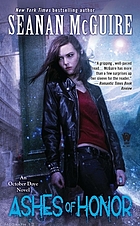
McGuire, Seanan. Ashes of Honor (Daw, 2012). The latest installment in McGuire’s October Daye urban fantasy series, set in San Franciso, did not disappoint as the perfect vacation read. Toby is called in when an adolescent changeling unexpectedly comes into her fae powers and unwittingly begins destabilizing the metaphysical connections between the various faerie realms. There was perhaps a bit less of May, Toby’s fetch, May’s girlfriend Jazz, and Spike the rose goblin, than I would strictly have liked to see … but the developing relationship between Toby and Tybalt was all sorts of delightful. I’ll be happily anticipating the next installment until such time as it appears.

Mohanraj, Mary Anne. Aqua Erotica (Three Rivers Press, 2000). A dollar cart find, this collection of water-themed, sexually-explicit short stories is the first erotica anthology I’ve read in awhile wherein more than one author was doing something interesting with their subject matter. I particularly liked the contributions by Carol Queen and Francesca Lia Block; I’m sure others will find their own favorites!

Penny, Laurie. Meat Market: Female Flesh Under Capitalism (Zero Books, 2011). I received an electronic review copy of Meat Market from Zero Books back in August. This slim (72-page) manifesta from British feminist Laurie Penny (aka Penny Red) explores in heavily Marxist language the way in which the modern capitalist economy has turn human bodies — in this case specifically women’s bodies — into commercial products. Penny explores commodified sex, disordered eating, the pressures on women to perform gender in specific ways, and the un- or underpaid labor of care. While I think other writers have tackled these issues more comprehensively and perhaps more accessibly, I particularly appreciated Penny’s clear stance against transphobic feminism, and her insistence that all women — whether cis or trans — face gender policing. I look forward to watching where Penny’s work takes her from here.

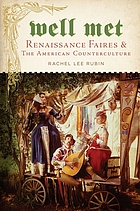
Rubin, Rachel Lee. Well Met: Renaissance Faires and the American Counterculture (New York University Press, 2012). Rubin’s study of the modern Renaissance Faire is part ethnographic study, part cultural history. Beginning with the origins of the Faire in the Southern California music and theater scene of the 1960s, Rubin traces the Faire from local radio station fundraiser to national (often corporate) institution. Well Met is a multi-layered study in cultural memory, as it explores not only the fair workers’ and attendees’ quest for a usable “Renaissance” past but also the way the Ren Faire has become a repository for memories and emotions about the Sixties counterculture. For those who have positive associations with the counterculture, the Faire has become a safe space for body positivity, sexual variation, artistic creativity, and a nomadic, in some ways communal life. For those who fear and/or dislike the values of the Sixties counterculture, the Faire becomes an object of loathing and derision. One of the most intriguing chapters of the book, in fact, explores the Faire “haters” who (Rubin contends) have constructed their identity around hating on the Faire much like passionate participants have constructed their identities around Faire work and attendance. I highly recommend Well Met to anyone with an interest in Renaissance Faires, the Sixties, arts and music scenes, cultural memory, and fandom culture.

Sandler, Lauren. Righteous: Dispatches from the Evangelical Youth Movement (Viking, 2006). I discovered this piece of journalism through an article about Mars Hill megachurch in Seattle published in the latest issue of Bitch magazine. Sandler’s journey through the Evangelical subculture, with an eye toward it’s appeal to young people, explores the way the post-80s Evangelical leaders have harnessed the counterculture energy of youth into a reactionary counterrevolution. These young people, the “Disciple Generation,” as Sandler identifies them, are succeeding in making fundamentalist Christianity cool, hip, and a political force to be reckoned with. While an interesting read, I am growing tired of such journalistic accounts that frame fundamentalist evangelical culture as inherently “other.” Particularly when they buy into the us/them mentality fundamentalists themselves employ: “secular” culture pitted against fundie Christian culture as if no other faiths or faith practices exist. I also think Sandler is too quick to assume young people are turning to the Christian right because “secular” culture has failed to give them something to believe in. Really? You couldn’t do a little exploration into how left-leaning youth are building meaningful lives? Hopefully we’ll soon start to ask more complicated questions of the counterrevolution than just “ohmigod what are they doing here?!”

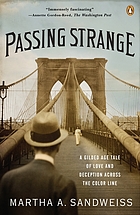
Sandweiss, Martha. Passing Strange: A Gilded Age Tale of Love and Deception Across the Color Line (Penguin, 2009). It’s been awhile since I had a case of scholar-writer envy as intense as I did reading Passing Strange. Sandweiss combs through the historical record for clues to help her reconstruct the story of high-profile turn-of-the-twentieth-century American scientist Clarence King who successfully concealed his marriage to Ada, a black woman, and the children they had together until after his death. His elite white friends thought him a bachelor; Ada — as far as the historical record revealed — believed her husband was a light-skinned black man who worked a series of jobs that often took him far from home. Through the story of Clarence and Ada, Sandweiss explores the nuances of race and race “passing” in America in the Reconstruction Era.
anatomy of an altar [wedding day, installment two]

02 Tuesday Oct 2012

Posted by Anna Clutterbuck-Cook in our family

≈ 4 Comments

Tags

wedding

This weekend, I read Bishop Gene Robinson’s new book God Believes in Love: Straight Talk About Gay Marriage (Knopf, 2012). In it, he tackles many of the common objections to marriage equality for same-sex partners — including many of the objections that are borne of religious belief.

Drawing on his experience officiating at weddings of both other-sex and same-sex couples, Robinson observes that many same-sex couples come to their marriage rites with a heightened sense of intentionality — perhaps because we are asked to do what anthropologists call “cultural work” to justify what we are about to do. Unlike hetero couples who are, in many contexts, assumed to be moving toward marriage “naturally,” same-sex couples have to argue — culturally, religiously, legally — for the ability to do so. And this struggle translates into a particularly deliberative culture of marriage planning.

I don’t know if this generalization is fair (I know plenty of other-sex couples who approach their wedding plans with great thoughtfulness about the ritual and what it means for their lives), but it’s true that although our marriage ceremony was spare we did put planning into what was important for us to bring with us into the space, and how we wanted to symbolize our commitment to one another. In addition to the vows, the wedding rings, the legal certificate, the tattoos, and the readings by friends, we carefully assembled an altar for the table that would bring together the various threads of our individual and shared lives we wanted to evoke.

We gathered together:

1) An altar cloth once woven by my mother, in a pattern she constructed mathematically to represent the music of one of my favorite Pentecost hymns.

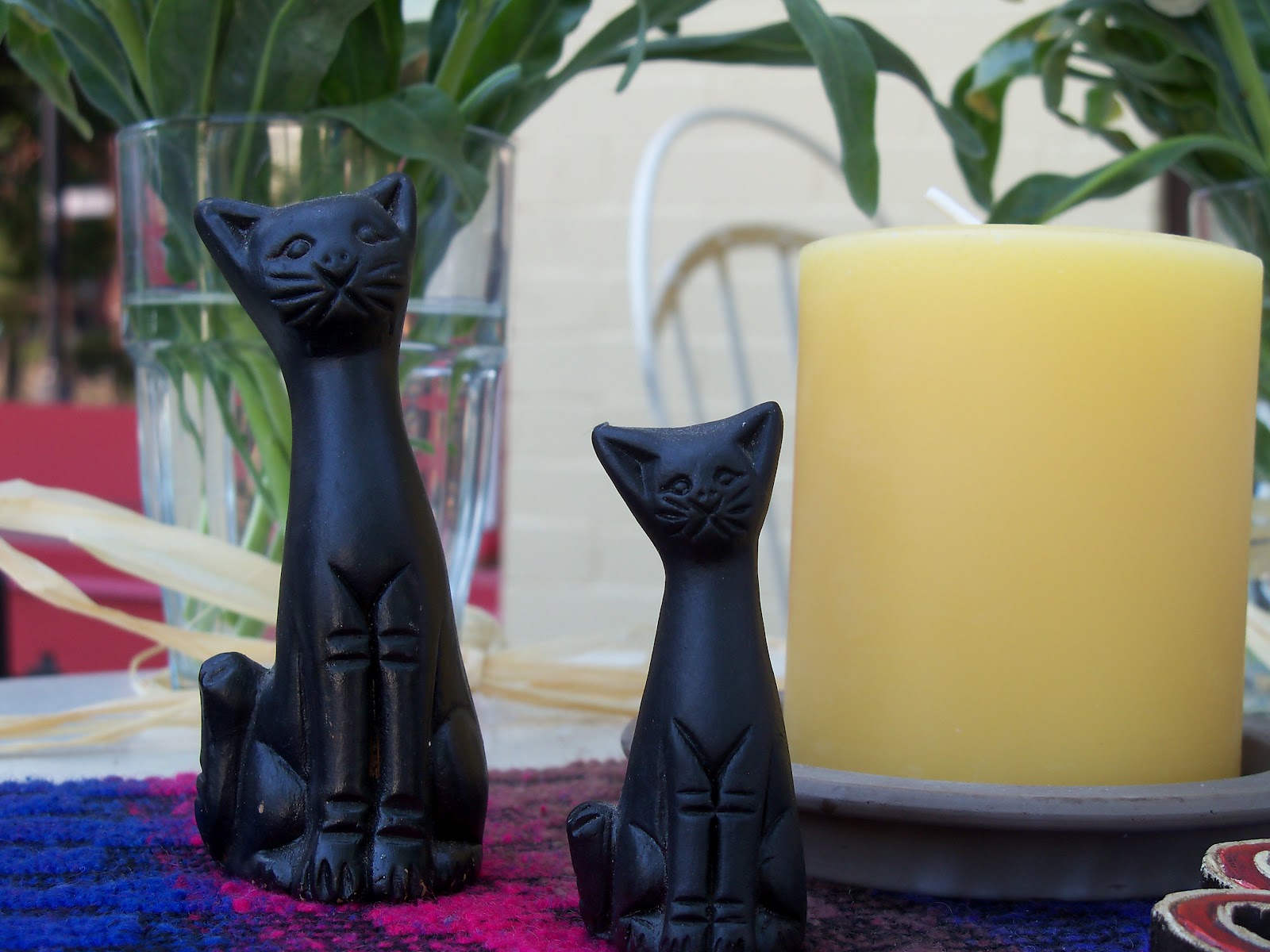
2) A pure beeswax candle which we did not end up lighting due to wind (and forgetting the matches!), but we chose beeswax because it’s such a lovely scent and because bees are awesome.

3) Two clay cat statues from a set of three I gave Hanna as a St. Nicholas Day gift several Christmases ago. These, obviously, were for Geraldine and Teazle who could not be there as part of our family to celebrate the day.

4) An eternal knot — the symbol our marriage tattoos were inspired by — which hangs in our bedroom.

5) A soapstone statue of a couple embracing which I found a few years ago at our local Ten Thousand Villages store; I like the Kisii soapstone groupings because they are generally not gender-typed. Perhaps if we’d had a wedding cake, this statue could have been our cake topper!

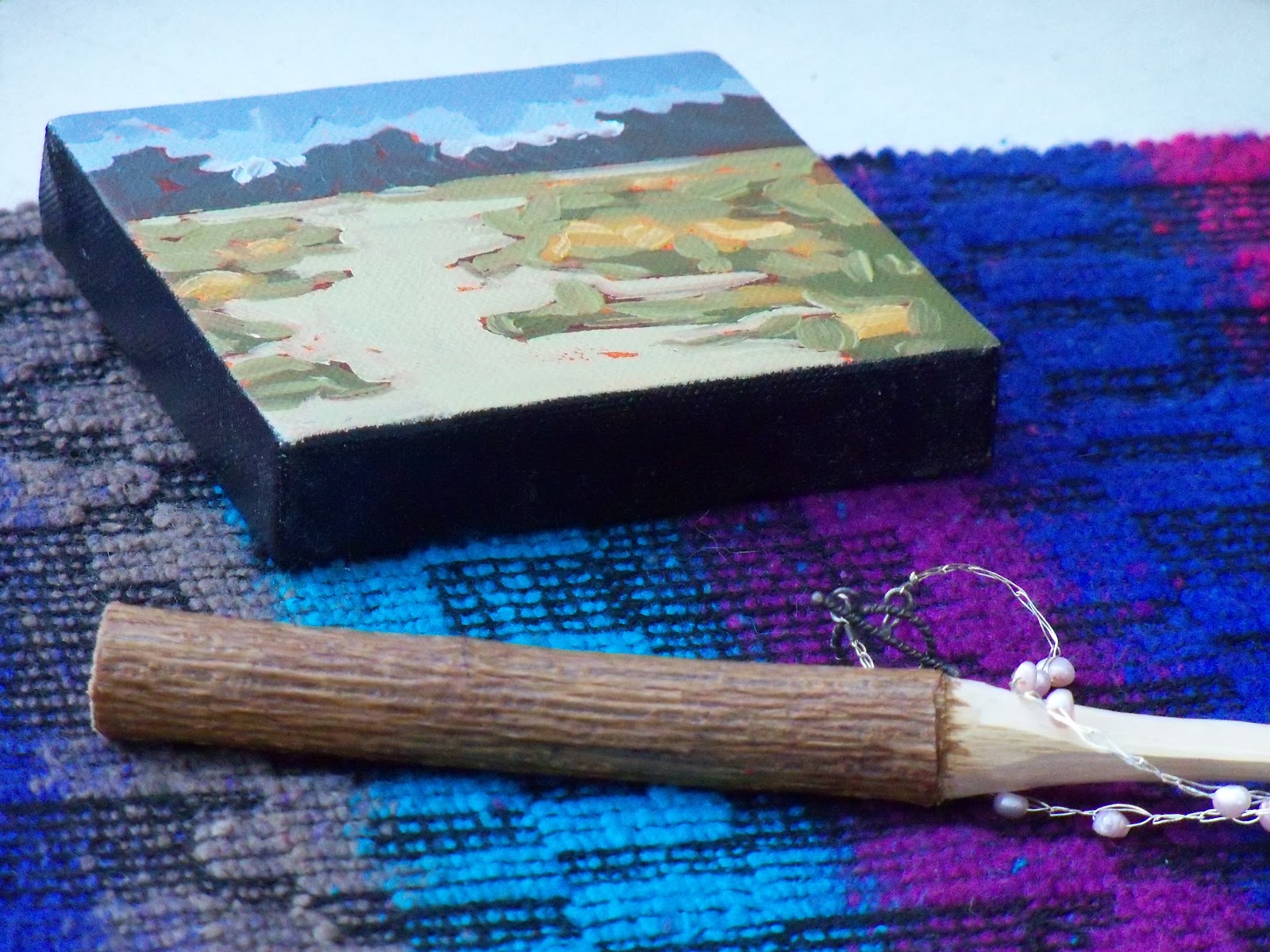
6) The painting by my sister-in-law Renee which I received as a wedding favor when she and my brother celebrated their marriage in Michigan last summer. This painting stood in for my extended family who are scattered across the country, and for my Michigan roots.

7) A rosewood letter opener carved by my friend Joseph and given to me as a gift many years ago. A gardener and rose breeder, Joseph would have been my pick for best man if, you know, I’d had that sort of wedding.

8) A necklace made by my friend Rachel, who would have been my maid of honor (if: see above).

9) Hanna chose two statues of the Buddha: the first one she ever bought — back when she first started practicing — and the one which my mother gave her last year.

10) As a symbol of the self she is bringing to our marriage, Hanna included a small painted TARDIS medallion her father once made for her, which we found up in Maine this past summer when we were cleaning out her things from storage. Doctor Who was Hanna’s ur-fandom (along with Star Wars) and as a British show also ties her to her father’s Yorkshire roots.

11) Two origami cranes folded and left with Hanna by her former roommate Diana represented Diana and her fiance Collin who would have been Hanna’s best man and maid of honor (if: see above).

And Tzurit, the manager of Tatte, brought us two vases full of amazingly fragrant stocks to round out our gathering-space.

On the table in the background, you can also see the portfolio in which is the signing document Hanna and I drew up, which contains our vows in written form and our signatures. Following the verbal exchange of vows, we asked all of our witnesses to sign the document — and in the months to come we’ll be sending it around the country to be signed by those who were unable to be present on the day. Once all 23 signatures have been added, we plan to frame the document (like the good archivists we are, we made sure the paper was acid-free and the signing pen archivally-sound!)

me –> writing elsewhere: looking back / looking forward edition

29 Saturday Sep 2012

Posted by Anna Clutterbuck-Cook in linkspam

≈ Leave a comment

Tags

blogging, harpyness, in our words, links list, the corner of your eye

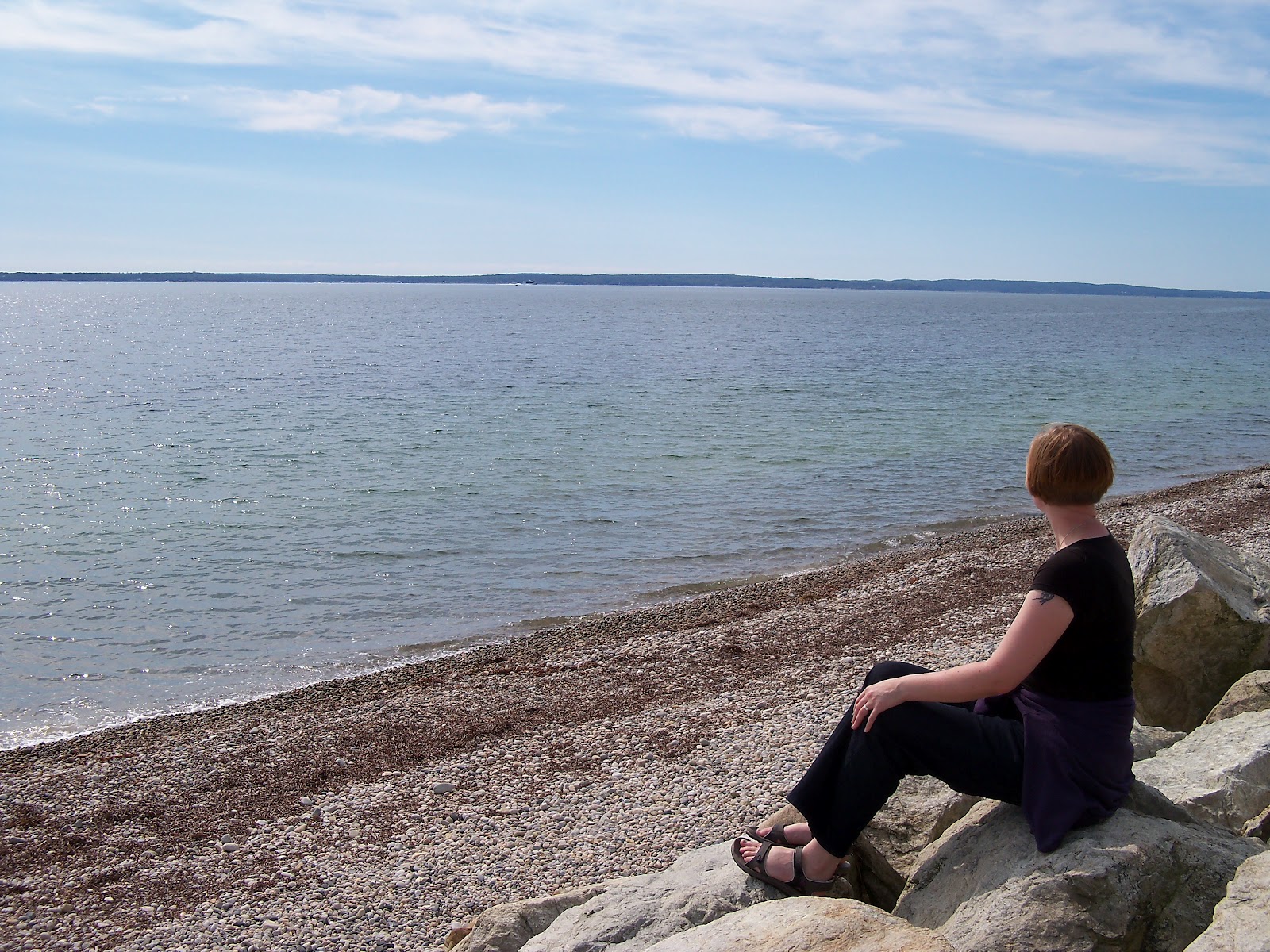
On the shore (Falmouth, Mass.)

Even though I took much of August and September off from regularly-scheduled blogging, I haven’t done one of these posts since early summer so there’s quite a bit accumulated on the interwebs to direct your attention to.

at the corner of your eye I put up the following reviews:

  • Our Arcadia, a favorite novel by Robin Lippincott | 2012-09-25
  • Just Before August Round-Up: a collective review of Virgins, The Accidental Feminist, The Gay Metropolis, Making Gay History, and Breeders | 2012-07-31
  • America and the Pill, a cultural history of birth control pill | 2012-07-24
  • I Do, I Don’t, an anthology on gay marriage ca. 2004 | 2012-07-17
  • Transitions of the Heart, an anthology by mothers of trans kids | 2012-07-10
  • 13 books to read instead of Religious Right: The Greatest Threat to Democracy | 2012-06-12
  • Big Sex, Little Death, Susie Bright’s memoir | 2012-06-19

    guest posts at In Our Words include:

    • To Be and To Have: Reflections on Getting Gay Married | 2012-07-10
    • Holding the Space: Thoughts on Being Queer Allies to Our Straight Co-Conspirators | 2012-08-01
    • We Can Give Them Words: Clearing Space for Our Children to Explore Gender | 2012-08-13

    at The Pursuit of Harpyness I contributed:

    • The link to a great post from the Guardian on the junk science of sexual attraction.
    • I wrote about the conservative study One Parent or Five, asking why the diversity of family forms generates so much anxiety (and in turn such poor scholarship!)
    • I posted thoughts from Jay Smooth on rapper Frank Ocean’s story about falling in love with a male friend.
    • I asked the Harpies where they go for their local coffee fix (and shared my own Boston faves).
    • A few things I would have written more about if time and energy had aligned.
    • A rant about Boston Sports Club advertising (read: fat-shaming).
    • Ten things I like about Hanna (in honor of our fast-approaching marriage).
    • And finally, three Tuesday Teasers (links lists):
      • #13: 2012-07-24
      • #12: 2012-07-10
      • #11: 2012-06-26

    and a few Tumblr-length thoughts over at the feminist librarian reads:

    • NOT back-to-school once again!
    • I’ve been reading all these FEELS about parenting and marriage lately…
    • instead of talking about [how] home-based births are “unsafe”…
    • reading books about wage-work care-giving and motherhood…
    Just today, I put up a farewell post at Harpyness; after nearly two years of blogging at what Hanna refers to as “the orange blog” I’ve decided it’s time to move on. In part, the break I took from blogging in the run-up to our marriage helped me see how over-extended I’ve become on the interwebs. I’d like to re-dedicate myself to this space (the feminist librarian) in the months to come, as well as focusing more systematically on longer-term writing projects. 
    In the immediate future, I’ll be sharing more stuff about our wedding and book reviews as I am able; my new responsibilities at work are making for a hectic season and I find that I get home in the evenings with less writing energy than usual. I don’t expect this to last, but please bear with me while it does — I love meeting you in this space, and promise I will be here in the years to come. 
    Incidentally, this is my 1000th post at annajcook.blogspot.com (which began life in 2007 as “The Future Feminist Librarian-Activist” in the spring before I embarked to graduate school in Boston. 

    before witnesses [wedding day, installment one]

    24 Monday Sep 2012

    Posted by Anna Clutterbuck-Cook in our family

    ≈ 1 Comment

    Tags

    family, friends, wedding

    As followers of this blog are aware, on Friday, September 14, Hanna and I became lawfully wedded wives. It was a glorious late-summer morning and in the weeks to come I’ll be posting photos from the wedding itself and our honeymoon on Cape Cod (equally felicitous weather-wise).

    But before all of that, I wanted to share with you the words which our three friends who attended shared with us. We asked each of them, in advance, to bring a short passage of prose or a poem which they would be willing to share by way of opening and closing the ceremony. We did not know in advance what they had chosen, but instead let their words inflect the day unanticipated.

    Here, in the order which they read them, are the words they shared.

    This Marriage, Ode 2667

    May these vows and this marriage be blessed.
    May it be sweet milk,
    this marriage, like wine and halvah.
    May this marriage offer fruit and shade,
    like the date palm.
    May this marriage be full of laughter,
    your every day a day in paradise.
    May this marriage be a sign of compassion
    a seal of happiness here and hereafter.
    May this marriage have a fair face and a good name
    an open as welcome,
    as the moon in the clear blue sky.
    I am out of words to describe how spirit mingles
    in this marriage.

    ~Rumi

    Perhaps, after all, romance did not come into one’s life with pomp and blare, like a gay knight writing down; perhaps it crept to one’s side like an old friend through quiet ways; perhaps it revealed itself in seeming prose, until some sudden shaft of illumination flung athwart its pages betrayed the rhythm and the music; perhaps … perhaps … love unfolded naturally out of a beautiful friendship, as a golden-hearted rose slipping from its green sheath.


    ~L.M. Montgomery, Anne of Avonlea

    All I really need to know I learned in kindergarten.
    ALL I REALLY NEED TO KNOW about how to live and what to do 
    and how to be I learned in kindergarten. Wisdom was not 
    at the top of the graduate-school mountain, but there in the 
    sandpile at Sunday School. These are the things I learned:

    Share everything. 

    Play fair. 

    Don’t hit people. 

    Put things back where you found them. 

    Clean up your own mess. 

    Don’t take things that aren’t yours. 

    Say you’re sorry when you hurt somebody. 

    Wash your hands before you eat. 

    Flush. 

    Warm cookies and cold milk are good for you. 

    Live a balanced life – learn some and think some
    and draw and paint and sing and dance and play 
    and work every day some. 

    Take a nap every afternoon. 

    When you go out into the world, watch out for traffic, 
    hold hands, and stick together. 

    ~Robert Fulghum, All I Really Needed to Know I Learned in Kindergarten

    *Update: due to privacy concerns voiced by attendees, I’ve removed the identifiable images from this post; I apologize to those whose personal online image policies I unthinkingly violated.

    ← Older posts
    Newer posts →
    "the past is a wild party; check your preconceptions at the door." ~ Emma Donoghue

    Recent Posts

    • medical update 11.11.22
    • medical update 6.4.22
    • medical update 1.16.2022
    • medical update 10.13.2021
    • medical update 8.17.2021

    Archives

    Categories

    Creative Commons License

    This work by Anna J. Clutterbuck-Cook is licensed under a Creative Commons Attribution 3.0 Unported License

    Meta

    • Create account
    • Log in
    • Entries feed
    • Comments feed
    • WordPress.com

    Blog at WordPress.com.

    • Subscribe Subscribed
      • the feminist librarian
      • Join 37 other subscribers
      • Already have a WordPress.com account? Log in now.
      • the feminist librarian
      • Subscribe Subscribed
      • Sign up
      • Log in
      • Report this content
      • View site in Reader
      • Manage subscriptions
      • Collapse this bar