• anna j. clutterbuck-cook
  • contact
  • curriculum vitae
  • find me elsewhere
  • marilyn ross memorial book prize

the feminist librarian

the feminist librarian

Author Archives: Anna Clutterbuck-Cook

30 @ 30: desire [#6]

24 Wednesday Aug 2011

Posted by Anna Clutterbuck-Cook in life writing

≈ 3 Comments

Tags

gender and sexuality, hanna, thirty at thirty

It took me about six months to realize I desired Hanna.

And another three months after that to put that desire into words for her.

Another year and a half to act on it in more … shall we say tangible ways.


image credit

 It’s just that complicated and fragile a thing: desire. Overwhelming, scary, beautiful, thrilling, awe-inspiring. Sometimes elusive; sometimes that thing in the room that takes up all the oxygen. 

With Hanna, I desire her — notice her with physical pleasure — constantly, like a gravitational pull. Sure, I can ignore it, but it’s always there — a hum in the background of everyday life. I thought it might (was scared it might) fade with time, but over three years into our relationship it’s as strong as ever. And as distracting as it can sometimes be, I’m glad for that.

Glad, obviously, because it’s Hanna and I want to desire her always. But also glad because, for so long, I wasn’t sure I’d ever know what this particular kind of desire felt like.

* * *

Not that I didn’t crave touch as a child. I was something a touch junkie, in fact. My mother had to explain to my seven-year-old self that family friends probably didn’t want me to spontaneously start grooming them without, you know, asking first.

I also wasn’t without romantic attractions and longings for intimate relationships. I can remember as early as five or six spinning out fantasy stories involving characters who played the roll of a lover (though obviously I didn’t have the technical aspects down at the time). I’ve written already about my desire for family relationships that included sexual intimacy on some level. So it’s not like I’ve come from a place where I knew I rejected desire to a place where I feel like I can’t live without it.

But this? The physical sensation of being pulled into orbit around another person? That took a long time, and to some extent I feel like it was hard-won. Though I’m still not sure whether winning it was a case of recognizing something that had been there all along or cultivating something that had not yet been nurtured into being.

image credit

I had feelings of desire as a teenager, but they were diffuse and unspecific. Restless arousal that operated separately from my romantic attractions which were intense and present in my life. At the time I thought (not wholly incorrectly) that they were a form of sexual attraction, nascent desire that — if acted upon — would blossom into something more. But I somehow couldn’t connect those emotional attachments to the physical sensations — sensations that never seemed connect to particular people (let alone the particular people I was interested in romantically).

Part of the equation was likely the medication I was on for my hyperactive thyroid condition. I took a regular doze of Tapazol from age fourteen through twenty-four to regulate my thyroid and pituitary glands, both of which are involved in the production of hormones that on some level interact with human sexuality. No one ever asked me about sexual function during that time — either because they assumed I simply wasn’t doing it (well, I wasn’t but I’m offended by the assumption all the same!) or because they assumed I’d be embarrassed to discuss the issue with them.

When I underwent radioactive iodine treatment in 2005 for the problem and shifted from having a hyperactive to a hypoactive (well, technically non-functioning) thyroid. This was right around the time I finished my seven-year stint in undergrad, so maybe it was the relief of not being in school anymore — yes, with me it really is a noticeable upswing in mood — but that was when I started getting it. Like, what people meant when they talked about physical sexual attraction. What they meant when they talked about desiring someone not just in the “let’s be besties forever and adopt lots of kids!” way but in an actual “I’m so horny now I want you to take me into the storage closet and fuck me” way.

Okay, well … maybe not the storage closet. They’re usually dank and there might be spiders.

But you get the idea.

I suddenly understood — as an awkward twenty-four-year-old — why most adults seemed a wee bit concerned about the cognitive functioning of their teenage children. If this was what adolescence felt like to most people no wonder my friends seemed a little bit odd at times!

I also suddenly understood a whole new level of loneliness. I’d been pretty able to deal with solitude when it came to the lack of a romantic relationship. After all, I had a tight network of family and close friends with whom I was intensely emotionally connected. Back before physical desire became an issue that was — while distantly not my ideal — pretty damn satisfactory.

But you don’t get skin-to-skin time with family members or close platonic friends in our culture unless you’re under the age of about three. And that’s not even touching the sexytime issue which, suddenly, was an issue in this immediate and pressing way. Yeah, okay, yes. I had the solitary sex thing figured out in pretty short order. But that doesn’t address the issue of needing another warm body or bodies in your physical space.

I got it, for the first time, my friends who were in quasi-awe of my ability to be content without a relationship. I mean, I knew I could deal and I even knew I could be content. But that didn’t erase the craving for touch.

It’s a startling, sobering, and also exhilarating reminder that we are, irrevocably, embodied creatures.

* * *

I purposefully titled this post “desire” not “sexuality.” And I’ve avoided talking here about identity, orientation, or the question of how my attractions have (or have not) changed over time. I’ve got another post percolating in my head about why I find the concept of sexual orientation to be limiting on a personal as well as political level — and when I get around to writing that post, I’ll be sure to share it here.

What my desiring body has taught me is that paying attention to desire is ultimately much more important (to me) than wrestling with questions of sexual identity. I find it more meaningful and descriptive to think about those moments of intersection in my life of romantic attraction with physical desire (of which I have had … not many, but a significant handful) and the ways in which I have chosen to act on those desires, and why.

And I’m grateful to have that specific kind of physicality in my own personal tool-kit for interacting with other human beings (and, yes, with myself).

I’m also grateful to have someone in my life who’s willing (enthusiastically so!) to help me, as much as possible, experience the skin-to-skin time I desire.

multimedia monday: doctor who’s arctic adventure

22 Monday Aug 2011

Posted by Anna Clutterbuck-Cook in media

≈ Leave a comment

Tags

fun, web video, whoniverse

Via …fly over me, evil angel… via Neil Gaiman’s twitter feed.

30 @ 30: d’être et d’écrire* [#5]

20 Saturday Aug 2011

Posted by Anna Clutterbuck-Cook in life writing

≈ 1 Comment

Tags

blogging, thirty at thirty, writing

why did I find this appealing?

*to be and to write

There was a time when getting me to write — at all — was like pulling teeth. Seriously. In the dusty recesses of my memory are recollections of a period when my mother resorted to talking to me with a Raggedy Ann puppet in order to make short writing projects palatable (for obvious reasons I remained dubious).

I don’t remember very clearly why writing seemed like a stupid waste of time. I think it felt laborious, communication was uncertain (I was not a fan of standardized spelling), and why write something down if I knew it already and could talk so much more quickly? This was seriously something my mother and I used to fight about when I was small. I could be stubborn, and was disinclined to acquiesce to her requests, even when she (or Raggedy Ann) asked so very patiently. I had better things to do with my time than put pen to paper and form words. 
I can’t really say when this changed, in all honesty. I remember that my first acts of fan fiction creation were verbal, not written — when the latest issue of the Pleasant Company Catalog (the precursor to the American Girl franchise) arrived in the mail I would curl up with the glossy pages and narrate stories about the the lives and relationships of the dolls therein. Yes: I would literally tell myself stories, out loud. 

When I was six, I received my first diary. I still have it stored away in a box in Michigan. The first entry begins: “To dae I stayed in bed to late…” and then describes how I walked to the library and what I did there. A few entries later my little sister is born. “We have a new baby,” I report. “She poops in the bathtub.” There are illustrations. This less than auspicious beginning led to what would eventually become a nearly twenty-five year habit, thought entries remained erratic and highly uninformative until I hit adolescence, at which point journaling became a multi-layered activity: one part journalism, one part self-reflection, one part fiction, always with a high level of adolescent drama.


Journaling (October 2007)
 I kept a journal obsessively for over twenty years, which amounted to over 100 volumes and approximately 19,200 pages worth of jotting. Journaling kept me grounded and it was what helped siphon off some of the constant verbiage that rattles around in my brain (these were the days before blogging). In addition to keeping a diary and writing novels — which my adolescent years also saw their fair share of those — I also had several pen-friends (yes, actual pen-friends, to which I wrote actual hand-written letters). I deluged them with correspondence: letters made up of as many as twenty-five or thirty leaves of lined notepaper, filled on both sides. 

There are probably several posts worth of story I could tell about my evolving relationship with the written word during the seven years I was in college and the four years I spent in graduate school. College was what turned me on to the power of nonfiction writing, specifically creative nonfiction and research papers. Given my habits as a diarist and my fondness for epistolary writing, it’s not a big surprise to me, looking back, that I took to personal essays with boundless enthusiasm. I also grew to love — though not without tears! — the way in which research and analysis helped me to organize my often chaotic thought process in a way that people outside my own head not only seemed to (wonder of wonders!) understand but also to appreciate.


My brain while writing a research paper
Email and blogging have replaced correspondence and journaling these days, something that I’m not entirely at peace with. Actually, my abandonment of daily journaling coincides almost exactly with the beginning of my relationship with Hanna — a fact that causes Hanna some amount of anxiety. I’ve been thinking about the evidence, though, more or less since I realized a pattern was emerging and here is what I’ve come to think: that writing, all along, has been a means of conversation for me. That was, after all, the reason my haggard mother pushed my first journal into my six-year-old hands: with a new baby on the way she realized there was no way she would be able to keep up with the conversations her eldest daughter wanted to have. Constantly. Ceaselessly.

Journaling, correspondence, fanfiction, memoir, blogging, email, academic research and writing — all of these are ways through which I connect to ideas and the trans-historical, geographically disparate set of people who think and discuss them. Journaling was what I did when I was living a largely solitary life; now I have someone to share life with, discuss ideas and events with (except when she cries “enough!” which she occasionally does). Between blogging (and comment threads), email, and a primary relationship it’s simply difficult to find the time or the motivation to replicate my thoughts in a private space where no one else will read them.*

Perhaps the title of this post should be, more accurately, de s’entretenir et d’être (to converse and to be).

*Story: A few years ago a researcher at the MHS practically had a heart attack from joy when she saw me writing in my journal at the front desk. She pleaded with me to ensure that my diaries would someday reside in an archive where they might be accessible to future generations of researchers like herself. I didn’t mention to her how many volumes there were, but I do actually intend to donate my extant diaries and correspondence to an archive somewhere, someday. As a researcher who depends on those types of “everyday” sources for my own work I figure I owe it to my successors!

booknotes: compulsory heterosexuality and lesbian existance

19 Friday Aug 2011

Posted by Anna Clutterbuck-Cook in book reviews

≈ 2 Comments

Tags

feminism, gender and sexuality, reading lesbian classics

I recently unearthed a pamphlet copy of Adrienne Rich’s “Compulsory Heterosexuality and Lesbian Existence,” originally written in 1977 and published in Signs in 1980 (vol. 5, no. 4). “Compulsory Heterosexuality” is one of those essays that more or less permanently altered the way we think about the cultural discourses surrounding women’s sexuality and women’s relationships. It’s the essay that brought us the term “the lesbian continuum,” and — although it doesn’t use the term — described the forces of heternormativity [link] which foster queer invisibility in mainstream culture.

It does not age particularly well.

Well, that’s not entirely fair. The language of “Compulsory Heterosexuality” is the language of the mid- to late-1970s lesbian feminism. On one level it speaks to a very specific set of issues within the feminist and gay liberation movements of the period. By the time the essay was re-published in pamphlet form by Antelope Publications in 1982, Rich herself felt compelled to write a forward in which she discussed “the way [the essay] was originally conceived and the context in which we are now living.” In the span of a few short years the context had shifted to such an extent the essay appeared to need an explanatory (and somewhat apologetic) preface. At the same time, if a contemporary reader (in this case, me) can look below the anachronistic language and consider — in historical context — the argument Rich is making, there are some important and still relevant points for us to consider.

So in the spirit of civic duty, I’ve read it so you don’t have to!

(Though if you’re interested in knowing this piece of feminist and lesbian history first-hand, I do actually recommend you go straight to the source and not rely on my own note-taking abilities.)

Let’s look at the good stuff first, and then tackle the not-so-good later on.

Rich wrote this essay, as I mentioned before, with a very specific audience in mind: feminist scholars and activists who were interested in thinking about the place of lesbians (I’ll discuss definitions in a minute) within the women’s movement of the 1970s. Rich argues that within the mainstream feminist movement, lesbian lives are rendered invisible — and that by erasing lesbians from feminist activism, feminist activists are cutting themselves off from an important source of female solidarity, which in turn is an important resource for combatting gender-based oppression. As long as women percieve heterosexual partnerships as their only option, they will avoid intimate female friendships that might become a basis for emotional and material support in opposing sexism. To support her argument, Rich draws on a number of contemporary examples of feminist writing in which women are presumed heterosexual, or in which the existence of non-straight women is acknowledged but then glossed over. This heterocentrism within feminist writing is still an issue, though the situation has (I would argue) grown far less dire over the intervening decades — straight feminists are less defensive about being percieved as lesbians, and gay rights have definitely become part and parcel of mainstream feminist activism, even though we can debate endlessly which issues get the attention and why (trans rights anyone?).

A secondary point Rich is trying to make is that because of their experience as women, the lives of lesbians are not adequately represented by a discussion of “gay” (implicitly male) experience. This was particularly true during the 1970s when the gay male and lesbian subcultures had significantly diverged — the men towards pre-AIDS bar and bath-house culture, the women toward lesbian-separatist “women’s” culture. Obviously the separation was far from total, but it was still significant. Even if gay male and lesbian lives had been more similar than not, Rich’s basic point that discussions of gay male experience don’t substitute for actually considering lesbian experience is still a relevant one — similar to the by now familiar argument that one can’t make generalizations about “human” physiological experience or health when one’s sample population is entirely male.

And finally, I think that Rich’s emphasis on the “lesbian continuum” of female relationships, and her attempt to include as wide a range as possible of relationship types in her definition of what “lesbian existence” constitutes, in some sense presages our early-twenty-first-century discussions concerning the wide variety of intimate relationships and how individual our sexual identities and practices are. While she assumes on some level an innate sexual orientation, Rich also suggests that heteronormative pressures mask the full range of women’s desires, and artificially push them toward heterosexual partnerships to the exclusion of other relationship formations that might suit them better … whether that means a lesbian sexual relationship or something else.

The not-so-good parts are those which are mired in 1970s-era feminist discussions of hetero sex as an oppressive institution (which makes theoretical sense if you’re thinking in structural terms, but has limited application to individual relationships), the gender essentialism, and the bias toward all-female spaces that creep in to her argument. “Women-identified women” is the concept we get in to here: to be “women-identified,” and part of the lesbian continuum, is “a source of energy, a potential springhead of female power, violently curtailed and wasted under the institution of heterosexuality” (29). This argument makes sense if one is looking at the relationship between men/maleness and women/femaleness in terms of oppressors and victims (yes, those in power benefit when those being oppressed are kept divided from one another, are kept from forming alliances). However, I would argue that we understand more clearly today that people of all genders suffer under the inequality of kyriarchy and that simply coming together as women will not automatically give us access to “female power” … there are plenty of “women-identified women” who have a vested interest in promoting existing injustices. Plenty of women with strong female friendships have zero interest in seeing themselves as part of a “lesbian continuum.”

And of course the problem with a reliance of all-female spaces and gender essentialism to make your case for feminism and lesbian politics is that it grounds your argument in an understanding of sex and gender that makes no room for non-binary understandings of gender. Rich opens the possibility for a non-binary understanding of sexuality, arguing that “as the term ‘lesbian’ has been held to limiting, clinical associations … female friendship and comradeship have been set apart from the erotic, thus limiting the erotic itself” (22). Yet she remains committed to an understand of maleness and femaleness, male and female sex and gender, that position men as the beneficiaries and women as the victims — with no interrogation of who, exactly, constitutes these categories and what happens when we muddy the gender waters.

And I think I’ll leave it there. Check out “Compulsory Heterosexuality” one of these days when you have an hour and the patience to wade through some fairly dense and historically-situated theory. You can access the text online at the University of Georgia.

ficnotes: the consequences of falling

17 Wednesday Aug 2011

Posted by Anna Clutterbuck-Cook in fandom

≈ Leave a comment

Tags

fanfic

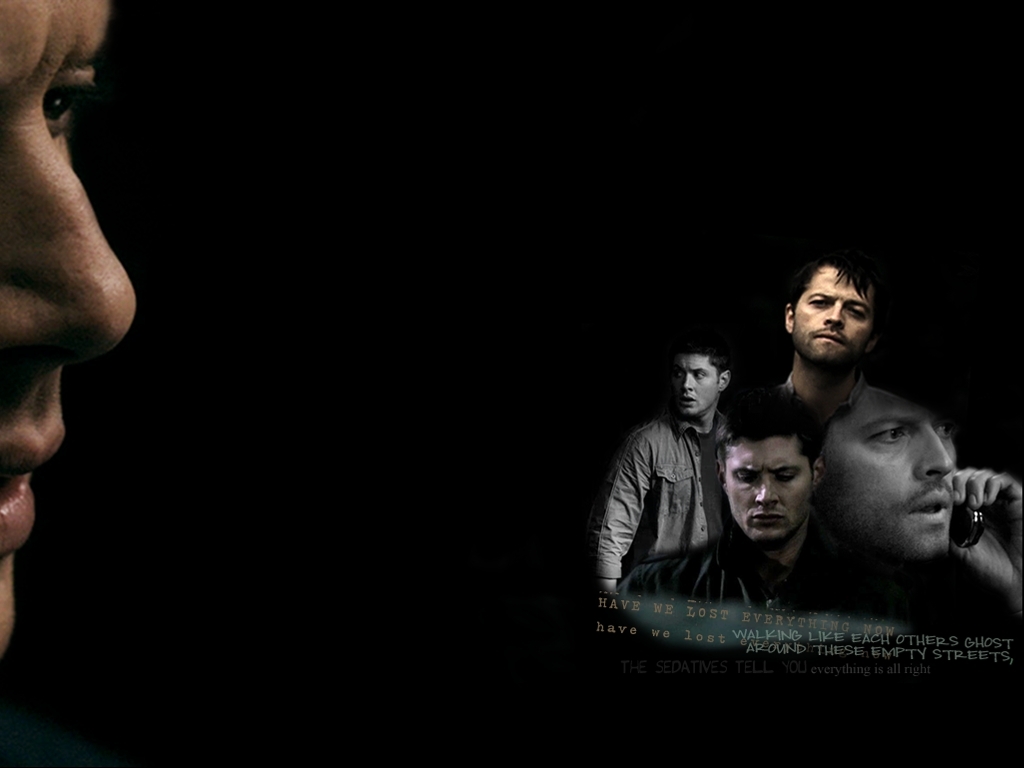
I should have had another http://annajcook.blogspot.com/search/label/thirty%20at%20thirty post for y’all today, I know, but it’s been kinda a rough week on- and offline and weirdly enough a lot of evening commitments so I’ve not had a lot of energy and/or time for post writing. Might have it for you tomorrow, might not. In the meantime, I thought I’d share this gem of a fic (because when one is stressed, angsty love stories with happy endings are just what the doctor ordered):

Brysis @ FanPop

Title: The Consequences of Falling
Author: FayJay
Pairing: Dean/Castiel
Fandom: Supernatural (TV))
Author Rating: Explicit
Author Summary: “A story in fifteen parts, in which the angel Castiel finds himself put in an untenable position, and consequentially loses his grace. In which he goes on a roadtrip with a demon, discovers the delights of tequila and french fries and pie, plays a starring role in a virgin sacrifice, is deflowered by his favourite Winchester, and then gets some very unpleasant news indeed.”
Length: 15 parts; 37,144 words
Available At: AO3.

I actually have yet to meet Castiel as a character in the show itself, since Hanna and I are only about 3/4 of the way through the third season of Supernatural, but I’m already ‘shipping Dean/Castiel in a major way — and this fic is one of the major reasons. It’s pretty straight up hurt/comfort slash with Castiel showing Dean he’s someone important and worth loving, and Dean showing Castiel the plus side of being human and experiencing human emotions. Written by the brilliant FayJay (see my ficnote on The Student Prince) who, sadly, seems not to be posting any longer. I’m so glad she’s left her fics up at Archive of Our Own to be read by those of us who have only just discovered her!

booknotes: the price of salt

15 Monday Aug 2011

Posted by Anna Clutterbuck-Cook in book reviews

≈ 4 Comments

Tags

books, feminism, gender and sexuality, reading lesbian classics

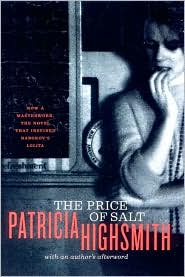
While on vacation at my in-laws’ in Maine a couple of weeks ago, I spent an afternoon reading Patricia Highsmith’s 1952 novel The Price of Salt (New York: W.W. Norton, 1990), originally published under the pseudonym “Clare Morgan.” I’d read recently that it was noted for being one of the first works of lesbian fiction with a happy ending so I thought “why not!” and ordered it interlibrary loan from our local public library.

Spoiler alert.

Romance? Well, yes. Happy ending? …. Not so much. I mean, okay, technically, yes, the two main characters end up together. So if your definition of “happy” is “two characters of the same gender/sex choose their relationship despite social prejudice and do not end up in mental institutions and/or dead” then this fits the bill. If your definition of “happy” is “two people who actually love each other establish a mutually fulfilling relationship” then … not so much.

The plot in a paragraph: Therese, an emotionally-starved young woman in her twenties, is living in New York City and working at a department store while trying to break into the theater industry as a set designer. She rather listlessly dating a man who assumes that since they’ve had sex they will eventually get married. One day at the department store Therese assists Carol, an affluent suburban housewife who is there to purchase a Christmas present for her daughter. Captivated by Carol’s presence, Therese can’t get the woman out of her mind. She sends Carol a Christmas card and when Carol receives it, she phones Therese to thank her. The two women slowly begin seeing more and more of each other until they decide to take off on a cross-country road trip while Carol’s soon-to-be-ex-husband has their daughter for three months. During the roadtrip the two women finally have sex (and pretty nice, if not very graphic, sex, actually … they’re relationship is most loving when they’re in bed). The husband has hired a private investigator to follow the two women and gather evidence of the affair to use against Carol in the divorce proceedings (to try and gain full custody of the daughter; in 1954 a completely realistic situation for women in same-sex relationships). Carol leave Therese to return to New York and try to fight for her visitation rights; when this fails she ends up returning to Therese and asking to resume their relationship. Therese initially refuses, but the novel ends with Therese being drawn back to Carol. We’re clearly meant to celebrate that Carol prioritized Therese over visitation rights with her daughter (her lesbian “record” precluded actual custody) and that Therese is not left alone, or left feeling her lesbianism is somehow dirty or unsuccessful.

The positive: So the obvious positive here is that this is a novel in which a sexual relationship between two women is central to the plot and, in the end, central to the lives of the two women involved. They defy the pressures of a world in which Therese is expected to marry the man with whom she’s had (supremely unsatisfying) sex. A world in which Carol is expected to capitulate to the demands of her husband’s family (essentially that she act straight for the rest of her life) in order to see her daughter — even in highly supervised annual visitations. The novel situates these women as heroines, and their enduring relationship as a triumph. It also doesn’t shie away from the fact that their relationship is sexual — as I said above, the scene in which Therese and Carol make love for the first time is tame and “off stage” by fanfic standards, but sweet all the same. Since a number of the “lesbian classics” I’ve read fall down in this regard (satisfying sex scenes) this is a definitely plus.

The negatives: The overarching “negative” from my perspective is that the question remains throughout the whole damn novel why Therese wants to be with Carol. Her infatuation with Carol is understandable at first as a revelation — an understanding that the way she feels drawn to Carol is wholly different from desire of the platonic sort. It provides her with some pretty clear insight into why her relationship with the boyfriend has been unsatisfying. The trouble is that Carol is manuipulative, withholding, and cruel. She entertains Therese when it’s convenient and amusing for her to do so, but drops her the minute something else catches her attention. She makes fun of Therese’s set designs and aspirations in the theater. When she returns to Therese after months of estrangement she basically assumes Therese will take her back no questions asked, and is hurt when this isn’t (initially) the case. Carol is at the center of her own personal drama and Therese is just part of the supporting cast.

Also, there was a friend of Carol’s (whose name I’m currently blanking on) who plays intermediary between Carol and Therese and is also clearly jealous of Therese’s intimacy with Carol. There’s clear intimations that the two of them were involved at some point and I kept waiting for the revelation that they were still involved behind Therese’s back. I bet you anything they were.

I was definitely left hoping, at the end of the novel, that a year or two down the road Therese — with a bit of sexual experience behind her and a more solid sense of herself as an artist and as a queer woman — would get over her obsession with Carol and find someone who, you know, actually showed some affection for her. Who loved and enjoyed Therese for Therese’s sake, rather than just as a plaything.

booknotes: contacts desired and recruiting young love

12 Friday Aug 2011

Posted by Anna Clutterbuck-Cook in book reviews

≈ 2 Comments

Tags

books, gender and sexuality, history, religion

Over the past few weeks, I’ve read two interesting — if somewhat academic — books about (loosely speaking) print culture and its intersection with queer communities and discourses about non-straight sexuality. The first was Contacts Desired: Gay and Lesbian Communications and Community, 1940s-1970s by Martin Meeker (Chicago: University of Chicago Press, 2006) and the second was Recruiting Young Love: How Christians Talk About Homosexuality by Mark D. Jordan (Chicago: University of Chicago Press, 2011). While the first book dealt largely with homophile organizations and the underground publications of the gay liberation and lesbian feminist movements, the second took up the various rhetorics deployed within Christian circles to speak and write about homosexuality (mostly gay male sexuality) from the turn of the twentieth century through the ex-gay activism of the 1990s. Despite the pro/con nature of these texts, what Contacts Desired and Recruiting Young Love share is an interest in how networks of communication spread ideas and inform opinions, actions, and identities.

“Adolescence is the possibility that desire could be different.”

Recruiting Young Love by Mark D. Jordan, focuses on what he calls “rhetoric” and I might term “discourse” concerning homosexuality — mostly (and he is upfront about this) gay male sexuality — in Christian circles over the course of the twentieth century. His interest is primarily in the 1950s forward, though he does begin in the early twentieth century with the emergence of professional discussion of healthy adolescent development (think G. Stanley Hall, the YMCA, Teddy Roosevelt, etc.) by way of providing background for later debates.

As the phrase “recruiting young love” suggests, Jordan is particularly interested in the way that Christian anti-gay voices expressed anxiety about adolescent sexual identity, and the fact that even today ex-gay therapy understands heterosexual and gender-normative identity to be both the most correct expression of sexuality and the most vulnerable. Teenagers, especially, are seen as vulnerable to recruitment and seduction. The examples of Christian rhetoric concerning homosexuality, then, focus on young people and at times seem to assume that all young men are in fact potentially gay — and that this potentiality is threatening to the moral order.

Although he focuses on anti-gay voices, Jordan also touches on some examples of what he calls “camp spirituality,” or appropriated religious imagery (i.e. the Sisters of Perpetual Indulgence), and upon Christian attempts to integrate gay identity and same-sex sexuality into their sexual ethics. He cites, for example, a 1963 Quaker pamphlet, Towards a Quaker View of Sex, that used Alfred Kinsey’s model of fluid sexual practice to argue that homosexual desire and expression, while not predominant, were healthy and normal within the human community. He writes:

For this model of development, most male adolescents are having same-sex relations or thinking about them. Bit by bit, most of them shift over a decade or more to heterosexual relationships. Some do not. The process is not so much an expression of nature as of circumstance or even chance. Indeed, the Quaker pamphlet accepts more fully than any earlier church text not just Kinsey’s terminological suggestion about how to speak of homosexuality as outlet rather than ontology, but his notion that homosexual acts vary with time. To think of yourself as a homosexual should mean no more than observing where you are in the arc of your life and with whom you are now spending it (89).

I was actually quite moved by the idea that one’s sexual “identity” was actually a question of observation and regard, suggesting change over time rather than fixity — though without the sense of enforced change, or charge from “unhealthy” to “healthy” that so many ex-gay narratives imply. Once again, Quakers FTW — and in 1963 no less!

One other aspect of anti-gay Christian rhetoric that Jordan takes note of is the fact that contemporary ex-gay ministries seem to be much more preoccupied with what we would consider gender performance than actual sexual identity, desire, or activity:

Gender matters more than sex [in many ex-gay ministries]. Marriage is the highest accomplishment not because it allows you to copulate naturally, but because it gives you the best stage for performing gender correctly … Indeed, ex-gays may actually be able to use marriage better for gender performance than heterosexuals can, since they are unlikely to enter into it on account of lust … the central category of ‘sexual identity’ means in the end only ‘roles as men and women’ (165).

In this, he relies a great deal on the research and writing of Tanya Erzen, whose recent book Straight to Jesus I reviewed here last August. I’d highly recommend her text if you’re interested in exploring this aspect of the ex-gay movement in more detail.

The weakness of Jordan’s work is one that he admits up-front in the introduction: that it is not meant to be a coherent or comprehensive historical narrative, but rather a series of proffered examples or touch-points meant to give readers a sense of the variety of discourses concerning homosexuality that have existed in Christian circles over the past half century, and some rough idea of where they sprung from, their similarities and their differences. Someone hoping for a more detailed history of anti-gay activism will have to look elsewhere.

“Homosexuals are discarding their furtive ways and openly admitting, even flaunting, their deviation” (Life, 1964).

Meeker’s Contacts Desired explores the ways by which gay- and lesbian-identified people established networks of communication in the decades before, during, and immediately after what we have come to term “the sexual revolution.” As previous scholars have pointed out, identity based on sexual orientation does not bring with it an automatic community affiliation. Unlike with racial, ethnic, religious, or even class, one rarely grows up in a family that shares one’s non-straight orientation. Particularly during the mid-century in America, where queer subcultures were obscured from public view for the safety of their members, a pervasive sense of isolation was often part and parcel to becoming aware of one’s same-sex desires. Contacts, originally written as Meeker’s PhD dissertation, documents the means by which gay and lesbian individuals made contact with the sexual underground and how they situated themselves within it through text: newsletters, interviews, press releases, pamphlets, “contacts desired” ads, guidebooks, and so forth.

Contacts bears the marks of its academic origins, and I’d suggest picking it up more for targeted rather than leisure reading. Those familiar with the history of mid-twentieth-century gay and lesbian activism will find many of the usual suspects here: the Daughters of Bilitis and the Mattachine Society, lesbian pulps and journalistic (outsider) coverage of gay lives — such as the 1964 Life photographic essay on the gay male subculture, from which the quotation above, and the cover art of Contacts, are drawn.

The primary sources I found most fascinating in Meeker’s work were actually these journalistic offerings from the 1960s, since they offered up a glimpse of (and yes, I know it’s cliche) how far we actually have come in the past fifty years in terms of de-pathologizing and de-criminalizing queer sexualities — even though it’s obvious we still have work to do. Meeker discusses popular book-length treatments of queer subcultures as well as newspaper and magazine exposés. What is clear is that “sympathetic” (straight or passing) writers understood that in order to write about homosexuality for the mainstream, it needed to be treated as a psychological disorder or as antisocial behavior. Understanding homosexuality did not mean reading it as normal. The Life article makes that clear from its sensationalistic opening sentences:

These brawny young men in their leather caps, shirts, jackets and pants are practicing homosexuals, men who turn to other men for affection and sexual satisfaction. They are part of what they call the “gay world,” which is actually a sad and often sordid world. On these pages, LIFE reports on homosexuality in America, on its locale and habits and sums up what science knows and seeks to know about it.

Homosexuality shears across the spectrum of American life – the professional, the arts, business and labor. It always has. But today, especially in big cities, homosexuals are discarding their furtive ways and openly admitting, even flaunting, their deviation. Homosexuals have their own drinking places, their special assignation streets, even their own organizations. And for every obvious homosexual, there are probably nine nearly impossible to detect. This social disorder, which society tries to suppress, has forced itself into the public eye because it dos present a problem – and parents especially are concerned. The myth and misconception with which homosexuality has so long been clothed must be cleared away, not to condone it but to cope with it.

As Meeker points out, these widely-disseminated treatments of homosexuality were often read subversively by those whose desires were the topic of discussion: gay and lesbian readers of Life who might otherwise be cut off from the networks of queer communication and community were given a roadmap to (at least some of) the popular gay and lesbian gathering places or geographic locations, thus offering hope that they were not alone. Articles that claimed to “not … condone [homosexuality] but to cope with it” actually did their part to strengthen the underground networks of queer communication that took a radically different view, at least in most cases, when it came to how sad their lives actually were and the extent to which what sadness there was came as a result of their sexual desires (versus the hostile climate in which they were forced to exist).

Reading these books has inspired me to explore some of the primary source material itself, so check back next week for reviews of Patricia Highsmith’s The Price of Salt (an early lesbian novel) and Adrienne Rich’s 1977 essay “Compulsory Heterosexuality and Lesbian Existence.”

30 @ 30: (not) being a parent [#4]

10 Wednesday Aug 2011

Posted by Anna Clutterbuck-Cook in life writing

≈ 1 Comment

Tags

children, thirty at thirty

I’ve had a hard time finding my way into this post, and while the reasons are several I’m going to use my allotted space this week to talk about one in particular: the odd and unexpectedly liminal space I find myself in these days regarding parenting and childcare. I want to talk about my own feelings about childcare and potential parenting as they’ve evolved over the years, and I want to talk about the network of relationships and examples that have created the context in which those feelings have evolved. I’m specifically thinking here about my own desires and abilities to conceive, give birth to and/or adopt and raise children as a primary caregiver. I’ve already written lots in this space about the importance of incorporating children into the human family and how I think our culture falls down in this regard (see here, here, here, here, here, here, here, here, here, and here … I really gotta make a separate index page for these things). Today, I’d like to talk in more personal terms about what the decision to parent or not parent means in my own life right now.

I grew up in an environment that revolved around the daily experience of being a child. There are a lot of different ways being child-centric can manifest itself (for more on my own particular version go here). I would say that, from a child’s perspective, my family life normalized the primacy of caring for young people as a central task of being human, and also modeled that care-taking as an activity that was integrated into the “real” world — as opposed to being something one did either as a school teacher or (necessarily) as a “stay at home mom.” Yes, my mother was the parent dedicated to arranging our home life, but my parents didn’t back this decision up with ideology concerning gender. This meant that I grew up believing that: 1) caring for children was an important and legitimate adult responsibility 2) it was work that required full-time attention from someone or someone(s) to do well, and 3) this important responsibility was not “naturally” women’s job, but rather something that one did out of a sense of vocation. And because it was simply what family members did: look out for one anothers’ needs.

At age three, I thought I’d grow up to be Nora (Helen Reddy)
from Pete’s Dragon. Lighthouse keeper and adoptive parent
— what could possibly be better? 

In the manner of most children (at least I assume this is so?), I imagined that growing up to be an adult meant more or less growing up to take on the sort of responsibilities my parents and the other adults around me had. And that meant, in part, the responsibility of being a parent. I was an oldest child (and daughter) who positioned myself in my pre-adolescent and early adolescent years as someone who both liked parenting and was good at it. Younger children seemed comfortable with me. I was comfortable with them. As a girlchild I obviously got tons of positive social reinforcement for this behavior. (To be fair, my brother was also a nurturer, did childcare as a teenager, and today teaches middle school … so this wasn’t a completely gendered phenomenon. But I’m willing to bet I was meeting gendered expectations on some level.) Childcare also, actually, gave me an easy “out” when it came to socializing with my peers — something I felt generally awkward about. With the exception of spending time with close friends, as a child and adolescent I was pretty much constantly on the lookout for opportunities to ditch my age-mates in order to hang out with grown-ups (I wanted to be one) and smaller children (caring for them gave me an adult-like excuse to avoid my peers).  Caring for children was a legitimate role. And I did genuinely like the wee ones I was responsible for.

When I was five I wanted to be Maria from The Sound of Music.
If you’re going to adopt, why stop at just one?

In that context, to the extent I imagined being an adult, I imagined being a parent. My best friend (coughcough childhood crush coughcough) and I had a long-standing fantasy about adopting lots of orphans and raising them together. As I went through puberty I developed a massive obsession with the physiology and sociology of pregnancy and childbirth (thank you Our Bodies, Ourselves and the other literature of the women’s health movement!). I had very concrete ideas about what sort of pregnancy and birth experience I wanted when it came to having kids — however, whenever that happened. As the realm of possibilities for family creation expanded, my sense of how I might parent (and with whom) shifted, but I never entirely dropped the idea of being a parent someday. During my teen years and early twenties I learned some things about myself, including the fact that I wasn’t really interested in parenting in the context of a dyadic relationship in which I would be the full-time hands-on caregiver. At the same time, I remained committed to the sort of out-of-the-mainstream parenting that had been my own childhood experience. The only way I could see that sort of parenting happening in conjunction with my personality would be to have co-parenting with probably more than one other person, either in a co-housing or communal setting, in a committed poly marriage, or some other heretofore unspecified situation.

Because such a situation was so difficult to imagine establishing successfully, I started re-evaluating my assumption that being an adult me would involve parenting. I was lucky enough to have family members who didn’t pressure me to settle into a heteronormative family and start popping out babies, and also lucky enough to be surrounded not only by folks who had parenting radically (the homeschooling/unschooling community) but also by some really kick-ass single and non-parenting adults — notably single and non-parenting women — whom I could look to as models for what it would mean to be a not-parent.  My father’s sister, for example, is now married with an adult stepson, but spent the majority of my childhood as a single female academic pursuing her PhD in theology and an MS in Social Work. A close family friend who was likewise single for years used to have dinner with our family regularly and provide childcare when my parents needed a break; being without children himself did not seem to impede his ability to be close with us or with his nieces and nephews. In college of the six female professors who I’d identify as the most influential in my academic career, three were single when they had me as a student and four were not parenting. All four of those women were living examples of how to be a whole person and build relationship networks without a marriage or children.

I took some flak from a couples’ counselor a year or so ago for starting to answer her question about whether I did or did not want children (Hanna’s immediate answer: “No”) by providing all of this background. Hanna pointed out to me later that the therapist — being unfamiliar with how my mind worked — probably thought I was evading her query. I wasn’t, but I honestly didn’t know how to answer her in any other (more succinct) way. Because my current location on the parenting continuum is a result of all these experiences, and that location is situational. Unlike people who experience bodily knowledge about their desire to parent or not parent, I am comfortable in the in-between space of offering my skills as a caregiver where and when I am called upon to do so.

Gwen Cooper and Baby Cooper (Torchwood).
This is how I picture Hanna’s parenting would be (sans pink).
For the fucking win.

This frightens Hanna sometimes, the fact that my resistance to being a parent isn’t as complete as hers. We’re still working out how to negotiate that. While I don’t need (and for a number of reasons don’t actively want) to be a parent or primary caregiver, I also don’t experience the passionate rejection of that role that Hanna and some of our close friends articulate. I want to stay open to our lives and desires changing. Not because I think being a parent (or more specifically a mother) is something we need to lead fulfilling lives as women, or to have coherent and meaningful identities. But because I, personally, have a very difficult time taking any possibility off the table permanently. Closing and locking doors frightens me, makes me feel claustrophobic.

I also want to stay open to the accidental parenting. Obviously, the chances of this happening given our collective anatomical make-up are incredibly slim, but I still want to stay alive to the possibility that at some point in the future we may be called upon to parent in some way: the children of friends or relatives, for example, in need of a temporary home. Gods forefend anything so traumatic happening to the people we love — but I live with the knowledge that shit sometimes does hit the fan, and I want to be there for the vulnerable survivors if it does.

All of this leaves me in what feels like a bit of a no man’s land when it comes to the current state of our cultural assumptions about parenting. In a landscape where children and families are simultaneously idolized and marginalized, and where single and non-parenting adults (particularly women) feel vilified for their decision not to parent, the pressure to “choose sides” is intense and I find it hard not to feel rendered invisible as a non-parent who is neither proudly childless by choice nor mourning her infertility and/or circumstances unconducive to parenting. I feel bi-lingual, in a sense, able to speak the language of parenting and of not-parenting with equal willingness and ease. I can see my future life unfolding in multiple directions, and I’m okay with that. Most of the time. But certainty about uncertainty (e.g. openness-to-change) is sometimes a more difficult position to articulate or defend than is certainty about certainty. Which is perhaps why it’s taken me two weeks and this meandering blog post to do so — and why our couples’ therapist thought I was evading the question.

I’m going to pick up the theme of openness-to-change in next week’s post on “desire.” In the meantime, this is what I got. I hope it at least approximates what I set out to offer.

multimedia monday: "Americans only have children by accident"

08 Monday Aug 2011

Posted by Anna Clutterbuck-Cook in media

≈ 2 Comments

Tags

gender and sexuality, humor, multimedia monday, politics, web video

The new House and Human Services classification of birth control as preventative medicine has the crazies at Fox News up in arms. Why? Stephen Colbert is on hand to explain: “If we give your daughters and granddaughters access to birth control they will instantly turn into wanton harlots with an insatiable sexual appetite!”

The Colbert Report Mon – Thurs 11:30pm / 10:30c
Women’s Health-Nazi Plan
www.colbertnation.com
Colbert Report Full Episodes Political Humor & Satire Blog Video Archive

Via Feministing, RhRealityCheck and many others.

harpy fortnight: yes it’s been a month edition

07 Sunday Aug 2011

Posted by Anna Clutterbuck-Cook in linkspam

≈ 1 Comment

Tags

harpyness


St. Mary of the Angels and Martyrs (Rome)

 As a side note, I love the fact that when you Google “scary angels” now, the preponderance of results are weeping angels from Doctor Who.

And no, I will not be posting pictures of them here. What holds the image of an angel becomes itself an angel, so forth and so on. Best not to take chances.

And yes, that all really is a distraction to keep you from remarking upon the fact that it’s been a month since I posted a round-up of Harpy links. Blame the weather, the fact it’s our busy season at the MHS, or whatever else you like. Peas!

Anyway. On to the stuff I have managed to write.

  • Roughly half my posts in the past month have been installments of my live-blogging series for Jessica Yee’s Feminism For Real. I’ve now blogged about eight chapters, and you can read them all by clicking through to the series tag.
  • I shared some posts from around the interwebs that all dealt with the question of social judgement (about weight, sexual activity, the lack of sexual activity, etc.)
  • I offered a recipe for olive oil and merlot cookies — I know it sounds strange, but believe me when I say that I have made forever-friends with people from New Jersey to Maine with this recipe. You will want to try it at least once.
  • For Poetry Saturdays I offered one of my favorites by Carl Sandburg.
  • I linked to one of Hanna’s recent posts about the new bicycle-sharing program that has just started up in Boston, which led to…
  • …a proposal to have Hanna, Lola and Minerva guest-blog at Harpyness during the month of August.
  • I reviewed a new book about marriage and family creation customs around the world.
  • At the request of Harpy reader MischiefManager I wrote a blog post about routine weigh-ins at the doctor’s office and how the practice can be a barrier to health care access.
  • And I wrote a letter to Zipcar about their latest marketing campaign which uses our unhealthy obsession with dieting to encourage folks to cut back on their carbon emissions.

July was a bit of a sleepy month for the Harpies, but we did have some great posts on gender identity, polygamy, hair, parenting and children’s weight, street harassment, and the four humors.

Click on over to explore — and check out Minerva’s our first guest posts of the month!

← Older posts
Newer posts →
"the past is a wild party; check your preconceptions at the door." ~ Emma Donoghue

Recent Posts

  • medical update 11.11.22
  • medical update 6.4.22
  • medical update 1.16.2022
  • medical update 10.13.2021
  • medical update 8.17.2021

Archives

Categories

Creative Commons License

This work by Anna J. Clutterbuck-Cook is licensed under a Creative Commons Attribution 3.0 Unported License

Meta

  • Create account
  • Log in
  • Entries feed
  • Comments feed
  • WordPress.com

Blog at WordPress.com.

  • Subscribe Subscribed
    • the feminist librarian
    • Join 37 other subscribers
    • Already have a WordPress.com account? Log in now.
    • the feminist librarian
    • Subscribe Subscribed
    • Sign up
    • Log in
    • Report this content
    • View site in Reader
    • Manage subscriptions
    • Collapse this bar