• anna j. clutterbuck-cook
  • contact
  • curriculum vitae
  • find me elsewhere
  • marilyn ross memorial book prize

the feminist librarian

the feminist librarian

Author Archives: Anna Clutterbuck-Cook

a "fear not!" angel

14 Thursday Jan 2010

Posted by Anna Clutterbuck-Cook in our family

≈ 1 Comment

Tags

holidays, photos


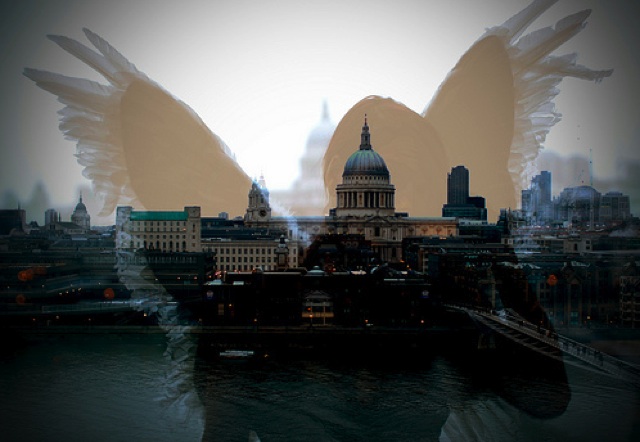
According to my mother, when I was a youngling my favorite character in the nativity play was the “fear not!” angel who comes to the shepherds in the field, in all his or her terrifying glory, to bring them “glad tidings of great joy” and generally scare their socks off. That’s the sort of wonderful-terrible feeling this photograph, via the Londonist blog, inspired in me when it came across my RSS feeds a few days. Ago.

That and it reminded me of Blink.

guest post: holland, hope & homosexuality

13 Wednesday Jan 2010

Posted by Anna Clutterbuck-Cook in think pieces

≈ Leave a comment

Tags

gender and sexuality, guest post, michigan

A couple of weeks ago I wrote a response to Dustin Lance Black’s op-ed, describing his experience this past fall in my home town of Holland, Michigan. I also invited one of my sister’s friends, Arin Fisher — a Hope College senior in creative writing (poetry) and self-described “closet pamphleteer” who was involved trying to bring Black to campus to write a guest post about his own experience of how Holland and Hope College deal with homosexuality. Without further ado, here’s Arin.

I’m a gay cliché, especially recently. I’m now the gay who quotes Harvey Milk, gestures always with endearing melodrama, and isn’t afraid to wear ivory post-Labor Day. As you may assume, my behavior is a red-flag to hicks everywhere, especially at home in Indian River, that I’m a goddam homsexshul. I make trite jokes about the gay agenda and how, due to mail-error, the conservos always receive my copies. Fuck me.

But I wasn’t always so gay. I was the kid whose first very secret crush committed suicide, who went on short term mission trips with Global Expeditions, whose reorientation therapy failed (whose therapist’s son was gay, too, and who taught me a few of the tricks I now know), and who applied to all the conservative colleges in Michigan, including Hillsdale, and was accepted with enormous scholarships because of my promise in right-wing politics. But I chose Hope for the mentors who, like me, struggled to come to terms with their sexuality and who married women and led what many believed to be perfectly normal straight lives.

Freshman year I followed my RA, Erin, to a Gay Straight Forum meeting at a wee white house just off-campus, but then I passed the house, peaking as covertly as possible through cracks in the lacy curtains before looping back toward my dorm, spooked by the perceived threat of association and other threatening receptions from the gay people in the house. I thought quietly [righteously] that had I gone there to listen to the conversations, they’d know that I’m queer. Gawd.

Growing up in northern Michigan, I was skilled — I skirted every gay man I encountered. Those gays whose friendship I began to value, I diligently offended. All those whom I crushed on, I cut out of my life because I was Christian, and you know the story. I elegantly employed these hard-learned skills. I learned that to avoid other gay men, I must avoid situations where gay men would be present. All to say: I’m unaware of any concerted effort to dialog about sexuality apart from the Mel White battle in the late 90s as I spent a majority of the past three years praying the gay away.*

You might aim blame at me for Lance’s misinformation. I briefed him from my experience which was teleologically sub-gay until fall 2008. Now that I’m more on the front-lines in terms of having “friendly” conversations with the Dean of the Chapel and “friendly” discussions with the Dean of the Students and organizing 501c3 LGBT groups, I’m doing more research, both personal and academic, in hopes of self-informing enough to competently reflect informed LGBT students to the higher-ups at Hope and in the community. I’m happy that I’ve been able to contribute a little to the conversation, if not always in the most informed way, at least in a way that adds Dustin Lance Black and my supreme penchant for melodrama to the coveted repertoire of Hope’s self-consciousness of diversity.

~Arin Fisher.

*Editor’s footnote: “the Mel White battle” Arin refers to is the period I described briefly in an earlier post. Former Christian right activist turned gay Christian author Mel White was invited by a coalition of campus groups to speak at Hope in response to another guest speaker, Mario Bergner, a conservative ex-gay therapist, brought in by the campus ministry as part of a chapel series on Christian love.

eddie izzard in boston!

12 Tuesday Jan 2010

Posted by Anna Clutterbuck-Cook in our family

≈ Leave a comment

Tags

boston, humor, web video

Uncharacteristically impulsive (every once in a while you gotta try a new approach to life, eh?) Hanna and I decided at the last minute to use some Christmas gift money for tickets to see stand-up comic Eddie Izzard live here in Boston at the TD Garden, one of the stops on his current Big Intimacy tour. Hanna discovered Eddie Izzard’s stand-up routines this past fall on Netflix instant and much hilarity ensued. I’m not really into stand-up comedy, and comedy generally wears thin for me in feature-length installments, but I have to say I find Mr. Izzard great fun. There’s something totally winning about the fact that as a self-described “executive transvestite” he doesn’t make his gender presentation central to his routines (it comes up, but his humor doesn’t rely upon it) and also the fact that his humor, while irreverent owes a lot to the best of shows like Monty Python rather than cheap locker-room laughs (not to say he’s never crude — it’s just that, again, his humor doesn’t rely on it).

Hanna’s already posted some of her favorite clips over at …fly over me evil angel…, which if you’re interested in a taste of Izzard’s work I totally recommend you check out. But for you lazy blokes who aren’t willing to click through the link, here’s one from the latest DVD we watched, recorded live at Wembley Arena in London. I picked this one especially for you, Dad!

sunday smut: links on sex and gender (no. 6)

10 Sunday Jan 2010

Posted by Anna Clutterbuck-Cook in linkspam

≈ Leave a comment

Tags

gender and sexuality, sunday smut

“Nation’s Nipples Severely Under-Clamped, U.S. Bureau Of Masochism Reports.” As so often with the The Onion, the headline says it all.

Amanda Marcotte takes on the idea of sex addiction; I usually don’t agree with her in every particular, but I share her skepticism about the overuse of the concept.

CarnalNation reports on a new study by British Scientists claiming to prove the G spot doesn’t exist; Amanda Marcotte again weighs in as does figleaf, and xkcd (in comic strip form, of course).

Worth special mention is Rachel Kramer Bussel’s response (well worth the click-through), which mades the case for honoring the complexity of human sexuality: “I’m all for reducing anyone’s sense of inadequacy around the “right” way to have sex (including men who think they’re not superstuds because they can’t coax a woman’s G-spot out of hiding), but this is not the way to go about it. Articles which call the only evidence of the G-spot ‘a woman’s imagination’ do everyone a disservice.”

Hanna commented in her review of Sherlock Holmes on the potential homoerotic reading of the relationship between Holmes and Watson. Apparently, this potential has disturbed the copyright holder of the Conan Doyle novels (who, in my opinion, doesn’t understand much about late-nineteenth-century sexuality and homosociality). As Ben Walters writes in The Guardian,

If the film’s depictions of Holmes engaging in underground boxing bouts, rescuing damsels from occult ceremonies through brute force and diving for cover from exploding warehouses are to get a pass – if, that is, it’s fine for the physical prowess described by Conan Doyle to be ramped up a few notches – then why shouldn’t a similar process of exaggerated extrapolation apply to the intimacy unquestionably enjoyed by the detective and his sidekick in the original stories?

Anna Clark @ RhRealityCheck reports on the efforts of universities to establish enforceable standards of etiquette for sexually-active students. As Dorothy Sayers might say, “Some consideration for others is necessary in community life!”

Another book to add to my 2011 reading list is Jesus Girls: True Tales of Growing Up Female and Evangelical, reviewed by Brittany Shoot @ Feminist Review.

Jessica @ Feministing asks “is sleep a feminist issue?” and also wonders “how do you feel about feminist ‘waves’?.” As an historian, I find the “wave” analogy a pretty limiting one that ends up drawing too heavily upon mainstream stereotypes of feminist activism.

I don’t usually go in for advice columns, but I like Greta Christina’s advice @ The Blowfish blog to a young woman who, burned by an internet relationship, believes all men are liars but wants no-strings-attached sex with them anyway.

Sociological Images offers us a sociological analysis of the color “girly blue” and earns a special place in my heart for coining the phrase “fractal gender binaries.”

Amy Gates @ BlogHer writes about a Christmas “miracle” in which a laboring woman and her infant nearly die due (potentially) to a botched epidural . . . and the attending physicians are quick to cover their asses.

And finally, in the spirit of a new year, The Economist has just discovered what my U.S. Women’s History professor used to call “difference feminism” — that is, the strand of feminist thought (present in self-identified feminist philosophy and praxis since at least the 1840s) that is based on the belief that male and female human beings are innately different not just in physical parts but in their way of being in the world. So what this tells me is that The Economist has just woken up from a really, really long nap. Welcome to the 21st century guys: it’s when everything changes :).

*image credit: life drawing by fairsquare @ Flickr.com.

mary daly: a shortish post and links

09 Saturday Jan 2010

Posted by Anna Clutterbuck-Cook in think pieces

≈ Leave a comment

Tags

feminism, gender and sexuality

You’ve probably heard or read by now that radical feminist theologian Mary Daly died this past week at the age of eighty-one.

Reflections on her life and work abound on my RSS feeds. See Feministe, Feministing, Feminist Law Professors, figleaf, Hippyish, Questioning Transphobia, Shakesville, and Women’s Space for a sample of the range of responses that are being generated out there on the interwebs.

I first came across Daly in a class on Christian feminism in which we were assigned part of her seminal (pun intended) work, Beyond God the Father, one of the first texts in modern feminist theology to systematically condemn the patriarchal underpinnings of Christian thought and practice. About ten years ago (my how time flies!) I drew on some of her later writing for undergraduate paper on the important work of feminists who assert different starting points, different roots (hence the term “radical”) than those provided by mainstream culture. Whether we agree or disagree with Daly’s conclusions, I believe her impulse to jettison that which she found harmful to women’s health and well-being is a useful example. Particularly for feminists who come from a religious background (which I sort of did and didn’t — my family wasn’t religious, but the community and college I lived and learned in was, so my experience of anti-feminism often came through the lens of religious belief), Daly’s early work can really resonate. Sady @ Tiger Beatdown (via Questioning Transphobia) has written a beautiful and astute analysis of Daly’s effect in her life from this perspective — one that also wrestles with the perennial issue of how to come to terms with the unsavory opinions of a person who, at one time, inspired you to positive, transformative action.

Unless a published retraction of her transphobia and other acts of privilege manages to surface, absolution will not come to the legacy of Mary Daly. None of this means that she was not important, or that she didn’t have anything to say: she was, she did, and it is a damn shame that her work is currently so obscure. She was important to me: I probably wouldn’t be a feminist without her influence. But I probably wouldn’t have been such a bad feminist without her influence, either. Like many people before her, she’s left the world as a human being, and remains with us now only as a legacy. It’s an important legacy – because of its accomplishment, because of its uniqueness, because of its tremendous potential to harm – that we cannot, and should not, ignore.

I never read — let alone made sense of — enough of Daly’s later work to reflect meaningfully here on the racism and transphobia expressed in her writing that justifiably angers so many folks. What is will say is that Daly’s writing (even I remember this) was incredibly solipsistic: she seems to have become increasingly enamored with the world of her own imagination, in which she alone battled the powers of patriarchal darkness beset on all sides by enemies. For people who struggle all their life as outsiders of one sort of another, injured deeply by their fellow human-beings, I feel that this is an all-too-common human failing, however inexcusable it may be in the final analysis. While Daly herself bore responsibility in the end for her own actions, we also, collectively, bear some measure responsibility for sustaining a world in which a tenured professor felt so threatened that she stopped listening to her critics — even when they had important perspectives to offer.

I thus have fond memories of her work and what it meant to me, even as I stand critically wary of her later myopia, self-aggrandizement and posturing. Jill @ Feministe comes closest to giving voice to my own response to Daly’s life and work when she writes “She was a foremother, but one who eventually revealed herself unprepared to embrace all of her children (especially the ones who failed to look or think like her). . . May she rest easy, and may the rest of us learn from her good works and leave her bad ones to dust.”

"by my word this is surprising news"

08 Friday Jan 2010

Posted by Anna Clutterbuck-Cook in my historian hat

≈ Leave a comment

Tags

blogging, history, humor

The city of Westerminster (UK) is serializing the diary of a nineteenth-century wharf clerk, Nathaniel Bryceson, online with the appropriate daily entries for the year 1846. His entries for the 4th and 5th of January, for example, read:

Morning, went to Tillman’s Coffee House, Tottenham Court Road, to read newspaper. From there to the Old Bailey to see preparations for the execution of Martha Browning tomorrow. After dinner took walk with Ann Fox across Westminster Bridge to Horsemonger Lane County Gaol, to see if any preparations were being made for the execution of Samuel Quennell tomorrow, but such was not the case. Returned back over Westminster Bridge, through St James’s Park, and continued walk through the Green and Hyde Parks. There rested ourselves on an old seat opposite one of the gates. Returned home through Oxford Street. Granny Shepard bought me a pair of worsted stockings for 1s 2d. Ann gave me a shilling off what she owes Granny, leaving only 8d unpaid.

followed the next day by Bryceson’s descriptions of the executions,

This morning at 8 o’clock the woman Martha Browning expiated her crime on the scaffold in the Old Bailey, for the murder of Elizabeth Mundell on the 1st of December last. The culprit showed great presence of mind on the occasion and ascended the gallows with a firm and steady step, and without any assistance. The body was cut down at 9 o’clock and Calcraft, the executioner, took his departure from Newgate to Horsemonger Lane County Gaol to offer his services for a similar occasion, namely to put in force the sentence of the law against Samuel Quennell for the murder of a shipmate, by shooting him in Kennington Lane. The execution took place on the top of the Prison over the front gates precisely at 10 o’clock. The culprit behaved himself becomingly on so solemn an occasion and ascended the scaffold without assistance. Remarks: this is the first execution of a female that I ever recollect in my time, also the first at Horsemonger Lane, and likewise the first time that two executions took place in the one day, to my recollection.

The transcribed diary entries are augmented by visual images from the period and places described in the entries, as well as occasional editor’s notes.

Information about Nathaniel’s life, the diary as a physical object, and the digital project, can be found at the City of Westminster Archives Centre website.

via Londonist.

from the neighborhood: new bookcase

07 Thursday Jan 2010

Posted by Anna Clutterbuck-Cook in our family

≈ Leave a comment

Tags

domesticity, from the neighborhood, hanna, photos

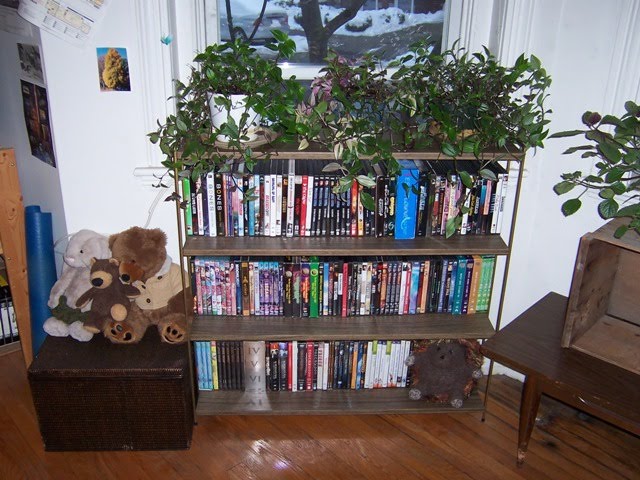
Hanna’s parents sent us down from Maine with a nice four-shelf bookcase that we’ve pressed into service for Hanna’s DVDs and our inch plant collection, which is pictured below in all of its rampant glory (from right to left are Mona, Heero & Duo, and The Ood).

Quick Hit: Babies (Video)

06 Wednesday Jan 2010

Posted by Anna Clutterbuck-Cook in media

≈ Leave a comment

Tags

children, web video

via Lauren at Feministe comes this trailer for a new documentary following four children in their first year of life on location in Bayanchandmani, Mongolia; Opuwo, Namibia; San Francisco, USA; and Tokyo, Japan.

Happy Wednesday everyone; enjoy :).

booknotes: echo in the bone

05 Tuesday Jan 2010

Posted by Anna Clutterbuck-Cook in book reviews

≈ 1 Comment

Tags

books, feminism, gender and sexuality, masculinity

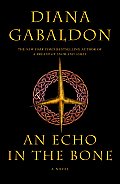
It’s been a while since I wrote a proper “booknotes” post, but this weekend while Hanna was away in Maine I finally hunkered down and read Diana Gabaldon’s latest installment in the epic Outlander cycle (now clocking in at seven volumes each seven hundred to one thousand pages in hardcover), Echo in the Bone. (Warning: mild series spoilers ahead).

I was first introduced to Outlander under its British title, Cross Stitch in Aberdeen by my Glaswegian roommate, Vicki, who is (or at least was) an adoring fan. For those of you who aren’t familiar with the series, it centers on the relationship between Claire Beauchamp, a Second World War nurse, who accidentally time-travels back to eighteenth-century Jacobite Scotland and — also somewhat accidentally — marries a young Scottish fugitive named Jamie Fraser. The first book revolves around Claire’s attempts to return to her own time (1950s England) and the husband she left behind, while at the same time she finds herself falling passionately in love with Jamie. Without giving all the ins and outs of the romance and drama away, the saga weaves its way across Europe and America, the eighteenth and the twentieth century, and has expanded to encompass multiple generations of the Beauchamp-Fraser family and a sprawling cast of secondary characters. The science fiction / time-travel aspect of the narrative — while integral to the plot in many respects — also takes firm second-place to the political and personal dramas in which the characters get caught up as they move from one space/time context to the other.

An Echo in the Bone is a solid installment in the ongoing series, though Gabaladon’s expansive cast of characters has become increasingly difficult for her to manage — or at times hard for readers to follow, particularly if you don’t have the time to sit down and read the book in a marathon session (I tried the chapter-before-bed method during term-time and eventually gave up, setting it aside for vacation). There was speculation around the publication of A Breath of Snow and Ashes the sixth book would be the final volume, or be followed by a prequel or spin-off story, but she’s apparently decided to continue spinning the main narrative out, as Bone not only comprises of 800-plus pages of story but also ends with several cliff-hangers that I doubt will just be allowed to die. I have a slightly mixed feeling about this, since there was something bittersweet about reading Ashes as a final installment . . . but since Cross Stitch/Outlander was originally meant to be a one-off fantasy novel, Gabaldon fans have (I imagine, anyway) long since grown used to the idea that her sagas will inevitably be longer than originally predicted.

I’ve talked to a few friends who’ve had trouble with the sex and gender roles in the series — trouble enough that they’ve quit reading the books altogether. And as this is a blog with “feminist” in the title I figured I’d take a minute to reflect on how sex and gender (as well as sexual orientation) seems to play out in the series overall. Speaking for myself, I really had to make my peace with the series in this regard: I was really upset with the power dynamics between Claire and Jamie in the first book and by some of the sexual violence that went largely uncriticized within the stories. Gabaldon’s characters also have a really annoying habit of talking in gender essentialisms (i.e. “men are all X” and/or “women are all Y”). Most of the hetero relationships in the story (which is virtually all of them) are very male-as-protector and woman-as-nurturer. It’s explained away, in part, as historical accuracy (that is, Jamie as an eighteenth-century man has learned to think in certain ways about marriage, about sex, and so forth), and to be fair over the course of the series characters’ opinions are challenged and do change. However, certain behaviors continue to be explained away as grounded in innate characteristics based in sex, an explanation I find just as unsatisfactory in fiction as I do in real life. It seems to me a mark of lazy thinking on the part of the character and (by implication) their creator.

The violent sex and sexual violence are a bit more difficult to gloss over and/or explain away by historical context. I haven’t spoken to anyone who’s a survivor of sexual abuse or violence who’s tried the series, but I imagine that the graphic descriptions of rape and sexual violence could be unpleasant and/or impossible to read. One of the best parts of the series, at least in my mind, is Gabaldon’s penchant for writing erotic and and often light-hearted sex scenes (I was, in fact, disappointed that the most recent installment featured relatively few); the downside is that if you’re not into the kind of sex her characters are into, it can be difficult to make it through the graphic descriptions without feeling a bit icky about the relationship dynamics. Personally, though a few of the early scenes had me cursing and tossing the paperback edition of Cross Stitch across my dorm room, in the end I made the decision to let the characters have what is clearly a pleasurable and consensual sexual relationship without judgment from me.

Be warned, also, that the arch-villain in the first few books is a sadist with a taste for sexual violence, both hetero- and homosexual (he seems to fixate on individuals regardless of gender; both Jamie and Claire are assaulted by him in various contexts, with Jamie suffering the worst of the abuse). While Gabaldon (possibly in recompense?) has since written at least one gay male character who is one of the good guys — and actually features in his own series of stand-alone short stories — I was wary at first to have same-sex sex so closely associated with rape.

And as a final note, I’ve never been particularly irritated with historical fiction that plays lightly with the actual historical record, but those who care deeply about either eighteenth-century European or American history may be frustrated with the melange of historical detail and fiction that Gabaldon brings together for her time-traveling romps through the era.

My ultimate advice? Don’t take them too seriously, let the characters win you over, and have a great time.

from the neighborhood: snow, feet

04 Monday Jan 2010

Posted by Anna Clutterbuck-Cook in a sense of place

≈ Leave a comment

Tags

boston, from the neighborhood, photos


I snapped this picture out our kitchen window on New Year’s Day morning before the dusting of snow melted.

← Older posts
Newer posts →
"the past is a wild party; check your preconceptions at the door." ~ Emma Donoghue

Recent Posts

  • medical update 11.11.22
  • medical update 6.4.22
  • medical update 1.16.2022
  • medical update 10.13.2021
  • medical update 8.17.2021

Archives

Categories

Creative Commons License

This work by Anna J. Clutterbuck-Cook is licensed under a Creative Commons Attribution 3.0 Unported License

Meta

  • Create account
  • Log in
  • Entries feed
  • Comments feed
  • WordPress.com

Blog at WordPress.com.

  • Subscribe Subscribed
    • the feminist librarian
    • Join 37 other subscribers
    • Already have a WordPress.com account? Log in now.
    • the feminist librarian
    • Subscribe Subscribed
    • Sign up
    • Log in
    • Report this content
    • View site in Reader
    • Manage subscriptions
    • Collapse this bar