• anna j. clutterbuck-cook
  • contact
  • curriculum vitae
  • find me elsewhere
  • marilyn ross memorial book prize

the feminist librarian

the feminist librarian

Category Archives: book reviews

booknotes: from the courtroom to the altar

21 Thursday Mar 2013

Posted by Anna Clutterbuck-Cook in book reviews

≈ Leave a comment

Tags

gender and sexuality, history, marriage equality, politics, scotus junkie

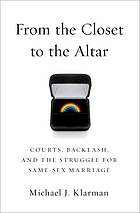
I have book review out in the most recent issue of NEHA News (Spring 2013, vol. 39), the bi-annual newsletter of the New England Historical Association. This time, the title is Michael J. Klarman’s From the Closet to the Altar: Courts, Backlash, and the Struggle for Same-Sex Marriage (New York: Oxford University Press, 2012). You can read the full review in the PDF version of the newsletter, but here’s a snippet to whet your appetite:

In his most recent work, legal historian Michael J. Klarman (Harvard Law School) turns his attention from the role of the courts in ending racial segregation (From Jim Crow to Civil Rights: Brown v. Board and the Civil Rights Movement) to the history of gay rights activism — specifically the legal struggle around same-sex marriage. Klarman explores how gay marriage emerged as a key marker for both pro- and anti-gay sentiment, and assesses “the costs and benefits of gay marriage litigation” as a path toward greater social justice. As a scholar of Constitutional history, Klarman is particularly keen to understand the role of judicial opinion and court action in changing public sentiment (and, conversely, the role of public sentiment
or action in changing judicial reasoning or decisions). 

You can read the whole thing thanks to NEHA’s willingness to make their newsletter available online for free!

booknotes: the end of sex

14 Thursday Mar 2013

Posted by Anna Clutterbuck-Cook in book reviews

≈ 2 Comments

Tags

education, feminism, gender and sexuality, moral panic

It’s always slightly embarrassing to admit you’ve requested an advance review copy of a book mostly to make fun of it and/or get angry at it — even more so when the book in question actually turns out to be much better than you suspected it was going to be at first glance. Sometimes you really can’t judge a book by its cover. Or, in this case, its title.

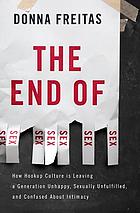
The book in question, this time, was Donna Freitas’ The End of Sex: How Hookup Culture is Leaving a Generation Unhappy, Sexually Unfulfilled, and Confused About Intimacy (Basic Books, 2013). Oh, god, no, I thought. Another hand-wringing book about how Kids These Days Are Doing It Wrong. Another book blaming feminism or men or pornography or youth or [insert favorite moral panic here]. Another book where an adult spends an inordinate amount of time focused on the sex lives of teenagers: how much they’re having sex, how they’re having it, with whom they’re having it, and how they are (or should) feel about it when they do.

Yet I was pleasantly surprised. Donna Freitas is a skillful critic who manages to avoid many of the standard pitfalls of such journalistic studies. A professor of religion and gender studies, who also has a background in student life, Freitas’ previous work, Sex and the Soul (2008), examined the role of religion and spirituality in adolescent sexual decision-making. This new work centers the voices of undergraduates themselves, letting them describe in their own words how they navigate the sexual culture(s) of residential college life. Although Freitas does not discuss her research methods in detail, it sounds from the text itself that she collected written surveys, conducted face-to-face individual interviews, and asked study participants to keep a written journal documenting their reflections about sexuality and selfhood. These primary sources inform Freitas’ narrative throughout and serve to make her argument stronger — though not unassailable. I’ll get to my outstanding questions and irritations below, but first let’s talk about what I appreciated about The End of Sex:

  • An insistence on both female and male voices. Too often, books and articles on so-called “hook up culture” (i.e. Sessions Stepp’s Unhooked) focus on women almost exclusively. They take for granted that the hook up is a situation designed by and for men (who, our narrative of masculinity goes, are always ready for no-strings-attached sexual encounters) while women are losing out. Freitas actually admits that this was a narrative she herself bought into before she began her research. But in listening to actual young men, she discovered what sociologists like Amy Schalet have pointed out to us: that young men, like young women, yearn for emotional connection and meaningful sex. Yet they have learned to bury those desires under the shell of masculine bravado.
  • Calling out the gender binary. Freitas does a good job of pointing out how the cultural expectations around male and female sexuality constrain students’ ability to act on their authentic desires. Men, straight and gay, feel pressured to want sex all the time and bury their emotional-relational desires deep; to the extent they acknowledge those feelings, they’re likely to feel isolated without anyone to discuss them with (because all the other men around them are similarly self-protective and silent on the subject). Women, meanwhile, are walking the tightrope of that old no-win situation, the virgin/slut double bind. They’re expected to be willing (but not too willing); sexually ” pure” (but not too pure). Much like the high school “slut” — who may or may not have ever had sex — female college students struggle to manage their reputations in a world where too much and too little are equally derided.
  • Listening to students thoughtfully, and encouraging sexual agency. Too often, books on young peoples’ sexual habits end up caught in a rescue narrative, calling on us to “save the children (from themselves).” Otherwise known as concern trolling. Freitas resists condescension, writing with confidence in young peoples’ ability to change hook up culture from within into something that better suits their needs. Freitas also tries, with middling success, to resist a one-size-fits-all solution to young peoples’ dissatisfaction with hook up culture. While I think she could have gone further with this, that she acknowledged difference at all (including the fact that some students might thrive on casual sexual interactions) deserves a nod.
  • Distinguishing between the cultural narrative and personal reality. She points out that her study participants consistently report that “everyone else” is engaging in casual sex, while they themselves are dissatisfied with the scene and are seeking alternatives. Freitas could have interrogated this dissonance a little more closely, but, again, points for acknowledging that not all (or even most?) students are throwing themselves into a life of no-strings-attached sexual experimentation.
  • Human sexual variety. Unlike many of the writers who have looked critically at the practice of hooking up, Freitas intentionally brings queer students and queer relationships into the picture. One of the students she profiles at length — as someone who successfully resisted engaging in sexual activities he didn’t feel ready for or comfortable with — is a young gay man now happily in a serious, sexually-active relationship. She also notes the way young people report moving in and out of the hook up scene, rather than imagining once they’ve fallen off the deep end there’s no going back.
  • Encourages us to help young people learn good sex. And by “good sex” she doesn’t mean “sex only within marriage” or simply “safer sex” practices — but sexual intimacy that is wanted and enjoyable. Too many of the students Freitas spoke with seemed to feel caught in a cycle of sexual behavior they hadn’t actively chosen to engage in, yet didn’t feel able to say no to. The landscape of sex appears, in their view, to be one of “on” or “off,” where once you’ve said yes one time you might as well keep saying yes again and again — whether you really desire to or not. If this is an accurate depiction, it’s heartbreaking — and points toward the need sexuality relationship education that refuses to reduce the message to “abstinence only,” or public health messages about STI prevention.
  • The problem of alcohol replacing communication. While I question the extent to which all students everywhere depend on alcohol to grease the sexual relationship wheels, where it does happen, I agree with Freitas that it’s a worrying trend. Not only for the usual alcohol-consumption reasons but also because it isn’t serving users’ sexual pleasure and sexual agency well. Students report using the “I was trashed” and/or “my partner was trashed” line to explain away all manner of sexual activities in which consent was dubious at best, and mutual pleasure a distant ideal rather than a lived reality. 

So those are the good parts: This is a thoughtful, evidence-based study that centers the voices of the population Freitas is studying (male and female students of all orientations in four-year residential colleges). It resists gender stereotyping and heterocentrism. It also, for the most part, resists reactionary solutions such as calling on students to “wait until marriage,” or suggesting a (female) “return to modesty.” Instead, Freitas encourages educators and adult mentors to give students the cognitive and emotional tools to critically engage with their own sexual cultures, evaluate their sexual values, resist sexual activities that make them unhappy, and create sexual relationships (whether fleeting or long-term) that will bring them physical and emotional pleasure and satisfaction. There is little in this agenda that I would argue with.

Still, there are some outstanding questions I have about the way Freitas frames the problem of hook up sex and some of the solutions she has offered. In brief:

  • Blaming the usual suspects. In trying to identify where “hook up culture” comes from, Freitas relies in part on a number of usual suspects: pornography (for teaching poor sexual scripts), online social networking (for supposedly robbing young people of interpersonal skills), the pervasive use of alcohol by college students (see above), and the changing “rules” of relationship formation (without a “dating” template, and without clear gender roles, how and when to make the first move?). I find all of these unsatisfying in their explanatory power, though I’d agree that some of them are concerning in their own right. 
  • If hook up culture is a story about other students, how many young people are actually participating? I was confused by the fact that Freitas repeatedly pointed toward the way the majority of her interviewees were unhappy with the dominant campus cultural narrative of hook up sex, yet a) pointed toward everyone but themselves engaging in it, and b) even when they did report participating it, were doing so to a limited and unhappy extent. I kept wondering: if hooking-up-as-a-way-of-life is always something that someone else does, how much of a reality is it, really? To what extent is it a story we tell ourselves about college culture because we fear/envy college students and — since at least the turn of the twentieth century — have continually imagined their lives were sexually hedonistic? If students themselves have inherited this cultural narrative of college promiscuity — and thus imagine everyone around them is leading a much more sexually wild life than they are themselves — that’s definitely a cause for concern. But not equivalent to students actually engaging in said behaviors.
  • If students are so unhappy, why don’t they get off the merry-go-round? I admit my blind spot here: I attended college between 1998-2005 as a part-time undergraduate who only spent three semesters in on-campus housing (when studying on, paradoxically, off-campus programs). I was never steeped in student culture, generally interacting with peers in class and limited extracurricular activities. So perhaps I had greater social independence than most undergraduates to pick and choose the aspects of college culture to engage in. Living in my hometown, I still had the social networks of long-term friendships, extended family, church, and workplace to fall back on when it came to “opting out” of aspects of student culture I didn’t like — whether it was opting out of conservative evangelical chapel services or drink-fueled parties! Still, if students are truly expressing unhappiness with the college scene in such great numbers as Freitas suggests, why oh why are they not revising it? Students are, after all, the primary creators and perpetuators of student culture. 
  • The “her hands caressed” problem. I was having a conversation with a couple of fellow erotica writers recently in which we were joking about the problem of limbs with volition. You’re proofing a piece and you realize you’ve got someone’s hands or lips acting independently of the person who, in fact, controls the action. I felt like Freitas often fell into this trap with regards to hook up culture, writing about it as of this culture were an entity with independent agency. Cultural discourses, it is true, can exert powerful pressure on individuals and populations … but, usually, they only exist because someone benefits, or thinks they benefit, from maintaining that particular cultural narrative. The discourse of gender difference, for example, has vocal proponents who believe that men and women are essentially different. They have something at stake (religiously, relationally, or otherwise) in a vision of gender difference. Who are the defenders of hook up culture? By Freitas’ account, not the students themselves! And school administrators, faculty, and parents seem shocked by accounts of its existence. So what accounts for the rise of “the hook up” as something which young people feel they must engage in or at least contend with? This question went unanswered in The End of Sex.
  • What about young people not living in dorms on four-year residential college campuses? This is not really a criticism, since any research investigation has its limitations, but I found myself wondering throughout this discussion of hook up culture how generalizable it might be. I pointed out above that my own non-residential status as an undergraduate insulated me somewhat from campus culture. Surely this is true for others as well. Is the hegemony of hook up culture, as reported by Freitas’ subjects, isolated to certain types of undergraduate campuses? (She acknowledges, for example, that it is not so present on evangelical Christian colleges.) What is it like at community colleges? In trade schools? Art schools? Not in college at all? Are there certain populations within large campuses more immune or resistant to hook up culture than others? (i.e. commuter students, international students, students involved in sports? drama? politically engaged? religious students? students who have previously experienced a serious relationship?) I feel like the differences among students is often lost in Freitas’ narrative, subsumed under her urgent sense that all students experience the relentless pressure of hook up culture’s (disembodied) demands.
  • She blames (in part) technology for young peoples’ bewilderment about how to get to know potential romantic partners outside of drunken make-out session. I feel this is a simplistic cop-out. I am, admittedly, biased: my wife and I were introduced via email and spent a lot of our get-to-know-you time via chat and email. We both hate the telephone; for the six months before we moved in together (initially as roommates), I would get up extra early on workdays to catch her online before she had to leave for work; I did my homework after she went to bed, so we could talk online until she shut her computer down for the night. All of this internet connectivity supplemented and facilitated the things we did together in person: walks, movies, lunch at the campus cafeteria, sitting next to one another in class, theater and concerts, shopping excursions. In non-romantic life, I have sustained key relationships, from childhood through into adulthood, by “virtual” means: through postal correspondence, email, blogging, and other social networking tools. Thus, it is difficult for me to take seriously the argument that virtual communication somehow impedes… communication.
  • Why is “dating” the main solution offered to the problems of “hooking up”? Toward the end of The End of Sex, Freitas suggests that students might benefit from relationship education (yes! I agree!) and points toward a professor at Boston College (a Catholic university) who teaches a popular 1-credit class on relationships in which one required assignment for all students (regardless of gender and sexual orientation) is to take a romantic interest out on a date during the semester. The date assignment was, according to the professor, a terrifying and bewildering one for her students — although they also expressed appreciation that they were forced outside their comfort zone in order to pass the class. Freitas’ suggestion is that the structure of the date, however terrifying it is to initiate, provides a safe framework for getting to know a potential sexual partner without being wasted and without the pressure for instant sexual contact. I appreciate her point, but I also wonder why she overlooks the fact that more informal friendships can evolve into sexual relationships in healthy ways — and the more problematic aspects of dating culture that we don’t necessarily want to resuscitate? When I ran a draft of this blog post by my writing group, several members recoiled at the date assignment, not only because it felt intrusive to them, but also because their experience with dating wasn’t so hot either. As one member observed, “My son just graduated a small residential college where going on a date was extremely normative. This not only did not stop hooking-up and/or drunken sex, it also didn’t seem to improve relationships. It also really strengthened rather restrictive gender norms (who asked who, who paid, etc).” Another concurred, pointing out that her “dating” relationships had suffered from many of the same problems as more casual encounters. Perhaps, we mused together, the problem is not the hook up, per se, but rather misogyny?
  • What about “hanging out”? My wife and I were friends and roommates first, an intense relationship that evolved into courtship over a two-year period, and eventually into a sexually-active, committed partnership. We never formally “dated,” yet we weren’t hooking up either. Instead, we were good friends who eventually acted on the sexual possibility we both felt in our relationship. A third member of my writing group suggested that between “the date” and “the hook up” there’s this thing called “hanging out” — where you connect in the student lounge over pizza and a Walking Dead marathon and discover you fit together really well, in more ways than one.  “Hanging out,” at least in my experience, also carries a lot less baggage in terms of gender-based expectations for behavior. In my informal friend survey, “hanging out” seems to be an option for straight as well as queer couples, so I wonder why it’s invisible in Freitas’ narrative. Particularly when it has the potential to offer the best of both worlds: getting-to-know-you time without excessive alcohol or the pressure for immediate sexual activity.

In the end, Freitas’ The End of Sex is an addition to the literature on hook up culture that is better than many, despite its limitations. I devoutly hope it signals the beginning of a (dare I hope?) sea-change in the way we talk about relationship culture in the twenty-first century. As I finished this review, Tracy Clark-Flory of Salon.com offered up a lengthy interview with author Leslie Bell, who has recently published (yet another!) book on hook up culture, Hard to Get: Twenty-Something Women and the Paradox of Sexual Freedom. Clark-Flory enthuses that Hard to Get is “a nuanced look at hook up culture” that refuses to either downplay its pitfalls or deny its pleasures. That one’s on order at my local public library, and I’m looking forward to reading (and reviewing) it soon.

cross-posted at the family scholars blog.

the feminist librarian’s bookshelf: five adolescent love stories

01 Friday Mar 2013

Posted by Anna Clutterbuck-Cook in book reviews

≈ Leave a comment

Tags

family scholars blog, gender and sexuality

cross-posted at the family scholars blog.

As I promised in Tuesday’s introductory post, this month’s Bookshelf contains five novels about young adult love that shaped my understanding of romantic possibilities as a teenager. I’m sharing them here in the order in which I encountered them.

[warning: basic plot points will be discussed herein, for those who care about spoilers.]

Magorian, Michelle. Not a Swan (1991). Author Michelle Magorian is perhaps best known for Goodnight, Mr. Tom, a story about a boy abused by his mother who finds safety and love as a wartime evacuee placed with a widowed curmudgeon in rural England. I discovered Magorian’s other work thanks to my childhood public library, and my far-and-away favorite was Not a Swan (also known by its English title A Little Love Song). Swan tells the story of Rose, a WWII evacuee on the cusp of adulthood who dreams of becoming an author, and the mysterious woman who once lived in the house Rose and her sisters are sent to for safety on the English coast.

The novel packs in out-of-wedlock sex, class tensions, the prejudice against — and even incarceration of — unwed mothers, pregnancy, and childbirth. It also tackles the issues of sexual coercion and sexual awakening: our heroine is first pressured into sex by a young man about to go off to war — and then later enthusiastically chooses to become sexually active with another young veteran who supports her literary aspirations and social rebellion.

I read this novel for the first time at age twelve, and was electrified by the (relatively) explicit sex scenes, and Rose’s struggle to determine what kind of sexual intimacy she wanted, on her own terms, regardless of social approbation. My own takeaway from this novel was that sexual experiences are deeply shaped by the quality of relationship in which they happen, and that positive, joyful sexual intimacy is best forged by people who recognize one anothers’ full humanity and independent aspirations.
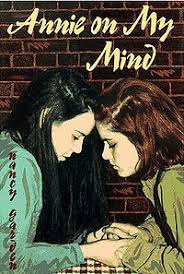
Garden, Nancy. Annie on My Mind (1982)In the early 1990s, when I was entering teenagerdom, this was the only novel in my public library’s Young Adult section featuring a lesbian love story. To this day I’m grateful to the librarian who purchased the tattered paperback copy for their collection, because — while dated in many ways — Annie was an incredibly positive introduction to queer fiction. It was, famously, one of the first gay YA novels to feature a hopeful, romantic ending. Liza and Annie, the star-crossed lovers, meet at the Metropolitan Museum of Art and develop a passionate friendship that deepens into a sexually-intimate romance when Liza agrees to house-sit for a beloved teacher. The teacher and her partner are themselves a (closeted) lesbian couple. When an anti-gay school administrator at Liza’s private school discovers the girls nearly in flagrante delicto at the teacher’s home (unbeknownst to the older lesbian couple, who are still away traveling) drama ensues.

While Liza and Annie face moral dilemmas around truth-telling and deception, their feelings for one another are never figured by the novel as perverse or wrong; instead, it is clearly the prejudice of others that precipitates the negative effects rippling outward from their involuntary uncloseting. Though the anti-gay prejudice depicted in Annie is, at times, easy to dismiss as outdated, the moral panic surrounding the girls’ relationship is still a live possibility for many queer teenagers (and adults!) today: teenage girls! sexual feelings! homosexuality! For that reason, Annie was a bittersweet read for me, serving as both a positive example of lesbian desire and a reminder of the discrimination that often constrains the lives of same-sex couples, even today.

Forester, E.M. A Room With a View (1908 ). I have often wondered if it was because of his life as a gay man — at a time when male homosexuality was still illegal in Britain — that E. M. Forester was able to write with such compassion and understanding about the circumscribed lives of women in middle- and upper-middle class Edwardian England. Room With a View is one of the earliest “adult” romance  novels I read, and remains in my top ten of the genre. Hardly sexually explicit, it still insists on a vision of marriage which involves the whole of both people: emotionally, intellectually, and physically. One reason for Lucy’s ultimate rejection of Cecil, the suitor to whom she is initially engaged, is that he sees her as a work of art (an object) — not a living, breathing, human being (a subject). George, the young man Lucy ends up choosing, gives every indication of appreciating her as a subject, a person in her own right — alive to the world, ready to encounter it alongside him, rather than decorate a drawing room. Particularly paired with Forester’s later work, A Passage to India, Room With a View has some very insightful things to say about both the possibilities of women’s agency, and the violence done to all concerned when women’s right to tell their own stories and make their own decisions are wrested from them by the machinery of Society.


Jordon, Sherryl. The Raging Quiet (1999). A quasi-historical fantasy novel set in Medieval Britain, The Raging Quiet revolves around questions of familial responsibility, marital fidelity, women’s self-determination, physical disability, and the potentially fatal cost of intolerance. Marnie is our headstrong heroine, coerced into marriage in order to save her family from eviction. Shortly after her marriage (and traumatic sexual initiation), her husband falls to his death and Marnie finds herself under a cloud of suspicion. Her friendship with the village “madman” does nothing to protect her reputation, and when that friendship deepens into love (and eventual sexual intimacy), Marnie finds herself on “trial” for witchcraft. I particularly loved (and still love) the village priest who — rather than being cast as a judgmental, doctrine-bound villain — finds himself befriending both Marnie and Raven (the “madman”), and ultimately blessing their union. Like Not a Swan, The Raging Quiet explores the journey of a young woman through coerced sexual activity through to self-understanding and subjective, chosen desire.

Waters, Sarah. Tipping the Velvet (1998) & Fingersmith (2002). While technically, I believe I read Sarah Waters’ novels the year I turned twenty-two, I was only midway through my undergraduate career and still floundering around trying to understand my sexual desires and possible identities. Tipping and Fingersmith are Victorian-esque thrillers with lesbian love stories at their core. They’re melodrama at its best, full to the brim with intrigue, double-crossing, mystery, cross-dressing, kink, revolutionary politics, pornography, wrongful incarceration, last-minute reveals — I could go on. Not necessarily my favorite lesbian romances today, I share Waters’ novels here because they were the first adult novels featuring same-sex romance that I dared to check out of the library and read — because they were mainstream enough that I didn’t feel that by reading them, I was declaring my own sexual identity one way or another. They were, paradoxically, safe novels to read. They helped me become aware of my own openness to same-sex desires by depicting explicit relational sex between women.

Fiction often encourages us to expand the realm of possibility, and for queer folks it is particularly powerful to have same-sex desires centered and normalized within fiction, when for so many years we’ve been pushed to the periphery as the “gay best friend,” or pathologized as doomed lovers, forced to pay for our “sins.” Tipping the Velvet encouraged me to ask myself where my desires yearned — a question that, in all honesty, it took nearly a decade of self-examination for me to meaningfully answer.

All five of these novels offered me the chance to reflect on the relationship between love and romance, love and sex, friendship and sex, sexuality and society, gender and sexual experience. While all of them could be derided as adolescent “love songs,” simplistic and idealistic marriage plots, I nevertheless believe all these authors have important things to say about the interaction of self and society within sexually-intimate relationships. As a teenager, I took away from all of these novels strong messages about the importance of paying attention to one’s internal moral compass, being attentive to one’s embodied desires, insisting on honesty and love over and above social custom — and even in the face of social persecution. I took away from these novels an openness to human sexual variety, and a belief in the right (and ability) of all people to form loving, consensual, and enthusiastically sexual relationships, and to stand by those relationships even when society said, “that’s wrong.”

I’d love to hear in comments if a) you’ve encountered any of these novels before, and if so what your experience with them was, and b) what novels helped shape your own youthful perceptions of sexually-intimate relationships. How do you feel you were served by the depiction of romance, love and sexuality in the literature of your youth?

booknotes: histories and cultures of sexuality

05 Tuesday Feb 2013

Posted by Anna Clutterbuck-Cook in book reviews

≈ Leave a comment

Tags

children, feminism, gender and sexuality, history, smut

As promised, here is my round-up of recently-read titles having to do with various aspects of human sexuality, politics and culture.

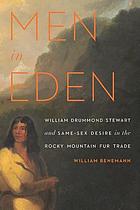
Men in Eden: William Drummond Stewart and Same-Sex Desire in the Rocky Mountain Fur Trade by William Benemann (University of Nebraska Press, 2012). Let’s begin with the book Hanna referred to as the book about “mountain men humping!” Benemann takes as his subject a 19th century Scottish aristocrat, William Drummond Stuart, and through Stuart’s colorful life explores the contours of same-sex desire on the borderlands of “civilized” society. Stewart, a younger son who later in life inherited the family title from his older brother, came of age during the Napoleonic wars and served in the 15th King’s Hussars where he rose to the rank of Captain. After retiring from the army, Stewart traveled widely in the Middle East and North America — and in North America found the homosociality of the American West particularly amenable. Throughout his life, Stewart’s most enduring relationships were with men, including one French-Cree trader who he traveled extensively with and even took with him back to Scotland after assuming responsibility for the family’s estate; the couple lived for a time in one of the secluded lodges on the land, where Stewart kept all the material evidence of his travels abroad. According to Benemann, previous treatments of Stewart have gone out of their way to ignore the evidence of same-sex relationships in the Scotsman’s life. Benemann’s work is a thoughtful and nuanced challenge to this previous “closeting” of Stewart’s sexual self, taking those same-sex relationships for granted as a meaningful part of Stewart’s experience. Anyone with an interest in nineteenth-century Anglo-American sexuality and gender should definitely add this one to their reading list.

Documenting Intimate Matters: Primary Sources for a History of Sexuality in America edited by Thomas A. Foster (University of Chicago Press, 2013). Published as a companion volume to John D’Emilio and Estelle Freedman’s seminal Intimate Matters (1988), this new primary source reader offers a thoughtful compilation of lightly annotated documents related to various aspects of sexuality in American culture from the colonial era to the present. A brief 225 pages, featuring selections from about seventy sources, this reader is best seen as a jumping-off point for further discussion and exploration rather than a source for full-text transcriptions. Each of the five chronologically-arranged sections are introduced with a brief preface on the sexual issues of the period in question, and each document likewise features a thoughtful introduction. While necessarily incomplete, given its length, Documenting Intimate Matters is admirably diverse in its socio-cultural and geographic scope as well as the genres of (textual) documents found therein. Some of my favorite include newspaper announcements from the 1780s-90s placed by men whose wives had deserted them to inform creditors the husbands would no longer take responsibility for their (ex?) wives debts; the angry diary entries of Frederick Ryman (1884)*, whose sentiments about women would not be out of place on anti-feminist blogs of today; and Susan Fitzmaurice’s 2002 reflections on the struggles of raising a child with Downs Syndrome in away that prepares them for a sexually active, sexually pleasurable, and sexually responsible adulthood. An excellent anthology for use in introductory classes.

*Full disclosure: Ryman’s diaries reside at the Massachusetts Historical Society.

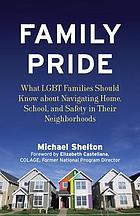
Family Pride: What LGBT Families Should Know about Navigating Home, School, and Safety in Their Neighborhood by Michael Shelton (Beacon Press, 2013). The latest addition to Beacon Press’s “queer ideas/queer actions” series, Shelton’s Family Pride is an accessible and nuanced snapshot of life in America for queer parents with children as we enter the 2010s. Centering the lived experiences of both LGBT parents and their children — through in-depth interviews Shelton conducted, as well as the growing body of relevant research literature — Shelton’s book should be on the bookshelf of every “family values” advocate (members of the Institute for American Values I’m looking at you!) as well as in the library of every queer activist and/or LGBT organization. While the title makes it sound like Family Pride is a handbook for queer families, in reality the volume is more of a status-quo assessment with some recommendations (from Shelton’s perspective as a therapist who has worked with queer families) for what queer families need in order to thrive. He does an excellent job of incorporating (I’d even argue prioritizing) the experiences of families who don’t often make “gay family” headlines: queer parents in straight marriages, parents who are in the closet, non-white families, families living with financial insecurity, families with uncertain immigration status, parents in prison or with a history of interaction with the law that makes calling the police for help an unthinkable solution to anti-gay speech or acts. My only quibble with Shelton’s framing is that he never explicitly defines an “LGBT family” as a unit made up of parents-plus-children in which at least one parent is queer — yet that is clearly his operational definition. I would have appreciated either a more explicit acknowledgement that this book focuses on parenting-while-gay OR an effort to include the voices of queer families that do not include children. We are, most assuredly, families too.

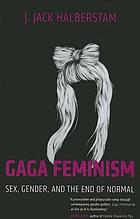
Gaga Feminism: Sex, Gender, and the End of Normal by J. Jack Halberstam (Beacon Press, 2012). While in Austin, I snagged a copy of yet another volume in the “queer actions/queer ideas” series — Halberstam’s meditation on the playful, anarchic queer feminism burbling up through the actions and expressions within youth culture. Taking pop culture references from Sponge Bob to Lady Gaga, Halberstam argues for the liberatory playfulness of more fluid sex and gender identities that — rather than requiring taxonomical fixity — provide a sandbox full of tools and opportunities for self-expression. I’m an easy sell on this score: while I am at times skeptical about the power of pop culture expression to effect political change, neither am I threatened by sex and gender anarchy. I am comfortable in my own gender (fairly conventional, by 21st century standards — though I’d likely have been a shockingly difficult daughter in many an earlier time and/or place) and sexuality (fluidly bisexual, married, monogamous). And I see no reason not to afford others the opportunity

Hard to Swallow: Hard Core Pornography on Screen edited by Claire Hines and Darren Kerr (Columbia University/Wallflower Press, 2012). This excellent anthology explores the pornographic genre of “hard core” films from a variety of perspectives: through the lens of history, film studies, sexual politics, and more. The majority of contributions focus on the United States and Britain (the editors are lecturers at Southampton Solent University, UK), and despite the negative connotations of “hard to swallow” virtually all of the authors take for granted that pornographic film as a genre deserves serious consideration. Pornography, it is assumed throughout, is simply explicit representation of human sexual activities; the messages of that representation can be positive or negative, depending upon execution and interpretation. My favorite pieces include: Linda Williams’  ‘”White Slavery,’ Or the Ethnography of ‘Sexworkers’: Women in Stag Films in the Kinsey Archive”; “The Progressive Potential of Behind the Green Door” by Darren Kerr; “Reel Intercourse: Doing Sex on Camera” by Clarissa Smith,” and “Interrogating Lesbian Pornography: Gender, Sexual Iconography, and Spectatoring,” by Rebecca Beirne. At their best, these essays go beyond commonplace assumptions about pornography as inherently degrading, as without cultural merit, as a male-only pursuit. Williams’ piece examines the subjectivity of women in early twentieth century stag films, wondering what light surviving films might shed on performers’ agency. Kerr, in “The Progressive Potential…” revisits a film that has been understood as misogynist and asks us to think, again, about the centrality of female sexual pleasure in the narrative. Clarissa Smith pushes back against the notion that performers in porn “just have sex on camera,” suggesting that engaging an audience in erotic fantasy is, in fact, a difficult role for which real skills are required (can we all say “duh?”). And finally, Beirne’s contribution explores the nuances of voyeurism, performance, and sexual subjectivity in the work of lesbian pornographers.

The entire anthology was absolutely worth reading, though I had quibbles with various assumptions along the way: one author, for example, claimed in passing that “the consumption of pornography … is an essentially private past time, indulged in as an accompaniment or prelude to masturbation.” Yes … but also, no. Reading/viewing erotica can happen in many contexts, only some of which are solitary, and doesn’t necessarily lead to masturbation for all consumers, every time. Likewise, the uncomplicated statement that pornography “began as a male-only pursuit,” even if the author acknowledges that “that male-ness has been diluted in recent years,” is to ignore the long history of female pornographers and women who have enjoyed erotic material. Women + sexual agency is not, contrary to popular opinion, a twenty-first century phenomenon.

I continue to be fascinated, too, by the assumption (apparently played out in the majority of pornographic film) that straight men don’t like to see male bodies centered in porn: from the descriptions of works and from the analysis of the authors it certainly sounds like in mainstream “hard core” (explicit) pornography, it’s women’s bodies on display for a presumed male audience. Granted I’m queer, so. But in general, what I find visually arousing is the depiction of people having sex. People having sex in ways I can then fantasize about enjoying like they’re enjoying it. Watching a woman orgasm on screen is hot (to me) because ohgodohgod I know what that feels like, and if I were in her situation I’d be coming too. So I’m curious what’s happening for men who watch porn in which the role of the male actor is basically a two-step process. Step one: Get it up. Step two: Ejaculate on screen. Like, isn’t that kinda disappointingly … thin on material that encourages imaginative projection of yourself into the scene? It’s just this thing I keep thinking about, as I’m reading these pieces that assume because women’s bodies are the bodies depicted, therefore the audience is supposed to imagine having sex with them (therefore be someone who likes having sex with women) rather than imagine being them (a person, male or female, experiencing sexual pleasure). How would we analyze pornography differently if we assumed the viewer’s involvement with those on-screen was a process of empathetic identification rather than (positive or negative) objectification?

Lots to think about … and I’m footnote mining Hard to Swallow for oft-cited authors and works so I’ve already got several other books on pornography on order at the library and look forward to reviewing them here!

booknotes: urban histories

29 Tuesday Jan 2013

Posted by Anna Clutterbuck-Cook in book reviews

≈ Leave a comment

Tags

boston, history

Looking at my reading selections for the past couple of months, I can sort them into two basic piles: books having to do with gender/sexuality/feminism (what else is new?) and books on urban history. The urban history kick is a relatively new thing for me, prompted by a) an ongoing side research project that requires background knowledge about Boston circa the 1910s, b) the aggressive gentrification of our neighborhood — fingers crossed we’re not priced out! — and c) happening upon a cultural history of “main street” on the new books wall at our local public library (see below). I’m going to do a collective review of the gender/sexuality/feminism books next week — once I finish my advance review copy of this promising anthology on hard core porn — but first, here are my thoughts on a few urban history titles.

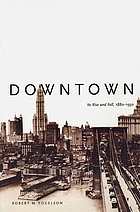
Fogelson, Robert. Downtown: Its Rise and Fall, 1880-1950 (Yale U. P., 2001) and Bourgeois Nightmares: Suburbia, 1870-1930 (Yale U.P., 2005). More or less by accident — Downtown was what our local library had on the shelf! — I stumbled upon preeminent historian of urban America Robert Fogelson’s work when I went in search of Boston and Brookline histories back in December. In Downtown Fogelson explores the development of the central business district in American cities — thanks to the layout of New York City colloquially known as “downtown” regardless of geographic orientation — and traces its fate through the first half of the twentieth century as it moved from the business district to the central business district to simply one of many business districts. He touches on a number of key cities, although New York, Boston, Chicago, and Los Angeles are recurring examples. I particularly enjoyed the attention to the perennial question of public transit and the changes wrought by the rise of the automobile. Fogelson pays particular attention to the interplay between city planners and businessmen (the urban elite) and the populace at large — the way in which those with power seek to create and control a certain type of urban environment on the one hand, while unanticipated and often anarchic-feeling forces bring changes economic and cultural to the urban landscape.

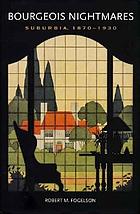
It’s the desire for stasis that is, in fact, at the heart of the second Fogelson book I read: Bourgeois Nightmares. The title, a play on Robert Fishman’s Bourgeois Utopias (1987), explores the dark side of America’s suburban sprawl between 1870-1930. Fogelson begins his narrative by suggesting that the central desire which drove the American upper-, upper-middle- and middle-classes to suburban subdivisions around the turn of the twentieth century was the desire for stability. In order to sell land in these new neighborhoods, subdividers had to sell the promise of that stability — the promise that one’s land would never fall in value, that one’s neighborhood would remain pleasant, that one’s neighbors would always be desirable. The mechanism by which they enforced stability was through the creation of restrictive covenants: contractual limitations on how landowners could use and dispose of the land which they purchased. Most notoriously, restrictions were used to exclude non-white (and sometimes non-Christian and even non-Protestant) residents from the suburban development. They were also used to police the aesthetics of place: fences, landscaping, architectural design, the domestic animals one could own, the signs one could put up, and the business one could do from one’s property. Fogelson convincingly argues that restrictive covenants were a successful marketing tool despite the limitations they placed on property rights because they reassured the “bourgeois” classes that they were protected not only from outsider undesirables but also from the potentially-appalling behavior of their peer neighbors.

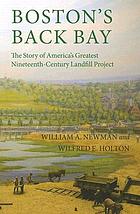
Holton, Wilfred and William A. Newman. Boston’s Back Bay: The Story of America’s Greatest Nineteenth-Century Landfill Project (Northeastern U.P., 2006). The Massachusetts Historical Society moved into the back bay in the 1890s, as the back bay landfill project was nearing its close. The land on which the MHS stands, at the corner of Boylston Street and The Fenway, teeters on the edge of landfill and what used to be known as Gravelly Point. Originally, the Back Bay served as both a source of hydro power and also Boston’s sewer — where the citizens of Boston sent their waste in hopes that the tide would wash it out to sea (a hit-or-miss proposition, particularly after the bay was sectioned by dams and railway bridges in the early 1800s. Between the 1820s and the 1890s the Commonwealth of Massachsuetts undertook the massive land-creation project of filling in the bay and what seems like the daunting task of selling the recently-noxious area as a posh neighborhood of expensive townhouses and cultural institutions. Holton and Newman are primarily interested in the engineering innovations that made filling in the Back Bay tidal flat possible and the construction of buildings feasible. Honestly, there’s only so much detail about railway lines, gravel pits, and building foundations I can sustain interest for, although descriptions of the changing landscape and the generous inclusion of maps to chart the progress of land-creation were both welcome. I would have appreciated more cultural and social history. Given the Back Bay’s numerous drawbacks as land for residential construction — including a high water table that caused sewers to back up twice daily and fill basements with toxic and foul-smelling substances! — the successful selling of the neighborhood as a desirable location for the Boston elites is a story that begs to be told in more depth. Still, I do feel I now have a better grasp on the whys and hows of the Back Bay landfill project. Now on to Nancy Seashole’s Gaining Ground: A History of Landmaking in Boston (MIT Press, 2003).

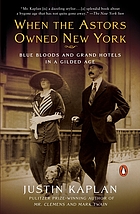
Kaplan, Justin. When the Astors Owned New York: Blue Bloods and Grand Hotels in the Gilded Age (Viking, 2006). One feature of American downtown life in the Gilded Age was the luxury hotel. Using the real estate giants William Waldorf Astor and his cousin John Jacob Astor as his biographical through-line, Justin Kaplan offers a lively tour of the rise of the modern-day hotel during the late nineteenth-century. What I found most fascinating about the book — apart from the salacious details of intra-familial rivalry — was the cultural history of a type of institution (the luxury hotel) that today we take more or less for granted as an essential feature in any city. Yet the first establishment that approximated what we think of as a hotel, The Tremont here in Boston, opened in 1829. It was the first lodging-house to become a destination per se rather than just a place for businessmen and travelers to find a bed and a meal in transit from one location to the next. Its indoor bathrooms, particularly, became so popular that upperclass families in the nearby Beacon Hill neighborhood sometimes made there way to the hotel for their weekly bath. The Astor family built on these innovations with alacrity and by the end of the 1800s their hotels in New York City were the subject of songs, the hub of high society, where people went to see and be seen. While Kaplan’s narrative is short on footnotes, it is grounded in the historical record and is not overly ambitious in its claims. An entertaining and informative read.

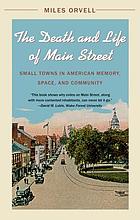
Orvell, Miles. The Death and Life of Main Street: Small Towns in American Memory, Space and Community (University of North Carolina Press, 2012). Orvell’s work is a cultural history of “main street” in America — both how it actually functioned in the social and economic landscape and also what it signified in the American mind. Examining literary and cinematic portrayals as well as the politics of creating, destroying, and rehabilitating “main street” as a social space throughout the 19th and 20th centuries, Orvell points to the ongoing tension in the American cultural landscape between “main street” as a site for wholesome enjoyment and small-town safety and main street as a site for small-mindedness and community policing. The idyllic nature of small-town / “main street” America, in other words, very often depends on the erasure of people whose presence is disruptive to “niceness”: educated women with uppity notions about gender equality, labor organizers, and — over and over again — those whose skin color, ethnicity, and religion fail to conform with a WASP-y vision of true American-ness. From 19th-century paeons to the “vanishing” New England village square to late-20th century Disney-sponsored planned communities, The Death and Life of Main Street offers a highly readable, well-researched window into one particular facet of the (real and mythical) American landscape.

Next on the urban history reading list is Stephen Puleo’s A City So Grand: The Rise of an American Metropolis, Boston 1850-1900 (Beacon Press, 2010). I’ll be sure to let you know how it goes! But next week we’ll be taking a turn to a mix of books both historical and cultural that touch on human sexuality and the politics thereof.

‘after pornified’ book giveaway! [free stuff]

15 Tuesday Jan 2013

Posted by Anna Clutterbuck-Cook in book reviews

≈ 1 Comment

Tags

blogging, feminism, free stuff, gender and sexuality, smut

My friend Anne Sabo has given me three signed copies of her recent book, After Pornified: How Women are Transforming Pornography and Why it Really Matters (see my review here). And I would love to pass them along to you!

The only requirement is that you read and review the book by March 1st, post the review to Amazon.com and whatever other blogging or book-themed social networking site (GoodReads, LibraryThing, etc.) you choose and send the link to me.

Psyched to start reading? Leave a comment by midnight this coming Friday (so 12:00am 1/19/2013) on this post including an email where I can reach you and sharing, via link or description, one of your favorite pieces of erotica (can be any medium). I’ll be taking all eligible entrants and randomly selecting three via the slip-of-paper-in-a-bowl method.
On Tuesday, January 22nd, I’ll contact the three winners by email for a mailing address and send out the books via first class mail.

Let the commenting begin!

booknotes: what is marriage for?

08 Tuesday Jan 2013

Posted by Anna Clutterbuck-Cook in book reviews

≈ Leave a comment

Tags

gender and sexuality, history, politics, sociology

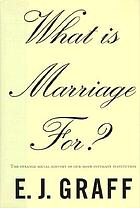
Last week, I reviewed Public Vows which explored the history of American custom and law surrounding marriage. This week, I have some reflections on journalist E. J. Graff’s book on roughly the same subject: What is Marriage For?: The Strange Social History of Our Most Intimate Institution (Beacon Press, 1999).

While Cott is an academic historian, Graff is a journalist — and the differences in these two books reflects that to a great extent. This is not to say one is better than the other: Nancy Cott’s work is a carefully-delineated study of American marriage from the Revolution to the late twentieth century while Graff’s is a more wide-ranging exploration of what marriage has been and meant in the West over the past two millennia. Both work in their own ways to point out that the present-day arguments about the demise of “marriage culture” and/or the end of civilization as we know it because of [insert marriage change of your choice] is actually nothing new. Reactionaries have been raising a hue and cry in every era about the passing of one concept of marriage in favor of another, and our current notion of what “traditional” marriage looks like (what Cott referred to as Christian monogamy grounded in affection and entered by mutual consent) is actually a fairly new — Graff would even say radical — departure from the marriage norms of our forebears.

While for Cott the question of same-sex marriage is almost a coda to the main body of her argument — which centers around non-white peoples’ and women’s citizenship rights and how they interact with marriage law — same-sex relationships are the raison d’etre of Graff’s work. After marrying her partner, Madeline, in 1992, Graff began to explore the slippery history of “marriage” and its meaning, with the goal of answering the question of whether same-sex couples can or do reasonably occupy the same space as other-sex couples in the present-day landscape of marriage beliefs, law, and practice. It will perhaps come as no surprise that Graff’s answer is, again and again, that yes same-sex couples fit quite abley into our current notion of what a marriage is and does:

There remains an uneasy tension between, on the one hand, marriage as a way to resist consumer capitalism’s pressure on the individual soul — and, on the other, to fulfill consumer capitalism’s ideology of individual love and commitment. But [today’s reactionaries] wrongly choose those who love among the same sex as their scapegoats. The move toward same-sex marriage is the consequence, not the cause, of many other changes in Western life — changes like legalized contraception, already inscribed in Western laws. A pluralistic democracy cannot fairly bar as pariahs people who fully fit its ideology of the meaning of sex within marriage (87). 

There were a few details in analysis upon which Graff and I disagree, such as her argument that the logic that allows for same-sex relationships (modern notions of love and personal choice) does not allow for polygyny, since the reasons for polygyny have traditionally been about political alliances and patriarchal kinship consolidation. While true insofar as it goes, her conclusion that therefore same-sex relationship recognition is in NO WAY related to recognition of more-than-two marriage models seems to ignore the way in which modern polyamory also draws on notions of love and personal choice. But that’s overall a small quibble with what is an entertaining and well-researched exploration into the slippery meaning of something we think we all “know” when we see (or enter into) it.

booknotes: public vows

05 Saturday Jan 2013

Posted by Anna Clutterbuck-Cook in book reviews

≈ Leave a comment

Tags

feminism, gender and sexuality, history, politics

I thought I’d kick off my 2013 book reviews with a few thoughts about the last book I read in 2012. That would be Nancy F. Cott’s Public Vows: A History of Marriage and the Nation (Harvard U.P., 2000), which I picked up at the Montague Book Mill last week. A slim volume, Public Vows explores the ways in which local, state, and national culture and regulation have shaped the meaning and utility of marriage in the U.S. from the Revolution to the dawn of the 21st century.

Cott’s overall point is that while marriage in the United States has been considered a private zone — affectually and contractually — it is also constrained by public custom and legal regulation. As she writes in the introduction:

In the marriage ceremony the public recognizes and supports the couple’s reciprocal bond, and guarantees that this commitment (made in accord with the public’s requirements) will be honored as something valuable not only to the pair but to the community at large. Their bond will be honored even by public force … the public sets the terms of marriage (2).

Those terms have been paradoxically remarkably tenacious and constantly in flux. As Cott demonstrates, Americans have generally privileged the monogamous Christian marriage as the “common sense” of marriage relationships, despite the fact that at the time of the United States’ founding “the predominance of monogamy was by no means a foregone conclusion” (9).

In the years of the Early Republic, this relationship was one of coverture, in which the wife’s political identity was subsumed by that of her husband upon marriage; the husband was charged with representing his wife in the public realm much as a member of Congress (the founding generation of American political theorists drew this analogy) represented his constituents. As women and free blacks struggled for citizenship status throughout the 19th century, the terms of marriage (who could marry and the rights and duties marriage entailed) shifted to meet — or at times to combat — these new demands. Waves of immigration and anti-immigrant sentiment shaped laws around marriage as politicians determined what foreign marriage practices would be recognized as valid, and the changing economic landscape shaped and re-shaped understandings of how work and marriage inter-related.

Much of what Cott has to say will come as no surprise to historians of women’s and gender history, or even social and labor history: notions of citizenship and personhood are uniquely tied up, in United States law and social custom, with one’s status not only as an individual but also as the member of an acceptable family unit. Conformity to marriage norms can have real impact on one’s status as a citizen (as any first-generation immigrant can tell you), and while women’s political lives are no longer subsumed under their husband’s at the altar, the assumption that women will be (hetero)wives continues to endure in tax codes and other legacies of coverture in the legal-political realm.

Cott touches only lightly on same-sex marriage in the final chapter of Public Vows, underscoring how little “gay marriage” actually has to do with the revolution(s) in modern family organization that the last two centuries of American history have seen. Feminist agitation has, indeed, played a much bigger role in shifting marriage onto new ground. As Cott observes, “So far as it is a public institution, [marriage] is a vehicle through which the apparatus of the state can shape the gender order…. Turning men and women into husbands and wives, marriage has designated the ways both sexes act in the world and the reciprocal relationship between them” (3). These designations often reach beyond the actually married, constraining the lives of the non-married as well. As women gained more equal footing as citizens, the shape of marriage as an economic, political, and personal relationship was fundamentally changed. In the context of this long sweep of change, the extension of civil marriage rights to same-sex couples is but a small step in the direction of equal citizenship status for all, regardless of gender or affectional ties.

Conversely, the fact that same-sex marriage evokes such strong reactionary feelings points toward the centrality of the Christian monogamous marriage plot to the organization of American civic life: as a key aspect of our project to differentiate ourselves from European and other world governments. By governing who is let in (and who kept out) of marriage we — as a nation-state — are often simultaneously identifying who — both symbolically and literally — is allowed to be a citizen.

I’m following my reading of Public Vows with E.J. Graff’s contemporaneous What Is Marriage For? (Beacon Press, 1999). Like Cott, Graff explores the historical shape of marriage and discovers heterogeneity rather than some ur- form of “traditional” marriage … I’m looking forward to limning the similarities and differences between their arguments, so look for a review here soon!

looking back on the (previous) year in books

01 Tuesday Jan 2013

Posted by Anna Clutterbuck-Cook in book reviews

≈ 2 Comments

Tags

books

My reading goal in 2012, courtesy of Goodreads’ reading challenge, was to finish 104 books (an average of two books per week). It was a goal I fell short of by six books, wrapping up the year in reading with #97 yesterday afternoon: Public Vows: A History of Marriage and the Nation by Nancy F. Cott (Harvard U.P., 2000).

(If only they allowed us to count fan fiction — Hanna and I would have shot passed our goals and then some this year!)

But never mind — I’m trying not to feel a failure for having fallen short: it was an ambitious goal, outstripping my previous record of the past five years (89 books in 2009) by fifteen titles. And there were some really great and interesting reads to be had in those ninety-seven titles. Below I’ve picked out my top fifteen titles. You can definitely see the way I trend: keywords include “sexuality,” “politics,” “history,” “gender,” and “feminism.”

(Within the list order is strictly alpha by author; links are all to my blog reviews of said titles)

Memorable Reads of 2012:

Pray the Gay Away by Bernadette Barton

The Book of Mormon Girl by Joanna Brooks

The Straight State by Margot Canaday

Love the Sin by Janet Jacobsen and Anne Pellegrini

Bodies of Knowledge by Wendy Kline

The Mansion of Happiness by Jill Lepore

Discount Armageddon by Seanan McGuire

Why Have Children? The Ethical Debate by Christine Overall (MIT Press, 2012).

Well Met by Rachel Lee Rubin

After Pornified by Anne Sabo

Passing Strange by Martha Sandweiss

Not Under My Roof by Amy Schalet

Tiny Beautiful Things by Cheryl Strayed

Mrs. Robinson’s Disgrace by Kate Summerscale

So, what were your memorable reads in 2012? Got anything you’re excitedly looking forward to checking out in 2013? Share in comments! Inquiring minds want to know 🙂

booknotes: histories of food, women’s colleges, queers in Canadian & US law, and Victorian porn

04 Tuesday Dec 2012

Posted by Anna Clutterbuck-Cook in book reviews

≈ Leave a comment

Tags

education, food, gender and sexuality, history, politics

With four weeks to go in the year, I’ve got fourteen books to read in order to make my 2012 goal of one hundred and four titles (two books per week). I don’t think I’ll make it. If there were a way to count reading of a non-book sort (journals, blogs, fan fiction) I’d be golden, but while I’ll about match my 2011 level of book consumption, I probably won’t read fourteen volumes by midnight on December 31st. Particularly since I’d like to put in some quality time on my epic, currently 30k and climbing, Carter/Stark fic, have a book review due for the NEHA News, and Hanna and I hope to get out for some good long walks.

BUT. The fear of “failure” has not deterred me from reading, as always (I’m really not sure what could actually. It’s sort of what I do, the way some people can’t think without music on in the background). So here are some brief reviews of books I read during the month of November.

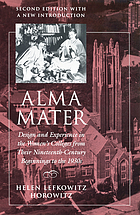
Horowitz, Helen Lefkowitz. Alma Mater: Design and Experience in the Women’s Colleges from Their Nineteenth-Century Beginnings to the 1930s (University of Massachusetts Press, 1984; 1993).  For a book originally researched in the 70s and published nearly thirty years ago, Alma Mater feels refreshingly current — not that I doubted Helen Horowitz’s skill in research and writing (I’ve long been a fan), but historiography just as much as any other field has its tells for certain eras. Perhaps Horowitz lucked out by coming of academic age after the reign of Freud (see my review of The Other Victorians below) and before the ascendancy of Foucault in the 1980s. This history of the Seven Sisters is an exploration of the culture of education through the lens of architecture: how the spatial organization of seminaries like Mount Holyoke and Vassar, colleges like Smith and Wellesley, Bryn Mawr, and the university affiliates Radcliffe and Barnard, reflect the assumptions, expectations, and fears about women and higher education across roughly a century of change. I was particularly fascinated by the way in which each institution’s administrators sought to both foster and manage female intimacy: the single-sex environment was both encouraged (for its protective and training purposes) and feared (for its potential for same-sex romantic and sexual intimacy, and  the way it led to “unfeminine” roles). In other words, the tension between the value of an all-female environment and its perceived downsides — whether because it turns young women into lesbians (!) or because it perpetuates a separate-yet-equal passivity concerning gender equality — have changed only in variation and not in substance since the 1830s. It will be interesting to see what the state of single-sex education is by the time we begin to reach the two-hundredth anniversary of women’s higher education in this country. I really can’t recommend Horowitz enough; as an historian of higher education in America I know of few more thoughtful or articulate.

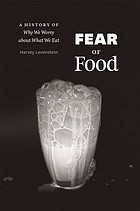
Levenstein, Harvey A. Fear of Food: A History of Why We Worry About What We Eat (University of Chicago Press, 2012). This slim, engaging volume is less a history of “why” twentieth-century Americans fear food than how we choose to do so: each chapter presents a case of food fear, beginning with Progressive Era fears about food contamination spread by flies and infected milk for infants and ending with the present-day lipid-phobia (fear of dietary fat). An historian of food culture, Levenstein is on solid footing here in terms of research and a lively storyteller. My one complaint is that at times it is difficult to distinguish between food claims made in the context of a particular food scare and the more recent, evidence-based knowledge that Levenstein sometimes draws upon to refute or revise the basis of historical food scares. For example, in the chapter on “vitamania,” it can be difficult to parse out what benefits of vitamains are still supported by the evidence, and what claims by vitamin manufactures have no solid backing in research and outcomes. In the end, though, I really appreciated that this narrative was not triumphalist the way so many health and science histories are: Levenstein’s argument is not that American science has triumphed over superstision — quite the contrary, he argues that we persist in demonizing (and celebrating) certain foods beyond all evidential backing. He also makes the key point that time and again throughout the twentieth century, the food industry and medical industry (including the public health sector) have powerful lobbies with their own profit-driven agendas, successfully exploiting food fears to their own gain (and American citizens’ loss). I’d be making this essential reading in all public health programs around the country, and required reading by anyone who uncritically parrots the phrase “obesity epidemic.”

MacDougall, Bruce. Queer Judgements: Homosexuality, Expression, and the Courts in Canada (University of Toronto Press, 1999). I picked this volume up while we were honeymooning on the Cape, but it took a while to wade through — while thoroughly interesting, the textual analysis was dense and the Canadian legal framework just different enough that I needed to do some on-the-fly cultural translation to make sense of the arguments. MacDougall’s central argument is that judicial opinions concerning homosexuality matter as much as, if not more than, the material effects of their rulings. Combing through written decisions involving homosexual identity or expression from the 1960s to 1997, MacDougall finds that the Canadian courts have consistently framed homosexuality as disordered and marginal, a sexuality that is of potential threat to children, something that (because of its shameful nature) needs particular policing. For example, he points to the ways in which divorce court judges often express concern about a gay or lesbian parent’s sexuality being evident to the children of the family in a way that they would not likely fret about straight parents bringing an opposite-sex partner home. Likewise, a whole chapter is devoted to the erasure of speech about homosexuality from institutions of education (primary, secondary, and higher education alike). While works such as The Right to Be Out and Queer (In)Justice have — at least for a U.S. context — superseded this volume, I did find it a worthwhile addition to my queer studies/queer history collection.

Marcus, Stephen. The Other Victorians: A Study of Sexuality and Pornography in Mid-Nineteenth-Century England (xxx, 1966; 2009). In the early 1960s, scholar of Victorian literature Stephen Marcus was approached by the Kinsey Institute to write a study of Victorian erotic literature. The Other Victorians is what emerged: an oddly episodic work that has aged well in some aspects more than others. He begins with a study of  doctor William Acton’s works on sexual function and advice on sexual well-being, moves into an examination of Henry Spencer Ashbee’s extensive bibliography of known pornographic literature, published in the 1870s-1880s, and then spends two lengthy chapters on a delightful, anonymous eleven-volume erotic autobiography My Secret Life, published in the 1880s-1890s. These chapters are for the most part grounded in specific texts and hold up fairly well. Marcus’s own sexual tastes and knowledge gaps seep through every now and then — such as when he is baffled by the autobiographer’s interest in BDSM, and when he insists that the autobiographer is exaggerating because women don’t ejaculate — but overall he was more aware of gender and class and the nuances of authorial voice than I might have expected. It’s the chapter on the literature of flagellation and his concluding remarks that really let him down. I’m not exactly sure why he chose to take up flagellation narratives other than that they were apparently prevalent in the pornography of the period. His descriptions of the literature’s conventions is quite fascinating, but then he gets all sorts of judgy and Freudian about how flogging fantasies are sad and infantile and coded homosexuality. He also claims, in passing, that the Victorians produced no homosexual pornography — an assertion that runs directly counter to the many passages depicting same-sex sexual encounters he has detailed in previous chapters, so I was baffled by the sudden reversal. And his final conclusions about pornography are, it seemed to me anyway, clearly written by a person who ultimately has no innate passion for or interest in the genre which he is studying. He argues that pornography lags behind fiction in its development, that it lacks in emotion and relational development, that the point of pornography is to depict acts outside of time and space, rather than human sexuality in the context of a deeper lived experience. Again, these assertions seem to run counter to the examples he himself has selected for review in the preceding chapters.*

Vaid, Urvashi. Irresistible Revolution: Confronting Race, Class and the Assumptions of Lesbian, Gay, Bisexual, and Transgender Politics (Magnus Books, 2012). This collection of essays by movement organizer Urvashi Vaid is a quick read — I finished it in an afternoon — and a bracing one. A national figure in LGBT politics, Vaid calls the mainstream queer movement to task on its unwillingness to engage in social justice activism that is not explicitly “gay.” That is, activism around issues of racism, class disparity and poverty, misogyny, gender policing (particularly trans* issues), the prison-industrial complex, labor organizing, immigration, and freedom of family formation and sexual expression not necessarily grounded in heternormative marriage rights. My own feelings reading Irresistible Revolution were complicated. On the one hand, I am basically on the same page with Vaid in terms of wanting a broad-based social justice movement that centers the most vulnerable among us and doesn’t rest until all are treated with respect and have the basic provisions necessary for well-being (healthcare, housing, food security, access to education, workplace safety, a healthy environment, etc.). And I feel comfortable with her lesbian-feminist roots and her critique of mainstream organizations (the Human Rights Campaign, National Gay and Lesbian Task Force, etc.) which may pay lip service to caring for all — but in reality speak only to middle- and upper-middle-class priorities and aspirations. However, as a radical voice working from within these organizations, she fails to draw upon and engage with the scrappy, marginalized groups and individuals who are doing the work she longs to see done. At least as much as she could have. The result is a book that feels like a lot of finger-wagging at the self-satisfaction of the elder generations of activists (and those with the most material resources) and the complacency of the younger generations — without enough acknowledgement of the people who do not fit into either of those categories, and who are doing transformative and back-breaking labor being the change they wish to see.** Vaid is a high-profile voice whose commitments are key to a more just future, so I hope she is listened to by the “insider” audience she wishes to reach.

And that’s all for now, folks! Off to see what else I can read before to clock for 2012 runs out.


*I couldn’t help wondering if such judgmental attitudes came out of an extreme desire to be “objective” about the subject matter — to the extent that he was unable to examine the material with an eye toward what an eager reader might get out of the experience. For example, he excerpts a lengthy and charming passage from My Secret Life in which the autobiographer and a friend arrange a visit to a flogging parlor to watch a gentleman be spanked by the “abbess” in charge. Also present is a prostitute. All five people are participants in the action on some level, and although the autobiographer evinces no interest in being beaten himself, he is clearly curiously engaged and pleased (and aroused on some level) to be participating in someone else’s erotic scene. Marcus, however, dismisses the scene as one “we” modern-day folk would obviously find sad and grim. Whoops!

**And to be clear, I don’t include myself in this category. People who have the stamina and vision for professional movement work are brave and better souls than I; I’m glad they do what they do and I will support them as I am able … but I have never been, and likely will never be, a queer organizer.

← Older posts
Newer posts →
"the past is a wild party; check your preconceptions at the door." ~ Emma Donoghue

Recent Posts

  • medical update 11.11.22
  • medical update 6.4.22
  • medical update 1.16.2022
  • medical update 10.13.2021
  • medical update 8.17.2021

Archives

Categories

Creative Commons License

This work by Anna J. Clutterbuck-Cook is licensed under a Creative Commons Attribution 3.0 Unported License

Meta

  • Register
  • Log in
  • Entries feed
  • Comments feed
  • WordPress.com

Create a free website or blog at WordPress.com.

  • Follow Following
    • the feminist librarian
    • Join 36 other followers
    • Already have a WordPress.com account? Log in now.
    • the feminist librarian
    • Customize
    • Follow Following
    • Sign up
    • Log in
    • Report this content
    • View site in Reader
    • Manage subscriptions
    • Collapse this bar