• anna j. clutterbuck-cook
  • contact
  • curriculum vitae
  • find me elsewhere
  • marilyn ross memorial book prize

the feminist librarian

the feminist librarian

Category Archives: book reviews

booknotes: book of mormon girl

17 Saturday Nov 2012

Posted by Anna Clutterbuck-Cook in book reviews

≈ Leave a comment

Tags

feminism, gender and sexuality, memoir, politics, religion

I rarely have the time these days to invest in comment threads on blogs, though I skim hundreds of RSS-scraped posts every day via Google Reader. Yet over the past few months, I’ve spent quite a bit of time over at the Family Scholars blog, engaging with socially conservative bloggers and commenters about issues such marriage equality and queer family formation.

I actually find the practice almost … soothing.

Hanna, meanwhile, is mystified about my motivations, since just having me describe some of the interactions I have there ramps up her anxiety and stress levels to uncomfortable proportions. And I find I don’t have very articulate reasons for why I find arguing with the opposition — bearing witness, speaking up for my point of view — to be an almost meditative practice.

Except that, growing up and going to college where I did, it’s what I’ve had to do by default most of my life. So it’s what feels comfortable, feels familiar: standing on the edges knocking politely on the door to remind those on the inside (of the mainstream culture, church, school, whatever) that I’m still here.

I don’t necessarily want to be let in? It’s a nice world, in many ways, where I am out here. I’ve always been a fan of fresh air and expansive horizons.

But I don’t want them to forget that I’m out here.

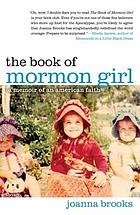
Another aspect of my insistence on being a complicating presence came home to me while I was reading Joanna Brooks’ Book of Mormon Girl (Free Press, 2012) this past week. It had been on my radar for awhile, but what prompted me to read it was an email from a friend of mine, a former member of the LDS church, who has walked away from the faith in his adulthood for a variety of reasons not the least of which is the fact that he’s gay and the Mormon church is not all that cool — at least at an institutional level — with queerness. He’d found the book a disorienting read, he reported to me, because while he’s quit the church entirely Brooks continues to struggle mightily with her inherited faith and childhood experience, and the betrayal of the community she once felt safe within when she stepped outside the bounds of orthodoxy (as an outspoken Mormon feminist, queer ally married to a Jewish man). Why did she continue to fight to belong in a church that clearly pushed her away, hard, with both hands?

It’s a stubbornness I recognize, though I wasn’t actually raised in the church (Mormon or otherwise). The faith of my heritage was loosely Protestant, my father the son of a New Testament theologian, my mother the mostly unchurched daughter of a Christian Scientist and disbelieving Scotch Presbyterian. In my adolescence, we attended a liberal Dutch protestant church (a denomination in the Reformed Church in America) for a handful of years where I argued passionately with Conservative youth leaders from my position as a nascent feminist and tried to envision the Church as a pathway to effectively channel my welling passion for social justice.

Then I went to college and discovered feminist theology which offered (though I didn’t have these words at the time) a way of thought and action that was both intersectional and spiritual: a faith of uncompromising social justice, nonviolent action, solidarity, and equality: each and every one of us is a child of God. Full worthy to be loved and capable of loving.

It’s a theology that I, unchurched though I am, continue to strive for in the spiritual practice of daily living.

And it felt like a theology that many religious folk around me were uninterested in pursuing.

I’ve said before, and I’ll repeat it here, that I found my Christianity and left the church in more or less the same breath.

I saw what Christianity could be and is, at its best and brightest, and in my adolescent impatience had no time for those preoccupied with orthodoxy at the expense of lovingkindness. Lacking the deep roots of religious history, community, family, and faith that ties women like Joanna Brooks to the church — and I know many of them, ardent feminist thinkers, queers, social justice workers, all fighting past the burnout to build a Church I would be proud to call mine — I up and quit and walked away.

But in part because of the women (and I know there are men, too, but it’s the women I think of in these moments, the ones who stand up and refuse not to be counted) I keep circling back. I keep tapping on the door, poking my head in, and reminding folks that my life, too, is relevant to the conversation: You’re talking about the welfare state? I might be financially secure right now, but I’ve had state-subsidized healthcare. You’re talking about male headship? Let me talk to you about sex, gender, and humanity. You’re talking about same-sex marriage? Let me introduce you to my wife, our two cats, and quotidian details of our lives.You’re talking about war? Let’s talk about the history of religious nonviolence.

My mother has always said that she won’t join any church that constructs an “us” from which a “them” is excluded, kept at arms length, on the outside. Which is why, to this day, she remains unbaptized (and why none of us children were baptized), and certainly informs my own decision not to seek church membership.

But I keep tapping at the door. I keep having the conversations. I want to bear witness (imperfect, broken, human, though I am) to the fact that we could do better and that I know there are those working mightily within the Church, as well as without, to make it so.

Hmm. The plan was to write a book review, but clearly I had other things to say. Still: Book of Mormon Girl is sweet, funny, heartbreaking, thoughtful, and passionate. As a queer American I found the chapter on Proposition 8 particularly painful to read; as a woman who came of age about 5-10 years after Brooks, I found her chapter on feminism and faith, and the trauma of the LDS purges in the 90s (when the hierarchy excommunicated a number of liberal intellectuals and activists, and declared feminists, gays, and lesbians the “enemy”) to be particularly resonant. As an historian with an interest in the personal journeys of those who grow up in fundamentalist, evangelical circles, Brooks’ narrative was of scholarly interest to me as well. I highly recommend it to anyone who wants to think more deeply about what it means to be a politically and socially progressive person in the context of a reactionary religion.

booknotes: ethics, politics, sex, and death

02 Friday Nov 2012

Posted by Anna Clutterbuck-Cook in book reviews

≈ Leave a comment

Tags

history, memoir

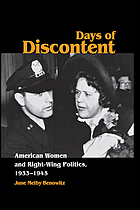
Benowitz, June Melby. Days of Discontent: American Women and Right-Wing Politics, 1933-1945 (Northern Illinois University Press, 2012). Days is positioned at the intersection of two growing fields: the history of conservative and right-wing grassroots political activism and the political activities of women between the passage of the 19th amendment in 1920 and the return to domesticity in the postwar Fifties (followed by the well known “second wave” of feminist activism in the Sixties). Benowitz surveys the activities of right-wing organizers Elizabeth Dilling, Grace Wick, Catherine Curtis and Agnes Waters among others. At times the narrative falls into repetitive sequence-of-events recounting. I found myself wishing to slow down certain chapters and delve deeper into, for example, the class dynamics and race fears of individual women who were profiled. Hopefully, such further exploration will be taken up by future scholars who build on the foundation laid by Days of Discontent.

Buechner, Frederic. Now & Then: A Memoir of Vocation (HarperCollins, 1983). My late paternal grandfather, who passed away in 2007, was a one-time graduate student in English literature who turned to the seminary after a year at University of Michigan and eventually became a professor of New Testament theology. His favorite course to teach, however, was a seminary elective titled “Christianity and Literature,” which examined the power of literature (and later, film) to grapple with matters of faith. When I was nineteen, I audited the course and spent the semester reading, and arguing about, Billy Budd, Lord of the Flies, the work of Flannary O’Connor, and Frederick Buechner’s Godric, the fictionalized account of the life of an English hermit. Buechner was one of my grandfather’s favorite writers, and when Hanna and I married this fall my grandmother sent us an essay by Buechner on the sacrament of marriage. It was this collection of personal memories and relationships I brought to my reading of Buechner’s slim memoir. In Now & Then Buechner reflects on his time at Union Seminary, his teaching at Exeter Academy, and his years of writing, lecturing, and preaching in rural Vermont. While I appreciated his reminiscences about his time at Union and his own personal faith journey, he occasionally veers into the preachy — particularly, for some inexplicable reason, his insistence that Buddhism is a religion that fails to appreciate the power of love. I may not be a scholar of Buddhism, but say what? All-in-all, recommended for those interested in mid-twentieth-century American protestantism and personal reflections on the writing life.

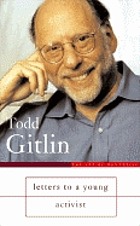
Gitlin, Todd. Letters to a Young Activist (Basic Books, 2012; 2003). Having read Gitlin’s seminal history of mid-century movement politics, The Sixties, for my thesis research a few years ago, I picked up this slim volume at the Brattle book carts on the “it’s only $1” theory. I don’t generally like the “letters to a…” premise, which has become overplayed in recent years, and I can’t say that format did a lot for this particular piece. But Gitlin manages (I think, though I’m now in the “over thirty” set myself) to skirt condescension and offer some useful reflections on the organizing, activist, or “movement” life. I particularly appreciated the way he wrestled with the complicated legacy of Sixties leftist movements and reactionary backlash, as well as the importance of practical (and often boring) action to balance out idealism. I think I will leave it to young activists themselves to weigh in on whether Gitlin succeeds in offering the wisdom of a mentor without the know-better attitude with which elder generations so often look upon the work of brash youth (so often judged and found wanting). Either way, his work is valuable as the thoughtful reflections of a once-young activist turned historian attempting to articulate his own lessons learned.

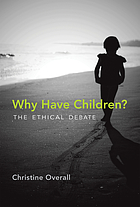
Overall, Christine. Why Have Children? The Ethical Debate (MIT Press, 2012). In our society, it is generally the non-parents among us who bear the brunt of curiosity and often censure. We scrutinize the motivations of the non-parents by choice and invest the resources of entire industries to enable those who have difficulty procreating to become parents. Yet philosopher of ethics Christine Overall — herself a mother of two children — argues that the burden of moral justification should fall not on those who do not procreate, but rather on those who do. Systematically, she explores the commonplace justifications for procreation — continuing the family line, parental happiness, elder care, providing siblings for existing children, etc. — and finds them insufficient to morally support the creation of new life. In the end, she makes the case that the only ethically justified reason for freely-chosen procreation is the desire to enter into a relationship with the future child. A committed feminist, Overall also spends a great deal of time exploring issues of bodily autonomy and reproductive justice — careful to weigh the work of pregnancy as a female-bodied burden, as well as acknowledging the many situations in which procreation takes place under various levels of coercion — for which I am grateful. Her arguments are logical, progressive, dense, and the boundaries of her consideration carefully delineated (she sets aside, for example, the ethics per se of assisted reproductive technologies, while acknowledging they deserve serious ethical consideration on their own), so readers looking for concise soundbite arguments will not find them here: her work requires careful attention and some measure of reflection to digest. My one serious point of divergence with Overall is in her discussion of unconditional love as both unsustainable and misleading. She argues that parental love is always conditional in that it is necessarily directed toward a particular child who is loved as an individual, not in a more universal sense. She and I differ in our understanding of unconditional love, which I have always understood to be both universal and particular. However, this is a small quibble with what at the end of the day is an extremely compelling and valuable addition to feminist ethics.

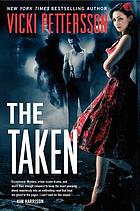
Pattersson, Vicki. The Taken (Harper Voyager, 2012). Last weekend I picked up Vicki Pattersson’s Taken, a supernatural noir involving an intrepid lady journalist, Kit Craig, and a former P.I., Griffin Shaw, who for the past fifty years has been working as a Centurian ushing murder victims’ souls to the afterlife. I had hopes Pattersson might be another Cherie Priest or Seanan McGuire, but this first installment, at least, of what promises to be a series, wasn’t Bloodshot or Rosemary and Rue. For one, the supernatural aspect of the story (Griffin’s post-mortal state) doesn’t really factor into the story in a major way. It’s what he is, and sets the plot in motion, but isn’t really developed as part of the cosmology. The Taken is a fairly straightforward investigative drama. Likewise, the character of Kit Craig feels like a sketched-out caricature: a newspaper heiress deeply involved in rockabilly culture, she has a fascination for the Fifties that is introduced but has no material bearing on the plot. The crime upon which the novel hinges (predictably, these days) on sex work and secret religious societies that rather embarrassingly harkens back to Arthur Conan Doyle’s A Study in Scarlet.

booknotes: life, liberty, and the pursuit of happiness

16 Tuesday Oct 2012

Posted by Anna Clutterbuck-Cook in book reviews

≈ Leave a comment

Tags

children, feminism, gender and sexuality, politics

The books to review are piling up, and the longer they sit in the queue the more I feel obligated to be Insightful about what I’ve read. So in an attempt to resist intellectual overwhelm, here are a few shorter reflections on the books I read in the first half of October.

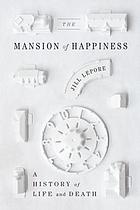
Lepore, Jill. The Mansion of Happiness: A History of Life and Death (Knopf, 2012). Harvard Professor of American history (and sometime MHS researcher) Jill Lepore’s latest work is a collection of essays, most of which began as pieces for The New Yorker, and are published here in expanded form. Despite its formidable title, Mansion is episodic rather than exhaustive, exploring American understandings of humankind — how humans begin, how we do and should live, how we die — in a series of engaging chapters on such topics as baby food (and breastfeeding), children’s literature (and children’s libraries), teaching sexual knowledge, parenting advice, and the medicalization of the end of life. Lepore is a skillful writer and deeply philosophical historian who believes passionately in the importance of translating her scholarly work into terms meaningful outside the academy. As an historian, I appreciate her deft use of primary source research in essays that range across time and space, making eloquent and thought-provoking connections between seemingly disparate historical events, cultural enthusiasms, and the persons and places of America’s past.

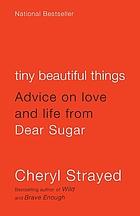
Strayed, Cheryl. Tiny Beautiful Things: Advice on Love and Life from Dear Sugar (Vintage, 2012). After my sister raved about Wild and Bitch magazine offered me a compelling and eloquent author interview with Cheryl Strayed, I realized it was time to read Tiny Beautiful Things. Over the years, I’ve definitely been exposed to the “Dear Sugar” columns Strayed wrote for The Rumpus, and in fact have a favorite quote from one such column right here on the feminist librarian (look to your left). Yet I’d never read “Dear Sugar” systematically, and in some ways I’m glad of that. While each individual column has power, taken together as a book-length collection Strayed’s attitude of kindness and care, the quality of listening and clarity of thought, become all the more beautiful and heartbreaking. The experience of reading Tiny Beautiful Things reminded me most strongly of the first time I cracked open Traveling Mercies. Cheryl Strayed’s voice is as raw and redemptive as Anne Lamott’s, though without the Jesus talk (for some of you that’ll be a plus, for others a minus — I urge you to read Tiny either way).

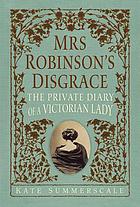
Summerscale, Kate. Mrs. Robinson’s Disgrace: The Private Diary of a Victorian Lady (Bloomsbury, 2012). In the summer of 1858, one Henry Robinson appeared before the newly-created divorce court in London and petitioned for the legal dissolution of his marriage to Isabella Robinson on the grounds of adultery. His lawyer put forward as evidence Isabella’s extensive and detailed diaries, which her husband had discovered while his wife lay ill with fever. The diaries, Mr. Robinson argued, provided evidence not only of Mrs. Robinson’s unhappiness in marriage (she wrote openly about her hatred for her husband and her plans for desertion once her children were grown) but also of her desire for other men, and — most damning of all — her longstanding emotional, and perhaps physical, affair with a friend of the family. Summerscale uses court documents, family papers, and the press coverage of the trial to piece together the story of “Mrs. Robinson’s disgrace.” What emerges is a fascinating tale of Victorian marriage law, sexual morality, conceptions of mental health and madness, and the unstable boundary of fact and fiction.

Valenti, Jessica. Why Have Kids?: A New Mom Explores the Truth About Parenting and Happiness (Houghton Mifflin, 2012).  Valenti’s latest is a quick read that I polished off earlier this week while waiting for Hanna in the waiting room of her physical therapist’s office. Using her own, fairly traumatic, entry into motherhood as a launching pad to explore the modern culture of mothering and parenting, Jessica Valenti (founder and former executive editor of Feministing) follows in the footsteps of Judith Warner (Perfect Madness), Susan Douglas and Meredith Michaels (The Mommy Myth) in critiquing the culture of “intensive mothering” and its unrealistic expectations of modern parents. For anyone who has read these earlier works (or, indeed, follows discussions about parenting in the feminist blogosphere), there will be little new here — though I think that in itself is noteworthy. Jessica comes from a generation or two past that of Warner, Douglas, and Michaels — yet still seems held hostage, to some extent, by the same societal judgyness around motherhood and family life. I found myself wondering, as I read, why the hell we continue to feel trapped by other peoples’ expectations. Obviously, public policy and law as a material effect on parenting options — but in the realm of “styles” and personal decisions it really should come down to what works for you and your family — if a given approach isn’t working, try something else.*

Which is part of the reason why I felt impatient with the way Valenti saves some of her most pointed criticism for proponents of “natural” parenting, whose philosophies and practices she felt betrayed by as a new mother coping with the aftermath of an emergency Cesarean and a daughter who needed months in the NICU to survive. While her own struggles are what they are and deserve to be articulated, this sometimes leads to lopsided critique — for example the pages and pages on the dangers of fanatic breastfeeding with only a single (very short) paragraph on the discrimination and judgyness leveled at parents who choose to (and are able) to nurse their kids. So it didn’t work for her, In a book that otherwise admirably refuses to take “sides” in the banner feminist parenting battles, I felt the treatment of the parenting practices Valenti rejected on a personal could have used more nuanced discussion from a feminist perspective.

*I actually think this holds true for any family, whether young children are involved or not.

booknotes: just married round-up

04 Thursday Oct 2012

Posted by Anna Clutterbuck-Cook in book reviews

≈ 1 Comment

Tags

books

I promised y’all book reviews, so by God there will be book reviews! Beginning with a run-down of the books I read during August and September, when I had neither time nor inclination to review them fully in posts of their own.

Bannon, Ann. Odd Girl Out (1957; reissue Cleis Press, 2001). I picked up Odd Girl Out in a used bookshop in Wellfleet and read it in an afternoon. Bannon’s first lesbian pulp novel tells the story of first-year sorority girl Laura who falls head over heels in love with worldly senior Beth. Mix in a boy named Charlie, the fear of being forever branded “queer” and you have the makings of a classic college romantic drama (spoiler: at least nobody dies!).

Bowman, Matthew. The Mormon People: The Making of an American Faith (Random House, 2012). A synthesis of the past forty years’ scholarship, rather than based on original research, Bowman’s The Mormon People is an ambitious work seeking to tell a coherent narrative of the Church of Jesus Christ of Latter-Day Saints from its beginnings in the Second Great Awakening to the present-day. He is particularly interested in the relationship between the LDS church and American political culture, exploring the way early Mormon counterculturalism gave way to mainstream assimilation over the twentieth century. Though perhaps some members of the LDS church would disagree with me, I thought Bowman was respectful of believers without brushing some of the more difficult issues (for example the church’s stance on women in the priesthood) under the rug. As with any overview, the historical issues are somewhat simplified — but I particularly appreciated the way in which Bowman was able to discuss the historicity of the faith without disrespecting the value of belief among those who chose to join this infant American branch of Christianity.

Delblanco, Andrew. College: What it Was, Is, and Should Be (Princeton University Press, 2012). A seasoned literature professor at Columbia, Delblanco offers an articulate, thoughtful, and well-researched tour through the history of the American system of higher education, with a particular focus on undergraduate colleges. He’s interested not only in how colleges came to be what they are today, but what we might want them to be moving forward. What, he is asking, is college for? His answer is a holistic one, which I am largely sympathetic with: college should not only be a place to acquire skills, but also a time and place to ponder questions of ultimate concern (“how shall I live?”), and that everyone — regardless of socioeconomic class — deserves that time and place. I was less impressed with his reflections on how to fix a system gone wrong (after a whole chapter on how tests are worthless as a measure of student learning, he suggests national tests at the college level as one possible way forward; I was nonplussed). Still this brief and passionate little book should be on the reading list of anyone interested in the history of education and/or people involved in higher education in any way.

Doherty, Thomas. Hollywood’s Censor: Joseph I. Breen and the Production Code Administration (Columbia University Press, 2007). After reading The Accidental Feminist this summer, I was interested in learning more about the Production Code Administration. So footnote surfing brought me to Hollywood’s Censor. Doherty, a film historian, provides an exhaustive cultural history of the PCA that — at times — seems to get buried under the weight of chronological detail. Using the life of Joseph I. Breen (a central figure in the development of the Code) as a through-line, Doherty traces the rise, influence, and fall of the Production Code from the 1920s into the 1960s. While for my taste the book could have contained less of Breen and more examples of films shaped by the PCA machine, it was fascinating to see how intimately involved in script development Breen and his associates were. Since it was much more efficient for the studios to have film projects pre-approved then to have them screened and censored post-facto, Breen often worked closely with script writers, directors, and producers (whether they wanted him to or not!) in crafting scenes that would convey adult themes without violating the Production Code. While I admit to skimming some sections, I did come away with a greater understanding of film-making in Production Code-era Hollywood.

McGuire, Seanan. Ashes of Honor (Daw, 2012). The latest installment in McGuire’s October Daye urban fantasy series, set in San Franciso, did not disappoint as the perfect vacation read. Toby is called in when an adolescent changeling unexpectedly comes into her fae powers and unwittingly begins destabilizing the metaphysical connections between the various faerie realms. There was perhaps a bit less of May, Toby’s fetch, May’s girlfriend Jazz, and Spike the rose goblin, than I would strictly have liked to see … but the developing relationship between Toby and Tybalt was all sorts of delightful. I’ll be happily anticipating the next installment until such time as it appears.

Mohanraj, Mary Anne. Aqua Erotica (Three Rivers Press, 2000). A dollar cart find, this collection of water-themed, sexually-explicit short stories is the first erotica anthology I’ve read in awhile wherein more than one author was doing something interesting with their subject matter. I particularly liked the contributions by Carol Queen and Francesca Lia Block; I’m sure others will find their own favorites!

Penny, Laurie. Meat Market: Female Flesh Under Capitalism (Zero Books, 2011). I received an electronic review copy of Meat Market from Zero Books back in August. This slim (72-page) manifesta from British feminist Laurie Penny (aka Penny Red) explores in heavily Marxist language the way in which the modern capitalist economy has turn human bodies — in this case specifically women’s bodies — into commercial products. Penny explores commodified sex, disordered eating, the pressures on women to perform gender in specific ways, and the un- or underpaid labor of care. While I think other writers have tackled these issues more comprehensively and perhaps more accessibly, I particularly appreciated Penny’s clear stance against transphobic feminism, and her insistence that all women — whether cis or trans — face gender policing. I look forward to watching where Penny’s work takes her from here.

Rubin, Rachel Lee. Well Met: Renaissance Faires and the American Counterculture (New York University Press, 2012). Rubin’s study of the modern Renaissance Faire is part ethnographic study, part cultural history. Beginning with the origins of the Faire in the Southern California music and theater scene of the 1960s, Rubin traces the Faire from local radio station fundraiser to national (often corporate) institution. Well Met is a multi-layered study in cultural memory, as it explores not only the fair workers’ and attendees’ quest for a usable “Renaissance” past but also the way the Ren Faire has become a repository for memories and emotions about the Sixties counterculture. For those who have positive associations with the counterculture, the Faire has become a safe space for body positivity, sexual variation, artistic creativity, and a nomadic, in some ways communal life. For those who fear and/or dislike the values of the Sixties counterculture, the Faire becomes an object of loathing and derision. One of the most intriguing chapters of the book, in fact, explores the Faire “haters” who (Rubin contends) have constructed their identity around hating on the Faire much like passionate participants have constructed their identities around Faire work and attendance. I highly recommend Well Met to anyone with an interest in Renaissance Faires, the Sixties, arts and music scenes, cultural memory, and fandom culture.

Sandler, Lauren. Righteous: Dispatches from the Evangelical Youth Movement (Viking, 2006). I discovered this piece of journalism through an article about Mars Hill megachurch in Seattle published in the latest issue of Bitch magazine. Sandler’s journey through the Evangelical subculture, with an eye toward it’s appeal to young people, explores the way the post-80s Evangelical leaders have harnessed the counterculture energy of youth into a reactionary counterrevolution. These young people, the “Disciple Generation,” as Sandler identifies them, are succeeding in making fundamentalist Christianity cool, hip, and a political force to be reckoned with. While an interesting read, I am growing tired of such journalistic accounts that frame fundamentalist evangelical culture as inherently “other.” Particularly when they buy into the us/them mentality fundamentalists themselves employ: “secular” culture pitted against fundie Christian culture as if no other faiths or faith practices exist. I also think Sandler is too quick to assume young people are turning to the Christian right because “secular” culture has failed to give them something to believe in. Really? You couldn’t do a little exploration into how left-leaning youth are building meaningful lives? Hopefully we’ll soon start to ask more complicated questions of the counterrevolution than just “ohmigod what are they doing here?!”

Sandweiss, Martha. Passing Strange: A Gilded Age Tale of Love and Deception Across the Color Line (Penguin, 2009). It’s been awhile since I had a case of scholar-writer envy as intense as I did reading Passing Strange. Sandweiss combs through the historical record for clues to help her reconstruct the story of high-profile turn-of-the-twentieth-century American scientist Clarence King who successfully concealed his marriage to Ada, a black woman, and the children they had together until after his death. His elite white friends thought him a bachelor; Ada — as far as the historical record revealed — believed her husband was a light-skinned black man who worked a series of jobs that often took him far from home. Through the story of Clarence and Ada, Sandweiss explores the nuances of race and race “passing” in America in the Reconstruction Era.

booknotes: the end of men

11 Tuesday Sep 2012

Posted by Anna Clutterbuck-Cook in book reviews

≈ 8 Comments

Tags

feminism, politics

Back in July, I unexpectedly scored an advance review copy of Hanna Rosin’s The End of Men; and the Rise of Women (Riverhead Books, 2012) through LibraryThing’s Early Reviewers program. It arrived last week and I had every intention of saving it for vacation … but instead read it over the course of two afternoons. In part because it’s a pretty breezy read once you’ve got the gist — and mostly because I was so irritated by it, I found it hard to put down.*

In the event you’ve been in a media blackout since July 2010, Rosin originally wrote an article for The Atlantic under the same sensationalist title (a title which she apologizes for as the book dedication; perhaps that’s when you should rethink your marketing strategy?). Said article was one of a rash of journalism-lite pieces proclaiming the 2008 recession a “he-cession” and suggesting that as male unemployment rose it was women who stood to gain in both economic opportunity and political and social power. “The End of Men” painted a bleak picture of a future “matriarchy” in which high-powered, controlling women run the world while their college dropout loser husbands hang out with soiled toddlers ignoring the responsibilities of grown-up life. The End of Men is essentially a book-length elaboration on this apocalyptic vision of an upturned gender binary that — rather than creating space for more egalitarian, gender-independent relationships — merely reverses the stark hierarchy of the most aggressive patriarchal society.

More articulate and knowledgeable bloggers than I have refuted Rosin’s sketchy use of data and anecdote to paint this hysterical vision of what 21st-century hetero relationships may look like, and how the changing global economy might contribute to their reshaping. I’m not going to mimic more comprehensive efforts elsewhere. What I want to talk about instead is how crippling Rosin’s framework of oppositional, binary gender is to her observation and analysis, how profoundly it shapes her interpretation of what she sees in the world. Because this, more than anything, got under my skin and made me feel kinda sleazy for even paying The End of Men the time of day.

But I am giving it the time of day because — as Jill points out in her meditation on Naomi Wolf’s latest venture into the world of publishing — however frustrating and discrediting I find Rosin’s framework, it continues to be a compelling one for many people across the political spectrum. Rosin continues to be a respected left-of-center talking head on issues of children and education, on feminism, on parenting, on sexuality, on gender. And yet she is writing from a perspective drenched in the gender binary, seeing a world in which men stand in one corner, women in the other, locked in a zero-sum competition for power, prestige, and material resources.

And it’s important to ask how truthful this interpretation of the world is, how useful it might be in helping us move forward, and what Rosin’s framework causes her to overlook and leave out (in the event this post is tl;dr for some of you, my answers to these three questions are: not very, not hardly, and some pretty crucial things about humanity — for example, uh, that same-sex couples exist and don’t fit into her tidy framework of hetero couples in perpetual struggle for dominance).

Rosin waffles in the text over whether gender difference is borne of nature, nurture, or a combination of both — but in the end this doesn’t much matter to her thesis. Whether innate or learned, the women and men who populate Rosin’s world are the tired stereotypes of gender complementarity — with, if we’re lucky, a feminist twist. Women are barrelling ahead learning how to combine “feminine” and “masculine” traits and take over the world, while men (unwilling or unable to adapt, it’s unclear throughout the text which theory Rosin favors) are left unmoored and impoverished. In Rosinland (seriously: is she living in the same country I am?), the men are universally intellectually closed, emotionally stunted beings who shuffle through life under the thumb of high-powered wives and girlfriends who organize and circumscribe their lives — and then ditch the dudes when their economic success leads them to greener sexual pastures. Or, if they had the poor judgment to get married before economic disparity set in, the couple falls into a routine of wifely overfunctioning and/or spousal abuse by a resentful husband.**

Here’s the thing. Because Rosin is determined to make this a story about gender — and specifically, how men are losing at life while (because?) women are winning — she utterly fails to approach her research with awareness of how her beliefs about gender color her interpretation. Not only does she fail to deliver an account “unincumbered by assumption or ideology” (as the flap copy would have us believe), she doesn’t even fess up to the assumptions and/or ideologies that shape her narrative. We all bring bias and belief to our project of making meaning, and thus it is irresponsible for anyone to approach such a nexus of cultural-laden ideas (gender, power, marriage, work) and not acknowledge the particular lens through which they approach their research.

Gender is, as many a feminist pointed out, a valid category for analysis. The gender we’re assigned at birth, and how the world around us responds to that gender, is absolutely part of what shapes our lives. The fact that Rosin can write a whole book using the lens of gender is a victory for feminist theorists, activists, and scholars the world over. My frustration with Rosin’s argument isn’t that she chooses to focus on gender — it’s that she seems to understand gender to be the category of analysis. Like feminists who act as if the sisterhood is the ur-category trumping race, class, sexual orientation, nationality, time, space, and possibly black holes, Rosin hop-skip-jumps from anecdote to anecdote attributing every marital friction, educational or economic woe, asshole behavior or informant viewpoint back to … gender.

The strange beings who populate The End of Men appear to have no inner life or motivation beyond fulfilling (or overcoming) the fact of their gender. Religious beliefs or social justice values? A sense of how, as an individual, the person wants to shape a meaningful life? What sort of parent they want to be, where their creative passion lies, none of this matters. The only value any being in Rosinland seems to possess is monetary, and whether their monetary fortunes go up or down seems to be a question of how skillfully they perform gender. The women who populate Rosinland are a breed of Amazonian high-achievers whose interest in people with penes seems wholly dependent on their material utility (and possibly their genetic matter and/or ability to provide fucks on a somewhat regular basis). She actually invokes Charlotte Perkins Gilman’s embarrassingly racist Herland as a literary example of the world she believes we’re charging toward.

And cites it as a victory for the feminist agenda. Once again, I failed to get that memo.

Because Rosin thinks women only want men for their economic assets*** she is obviously puzzled by the couples she encounters where women are (for example) pursuing advanced degrees while their partners are content with a quieter life. In Rosinland, deliberately picking a low-key job in order to have time to go fishing with your buddies, play video games, or (gasp!) be a stay-at-home dad are sneer-worthy life choices.

Excuse me for living, but men are hardly the only ones to value friendships and leisure time, fandoms and family over a high-paying career that might bring in over $100k per year but demand eighty hours per week in return. I kept waiting for The End of Men to take me on a tour of hetero relationships that have found equitable footing (I know a number of them!), where the partners actually, you know, care about one another as people rather than monitoring their significant other for how well they’re fulfilling a prescribed social role. Yet in Rosinland these relationships do not exist.

I’d argue that, in part, they don’t exist because Rosin completely failed to talk about queer people. At all. Not a single lesbian, gay man, bisexual, transgender, genderqueer, poly, or kinky individual appeared in the pages of her book. In Rosinland, the only option is heterosexuality — it has to be or her theory of gender relations would fall apart.

Yet even if she’d been up-front about focusing on heterosexual relationships and how economic factors shape the family decisions and interpersonal dynamics of straight people, I could have pointed her to at least half a dozen straight couples I know where the interpersonal dynamics are hardly over-determined by the size of each individual’s paycheck. Newsflash: there are other reasons people enter and remain in relationships.

Hands-down the creepiest aspect of The End of Men was the way in which Rosin ha so completely accepted the neoliberal assumption that the worth of a human being begins and ends with their worth as worker.

Ultimately, The End of Men is a book that uses a lot of paper and ink to say very little that is original or useful. It regurgitates tired stereotypes about (straight) women and men, invites us to fear women’s rising professional success and greater social autonomy, and is confusingly vague about how we have landed in this dreadful gendered mess. Rosin insists that men aren’t incapable of putting on their grown-up pants and succeeding in this new “feminized” economic landscape — except that her references to evolutionary psychology and discredited “brain difference” studies undercut this assertion. And while she pays lip service to gender policing and social expectations that penalize men and women for gender non-conforming behavior, she is worryingly blithe about structural constraints on individual autonomy. For example, in a chapter on female executives, she argues that these women have succeeded because they “will themselves to ignore [sexism] so they can get their work done” (197).

In Rosinland, the only real obstacle to women’s success is their own self-doubt.

I would argue that The End of Men is actually a book that revolves around Rosin’s fear of women’s equality — or at least her belief that as women make social and economic gains it is their responsibility to ease the terrible shock their hard-won equality is causing the men. The women of Rosinland are judged harshly — the text repeatedly uses words like “overbearing,” “domineering,” “matriarchy” — for taking on assertive, leadership roles in both the workplace and in their personal lives. Yet we are also held responsible for cajoling, bullying, manipulating, requiring, or otherwise hauling reluctant men into the new “matriarchal” world order. In a penultimate chapter on the rising economic power of Korean women^, for example, Rosin relates an anecdote about a woman who spent two decades pushing her husband to help her with household chores and now that he’s finally “taken the hint” she’s set to work on her son.

While I obviously have no problem with women expecting equality in the domestic sphere — regardless of the sex of their partner! — what I think is fascinating-yet-troubling about the way Rosin shapes her anecdotes is that it is always the woman who lays down the law for her man to follow. While simultaneously bending over backwards to make adaptation seem palatable to men who (because of their caveman brains?) are lost in a woman’s world, disconsolate and suffering. At times, Rosin even seems to be suggesting that in order to encourage men to become more gender-independent (less wedded to outmoded notions of masculinity) we have to create special male-specific pathways for them to get there — i.e. gender-segregated educational opportunities. Surely if the future we want is one in which both women and men can thrive as people, the very last thing we would want is to suggest by the very shape of our educational system that women and men were fundamentally different beings?

In my estimation, The End of Men ends up using the supposed explanatory power of gender to account for seismic changes in the global economy that need to be grappled with in a much less reductive way. It is not enough to argue that the prevalence of women in the workplace equals the success of women (much less the success of feminism) if the reason women outnumber men in our economy is that they tend to hold jobs in the service and retail industries — jobs that rarely pay a living way, are thin on benefits, and usually exact harsh penalties for workplace organizing. It’s not the triumph of feminism that labor women, as a class, used to perform for free (childcare, eldercare, housework) is now outsourced to others who, in turn, must outsource their own care-giving responsibilities.

The story Rosin ought to be telling is a story about the erosion of workers rights, about the increasing identification of citizen and self with the wage-work we perform, about the poisonous effect this has on our interpersonal relations, about the way neoliberal capitalism fails to account for the care we provide to one another that can’t be reduced to work-for-hire. Yet her beliefs about gender cause her to look no deeper than a tired old tale of male vs. female.

I can only hope that her work will inspire others to do better.


*Andi Zeisler recently commented that Katie Roiphe’s anti-fans can’t stop obsessively reading everything she publishes; I have had a similar relationship with Rosin since reading God’s Harvard (2007).

**Except in Rosinland women are the greater physical threat — based on a handful of sensationalist accounts of female aggression a la Mean Girls meets Monster. This is such a troubling misuse of anecdata I can’t even.

***She totally buys into the sexual economy theory of hetero relationships, even citing Mark Regnerus’ Premarital Sex in America to support her argument.

^Her handling of race gives me the no feeling on a number of levels, but her chapter on the “gold misses” of Korea is especially troubling in the way it uncritically recapitulates stereotypes about Asian women and the cultures of Asia. Also note that African-Americans appear most explicitly in the chapter on the increase in female violence and in references to “matriarchal” society.

Cross-posted at The Pursuit of Harpyness.

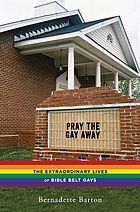
booknotes: pray the gay away

28 Tuesday Aug 2012

Posted by Anna Clutterbuck-Cook in book reviews

≈ Leave a comment

Tags

gender and sexuality, in our words, politics, religion, sexual identity, sociology

Between the winter of 1987 and the summer of 1988, Boston-based journalist Neil Miller traveled across the United States “in search of gay America.” Though he spoke to women and men in the “well-trodden … urban gay ghettos” of Washington, D.C., New York City (the “gay metropolis”), and San Francisco, his primary purpose was to document the experience of queer folks living in what coasters refer to as “flyover” states, the “red state” regions of the American South, Great Lakes, Midwest, and Plains states. As Miller writes:

Acceptance and self-acceptance amidst the anonymity of cities like New York and Los Angeles and even Boston meant little, I was convinced. One had to travel beyond the large metropolitan areas on the two coasts to places where diversity was less acceptable, where it was harder to melt into the crowd … that was where the majority of gay people lived anyway, even if you didn’t read about them in the gay press or see them on the evening news (In Search of Gay America, 11).

What Miller found in his travels was that queer people in the heartland were often less visible than their East and West coast counterparts; they kept their heads down and their mouths shut, maybe living in a community where everyone knew they were gay but no one openly acknowledged it. Many of Miller’s interviewees talked about the social isolation, particularly if they were un-partnered; in the pre-internet era single lesbians and gay men often had to travel regularly to urban centers to meet and socialize with others like themselves.

In the two decades since Miller’s travels, much has changed in the world of LGBT visibility, culture, and activism — yet our collective understanding of queer culture remains focused on urban, coastal areas as gay-friendly, while the rest of the country is dismissed (especially by those who don’t live there) as a place where “diversity is less acceptable” and life is harder for queer men and women trying to make their way in the world.  Bernadette Barton’s new study, Pray the Gay Away: The Extraordinary Lives of Bible Belt Gays (New York University Press, October 2012) both confirms and complicates this narrative.

A Massachusetts-born academic who moved with her partner to Kentucky, Barton was taken aback when a neighbor denounced homosexuality as a sin after Barton came out to him. Curious to understand how “Bible Belt gays” experienced this climate of casual anti-gay sentiment, she began interviewing gays and lesbians who grew up in what she terms the “Bible Belt panopticon,” the southern mid section of the nation in which tight-knit communities and strong evangelical, fundamentalist Christian culture come together to create and police conservative norms. When the normative culture is implicitly anti-gay, open bigotry is not needed to encourage self-policing. For example, Barton quotes an interviewee reacting to a church billboard proclaiming, “Get Right or Get Left”:

Get right means to be saved and get left means to be left behind at the Resurrection, but this also conveys the dual message of the church’s political affiliation as well. It’s very polarizing, and when I read it, it sounds like a threat.

Barton observes:

This is an example of how antigay rhetoric, especially to a Bible Belt gay, doesn’t have to say anything at all about homosexuality. It’s the associations. A Bible Belt gay knows homosexuality isn’t included in the right column.

Pray the Gay Away explores different ways in which this Bible Belt panopticon manifests, from family expectations to ex-gay ministries, gay-unfriendly workplaces and legislation to ban same-sex marriage. Throughout, the voices of Barton’s interviewees are powerful evidence in support of her thesis. One graduate student, for example, tells Barton about how his parents tried exorcism when they found out he was in a same-sex relationship. When he remained unrepentant they not only disowned him and cut all financial support, but also removed all of his belongings from his dorm room before they returned home. Through the support of his campus community, the student was able to remain in school — but the resilience of the child does nothing to redeem the horrific behavior of his parents.

I grew up in West Michigan, an area that is — though technically outside the Bible Belt proper — incredibly religiously and politically conservative. Reading Barton’s work, I found much to identify with in its descriptions of life in a community that resists difference and where anti-gay feeling is commonplace. I was particularly struck by her observation that in such communities, “gay” and “straight” are the only two categories a person can belong to. Anyone who is something other than straight is “gay.” You’re either “right,” after all, or “left.” That observation made me wonder whether it took me so long to recognize my own sexual fluidity in part because I literally had no language with which to describe myself.

Though I no longer have to live in a culture that makes it difficult (if not dangerous) to speak of my existence, I am mindful that what Barton terms the “toxic closet” effects everyone whom anti-gay bigotry touches, not just queer folk. My parents, for example, felt profoundly alienated when the city council rejected an anti-discrimination ordinance last year. And my grandmother is uncertain with whom she can safely share the joyful news of my marriage. The “Bible Belt panopticon” constrains us all.

At times, Pray the Gay Away seems to paint the Bible Belt as a monolithic culture of hate. I was pleased to see how careful Barton is to point out that she “deliberately sought out individuals who grew up in homophobic families and churches to best explore their consequences,” and that her narrative describes the normative culture of the Bible Belt, rather than attempting to describe all people therein. (For a broader examination of queer folks’ relationships with their families of origin, see the excellent Not in This Family by Heather Murray.) Barton’s conversations with gay Christians and gay-friendly church leaders, as well as her nuanced exploration of ex-gay ministries help show that even situations which appear toxic at first glance often contain more complex realities.

Yet ultimately, Barton argues that in the Bible Belt region “rampant expressions of institutional and generalized homophobic hate speech in the region bolster individually held homophobic attitudes and encourage those who have dissenting opinions to remain silent.” One lesbian student whom she interviews theorizes that it might even be accurate to identify these anti-gay attitudes and actions as “gay cultural genocide.”

I highly recommend Pray the Gay Away to anyone with an interest in contemporary queer experience, in Bible Belt Christianity, and the intersection of the two. I’d go so far as to say it’s required reading for anyone who cares about what it means to be gay in America today. Whether or not you’ve ever lived in the “toxic closet” yourself, too many of our fellow citizens still wake up there every morning. We owe it to them to listen to the stories they have so generously shared.

Cross-posted at In Our Words.

booknotes: the radical doula guide

21 Tuesday Aug 2012

Posted by Anna Clutterbuck-Cook in book reviews

≈ Leave a comment

Tags

being the change, feminism, human rights, politics, reproductive justice

I don’t actually remember how I first happened upon Miriam Zoila Perez’ blog Radical Doula, but it must have been fairly early on in the site’s existence since she and I have been active in the feminist blogosphere for about the same amount of time (since 2007). I’ve been a virtual observer/admirer as Miriam has taken her radical doula journalism from its earliest personal musings to a much more high-profile presence in such spaces as Feministing and RhRealityCheck — although I still have particular place in my heart for her earliest, most personal, internet home.

It’s with a great deal of affection and feminist pride, then, that I’ve followed updates these past few months concerning Miriam’s first book: The Radical Doula Guide: A Political Primer (self-published, 2012). I was able to support its creation in a modest way by contributing to the kickstarter campaign at IndieGoGo which raised over $4,000 in seed money for the project, and as a thank you gift for that contribution I received an advance review copy of the finished publication in the mail last week.

\o/

And it did not disappoint. Miriam’s 52-page “political primer” discusses the political nature of what she terms “full spectrum pregnancy and childbirth support” — a concept that covers not only childbirth and postpartum doula work, but also abortion and miscarriage doula care, a relatively new service some trained doulas are offering. There are books and training workshops available for learning doula techniques, and The Radical Doula Guide doesn’t seek to replicate those resources. Instead, Miriam offers some reflections on how doula work intersects with political systems: “a starting point to understanding the social justice issues that interface with doula and birth activism” (4).

In four brief sections, Miriam acts as a tour guide through different aspects of full-spectrum doula care and brief analyses of three broad categories of intersection between pregnancy and politics: “bodies” (race, gender, sexual orientation, size, age, and HIV/AIDS), “systems” (immigration and incarceration), and “power” (class and intimate violence/abuse). Using these broad categories with the more familiar nodes of inequality as sub-categories draws our attention back from specific issues to think in more expansive terms about the ways our bodies and lives are policed within society in both informal and formal ways. And specifically, how those constraints shape the experience of pregnancy and parenting.

Miriam is particularly eloquent on the difference between politics and personal agendas. For as she points out, to practice as a doula means leaving one’s own agenda at the door — but it should not mean leaving behind one’s mindfulness of how political circumstances shape the experience of the pregnant person you’re working with. You may believe, for example, that having a C-section is unnecessary while the person you’re supporting wishes to have one. It’s not your job to convince the pregnant person not to have a Cesarean — but it is appropriate to suggest resources for informed decision-making (especially if you’re concerned about pushy medical staff).

This guide would be a great starting point for further discussion in a reading group or classroom setting; I definitely felt like the brevity — a definite strength in many respects — bordered on too brief at times. I imagine that folks new to social justice terms and concepts, or skeptics who need convincing that these issues matter might be frustrated. However, that is not Miriam’s main audience. As a “primer” pointing outward to further exploration, The Radical Doula Guide is lovingly crafted and inspirational. It’s definitely a must-have for any (personal or institutional) collection with a focus on reproductive justice issues.

The Radical Doula Guide is available to order online at WePay for $12.00 per copy (and discounted rates for orders of 10+).

booknotes: after pornified

07 Tuesday Aug 2012

Posted by Anna Clutterbuck-Cook in book reviews

≈ 3 Comments

Tags

feminism, gender and sexuality, smut

Anne’s daughter Lilly, to whom
the book is dedicated (via)

As readers of this blog know, I spend a not-inconsiderable amount of time reading, writing, and thinking about sexually-explicit materials. Not just histories and health texts, but also works of fiction and nonfiction intended to arouse. In other words: porn.

As as you may also remember, I have little time for categorically anti-porn feminists (e.g. Gail Dines) whose only way of critiquing porn is to attack it wholesale. Pornography — by which I mean, in the broad sense, material of any medium that is sexually-explicit and intended to involve the reader/viewer on a visceral level — is, like any other creative medium, a way for us as humans to make sense of our world. And discounting it wholesale seems nonsensical to me. Should we not, instead, engage in a critical discussion about what we do and don’t like about the current state of porn (there will, naturally, be differences of opinion here) and what we’d like to see more of moving forward (again, there will be no consensus — there creativity lies)?

Therefore, I was super excited when I first heard, last year, about Anne G. Sabo’s forthcoming book After Pornified: How Women are Transforming Pornography & Why It Really Matters (Zero Books, 2012). A follower of her blogs (Quizzical Mama; New Porn by Women; and Love, Sex, and Family), I knew Anne would have thoughtful and thought-provoking things to say about a genre of porn — motion picture porn — that I have had little experience with, and know little about. I was excited enough about the book to press the author for an advance review copy, which she was kind enough to send me (hooray!). Since that exchange earlier in the summer we’ve actually gotten involved in an ongoing conversation about sexuality and identity — along with Molly of first the egg — which has the potential to solidify into a collaborative project down the line.

\o/

Ahem. So, yes. It’s great to connect with other thoughtful people who believe, as I do, that pornographic materials deserve sustained attention through all manner of lenses: as art, as literature, as cultural artifacts, as evidence of human sexuality, as a medium of communication and (hopefully) cultural change. Which is the story that After Pornified tries — in part — to document: How female directors are creating a new kind of pornographic film and how these new films explicitly and implicitly disrupt the conventions of inequality in much of mainstream moving picture porn. In Sabo’s own words,

I have found that porn is not inherently bad; there has just been a lot of badly made porn. … I am interested in the authentic porn made by women who show a sincere commitment to radically change porn, featuring female and male sexuality with respect and realism. Where porn becomes a vehicle for women to explore their own sexuality and define it for themselves (6).

Focusing on specific film-makers, with extensive discussion of the scripts, visual technique, musical choices, and sexual expression and messages of each film, as well as directorial intent, Sabo takes us on a verbal tour of this “new porn by women” and seeks to persuade us that their innovations are worth paying attention to for what they say about both the possibilities of porn and the possibilities of sexual intimacy between human beings. Candida Royalle, Anna Span, Jamye Waxman, Tristan Taormino, Petra Joy, and Erika Lust among others are artists whose work and words are extensively featured in After Pornified‘s pages (a list of films discussed and an appendix of resources for further exploration are really useful aspects of the book).

In assessing the porn she reviewed, Sabo employed a formal set of criteria which she includes in chapter one. The two axes along which she critiques the films are “high cinematic production value” and “progressive sexual-political commitment,” including the values of gender equality and active subversion of received notions of sexual shame and guilt. These two criteria blur together in many cases, as when Sabo considers the way in which camera angle (the gaze of the viewer) reinforces power-over or emphasizes power-with dynamics within the sexual encounter. I really appreciated the way in which film qua film was brought to bear on the sexual messages being sent — particularly in Sabo’s discussion of the sexual gaze. The notion of sexual “objectification” as an inherent and universally-degrading aspect of (visual) pornography is a widely repeated truism within feminist circles, one which Sabo insists on complicating by pointing out instances of the “non-objectifying gaze”:

What I find striking about the way the two [characters in the sex scene she has just described] look at each other is the exchange of a desiring gaze while the camera for its part refuses to objectify either [male or female partner]. Instead, ‘objectification’ here becomes an affirming, adoring act (27).

For the most part, I am not the audience who — hopefully! — may be encouraged by After Pornified to think about pornography in new and less totalizing ways. I am already eager to explore the realm of sexually-explicit materials for new sexual scripts, and to participate in remaking what we think we know about what porn is and the ways it can be used in our society. Still, I was pleased, as a reader, to be introduced to a new type of material I have had little opportunity (time and money being the barriers that they are) to explore. While Sabo hasn’t necessarily sent me running up the street to our local Good Vibrations to purchase a DVD collection of Erica Lust or Candida Royalle productions, it has given me a sense of what’s out there should I decide it’s something I want to delve into more intentionally.

While reading my copy of After Pornified, I jotted down a few questions that the manuscript provoked for me — questions that I didn’t expect Sabo to answer within limits of a single text, but which I hope we will all think about as we carry this important work of re-thinking porn forward:

  • There’s an assumption running through After Pornified that men have, historically, been the makers and consumers of porn and that as women viewers and film-makers enter the porn market the content will shift because what women want in terms of porn is different. This is an assumption that many feminist thinkers (both pro- and anti- porn) share. One of Sabo’s interviewees, for example, relates her attempt to create porn films with “content that would appeal to women” (55). I find myself wondering what the basis is for our assumption that women want different things from men, porn-wise, and whether evidence bears this out? My guess is that women and men actually want more similar things in porn than the mainstream media would have us believe.
  • Building on that, I wonder whether female film-makers (the focus of Sabo’s study) are more likely to make feminist porn (using her criteria) than male film-makers? Can men make feminist porn? Are there examples already out there of men involved in feminist porn? It would have been interesting to hear from men involved in some of the films Sabo reviews, to find out what their intentions and experiences were, and what sort of porn they found satisfying to make.
  • Again, this is beyond the scope of Sabo’s study, but I found myself wondering about two constituencies while reading the book: Men who are ill-satisfied with mainstream porn and women who like porn that wouldn’t make the cut, so to speak — porn that wouldn’t fit the “new porn” criteria Sabo has laid out. In most feminist discourse about pornography, as I observed above, men are treated as satisfied customers. Porn is a genre catering to “men,” the narrative goes, and women are the tag-along partners or feminist trail-blazers. I would be very interested in research that complicated men’s experiences of pornographic material (without the shame/blame framework) and explored what they, too, may want that the current mainstream fails to provide. Similarly, I fear that a focus on “new porn” that is feminist and egalitarian could ignore the fact that there are people, including women, for whom certain aspects of mainstream porn are deeply satisfying. This book wasn’t the place to explore that in-depth, but I do think it’s important not to simply replicate a “good porn” (feminist/egalitarian) “bad porn” (all other stuff) dichotomy — something feminist history tells us is a trap all too easy to fall into.
  • I found myself thinking a lot about issues of access. Many of these films sound great, but they are often independently produced and distributed, subject to censorship laws, behind pay walls online, etc. Making money as a film-maker is obviously not a bad thing, but it’s interesting to think about the economic aspects of distributing “new porn by women,” and to think about where people who don’t have the funds to invest in a feminist porn collection might access pornographic materials. I haven’t looked into amateur porn sites much, but it would be intriguing to see if feminist sensibilities were seeping into home-made video smut the same way queer and feminist sensibilities are blooming within fan-fiction communities. As a general rule, I’ve had much better luck finding well-written, queer-progressive smut in fan-fiction spaces than I have in published erotica anthologies, even from imprints like Cleis Press.
  • Queer porn as a subgenre is not tackled in this book as queer porn, which Sabo elsewhere has acknowledged is a deliberate decision. She’s trying to encourage us away from queer sexuality vs. heterosexuality to just talk about sexuality — a goal I really appreciate. However, sometimes leaning away from speaking explicitly about “queer” or “lesbian” or “gay male” porn has the effect of erasing those perspectives; the majority (though by no means all) of the films Sabo discusses are about male/female encounters, and those which do feature women-on-women action or male-on-male action still seem to center around a heterosexual encounter as the driving force of the plot. So I guess — as someone who’s gotten a lot out of queer smut over the years — I wonder what’s going on in this “new porn by women” that so much of it is centered around male-female encounters? Perhaps it’s part and parcel of trying to figure out how to women and men can have equitable sexual intimacy in a culture that constructs them as inherently unequal?

Finally, I appreciated Sabo’s discussion, in her afterword, of how we bring our embodied selves into our work and scholarship. “There’s somehow something incorrect for a scholar to be turned on at work,” she observes — pointing toward the discomfort many of her colleagues have expressed (including those in gender studies) when she discloses that she studies porn (202). I was reminded of bell hooks’ piece on the the erotics of teaching, “Eros, Eroticism, and the Pedagogical Process” (in Teaching to Transgress, Routledge, 1994). hooks observes:

Entering the classroom determined to erase the body and give ourselves over more fully to the mind, we show by our beings how deeply we have accepted the assumption that passion has no place in the classroom (192).

hooks is writing more generally here about embodiment and emotional investment, about being full persons within an academic setting (the same could be observed about the workplace), rather than narrowly about being a sexual person. However, I see our discomfort with sexual topics and the notion of a person whose work turns you on — or has the potential to do so — as part and parcel of this separation from the self. Full persons, after all, experience arousal. We should not feel required to cut ourselves off from that feeling — we only need to learn how to express it appropriately (for example, it’s probably not a good idea to flirt with a student or share detailed stories of your sexual experience with an employee). As a culture, we seem incapable of recognizing the experience of arousal without picturing immediate sexual acts speaks to our broader cultural impoverishment when it comes to discourse about sexuality as an integrated part of our lives.

After Pornified is determinedly both scholarly and passionate, and thus a valuable contribution to the ongoing conversation about pornography’s place in our culture — both what it is and what it should or could be. I’m looking forward to seeing what sort of discussion it sparks, and where the work of feminist porn-making and porn critique goes from here.

booknotes: confronting postmaternal thinking

31 Tuesday Jul 2012

Posted by Anna Clutterbuck-Cook in book reviews

≈ Leave a comment

Tags

being the change, children, feminism, human rights, politics

I’ve been threatening to write a review of Julie Stephens’ Confronting Postmaternal Thinking: Feminism, Memory, and Care (Columbia University Press, 2012) for over a month now but for some reason my thoughts will not gel. It’s a slim book that is trying to do lots of cultural work, pulling together threads of philosophy, political science, history, memory studies, feminism, and ethics. I had very intense reactions while I was reading it, but those reactions feel … half-digested still. In another six months or a year I may have to go back and give it another pass. A second reading might help clarify my reactions. In the meantime, here are some of my initial impressions and reactions.

  • As I said in my review of Love the Sin, Julie Stephens, in Postmaternal, is likewise critiquing our neoliberal conception of who gets to be a citizen, and who is a good citizen. She is particularly interested in the way care-giving and caregivers are tolerated only insofar as they manage to fit the norm of a citizen-worker. For example, she observes that workplace concessions to working parents — and especially working mothers — are often designed to streamline women’s return to full capacity as workers, to make invisible their care-giving responsibilities, rather than restructuring work and the workplace to accommodate care-giving cycles in family life. Her reflections on the role of  “worker” and the role of “mother” experience unstable moral and market values reminded me of Katha Pollitt’s reflections on how “stay at home mom” and “welfare queen” are two class-based conceptions of the same care-giving responsibilities, dependent on economic resources. Ultimately, care-giving in our society is an activity one only gets to perform if either a) it’s a monetized activity, or b) one’s obligations as a worker-citizen are met by one’s self or a proxy (e.g. husband). 
  • Stephens has made a deliberate choice to focus on care-giving as “women’s work,” a position that reminded me of the way in which Carol Gilliganrecognizes care and empathy as universal human abilities that have, historically, fallen to women in patriarchal culture. I was intensely uncomfortable with this choice — something I’d like to think about more deeply. While I understand her decision not to erase the way our culture genders care-giving, I’m less comfortable with the way respect for historically-feminine care-giving to an emphasis on gender difference. For example, she argues at one point that “the only way to address this failure [of neoliberal societies to account for the necessity of care] would be to reinvigorate the strands of feminism that are attuned to gender difference” (137). I can’t underscore enough how uncomfortable this makes me, and I think there are ways to address the erasure of the bodily aspects of care (e.g. breastfeeding, pregnancy and childbirth) Stephens is concerned about without gender essentialism — a type of feminism I would really rather not see revivified. Which brings me to my next point:
  • In writing about possible policy- and personal-level solutions to the modern-day marginalization of care — solutions that do not rely on the gender binary — I wish Stephens had referenced more queer activists and theorists, such as legal scholar Nancy Polikoff, whose work moved beyond the theoretical to lay out very concrete suggestions about how law and public policy could support and respect networks of care. And birth activist Miriam Perez, whose recent piece on trans birth parents suggests ways to take into account the embodied aspects of nurture without falling back on binary notions of gender.
  • I found Stephens’ use of oral history and memory studies literature an intriguing approach. In what I think is one of the strongest aspects of her analysis, Stephens examines the way mid-twentieth-century feminist activism around maternal and care-giving activities has been erased from cultural memory. She uses oral histories with “second wave” feminists as a way to recover these narratives and explore how their activism was never solely about getting ahead in a man’s world and rejecting the mother/motherhood/maternalism (as backlash culture has often argued). “[My] interviews [with “second wave” feminists] depart from culturally prevailing assumptions about work-centered feminism. Unexpectedly irreverent attitudes toward paid work are expressed,” she writes (91). I wish she had lingered a bit more on this relationship between feminist activism and how feminist activists remember their own life choices (and imagine the life choices of previous generations).
  • Building on these oral histories and the notion of a  forgotten politics of the maternal, Stephens argues that non-market relationships and care-giving are primary sites of moral and ethical development and action. Postmaternal is, in part, a call for neoliberal Western cultures (Stephens is Australian, and her sources are primarily Australian and American) to re-assert non-market values into political culture, reclaiming care as a non-marginal, legitimate activity even if it is not contributing to the national economy. As she writes,

“What a culture chooses to remember and forget has decidedly political character. In the deep discomfort surrounding the maternal in feminist reminiscence, it is possible to see a glimpse of an alternative politics where human dependency and vulnerability are imagined as the primary connection between people, not market performance” (70).

This assertion of an “alternative politics where human dependency and vulnerability are imagined as the primary connection between people,” and the connection Stephens draws between that political imagination and feminist activism is the strongest part of her argument. In revisiting/revising feminist collective memory to re-center a politics of care (which has always been present, but often actively forgotten) is what I would consider to be vitally-important work. And I hope to see her build on this aspect of her thesis — while perhaps letting go some of her reliance on gender essentialism as the path to that politics of connectivity.

I don’t think gender essentialism needed. I think we can honor the embodied experience of persons, even birth-and breast feeeding parents, without linking embodiment and the bodily aspects of care to femaleness and womanhood — at least in any more than an historical sense. I don’t believe there is anything wrong with acknowledging the historically-feminine nature of caregiving; I do believe there is something harmful about basing present-day efforts to re-center care on gendered notions of women’s particular abilities and priorities. I am hoping that we can use Postmaternal as a building block toward a more inclusive, more caring future — without relying on beliefs about gendered bodies and identities that have troubled our past.

All in all, I’m really glad I read Stephens provocative book and I’m looking forward to discussing it with friends — I’ve already promised to lend my copy to Molly (of first the egg) and I’m looking forward to what she has to say after reading it!

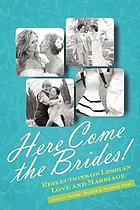
booknotes: here come the brides!

24 Tuesday Jul 2012

Posted by Anna Clutterbuck-Cook in book reviews

≈ Leave a comment

Tags

gender and sexuality, human rights, wedding

I recently finished reading the heartfelt collection Here Come the Brides: Reflections on Lesbian Love and Marriage, edited by Audrey Bilger and Michele Kort (Seal Press, 2012). After making my way through the super-angsty I Do, I Don’t (2004) earlier in the summer, I was a little burned out on the whole queers and marriage combination. I Do, I Don’t felt — and you know I don’t often say this — too political. Reading the earlier anthology I was left feeling weighed down with the social import of my marriage. Half the authors seemed to feel marrying will contribute to the revolution (I believe it will, but that wasn’t the deciding factor); the other half seemed to feel marrying was tantamount to betraying the revolution (if it is, answer me this: why does it terrify the conservatives so frickin’ much?). Throw in a salting of stories about heart-wrenching breakups and there was a serious deficit of personal joy. 

Here Come the Brides! is far from apolitical. From Heather Purser’s “Suquamish Family Values” (about the role she played encouraging her tribe to recognize same-sex marriage) to “Emily Douglas’ “We Have to Talk About It, Someday” (in which Douglas muses on how her job at GLAD as a recent college grad brought home how important marriage was — queer theories aside — to the actual queer community) Brides! interweaves the political and legal revolution taking place throughout North America as queer couples form legally- and religiously- recognized relationships with one another in the presence of family and friends. Yet overall, the energy of Brides! is much more effervescent and forward-looking than that of I Do — even when the topic was divorce or death. (Yes, I actually wept on the subway while reading Susan Goldberg’s “Four (Same-Sex) Weddings and a Funeral,” in which she describes how her wedding was a race against her mother’s cancer). Artist Patricia Cronin contributes an essay on the creation of her sculpture Memorial to a Marriage, which stands in Woodlawn Cemetery on the plot that will one day serve as Cronin’s grave — as it will the grave of her wife, Deborah Kass. Authors express their doubts and fears about marriage, describe the messiness of gay divorce (how do you get divorced as a lesbian in a state that refuses to recognize your marriage?). They tell hilarious stories of over-involved parents, wedding-cake sagas, and serial weddings — all to the same woman! — made logical or necessary by the patchwork of same-sex marriage laws in our Land of the Free and Home of the Brave.

I think, overall, I was struck by the normality of the essays in Brides! — the way the stories told are (mostly) human marriage-and-relationship stories, perhaps with a queer twist. In the years between 2004 and 2012 we — as a country, as a culture — have moved from a moment in which marriage equality was a dicey political proposition to a moment when it’s become (knock on wood) an historical inevitability. DOMA will eventually be ruled unconstitutional — perhaps as early as next year — and once the federal government is constitutionally required to recognize, once again, all state-sanctioned marriages then states will be able to move forward at their own two-steps-forward-one-step-back pace toward civil marriage for all consenting adult couples (and hopefully poly relationships as well, not long behind). And religious communities can continue their tedious-yet-necessary process of coming to terms with the full spectrum of love that is possible in this world. Brides! rides this wave and treats getting gay-married more or less the same as, well, getting married.

While a part of me enjoys the frisson of rebellion inherent in Hanna and I marrying today (yes, I get a kick out of the notion that by doing what I want in my own private life I’m freaking people out), I’m also grateful to all of the women (and men) who have done the emotional, political, and cultural work necessary to make it possible that our marriage is almost totally unremarkable.

← Older posts
Newer posts →
"the past is a wild party; check your preconceptions at the door." ~ Emma Donoghue

Recent Posts

  • medical update 11.11.22
  • medical update 6.4.22
  • medical update 1.16.2022
  • medical update 10.13.2021
  • medical update 8.17.2021

Archives

Categories

Creative Commons License

This work by Anna J. Clutterbuck-Cook is licensed under a Creative Commons Attribution 3.0 Unported License

Meta

  • Register
  • Log in
  • Entries feed
  • Comments feed
  • WordPress.com

Blog at WordPress.com.

  • Follow Following
    • the feminist librarian
    • Join 36 other followers
    • Already have a WordPress.com account? Log in now.
    • the feminist librarian
    • Customize
    • Follow Following
    • Sign up
    • Log in
    • Report this content
    • View site in Reader
    • Manage subscriptions
    • Collapse this bar