• anna j. clutterbuck-cook
  • contact
  • curriculum vitae
  • find me elsewhere
  • marilyn ross memorial book prize

the feminist librarian

the feminist librarian

Category Archives: book reviews

‘the act of marriage’: ch. 2 and 3 (his and hers)

06 Sunday May 2012

Posted by Anna Clutterbuck-Cook in book reviews

≈ 2 Comments

Tags

gender and sexuality, live-blogging, religion

See also: intro, chapter one.

We learned in chapter one that sexual intimacy between married hetero couples carries the God-seal of approval. Chapters two and three take us on a tour of “what lovemaking means to” men and women. Because men and women are different creatures, each creature gets their own chapter and hierarchy of meaning.

You see, the male creature gets five things from the act of marriage, as does the female creature. But because they are different species, what they get out of lovemaking is different in kind — and when similar in kind, different in meaning.

I offer a Handy Dandy Chart of Comparison:

Males Females
1. It satisfies his sex drive.
Translation: Dudes be horny and must have with the fucks.
It fulfills her womanhood.
Translation: How do you know you’re a girl unless a man puts his penis inside you? Also: Babies! And homemaking.
2. It fulfills his manhood.
Translation: Fucking things cures all feelings of emasculation. (aka The Magic Cock).
It reassures her of her husband’s love.*
Translation: If you don’t put out he’ll leave you. Sex is the way to a man’s heart.
3. It enhances his love for his wife. 
Actual quote: “When you have a Cadillac in the garage, how can you be tempted to steal a Volkswagen off the street?”
It satisfies her sex drive.
Actual quote: “Each thrilling lovemaking event increases her sex drive drive” (aka Married women who have good sex will become insatiable nymphos)
4. It reduces friction in the home.
I don’t think they actually meant this as a double entendre, although they do spend a lot of time on the benefits of lube later in the book.
It relaxes her nervous system.
Because suddenly we’re going to get all nineteenth-
century on your ass.
5. It provides life’s most exciting experience.
By which they mean orgasms, which I’ll be talking about later (really? the most exciting?)
The ultimate experience.
I’m struck by the slightly different wording here. Also, is there anyone else who can’t help think of Wet Hot American Summer?**

SOOOO many questions!

Why is orgasm the “most exciting” experience for men, but the “ultimate” experience for women?

Why does sex drive rank #1 for men, but #3 for women?

Why does libido come before ego in the hierarchy of needs in men? Does that mean that masculinity matters less than getting it on?

How does affirming womanhood through sex lead to marriage, a house, and babies? (I mean, besides the obvious sperm-meets-egg thing)

If you’re going to lubricate your marriage, what brand is best?

Why does sex “enhance” a man’s love of his partner, while merely “reassuring” the woman? Is love something men do and women receive?

If women want sex more after every successful instance of lovemaking, how quickly will her sexual needs spiral out of control in the average Christian marriage?

Inquiring minds wish to know!

In addition there’s an extra bonus section in the “males” chapter dealing with the issue of “mental-attitude lust” which basically instructs us that guys fantasize about hot chicks. ALL THE TIME. But they shouldn’t. So men are counseled to police their thoughts and never have sexual thoughts that don’t involve their wife. How they’re supposed to do this isn’t clear, except it’s probably the wife’s responsibility to play the role of Cadillac so her husband doesn’t turn to auto theft as a hobby.

Women don’t get the lecture on mental-attitude lust because, see, we don’t have any. “A woman does not seem so readily tempted to fantasize as does her husband.” (Let’s just say there was hysterical laughter in my house when I read that passage aloud to the almost-lady-spouse). Apparently, we’re only capable of “remember[ing] romantically those exciting experiences of the past. Consequentially each thrilling lovemaking event increases [our] sex drive” which presumably, over time, would turn us into succubi. Though he doesn’t mention that bit.

Mostly, I just love how women here are incapable of original, imaginative sexual thought and instead can only harken back to good (and bad) sexual experiences that have previously happened to them. And my use of the passive construction is deliberate here.

IN SUM: The adequate lady-spouse metric

I figure I get negative points for all the ways I experience “male” sexuality and positive points for all the ways I experience “female” sexuality.

 -15 – for being spontaneously horny but
+15 – for also being an experience-driven succubi (the more good sex I have, the more I want!)
  -5 – for not believing that a dude’s ego is lodged in his dick
+10 – because I do feel reassured of my lady-spouse love when we enjoy sexytimes but
 -2 – for not being an extrovert
  0 – for not having to train my sweetie in empathy (women automatically have “bedside manners”)
 -2 – for not being interested in white knights and angels, except in the m/m sense
 -4 – while I respond well to treats, I generally put out anyway so clearly I’m a cheap slut
   0 – while my “passion” flares with my cycle, lady-spouse would say I’m only slightly capricious.
-10 – I’m confident my lady-spouse means what she says when she says she won’t go stealing cars
+10 – and also don’t plan on car-jacking myself***
  -5 – I’m a believer in the benefits of lubrication to ease friction
 +5 – and also find sex to have a beneficial effect on my nerves (I’m in that 10-20%)
+10 – for enjoying orgasms as a “most exciting” experience but
 -10 – for not experiencing “the ultimate” (p-i-v intercourse) with actual penes
 -30 – and obviously for being full of mental-attitude lust (slash fiction anyone?)

Chapters 2-3 score: +50/-83 = -33

Chapter 1 score: +35/-85 = -50

Cumulative: -83


*Bonus: Wives need five sub-types of love. We’re just that high-maintenance. Companionable love (all women are extroverts by nature), compassionate love (sex somehow trains a man to practice empathy, a womanly virtue), romantic love (“my white knight/not a Lancelot/nor an angel with wings …”), affectionate love (women, like pets, respond well to regular treats), and passionate love (the capricious kind).

**Wet Hot American Summer:

J.J.: He gets so uncomfortable whenever we talk openly about sexual issues. You know he’s never been with a girl before.
Gary: McKinley needs to experience “The Ultimate” And I think you know what I’m talking about.
J.J.: You mean, penis-in-vagina?
Gary: No, dickhead. Sex.

***Though if we’re doing car comparisons, I expect Hanna would rather be compared to an Impala than a Cadillac.

‘the act of marriage’: ch. 1 ‘the sanctity of sex’

04 Friday May 2012

Posted by Anna Clutterbuck-Cook in book reviews

≈ Leave a comment

Tags

gender and sexuality, live-blogging, religion

See also: intro.

So one of the reasons that The Act of Marriage was such a ground-breaking text in the mid-70s was that it was one of the first modern Christian fundamentalist, evangelical books on marriage to be all “whee! sex be awesome and of the Lord!” And that’s really the message of chapter one: Good Christians can make with the sexytimes.

In “The Sanctity of Marriage” I learned that:

1. God’s okay with people married, hetero couples doin’ it.  “Some people have the strange idea that anything spiritually acceptable to God cannot be enjoyable” (15). But nope. Sexual intimacy outside of marriage is “condemned” and people who commit the “sin” of pre-marital sex will likely have to confess and receive forgiveness before they can proceed along the path of righteousness orgasms.

2. God made our bodies, and therefore our bodies are good. “God designed our sex organs for enjoyment” (11). I’m not actually going to snark about this one, because if you’re going to believe in a creator I don’t think it can hurt to believe that the creator looked upon human embodiment as something positive, rather than negative, and gave us our bits for a reason. Especially the clit. Because I’m fond of clitori.

3. “Spirited” sexytimes are all over the Bible. Old testament, new testament. Everywhere. Adam and Eve were likely getting it on in the Garden of Eden before the Fall. (For true!) All I could think about reading this section was the episode of Futurama in which Leela and Zapp Brannigan crash land on an Edenic planet and Zapp tries to convince Leela she has a duty to make it with him in order to re-populate a supposedly destroyed Earth. There are fig leaves and everything.

4. When supporting your argument that sexual intimacy is Christian, and proof-texting is the way to go. This isn’t surprising, because the cultural of evangelical fundamentalism encourages this sort of behavior. If you make an assertion, you need a bible verse to back it up.

5. Have I mentioned sex outside of marriage is a no-no? Well it totally is. In any way, shape, or form. In fact, according to the LaHayes’ interpretation of 1 Corinthians 7: 2-5,

1. Both husband and wife have sexual needs and drives that should be fulfilled in marriage.
2. When one marries, he forfeits his control of his body to his partner.
3. Both partners are forbidden to refuse the meeting of the mate’s sexual needs.
4. The act of marriage is approved by God.

I love how these four tenants are such a surreal combination of yeah, I’m down with that and ohmyGODwhatareyouTHINKING. It’s like a sandwich made with fresh-from-the-oven artisan bread and  with a filling that carries botchialism.  Both partners, male and female, have sexual needs? The act of marriage (sexytimes) comes with the God-stamp seal of approval? Well, hooray! Particularly if you’re coming from a God-saturated worldview, and from a patriarchal religious background, those things are babysteps toward a way better place. But then OH MY GOD it’s so full of NOT OKAY in the middle!!! “Forfeits control of his body”?! “Forbidden to refuse”??!

o_O

And I’m totally not distracted by the “he” and “his” pronouns here. Because (I peeked) chapters two and three are about male and female “lovemaking” needs? And men totally want more sex than women. So even though the language is neutral, paired with the universe of wrong that is gender essentialism this is about making the ladybits 25/8 accessible for the magic, randy penes.

IN SUM: The “adequate lady-spouse metric”

My friend Molly commented on the intro post that she was looking forward to learning how she measures up  as a lady-spouse. And in honor of her, I decided to give myself grades after each chapter according to how well I have/will perform as a lady-spouse myself (a girl’s gotta have something to strive for, right?). So here’s my score for chapter one:

+15 –> in agreement that mutual pleasure is key to sexual intimacy
+10 –> down with the idea that God made flesh and flesh is good
+10 –> down with the idea that, since flesh is good, sex is also good in the eyes of the Lord.
-20 –>  and yet I’m a pre-marital slut 
  -5 –> who’s not guilt-ridden about it
-30 –> and oh wait, I’m also a dyke*
  -5 –> who’s busy enjoying “spirited” “acts of marriage” with my (almost) lady-spouse**
-25 –> and plans to retain “control” over my body and right of refusal re: sexytimes post-vows


Chapter 1 score: +35/-85 = -50

Watch this space on Sunday for the gloriousness that will be a comparison (with tables!) of “What Lovemaking Means to a Man” and “What Lovemaking Means to a Woman.”
Let’s just say … I’m doing it wrong.

*Technically, I’m probably worse being bi/omni/fluid whatever. I could be making myself available to the magic penes, but I’m not ’cause my almost-lady-spouse doesn’t happen to have one.
**Does committing acts of marriage with an almost-lady-spouse technically make them “acts of pre-marriage”?

booknotes: the straight state

03 Thursday May 2012

Posted by Anna Clutterbuck-Cook in book reviews

≈ Leave a comment

Tags

gender and sexuality, history, human rights, moral panic, politics

Modern-day campaigns for civil rights and equal citizenship for queer folks tend to conjure up a progressive trajectory from exclusion to inclusion: from a dark past when the homosexual was excluded from equal citizenship (or forced to live closeted) to a not-yet-realized future in which one’s sexual identity, desires, and behaviors, do not exclude one from enjoying the rights and responsibilities of the American citizenry. The ability to apply for citizenship in the first place, the responsibility to serve in the armed forces, the personhood status to form legally-recognized kinship networks and access the welfare benefits distributed through those kinship systems. In our collective memory, we look backward in time to a period during which homosexual acts were illegal and homosexual identity stigmatized; we look forward to a period during which our bodies and relationships won’t ipso facto criminalize us (at worst) or shuffle us off as second-class or invisible citizens (still a precarious state of affairs).

Yet as Hanne Blank pointed out, in her recently-released Straight: The Surprisingly Short History of Heterosexuality, the notion of the heterosexual being (in opposition to the homosexual being) only developed in the late nineteenth century. While certain sexual activities (most obviously sodomy, commonly interpreted as anal penetration) were criminalized, the homosexual person was not constituted in either cultural or legal understanding until well into the twentieth century. In The Straight State: Sexuality and Citizenship in Twentieth-Century America (Princeton University Press, 2009), historian Margot Canaday argues, in fact, that the identity category of “homosexual” developed in symbiosis with the United States’ state-building activities to such an extent that it was, in part, the legal conception of homosexual persons that led to the mid-century emergence of our modern-day gay or queer political identities:

An increasingly invasive state would in time also help to create rights consciousness for some queer individuals who, embracing the state’s own emphasis on legal rather than medical categories, began to ask not whether they might be sick, but whether they might be citizens. They came to agree with the state’s simple common sense definition of homosexuality, then, but could see less and less that was commonsensical about its placement outside national citizenship (254).

This is a fascinating argument, well-grounded in historical evidence. Canaday’s footnotes exhaustively document the hours she spent in the National Archives reading through years worth of military court marshals, personnel files, proceedings from immigration hearings, congressional records, and Works Progress Administration memoranda. What this detailed historical research reveals is how much our “common sense definition of homosexuality” was created through a process of trial and error, through attempts to police the bodies and social lives of those individuals coded undesirable. In example, let me glean from Canaday’s evidence a few instances of such creation that I found particularly delightful and thought-provoking.

First, in her chapter on immigration and “perverse” bodies during the first quarter of the twentieth century, Canaday discovered in reading INS records that aliens were generally turned away at the border or deported not for homosexual acts but for gender non-conformity.  This is merely the most recent book in my readings on the history and politics of sex and gender that has made me think about how much policing of our sexual lives speaks to a (larger?) fear of bodies that fail to fit our ever-changing yet stubbornly dualistic notions of appropriate gender performance. As Tanya Erzen observes in her study of ex-gay conversion therapy literature, for people and institutions concerned with gender role divisions, same-sex sexual behavior becomes a marker of gender inversion or confusion, rather than something of primary concern. That is, a woman who has sex with another woman is worrying because she is becoming masculine or enacting a “male” role. Not because she’s enjoying same-sex sex in and of itself.

Along similar lines, Canaday suggests that those policing same-sex sexual acts among men in the military, particularly during the early years of the twentieth century, distinguished between men who penetrated during sex (the “male” role) and men who were — willingly or unwillingly — penetrated either orally or anally (the “female” role). Rather than imagining lovemaking as a more fluid series of encounters in which one might penetrate and be penetrated in turn, military police imagined that men’s sexual identities were constituted and static. To some extent, they were following the lead of the men whose activities they were punishing, since barracks culture appears to have encouraged the tom/bottom hierarchical dynamic. However, Canaday’s narrative suggests that the policing of same-sex sex, and the differential punishment meted out according to who fucked whom reinforced the notion that what one did somehow followed from (or led to) who one was. It made me wonder if, in these military proceedings, we were seeing the nascent beginnings of our modern-day notion (in some circles) that gay men are either “tops” or “bottoms.”

While the military was fairly clear about the illegality of same-sex acts between men (though their policing of such activity was uneven), some of the most hilarious passages in the book deal with the inability of military police to agree on what exactly women do together when making love. The perplexity with which society responds to lesbian sex never fails to amuse me. Is it really that difficult to understand? Seriously? Like — clits and tongues and fingers and natural lubricant? Hello? But apparently, for mid-century MPs, women doing it was just beyond the realm of possibility. When, in 1952, two military police on patrol happened across two women having energetic oral sex in the back of a vehicle, they were so “bewildered” by what was happening that they turned and went away in “shock.” “It was just one of those things that you read about and hear about but never see,” one of the MPs admitted during testimony when asked why the incident had gone unreported (191-192). Because of this mystification of female sexuality, Canaday demonstrates, the anti-gay purges of women in the military relied not on evidence of acts (as it did with men) but on extensive documentation of women’s homosociality, emotional ties, and gender performance. Canaday observes that, while men and women alike were harassed during the lavender scare (see David K. Johnson), discharge files for men are typically 1/4-1/2 inch thick while women’s routinely run 2-3 inches. Not a commentary on the relative suffering of men and women accused of homosexuality, this difference represents the comparable difficulty of evidence gathering when what you’re trying to document is something as nebulous as tendencies and identities rather than trying to answer the question of whether so-and-so gave John Smith a blow job.

Finally, in her two chapters on the Depression-era welfare state, Canaday explores the long-term effects of structuring the social safety net in such a way as to reinforce the heteronormative family. A precursor to the destructive obsession with marriage as an alternative to unemployment and welfare benefits, federal programs targeting the unemployed and itinerant in the 1930s, and the benefits of the G.I. Bill post-WWII, became tied to an individual’s ability and/or willingness to fulfill a role (mother, father, husband, wife, son, daughter) within the ideal “straight” family. While this had little per se to do with one’s sexual identity, it had everything to do with domesticating individual human beings whose free-floating sexual desires were closely associated with criminality. Work programs for unemployed men, for example, often included some sort of requirement that the individual’s monthly allotment be sent to a designated “dependent,” usually a family member along the order of a parent, a wife, or children (118). Some “unattached” men were able to work around this requirement by designating a male friend as their dependent, but overall the government structured twentieth-century benefits schemes to encourage hetero-familial ties and discourage both sustained single-ness and unorthodox relationships. In the postwar era, this structural dis-incentive was joined by overt discrimination as those who had been discharged from the military for homosexuality were denied veterans benefits and experienced widespread stigma and economic hardship for suspected or actual same-sex attractions, behavior, and relationships.

Overall, Canaday’s study is one of the most impressive examples of historical inquiry into sex and gender that I’ve read in recent years, and I highly recommend it to anyone interested in the historical context of our present-day notions of gender, sex, sexual orientation, and citizenship.

Cross-posted at The Pursuit of Harpyness.

live-blogging ‘the act of marriage’: part the first

02 Wednesday May 2012

Posted by Anna Clutterbuck-Cook in book reviews

≈ 2 Comments

Tags

books, gender and sexuality, live-blogging, religion, wedding

this is the cover art on my edition

When Hanna and I were on our trip to Michigan back in early March, I picked up a vintage copy of The Act of Marriage: The Beauty of Sexual Love by Tim and Beverly LaHaye (Zondervan, 1976). Y’all probably know the LaHayes for their right-wing political organizing and Tim LaHaye’s phenomenally popular Left Behind series. Bet you didn’t know the couple are responsible for one of the mid-twentieth-century’s ground-breaking Christian sex manuals.

Yeah. I’ll let that one sink in for a minute.

And of course I bought it. Duh. Because it’s a perfect confluence of all the shit I’m interested in: sex and Christian evangelical fundamentalism and heteronormativity and the 1970s and sex. All in one book.

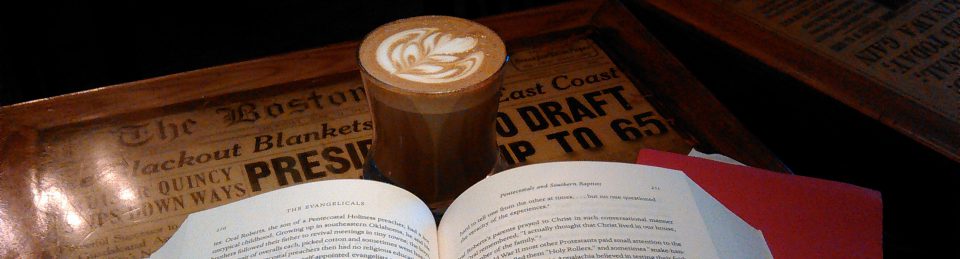
This was before Hanna and I decided to get married, but now that we’ve set a date and all, I decided I should probably study up on my wifely duties. The introduction to The Act of Marriage specifically instructs that it “should only be read by married couples, those immediately contemplating marriage, or those who counsel married couples.” I told Hanna over coffee this morning that, since I now fall into category #2 (although does “engaged to be married” count as “contemplating marriage”?) I can safely read this book without jeopardizing my bridal purity.

She looked at me like I’d just turned into a hedgehog and went back to her Spanish latte.

I’ve only read the introduction so far, but two things:

1) Tim assures the readers of TAM that Beverly’s presence as one half of the writing team preserves the respectability of their project — and simultaneously assures his audience that Beverly herself was not harmed in the writing of this book. It’s a fascinating use of ministers wife as moral shield. Sort of like having one around is the equivalent of a personal shield emitter. Haha! You think talking about sex is dirty and un-Christian? Well, you see, I have a minister’s wife on hand to protect me!

2) The introduction puts forth the assertion that Christians have better sex than non-Christians. This is hardly the first time I’ve heard this argument made (and, to be fair, feminists also made the case for better fucking … though I doubt their definition of “better” is the same as the one at chez LaHaye). I’m promised survey data latter in the book that will support this thesis and, frankly, I can hardly wait to find out what they asked the couples they counseled and what “secular” data they compare and contrast their results with.

I’m looking forward to my lunch break so I can see what Chapter One has to offer. Stay tuned for more!

booknotes: families apart

26 Thursday Apr 2012

Posted by Anna Clutterbuck-Cook in book reviews

≈ Leave a comment

Tags

being the change, children, human rights, politics, sociology, work-life balance

The University of Minnesota Press was kind enough to send me a review copy of Geraldine Pratt’s fascinating study of migrant domestic workers and their families who have traveled from the Philippines to Canada as part of Canada’s Live-in Caregiver Program (LCP). Families Apart: Migrant Mothers and the Conflicts of Labor and Love (University of Minnesota, 2012) is the result of Pratt’s collaboration with the Philippine Women Centre of British Columbia. With the assistance of the PWC, Pratt identified and interviewed twenty-seven families: mothers (the primary LCP participants), children, and sometimes partners, who have emigrated to Canada in hopes of economic and social mobility. Families Apart draws on these interviews, with analysis and reference to the relevant bodies of literature, to explore and theorize the long-term effects of the LCP on family relationships.

I came at this book from several perspectives: that of a former care provider (though in very different circumstances from those of the LCP participants), that of a family member, that of a feminist, and that of an oral historian. I want to talk briefly about each of these lenses through which I considered Pratt’s work, and suggest that her research is of potential worth to those with a personal, as well as academic and political, interest in the intersection of family with wage-work and caregiving labor.

Pratt overtly encourages self-reflection in her readers, many of whom she presumes will be white, middle-class academics like herself, whose experience of parenting and family life is, materially speaking, worlds apart from the experience of the participants in her research interviews. Throughout Families Apart, she tries to break down the barriers to empathy and suggest that cross-class, cross-cultural experience of familial bonds of affection and care can help those outside the LCP program understand the trauma of separation and conflicting responsibilities and desires expressed by those who are (or have) lived through it. Pratt juxtaposes, for example, images of her own child (with his permission) and testimony from immigrant children recalling the trauma of their mothers’ departure. Through such attempts at self-conscious narrative voice, Pratt pushes us not to imagine the families whom she interviewed as “others” whose emotional attachments are somehow qualitatively different from our own due to race, class, or culture. Instead, she argues, the pain of long-distance parenting for both adults and children is a point of connection.

This thread of Pratt’s book prompted me to think about how our culture values separation and togetherness in family life. I read Families Apart long before the campaign-related kerfluffle over how parenting and work are valued in our society, but Katha Pollitt’s ever-articulate analysis of the Ann Romney/Hilary Rosen dust-up could be read alongside Pratt’s trans-national analysis as an example of how the relative value of wage-work and family care shifts in relation to social status:

The difference between a stay-home mother and a welfare mother is money and a wedding ring. Unlike any other kind of labor I can think of, domestic labor is productive or not, depending on who performs it. For a college-educated married woman, it is the most valuable thing she could possibly do, totally off the scale of human endeavor. What is curing malaria compared with raising a couple of Ivy Leaguers? For these women, being supported by a man is good—the one exception to our American creed of self-reliance. Taking paid work, after all, poses all sorts of risks to the kids. (Watch out, though, ladies: if you expect the father of your children to underwrite your homemaking after divorce, you go straight from saint to gold-digger.) But for a low-income single woman, forgoing a job to raise children is an evasion of responsibility, which is to marry and/or support herself. For her children, staying home sets a bad example, breeding the next generation of criminals and layabouts.

Substitute “welfare mother” with “LCP worker” and this equation of worth applies. Women participating in the LCP program are caught in a double-bind of judgment. Expected to give up their personal and family lives in order to care around-the-clock for another family’s children (traveling halfway around the globe to do so, often not seeing their own children for years at a time), they are judged by their families and society at large for abandoning their children. Their often-crucial financial support for the family back home often comes at the price of losing their partner and the alienation of their children. Pratt skilfully navigates the gendered dimensions of the LCP program, exploring the differing expectations of maternal and paternal care while not ignoring the real psychic pain for all concerned when a parent is absent for years of a child’s life.

Families Apart echoed certain themes explored in Schalet’s Not Under My Roof which I read shortly before Pratt’s study. I’d argue that both books take a cross-cultural look at how we constitute families and value different types of families (and different types of family members) unequally. Notions of “good” and “bad” mothering (or fathering), what is a family unit deserving of respect, how young people should behave in relation to their parents — who is the proper person, parent or otherwise, to care for a child and help them grow into an adult who can participate meaningfully as a grown-up person in society.

Finally, as a practitioner of oral history, I really appreciated the sections of Pratt’s book where she stepped back to examine the process by which she and the PWC made the materials collected during research accessible in a variety of venues: through a multi-media exhibition, in theatre performance featuring monologues crafted from the interviews, in ongoing collaboration with the families whose stories Families Apart documents and synthesizes. Researchers within the social sciences and humanities whose research intersects with human lives are engaged in an ongoing discussion about the ethics of such work, and how to document without exploitation. I believe that Pratt’s work is a valuable contribution to that professional conversation. While she herself is the first to argue that the social inequality between herself and the LCP women she collaborated with cannot be erased or overcome by this work alone, I’d argue that her example is a useful one for all those planning future collaborative projects to examine and learn from.

Anyone who wants the chance to think anew about how we value families (and what families we value) in our North American culture of inequality should definitely check out this book.

Cross-posted at The Pursuit of Harpyness.

booknotes: not under my roof

17 Tuesday Apr 2012

Posted by Anna Clutterbuck-Cook in book reviews

≈ 1 Comment

Tags

children, gender and sexuality, moral panic, sociology

9780226736198Ever since I heard about Amy Schalet’s research and her forthcoming book, Not Under My Roof: Parents, Teens, and the Culture of Sex (University of Chicago Press, 2011), I’ve been eagerly waiting to get my hands on a copy. Thus, when Not Under My Roof came out earlier this winter, I had ordered it from Amazon and read it before the month of February was out.

And I’ve been waiting ever since then for inspiration to strike vis a vis how to review the book. I’m not exactly sure why. It’s got a whole host of things that usually cause an explosion of thoughts and words in my head: human sexuality, cross-cultural analysis, discussion of cross-generational family relationships, overall encouragement to re-examine our historical-cultural assumptions that a particular set of events or circumstances (in this case coming of age and emerging adult sexuality) just is a certain way. If you want me to experience the scholarly equivalent of an orgasm, throw an articulate article or book in my direction that suggests some naturalized assumptions about sex or gender are actually historically contingent. Not Under My Roof has all the above covered, in spades.

But mostly, it made me incredibly sad. Sad because the mainstream culture of the United States — as well as the institutions and state apparatus that support/are supported by that culture — is failing us abysmally when it comes to parent-child relationships and the incorporation of sexuality into family life and society. This isn’t news, but it’s still kinda hard to have a book-length reminder of how badly we fail at this. Schalet’s research looks at the negotiations between parents and teenage children over sexual activity and relationships in the United States and the Netherlands. My marginalia, particularly in the U.S. sections, consisted of a lot of “so sad!” and “key disconnect” and sad faced emoticons.

Schalet, a professor of sociology at the University of Massachusetts, Amherst, conducted her research in the U.S. and the Netherlands (where she had spent part of her childhood) during the mid-to-late 1990s. She conducted qualitative interviews parents and their adolescent children in a number of different suburban and urban locations in both countries, focusing on white, middle-class families as her research sample. While she acknowledges the limitations of her research population, she argues that these middle-class families are also a key demographic in the development and maintenance of cultural norms.

What she discovered is that, in the Netherlands, adolescent sexuality — particularly in serious relationships — is normalized by both parents and the wider society (culturally and institutionally). As a result, even when conflicts or anxieties around teenage sexual behavior emerge, families negotiate solutions that tend to integrate the children’s sexual relationships and emerging adult life into the fabric of the family and society as a whole. In the United States, by contrast, adolescent sexuality is dramatized as a dangerously out-of-control physical and emotional experience that will signify a break from the family of origin. It is simultaneously a facet of independent adulthood and an activity which threatens a teenager’s ability to reach successful middle-class adult independence.

Schalet broadens her examination of adolescent sexuality to look at how these differing concepts of teenage sexual desires and behaviors both reflect and inform our divergent understandings of adolescent development and adulthood cross-culturally. In the Netherlands, Schalet argues, adulthood — particularly young adulthood — is not understood to constitute economic self-sufficiency or emotional distance from one’s family of origin. Dutch teenagers are expected to develop a self-determination within emotionally close family and social circles, rather than in opposition to them. While American teenagers are expected to be rebellious, incommunicative, out of control, hormone-driven beings, Dutch teenagers are assumed to be self-regulating individuals who will gradually assume responsibility over their social and sexual lives as they are able.

The Dutch framework is not without its troubling aspects, as Schalet points out, specifically the lack of language with which to articulate and grapple with unequal power within relationships (parent-child, a couple of differing ages or class standing, sexism within dating relationships). However, overall health indicators suggest that the Netherlands is modeling a much more successful way of supporting teenagers’ development than is the United States. One of the most fascinating aspects of Schalet’s interviews, I thought, was the widespread helplessness expressed by American parents and children when it came to cultural views of adolescent sexuality and parent-child relationships. Parents and children alike often expressed unhappiness with the status quo, yet were equally at a loss when it came to effecting meaningful change in their own family lives or in society at large. By conceptualizing American teenagers as hormone-crazed beings incapable of rational thought, parents either threw up their hands or resorted to an authoritarian rules-based approach which they acknowledged their child would likely evade or otherwise thwart. Children, in turn, expressed a desperate desire for adult support, but could not picture integrating their sexual selves into family life either through conversation about sexuality or by bringing a partner to their parents’ house.

The title, Not Under My Roof, refers to the scenario Schalet presented to each of her interviewees: “Would you (or your parents) allow your child’s significant other to sleep over?” Across the board, Dutch parents answered in the affirmative, though with some qualifications concerning age and nature of the relationship — older teenagers and “steady” boyfriends/girlfriends were much more acceptable than were sleepovers requested by younger adolescents and relationships deemed more casual. Dutch boys were also more likely to report being comfortable with bringing a significant other to stay overnight than were Dutch girls (who generally preferred going to the house of their partner).* However, every single American parent rejected the idea of “the sleepover,” conceptualizing the economic dependency of adolescence as mutually exclusive of (acknowledged) sexual activity — even as they articulated a certain fatalism that their children were likely engaging in sexual activity elsewhere. Teenagers in the States were, likewise, unable to imagine being openly sexually active or to communicate with parents about their lives as sexual beings.

I feel like I should put some of my personal cards on the table here and acknowledge that my upbringing was much more like that of the Dutch teenagers than the American ones. I never brought a partner home to stay overnight as a teenager quite simply because I wasn’t sexually active at that point in my life. My siblings romantic and sexual relationships were integrated into our family life in various ways, and my parents were always vocal about the fact that if any of us were to need a private space for sexual exploration, our bedrooms were available — and preferable — to more public, clandestine locales. Unlike many of the American parents Schalet interviewed, my siblings and I are welcome to bring our partners home and to share a bedroom with them. In contrast, Schalet’s interviewees often persisted in rejecting their children’s sexual selfhood up to the point of marriage and/or simply believing that a child’s sexual relationships, even as adults, belonged outside of the family home. This seems to mirror the reflexive disgust many adolescent and adult children express when asked to contemplate the sexual lives of their parents — something I find at best puzzling and at worst disturbing (surely we should be invested in supporting our parents’ sexual well-being just as we ask them to support ours?).

Which is where the sadness of this book comes in for me: The entrenched helplessness of Americans across the generations when it comes to communicating more effectively and positively about our sexual hopes and fears, about the quality of our relationships, about what we need to foster health and well-being in our sexual lives. The Dutch families don’t have it all worked out, certainly, but through Schalet’s eyes they certainly seem to be light-years ahead of our dysfunction. I really wish Americans would start to take the lessons of other Western nations to heart and do better by our youth. Instead, as a society, we seem determined to move by inches into ever-increasing moral panic, non-communication, and policing.

I very much hope that Schalet’s book will make its way into the hands of policymakers, parents, and sexual health professionals and that it will encourage us collectively to re-examine our assumptions about adolescence, sexual well-being, family relationships, and our conception of successful adult development. I can’t say I’m very hopeful about large-scale change, but perhaps Not Under My Roof will — if nothing else — encourage individual parents and their children to assert their independence from normative cultural pressures and create more functional, integrative, patterns of family communication and togetherness.


*As a side-note, this book was frustratingly heterocentric, though that seems to have been the “fault” of the families interviewed rather than Schalet’s process. She deliberately asked all questions in a way that left the sex/gender of the child’s partner undetermined — and virtually all parents, with the exception of a couple of Dutch parents, presumed straightness in their children. Virtually all of the youths Schalet interviewed, likewise, were either paired with an other-sex partner or identified future partners in other-sex language.

I’d love to see a follow-up study that deliberately sought out families with youth of wide-ranging sex and gender identities and experiences. I’d be really interested to see how or if parent-child interactions change when queer sexuality enters the picture. How do parents conceptualize their queer childrens’ sexual lives? How do parental fears about youth sexuality shift when pregnancy prevention is no longer a concern? Are young people more or less likely to bring same-sex partners home? We may think we know the answers to these questions … but I’d be really interested in the results of a deliberate cross-cultural study.

booknotes: not in this family

10 Tuesday Apr 2012

Posted by Anna Clutterbuck-Cook in book reviews

≈ Leave a comment

Tags

gender and sexuality, history

So I’ve got a backlog of books to review here, which I’m going to try and get to over the next month or so. But I thought I’d begin tackling them this week with the most recently-read: a history of the relationships between queer children and their parents in North America, 1945-1990. In Not in This Family: Gays and the Meaning of Kinship in Postwar North America (University of Pennsylvania, 2010), historian Heather Murray explores the way in which parents and children navigated — personally, politically, culturally — the subject of homosexuality in the children’s lives between the end of World War II and the latter days of the twentieth century.

Murray begins in the 1950s by examining the relationships between homosexual adults and their ageing parents, as seen through existing correspondence and children’s memories. She suggests that queer individuals who had come of age during the 1920s and 30s shared with their parents an assumption that familial relationships would not include candid discussion of sexuality, be it straight or non-straight. When one daughter profiled attempts to broach the subject with her mother, her mother’s response expresses discomfort with discussing sexuality at all, and appears genuinely confused by her daughter’s insistence that her mother acknowledge that the younger woman’s close female friendships include sexual intimacy.

From that point forward, Murray traces the expectations and real-life experiences of parents and children navigating various levels of openness regarding the child’s sexuality. For readers familiar with the history of gay liberation, lesbian-feminism, and AIDS activism, this book will provide a fascinating perspective on familiar events, seen through the lens of parent-child interactions. I particularly enjoyed the chapter on lesbian-feminism, which explored the ways in which mothers and daughters struggled to communicate across a chasm of politics and understandings of identity and performance. One mother-daughter pair Murray examines corresponded back and forth about the daughter’s newly-proclaimed lesbian identity, with the mother focusing on what she feels is her daughter’s rejection of her female self. Wrapped up in discussions of lesbian sexuality was the (to many mothers apparently more urgent) question of gender presentation. One exchange between lesbian journalist Penny House and her mother highlights this mis-communication between the generations:

For [Mrs. House], appearance was certainly not a simple matter of vanity or an instance of the oppression of women; rather it was an obligation, or as Alice Munro put it, a kind of housekeeping. This interpretation was at odds with her daughter’s view of beautifying as social brainwashing. Her daughter even chastised her mother for “self-devaluatory notions” by wearing makeup to cover up her wrinkles (94).

Both mother and daughter read each other’s actions as self-rejecting: the daughter valuing her mother’s wrinkles as authentic markers of beauty and age, while the mother understood bodily “housekeeping” as a signifier of personal respect and valuation. In such exchanges, explicitly sexual attraction, desires, and behaviors are a secondary concern, playing only a supporting role as further evidence of a child’s gender-nonconformity.

The primary sources Murray employs in Not in This Family are an impressive range of personal papers (diaries, correspondence), gay and lesbian newspapers, queer-authored fiction and poetry, published memoirs, literature from organizations like PFLAG, editorial cartoons, television shows, and other artifacts of popular culture. As an archivist, it’s particularly exciting for me to see twentieth-century materials not only made accessible but actually utilized by historians of the period to contribute to our understanding of not only the public face of gay liberation and activism, but also the quality of relationship and personal meaning-making that happened in more private, inter-personal settings. Among people who weren’t necessarily a central part of “the Movement.”

While Murray’s narrative ends in the early 1990s, the question of parent-child relationships and how they intersect with the lived (and particularly sexual) lives of the children has not gone away. Reading Not in This Family I couldn’t help thinking about my own familial relationships and how they do or do not reflect the trends Murray outlines. There was never really a “coming out” moment for me, with my family, since I’d been open about my thoughts on sexual identity and desire throughout adolescence. Thus my parents were up to speed, so to speak, when I connected with Hanna. My siblings (both in other-sex relationships) and I have a similar quality of relationship with our parents regarding relationships and sexuality — that is, my queerness doesn’t trigger particular anxieties or reticence in my family of origin. We’re all six of us understood and honored as couples. But I’d suggest that my experience is an outlier. Queer kids still fear their parents’ reactions, and gender non-conformity continues to incite panic among parents and the wider society.

What we have ended up with, in the early twenty-first century is a culture that places a premium on “coming out” to one’s parents (and society more broadly), as a central marker of queer adulthood. Whether or not that current emphasis is warranted, Heather Murray shows that it is historical contextual — that what queer children and their parents expect from each other in relation to sexuality and identity varies over time. All in all Not in This Family is highly recommended both for historians of sexuality and for those with a more casual interest in the politics of queerness as it related to kinship cultures.

booknotes: straight

27 Tuesday Mar 2012

Posted by Anna Clutterbuck-Cook in book reviews

≈ 3 Comments

Tags

books, gender and sexuality, history, science, the body

Until I fell in love with my partner, Hanna, I generally conceptualized myself as “mostly straight.” This was because, despite the passionate friendships I formed with female friends and the way lesbian sexual fantasies made me go all squishy with excitement, I didn’t feel I was queer enough to be considered authentically out of bounds of straightness. And I passively imagined that, given the statistical odds, chances were I’d fall in love with a person who was a cisgendered man (although I wouldn’t have used the term “cisgendered” back then).

Then Hanna came along, and I realized I was falling for her, and then we were together, a couple in the world, and I had to develop a whole new vocabulary for talking about myself: “mostly straight” no longer felt accurate. But was I lesbian? bisexual? fluid? queer? Should I articulate my sexuality in terms of my kinky fantasies? The gender identity and sexual orientation of my partner? The aggregate attractions I’ve felt but never acted upon for people across the gender and sexuality spectrum? If I’m a person who’s felt squishy feelings for people who identify as male, female, trans, gay, bi, straight, and numerous combinations of the above … how meaningful is it to try and identify something inherently personal (one’s subjective sense of self) in terms of the objects of my affection (which are multivarient, ever-changing). In a strange way, the language I choose to speak of myself has an effect on the identities of anyone I’ve ever felt the thrill of sexual excitement over.

It’s a social dilemma that, three years later, I’ve yet to resolve. These days, when filling out forms I go for the string-of-words approach. The form asks Sexual Orientation? I respond: “lesbian/bisexual/fluid” or the like. Check boxes be damned. In a pinch, “bisexual” is probably the best catch-all (I register attraction to people of multiple gender expressions and sex identities). In biomedical terms, “lesbian” is probably the most accurate in that I’m in a monogamous relationship with a cisgendered woman — so our medical needs will be those of women who have sex exclusively with women. But that isn’t all of who I am — or who my partner is, for that matter, since she identifies as bisexual. “Fluid” helps capture some of the contextual nature of my sexual desires, and my sense of personal change over time. But will provide little information to my primary care provider that “lesbian” doesn’t already communicate — with much less room for confusion.

When blogging or speaking informally, I’ll use lesbian, dyke, bi, gay, queer, fluid, or sometimes opt for phrasing that’s less about who I am and more about what I do: “As someone in a lesbian relationship…,” “As someone who’s partnered with another woman …”

Hanne Blank, in her recently-published (long anticipated!) Straight: The Surprisingly Short History of Heterosexuality (Beacon Press, 2012) recounts similar dilemmas of self-identification as the partner of a male-identified person whose markers of sex and gender are, nonetheless, all over the biological map due to having been born with XXY chromosomes. The author of Virgin: An Untouched History returns to historical and cultural notions of human sexuality in an effort to illuminate what we mean when we talk about “heterosexual” or “straight” identity. As with “virgin,” the answer turns out to be murky at best. The concept of an individual whose identity or nature was built, at least in part, around an exclusive attraction to “opposite”-sexed partners and activities, only came into being in relation to the study of non-normative or “deviant” sexual behavior during the late-nineteenth and early twentieth centuries. Even after the term came into common usage, virtually no research has been done — scientific or otherwise — on heterosexual sexuality. We don’t know how the bodies of heterosexuals differ from those of non-heterosexuals, for example. Research on homosexuality suggests there is no marker of sexual orientation on the body, but no one has ever asked the question “How are heterosexual bodies composed?” Scientists studying non-heterosexuality always assume they know the normal against which they are measuring the non-normal. Yet this assumption is never spelled out, and its markers are never articulated. As Blank writes:

Scientists often look for evidence of non-heterosexuality, what we consider the exception to the rule, while assuming that the heterosexual rule itself requires no evidence. Scientifically speaking, this is precisely backwards. In science, it should technically not be possible to even begin considering whether there might be exceptions to a rule until you have proven that the rule exists (42-43).

The reason why we’ve never inquired into the existence of heterosexuality is that, culturally speaking, it is a category of being that has become commonsensical, so self-evident in our minds that we measure every other sexuality in relation to it. There is power in a category so constructed as simultaneously normative and empty of actual definition. Blank compares heterosexuality to the concept of being not a person of color or not a slut. “Nameless and characterless, the space we can loosely categorize as ‘normal’ is almost completely undefined,” she writes (32):

This is why ‘slut’ and ‘prude, ‘pervert’ and ‘deviant’ all work so well as insults and as ways to police the boundaries of sex doxa [an anthropological term meaning “what everyone knows to be true”]. The labels are effortless to deploy, and hard, even impossible, to defend against … The opposite of ‘slut’ is someone who has not been labeled a slut, someone who has never been charged with violating doxa (32).

If there is a weakness in Straight it is the emphasis on marriage and reproduction as signs of heterosexual identity. I understand why Blank draws upon these cultural examples of heterosexual life — both marriage and parenting are more social activities than, typically, sexual behavior. People are far more likely to record instances of the former rather than the latter. So from an historical perspective, research on heterosexuality will end up documenting those outward signs with much more confidence than it will what people actually did with their bits (and how they felt about doing it). Unless people talk about their sexual self-identities, it’s hard to do more than catalog instances in which sexual acts were recorded — and those acts were usually the ones considered deviant, exceptional, worthy or note or censure.

Still, other books have been written in recent years on the history of marriage, and I felt myself starting to skim in hopes of more discussion of sexological research and taxonomy, a more inventive backward reading from those instances of “deviance” toward what people considered not-deviant. Some of that does appear in the pages of Straight, but I found myself wishing Blank’s editor had pushed her to include less of the well-trodden history of marital practice and more of the specifically sexual practices that fell within the bounds of the acceptable. She does argue, at one point, that “penis-in-vagina intercourse is the only source of sexual pleasure that has never, so far as we can tell from the historical record, has never been challenged … the fortunes of all other sex acts and all other sources of sexual pleasure, have varied widely” (124). I would have liked to see that assertion expanded on, to have these boundaries of sexual activity discussed in relation to the notion of sexual identity in historical understanding. In the 1890s, for example, would a husband and wife who practiced cunnilingus and fellatio with one another been categorized as “normal-sexual” in the eyes of the early sexologists? Blank leaves much of that open to further discussion — which may, I admit, have been her intent.

In the end, Blank has written yet another accessible survey of a sexual concept we think we all know and instead, it turns out, we know little about. I hope the liveliness of her prose and the concrete examples she provides of individuals who defy our binary sex, gender, and sexual categories (man/woman, gay/straight, cis/trans) will encourage people who may not have thought human sexuality in such complex terms to revisit their assumptions and look at their own identities and behaviors with new, and perhaps more forgiving and expansive, eyes.

review of "hillbilly nationalists"

22 Thursday Mar 2012

Posted by Anna Clutterbuck-Cook in book reviews

≈ Leave a comment

Tags

history, oral history, professional gigs

I have a book review of  Amy Sonnie and James Tracy’s Hillbilly Nationalists, Urban Race Rebels and Black Power: Community Organizing in Radical Times (Melville House, 2011) in the Spring 2012 issue of the newsletter of the New England Historical Society (NEHA). Sonnie and Tracy explore, through oral history and archival research, the history of working-class white activism, primarily in the Chicago area, during the 60s and 70s, with an emphasis on the alliances between poorer whites and non-whites to work for social change.

The co-authors of Hillbilly Nationalists have taken on the ambitious project of researching and describing the under-documented efforts of white, working-class community organizers in the urban North during the 1960s and 70s. Sonnie is an educator, librarian, and author who co-founded the Center for Media Justice; Tracy is a social justice organizer in the San Francisco Bay area who focuses on issues of poverty, racism, and the environment. Drawing on extensive archival research and over sixty oral history interviews, these two practiced scholars map out the short-term politics and long-term effects of inter-racial community organizing in the era of Black Power.

Read the rest in the PDF newsletter, which you can download from the NEHA website.

booknotes: theorizing twilight

20 Tuesday Mar 2012

Posted by Anna Clutterbuck-Cook in book reviews

≈ 2 Comments

Tags

fanfic, feminism, gender and sexuality, genre fiction, moral panic

Theorizing Twilight: Critical Essays on What’s at Stake in a Post-Vampire World, edited by Maggie Parke and Natalie Wilson (McFarland, 2011), is the latest addition to the growing body of work analyzing Stephanie Meyer’s Twilight franchise from a broad range of literary, cultural, psychological, sociological, and political perspectives. To put my own cards on the table up-front, I have read the first three books of the series, as well as skimming Breaking Dawn (once the vampire pregnancy thing entered the picture, I lost patience). In the beginning, I wanted to like these books. At least a little. I’m not totally opposed to the paranormal romance genre, however cliche it can so often be — think Laurel K. Hamilton for reference; more about that series in a minute — and I, like many readers, found the front-and-center treatment of Bella’s sexual desire a initially compelling alternative to the preponderance of sexually passive/dormant female characters in YA fiction. But stepping back and looking at the series as a whole, many disturbing patterns appear in terms of gender roles, sexuality, romance, family relationships, and more. If you’re interested in my previous reflections, see here, here, here, and here. Below I’m going to talk specifically about the newer questions and concerns that came up for me as I was reading Theorizing.

As with any anthology (me: broken record) there are highlights and lowlights depending on your own personal interest in the Twilight phenomenon. I found myself skimming over the several essays that used psychoanalytic and literary critical frameworks, for example, in favor of pieces that chose to consider the interaction of fans with the books and films, or the political messages embedded in the book concerning gender and sexuality. Pieces that hit a particularly high note in my own estimation were Tanya Erzen’s “The Vampire Capital of the World,” Ananya Mukherjea’s “Team Bella,” Ashley Benning’s “How Old Are You?” and Hila Shachar’s “A Post-Feminist Romance.”  Erzen travels to the real-world town of Forks, Washington, to explore the way in which Twilight tourism has affected the town’s economy, identity, and created internal social tension as the residents react in differing ways to the influx of fans. Mukherjea considers “the interpretive work that Twilight fans do with the text,” with particular attention to those fans whom we might think would feel alienated from the texts: self-identified feminists, queer, and non-white readers. Benning’s “How Old Are You?” de-naturalizes the assumptions the series makes regarding age (for example, that ageing and death are something to be feared and combated). She also considers the cultural and political import of classifying the books as “children’s literature” for adolescents, despite the fact the series has a large following among those over twenty-one. And Schachar suggests that Twilight could be fruitfully considered as part of the backlash against feminist interrogations of feminist analysis of gender relationships, and political challenges to male dominance.

I particularly appreciated, throughout this book, the recognition and engagement with the agency of Twilight‘s fans. For the most part, the authors in Theorizing recognize that readers are not passive receptacles for the conscious and unconscious messages of the books, but rather actively engaged in the project of interpreting, analyzing, and appropriating the narratives for their own ends. Those ends are, of course, constrained and influenced, in part, by the culture through which we all move. Our affinities and desires are hardly established in a vacuum. But much of the coverage of Twilight among its detractors has, troublingly, figured its fans as frivolous, foolish, and dangerously susceptible to the troubling messages about gender, sexuality, race, mortality, religion, and more which we see embedded in narrative. Given that the fan base is overwhelmingly made up of women and girls, I worry about how the construction of Twilight‘s fans feeds into our “common sense” assumption that anything coded feminine is inherently inferior. Add to this our similar assumption that anything coded as juvenile/childish is inherently inferior and it’s all too easy to dismiss Twilight fans in some truly unfortunate ways (I’ve been guilty of this myself in the past, and likely will again). I was glad to see relatively little of that in the pages of Theorizing.

The one aspect of Twilight enthusiasm that I was disappointed to see completely missing from Theorizing‘s pages was any serious treatment of the depictions of violent sex that looked deeper than the obvious problem of consent. As my friend Minerva pointed out, when we were talking about this recently, the Twilight saga reads like a “four book ‘dub-con’ fan fic,” since the series is saturated with sexual narratives which depend on dubious consent, if not out-right non-consensual sex and relationships. As a number of Theorizing‘s authors point out, despite the fact that Bella is scripted as a heroine who, through her own strength of will, creates the life she desires, what the language and symbolism of the series makes clear is that Bella’s “choices” are supernaturally pre-determined. She never could have “chosen” any other path, and therefore the choices she makes are not true choices at all, or a Vampire-esque version of Calvinist predestination.

The problem I see in a lot of critical analysis of this dubious consent problem is that it slips into equating the consent issues with the depiction of sexual intimacy as violent, particularly in the context of Bella and Edward’s infamous wedding-night initiation into an active sexual relationship, which leaves the bed destroyed and Bella’s body bruised. Bella insists the rough sex was desired; Edward is appalled by his behavior and backs away from the implications of his aggression. Such a scene would be a perfect opportunity to introduce readers of the series to enthusiastic negotiation and consent in the context of rough sex and BDSM scenarios. Instead, criticism of the scene usually takes an appalled stance on sex that would leave bruises and broken furniture. I can’t help worrying that girls and women who find fantasizing about such scenarios a turn-on will feel shamed for their “wrong” desires, when instead critics could offer them ways of incorporating those fantasizes into non-abusive, consensual sexual intimacy.

It could be fruitful, for example, to contrast Meyer’s depiction of violent sex with other supernatural romance authors who explicitly incorporate notions of negotiation and consent into their narratives. Laurel K. Hamilton, for example, whose Anita Blake series contains many similar elements to Meyer’s Twilight — including a vamp-human-were love triangle — yet offers much more radical solutions to the heroine’s potentially dangerous desires. This isn’t to say Hamilton’s series offers to completely positive alternative to Twilight — there’s a lot one could critique in terms of its depictions of gender, sexuality, relationships, etc., and even simple construction of a plot. But in contrast to Twilight the Anita Blake series does suggest that non-normative sexual desires and relationship constellations can be healthy and nourishing.

I would also have been interested in more sustained analysis of Bella’s monstrous vampire pregnancy, and how one might place it within the gothic/horror tradition, rather than the romance genre (which most critics draw on most heavily in analyzing the narrative elements of the franchise). I’m intrigued by the fact that the novels figure marriage and motherhood as the source of Bella’s ultimate fulfillment and the key to her immortality (*coughcough*Mormon theology*coughcough*), yet present pregnancy and parenthood as a monstrous, body-destroying enterprise. Put together with the horror of ageing and mortality in the series, I think Bella’s experience of pregnancy could be a potentially fruitful gateway into an examination of our culture’s fears of the process of child-bearing, and our fears of women’s reproductive capacity — particularly the changes it wreaks upon women’s bodies.

Theorizing Twilight will be a worthwhile read for anyone interested in the Twilight phenomenon, in fan culture, and in current iterations of gothic, horror, romance literature.

← Older posts
Newer posts →
"the past is a wild party; check your preconceptions at the door." ~ Emma Donoghue

Recent Posts

  • medical update 11.11.22
  • medical update 6.4.22
  • medical update 1.16.2022
  • medical update 10.13.2021
  • medical update 8.17.2021

Archives

Categories

Creative Commons License

This work by Anna J. Clutterbuck-Cook is licensed under a Creative Commons Attribution 3.0 Unported License

Meta

  • Create account
  • Log in
  • Entries feed
  • Comments feed
  • WordPress.com

Blog at WordPress.com.

  • Subscribe Subscribed
    • the feminist librarian
    • Join 37 other subscribers
    • Already have a WordPress.com account? Log in now.
    • the feminist librarian
    • Subscribe Subscribed
    • Sign up
    • Log in
    • Report this content
    • View site in Reader
    • Manage subscriptions
    • Collapse this bar
 

Loading Comments...