• anna j. clutterbuck-cook
  • contact
  • curriculum vitae
  • find me elsewhere
  • marilyn ross memorial book prize

the feminist librarian

the feminist librarian

Category Archives: life writing

turning thirty-four: history without nostalgia

30 Monday Mar 2015

Posted by Anna Clutterbuck-Cook in life writing

≈ Leave a comment

Tags

holidays

Today is my thirty-fourth birthday. I’ve reached a point in a human life where you can start measuring things in decades: ten since I last traveled to…; fifteen years since I wrote….; twenty years since I first read…; twenty-five years ago I first saw… which is the blink of an eye in history-time, but kind of daunting in terms of individual lives.

Except I find that I’m not particularly daunted, looking back over my own lives past. I own them – they don’t feel distant from who I am today in any disorienting sort of way. But they are firmly past.

Earlier this winter I found myself at a function for a friend of mine that took place on the campus where I completed my graduate studies. I rarely return there, these days, and when I do it’s always disorienting — because that landscape belonged to a different chapter of my existence. I find it holds little interest to me know, positive or negative. I am lacking in nostalgia for its contours or content.

I’ve similarly never — never! — returned to our old neighborhood since we left last May. In the weeks leading up to our move I was intensely nostalgic about the place and the experiences we had had there. Since moving, I’ve hardly looked back.

I’ve been mulling over this question of personal nostalgia this season and wondering what place it has in my life. There are many ways I continue to feel deeply connected to the landscapes and experiences of my past; it can sometimes be physically painful, even, to come across reminders of places and people I used to experience daily intimacy with. I will never stop missing, for example, the Michigan landscapes of my childhood. There is a part of me that only awakens when I am on Oregon’s high desert. Cumbria (where I spent the week of my 25th birthday) was a combination of foreign land and familiar that I have never experienced at quite the same pitch in any other locale.

Yet I do find I am at peace with there where and the when I am now: I don’t feel anxious looking back at my own past, nor overly distressed looking forward into the future.

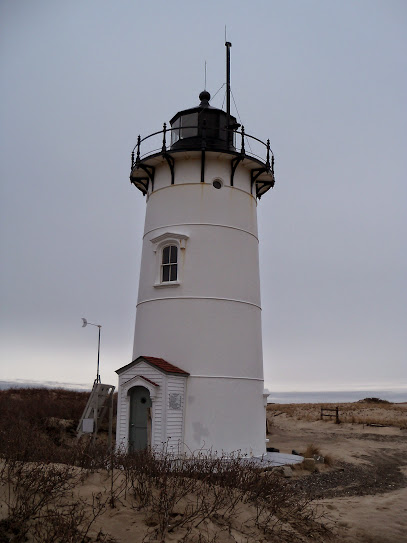
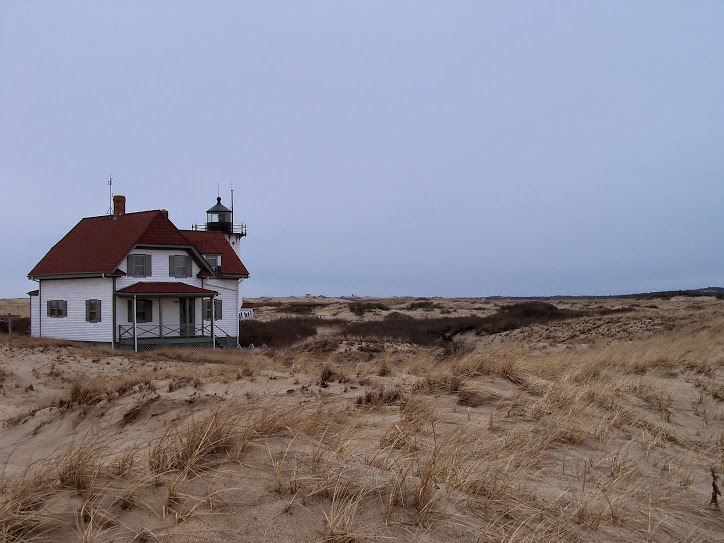
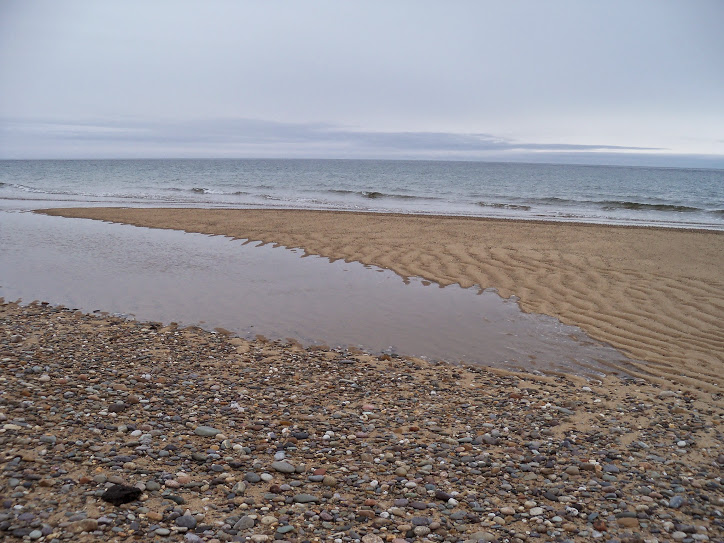
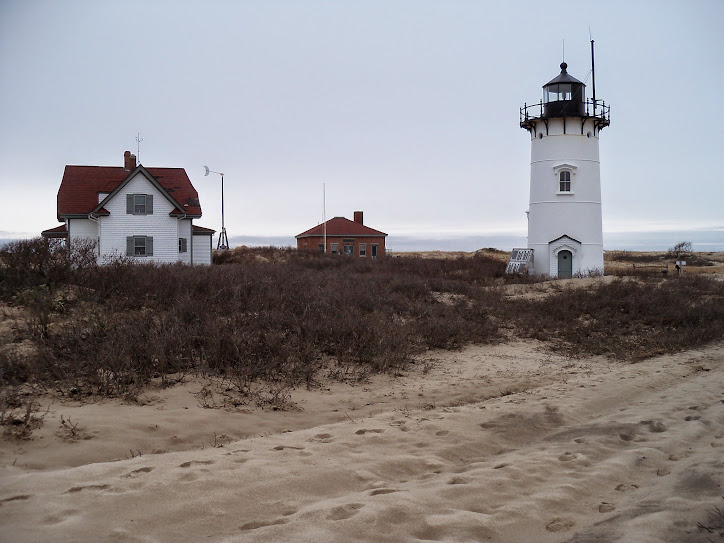
My parents visited us in Boston last week, and we spent several days in a shuttered, off-season Provincetown. On Friday my parents and I walked out along the seashore to Race Point lighthouse, automated since the 1970s, where one may pay to stay for the week in the keeper’s house or the newly renovated whistle shed.

Since I was three years old and first saw Pete’s Dragon I’ve harbored the desire to live in a lighthouse (if you haven’t read Peter Hill’s Stargazing I highly recommend it as a love letter to the near-extinct profession!). In the early months of our relationship, Hanna and I played a fantasy game constructing our future together as lighthouse keeper librarians. Both of us are drawn to the solitude of place which lighthouse locations often provide. Perhaps in our forties, I found myself thinking. Perhaps in our middle age.

Whether or not the lighthouse fantasy per se ever becomes a reality, it seemed a mark of good health to be thinking of all the things that may yet come to be. And also like a mark of good health that, lighthouse or not, I’m interested in what the future will hold. I’m down with what these coming decades will have to offer.

believing the unicorns [#bivisibilityday 2014]

23 Tuesday Sep 2014

Posted by Anna Clutterbuck-Cook in life writing

≈ 5 Comments

Tags

being the change, gender and sexuality

I was informed by the Internet that today is Bi Invisibility Day 2014.

So here I am. Being bi. And visible.

Like I am most days. Showering in a bisexual manner. Brushing my bisexual teeth. Biking to work bisexually. Bisexually offering reference assistance to researchers. Lunching on bisexually-approved pizza. Picking up my bisexual wife after work so we can indulge in public displays of bisexual affection.

A bisexual as seen in the wild, with fairy wand and rainbow scarf, which I wore to my grandmother's funeral because Grandma always loved a spot of color.

This is what a bisexual looks like.
July 2014

Though of course most people don’t know I’m being bisexually visible. People who see me on the street unaccompanied probably assume I’m straight (unless I’m on a street in JP, in which case they probably assume I’m a dyke). With Hanna, they probably assume I’m a lesbian. Because as a culture we read people according to the gender of their partners, and we humans with our funny little categories have a rough time understanding folks whose desires don’t map neatly onto the binary system of gender we’ve invented for ourselves.

I don’t really care, most days, who people think I fuck.

But here’s the thing: Because of biphobia I spent the first 27 years of my life thinking I wasn’t queer enough. Because I liked dudes as well as dykes, and people of all shapes, sizes, and self-presentations were equally likely to make my squishy bits a bit more squishy. Continue reading →

forward intentions: an introduction

04 Thursday Sep 2014

Posted by Anna Clutterbuck-Cook in life writing

≈ Leave a comment

Tags

art, boston, domesticity, forward intentions, hanna, michigan, oregon, west coast

Reflections on local intentions in this eighth year of my Boston residency, and a long melancholy weekend at the end of summer, has pushed me to think about what my forward intentions actually are. Now that I’m done with grad school (*weeps with relief*), doing the whole “emerging professional” thing at a job a genuinely like, married with two cats, I’m like … so what’s next, life?

View from the Sylvia Beach Hotel (Newport, Ore.), 24 Sept 2013.

I never really had a plan, per se. I mean, I almost didn’t go to college? I was emotionally allergic to school and considered some sort of roguish apprenticeship instead. I wanted to run a writer’s colony in the U.P. (“upper peninsula” for you non-Michiganders), feed people and fix septic systems, maybe have a lot of time for hiking around with a compass in the back woods. Or maybe open a bookshop by the sea, with the writers tucked away upstairs in garret rooms overlooking the surf. Again: Tea, biscuits, quiet, thoughts, maybe a puppy and obviously cats.

Continue reading →

friday evening thoughts on sociality

25 Friday Jul 2014

Posted by Anna Clutterbuck-Cook in life writing

≈ Leave a comment

Tags

friends, work-life balance

Image via.

I had lunch with a friend today – a rare opportunity though we live in the same city and, until recently, only several streets away from one another. We both work, on opposite sides of the River of Charles, we’re both married — to spouses we like to spend time with on a daily basis –, and both of us are that breed of people society identifies as “introverts.” Working in public services, at the end of a seven, eight, nine hours of being “on” around other people, the last thing we usually have oomph for is happy hour or dinner out. Most days, I can barely string out enough public-space energy to pick up a book at the library or pick up a foodstuff on my way home.

What this means, in practical day-to-day terms, is that the maintenance and cultivation of social connections with my people is spatially and temporally constrained: I need to be careful about how far, how long, and how many commitments I make. Since weekends need to be reserved, to a great extent, for quiet recharging — both Hanna and I need down time — we can usually at most make one social plan a weekend. A booked week, for me, usually looks like a weekend activity and a weekday lunch with a colleague. Three such meetings and I start to feel prostrate with togetherness.

This, I must stress, even with people I like very much and enjoy being around.

I was thinking, after the lovely lunch with my friend today; a lunch at which we talked about our mutual need for such unscheduled weekends, and the affective labor of public services work that — while rewarding in the context of professional work we both chose and (mostly) love — takes a particular toll on the private lives of those introverted people who choose to pursue it. In that it enforces a rather severe rationing of non-waged sociality.

Continue reading →

on gaining weight

20 Friday Jun 2014

Posted by Anna Clutterbuck-Cook in life writing

≈ 2 Comments

Tags

bigotry, feminism, food, thankfulness, the body

Photograph by Laura Wulf

I had my annual physical last week, and for the first time in a couple of years I actually looked at the reading on the scale when they did all the usual readings. Typically, I stand on the scale facing away from the screen and the nurses at our awesome community health center don’t offer the information unless I ask.

I’d gained about ten pounds since the last time I’d bothered to check.

I was (surprising even myself) pretty unconcerned about this state of affairs.

I’m not going to share the exact number or the number(s) I’m comparing it to. The minute I did so virtually every woman reading this post would do the calculation and contrast and compare. Either I’d be smaller, and some part of them would feel jealous, or I’d be larger, and some part of them would feel virtuous. They might judge themselves for feeling that way (I do when I catch myself doing it), but for most of us it’s an involuntary reflex.

There’s a reason I don’t own a scale, and weigh myself at the doctor’s office blind.

As photographs on this blog demonstrate, I’m a 5′ 10″ woman who falls within the median weight range for American women — which is to say that my clothing sizes are usually available in many styles in most stores. This is a form of privilege, one I’ve become even more acutely aware of married to a woman whose body is actively marginalized by our fatphobic, sizest culture.

But, like virtually every women and many a man will tell you, being a body of normative size in a culture “at war” against fat (and people we judge for their size) is no proof against a disordered relationship with one’s physical self. While never diagnosed with a formal eating disorder, I spent most of my teens obsessing over food and weight, counting calories, bingeing, eating until my stomach hurt and falling asleep each night (yes: every night for nearly a decade) wishing I could just purge and have done with it.

I ended every day — every day — from age sixteen to twenty-four feeling some measure of failure for what I had eaten, and what I had done, with my body.

My own struggle with disordered eating was complicated by the fact that my thyroid condition, managed with medication until age twenty-five, meant I was almost always hungry. My appetite was not a reliable measure of what my body actually needed as fuel — my hormones were telling me I was hungry. I could (and did) eat gallons of ice cream at a sitting and my body would still tell me I was hungry.

When I finally received medical treatment that treated my condition more effectively, I got my libido back and learned what it was like to have an appetite: to eat and feel full. And not think about food every waking moment of every day.

While I was never diagnosed with an eating disorder, I was at my thinnest — received the most praise from acquaintances for having “lost weight!” — when my hyperactive thyroid was raging out of control. Did I glow with “pride” at the praise? Some part of me did. The other part of me recognized how fucked up our culture is congratulating a young woman for thinness — as if body size is some sort of merit metric. When instead, in my case, it was actually a pathological symptom.

One I knew even at the time part of me would miss, because being “effortlessly” thin (while, as I said above, obsessing about my weight and food intake on an hourly basis) was something society rewarded me for.

I was scared, when I chose the treatment that would help me heal — that would give me my sex drive back (though no doctors thought to mention this as a perk) — that would allow me to experience appetites and satisfaction — when I chose the treatment that would give me these things, I was scared that I’d just become “fat.”

Because of course, that’s what we’re taught to fear most of all.

So it was remarkable to me, last week, when I walked into the doctor’s office and discovered that I now weigh about thirty pounds more than I weighed at the point when I was the sickest (and most obsessive — and most frequently praised). It was remarkable that I didn’t much care.

I’m growing into myself. That’s what I thought. I’m growing older. And my mind meant that in a positive way. I’m thirty-three now; nearly ten years older than I was then. Bodies change. As I grow into my middle age, I may continue to gain weight slowly, incrementally. If family size and shape is any guide, I’ve likely settled more or less at the point where I will probably stay as I grow older.

And even if I grow larger, become more, I resist the notion that this is something I should categorically fear, manically avoid, judge myself in relation to. I’ve got other things to focus on, thank you very much. I refuse to spend my energy struggling to control my body size when there’s overwhelming evidence to suggest that such efforts are both futile and unrelated to one’s overall health outcomes.

I refuse to fear in myself what I embrace in others: embodiment in the selves we have.

I’m grateful for how little the number mattered. It’s been a long journey to this point, but well worth the climb.

places I have lived, 1981-2014 [#move2014]

03 Saturday May 2014

Posted by Anna Clutterbuck-Cook in life writing

≈ Leave a comment

Tags

big ideas, move2014

PSA: This blog is going to be all personal, all the time for the next month or so as Hanna and I are immersed in the emotional and practical details of relocation. Those of you who don’t care about such details, check back mid-June or so!

I had a conversation with a friend on Twitter who is also moving this month. I said how funny it was to be moving; that I’d really only lived in my parents’ house, then a series of very temporary college-era situations, and then the apartment Hanna and I have shared for the past seven years.

This next home will be something new: a space selected together, as wives, with our adult lives in mind. It’s a space we’ve purposefully chosen to (landlord and life willing) serve us well for the next five to ten years, in a neighborhood we picked for more than its (relative) affordability. For the past seven years we’ve lived on the periphery of a village, Brookline, we never actually belonged to — although our marriage certificate is filed in their city hall! Starting next week, we’ll be living in Jamaica Plain, and thinking about how to put down actual roots there.

In that context, I started to think back on the places I’ve lived in my life thus far. Here they are.
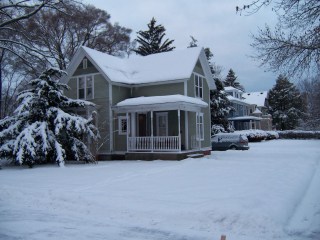
The Childhood Home (1981-2007, with gaps).
My parents bought a home the same year they were married (1976), a late-nineteenth century farmhouse that had once stood on the outskirts of a then-tiny Midwestern town. It housed the first postmaster of Holland (Mich.) and also these two lovely women — a schoolteacher and an artist — whose suggestive double portrait I keep over my desk at work. A two-story, three-bedroom house with a tiny bedroom in what used to be the pantry off the kitchen (when built, house had no indoor plumbing) this was the architecture of my childhood. I was brought home from the hospital to a living room that housed a table saw, watched scary movies through the crack in the lincrusta peeling from the stairwell, and warmed my toes on the forced-air vents in the floorboards. Situated in Holland’s historic district, it was a block and a half from the public library and a foundational location for many aspects of who I am today.

The College Apartment (2000-2001).
Although I was a townie in college, officially circumventing the on-campus housing policy for underclassmen by living with my parents, the third year I was enrolled at Hope I decided to share an apartment with a good friend of mine (also “living with parents”). We were two houses down from the railroad tracks and at night the freight trains felt like they were coming right through the walls. We took turns cooking, mostly recipes from the Moosewood cookbook, and had a dish-washing schedule that sometimes we followed and sometimes we didn’t. On Wednesday nights I bicycled back to my parents house a mile away so my family and I could watch The West Wing together. We each paid $250/month of the five hundred dollar rent (I know!!) and didn’t realize at the time that we would never pay so little for housing ever again.

The Mountaintop Cabin (Fall 2001).
After my first year of independent apartment living, I spent a semester in the Cascade mountains in Southern Oregon, living with four other students in a tiny five-room cabin in a re-purposed logging town turned off-campus community. There were two doubles and a single in the cabin, and I arrived early on move-in weekend to claim a single — a onetime mudroom off the kitchen that basically had room for my twin mattress and the dresser. We heated the place by keeping the woodstove in the living room stoked into the late evening, and banking it at night as we trailed off to bed. Once more we took turns cooking communal meals five nights out of the week, gathering each night except Friday and Saturday to discuss the day’s lecture and reading, our independent research projects, and the social tensions of our hothouse environment. Even when two of the five residents basically moved out to live with partners elsewhere, we continued to gather all five of us at dinnertime to touch base.

The Parsonage Next Door (2002-2003).
I spent about six months at my parents’ after Oregon, which worked out well enough but made clear I needed a little more independent space at this point in my life. It so happened that our next-door neighbors (and good friends) were in want of a live-in nanny during a year when one parent was going to be out of state completing an advanced degree. So I moved into a suite in the corner of the house with a bedroom and bathroom to myself, periods of childcare responsibility, and otherwise a great deal of autonomy. The cats (Butterscotch and Pikachu) used to hide in the walls in the bathroom, reappearing from beneath the bathroom sink at unexpected moments. Apropos of not much else, this was the year I discovered Fingersmith and wondered, once again, if I might be a dyke.

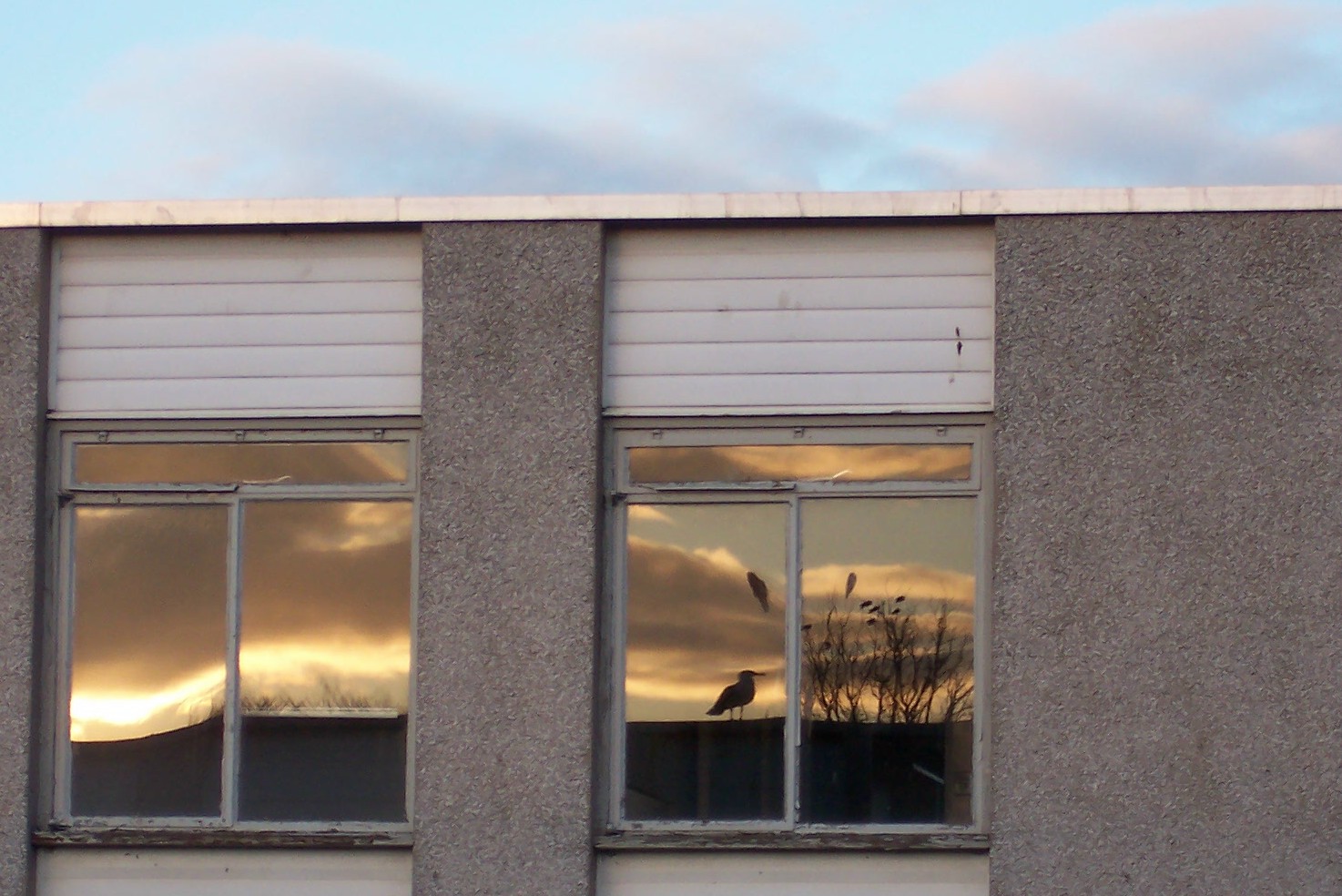
Seagulls at sunset at Hillhead Halls (2003-2004)

The Student Flat (2003-2004).
Oregon hadn’t quenched my wanderlust and I used the remainder of my (grandparentally-invested) college fund to spend a year reading cultural history at the University of Aberdeen on the northeast coast of Scotland. I lived in University housing on the edge of a sweep of city park and a stone’s throw from the North Sea in Old Aberdeen. 69A Burnett Hall was my address, sharing a kitchen and washroom facilities with four Scots first-years and, come January, another American. This was an era where, although I had a laptop for writing, we still have to go to the central computer labs for Internet access. For the first (and last) time since I was nine years old, I had no paid employment; between lectures and seminar discussions and research for my history essays I walked the length and breadth of the city, old and new, wrote letters, obtained a public library card, and had more leisure reading time than I have ever had since.
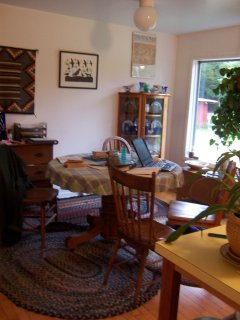
Kitchen at “The Farmhouse” (2004-2005)

The Farmhouse (2004-2005).
Returning stateside in July, I was unexpectedly handed a nine-month house-sitting gig when family friends going on sabbatical rang up to ask if I would be interested in staying in their home, rent free, for the academic year. It was my final year of college, where I was completing the last requirements to graduate after a prolonged seven-year stay. I spent the autumn, winter, and spring commuting twelve miles to campus from a rural holding situated next to a county park and across from a llama farm. The three family cats, half feral, came and went largely at will — though in the depths of winter they particularly enjoyed sleeping under the woodstove. Every Friday night I had my college roommate (“The College Apartment”) over for dinner and to stay the night before she left early for a Saturday morning shift at a yarn shop in the nearby village. This was the living room where I wrote my senior thesis on masculinity and pacifism during the Civil War, and where I celebrated the end of an academic era.

The Grandparents’ Spare Room (May 2005).
When our friends returned to reclaim their house, I embarked upon a peripatetic late spring and early summer. I spent a month in the spare bedroom at my grandparents’ house while finishing a final core requirement for my B.A. — a three week science course for non-majors during which the professor taught us how to repair cars, construct a battery, and tried to convince me to major in Engineering. Each morning my grandmother, who passed away this March, would leave a place for me at the breakfast table waiting for when I came down in the mornings. We all three of us — my grandmother, grandfather, and I — were leading relatively independent lives, but cohabited fairly gracefully together.

The Lesbian Land Trust (June 2005).
When my May Term ended, I blew out of Dodge for … Missouri, to deliver the fruits of a collective research project on 1970s feminism to the research participants who planned to publish a book on their own history: a group of lesbians who had settled on a land trust outside of Springfield. I spent the month of June living with one of the founding couples, one of whom I was nominally assisting with an editing project in exchange for room and board. While I was technically there to work for her, I suspect I got more out of being there as a refuge post-college than she got out of me as an editorial assistant. While at the time I was still deeply uncertain about my inclinations and longings, in retrospect the brief retreat among a community of lesbians (and bisexual women partnered with lesbians) was a key experience added to my repertoire of “how to live.
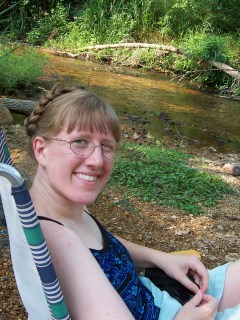
Hawkhill Women’s Land Trust (2005)

The Men’s College (September-December 2005).
My first post-undergrad job was a paid internship with the study abroad program I had enrolled in to attend the University of Aberdeen. During the fall semester of 2005 I lived in Crawfordsville, Indiana, and worked for the program director out of an office on the campus of Wabash College, one of the few all-male undergraduate institutions left in the country. For the first two months of my internship they put me up at a local hotel, where I had access to a full slate of cable television channels and watched a lot of “Charmed” and the various CSI spinoffs. For the second half of the fall, I was relocated to an recently-purchased off-campus house furnished college dorm-style. Since I was in the midst of radiation treatment for my thyroid condition, what I mostly remember from that fall was how my raging metabolism made it possible to eat whole gallons of ice cream at a single sitting and still be losing weight precipitously. Don’t try this at home, children.

The Family Friends’ Spare Room (Summer 2007).
The summer before leaving Michigan for Boston, I moved from where I’d been living in my parents house (still, at that point, simply “home”) since college two blocks west to stay good family friends while my brother moved temporarily into the space I’d just vacated. The musical chairs of a family with three children in their college and post-college twenties. Life in a town your whole life and this sort of thing happens: the friends’ home, recently purchased, was actually a house where ten years previously I’d spent a lot of time babysitting two little boys with a mania for trains. The guest bedroom I stayed in was the former site of their Thomas the Tank Engine train table. This time around, I spent less time playing trains and more time reading through all of Laurell K. Hamilton’s back catalog.
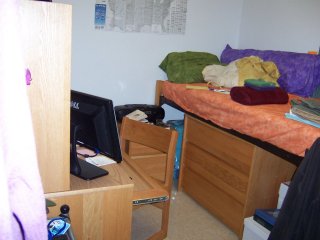
North Hall (Fall 2007)*

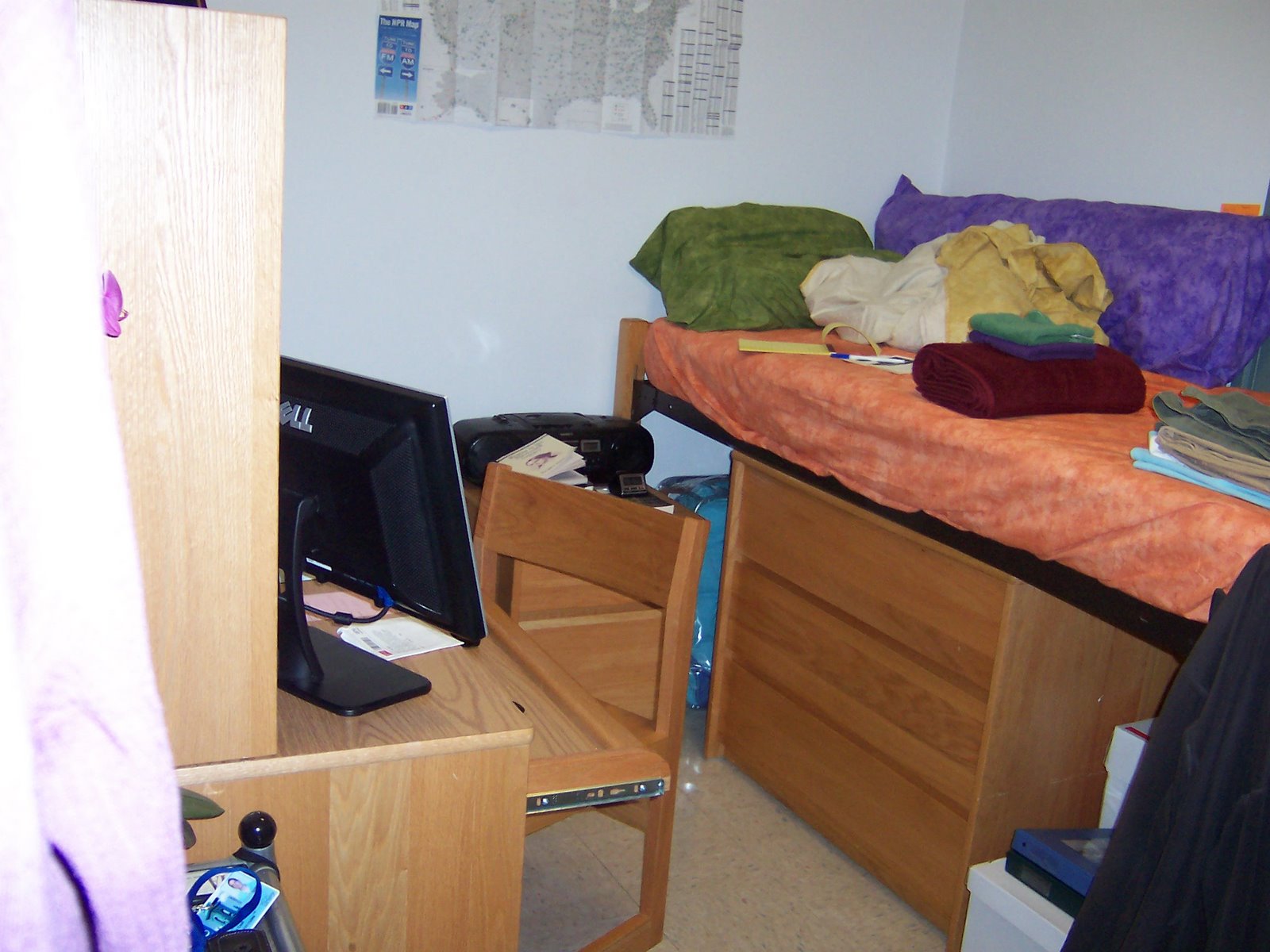
The Grad Student Dorm (2007-2008).
Moving to Boston, I made the decision to life for a least a year in their graduate student dorms. At the time, Boston felt like a temporary way-station for graduate school, I didn’t know the city, and I didn’t know anyone to room with. I’d also never actually gone apartment hunting. So I moved into an American dorm for the first time in my life. While utilitarian in the way I’d intended, I hated campus life with a passion; returning to school was indignity enough without mandatory hall meetings and the ventilation system that distributed skunky pot fumes throughout the building in the depths of every night. Luckily, by December Hanna and I had pretty much decided I would take over her roommate’s half of the lease when her roommate graduated in May, so I was able to count down the months to leaving the enclosed monoculture of student housing for good.

(*I spent a lot of early mornings  and late evening Gchat-stalking Hanna from that desk)

Just moved into Allston, May 2008

The One-Bedroom Split (2008-2014).
Hanna and I spent a year being roommates before finally working out what we should have known by that December discussion about housing: that actually we wanted in each others’ pants. Over the past seven years, we’ve transformed temporary student digs, with “hers” and “hers” living spaces, into a workable one-bedroom apartment for a married couple and two cats. It’s been a long, piecemeal process with numerous trips to IKEA. But each year for six years as we considered whether to renew our lease the answer has been “yes.” Almost literally step by step — as we abandoned the T for our morning commute and turned to walking daily through Brookline, coffees in hand — we took the space and the adjacent neighborhood and made it our own. Even as we were making Boston our own.

The same room six years later…

The 1910 Triple-Decker (2014-?).
A week from tomorrow, the movers will be arriving to help us move into a second-floor condo unit in the Hyde Square area of Jamaica Plain, a space that will functionally double our living quarters, provide us with a porch, and eat-in kitchen, a yoga and meditation space for Hanna, and bike storage for me. We’ll be a ten-minute walk from the Emerald Necklace and a ten-minute bike ride from central JP. Our morning commute will be a brisk climb up over Parker Hill, or a meandering stroll through Olmsted Park to Brookline Village (for coffee), and on down the course of the Muddy River to Countway and, a mile beyond, the MHS.

Reports from along the way will be found here, at the feminist librarian!
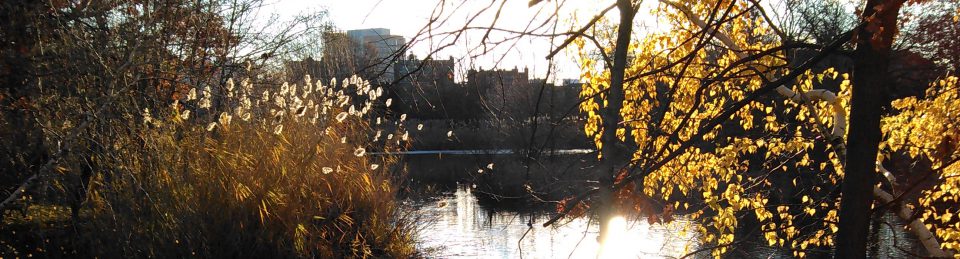
in the deep midwinter, looking forward

27 Friday Dec 2013

Posted by Anna Clutterbuck-Cook in life writing

≈ Leave a comment

Tags

domesticity, hanna, holidays, move2014

Our home for the past half-decade.

Last week I wrote a bit about how 2013 treated us. Today’s post is a look at what 2014 may have in store.

In many respects, we’re hoping for a continuation of the stability that has characterized life since last December. Neither of us plan to change jobs, start a new academic program, or pursue radically different activities from this year. We’ll still be very much married (in an ever-increasing number of states in this nation!) and look forward to only completing two instead of five tax returns this year. We very much hope for no health crises in 2014 and a continued baby-step-by-baby-step improvement to Hanna’s depression and anxiety.

At the same time, we do have a few things on the horizon, so here’s what’s on our plate (at varying levels of certainty) in the months to come:

Financial Planning. Exciting, right? I guess it’s a measure of my nerdiness that I actually do find this kind of paperwork and discussion stimulating. Now that Hanna and I are a couple of years out of graduate school and our income has more or less stabilized (*knock on wood*), and we’ve got things to think about like 401(k) contributions and renting vs. owning our living space, we decided it was time to meet with a financial planner. We’ll be doing the consultation in early January, and I’m hoping she’ll be encouraging and clarifying, with perhaps some refinements but no real curve balls (unless they’re the good one — I’ll take good ones!)

Maybe Moving. As I believe I’ve detailed here before, we had a household meltdown earlier in the year that resulted in a mutual decision that it was really, honestly, absolutely, we’ve-waited-too-long time to look for a new living space. This little one-bedroom has served us incredibly well, and I will recommend our management company to anyone who asks — but we’re outgrowing what was initially rented by Hanna in 2006 as a graduate-student space, shared with a roommate. We want a bigger kitchen, more-efficiently-arranged common spaces, maybe a guest bedroom/office, and a mud room where the cats’ litter box can live. We’re ready to be in a neighborhood that isn’t dominated by students. We’ll be looking at both renting and buying (see “financial planning” above), although my suspicion is that we’re not at the buying point yet.

motive Project. For the past half-year I’ve been poking around at the intersection of queer history, history of American Christianity, and history of education with a project on the Methodist Student Movement’s motive magazine during the 1960s. I had a paper proposal accepted for Boston College’s biennial on history of religion, taking place in March, so during January and February will be working intensively on the paper. I’ll be doing a close reading of motive from 1963-1972 and thinking about how gender and sexuality are explicitly and implicitly presented within its pages. This is one small slice of a larger project that I hope will shed light on how and why left-leaning, mainline-evangelical Protestant Christians struggled with the question of homosexuality during the mid twentieth century.

Cats. Geraldine and Teazle will continue with their regime of napping, wrestling, climbing, napping some more, and demanding tuna. We also hope that, once we move into a slightly larger place, we will be able to offer our services fostering cats for our favorite local shelter, Black Cat Rescue, the group that brought us Geraldine.

Fenway Health’s Community Advisory Board. I’ve recently applied to join the community advisory board of our awesome community health center, Fenway Health. If the current membership accepts me, I’ll be serving a three-year term as part of the team of patients who support and consult with the staff on programs and services. I’m excited about this possible opportunity to give back to, and participate in, an organization that has been so good to us.

Travel? The past years have been intense travel years for us, and we learned a lot about how we do (and don’t) like to organize our traveling experiences. We’ve talked about renewing our passports this spring and planning an end-of-2014 expedition to England, but the feasibility of that will depend in some measure on how the moving project falls in place. If we don’t go to England, we’re hoping to take a just-for-us week somewhere quiet (Cape Cod maybe), during the off season, to relax and recoup.

Long-form Blogging? The words haven’t been coming easily the last six months for me; I’m not sure why. I certainly haven’t stopped having the thoughts I used to share through blog posts, or reading the books I used to review in-depth. Part of it is sheer time. Part of it has been a need to limit the amount of time I spend on the computer when not at work. Part of it has been a lower feeling of urgency when it comes to voicing my particular perspective on issues on the internet (I certainly still share my thoughts in private correspondence and conversation). I am hopeful this is just an inward-looking time that will grow into a slightly new kind of online presence. I’m just not sure what that will look like yet.

In the meantime, you’ll be getting more cat pictures and short-form book reviews! I hope you enjoy both.

Less anxiety, fear, and exhaustion. Hanna’s struggled a lot this year with overwhelming feels of the nebulous, negative variety, and we’d like to see less of that as time goes on. It’s no fun.

I look forward to following all of your own 2014 ups, downs, and in-betweens in the twelve months to come. It’s a pleasure to be here, and elsewhere, with all of you.

on being out day [a belated post]

13 Sunday Oct 2013

Posted by Anna Clutterbuck-Cook in life writing

≈ Leave a comment

Tags

being the change, gender and sexuality, hanna

This Friday, October 11th, was International Coming Out Day.

I thought, in passing, about writing something but I was distracted by trying to get things done at work and by the fact my wife was getting a chest x-ray for pneumonia. And then picking up antibiotics (thank goddess for antibiotics) for her. And remembering to feed the cats. And pick up something for dinner.

Hanna in the redwoods (Sept. 2013)

So this is a belated post on the theme of coming/being out. I don’t have anything particularly original to say, except that I am grateful to all of the people throughout history, past and present, who have conspired to make International Coming Out Day an unremarkable occasion in our day lives. Hanna and I live in a time and place where our bisexual inclinations and same-sex relationship are known and largely honored structurally in our workplaces, with our landlord, at our health center, in our city, state (and now, finally, the federal government), by our friends and relations. We hold hands and kiss in public, speak of things sexual while dining out, review queer porn, blog about being dykes.

We don’t fear being evicted, fired, blacklisted, jailed, physically attacked, disowned or disinherited, treated as sick because of our sexual selves, or otherwise grossly discriminated against. And if any of these things were top happen to us, we would have advocacy organizations and a network of supporters to turn to for aid.

In many ways, our security is exceptional: many queer folks still live in the toxic closet, or cover aspects of their identities, for fear of social and material marginalization. The young and the old, the gender non-confirming, trans folks, queer people in nations that still actively persecute sexual minorities.

There is obviously still work to be done.

But this week, I’m grateful in my own small domestic way for the work of activists and the kindness of those people in our lives who together made it possible for my Friday to be, in part, a story about leaving work half an hour early so I could get to the pharmacy and pick up Hanna’s antibiotics. A story about a boss and colleagues who sent well-wishes for Hanna’s quick recovery. A story about a health clinic that knows were a couple and has no problem letting me pick up her medications.

A story about going home to my wife.

death-of-doma-day tattoos! [photo post]

09 Tuesday Jul 2013

Posted by Anna Clutterbuck-Cook in life writing

≈ 1 Comment

Tags

art, family, hanna, photos

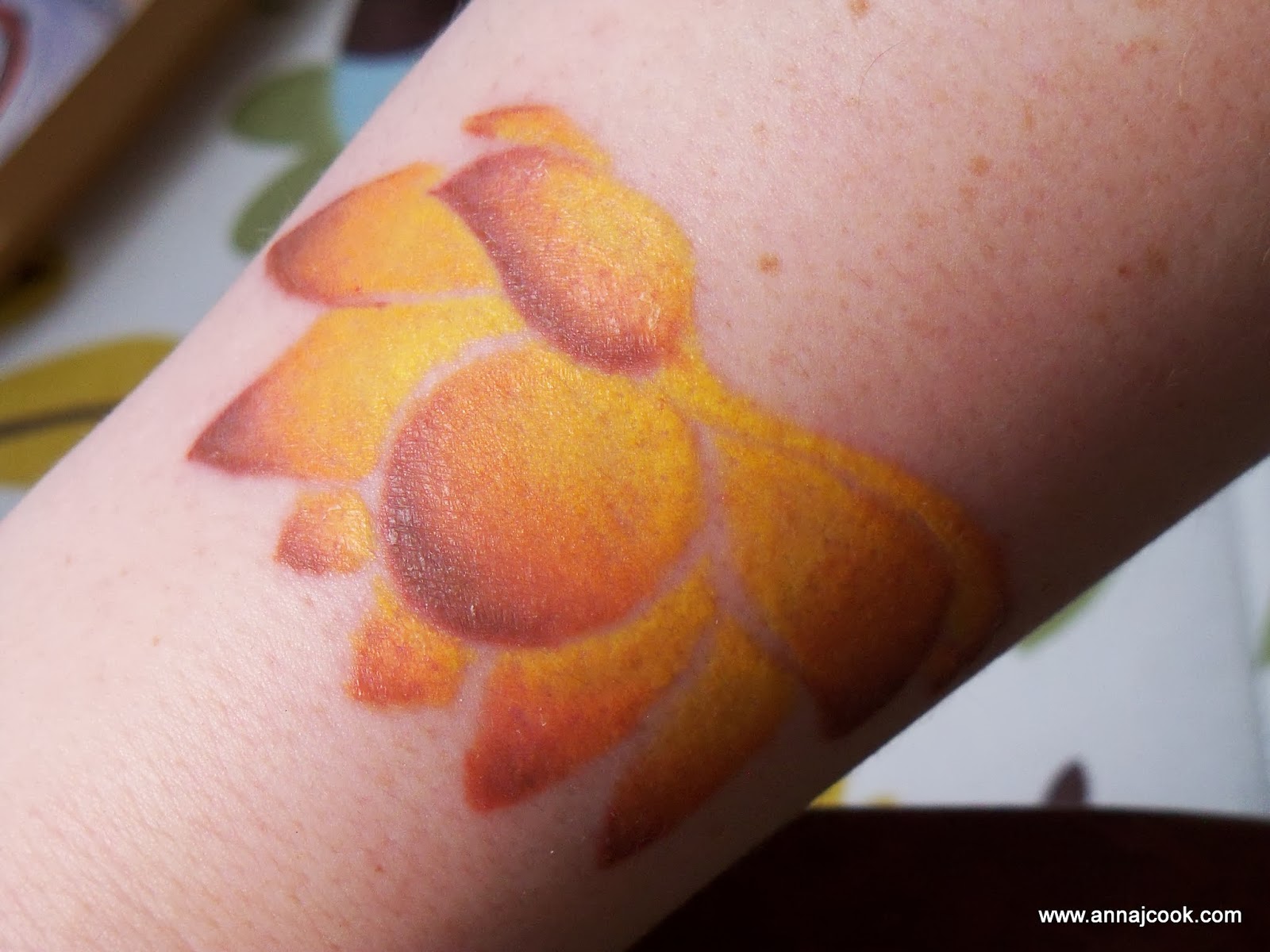
As previously mentioned, Hanna and I had a date with our new tattoo artist — Thomas Gustainis — on the afternoon of the day the Supreme Court released its opinions in Windsor and Perry. Which means that one part of the multi-faceted meaning of these tattoos, at least for me, will be entwined with memories of the day DOMA fell.

The color on Hanna’s lotus is as vibrant as the most brilliant Michigan autumn.

And I couldn’t be happier with my juniper branch, even if the placement means I only really get to see it in photography like this!

The day after I had the work done, a volunteer at the Massachusetts Historical Society asked me, with slight alarm (though also no small measure of admiration) if I ever thought about what I would think of my ink when I was her age, in my 70s.

Yes, I said. Because I have.

But I wasn’t sure how to explain to her, from there, that to me the tattoos on my skin are like scars or freckles or laugh lines. Yes, they’re voluntary. Yet over time they become, literally, a part of my embodied self. They will grow old with me, and change meaning and character as they (we) do.

This is my body now, I say to myself, when I look in the mirror every day. My physical self is a running, changing record of my life in this world. And the ink is, indelibly now, a part of that record.

Maybe it’s my historian-self that has learned to embrace such traces in the skin.

tattoo no. 3

25 Tuesday Jun 2013

Posted by Anna Clutterbuck-Cook in life writing

≈ Leave a comment

Tags

art, domesticity, family, hanna

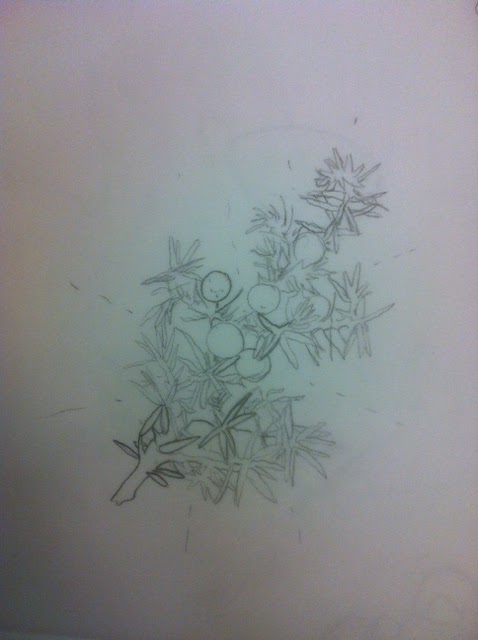
artwork by Thomas Gustanis

Even in the midst of this Boston heatwave, I’m starting to get excited about the appointment Hanna and I have tomorrow for our new tattoos! They will be, respectively, her fourth and my third pieces — and our first projects with our new tattoo artist, Thomas Gustanis, the husband of one of Hanna’s colleagues at the Center for the History of Medicine.

We were excited to discover Thomas was building his tattoo portfolio, as our previous artist — Ellen Murphy — left the Boston area to work at Red Rocket in New York City.

*sad face*

But! Life (and tattoo art) move on, so we’re looking forward to building on the addiction that Ellen jump-started with Thomas’ developing style.

I had my first tattoo inked to mark the completion of my graduate degrees in January 2011.

Along with Hanna, I had my second tattoo inked in celebration of our marriage in August 2012.

When the opportunity to have a third tattoo completed arose I did not have an obvious design in mind, although I new I wanted something organic. After sitting with some possible designs and placements, I’ve settled on the lovely juniper branch Thomas sketched out (above), to be inked on the back of my right shoulder. The smell of juniper in the heat of summer sunshine is one of my strongest scent-memories from childhood: it grew as wild ground cover around the cottage in Leelanau, Michigan where my family vacationed every summer, and was also a pervasive scent in Bend, Oregon, where we regularly visited my maternal grandparents when I was young. Northern Michigan and Central Oregon are both deep parts of my geographically-rooted self, and I chose this tattoo to ground those spaces and memories within my bodily self.

It was only after I had selected the tattoo subject and finalized the design with Thomas that my grandmother, Marilyn, died in Bend. But I will be sitting for the tattoo tomorrow afternoon in her memory, and in thanks for the way she helped make Oregon a part of my Homeland.

← Older posts
Newer posts →
"the past is a wild party; check your preconceptions at the door." ~ Emma Donoghue

Recent Posts

  • medical update 11.11.22
  • medical update 6.4.22
  • medical update 1.16.2022
  • medical update 10.13.2021
  • medical update 8.17.2021

Archives

Categories

Creative Commons License

This work by Anna J. Clutterbuck-Cook is licensed under a Creative Commons Attribution 3.0 Unported License

Meta

  • Create account
  • Log in
  • Entries feed
  • Comments feed
  • WordPress.com

Blog at WordPress.com.

  • Subscribe Subscribed
    • the feminist librarian
    • Join 37 other subscribers
    • Already have a WordPress.com account? Log in now.
    • the feminist librarian
    • Subscribe Subscribed
    • Sign up
    • Log in
    • Report this content
    • View site in Reader
    • Manage subscriptions
    • Collapse this bar
 

Loading Comments...