• anna j. clutterbuck-cook
  • contact
  • curriculum vitae
  • find me elsewhere
  • marilyn ross memorial book prize

the feminist librarian

the feminist librarian

Tag Archives: feminism

booknotes: life, liberty, and the pursuit of happiness

16 Tuesday Oct 2012

Posted by Anna Clutterbuck-Cook in book reviews

≈ Leave a comment

Tags

children, feminism, gender and sexuality, politics

The books to review are piling up, and the longer they sit in the queue the more I feel obligated to be Insightful about what I’ve read. So in an attempt to resist intellectual overwhelm, here are a few shorter reflections on the books I read in the first half of October.

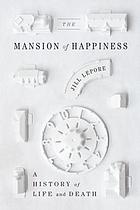
Lepore, Jill. The Mansion of Happiness: A History of Life and Death (Knopf, 2012). Harvard Professor of American history (and sometime MHS researcher) Jill Lepore’s latest work is a collection of essays, most of which began as pieces for The New Yorker, and are published here in expanded form. Despite its formidable title, Mansion is episodic rather than exhaustive, exploring American understandings of humankind — how humans begin, how we do and should live, how we die — in a series of engaging chapters on such topics as baby food (and breastfeeding), children’s literature (and children’s libraries), teaching sexual knowledge, parenting advice, and the medicalization of the end of life. Lepore is a skillful writer and deeply philosophical historian who believes passionately in the importance of translating her scholarly work into terms meaningful outside the academy. As an historian, I appreciate her deft use of primary source research in essays that range across time and space, making eloquent and thought-provoking connections between seemingly disparate historical events, cultural enthusiasms, and the persons and places of America’s past.

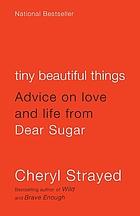
Strayed, Cheryl. Tiny Beautiful Things: Advice on Love and Life from Dear Sugar (Vintage, 2012). After my sister raved about Wild and Bitch magazine offered me a compelling and eloquent author interview with Cheryl Strayed, I realized it was time to read Tiny Beautiful Things. Over the years, I’ve definitely been exposed to the “Dear Sugar” columns Strayed wrote for The Rumpus, and in fact have a favorite quote from one such column right here on the feminist librarian (look to your left). Yet I’d never read “Dear Sugar” systematically, and in some ways I’m glad of that. While each individual column has power, taken together as a book-length collection Strayed’s attitude of kindness and care, the quality of listening and clarity of thought, become all the more beautiful and heartbreaking. The experience of reading Tiny Beautiful Things reminded me most strongly of the first time I cracked open Traveling Mercies. Cheryl Strayed’s voice is as raw and redemptive as Anne Lamott’s, though without the Jesus talk (for some of you that’ll be a plus, for others a minus — I urge you to read Tiny either way).

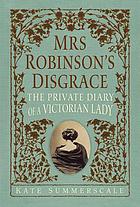
Summerscale, Kate. Mrs. Robinson’s Disgrace: The Private Diary of a Victorian Lady (Bloomsbury, 2012). In the summer of 1858, one Henry Robinson appeared before the newly-created divorce court in London and petitioned for the legal dissolution of his marriage to Isabella Robinson on the grounds of adultery. His lawyer put forward as evidence Isabella’s extensive and detailed diaries, which her husband had discovered while his wife lay ill with fever. The diaries, Mr. Robinson argued, provided evidence not only of Mrs. Robinson’s unhappiness in marriage (she wrote openly about her hatred for her husband and her plans for desertion once her children were grown) but also of her desire for other men, and — most damning of all — her longstanding emotional, and perhaps physical, affair with a friend of the family. Summerscale uses court documents, family papers, and the press coverage of the trial to piece together the story of “Mrs. Robinson’s disgrace.” What emerges is a fascinating tale of Victorian marriage law, sexual morality, conceptions of mental health and madness, and the unstable boundary of fact and fiction.

Valenti, Jessica. Why Have Kids?: A New Mom Explores the Truth About Parenting and Happiness (Houghton Mifflin, 2012).  Valenti’s latest is a quick read that I polished off earlier this week while waiting for Hanna in the waiting room of her physical therapist’s office. Using her own, fairly traumatic, entry into motherhood as a launching pad to explore the modern culture of mothering and parenting, Jessica Valenti (founder and former executive editor of Feministing) follows in the footsteps of Judith Warner (Perfect Madness), Susan Douglas and Meredith Michaels (The Mommy Myth) in critiquing the culture of “intensive mothering” and its unrealistic expectations of modern parents. For anyone who has read these earlier works (or, indeed, follows discussions about parenting in the feminist blogosphere), there will be little new here — though I think that in itself is noteworthy. Jessica comes from a generation or two past that of Warner, Douglas, and Michaels — yet still seems held hostage, to some extent, by the same societal judgyness around motherhood and family life. I found myself wondering, as I read, why the hell we continue to feel trapped by other peoples’ expectations. Obviously, public policy and law as a material effect on parenting options — but in the realm of “styles” and personal decisions it really should come down to what works for you and your family — if a given approach isn’t working, try something else.*

Which is part of the reason why I felt impatient with the way Valenti saves some of her most pointed criticism for proponents of “natural” parenting, whose philosophies and practices she felt betrayed by as a new mother coping with the aftermath of an emergency Cesarean and a daughter who needed months in the NICU to survive. While her own struggles are what they are and deserve to be articulated, this sometimes leads to lopsided critique — for example the pages and pages on the dangers of fanatic breastfeeding with only a single (very short) paragraph on the discrimination and judgyness leveled at parents who choose to (and are able) to nurse their kids. So it didn’t work for her, In a book that otherwise admirably refuses to take “sides” in the banner feminist parenting battles, I felt the treatment of the parenting practices Valenti rejected on a personal could have used more nuanced discussion from a feminist perspective.

*I actually think this holds true for any family, whether young children are involved or not.

booknotes: the end of men

11 Tuesday Sep 2012

Posted by Anna Clutterbuck-Cook in book reviews

≈ 8 Comments

Tags

feminism, politics

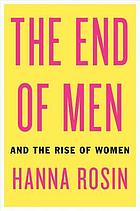
Back in July, I unexpectedly scored an advance review copy of Hanna Rosin’s The End of Men; and the Rise of Women (Riverhead Books, 2012) through LibraryThing’s Early Reviewers program. It arrived last week and I had every intention of saving it for vacation … but instead read it over the course of two afternoons. In part because it’s a pretty breezy read once you’ve got the gist — and mostly because I was so irritated by it, I found it hard to put down.*

In the event you’ve been in a media blackout since July 2010, Rosin originally wrote an article for The Atlantic under the same sensationalist title (a title which she apologizes for as the book dedication; perhaps that’s when you should rethink your marketing strategy?). Said article was one of a rash of journalism-lite pieces proclaiming the 2008 recession a “he-cession” and suggesting that as male unemployment rose it was women who stood to gain in both economic opportunity and political and social power. “The End of Men” painted a bleak picture of a future “matriarchy” in which high-powered, controlling women run the world while their college dropout loser husbands hang out with soiled toddlers ignoring the responsibilities of grown-up life. The End of Men is essentially a book-length elaboration on this apocalyptic vision of an upturned gender binary that — rather than creating space for more egalitarian, gender-independent relationships — merely reverses the stark hierarchy of the most aggressive patriarchal society.

More articulate and knowledgeable bloggers than I have refuted Rosin’s sketchy use of data and anecdote to paint this hysterical vision of what 21st-century hetero relationships may look like, and how the changing global economy might contribute to their reshaping. I’m not going to mimic more comprehensive efforts elsewhere. What I want to talk about instead is how crippling Rosin’s framework of oppositional, binary gender is to her observation and analysis, how profoundly it shapes her interpretation of what she sees in the world. Because this, more than anything, got under my skin and made me feel kinda sleazy for even paying The End of Men the time of day.

But I am giving it the time of day because — as Jill points out in her meditation on Naomi Wolf’s latest venture into the world of publishing — however frustrating and discrediting I find Rosin’s framework, it continues to be a compelling one for many people across the political spectrum. Rosin continues to be a respected left-of-center talking head on issues of children and education, on feminism, on parenting, on sexuality, on gender. And yet she is writing from a perspective drenched in the gender binary, seeing a world in which men stand in one corner, women in the other, locked in a zero-sum competition for power, prestige, and material resources.

And it’s important to ask how truthful this interpretation of the world is, how useful it might be in helping us move forward, and what Rosin’s framework causes her to overlook and leave out (in the event this post is tl;dr for some of you, my answers to these three questions are: not very, not hardly, and some pretty crucial things about humanity — for example, uh, that same-sex couples exist and don’t fit into her tidy framework of hetero couples in perpetual struggle for dominance).

Rosin waffles in the text over whether gender difference is borne of nature, nurture, or a combination of both — but in the end this doesn’t much matter to her thesis. Whether innate or learned, the women and men who populate Rosin’s world are the tired stereotypes of gender complementarity — with, if we’re lucky, a feminist twist. Women are barrelling ahead learning how to combine “feminine” and “masculine” traits and take over the world, while men (unwilling or unable to adapt, it’s unclear throughout the text which theory Rosin favors) are left unmoored and impoverished. In Rosinland (seriously: is she living in the same country I am?), the men are universally intellectually closed, emotionally stunted beings who shuffle through life under the thumb of high-powered wives and girlfriends who organize and circumscribe their lives — and then ditch the dudes when their economic success leads them to greener sexual pastures. Or, if they had the poor judgment to get married before economic disparity set in, the couple falls into a routine of wifely overfunctioning and/or spousal abuse by a resentful husband.**

Here’s the thing. Because Rosin is determined to make this a story about gender — and specifically, how men are losing at life while (because?) women are winning — she utterly fails to approach her research with awareness of how her beliefs about gender color her interpretation. Not only does she fail to deliver an account “unincumbered by assumption or ideology” (as the flap copy would have us believe), she doesn’t even fess up to the assumptions and/or ideologies that shape her narrative. We all bring bias and belief to our project of making meaning, and thus it is irresponsible for anyone to approach such a nexus of cultural-laden ideas (gender, power, marriage, work) and not acknowledge the particular lens through which they approach their research.

Gender is, as many a feminist pointed out, a valid category for analysis. The gender we’re assigned at birth, and how the world around us responds to that gender, is absolutely part of what shapes our lives. The fact that Rosin can write a whole book using the lens of gender is a victory for feminist theorists, activists, and scholars the world over. My frustration with Rosin’s argument isn’t that she chooses to focus on gender — it’s that she seems to understand gender to be the category of analysis. Like feminists who act as if the sisterhood is the ur-category trumping race, class, sexual orientation, nationality, time, space, and possibly black holes, Rosin hop-skip-jumps from anecdote to anecdote attributing every marital friction, educational or economic woe, asshole behavior or informant viewpoint back to … gender.

The strange beings who populate The End of Men appear to have no inner life or motivation beyond fulfilling (or overcoming) the fact of their gender. Religious beliefs or social justice values? A sense of how, as an individual, the person wants to shape a meaningful life? What sort of parent they want to be, where their creative passion lies, none of this matters. The only value any being in Rosinland seems to possess is monetary, and whether their monetary fortunes go up or down seems to be a question of how skillfully they perform gender. The women who populate Rosinland are a breed of Amazonian high-achievers whose interest in people with penes seems wholly dependent on their material utility (and possibly their genetic matter and/or ability to provide fucks on a somewhat regular basis). She actually invokes Charlotte Perkins Gilman’s embarrassingly racist Herland as a literary example of the world she believes we’re charging toward.

And cites it as a victory for the feminist agenda. Once again, I failed to get that memo.

Because Rosin thinks women only want men for their economic assets*** she is obviously puzzled by the couples she encounters where women are (for example) pursuing advanced degrees while their partners are content with a quieter life. In Rosinland, deliberately picking a low-key job in order to have time to go fishing with your buddies, play video games, or (gasp!) be a stay-at-home dad are sneer-worthy life choices.

Excuse me for living, but men are hardly the only ones to value friendships and leisure time, fandoms and family over a high-paying career that might bring in over $100k per year but demand eighty hours per week in return. I kept waiting for The End of Men to take me on a tour of hetero relationships that have found equitable footing (I know a number of them!), where the partners actually, you know, care about one another as people rather than monitoring their significant other for how well they’re fulfilling a prescribed social role. Yet in Rosinland these relationships do not exist.

I’d argue that, in part, they don’t exist because Rosin completely failed to talk about queer people. At all. Not a single lesbian, gay man, bisexual, transgender, genderqueer, poly, or kinky individual appeared in the pages of her book. In Rosinland, the only option is heterosexuality — it has to be or her theory of gender relations would fall apart.

Yet even if she’d been up-front about focusing on heterosexual relationships and how economic factors shape the family decisions and interpersonal dynamics of straight people, I could have pointed her to at least half a dozen straight couples I know where the interpersonal dynamics are hardly over-determined by the size of each individual’s paycheck. Newsflash: there are other reasons people enter and remain in relationships.

Hands-down the creepiest aspect of The End of Men was the way in which Rosin ha so completely accepted the neoliberal assumption that the worth of a human being begins and ends with their worth as worker.

Ultimately, The End of Men is a book that uses a lot of paper and ink to say very little that is original or useful. It regurgitates tired stereotypes about (straight) women and men, invites us to fear women’s rising professional success and greater social autonomy, and is confusingly vague about how we have landed in this dreadful gendered mess. Rosin insists that men aren’t incapable of putting on their grown-up pants and succeeding in this new “feminized” economic landscape — except that her references to evolutionary psychology and discredited “brain difference” studies undercut this assertion. And while she pays lip service to gender policing and social expectations that penalize men and women for gender non-conforming behavior, she is worryingly blithe about structural constraints on individual autonomy. For example, in a chapter on female executives, she argues that these women have succeeded because they “will themselves to ignore [sexism] so they can get their work done” (197).

In Rosinland, the only real obstacle to women’s success is their own self-doubt.

I would argue that The End of Men is actually a book that revolves around Rosin’s fear of women’s equality — or at least her belief that as women make social and economic gains it is their responsibility to ease the terrible shock their hard-won equality is causing the men. The women of Rosinland are judged harshly — the text repeatedly uses words like “overbearing,” “domineering,” “matriarchy” — for taking on assertive, leadership roles in both the workplace and in their personal lives. Yet we are also held responsible for cajoling, bullying, manipulating, requiring, or otherwise hauling reluctant men into the new “matriarchal” world order. In a penultimate chapter on the rising economic power of Korean women^, for example, Rosin relates an anecdote about a woman who spent two decades pushing her husband to help her with household chores and now that he’s finally “taken the hint” she’s set to work on her son.

While I obviously have no problem with women expecting equality in the domestic sphere — regardless of the sex of their partner! — what I think is fascinating-yet-troubling about the way Rosin shapes her anecdotes is that it is always the woman who lays down the law for her man to follow. While simultaneously bending over backwards to make adaptation seem palatable to men who (because of their caveman brains?) are lost in a woman’s world, disconsolate and suffering. At times, Rosin even seems to be suggesting that in order to encourage men to become more gender-independent (less wedded to outmoded notions of masculinity) we have to create special male-specific pathways for them to get there — i.e. gender-segregated educational opportunities. Surely if the future we want is one in which both women and men can thrive as people, the very last thing we would want is to suggest by the very shape of our educational system that women and men were fundamentally different beings?

In my estimation, The End of Men ends up using the supposed explanatory power of gender to account for seismic changes in the global economy that need to be grappled with in a much less reductive way. It is not enough to argue that the prevalence of women in the workplace equals the success of women (much less the success of feminism) if the reason women outnumber men in our economy is that they tend to hold jobs in the service and retail industries — jobs that rarely pay a living way, are thin on benefits, and usually exact harsh penalties for workplace organizing. It’s not the triumph of feminism that labor women, as a class, used to perform for free (childcare, eldercare, housework) is now outsourced to others who, in turn, must outsource their own care-giving responsibilities.

The story Rosin ought to be telling is a story about the erosion of workers rights, about the increasing identification of citizen and self with the wage-work we perform, about the poisonous effect this has on our interpersonal relations, about the way neoliberal capitalism fails to account for the care we provide to one another that can’t be reduced to work-for-hire. Yet her beliefs about gender cause her to look no deeper than a tired old tale of male vs. female.

I can only hope that her work will inspire others to do better.


*Andi Zeisler recently commented that Katie Roiphe’s anti-fans can’t stop obsessively reading everything she publishes; I have had a similar relationship with Rosin since reading God’s Harvard (2007).

**Except in Rosinland women are the greater physical threat — based on a handful of sensationalist accounts of female aggression a la Mean Girls meets Monster. This is such a troubling misuse of anecdata I can’t even.

***She totally buys into the sexual economy theory of hetero relationships, even citing Mark Regnerus’ Premarital Sex in America to support her argument.

^Her handling of race gives me the no feeling on a number of levels, but her chapter on the “gold misses” of Korea is especially troubling in the way it uncritically recapitulates stereotypes about Asian women and the cultures of Asia. Also note that African-Americans appear most explicitly in the chapter on the increase in female violence and in references to “matriarchal” society.

Cross-posted at The Pursuit of Harpyness.

fighting anecdata with anecdata

08 Saturday Sep 2012

Posted by Anna Clutterbuck-Cook in think pieces

≈ Leave a comment

Tags

being the change, feminism, friends, masculinity, random ranting, the personal is political

So I’m in the middle of reading a review copy of Hanna Rosin’s The End of Men and the Rise of Women, which … with a title like that, you really can’t expect much, right? And your suspicions would be confirmed. But one of the truly annoying things she’s doing is profiling hetero relationships in which everyone is miserable.

And portraying all men as dunderheaded two-year-olds.

I HATE IT WHEN JOURNALISTS DO THIS.

You’d think, reading books like this (or, ahem, The Secret Lives of Wives) that not a single happy experience was being had in the world of hetero relations since, oh, I don’t know, V-J Day. Or possibly since women got the vote. Or maybe around the time Mary Wollstonecraft penned Vindication.

So, more or less in self-defense — or, more to the point, in defense of the many awesome non-abusive, humanly-flawed-yet-engaged-with-life men I know and love — I’ve compiled a list of men in our cohort (the “end of men” cohort, in which dudes are apparently, “obsolete”) by way of giving them all a massive shout-out for general awesomeness and, well, disproving Rosin’s hysterical claims that the world is rapidly devolving into a dystopic “matriarchy” (I swear, if she makes this claim one more time in the pages of The End I may emit a tiny shriek of despair).

Aiden is a passionate social justice activist working at the Durham County Library.

Brian, my brother, a middle school art teacher, free-lance illustrator, and graduate student, married to my sister-in-law Renee, a landscape painter.

Brian, my boss’s boyfriend, who’s the IT guy for a school, is training to be a voice actor, and moonlights as a musician.

Collin, my friend Diana’s boyfriend and all-around awesome person who works in digital archives management (and in his spare time does things like cook gourmet meals, build letterpresses, and send us cute pictures of bunnies).

Dan, a former Library Assistant at the MHS was just promoted to Assistant Reference Librarian; he enjoys cycling and soccer in his free time.

Drew has spent the last ten years working in computer programming and web design.

Eric, my friend Molly’s husband, just finished his PhD while parenting full-time and is looking for professional work (also while parenting an infant and six-year-old) alongside his wife.

Erik, Hanna’s best friend from High School, became a father earlier this year; he bartends while his wife works as an accountant for the state.

Henry works in IT and in his spare time enjoys hiking and traveling with his librarian wife.

Jeremy, my former colleague at the MHS, moved on to a position at LibraryThing and handles user communications and outreach, as well as spear-heading their project cataloging famous peoples’ historical libraries.

After completing his library science degree, Jim is working as a documentary editor and considering renewing his dedication of music.

My dear friend Joseph is a plant breeder who’s just sent his first book to press and completed the first round of paperwork to begin nation-wide trials for an ornamental corn hybrid. He’s also thinking about fostering rescue kittens when he finishes the process of buying a house.

Josh, Hanna’s acupuncturist, also teaches yoga and meditation while his fiancee works in a hospital.

Patrick, husband of Bethany, is completing a PhD in Philosophy and Mathematics, after extensive graduate work in both the US and UK.

Nate currently works at CostCo while pursuing documentary film-making; his wife teaches English and is completing her first YA novel.

I’m sure I’ve left someone out, so … feel free to fill in the gaps in comments! Please. And I promise a more coherent review of Rosin’s work once I’ve actually had the patience to finish it.

booknotes: the radical doula guide

21 Tuesday Aug 2012

Posted by Anna Clutterbuck-Cook in book reviews

≈ Leave a comment

Tags

being the change, feminism, human rights, politics, reproductive justice

I don’t actually remember how I first happened upon Miriam Zoila Perez’ blog Radical Doula, but it must have been fairly early on in the site’s existence since she and I have been active in the feminist blogosphere for about the same amount of time (since 2007). I’ve been a virtual observer/admirer as Miriam has taken her radical doula journalism from its earliest personal musings to a much more high-profile presence in such spaces as Feministing and RhRealityCheck — although I still have particular place in my heart for her earliest, most personal, internet home.

It’s with a great deal of affection and feminist pride, then, that I’ve followed updates these past few months concerning Miriam’s first book: The Radical Doula Guide: A Political Primer (self-published, 2012). I was able to support its creation in a modest way by contributing to the kickstarter campaign at IndieGoGo which raised over $4,000 in seed money for the project, and as a thank you gift for that contribution I received an advance review copy of the finished publication in the mail last week.

\o/

And it did not disappoint. Miriam’s 52-page “political primer” discusses the political nature of what she terms “full spectrum pregnancy and childbirth support” — a concept that covers not only childbirth and postpartum doula work, but also abortion and miscarriage doula care, a relatively new service some trained doulas are offering. There are books and training workshops available for learning doula techniques, and The Radical Doula Guide doesn’t seek to replicate those resources. Instead, Miriam offers some reflections on how doula work intersects with political systems: “a starting point to understanding the social justice issues that interface with doula and birth activism” (4).

In four brief sections, Miriam acts as a tour guide through different aspects of full-spectrum doula care and brief analyses of three broad categories of intersection between pregnancy and politics: “bodies” (race, gender, sexual orientation, size, age, and HIV/AIDS), “systems” (immigration and incarceration), and “power” (class and intimate violence/abuse). Using these broad categories with the more familiar nodes of inequality as sub-categories draws our attention back from specific issues to think in more expansive terms about the ways our bodies and lives are policed within society in both informal and formal ways. And specifically, how those constraints shape the experience of pregnancy and parenting.

Miriam is particularly eloquent on the difference between politics and personal agendas. For as she points out, to practice as a doula means leaving one’s own agenda at the door — but it should not mean leaving behind one’s mindfulness of how political circumstances shape the experience of the pregnant person you’re working with. You may believe, for example, that having a C-section is unnecessary while the person you’re supporting wishes to have one. It’s not your job to convince the pregnant person not to have a Cesarean — but it is appropriate to suggest resources for informed decision-making (especially if you’re concerned about pushy medical staff).

This guide would be a great starting point for further discussion in a reading group or classroom setting; I definitely felt like the brevity — a definite strength in many respects — bordered on too brief at times. I imagine that folks new to social justice terms and concepts, or skeptics who need convincing that these issues matter might be frustrated. However, that is not Miriam’s main audience. As a “primer” pointing outward to further exploration, The Radical Doula Guide is lovingly crafted and inspirational. It’s definitely a must-have for any (personal or institutional) collection with a focus on reproductive justice issues.

The Radical Doula Guide is available to order online at WePay for $12.00 per copy (and discounted rates for orders of 10+).

booknotes: after pornified

07 Tuesday Aug 2012

Posted by Anna Clutterbuck-Cook in book reviews

≈ 3 Comments

Tags

feminism, gender and sexuality, smut

Anne’s daughter Lilly, to whom
the book is dedicated (via)

As readers of this blog know, I spend a not-inconsiderable amount of time reading, writing, and thinking about sexually-explicit materials. Not just histories and health texts, but also works of fiction and nonfiction intended to arouse. In other words: porn.

As as you may also remember, I have little time for categorically anti-porn feminists (e.g. Gail Dines) whose only way of critiquing porn is to attack it wholesale. Pornography — by which I mean, in the broad sense, material of any medium that is sexually-explicit and intended to involve the reader/viewer on a visceral level — is, like any other creative medium, a way for us as humans to make sense of our world. And discounting it wholesale seems nonsensical to me. Should we not, instead, engage in a critical discussion about what we do and don’t like about the current state of porn (there will, naturally, be differences of opinion here) and what we’d like to see more of moving forward (again, there will be no consensus — there creativity lies)?

Therefore, I was super excited when I first heard, last year, about Anne G. Sabo’s forthcoming book After Pornified: How Women are Transforming Pornography & Why It Really Matters (Zero Books, 2012). A follower of her blogs (Quizzical Mama; New Porn by Women; and Love, Sex, and Family), I knew Anne would have thoughtful and thought-provoking things to say about a genre of porn — motion picture porn — that I have had little experience with, and know little about. I was excited enough about the book to press the author for an advance review copy, which she was kind enough to send me (hooray!). Since that exchange earlier in the summer we’ve actually gotten involved in an ongoing conversation about sexuality and identity — along with Molly of first the egg — which has the potential to solidify into a collaborative project down the line.

\o/

Ahem. So, yes. It’s great to connect with other thoughtful people who believe, as I do, that pornographic materials deserve sustained attention through all manner of lenses: as art, as literature, as cultural artifacts, as evidence of human sexuality, as a medium of communication and (hopefully) cultural change. Which is the story that After Pornified tries — in part — to document: How female directors are creating a new kind of pornographic film and how these new films explicitly and implicitly disrupt the conventions of inequality in much of mainstream moving picture porn. In Sabo’s own words,

I have found that porn is not inherently bad; there has just been a lot of badly made porn. … I am interested in the authentic porn made by women who show a sincere commitment to radically change porn, featuring female and male sexuality with respect and realism. Where porn becomes a vehicle for women to explore their own sexuality and define it for themselves (6).

Focusing on specific film-makers, with extensive discussion of the scripts, visual technique, musical choices, and sexual expression and messages of each film, as well as directorial intent, Sabo takes us on a verbal tour of this “new porn by women” and seeks to persuade us that their innovations are worth paying attention to for what they say about both the possibilities of porn and the possibilities of sexual intimacy between human beings. Candida Royalle, Anna Span, Jamye Waxman, Tristan Taormino, Petra Joy, and Erika Lust among others are artists whose work and words are extensively featured in After Pornified‘s pages (a list of films discussed and an appendix of resources for further exploration are really useful aspects of the book).

In assessing the porn she reviewed, Sabo employed a formal set of criteria which she includes in chapter one. The two axes along which she critiques the films are “high cinematic production value” and “progressive sexual-political commitment,” including the values of gender equality and active subversion of received notions of sexual shame and guilt. These two criteria blur together in many cases, as when Sabo considers the way in which camera angle (the gaze of the viewer) reinforces power-over or emphasizes power-with dynamics within the sexual encounter. I really appreciated the way in which film qua film was brought to bear on the sexual messages being sent — particularly in Sabo’s discussion of the sexual gaze. The notion of sexual “objectification” as an inherent and universally-degrading aspect of (visual) pornography is a widely repeated truism within feminist circles, one which Sabo insists on complicating by pointing out instances of the “non-objectifying gaze”:

What I find striking about the way the two [characters in the sex scene she has just described] look at each other is the exchange of a desiring gaze while the camera for its part refuses to objectify either [male or female partner]. Instead, ‘objectification’ here becomes an affirming, adoring act (27).

For the most part, I am not the audience who — hopefully! — may be encouraged by After Pornified to think about pornography in new and less totalizing ways. I am already eager to explore the realm of sexually-explicit materials for new sexual scripts, and to participate in remaking what we think we know about what porn is and the ways it can be used in our society. Still, I was pleased, as a reader, to be introduced to a new type of material I have had little opportunity (time and money being the barriers that they are) to explore. While Sabo hasn’t necessarily sent me running up the street to our local Good Vibrations to purchase a DVD collection of Erica Lust or Candida Royalle productions, it has given me a sense of what’s out there should I decide it’s something I want to delve into more intentionally.

While reading my copy of After Pornified, I jotted down a few questions that the manuscript provoked for me — questions that I didn’t expect Sabo to answer within limits of a single text, but which I hope we will all think about as we carry this important work of re-thinking porn forward:

  • There’s an assumption running through After Pornified that men have, historically, been the makers and consumers of porn and that as women viewers and film-makers enter the porn market the content will shift because what women want in terms of porn is different. This is an assumption that many feminist thinkers (both pro- and anti- porn) share. One of Sabo’s interviewees, for example, relates her attempt to create porn films with “content that would appeal to women” (55). I find myself wondering what the basis is for our assumption that women want different things from men, porn-wise, and whether evidence bears this out? My guess is that women and men actually want more similar things in porn than the mainstream media would have us believe.
  • Building on that, I wonder whether female film-makers (the focus of Sabo’s study) are more likely to make feminist porn (using her criteria) than male film-makers? Can men make feminist porn? Are there examples already out there of men involved in feminist porn? It would have been interesting to hear from men involved in some of the films Sabo reviews, to find out what their intentions and experiences were, and what sort of porn they found satisfying to make.
  • Again, this is beyond the scope of Sabo’s study, but I found myself wondering about two constituencies while reading the book: Men who are ill-satisfied with mainstream porn and women who like porn that wouldn’t make the cut, so to speak — porn that wouldn’t fit the “new porn” criteria Sabo has laid out. In most feminist discourse about pornography, as I observed above, men are treated as satisfied customers. Porn is a genre catering to “men,” the narrative goes, and women are the tag-along partners or feminist trail-blazers. I would be very interested in research that complicated men’s experiences of pornographic material (without the shame/blame framework) and explored what they, too, may want that the current mainstream fails to provide. Similarly, I fear that a focus on “new porn” that is feminist and egalitarian could ignore the fact that there are people, including women, for whom certain aspects of mainstream porn are deeply satisfying. This book wasn’t the place to explore that in-depth, but I do think it’s important not to simply replicate a “good porn” (feminist/egalitarian) “bad porn” (all other stuff) dichotomy — something feminist history tells us is a trap all too easy to fall into.
  • I found myself thinking a lot about issues of access. Many of these films sound great, but they are often independently produced and distributed, subject to censorship laws, behind pay walls online, etc. Making money as a film-maker is obviously not a bad thing, but it’s interesting to think about the economic aspects of distributing “new porn by women,” and to think about where people who don’t have the funds to invest in a feminist porn collection might access pornographic materials. I haven’t looked into amateur porn sites much, but it would be intriguing to see if feminist sensibilities were seeping into home-made video smut the same way queer and feminist sensibilities are blooming within fan-fiction communities. As a general rule, I’ve had much better luck finding well-written, queer-progressive smut in fan-fiction spaces than I have in published erotica anthologies, even from imprints like Cleis Press.
  • Queer porn as a subgenre is not tackled in this book as queer porn, which Sabo elsewhere has acknowledged is a deliberate decision. She’s trying to encourage us away from queer sexuality vs. heterosexuality to just talk about sexuality — a goal I really appreciate. However, sometimes leaning away from speaking explicitly about “queer” or “lesbian” or “gay male” porn has the effect of erasing those perspectives; the majority (though by no means all) of the films Sabo discusses are about male/female encounters, and those which do feature women-on-women action or male-on-male action still seem to center around a heterosexual encounter as the driving force of the plot. So I guess — as someone who’s gotten a lot out of queer smut over the years — I wonder what’s going on in this “new porn by women” that so much of it is centered around male-female encounters? Perhaps it’s part and parcel of trying to figure out how to women and men can have equitable sexual intimacy in a culture that constructs them as inherently unequal?

Finally, I appreciated Sabo’s discussion, in her afterword, of how we bring our embodied selves into our work and scholarship. “There’s somehow something incorrect for a scholar to be turned on at work,” she observes — pointing toward the discomfort many of her colleagues have expressed (including those in gender studies) when she discloses that she studies porn (202). I was reminded of bell hooks’ piece on the the erotics of teaching, “Eros, Eroticism, and the Pedagogical Process” (in Teaching to Transgress, Routledge, 1994). hooks observes:

Entering the classroom determined to erase the body and give ourselves over more fully to the mind, we show by our beings how deeply we have accepted the assumption that passion has no place in the classroom (192).

hooks is writing more generally here about embodiment and emotional investment, about being full persons within an academic setting (the same could be observed about the workplace), rather than narrowly about being a sexual person. However, I see our discomfort with sexual topics and the notion of a person whose work turns you on — or has the potential to do so — as part and parcel of this separation from the self. Full persons, after all, experience arousal. We should not feel required to cut ourselves off from that feeling — we only need to learn how to express it appropriately (for example, it’s probably not a good idea to flirt with a student or share detailed stories of your sexual experience with an employee). As a culture, we seem incapable of recognizing the experience of arousal without picturing immediate sexual acts speaks to our broader cultural impoverishment when it comes to discourse about sexuality as an integrated part of our lives.

After Pornified is determinedly both scholarly and passionate, and thus a valuable contribution to the ongoing conversation about pornography’s place in our culture — both what it is and what it should or could be. I’m looking forward to seeing what sort of discussion it sparks, and where the work of feminist porn-making and porn critique goes from here.

booknotes: confronting postmaternal thinking

31 Tuesday Jul 2012

Posted by Anna Clutterbuck-Cook in book reviews

≈ Leave a comment

Tags

being the change, children, feminism, human rights, politics

I’ve been threatening to write a review of Julie Stephens’ Confronting Postmaternal Thinking: Feminism, Memory, and Care (Columbia University Press, 2012) for over a month now but for some reason my thoughts will not gel. It’s a slim book that is trying to do lots of cultural work, pulling together threads of philosophy, political science, history, memory studies, feminism, and ethics. I had very intense reactions while I was reading it, but those reactions feel … half-digested still. In another six months or a year I may have to go back and give it another pass. A second reading might help clarify my reactions. In the meantime, here are some of my initial impressions and reactions.

  • As I said in my review of Love the Sin, Julie Stephens, in Postmaternal, is likewise critiquing our neoliberal conception of who gets to be a citizen, and who is a good citizen. She is particularly interested in the way care-giving and caregivers are tolerated only insofar as they manage to fit the norm of a citizen-worker. For example, she observes that workplace concessions to working parents — and especially working mothers — are often designed to streamline women’s return to full capacity as workers, to make invisible their care-giving responsibilities, rather than restructuring work and the workplace to accommodate care-giving cycles in family life. Her reflections on the role of  “worker” and the role of “mother” experience unstable moral and market values reminded me of Katha Pollitt’s reflections on how “stay at home mom” and “welfare queen” are two class-based conceptions of the same care-giving responsibilities, dependent on economic resources. Ultimately, care-giving in our society is an activity one only gets to perform if either a) it’s a monetized activity, or b) one’s obligations as a worker-citizen are met by one’s self or a proxy (e.g. husband). 
  • Stephens has made a deliberate choice to focus on care-giving as “women’s work,” a position that reminded me of the way in which Carol Gilliganrecognizes care and empathy as universal human abilities that have, historically, fallen to women in patriarchal culture. I was intensely uncomfortable with this choice — something I’d like to think about more deeply. While I understand her decision not to erase the way our culture genders care-giving, I’m less comfortable with the way respect for historically-feminine care-giving to an emphasis on gender difference. For example, she argues at one point that “the only way to address this failure [of neoliberal societies to account for the necessity of care] would be to reinvigorate the strands of feminism that are attuned to gender difference” (137). I can’t underscore enough how uncomfortable this makes me, and I think there are ways to address the erasure of the bodily aspects of care (e.g. breastfeeding, pregnancy and childbirth) Stephens is concerned about without gender essentialism — a type of feminism I would really rather not see revivified. Which brings me to my next point:
  • In writing about possible policy- and personal-level solutions to the modern-day marginalization of care — solutions that do not rely on the gender binary — I wish Stephens had referenced more queer activists and theorists, such as legal scholar Nancy Polikoff, whose work moved beyond the theoretical to lay out very concrete suggestions about how law and public policy could support and respect networks of care. And birth activist Miriam Perez, whose recent piece on trans birth parents suggests ways to take into account the embodied aspects of nurture without falling back on binary notions of gender.
  • I found Stephens’ use of oral history and memory studies literature an intriguing approach. In what I think is one of the strongest aspects of her analysis, Stephens examines the way mid-twentieth-century feminist activism around maternal and care-giving activities has been erased from cultural memory. She uses oral histories with “second wave” feminists as a way to recover these narratives and explore how their activism was never solely about getting ahead in a man’s world and rejecting the mother/motherhood/maternalism (as backlash culture has often argued). “[My] interviews [with “second wave” feminists] depart from culturally prevailing assumptions about work-centered feminism. Unexpectedly irreverent attitudes toward paid work are expressed,” she writes (91). I wish she had lingered a bit more on this relationship between feminist activism and how feminist activists remember their own life choices (and imagine the life choices of previous generations).
  • Building on these oral histories and the notion of a  forgotten politics of the maternal, Stephens argues that non-market relationships and care-giving are primary sites of moral and ethical development and action. Postmaternal is, in part, a call for neoliberal Western cultures (Stephens is Australian, and her sources are primarily Australian and American) to re-assert non-market values into political culture, reclaiming care as a non-marginal, legitimate activity even if it is not contributing to the national economy. As she writes,

“What a culture chooses to remember and forget has decidedly political character. In the deep discomfort surrounding the maternal in feminist reminiscence, it is possible to see a glimpse of an alternative politics where human dependency and vulnerability are imagined as the primary connection between people, not market performance” (70).

This assertion of an “alternative politics where human dependency and vulnerability are imagined as the primary connection between people,” and the connection Stephens draws between that political imagination and feminist activism is the strongest part of her argument. In revisiting/revising feminist collective memory to re-center a politics of care (which has always been present, but often actively forgotten) is what I would consider to be vitally-important work. And I hope to see her build on this aspect of her thesis — while perhaps letting go some of her reliance on gender essentialism as the path to that politics of connectivity.

I don’t think gender essentialism needed. I think we can honor the embodied experience of persons, even birth-and breast feeeding parents, without linking embodiment and the bodily aspects of care to femaleness and womanhood — at least in any more than an historical sense. I don’t believe there is anything wrong with acknowledging the historically-feminine nature of caregiving; I do believe there is something harmful about basing present-day efforts to re-center care on gendered notions of women’s particular abilities and priorities. I am hoping that we can use Postmaternal as a building block toward a more inclusive, more caring future — without relying on beliefs about gendered bodies and identities that have troubled our past.

All in all, I’m really glad I read Stephens provocative book and I’m looking forward to discussing it with friends — I’ve already promised to lend my copy to Molly (of first the egg) and I’m looking forward to what she has to say after reading it!

movienotes: brave

17 Tuesday Jul 2012

Posted by Anna Clutterbuck-Cook in media

≈ 1 Comment

Tags

children, family, feminism, movies

Teenage Merida and her mother Elinor (via)

To escape the heat on Saturday, Hanna and I went to the movies and saw Brave (Disney and Pixar, 2012) which most of you have probably heard much of a muchness about since it was released back in June. There’s been tons of insightful, critical analysis of Brave and what it does and doesn’t do to advance our cultural narratives about girls and women. I’m not going to try and reproduce or summarize the conversation here — but a few of my favorite reviews/reflections come from Amanda Marcotte, Jaclyn Friedman, Heida, and Lili Loofbourow.

What follows are some heat-and-humidity-infused reflections on what moved me about Brave and thoughts about some of the non-Disney cultural narratives the movie may be drawing its inspiration from.

Spoilers below. Also massive rambling.

First and foremost, the most striking thing about Brave — and I’m far from the first person to point this out — is that the story centers on a mother-daughter relationship. Let me say this again: The story centers on a mother-daughter relationship. Just last week, my friend Molly tweeted about how her six-year-old son Noah has just started noticing all of the dead and absent mothers (thanks Freud and Jung!) in children’s literature. When parents aren’t dead, they’re most often either out-of-touch with their children’s lives or actively malicious. Often, for women, there’s a twofer with the dead-mother-evil-stepmother theme.

The lesson in these stories is, so often, that parents and children (and the generations they represent) are inherently in conflict, and that women are naturally rivals with one another — usually for power as represented by male attention/alliances).

In Brave, Merida and her mother are in conflict to begin with: Merida is a rebellious teenager (very much a modern American construct) and Elinor is a mother trying to do what she thinks is best for her daughter and letting her fear muddle her ability to see clearly what is best for her daughter. The narrative tension of Brave revolves around mother and daughter finding their way back to the quality of relationship they have lost, while incorporating into that relationship a greater — more adult — knowledge about themselves and one another.

I think the radical audacity of this storyline finally hit home to me in last act when Merida defends her mother (temporarily turned into a bear) against the clan leaders who believe they’re avenging Elinor’s death. And then when Elinor-as-bear comes to the defense of her daughter who is nearly killed by the real beast, Mordu. It’s a powerful thing to see, on screen, a princess defend her living mother from death rather than speaking in her absent/dead mother’s name. And an equally powerful thing to see a living mother, a fierce mother bear, coming to the defense of her girlchild — not only rescuing her from Mordu, but ultimately listening to Merida’s wish to delay any marriage plot until some nebulous future.

Let’s just say that when Merida says to her father and his soldiers, “I will not let you kill my mother!” I could feel the tears spring into my eyes. How often does a girlchild get a chance to say this in our Western fairy tale canon?

This reworking of the mother-daughter relationship speaks not only to our own interpersonal relationships, but also to the broader social narratives of generational tensions. I’m thinking especially here about feminist “waves” and the way we’re so often encouraged to think of feminist activism in generational terms, with overbearing, bitter, jealous mothers pitted against bratty, sexually-potent, ungrateful daughters. Brave points out that division between mothers and daughters — the failure to listen on both sides — obscures the true villain of the piece: adherence to (patriarchal) tradition borne of fear.* I’d argue that such a message is one we truly can’t get enough of in this world obsessed with generational rebellion and rupture. By seeing each generation as a threat to the one that preceded it, we’re hobbling our chances for deep, progressive change.

A few more (briefer) observations.

Merida owes much of her adolescent truth-telling, I suspect, to fictional fore-sisters such as Jane Eyre and Psyche. As Carol Gilligan argues in The Birth of Pleasure and more recently in Joining the Resistance, children — she would argue particularly girl children on the cusp of adolescence — are bellweathers and truth-tellers, pointing out the deceptions we practice on ourselves and one another, and demanding honesty from themselves and those around them. I’d also suggest that Brave‘s narrative lineage owes debts to Stephen Sondheim’s Into the Woods, and to virtually every film produced by Miyazaki. Particularly Princess Mononoke, Howl’s Moving Castle, and (Hanna tells me, since I haven’t yet seen it) Nausicaa.

As with Into the Woods, we have themes of parents having to let their children grow up and forge their own path (see: Bernadette Peters’ brilliant witch) while not abandoning them wholesale (see: “You Are Not Alone”). The message in Brave as in Into the Woods is that heroes — regardless of gender — are strongest when working in cooperation with others, and that this message of community isn’t incompatible with forging a new path.

As in Miyazaki’s films, the protagonist(s) Merida and Elinor must learn values such as respect for others, harmony with the community, and a balance between the qualities identified as “masculine” and “feminine” in our culture. Merida is fierce and physically fearless, yet needs to learn the art of political persuasion and empathy for others. There is a subtler morality at play in Brave that shares closer kinship with Eastern folk traditions (in my admittedly limited experience) than it does with the fairy tales Disney usually draws on for inspiration.

And, of course, there’s the brilliant freedom of watching a film about a teenage girl that is decidedly not a marriage plot. Merida’s age is indeterminate, though her body is that of a young woman gone through puberty. She isn’t anti-sex, or anti-marriage even — she’s simply not ready to make the choice. As others before me have pointed out, to have a teenage girl in a mainstream film whose sexuality is indeterminate — meaning she could swing straight, gay, bi, fluid, or something else entirely: We don’t know. And, for once, it’s immaterial to the plot! — is a breath of fresh air.

This is the exact opposite of pretty much every princess movie — and even most YA novels! — out there on the market, because romance is a driving force in stories about adolescents. I’m not saying that’s necessarily a bad thing, but when coupled with heteronormative plots it means that girls look at the narratives about young adulthood and they see that they’re expected to be boy-crazy, or at least boy-interested. They could be boy-interested in the most kick-ass, gender-bending guy on the planet — but boys it almost always is expected to be. And if not boys, then girls (or girls and boys), and it’s always, always, always meant to be an all-consuming preoccupation.

Teenagers are expected, in our culture, to be preoccupied — for better or worse — with sex and relationships. And as a teenager who wasn’t personally driven to explore these things (except in a fictional, future-looking sort of way), I often felt really out of step with stories that depicted my concerns in that way. Merida’s maybe someday but certainly not now attitude toward romantic relationships, coupled with her deep, passionate involvement in her familial relationships, show how teenage girls (and, I’d argue, teenagers more generally) are more complex persons than our media so often portrays them to be.

My one frustration with Brave (and then I promise to stop rambling!) was the one-dimensional portrayal of the male characters, particularly Fergus (Elinor’s husband, Merida’s father). It’s understandable in a 90-minute film that some characters get short-shrift, but the buffoonish character of Fergus, coupled with Elinor’s  level-headed political thinking and parental role can all too easily be read according to the “smart woman married to a boorish man” trope of situation comedy fame (Simpsons and Family Guy anyone?). While the teenage boys put forward to compete for Merida’s hand eventually speak up for their own independent choice of spouse** they are also caricatures clearly meant to communicate “brawn but no brains,” “brash, vain hottie,” and “sensitive weakling.” Since Merida’s protests regarding marriage are valid regardless of the merit of her suitors, it seems like a poor choice to recapitulate harmful stereotypes about men in a film that is otherwise quite smart about women and gender.

I suspect that this shortcoming has less to do with Brave in particular than it has to do with the fact that our culture has still not answered the questions of masculinity posed by feminist thinkers and activists. We haven’t figured out how to tell a story about fully-dimensional, human women, that also includes fully-dimensional human men. In order to tell a story in which a mother and daughter are the central relationship, Elinor’s husband, her (much younger) sons, and Merida’s would-be suitors, cannot be taken seriously — must provide, in fact, the comic relief to an otherwise revolutionary plot. Which leaves open the question, of course, what place fathers, sons, and male lovers might have in this brave new world which Merida and her mother are building for the clans?

Some anti-feminists would argue there isn’t a place for men in the world Elinor and Merida seek to build. I’d argue it will be up to the men — and women alongside them — to discover and create that place for themselves.


*As an aside, the historian and feminist in me would really love to know the details of Elinor’s back-story. She and her husband seem to have a loving relationship, yet she clearly sees marriage to some extent as a political alliance. I yearned for a glimpse inside her head, so that we could understand some of the reasons for her fear, and the reasons for the decisions she made — both in pushing Merida toward a betrothal of political expedience, and then later in choosing to support her daughter’s desire to forge her own path.

**And seen through slash goggles, Hanna and I agree that in the final scene it’s clear at least two of them have found each other as potential mates!

first thoughts: david blankenhorn’s evolving stance on marriage equality

23 Saturday Jun 2012

Posted by Anna Clutterbuck-Cook in think pieces

≈ 1 Comment

Tags

feminism, gender and sexuality, moral panic, politics, wedding

Prominent anti-marriage-equality theorist David Blankenhorn (a key expert for the supporters of Prop 8 in California, author The Future of Marriage) has recently gone public with his decision to support same-sex marriage as a way to strengthen the institution of marriage overall. He writes in his statement at The New York Times that he hopes this decision to support the right of same-sex couples to marry will re-orient the discussion away from the morality of homosexuality per se and toward question of how society provides for dependent children, and how we can best stabilize existing love relationships. He writes, in part:

I had … hoped that debating gay marriage might help to lead heterosexual America to a broader and more positive recommitment to marriage as an institution. But it hasn’t happened. With each passing year, we see higher and higher levels of unwed childbearing, nonmarital cohabitation and family fragmentation among heterosexuals. Perhaps some of this can be attributed to the reconceptualization of marriage as a private ordering that is so central to the idea of gay marriage. But either way, if fighting gay marriage was going to help marriage over all, I think we’d have seen some signs of it by now.
So my intention is to try something new. Instead of fighting gay marriage, I’d like to help build new coalitions bringing together gays who want to strengthen marriage with straight people who want to do the same. For example, once we accept gay marriage, might we also agree that marrying before having children is a vital cultural value that all of us should do more to embrace? Can we agree that, for all lovers who want their love to last, marriage is preferable to cohabitation? Can we discuss whether both gays and straight people should think twice before denying children born through artificial reproductive technology the right to know and be known by their biological parents?

There’s a lot going on in this statement and I won’t pretend my first response is comprehensive. But here are a few “first thoughts.” Continue reading →

household economies [wedding post the second]

29 Tuesday May 2012

Posted by Anna Clutterbuck-Cook in our family

≈ 7 Comments

Tags

domesticity, feminism, hanna, wedding

UPDATE: Molly’s comment on this post made me realize I should make a point of saying that this post is about my own personal experiences and desires regarding shared finances, not meant to be a general statement about what “should” happen for couples, or what is morally “right” for all households, etc. Material security is a very, very personal thing. So all of the thoughts below are about me/mine — not meant as a judgment of anyone else’s life.

One of the first things Hanna and I did after we became a couple was go out and open a joint checking account.

Well, okay, it wasn’t one of the first things — but it was within a couple of months. And even though we’d been living together and sharing household expenses for a year and a half at that point, the shared account somehow seemed more possible, more right, to establish once we were in a sexually-intimate relationship.

Yeah, I know it doesn’t make any rational sense when I put it like that. But at the time, that’s how it felt. We were a couple, my logic went, and couples share material resources without keeping score. And the best, most efficient, way of doing that was an account to which we both had equal access.

And it’s worked for us since then. So much so that, as we move toward our wedding in the fall, Hanna raised the question of consolidating finances further — perhaps pooling our (frighteningly modest) savings, and more actively planning for a future down-payment or international travel. I agreed this sounded like a good move.

money love by cembas @ flickr.com

I got thinking about this last week when blogger blue milk put up a post about money and relationships, riffing on a New York Times piece on money-sharing in marriage. The comments on the blue milk post reveal a diversity of arrangements, and — to my mind — a surprising number of long-term couples whose financial resources are still fairly separate, or at least kept distinct.

It’s not that I haven’t known other options are out there for household finances, besides the single-financial-profile Hanna and I seem to be trending toward, but it’s fascinating to me how many people (women particularly?) feel strongly about maintaining their financial independence even within stable, long-term relationships.

Generally-speaking, there seems to be a lot of angst and anxiety these days about establishing household economies. Which (me being me) makes me reflect on why I don’t feel that level of angst and anxiety incorporating another person’s financial expectations and spending habits into my life (and trusting another person with my own income). Was it weird, at first? A little. It’s impossible to keep as tight a grip on the pulse of household spending when there are two of us — unless either of us were willing to spend a lot more time tracking trends (we aren’t). And I had to get used to Hanna making decisions with “my” money that I wouldn’t necessarily make vis a vis discretionary spending … but then again, she’s had to do the same. For the past three years, my paychecks have been automatically deposited into an account that Hanna has full access to, and that’s never really bothered me.

So the question becomes: Why? Why don’t I worry? 

I think it has something to do with how material resources and respect for individual decision-making and personal property (the things of our lives) were handled in my family of origin.

I grew up in a family where there was one main source of income: my father’s salary. My mother had done wage-work before we were born, and has picked up work-for-hire since we grew up and moved on, but didn’t work for pay while we were growing up. Yet regardless of the source of income, financial resources were consolidated: there was one checking account out of which bills were paid and daily expenses withdrawn. It had both my parents’ names on it. Their financial assets were theirs never “his” and “hers.”

Us kids all got spending money when we were small, and were taken to the bank to open savings accounts once we were earning pocket money (and later more significant income). So as kids, we had money that was separate from the family economy. We were also, correspondingly, expected to take responsibility for our own discretionary spending as we were able.

And I think almost more important than the specific, technical, details concerning the flow of cash, is the fact that we had confidence in one another to be financially responsible. My parents have confidence in each other as financial decision-makers, and helped us kids gain a basic understanding of our own finances so that as we moved from familial inter-dependence into adult fiscal independence (contrary to mythology, a gradual and far-from-decisive process) we were able to communicate about economic needs and desires without moral judgment. Resources were finite, true, but decisions about how to work within those material realities was always pursued collaboratively

Perhaps because of this model, I felt little discomfort in pooling our financial resources. 

Neither Hanna nor I enjoy book-keeping. So it’s way easier to have a single account for joint spending (virtually all our spending now) than it is to keep track of who’s paying what bills, buying what groceries, or who should be responsible for paying the tab for the rental car. Or, as I’ve seen some couples do, pay one another back via the monthly rent check or something similar.

OH MY GOD THAT WOULD DRIVE ME INSANE. Actually, it drove me a little bananas when we were doing that, or trying to, for the first year and a half of our relationship. The endless “Who’s turn is it to …” and “How much do I owe …” and “If I pay for, then you can get …” At which point pooling finances seemed like a simple expedient to cut out all the white noise of negotiation and haggling.

Would I worry more about protecting my financial independence if I were in a heterosexual relationship? To some extent, perhaps. Like with marriage itself, I worry less about falling into heteronormative sand traps because our relationship is by definition already non-normative. I don’t have the fear, for example, that my husband will just fall into handling the finances because social expectation and pressure encourages him to do so. In a relationship with two women, there is no “obvious” partner to coordinate the household economy. Rather than having social forces relentlessly pushing us toward integration, we have to move forward with deliberate insistence that, yes, this is what we wish to do. This is how we wish to live.

Which is not to suggest that hetero couples aren’t making deliberate decisions. Just that the social pressure to fit heteronormative marriage ideals (male breadwinner, female home-maker) isn’t applied so heavily when it comes to people who aren’t in hetero relationships. We have to argue for the chance to engage in activities straight couples are pressured to do. So the experience of choice and agency is qualitatively different there.

Is part of my ease due to the fact that I am (though by a thin margin at this point) the primary wage-earner in our household? I don’t have a complete answer to this. When I wrote in comments at blue milk about the fact that I don’t resent the inequality in wage-earning because things even out overall in terms of domestic responsibilities, another commenter got on my case about the “regressive” nature of such an arrangement. She assumed that I was somehow implying that my wage-work was more valuable than Hanna’s, when in fact I’d been trying to argue that wage- and non-wage work that contributes to the running of our household counts equally as far as I’m concerned, and as I said in my response to the critique:

With two (or more) adults in a family, you spread both wage-earning and other responsibilities around according to who is available to do what, who has what skills, and what feels fair to all people concerned. Too often, mainstream media reduces equality (and power) in household relationships to income and ignores all of the other aspects of running a household to which everyone in a family contributes.

To my mind, part of being in a marriage (or non-marital long-term relationship) is the luxury of not keeping financial score, as it were. Obviously you still keep your fingers on the pulse of basic fairness, in the sense that you speak up if it starts feeling like you always end up stopping for groceries or your partner always gets to pick the Friday-night movie. But I felt very strongly, going into our relationship, that I wanted our household to be ours not “hers” and “hers” in a nit-picky material way.

We share books, clothes, food, bath and body products, we co-care for Geraldine. Psychologically and emotionally, I didn’t want to get into a situation where I started resenting that Hanna’s physical therapy bills were a significant monthly expense, or to start stressing about whether her decision to prioritize buying a new season of Supernatural was less justified than my decision to pre-order the latest Diana Gabaldon in hardcover.

Do I catch myself doing it sometimes? Sure. I’m as fallible as the next person. But I want to work toward a place where mutual confidence and trust is so normal that it’s unremarkable — dare I say nigh invisible?

guest post @ the last name project

11 Friday May 2012

Posted by Anna Clutterbuck-Cook in think pieces

≈ Leave a comment

Tags

blogging, family, feminism, hanna, wedding

I have a guest post up at from two to one today as part of The Last Name Project (co-hosted by Danielle of from two to one and Shannon of The Feminist Mystique). The Last Name Project profiles “an array of individuals and couples about their last name decisions upon marriage or what they expect to choose if they marry. The goal is to explore how individuals make decisions about their last name, and to highlight the many possibilities.” For my contribution, I wrote about the decision Hanna and I made to combine our middle names when we register our marriage:

This solution felt right to us because it doesn’t privilege either person’s family name. It adds to, rather than erasing any aspect of, our (linguistic) identities. As a feminist and queer woman, I think extensively about mainstream notions of marriage, family, and identity, and I knew that I wanted a way to honor my individual self and family history alongside incorporating my partner into who I am and will become. Weaving Hanna’s middle name together with mine feels like a positive way to entwine our individual selves together without losing those other strands of who we are and have been.

Check out the whole piece over at from two to one.

← Older posts
Newer posts →
"the past is a wild party; check your preconceptions at the door." ~ Emma Donoghue

Recent Posts

  • medical update 11.11.22
  • medical update 6.4.22
  • medical update 1.16.2022
  • medical update 10.13.2021
  • medical update 8.17.2021

Archives

Categories

Creative Commons License

This work by Anna J. Clutterbuck-Cook is licensed under a Creative Commons Attribution 3.0 Unported License

Meta

  • Create account
  • Log in
  • Entries feed
  • Comments feed
  • WordPress.com

Blog at WordPress.com.

  • Subscribe Subscribed
    • the feminist librarian
    • Join 37 other subscribers
    • Already have a WordPress.com account? Log in now.
    • the feminist librarian
    • Subscribe Subscribed
    • Sign up
    • Log in
    • Report this content
    • View site in Reader
    • Manage subscriptions
    • Collapse this bar