• anna j. clutterbuck-cook
  • contact
  • curriculum vitae
  • find me elsewhere
  • marilyn ross memorial book prize

the feminist librarian

the feminist librarian

Tag Archives: feminism

signal boost: feminism & library science "unconference"

04 Saturday Feb 2012

Posted by Anna Clutterbuck-Cook in linkspam

≈ Leave a comment

Tags

call to participate, feminism, librarians

This came through my work inbox yesterday and I thought there might be interest among readers of this blog:

“Out of the Attic and Into the Stacks” : Feminism and LIS : the Unconference : March 9-11, 2012 in Milwaukee 

A meeting of practitioners, scholars and aspirants in the field of library and information studies to explore feminism as theory, boundary, ecology, method,flavor, relationship, and epistemology — among others.

Unconference will include an unposter session.  Cost is $25.

Support provided by the Center for Information Policy Research at the School of Information Studies, University of Wisconsin-Milwaukee and the School of Information Studies. Co-sponsors include the Graduate School of Library and Information Science at UIUC University of Illinois Urbana-Champaign, and the School of Library and Information Science at University of Wisconsin – Madison.

Unconference begins with a reception on Friday evening and concludes Sunday at noon.

Room reservations available at the Hilton Milwaukee, which provides a shuttle service to the UWM campus.  Light breakfast on Saturday and Sunday, lunch on Saturday provided.

Contact Joyce M. Latham (latham@uwm.edu) or Adriana McCleer (adriana.mccleer@gmail.com).

Sadly, I’ve got a previous commitment that week — even if travel money was in the offing. So if anyone ends up going, I’d love a report! Shoot me an email and we could talk guest post(s) and/or link love.

movienotes: orgasm, inc

02 Thursday Feb 2012

Posted by Anna Clutterbuck-Cook in media

≈ Leave a comment

Tags

feminism, movies, science, sexuality, the body, web video

During the winter holiday, I finally had a chance to screen Liz Canner’s Orgasm, Inc., a documentary which examines the development of “female sexual dysfunction” (FSD) as a disease in need of medical intervention, and the pharmacological and surgical remedies being marketed to the public in often unethical ways.

The full documentary is available via Netflix streaming.

I thought Canner’s documentary was engaging, thoroughly researched, and managed to be harshly critical of unethical medical practices while not dismissing women’s desire for sexual satisfaction. I realize that the issue of medical intervention for women unsatisfied with their sexual response is a highly contentious issue within feminist circles, and I want to say up-front that I am not against medication or surgery per se if it is proven to be effective, responsibly marketed and prescribed, and offered not as a magical fix but as one of a wide array of possible solutions.

The problem with medication and surgery to heighten women’s sexual pleasure is that sexual response is complicated and variable (in human beings generally, not just women) and the medical “fixes” so far on offer are high on risk while potential benefits remain unknown. In addition, patients are often seeking medical treatment for something they perceive as broken or wrong with their bodies which, in fact, are well within the range of human variation — and the doctors treating these patients are (I would argue unethically) using medicine to treat a non-disease. For example, one woman whom Canner follows in the documentary signs up to be part of a clinical trial for an electrical implant in her spine that is supposed to help her achieve orgasm. Let me be clear: invasive spinal surgery.* The potential side-effects and risks are numerous. The woman is physically healthy, not suffering from any sort of nerve or spinal column damage that would cause a loss of feeling in her genitals. In fact, Canner interviews the woman and discovers that she is perfectly capable of reaching orgasm just not during intercourse. Which is a “dysfunction” that roughly 70% of people with clits share. In other words, this woman was accepted as a participant in a clinical trial to a physical deficiency that wasn’t actually there.

Canner’s perspective as a film-maker is clearly sympathetic to the anti-medicalization camp, whether it’s authors skeptical of Big Pharma advertising or activists fighting against the over-medicalization of women’s sexuality and elective genital surgery. Her visual technique highlights the production not only of the film but of the medical industry’s media message concerning women’s sexuality. The company spokespeople, medical talking head “experts” pushing pharmacological and surgical solutions, and other advocates of medical intervention are consistently shown off-balance, evasive, unable to answer critical questions, and glib about women’s “choices,” even as they admit to uncertain outcomes. In contrast, the sex educators and activists who advocate a more comprehensive approach to sexual pleasure — one that takes into account emotional well-being, trauma history, relationship health, and sexual knowledge — come across as trustworthy, knowledgeable and comfortable with the variety of human sexual experience. As the founder of Good Vibrations observes in an interview, many of the women who visit Good Vibes store are so unfamiliar with their own bodies that they can’t locate their own clitoris. “Is a drug going to help them?” She asks rhetorically, “Maybe if it has a sex map of the clitoris on the box!” Before we resort to medical intervention — particularly unproven medical intervention — Canner’s film argues, we might do better to explore non-medical ways of improving our sexual well-being.

On the downside, I feel like this film in some ways perpetuated the widespread belief that Women’s Sexuality Is Confusing, in contrast to men’s sexuality which can be reduced to erection/orgasm. This framing is somewhat inevitable given that the drug companies developing medical solutions to “female sexual dysfunction” have Viagra as their model for success. And Viagra is marketable precisely because our culture views the ability to reach and maintain an erection as the be-all and end-all of satisfying men’s sexual desire. In contrast to this measurable goal of sustaining erections, women’s bodies have culturally legible markers of sexual satisfaction. When it comes to women we’re going for the much muddier category of “higher sexual satisfaction” rather than “stronger pelvic contractions” or “more vaginal secretions” or “engorged labia.” The research surrounding sexual satisfaction is highly subjective, recalling the medical discourse around what is to be considered “normal looking” genitalia. The so-called experts Canner interviews are evasive about their standards of measurement, and when pushed often fall back on the language of proprietary trade secrets. In other words, women are being told they’re “normal” or “not normal” based on tests developed by an industry invested in providing (expensive) treatment for women who fall outside the “normal” range.

I would also have been interested in information about the population of women seeking treatment for “female sexual dysfunction.” While several individual women are profiled, there is little discussion of the demographic as a whole. I found myself wondering, as I watched, if one would find differences based on age, sexual orientation and/or sexual relationships, and the other usual markers such as race/ethnicity and class background. Obviously the people able to afford medical treatment for sexual difficulties are likely to be economically secure-to-well-off.  But I wonder if women in same-sex relationships, for example, are less likely to seek medical solutions to perceived abnormality, then women in heterosexual relationships — and if so, what we could discover by exploring that difference. I was also disappointed in the invisibility of trans* women from the narrative, though I understand that this adds a whole different level of complication to the story of women’s sexuality. At one point, when an ob/gyn is interviewed about elective genital surgery she says, “I can’t think of any rational reason for it,” a statement which either puts gender confirmation surgery in the non-elective/medically necessary category or dismisses trans* women’s particular needs as “irrational.” Likewise, I feel like the discussion of pharmacological treatment might have benefited from a discussion of hormone treatment for trans* folks and their experience of evolving desires as they transition. It seemed, from the documentary itself, that the doctors and companies involved in treating women’s sexual dissatisfaction were highly un-interested in gender, sex, or sexual variance of any kind — and therefore would probably resist learning from the trans* community. On the other hand, I imagine trans* folks might represent a potential market for the medical entrepreneurs, and I found myself wondering if there was any overlap in treatment of women diagnosed with FSD and trans* people. And, if so, what that overlap looks like.

Overall, at a brief 78 minutes I found this a highly watchable documentary that would be a really good jumping-off point for further discussion in a classroom, discussion group, or other discursive setting.

booknotes: clover adams

31 Tuesday Jan 2012

Posted by Anna Clutterbuck-Cook in book reviews

≈ Leave a comment

Tags

boston, feminism, friends, history, hope college, MHS


It was nearly a decade ago that I first started hearing from a former professor (turned good friend) of mine about her latest research project: the study of a set of photograph albums at an archives in Boston, albums created by a 19th century female photographer named Marian “Clover” Hooper Adams. At the time, the friend — Natalie Dykstra — was in the process of applying for an NEH fellowship to spend her sabbatical at the archives — the Massachusetts Historical Society — to work with the albums and develop a book-length project that would consider the photography of Clover Adams as autobiographical texts. Texts that might, in some way, help us to understand how Clover understood her own life, her work, her marriage to historian Henry Adams, and the factors that led to her decision to end her own life at age forty-two by drinking chemicals used in the development of her photographs.

Since then, I’ve had the privilege of drifting on the periphery of Natalie’s research and writing of the manuscript which became Clover Adams: A Gilded and Heartbreaking Life (Houghton Mifflin, 2012). It is, in part, because of her connection with the Massachusetts Historical Society that I considered relocating to Boston, that I applied to work at the MHS, and her friendship has been a sweet thread of connection between my previous life at Hope College/in Holland and my world here in Boston. Over the past four years I’ve worked with Natalie in my reference librarian hat to track down details related to Clover’s childhood and coordinated the provision of photographs by and of Clover will appear, in all their visual splendor, in the pages of her biography.

This is all by way of saying that I approach this review with a far-from objective sense of propriety when it comes to the work of a friend, and the opportunity to see the life of an overlooked female photographer — whose work is preserved at “my” library — brought into the open and shared with the world in such an eloquent way.

So, you know, take my praise for what it’s worth and form your own opinions of Natalie’s work at your leisure. But having read the advance review copy over the Christmas holidays, I do want to share a few notes on what about Natalie’s work — and Clover’s life story — particularly moved and impressed me. Because I do, in my professional historian hat, think Natalie’s done something remarkable here.

Clover Adams’ story presents a number of dilemmas for the modern biographer. In the socioeconomic sense, she was a daughter of privilege, born to a Boston family with economic resources and social and political connections. Her mother was a poet who moved in Transcendentalist circles with the likes of Margaret Fuller and the Peabody sisters. Her father’s family, the Hoopers, had made their money in business  during the previous century, and Robert Hooper (Clover’s father), with whom Clover remained close, received his medical training at Harvard and in Paris. In marrying Henry Adams, Clover became part of one of the most high-profile American families of the period; she and her husband maintained multiple residences, traveled abroad, and moved through the upper echelons of American and European society.

Yet at the same time, there were limits to what privilege could bring to Clover’s life in terms of health and well-being. Her mother died of tuberculosis when Clover was a young child, and the aunt who cared most directly for Clover thereafter eventually committed suicide. Mental health struggles seem to have haunted the Hooper family, and if read in a certain light Clover Adams appears to be one long narrative of health struggles for which contemporary late-nineteenth-century medical, religious, and philosophical frameworks had no useful remedy.

In addition, Clover contended with the fact that she was a girlchild, and later a woman, in a world that offered a limited number of options for women to craft satisfying lives for themselves. The majority of women were, of course, caught up in surviving class and race inequality. However, even those who, like Clover, didn’t face immediate material dilemmas, were nonetheless constrained by social expectation to pursue a limited number of professional and relational pathways. While Clover seems to have settled into her marriage with Henry Adams quite happily and voluntarily, her married life was colored by the couples’ inability to communicate some of their deepest needs to one another. That the two never had children also appears to have haunted Clover on some level, though I appreciated that Natalie takes note of this factor without dwelling on it extensively.

Clover’s photography, taken up in the final years of her life, remained an amateur endeavor in part because of the status of photography in the art world and in part because of the fact that Clover was a woman. Both she and Henry expressed ambivalence over her creative work and its place in their lives, and eschewed opportunities which might have brought her more attention for her work.

All of these aspects of Clover’s life — her mental health, her marriage, her work, and her place in society — are interesting to a modern audience in part because Clover’s struggles feel like very relevant in our current society, roughly a century and a quarter after Clover’s death. How we understand — and cope with — mental illness is still a live question.The benefits and limits of marriage as an institution — and as a primary relationship — are under intense discussion. The role of work and creative expression — particularly in the lives of married and mothering women — is still a subject of public debate. It would be all too easy to map our current understanding of all three of these subjects backward onto Clover’s life (what is known in the historical profession as “presentism”). We’re shown the pain of Clover’s depression without any sort of narrative pressure to diagnose cause or condition: her mental landscape is described most often in Clover’s own words. Natalie doesn’t back away from the loneliness and disconnection that, in the end, resided at the heart of the Adams marriage. Yet she manages to show Henry Adams at his most vicious (I felt real flares of anger at him while reading) without laying the blame of Clover’s suicide at the feet of her husband.

At the same time, while skillfully avoiding the trap of presentism, Natalie also refuses to absent herself — as a biographical narrator — from the storytelling endeavor. Having spent literally a decade with Clover’s story she has much to offer us in terms of synthesis and analysis. I didn’t finish the book wishing that Natalie had shown less partiality for (and more critical analysis of) her subject. She really manages to do the balancing act of letting us see Clover’s life as it was lived and understood in broader historical context, not just through Clover’s own meaning-making mechanisms.

Speaking as someone who is intensely interested in the history of feminism, gender and sexuality, I find Clover’s story compelling on a number of levels. Natalie explicitly avoids the language of gender theory in her storytelling. Which is not to say she ignores the way in which Clover’s lived experience was shaped by her womanhood — far from it. But Natalie has the grace to let Clover’s life be — as much as possible — her own. And Clover herself doesn’t seem to have understood her life through the lens of gender. Other women of her era did (though they would have used the word “sex” rather than “gender”). The years between Clover’s birth and death were active ones for women’s rights agitation, and Boston saw its fair share of feminist activism. While feminist analysis would likely not have saved Clover from the depths of despair, I found myself wondering if Clover’s ability to anchor herself — in her marriage, in her art, in her social connections — could have been aided at all by the friendship of women (or men) who outspokenly advocated for her right to be (and be seen) as an artistic individual, out beyond the confines of the domestic sphere. I found myself wondering how Clover and Henry’s expectations of the roles played by husband and wife contributed to the silences in their marriage, and whether more radical friends might have encouraged them to re-consider their assumptions and move past what seem to have been baffling obstacles to marital connection and contentment. This is something that Natalie hints at, but for the most part leaves for the reader to piece together as they will.

courtesy of the MHS

Last week, when I arrived at work, I found that the sign advertising upcoming events had been switched out to showcase the opening of our next exhibition — guest curated by Natalie — which features Clover’s own photographs. The image chosen (see right) is a striking photograph taken at Smith Point (Mass.) is a group portrait of Miriam Pratt, Alice Howe, and Alice Pratt, discussed in chapter fourteen of Clover Adams (“At Sea”). It is not, Natalie writes, “a straightforward portrait intended simply to capture the likeness of three specific women. Instead, Clover carefully stage-managed the composition, creating a mood not of friendship and connection but of lost possibility … the women are connected neither to one another nor to the sea, which might otherwise open up their visual world” (150). Despite Clover’s own ambivalence about the public exhibition of her work during her lifetime, I am proud of Natalie for bringing her photography out of the archive and into the public eye. For helping us to understand Clover’s creative work not only as the art it surely is, but also as a visual voice communicating a particular woman’s understanding of her world in a form that will long outlive its creator.

Clover Adams will go on sale on February 8th. You can pre-order it now through a variety of venues, or put it on hold at your local library.

Natalie, I’m so, so proud of you!

first, we’d actually have to find a pro-choice politician … [blog for choice 2012]

22 Sunday Jan 2012

Posted by Anna Clutterbuck-Cook in think pieces

≈ Leave a comment

Tags

blog for choice, feminism, gender and sexuality, politics, the body

For previous Blog for Choice posts see 2011, 2010 and 2008. This post has also been cross-posted at The Pursuit of Harpyness. 
Thanks to all the Harpies who contributed to the discussion that led to this post.
\
The theme for the 2012 Blog for Choice action day is “what will you do to help elect pro-choice candidates in 2012?” Which frankly is something I don’t have a whole lot of energy to blog around. 

Bad feminist activist me.

I’ve voted Democrat in every election since I could vote, so it’s not like I can make the radical decision to start voting “pro-choice.” And I’m not a big political organizer, so door-to-door canvassing is pretty much out. And to be be perfectly honest, most of the politicians out there aren’t speaking my language anyway. I talked with my mother on the telephone last Sunday and she asked when my partner and I were going to make plans to move to Canada. It was a joke, but only quasi in jest, since my mother and I — though not identical in our political thinking — share a politics that’s to the radical left of the Obama administration, and certainly shares little in common with any of the Republican candidates.

So how do you go about taking action to “help elect pro-choice candidates” when, essentially, you don’t feel there are any pro-choice candidates?

via

You work to change the culture. Which sometimes has the feeling of being that dung beetle from Microcosmos. It’s a long, slow slog and you’re probably never going to get the majority of folks to agree with you. At least, I know I’m not. If I woke up one morning and the majority of Americans suddenly shared my priorities for health and well-being I’d be flabbergasted, gobsmacked, and tongue-tied — not to mention bewitched and bewildered. But, you know: Not going to happen. And I accept that — or, at least, have learned to live with it the way one learns to live with a bum knee.

And this isn’t even a question of “feminists” vs. “everyone else” ’cause it’s clear that self-identified feminists are anything but 100% unified on the question of abortion, on the question of reproductive rights and justice, on the question of what “pro-choice” politicians should emphasize. When I asked Harpy readers to describe their ideal pro-choice politician, here are some of the responses I received:

  • Drahill: “The first thing I’m going to look at is whether they support policies that make it easier to be a mother… to be pro-choice, a candidate needs to support comprehensive maternity leave reform, favor WIC, favor food aid for mothers, favor comprehensive healthcare reform, favor reforming housing laws to make it easier to own a home and stay in your home, favor educational reform to make it easier for women and children to go to school, be invested in promoting preventive and mental health services… you get the idea “
  • BearDownCBears: “My fellow Americans, as of this morning I have exercised extraordinary executive privilege by dissolving the United States Congress and establishing martial law. All private insurance will be nationalized and reorganized and doctors’ medical debt will be socialized to make up for the lower compensation they will receive. Publicly funded parental leave will be instated and an abortion clinic will be available within every 100 miles.”
  • baraqiel: “Pro-choice has to come with pro-the ability to make choices to be meaningful … for example, pro-comprehensive sex ed (required in public schools, private schools, homeschooling…). Pro-education about contraception and access to contraception. Pro-enthusiastic consent.”
  • Jenn_smithson: “I want a candidate who understands that the right to control my own body is the foundation of all other rights …  Any candidate who is prochoice needs to not only understand this but needs to articulate it as well. My rights are not a bargaining chip, full stop, and I’m sick of them being treated as though they are.
  • BeckySharper: “It’s essential that we keep the church, the state, and everyone else OUT the business of policing women’s uteri.”

While I won’t replicate the whole conversation here, since it went to 50+ comments, the salient difference that emerged in our own little corner of the feminist blogosphere was the divide between those who focus on abortion rights qua abortion rights and those who see the issue of abortion access as part of a much larger, densely interwoven, set of issues surrounding reproduction, family formation, and human rights. This exchange captures, in a nutshell, the larger disagreement:

mischiefmanager argues that: 

Historically, the term “choice” was used by women’s advocacy groups to avoid the loaded word “abortion.” If you want to expand it to mean other things, that’s your own personal interpretation. Check the websites of pro-choice groups and you’ll see that although safety net questions are sometimes discussed, the focus of their work is on keeping abortion legal and accessible. That’s hard enough these days without bringing anything else into the equation.

to which Drahill responded:

Pro-Choice, now, is a political slogan. That does not mean that’s what pro-choice SHOULD mean. It sounds better and softer than “pro-abortion rights.” Let’s face it. Just as pro-life sounds nicer than “anti-abortion rights.” But that’s what they are, and I don’t see how you can argue otherwise. I’d really suggest you take up reading some blogs (seriously, Womanist Musings) that address pro-choice as reproductive justice. Because that is all about helping women in whatever choice they make. In reproductive justice, if a woman who wants to parent has an abortion because she fears not being able to find a place to live, the movement is regarded as having failed her. Because the movement did not fight for her choice and what she needed to exercise it. That’s why just defining pro-choice as abortion rights is easier – because once you look at reproductive justice and what it means, it’s so HUGE it can feel hopeless. But I think we still have an obligation to those women who want to parent. It’s thinking about all the women you DON’T see at the clinic and their families. 

So on the one hand, we have folks who argue that “pro-choice” equals eliminating legal barriers to reproductive care and abortion specifically. So: focus on keeping abortion legal, obstructing fetal personhood amendments, keeping Planned Parenthood and other women’s health clinics open, and critiquing the misinformation campaign of Crisis Pregnancy Centers. All of this is important, obviously. Yet in my mind it stops short of what a robust “pro-choice” agenda should look like, because it does nothing to address pre-existing inequalities. Keeping abortion services legal, safe, and available across the nation is awesome and important — but that alone doesn’t ensure that those without resources or with constrained autonomy (prisoners, minors, women in the military, trans* folks, women of color, immigrants, those with limited financial resources, disabled women, queer women … the list could go on and on) will be able to access those clinics.

We always have choices, but our ability to make meaningful choices is limited by our material circumstances, by knowledge, and by fear. Some choices are over-determined by the systems (sociocultural and material contexts) in which we live and deliberate. As Talk Birth so eloquently argues, in a recent post on birthing and informed consent:

While it may sound as if I am saying women are powerlessly buffeted about by circumstance and environment, I’m not. Theoretically, we always have the power to choose for ourselves, but by ignoring, denying, or minimizing the multiplicity of contexts in which women make “informed choices” about their births and their lives, we oversimplify the issue and turn it into a hollow catchphrase rather than a meaningful concept. 

Women’s lives and their choices are deeply embedded in a complex, multifaceted, practically infinite web of social, political, cultural, socioeconomic, religious, historical, and environmental relationships. 

And, I maintain that a choice is not a choice if it is made in a context of fear.

(via Molly @ first the egg) 

I’m with Drahill and others on the discussion thread, then, when I argue that to be “pro-choice” in our world can and should mean actively fostering an environment where women will be trusted to make decisions, and have the material ability to meaningfully act on the choices they make. Our material resources — as individuals, as a society, as a globe — are not infinite. Many people on the comment thread pointed this out, and I agree. Yet our ability to prioritize, to re-shuffle the cards and place human health, well-being, and individual agency at the top of our list of what government at its best can ensure for its citizens … that is endless and constant. To return to the rhetoric of “choice,” we — as a society — have chosen to prioritize certain types of activities (wars of aggression, banking, environmental plunder) over others (sustaining human and environmental well-being). I believe as a society we aren’t hostage to those previous choices — though some of the consequences will continue to ripple for generations to come. We can make new choices, and craft new priorities. 

That’s what I will continue to push for in 2012: The ideas of those people — inside and outside of the political machine — who want us to build a future in which all human beings will be able to make meaningful choices about their lives, their families, and their futures.

live-blog: caitlin flanagan on WBUR

20 Friday Jan 2012

Posted by Anna Clutterbuck-Cook in media

≈ Leave a comment

Tags

feminism, gender and sexuality, humor, live-blogging, masculinity, moral panic, npr, random ranting, technology

via

I got home from one of those days in which I was dashing hither and yon doing work-related stuff and found what I really wanted to do was listen to Caitlin Flanagan fulminate in front of Tom Ashbrook and the ever-articulate Irin Carmon on On Point (WBUR). Basically, I listened to the episode so you don’t have to. Here’s are my “live blog” responses to the conversation.

For more considered reviews of Flanagan’s Girl Land see here and here, and while you’re at it read Amanda Marcotte’s reflections on this same interview over at Pandagon.

Update: Irin’s own reflections on the interview, and Caitlin Flanagan’s concern trolling of Irin’s girlhood, can be found here.

1:57 – Caitlin Flanagan (CF): “Across time and culture there are certain things about [female adolescence] that are constant.” Wait, what? People making claims about anything being “constant” across time and culture is a huge red flag in my book. Especially when it’s something as historically situated as “adolescence” which, as historians of the family will tell you, is an invention of modernity.

2:48 – CF: “[Adolescence is an] emotionally exquisite experience.” For all girls? Fess up to the fact that you’re talking about yourself, not everyone. At least, I think she was talking about herself? It was confusing. The rose colored glasses were coming out big time here. And I speak as someone who was pretty happy with my life between the ages of twelve and twenty.

3:32 – But then she acknowledges that teenage/adolescent period is a twentieth century phenomenon. So she’s already contradicting her argument about things being constant “across time and culture.”

4:25 – CF is wishing to bring back “protective” mechanisms for girls. She keeps saying “girls” when she’s actually talking about teenagers. Children are not being discussed here.

4:48 – CF talks about how teenagers today are “steeped in pornography,” “sexting” and “hook-up” culture. She’s using the language of moral panic here, which is particularly interesting given the recent data which suggest that the people doing the most “sexting” aren’t teenagers, but adults.

5:46 – CF presents princess culture as innate girlhood, rather than culturally shaped. She should do her homework and read Peggy Orenstein’s book Cinderella Ate My Daughter (or listen to this 40 minute interview) about how princesses are being relentlessly marketed to girls.

6:29 – Tom Ashbrook (TA) uses the phrase “time immemorial.” Oh, Tom, please. She doesn’t need help universalizing this supposed phenomenon.

6:52 – Only six minutes in and I’m already hating the erasure of boys. What about boys who are “drawn to romance”? I knew boys who loved Austen novels and who were sweet and nurturing and interested in sustaining meaningful relationships (of sexual and non-sexual kinds) throughout adolescence. It makes me sick that the only way CF can picture cross-gender relationships is to sexualize them, and the only way she can contain those scary sexualized relationships is to require them to be “dating” relationships.

7:25 – CF: “All she’s thinking about is attracting the attention of other boys that she knows.” So … when teenage girls experiment with gender presentation and dressing up and sexuality, it’s all about male attention? What year is it again, and what rock have you been hiding under?

7:40 – CF: “She’s opened up to a world of sexual threat” … but not joy also? Developing sexuality is going to be entirely framed by fear and threat? “It’s almost not politically correct to admit that it is [threatening].” Oh kill me now. Seriously? The “politically correct” card is such a lame disclaimer to play. Way to make me stop taking anything you say after said disclaimer seriously.

8:05 – CF: “It has been through the ages” again with the universalizing. SO WRONG.

8:30 – TA asks what would be an ideal world [for “girls”] in CF’s eyes, and uses nice qualifiers. Specifically asks for her opinion, not as if she’s an expert. CF looking for “protection.”

9:20 – She keeps circling back to the Internet. Seriously. Like it’s this totally overwhelming thing we as human beings don’t mediate as users.

9:45 – Are girls not capable of making their own rooms a protected space? She keeps talking about how adults have to force their daughters into using their rooms as retreats, when shouldn’t the daughters themselves be making that call? My parents weren’t forcing me to spend hours and hours in my room reading novels and exchanging (totally private, emotionally intense) letters (and later emails) with my closest friends. Why do parents need to enforce this, if it’s what girls want? She doesn’t explain this disconnect.

10:08 – CF: “The school day is so intense for them” – girls specifically? And again, if adults are able to make this space for themselves, why can’t teenagers, if they need it. If CF walks away from “the Internet” when she’s overwhelmed, can’t she just model good self-care to her children?

10:48 – CF [about college students having mementos of childhood in their dorm rooms]: “Men in college don’t have that”? On what basis do you make this assertion?? Have you looked at any young man’s life recently? It makes me wonder how much you know about your own sons, because the men in my life are all over the treasured memories of their childhood. It’s equal-opportunity nostalgia in my own social circle.

11:13 – CF: “There’s no more dating as we knew it” and therefore girls are totally at risk. Again, I wonder where is the trust that young women will make the world the way they want it? Where is the agency? Dating was somehow this magical land of unicorns and rainbows, and this new land of (allegedly) no dating is a nightmare that is being forced on girls? I think straight women might have had something to do with the evolution of hetero courtship?

11:57 – TA acknowledges “pushback” from feminists (thanks TA!), asks is this “just life” that you’re protecting girls from? Good question!

12:27 – CF talks like there’s only “two schools” for raising girls/children — either you’re totally controlling or totally permissive. Her language is one of moderation, as if she’s offering an alternative to all-or-nothing, as if she wants the gains of the feminist movement without the … well, it’s unclear what, but whatever it is, it’s BAD THINGS … but her word choices are all those of moral panic over SEX and girls and SEX.

12:41 – CF talks about “imperatives of male sexuality” which is such a total red flag to me. It’s gender essentialism and it’s bioreductive bullshit. As an example of the loaded language: girls are now “servicing boys”?! TA pushes back on her equation of “freedom” with “oral sex” (and oral sex that is about “servicing,” making it sound like sex is something girls do to comply with manly sexual urges when they’re forced to do so by this awful new freedom thing).

13:50 – I find myself wondering why CF things “support” for girls and young women equals “protection” and control?

15:00 – Again, she’s promulgating a very extreme duality here, despite her tone of moderation: either parents “protect” their girls by limiting their girls’ access to avenues of exploration, or they’re pushing their (unwilling?) daughters into having wild, meaningless sex with bestial boys.

15:39 – A call-in listener introduced as Vica observes that a “dichotomy has been set up” by Flanagan, and that as an Armenian immigrant who’s done cross-cultural research on women, she questions whether freedom is a bad thing. “I’ve had the freedom to explore,” she says, observing that her mother gave her the “same sorts of freedom that she now gives my little brothers.” She points to the risk of socializing women into fear, inferiority.

18:02 – Another listener, Caroline, starts out on a good note: “I’ve found it impossible to actually shield her… you have to talk to them about it.” She argues it’s important to find “talking opportunit[ies] with your daughter” … “you have to equip them” for going out into the world. Then, she describes going through her daughter’s computer history to check for porn access. What. The. Fuck. Invasion of privacy. Not okay.

20:41 – CF: “I think everything that Caroline said is fantastic” … says all parents should be asking their daughters “what are you going to require in a boy?” (God she’s so relentlessly heteronormative) … “[Boys will do whatever it takes to get access to female companionship and ultimately female sexuality.” UM WHAT? FUCK YOU. If girls don’t hold high expectations, “that’s what you’ll end up with.” Basically, if partner mistreats you, it’s all your fault for not demanding better treatment. Places girls in the role of the gatekeeper. She totally needs to hook up with got on a date with Iris Krasnow.

[Irin Carmon joins the program]

23:44 – Irin Carmon (IC): “We need to talk more about how we’re raising our boys and not have such a low opinion of them” … “there’s only so much you can protect girls” and so it’s important to model critiquing the culture, for both girls and boys.

25:04 – IC: “I don’t recognize the girl land CF describes” … Irin’s teenage years were a “fertile time” for her, recognizing that she was lucky to be in safe, supportive community of people. It was okay to talk about sex, to have Instant Messager in her room, etc.

26:17 – IC argues that the real question is “how do you create a dialogue around sexuality that’s about knowledge and not shame” — and how do we bring boys into that dialogue. I love her talking point here, and how it relentlessly calls attention to the fact that CF is relentlessly focused on policing girls’ lives, even as she places the main threat for girls on the shoulders of over-sexed boys.

26: 56 – CF: “I’m the last person to demonize boys” (you smarmy snake-oil saleswoman). Yet she goes right on to say that boys will “follow cues” that girls give them (what are they, pets?).  “Boys will be thrilled with hook up culture,” with “pornified culture.” Like, all boys? All boys are totally interested in sex the way it’s depicted in mainstream, mass-marketed porn? Why exactly do you think boys are “thrilled” with hook-up culture? Because they’re led by their dicks? And what their dicks want is access to pussy 24/7? Please check your research, listen to some actual boys and men (and the researchers who listen to those boys and men) and then we’ll talk. ‘Cause that’s not what I’m hearing. I happen to think men and boys are just as varied in their sexual desires as women, and that it’s irresponsible to start any sentence with “Boys will …” if it’s going to end with a generalization about sex or relationship desires.

28:04 – IC: “I feel like you’re conflating pornified culture with safe sex education.” AMEN.

29:40 – TA questions CF about her argument that the shift from boy/girl dating (in her idealized past) to group activities (which makes it sound like group sex, but I think she means, like, people hanging out together in friendly ways?) hurts girls. What I’m struck by is that back in the very period she’s idealizing (the 50s!), adults were concerned about the very opposite trend. The worry back in the 50s and 60s was that  teenagers were doing too much pairing off, when really they should be hanging out in groups and dating around before “going steady.” Really, I wish she’d done some basic research. Like, any research. At all. Into this period she’s supposedly harkening back to.

29:46 – CF on IC’s adolescent boyfriends: “They didn’t really treat her very well…” Oh. My. God. is she concern trolling!! Poor Irin apprently needs to be “treated nicely,” to “find a way that boys would treat her kindly.” It’s like we’re supposed to train boys like circus animals or something. Jesus H. Christ.

31:42 – IC (kicking ass, as usual): “Frankly, my adolescence was fine and so were some of the growing-up boys that I dated” … “I feel really okay … I feel fine about it because I was in a community of really supportive parents” … We’re not doing girls any favors “if we lock them up in their rooms without an internet connection.”

33:05 TA asks CF point-blank: “Is that really the measure of a good adolescence, if you had a boyfriend in high school?” THANK YOU TA.

33:25 – IC: our job is to help teenagers to be “resilient in the face of humans hurting each other.” Because sometimes people are shit even when we do everything right. Newsflash Ms. Flanagan! Women and girls (some of whom aren’t that kindly themselves) can’t domesticate the entire world and make sure no one ever, ever gets hurt by exuding perfect femininity. Or something.

34:55 – CF: “Talking about date rape is almost useless now because kids don’t go on conventional dates”??

35:20 – IC likes TA’s question about what makes a good adolescence: “I emerged feeling happy and connected and with healthy relationships” … and while she says “date rape” as a term is problematic, it’s because (duh) the qualifier makes it seem like there’s gradations of rate. “What we should be talking about is sexual violence” full stop.

36:32 – IC: “My job to actively critique and push back on” the assault on women’s rights. To ask “how do we send girls and boys out into the world … with the resilience to respond” to corrosive messages about what it means to be masculine and feminine, and to be in relationship with one another?

Again, I find myself wondering where, in Flanagan’s view of the world, is the trust that young people will know their own limits? Will grow and learn about themselves? Will say “no, I’ve had enough,” or “that’s not for me”? Why are parents depicted as the enforcers?

38:58 – CF: “If you’re in a marriage and you’re raising children that is the model they will follow.” Um … what about abusive families? What about kids who don’t want their parents’ marriage? What if a girl likes her dad, but actually wants a different sort of man as a sexual partner or … gasp! … a woman? Or both?

39: 35 – TA pushes back against CF’s characterization of IC’s childhood (THANK YOU). Again, CF uses loaded language like “unfettered” and “untrammeled” when talking about access to the Interwebs. “Parenting a teenager [is hard] … now we need to be as vigilant and hardworking as when they were toddlers.”

41:31 – CF: girls are asking “am I capable of being loving and loved by an adult man.” … um. hello? queer women? TA pushes back on the privilege bleeding all over this portrait of family life and CF places responsibility on the wife to keep marriage intact (I’m telling you: Flanagan needs to shack up with Krasnow and they can totally get off one one anothers’ view of wifely responsibility).

42:08 – IC: CF has “nostalgic ideas about family” … while she had a great two-parent home growing up, what “if one of my parents had happened to be abusive,” or “incarcerated”? “You’re setting up a value ‘what do nice girls do'” as if they can create that whole world around themselves. Yet often things happen to us that are beyond our direct control.

43:48 – CF is pretty clearly blaming women for marrying jerks, arguing that we engage in “magical thinking” about how easy marriage is, and become “self-defeating” (I’m telling you: Krasnow/Flanagan is all I can see now, and I totally wish I could erase that from my brain).

44:28 – TA: “I don’t know who’s describing [marriage] as a crap shoot …”. I love how he’s trying to be impartial, but is so clearly skeptical of Flanagan’s hyperbole.

45:06 – CF: “It’s a hardship to be raised without a father.” And … we’re out.

Yeah, I know. It was a little like shooting fish in a barrel. But I had a glass of wine and needed to unwind for an hour. No need to thank me :).

Thankfully, no actual adolescent girls were harmed in the making of this blog post. Or boys either. Or folks who haven’t decided what their gender is. I hope Flanagan’s sons find their own way in the world, and learn to make up their own minds about what it means to be a guy. ‘Cause frankly, their mother’s picture of manhood is depressing as hell.

booknotes: deviations

10 Tuesday Jan 2012

Posted by Anna Clutterbuck-Cook in book reviews

≈ 1 Comment

Tags

children, feminism, gender and sexuality, moral panic, politics, reading lesbian classics, sociology, the body

find table of contents here

For the past couple of months I’ve been making my way through Deviations: A Gayle Rubin Reader (Duke University Press, 2011), an anthology of writings by anthropologist and feminist theorist Gayle S. Rubin whom I’m ashamed to admit I didn’t actually know anything about before I stumbled upon the advance review galleys of this book. Rubin  is a cultural anthropologist whose research delves into the history and culture of urban sexual subcultures, particularly BDSM communities. As a newly-out lesbian in the 1970s in Ann Arbor, Michigan, she designed her own Women’s Studies major at the University of Michigan and became active in the Women’s Movement and also the Gay Liberation Movement. In the late 70s and early 80s — in part because of her academic research into BDSM — she drew the ire of anti-porn feminist activists for her insistence that (wait for it) not all pornographic materials are inherently degrading to women. Yeah, I know. The more I read about it, the more it seems like the early 80s must have been a really weird time to be a self-identified feminist. Not to mention one who was also a lesbian and open about her s/M desires and practices.

Deviations is arranged in chronological order, beginning with Rubin’s first attempt to construct a theory of gender relations rooted in anthropological methodology — “The Traffic in Women: Notes on the ‘Political Economy’ of Sex,” written and revised between the late 60s and early 70s and first published in 1975. It is very much an artifact of its time and to be honest I bogged in this piece for the better part of a month after joyfully burning my way through the eminently readable introduction. Perhaps recognizing the opacity of “Traffic,” Rubin includes a piece reflecting back on the writing and reception of the original piece and includes it in the anthology — something she does several times throughout the book to great effect. After “Traffic” and its contextual essay comes a much more accessible piece on the English author Renee Vivien, originally written as an introduction and afterward to a new edition of Vivien’s A Woman Appeared Before Me, which is a fictionalized account of her tumultuous relationship with fellow author and outspoken lesbian-feminist Natalie Barney.

By the late 70s, Rubin was deep into the ethnographic research for her dissertation on the gay male leather bars of San Francisco, for which she received her PhD in 1994 from the University of Michigan. The majority of pieces in Deviations, therefore, wrestle not with the politics of gender or specifically lesbian-feminist history, but the politics of sexual practices, sexual subcultures, and the relationship between feminist theory and practice and human sexuality. As someone who is, like Rubin, committed to understanding the world through both a feminist and queer lens, I really appreciate her determination to remain engaged in feminist thinking and activism even as she was reviled by certain segments of the feminist movement for her “deviations” in sexual practice, and her openness to thinking about sexual subcultures that — for many in our culture, even many self-identified feminists — elicit feelings of disgust and generate sex panics. While the “porn wars” of the 1980s are largely a thing of the past, feminists continue to find sexuality, sexual desires, sexual practices, and sexual fantasy (whether private or shared via erotica/porn of whatever medium) incredibly difficult to speak about. Rubin calls upon us to think with greater clarity about the politics of sex, and how we police other peoples’ sexual activities, many of them consensual, simply because we find them distasteful.

Particularly controversial, I imagine, are Rubin’s writings on cross-generational sexual activities and children’s sexuality. Coming out of the BDSM framework, Rubin foregrounds the basic ethic of consent and argues that children have just as much right to consent to sexual activities as adults. Furthermore, within the framework of 1980s anti-pornography legislation, she emphasizes the difference between fantasy/desire and reality/action (that is: depiction of non-consensual sex in the context of a fantasy does not equal non-consensual sex and shouldn’t be treated in the same fashion). This leads her to speak up in defense of adults who express sexual desire for young people (but don’t act on that desire), and also to suggest that not all instances of underage/overage sexual intimacy should be treated as sexual abuse or assault. Read in tandem with Rubin’s insistence that we take children seriously as human beings with the right to sexual knowledge, this advocacy is clearly not a call to minimize the trauma of sexual violence (at whatever age) or a glossing over of age-related power dynamics. “The notion that sex per se is harmful to the young has been chiseled into extensive social and legal structures,” she writes, “designed to insulate minors from sexual knowledge and experience” (159). Like Judith Levine in Harmful to Minors (2002), Rubin argues that our cultural insistence on keeping young people separated from sexuality and sensuality — with a vigilance that often spills over into panic and hysteria — does little to protect them from sexual violence and exploitation while cutting them off from the means to conduct their own (safe, consensual) sexual explorations or name and resist the violence and exploitation that may come their way. Sexting panics anyone? The Purity Myth?

Overall, I highly recommend Deviations to anyone interested in the development of feminist and sexual political theory and practice over the last forty years — if nothing else, Rubin’s bibliography has already given me a handful of other thinkers whose books and articles I wish to pursue.

Cross-posted at the corner of your eye and The Pursuit of Harpyness.

multimedia monday: purity myth trailer

12 Monday Dec 2011

Posted by Anna Clutterbuck-Cook in media

≈ Leave a comment

Tags

books, feminism, gender and sexuality, multimedia monday, web video

Via @courtwrites (and lots of others by now, but that’s where I first saw the link!):


The Purity Myth Trailer from Media Education Foundation on Vimeo.

I read and reviewed Jessica Valenti’s Purity Myth when it first came out back in 2009 and in my opinion it’s the best of her published works to-date. I’m definitely going to check out the documentary version.

See also: my review of Hanne Blank’s Virgin: The Untouched History.

booknotes: when we were outlaws

08 Thursday Dec 2011

Posted by Anna Clutterbuck-Cook in book reviews

≈ Leave a comment

Tags

being the change, feminism, gender and sexuality, history, memoir, politics

In many ways, Jeanne Córdova’s memoir, When We Were Outlaws: A Memoir of Love and Revolution (Midway, Fla.: Spinster’s Ink, 2011), couldn’t be more different than the last memoir of the 70s I reviewed here at the feminist librarian: Patricia Harmon’s Arms Wide Open. Harmon’s memoir told the tale of a self-trained hippie midwife who moved with sons and male lovers through several different rural communes before entering medical school for formal nurse-midwifery training. Jeanne Córdova, by contrast, spent the 1970s in the Los Angeles area free-lancing as a journalist and activist in what were then referred to as the women’s and gay liberation movements. A self-identified butch, she came of age as part of the lesbian bar culture of the 50s and 60s, then discovered gay liberation and feminism in 70s. Córdova was the founding editor of The Lesbian Tide newsmagazine and the human rights editor of the L.A. Free Press, interviewing radicals on both the left and the right on the run from the law. As she observes in her introduction, “this memoir visits many outlaws, some freedom fighters, and a few who would be called terrorists … I needed to know and sort out these outlaws in my mind in order to discover the perimeters of my own moral compass … Outlaws takes place at the intersection of shadow and shade that differentiate between persona and principle” (vii).

Yet I found myself, while reading Outlaws, thinking often of Harmon’s memoir and the parallels between both works in scope and tone. And in the relationship (in text, at least) between the authors and their own personal and political pasts. Like Arms Wide Open, When We Were Outlaws seeks to tell a specific slice of the authors life, rather than starting with childhood and moving through the years in an orderly progression. Both authors chose, as their time-frame, the turbulent years of the 1970s when the heady, optimistic social change movements of the late 1960s led to more complicated lived realities for those who championed leftist causes and a counterculture way of life. Córdova focuses on her life and work between 1974-1975, with some flashbacks and flash forwards to help us make sense of the dense web of associations — political and personal — that characterized that time, both for Córdova specifically and her fellow activists in what was then called “the Movement” more broadly. Like Arms, Outlaws gives us an in-the-moment perspective on the life of someone struggling to live out her political convictions in her personal life. For Jeanne Córdova this means an up-close, and in many ways unshrinking, view of her involvement with lesbian separatist politics in relation to the gay liberation movement more broadly. It also means intimate portraits of her trial-and-error practice of open relationships, as she paints a portrait of her involvement with two women — the long-term relationship in which she and her partner have negotiated non-monogamy, and the quickening of an intense love affair with a fellow activist that threatens the stability of her more permanent ties.

It has become a commonplace, since almost before they began, to identify the leftist social movements of the 60s and 70s as enthusiasms of youth, as romantic idealism (or destructive self-absorption, depending on your political persuasion) that necessarily gave way to realistic politicking and material concerns. In some ways this is true. Many of the individuals who populate When We Were Outlaws are young adults in or just out of undergraduate or graduate school programs, young professionals or struggling under-employed twentysomethings. They don’t (yet) have dependents to care for, and are geographically mobile, often living on the economic edge. They’re at the point in their lives where they’re developing a sense of what kind of life they want for themselves and those they care about — what kind of work they find meaningful, what values they hold dear, what kind of relationships they want to build and maintain. Often, their answers (however tentative) to these questions are at odds with the answers their parents or the activists of the previous generations gave.

Yet despite the youth (and youthful perspective) of its protagonist, I would argue that Outlaws pushes us to re-examine our assumptions that the moral dilemmas and vision for a better future that Córdova and her cohort were immersed in are solely the province of the young — impetuosity that will necessarily give way as one grows into more seasoned adulthood. One of the most interesting narrative threads in Outlaws traces the relationship between Córdova and her political mentor/substitute parental figure Morris Kight. Kight was a mover and shaker in L.A. gay political activism, someone with whom Córdova worked closely and fell out publicly over the place of women in the gay liberation movement. Their differences aren’t so much conservative elders vs. radical youth but something more complicated — a difference in experience, of power, of privilege. In the very personal (yet also political) struggle between Kight and Córdova we can see all the complications inherent in working for social justice, complications that don’t get, well, less complicated — or less relevant — as we grow older.

Córdova reflects back on her younger self with a sometimes-critical, yet always compassionate eye. While the narrative style is “novelized memoir” (to use the author’s own choice of phrase), one nevertheless gets the sense that the author both knows well her protagonist’s faults and cares very deeply for her younger self, no matter how flawed her present self may find that person of the past. “I was not born knowing how to love,” is how she open’s her introduction. “It came to me late in life” (vii). In the pages of Outlaws we see her be cruel to lovers, ideologically ruthless, politically short-sighted, and cripplingly addicted to booze and prescription drugs. At the same time, we see a heart-breakingly young woman who’s been physically evicted from her childhood home (for bringing home a lover), is living with serious and intermittently-treated depression, experiences chronic under-employment, and who nonetheless is working hard to build a meaningful life for herself and a better future for us all. Whether you agree with the young Córdova’s means and visionary ends doesn’t necessarily detract from the import of such a closely-rendered self-portrait.

I suspect we’re only in the early years of a richly textured new wave of 70s-era autobiography which will shed new light on the particularity of growing into adulthood during a period when even the most fundamental of questions concerning how we organize our personal and political lives seemed to be in real, material flux. I am also happy (quite selfishly, I admit!) about the way these personal perspectives will provide unique, and accessible, primary source material for historians of the period, even while many historical sources remain in private hands (and therefore often invisible-to-researchers). Córdova’s memoir would provide a rich jumping-off point in a course that sought to explore this era in all its rich historical realities — and I hope it prompts many readers to re-examine what they think they know about the political contours of the decade.


This review was made possible by the generousity of Lynn Ballen at Spinster’s Ink who provided me with an advance review copy of the book. The book is available now for purchase online or at your brick-and-mortar bookstore of choice. You can read more about the memoir and its author at www.jeannecordova.com.

booknotes: women in lust

13 Sunday Nov 2011

Posted by Anna Clutterbuck-Cook in book reviews

≈ 1 Comment

Tags

feminism, gender and sexuality, smut, virtual book tours, writing

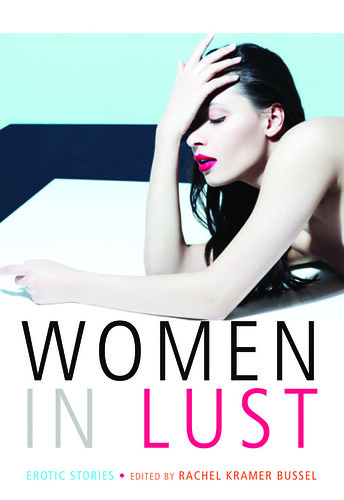
Today, I am participating in the virtual book tour for Women in Lust, a new erotica anthology edited by Rachel Kramer Bussel and published by Cleis Press. I’ve written straightforward reviews of erotica anthologies before, as well as using them as starting-points to muse about erotic writing more generally. This time I wanted to mix it up a little and followed up on Rachel’s offer to connect the virtual tour bloggers with anthology contributors for an e-interview.


Writer Donna George Storey was gracious enough to take the time to respond to my emailed questions with her thoughts about writing erotica professionally and what power erotica has to inform our lives. I hope you find her responses as thought-provoking as I did.


Without further ado, here’s Donna.


“My desire made me more interesting to myself.”
an interview with Donna George Storey  

Anna: You describe yourself as an academic turned erotic fiction writer. Can you say a little bit about how you made that shift? What prompted you to begin writing erotica, and then to make it a part of your professional life?

Donna: As far back as I can remember, I’ve loved to lose myself in a good story and dreamed of writing my own fiction.  However, I also internalized society’s messages that few writers make a living from their passion and most become staggering alcoholics, so it was safer to channel my love of words into an academic appreciation of the works of accepted “great authors.” The exoticism of Japanese literature, and the challenge of simply reading those intricate Chinese characters, kept me enthralled for a while, but deep down I felt I was ignoring my true calling.  I finally found the courage to write seriously when my first son was born, and I took a temporary break from teaching—which ended up being permanent.  Motherhood is supposed to drain you of all erotic and intellectual energy, but for me the opposite was true.

Donna’s collection of erotic literature and reference books related to Japan.
Photo by Donna George Storey, used with permission.

From the start my stories flirted with sex, but it took about a couple of years of practice before my stories were so steamy, I could no longer submit to proper literary magazines.  Yet I found being a “bad girl” immensely liberating to my creative spirit.  In spite of the erotica revolution in the 1990s when many talented authors and editors like Susie Bright and Maxim Jakubowski proved that stories with erotic themes could be smart, thought provoking and artistic, many people still assume sexually honest writing has to be poorly written, the kind of thing you hide under the bed.  My goal is to write stories that challenge that stereotype, stories that respect the complexity of the pleasures of body and mind.  Few mainstream authors are comfortable writing about sex in a way that celebrates its positive aspects (notice how often sex is coupled with punishment, betrayal, violence or other negative consequences in mainstream culture).  There are many erotica writers who do it bravely and beautifully—but we need more.  It changed my life and opened my senses in ways I’d never imagined, and I highly recommend it to everyone!

Anna: The story included in Women in Lust, “Comfort Food,” uses recipes and cooking as part of the seduction — and the end goal of the seduction, even. Can you talk a little bit about why you chose to write a piece centered around preparing and eating food? What was the immediate inspiration for this particular story?

Donna: When I’m not writing erotic stories, I love to cook, although I spend even more time salivating over beautiful cookbooks, a sort of culinary porn.  As I considered your question, I realized that my stories are also like recipes in that I’ll take an image that intrigues me and mix it together with a childhood memory, a touch of a lifelong hobby, and a few juicy tidbits from friends, then add a cup of my own libido to finish it all up.   “Comfort Food” is somewhat different from the common sex-and-food story involving lovers smearing whipped cream all over each other–which is fun, but messy!  In keeping with the female empowerment theme of Women in Lust, the story deals with a middle-aged woman’s fascination with a young chef and his secret pudding recipes.  He poses a challenge for her, but of course she gets everything she wants in the end.

There’s one line in this story that’s a particular favorite:  “My desire made me more interesting to myself.”  One of my many discoveries as an erotic writer is that sensual pleasure doesn’t have to be confined to the genitals.  Appreciating the sweetness of a ripe berry can be equally bewitching.  Yet enjoying food without guilt is as frowned upon in our society as enjoying sex without guilt, so that parallel also drove the story.  Last but not least, anyone who has a passion is very sexy to me, and good cooks by definition care about what they do.  Cooking is a form of communication, and I swear I can taste the love and dedication or lack thereof.  I once had an absolutely amazing dish of butterscotch pudding at a fancy restaurant in San Francisco called Fifth Floor.  I didn’t ask for the recipe, but I wish I had.

Anna: When I write about erotica and pornography as a blogger, I often get comments asking me for reading/viewing recommendations that are “women friendly” or “feminist.” Where do you go for good-quality erotic literature? Any suggestions for my readers about places to seek out reading matter?

Donna: Yes, I definitely have some recommendations.  Cleis Press and Seal Press publish smart, well-written and very hot anthologies that celebrate female pleasure—anything edited by Rachel Kramer Bussel, Violet Blue and Alison Tyler are sure bets.  Online magazines are a great place to sample different authors without commitment.  Clean Sheets (www.cleansheets.com) tends toward the literary, you can always count on good, sexy writing.  Oysters and Chocolate (www.oystersandchocolate.com) is edited by two wonderful women, Jordan LaRousse and Samantha Sade who embrace all varieties of stories.  Since I began writing, I’ve come to appreciate the sensibility an editor brings to an anthology.  It’s more than just fixing typos.

Anna: One of the things I’m fascinated by as a reader/amateur writer of erotic fan fiction and original erotic stories is the relationship between peoples’ sexual identities/experiences and the type of erotica they write or choose not to write. For example, there are straight and bisexual, even lesbian, women who write/read almost exclusively m/m erotica. I’m curious whether you write exclusively female/male erotica or whether you write other pairings (or groupings), and why you choose to write the pairings (or groupings) you do.

Donna: I’m fascinated by the same relationship myself.  Interestingly enough, the second most common question I hear after “are you published?” is “are your stories based on real life?” I actually do make use of material from my experience for many of my stories, but I take a lot of liberties with the facts, and none are strictly memoir.  No matter how realistic, erotic stories are fundamentally erotic fantasies.  Even if you aren’t peeping into the author’s actual bedroom, you are definitely getting a peek into her imagination and what really turns her on.  In a way, my readers are more intimate with me than many of my lovers have been.

When I write, I’m aiming to get at the hidden truths of sexuality, which is why I write mostly what I know, heterosexual sex, and why the wilder couplings are often explicitly presented as fantasy rather than reality.  On the other hand, it’s a big turn on to write and read about something you would never, ever do in real life.  That’s the power of fiction, to try on different lives.  So I have also written stories way outside of my experience.  I’ve noticed a trend of scenarios where a woman sleeps with two men, her maidenly reluctance completely overcome by her lover’s insistence that she enjoy sex with a hot stranger.  How can she say no to the man she loves, especially if he’s ordering her to be a slut?  It’s the perfect way to have your pudding and eat it, too.

Yet, I value authenticity and honesty in erotica.  I’d rather read a story written by a lesbian that gives me insight into her sensibility and experiences than something churned out by a guy who’s getting paid a penny a word for some hot girl-on-girl action.  Perhaps it’s my grounding in 70’s feminism, but part of me feels it’s a violation for a straight person to impersonate someone with a different orientation unless they approach it with great respect and sensitivity.  GLBT voices have been silenced for so long, it’s time to celebrate the chance for those who’ve been marginalized to tell it like it is.

That said, I have written a couple of lesbian stories that seemed to pass as believable.  My favorite is entitled “Ukiyo,” about a Japanese literature professor who takes a jaunt through Kyoto’s pleasure quarters with a colleague as an honorary man and finds herself becoming intimate with a female dancer.  I drew upon my own genuine curiosity and attraction to women, as well as a few actual drunken nights in Japan where my usual inhibitions were especially soft.  There was enough truth and genuine desire, I suppose, that Susie Bright chose the story for Best American Erotica 2006.

Anna: Are there any particular tropes in modern erotica that you wish would just go away?

Donna: I do have a particular pet peeve, which also happens to be a very common scenario in erotic fiction.  You lock eyes with a stranger at the bus stop or in a club, immediately retreat to an alley or public restroom, and have the most mind-blowing sex of your life without a word spoken.  I understand why this sort of zipless fuck is a popular fantasy—seduction is hard, knowing someone intimately is harder–but this particular type of story leaves me cold, bored, and unable to suspend disbelief.  I like to be warmed up first, even in fiction.

Anna: What are some of the things you wish we would see more of in erotic writing?

Donna: What I’d really love to see more of doesn’t have to do with a particular theme or kink, it’s about who writes erotica and why.  Until I started writing erotica myself, I thought of sexually arousing material as “out there,” images created by Hollywood or the porn industry, or naughty letters in Penthouse.  But writing erotica encouraged me to pay attention to my sexual response and my lover’s in a whole new way.  It was a tremendous awakening and took us to a new level of intimacy and enjoyment.  I realized how much sexual power and creativity was within me, not out there.

Donna George Storey
Photo by Laura Boyd, used with permission

The stories that blossomed from my imagination were an education as well.  Because of my writing, I’ve come to realize that sexual fantasy is not just a straight reflection of what you desire, it’s like a foreign language you have to decode.  Getting turned on by being dominated, as in the example above where the husband commands the wife to sleep with another man, does not mean you literally like or want to be dominated in all aspects of your life.   I now read this fantasy of mine as a way for my libido to borrow power relations in real life, where a good woman is only allowed to be sexual in relation to a husband.  But then something cool happens in my heated brain—the authority figure is transformed into someone who now allows  and insists on pleasure.   The same is true with exhibitionist fantasies, which are really about showing a hidden sexual self, not breaking genital exposure laws.  Sexual fantasy might seem taboo and outrageous, but at the heart is permission and acceptance of one’s eroticism.  That discovery has been very reassuring for me.   Even if you aren’t into this kind of analysis, just paying attention to what turns you on is fascinating.  How do you set up a gateway into your erotic world?  What point in the story is the climax?  How are figures in the real world transformed? (You’d never recognize my high school principal!)

As for the why you write, there’s lots of emphasis on publication as the test of a “real” writer, but the most meaningful erotica can be a private gift to yourself or your lover.  So, yes, I’d love to see more people exploring their erotic imaginations and writing lots of hot stories.  The world would be a much better place for it.


WOMEN IN LUST: You can read more about the Women in Lust anthology, and find excerpts of several stories contained therein, at the anthology website as well as purchasing copies from a variety of online booksellers including Amazon, Powells, or Cleis Press.

AUTHOR’S BIO:  Donna George Storey has taught English in Japan and Japanese in the United States.  She is the author of Amorous Woman, a very steamy novel about a woman’s love affair with Japan (check out the provocative book trailer).  She’s also published over a hundred literary and erotic stories and essays in such places as The Gettysburg Review, Fourth Genre, Women in Lust, Best American Erotica, The Mammoth Book of Best New Erotica, and Penthouse.

Cross-posted at The Pursuit of Harpyness. 

booknotes: making sense of sex

16 Friday Sep 2011

Posted by Anna Clutterbuck-Cook in book reviews

≈ Leave a comment

Tags

feminism, gender and sexuality, religion

Without getting too explicit here, I can pinpoint the exact moment in which I made the decision to pursue a sexual relationship with Hanna. I was in the Schlesinger Library’s reading room ostensibly doing research for a seminar paper, but in actual fact writing a long and incredibly angst-ridden letter to a friend about all these unruly thoughts and feelings I was having about this new person who’d just recently walked into my life. And somewhere in the midst of writing the letter, it clicked. I was in a muddle — and then I wasn’t. I can’t explain it more coherently than that. It was an intuitive thing: When I sat with the idea of not being with Hanna, I was anxious and sad; when I sat with the idea of being with her, that knot of unhappiness unwound and the world settled into place.

Of course, that moment of decision was only a hinge, the personal turning point amidst a sea of smaller decision-making steps, choices made and chances taken in the midst of what I still think of as our “courtship” period. All of which added up to the “intuitive” decision that I wanted to be with this person, wanted a specific type of relationship with her. What Michael F. Duffy, author of Making Sense of Sex: Responsible Decision Making for Young Singles (Louisville, KY: Westminster John Knox, 2010), would like us all to do is make that intuitive process a conscious and deliberate one: a process of personal and moral discernment.

I’m going to come clean here and confess that I requested the advance review copy of this book because I expected to be able to write a snarky review highlighting how full of fail it was. The pre-publication blurb made clear that this book was coming at the question of whether or not to have sex from a Christian perspective, and while I’m definitely open to the possibility that Christians can be awesome about human sexuality, most of the Christian-centric literature I’ve read on decision-making about sex has been woeful. So yeah (guilty foot shuffle) I was kinda looking forward to making fun of it.

The thing is: This is one of the best books I’ve read on the subject of ethical sexual decision-making. Granted, I haven’t read everything out there — and not much of it has been from an explicitly religious point of view. But I was pretty damn impressed: it pushed virtually none of the buttons I was expecting it to push, and got a lot right in the process. It has its limitations (about which Mr. Duffy is upfront in the introduction): it supposes a predominantly Christian audience, and a heterosexual, gender-normative one. Anyone who isn’t interested in lengthy examinations of personal motivation and ethics is bound to be bored, and someone who isn’t Christian and is actively turned off by Christian language would likely have a hard time getting passed the more overtly religious chapters. But the overall point of this book is to lay out a framework for sexual decision-making, not to point readers toward any one way of engaging in relational sex. Beyond the principle of basic mutual consent (more on this below), Duffy bends over backward to remind his readers that ethical people are capable of coming to differing conclusions about what constitutes a good reason to engage in sexual activity — and that each person might have made a moral choice.

Things for which Duffy earned points in my book:

  • The chapter on sexual consent. This chapter is solidly grounded in (I would say feminist) theories of mutual consent, not only covering the ground-rules of basic consent but also pushing readers to consider how much responsibility we have ensure our partners are making informed decisions about being sexual with us. His four ground-rules are 1) no sex with someone unwilling, 2) alcohol and drugs make consent problematic, 3) in general no sex with people in categories that make them incapable of consent [i.e. underage, mentally incapacitated], and 4) no sex when one person has “identifiable power” over the other. Beyond that, he writes “We should remember as we go that sexual consent is not a one-time agreement but must be maintained throughout any sexual encounter or relationship” (6). In other words, consent is ongoing and negotiated between the relevant parties.
  • Reasons for being sexually intimate. He pushes his (presumably Christian) audience to consider that premarital and “casual” sex can be a moral choice for some people, in some circumstances. He emphasizes throughout that self-awareness, responsibility, and communication are key. He allows that, depending on your view of God and the Bible, it may be that you personally decide that premarital sex is sinful — while reminding his readers that many Christians have caring, nourishing sexual relationships outside of marriage and that many of the arguments for limiting sex to marriage have more to do with rules than the actual material difference between marital and non-marital relationships.
  • Pregnancy and abortion. Anyone who pushes Planned Parenthood as an organization to which you can turn to for resources and support (p. 147) is someone who deserves kudos in my book. The chapter on pregnancy prevention and family planning is somewhat limited by the fact he’s only talking about heterosexual relationships (my marginalia alongside the chapter title, “If you do not wish to become pregnancy, how will you prevent it?” reads: “have sex only with women :)” (43)!). Given that, though, he encourages partners to be clear about their desires regarding pregnancy and emphasizes mutual responsibility in the event of an unplanned pregnancy — while being very clear that the “deciding vote” over what to do goes to “the woman in whose body this form of human life is growing” (80). Basic? Perhaps — but not when written for college students and twentysomethings who have been steeped in anti-abortion rhetoric and culture their entire lives.
  • Lack of sexism. This, also, is going to sound basic. But Duffy’s overall schematic for sexual decision-making is very light on the question of gender. With the exception (for obvious reasons) of the chapter on pregnancy — and to a lesser extent the section on sexual assault and coercion — one could take his questions about sexual ethics and ask them of any person, regardless of gender identity or sexual orientation. His concept of sexual ethics is not dependent on a belief in innate gender difference — he does not assume, for example, that women will automatically suffer more (or at all) from “hooking up,” or that men are not interested in committed relationships. In this era of increasing buy-in to theories of gender difference, gender-blind sexual ethics are a welcome relief.

Areas in which Making Sense of Sex was lacking:

  • Heteronormative framework. Duffy is up-front in the introduction that he chose to focus on heterosexual partners in his text, in part because that’s where his own personal experience lies. While I’m pleased he made a conscious decision, I also question the narrowness of his interpretation of sexual ethics: are same-sex or genderqueer folks really so different as to need a whole different framework for understanding their sexual lives? And the same could go for folks choosing poly relationships — couldn’t the same basic questions about trust and meaning apply to them as well? I think he short-changes himself in this regard and (perhaps inadvertently) sends the message that non-heteronormative relationships are so utterly different as to be beyond the scope of his project. He makes a passing mention to “group sex” and the fact it can be ethical, but doesn’t get much into it.
  • Sex = “vaginal intercourse” (xv)? Really? Even given Duffy’s focus on heterosexual couples, I feel that choosing to define sex straight-up as “vaginal intercourse” is a missed opportunity to challenge the majority assumption that this is the beginning and ending of human sexual activity.
  • Pornography and sexual ethics. While I understand why he skirted this issue (it could be a book in and of itself), I think the question of pornography and erotica — and its place in human sexual activities — really cannot and should not be avoided when talking about sexual ethics. If I were going to use Duffy’s book in a class, I’d want to augment it with a list of readings on erotica.

So, overall verdict? This would be a solid text to use in a course or workshop on sexual decision-making, but I’d definitely want to add some other titles to the list — Heather Corinna’s invaluable S.E.X.: The All-You-Need-to-Know Progressive Sexuality Guide to Get You Through High School and College (New York: Marlowe, 2007) comes to mind — as a way to bring queer perspectives into the discussion. And I’d make sure to have a full-fledged discussion about how erotic materials might be ethically and mutually enjoyed by all parties in a sexual relationship, as well as the way in which they are often used to cover up or avoid areas of a relationship that have ceased to function. If this is your area of professional or personal interest — and especially if you’re working with young people who come from a Christian background — I’d highly recommend checking this book out as a useful resource.

This book was made available to me in electronic format for advance review through NetGalley.

← Older posts
Newer posts →
"the past is a wild party; check your preconceptions at the door." ~ Emma Donoghue

Recent Posts

  • medical update 11.11.22
  • medical update 6.4.22
  • medical update 1.16.2022
  • medical update 10.13.2021
  • medical update 8.17.2021

Archives

Categories

Creative Commons License

This work by Anna J. Clutterbuck-Cook is licensed under a Creative Commons Attribution 3.0 Unported License

Meta

  • Create account
  • Log in
  • Entries feed
  • Comments feed
  • WordPress.com

Blog at WordPress.com.

  • Subscribe Subscribed
    • the feminist librarian
    • Join 37 other subscribers
    • Already have a WordPress.com account? Log in now.
    • the feminist librarian
    • Subscribe Subscribed
    • Sign up
    • Log in
    • Report this content
    • View site in Reader
    • Manage subscriptions
    • Collapse this bar