• anna j. clutterbuck-cook
  • contact
  • curriculum vitae
  • find me elsewhere
  • marilyn ross memorial book prize

the feminist librarian

the feminist librarian

Tag Archives: sociology

two recent and unrelated news items on which I have thoughts

26 Thursday Jan 2012

Posted by Anna Clutterbuck-Cook in think pieces

≈ 2 Comments

Tags

gender and sexuality, npr, politics, sociology

random pretty thing (via)

1. On Cynthia Nixon and choosing one’s sexual identity. According to Cassie Murdoch @ Jezebel, actress Cynthia Nixon said some things about choosing her current partner, another woman, which have irritated other people also in same-sex relationships. In response, Nixon told the New York Times:

Why can’t it be a choice? Why is that any less legitimate? It seems we’re just ceding this point to bigots who are demanding it, and I don’t think that they should define the terms of the debate. I also feel like people think I was walking around in a cloud and didn’t realize I was gay, which I find really offensive. I find it offensive to me, but I also find it offensive to all the men I’ve been out with. [NYT]

“Why is [choosing] any less legitimate” is my favorite line from this quotation, because regardless of where we, as humans of all sexual persuasions, fall on the innate/culture continuum vis a vis our own personal sexual desires, I think it’s really important not to throw fluidity, change, and personal growth over time under the damn bus. By limiting “legitimate” or “authentic” sexuality to that which is fixed, innate, and ostensibly knowable from birth, we demand certainty on an issue which — for some if not most — is far from certain, or perhaps serially certain — we know ourselves, and then we know ourselves again in a new light. Both equally true.

And, of course, even if you want to argue that sexual attractions/desires are innate and fixed, sexual identities and the language we use for them, are creations of culture — so, yes, actually, we all of us “choose” to be “straight” or “gay” or “lesbian” or “bisexual” or “asexual” or “queer” or whateverthehellother label du jour we decide to slap on ourselves. Underneath those words are actual corporeal human beings, with attractions and desires no one can wrest from us or know better than ourselves — but we do choose to politically identify with language. We choose to affiliate, organize, categorize. And we’ll probably choose at some point to re-categorize human sexuality in new ways.

So I’m glad Ms. Nixon isn’t letting people bully her into silence or repentance on this point for the sake of political expedience. That would make me sad for the future state of discourse on human sexuality.

2. On parents, children, and workplace negotiation. A friend of mine linked to an NPR story yesterday, on Tumblr, about parents advocating on behalf of their adult children with human resources representatives at their childrens’ workplaces. I was thinking about this one on the way to work today, because I come from a family where — okay, this hasn’t happened and likely won’t ever happen — but where when I was growing up my parents often asserted their right to participate in discussions about (for example) our medical care, even when doctors thought it was “hovering.” My parents were always clear to ask us, as their children, whether we wanted their support — and backed off the moment we asked them to. But that experience has led me to be wary of cultural outrage over “helicopter parenting” and other family systems that Americans read as intrusive. Because things aren’t always what they seem on the surface. Two thoughts:

a) Sometimes, tag-teaming is an important function of families. Sometimes, even grown-ups need the support of other grown-ups to self-advocate, particularly around things like healthcare? It can be as simple as  calling to report a spouse is too ill to be at work that day, or it can be more complicated — like asking a family member to attend medical appointments with you. We can’t all operate in isolation 100% of the time, and while I have no idea what the particulars of these HR situations might be, I hesitate to be judgy. Yeah, it could totally be an overbearing sense of entitlement. But it might also be desperation and/or simply family groups operating to support one another. Which leads me to:

b) This seems outrageous to us because we’ve decided as a culture that it’s outrageous. Think for a moment about arranged marriages. In cultures where extended families facilitate marriages, parents and other adults are involved in something (courtship) which we, in America, have decided is essentially a private matter between the two people directly involved. Parents getting involved in their child’s courtship decisions (e.g. a partner asking the parents’ permission before proposing) is seen as intrusive. But seen in a different light, it’s not intrusive, it’s expected, and serves a purpose. We might, as a society, decide we dislike the purpose it serves — but that’s neither here nor there. By analogy, it would be interesting to back up and consider how multi-generational involvement in workplace situations operates. What perceived problem is this involvement seeking to remedy? Is it serving a function that, until now, has been met in some other way? Why has the old way stopped working, or why do people perceive it to have ceased working?

These are the things I think about on the way to work.

booknotes: the lives of transgender people

24 Tuesday Jan 2012

Posted by Anna Clutterbuck-Cook in book reviews

≈ Leave a comment

Tags

books, gender and sexuality, sociology

I was super excited to get my hands on an advance review copy of The Lives of Transgender People by Genny Beemyn and Susan Rankin (Columbia Univ. Press, 2011) a couple of months ago. Lives is being touted as a unique and much-needed large-scale study of the identities and experiences of trans* individuals as described in their own words through an online questionnaire and qualitative email, phone, and in-person interviews. Beemyn and Rankin gathered data from 3,474 individuals via the questionnaire, and followed up with over four hundred of those respondents for more lengthy interviews. By encouraging interviewees to articulate their own identities outside of pre-determined research categories, the authors allowed their subjects to provide a rich and nuanced picture of the lived experience of being someone who experiences life outside the sex and gender binaries mainstream culture assumes are innate and largely inflexible. Most studies examining the lives of trans* people to-date, as the authors point out, have focused on the life experiences of people who identify as transsexual; an overwhelming majority of those studies focus on the experience of trans women (women assigned male sex/gender at birth). As the authors point out, this renders invisible those people who do not fall into neat, polarized gender categories (trans* or otherwise). Often, as documented in books such as Brainstorm and Sexing the Body, this stems from the research community seeking discrete identity-groups they can control and measure for difference. It also comes from researchers’ own unexamined assumptions concerning sex and gender difference, assumptions which are then reinforced by the results of studies that have been designed (in part) by jettisoning the data from individuals who don’t fit into the pre-determined sex and gender categories.


The Lives of Transgender People can be read, in part, as providing a model for a much different way of exploring trans* experiences — one which honors the myriad expressions of sex and gender which the human organism manifests. “Throughout the book, we use the language of the survey participants to honor their voices and their own self-descriptions,” write Rankin and Beemyn, insisting that we, as readers, pay attention to the richness of the gendered experiences described by the people who shared their stories (36). Lives seeks to be descriptive rather than prescriptive, synthesizing the data collected in a number of different ways that suggest some patterns to be found in trans* experiences, often differentiated by other variables such as age cohort, race, economic status, and so forth.  Particularly useful was the researchers discussion of gender identity and expression, given their insistence that trans* identities and experiences not be simplified the better to accommodate researchers desire for tidy data. They discuss in great detail their decision to identify four basic categories for analysis: trans men (assigned female at birth, self-identity male), trans women (assigned male at birth, self-identity female), “female to different gender” (FTDG) and “male to different gender,” (MTDG) which allowed them to honor the current identities of respondents which don’t fit into the mainstream system of binary gender. Further chapters discuss race, sexual orientation, and age as variables which further complicate the project of identifying any stable sense of trans* identity or experience.

The researchers, both of whom work in higher education, are particularly interested in age and generational differences as a factor, and put forward some tentative observations concerning the difference in reported experience across generations. For example, older respondents were more likely than younger ones to identify as cross-dressers, while trans men were statistically more likely to be significantly younger than trans women. They also spend a great deal of time was also spent on identifying recurring “milestones” of gender identity development as articulated by the study participants. Much trans* research to-date has focused on modeling the “stages” through which individuals go on the journey to identifying themselves as transgendered, and the authors of Lives offer the more flexible model of “milestones” (which may or may not be relevant for a particular individual) as an alternative model for understanding the process of self-realization.

I hope that in the years to come Lives will be a rich source of data for activists, theorists, and policymakers, as well as one possible model for doing research on sex and gender that allows us to collect meaningful data without depending on the binary male/female, man/woman dichotomies that continue to unhelpfully reduce the variety of human experience to the inflexible straight-jackets of innate gender difference.

booknotes: deviations

10 Tuesday Jan 2012

Posted by Anna Clutterbuck-Cook in book reviews

≈ 1 Comment

Tags

children, feminism, gender and sexuality, moral panic, politics, reading lesbian classics, sociology, the body

find table of contents here

For the past couple of months I’ve been making my way through Deviations: A Gayle Rubin Reader (Duke University Press, 2011), an anthology of writings by anthropologist and feminist theorist Gayle S. Rubin whom I’m ashamed to admit I didn’t actually know anything about before I stumbled upon the advance review galleys of this book. Rubin  is a cultural anthropologist whose research delves into the history and culture of urban sexual subcultures, particularly BDSM communities. As a newly-out lesbian in the 1970s in Ann Arbor, Michigan, she designed her own Women’s Studies major at the University of Michigan and became active in the Women’s Movement and also the Gay Liberation Movement. In the late 70s and early 80s — in part because of her academic research into BDSM — she drew the ire of anti-porn feminist activists for her insistence that (wait for it) not all pornographic materials are inherently degrading to women. Yeah, I know. The more I read about it, the more it seems like the early 80s must have been a really weird time to be a self-identified feminist. Not to mention one who was also a lesbian and open about her s/M desires and practices.

Deviations is arranged in chronological order, beginning with Rubin’s first attempt to construct a theory of gender relations rooted in anthropological methodology — “The Traffic in Women: Notes on the ‘Political Economy’ of Sex,” written and revised between the late 60s and early 70s and first published in 1975. It is very much an artifact of its time and to be honest I bogged in this piece for the better part of a month after joyfully burning my way through the eminently readable introduction. Perhaps recognizing the opacity of “Traffic,” Rubin includes a piece reflecting back on the writing and reception of the original piece and includes it in the anthology — something she does several times throughout the book to great effect. After “Traffic” and its contextual essay comes a much more accessible piece on the English author Renee Vivien, originally written as an introduction and afterward to a new edition of Vivien’s A Woman Appeared Before Me, which is a fictionalized account of her tumultuous relationship with fellow author and outspoken lesbian-feminist Natalie Barney.

By the late 70s, Rubin was deep into the ethnographic research for her dissertation on the gay male leather bars of San Francisco, for which she received her PhD in 1994 from the University of Michigan. The majority of pieces in Deviations, therefore, wrestle not with the politics of gender or specifically lesbian-feminist history, but the politics of sexual practices, sexual subcultures, and the relationship between feminist theory and practice and human sexuality. As someone who is, like Rubin, committed to understanding the world through both a feminist and queer lens, I really appreciate her determination to remain engaged in feminist thinking and activism even as she was reviled by certain segments of the feminist movement for her “deviations” in sexual practice, and her openness to thinking about sexual subcultures that — for many in our culture, even many self-identified feminists — elicit feelings of disgust and generate sex panics. While the “porn wars” of the 1980s are largely a thing of the past, feminists continue to find sexuality, sexual desires, sexual practices, and sexual fantasy (whether private or shared via erotica/porn of whatever medium) incredibly difficult to speak about. Rubin calls upon us to think with greater clarity about the politics of sex, and how we police other peoples’ sexual activities, many of them consensual, simply because we find them distasteful.

Particularly controversial, I imagine, are Rubin’s writings on cross-generational sexual activities and children’s sexuality. Coming out of the BDSM framework, Rubin foregrounds the basic ethic of consent and argues that children have just as much right to consent to sexual activities as adults. Furthermore, within the framework of 1980s anti-pornography legislation, she emphasizes the difference between fantasy/desire and reality/action (that is: depiction of non-consensual sex in the context of a fantasy does not equal non-consensual sex and shouldn’t be treated in the same fashion). This leads her to speak up in defense of adults who express sexual desire for young people (but don’t act on that desire), and also to suggest that not all instances of underage/overage sexual intimacy should be treated as sexual abuse or assault. Read in tandem with Rubin’s insistence that we take children seriously as human beings with the right to sexual knowledge, this advocacy is clearly not a call to minimize the trauma of sexual violence (at whatever age) or a glossing over of age-related power dynamics. “The notion that sex per se is harmful to the young has been chiseled into extensive social and legal structures,” she writes, “designed to insulate minors from sexual knowledge and experience” (159). Like Judith Levine in Harmful to Minors (2002), Rubin argues that our cultural insistence on keeping young people separated from sexuality and sensuality — with a vigilance that often spills over into panic and hysteria — does little to protect them from sexual violence and exploitation while cutting them off from the means to conduct their own (safe, consensual) sexual explorations or name and resist the violence and exploitation that may come their way. Sexting panics anyone? The Purity Myth?

Overall, I highly recommend Deviations to anyone interested in the development of feminist and sexual political theory and practice over the last forty years — if nothing else, Rubin’s bibliography has already given me a handful of other thinkers whose books and articles I wish to pursue.

Cross-posted at the corner of your eye and The Pursuit of Harpyness.

third thoughts: conversations about sex + identity

04 Sunday Dec 2011

Posted by Anna Clutterbuck-Cook in life writing

≈ Leave a comment

Tags

call to participate, sexuality and gender, sociology

As promised, here are some “third thoughts” about my participation in Holly Donovan’s comparative research on social interactions between straight and non-straight folks in urban and rural areas. 


For my first thoughts and second thoughts, if you haven’t already seen them, follow the links.

To read more about participating in Holly’s research project, check out her call for participants (PDF). If you live in the Boston area and identify as queer in any way — or know someone who is and does — do check the project out; she’s still actively searching for participants. She mentioned particularly needing to hear from non-academics and people who hail from working class communities.
So. Now that the “signal boost” portion of the post is complete, on to my own further reflections.
we sat down to talk over coffee at Pavement Coffeehouse
Even though Holly indicated that the second-round interview typically lasts about thirty minutes, she and I talked for a good hour and a quarter (are you surprised? if you know me, you aren’t surprised). Here are a few things that Holly’s response to my project journal (see second thoughts) prompted in my own thinking.
Holly noted several times the way in which my journal observations “emphasized the positive.” She was actually pulling that phrase from a section in my journal where I talk about a tricky interaction with someone who was kinda luke-warm about the lesbian relationship thing.  I was describing how I chose to emphasize the positive with them, verbally pointing out the steps this person made toward acceptance and thanking them for being willing to acknowledge my relationship with Hanna. We talked quite a bit about this, both as a conscious strategy for interactions with a potentially hostile environment, and also as something that simply is for me when it comes to my queer identity.

Let me try to explain (warning: it’s a work-in-progress). As I’ve talked about in the previous posts — and as should be overwhelmingly evident from everything I write about sexuality and relationships on this blog — I experience my sexuality, sexual orientation, and sexual relationships in a really enthusiastic way. Because my sexuality is fluid in many respects, you could say that I didn’t really have a sexual orientation/identity until I was in a relationship of my choosing. A relationship which I entered as an adult who was enthusiastic about being partnered with this particular person (Hanna). Prior to that moment of becoming part of a couple, I was sort of a blank slate, socially, for other people to read whatever the hell orientation they wanted to onto me. It wasn’t an active component of my self-presentation until I wanted it to be.

So basically, by the time my sexuality became visible and people could react to it in more public settings (outside of conversation with intimate friends), I had pretty clear convictions about what was and was not out of bounds, and how I wanted to handle any resistance to who I am, who I’m with, and how I choose to enjoy my sexuality. I have two basic ground-rules for myself about handling less-than-optimal social interactions:

1. I won’t be dishonest about who I am. This is largely pragmatic, since I’m terrible at dissembling. But it’s also a decision rooted in my personal ethics. Since I can remember, the way my family (and later I, as an individual) chose to live has made some people uncomfortable — even angry. If I had grown up trying to manage other peoples’ discomfort about my non-conformity it would have been a losing battle before it began. Aside from the fact that managing other peoples’ emotions is a) doomed to fail, and b) the worst energy sink ever.  So I just won’t. I am who I am, and if that’s a problem for someone then we’re probably going to need to figure out how not to be in much contact, or simply put on our grown-up pants and deal with the fact we have differences.

2. Whenever possible ignore the negative crap and give a shit-ton of positive reinforcement for anything constructive. This strategy, too, stems from my childhood … where I realized somewhere along the line that I could use my time/energy critiquing institutional education or I could focus on the instances of high-quality mentoring and learning where and when I saw them happening. I like this approach because it doesn’t allow the opposition to frame the debate, and it allows you the freedom to focus on building the sort of future you want rather than constantly re-hashing how less-than-ideal the present it. 

“Ignoring” the negative crap doesn’t mean pretending it isn’t there, or letting it go without noting it and pointing out it’s not cool. But when it comes to people-to-people interactions, particularly, I’d rather spend my time giving positive feedback for the good and a cool reception to the bad. The less attention unhelpful interactions get, the better.

So “emphasizing the positive” is both a manifestation of the social privilege and aspects of my personality that made growing into my adult sexuality and sexual relationships overwhelmingly positive* and a conscious political choice for how I think I’ll best be able to use my limited energies and resources to effect change in less-than-optimal social situations.

Holly was interested in my reflections (which I wrote about at the end of my second thoughts post) on getting something out of living on the cultural margins. In addition to what I’d already written in that earlier post, we discussed how the experience of choice and agency which I describe for myself — of being drawn toward non-conformity — is different from the language of being “born this way,” and then pushed to the margins by others who reject who you are. I actually don’t see myself as choosing marginality (though existing on the margins feels familiar). What I experience myself choosing is the situations that will best allow me to flourish, that will best support my well-being as a person. Given the culture in which we live, I’ve discovered that these happen to be marginal spaces. It’s been an incremental journey in a lot of ways, wherein I made a series of decisions about this and not that which have led me to a place very different from the majority culture. I didn’t choose sexual fluidity and desire, didn’t choose to fall in love with another woman, but I chose to recognize and honor that sexuality, that love, and make a space in my life for those desires and that relationship. I don’t feel shoved unwillingly out of the mainstream — I feel like I chose (am in the process of choosing) the life that works best for me and my partner, and the mainstream has sort of parted ways around us. It’s not really here nor there, to me, whether or not my life path is ever “normal” or acceptable in the eyes of the majority.

Holly observed that I wrote comparatively about my experiences in Boston and in Holland, and asked how things would be different (in relation to sexual orientation) if I were living in Holland rather than Boston right now. I wrote comparatively about Holland and Boston in my journal in part because I know Holly’s study is looking at regional differences and queer-straight social interactions in urban vs. “rural” locations. So it’s not like I spend a lot of time comparing the two places specifically in relation to queer issues. But when she asked about what would be different, my first thought was It’s less tiring to be myself here. Less tiring, because less oppositional. When I lived in Holland until 2007 I wasn’t visibly queer, but I was more or less myself in politics, interests, and values. And living out those values, expressing those interests and politics, just took a lot of work. 

Or, at least, I learned to expect that when I opened my mouth (or when people with similar values opened their mouths) it would trigger the angst and the anger and the defensiveness and the soul-searching re-evaluation of values and yadda yadda yadda ad nauseum. Who I was and what I believed caused people existential angst and precipitated crises. It got really tiring. And boring.

So when I picture being in Holland now, on the one hand it would be awesome to be closer to the friends and family I know and love there. But it also just sounds like a lot of work: work to find a queer-friendly therapist, work to find a doctor who’s cool with lesbian sexuality, work to advocate for same-sex spousal benefits (which, you know, currently illegal in my home state). All of which are just givens most of the time here. And that’s on top of swimming up stream against the gender essentialism and anti-feminism and opposition to social welfare and any number of other issues that aren’t directly tied to sexuality but are nonetheless about who I am and how I want to live.

I know plenty of friends and relations who manage to live and even thrive in that environment — and part of me is envious that they’ve managed to build lives in a hostile climate. But I did that for 26 years and it’s really nice not to have to right now.

As I myself observed in second thoughts, Holly noticed how many of my intellectual and social interactions concerning sexuality center around reading and writing (on- and offline). She asked what I look for in my reading and interactions in these areas. I didn’t have any ready answer for her, other than that I’ve found the resources I do consult mostly by link-hopping and footnote following … I identify a resource I do like, and mine it for further reading in whatever way it appropriate to the medium. I follow the network, whether it’s a blogroll or a bibliography. At this point, I have enough sources of information that I can sit back fairly passively — skimming my feeds, reading book reviews, taking note of workshops and presentations — and monitor the flow of sexuality information that’s being generated and analyzed by the people whose ideas and opinions I care about.

What sort of people are these? Well, I actually think a good list of criteria can be found in a post I wrote over at Harpyness about sexuality education and things I wish I’d known when I was younger about human sexuality. Those five things are a pretty good outline of what I’m currently interested in exploring, and the sort of attitudes about human sexuality I gravitate towards. I generally look for writing on human sexuality that’s descriptive rather than prescriptive — I like reading about how humans behave and why, and what they do that fosters well-being, rather than about how we “ought” or “should” behave according to some external set of rules (religious or otherwise). I prefer research and writing on human sexuality that doesn’t presume human sex and  gender are oppositional and binary, and it’s probably redundant for someone who’s titled their blog “the feminist librarian” to say she wants her resources to demonstrate feminist awareness and to critique systems of oppression that constrain our ability as individuals to experience pleasure and wellness.

I don’t really care how the individuals behind these sources of information identify sexually. I follow blogs and read books by people whose own experience of human sexuality ranges across the queer spectrum as well as falling squarely within heteronormative boundaries. I’ll talk and think sex with people who are asexual, poly, abstinent until marriage, gay men, trans* folk, hetero married, celibate due to religious vocation, etc. At rock bottom, my only criteria are that a) you acknowledge and embrace human sexual diversity, b) believe there is no one-size-fits-all approach to sexual ethics, c) but take sexual ethics seriously as a topic of conversation; d) that human sexuality, to you, is seen as a potential source of human pleasure and connection; and obviously e) you enjoy exploring both your own experience of sexuality and the cultural narratives we’ve constructed around those personal experiences.


*I’ve been thinking since we talked about how my cisgender presentation made my smooth (sexuality/sexual identity-speaking) adolescence possible. In part because I’m reading a book right now about the lives of transgender people and the gender policing they experienced as teenagers. As a girlchild with parents who worked not to gender stereotype, I was given wide, wide latitude to be a person first and a girl/woman second. Feminism also granted me license to be myself, however I wanted that to manifest. This, in conjunction with simply taking myself out of the active dating/partnered pool, made a buffer for my sexuality to develop and space for me to discern what I wanted on my own terms. This deserves its own post … so I’ll see what I can do in the near future.

second thoughts: my "sexuality and society" journal

01 Thursday Dec 2011

Posted by Anna Clutterbuck-Cook in life writing

≈ Leave a comment

Tags

call to participate, gender and sexuality, sociology

This is the second post on my participation in a Boston University study of urban and rural queer folks and their social interactions with non-queer folks. You can read about my initial interview with researcher Holly Donovan in the first thoughts post I wrote back in October.

This past Monday I sent Holly the journal I’d been keeping since our initial meeting. I’m not going to make the journal publicly available because I wrote it for Holly’s research specifically and also because it contains details about my interactions with third parties that can be kept anonymous in the context of a PhD dissertation where I’m not identified — but not in this blog space, where I’m pretty transparently me.

Journaling. I used to do a lot of it, but the demands of the past few years and my own shifting priorities have caused me to stop keeping such a detailed and in situ account of my daily life. So it was kind of a familiar novelty (to coin a term) to find myself keeping a daily journal again. Journal writing is liberating in that the pressure to have finished and connected thoughts is erased — at least for me. In this case, I was writing on a particular theme: my social interactions and the way those interactions did or did not actively engage my gender identity and sexual orientation. Yet I still felt that I could keep notes that were in bullet-point format, with sentence fragments and open-ended observations.

via

What were some of those observations?

I spend more time thinking and talking about sexuality than I do sexual orientation. A significant portion of the notations that I made in my journal had to do with conversations I had with friends, family, my therapist, my colleagues, people online, with authors (via reading their work), about human sexuality. I spend a significant portion of my waking time thinking about human sexuality because it’s one of those things that makes me happy to ponder. I did this before I found language to articulate my own sexual identity as such, and before I was in a sexually intimate relationship with anyone. I love that I move in circles where sexuality is part of casual conversation, and that our conversations are often intellectually stimulating, enthusiastic, and joyful rather than full of shame and angst. Yes, we all have emotional and physical struggles that sometimes need conversation to work through — but I’m grateful that that is only part of the discourse surrounding sexuality that I am a part of.

I don’t feel in physical or emotional jeopardy in the spaces I live, work, and move through around Boston. This is a complicated one with lots of layers of class, race, gender presentation, and the rest tangled up in it (as I observed in my first thoughts post). But keeping my journal these past three weeks reinforced the fact that there are no spaces in my daily life where I feel the need to self-censor the fact I’m in a lesbian relationship. My colleagues know, my family knows, our friends know, our bank knows, our doctors know. We hold hands on the walk to work, we doze on each others’ shoulders on the T, kiss goodbye when parting at our favorite coffee shops. We’ve never experienced anything stronger than a glare from a random passer-by (and even then, perhaps they were just having a bad day?). I don’t know if it would be different if we lived in West Michigan. I know when we visited Holland last spring I felt comfortable behaving in public the same way we do in Boston — but Hanna points out that I have a talent for ignoring negative vibes. So perhaps if we lived there full-time, we’d have more run-ins with homophobic weirdos. Like I said, I don’t know all the factors at work here — but I’m glad that our social experience has been so positive.

A significant part of my social interactions, particularly around sexuality themes, take place through reading and blogging. There were a number of entries in my journal that began with phrases like, “Received and advance review copy of … on trans* sexuality today” or “Wrote a blog post about forthcoming collection of erotica …” or “Finished writing 3K words of lesbian erotica …”. Outside of my professional writing and reading, a significant portion of my intellectual exploration right now has to do with sexuality — and a lot of that takes place in conversation (see observation one, above) and through reading articles, books, and blog posts, listening to podcasts, and engaging in discussion in comment threads. A lot of this is mutually reinforcing, since the more I read and review work in this area the more likely I am to get offers of advance review copies, virtual book tour requests, and other quasi-professional offers in a similar vein. I welcome these engagements with open arms because it’s stuff I love to talk and think about. I do think it’s note-worthy that I feel comfortable making this a quasi-professional part of my life, and that I feel comfortable pursuing it online in ways that are tied directly and openly to my actual identity.

And, as something that came to me toward the end of my journaling (though I’ve thought about it before), I get something out of existing on the margins of heteronormative society. That is, there are material ways, obviously, that Hanna and I (and our other non-straight friends) experience discrimination based on our sexuality, or relationships, and our gender expression. And I didn’t, obviously, choose to be attracted to Hanna because being in a lesbian relationship would be transgressive. I just desired her. But I made choices about following through on that desire, about building a life with another woman, and part of the reason is that I like living on the cultural* margins. I feel comfortable and energized here. I feel less claustrophobic. I feel like choosing to live my life in some basic, categorical ways that disqualify me from the norm give me freedom from other peoples’ expectations that I will conform to mainstream expectations of femininity, or American middle-class ambition, or heterosexuality. I think (and this is a very tentative hypothesis) that perhaps growing up home-educated, in an era when that was far from mainstream, primed me for feeling most at home in spaces that folks around me considered “weird.” And so I think I gravitate toward people who are willing to think and live outside the boxes. It feels familiar and it feels good to exist in that space.

I think that’s counter-intuitive for a lot of folks, who assume that non-normative relationships and/or a “weird” sexual identity would be cause for anxiety and stress. I remember the transition being somewhat stressful — going from thinking of myself as “mostly straight” to thinking of myself as bi/fluid/lesbian/queer. But it was actually an incredible relief in a lot of ways to feel I had legitimate feelings of attraction that would support moving into queer spaces and identifying that way socially. Because those spaces called out to me as welcoming psycho-social spaces for years before I felt I had enough evidence of my own sexual desire to claim them as my own. I know this sounds kinda backward to many folks for whom sexual orientation/identity works differently or more decisively. But for me, that seems to be path I needed to take.

I meet with Holly this evening to do a follow-up interview, based on my observations in the journal. If any new insights crop up during our conversation I’ll be back with “third thoughts” on this process.


*And I choose the word “cultural” deliberately here because I realize that the aspects of my self and my values which are marginal to the mainstream are largely self-chosen rather than imposed upon me. In terms of my race, my able-bodiedness, my socioeconomic status, etc., I’m far from existing on the material margins of American society.

booknotes: premarital sex in america

30 Friday Sep 2011

Posted by Anna Clutterbuck-Cook in book reviews

≈ 6 Comments

Tags

books, gender and sexuality, sociology

It’s not that I had terribly high expectations for a book titled Premarital Sex in America: How Young Americans Meet, Mate, and Think About Marrying (New York: Oxford University Press, 2011). Because seriously: “premarital”? Particularly when the authors — sociologists Mark Regnerus and Jeremy Uecker — acknowledge in their introduction that by “premarital sex” they actually mean sexual activities undertaken by an “emerging adult” (ages 18-23) who is not married, and that by “young Americans” they actually mean people who are cisgendered and straight. In other words, the very framing of this book-length study by the title alone suggest that what readers will get is a familiar story re-packaged as a ground-breaking assessment of how “contemporary shifts in [sexual] market forces … have dramatically altered how [heterosexual] relationships are conducted” (as the jacket copy claims). As I said: not that I had terribly high expectations going in.

The thing is, this book could have been a successful and insightful analysis of 18-to-23-year-old heterosexual attractions, identities, and practices. With a mixture of quantitative and qualitative analysis (national data collection and 40 in-depth interviews), the authors could have offered new ways of understanding heterosexual sexual practices in young adulthood. They could of provided us with an in-depth exploration of the individual and cultural values, social pressures, and practical concerns that lead to those practices. They could have taken the opportunity to counter moral panic about changing sexual mores with data that show, for example, that college sexual cultures are much more relationship-based than a freewheeling marketplace of hook-ups. In fact, occasionally, Premarital Sex in America seems poised to take on this role of reality-check for media moralizing: marriage doesn’t mean the end of one’s sexual happiness (p. 174: “marriage tends to be good for emotional intimacy as well as sexual intimacy”) and the so-called hook-up culture (p. 106: “casual sex from hook-ups is rare by comparison, suggesting that popular perceptions of the depravity of the ‘hook-up culture’ may be somewhat overstated”). So despite initial trepidation, I was ready to give this book a reasonable change to prove my pre-conceptions wrong.
The problem can be boiled down to two systemic (and, I would argue, inter-related) issues. First, the persistence of the authors in leaning heavily on unexamined assumptions about what is “just a fact” or “inescapable” (they actually use both on p. 22) as well as the use of terms without specific definition — they never indicate, for example, how they determined the sexual orientation of their interviewees (identity? practice? desires?), and later in the book divide respondents into “reds”/conservatives and “blues”/liberals without detailing the criteria by which they sorted these groups (political affiliation? beliefs about sex? upbringing? religious practices?). They “explain” many of the assumptions I found problematic by relying heavily on shakey theories of innate gender difference (see here, here, here, and here) and the perennially popular theory of “sexual economics” in which men are the lustful consumers of sex which women “sell” for relationships. 
I obviously don’t have any first-hand experience in this heterosexual “marketplace” in which we ladies are selling the sex we don’t want for the emotional intimacy men reluctantly give in exchange for booty … but can I just say, on behalf of the many women and men I know who swing that way: EW. Not only is this theory an impoverished way of thinking about human sexuality, it has absolutely no explanatory power for peoples’ motivations to get into sexual relationships. Because if dudes are all about getting it off, hello: you have two hands and lots of (supposedly equally horny) fellow dudes who could help you out. If sex is just sex and the relational context in which it happens is meaningless, then what benefit would men have in seeking out women to be sexually intimate with? Zilch. The authors of this book actually say this at one point, when discussing pornography: “If porn-and-masturbation increasingly satisfies some of the male demand for intercourse, it reduces the value of intercourse, access to which women control” (246). You can only capture and keep a man by bartering sex in exchange for intimacy — if your fella has access to sex all on his ownsome, then tough. In turn, if women aren’t that into sex and want emotional intimacy — why bother with the work of selling sex in exchange for (presumably reluctantly-expressed or faux) emotional intimacy or relational stability when you could meet your emotional needs elsewhere — say with family members or close friends? — and avoid the trouble of putting out?
So basically, you could bother to describe heterosexual interactions in terms of economic transactions, but it’s not going to help you explain why men and women continue to seek each other out for long-term intimate relationships. In fact, the theory of sexual economy these authors put forward argues against hetero sex being at all rational as a way of meeting our emotional and physical needs — unless you happen to want to procreate (something they barely touch on within the text). It’s irritating and unsatisfying and, aside from everything else, makes me wonder why anyone who believes hetero sex works like this enjoys being heterosexual. 
I’d point out that another gaping hole in the theory of sexual economics these authors put forward is that they argue it’s just the way humanity operates … except they fail to take into account queer folks relationships, which are also part of humanity and are an interesting control group for the power of their pet theory. For example: if women barter sex for relational intimacy, then what happens when two women are in a relationship? Why hello, “lesbian bed death” the theory that will never die! Except … plenty of women in same-sex relationships are getting it on together … are we selling each other sex (that we don’t want) in exchange for emotional intimacy (that we already have?). You can see how it starts to get ridiculous damn fast.
Obviously, once someone’s overall framework for analysis fails to impress, the little shit begins to grate on one’s nerves. So for the sake of relieving my spleen I’m going to bullet-point the smaller issues I had with how the data was presented and analyzed:
  • The use of “virgin” to mean “person who hasn’t had vaginal intercourse.” First, I’m skeptical that all of the studies from which the authors drew data defined “virgin” in exactly this way, and second … really book? really? We’re going to reinforce the idea that sex = tab A into slot B one more frickin’ time? Particularly when in the same breath, practically, you go on to talk about “virgins” who’ve engaged in oral and anal sex?
  • Lack of transparency in data. So I realize I’m hypercritical of data because, well, I’m suspicious and I’ve been trained by good friends and colleagues that way. But when you start telling me things like what the average number of sexual partners for X group over X period of years is … and then tell me you’re relying on self-reporting … I’m tempted to throw out the data. Unless you’re going to tell me how you asked study participants to define “sex” and “partner” and whether you asked them to keep track over a period of months or years, or whether this was data based on recollection, etc. 
  • Describing people as “attractive” without qualification. Especially when you’re two men describing your college-age study participants as “attractive 20-year-old women.” Just: EW. But beyond that, the assumption that attractiveness is some sort of objective, measurable quality and that it exists on a static scale rather than being deeply subjective and situational. 
  • Suggesting sexual “mystery” is better than reality in relationships. Again, a symptom of seeing sex as transactional: men, it seems, are most interested in sex they think they desire but must pursue. So the “easier” women are to fuck, the quicker the relationship is to “age” and grow stale. Additional negative points for working in sentences like: “It’s a classic tale that characterizes billions of sexual relationships in human history” (80). Naturalizing something by making it seem historically inevitable = no cookies for you!
  • Failing to define “pornography.” Yeah, it becomes clear that they (like so many other critics) mean commercially-produced videos and photographs. But that’s no excuse for laziness in reporting. Since they seem to have assumed everyone was on the same page about what pornography was, they accepted the reporting on their interviewees concerning the effect “porn” had on their relationships and sexual desires. A much more interesting conversation could have been had if they had probed a little more deeply into their subjects engagement with erotic materials on a broader scale (I bet at least some of the young women they interviewed are writers and readers of slash fan-fiction, for example). Instead, we just got the tired scare story about how mainstream video pornography is creating unrealistic expectations in men concerning women’s bodies and sexuality.
  • Failing to delve beyond the most obvious analysis of their data. This happens repeatedly, so I’m just going to give one example. In a section on negotiating unwanted sexual practices, the authors report that the top “unwanted sexual request made by men of women is for anal sex” (the top unwanted request by women of men is for cunnilingus). It becomes clear that what they mean is men are requesting penis-in-anus sex, though they don’t articulate this. No mention is made whether they asked the men (or women) about penetrative anal sex to stimulate the prostate, which is something I don’t think they count as “sex” because they suggest that “there is no biological basis for preferring anal sex to vaginal sex” … a statement that would only make sense if they were thinking about stimulation of a penis. They go on to argue that men are only asking to perform anal sex because they’ve learned it’s part of the sexual script from watching pornographic films. They also accept without further analysis women’s self-reporting that they just don’t like anal sex, full stop, without exploring in what contexts it was tried (i.e. did the partners have lube? did they prep adequately? was there coercion? did they try a second time, with better results?). Precision counts people!
  • “Intercourse is more satisfying than masturbation” (157). Written in a section headed “Semen: An Antidepressant?” So … yeah. I just want to point out — AGAIN — that reducing sex to penis-in-vagina intercourse is a big problem in this book. I also think there is something deeply troubling about the idea that solitary sexual activity is and unsatisfactory substitute for relational sex. Not because it isn’t for many people (though I’m going to go out on a limb and say that for some it likely is) but because masturbation isn’t a substitute activity. It’s a parallel or complementary sexual activity. We do it, and enjoy it. We get different things out of it than we get out of partnered sex. Many women in The Hite Report and Our Bodies, Ourselves, among other texts, report very distinct types of orgasms (both pleasurable) from self-stimulation and partnered stimulation. 
  • Characterizing a relationship that ends as a relationship that “failed.” Relationships can be formed for many reasons, and as long as they were mutually-satisfying for all the people involved for the duration of the relationship, there’s no reason why the fact the relationship ended means the relationship failed. It’s true that many relationships do come to an end because one member or both stops being satisfied. But “end” doesn’t automatically mean “fail.”
  • Emotional health is a woman thing. Again: seriously? Yeah … they’re serious. Not only do they bring up the correlation between abortion and depression (without clarifying it’s a correlation and not necessarily causation), as well as a throw-away mention of the correlation between same-sex activity and poor mental health outcomes, but they out-and-out argue that women’s emotional health is the only story that matters: “the central story about sex and emotional health is how powerful the empirical association is for women–and how weak it is among men” (138). They explain this using the theory of “natural” gender differences which, since the data to support this theory is shite, isn’t really an explanation at all. 

By way of a conclusion, Renerus and Uecker offer to dispel “ten myths about sex and relationships” for which the evidence “just isn’t there” (242). Some of these are fairly value-neutral — for example the first one is the myth that “long-term exclusivity is a fiction,” when in fact only about 12-13% of American adults followed in a longitudinal study reported cheating on their partners. But others are off-the-wall wacky, such as the assertion that “to call the sexual double standard wrong is a little like asserting that rainy days are wrong” (243), or their suggestion that women control men’s sexual impulses by playing hard to get: “If the average price for sex should rise, men’s sexual behavior could become subject to more constraints” (245). Their sexual economics lens for viewing human relationships, oddly enough, leads them to espouse a deeply conservative and moralizing tone when it comes to suggesting how we can effect change in sexual interactions.

Finally, as I argued above, the theory of a (hetero)sexual economy that pervades the analysis in this book is deceptively simplistic in its power to “explain” human interactions. Instead, it could more aptly be understood as a compelling set of metaphors for a specific type of sexual scene — say a fraternity party or a singles bar. Because, as reviewer Evan Hughes notes, “shaky when you examine it closely, the sexual economics theory in its broad outline seems almost trivially true: it describes what we know but does little to explain what we do not understand.” Because the economy is so compelling as a metaphor (at least to Regnerus and Uecker), they fail to ask any new questions of their material, instead regurgitating outdated gender stereotypes in place of fresh insight.

Cross-posted at The Pursuit of Harpyness.

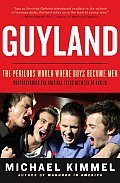
Booknotes: Guyland

16 Tuesday Sep 2008

Posted by Anna Clutterbuck-Cook in book reviews

≈ Leave a comment

Tags

feminism, masculinity, sociology

Over the weekend, I read Michael Kimmel’s recently-released book on the sociology of young adult masculinity: Guyland: The Perilous World Where Boys Become Men. As an undergraduate, I had the privilege of meeting Kimmel when he was in the process of his research for this book, and I really enjoyed listening to him talk about men, masculinity, and feminism. So I’ve been looking forward to reading the finish product.

My response, however, is mixed. Partly, I suspect, I am in a poor position to judge the accuracy of his narrative about normative masculinity in 16-26-year-old young adult culture. The men I am closest to eschew and/or are disqualified from the hetero, privileged, masculine identity he describes; I was never a resident on an American college campus, so always had a certain amount of distance from undergraduate norms; and I never negotiated the dating-relationship scene as a student. So while I recognize some of the features of the landscape Kimmel describes, I suspect there are nuances to, and gaps in, his argument that I am missing. However, I’ll share a couple of observations.

What Kimmel is describing — though perhaps he doesn’t underline this enough — is the normative culture of elite (male, white) power and privilege that all of us, regardless of gender, race, economic class, sexual orientation, contend with. Whether we are marginalized by it, choose to reject it, or are forced to interact with it, it is one part of the American landscape that does shape adolescent and young adult experience for many young people in powerful ways.

One of the most important things feminism has done for women in the last half century is to open up the possibilities for what it means to be female and feminine. There is still work to be done, to be sure. But as Kimmel points out, when he asks college-age women today what it means to be “feminine” their answers are as varied as their lives. No comparable political and cultural sea-change has taken place for men, maleness, and masculinity. Young men still come of age in a world where what it means to “be a man” is rigidly defined, the boundaries of acceptable behavior carefully policed: whether they are in or outside those boundaries, they are still judged by them.

I am familiar with the power of normative cultural expectations, and largely agree with Kimmel about their harmful effects. If his portrait of American guyhood is accurate, then there is cause for concern. What disappointed me in Guyland was the lack of creative thinking about what a new and more varied understanding of male adulthood might look like. While he pays lip-service to the value of queer sexualities and relationships, and counter-cultural resistance to the “guyland” paradigm, alternative masculinities exist on the edge of Kimmel’s narrative. He often falls back on vague notions of “responsibility”, on the need for young people — young men particularly — to “grow up, settle down, get a life” (p. 15). What it means to take responsibility or “settle down” is left to the reader to interpret — although in his examples it often seems to mean the job-marriage-house-kids markers which characterize the very notions of masculinity he sets out to criticize.

American parents are faulted for both hovering “overinvolvement” with and of neglectful “absentee parenting” of their children. Both of these notions bear further examination, since I would argue parent-child relationships aren’t best characterized by how much but what kind of involvement they represent. Similarly, the chapter on pornography suffers from a failure to adequately articulate what type of erotic materials he’s writing about, although he does have some interesting observations about possible generational differences when it comes to making meaning of sexual imagery.

Overall, while I appreciate Kimmel’s perspective as a sociologist, and his ability to describe the powerful social norms of masculinity, I hope that Guyland is only the beginning of a much-needed conversation about how young men can (and are!) re-inventing masculinity for themselves in the 21st century in ways that make life better for us all.

Newer posts →
"the past is a wild party; check your preconceptions at the door." ~ Emma Donoghue

Recent Posts

  • medical update 11.11.22
  • medical update 6.4.22
  • medical update 1.16.2022
  • medical update 10.13.2021
  • medical update 8.17.2021

Archives

Categories

Creative Commons License

This work by Anna J. Clutterbuck-Cook is licensed under a Creative Commons Attribution 3.0 Unported License

Meta

  • Create account
  • Log in
  • Entries feed
  • Comments feed
  • WordPress.com

Blog at WordPress.com.

  • Subscribe Subscribed
    • the feminist librarian
    • Join 37 other subscribers
    • Already have a WordPress.com account? Log in now.
    • the feminist librarian
    • Subscribe Subscribed
    • Sign up
    • Log in
    • Report this content
    • View site in Reader
    • Manage subscriptions
    • Collapse this bar