• anna j. clutterbuck-cook
  • contact
  • curriculum vitae
  • find me elsewhere
  • marilyn ross memorial book prize

the feminist librarian

the feminist librarian

Tag Archives: thesis

booknotes: so late, so soon

06 Tuesday Apr 2010

Posted by Anna Clutterbuck-Cook in book reviews

≈ Leave a comment

Tags

history, memoir, religion, thesis

Immersed as I have been in thesis research, I haven’t been doing so much actual book reading lately, at least of the kind that can be encapsulated in “booknotes” posts. But while I was on my travels out west in March, I read a couple of books I thought it would be worth mentioning here. And here’s the first.

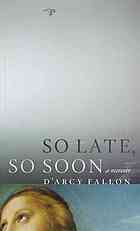
I found D’Arcy Fallon’s memoir, So Late, So Soon when I did an internet search (yes, using Google) for information related to Lighthouse Ranch, a Christian commune in northern California that one of my oral history narrators mentioned visiting as part of an Oregon Extension field trip in the mid-1970s. Fallon joined the commune after arriving there as a hitch-hiking teenager in the early Seventies, drawn in by the commune’s sense of order and purpose, eventually marrying a fellow communard and remaining with the community for three years, despite the increasing dissonance she felt between her own inclinations and the expectations of the commune’s leaders about her role as a Christian, as a woman, and as a member of the community.

Now a professor of composition and creative nonfiction a the University of Colorado, Fallon tells her story with lyrical compassion; although the depression and oppression she felt in her latter days as part of Lighthouse Ranch is palpable, she also manages to convey a clear understanding of why her younger self might have sought out this type of community, at this point in her life, and the difficult of extricating herself once she had become immersed. The book has brevity (I read it on one leg of my flight from Boston to Portland, Oregon) and offers rich details that give us insight into a particular subculture within the counterculture: that of the Jesus Freaks who adopted much of the outward, material culture of the hippies and melded it with a sometimes dogmatic adherence to Christian doctrine, theology, and religious practice. Anyone with an interest in either the counterculture of the era or in the dynamics of religious communities (communal or otherwise) will likely find it an interesting read.

researcher @ work: pictures from Oregon

13 Saturday Mar 2010

Posted by Anna Clutterbuck-Cook in my historian hat

≈ Leave a comment

Tags

photos, thesis, travel

It’s Friday afternoon at the end of week one and I’ve taken a break from the 1970s to drive three miles up the road to the Green Springs Inn, where the coffee is horrid and the marionberry pie is superb . . . and most importantly, where I can enjoy internet connectivity indoors instead of perched on a park bench in the snow outside the local one-room schoolhouse!

Here is one of the five cabins that house students during the fall, and visitors year round; this is the cabin I stayed in as a student (taken from the porch of the cabin I am renting on this trip); I was in the tiny room next to the woodshed that looks like a mudroom because it was until they modified it to house a fifth student! Everyone here is grateful for the snow because they’ve had such a dry winter thus far that there is talk of fire season starting in April — months ahead of the expected timetable.

On Wednesday, I drove twenty-one miles down into the valley along Highway 66 (state highway, not the famous Route 66) to the town of Ashland, Oregon. How could you not love a town that proclaims “Libraries: The Heart of Our Community”? I was certainly smitten, which is why I stopped to take this photograph. I was on my way to the Ashland Public Library in any event, to see what they offer in terms of local history resources (not a lot in published form, it turns out). The reference desk was very courteous all the same, and the women staffing it were able to direct me to the Southern Oregon University’s Hannon Library, wherein is housed a a card catalog index of the Ashland Daily Tidings (the local newspaper). Yet another helpful reference librarian (yay reference librarians!) ushered me into a dark corner (metaphorically speaking) wherein was located this wonderful analog card catalog — yup, they really do still exist!

Sadly, the Daily Tidings (or whomever indexed it) did not see fit to print any stories about the Oregon Extension directly, but I did find a few stories from the late Sixties about the influx of hippies (yes, indexed under “hippies”) from the Bay Area. The locals seemed mostly perplexed rather than truly offended; they must have grown inured soon enough since by 1970 all references to hippies per se vanished. I plan to go back armed with the names of particular local communes and investigate some more tomorrow.

The folks here have been warmly welcoming and generous with their time and their records. My historians heart warms with a frisson of excitement at being able to go through “unprocessed” (in archives-speak) materials related to the early years of the OE, but it’s also a little terrifying to be entrusted with file boxes of other folks’ papers like this.

John Linton, one of the professors here (who arrived in 1981 and is thus, for now, outside the scope of my oral history project…in the future that may change!) has wandered by a couple of times and on his way past exhorts me to “do good work!” I’ll do my best, guys! You’re definitely giving me lots of great stuff to work with. Now I just have to live up to it!

On to week #2…

blog hiatus: off to Oregon

07 Sunday Mar 2010

Posted by Anna Clutterbuck-Cook in admin

≈ 1 Comment

Tags

blogging, thesis, travel

As this post goes up, I’ll be in the air somewhere between Boston’s Logan Airport and PDX. I’m headed out to the West Coast on a two-week research visit to the Oregon Extension, the off-campus study program that is the focus of my history thesis. I’ll be hunkered down with old curriculum notes from the 1970s and recording oral history interviews with the faculty who founded the program back in 1975 as well as several former students from the early years who work at the OE or live in the area. I am also lucky enough to be able to visit my brother and his girlfriend Renee, currently living in Portland, and my maternal grandparents who live in Bend. Since I’d like to take these two weeks to focus on my thesis research, I will be posting minimally or not at all (possibly some photos) until I return to Boston.

Please think warm thoughts toward Hanna, who is generously shouldering the burden of a solitary existance (hanna rightly points out that being alone is not a burden unless you’re actually lonely) taking responsibility for our household in Boston until I return. If you’re interested in keeping abreast of life in Boston, wander over to her blog at …fly over me, evil angel…

booknotes: right (part two)

03 Wednesday Mar 2010

Posted by Anna Clutterbuck-Cook in book reviews

≈ Leave a comment

Tags

education, history, politics, thesis

Part one of this review was posted last Wednesday.

Strictly speaking, this isn’t so much a review as an extended quotation from one of the student interviews excerpted in Right and commentary on that particular quotation. Senior Jeremiah Loring, interviewed in March of 2007, was asked Do you think what you are doing is analogous to the counterculture, to what hippies were doing in the ’60s, that it’s a new revolution? Since I’ve been thinking a lot about the concept of “counterculture” (and how various scholars and lay folks define it) for my thesis, I was particularly intrigued by Loring’s response.

I have always liked the idea of a counterculture. That’s how Christianity should be. Not a subculture, because a subculture is something that, when a culture moves to the right or to the left, the subculture moves with it. However, a counterculture is everything that is outside of it, and we are solid. Regardless of where the culture goes, we are staying put. I think our society lacks that consistency. We have been blown by the wind of fashion. In this last election the nation had a left-leaning sweep, which was expressed in the polls. We tend to have a wishy-washy society. I think that’s expressed in politics by the growing number of moderates who do not have a consistent voting pattern, and I think it shows that they have lost a sense of principle trying to base their votes and actions on something solid and concrete. Christianity provides us with an anchor: if the culture moves, we are going to be pro-life. We are not going to change. The whole culture can leave us, and we are still going to stand there and say that abortion is wrong. If the time comes when everyone is saying abortion is wrong, and it’s outlawed, then we are fine. But, if it leaves us again, then we have to stand where we were before, because the Bible is eternal, and the word of God never fades.

Leaving aside the specific example of abortion, I was struck by two aspects of Loring’s definition of “culture” and “counterculture.” One was the way in which he describes counterculture as “everything that is outside” of culture. While I get the gist of his argument, I would argue this is a fundamental misunderstanding of the impetus for countercultural activity: that is, it is inherently oppositional. It is counter; it derives its purpose, at least in part, from offering a values system or worldview that is at odds from the dominant culture. The relationship between dominant culture and counterculture, then, is a dynamic one: as the dominant culture shifts, so too does the counterculture. This understanding of a counterculture is quite different from Loring’s concept of a counterculture that exists eternally, unmoving, outside of “culture.”

And that, indeed, is the second point of note in Loring’s response: he fails to identify is own Christian worldview as a culture — instead, it is outside of culture entirely. “The culture” and “the whole culture” are set up in opposition to his particular Christian evangelical, politically conservative understanding of the universe. I would argue that it is much more fruitful to understand cultures (sub, counter and otherwise identified) as cultures, your own or not. This is because cultures do actually change over time, and can be studied from an historical perspective — and even if Loring’s Christian counterculture holds eternal values (as he argues they do), from my perspective as an historian I would suggest that the way those values are expressed changes over time — and that those changes are worth situating in a cultural context.

Finally, I do think that the interviewer’s question is a valid one, and that there are legitimate, fruitful comparisons to be made between the type of resistance to modernity mounted by the 1960s counterculturalists and that articulated by the current fundegelicals (as my friend Amy used to call them). Indeed, I think it’s a shame that folks within both countercultures (if you will) don’t more often explore the values they have in common, as well as eying each other suspiciously from opposite ends of the “culture wars” spectrum. I’m not quite sure what would come of such a mutual assessment of shared values, but possibly it could help to clear up some of the confusion Rosin and others have over the nuances of home education, Christian fundamentalist-evangelicalism, and the struggle for political power.

multimedia monday: religion & politics

01 Monday Mar 2010

Posted by Anna Clutterbuck-Cook in media

≈ Leave a comment

Tags

history, multimedia monday, npr, politics, thesis, web audio

Welcome to the month of March! This month, I will be taking a two-week research trip to Lincoln, Oregon, in order to conduct oral history interviews with, and read through the personal archives of, faculty at the Oregon Extension. This work (fingers crossed) will provide the backbone of primary source material for my thesis on the early years of the program and its context in American countercultural, religious, and educational history.

Meanwhile, one of the alumni of the OE is a scholar of American religious history and author of numerous books on the subject of Evangelicalism in American life. One of his more recent books, God in the White House, charts the history of faith and the office of the Presidency during the latter half of the twentieth century. Here, you can listen to him discuss faith and politics with Terry Gross on NPR’s Fresh Air.

booknotes: "we’ll want the breasts exposed, and yet covered."

12 Friday Feb 2010

Posted by Anna Clutterbuck-Cook in book reviews

≈ Leave a comment

Tags

feminism, gender and sexuality, history, masculinity, thesis

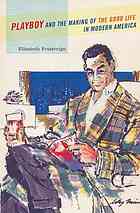
I love the things I can pick up and read in the name of thesis research. Take, for example, Elizabeth Fraterrigo’s Playboy and the Making of the Good Life in Modern America (New York: Oxford U.P., 2009). I saw the book by chance on the shelf at Borders a few weeks ago and while I would have read it eventually anyway (what’s not to like? sex! gender! money! drama!), I realized after pondering for a day or two that I could consider it background research on American postwar culture. So off to the library I trundled. (Or rather, off to the online catalog I clicked, forthwith to inter-library loan a copy through the Brookline Public Library).

And Ms. Fraterrigo did not disappoint. This dissertation-turned-book is a richly researched yet highly readable account of Hugh Hefner’s self-re-invention as the playboy of his dreams, a life he carved out for himself with relentless hard work and not a little luck after the dissolution of his youthful marriage and a series of unsatisfying desk jobs. Hefner, Fraterrigo convincingly argues, took various cultural elements in already in play (dissatisfaction with suburbia, anxiety about masculinity and women’s increased visibility in previously male spaces, a rise in consumer spending, postwar debates about what constituted the “good life,” and the scientific examination of human sexuality) and packaged them in a highly-successful formula that catapulted him to the top of a cultural and financial empire.

She draws two fascinating (if superficially unlikely) comparisons between Hefner and women writers of his day. First, she suggests a commonality in thought between Hefner and early feminist rhetorician Betty Friedan (author of The Feminine Mystique). Both Friedan and Hefner drew on their own personal experience to build a critique of the hegemonic postwar culture and its emphasis on the middle class, suburban nuclear family. In response to an unsatisfying homelife, both championed participation in the capitalist economy (as both worker and consumer) as a potential route to self-realization (see pp. 26-36).

Second, Fraterrigo points out the striking parallels between the ideal woman as articulated by Hefner in the page of Playboy (and in real life by the women who worked as Bunnies in the Playboy clubs) and Helen Gurley Brown’s “Single Girl,” found in the pages of Sex and the Single Girl first published in 1962. Both Hefner and Brown managed to carve out a place for singledom and pre-marital sex in culture dominated by the value of marriage and family. Yet they did so in ways that in no way challenged the status quo of inequitable gender relations or the notion of gender complimentarity (the idea that men and women “naturally” perform different, though complimentary, roles in society).

Brown’s Single Girl fit easily into the harmonious system of gender roles supported by Hefner. She made few demands on the male pocketbook [unlike a wife], aside from accepting the occasional gift or evening on the town, and instead made her own way as a working girl. Like the playboy, she strove to work hard and play hard too; yet she had no pretensions about achieving much power or earning vast sums of money through her role in the workplace. Instead, she accepted her marginal economic position and limited job prospects with a smile on her well-made-up face. Though she may not have enjoyed the same degree of autonomy and plentitude as the playboy, the Single Girl shared his sensibilities . . . [she] was both a handmaiden in the liberalization of sexual attitudes in the 1960s and the ascent of a consumer-oriented singles culture (132-33).

As the Swinging Sixties gave way to the cultural and counter-cultural revolutions of the early 1970s, Hefner found his idealized Playboy — once a symbol of avant garde youthful revolt against the status quo — derided by both men and women of the Movement cultures who critiqued his unabashed materialism and stubborn support of strictly segregated gender roles. He was taken aback by the “aggressive chicks” of the women’s liberation movement who pointed out that structural inequalities and oppositional gender typing (the strict separation of “masculine” and “feminine”) left women in a systematic disadvantage. Despite Hefner’s (and Playboy‘s) support of such feminist causes as women’s right to sexual expression, sex outside of marriage, access to abortion, and women’s participation in the workforce, he seems — according to Fraterrigo at least — to have balked at re-imagining a world in which the division of gender roles was less strictly dictated than it had been in the decades of his youth.

In this, Hefner is far from alone to judge by the continued popularity of “complementarian” arguments for “traditional” feminine and masculine roles among various conservative groups and even in some feminist circles — yet I am perennially puzzled by the amount of fear and resistance appeals to loosen gender-based expectations routinely encounter. While beyond the scope of Fraterrigo’s deftly-woven narrative about Playboy and the postwar culture of freewheeling consumerism it helped to legitimate, it is certainly a question which Playboy encourages us to ask: What, exactly, is at stake for individuals who defend complementary gender roles? The women’s liberationists of the 1970s thought they had the answer: unfettered male access to women’s bodies and the uncomplaining domestic support of housewives and secretaries. Fraterrigo’s tale, however, suggests that the answer is — while still containing those elements — far more complex (and more interesting!) than it appears at first glance.

Wintersession: Digital Memorial and Cultural Archives

08 Tuesday Dec 2009

Posted by Anna Clutterbuck-Cook in library life

≈ Leave a comment

Tags

history, librarians, simmons, thesis

On a quick personal and professional note (for all of you who read this blog to find out What Anna Get’s Up To When We Aren’t There To Keep An Eye On Her):

I’m excited to report that I’ve been accepted to participate in a wintersession course (beginning this evening) on Development of Digital Memorial and Cultural Archives, taught by Kevin Glick, Electronic Records Archivist from Yale University. The class is being offered as a joint project between Southern Connecticut State University and the group Voices of September 11, which curates the 9/11 Living Memorial digital archive to commemorate the lives and stories of September 11, 2001 and the February 26, 1993 World Trade Center bombing.

I’m really excited to be taking this class, since I am hoping to create a digital archive for the materials I collect as part of my oral history research. I am also looking forward to broadening my knowledge of New England a bit, since I have never been to Connecticut except passing through on the Amtrak on the way to New York City. Now I have a totally educational (read: legitimate) excuse to make the trip!

On the Syllabus: Man For Himself

25 Friday Sep 2009

Posted by Anna Clutterbuck-Cook in book reviews

≈ Leave a comment

Tags

history, politics, thesis

This week for my independent study, I finally sat down and finished Erich Fromm’s 1947 treatise on humanistic ethics: Man For Himself: An Inquiry into the Psychology of Ethics. Erich Fromm, a prolific writer on psychology, philosophy, politics, and ethics, clearly can’t be adequately represented by a small excerpt from one published work . . . but I thought I would, nevertheless, give you a flavor of his thinking by sharing a passage from Man for Himself in which he responds to one of the criticisms of his humanistic philosophy which foregrounds the capacity (“potentiality”) of human beings: that is, “what about the problem of evil?”

“The opponents of humanistic ethics,” he writes, “claim that man’s [1] nature is such as to make him inclined to be hostile to his fellow man, to be envious and jealous, and to be lazy, unless he is curbed by fear. Many representatives of humanistic ethics [have] met this challenge by insisting that man is inherently good and that destructiveness is not an integral part of his nature” (213). As Fromm points out, this leaves us with the problem of what destructiveness and where it comes from, if we reject it as an inherent part of human nature (since, self-evidently, human beings demonstrate a capacity for violence).

Our first step in approaching the problem of destructiveness is to differentiate between two kinds of hate: rational, “reactive” and irrational “character-conditioned” hate [2]. Reactive, rational hate is a person’s reaction to a threat to his own or another person’s freedom, life, or ideas. Its premise is a respect for life . Rational hate has an important biological function: it is the affective equivalent of action serving the protection of life; it comes into existence as a reaction to vital threats, and it ceases to exist when the threat has been removed; it is not the opposite but the concomitant of the striving for life [which Fromm believes is the most fundamental human drive].

Character-conditioned hate is different in quality. It is a character trait, a continuous readiness to hate, lingering within the person who is hostile rather than reacting to a stimulus from without . . . [a phenomenon] of such magnitude that the dualistic theory of love and hate as the two fundamental forces [of human life] seems to fit the facts. (216-17, emphasis in the original).

Fromm asks then (somewhat rhetorically) whether, given the evidence, he is forced to concede that theories maintaining destructiveness is a fundamental part of human nature (he uses Freud’s work as an example) are, indeed, correct. No, he responds to himself, he is not. He posits that both capacities (creativity and destruction) are present in human beings as potentialities which need certain conditions to manifest; furthermore, he argues that the capacity for productive, life-promoting creativity, is a primary capacity, whereas the capacity for destruction is secondary, realized only when the conditions for the primary are not met:

Both the primary and the secondary potentialities are part of the nature of an organism . . . the “secondary” potentiality comes into manifest existence only in the case of abnormal, pathogenic conditions. . . . man is not necessarily evil but becomes evil only if the proper conditions of his growth and development are lacking. The evil has no independent existence of its own, it is the absence of good, the result of the failure to realize life (219-20).

While I am skeptical about the division between rational/irrational used here, and find Fromm’s reliance on psychoanalytic language frustrating at times, his basic concept of human beings has a lot of (ahem) potential for re-imagining our most basic assumptions concerning human nature.

In the wake of the Second World War, many people — across diverse fields of inquiry — were wrestling with the question of what “human nature” was — and could be — with a sense of great urgency. Fromm offers us one such example; I’ll look forward to sharing more with you in the weeks to come.

~~~footnotes~~~

[1] after my post on Goodman last week, it is worth noting that Fromm specifically, in the introduction to Man for Himself, defines his use of the word “man” as a universal pronoun for “human being.”

[2] Fromm uses “character” in a very specific sense, elaborated on elsewhere in the book and in his other work, and here is indicating a basic orientation toward life versus a reaction to a specific incident.

On the Syllabus: Growing Up Absurd

18 Friday Sep 2009

Posted by Anna Clutterbuck-Cook in book reviews

≈ 2 Comments

Tags

education, feminism, history, thesis

So I might not have a lot of time to post this year, but one thing it occured to me to do is post selections from some of my thesis-related reading for those of you who are interested in what I’m doing on the intellectual/history front. Since I’m enrolled in an independent study this semester, I have the luxury of designing my own schedule of reading in preparation for my oral history fieldwork. The reading I’ll be doing this semester is in part theoretical/methodological (how I’ll be doing my oral history collecting and thesis writing, and why I chose to do it that way) in part a review of the existing historical literature on the period and topics I am studying, and in part primary sources that help provide contemporary context for the beginnings of the Oregon Extension program.

One of the books I’ve been reading this week, Paul Goodman’s Growing Up Absurd: Problems of Youth in an Organized Society. The prolific Goodman wrote one of the earliest post-war critiques of 1950s American conformity, first published in 1957, which later became a “must read” for countercultural activists during the 1960s and 70s. The basic argument of Growing Up Absurd is that the post-war society is depriving youth (specifically boys, see below) of meaningful work opportunities — leaving them with the option of unfullfilling factory of office jobs that do not contribute (in Goodman’s view) to the betterment of society. While his argument has faults, he is also making key observations about the fault-lines in American society during the era of post-war conformity. The priceless bits, however, are the sections in which he defends his focus on “young men and boys” as a stand-in for “youth.” When I began reading, I figured he was using masculine pronouns as a stand-in for humanity in general (it’s the 1950s after all). Not so according to this parenthetical found at the end of his introduction:

(I say the “young men and boys” rather than “young people” because the problems I want to discuss in this book belong primarily, in our society, to the boys: how to be useful and make something of oneself. A girl does not have to, she is not expected to, “make something” of herself. Her career does not have to be self-justifying, for she will have children, which is absolutely self-justifying, like any other natural or creative act. With thie background, it is less important, for instance, what job an average young woman works at till she is married. The quest for the glamour job is given at least a little substance by its relation to a “better” marriage. Correspondingly, our “youth troubles” are boys’ troubles — female delinquency is sexual: “incorrigibility” and unmarried pregnancy. Yet as every woman knows, these problems [I am writing about] are intensely interesting to women, for if the boys do not grow to be men, where shall the women find men? If the husband is running the rat race of the organized system, there is not much father for the children.) [13]

I would love to write an entire essay at some point unpacking the layers of cultural “common sense” packed into this one single paragraph of Goodman’s polemic. He continues this way of raising the question of women in a tangential, completely un-analyzed way. In the section where he discusses the Beats, he critiques their cultural dissent at length and then eventually gets around to the question of “What is in it for the women who accompany the Beats?” (185)

There are several possible sexual bonds . . . Her relation to him is maternal: she devotes herself to helping him find himself and become a man, presumably so that he can then marry her. . . Another possible relation is Muse or Model: her Beat is her poet and artist and makes her feel important. This is a satisfaction of her feminine narcissism or penis envy.

So mother or virgin/whore: those are our options girls. But wait! There’s more (185-187).

One sometimes sees a pathetic scene in a bar. Some decent square young workingmen are there, lonely, looking for girls or even for a friendly word. They feel they are “nobodies”; they are not Beats, they are not artists. They have nothing to “contribute” to the conversation. The girls, meantime, give their attention only to the Beats, who are sounding off so interestingly. But these Beats will not make any life for the girls, whereas the others might make husbands and fathers.

Amazing what a long history the Nice Guy ™ vesus Bad Boy ™ mythology has, isn’t it? One might, of course, ask if there are any female Beats — in spirit if not in historic fact (there were very few women who were part of the core movement). Goodman does actually mention such women, at the tail end of his analysis:

Finally, of course, there are the young women who are themselves Beats, disaffected from status standards. Perhaps they have left an unlucky marriage, have had an illegitimate child, have fallen in love with a Negro, and found little support or charity “in” society. They then choose a life among those more tolerant, and find meaning in it by posing for them or typing their manuscripts.

So even the women “Beats,” who fit his earlier definition of “incorrigibility,” end up being not so much artist-activists themselves, but rather a sub-species of the Muse and Model he defines earlier. As women artists and activists pointed out at the time — most loudly and concertedly during the 1960s and 1970s — this was in fact far from the truth of their own lived experience.

That’s it for this week’s “on the syllabus” dispatch . . . look for more next weekend!

on my plate: year three

11 Friday Sep 2009

Posted by Anna Clutterbuck-Cook in life writing

≈ 1 Comment

Tags

boston, MHS, northeastern, simmons, thesis

Today is the first official day of classes for me at Simmons, where I am entering my third year as a dual-degree student in the History and Archives Management Master’s program. So what does that mean in terms of the shape of my daily life?

Well, for starters, I continue to work four days a week at the Massachusetts Historical Society, with a great team of librarians and archivists who have been unfailingly supportive of my studies and given me the chance to learn the (shall we say) trade secrets of providing archival reference service. If you’re interested in the work that goes on at a place like the MHS (oldest historical society in the Western Hemisphere), check out my colleague & friend Jeremy Dibbell’s blog, the Beehive, hosted by the MHS website. I will also put in another plug for following John Quincy Adams on twitter, where he is tweeting posthumously his line-a-day diary entries from an 1809 voyage to Russia.

In addition, I have a very part-time job at Northeastern’s Archives and Special Collections, where I spend four hours a week slowly constructing a database of images from the scrapbooks of Marjorie Bouve, the founder of Northeastern’s Bouve School of Physical Education. Nothing has gone live online yet, but I can promise links when (fingers crossed!) the images are web-published. Lots of great early-twentieth-century snapshots of young women (and occasionally men) engaged in such activities as cycling, sailing, sight-seeing, and amateur theatricals.

As a graduate student, my work this year turns decisively toward my thesis research on the creation of the Oregon Extension program during the mid-1970s. I will be exploring the various cultural and educational threads that came together to shape the way in which the OE was developed as an educational program and a particular communal space. To that end, one of my two classes this fall is an independent study, which provides me with dedicated time to prepare logistically and theoretically for my oral history field work. If I can find ways to share this on-going project on the blog without a lot of additional time and mental strain, I will . . . if not, you should be seeing the fruits of my labors sometime in December of 2010 (again, fingers crossed!).

I am also in Archives, History, and Collective Memory, the dual-degree capstone course, of sorts. Since it focuses on “the relationship between historical events, the creation and maintenance of archival records, and the construction of collective memory” I look forward to applying the concepts we discuss in class to my own research: what is oral history, after all, but the creation of archival records and a collective construction of historically-minded personal narratives?

And finally, of course, come all of the continued pleasures and duties of domestic life: the morning and evening commute, leisure reading, movie watching, shopping and meal preparation, laundry, cleaning, weekend outings, keeping up with far-flung family members, and (above all) regularly-scheduled time with Hanna.

Given all of this real-world activity, I’m sure how much I’ll be blogging during the coming months. Obviously, home life, work, and school commitments come first. For those of you who follow my blog as a way of keeping up long-distance with what’s going on in my life, I’ll definitely try to post pictures and piffle as the opportunity arises. For those of you who check in from elsewhere in the blogosphere, I’m still reading your blogs, even if I lack the time to join in the conversation!

As always, shoot me an email or (gasp) put pen to paper and write me a letter and I will respond, later if not sooner (but hopefully sooner). You know where to find me! In the meantime, I do think of you all and hope your fall projects are getting underway with creativity, productivity, and pleasure. Don’t forget to enjoy the autumn weather, wherever you may be.

*photograph of the T crossing the intersection of Harvard and Beacon at Coolidge Corner by scleroplex @ Flickr.

← Older posts
Newer posts →
"the past is a wild party; check your preconceptions at the door." ~ Emma Donoghue

Recent Posts

  • medical update 11.11.22
  • medical update 6.4.22
  • medical update 1.16.2022
  • medical update 10.13.2021
  • medical update 8.17.2021

Archives

Categories

Creative Commons License

This work by Anna J. Clutterbuck-Cook is licensed under a Creative Commons Attribution 3.0 Unported License

Meta

  • Create account
  • Log in
  • Entries feed
  • Comments feed
  • WordPress.com

Create a free website or blog at WordPress.com.

  • Subscribe Subscribed
    • the feminist librarian
    • Join 37 other subscribers
    • Already have a WordPress.com account? Log in now.
    • the feminist librarian
    • Subscribe Subscribed
    • Sign up
    • Log in
    • Report this content
    • View site in Reader
    • Manage subscriptions
    • Collapse this bar