• anna j. clutterbuck-cook
  • contact
  • curriculum vitae
  • find me elsewhere
  • marilyn ross memorial book prize

the feminist librarian

the feminist librarian

Author Archives: Anna Clutterbuck-Cook

looking back/looking forward (from where we are now)

31 Saturday Dec 2011

Posted by Anna Clutterbuck-Cook in our family

≈ Leave a comment

Tags

blogging, domesticity, hanna, holidays

it’s been a busy and oft-times exhausting year!

Over the past couple of weeks I’ve been feeling more aware and more thankful than usual of all the ways our life feels more settled than last year and — while still containing its stresses — just generally better on the well-being front. So here are a few notes on what happened in the Cook-Clutterbuck household this year.

The Good:

  • Last December I completed my library science degree which, hooray!
  • On the first Monday after New Years, I began my full-time position at the MHS.
  • Hanna took the leap of leaving a workplace that had been steadily eroding her health — a particularly brave move given the current economic climate — and has been rewarded by steady gainful employment at the Center for the History of Medicine and the related Medical Heritage Library with a fine group of fellow archivists. As I type this, she’s looking forward to two more years of grant-funded archival processing and digital projects.
  • I’ve been blogging at The Pursuit of Harpyess since January 2011, an opportunity that has led to slightly more active participation in the feminist blogosphere than I had the energy for during graduate school — and certainly kept me more engaged during my first year of post-grad employment than I might otherwise have put in the effort to sustain.
  • I finished my thesis in May 2011 and brought my graduate school career to a thankful close. 
  • Also in May, I finally had a chance to take Hanna to visit my hometown in Michigan.
  • With neither of us in school, we’ve had more time to settle into life here in Boston, which appears to involve a lot of coffee shops, used bookshops, libraries, and hosting dinners for a few close friends.
  • 2012 will mark the fifth year of living in this apartment and neighborhood, both of which we’re pretty happy with. We keep talking about moving at some point (a bigger kitchen would be nice; and space for more bookshelves), but thankfully moving isn’t an urgent need.

The Not-So-Good:

  • In the event anyone wants to know, depression still sucks. I’m so, so thankful for Fenway Health and the wonderful medical and mental health care providers we work with there. And I am continually amazed at Hanna’s strength and patience, with her willingness to put one foot in front of the other (particularly on the hard days), and her determination to hold onto hope we’ll build a life worth sharing.
  • While Hanna and I are more securely situated than many vis a vis our employment and financial stability, carrying a joint burden of some $160,000.00 in student loans — even if they’re our only form of accumulated debt — is a vulnerability we’re just learning to live with. Even as we scrabble around to start long-range savings and consider the possibility of paying for things like travel abroad or a mortgage. I’m thankful the issue of educational debt continues to be a topic of conversation and concern on a national (and international) level, since it’s not going to get better without significant structural change.
  • Given our limited ability to travel, living far away from family and close friends continues to suck. We’ve got loved ones in Texas, California, Oregon, Michigan, and Maine. All of whom are missed dearly. Social media helps, but I don’t think I’ll ever get used to the distance between us.
The Possible Future:
  • Thanks to Hanna’s continued employment in the Harvard University library system, she’ll be eligible to take a history seminar in the spring, virtually free of charge (hooray!). While they don’t offer courses specifically in her area of interest, Irish history, she plans to enroll in a course on intellectual history that she hopes will give her a chance to continue her research on the history of Irish nationalism.
  • I’m working on a paper for the New England Historical Association and the MHS on a 1914 case of alleged sexual assault here in Boston documented by the New England Watch & Ward society as part of their ongoing efforts to eradicate vice. 
  • In March, I’ll be traveling back to Michigan (hopefully with Hanna for company!) to take part in the celebrations marking the 20th anniversary of the Hope College Women’s Studies program, of which I am a proud graduate.
  • Hanna and I are knocking around the idea of starting a joint review blog, tentatively titled stuff + things, which will roll out in January. Watch for further details coming soon.
  • As if that weren’t enough, I’m still working on oral history transcription and hope to start posting final versions of interviews on the project blog later in the new year.
I’ll obviously be writing about all of this as time and energy allow, so stay tuned … I look forward to sharing all that’s to come in 2012 and beyond. 

quick hit: belfast project oral history lawsuit

30 Friday Dec 2011

Posted by Anna Clutterbuck-Cook in my historian hat

≈ Leave a comment

Tags

history, human rights, npr, oral history

via

Earlier this year, the British Government requested the audio recordings and transcripts of interviews from a Boston College-based oral history project documenting the history of conflict in Northern Ireland. The oral history narrators who participated in the project originally granted interviews on the condition (agreed to in writing) that the interviews remain sealed until after their death. English officials are arguing that the interviews are required as part of an ongoing criminal investigation and claiming that the United States government is under treaty obligation to obtain the materials from BC and hand them over.

After initially resisting the request, Boston College appears to be on the brink of complying with a Judge’s order to hand over select interviews. This decision not only represents a breach of promises made to human beings whose lives (and the lives of countless others) will now be under renewed threat, but will have a widespread chilling effect on the practice of oral history in situations where, perhaps, the oral historical record is particularly vital: sites of conflict where normal modes of documentation are lost or never created.

You can listen to an interview with the former director of the Belfast Project, Ed Moloney, on WBUR’s Radio Boston.

You can read more about the lawsuit at Boston College Subpoena News (a blog set up to follow the story, which is unaffiliated with BC), as well as access many of the publicaly-available legal documents related to the case.

Neither the Oral History Association nor the American Historical Association have weighed in on this issue recently — at least that I can find — although the AHA did acknowledge back in May that the issues are “murky” and raise complex ethical questions about the practice of oral historical research.

wishing you a restful holiday

24 Saturday Dec 2011

Posted by Anna Clutterbuck-Cook in admin

≈ Leave a comment

Tags

books, domesticity, holidays

via

As I write this post, Hanna and I are listening to the Festival of Nine Lessons and Carols broadcast from King’s College, Cambridge, England and eating cornmeal molasses pancakes. I put in my last hours of work for 2011 yesterday afternoon at the MHS and now both Hanna and I will be on holiday until January 3rd — all, the luxury of slightly anachronistic academic schedules! Later this afternoon we might wander down to the Boston Public Garden to check out the Christmas bustle before returning home to prepare cinnamon pull-apart bread for Christmas morning and possibly a screening of White Christmas. 

And then possibly reading some picture books before bed. Because I don’t know about you, but Christmas isn’t really complete until you’ve read your favorite Christmas stories. Such as:
The Conscience Pudding, by E. Nesbit (available as a free audio file from Librivox!)
The Story of Holly and Ivy, by Rumer Godden, illustrated by Barbara Cooney
Child’s Christmas in Wales, by Dylan Thomas, illustrated by Edward Ardizzone 
The Tomten and the Fox, by Astrid Lindgren (see illustration above)
The Best Christmas Pageant Ever, by Barbara Robinson
What are the favored Christmas and/or winter holiday stories in your house? Share them in comments!
Schaerer family Christmas tree (Dec. 2003)
photograph by Anna
Best to you and yours this season, and warm wishes for the turn of the year.

~Anna

booknotes: the lesbian fantastic

22 Thursday Dec 2011

Posted by Anna Clutterbuck-Cook in book reviews

≈ Leave a comment

Tags

books, gender and sexuality, genre fiction, reading lesbian classics

Back in October’s batch of LibraryThing Early Reviewer books, I won Phyllis M. Betz’ The Lesbian Fantastic: A Critical Study of Science Fiction, Fantasy, Paranormal, and Gothic Writings (McFarland, 2011). The Lesbian Fantastic is the third volume Betz, a professor of English literature, has written for McFarland examining genre fiction written by lesbian authors (a slippery category that I’ll talk more about below). The previous installments in the series look at lesbian detective fiction and lesbian romance novels.

At a slim two hundred pages, including chapter notes, bibliography, and index, The Lesbian Fantastic — as the subtitle claims — takes on the ambitious task of exploring the history  and themes of fantastical literature written by and about lesbians. The brevity of the volume is, indeed, one of its problems, since each aspect of fantastical literature Betz covers (science fiction, fantasy, paranormal, and gothic) could take up a book of its own. I was certainly thankful that Betz refused up-front to play genre border patrol and police the boundaries between, say, “gothic” vs. “paranormal,” but that decision left her with a vast landscape of literature to summarize, analyze, and place in some measure of socio-historical context. The inevitable result is that corners are cut and I was left wanting a meatier discussion on many fronts.

Likewise, Betz fails to strike a comfortable balance between examination of lesbian authorship, readership, and the lesbian as character in fantastical literature — whether or not that character is written by a self-identified “lesbian” or otherwise non-straight woman author. All of these aspects of genre fiction by and/or about lesbians would have been fascinating subjects to explore in-depth, but given the length of their treatment in this study, I felt all three topics came away muddled and short-shrifted. Was this book a study of lesbian authors? Not entirely — in part because not all authors’ sexual orientations are known and/or fit into modern-day identity categories. Betz also weaves back and forth between writing narrowly about lesbian-authored works (however she defines them) and women generally and authors in the genre generally. Was this book about lesbian readers? That category, too, suffers from a high degree of volatility … are we talking about readers of fiction involving lesbian characters? Readers who identify as lesbian? Who engage (or have engaged) in same-sex relationships? Who experience some measure of same-sex desire? While categorization is always going to be somewhat arbitrary for the sake of a study such as this, I would have appreciated a clearer sense of whom Betz herself is including under the umbrella of lesbians who read genre fiction, and what her sources are for those voices.

Finally, Betz could have used a good editor with knowledge of the genre who might have caught, for example, the fact that China Miéville does not identify, as far as I know, as a lesbian or a woman. Or could have gone over the manuscript and deleted the repetitious author introductions (Charlotte Perkins Gilman’s Herland is re-introduced almost every time it appears). 

Overall, The Lesbian Fantastic is a book on a fascinating and potentially rich (and heretofore under-studied) topic that suffers from over-vague parameters and a frustrating simplification of lesbian identity. I think Betz’ subject might have been better served had she chosen to focus on the treatment of lesbian/queer characters in fantastic fiction. In that context, she could have constructed some interesting compare-and-contrast arguments about lesbian characters in genre fiction generally versus genre fiction written by lesbian writers and/or for a lesbian/queer audience. Or, she could have focused more specifically on queer female readership and fandom, discussing the genre fiction pitched specifically to non-straight readers and the ways in which those readers interact both with “lesbian” genre fiction and its mainstream counterparts. Reader voices are notoriously difficult to locate and analyze, but online forums and fan-created transformative works (fan fiction, videos, art, etc.) have made the possibility of hearing the reader’s voice in much more depth.

The Lesbian Fantastic will be useful to other scholars in the field who will, hopefully, take Betz’s arguments in more complex directions.

new fic + nano recap

20 Tuesday Dec 2011

Posted by Anna Clutterbuck-Cook in fandom

≈ Leave a comment

Tags

downton abbey, fanfic, smut, writing

via

I’ve put off writing a recap of National Novel-Writing Month because, sadly, a brutal migraine caught up with me over the Thanksgiving weekend and put the kibosh on meeting my (until then quite reasonable) personal goal of 25,000 words for the month. Still, I clocked in at just over 20K.

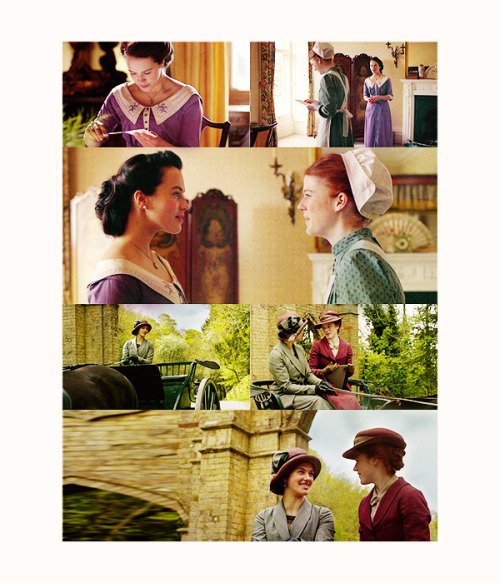
But meanwhile, thanks to participation in NaNo, I made writing erotica a top priority in November and completed a ~13,000 installment of my ongoing How She Loved You series featuring Sybil and Gwen from Downton Abbey. I finally had a chance to take Hanna’s beta suggestions into account and code the piece for AO3 this past weekend.

So if fic be your thing, head on over and check it out:

Like Sorrow Or a Tune
by ElizaJane
Fandom: Downton Abbey
Pairing: Sybil/Gwen
Summary: Six scenes that trace the contours of Sybil and Gwen’s relationship from the first morning after to the night of their reunion in London, in the flat where they will make their home. This is the inevitable “five times” fic. Five times Sybil and Gwen parted before dawn and one time they didn’t have to.

Now I should head back to reading Gayle S. Rubin’s 1980s essays on the porn wars, which I have to say are an incentive like few other things to get into the business of writing and reading smut. Because really, people, really. Politics of disgust like crazy and that’s just not cool. Life is short. Write good porn.

in which we write letters: stop SOPA

18 Sunday Dec 2011

Posted by Anna Clutterbuck-Cook in library life

≈ Leave a comment

Tags

blogging, i write letters, politics

via

Depending on your level of involvement in things internet-political and techy, you may or may not be aware of the Stop Online Privacy Act (SOPA) now making its way through congress. Introduced by representative Lamar Smith (R-TX), this bill mandates widespread monitoring of internet activity and has the potential to cause the internets as we know them to be fundamentally altered as blogs and other social networking sites are shut down for supposed acts “piracy.” You can read more about the act at the Organization for Transformative Works, TechCrunch, and the American Library Association. The letter Hanna and I sent to our representatives is heavily cribbed from the ALA talking points.


Find your U.S. Representative here. 

Find your U.S. Senators here.


18 December 2011
Dear Representative Capuano,
As librarians, bloggers, and registered voters in Allston, Massachusetts, we are writing to ask you to vote against the proposed Stop Online Privacy Act (SOPA), H.R. 3261.
This bill, if it becomes law, will cause a widespread “chilling effect” on use of the Internet for commerce, communication, and participation in democratic society. The bill strikes at copyright protections currently granted to libraries and educational institutions by creating the possibility of criminal persecution of institutions and institutional representatives. for online streaming and other use of online resources in library and classroom space. SOPA’s requirements to monitor internet traffic violate free speech and privacy protections and may create new forms of government surveillance of private activities within and outside the United States. The predicted consequences of SOPA are far-reaching. If passed, the potential for new jobs, innovative new ventures, and economic growth will be stifled.
Citizen engagement in online spaces depends on the ability to share and discuss a wide variety of media content across multiple social networking and other Internet platforms. SOPA will effectively shut down the vibrant creativity and vital political discourse that has been made possible by the World Wide Web. On behalf of ourselves, our online community of bloggers, and our library patrons, we ask you to vote against H.R. 3261, and support alternative ways for protecting legitimate copyright interests online.
Sincerely,
Anna J. Cook & Hanna E. Clutterbuck

booknotes: one and only

15 Thursday Dec 2011

Posted by Anna Clutterbuck-Cook in book reviews

≈ Leave a comment

Tags

history, oral history

Cleis Press recently sent me a review copy of One and Only: The Untold Story of On the Road and Lu Anne Henderson, The Woman Who Started Jack Kerouac and Neal Cassady on Their Journey by Gerald Nicosia and Anne Marie Santos (Berkeley, CA: Viva Editions, 2011). Here are a few thoughts.

In 1978, Beat biographer Gerald Nicosia had the opportunity to interview Lu Anne Henderson twice – once her a hospital in San Francisco, when she was recovering from surgery, and shortly after her release when she invited him to the house where she was recovering for a lengthy recording session. Over thirty years later, One and Only brings us these oral historical narratives in the form of heavily edited autobiographical vignettes. The sections of One and Only drawn directly from the interviews are framed by Nicosia’s contextual commentary and supplemented by other historical material about the Beats and their milieu – including a number of photographs and an essay by Henderson’s daughter, Anne Marie Santos.

I have, I will admit upfront, never been drawn to the Beat movement either in terms of its literary output or its place in American twentieth-century history. I have had passing acquaintance with its main personalities and the echoes of their work in 1960s and 70s cultural critiques. But I come to this work largely without preconceptions about the personalities of the individuals or the nature of the relationships between the main players. Therefore I’m not the best person to comment on the contribution this autobiographical narrative adds to the field of Beat studies. What I would like to talk about is the way in which Nicosia frames the oral history, and how one might approach reading the text with a skeptical eye — yet still gain a valuable personal perspective on some fairly iconic historical people and events.

Nicosia’s introduction does not inspire confidence in One and Only either as a work of oral historical scholarship or as a meaningful portrait of Lu Anne Henderson and her experience of mid-century American bohemia. Nicosia leans heavily on qualitative descriptions of his subject that came across  in my reading as tasteless objectification – he introduces her as “beautiful fortyish woman” who has a certain “homespun charm” and retains “touches of … charming innocence” (24; 33). Given his position as a younger (at the time) man requesting an interview about Henderson’s life and sexual relationships, I find the focus on her simultaneous sensuality and almost childishness to be a little creepy.

Nicosia walks a fine line between asking his readers to recognize Henderson’s agency – even as a fifteen-year-old teenage girl, she situates herself as a person who made choices about how to live her own life – and eliding the power dynamics borne of age and gender. While still a young man when he married Lu Anne, Cassady was in his early twenties, with more travel experience and a stint in the military under his belt. While not all such relationships need be inherently exploitative, this dynamic is never unpacked either by interviewer or interviewee. While Lu Anne’s interview emphasizes their shared youthfulness and complicity in continuing to live in or on the edge of poverty, readers can’t help but observe how Henderson is often forced into the position of providing for her husband and his friends, by hook or by crook, as in 1946 when Neal and Lu Anne, newly wed, arrive in New York City:

It was up to me to support us, so I found a job at a bakery. I had just gotten the job that morning, it was my first day, and Neal told me to steal some money! We didn’t have a penny, and Neal told me, like, ‘Bring some money home!’ Well, the woman who ran the bakery caught me [and] dismissed me. It really put me through a traumatic experience (67).

Henderson passes over these incidents with a light touch, often turning them into amusing anecdotes. Similarly, she glosses over the emotional and physical abuse threading through her relationship with Cassady and, later, Kerouac, and subsequent husbands. “Neal was not a violent person,” she observes at point point, and then immediately qualifies this by saying, “except with me. And when Neal would hit me, that was simply emotion” (87).

Nicosia acknowledges that Henderson herself had an agenda in granting him an interview, as did he in seeking her out. She was unhappy with contemporary accounts of her place in the constellation of Beat relationships, approached the interview as an opportunity to correct historical memory. He was collecting material for a biography of Kerouac eventually published in 1983 under the title Memory Babe. To a great extent, Nicosia’s focus on the high-profile male personalities in Henderson’s circle persists in One and Only. He observes with unselfconscious approval that “Unlike so many of the other women who have written about Kerouac, [Lu Anne] resists the temptation to shift the focus of the story from Jack (or in this case, Jack and Neal) to herself” (27). In the context of a biography of Kerouac or Cassady, such an on-task informant might be an asset to the researcher – in the context of a book that places Lu Anne Henderson front and center, the observation tastes a bit sour on the tongue. Really, Nicosia? You make it sounds like Henderson’s life story is only valuable to the degree she keeps herself in the background and focuses on the menfolk in her life? I really hope you didn’t mean that the way it came out.

Despite my (many!) frustrations with the framing of Lu Anne’s narrative by Nicosia, there will likely be value to Beat scholars in the publication of Henderson’s perspective on the oft-chronicled historical events that inspired On the Road and other Beat works. Until now, the interview was unavailable to the public, for reasons Nicosia doesn’t elaborate on – only hinting that he was “forced” to bring a lawsuit in order to open the archive. I certainly found Henderson’s narrative compelling, and while her portrait of life on the economic and cultural edge was at times heartbreaking, I think it’s an important antidote to those who might romanticize the outsider while forgetting the real material and social costs of socioeconomic and philosophical marginalization … even if some aspects of that marginalization are, at least partially, by choice.

I look forward to seeing what future scholars do with the published work as well as the raw interviews, which I hope will be made available to scholars and the general public for research purposes.

from the neighborhood: christmas tonttus

14 Wednesday Dec 2011

Posted by Anna Clutterbuck-Cook in our family

≈ 1 Comment

Tags

from the neighborhood, holidays, maine

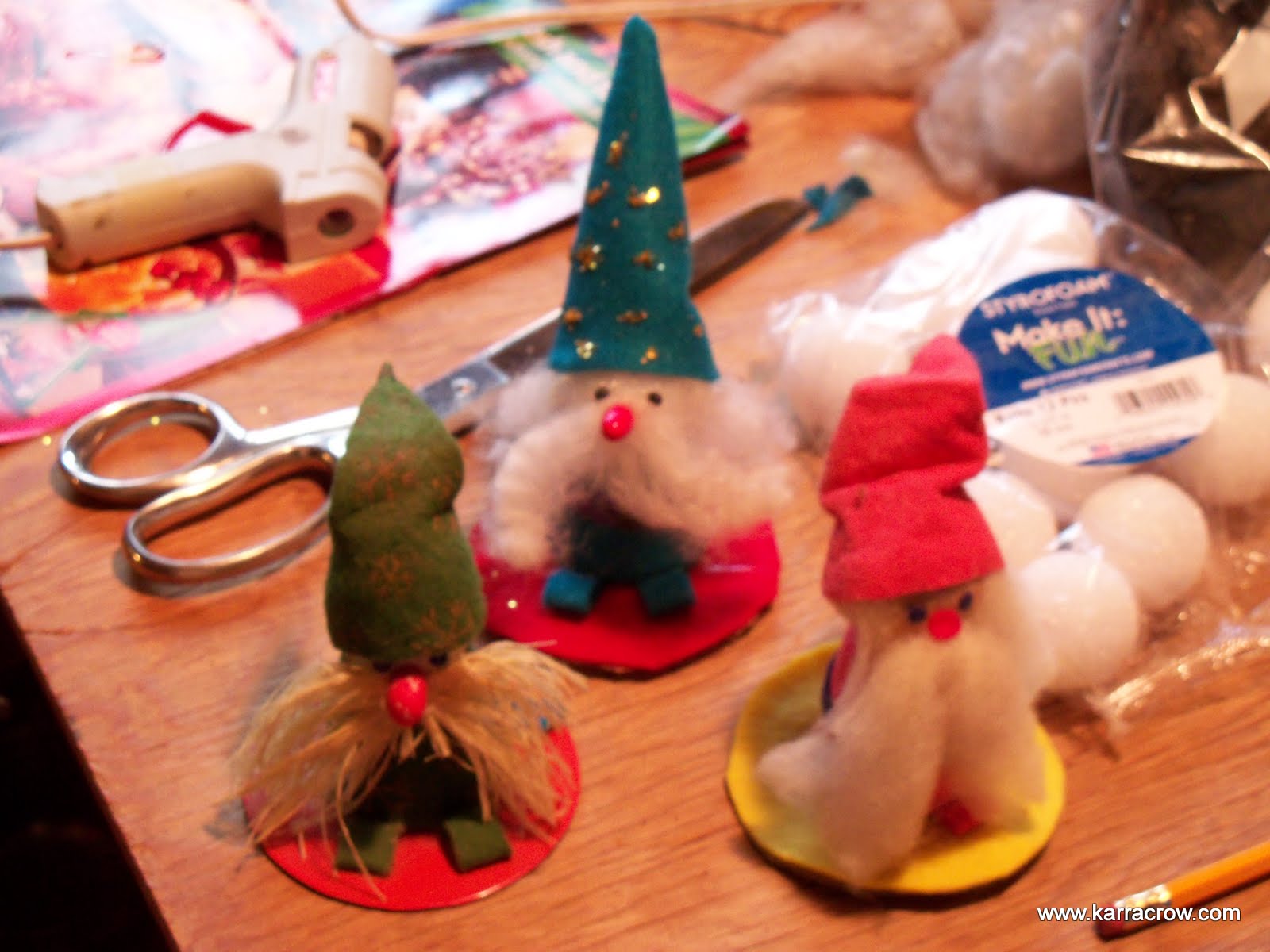
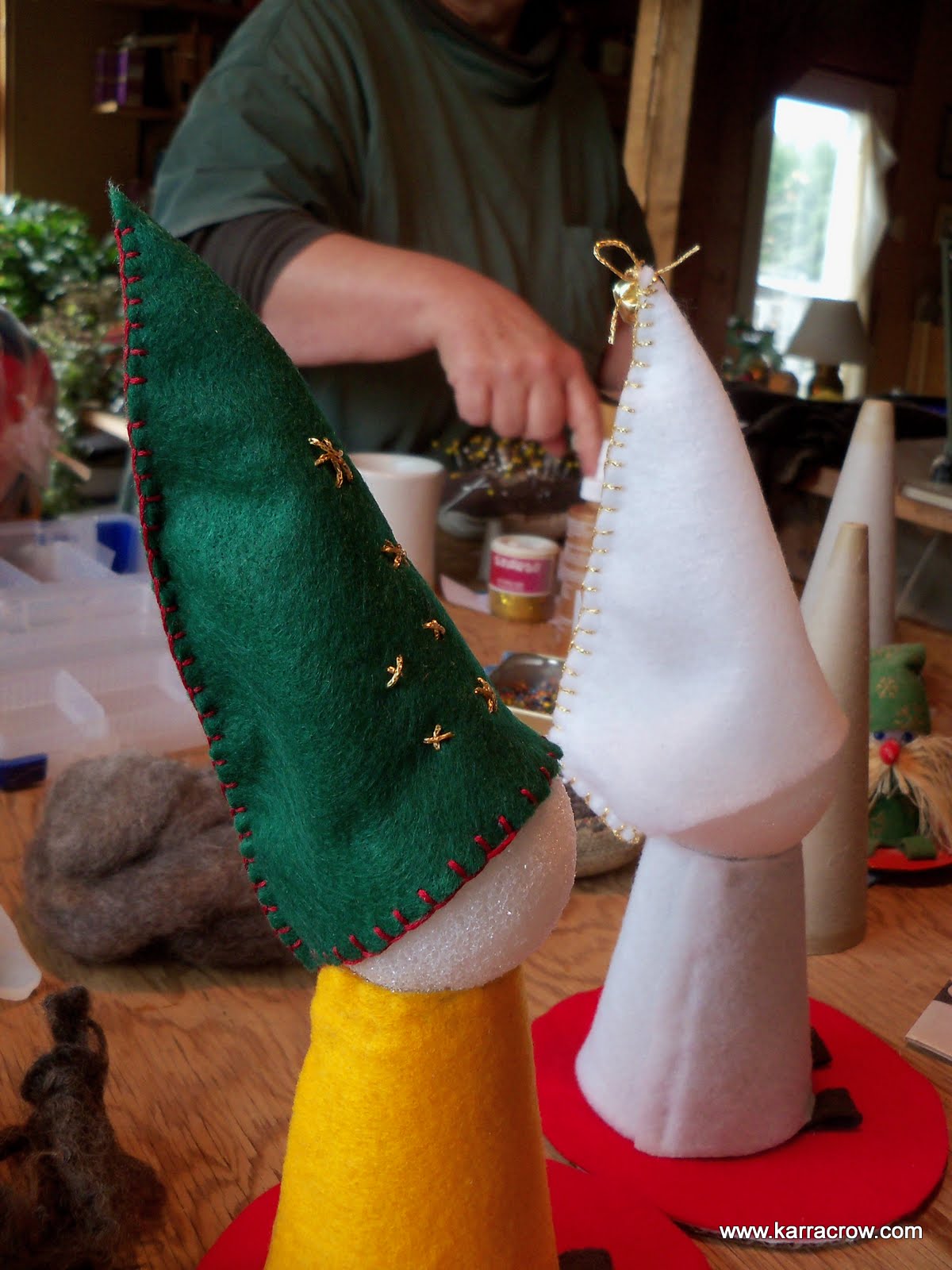
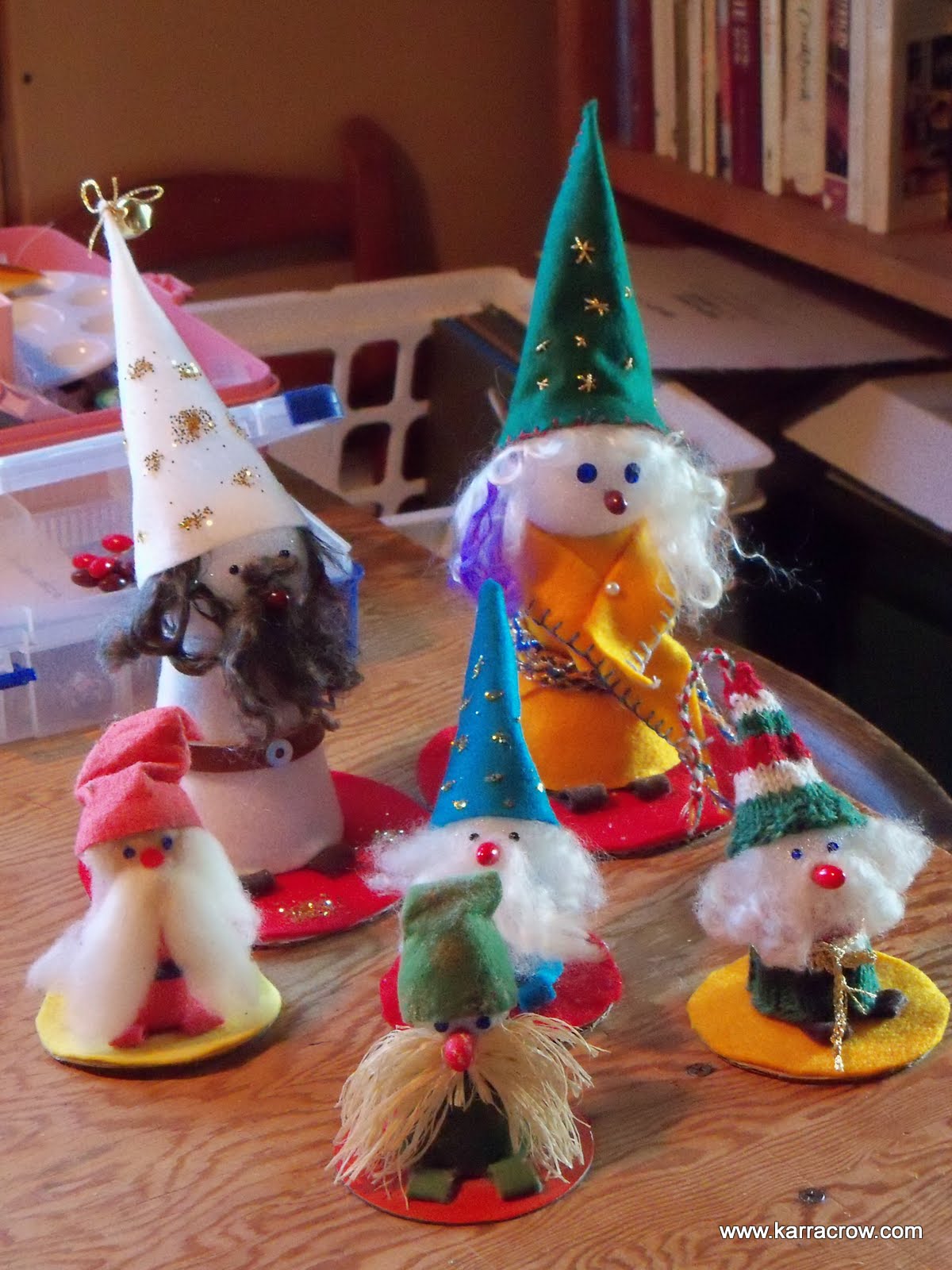
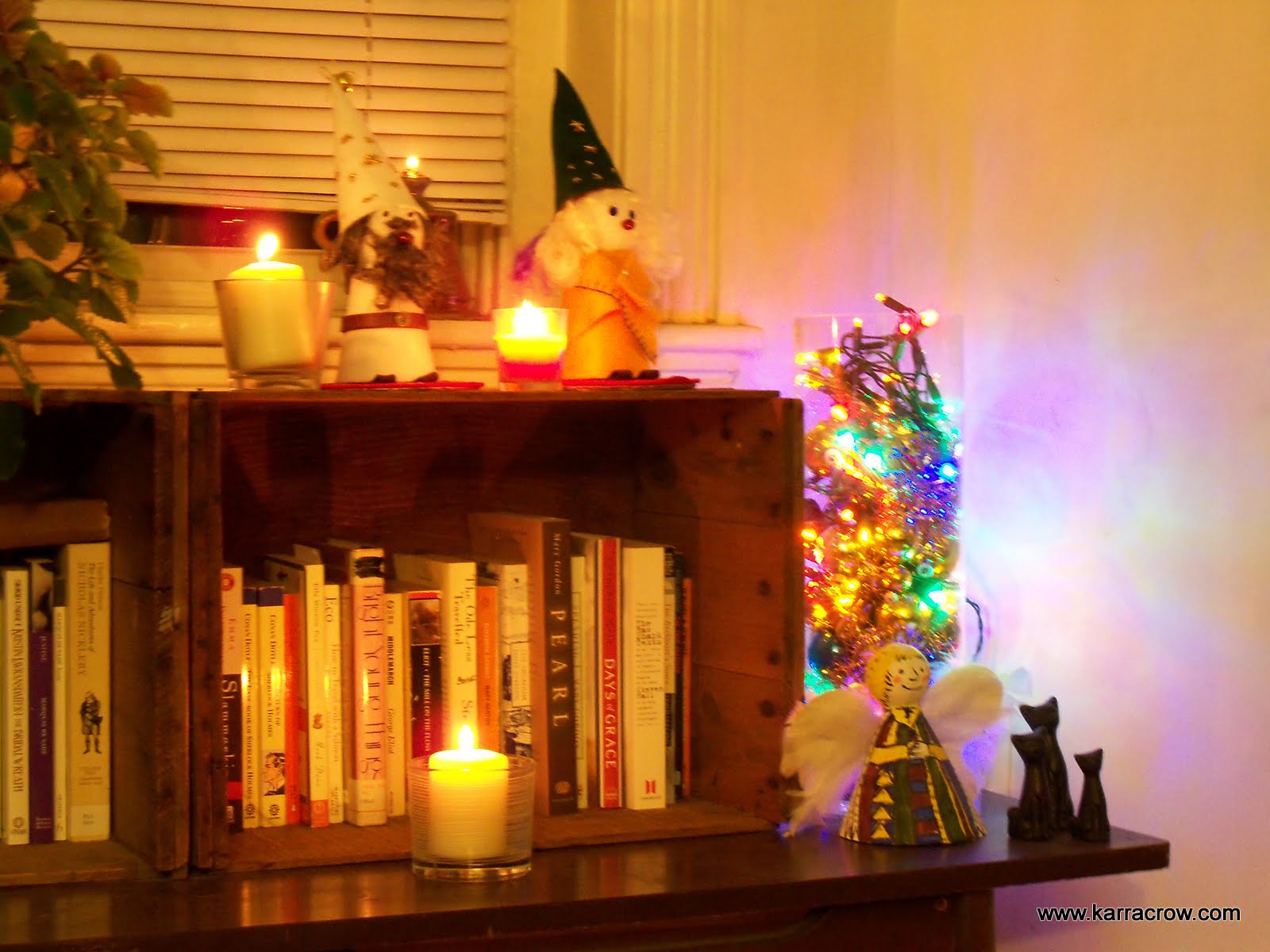
This past weekend, Hanna and I were up in Maine celebrating an early Christmas with the folks. This involved a lot of good food, a Christmas carols service at nearby Colby College, and the creation of our very own tonttu for the apartment. Tonttu are Finnish house spirits that Hanna’s mother learned about from her Finnish parents and grandparents. Here are some photographs that we took of the process of making two tonttus. It took the better part of Sunday morning.

these fellows were our model tonttus
here are some of the supplies Linda provided
We started with a base of cardboard, Styrofoam, and felt
all self-respecting tonttus need hats
Mine is on the left, Hanna’s is on the right.
Hanna named hers Ibrahim; mine is named Helga
We brought them back to Boston on Monday to grace our Christmas shelf

While tonttu is the Finnish term for house spirits, some of you may be familiar with the Astrid Lindgren picturebooks which tell the story about a gentle tomten who cares for a family farm in Sweden. This is essentially the same folk character, though seen through the lens of a slightly different Scandinavian tradition.

I hope all of you are finding small and pleasurable ways of preparing for the holiday season …

multimedia monday: purity myth trailer

12 Monday Dec 2011

Posted by Anna Clutterbuck-Cook in media

≈ Leave a comment

Tags

books, feminism, gender and sexuality, multimedia monday, web video

Via @courtwrites (and lots of others by now, but that’s where I first saw the link!):


The Purity Myth Trailer from Media Education Foundation on Vimeo.

I read and reviewed Jessica Valenti’s Purity Myth when it first came out back in 2009 and in my opinion it’s the best of her published works to-date. I’m definitely going to check out the documentary version.

See also: my review of Hanne Blank’s Virgin: The Untouched History.

four years ago today: "personal canon"

11 Sunday Dec 2011

Posted by Anna Clutterbuck-Cook in life writing

≈ Leave a comment

Tags

books, four years ago today, friends, fun

It’s been awhile since we did one of the four years ago today flashback posts. So here’s a fun one I pulled from the Gmail archive. My friend Joseph and his brother had generated lists of the top ten novels in their “personal canon” and Joseph emailed to ask what mine would be. After some thought, this is what I came up with. Looking it over today, I can’t say there are any huge revisions to this list. 


From: Anna
To: Joseph
Date: Tue, Dec 11, 2007 at 10:22 PM
Subject: Re: Personal canon of books

Hiya,

My canon is decidedly more “lowbrow” and than yours, but I am squelching my impulse to apologise for it on Nick Hornby’s firm orders (even though he loves Dickens’ and writes tedious novels about men who refuse to grow up, so I am not sure how much I trust him . . .)

I have artificially controlled against all non-fiction and children’s literature (well, below the teen level).  Not sure if that’s quite what you had in mind, but there we are.  I discover my criteria are a) enduring “good read”–something I will go back to over and over again, as well as b) things that have had deep impact on how I answer the question, “how to live?” . . . these categories don’t always overlap.  There are books that have had great impact on how I think about the world, but which I’ve only read once . . . and books that I read habitually, but that I don’t really think of as life-shaping in any explicit way.  Maybe they’re just sneaker at it? And of course these change over time . . . I was just thinking today how His Dark Materials has really grown on me over the years.  And even though I have issues with some of his didacticism, his theological imagery really speaks to me.  And, I mean, who could resist the idea of a reversal of the whole Genesis/Fall/Eve story? (Um . . . wait . . . that’s right . . . a LOT of people 😉 ).

via

That long introduction completed, here are my nominations. The top ten in a strictly alphabetical order. I figure once you make top-ten I’m not going to be judgmental. ALTHOUGH I do sometimes find myself paralyzed by the question of which book I would become if I were a character in Fahrenheit 451 . . . possibly a clear indication of how troubled I actually am :).

Top Ten:

1. E.M. Forester. A Room With a View.
2. Shirley Hazzard. The Great Fire.
3. Haven Kimmel. The Solace of Leaving Early.
4. Robin Lippincott. Our Arcadia.
5. Michelle Magorian. Not a Swan.
6. Robin McKinley. The Blue Sword, et al.
7. Audrey Niffinegger. The Time-Traveler’s Wife.
8. Dorothy Sayers. Gaudy Night.
9. Martin Cruz Smith. Rose.
10. Tom Stoppard. Arcadia.

Some possible future candidates/honorable mentions:

Isabel Allende. Daughter of Fortune & Portrait in Sepia.
Jane Austen. Persuasion.
A.S. Byatt. Possession.
Sheryl Jordan. The Raging Quiet.
Laurie R. King. The Beekeeper’s Apprentice, et al.
Barbara Kingsolver. Bean Trees.
David Levithan. The Realm of Possibility.
Gregory Maguire. Wicked, Son of a Witch
Philip Pullman. His Dark Materials.
Margaret Whelan Turner. The Thief, Queen of Attolia, King of Attolia.

Anna

← Older posts
Newer posts →
"the past is a wild party; check your preconceptions at the door." ~ Emma Donoghue

Recent Posts

  • medical update 11.11.22
  • medical update 6.4.22
  • medical update 1.16.2022
  • medical update 10.13.2021
  • medical update 8.17.2021

Archives

Categories

Creative Commons License

This work by Anna J. Clutterbuck-Cook is licensed under a Creative Commons Attribution 3.0 Unported License

Meta

  • Register
  • Log in
  • Entries feed
  • Comments feed
  • WordPress.com

Blog at WordPress.com.

  • Follow Following
    • the feminist librarian
    • Join 36 other followers
    • Already have a WordPress.com account? Log in now.
    • the feminist librarian
    • Customize
    • Follow Following
    • Sign up
    • Log in
    • Report this content
    • View site in Reader
    • Manage subscriptions
    • Collapse this bar