• anna j. clutterbuck-cook
  • contact
  • curriculum vitae
  • find me elsewhere
  • marilyn ross memorial book prize

the feminist librarian

the feminist librarian

Author Archives: Anna Clutterbuck-Cook

nano update: week two

15 Tuesday Nov 2011

Posted by Anna Clutterbuck-Cook in fandom

≈ Leave a comment

Tags

fanfic, fun, writing

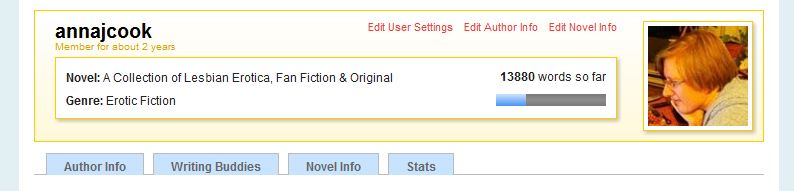
So they have the widgets up this week, but I’m not sure I’m all that thrilled with them. The color scheme is unimpressive. Still. Here ya go. As of this morning I have 13,880 words written toward the official goal of 50,000 and my personal goal of 25,000.

I like the screenshot a bit better. Perhaps I’m just vain?

This past weekend, I wrote a 3,300 word “plot? what plot?” bit of fan fiction at the request of a friend of mine, which accounts for a fairly large chunk of the total gain made. I’ll probably edit it tomorrow evening and post it to AO3 if anyone is feeling deprived of Sybil/Gwen smut and wants something to look forward to for mid-week. It’s about as plot-what-plot as I think I’ll ever be capable of writing. Let’s just say it involved doing some Google searching for the date upon which the zeppelin raids began on London (to ensure that leisurely morning sexytimes wasn’t historically inaccurate) and to verify the name an inception date for Sylvia Pankhurst’s East London Federation of Suffragists (yes, the acronym really was ELFS).

Happy writing everyone!

booknotes: women in lust

13 Sunday Nov 2011

Posted by Anna Clutterbuck-Cook in book reviews

≈ 1 Comment

Tags

feminism, gender and sexuality, smut, virtual book tours, writing

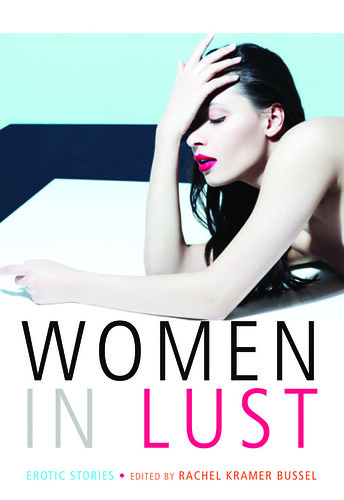
Today, I am participating in the virtual book tour for Women in Lust, a new erotica anthology edited by Rachel Kramer Bussel and published by Cleis Press. I’ve written straightforward reviews of erotica anthologies before, as well as using them as starting-points to muse about erotic writing more generally. This time I wanted to mix it up a little and followed up on Rachel’s offer to connect the virtual tour bloggers with anthology contributors for an e-interview.


Writer Donna George Storey was gracious enough to take the time to respond to my emailed questions with her thoughts about writing erotica professionally and what power erotica has to inform our lives. I hope you find her responses as thought-provoking as I did.


Without further ado, here’s Donna.


“My desire made me more interesting to myself.”
an interview with Donna George Storey  

Anna: You describe yourself as an academic turned erotic fiction writer. Can you say a little bit about how you made that shift? What prompted you to begin writing erotica, and then to make it a part of your professional life?

Donna: As far back as I can remember, I’ve loved to lose myself in a good story and dreamed of writing my own fiction.  However, I also internalized society’s messages that few writers make a living from their passion and most become staggering alcoholics, so it was safer to channel my love of words into an academic appreciation of the works of accepted “great authors.” The exoticism of Japanese literature, and the challenge of simply reading those intricate Chinese characters, kept me enthralled for a while, but deep down I felt I was ignoring my true calling.  I finally found the courage to write seriously when my first son was born, and I took a temporary break from teaching—which ended up being permanent.  Motherhood is supposed to drain you of all erotic and intellectual energy, but for me the opposite was true.

Donna’s collection of erotic literature and reference books related to Japan.
Photo by Donna George Storey, used with permission.

From the start my stories flirted with sex, but it took about a couple of years of practice before my stories were so steamy, I could no longer submit to proper literary magazines.  Yet I found being a “bad girl” immensely liberating to my creative spirit.  In spite of the erotica revolution in the 1990s when many talented authors and editors like Susie Bright and Maxim Jakubowski proved that stories with erotic themes could be smart, thought provoking and artistic, many people still assume sexually honest writing has to be poorly written, the kind of thing you hide under the bed.  My goal is to write stories that challenge that stereotype, stories that respect the complexity of the pleasures of body and mind.  Few mainstream authors are comfortable writing about sex in a way that celebrates its positive aspects (notice how often sex is coupled with punishment, betrayal, violence or other negative consequences in mainstream culture).  There are many erotica writers who do it bravely and beautifully—but we need more.  It changed my life and opened my senses in ways I’d never imagined, and I highly recommend it to everyone!

Anna: The story included in Women in Lust, “Comfort Food,” uses recipes and cooking as part of the seduction — and the end goal of the seduction, even. Can you talk a little bit about why you chose to write a piece centered around preparing and eating food? What was the immediate inspiration for this particular story?

Donna: When I’m not writing erotic stories, I love to cook, although I spend even more time salivating over beautiful cookbooks, a sort of culinary porn.  As I considered your question, I realized that my stories are also like recipes in that I’ll take an image that intrigues me and mix it together with a childhood memory, a touch of a lifelong hobby, and a few juicy tidbits from friends, then add a cup of my own libido to finish it all up.   “Comfort Food” is somewhat different from the common sex-and-food story involving lovers smearing whipped cream all over each other–which is fun, but messy!  In keeping with the female empowerment theme of Women in Lust, the story deals with a middle-aged woman’s fascination with a young chef and his secret pudding recipes.  He poses a challenge for her, but of course she gets everything she wants in the end.

There’s one line in this story that’s a particular favorite:  “My desire made me more interesting to myself.”  One of my many discoveries as an erotic writer is that sensual pleasure doesn’t have to be confined to the genitals.  Appreciating the sweetness of a ripe berry can be equally bewitching.  Yet enjoying food without guilt is as frowned upon in our society as enjoying sex without guilt, so that parallel also drove the story.  Last but not least, anyone who has a passion is very sexy to me, and good cooks by definition care about what they do.  Cooking is a form of communication, and I swear I can taste the love and dedication or lack thereof.  I once had an absolutely amazing dish of butterscotch pudding at a fancy restaurant in San Francisco called Fifth Floor.  I didn’t ask for the recipe, but I wish I had.

Anna: When I write about erotica and pornography as a blogger, I often get comments asking me for reading/viewing recommendations that are “women friendly” or “feminist.” Where do you go for good-quality erotic literature? Any suggestions for my readers about places to seek out reading matter?

Donna: Yes, I definitely have some recommendations.  Cleis Press and Seal Press publish smart, well-written and very hot anthologies that celebrate female pleasure—anything edited by Rachel Kramer Bussel, Violet Blue and Alison Tyler are sure bets.  Online magazines are a great place to sample different authors without commitment.  Clean Sheets (www.cleansheets.com) tends toward the literary, you can always count on good, sexy writing.  Oysters and Chocolate (www.oystersandchocolate.com) is edited by two wonderful women, Jordan LaRousse and Samantha Sade who embrace all varieties of stories.  Since I began writing, I’ve come to appreciate the sensibility an editor brings to an anthology.  It’s more than just fixing typos.

Anna: One of the things I’m fascinated by as a reader/amateur writer of erotic fan fiction and original erotic stories is the relationship between peoples’ sexual identities/experiences and the type of erotica they write or choose not to write. For example, there are straight and bisexual, even lesbian, women who write/read almost exclusively m/m erotica. I’m curious whether you write exclusively female/male erotica or whether you write other pairings (or groupings), and why you choose to write the pairings (or groupings) you do.

Donna: I’m fascinated by the same relationship myself.  Interestingly enough, the second most common question I hear after “are you published?” is “are your stories based on real life?” I actually do make use of material from my experience for many of my stories, but I take a lot of liberties with the facts, and none are strictly memoir.  No matter how realistic, erotic stories are fundamentally erotic fantasies.  Even if you aren’t peeping into the author’s actual bedroom, you are definitely getting a peek into her imagination and what really turns her on.  In a way, my readers are more intimate with me than many of my lovers have been.

When I write, I’m aiming to get at the hidden truths of sexuality, which is why I write mostly what I know, heterosexual sex, and why the wilder couplings are often explicitly presented as fantasy rather than reality.  On the other hand, it’s a big turn on to write and read about something you would never, ever do in real life.  That’s the power of fiction, to try on different lives.  So I have also written stories way outside of my experience.  I’ve noticed a trend of scenarios where a woman sleeps with two men, her maidenly reluctance completely overcome by her lover’s insistence that she enjoy sex with a hot stranger.  How can she say no to the man she loves, especially if he’s ordering her to be a slut?  It’s the perfect way to have your pudding and eat it, too.

Yet, I value authenticity and honesty in erotica.  I’d rather read a story written by a lesbian that gives me insight into her sensibility and experiences than something churned out by a guy who’s getting paid a penny a word for some hot girl-on-girl action.  Perhaps it’s my grounding in 70’s feminism, but part of me feels it’s a violation for a straight person to impersonate someone with a different orientation unless they approach it with great respect and sensitivity.  GLBT voices have been silenced for so long, it’s time to celebrate the chance for those who’ve been marginalized to tell it like it is.

That said, I have written a couple of lesbian stories that seemed to pass as believable.  My favorite is entitled “Ukiyo,” about a Japanese literature professor who takes a jaunt through Kyoto’s pleasure quarters with a colleague as an honorary man and finds herself becoming intimate with a female dancer.  I drew upon my own genuine curiosity and attraction to women, as well as a few actual drunken nights in Japan where my usual inhibitions were especially soft.  There was enough truth and genuine desire, I suppose, that Susie Bright chose the story for Best American Erotica 2006.

Anna: Are there any particular tropes in modern erotica that you wish would just go away?

Donna: I do have a particular pet peeve, which also happens to be a very common scenario in erotic fiction.  You lock eyes with a stranger at the bus stop or in a club, immediately retreat to an alley or public restroom, and have the most mind-blowing sex of your life without a word spoken.  I understand why this sort of zipless fuck is a popular fantasy—seduction is hard, knowing someone intimately is harder–but this particular type of story leaves me cold, bored, and unable to suspend disbelief.  I like to be warmed up first, even in fiction.

Anna: What are some of the things you wish we would see more of in erotic writing?

Donna: What I’d really love to see more of doesn’t have to do with a particular theme or kink, it’s about who writes erotica and why.  Until I started writing erotica myself, I thought of sexually arousing material as “out there,” images created by Hollywood or the porn industry, or naughty letters in Penthouse.  But writing erotica encouraged me to pay attention to my sexual response and my lover’s in a whole new way.  It was a tremendous awakening and took us to a new level of intimacy and enjoyment.  I realized how much sexual power and creativity was within me, not out there.
Donna George Storey
Photo by Laura Boyd, used with permission

The stories that blossomed from my imagination were an education as well.  Because of my writing, I’ve come to realize that sexual fantasy is not just a straight reflection of what you desire, it’s like a foreign language you have to decode.  Getting turned on by being dominated, as in the example above where the husband commands the wife to sleep with another man, does not mean you literally like or want to be dominated in all aspects of your life.   I now read this fantasy of mine as a way for my libido to borrow power relations in real life, where a good woman is only allowed to be sexual in relation to a husband.  But then something cool happens in my heated brain—the authority figure is transformed into someone who now allows  and insists on pleasure.   The same is true with exhibitionist fantasies, which are really about showing a hidden sexual self, not breaking genital exposure laws.  Sexual fantasy might seem taboo and outrageous, but at the heart is permission and acceptance of one’s eroticism.  That discovery has been very reassuring for me.   Even if you aren’t into this kind of analysis, just paying attention to what turns you on is fascinating.  How do you set up a gateway into your erotic world?  What point in the story is the climax?  How are figures in the real world transformed? (You’d never recognize my high school principal!)

As for the why you write, there’s lots of emphasis on publication as the test of a “real” writer, but the most meaningful erotica can be a private gift to yourself or your lover.  So, yes, I’d love to see more people exploring their erotic imaginations and writing lots of hot stories.  The world would be a much better place for it.


WOMEN IN LUST: You can read more about the Women in Lust anthology, and find excerpts of several stories contained therein, at the anthology website as well as purchasing copies from a variety of online booksellers including Amazon, Powells, or Cleis Press.

AUTHOR’S BIO:  Donna George Storey has taught English in Japan and Japanese in the United States.  She is the author of Amorous Woman, a very steamy novel about a woman’s love affair with Japan (check out the provocative book trailer).  She’s also published over a hundred literary and erotic stories and essays in such places as The Gettysburg Review, Fourth Genre, Women in Lust, Best American Erotica, The Mammoth Book of Best New Erotica, and Penthouse.

Cross-posted at The Pursuit of Harpyness. 

nano update: week one

09 Wednesday Nov 2011

Posted by Anna Clutterbuck-Cook in fandom

≈ 2 Comments

Tags

fanfic, fun, smut, writing

The NaNo site doesn’t have word count widgets this year, so I resorted to a screenshot this morning. I’m actually further along than I thought I’d be at this point — so yay?

I’ve been working on two new installments of my How She Loved You series (posted at AO3), which is Sybil Crawley/Gwen fan fiction series building loosely on the events from season one of Downton Abbey and, you know, inventing liberally thereafter. I’m currently about 5K and three sections into a 5+1 fic (“Five times Sybil and Gwen parted before dawn and the first time they didn’t have to”), a piece about Sybil painting Gwen’s portrait, and a longish plottish piece filling in Gwen’s back story (complete with Tragic First Love).

Hanna, as usual, has demanded there be orgasms at regular intervals for both main characters, so for those of you yearning after femslash rest assured that this is Porn With Plot and/or Plot With Porn on an installment-by-installment basis.

Any of you participating in National Novel Writing Month? How’d the first week go for y’all this year?

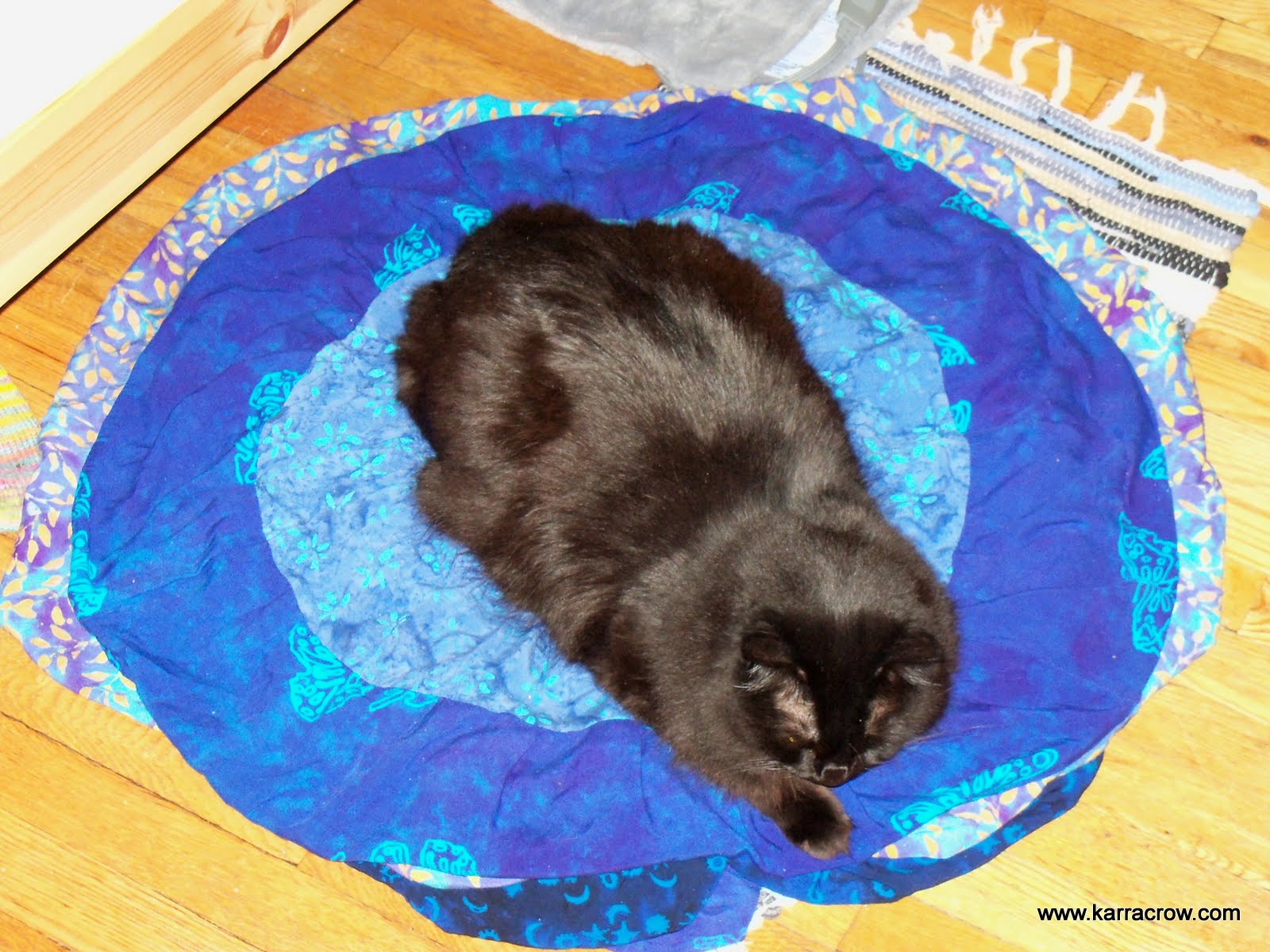
from the neighborhood: gratuitous cat blogging

07 Monday Nov 2011

Posted by Anna Clutterbuck-Cook in our family

≈ Leave a comment

Tags

cat blogging, from the neighborhood, photos

Photos selected by Hanna. Cross-posted at …fly over me, evil angel ….

Cat picspam!

nanowrimo 2011 commencing in 3…2…1…

01 Tuesday Nov 2011

Posted by Anna Clutterbuck-Cook in fandom

≈ 4 Comments

Tags

blogging, books, fanfic, writing

Today is November 1st and thus the beginning of National Novel Writing Month 2011. As I wrote at The Pursuit of Harpyness last Thursday, I’ll be participating this year for the second time (my first year being 2009).

For those of you unfamiliar with National Novel Writing Month, basically it’s an opportunity to join thousands of other amateur fiction writers in solidarity as you try to write 50,000 words of fiction between midnight on November 1st and 11:59pm November 30th. A lot of people attempt a full-length novel, but me I’ve got some fan fiction planned and maybe some non-fanfic erotic short stories I’ve had kicking around for a while in the back of my brain. We’ll see. I’m not particularly gunning for the full 50k, but I’d like to contribute as many words as possible to the overall pool of creativity the event sparks. So … the upshot is that y’all may not be seeing so much of me between now and the end of the month. My goal is to keep writing at least one post a week here at the feminist librarian — either a book review or a “thirty at thirty” post. I’ve already got a virtual book tour event later in the month that I’m committed to (Rachel Kramer Bussel’s new anthology Women in Lust!) as well as a couple of advance review items I want y’all to know about (Gayle S. Rubin’s collection of essays, Deviations, and Jeanne Cordova’s memoir When We Were Outlaws). So look for those reviews in upcoming weeks. I’ll also continue posting links at the feminist librarian reads and writing at least one post a week over at The Pursuit of Harpyness. Hanna and I also continue to post three fan fiction recommendations per week at everything is gay and nothing hurts. Plus, obviously, harassment by email is always an option for those of you who miss me!
In the meantime, I hope all of you have a cozy and creative November — and we’ll be back to our regularly scheduled programming sometime around December 1st.

multimedia monday: "automobile row"

31 Monday Oct 2011

Posted by Anna Clutterbuck-Cook in media

≈ Leave a comment

Tags

boston, history, multimedia monday

Hanna and I live in the Allston neighborhood of Boston, just west of Boston University’s main campus. Commonwealth Avenue stretches from Kenmore Square (near Fenway Park) to Boston College out in Newton. We live in an apartment building sandwiched between Comm Ave to the north and the town line of Brookline to the south, and the neighborhood in this little documentary is one through which we walk and ride the “T” on a regular basis:

The Kenmore Square building that now houses Barnes & Noble at BU was home to a dealer of Peerless automobiles. The Star Market by Packard’s Corner was once a Chevrolet dealership. And in between lay more than a mile of storefronts selling cars, parts, and accessories or repairing cars. In the 1920s there were more than 100 such businesses on and near that strip of Comm Ave. Downtown Boston had its “Piano Row” and its “Newspaper Row.” This was Boston’s “Automobile Row.”

 
The article which accompanies this video is quite interesting in its own right. I’m really impressed by the research that went into making the video — obviously a few people spent some time in the BU college archives! — and the way in which the historical images were edited into the present-day footage.

first thoughts: being interviewed about sexuality + society

28 Friday Oct 2011

Posted by Anna Clutterbuck-Cook in life writing

≈ 2 Comments

Tags

boston, gender and sexuality, religion

On Wednesday evening I sat down for two hours to speak with Holly Donovan, a PhD candidate in Sociology at Boston University. Holly is conducting interviews with LGBTQ-identified folks in the Boston area as part of her research on sexuality, religion, and community. If you identify as queer and live in the Boston area, check out her call for participants, which she asked me to pass along. For me, it was a unique opportunity to be on the opposite side of the microphone: usually I’m the one asking the life history questions!

tea is essential for good conversations

For the next three weeks, I’ll be completing phase two of the project — keeping a journal of observations and thoughts about my experience of being queer in Boston — but for now, I thought I’d share some initial reflections about our conversation.

Life narratives are inherently chaotic on the first go-around. Unless you’re focused on a very specific aspect of your life (and even then, as my OE oral history project shows, things can get out of hand very quickly) it’s fairly impossible to tell a linear story that encompasses all of the salient details of what goes into making a person. Even with the keywords “sexual orientation,” “religion,” and “social interactions” that’s a hell of a lot of territory to cover! I found myself skipping around a lot in time and missing stuff that was probably important. I woke up around 3am on Thursday morning and was mentally adding things to the “remember to tell her next time …” list.

My sexual orientation isn’t a primary identity category for me; being in a sexual relationship was much more of a turning point. This might seem weird, given the amount of time I spend thinking and writing about human sexuality — but I think that’s kinda the point. In my own personal life, there’s feminist politics (of which rights for non-straight folks were long a part of my political interests), there’s queer and sexual history (which I’m engaged in as a scholar), and then there’s the whole my-life-as-a-sexual-being thing. Which is awesome. But doesn’t really have so much to do with orientation as it does with physical experience, with relationships, with how I understand my sexuality as it relates to my ethics, my body, my interactions. In that space, I don’t think of myself as someone with a sexual orientation or identity — I just think of myself as (enthusiastically!!) sexual.

I don’t socialize in primarily queer spaces. Since one of Holly’s questions is about the interactions of queer-identified folks with straight-identified folks, I thought a bit before we sat down about my circles of friendship and the primary spaces where I socialize — both in person and online. Online more than in-person spaces are, I would say, “queer” (inasmuch as “queer” overlaps with “feminist,” which it sometimes does and sometimes doesn’t). But my circle of friends is pretty sexually and gender diverse, and they often overlap. That is, when Hanna and I get together with friends we don’t have our “gay” friends and then our “straight” friends. We have friends. We don’t socialize in spaces that are organized around sexual identity (i.e. gay bars or lesbian book clubs). Possibly because neither Hanna nor I were ever in search of an active dating scene? And I don’t think either of us has ever particularly yearned for the type of social solidarity of “safe” space that gay neighborhoods or social clubs might provide. The one exception to this is our health center, which we picked in part because of its history in LGBT health activism.

This isn’t exactly news, but opposition makes me feel defiant and irritable, rather than judged and cowed. When people are cranky about lesbian PDA, I have the urge to be more publicaly affectionate, not less. I’d argue that both my family background and my long-time singleness both contribute to this. By the time I entered into a relationship, I was much more confident about my presence in the world than I would have been in my teens. You don’t like what you see? Suck it up and deal.

I also don’t have reflexive fear about my physical safety, which is probably a whole tangle of social privileges I’ve experienced throughout my life: class, race, gender presentation, and so forth. Which ties into the idea of straight privilege that I’ve been turning over in my mind for a while now:

“Straight” privilege. I’ve put “straight” in quotation marks ’cause I don’t think it’s a function of being straight so much as being read as straight. Regardless of my own actual sexual desires, about which I didn’t speak about much growing up (except to very close family and friends) I was read as straight, as a single straight woman. I grew up assuming I had just as much right to be in public spaces, to be open about my relationships (sexual or otherwise), to speak up for my politics, as the next person. I think this is a function of race and class too. I’ve heard bi and fluid women talk about this in terms of their relative comfort level at being visibly queer in public relative to a partner who’s been in lesbian relationships longer — that a woman who’s moved through the world in straight relationships for a number of years has come to expect the right to openly acknowledge her partner, the right to kiss him or hold hands or cuddle in public and not only receive little negative feedback but actually get positive social responses. And therefore there’s less reflexive reserve, because they haven’t had to build up that mechanism for self-protection.

My family is awesome. Holly kept asking about negative social aspects of being out, and I couldn’t think of any. Yes, the obvious political/legal discrimination. But in terms of my family accepting my chosen partner on equal terms with my siblings’ partners — that was never a question. The fact she wondered if we were treated differently in my family actually took my by surprise. I mean, I got why she asked (I probably would have, being in her shoes), but that sort of behavior is so out of the realm of the way my family operates that I felt at a loss to explain why that just was never an issue.

My co-workers are awesome. I knew that already, but hadn’t really articulated it before talking with Holly. I’ve never felt unsafe about being openly in a lesbian relationship at work, either with my immediate colleagues or with the higher-ups in the organization. Hanna is my emergency contact, the secondary beneficiary in all my benefits paperwork, if we were married she’d be able to sign on under my health insurance plan, and so forth. People ask after Hanna and there’s no indication that they think of our relationship as any more or less significant in terms of workplace socialization than any of the straight partnerships that come up in daily conversation.

Choosing Hanna changed my relationship to West Michigan. Before Hanna and I got together, I could picture moving back to Michigan if the right job came open … I know how to survive as a political and social minority there (that was the story of my daily life as a child and young adult) but I wouldn’t ask someone else to live with that sort of hostility on a daily basis.  Well, that’s everything from my notes thus far. Now I have three weeks of journaling and a follow-up interview. I’ll be back mid-November with “second thoughts” and possibly “third thoughts” as well!

from the archives: historical games of telephone

26 Wednesday Oct 2011

Posted by Anna Clutterbuck-Cook in library life

≈ Leave a comment

Tags

archivists, history, humor, MHS

I don’t have the mental oomph this week for a thirty at thirty post, so I thought instead I’d offer you a little anecdote from the Reading Room of the Massachusetts Historical Society. It’s a fascinating example of how historical sources can be unreliable, and knowledge with think we all know turns out to be factually far more complicated than it appeared at first glance.

via

Yesterday afternoon I took a call from a researcher who was looking to source a quotation about Horace Mann. The researcher gave the quote to me over the telephone as follows

Education really consists of a student on one end of a log and Horace Mann on the other end of the log.

The researcher wanted to find out who had said this. I took their contact information and this morning when I was in the Reading Room I spent some time digging around to see what I could find.


My first stop was the online version of Bartlett’s Quotations, to look up any familiar quotations with “Horace Mann” in or associated with them, since this was my one concrete lead. (The MHS does, in fact, hold a large collection of Horace Mann papers, but since this was a quotation ostensibly about Mann rather than by Mann, I set aside the possibility of wading into those waters until later. Turns out this was a good call!). Bartlett’s didn’t yield anything. So I decided to begin by verifying the wording of the quotation via that wonderfully inexact crowd-sourcing tool known as The Internet.


I navigated to Google.com and typed in “education really consists of a student on one end of a log” and hit search.


Yes, Librarians do it too, and yes sometimes it can actually be an incredibly powerful entry-point for research of this kind.


What I discovered from scanning the first page of results for this phrase was that it wasn’t Horace Mann whose name was most frequently associated with phrases along these lines, but a man named Mark Hopkins, who was the president of Williams College (Williamstown, Mass.) from 1836-1872.


Re-running my search with the “education…” phrase and “Mark Hopkins” took me to a Wikiquotes article on education, where the quotation is given as: “My definition of a University is Mark Hopkins at one end of a log and a student on the other,” and the attribution is described thus:

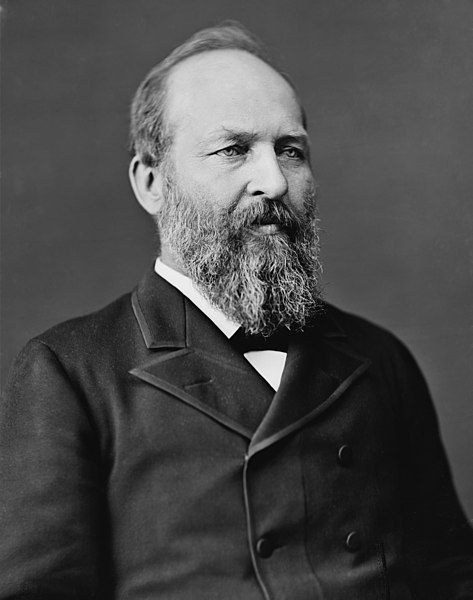
Tradition well established that James A. Garfield used the phrase at a New York Alumni Dinner in 1872. No such words are found, however. A letter of his, Jan., 1872, contains the same line of thought.

I now had a tentative identification for the individual named in the quotation as well as a possible identification for the individual who had spoken the words.

via

A search in Google Books and the Internet Archive for various combinations of keywords from the above yielded some fascinating permutations of the elusive quote on education:


The January 1902 issue of the Western Journal of Education contains an address by one E.F. Adams in which he claims, “When President Garfield said that when Horace Mann was on one end of a log and himself on the other there was a university he expressed the spirit of the old education” (p. 18).


In a 1966 issue of the education magazine Phi Delta Kappan, Arthur H. Glogau again attributed the quotation to President Garfield and writes “Garfield once said that a rotten log, with Mark Hopkins on one end of it, and himself on the other, would be a university” (Vol 48, p. 404). The date for the quotation is given in this instance as 1885.

Mark Hopkins was one-time president of Williams College and apparently a former professor of Garfield’s. In a footnote concerning Hopkins in The Collected Prose of Robert Frost, the editor formulates the quote as: “The ideal college is Mark Hopkins on one end of a log and a student at the other” (p. 266).

Since none of these sources either quote Garfield directly or provide a citation to his own writing or speeches, I turned to our own catalog, ABIGAIL, and called for a biography of Garfield from our reference collection.

Unfortunately, this didn’t exactly clear up the mystery.

Robert Granfield Caldwell’s James A Garfield: A Party Chieftain (1931), attributes the quote to another secondary source, B.A. Hinsdale’s President Garfield and Education (1882), and phrases it: “Give me a log hut, with only a simple bench, Mark Hopkins on one end and I on the other, and you may have all the buildings, apparatus and libraries without him” (p. 185). 


This citation appears to lead us back to a 4 February 1879 speech by Garfield before the National Education Association, the full text of which is reproduced in the Hinsdale publication. You can read it online at the Internet Archive. In his NEA address, Garfield articulated the idea in this way:

If I could be taken back into boyhood to-day, and had all the libraries and apparatus of a university, with ordinary routine professors, offered me on the one hand, and on the other a great, luminous, rich-souled man, such as Dr. Hopkins was twenty years ago, in a tent in the woods alone, I should say, ‘Give me Dr. Hopkins for my college course, rather than any university with only routine professors’ (338).

So now I have four dates upon which this sentiment was supposedly expressed (1871, 1872, 1879, and 1885) and as many venues (New York Alumni dinner, private correspondence, NEA address, and an unknown context for the 1885 attribution). 


What I find fascinating about all of these “quotations” is the aspects of the story that remain roughly constant: the presence of Hopkins, the image of one mentor and one student in dialogue, the language of wood: a log, a log bench, a rotten log, a tent in the woods. My speculative guess, based on the information I have in front of me, is that this was a well-worn anecdote that James Garfield told about his former professor in a number of settings, and that the image was such a striking one to his contemporaries that it was picked up and repeated over time with slight variation, like that game of telephone you’re forced to play as a child at birthday parties where you whisper a message from ear to ear around the circle and see whether the end result bears any resemblance to the original phrase.

So there you have it: an hour or two in the life of a reference librarian. 

four years ago today: "something like the five stages of grief"

24 Monday Oct 2011

Posted by Anna Clutterbuck-Cook in life writing

≈ Leave a comment

Tags

four years ago today, hanna, MHS, simmons

Part of an ongoing series of posts highlighting primary source material from my first semester at Simmons during the fall of 2007.


From: Anna
To: Janet
Date: Wed, Oct 24, 2007 at 2:51 PM
Subject: Mid-week touchstone 

Dear Mum, 

I’m sitting at the Mass Historical Society desk for the afternoon. Being here reminds me of all those hours I spent in middle school doing “homework” in the Holland Museum lobby, waiting for tourists to appear :).

This is my second full day at the MHS. This morning, I was photocopying papers, I turn to the next paper, and what do I see? A letter from M. Cary Thomas — turn of the century woman scholar, educated at Johns Hopkins, founder of Bryn Mawr college — written in her own hand when she was president of Bryn Mawr! Oh. My. God. It’s so surreal just to find something like that, and know once she was holding it, and then find myself putting it on the photocopier!

at the front desk of the MHS (October 2008)

It’s strange and not at all comfortable (given my personality) to be a novice at this job. I have certain skills to draw on, of course, but there is so much to learn in terms of the conventions of an archives versus a bookstore or library or museum. Particularly, there is so much more need to monitor the documents, since they are moving around the building — rather than in stable exhibits — and are one-of-a-kind, extremely rare items. So I am learning new procedures as well as the usual learning of everyone’s names, and where the bathrooms are located, and how to use the email system, etc.

I am enjoying it, although it’s been a rough few days physically, which puts a damper on my mood. While usually my cycle isn’t particularly taxing, it can be a bad combination if I’m already weary (which is just the general state of things this fall . . . I know it will be got through, but annoying while it lasts). Headaches, which lead to Excedrin which leads to insomnia, etc. Yesterday, I intentionally drank coffee like a fiend in the afternoon to keep myself going through my book review assignment (more below), so today I’m feeling rather hung over (and it’s a long day, with class this evening from 6-9). Whine whine whine. 

I wrote this book review, which for some unknown reason (or reasons) I’ve been dragging my heels about for three weeks and absolutely panicked about finishing. I think it became a convenient locus for my anxieties. For a few days, I couldn’t even think about the project without panicking and/or falling asleep (which is my physical defense mechanism–I literally can’t stay awake). And then, it came down to last night, when I was pretty willing to just blurt on paper and print it out to turn in. I didn’t even really proof it. Oh, well. Not my finest scholarly hour, but I sort of feel like I can afford to have an off-semester as I’m getting adjusted. I can’t imagine (my own hubris, I know) that an “off” semester will be anything worse than “B” work. And I know my history class — where I put my best energy — will be a clear “A” (again, hubris) so I’m not too anxious in terms of keeping my scholarships. 

I was thinking last night (haha) that my approach to academic projects is something like the five stages of grief: (1) I have totally unrealistic self-expectations about what I can get done and what I want to get done (denial); (2) when it becomes clear that I’m not going to get my ideal project done, I start resenting the project and the professor, and castigating myself for the unrealistic expectations (anger); (3) I debate internally with myself over what sort of project that’s less-than-ideal I can get done, and maybe argue with the professor about altering the assignment (bargaining); (4) if none of these approaches work, it’s time to start despairing about the entire educational system and wondering what I’m doing there, and imagining I will never complete the assignment and probably drop out of school (depression); (5) finally, when I get tired of feeling crummy and/or it gets down to the wire, I finally give up on the ideal project altogether and just patch something together (acceptance). 

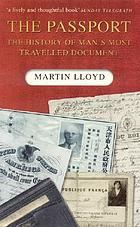
The book I had to review was actually quite interesting, so I’m not entirely clear why I got hung up about it. It was on the history of passports, and there’s lots to say about the history of identity papers, and how they relate to actual persons, and how they connect persons to governments. Part of my problem was no doubt lack of FOCUS, which is usually provided for smaller assignments by class discussion and course readings–but in this case the assignment was poorly written and I just got off on a muddled foot.

I think, in general, it’s been like pulling teeth intellectually to focus on abstract intellectual ideas right now, with so many external changes going on. I’ve never been good at focusing in the best circumstances, which for me means an utterly non-distracting environment (why I can’t study in libraries, ironically enough, since they’re not spaces I can take for granted and ignore). Well, right now, my whole world is a distracting environment! So I feel lucky when I manage to have a more or less coherent thought that’s defined enough to put into a short response paper :).

I had coffee with Hanna Monday night — her initiative!! — which was really good, I think, and have “dates” scheduled with both her and G for next week. I realized that, even though I treasure the alone-time, I can get too wrapped up in my own self-critical monologues re: my graduate work, etc., when I spend every moment I’m not in class or at work by myself. It’s easy for me to forget that fellow students can actually bolster my mood and energize me (as well as reminding me how unrealistic my expectations for my own work might be :)!) since 90% of the time, they aren’t very helpful. But a few well-chosen comrades can make a difference. 

Happily, my own well-chosen comrades (H and G) are going to be in the same history class next semester, and have convinced me to be in it as well . . . so hopefully the collaborative energy will be exponentially enhanced :). G is also taking oral history, which I will be doing as well, so I’m looking forward very much to the spring. I’ll probably panic when the time comes, and go through the predictable cycle (see above) anyway, but right now I can idealize things to my hearts content! 

I really hope you and Dad are able to make a trip to Boston in the spring. I’m already haphazardly collecting little things to do . . . eg the Wednesday morning art tour at the MHS, which I was given privately today, and very much enjoyed; and a visit to the Brookline Booksmith, my favorite independent bookstore so far . . . apart of course, from showing you my own spaces, and the museums and lovely parks that abound. Hm, and places to eat! I walked past a pub this afternoon called “The Foggy Goggle” which I think is just begging to be tried! 

I was asking Dad about filling my levothyroxin prescription online; I may at some point soon ask if you could pick up a refill at Model Drug (where my current prescription is), unless it seems easy to get a new prescription from Krayshak’s office. Dad says it shouldn’t be difficult to send it out here. And I’d reimburse you, of course. 

North Hall, Simmons Residential Campus

Tonight is the first game of the world series, so the neighborhood is going to be bustling! Since I’m on foot, I don’t anticipate much trouble, and I live just far enough away that the noise doesn’t wake me up (living on the res campus, I think, insulates me from the street just enough).

That’s about all the news around here . . . I’m going to sign off and see if I can catch up on a couple of other emails before the end of my shift, 

Love, 
Anna

booknotes: october round-up

21 Friday Oct 2011

Posted by Anna Clutterbuck-Cook in book reviews

≈ Leave a comment

Tags

subject verdict

I’ve been reading lots lately, without a lot of time to write substantial review posts. So here’s another one of those massive “stuff I’ve been reading” posts that I find myself obliged to write several times a year. Alpha by author because I’m organizational that way at times. It’s the librarian thing.

Eagleton, Terry. Why Marx Was Right (New Haven, CT: Yale University Press, 2011). So I’ve read a bit of Marx and generally think of myself as a socialist-minded leftist — when I think of myself in those types of political terms at all. But I’m not really all that clear about what makes Marxism unique among all of the other theories and practices of socialism and communism that exist in the world. Which is where Eagleton’s theory-heavy but still readable primer on Marxism was worth the read. Also he works in the phrase “a pathological obsession with penguins” and explains why this is perhaps not relevant to the class struggle. Mr. Eagleton, sir, I’d say you win all the things if this turn of phrase didn’t seem ill-conceived given the subject at hand.

Hale, Grace Elizabeth. A Nation of Outsiders: How the White Middle Class Fell in Love With Rebellion in Postwar America (New York: Oxford University Press, 2011). Hale’s history explores the different conduits by which white middle class Americans came to identify with “outsiders” between the 1950s and the 1980s, beginning with the publication of Catcher in the Rye and ending with an examination of Randall Terry’s anti-abortion organization Operation Rescue.  I found a lot of interesting stuff here, particularly Hale’s inclusion of conservative as well as liberal sources — white Civil Rights activists and folk musicians are well-trod ground, but the Jesus freaks are an under-explored phenomenon.  My one frustration with Hale’s treatment is that she tends to talk in broad general categories — i.e. “white middle class Americans” and “outsiders” without acknowledging that despite economic and racial privileges, not all white, middle-class folks were appropriating outsider identity — there were a lot of ways to experience marginalization in postwar America, and I feel those complications get short-shift. I would also have been pleased to see more in-depth discussion of the process by which flirtation with outsider identity prompted many white and middle-class people to actually become marginal outsiders in deed as well as word. Still — a truly thought-provoking recent read.

Maguire, Seanan. Rosemary and Rue (New York: Daw, 2009) and A Local Habitation (2010). Rosemary and Habitation are the first two volumes in a series of novels about changeling October “Toby” Daye, San Francisco-based private investigator and knight pledged to Daoine Sidhe Duke Sylvester Torquill of the Summerlands. You can tick off a lot of urban fantasy boxes for this series, and in addition to the satisfaction of the familiar Maguire consistently digs a little deeper into her stories and characters than strictly demanded in one’s popcorn fiction. There are no easy answers few heroes or villains without a whiff of moral dubiousness. I already have the third installment on order at the Brookline Public Library!

Moreno, Jonathan D. The Body Politic: The Battle Over Science in America (New York: Bellevue Literary Press, 2011). This was an advance review book I snagged via Early Reviewers on Library Thing. Moreno is a bioethicist at the University of Pennsylvania, and I suspect this primer was meant to serve as a classroom text, introducing students to key controversies at the intersection of biology (particularly human biology) and politics. It suffers from many of the shortcomings that other such introductory texts suffer from: summary treatment of thorny questions due to space limitations, a limited number of citations, and strongly-worded assertions meant (I assume) to provoke discussion for which scant evidence is given. I felt like the book suffered from poor organization — the text seemed to jump back and forth between historical narrative and issue-based sections, with little transition. The brevity of the text itself might be offset to great effect by the inclusion of a narrative bibliography or “further reading” section, neither of which were in evidence in the uncorrected proof. I’d argue that more valuable contributions to the field have been made by such authors as Michelle Goldberg (The Means of Reproduction) and Debora L. Spar (The Baby Business) — though granted, my knowledge in this area leans heavily toward reproductive technologies as well as the broader the right to bodily autonomy and health decision-making.

Priest, Cherie. Hellbent (New York: Spectra, 2011). I reviewed Bloodshot earlier in the year and was excited when the second installment of the Cheshire Red Reports so close on the heels of volume one. Hopefully there will be many more to come! Hellbent follows the continuing adventures of vampire and thief-for-hire Raylene as she and her chosen family of misfits hustle to keep themselves safe and financially stable in the midst of growing tensions in the vampire community and the appearance of a mentally unstable witch. Totally anticipating volume the third.


Smith, Christian. Christian America? What Evangelicals Really Want (Berkeley, CA: University of California Press, 2000). Now over a decade old, this book contains an analysis of over 100 lengthy interviews with self-identified evangelicals from across the nation in which the interviewees were asked to articulate their beliefs about Christian faith and practice as it relates to American political life and culture. Smith’s analysis of the data feels slightly heavy-handed in the “Evangelicals are not all close-minded bigots!” direction, but the data and first-person narratives will still be useful to people seeking to understand the worldviews of American evangelical Christians in the mid-1990s.

Sonnie, Amy and James Tracy. Hillbilly Nationalists, Urban Race Rebels and Black Power: Community Organizing in Radical Times (New York: Mellville House, 2011). Sonnie and Tracy have taken on the ambitious project of documenting the experiences of a number of white working class community organizers in Chicago, Philadelphia, and New York City during the 1960s and 70s. They set out to challenge the common assumption that poor and working-class whites of the era were knee-jerk racists who felt efforts to end racial discrimination translated into loss of (white) jobs in already-struggling urban areas. “These men and women understood that ending racism was not a threat or an act of charity,” they argue, “but a part of gaining their own freedom” (5). The extensive research represented in this book is a valuable contribution to the scholarship in this area, and I found it particularly interesting to read in tandem with A Nation of Outsiders, since Sonnie and Tracy chronicle many of the same events, but from the perspective of the outsiders themselves — rather than those who sought to romanticize them.

Taormino, Tristan (ed.). Take Me There: Trans and Genderqueer Erotica (New York: Cleis Press, 2011). I wrote a review of Take Me There over at Harpyness; you can also read an interview with Tristan Taormino at Lamda Literary. Erotica anthologies are always particularly tricky to review given that the unevenness of any anthology is compounded by the very personal nature of ones likes and dislikes when it comes to sexually explicit material. Suffice to say, there were some stories I liked, some I didn’t, and I’m looking forward to further expansion of the subgenre. In the meantime, may I recommend Julia Serano’s “Small Blue Thing,” “Now, Voyager” by Rahne Alexander, “The Visible Woman” by Rachel K. Zall, and Patrick Califia’s “Big Gifts in Small Boxes” — all of which can be found in Take Me There.

← Older posts
Newer posts →
"the past is a wild party; check your preconceptions at the door." ~ Emma Donoghue

Recent Posts

  • medical update 11.11.22
  • medical update 6.4.22
  • medical update 1.16.2022
  • medical update 10.13.2021
  • medical update 8.17.2021

Archives

Categories

Creative Commons License

This work by Anna J. Clutterbuck-Cook is licensed under a Creative Commons Attribution 3.0 Unported License

Meta

  • Create account
  • Log in
  • Entries feed
  • Comments feed
  • WordPress.com

Blog at WordPress.com.

  • Subscribe Subscribed
    • the feminist librarian
    • Join 37 other subscribers
    • Already have a WordPress.com account? Log in now.
    • the feminist librarian
    • Subscribe Subscribed
    • Sign up
    • Log in
    • Report this content
    • View site in Reader
    • Manage subscriptions
    • Collapse this bar