• anna j. clutterbuck-cook
  • contact
  • curriculum vitae
  • find me elsewhere
  • marilyn ross memorial book prize

the feminist librarian

the feminist librarian

Author Archives: Anna Clutterbuck-Cook

multimedia monday: facebook privacy on ‘on the media’

07 Monday Jun 2010

Posted by Anna Clutterbuck-Cook in media

≈ Leave a comment

Tags

multimedia monday, web audio

While I mostly use facebook to occasionally look up contact information rather than do the sort of social networking it was designed for (that’s what email, blogger, and twitter are for in my humble opinion), I liked this recent interview with Ryan Singel on NPR’s On The Media about the dynamics of Facebook’s campaign for personal non-privacy on the internet.

Full transcript available at One The Media’s website.

What I particularly noticed is the point Singel makes about our society’s supposed desire for less and less privacy. There’s a lot of hand-wringing in the media about young people (“digital natives”) being less and less concerned about personal privacy. But what if it’s less a personal inclination and more that they (we) feel that loss of privacy is the price we pay for using the medium of the internet, which is inceasingly indespensible for moving through the world socially, politically, economically.

MARK ZUCKERBERG (audio clip): The Web is at a really important turning point right now. Up until recently, the default on the Web has been that most things aren’t social and most things don’t use your real identity. We’re building towards a Web where the default is social. Every application and product will be designed from the ground up to use real identity and friends.

RYAN SINGEL: Mark Zuckerberg likes to say that Facebook is just reflecting the changing privacy norms of the public, but Facebook is, I believe, forging that change, not so much reflecting it.

I think it’s a little self-serving of him to say that, you know, we’ve all become more public people. A large part of that has to do with default settings that Facebook gives us. We’re sort of being pushed into revealing more information. And now that Facebook is the place that these conversations happen, we kind of have to buy into that bargain just to be part of the conversation.

By and large I don’t move around the web anonymously: I blog under my own identity and comment on others’ blogs using my “annajcook” screen name which is just a mushed-together version of my real name. I use photos of my actual self in profile images.

However, I’m a big fan of this being my choice, and of knowing — when I sign up for a service — that I am able to understand the level of privacy or not-privacy that service is offering. And that I have a choice to opt in rather than opt out when those privacy settings change (which, let’s face it, on the web is pretty much inevitable).

I find it a real accessibility issue that we’re moving toward a web where “the default is social,” where the default is using one’s real identity, when more and more vital information is accessed through the internet — including information that people may not wish to seek out while embedded in real-life social networks. Information about getting out of an abusive relationship, for example, or answers to a question related to sexual activity or identity.

This is definitely a conversation taking place in the library community — how to help patrons navigate the new world of internet privacy concerns. I see it as a feminist issue as well, given the intersection of feminist politics with politics of vulnerable groups whose ability to maintain their privacy when desired is a legitimate safety concern in the real world (see the response to Gmail’s launch of Buzz earlier this year). Social networking on the web is an awesome tool, but it’s important that we enable folks to choose not to participate — without making them opt out of using the internet entirely.

Update: The week following the story shared above, On The Media again visited the issue of facebook and internet privacy, asking what the price of expecting anonymity of data might be.

The Cost of Privacy
May 28, 2010
Facebook changed their privacy settings this week after much vocal criticism. The settings are easier to control and more people will presumably change their settings to private. The media unanimously decided that this was a good thing, but Bob asks whether it’s that simple.

The two stories make an interesting comparison study, and once again I think OTM proves that it doesn’t settle for the media meme.

sunday smut: links on sex and gender (no. 25)

06 Sunday Jun 2010

Posted by Anna Clutterbuck-Cook in linkspam

≈ Leave a comment

Tags

gender and sexuality, sunday smut

First off, an internet pen-friend of mine, Natasha Curson, based in East Anglia, England, has started a new blog, Natasha Curson – a trans history, this week. From the inaugural post: “In 2007, after tussling with my gender identity for so many years, I was on the edge of giving up. I had almost accepted that I could never be happy, that there was no way of reconciling my everyday life with these inner feelings. Over the years I had dabbled with transgender clubs and support groups but even leading a hidden, second life I couldn’t come to terms with things. I couldn’t seem to find the people who felt like me, or so it seemed at the time. I was painfully shy about the things that mattered in both worlds. The real problem was, if I couldn’t admit something to myself, how could I discuss it properly with others?”

C.L. Minou @ Women’s Rights Blog points out that experiences of transgendered profs are a case study in sexism. “Before her transition, people who raised objections to her work never assumed that they were smarter than her, but now that is a common occurrence. Her access to university funds has dried up, and her salary stagnated since transitioning.”

Tracy Clark Flory @ Salon mused about how the feminist war over smut rages on and on…and on. “I dig the in-your-face, screw you attitude [of Violet Blue], and I consider myself a pro-porn feminist. So, if you detect a lack of enthusiasm, it isn’t because I think it’s a boring or unworthy aim. In fact, the intersection of feminism and porn makes for one of my favorite subjects, and it’s one I’ve been thinking, reading and writing about for most of my adult life. I just can’t believe we’re still debating whether porn is a good or a bad thing, feminist or antifeminist — as though it falls clearly into one clear, impermeable category.”

Amanda Hess @ The Sexist offers us an illustrated history of male chastity devices. Oh, yes, they made them. Definitely not for the faint of heart and possibly NSFW depending on your place of employment.

SQT @ Fantasy & SciFi Lovin’ News and Reviews opines oh the misogyny…are women in entertainment just ornamentation? (thanks to Hanna for the link). Short answer: no. SQT challenges the Ms. Magazine’s reading of Iron Man 2 as an expression of sexism in Hollywood, suggesting that it possibly has an edge of Sex and the City 2 when it comes to the portrayal of kick-ass female characters.

Jessica Valenti @ The Washington Post soundly denounces the fake feminism of Sarah Palin. Because she says it better than I can: “But, of course, Palin isn’t a feminist — not in the slightest. What she calls “the emerging conservative feminist identity” isn’t the product of a political movement or a fight for social justice. It isn’t a structural analysis of patriarchal norms, power dynamics or systemic inequities. It’s an empty rallying call to women who are disdainful of or apathetic to women’s rights, who want to make abortion and emergency contraception illegal, who would cut funding to the Violence Against Women Act and who fight same-sex marriage rights.”

Not everyone is so unambivelant about Palin being out of the club, however. Rebecca Traister @ Salon writes about feminisms tumultuous history of insiders and outsiders in Sarah Palin’s grab for feminism, concluding that “I am pretty damn nervous — more nervous than I’d like to be — about Sarah Palin’s grab at ‘feminism.'”

On the subject of being feminist, Amanda Marcotte @ RhReality Podcast had a great interview this week with Courtney Martin, who has recently co-edited a book called Click which is a collection of essays by young women reflecting on their feminist awakenings.

Lore Sjoberg @ Wired offers helpful tips in the nice guys guide to realizing you’re not that nice. “For some reason you think ‘nice’ means ‘completely devoid of sexual energy.’ When you’re attracted to someone, you treat her like you’re her brother. Her brother the priest. Her brother the elderly Victorian priest who is actually a large stuffed animal. Then when some guy comes along and does a little thoughtful flirting and actually gets her attention, you think ‘Man, that guy’s a jerkface.'” (hat tip to Alas, a Blog)

Earlier this week, I wrote a bit of a ranty post about men’s rights activists who miss the whole point about institutional sexism and intersectionality. Jill @ I Blame the Patriarchy tackles the same story in her own special way in MRAs on parade: chumpass motherfucker declares ownership of girlfriend’s uterus.

And I leave you with the always eloquent Aaron Sorkin @ The Huffington Post stepping up to the plate to defend (but not in the way you think!) Ramin Satoodeh as a theatre critic in now that you mention it rock hudson did seem gay.

image credit: untitled by Legominose @ Flickr.com.

future feminist teatime, otherwise known as "i’m really not as scary as i pretend to be!"

04 Friday Jun 2010

Posted by Anna Clutterbuck-Cook in our family

≈ 5 Comments

Tags

blogging, domesticity, fun

Welcome!

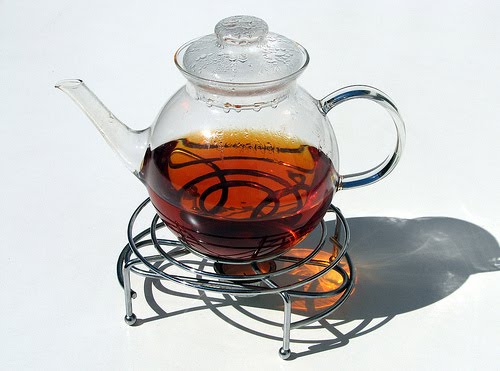
I’ve been getting an uptick in comments lately, and an increasing number of visits to the blog. So I thought it was time to put out the welcome mat, set out the pot of tea, and invite y’all who are lurkers and occasional commenters (yep, you!) to say “hi” and introduce me to your lovely selves.

I’ve just updated this blog (if you haven’t noticed) so that it now includes a page about me and my comment policy, such as it is. Not that I’ve been having recent issues, but I’d been dragging my feet for a while getting one together and I figured it was time.

So that’s me. Now it’s your turn! Please leave a comment — as long or short as you wish — telling me a little about yourself. Be sure to leave a link to your own blog, website, or other online presence if you keep one, and I’ll make sure to stop on by.

Peace,
Anna

image credit: teatime by benefit of hindsight @ Flickr.com

in which I have some thoughts on men, pregnancy, and parenting

03 Thursday Jun 2010

Posted by Anna Clutterbuck-Cook in think pieces

≈ 4 Comments

Tags

children, feminism, gender and sexuality, masculinity

There have been a couple stories in the news lately revolving around men and procreation that have caught my eye in the last couple of weeks, and due to the phenomenon known as “needing something to post about today” I thought I’d throw them together in a post and share a few thoughts about them — or, more accurately, about the cultural narratives and expectations about men and manhood they represent.

The first is a post by Mary Elizabeth Williams @ Salon that provocatively asks whether “men have a right to choose an abortion,” or, more accurately how much right they have to decide when and how to become a parent. Although she links to a story by Stephanie Fairyington @ Elle in which a man named George Bruell tried to pressure his girlfriend to have an abortion after she unexpectedly got pregnant after the couple (he thought) had agreed they didn’t want to have children.

The Elle article contains a lot of crap from anti-feminist “men’s rights activists” whose entire goal seems to be the struggle to free men from relational responsibilities supposedly forced upon their freewheeling selves by scheming women and their dependent children. Although updated for the 21st century, this is a narrative surprisingly reminiscent of virulently misogynistic views of women and families found in 1950s and 60s-era diatribes by men who were as unhappy with the postwar mythology of the Father Knows Best lifestyle as feminists, but rather than blame institutionalized sexism they blamed women and women’s essentially domestic, acquisitive nature that required men to work long hours to support a suburban lifestyle.

Like these postwar misogynists, the “men’s rights activists” in this story are not interested in dismantling sexist structures that warp expectations of heterosexual relationships; they’re not interested in fighting for better reproductive justice for all — they already think women have all the power and they feel aggrieved. As Fairyington writes of Mel Feit, head of the National Center for Men,

Feit’s list of grievances range from sexist social standards — why should men still be expected to foot the bill on dates? Why is crying or showing weakness verboten for them? — to what he considers discrimination enforced by the state: men’s lack of reproductive rights combined with unfair child support laws. “Reproductive choice isn’t a fundamental right if it’s only limited to people who have internal reproductive systems,” Feit says. “If it only applies to women, it’s a limited right and that weakens it.” In his view, Planned Parenthood’s motto — “Every child a wanted child” — should apply to both people who make the baby.

Most of these arguments, taken individually, are issues feminist have championed for years. The insidious problem with these grievances is not that (most of them) are inaccurate but that they are not connected to any analysis of the cultural construction of gender or understanding of institutionalized sexism. Or an awareness of how — in our culture — gender operates dualistically and women are disproportionately vulnerable in a world where patriarchal structures are still the default. This doesn’t mean patriarchy doesn’t hurt men too — as feminists, male and female, remind us continually — but it does mean that deconstructing masculinity and the expectations of men and manhood must be done with an awareness of women’s position in the here-and-now-society. Men’s rights activists seem to imply that somehow women, as a group, are (for example) forcing them to pay for dates, whereas most feminists wound point to our cultural construction of manliness that associates male power and sexual appeal with economic power to such an extent that feminist calls for an end to gendered dating expectations are usually met with anxious speculation about how feminists are trying to emasculate men. Ditto on the issue of crying and/or showing weakness.

Women as a group, in other words, are not these guys’ biggest enemy. Their enemy is anyone (male or female) who supports oppositional, essentialist gender roles.

But back to the question of men, pregnancy and “choice.” Here’s what I have to say about men and the “right to choose.”

1) The final decision whether or not to have an abortion is always the pregnant woman’s. Like any medical procedure, it is the patient who needs to have the final say about what happens to her body. End of story. Obviously, this happens in the context of a medical profession in which doctors (ideally) advise patients about the full range of options available to them. Ideally a pregnant woman trying to decide whether to carry an unplanned or dangerous pregnancy to term would consult with her partner, family, friends, trusted religious adviser, therapist — whomever she needs to help her make the best decision given the choices available. But at the end of the day, it’s her body and therefore her decision to make. If the pregnant person is male-identified or in part male bodied, then the decision would be his. This isn’t a gender-bias, it’s a question of bodily integrity and who has a say about what happens or doesn’t happen to your body.

2) Apart from abortion, men have as many options for preventing parenthood as women. If you don’t want to get pregnant at a given time, with a given partner, take steps to prevent it. Men are not at the mercy of women in this arena. Here are some of the ways male-bodied persons can prevent pregnancy.

a) refrain from sexual activity that could result in pregnancy such as penetrative penis-in-vagina sex with women, or other types of sexual activity in which your sperm risks getting on or in a woman’s vagina. The plus side to this method of pregnancy prevention is that it might encourage you to realize how many other types of sexual activity are out there to enjoy, either on your own or with a partner. One totally risk-free option for anyone who’s bisexual is deciding you’re only going to have sex with other men — no chance of pregnancy there! Cunnilingus is another way to enjoy your partners body with no chance of sperm + egg = pregnancy. Look on this as a change to experiment and discover new forms of sexual pleasure.

b) use various types of birth control which hopefully you are already familiar with when it comes to prevention of sexually transmitted diseases. there’s sadly no birth control pill yet on the market for men, but in the meantime you have condoms which are pretty damn reliable when used correctly and consistently. If you’re sure you never want to have children, you can always decide to get a vasectomy which solves the accidental pregnancy problem in all but extremely rare cases and puts the choice of pregnancy prevention squarely in your hands.

c) this should go without saying but usually it doesn’t, so I’m going to say it: COMMUNICATION is incredibly important to a satisfying sex life, and that includes doing everything you can to make sure you and your partners are on the same page when it comes to babymaking. Obviously, in situations like Bruell’s story above, communication failed and people are now stuck with the messy real-life consequences. But good communication upfront can certainly prevent a great deal of messy post facto problems, just like securing enthusiastic consent to sexual activity helps prevent instances of sexual assault.

Finally, 3) While difficult, I do think it’s viable (and not anti-feminist or anti-child) to create a legal framework for men to surrender parental rights and responsibilities up-front if a sexual partner with whom they are no longer involved decides to carry a pregnancy to term. As feminists, we have argued that it is the best-case scenario for parents and children when all children are wanted — when parenthood is a role enthusiastically chosen and when children are cared for both by their primary caregivers and by society as a whole. Women who do not choose abortion have the option to surrender the child they birth either to an adoptive family or to the state system. This often isn’t an ideal situation for the child, but it is a legal framework that recognizes that mothers sometimes feel the task of parenting to be beyond them.

There’s a whole tangle of social and legal issues here relating to competing visions of a social welfare state and the responsibility of society as a whole to enable primary caregivers to parent — but for the moment, let’s assume the birth parent has chosen not to parent and wants to hand that responsibility over to someone else. Mothers who give birth can choose to surrender their parental rights and responsibilities legally, and I believe men should have similar legal options.

I just wish the men who are advocating for them wouldn’t ask for them in a way that is hostile to women’s basic right to bodily integrity and decisions surrounding their physical person. It shows a pretty stunning lack of awareness of reproductive rights and justice issues that Feit and company really ought to be engaged in, or at least aware of. Instead, they seem to have adopted the rhetoric of women’s rights in much the same way Sarah Palin has taken to using the language of feminism — to peddle a toxic tangle of misplaced misogynist resentment that lashes out at vulnerable targets rather than working to dismantle the sociocultural structures that constrain us all.

* * *

The second story comes from Amelia Hill @ The Guardian (hat tip to Hanna for the link). I knew we were in trouble from the opening sentence, “Expecting men to take an active role in their partner’s pregnancy and attend the birth of their children can deskill them as potential fathers and damage paternal bonding, an expert has claimed.” While I’m not an anti-intellectual, and I believe in the value of expertise (our highly complex modern world necessitates a certain amount of specialization), I’m always skeptical when an “expert” claims to have the final word on how a certain activity is going to affect complex human beings.

The disappointment and feeling of failure experienced by men expecting to have an intimate and proactive role as their baby gestates, only to find their function is largely one of passive support for their partner, can cause emotional shutdown, according to Dr Jonathan Ives, head of the Centre for Biomedical Ethics at the University of Birmingham.

“Having begun the fathering role already feeling a failure may destroy his confidence,” Ives said. “It can then be very difficult for him to regain faith in himself once the baby is born and move from that passive state to being a proactive father. His role in the family is no longer clear to him. He effectively becomes deskilled as a parent and this can lead to problems bonding with the child.”

Oh, I have so many issues with this way of understanding parenthood! “Support” for a pregnant partner is somehow the opposite of being “intimate” and active? Men are somehow incapable of grasping that their pre-natal and post-partum roles will, like women’s, be different? Men as a general rule have so little self-confidence that being asked to do something like being present and supporting during pregnancy might actually destroy their ability to parent? And I have to say I’m baffled by the assumption that this feeling of inadequacy is unique to fathers — it’s always been my understanding that most parents, regardless of gender, feel profoundly inadequate for the task at hand.

And this might actually be a good thing, as the article (thankfully!) goes on to point out.

Adrienne Burgess, head of research at the Fatherhood Institute, said: “That experience of helplessness that Ives is saying is so dangerous, is, in fact, the perfect preparation for fatherhood: there are times as a parent when you can’t do anything to help your baby, when it’s crying all night and can’t be soothed. Part of being a parent is being there for your partner and child without doing anything except providing love.”

I just really want to emphasize what Burgess says here, because I think it highlights the chasm that exists between the neotraditional conception of masculinity and fatherhood that relies on rigid separation of male and female duties and a conception of masculinity and fatherhood that, well, relies on the notion that men are human beings capable of a full range of human responses. In the neotraditional version of masculinity, men must be protected at all costs from being made to feel helpless, from being (in a word) emasculated. Helplessness sets them up for “failure” and failure is so shameful and world-ending that men must avoid it at all costs — up to and including the cost of not being present to their partner during pregnancy and at their child’s birth.

In the men-as-humans model that Burgess puts forward, however, helplessness is simply part of the human condition, a run-of-the-mill part of parenting and family life. That we’ve elevated the power of parents (fathers perhaps particularly?) to such Godlike heights that the notion that inability to change the course of events necessarily equals “failure” is stunning to me. To argue that men should be encouraged to avoid the parts of family life that entail helplessness is, in my mind, a wildly unhelpful (at best) perhaps even unethically negligent (at worst) recommendation. It is akin to arguing that if a friend or family member is diagnosed with incurable cancer you should just quit spending time with them because you can’t do anything to cure them.

More often than not, it’s our simple presence — loving, nonjudgmental, patient presence — in the lives of others that is what matters. This is a skill that all of us could do well to hone, whether we are parents or children, spouses or partners, friends or extended family members. It is a skill that should be genderless, and one which we would do well to encourage all soon-to-be parents to practice with one another and, once the child arrives — by birth or other means — with that child as well.


theatrical amusements, circa. 1910s

02 Wednesday Jun 2010

Posted by Anna Clutterbuck-Cook in my historian hat

≈ 2 Comments

Tags

archivists, fun, history, northeastern

So as longtime readers are aware, I’ve been working for the past year or so on a scrapbook digitization project at Northeastern University’s Archives and Special Collections. I started at Northeastern in the fall of 2008 as a processing intern and have been there in one capacity or another since (I was just recently hired as a part-time Archives Assistant, in which capacity I get paid to do reference work and processing). Anyway, the scrapbook thing has been a very very part-time gig, but lots of fun because I get to look at photographs of young women doing turn-of-the-(twentieth)-century calisthenics in woolen jumpsuits and read turn-of-the-(twentieth)-century recipes for flapjacks.

Incidentally, if anyone knows what it meant to “go fussing” in 1910s-era Boston (as in: “I went out fussing at least once this past weekend”), let me know! Thus far, my investigations in slang dictionaries have failed.

So back to the content of Marjorie Bouve’s scrapbooks. This past week, I reached a run of playbills for dramas, operas, musical comedies and other theatrical entertainments engaged at Boston theatres from during the first few years of the twentieth century. I don’t have anything particularly insightful and/or deconstructionist to say about these — not being a theatre historian — but I did want to highlight a couple of gems for your amusement.

I was attempting to catalog these playbills in the scrapbook for our online database, and ran across one with no cover, simply the cast list and synopsis of acts, which read thusly (courtesy of Google Books)

A search through Google for “spoopju land” (I mean really, how many can there be??) landed me this little gem by Mssrs. Gustav Luders and Frank Pixley, published in 1901.

With the following table of contents

The other intriguing play was one called “A Messanger from Mars,” which I happened to show to Hanna (who also works at Northeastern). She said it sounded familiar so I did a search and came up with this New York Times story covering the premier of the show in London 23 November 1899.

The London production starred the same actor, Charles Hawtrey, who performed in the touring production Marjorie Bouve saw in Boston in 1903. Hawtrey later went on to star in the 1913 silent film version, which is what was niggling at Hanna’s memory when she saw the title.

Every so often, I step back from idle exploratory searches like this — searches that took me about naught-five seconds to perform at my workstation while I was waiting for my database to back up the data I’d entered — and remember that time Before The Internets (yes, I’m definitely old enough to remember B.T.I.) when this kind of thing would have required, at bare minimum, a trip to the local public library or (in this case) upstairs to the regular research library stacks, where you’d hope they had something in a book somewhere about one of these plays. An index to twentieth-century American theater that would point you toward the writer, which in turn might (if you were lucky) point you toward the actual play. Eventually.

It’s hard to hate Google too much, despite their octopoidal presence, when they make it possible to explore these works from anywhere you have access to the world wide web.

sunday smut (on tuesday): links on sex and gender (no. 24)

01 Tuesday Jun 2010

Posted by Anna Clutterbuck-Cook in linkspam

≈ Leave a comment

Tags

gender and sexuality, sunday smut


Another Lengthy Quotations Edition.

All of these articles are worth reading in their entirety, and often their arguments are too complex to capture in a single quotation. I hope the snippets are enough to hook you into clicking through to at least one or two of them!

Tavi @ The Style Rookie | a few observations. “I know that it was said that Richardson sometimes gets naked and lets the girl take pictures of him before they let him take nude pictures of them. But this isn’t him being fair, it’s a strategy. It’s manipulative, it’s scary, and the last thing someone wants when they feel pressured into doing anything sexual is for the other person to suddenly be wearing nothing but tattoos. It’s supposed to, y’know, relax everyone, but there’s a difference between putting on a smooth jazz album while preparing some nice ginseng teas and, um, being naked, all of a sudden, in an uncomfortable person’s face.” via Jill @ Feministe.

Heather Corinna @ RhRealityCheck | Disability Dharma: What Including & Learning From Disability Can Teach (Everyone) About Sex. “Disability awareness and inclusion can also help abled people get more creative when it comes to sex. Folks with physical disabilities have to be creative about things like sexual positioning or sensitivity, and are used to having to explore positioning and sensitivity ourselves a lot, dumping preconceived notions that we can do what someone else can or will feel what someone else may feel. We tend to take it as a given that rather than starting externally, with what we see elsewhere or someone else suggests, we’ll need to start with ourselves and our own bodies, feeling out what works for us (and doesn’t) uniquely. We’re less inclined to put all our sexual or physical stock in just one body part or area of the body, especially if the kind of disability we have means that sometimes our bodies or a given body part will work in a way one day that on another day won’t work well or at all. When our bodies change over time — as bodies always do and always will, and not just during puberty but through all of life — we’ve more practice at both adapting but also at processing our feelings about physical changes.”

Amanda Hess @ The Sexist | Vintage Victim-Blaming: Feminism Causes Rape, and Other Crime Prevention Tips. “The victim-blaming ‘tips’ I hear in 2010 — all those helpful crime prevention strategies presented as ‘common sense’ for women to follow in order to avoid rape nowadays — don’t explicitly blame equality between the [sexes] for rape. But 33 years later, the solution for reducing sexual assaults against women hasn’t changed: Tell them to stop moving about the world freely, and then blame them when they do.”

Cara @ The Curvature | Boys Aged 10 and 11 Convicted of Attempted Rape as Apologists Deny Assault Was Possible. “Trying these children as adults and ultimately putting them on the sex offender registry list instead of working with them through various means to ensure that they realize that what they did was wrong and lose any desire to ever do it to anyone else ever again, I think, was absolutely the wrong move” (trigger warnings on original post for rape apologism and linked articles with descriptions of sexual assault).

Molly @ first the egg | too fat to mother. “The problem is that ordering children to lose weight and separating them from their parents might be far from the best solution to this problem. If anything, the diet regimens these decisions enforce are likely to produce more misery, not less. First and foremost by making weight loss the goal courts are setting these children up for failure. The vast majority, some studies say 95% (!), of weight loss attempts fail in the long-run and dieters normally regain the weight they lost within few years. The repeated failures and the fact that these kids’ lives become exclusively dedicated to losing weight are only likely to promote eating disordered behavior and depression.”

Silvana @ Tiger Beatdown | On Heavy Girls and Sexy Time. “Fat girls are more likely to get labeled as sluts, because ‘slut’ is a catch-all word for women and girls who do not conform to ladylike and womanly behavior, and being fat is definitely not lady-like or womanly behavior. And look, I can say from experience, if enough people are calling you a slut, you start to believe it. You’re 12! What do you know about what a slut is? And you are hitting puberty, and having all these sexual thoughts about boys, and thinking, okay, people are saying I am a slut so OBVIOUSLY this is not normal and there must be something deeply, deeply wrong with me. Perhaps after a while, you think, hey, if everyone is calling me a slut, I might as well go ahead and be one, because they sure as hell aren’t going to stop, are they?”

In much more awesome news womanistmusings @ Womanist Musings | No, You Mean to be Hateful to Gay People. “Last night we were sitting around waiting for the unhusband to bbq dinner, when our neighbour popped by for a visit. For the purposes of this conversation I am going to call him Michael. We stood chatting when suddenly another neighbour popped out of his house. Michael decided to greet the new addition by yelling, ‘hey faggot’. This was supposedly a friendly greeting, though in my mind it constitutes hate speech. [My son], never being one to allow a slur to go unanswered responded with, ‘would you mind please not using that word, it is not nice’.”

Kate Harding @ Jezebel | 5 Ways of Looking at “Sara Palin Feminism”. “So, can’t I just agree to disagree with Sarah Palin – or at least to ignore her use of the term and continue to go about my business? Well, evidently not, or I wouldn’t be writing this. The problem is, words mean things. I could start calling myself a red meat conservative, or campaign for those of us who are against the death penalty to ‘reclaim’ the term ‘pro-life,’ but at some point, the relationship between your beliefs and your choice of words either passes the sniff test or it doesn’t. And someone who actively seeks to restrict women’s freedom calling herself a feminist is, not to put too fine a point on it, a liar. There’s a difference between a big tent and no boundaries whatsoever; if Palin’s ‘entitled to be accepted’ as a feminist just because she says she’s one, then the word is completely meaningless — as opposed to merely vague and controversial.”

Natascha Kennedy @ The Guardian | Once again the T in LGBT is silenced. “There has rightly been an international outcry in response to the couple’s barbaric treatment, but the protest has been against the perceived homophobia of Malawi’s law courts. The problem is, however, that one half of this couple does not primarily identify as gay. Tiwonge is most probably transgender but possibly intersex (in many parts of Africa people do not actually have clear vocabulary to express this), and considers herself a woman. Indeed she has lived ‘as a woman’ all her life.” (update: over the weekend, Malawi’s president pardoned the couple and they were released from jail.)

Ryan Thoreson @ Huffington Post | The Swing Vote. “Decades after the sexual revolution and lesbian feminism and the advent of queer theory, the is-she-or-isn’t-she debate revolves around a profoundly false dichotomy. With little meaningful information on either side, the media points to Kagan’s interest in men during law school as evidence that she’s straight, just as bloggers use her alleged partnership with a woman as evidence that she’s a lesbian. The idea that she might be bisexual or have relationships with different people without needing to identify as queer has been stunningly absent from the discussion, even by well-meaning LGBT bloggers and LGBT organizations who ought to know better.”

Hadley Freeman @ Alternet | “Sex and the City 2”: Materialistic, Misogynistic, Borderline Racist. “I’m not asking for much. I just don’t want to be sick in my mouth. I don’t want to leave the cinema feeling like I’ve paid £7.50 to be mocked, patronized and kicked in the face. I don’t want to be filled with despair at Hollywood’s increasing inability to conceive of women in comedic films as anything other than self-obsessed babies with breasts. And I don’t, most of all, want to spend two hours watching dreams and memories from my youth being trampled into humiliating self-parody. Is that too much to ask?” (spoilers for the film and TV show if you care).

The Bloggess @ Sexis | Sex and the City 2 – Why Should You Care? “So the new Sex and the City movie is out this week, and if you’re anything like me, everyone you know is talking about it. To themselves, I assume, because no one has actually mentioned it to me. Probably because they know I typically only watch zombie movies. But this is a sex column and not a zombie column so that’s why today we’re going to have a little Sex and the City Q&A.”

Zoe Williams @ The Guardian | Over-40 women, you’ve given birth to a healthy facet of modern life. “The judgmental tone is all rooted in a timeless anxiety that women are too feckless and/or stupid to be left in charge of growing children – an anxiety I have an ever growing awareness of, the more background misogyny I realise there still is. Propagation is the main work of any species, and if you seriously believe women to be inferior, it must be incredibly aggravating to see them in charge of it.”

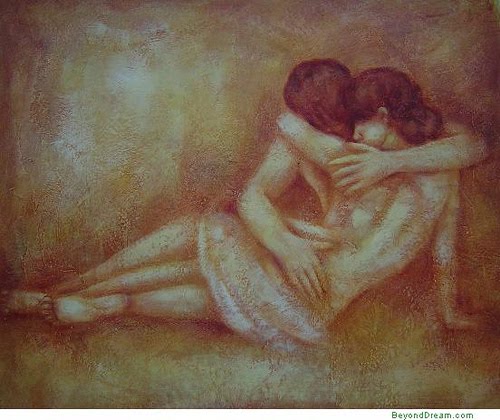
image credit: Oil Painting Romantic Nude Couple by BeyondDream @ Flickr.com

memorial day must-see: doctor/donna

31 Monday May 2010

Posted by Anna Clutterbuck-Cook in fandom

≈ Leave a comment

Tags

hanna, holidays, movies, web video, whoniverse

So I couldn’t quite make it the whole weekend blog-free after all.


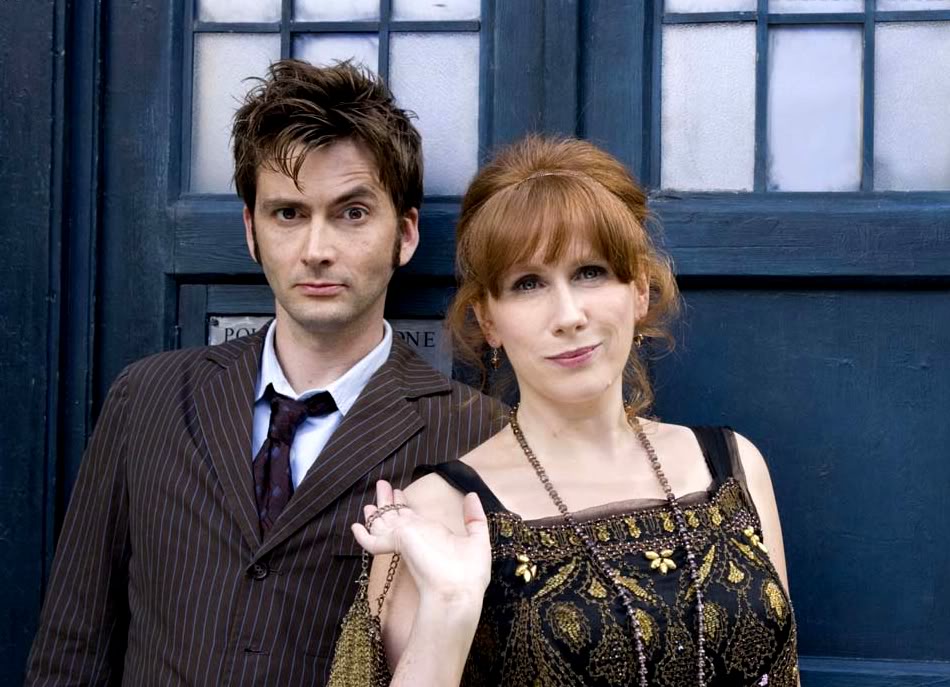
For all you Dr. Who fans out there, Hanna chose to memorialize the doctor/donna this Memorial Day. Hop on over to …fly over me evil angel… for some fan video fun.

friday fun: robin hood (not that one)

28 Friday May 2010

Posted by Anna Clutterbuck-Cook in media

≈ Leave a comment

Tags

books, fun, movies

One more post before I have a mini blog hiatus for the Memorial Day Weekend.

What with the new Robin Hood film out, people have been harking back to versions of yore (see, for example, this episode of On Point from NPR in which film critic and historian David Thomspon and professor of English from Cardiff Stephen Knight discuss the legend of Robin Hood and its various incarnations in film). Hanna and I have been remembering with fondness the 1973 animated Disney version. My brother and I spent several years of our childhood — the ones in which we were not playing Redwall, Swallows & Amazons or Teenage Mutant Ninja Turtles — playing Robin Hood and Maid Marian (she kicked ass, in case anyone feels this is an open question), and our interpretation was heavily, heavily influenced by the singing animals in this particular adaptation.

I adored Maid Marian and at the time (I was maybe six or seven?) we had friends who were on sabbatical in England. So my father, an amateur calligrapher, penned a letter from Maid Marian of Sherwood Forest and mailed it to them to post back to me postmarked from England. It was on pink stationary, I remember, in an airmail envelope with a postage stamp bearing the head of Queen Elizabeth. I kept that letter in my treasure box for many, many years. In fact, it’s probably still filed away somewhere in my parents’ attic, in the box of Precious Things To Rescue In Event of Fire.

Ahem. Anyway. Hanna discovered earlier this week that she had part of the song (all she could remember) of “The Phony King of England” song stuck in her head — so here to make sure that everyone else gets it properly stuck in theirs as well is yours truly.

In addition to Disney’s retelling, of course, there are lots of other Robin Hoods to pick from — including (I’m a librarian after all!) book versions. Robin McKinley’s Outlaws of Sherwood is a classic, and I personally enjoyed Theresa Thomlinson’s Forestwife, which is a retelling of the legends from Marian’s point of view. For the “real,” legend cycle versions, my mother read to us from The merry adventures of Robin Hood of great renown, in Nottinghamshire, illustrated by Howard Pyle.

There was also the Song of Robin Hood, a songbook published in 1947 and illustrated in minute detail by Virginia Burton. My mother played and sang the songs for us, but as children we were most absorbed by the detailed picturework around each page of music, which dramatized the stories in sequential panels like tiny comic books without words.

So go forth and enjoy Robin Hood in all his many incarnations! Happy Friday and have a wonderful long weekend. I’ll be blogging again next Tuesday.

quick hit: jay smooth on rand paul and racism

27 Thursday May 2010

Posted by Anna Clutterbuck-Cook in media

≈ Leave a comment

Tags

politics, web video

I think in my ideal world, in which Dahlia Lithwick and Nina Totenberg would be on the Supreme Court and Jon Stewart would be President, I’m starting to think Jay Smooth would be Attorney General, or maybe Senate Majority Leader.

Does that prove he’s some hard-core racist that doesn’t care about Black people? No. But it does suggest that he’s such a hard-core purist libertarian that he cares more about this abstract set of principles than he cares about any actual people – that he’s more committed to these rigid abstractions than he is to protecting the basic rights of human beings in the real world.

$1 review: virtual equality

26 Wednesday May 2010

Posted by Anna Clutterbuck-Cook in book reviews

≈ 3 Comments

Tags

gender and sexuality, politics

$1 reviews are posts about books I find (or Hanna finds for me) on the $1 used book carts at the bookstores we visit around Boston.

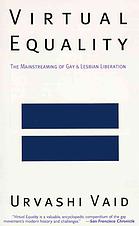
This past Saturday, Hanna found me a copy of Urvashi Vaid’s Virtual Equality: The Mainstreaming of Gay & Lesbian Liberation on one of the $1 carts at Brattle Book Shop. ‘Cause it had all the right keywords in the title, she picked it up for me (my girlfriend is awesome!). Published in 1995, it’s fairly dated — most notably in its repeated references to lesbian, gay and sometimes bi with trans issues completely ignored, even in the section on intersectional politics (more below).

Vaid is a community organizer and lawyer (she attended Northeastern University Law School here in Boston in the early 1980s) and during the 80s and early 1990s worked for the National Gay and Lesbian Task Force. This book is clearly influenced by that, since she focuses on law and politics at the national level, rather than the more cutural history, personal politics stuff I tend to find the most interesting to read and think about. As an activist Vaid is also very focused on the contemporary moment (mid-90s), a perspective that means her analysis ages more rapidly (in my opinion) than it would if she was taking a longer, cultural-historical view. But then, that’s clearly my own scholarly bias!

Having said that, I’m going to turn around and more or less contradict myself by sharing a couple of passages from Virtual Equality that I thought resonated nicely with my post a couple of weeks ago about the heavy reliance of lgbt advocacy on the biology-is-destiny argument, at the expense of arguing that choosing non heteronormative relationships can be a positive and ethical personal and social choice.

From the first chapter, “Virtual Equality” (p. 30)

Homosexuality always involves choice — indeed, it involves a series of four major choices: admitting, acting, telling, and living. Even if scientists prove that sexual orientation is biologically or genetically determined, every person who feels homosexual desire encounters these four choices

Just as, I would point out, every person who feels heterosexual desire encounters them.

The first involves whether we will admit the existence of our desire: Will we acknowledge to ourselves that we feel same-sex attraction? The second choice is whether to act on this desire: Will we risk engaging in this love? The third is whether we acknowledge to other people that we are gay, lesbian, or bisexual … [this] question never end[s], because the process of coming out to other people never ends. The final choices each gay person makes is how to live a queer life.

Again, I’m struck by how easily we could understand these questions in the context of human sexuality, full stop. Regardless of the nature of our attractions, every person makes a complex series of choices about how to articulate, act on, and share with the world their own sexualness. I don’t think these questions are unique to non-straight people, but I do think they are thrown into relief for anyone whose sexuality does not approximate the normative vision of what it means to be sexual.

From “Divided We Stand: The Racial and Gender Status Quo” (p. 289)

My problem with conservative views of gay and lesbian identity is twofold: I disagree with the reliance on biology as the reason gayness should be fully tolerated, and I disagree with the idea that single-identity politics is effective. Same-sex behavior may well be related to physical differences between homosexuals and heterosexuals, but if our purpose in this movement is to remove the stigma surrounding same-sex love, then both biologically gay people and those who simply fall in love ought to be embraced by our movement.

I’m not particularly comfortable with how she phrases this, as “biologically gay people” on one hand and “those who simply fall in love” on the other (wait: don’t people who are “biologically gay” fall in love too??), but she’s spent the few pages before this talking about the Kinsey data on people who identify as straight but nevertheless report same-sex sexual encounters at some point during their lives, so I think that’s what she’s trying to get at, as clumsy as it sounds.

Organizing around the notion that there is a fixed, definable gay and lesbian identity is far more convenient than organizing around the notion that homosexual desire is a potential in every person. It is also far less threatening to straight America. We are certainly more comprehensible when we speak and act as if there is such a thing as a gay gene than when we attempt to argue that we seek to liberate homosexual potential in all people! … But even biology does not limit its expression to one form of being. The fact that homosexual people are as multifaceted as humankind itself means that our effort to organize around one gay or lesbian identity will inevitably fail.

What she ends up arguing is for the end to identity-based politics (which is where we see how she is arguing against the late-80s and early 1990s narratives of identity and political advocacy). In its place, she urges the necessity of a broad coalition of people organizing not around accidents of personal experience or identity but rather (dare I say) values.

In the chapter on the political right (what Vaid identifies as “the Supremacist Right” to differentiate those who are interested in preserving the democratic process from those who use it as a means to a supremacist end) she writes specifically about the importance of discussing sexual values and ethics on the left, rather than leaving such discourse to the political and religious right (p. 324).

The most provocative and, in my view, important of [Suzanne] Pharr’s suggestions is the call that the gay and lesbian movement vigorously debate sexual ethics. We must talk about our values, what we do, what we won’t do, what we think is right, and what we believe is wrong.

And, I would add, share the outcome of those conversations with the wider world. I think that since 1995 there has been more discussion about progressive and/or leftist, feminist and queer sexual values — educators and bloggers have definitely been asserting more frequently the importance of not leaving the ethics debate to conversative interests. Vaid approaches the issue gingerly, with the bitter divisions of the feminist “pornography wars” in the recent past. It was heartening for me to realize, as I read this passage, just how far we’ve come since then in articulating and embracing the wide variety of human sexual expression, and arguing for the “safe, sane, consensual” ethic as a starting point for discussing the finer points of what it means to make moral choices as a sexually active, sexually joyful human being.

Obviously, the task is far from over (will it ever be?), but reading Virtual Equality was a small taste of a single political moment captured in time through prose, and I was impressed by how much the discourse has changed since then, even if the issues remain virtually the same. Hopefully, as we begin to speak differently, we’re live differently as well. As feminism has taught me over and over again: langauge matters like hell: speaking about what we value is, hopefully, a step in the direction of seeing what we value valued all the more in the dominant culture.

← Older posts
Newer posts →
"the past is a wild party; check your preconceptions at the door." ~ Emma Donoghue

Recent Posts

  • medical update 11.11.22
  • medical update 6.4.22
  • medical update 1.16.2022
  • medical update 10.13.2021
  • medical update 8.17.2021

Archives

Categories

Creative Commons License

This work by Anna J. Clutterbuck-Cook is licensed under a Creative Commons Attribution 3.0 Unported License

Meta

  • Register
  • Log in
  • Entries feed
  • Comments feed
  • WordPress.com

Create a free website or blog at WordPress.com.

  • Follow Following
    • the feminist librarian
    • Join 36 other followers
    • Already have a WordPress.com account? Log in now.
    • the feminist librarian
    • Customize
    • Follow Following
    • Sign up
    • Log in
    • Report this content
    • View site in Reader
    • Manage subscriptions
    • Collapse this bar