• anna j. clutterbuck-cook
  • contact
  • curriculum vitae
  • find me elsewhere
  • marilyn ross memorial book prize

the feminist librarian

the feminist librarian

Tag Archives: being the change

to me, being "progressive" actually means supporting family diversity and resource equity — not just putting the kids in public school

17 Friday Feb 2012

Posted by Anna Clutterbuck-Cook in think pieces

≈ 2 Comments

Tags

being the change, children, education, politics, random ranting, work-life balance

So Dana Goldstein has a piece over at Slate.com about how “progressive homeschooling” is an oxymoron because parents who remove their children from the public school system are thumbing their noses at civic responsibility. She argues that: 

[Liberal homeschooling and unschooling] is rooted in distrust of the public sphere, in class privilege, and in the dated presumption that children hail from two-parent families, in which at least one parent can afford (and wants) to take significant time away from paid work in order to manage a process—education—that most parents entrust to the community at-large.

The idea that education outside of school is the sole province of crazed Christian fundies and upper-middle-class elites would certainly surprise my partner, whose family lived below the poverty line for much of her childhood and yet still chose to home-educate her until ninth grade. It would likely also surprise the family of my best friend growing up, whose mother was a divorced parent who worked part-time and yet still homeschooled her two daughters throughout their childhood. The notion that homeschooling requires “at least one parent … to take significant time away from paid work” to function would surprise another friend of mine whose parents both worked from home and thus shared the parenting and income-earning responsibilities equally when their children were young.

I realize that anecdotes do little to refute data, and it is certainly irrefutable that financial and cultural resources (i.e. social privilege) confer choices.  The ability to sit down as a family and co-create a home life that runs counter to the dominant culture is, no doubt about it, much, much easier when (and therefore, more prevalent in families where) you’re not juggling multiple minimum-wage jobs, worried about losing your mortgage, or wondering whether you can afford to get that needed root canal. This ability to not only name our desires but also (at least to a point) act upon them is a function of class privilege, and in evidence among families where children attend public school as it is among families who make other arrangements.

Sure, there are homeschooling families who are privileged assholes (I’ve met some of them), but privileged assholery is not a symptom of home-education. It’s a symptom of, well, being a privileged asshole.

See, I think Goldstein’s argument about how education that takes place outside of school (whether we call it “homeschooling,” “unschooling,” or something else entirely) is crap progressivism turns family diversity into a proxy for talking about class. Because class is really hard to talk about in American culture. We don’t want to talk about the unequal distribution of economic resources, and how we’ve lost the war on poverty (or just surrendered to it). We cling to the notion that education (via public schools, or charter schools, or elite prep schools, whatever) is the pathway out of that inequality when, in fact, better distribution of economic resources is the pathway out of that problem.

Maybe schools should be better. I’m not, as a person who grew up outside of school, opposed to that. My siblings both made use of the public high school in our town. A lot of families I know who have engaged, or currently are engaging, in some type of home-based education avail themselves of the public school resources they pay taxes to support. Home-educated kids often go to colleges, some of which are state-supported. Goldstein sets up a world in which there are two oppositional communities: families who use public schools, and families who home-educate. This simply isn’t what the world looks like. While I don’t necessarily fault her for this outsider’s assumption — much of the literature in the lefty home-education movement does see institutional schooling as fundamentally flawed and/or inhumane — that narrative ignores the reality that these two populations are flexible, fluid, and inter-twined to a high degree.

Since homeschooling families stopped living in fear of prosecution if they were discovered by local authorities, many kids move back and forth between out-of-school learning and institutional learning. Whether it’s participating in extracurricular activities, attending one or two classes a term, going to school for a year or two to try out that way of life, or some other creative option, civic involvement in the form of using public school resources is often a daily reality for home- and un-schooling families these days. There are public school teachers home-educating their kids, and former unschoolers teaching in public schools. Goldstein’s all-or-nothing argument values rhetoric over reality.

That’s the “we’re more normal than you think” point. Now I want to make the “why are you scapegoating our non-normative lives?” one. Goldstein’s argument is that all “good” or truly progressive families should support the public school system by sending the school-age members of the family to school. Because:

Government is the only institution with the power and scale to intervene in the massive undertaking of better educating American children, 90 percent of whom currently attend public schools. (And it’s worth remembering that schools provide not just education, but basic child care while parents are at work.) Lefty homeschoolers might be preaching sound social values to their children, but they aren’t practicing them. If progressives want to improve schools, we shouldn’t empty them out. We ought to flood them with our kids, and then debate vociferously what they ought to be doing.

I agree with Goldstein that high-quality socialized childcare and education should be available to families that want them. And I imagine that a majority of families would take advantage of those resources, if the continued feminist-led campaign for affordable high-quality daycare is any indication. The life choices of middle- and upper-middle-class families who have viable options suggest that few families these days would opt for full-time parenting and out-of-school learning for their youngest members. So I don’t think full-scale flight from institutional schooling is any realistic vision of America’s future. As much as it might personally pain me to say it, unschooling will never be a majority family-life choice.

But neither will polyamory, or open marriage. And data suggest that even acknowledging human sexual variety (and right-wing fears to the contrary) the majority of households in our country will never be headed by couples, threesomes, or moresomes of the same sex and gender identity. Dykes To Watch Out For is (again disappointingly!) the wet dream of our future utopia only in my little corner of the universe.

Yet I doubt Goldstein would argue that supporting the ability of people to form consenting, mutually-supporting relationship agreements of whatever kind works best for the folks in question is not a “progressive” (dare I say liberal? leftist? radical?) value. If families work best when they are organized to meet the needs of their constituent members, then it seems common-sensical that there would be no one-size-fits-all solution to dependent care-giving, to wage-earning, to physical home arrangement, to negotiations over who does what, when, where, and with whom.

In fact, it seems fundamentally non-progressive to argue for a one-size-fits-all model for parenting and education — which is what Goldstein is essentially doing when she argues that good liberals should all use public schools. How is that different from the conservative argument, all evidence to the contrary, that children thrive best in a two-parent household in which one parent is a man and the other is a woman? How is that different from the argument mothers are innately suited to care for dependents? How is that different from asserting that the heterosexual dyad is the only type of union that should be recognized by the sate?  It’s not. It simply replaces one restrictive notion of good parenting with another. Instead, we should be recognizing that “good” parenting, and meaningful education, will inevitably have as many embodied forms as there are human beings to embody them.

I’d argue that, rather than re-hashing the tired argument that non-school-based learning is inevitably the preserve of the elite, we should be asking ourselves how to more equitably share our resources so that all families will have the highest degree of agency to decide how to put together the activities of parenting, employment, and learning. Bickering about which site for learning is optimal for most obscures the reality that no single site of learning will ever be optimal for all. It also perpetuates the myth that public school education can fix the problems of inequality — when, in fact, only fixing the problems of inequality will fix the problem of inequality.

Don’t make children and parents whose lives are atypical scapegoats for a society that has failed, en masse. to deal with its issues of class privilege.

the porn debate: first thoughts

11 Saturday Feb 2012

Posted by Anna Clutterbuck-Cook in think pieces

≈ 2 Comments

Tags

being the change, education, feminism, friends, gender and sexuality, moral panic, smut, the body

but is it porn?

Last night, thanks to my friend Minerva, who is currently at the Boston University School of Public Health, I was able to attend a screening at BUSPH of The Price of Pleasure: Pornography, Sexuality, and Relationships (2008) and the subsequent Q&A-cum-debate with anti-porn activist and author Gail Dines and sexuality educator Carol Queen. Lots to process. I’ll be writing a review of the film and a more coherent summary and reaction to the debate portion of the evening once I’ve had some time to organize my thoughts. But meanwhile, are a few first responses.

  • The Price of Pleasure had an agenda which wasn’t very subtle — and that was to make porn appear monochromatic, exploitative, and seedy. This wasn’t a surprise, but I found myself fascinated by the way the construction of the film itself conveyed that narrative. More about this in the review. It was a fairly masterful piece of propaganda … if you didn’t sit there with your media literacy lenses on and go “what just a minute!” (And if anyone wonders what the scary voice man does between election cycles, he was totally hired to do the voice over in this documentary).
  • I was struck by the level of powerlessness expressed by people interviewed in the film, by Gail Dines in the Q&A, and by some of the audience members who asked questions. Commercially-produced video porn is depicted as an all-powerful, pervasive, thought-controlling medium that somehow renders consumers (and even non-consumers) incapable of imagining or practicing alternative sexualities. Since my experience has been that a) avoiding porn one doesn’t like is relatively simple, and b) finding or creating porn one does like is also pretty easy, I can’t say I understand this line of reasoning. Having just finished Amy Schalet’s new book Not Under My Roof: Parents, Teens, and the Culture of Sex (review forthcoming) I can’t help wondering if this feeling of helplessness doesn’t go back to what Schalet terms the “dramatization” (vs. normalization) of sex in American culture.
  • I understand there’s a larger argument being made about how the narratives in porn reflect and shape some of the crappy narratives of our society (for example, society is racist and sexist — surprise! porn is also racist and sexist), but I don’t understand why the solution presented is not the two-fold critique and creation solution we’d use in virtually any other field. That is, 1) encourage people to watch porn with a critical eye, much like Jenn Pozner encourages people to watch reality television with a critical eye (see Reality Bites Back), and 2) support the creation of better porn. See for example the feminist porn awards and the recent piece by Erika Christakis, Is it Time for Fair Trade Porn? For some reason, when it comes to porn, all of our usual skills for working to change culture are jettisoned out the window? That doesn’t seem right to me.
  • I continue to be frustrated by the way “porn” and even “sexually explicit material” has become short-hand for “video pornography.” I took an online survey recently designed to capture information about women’s consumption of online porn — and it became apparent almost instantly that they were assuming the porn in question was filmed live-action sequences. Why aren’t we talking about sexually explicit fiction and nonfiction, photographs, erotic audio, and other materials that depict sexual activities and are designed to elicit arousal? This isn’t to say video porn is bad either, but I feel our analysis of the genre might be more nuanced if we looked across mediums, rather than focusing just on film.
  • If Carol Queen hadn’t been there, no one in the room would have spoken to the fact that pornography is, in fact, not solely a product of the heterosexual male imagination, created for consumption by heterosexual men. The discourse about porn in the film and throughout most of the Q&A rested on the erasure of women and queer folks who create and consume erotic material without being coerced or exploited into doing so by the patriarchal overlords. Dines seems to believe that in her perfect (socialist feminist) universe, no one would make porn she didn’t like, because of course no one would voluntarily make pornography that squicks her out. I didn’t hear any evidence last night that Dines would have been able to make sense of me as a queer woman who creates and consumes erotic materials, in both solitary and relational contexts. Who has both an incredibly egalitarian, loving sexual relationship with another woman and enjoys some kinky and rough sex fantasies, which work together symbiotically to enrich my relational life. In Dines’ narrative of porn, my experience is rendered completely invisible — and while one person’s experience does not a data-set make, that dissonance makes me doubt her theory’s explanatory power.
  • Also, while we’re at it, men who enjoy sex with women are not, in fact, controlled by their dicks — and men’s penes aren’t somehow inherently threatening and oppressive to women who enjoy having sex with men. Male sexuality is not some mysterious, all-powerful, aggressive, violent, controlling force that must be contained and managed externally (i.e. “domesticated”). I believe people of all sexes, sexualities, and genders, are equally capable of exploring their sexual desires in ways that aren’t — for lack of a better word — “antisocial.”

I come to this conversation with my own experience of pornography, obviously. I’ve seen a vanishingly small amount of video porn — most of it filtered through secondary sources like documentaries or embedded within feature films (where we just call them “sex scenes”). I’ve never experienced sexually explicit materials in the context of emotional coercion or physical abuse, and have never felt the presence of sexually explicit materials compromised my intimate relationships. Aside from some early childhood peer-to-peer situations that made me passingly uncomfortable (and probably deserve a post at some point), I’ve basically felt like I had bodily autonomy and sexual self-determination. My teenage years and young adulthood were characterized by self-directed exploration of human sexuality and my own sexual desires, mostly through fiction and non-fiction, and solitary sex. When I didn’t find sexually explicit narratives that satisfied me, I decided to create my own.

Did I have sexual struggles? Certainly. I was reflexively anti-porn early on because I’d imbibed the cultural narrative of “porn” as relationship destroying, the last resort of the lonely, as anti-feminist objectification. At the same time, I was discovering that mild bondage scenarios and actual mild bondage were a huge turn-on for me. Together, these two conflicting messages me feel like a bad feminist, and made me feel overwhelmed by my own sexual desires. But if pornography hadn’t been demonized by those around me, maybe I would have realized before my mid-twenties that fantasizing about ceding control in a sexual situation isn’t the same as wanting to be literally helpless. I don’t wish my younger self hadn’t been exposed to bondage imagery or narratives — I wish I’d been given better tools with which to analyze both it and my responses to what I saw.

I just don’t experience the existence of sexually explicit materials — even if its porn I’m turned off by — as threatening to my own sexual self-determination or my ability to find, and form meaningful connection with, other sexually-compatible human beings. I don’t see “porn” as an enemy.

Overall, I wish we — as a culture — could move beyond the moral panic that sexually-explicit material seems to engender in a fairly high percentage of the population  and talk instead about all of the tools we already have at our disposal to critique unhelpful cultural narratives in porn, to advocate for workers’ rights, and to develop our own sense of sexual self-determination. I heard Carol Queen making a bid for that shift to take place last night, and I heard Gail Dines resisting it with all her rhetorical might.
Since writing this post, I’ve published a review of the film, The Price of Pleasure, and a more thorough summary and analysis of the debate itself. Finally, some thoughts on the positive potential of porn.

at the end of SOPA blackout day, I leave you with this

19 Thursday Jan 2012

Posted by Anna Clutterbuck-Cook in media

≈ Leave a comment

Tags

being the change, blogging, politics, technology, web video

Via my sister Maggie.

booknotes: when we were outlaws

08 Thursday Dec 2011

Posted by Anna Clutterbuck-Cook in book reviews

≈ Leave a comment

Tags

being the change, feminism, gender and sexuality, history, memoir, politics

In many ways, Jeanne Córdova’s memoir, When We Were Outlaws: A Memoir of Love and Revolution (Midway, Fla.: Spinster’s Ink, 2011), couldn’t be more different than the last memoir of the 70s I reviewed here at the feminist librarian: Patricia Harmon’s Arms Wide Open. Harmon’s memoir told the tale of a self-trained hippie midwife who moved with sons and male lovers through several different rural communes before entering medical school for formal nurse-midwifery training. Jeanne Córdova, by contrast, spent the 1970s in the Los Angeles area free-lancing as a journalist and activist in what were then referred to as the women’s and gay liberation movements. A self-identified butch, she came of age as part of the lesbian bar culture of the 50s and 60s, then discovered gay liberation and feminism in 70s. Córdova was the founding editor of The Lesbian Tide newsmagazine and the human rights editor of the L.A. Free Press, interviewing radicals on both the left and the right on the run from the law. As she observes in her introduction, “this memoir visits many outlaws, some freedom fighters, and a few who would be called terrorists … I needed to know and sort out these outlaws in my mind in order to discover the perimeters of my own moral compass … Outlaws takes place at the intersection of shadow and shade that differentiate between persona and principle” (vii).

Yet I found myself, while reading Outlaws, thinking often of Harmon’s memoir and the parallels between both works in scope and tone. And in the relationship (in text, at least) between the authors and their own personal and political pasts. Like Arms Wide Open, When We Were Outlaws seeks to tell a specific slice of the authors life, rather than starting with childhood and moving through the years in an orderly progression. Both authors chose, as their time-frame, the turbulent years of the 1970s when the heady, optimistic social change movements of the late 1960s led to more complicated lived realities for those who championed leftist causes and a counterculture way of life. Córdova focuses on her life and work between 1974-1975, with some flashbacks and flash forwards to help us make sense of the dense web of associations — political and personal — that characterized that time, both for Córdova specifically and her fellow activists in what was then called “the Movement” more broadly. Like Arms, Outlaws gives us an in-the-moment perspective on the life of someone struggling to live out her political convictions in her personal life. For Jeanne Córdova this means an up-close, and in many ways unshrinking, view of her involvement with lesbian separatist politics in relation to the gay liberation movement more broadly. It also means intimate portraits of her trial-and-error practice of open relationships, as she paints a portrait of her involvement with two women — the long-term relationship in which she and her partner have negotiated non-monogamy, and the quickening of an intense love affair with a fellow activist that threatens the stability of her more permanent ties.

It has become a commonplace, since almost before they began, to identify the leftist social movements of the 60s and 70s as enthusiasms of youth, as romantic idealism (or destructive self-absorption, depending on your political persuasion) that necessarily gave way to realistic politicking and material concerns. In some ways this is true. Many of the individuals who populate When We Were Outlaws are young adults in or just out of undergraduate or graduate school programs, young professionals or struggling under-employed twentysomethings. They don’t (yet) have dependents to care for, and are geographically mobile, often living on the economic edge. They’re at the point in their lives where they’re developing a sense of what kind of life they want for themselves and those they care about — what kind of work they find meaningful, what values they hold dear, what kind of relationships they want to build and maintain. Often, their answers (however tentative) to these questions are at odds with the answers their parents or the activists of the previous generations gave.

Yet despite the youth (and youthful perspective) of its protagonist, I would argue that Outlaws pushes us to re-examine our assumptions that the moral dilemmas and vision for a better future that Córdova and her cohort were immersed in are solely the province of the young — impetuosity that will necessarily give way as one grows into more seasoned adulthood. One of the most interesting narrative threads in Outlaws traces the relationship between Córdova and her political mentor/substitute parental figure Morris Kight. Kight was a mover and shaker in L.A. gay political activism, someone with whom Córdova worked closely and fell out publicly over the place of women in the gay liberation movement. Their differences aren’t so much conservative elders vs. radical youth but something more complicated — a difference in experience, of power, of privilege. In the very personal (yet also political) struggle between Kight and Córdova we can see all the complications inherent in working for social justice, complications that don’t get, well, less complicated — or less relevant — as we grow older.

Córdova reflects back on her younger self with a sometimes-critical, yet always compassionate eye. While the narrative style is “novelized memoir” (to use the author’s own choice of phrase), one nevertheless gets the sense that the author both knows well her protagonist’s faults and cares very deeply for her younger self, no matter how flawed her present self may find that person of the past. “I was not born knowing how to love,” is how she open’s her introduction. “It came to me late in life” (vii). In the pages of Outlaws we see her be cruel to lovers, ideologically ruthless, politically short-sighted, and cripplingly addicted to booze and prescription drugs. At the same time, we see a heart-breakingly young woman who’s been physically evicted from her childhood home (for bringing home a lover), is living with serious and intermittently-treated depression, experiences chronic under-employment, and who nonetheless is working hard to build a meaningful life for herself and a better future for us all. Whether you agree with the young Córdova’s means and visionary ends doesn’t necessarily detract from the import of such a closely-rendered self-portrait.

I suspect we’re only in the early years of a richly textured new wave of 70s-era autobiography which will shed new light on the particularity of growing into adulthood during a period when even the most fundamental of questions concerning how we organize our personal and political lives seemed to be in real, material flux. I am also happy (quite selfishly, I admit!) about the way these personal perspectives will provide unique, and accessible, primary source material for historians of the period, even while many historical sources remain in private hands (and therefore often invisible-to-researchers). Córdova’s memoir would provide a rich jumping-off point in a course that sought to explore this era in all its rich historical realities — and I hope it prompts many readers to re-examine what they think they know about the political contours of the decade.


This review was made possible by the generousity of Lynn Ballen at Spinster’s Ink who provided me with an advance review copy of the book. The book is available now for purchase online or at your brick-and-mortar bookstore of choice. You can read more about the memoir and its author at www.jeannecordova.com.

our bodies, ourselves @ forty (+ me!)

05 Wednesday Oct 2011

Posted by Anna Clutterbuck-Cook in my historian hat

≈ 5 Comments

Tags

being the change, gender and sexuality, history, human rights, the body, whoniverse

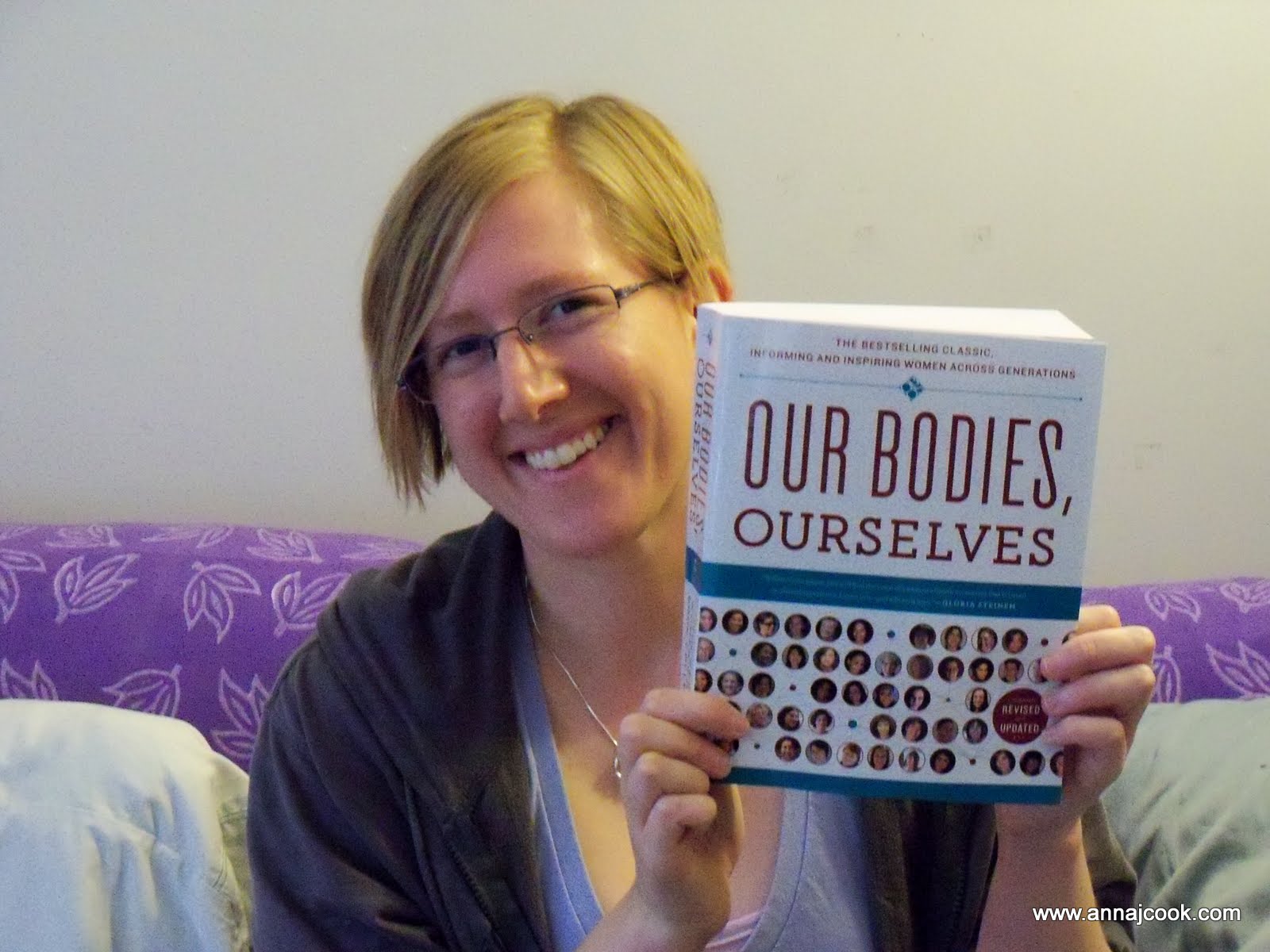
(photo by Hanna)

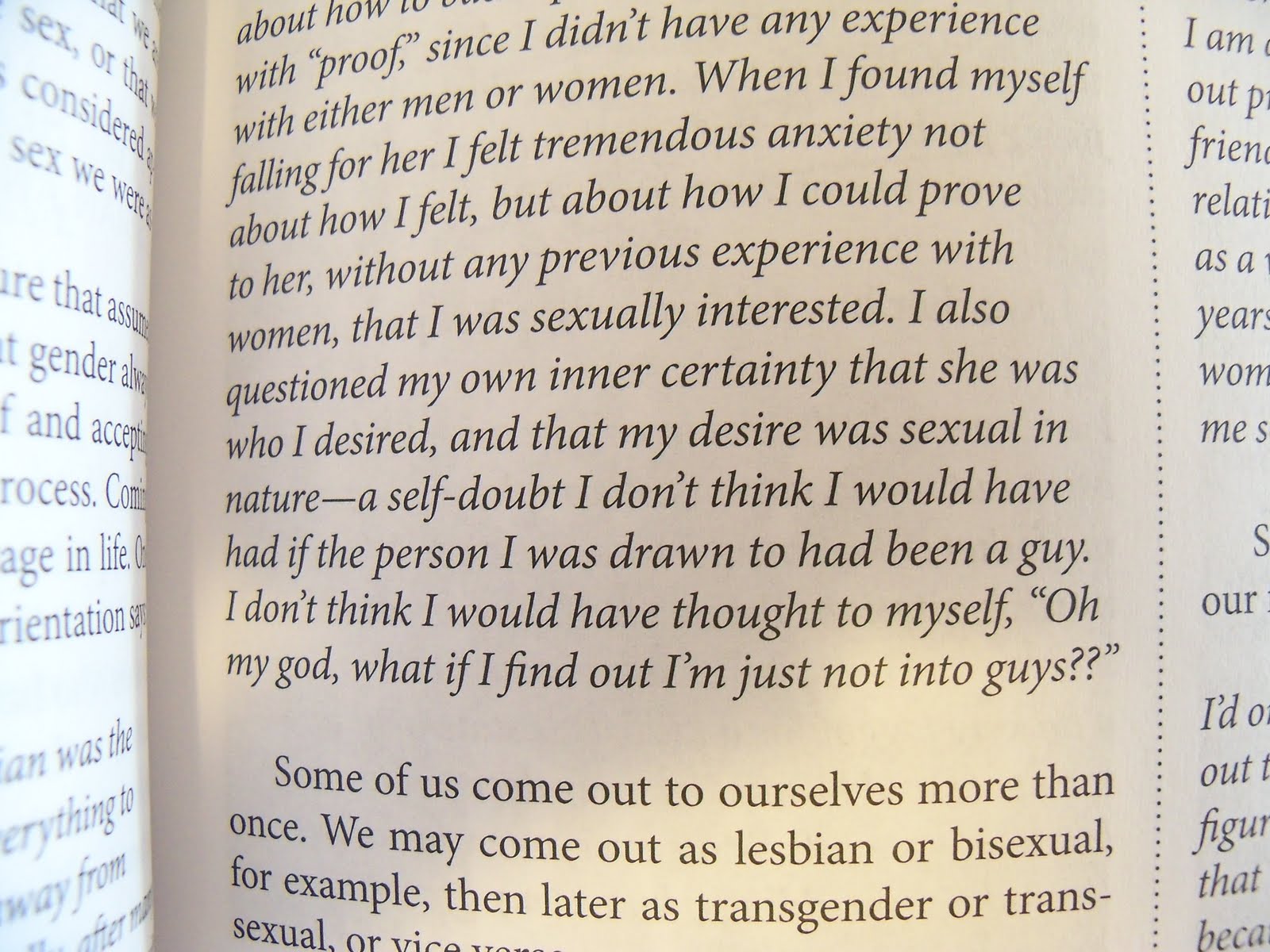
The feminist classic, Our Bodies, Ourselves, turns forty this year and has just been issued in a revised edition that was multiple years in the making. How do I know this? Because I got to be a part of the process! Long-time readers might remember when I posted a call for participants in the revision process back in January 2010. Well, in addition to broadcasting the call I also submitted my own name to the editors and was invited to join them in a virtual focus group discussion on intimate relationships. This conversation eventually turned into the “Relationships” chapter in the new edition, and many of the passages that didn’t make it into that chapter have been used in other sections — I found bits and pieces from my contributions in the chapters on sexual orientation and on sexuality, for example.*

my contributor’s copy, signed by the editorial team!
(photo by Hanna)

I don’t think I can adequately convey to you how proud I am to be a part of the OBOS project. My mother’s battered copy of Our Bodies, Ourselves was my constant companion through adolescence and, among other things, was my first exposure to explicitly feminist analysis, my first exposure to the idea of same-sex relationships, and my introduction to masturbation and how to do it. One of the first things I did when I moved out to Boston in 2007 was to visit the Schlesinger library at Radcliffe and browse the records of the Boston Women’s Health Book Collective — the group that put together the first mimeographed edition of OBOS back in 1970. It’s an incredible honor to have had the opportunity to add my perspective to the myriad other voices that have been part of this international endeavor throughout the past forty years.

It’s so strange to see your own words on the printed page…

This past Saturday, women from around the globe gathered here at Boston University for a symposium in honor of the new edition. I wasn’t able to make the gathering because of a scheduling conflict (and, frankly, because it sounded like a long day with too many new people to make small talk with!) … but I’m looking forward to checking out the web video of the talks once those go up online. If/when they become available, I’ll be sure to post a link here!

Here’s hoping that OBOS (and I!) will be around in another forty years to celebrate eighty incredible years of women teaching and learning one another about their bodies, their sexuality, their relationships, their values, and their lives.

Update: Thanks to OBOS for mentioning this post in their introduction to the Relationships chapter online! Welcome to anyone who’s come to visit the feminist librarian via their link. You are most welcome.

*It’s standard OBOS practice to keep all of the in-text quotations anonymous in order to protect contributors’ privacy. For the “Relationships” chapter we all chose pseudonyms; if you know me and you care to figure it out you’ll be able to identify me through my bio at the beginning of the chapter.

wee ones ftw [two articles]

23 Friday Sep 2011

Posted by Anna Clutterbuck-Cook in think pieces

≈ Leave a comment

Tags

being the change, children, random kindness

via

There’s been a lot of talk in the mainstream media in recent years about child-on-child bullying. Rightfully so, in many cases, since kids can be as cruel as adults and often their cruelty goes just as unchecked as the cruelty of grown-ups. As a culture we’re still enamored with the myth of childhood innocence (and its doppelganger the narrative of childhood depravity). Children are either seen as beings of sweetness and light to be sheltered from the reality of the adult world or they’re seen as barely-civilized monsters a la Golding’s Lord of the Flies — ready to devour one another (and probably the adults around them) at a moment’s notice. We are both terrified of, and disdainful toward, young people.

Between these two poles of “good” and “evil” it can be very difficult for us to see young humans for what they are: people with a wide range of experiences and behaviors. People who can grow and change and respond to their environment in the same way adults do. Sometimes their learning happens at the encouragement of adults. Sometimes kids learn incredibly well without adult management and, in fact, can teach us a thing or two about what it means to be decent human beings.

To whit: two recent articles that have come across my dash in which the young people behaved in a significantly less bigoted and freaked-out fashion than the adults. First, a recent article in Bitch magazine by Avital Norman Nathman, Pink Scare: What’s Behind the Media Panic About ‘Princess Boys’? (Summer 2011). In discussing the panic over boys who express and interest in “feminine” activities, clothing, and toys, Nathman quotes a mother who was harassed for letting her son choose accessories seen as “girly” by other parents:

“I picked up Dyson from gymnastics and some parents spoke about his pink butterfly backpack,” she recalls. “A mother: ‘What a shame that mom buys girls’ stuff for her son.’ A father: ‘I’d never allow my boy to be anything but a boy.’ Then the son asked Dyson, ‘Where did you get that backpack? I like butterflies.’ As Dyson answered, the father grabbed his boy [away]. Kids are not the problem.”

You can read the full article over at Bitch Media. In our rush to explain children’s behavior with theories of gender or innate evopsych proclivities (“human beings are just naturally selfish creatures”) we forget that from the moment they are born children are steeped in a dense network of relationships in which human behaviors are modeled for them. It’s a wonder, really, that despite adults cueing children so relentlessly that pink butterflies are for girls there are kids with a strong enough sense of self to disregard those messages and simply express an delight at something they like.

Similarly, via Jos at Feministing, we have the story of a 10-year-old trans girl who has been accepted as no big deal by her age-mates while the adults around her totally spaz. While parents went ballistic and called the child a “freak,” demanding she play on the boys’ sports teams and change in a private bathroom, the kids seemed completely chill. As the girl told her local news outlet, “They haven’t really said anything … my friends stick up for me and say ‘he feels like a girl so he can be on the girl’s team.’ ” Jos writes of the story:

I hope it’s clear that the acceptance she’s felt from her peers is much more important than the specific pronoun they use. Yes, language matters, but I know I greatly prefer the support I get from a friend who genuinely accepts me as myself, even if they’re not up on all the lingo, to someone who talks the talk but doesn’t ultimately treat my identity as valid.

So I just wanted to take a moment this Friday to give a shout-out to the wee ones of this world who are refusing to cater to adult anxieties and instead continue to interact with their friends (and, hopefully, relative strangers too!) with kindness, generosity, interest, and enthusiasm. It’s people like you who give me hope for the future of this planet — no matter how young in years you may be.

Newer posts →
"the past is a wild party; check your preconceptions at the door." ~ Emma Donoghue

Recent Posts

  • medical update 11.11.22
  • medical update 6.4.22
  • medical update 1.16.2022
  • medical update 10.13.2021
  • medical update 8.17.2021

Archives

Categories

Creative Commons License

This work by Anna J. Clutterbuck-Cook is licensed under a Creative Commons Attribution 3.0 Unported License

Meta

  • Create account
  • Log in
  • Entries feed
  • Comments feed
  • WordPress.com

Create a free website or blog at WordPress.com.

  • Subscribe Subscribed
    • the feminist librarian
    • Join 37 other subscribers
    • Already have a WordPress.com account? Log in now.
    • the feminist librarian
    • Subscribe Subscribed
    • Sign up
    • Log in
    • Report this content
    • View site in Reader
    • Manage subscriptions
    • Collapse this bar