• anna j. clutterbuck-cook
  • contact
  • curriculum vitae
  • find me elsewhere
  • marilyn ross memorial book prize

the feminist librarian

the feminist librarian

Tag Archives: family

a few thoughts on my historically-specific perspective on getting married

08 Sunday Jul 2012

Posted by Anna Clutterbuck-Cook in life writing

≈ Leave a comment

Tags

boston, family, history, hope college, michigan, sexuality, wedding

Yesterday, I finished reading an advance review copy of Michael J. Klarman’s From the Closet to the Altar: Courts, Backlash, and the Struggle for Same-Sex Marriage (forthcoming from Oxford University Press, Oct. 2012; review to come). A legal historian, Klarman explores the history of litigation and legislation around gay and lesbian marriage from the 1970s to the present. Reading his historical account prompted me to think about the historical context in which I came of age and into my sexuality and sexual relationship, and how this colors how I think about same-sex marriage particularly, and even more specifically how my historical context shape the decisions Hanna and I have made. Here are my thoughts, in roughly reverse chronological order.

1) I’ll start with the fact that we can get legally married in the specific time (2012) and place (the Commonwealth of Massachusetts) in which we have come together. Massachusetts recognized in same-sex marriage as legal under the state constitution in 2004 (Goodridge v. Dept. of Public Health) and our ability to become, legally, wife and wife, on the state level is normal here. While DOMA still prevents us from being recognized as married nationwide, we will be treated as spouses at the state level. If I hadn’t moved to Massachusetts from Michigan, I would be unable to legally wed without traveling. And given that neither of us are involved in a religious community, we likely would not be planning a private (non-legally-binding) commitment ceremony.

2) I’ve experienced nothing but welcoming acceptance of my relationship with Hanna since we got together in the summer of 2009. The only direct bigotry I’ve encountered has been online; I’ve been comfortable being open about my relationship at work, in public, on both sides of the family, in my home town, blogging, etc. I actually dealt with more directly-homophobic statements and actions before I was visibly queer (see below) than I have in the past three years. This is in part a matter of geography, in part a matter of the circles in which I’ve been moving, and in part a macro-level cultural sea-change in which anti-gay animus is becoming less acceptable by leaps and bounds, at least in the public square.

3) Marriage equality was part of what brought me to Massachusetts. One of my first memories of driving into Boston in the summer of 2006 — when I interviewed at Simmons — was getting turned around and ending up in Harvard Square across from Zero Church Street, where they had a huge banner across the front of the First Parish Church proclaiming support for marriage equality. Even though I understood my sexuality to be primarily hetero at the time, I immediately felt a sense of expansiveness — the ability to be more at ease in the political climate here than I had felt back in Western Michigan where I was reminded daily that my views about human sexuality were at odds with the dominant culture.

lesbian recruitment party, summer 2005

4) I had long-term, same-sex relationships modeled for me. I had friends whose relatives were in same-sex relationships (some of whom had had commitment ceremonies, some who hadn’t). Through my undergrad women’s studies program (oh the irony) I was introduced to lesbians in committed partnerships and had a chance to think about what it would be like to build a life for myself with another woman. I am a person who experiences my sexuality in very contextual ways, and while I don’t discount the notion that having been born in a different time or place I might have fallen in love with a woman without such models, the fact that I knew that lasting, committed same-sex relationships were a possibility by example helped open me to an awareness, a receptivity, that it could be possible for me as well.

5) In my early twenties, I wrote letters to the local newspaper speaking out on topics like abortion and gay rights. I always got incredibly bigoted responses in print (though my friends and relations were supportive). I remember particularly writing in as “a young straight woman” in defense of the summer gathering for gay and lesbian families that happens annually in the little town of Saugatuck twelve miles south of where I grew up (in the “reddest” county in the state of Michigan). In my letter I thanked the newspaper for doing a favorable piece on the camp and preemptively addressed the haters by pointing out that same-sex parents gave me hope for the future. Again, I think it’s note-worthy that even in an incredibly conservative corner of the Midwest, I was participating as a presumptively straight person in normalizing queer families.

That is, I didn’t think “gay” and imagine that being a lesbian would mean custody battles and depression and suicidal impulses. I thought it meant family camp and lesbian communes and sprawling poly households, not unlike the life I was already starting to envision wanting for myself, even if I thought my primary partner would likely be a man.

5) My best friend came out in 2001. I’d say this moment was the start of my serious self-education on issues of human sexuality and the history of homosexuality and the modern gay rights movement. I was twenty and while he wasn’t the first queer person I knew personally, he was the first person I knew intimately and felt more for than a general political commitment in favor of equality. My sense of radical acceptance (borne out of innate stubbornness and feminist theology) and my life-long commitment to fairness had always drawn me toward LGBT rights — but suddenly it was personal. And I discovered my ability to be fiercely political.

7) Because of the college where I went to undergrad, issues of sexuality and gender were deeply intertwined, and both were morally-fraught religious concerns. This deserves its own post (or several), but suffice to say that my introduction to feminist politics as a college student came in the form of a raging controversy my first year at Hope over what and how the chapel program was teaching students about human sexuality generally and homosexuality specifically. My women’s studies faculty were committed Christians and vocal queer allies, and so my trial-by-fire education in organized protest was around these issues. I was able to think deeply about sexual morality, gender and sexual identity and expression, sexism, and homophobia in the midst of a group of LGBT-friendly Christian folk who helped me articulate passionate responses to the homophobia and hate we were experiencing in daily ways on campus.

In effect, I had a queer community around me long before I understood myself to be queer.

8) In the mid-90s, the AIDS quilt came to town. Its stop on national tour was organized, in part, by the gay deacon at my church. In appointing him to an ordained office, the church had broken with the denominational position (which remains in place today) that homosexuality is sinful. Twice during my adolescence, the church went through a contentious period of “dialogue” on the issue and members left the church in protest over the deacon’s ordination. While I don’t remember much about the AIDS epidemic, I do remember the viewing the quilt with my family and others from the church and city when the sections were on display at one of the area high schools. Rather than AIDS being interpreted to me as “the gay disease,” it was simply a deadly illness, like cancer, that killed people and left behind grieving partners, parents, siblings, children.

9) Our Bodies, Ourselves (and feminism!) contextualized being in lesbian relationships as one life path for women to pursue, both sexually and in relationship with one another. In my adolescent reading about the 70s feminist movement, I encountered primary source documents about lesbian activism, lesbianism as a political decision, and same-sex relationships. While I wasn’t politically active on these issues until college, these texts prepared the ground-work for understanding human sexuality more expansively, and lesbian relationships as a viable option, long before I was aware of resistance to homosexual identity and relationships in my community.

10) The earliest memory of I have concerning same-sex sexuality is at age eleven when two friends of mine, over for a sleepover, were giggling together over the word “gay” and I asked my mother what it meant when they refused to tell me. It was obvious from their behavior they thought the word was a naughty one (one girl was from a conservative Wesleyan household, the other a Mennonite). My mother’s factual explanation (along the lines of “someone who falls in love with a person of the same sex”) put gayness on the radar but confirmed that I need not be alarmed about it. Since there were lots of ways in which my family’s values differed from those of our friends and neighbors, I assumed this was just one more thing to add to the list!

I’m sure there are other ways in which my life has shaped how I think about lesbian relationships, lesbian identity, and the viability of marriage as an option for Hanna and I. For starters, the fact that we’ve both remained unmarried until we were over thirty, and don’t plan on having children are also deeply historically-contextual options/decisions. In the 1910s we might both have been college-educated library professionals in a “Boston marriage,” but it would not have been legible to the world at large as a marriage.

We often think of ourselves as historical actors, with the ability to defy social norms and break new ground. And we are. But they manner in which we defy society, and the norms which we are countering, are historically dependent. And self-aware historians, such as myself and my beloved, are no more exempt than anyone else.

(As usual this “few thoughts” post became much longer than I envisioned it!)

quick hit: the haunted legs!

03 Tuesday Jul 2012

Posted by Anna Clutterbuck-Cook in media

≈ Leave a comment

Tags

art, family, humor

Hanna and I spent the weekend in Maine at her parents’ house, which was a blessed break from the heat of an urban summer and also a two-day stretch of time away from the Internet. Since we were spending time with family, I didn’t get any writing done — so I don’t have the review of Love the Sin for you which I hoped to post today.

Instead, I’m going to give a signal boost to my brother Brian’s wacky month-long art project “Haunted Legs”:

click here for more

Each day will bring a new frame in the … story? web comic? we’ll see as it unfolds! Here is yesterday’s installment:

Ever since I saw the early sketches for this project, I’ve been thinking of the Dr. Seuss story about the pale green pants with nobody inside them; it was one of our favorite stories to read a Grandma’s house growing up — and I bet the resemblance is more than pure coincidence! Click here to check out the page and follow along. Happy reading!

welcome teazle!

20 Wednesday Jun 2012

Posted by Anna Clutterbuck-Cook in our family

≈ 3 Comments

Tags

boston, cat blogging, domesticity, family, web video

…because who doesn’t need adorable kitten videos on a Wednesday?

Hanna and I have been talking, pretty much since we adopted Geraldine two years ago, about bringing a second cat-child into the household as a companion for Gerry — particularly since we’re both gone for significant periods of time during the work week. This past weekend, we decided to visit the adoption center at the MSPCA Angell Hospital in Jamaica Plain, and while we weren’t actively seeking to adopt right now we went prepared to do so if the right match was made.

Well, it was. In the form of a two-month-old foundling whom we’ve named Teazle. It was clear within moments of Hanna picking Teazle up (and having the wee one fall asleep against her bosom) that this was love and we’d do everything possible to take her home.

“Everything possible” turned out to include a last-minute vet appointment for Geraldine on a Sunday morning (she needed her shots up-to-date) and coordination with a buddy who lives near the shelter to make sure we got to the adoption center the moment it opened that day and snatched the paperwork so that no-one else could claim the kitten we were already thinking of as “our” wee one.

She was spayed yesterday morning and I went to pick her up yesterday afternoon. You would not know from this video that she’d been under anesthesia and/or had abdominal surgery a few hours before!

Geraldine is not impressed with us right now, but to be fair she’s suffered the indignity of a visit to the vet, ear drops for an infection, and now a small-n-squeaky addition to the household — all in the short span of forty-eight hours! So we’re trying to give her lots of love and normalcy and introduce them slowly.

And, like with Black Cat Rescue (the folks we worked with to adopt Geraldine), we were super impressed with the MSPCA as both a hospital and a shelter, and will gladly give a shout-out for their services and facility for anyone in the Boston area looking to adopt and/or seek care for their non-human family members and/or need a place to surrender foundlings, etc. They had tons of volunteers, everything was clean and animal-friendly, and all the animals were alert and getting lots of positive attention.

marriage, family, friendship, oh my [wedding post the third]

14 Thursday Jun 2012

Posted by Anna Clutterbuck-Cook in our family

≈ Leave a comment

Tags

domesticity, family, wedding

Geraldine likes to aide my blogging

I keep feeling prompted to write marriage-related posts after reading other peoples’ thoughts on the topic. Last time it was finances, and now it’s notions of home, space, and sharing with folks who aren’t part of the family, per se. Kate Fridkis @ Eat the Damn Cake, has a great post up about the shocked reactions she got when a friend moved in with her and her husband for a month between leases:

My friend from college needed a place to stay for about a month, in between apartments. Automatically, I said she should stay with us. There’s enough space, so it felt weird not to offer. I mentioned it to Bear. “Of course,” he said. Which was what I expected. I thought it would be weird if he said no.

My friend moved in.

And then everyone else was like, “Oh my god! Are you okay with that?! What about Bear? It’s his home! He must be so upset! Are you guys okay?”

Everyone said that at the same time. They hadn’t even met my friend. Or they had, and they liked her, but they couldn’t believe that this was happening. That I’d allowed this whole other person to move into my home, while I was in it. With my husband. All of us. Together.

“No, no,” I kept saying. “It’s totally fine! It’s nice! She’s really nice!”

“But what about your space?” they kept saying back. “And what about…you know…You need alone time with Bear.”

Space is interesting. I need it. I like it. I like to share it, too. (Also, our bedroom has a door. It can be closed.)

Kate goes on to observe that:

Until my friend moved in for a month, I actually didn’t realize how much I like being around other people. Not just hanging out and talking nonstop, but just being with someone else. Someone who isn’t Bear (I already knew I liked this with Bear, but I thought that was because he was my partner). Glancing up occasionally from whatever you’re doing to share something funny or make a comment about how annoying this guy who keeps emailing everyone on his mailing list to announce his latest accomplishment is. So annoying.

“Oh my god, that is ridiculous!” she says. And you both go back to doing your own thing.

She wasn’t always around, of course. She was at work during the day most of the time. She was gone many evenings, too. But when she was around it was fun to have someone else there.

I’ve written before about my penchant for slightly-chaotic, sprawling households. It probably has something (a lot!) to do with the sort of home I grew up in, the sort of home that feels familiar. I was the eldest of three kids, we were all home-educated for extensive periods of time, and while we definitely had a single-family home and a sense of family boundaries, there were always kids running around, or people passing through, adult friends over for dinner, and on occasion people who needed a place to stay for a bit. We lived close to the center of town (two blocks from City Hall and the public library, six blocks from the college where my dad worked) and from a fairly young age we had run of the neighborhood on foot and by bike, in and out of friends’ houses, drifting back to check in with home-base and then spinning away again.

While I’ve lived on my own for extensive periods of time, and really enjoyed the solitude for what it was, to me creating a home and establishing a family, cues memories of a more communal space, of having people around to chat with when you want to emerge from solitude, of shared meals dished up for whomever came to the table, of people who were interested in what you’d created that day — and whose own daily creations you looked forward to hearing about.

Which isn’t to say I don’t also treasure privacy and alone-time (or couple-time). Hanna and I are in complete agreement that — regardless of what sort of housing situation we end up in over time — we want space(s) that are ours with doors to close between us and the rest of the world. I just don’t associate extended family households with the violation of privacy and/or incompatible with independent adulthood, the way many people in our country do. My childhood home was a space where togetherness was balanced with respect — modeled and, at first, enforced, by parents — for personal privacy and space, as well as negotiated sharing. We had to ask to borrow each others’ stuff; parents knocked on closed doors to gain permission to enter.

So on some level, while Hanna and I have exactly zero plans to move in with our relations on either side of the family, being part of a multi-generational community/neighborhood, and part of a household or cooperative housing situation that extends beyond the (still clearly defined) boundaries of coupledom is part of what family and home means to me.

When we had our friends Diana and Collin to stay for four days at the beginning of June it was slightly crowded in our apartment, but we all thought we wish we could live closer and wouldn’t weekly potlucks be nice and why can’t we all just hang out more often?

We began to miss them from the moment they left for the airport.

I think, for myself, our decision not to parent has contributed to my desire to be deliberate in creating more fluid conceptions of family and home-space. I have the urge to surround our two-person family with single friends, coupled friends, parenting friends, elders and peers, godchildren and companion beasties. Knowing I won’t be establishing an immediate family unit with younger generations folded within it makes me think about how to open up couple-life so that Hanna and I are not hermetically-sealed to all intruders, even as we want very clearly to say: we two shall cleave together from this day forward.

(Though perhaps if we were embarking upon the adventure of parenting wee ones we’d have an equally strong desire to build a support network of adults with whom our kids could form additional secure relationships.)

I thought I was going to have more conclusive thoughts at the end of this post than I do. I find, after typing all of the above, that all I can say thus far is that I know I want, eventually, that more boisterous household/community/neighborhood within which Hanna and I can exist as an indisputable, quasi-private pair.

If I’m still blogging when we find it, I’ll let you know how we arrived there!

from the neighborhood: fun with friends, part 2

07 Thursday Jun 2012

Posted by Anna Clutterbuck-Cook in a sense of place

≈ Leave a comment

Tags

art, boston, family, friends, from the neighborhood, photos

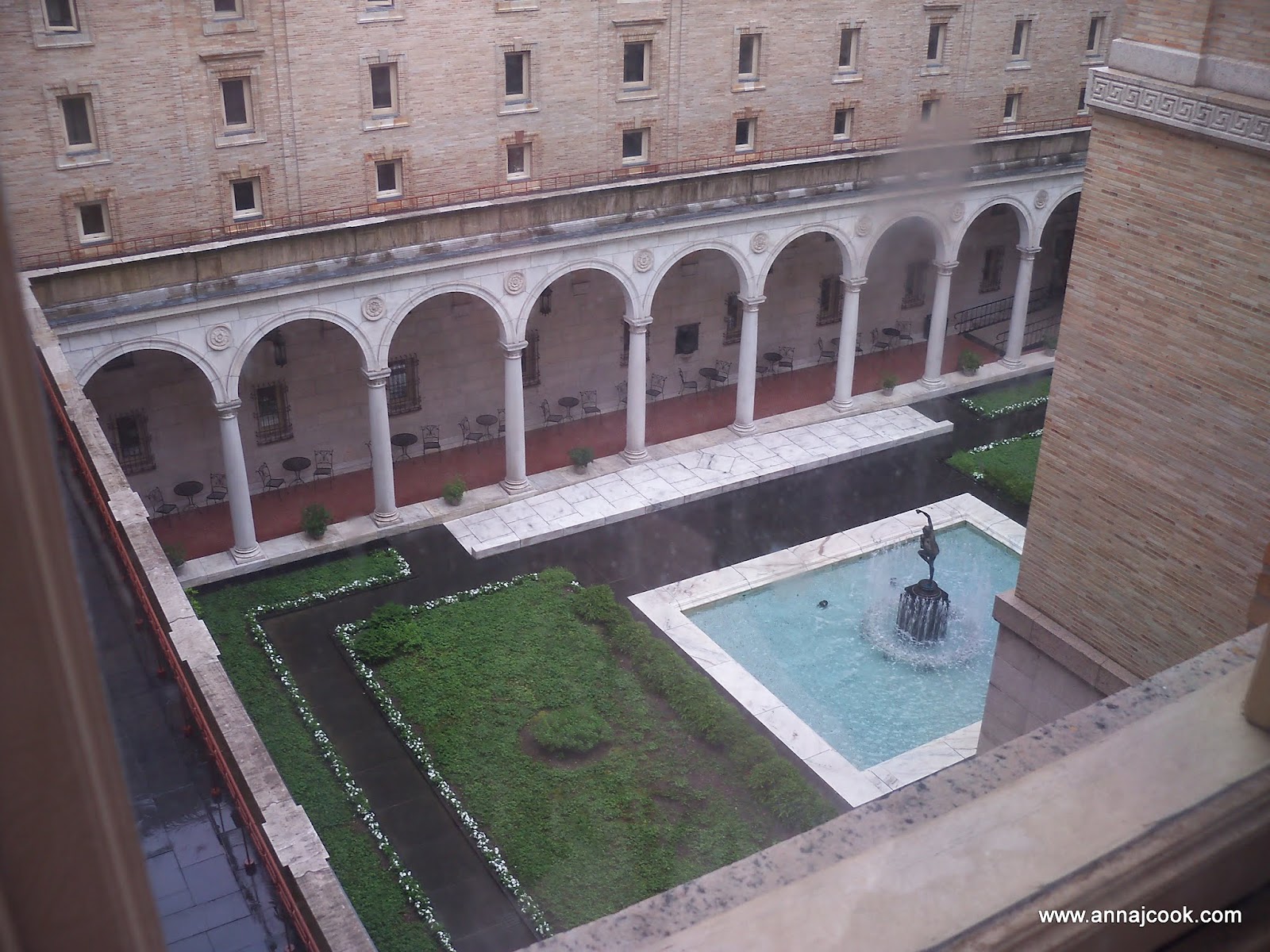
After Friday, it rained almost continuously the whole weekend Diana and Collin were here. On Monday, before they left for the airport, we took refuge at the Boston Public Library (between Pavement Coffeehouse and Berkeley Perk Cafe).

center courtyard in the rain, from the 3rd floor gallery
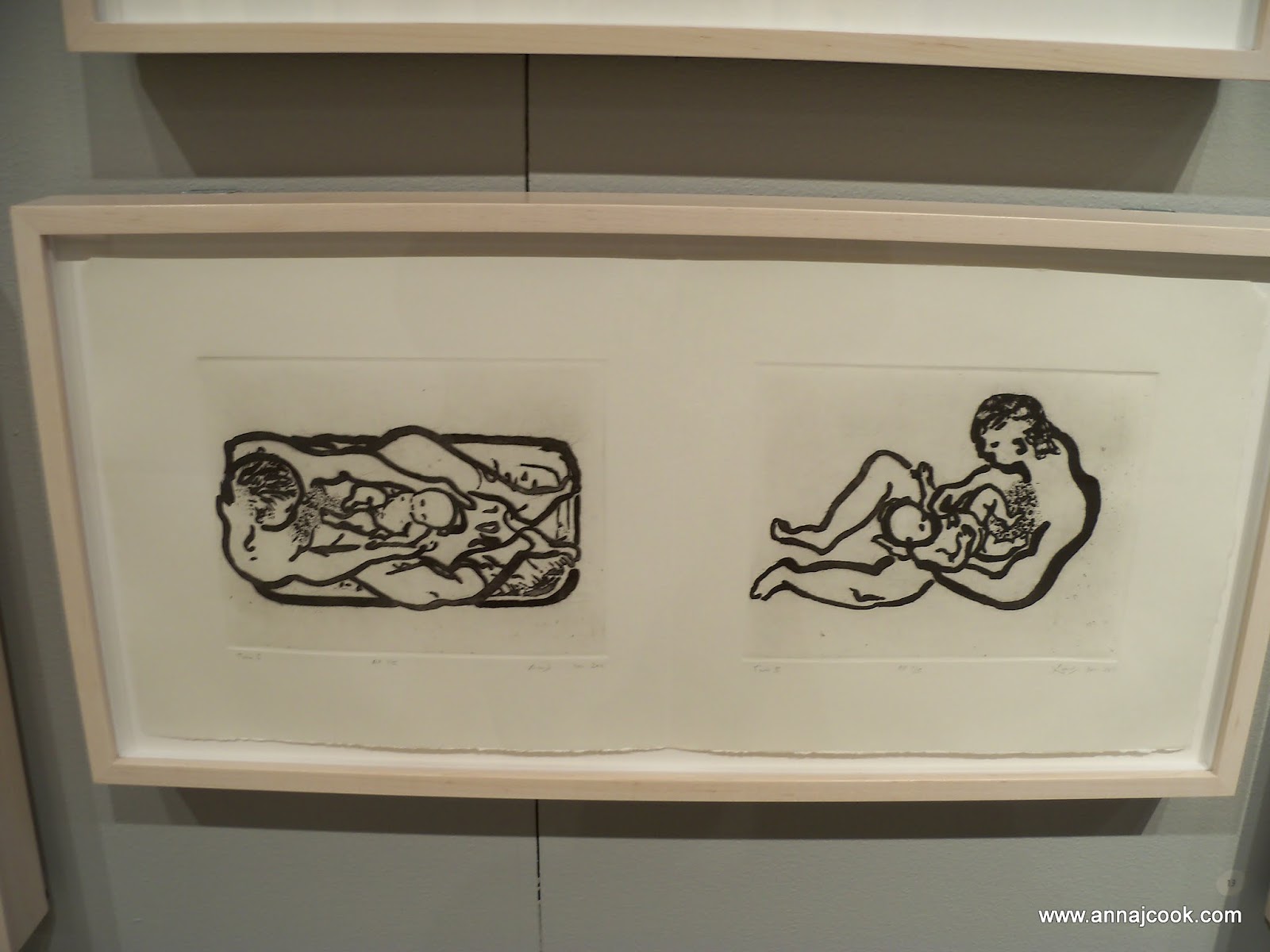
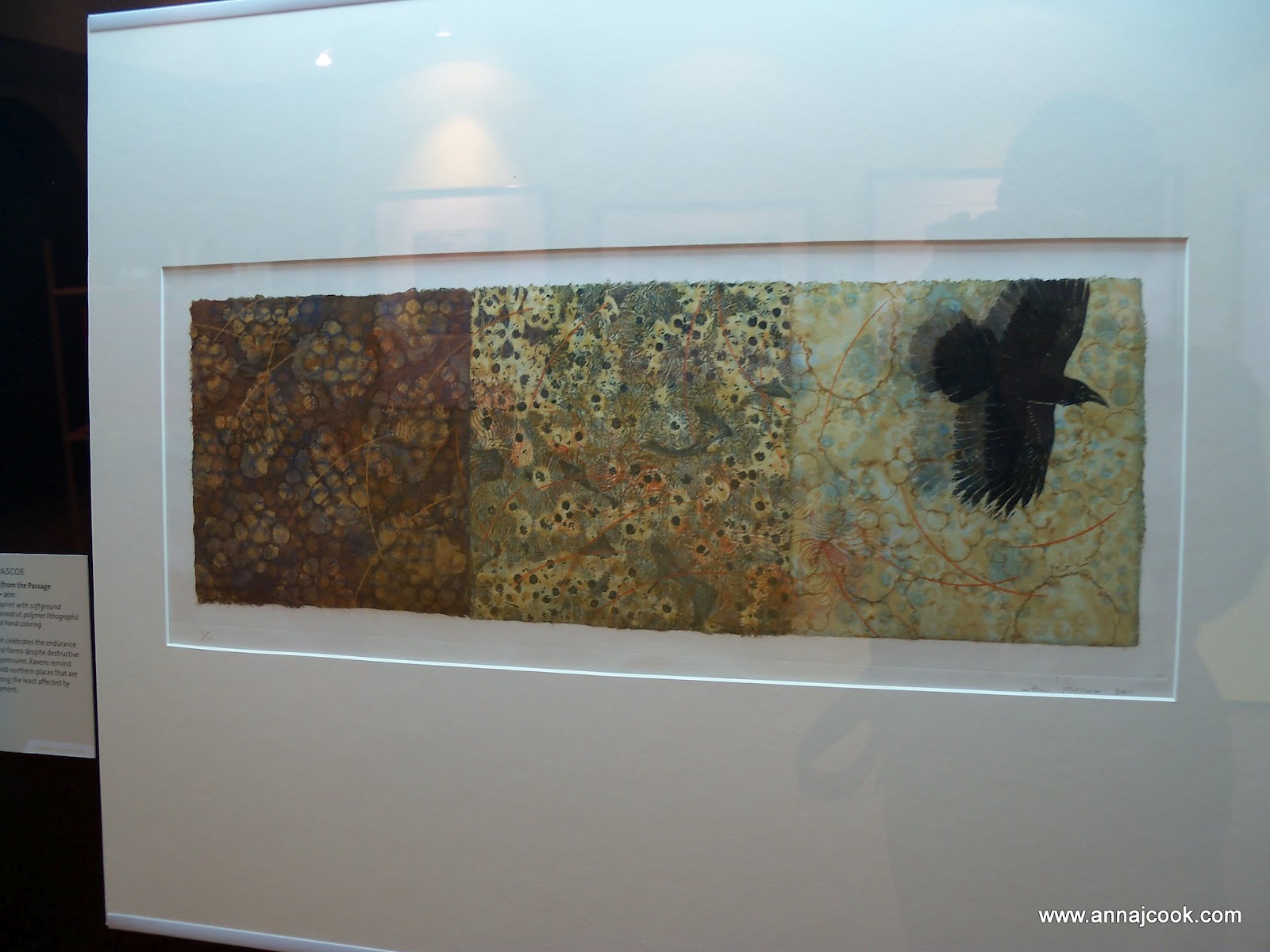
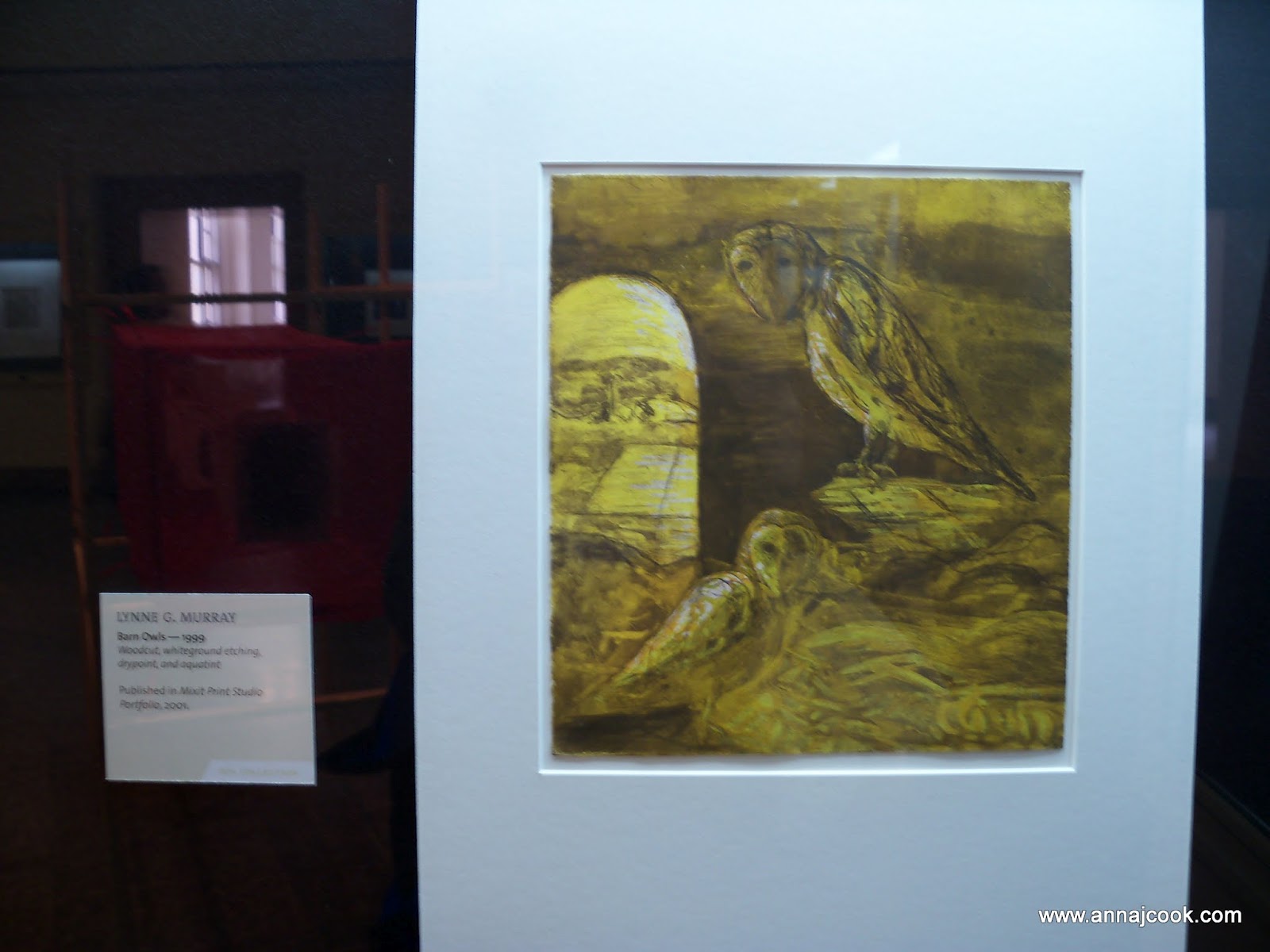
The main branch of the BPL regularly hosts exhibitions, and when we were there they had — among other offerings — a wonderful print exhibition called reThink INK: 25 Years at Mixit Print Studio. Here are some of the photographs I took while we wandered around:
an installation featuring bees
one for the ghoulish sensibilities
I love the gender ambiguity of these figures
and these panels featuring labyrinths

 There were a lot of prints incorporating maps, architectural elements, and text. We also noticed a theme of arctic exploration. The photograph below is of an interactive piece featuring the upturned hull of a boat to which visitors are invited to tie slips of paper articulating wishes and dreams (our favorite: “I dream of Cthulhu” and also “I want a pig.” There were also a wonderfully wide variety of languages represented.

ship of wishes and dreams
in the third floor gallery, there were lots of birds
including these haunting owls
If you’re in the Boston area and are interested in print-making, I encourage you to check it out! The exhibition runs through 31 July 2012 at the Copley Square (main) branch of the Boston Public Library.

from the neighborhood: fun with friends, part 1

05 Tuesday Jun 2012

Posted by Anna Clutterbuck-Cook in a sense of place

≈ Leave a comment

Tags

boston, family, friends, from the neighborhood, photos

We had a lovely weekend with friends Diana and Collin, and were very sorry to see them go yesterday afternoon (if only someone would invent reliable teleportation!). It was, in fact, a lovely weekend despite nearly continuous rain and a trip to the emergency room on Saturday (to verify a strained muscle was, in fact, strained and not something worse — it isn’t, whew). We had lots of coffee and tea and good food, good conversation, and vacation-type movies (Fast Five, and the Doctor Who Christmas special!). I’m letting myself take the rest of the week off from blogging-blogging, but here are a few photographs from our Boston perambulations.

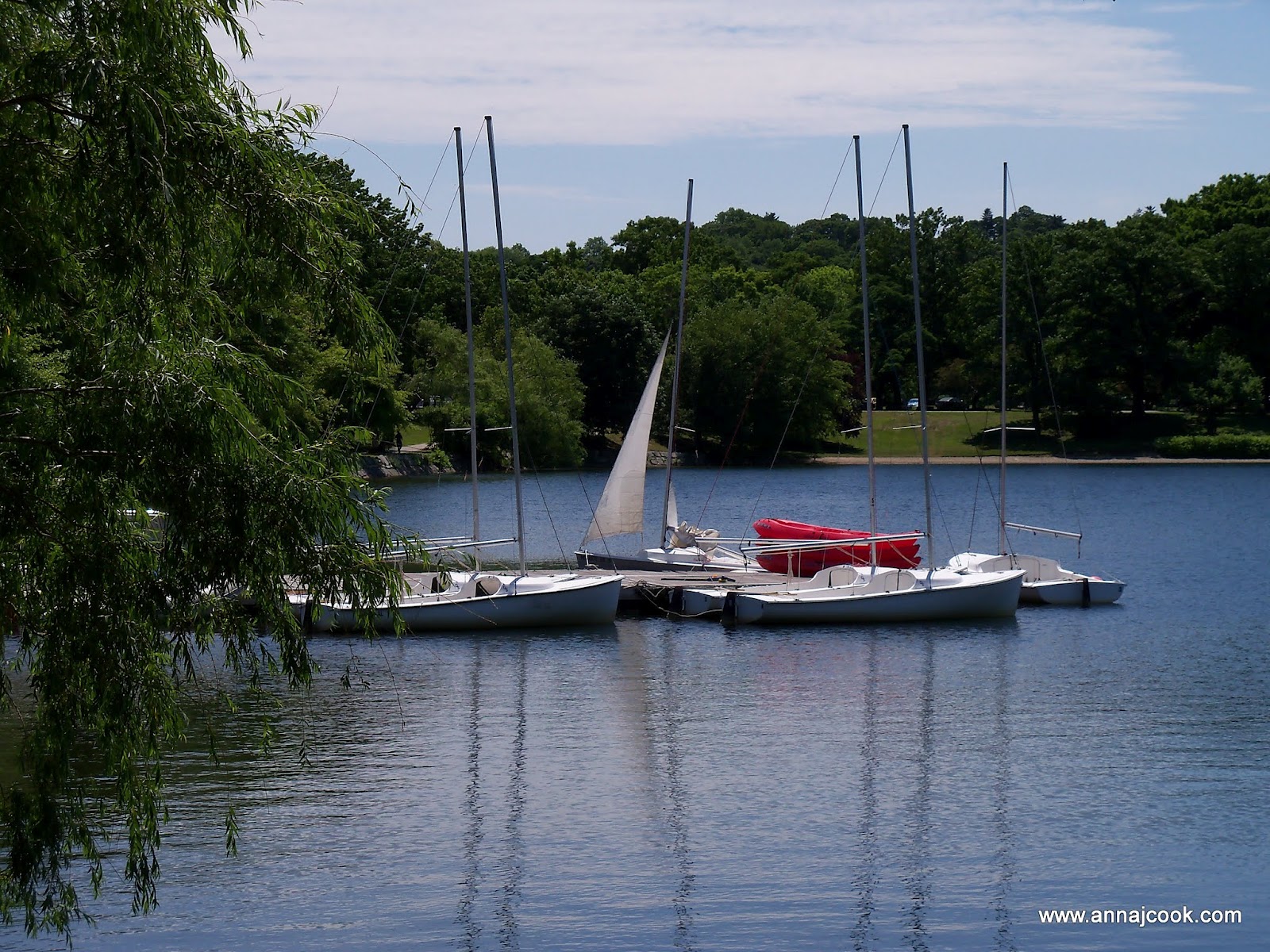
sailboats on Jamaica Pond

Our one nice day (weather-wise) was Friday, and Diana, Collin, and I took a long walk up to Jamaica Plain and had lunch at Centre Street Cafe while Hanna was in Newport, RI, for a meeting.

judgy cat is judgy

All things considered, Geraldine was accepting of the two interlopers — it helped that Auntie Diana brought her favorite dried fish flakes all the way from California! She was very distressed keeping track of four people instead of just two for four whole days and crashed last night (she didn’t even get me up to feed her at 3am!)

I spy with my little eye … 

On Sunday, we took the bus over to Harvard Square to meet up with friends Minerva and Nancy for lunch, and between coffee at Crema Cafe and meeting up with the rest of the gang, we hung out in the Harvard Co-op (where else to spend a rainy morning but in a book shop?!). I was so excited to see Swallows and Amazons on the Staff Recommends shelf — someone raised their kid right!

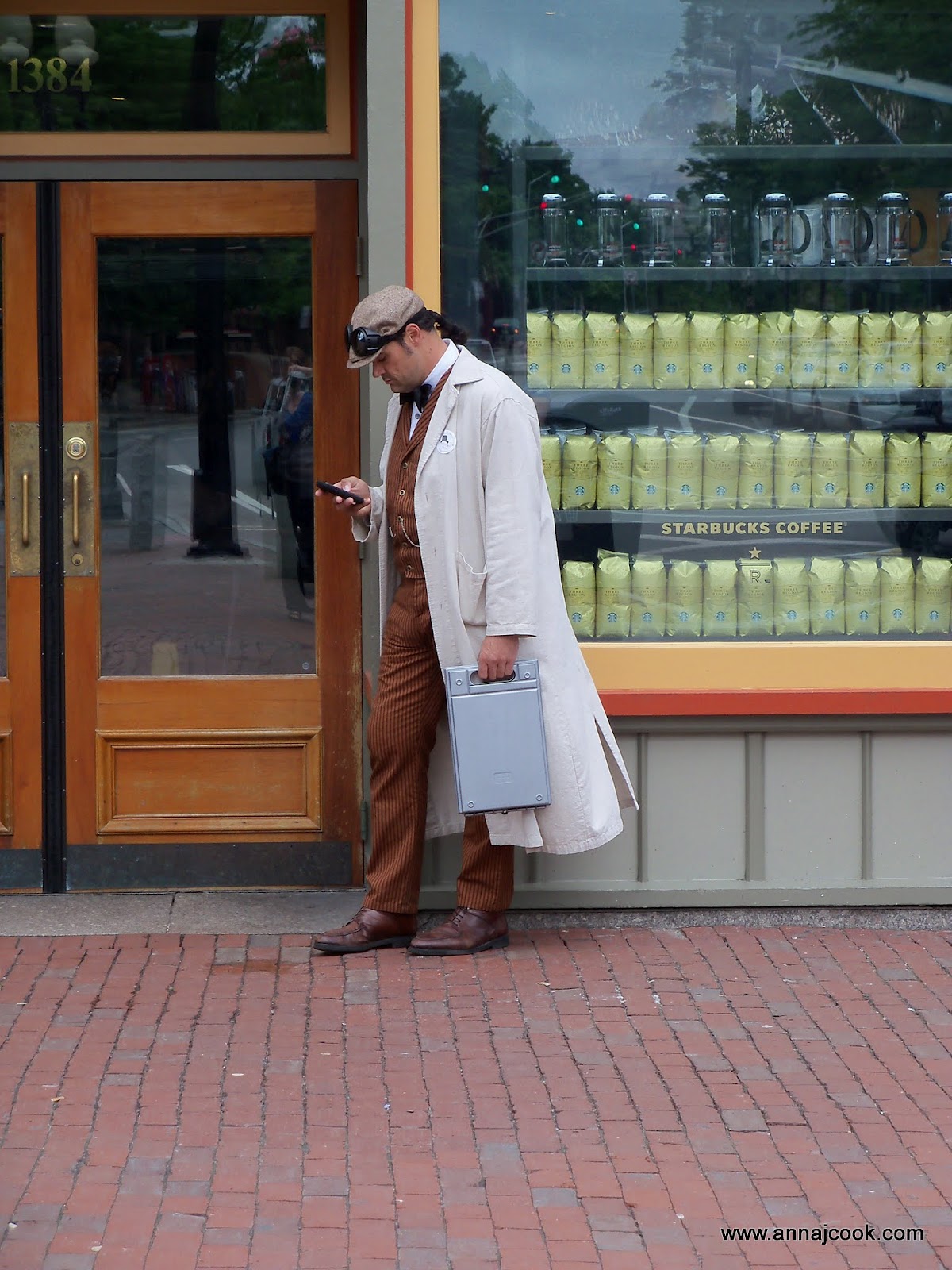
Steampunk sighting FTW!

… And my favorite sighting of the day goes to this man from Cambridge Historical Tours, who was waiting for a tour group at the Harvard Square T stop and checking his smartphone. He was totally rocking the coat, hat, and goggles.

On Thursday, I’ll post some pictures from our visit to the Boston Public Library’s current exhibition on print-making! Hope y’all are having a good week thus far.

from the neighborhood: gratuitous cat photos

16 Wednesday May 2012

Posted by Anna Clutterbuck-Cook in our family

≈ 1 Comment

Tags

cat blogging, domesticity, family, from the neighborhood, photos

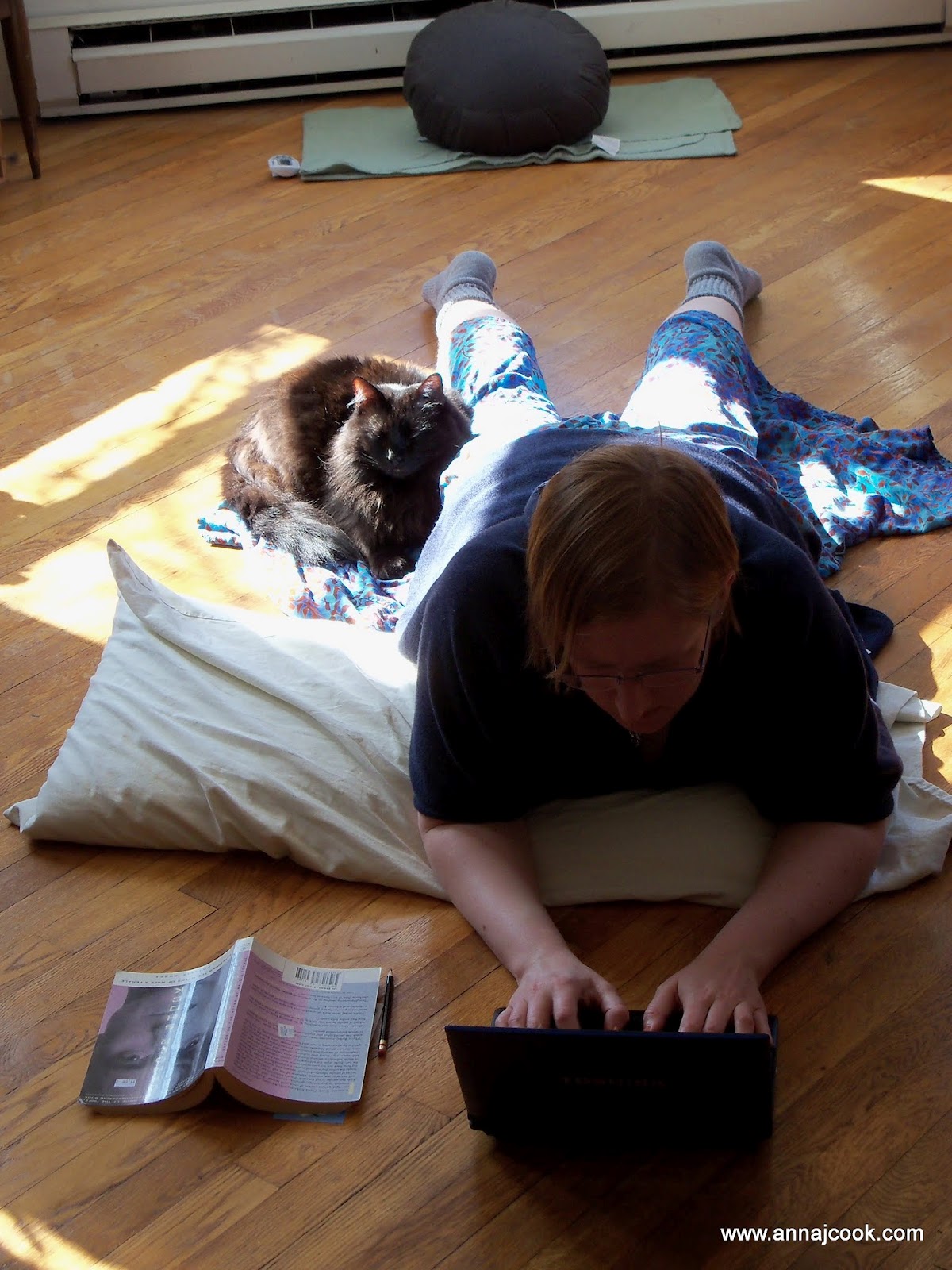
I was going to post another installment of The Act of Marriage live-blog series today, but I’m on the upswing from an epic two-day migraine and blogging didn’t happen. So instead, have some pictures of Geraldine!

she’s just discovered the back of the couch as a perch
and likes to keep an eye on us while we’re working (also steal sunshine)*
then there’s the shameless flirting with guests … 
can I haz TARDIS?
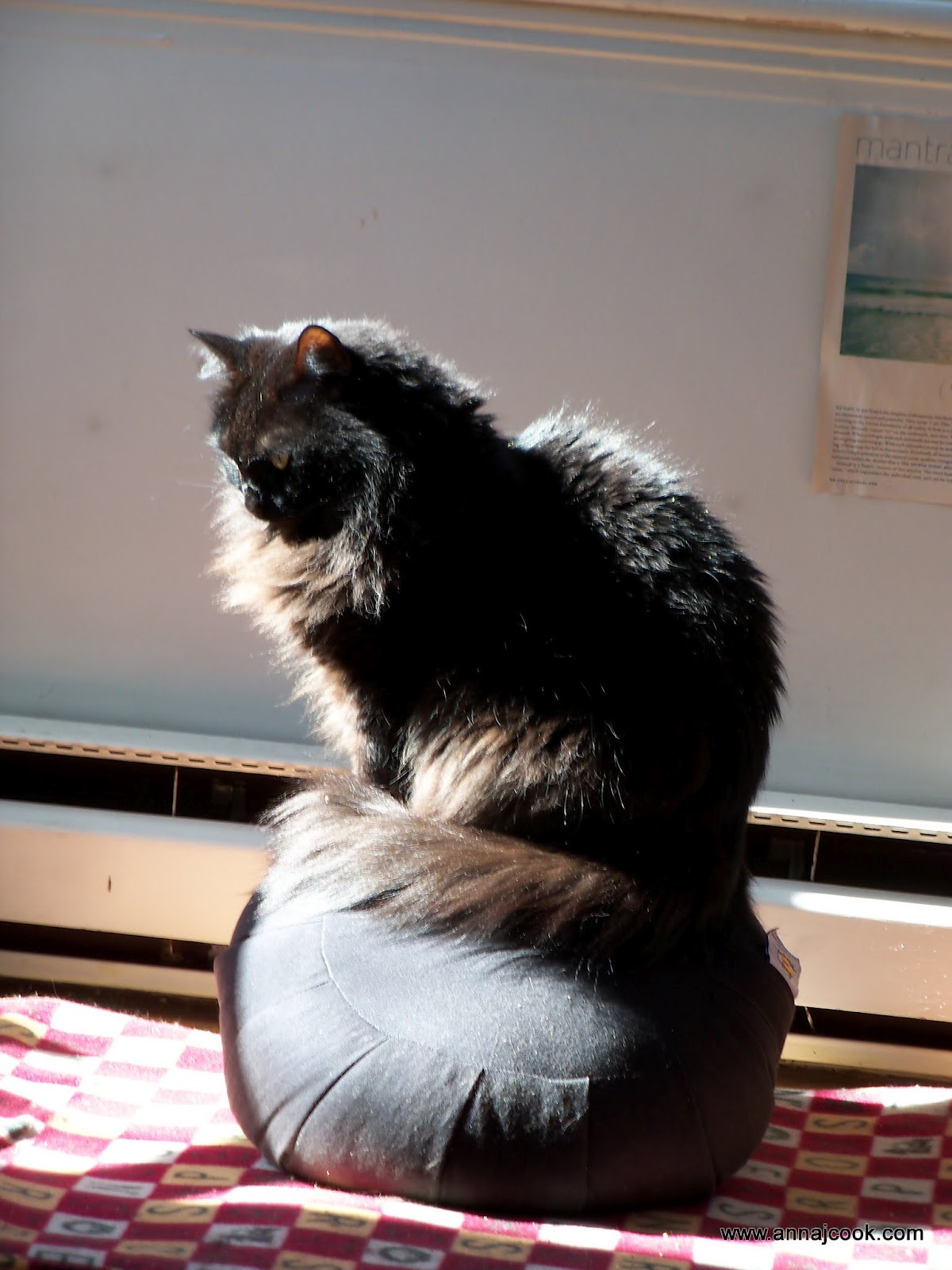
meditating cat is meditating

*Usually “keeping an eye on” translates to “sitting on the keyboard and/or page of the book the human is reading” … so in the grand scheme of things, a little hip-cuddling is very polite behavior!

guest post @ the last name project

11 Friday May 2012

Posted by Anna Clutterbuck-Cook in think pieces

≈ Leave a comment

Tags

blogging, family, feminism, hanna, wedding

I have a guest post up at from two to one today as part of The Last Name Project (co-hosted by Danielle of from two to one and Shannon of The Feminist Mystique). The Last Name Project profiles “an array of individuals and couples about their last name decisions upon marriage or what they expect to choose if they marry. The goal is to explore how individuals make decisions about their last name, and to highlight the many possibilities.” For my contribution, I wrote about the decision Hanna and I made to combine our middle names when we register our marriage:

This solution felt right to us because it doesn’t privilege either person’s family name. It adds to, rather than erasing any aspect of, our (linguistic) identities. As a feminist and queer woman, I think extensively about mainstream notions of marriage, family, and identity, and I knew that I wanted a way to honor my individual self and family history alongside incorporating my partner into who I am and will become. Weaving Hanna’s middle name together with mine feels like a positive way to entwine our individual selves together without losing those other strands of who we are and have been.

Check out the whole piece over at from two to one.

maurice sendak: first memories

08 Tuesday May 2012

Posted by Anna Clutterbuck-Cook in think pieces

≈ Leave a comment

Tags

books, children, family

When I got to work this morning, my Google Reader was rapidly filling with blog posts about the death of author and illustrator Maurice Sendak, at the age of 83.

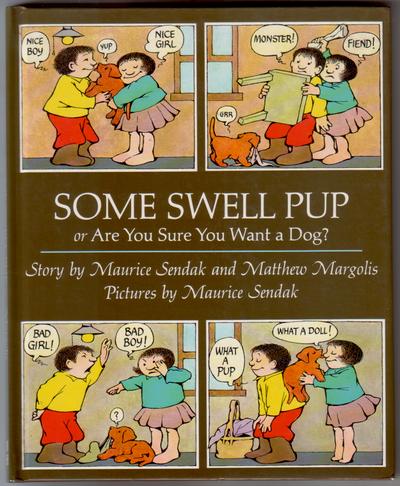
I don’t have any big thoughts about Sendak and his the power for good his work was in the world, so instead I thought I’d share with you a couple of Sendak books that aren’t as well known and are, in fact, two of his works I remember best from early childhood.

Before I was born, my parents adopted a golden retriever named Satch (after jazz musician Louis Armstrong, whose nickname was “Satchmo”). This was one of the books they had in their collection of dog care manuals, and I remember really loving the comic-strip layout, as well as the adorable and mischievous pup.

This lushly-illustrated story with text by Charlotte Zolotow and illustrations by Sendak relates the quest of a child to find the perfect gift for her mother. I remember Mr. Rabbit feeling slightly threatening, even though he’s kind and helpful, perhaps because he is more adult-sized in the illustrations than child-sized. Yet overall, it’s a quiet low-key story with a sweet resolution, and a rhythmic feeling to it that was incredibly soothing when I was small.

Just looking over Sendak’s bibliography of works reminds me how much of my childhood library was touched by his work. So thanks, man, for making my world that much more vivid and Truthful.

Cross-posted at the corner of your eye.

"how women’s studies mattered in my life": a panel discussion

15 Thursday Mar 2012

Posted by Anna Clutterbuck-Cook in think pieces

≈ Leave a comment

Tags

family, gender and sexuality, hope college, michigan, politics, professional gigs, work-life balance

On 6 March I participated in a panel presentation/discussion at my alma mater Hope College in celebration of twenty-plus years of women’s studies at the institution (the interdisciplinary minor was formally established in 1992; students had been forming “contract” majors and minors since the early 1980s).

I’m really hoping the college will make the panel discussion available via web video so I can share it with all of you, since the other panelists all had fascinating stories about their coming to feminism and its integration into their personal and professional lives. The questions from the audience were engaged and the panelists answers were diverse and thoughtful. I was honored to be a part of the evening.

At the beginning of the session, each panelist was asked to speak for about ten minutes on the topic “how women’s studies mattered in my life.” Here’s what I had to say.

Tonight, I’d like to share some thoughts about three aspects of my life as a feminist, and how feminism and women’s studies have affected my life. The first is how feminist ideas and politics have brought to my personal relationships, the second is how I incorporate feminist thought and practice in my intellectual and professional life, and third, some thoughts about how I’ve grown as a feminist since graduation.

I’m sure most of the people in this room have a story to tell about their coming to feminist ideas and a sense of how those ideas could help them make sense of their own lives and the world around them. In my family growing up, feminist understandings of gender equality and individual self-determination were more or less taken for granted, and I felt an affinity with feminist activists in history for as long as I can remember. My sense of contemporary, feminist political awareness — the realization that there is still feminist work to be done — came gradually as I struggled during my childhood and adolescence against prejudiced notions of what children and young people are capable of. As I grew from being understood primarily as a child to being understood as a young woman, rigid conceptions of sex, sexuality, and gender came to the fore — particularly in peer relationships and in church. I had support in my immediate family to push back against restrictive notions of gender and sexuality — but it was feminism as a philosophical framework and as a community of practice that gave me the support outside my family to articulate and honor my own experiences and desires.

Since my teens, feminism (conceptually) and feminist spaces (materially) have been a space for me to break open ‘common sense’ definitions of love, relationships, human sexuality, and community. Feminism has connected me to global, trans-historical network of people who work not to pass judgment on relationship diversity. We’re all imperfect at this, it’s true, but at least within feminist spaces there is usually a common ground to talk about how monogamy and non-monogamy, parenting and not-parenting, queer and straight relationships, long-term and more casual sexual relationships, can all be ethical, meaningful, and healthy.

Feminist spaces encouraged me to ask “does it have to be this way?” over and over and over again. Even when I didn’t think I had the right to identify as queer (more on that in a minute),  my ties to feminist and queer thinkers and activists became a way for me to explore the possibility of sexual intimacy and family formation in ways that didn’t make me feel claustrophobic or filled with rage. That instead filled me with hope and desire, with expansive generosity, with the sense that there was enough creativity in the world to ensure that everyone’s relational needs could be met — and exceeded.

Feminism encourages me to take ownership of my sexuality and learn how to take pleasure in my body in a culture that is hostile to our embodiment. Being a self-identified feminist is obviously not an instant cure for body insecurity, for fear of being the wrong size, the wrong shape, the wrong kind of beautiful. But in my experience, a feminist analysis of our culture’s narrow expectations of beauty, sexuality, and health give me an edge in asserting my right to be at home in my physical self. My knowledge and confidence about my body, and the pleasure I can experience as an embodied person, has been hard-won in a lot of ways. And wouldn’t have been as possible, or as rich a journey, without feminism in my life.

My feminism, at Hope College, wove back and forth across the boundaries of personal and academic life. On the one hand, feminist analysis was a way for me to understand the political upheaval around religion and sexuality I experienced here at Hope (in the late 90s). I was politically queer long before I was sexually active, in a same-sex relationship, or had to grapple with how to label myself in a world that demands sexual identification. By the time I entered into my first relationship — with a lover who happened to be a woman — I had a rich history of engagement with feminist and queer literature, political activism, and support networks to draw upon. That history made transition from thinking of myself as “mostly straight” to thinking of myself as someone who was in a lesbian relationship remarkably easy. And I owe the Women’s Studies program at Hope for at least some of that.

In an academic and professional sense, the exploration of gender and sexuality in historical context is at the heart of what I do as an historian. The Women’s Studies program here at Hope was my entre into thinking about women’s human rights as they are connected to broader socio-political struggles against racism, homophobia, economic inequality. Academic feminism is often criticized for being abstract, privileged, and out of touch with the urgent political engagement needed in “real” peoples lives. And I think that’s a critique worth listening to (if you haven’t already, check out the anthology Feminism For Real edited by Jessica Yee). But in my life, college classrooms became one of the places where I wrestled with notions of privilege and with the complicated histories of oppression. And in part because of that, my scholarship will never be entirely divorced from my political or personal selves.

It was through the Women’s Studies program that I became involved in my first full-scale oral history research project, published and presented original research, and began my research on the history of mid-twentieth-century countercultures — an interest I carried with me into graduate school an pursued for my Master’s thesis. While my work as a reference librarian isn’t explicitly related to feminism, gender and sexuality, or social justice issues, I went into library science because I see facilitating equitable access to information as a feminist activity. I get asked a lot whether my “dream job” would be to work at a library with collections more in my field of interest — but I actually prefer (perhaps because of my experience as a liberal growing up in West Michigan?) to work in spaces where feminist-oriented research remains, to some extent, counter-cultural, an exercise in reading against the grain of our collection strengths and thinking about how to come at things slant-wise. To find evidence of gender and the erotic in unexpected places. My years at Hope College taught me that radical ideas and non-normative experiences can be found virtually everywhere.

Political activism in the classic sense isn’t my day job — and that’s okay with me. Post college, the space for feminist thought, discussion, and networking that’s worked best for me has been the virtual world of Internet. Blogging provides me a way to interact with others over issues of gender, sexuality, and social justice in a way that help me avoid burn-out. If I’m having a shitty week, or I’m busy at work, or I can feel myself getting wound up over a really emotionally-fraught issue, I can walk away and engage in self-care — calm down, re-group, and re-engage. On my own blog, I write as much as I want about the issues I’m passionate about, and no one can dismiss me in conversation or bully me into silence by saying “oh, don’t take it so seriously!” or “you think too much.” I’m sure there are people out there who believe I do take things “too seriously” or think “too much.” But I don’t have to allow them to comment on my blog, and regardless of how loud they shout online, they don’t control my online space — I do.

Blogging has also put me in the way of opportunities to participate in feminist scholarship and activism — I’ve done author interviews, attended conferences, been a research participant for a number of studies on human sexuality — one on religion and use of sexually-explicit materials among women,  one on the personal experiences of queer individuals interacting with straight folks and mainstream culture. In 2009 I had the awesome experience of participating in the revision of the relationships chapter of the latest edition of Our Bodies, Ourselves.

Women’s Studies and feminism was a generally positive, inclusive space for me while I was at Hope. Since graduating, I’ve met a lot of folks for whom feminism and Women’s or Gender Studies programs were not welcoming. People who experienced feminist spaces as exclusionary because of their gender identity, their sexuality, their family lives, their concerns about race or class inequalities, their physical or mental health concerns … I’m sure some of you could add to this litany. My partner was told she couldn’t be a feminist because she liked the Terminator movies, and that she was a bad lesbian ‘cause her best friend was a guy.  I believe those people were wrong, but that doesn’t erase the fact that the language of feminism was used, in those instances, as the language of exclusion.

This doesn’t mean I’ve stopped identifying myself as a feminist. In fact, it’s made me more vocal about what I believe feminism is and can be. It’s made me more likely to speak up when I hear people using feminism as a tool to create and enforce us/them, insider/outsider hierarchies. At the same time, over the last ten years, I’ve had to come to terms with the fact that feminism, for some people, will never signify intellectual and emotional support for their being in the world the way it does for me. And that that’s okay. I believe feminism is — at its best — for everybody. But I also believe there are many pathways to a more loving, equitable world. As long as I see folks living out the values I name as “feminist” then I’m happy to count them as allies and co-conspirators.

Cross-posted at The Pursuit of Harpyness.

← Older posts
Newer posts →
"the past is a wild party; check your preconceptions at the door." ~ Emma Donoghue

Recent Posts

  • medical update 11.11.22
  • medical update 6.4.22
  • medical update 1.16.2022
  • medical update 10.13.2021
  • medical update 8.17.2021

Archives

Categories

Creative Commons License

This work by Anna J. Clutterbuck-Cook is licensed under a Creative Commons Attribution 3.0 Unported License

Meta

  • Create account
  • Log in
  • Entries feed
  • Comments feed
  • WordPress.com

Blog at WordPress.com.

  • Subscribe Subscribed
    • the feminist librarian
    • Join 37 other subscribers
    • Already have a WordPress.com account? Log in now.
    • the feminist librarian
    • Subscribe Subscribed
    • Sign up
    • Log in
    • Report this content
    • View site in Reader
    • Manage subscriptions
    • Collapse this bar