• anna j. clutterbuck-cook
  • contact
  • curriculum vitae
  • find me elsewhere
  • marilyn ross memorial book prize

the feminist librarian

the feminist librarian

Tag Archives: simmons

Oral History Video Clip

02 Sunday Mar 2008

Posted by Anna Clutterbuck-Cook in media

≈ 1 Comment

Tags

humor, oral history, simmons, web video

This week in Oral History, we watched a documentary called Hamburger America, which is a tour of some unique hamburger joints in America. I was a little skeptical, I will admit, because of all the documentary focus on the meat industry and American food recently, in books like Fast Food Nation. But the movie was really entertaining and fascinating. Here’s a clip showing one of the places they profiled:

Introducing Minerva

23 Saturday Feb 2008

Posted by Anna Clutterbuck-Cook in admin

≈ 1 Comment

Tags

blogging, feminism, fun, history, photos, simmons


Straight from the awesomely talented hands of my brother Brian comes the Future Feminist Librarian-Activist patron goddess, Minerva (or, as I affectionately call her, “Minnie”).

Minerva was, according to the Encyclopedia Britannica, the Roman goddess of “handicrafts, the professions, the arts, and . . . war.” I thought this was a good combination for those of us seeking to put scholarly interests to work in a real-world, politically aware, context.

Sartorially, she owes her style to the American suffragists, with a nod to the European bluestockings of a slightly earlier area. I like to imagine she will be watching me sharply from behind those spectacles, making sure I remember what I came here to school to learn, and briskly challenging me to do something meaningful with my education on the other end.

Please join me in giving her a warm and respectful welcome.

Campus Safety: Panic or Pragmatism?

19 Tuesday Feb 2008

Posted by Anna Clutterbuck-Cook in think pieces

≈ Leave a comment

Tags

boston, feminism, simmons

I’ve been meaning to write about the way safety is handled on the Simmons residence campus for a while now, but this photograph finally provoked me into action:
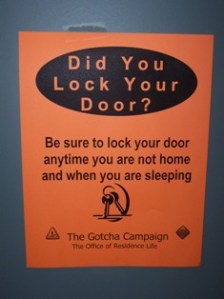

This poster, courtesy of the “gotcha” campaign, in which residence staff come around at random hours to check and see if dorm room doors are locked, is only the latest in a whole series of educational tactics students here at Simmons have been exposed to over the school year. We have also been warned against “piggybacking” (letting someone unknown into the dorm with your swipe card) with posters that describe in ominous terms incidences in which women have been raped and murdered by assailants in their dorm rooms because of an unlocked door.

We also receive campus safety alerts via email, which alert us to acts of aggression that happen in the neighborhood of the college. Each email concludes with a list of basic safety measures:

As always, the College is concerned for the safety of our community members. We recommend the following precautions to maximize your safety:

• Be aware of your surroundings
• Do not walk alone at night whenever possible
• Do not listen to your iPod while walking
• Always make sure to walk on well lit streets staying on the same side as the street lights
• Be aware of the people around you
• If you carry a cell phone, make sure the battery is charged and it is turned on
• If you are walking alone at night tell a friend when you are leaving and when you expect to arrive at your destination

If you see anything suspicious or would like a walking escort between campuses, please call the Simmons College Public Safety Department

While these emails are usually matter-of-fact and probably the best approach to keeping students informed about what is happening around the campus, I also wonder about the ubiquity of these awareness campaigns, and how they feed into a culture of fear about life in an urban environment–particularly life as a woman in an urban environment.

Clearly, as a woman in my mid-twenties, having lived and traveled alone in a variety of places, the question of personal safety is not a new one. And to some extent, I agree with the common-sense advice of the campus officials: it’s usually a good idea to keep your door locked (if for no other reason that the desire not to have someone steal your computer), and to “be aware of your surroundings.” However, it becomes a particularly interesting question to consider in the context of a college campus, surrounded by college-age women who are being sent particular messages about danger in the world and how they ought to protect themselves from it.

As a feminist, violence against women is something I am aware of in a political, philosophical, and personal sense. In feminist circles, we refer to a “rape schedule”–the idea that ability to move freely in the world is curtailed by our awareness of the possibility of physical violence. As Jessica Valenti explains in a Salon interview:

Can you explain the concept of a “rape schedule”?

I first heard about it in my women’s studies classes. It’s the idea that every woman in one way or another lives on a rape schedule. Every action you take is built on an awareness that you could be attacked: from walking with your keys in your hand, to locking your car doors at an intersection, to deciding to go home a half-hour earlier. There is no public space for women; the whole world is a prison where you have to be constantly aware at all times that you’re a potential victim. What’s more terrifying is that it’s not necessarily preventative. Most rapes are committed by people you know and trust and let your guard down with.

So there are concrete ways in which my being-in-the-world is limited because of the fact of my sex: I fantasize about going backpacking in the Adirondacks, for example, but solo camping in remote areas is out; and on the other extreme my freedom to move about urban environments after dark is a constant question mark.

On the other hand, feminists in the last twenty years have raised the question of how much the media spotlight on particular acts of violence (for example, random attacks by strangers) get highlighted while other acts of violence (such as those perpetrated by intimate partners, who presumably would have access to your dorm at your invitation) are not the focus of these scare campaigns.

Also, it is important to note the assumptions this email makes–particularly that it is possible to arrange to walk in company, and that you have an individual whom you can make aware of your daily movements. I don’t believe the advice not to walk alone would be a piece of advice offered to men as a matter of course. And I wonder what those of us who live alone are supposed to do? Call up our closest relative and tell them when we leave work in the evening? What’s with this “while you are sleeping” line in the “gotcha” poster? Coming, as it does, on the tail of flyers that describe the violent rape and murder of a young college girl in her bed while she was sleeping, there’s a definite over-tone not merely of material security against theft but also of sexual violence.

So I am troubled by the way in which women at Simmons college are constantly reminded of their vulnerability (however statistically unlikely) to violent attack. I wonder whether it is simple pragmatism, or whether it is schooling young women into a sense of danger that is, overall, misleading and socially controlling. Thoughts?

The Deadwood of the British Empire

17 Sunday Feb 2008

Posted by Anna Clutterbuck-Cook in book reviews

≈ Leave a comment

Tags

history, simmons

This week, in GCS410 (Gender, Race & Imperialism), we read and discussed the book Mastery, Tyranny, and Desire: Thomas Thistlewood and His Slaves in the Anglo-Jamaican World, by Trevor Burnard. Thomas Thistlewood was the younger son of a farming family back in England who ventured into Britain’s colonial territories in search of a better life. He ended up in Jamaica where he worked as an overseer on several plantations before eventually buying his own land and becoming a moderately successful planter and master of slaves. Over the course of his nearly forty years in Jamaica, he kept a minutely detailed (if emotionally opaque) diary, detailing in list form such things as the punishments meted out to his slaves, the books he read, money he owned, and each of his many sexual encounters.

What I thought of when reading the book was how similar 18th century Jamaica seemed in its system of violent domination to Deadwood, at least as portrayed in the HBO series which tells the story of (largely white) settlers in the Black Hills during the late 19th century. Jamaica was a dangerous proposition for European immigrants–people tended to live fast and die young. You really would have no incentive to move there unless you had nothing to lose. Thistlewood would have been right at home working for Swearengen or Cy.

Some of the students in class questioned the utility and ethics of spending so much time examining the life of a violent white imperialist. When does such scrutiny of such a person, they seemed to be asking, tip over into forgiveness? When does explanation pave the way for apologia? I don’t know what this says about me, but I believe it is often the examination of those historical characters whom we find the most abhorrent or the most inexplicable that prove the most valuable in understanding the past. Texts such as Thistlewood’s diary–precisely because they are problematic–require our attention as historians. If we limited our historical inquiry to those people with whom we sympathized entirely, we would probably find ourselves with a very short list of acceptable topics. And we would learn nothing we did not wish to know about the human condition.

Friday Night in Grad School

09 Saturday Feb 2008

Posted by Anna Clutterbuck-Cook in life writing

≈ Leave a comment

Tags

simmons

I just got back from Hanna’s apartment in Allston (which will be mine also come May!), where we drank a lovely zinfandel, ate baked potatoes, watched Mansfield Park, Miss Austen Regrets, the last third of A Room With a View, and played a lively game of Name That British Actor(tm). I am usually a lousy competitor, but I won full marks (and lots of chocolate kisses) tonight for identifying an obscure character from Miss Austen Regrets as the terrifyingly brutal Mr. Grandcourt from Daniel Deronda (2002).

It was a sorely needed Friday evening respite after a dizzying week of academic settling-in. I met with my history professor this afternoon about my research project–in its current incarnation (subject to change in the face of extant primary sources), I plan to consider the question of who Euro-Americans, particularly Euro-American feminists, considered to be “fit” mothers and what they saw as proper mothering during the late 19th and early 20th centuries. I want particularly to focus on Indian Schools and white women’s involvement in the attempt to assimilate Native Americans into white culture through forcible removal of children from their birth homes.

Earlier in the week, Aiden and I had the pleasure of testing out the oral history recording equipment on one another in practice oral history interviews; once I learn how to edit the digital audio files, I might try to upload a few clips and post them to the site, just so you can check out our bumbling attempts–I, in particular, have this habit of throwing my hands around when I’m talking and jostling the table when I get excited, which I fear leads to unproductive background noise.

Tomorrow, I’m buckling down to run test OPAC (Open Public Access Catalog) database searches for my Cataloging class, with the carrot at the end of the day being Benjamin Britten’s opera version of The Turn of the Screw which Hanna and I are attending at the Boston Conservatory Theater. Review to follow soon!

Down the Rabbit Hole

02 Saturday Feb 2008

Posted by Anna Clutterbuck-Cook in life writing

≈ Leave a comment

Tags

education, simmons

As I type this, it’s sleeting outside on the streets of Boston: a strange beginning to February. But Hanna assures me it’s supposed to be 50 degrees and sunny tomorrow, so if the groundhog comes out in the Boston Common (where does s/he come out, anyway? I can never recall) then we’ll be all right for a mild winter (or is it a long winter?). Clearly I need to brush up on my rodent folklore.

As groundhogs are popping up, I am headed down into the rabbit hole of another semester of graduate school. Classes started in earnest this week, and I’m happy to report that I am “totally stoked!” as my friend Marilee used to say. (Do you still say that Marilee? I don’t recall hearing it lately). This semester is going to be chock-full of intense work, but all of it is exciting work.

I have a great deal of leeway in designing my projects in both my Gender, Race & Imperialism class and in Oral History, and cataloging satisfies the organizational part of my brain. Again, Marilee says, “That’s funny, I didn’t remember that you were organizational.” I explained to her that I am very selective about my organization: My bookshelves are currently arranged by the Library of Congress classification system, but my bed is never made!

My Spring Semester courses are as follows:

  • GCS 410: Gender, Race & Imperialism. This is a class being taught by my history adviser, Laura Prieto, who had me in History Methods last fall. It’s a graduate-student-only course, open to students in the History and Gender Studies programs. As the title suggests, we are going to be interrogating the history of European & American imperialism through the lens of race and gender. I am hoping to do my research project on some aspect of reproductive politics and imperialism, hopefully looking at the way feminist women from the metropole (the imperial center) and the native women from the colony negotiated a particular practice or policy having to do with reproductive health and sexuality. Details to follow in a week or two.
  • LIS 433: Oral History. The first day of this class seriously made me want to weep with joy, I was so excited. If you think I’m exaggerating, you can ask my friend Aiden, who is taking it with me. The professor has a serious Oregon Extension vibe, and is a farrier and folklorist as well as professor in library science. He explained to us he believes it’s important to have a profession and a vocation because it “frees you to speak your mind.” Damn straight. I get to select an oral history project to work on over the course of the semester, and I am currently waffling between Boston area home educators and doulas. I’ll keep you posted.
  • LIS 415: Organization of Information. Otherwise known as “cataloging.” This is one of the core requirements of the GSLIS program, and I will be learning all the different classification systems, such as the Dewey Decimal System and the Library of Congress system, and how to create good “metadata,” which is–as was explained to me in class today when I asked–data about data, which is what it sounds like, right? It’s all the bits of information that help us identify and locate the information or things we need (so catalog records, descriptive terms, computer programming, etc.).

This semester, my plan is to put up a little something every Friday on what I’ve been doing academically during the week . . . we’ll see how that plays out over the next fifteen weeks!

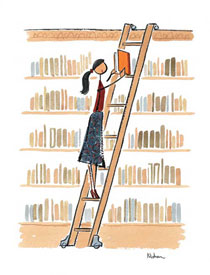
Image lifted from the Bas Bleu catalog website.

A Student at Work

20 Tuesday Nov 2007

Posted by Anna Clutterbuck-Cook in life writing

≈ Leave a comment

Tags

domesticity, simmons

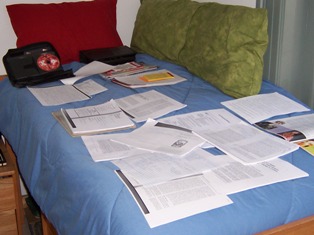
Hope you all have a lovely Thanksgiving week. I am actually looking forward, as geeky as this sounds, to having the mental and actual space to spread out my research papers and do a bit of writing. I have two papers due the week following the break, and they will take up most of my time. The way I organize my papers is by laying all the research out on the bed, desk, floor . . . anywhere there is space. So things start to look pretty chaotic when I am in the middle of a writing project!

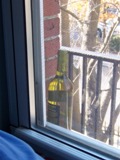
As a late-night after-writing treat, I have discovered that the screen on my window opens, and that the ledge outside the window is just the right width to hold a wine bottle! So I am able to chill my wine, sans fridge, during the autumn months . . . I just have to be careful to bring it inside to drink before the temperature drops below freezing at night!

From the (Microfiche) Archives

17 Saturday Nov 2007

Posted by Anna Clutterbuck-Cook in my historian hat

≈ Leave a comment

Tags

education, history, simmons


I am working on a paper right now on the educational philosophy and practice in the utopian Oneida Community, which existed in New York state from 1848-1881 as a religious commune and continues to this day as a company manufacturing housewares. As part of this research, I visited Boston College’s O’Neill library, which has a microfiche collection of the community’s newspaper, the Oneida Circular. Microfiche is a pain to read–I have been known to get both migraine headaches and severely motion sickness–but the content it enables researchers access to is often excessively diverting.

The Circular functioned as both a venue for the community to evangelize to an external audience and as sort of community newsletter. They seem to have freely culled news items from other publications, usually unattributed, and also share miscellany from the life of the community, such as a note that “the wheat that was stored in the can-shop is nearly all saved, and but slightly injured” (1). Here are some oddments that I discovered while in the midst of “serious” research.

A large lithographic “View of the First American Railway Train” is on exhibition in the Library. It shows simply a line of old-fashioned stage-coach bodies connected together, and placed on car-wheels. Each vehicle contains six solid-looking gentlemen with stove-pipe hats; and their sharp noses and chins are all after the same pattern. The brakeman sits comfortably on the driver’s seat with an iron lever in his hands (2).

Seneca Lake is frozen over and people skate from one end to the other. This has never happened before within the memory of white men (3).

Answers to correspondence: “J. Y., Rochester, N.Y.–We should probably have to deny your request for admission as we are full. In any case, very much more acquaintance with you would be necessary. Our Community is not of the nature of a cooperative union, but of a church.” (4).

[The] cuttle-fish of the European coast are dwarfed by comparison with some from the coast of Newfoundland. In the American Journal of Science and Art for Feb., Prof. Verrill gives an account of a specimen which became entangled in herring-nets near St. John’s, Newfoundland, and was secured after a severe battle. The body was nearly seven feet long with eight arms covered with suckers each six feet in length . . . (5).

We feel warrented in advocating romping girls. They seldom fail to make healthy, happy, useful and not un-refined women. Do let us have more of them! (6)

Notes:
(1) 1 March 1875, p. 69
(2) 1 March 1875, p. 70
(3) 1 March 1875, p. 72
(4) Ibid.
(5) Ibid.
(6) 1 March 1875, p. 70

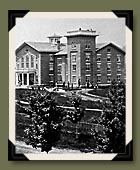
Image found at the Oneida Community Mansion House website.

More Pics from the DCR

25 Thursday Oct 2007

Posted by Anna Clutterbuck-Cook in library life

≈ Leave a comment

Tags

archivists, DCR, photos, simmons

I had my camera with me at the Department of Conservation and Recreation yesterday (see previous post), so here’s another batch of pictures of the various cool map details I came across. I took these mostly ’cause Dad’s so interested in the cartography (and then I get interested too . . .). At least get a look at the compass rose that, I swear, was done by a drafter on LSD!

DCR2

(click on the image to view the album)

Friday Night in Grad School

12 Friday Oct 2007

Posted by Anna Clutterbuck-Cook in life writing

≈ Leave a comment

Tags

books, simmons

Well, I just finished my third job for the day–this morning I worked at Barnes & Noble from 7-11am; then I had my first shift at the Massachusetts Historical Society from 1-4:45pm; then I finished up a batch of carrier additions for Lean Logistics after supper. Hopefully this will be the only day I put in that many shifts! I will be finishing up next week at Barnes & Noble, and start my regular schedule at the MHS on October 22nd. Everyone has been wonderful, and I am so excited to start in earnest (but grateful I will not be doing double-duty until then)!

I thought I would take a moment, before finishing the final draft of my Evaluation of Information Services evaluation proposal, to sit down and write a little bulletin about what I have been doing this week in library school (I am still on the fence about the whole am-I-an-archivist/am-I-a-librarian divide; I’m glad my new job title is “Library Assistant.”).

I knew I had arrived in library science school when I went out to Blick art supplies and purchased a dozen soft lead pencils and a pencil case this week. I need to take notes at my internship, and other various places where pens are highly discouraged, and I was always finding myself without the proper tools. I am very pleased, and may soon (my archivist-historian friends assure me) find myself preferring pencils above all other writing implements. I have not taken the next step, which would be to start taking “notes” using a laptop and digital camera.

I also know I am in grad school because I have become extremely forgetful. Since being offered the MHS job last week I have locked myself out of my room once, left my wallet at work, forgotten my T-pass for the subway, and (the crowning achievement) left my mobile phone in a cab on my way home from Barnes & Noble Sunday night . . . in my defense, it was 2am following music inventory, but still . . . the cab driver was kind enough to return it unscathed the following day on his rounds through the neighborhood.

This week in classes:

  • In Evaluation of Information Services, we were testing our “evaluation tools” (social-science speak for surveys and data-collection exercises) designed to evaluate how well the library science school website works (verdict=not-so-well). After posting this, I have to go do the final draft of my group’s evaluation proposal, with the appended “tools” and bibliography.
  • Introduction to Archives is tackling “arrangement & description,” which are the fancy technical terms for the order in which items are put in their boxes and how they are written up in the “finding aid” (another fancy term, which I think of as the archival equivalent of a detailed card catalog record plus book index: it helps researchers decide what–if anything–they want to see from a given collection, and where it’s located). We have been divided up into groups to write practice finding aids; my group got a collection of personal papers from the Simmons archive about an alumna who served as an Army dietitian during WWII.
  • For History Methods this week, we were technically talking about archives (and since the class is full of future archivists, there were a lot of people personally invested in the subject). I personally became side-tracked by theoretical issues of space and gender through our reading assignment from Bonnie Smith’s The Gender of History, which is about the professionalization of history in the 19th century and how it was explicitly coded as the realm of men. “Truth was where women were not,” Smith writes, “[truth was] some invisible and free territory purged of error by historical work” (which was done, of course, by male scholars). My weekly response paper was about how the physical sources of history and physical bodies (such as, ahem, the bodies of women) have the potential to disrupt our grand and tidy narratives of historical, universal “truth.”

In other news, the course offerings for Spring 2008 were hot off the press yesterday, at least in the History department. I find myself torn between “9/11 Narratives,” taught by an Islamic World historian with a frightening amount of energy, and “Lives of Faith: Early American Religious Biography & Autobiography.” In library science, I will most likely be taking Oral History and Cataloging.

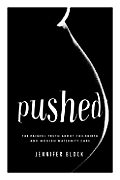
. . . and then I stopped by the public library on my lunch hour today to return a few books, and somehow left with a few more: Pushed: The Painful Truth about Childbirth and Modern Maternity Care; Emma Bull’s War for the Oaks; and The Secret History of the Pink Carnation (I’m reading the series in reverse order). If I find any time to actually read any of these titles, you’ll hear about it here . . .
← Older posts
Newer posts →
"the past is a wild party; check your preconceptions at the door." ~ Emma Donoghue

Recent Posts

  • medical update 11.11.22
  • medical update 6.4.22
  • medical update 1.16.2022
  • medical update 10.13.2021
  • medical update 8.17.2021

Archives

Categories

Creative Commons License

This work by Anna J. Clutterbuck-Cook is licensed under a Creative Commons Attribution 3.0 Unported License

Meta

  • Register
  • Log in
  • Entries feed
  • Comments feed
  • WordPress.com

Create a free website or blog at WordPress.com.

  • Follow Following
    • the feminist librarian
    • Join 36 other followers
    • Already have a WordPress.com account? Log in now.
    • the feminist librarian
    • Customize
    • Follow Following
    • Sign up
    • Log in
    • Report this content
    • View site in Reader
    • Manage subscriptions
    • Collapse this bar